Reviewing political parties ties with the Communist Party of China after a bilateral meeting between the former and the PPP on their digital platform, Sherry Rehman, Vice President of the PPP said that the Pakistan Peoples Party has always been, and remains committed to, cementing Pakistan’s relationship with the CPC and People’s Republic of China. “Our friendship with the Peoples Republic and the Communist Party of China has only gained strength over successive generations of both the parties.”
“It is true that Pakistan’s strategic relationship with China was conceived by Shaheed Zulfiqar Ali Bhutto, cultured by Shaheed Mohtarma Benazir Bhutto, cemented by Asif Ali Zardari and will now enter a new phase of further cooperation with the younger cohort of leaders in both countries under Chairman Bilawal Bhutto.”It was through President Asif Ali Zardari’s multiple visits to Beijing that the groundwork was set for the China Pakistan Economic Corridor, a flagship project of President Xi’s bold ‘One Belt One Road’ initiative for regional connectivity across the Eurasian landmass.
Commenting on the progress of joint ventures, she said that “Pakistan Peoples Party remains wholly committed to, and will continue to make all possible efforts for the smooth and effective implementation of the CPEC. As a project that could connect multiple regions, the CPEC will not only strengthen Pakistan-China ties, but spur better relations between countries in an evidently tense regional environment.
The PPP is firm in its belief that the CPEC can act as a force multiplier for Pakistan and we will continue to work towards its optimal realization to this end.”
Rehman was emphatic in reminding all that it was under President Asif Ali Zardari’s leadership during the last PPP government that the stage was set to scale up the bilateral relationship between China and Pakitan and crucial milestones accomplished to advance durable economic and strategic cooperation between the two countries.
Rehman also said that the PPP has also played a leading role in forging a political consensus on the significance of Pakistan’s relationship with China, including the historic awarding of Gwadar Port entry to Beijing to facilitate the broad vision of economic interdependence. As a result, there is a national consensus in Pakistan regarding the primacy of our ties, reflected by how this relationship continues to be viewed as an all-weather friendship in both countries.
On a discussion on the South China Sea she said “in an age of growing global changes the PPP also supports the People Republic of China’s principled position on the South China Sea. We believe that disputes related to the South China Sea should be settled through a consultative process between concerned stakeholders and negotiations based on bilateral agreements and the Declaration on the Conduct of Parties in the South China Sea (DOC). We respect the efforts made by China and other ASEAN countries to promote peace and stability in the South China Sea, and will continue to support such efforts.”
https://mediacellppp.wordpress.com/2016/06/04/ppp-supports-chinas-principled-position-on-south-china-sea-says-sherryrehman/
Tuesday, June 7, 2016
Bilawal Bhutto condemns brutality against Peshawar nurses
Bilawal Bhutto Zardari Chairman Pakistan Peoples Party has strongly condemned the brutal treatment to protesting nursing professionals in Peshawar at the hands of KPK government and demanded immediate release of arrested nurses and acceptance of their genuine demands without any further delay.
In a press statement issued here, the PPP Chairman said nursing professionals are respected the world over for their service to humanity but the rulers in Pakistan’s Khyber-Pakhtunkhwa province broke all records of brutality against the nurses and exposed its ugly face to the nation as well as to the world.
He further said that Pakistan Peoples Party stands with the protesting nurses of Hayatabad Medical Complex and sees police torture and action against them as shameful. “We wont tolerate such ghastly action against nurses or any other segment of our society,” he pledged.
PPP Chairman said that instead of holding talks with the protesting nurses, the so-called “Naya-Pakistan” government resorted to applying state brutality and torture, which is highly condemnable and lays bare the hollowness falsehood of their political narrative.
Bilawal Bhutto Zardari expressed solidarity with the Peshawar nurses and warned the KPK government to improve their working conditions and accept their legitimate demands before their protests is joined by general public.
https://mediacellppp.wordpress.com/2016/06/05/chairman-ppp-bbhuttozardari-condemns-brutality-against-peshawar-nurses/
Pakistan - Federal Budget lacks vision: PPP
Pakistan Peoples Party Senator Saleem Mandviwalla has termed the Federal budget 2016-17 as Direction Less Budget having no Economic Vision, Long Term Policy and Strategy to improve the tax compliance, reduce tax evasion and to give a sigh of relief to the honest tax payers.
Senator Saleem Mandviwalla said this while addressing to the Press Conference along with PPP leader Syed Naveed Qamar MNA and Media Office In-charge Nazir Dhoki on Tuesday in Islamabad.
He said that The Federal Budget the Budget is completely lacking in any direction, Agriculture and Manufacturing sectors are two legs on which economy stands but both are facing worse conditions.
He said that Economy is running under IMF pressure the coming budget will be the 4th budget of this government under IMF dictation. The IMF is fully controlling the Pakistani economy
Senator Saleem Mandviwalla was of the view that Govt. manipulating figures each year since government has taken over in 2013; it is manipulating each and every figure like GDP growth, fiscal deficit, tax to GDP ratio, investment to GDP, inflation rate, unemployment rate.
Senator Mandviwalla was of the view that Pakistan Bureau of Statistics PBS is not independent; unfortunately, Finance Ministry is dictating and pressurizing them to manipulate figures in their favor. He said that the figure of 4.71% GDP growth is wrong and manipulated. As reported by an independent organization SPDC (Social Policy and Development Center) the growth rate for this year was 3.1 percent.
He criticized the performance of FBR, which has completely failed to enhance tax net and skewing the existing tax payers by imposing surcharges and regulatory duties. The Finance Minister in an answer to a question in Senate admitted that more than 120,000 filers have been reduced this year.
Senator Saleem Mandviwalla said that the government is manipulating the figures of Tax to GDP ratio and showing it over 12 percent but the fact is it is stagnant at 9 percent. Direct-Indirect tax ratio in actual is 15:85 percent, because more than 25 percent direct taxes are withholding taxes collected through agents. Government has imposed record percentage of sales tax on petroleum products which reached to 54 percent and seems like government is depending on only indirect taxes.
Senator Saleem Mandviwalla said that the number of Corporate Income Tax (CIT) filers is around 25,000 out of more than 60,000 companies registered and the number of active CIT filers is a mere 0.8 percent of total number of commercial and industrial electricity users.
Senator Saleem Mandviwalla said that the 78 percent of the borrowed money is being spent on non-development expenditure including employees’ salaries expenses
Senator Saleem Mandviwalla said that the Debt to GDP ratio is around 64 percent which is a clear violation of Debt Limitation Act. The Current government is getting foreign borrowing and retiring domestic debt which is a disaster for Pakistani economy. During last three years, government failed to present any comprehensive plan before the parliament for the removal of circular debt. What if the oil prices go high, again circular debt will rise.
He said that this government is importing huge amount of coal to run coal based plants. This will create worst impact on exchange rate and dollar price will rise further and decrease exports value.
Senator Mandviwalla said that the If we compare last five year position regarding Poverty Related Expenditure then,
- Roads, Highways & Bridges budget increased to 178 billion.
- Environment, water supply and sanitation budget decreased by 50 percent.
- Population planning budget decreased by 50 percent.
- Natural Calamities & Disasters budget decreased by 57 percent.
- Agriculture budget decreased by 50 percent.
- Rural Development budget decreased by 300 percent almost.
Senator Saleem Mandviwalla said that the Subsidies decreased by 300 percent almost
Exports were 26 billion in PPP government and reduced to around 20-21 billion this year.
PPP Proposals for Budget 2016-17.
Tax on immovable property – Violation of Constitution
PPP condemns the imposition of taxes on immovable property (Builders) and minerals. This is a clear violation of the Constitution and this tax is a provincial subject.
Housing scheme for poor
There should be social housing scheme (10 years) for poor as no housing scheme have been initiated since 1977. The govt. should over supply the housing plots for poor instead of building homes or flats.
Gradual decrease in GST
GST should be reduced gradually on manufacturing sector at least. It can be reduced by 1.5 percent every year.
Ex-cadre employee should be up-graded at par with In-cadre employees
The government is continuously focusing the interests of IN-CADRE federal govt. employees and ignoring EX-CADRE employees. Therefore, grades of EX-CADRE employees should also be upgraded at par with IN-CADRE employees, if EX-CADRE possesses the same qualification as required for the IN-CADRE employees.
https://mediacellppp.wordpress.com/2016/06/07/federal-budget-lacks-vision-ppp/
Friday, May 27, 2016
Bilawal Bhutto - Electricity crises being created to divert attention from Panama Leaks

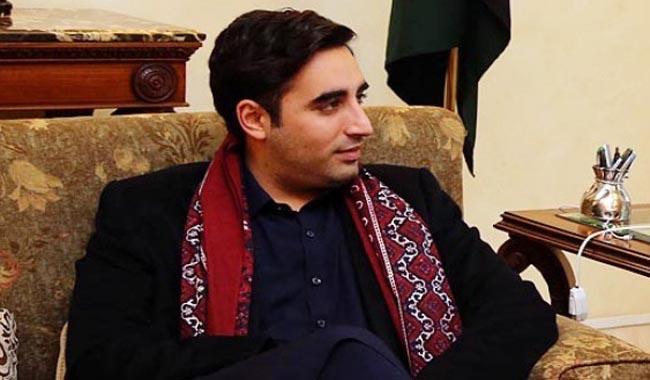
Bilawal Bhutto Zardari Chairman Pakistan Peoples Party has accused the Federal government of deliberately creating electricity crisis to victimize the people and divert their attention from the Panama Leaks and other misdeeds of the Sharif government in the whole country, special in Sindh and its capital city Karachi.
In a press statement issued Tuesday, the PPP Chairman said that electricity need of the country was 23,700 megawatt while the total power generation capacity was 23,600 thus practically there was a meager shortfall of just 100 megawatt.
“But the Federal government and its electric companies were inflicted an artificial shortfall of 7,000mw upon the people during the severe heatwave the country is undergoing nowadays,” he added.
He said that Nawaz Sharif government paid hundreds of billions rupees circular debt and, in some cases, the extra payments were made to the IPPs but still it was imposed artificial load-shedding on the consumers to burn them in the scorching heat.
Bilawal Bhutto Zardari said that providing electricity is a state function as per our constitution and the world over it remains the same but the PML-N government was targeting the people with unannounced load-shedding and mock power breakdowns, which should be vehemently condemned by every Pakistani. He further said that Sindh province was producing surplus electricity but its length and breadth have been subjected to unbearable load-shedding by PML-N government.
He condemned the attitude of K-Electric, which means only minting money and fleecing the people of Karachi without supplying electricity. “K-Electric has capacity 1,800mw and 1,000mw supply from other resources including IPPs and WAPDA. But it generates only 400mw through gas-fired power plants and has practically shut down its Furnance Oil power plants to save billions of rupees in profits while Karachittes burn under fire-spitting son,” he added.
Bilawal Bhutto Zardari said that old areas of Karachi including Lyari, Kharadar, Keamari and other poor localities are specially targeted with 8-12 hours of load-shedding. Residents of Lyari were even compelled to hold a Dharna outside K-Electric office yesterday against the discriminatory attitude of the concerned authorities.
PPP Chairman said he was informed that K-Electric has switching to use of silver cables instead of copper, which don’t pick much load thus multiplying the electricity crisis.
He also warned K-Electric, HESCO and SEPCO to stop issuing over-billing to the consumers and improve their performance without any delay. Otherwise, the people won’t tolerate this victimization and come out on roads against them.
What Does the US Killing Mullah Mansour Inside Pakistan Mean?

By Mohammad Taqi
It is one thing for the US officials to describe Pakistan as the ‘ally from hell’ and its policies as ‘duplicitous’ and quite another to actually remove any doubt about it bytaking out Mullah Akhtar Mansour right on Pakistani soil.
Mullah Mansour was the Afghan Taliban’s current emir, a graduate of the Haqqaniah seminary located about an hour’s drive from the Pakistan army’s General Headquarters and Pakistan’s handpicked successor to their previous leader Mullah Muhammad Omar. Pakistan’s military leaders, who have a chokehold on the country’s foreign and national security policies, were caught yet again with their hand in the cookie jar.
This past weekend a US drone strike killed Mullah Mansour near Nushki in Pakistan’s Balochistan province where he was likely en route to his usual abode near the provincial capital Quetta.
Five years earlier the US had eliminated the al-Qaeda leader Osama bin Laden in a raid right next to Pakistan’s premier military academy in Abbottabad. The key difference between the two attacks is that Pakistan’s current army chief General Raheel Sharif has been reassuring both his countrymen and the world that his outfit has changed tack and is fighting terrorism of all shades.
The fact is that Pakistan’s army under General Raheel Sharif has continued to harbor transnational jihadist terrorists like Mullah Mansour and his even more lethal lieutenant Sirajuddin Haqqani, without a pause. Mullah Mansour was chosen as the emir of the Taliban in Kuchlak, which is about half an hour drive from Quetta, in an open assembly under the auspices of the Pakistani intelligence apparatus. Like Abbottabad, Quetta is also a major garrison city and is home to the Pakistaniarmy’s Command Staff College, its XII Corps, military selection and recruitment center and the regional office of the Inter-Services Intelligence (ISI) Directorate.
A highly active Pakistan Air Force flying base is located at Samungli right outside Quetta. More importantly, the Balochistan province has been under a complete control of the army and the Frontier Corps (FC), which have been conducting a particular brutal and dirty war against the secular Baloch separatists for years. The province, especially Quetta, has been a no-go area for foreign media and journalists for over a decade now. The veteran New York Times correspondent and author of the book The Wrong Enemy: America in Afghanistan, 2001-2014, Carlotta Gall was physically beaten up by the intelligence goons when she was reporting on the Taliban activities there. Even the US diplomats are not at liberty to visit Balochistan at will.
It is simply inconceivable that Mullah Mansour could have lived large in Balochistan and was appointed the Taliban leader without the Pakistani army’s knowledge, approval and patronage. It is necessary to remember that the Pakistani army is a highly-disciplined organization and the ISI is part and parcel with the ISI chief showing up at domestic and foreign engagements with General Raheel Sharif. The buck for harboring Mullah Mansour stops at General Raheel Sharif’s desk not at any lowly intelligence thug. And the question of any rogue elements within the army or its ISI Directorate does not arise because insubordination has never been tolerated in the military’s 69-year history. Pakistan’s army has dealt with rouge orrebellious elements within its ranks swiftly and sternly.
While some in Pakistan are trying to spin the Mullah Mansour assassination as some sort of cooperation between the US and Pakistan, where the latter tipped off the Americans because the Taliban leader was averse to peace talks, it actually smacks of distrust the size of the Grand Canyon. Pakistan’s Prime Minister Nawaz Sharif has already conceded that the US officials informed him and General Raheel Sharif of the attack after the fact. The complete radio silence for 3 days from the Pakistani army’s otherwise hyperactive spokesman General Asim Bajwa also indicates that they were stumped and stunned by the strike in an area not too far from where Pakistan had tested its nuclear weapons in 1998. The US had not informed Pakistan of the bin Laden raid either, and rightly so.
While over half a dozen key members of the Haqqani Network (HQN) have been killed in over 90 drone attacks directed against the group, its leader Sirajuddin has managed to escape several times thanks to his Pakistani patrons tipping him off.
Pakistan managed to keep secret not only Mullah Omar’s life there but also his 2013 death for a good two years while its blue-eyed boy Mullah Mansour ran the deadly show. It is extremely unlikely that after striving so hard to install, consolidate and project Mullah Mansour’s power over the fractious Taliban, Pakistan would simply hand him on a platter to the US.
Mullah Mansour’s assassination is a great setback for Pakistan’s army and a major vindication for the Afghan government, which has claimed all along that Pakistan, through its Taliban and HQN proxies, is waging an undeclared war against Afghanistan. The Pentagon issuing a formal statement declaring the attack andPresident Barrack Obama himself confirming Mullah Mansour’s death, underscores the fact that it was not a clandestine CIA hit but an act of war for which the US is willing to take responsibility under the international law.
Both the US and the Afghan President Dr. Ashraf Ghani had shown tremendous patience with the Pakistani leadership and have gone through the tedious and fruitless talks, which turned out only a ruse by Pakistan to buy time for the Taliban and consolidate the jihadist group’s battlefield position. Unlike what some Pakistani analysts are saying, this US drone strike didn’t kill the peace talks; it merely buried a dead process. The Quadrilateral Coordination Group (QCG) comprising the US, China, Pakistan and Afghanistan, which had met in Pakistan earlier this month, had made no headway at all. Pakistan had promised to deliver the “reconcilable” Taliban to the negotiations table and to take action against the “irreconcilable” ones. But as expected the pledge was a hogwash. In all likelihood Mullah Mansour’s replacement will be as much a Pakistani proxy as he was and as averse to the talks.
In the short run the level of Taliban and HQN-perpetrated violence in Afghanistan will go up but the decapitation will have far-reaching benefits in the long run. It will demoralize and divide an already bickering Taliban and stymie the momentum that Mullah Mansour had started to gain. The drone strike may have killed Mullah Mansour but what it has really done is to deal a deathblow to Pakistan’s perennial game of plausible deniability after harboring terrorists and unleashing them on its neighbors. From General Pervez Musharraf to General Raheel Sharif, the Pakistani army has claimed that it fights terrorists only for the world to discover them inside Pakistan.
While Pakistan has been promising the QCG that it will bring the Taliban to the negotiations table the country’s Interior Minister Chaudhry Nisar Ali Khan has claimed yet again that Pakistan cannot force the Taliban into the parleys. The problem with that excuse is that the Taliban cannot conduct a relentless urgency in a landlocked Afghanistan without outside sanctuaries, which they continue to enjoy as Mullah Mansour’s death inside Pakistan shows.
The Taliban might be able to raise cash through drug trade but rely heavily on Pakistan for logistics, weapons, fuels and healthcare. Sartaj Aziz, a senior advisor to the Pakistani Prime Minister Nawaz Sharif, had recently admitted that the Taliban leaders are in Pakistan as are their families. Pakistan cannot have its jihadist cake and eat it too; it either controls or the Taliban and is responsible for their deadly actions or should act against them. Letting its soil serve as a bridgehead against Afghanistan and then crying foul when it is called out for it cannot go on forever. Whatever the so-called redlines may be for Pakistan, the US seems to have drawn a line in sand. It would be crucial to see whether the US eliminates the next Taliban chief as swiftly as it did in case of Mullah Mansour or waits as had happened with Mullah Omar.
Pakistan - The State Of Education

The Pakistan District Education Ranking 2016, a report compiled by education campaign Alif Ailaan, gives us nothing to rejoice about.
The district-based reports, which focus on education score-keeping in light of different parameters such as retention, learning and gender parity in educational institutes across the country, give a clear insight into the dismal state of education in the country.
The district-based reports, which focus on education score-keeping in light of different parameters such as retention, learning and gender parity in educational institutes across the country, give a clear insight into the dismal state of education in the country.
Although this report gives us many reasons to be very concerned for the future of Pakistan’s children, the most salient issue is that 81% of all government schools are primary schools, which has major implications for the state of higher education in the country.
If the aim was just basic literacy, then the government should perhaps be satisfied with the result of this report.
Considering that Pakistan has the most out-of-school children in the world, around 24 million, and is second only to Nigeria in this regard, even basic literacy is a far-reaching dream the way the situation is progressing ever so slowly.
The aim must slowly shift from primary education to secondary and higher education and access must be improved to allow children to continue their education provided they do not drop out first.
The report states that all provinces have generally declined in retention of students and gender parity except for Punjab, which has shown a consistent improvement.
Worryingly so, the district Lahore has gone down to the 22nd rank as compared to its third position in 2015, reflecting that the growing number of private schools mushrooming across the city and the standard of education provided by them need to be regulated so that the number of disillusioned parents encouraging drop out decrease in number.
Worryingly so, the district Lahore has gone down to the 22nd rank as compared to its third position in 2015, reflecting that the growing number of private schools mushrooming across the city and the standard of education provided by them need to be regulated so that the number of disillusioned parents encouraging drop out decrease in number.
Amongst reports of improvements in other districts, Federally Administered Tribal Areas (FATA), Balochistan and Sindh are performing consistently poorly, even though a large chunk of the budget of Sindh has gone towards the improvement of education.
In light of these dismal rankings the recent news of the Sindh Government taking over the DFID education project is probably not in the best interests of the people.
While the dismal situation in FATA and Balochistan can be attributed to the conflict and violence in these provinces, the Sindh Government has no excuse for this bleak situation and must be held accountable.
The report points out that the country’s overall education score has declined by four points after consecutive years of slow improvement and retention is the biggest factor to blame.
Drastic changes must be made in the way we hope to educate if we are to improve the situation in the country.
US will target terrorists in Pakistan to safeguard its interests: State Dept

Spokesperson for the Department of State, Mark Toner has reiterated that drone attacks would not stop in Pakistan’s territory and terrorists would be targeted, reported Friday.
The department has stated that Pakistan should take action against all extremist groups.
On the other hand, the United States has offered Afghanistan Taliban for the second time to hold talks. The spokesperson said that the banned outfit does not have any option but to reconcile and work towards peace.
Mullah Akhtar Mansoor was targeted for not taking the reconciliation process seriously and attacks on US and Afganistan forces, Toner said. He asserted that United States favours reconciliation process to re-establish peace in Afghanistan.
The new leader of Taliban, Mullah Haibatullah Akhundzada has an opportunity to choose talks and end disturbance in the region, he added.
He cleared United States stance after Pakistan’s strong reaction following drone strike in Balochistan that it would target militants wherever need be to safeguard its interests.
A drone attack on Saturday killed Mullah Akhtar Mansoor, Afghanistan Taliban chief who entered Pakistan after allegedly visiting his family in Iran. He was to enter Afghanistan after passing through Balochistan and was using a white corolla.
United States intelligence agency locked the target and kept a vigil until he was away from populated vicinities before handing over the operation to the military.
An unmanned aircraft took off from a base in Afghanistan and attacked the vehicle in Nushki area of the province.
Secretary of State John Kerry said that Prime Minister Nawaz Sharif was informed about the attack beforehand however Foreign Office (FO) denied the report and stated that the premier was informed after the strike.
Chief of Army Staff (COAS) General Raheel Sharif held a meeting with US Ambassador David Hale earlier this week and termed the strike an act that was detrimental to Pak-US relations.
Nawaz Sharif and Interior Minister Chaudhry Nisar in separate statements declared the attack a violation of Pakistan’s sovereignty.
However, Obama administration is not budging and has announced to continue drone attacks in Pakistan for the second time.
Tuesday, May 24, 2016
India to bypass Pakistan on the road to Central Asia

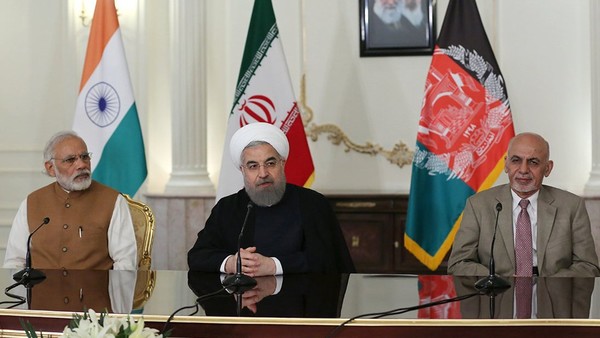
U.S. Strike on Taliban Leader Is Seen as a Message to Pakistan
 By MARK LANDLER and MATTHEW ROSENBERG
Early on Saturday, a middle-aged Pashtun man used forged documents to cross from Iran into Pakistan. A few hours later, on a lonely stretch of highway, he was incinerated by an American drone.
It is not exactly clear how the Americans tracked Mullah Akhtar Muhammad Mansour, leader of the Afghan Taliban, to a white sedan rattling across the arid expanse of Baluchistan Province. The United States picked up a mix of phone intercepts and tips from sources, American and European officials said, and there were reports that Pakistan also provided intelligence. President Obama described Mullah Mansour’s death on Monday as an “important milestone” — but the strike was also an illustration of the tangled relationship between Washington and Islamabad.
Not since Mr. Obama ordered Navy SEALs to hunt down Osama bin Laden in May 2011 has he authorized a military incursion in Pakistan as audacious as this one. The White House did not inform the Pakistanis in advance of the operation, which occurred outside the frontier region near Afghanistan, the one place where Pakistan has tolerated American drone strikes in the past.
By using the military’s Joint Special Operations Command rather than the C.I.A. to carry out the attack, the United States denied Pakistan the fig leaf of a covert operation, which in the past has given the Pakistanis the ability to claim they had been consulted beforehand.
The fact that the top official of Afghanistan’s Taliban was able to travel freely through Pakistan, and even into Iran, contradicted years of denials by Pakistani officials that they were harboring Taliban leaders. Mr. Obama offered no apology for the decision to strike Mullah Mansour in Pakistani territory, saying it was a simple case of self-defense.
“He is an individual who as head of the Taliban was specifically targeting U.S. personnel and troops inside of Afghanistan who are there as part of the mission I have set to maintain a counterterrorism platform and provide assistance,” Mr. Obama said during a news conference in Hanoi, Vietnam. Killing Mullah Mansour, Mr. Obama said, sent a message that “we’re going to protect our people.”
To many outside experts, it sent an equally powerful message to Pakistan. On Monday, the Pakistani Foreign Ministry summoned the American ambassador, David Hale, to lodge a protest for what it said was a “violation of Pakistan’s sovereignty.” The killing would obstruct multiparty efforts to negotiate a settlement between the Taliban and the Afghan government, it said.
Pakistan’s military and intelligence establishment was said to favor Mullah Mansour as the group’s new leader. But the White House concluded he was a stubborn obstacle to reconciliation talks, which have been paralyzed for months. While his intransigence on the peace process had made him less valuable to the Pakistanis as well, experts said, Mr. Obama’s decision to target him suggested he had little patience for Pakistani sensitivities.
“The administration is no longer worried about blowing up anything,” said Vali Nasr, a former State Department official who worked on Pakistan. “This is literally carrying out an operation, not against an Arab terrorist leader, but against a Pashtun ally of Pakistan, inside Pakistani territory.”
Mr. Obama approved the targeting of Mullah Mansour in the past few weeks, according to officials. With this authorization in hand, the Joint Special Operations Command was able to act quickly when intelligence indicated that he was traveling through Baluchistan, those officials said.
The United States told Pakistani authorities several weeks ago that Mullah Mansour was a target, officials said. While the Pakistanis provided general information on his location and activities, they did not provide specific details on his movements. That was supplemented by American intelligence, including satellite imagery, signals intelligence and human assets.
For Pakistan, providing even the most slender of details about the possible whereabouts of Mullah Mansour would represent an unexpected turn. Pakistan had cultivated him for years, and he was widely seen as its choice to lead the Taliban after the 2013 death of Mullah Muhammad Omar, the founder of the insurgency movement, was revealed last year.
But once installed, he resisted Pakistani efforts to put up even the appearance of being willing to take part in a peace process. As a result there was growing American pressure on Pakistan to crack down on Taliban leaders who take shelter there — and a growing sense within Pakistan’s security establishment that Mullah Mansour was proving too independent, and thus expendable.
A senior American defense official said that another factor in Pakistan’s decision to provide some limited help in tracking down Mullah Mansour may have been that one of his deputies, Sirajuddin Haqqani, has deep and longstanding ties to Pakistan’s main spy service, the Directorate of Inter-Services Intelligence.
Mr. Haqqani, who leads a Taliban faction that is widely seen as one of the most violently effective parts of the insurgency, may prove more willing to take cues from Pakistan’s military leadership and the ISI.
For the United States and its allies in the Afghan government, though, the possibility of an even harder-line Taliban leader could undo any temporary advantage provided by the killing of Mullah Mansour.
“One of the interesting questions is, ‘Does this help?’” said Vikram Singh, a former Pentagon and State Department official who is now vice president for international security at the Center for American Progress. “Mansour was bad news for any kind of peace process. He definitely came in hard line and basically pressed for a military advantage.”
The White House, a senior American official said, had not given up on the peace process. Removing Mullah Mansour from the scene, he said, might actually increase the incentives for the Taliban to go to the bargaining table since he was the major impediment to talks. But this official acknowledged that it could also splinter the group’s leadership.
Mullah Mansour had gone to Iran for undisclosed medical treatment, said a European official who had been briefed on the American operation. He traveled across the border to avoid Pakistani hospitals where the ISI tends to keep track of who is coming and going.
Mr. Obama emphasized that the strike did not reflect a shift in American strategy toward Afghanistan, which is focused on training and assisting Afghan troops rather than engaging in combat. But it may have implications for how the United States deals with Pakistan.
“Does this amount to starting a two-track approach — working through Pakistan while using force to eliminate Taliban leaders who obstruct peace talks?” said Husain Haqqani, Pakistan’s former ambassador to the United States. “Either way, it shows a diminishing of the Obama administration’s already diminished trust in Pakistan.”
Barnett Rubin, a former senior State Department official, said that Mullah Mansour’s death was unlikely to have a significant impact on the Taliban, which can easily replace him.
The effect could be far greater on Pakistan’s government, he said, which now must deal with the embarrassing circumstance.
“We killed the leader of the Taliban driving across Baluchistan in a taxi,” Mr. Rubin said. “I think we have some questions to ask of Pakistan.”
Sunday, May 22, 2016
Afghanistan - The Return of a Peacemaker ... or a Trojan Horse?
By Wahab Raofi
Like a buzzing mosquito that just won’t go away, Gulbuddin Hekmatyar is back in the news. He sent a video from his unknown hideout in Pakistan, asking for reconciliation with Afghanistan’s government and presenting himself as a peacemaker.
This is the same Gulbuddin Hekmatyar who was branded a global terrorist by the United States, founded the militant Hezb-i-Islami group and is blamed for killing thousands of his fellow Afghan citizens with indiscriminate artillery shelling during the 1990’s civil war.
Hekmatyar also served briefly as Prime Minister of Afghanistan, a position he “earned” by virtue of a coup d’etat in Kabul. At age 68, after living in exile in Iran and Pakistan for decades, he is now trying to carve out a new position of power for himself with Afghan President Ashraf Ghani.
President Ghani has extended an olive branch of peace to various factions, including the Taliban, and Hekmatyar looks to exploit those soft sentiments for a ticket back into Afghanistan. He says he wants a “real and fair peace.”
Instead, I believe Hekmatyar covets a supreme-leader role for himself, like Kim Jong-Un in North Korea or Grand Ayatollah Sayyid Ali Hosseini Khamenei in Iran.
I have been familiar with Gulbuddin Hekmatyar since our college days together, when we both attended Kabul University in the early 1970’s. He was a freshman in the engineering department while I was in law school. I remember him as a very good orator. He was already assembling supporters, mostly rural young Pashtuns from the Ghilzai tribes.
One day he climbed a tree and delivered a long speech, railing against the Afghan government for not taking action against Maoist groups, such as the student Progressive Youth Organization (PYO). Hekmatyar’s supporters attacked the PYO students with rocks, and multiple sources say that Hekmatyar personally assassinated poet Saydal Sokhandan, a prominent PYO activist. It may have been his first murder, but it certainly wasn’t his last. To escape arrest, Hekmatyar fled to Pakistan.
Hekmatyar became a master at switching sides in Afghanistan’s never-ending wars. He fought Soviet Union forces during the 1980s, then engaged in infanticide during a civil war with the mujahideen. Although he took CIA funding to help fight the Soviets, his military wing repeatedly attacked Afghan and U.S. forces - including a 2013 car bombing that killed 16 persons, including six American advisers in Kabul.
In his book The Main Enemy, former CIA officer Milt Bearden wrote that “Hekmatyar thought nothing of ordering an execution for a slight breach of party discipline.”
He is well-known for being brutal, ruthless, ungrateful and a notorious warlord who would do anything to serve his own purposes. His latest move toward “peace” was triggered by a confluence of events.
Since taking office in 2014, President Ghani has been seeking a reconciliation with insurgents. The Taliban refused and intensified their attacks on Afghan security forces.
Equally desperate for tranquility is Afghanistan’s Peace High Council, established in 2010 by former president Hamid Karzai. It has failed to produce anything tangible. Under public pressure because of its bloated budget and staff and a marked lack of results, the Peace High Council is pushing to show some kind of progress, no matter what the price.
Hekmatyar is trying to seize this opportunity to make his next move. His Hezb-i-Islami party fragmented over the years, and most of his military wing defected and joined the Karzai government. He also lost support among Pashtuns who were once the backbone of his party.
Anyone who dreams of ruling Afghanistan must carry the support of the Pashtun-dominated south, from which Afghan kings and the Taliban hailed. The traditional south would rather be ruled by the Taliban, which doesn’t pose a threat to its lifestyle, than by someone who wants to impose a party platform.
Hekmatyar’s image in the south was further damaged when he reportedly took sides with Al Qaeda against the Taliban.
If anything is certain about Hekmatyar, it is that he has become predictable. He is an opportunist and will not miss a chance to quench his never-ending thirst for power. I believe that his peace overture with the embattled Ghani government is a gambit. He still has many of his ex-commanders and loyalists in high positions within the Afghan government and parliament.
If Hekmatyar were welcomed back into a position of influence in Afghanistan, I see three possible scenarios:
(1) Hekmatyar stirs trouble by demanding more power for his close associates. This further polarizes and widens the Afghan rivalries, especially between two large ethnic groups: the Pashtun, who are behind President Ghani, and the Tajik, who support Abdullah Abdulla, CEO of the unity government. In the resulting chaos, Hekmatyar tries to emerge as supreme leader.
(2) Hekmatyar finds himself unable to impose his will on a nation that has changed so much since 2001, in terms of expanded human rights, freedom of press and social liberties. His ambitions are squashed, and he flees back to Pakistan.
(3) Hekmatyar keeps his promise to live as a responsible citizen. This encourages other insurgents to lay down arms down and join the peace process.
We can hope against hope that the third option is the one that materializes - or we can avoid the terrible risk simply by ignoring the peace offering that is almost certainly a ruse by the notorious Gulbuddin Hekmatyar.
http://www.huffingtonpost.com/wahab-raofi/the-return-of-a-peacemake_b_10047032.html
Tuesday, May 10, 2016
#Bangladesh - Death designer Nizami hanged for war crimes
Leader of a ruthless militia that massacred innocent civilians during 1971, Motiur Rahman Nizami has been hanged for crimes committed against humanity during the Liberation War.
The 71-year-old Jamaat-e-Islami chief was hanged by the rope inside Dhaka Central Jail at 11:55pm, Jahangir Kabir, superintendent of the prison, said. The body was taken down from the noose at 12:10am.
District’s civil surgeon Abdul Malek Mridha checked his pulse to confirm the death.
Two ambulances, bearing the dead body of Nizami, have headed towards Pabna, his ancestral home, escorted by six vehicles of the law enforcement agencies.
The infamous war criminal will be laid to rest at his ancestral soil in Pabna, Ali Hossain, an inspector of the Dhaka Metropolitan Police (DMP), told The Daily Star earlier.
Nizami masterminded the formation of the ruthless militia Al Badr that unleashed terror on peace-loving Bangalees, killed unarmed civilians, raped women and destroyed properties during the Liberation War.
Towards the end of the nine-month war, the infamous militia -- Al-Badr Bahini -- committed “crimes of serious gravity intending to demean the human civilisation”.
Sensing Pakistan's imminent defeat, the notorious force systematically rounded up, tortured and killed the nation's brightest luminaries to intellectually cripple the soon-to-be independent Bangladesh.
Convicted of committing war crimes, a special International Crimes Tribunal handed him the death penalty on October 29, 2014. Later, on January 6 this year, the Supreme Court upheld capital punishment for him.
After his review plea against death scrapped, Nizami did not seek presidential mercy. Home Minister Asaduzzaman Khan, earlier this evening, told The Daily Star that the government had ordered for Nizami’s execution.
As per code, Nizami’s family had one last meeting with him. A total of 24 family members entered Dhaka jail around 7:50pm and stayed inside for about one-and-half hours. Later, they left without speaking to the media.
District Deputy Commissioner Mohammad Salahuddin, Executive Magistrate Tanveer Ahmed, Dhaka Metropolitan Police (DMP) deputy commissioner (north) of Detective Branch Sheikh Nazmul Alam and Additional police IGP Col Iqbal Hasan were present during the execution.
http://www.thedailystar.net/country/security-tightened-around-dhaka-jail-1221562
Pakistan - Ali Haider Gilani recovered from Afghanistan after three years in captivity
Former prime minister Yousaf Raza Gilani’s son, Ali Haider Gilani, was recovered on Tuesday in a successful operation in Afghanistan.
Foreign Office in a statement said Ali Haider had been recovered “today in a joint operation carried out by the Afghan and US security forces”.
“Afghan National Security Adviser Mohammad Hanif Atmar in a telephone call to prime minister’s senior aide Sartaj Aziz confirmed Gilani was recovered in a joint operation carried out by Afghan and US security forces in Ghazni, Afghanistan.”
Preparations are being made to return him to Pakistan following a medical check-up, the statement added.
The Afghan presidency said the raid had targeted an al-Qaeda cell, and Ali Haider had been sent to the Pakistani embassy in Kabul.
However, later in a statement, President Ashraf Ghani said Ali Haider was recovered from Giyan district of Paktika province.
The Pakistani embassy said Ali Haider was not yet handed over to them.
“There is possibility he will be handed over by tomorrow (Wednesday),” spokesperson Akhtar Munir told The Express Tribune from Kabul over telephone.
Yousaf Raza Gilani’s son kidnapped
According to sources, the embassy had sought access to Gilani, who is at the Bagram airbase with the American military.
Meanwhile, addressing a rally in Bagh, Kashmir, the former premier said, “I received news of my son’s recovery when I landed in Kashmir.”
“However, instead of going back home to receive my son, I felt it was my duty to come here first and address the rally,” Gilani said.

Former PM Yousuf Raza Gillani speaks to media in Islamabad. PHOTO: ONLINE
PPP chairman Bilawal Bhutto Zardari also confirmed the former premier’s son’s recovery.
“PM Yousuf Raza Gilani received a call from ambassador of Afghanistan. His son Haider Gilani has been recovered in a successful operation,” the PPP chairman said on Twitter.
 BilawalBhuttoZardari
✔ @BBhuttoZardari
The brother of kidnapped Ali Haider, Abdul Qadir Gilani, told media he was “so happy today that I can’t explain it in words”.
“He is still in Afghanistan and soon he will be among us,” he said of his brother.
Afghan ambassador to Islamabad Dr Okmar Zakhilwal said “He [Gilani] is well and will be repatriated to his family soon.”
Delving into details regarding his telephonic conversation with the former premier, the envoy wrote on Facebook: “He was ecstatically delighted as expected and grateful of President Ashraf Ghani’s personal attention to his son’s safe release.”
The former premier also thanked the Afghan Security Forces for bringing a happy ending to a dreadful family saga for them, Zakhilwal added.
Two years on…: Ex-premier Gilani’s abducted son ‘happy and safe’
The incident took place at a party corner meeting in Farrukhabad, near Matital Road in Multan, where Ali Haider was scheduled to address.
At the time of abduction, CPO Multan had said eight armed men riding a black Honda City car and two 125 cc motorcycles, opened fire at a corner meeting in Farrukh Town, an area falling in Ali Haider’s PP-200 constituency.
Witnesses said a bullet also hit Ali Haider and that he was bleeding when the kidnappers dragged him into the car.
Militants release video of Ali Haider Gilani
The attack killed Ali Haider’s secretary, Muhammad Muhiuddin, and his private guard, Amin Ahmed.
Earlier, a top government official had said Gilani was in custody of a militant group not part of Tehreek-e-Taliban Pakistan.
The official had also stated that the group had demanded Rs2 billion in ransom and warned that they would kill him if their demand was not met within a month.
Ali Haider’s recovery comes two months after Salmaan Taseer’s son Shahbaz Taseer was recovered five years after he was abducted.
http://tribune.com.pk/story/1100467/yousuf-raza-gilanis-son-recovered/
Foreign Office in a statement said Ali Haider had been recovered “today in a joint operation carried out by the Afghan and US security forces”.
“Afghan National Security Adviser Mohammad Hanif Atmar in a telephone call to prime minister’s senior aide Sartaj Aziz confirmed Gilani was recovered in a joint operation carried out by Afghan and US security forces in Ghazni, Afghanistan.”
Preparations are being made to return him to Pakistan following a medical check-up, the statement added.
The Afghan presidency said the raid had targeted an al-Qaeda cell, and Ali Haider had been sent to the Pakistani embassy in Kabul.
However, later in a statement, President Ashraf Ghani said Ali Haider was recovered from Giyan district of Paktika province.
The Pakistani embassy said Ali Haider was not yet handed over to them.
“There is possibility he will be handed over by tomorrow (Wednesday),” spokesperson Akhtar Munir told The Express Tribune from Kabul over telephone.
Yousaf Raza Gilani’s son kidnapped
According to sources, the embassy had sought access to Gilani, who is at the Bagram airbase with the American military.
Meanwhile, addressing a rally in Bagh, Kashmir, the former premier said, “I received news of my son’s recovery when I landed in Kashmir.”
“However, instead of going back home to receive my son, I felt it was my duty to come here first and address the rally,” Gilani said.
Former PM Yousuf Raza Gillani speaks to media in Islamabad. PHOTO: ONLINE
PPP chairman Bilawal Bhutto Zardari also confirmed the former premier’s son’s recovery.
“PM Yousuf Raza Gilani received a call from ambassador of Afghanistan. His son Haider Gilani has been recovered in a successful operation,” the PPP chairman said on Twitter.
BilawalBhuttoZardari
PM @YR_Gillani received call from ambassador of Afghanistan.His son @haidergilani has been recovered in a successful operation.Alhamdulillah
The brother of kidnapped Ali Haider, Abdul Qadir Gilani, told media he was “so happy today that I can’t explain it in words”.
“He is still in Afghanistan and soon he will be among us,” he said of his brother.
Afghan ambassador to Islamabad Dr Okmar Zakhilwal said “He [Gilani] is well and will be repatriated to his family soon.”
Delving into details regarding his telephonic conversation with the former premier, the envoy wrote on Facebook: “He was ecstatically delighted as expected and grateful of President Ashraf Ghani’s personal attention to his son’s safe release.”
The former premier also thanked the Afghan Security Forces for bringing a happy ending to a dreadful family saga for them, Zakhilwal added.
PM congratulates Gilani over recovery
Prime Minister Nawaz Sharif also congratulated Gilani over the recovery of his son, the PM’s office said.
“I am pleased at the news of the safe recovery of your son Ali Haider Gilani. I pray to Allah Almighty he may return home soon,” Nawaz Sharif said.
“I pay tributes to you and your whole family for spending three years with courage and patience,” the premier added.
In May 2013, armed assailants kidnapped the son of the former prime minister, while also killing two PPP workers in the attack.Prime Minister Nawaz Sharif also congratulated Gilani over the recovery of his son, the PM’s office said.
“I am pleased at the news of the safe recovery of your son Ali Haider Gilani. I pray to Allah Almighty he may return home soon,” Nawaz Sharif said.
“I pay tributes to you and your whole family for spending three years with courage and patience,” the premier added.
Two years on…: Ex-premier Gilani’s abducted son ‘happy and safe’
The incident took place at a party corner meeting in Farrukhabad, near Matital Road in Multan, where Ali Haider was scheduled to address.
At the time of abduction, CPO Multan had said eight armed men riding a black Honda City car and two 125 cc motorcycles, opened fire at a corner meeting in Farrukh Town, an area falling in Ali Haider’s PP-200 constituency.
Witnesses said a bullet also hit Ali Haider and that he was bleeding when the kidnappers dragged him into the car.
Militants release video of Ali Haider Gilani
The attack killed Ali Haider’s secretary, Muhammad Muhiuddin, and his private guard, Amin Ahmed.
Earlier, a top government official had said Gilani was in custody of a militant group not part of Tehreek-e-Taliban Pakistan.
The official had also stated that the group had demanded Rs2 billion in ransom and warned that they would kill him if their demand was not met within a month.
Ali Haider’s recovery comes two months after Salmaan Taseer’s son Shahbaz Taseer was recovered five years after he was abducted.
http://tribune.com.pk/story/1100467/yousuf-raza-gilanis-son-recovered/
Subscribe to:
Posts (Atom)