Monday, February 15, 2016

Welcome to the Club: Will Wall Street Tame the Chinese Dragon?


Washington is making attempts to seduce Beijing into being a polite well-behaved junior member of the club of the "Rich White Masters," F. William Engdahl notes.

Although China's economic growth has slightly slowed down, it still remains one of the most rapidly evolving economies; that means Washington has to deal with Beijing's rising global influence whether it likes it or not.
However, Wall Street tycoons have seemingly found a way out. What if they persuaded China to take the side of the "Rich White Masters" instead of challenging the dollar-dominated world?
"The US unblocked the IMF reforms as well as opening admission of China's renminbi currency into the IMF [International Monetary Fund] SDR basket to further seduce China into being a polite, well-behaved junior member of the club of the 'Rich White Masters',"  American-German researcher, historian and strategic risk consultant F. William Engdahl suggests in his article for New Eastern Outlook.
The researcher narrates that on December 18, "after exactly five years stall," the US Congress eventually approved a 2010 reform of the IMF's quotes and governance.
The Fund will increase its resources to $660 billion, while 6 percent of quota shares will go to "dynamic emerging market and developing countries." Four emerging economies — Brazil, Russia, India and China — will now be among the ten top members of the IMF, most notably United States, Japan, Germany, Italy and Britain.
"Is this long-awaited and little-expected change of heart from Washington a major concession to China and the BRICS countries?" Engdahl asks.
Hardly, the researcher notes.
Indeed, Washington and Wall Street moguls aren't going to hand over the reins of the IMF to the developing countries.
For a serious policy change in the IMF a majority of 85 percent is required. That insures that Washington which possesses a 17.4 percent voting share can block any decision.
After the reform the US voting share remains 17.4 percent, Japan stays at six percent, Germany has lost 0.4% to 5.6%, the UK and France have dropped a mere one percent to four percent. China now has eight percent, but in fact it does not save the day, the researcher emphasizes.
"The Executive Board's decision to include the RMB [renminbi] in the SDR basket is an important milestone in the integration of the Chinese economy into the global financial system," Christine Lagarde, Managing Director of the IMF, stated on November 30, 2015.
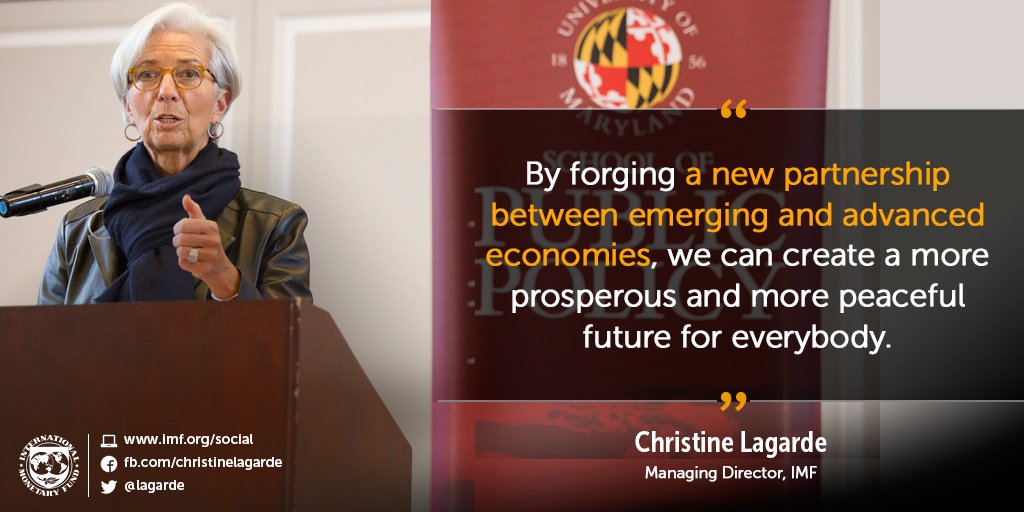
Strong policy actions by emerging & advanced economies are a win-win for the global economy http://ow.ly/XXs0Q 

 The global plutocracy does want to integrate the Chinese economy into the West-led global financial system, Engdahl stresses. They want to tame the Red Dragon and thus ensure the stability of the Bretton-Woods system.
It still remains unclear whether or not Beijing would swallow the bait, the researcher stresses.
On the one hand, state-owned Xinhua media outlet stated clearly that "China is seeking to reform the current US-defined international order, rather than revolutionize it."
On the other hand, China's President Xi Jinping has repeatedly demonstrated that he would not allow anyone to twist Beijing around his little finger.
Furthermore, China, Russia and Iran are driving the world away from the petrodollar's hegemony by abandoning the dollar as a means of payment for oil. China buys Russia's oil for the renminbi, while India and Iran have shifted to rupee in their mutual oil trade.
And that is not all. Tehran, Beijing's close and perspective ally, is planning to bill new international crude sales in euros in order to reduce its dependence on the US dollar, Reuters reported Monday.
To paraphrase Engdahl, it is more likely that Beijing is "playing a far more subtle and sophisticated game of deception on the tradition of the great Chinese strategist Sun Tzu," rather than "locking its horse to the dollar wagon."


Read more: http://sputniknews.com/politics/20160209/1034477537/wall-street-china-rise.html#ixzz40I0w8D9U

Russia Now Dominant Power in Syria - Analyst

The Syrian ceasefire accords, signed in Munich, have laid bare the impotence of Washington regarding the ongoing civil war, and have proved that resolving the almost five-year conflict depends on Russian interests in the region, international affairs observer Marc Champion wrote, in an opinion column for Bloomberg View.


“Since when did Russia, rather than the US, play the deciding role in any part of the Middle East?” he asked and, answering his own question, said, “Since now. The terms of the truce show the impotence of the U.S. in Syria.”
Fyodor Lukyanov, Chairman of the Presidium of the Council on Foreign and Defense Policy, noted in a conversation with Champion that the situation in Aleppo underscores the bottom line of Moscow’s campaign in Syria.
"This is an absolutely crucial issue, both for Syria's future stability, and for Russia to demonstrate that the whole operation made sense. You need some kind of spectacular event of the scale of retaking Aleppo to do that," Lukyanov stated.


Lukyanov expressed doubt that the Syrian ceasefire will be fulfilled at first take, as conditions for peace are deemed impractical at this point. But peace in the region could “live” if diplomats can harmonize the various clauses in the agreement. This scenario has been shown to be workable in Bosnia and in Ukraine, the expert observed.

Champion questioned how a peace in Syria would develop after Aleppo, the country’s largest city, was retaken by Assad’s army.
Lukyanov suggested that a Turkish intervention in Syria would be “inevitable,” as Ankara would be dealing with an increase in refugees fleeing the ongoing violence in the war-torn country. At the same time, he said, the advance of Syrian and Kurdish forces would strip Turkey of control over the border with Syria, leading to creation of a “Kurdish proto-state” in the region.
Under this scenario, a standoff would expand, leading to a direct Russian-Turkish confrontation, something nobody wants, Lukyanov noted.


The recapture of Aleppo will seriously impact the outcome of the Syrian civil war, as it will simultaneously mark the success of the Moscow operation in Syria while pulling the rug on form under the stated opinions of the West with regard to Russian activities in the region, Champion added.

Control over territories reclaimed from Daesh would be accepted by Assad rather than by rebels backed by the US and Turkey.
“Kerry's problem, and that of the US and its allies, is that by now Putin holds virtually all the cards. Russia may not be the dominant player in the Middle East, but when it comes to Syria, it certainly is,” Champion said.


Read more: http://sputniknews.com/middleeast/20160216/1034812284/russia-dominant-power-syria.html#ixzz40Hx85ea7

Erdogan uses ISIS to suppress Kurds, West stays silent – Turkish MP


President Recep Tayyip Erdogan has been using ISIS to advance his Middle East policy and suppress the Kurds, and Ankara’s elite maintains vibrant economic ties with the terror group and harbors its militants, a Turkish MP has told Russian media.
“Erdogan uses ISIS [Islamic State/IS, also known as ISIS/ISIL] against the Kurds. He can’t send the Turkish Army directly to Syrian Kurdistan, but he can use ISIS as an instrument against the Kurds. He has a greater Ottoman Empire in his mind, that’s his dream, while ISIS is one of the instruments [to achieve it],” Selma Irmak, a Turkish MP from the Peace and Democracy Party told RIA Novosti on Monday.
There are many signs that the Turkish leadership is aiding Islamic State and benefiting from it, Irmak argued.
“Wounded militants are given medical treatment in Turkey. For ISIS, Turkey is a very important supply channel. They are allowed to pass through the Turkish border, being given IDs [and other documents],”she added.
“ISIS has training camps in Turkey,” Irmak stressed, citing other examples of Turkey providing IS with certain capabilities, including the fact that all militants go back and forth into Syria through Turkish territory.
Both the Turkish elite and the terrorist group enjoy economic ties as well, Irmak argued.
“ISIS’ oil is sold via Turkey. All of ISIS’ external [trade] operations are being carried out via Turkey and involve not only oil.” Part of the terrorist group’s criminal business trafficking hostages as well as female slaves of Yazidi and Assyrian minorities, while “the government is, of course, well aware of it,” she added.
More proof could be the absence of any violence between the Turkish military and Islamic State militants.
“ISIS never attacked Turkish positions and claimed no responsibility for terror attacks in Turkey’s cities. There were three large terror attacks [in 2015] in Diyarbakir, Suruc and Ankara. Each attack caused harm to the Kurds and opposition activists supporting them,” the MP noted.
Turkey only intervened when the Kurds retook territory from the IS-held Kurdish city of Tell Abyad in northern Syria.
“Turkish warplanes formally bombarded the ISIS-held territory and conducted two airstrikes to show it fights the Islamic State. And in the meantime, Turkey made 65 airstrikes on Qandil [the PKK stronghold in mountainous northern Iraq].”
According to Irmak, Ankara feels free to take on the Kurds because the West is unwilling to harm its interests in the region and beyond.
“Unfortunately, the international community is indifferent towards these events. Turkey has taken Europe prisoner by using Middle Eastern refugees as an instrument of blackmail. The US keeps silent too, having common interests with Turkey. For instance, the US wants to keep using the Incirlik airbase […] and the Turkish Army is emboldened by such impunity.”

Video Report - Turkey attacks Kurds on Syrian territory for 3rd day, says won’t let Azaz fall to YPG forces

Video - Raining Shells: Turkish army fires on Kurdish forces in Syria

Chelsea Clinton: Bernie Sanders’ plan to end mass incarceration is ‘worrying'


    ‘We are not electing a king, we are electing a president,’ said Ms Clinton’s daughter - she claims Mr Sander's criminal justice policy is beyond the realms of possibility .
    Chelsea Clinton said Senator Bernie Sanders’ proposal to end mass incarceration in the US is "worrying" and insinuated that her mother’s rival does not understand what is “possible” to achieve in Government.
    Speaking to a packed town hall in Cleveland, Ohio, Chelsea Clinton took the opportunity to denounce Senator Sanders’ proposed criminal justice reforms when she was asked about her mother’s “vagaries” towards African American policy.
    She replied that Senator Sanders advocated the end of mass incarceration, aiming for the US to no longer be the country with the highest number of people in jail by the end of his first term in 2020 - but his plan "worried" her.
    The US currently has 2.2 million people behind bars, 600,000 more people than China.
    Chelsea Clinton said the goal was not achievable, however, as the majority of inmates are held at state, not federal, prisons.
    “We are not electing a king, we are electing a president,” insisted Ms Clinton. “We need someone who understands what they have to do in the job [as president] but also in partnership with congress, governors and mayors.”
    “My mother understands how the government works,” she added.
    Her comments come amid a growing perception that Hillary Clinton's policies are too moderate while Bernie Sanders' proposals might be more pie-in-the-sky.
    Senator Sanders proposes abolishing prisons for profit, which have an incentive to lock up more people, to legalize marijuana, and to eliminate “mandatory minimums” for drug-related crimes which result in sentencing disparities between black and white people.
    But Ms Clinton's daughter argued that reform needs to come in the shape of education and the promise of jobs, citing her mother’s “cradle to education and cradle to jobs pipeline” policy for historically disenfranchised communities like inner cities and rural areas.
    At the Democrat debate last week, Hillary Clinton accused Senator Sanders of “abandoning” president Barack Obama and openly criticised him as she aimed to shore up support among African American voters.
    Senator Sanders in turn made frequent references to the high number of African Americans who are in prison.
    The Vermont Senator released a new campaign video last week to target black voters - the video showed the daughter of Eric Garner, a black man killed by police in 2014, endorsing Mr Sanders.

    Video - Clinton: Senate Has 'Duty' to Fill Vacant Seat

    Clinton picks up newspaper endorsements in Texas, Florida


    By Dan Merica


    Hillary Clinton got a boost from three large newspapers on Friday in her bid for the Democratic presidential nomination.
    The Tampa Bay Times, Dallas Morning News and Houston Chronicle published editorials that lauded Clinton's record and stances on issues, helping a Clinton campaign that is trying to focus more on March voting states after losing the New Hampshire primary.
    "Democrats should vote for her March 1. She's a better choice than another long-shot liberal senator, her surging rival Sen. Bernie Sanders of Vermont," wrote the Dallas Morning News editorial board. "A better choice not because he's too liberal to win in November, though he is. She's better because over her lifetime, Clinton has learned to temper her idealism without losing it."
    Likewise, the Tampa Bay Times editorial board writes that Clinton, "has the skill and experience to appeal to general election voters and build on President Barack Obama's record."
    In backing Clinton, the Florida paper also slighted Sanders. "There is no indication Sanders is prepared to effectively protect the United States from terrorists or manage the complicated relationships this nation must nurture around the world," they write.
    The Houston Chronicle editorial board, a paper that endorsed then-Sen. Barack Obama over Clinton in 2008, wrote that because of energy and foreign policy, the paper feels "that Clinton would be a better president than the senator from Vermont."
    None of the newspaper endorsements were totally ringing, however.
    "Clinton has made mistakes," wrote the Dallas Morning News board. "She owed America a faster apology and still owes a clearer explanation for why she installed her own email server. The tragic and fatal failures in Benghazi happened under her watch. Her judgment in foreign affairs hasn't been flawless."
    The Tampa Bay Times argues Clinton "is an imperfect candidate with political baggage that would sink most other politicians."
    And the Chronicle knocked Clinton, describing the former secretary of state as "a politician with so much baggage that even Southwest Airlines would start charging fees."
    Clinton's campaign has stepped up their focus on March 1 states since their candidate lost the New Hampshire primary earlier this week. The campaign is dispatching more staffers to those states and have started to tell reporters that the nomination will be won in March, not February.

    Clinton, Sanders battle for votes in Nevada, S.C.

    President Obama won’t rush to replace Justice Scalia, White House spokesman says


    One empty seat on the Supreme Court has changed everything.
    Washington is adjusting to a new political reality after the sudden death of Justice Antonin Scalia, which left a turbulent White House race transformed, a lame-duck president back at the center of the political storm and Senate Republican leaders juggling an electoral hand grenade.
    After the shock of Scalia’s passing and the swift eruption of a bitter partisan feud over his replacement, President Barack Obama and his GOP adversaries will this week begin digging deep for a showdown that will define an already tumultuous political year.
    Obama has upped the ante by making clear that he will defy Republican leaders and presidential candidates who warn he should leave the momentous task of nominating a new justice, who could tip the balance of the Court to liberals, to a new administration.
    But the White House is also signaling that the President, who is in California for a summit of southeast Asian leaders, will not immediately seek to jam the Senate, which is on recess for the next week, with a Supreme Court nominee.
    “We don’t expect the President to rush this through this week but instead will do so in due time once the Senate returns from their recess,” White House spokesman Eric Schultz said Sunday. “At that point, we expect the Senate to consider that nominee, consistent with their responsibilities laid out in the United States Constitution.”
    That position ensures a titanic fight over Scalia’s replacement, placing Obama on a collision course with Republicans while thickening the plot of an election that now leaves the White House, the Senate and the nation’s top court up for grabs.
    GOP presidential candidates are leading the charge in the battle over a replacement for Scalia, a beloved icon for conservatives who was found dead at the age of 79 at a resort in West Texas on Saturday. They are warning that since an appointment could remake the court for a generation as key legal battles over abortion rights, affirmative action and campaign finance loom, it should be put off until next year.
    “This is for the people to decide,” Texas Sen. Ted Cruz said at a rally in South Carolina on Monday. “I intend to make 2016 a referendum on the U.S. Supreme Court.”
    Capitol Hill battle
    Republican Senate Majority Leader Mitch McConnell has already warned Obama not to try to fill the vacancy on the Court, saying it should be up to a new president to weigh in once voters have spoken in November.
    McConnell must navigate a treacherous political moment and decide whether a Republican maneuver to block a confirmation process could benefit his party at the polls or risk driving up Democratic turnout in November and put his grip on the Senate at risk.
    Democrats have reacted furiously to the Republican gambit, arguing that the Constitution vests the President, who does not leave office until next January, with a duty to name a new Supreme Court nominee.
    “The fact is, when you elect a president, you have to assume a Supreme Court vacancy, he is going to make the nomination,” said Patrick Leahy, the top Democrat on the Senate Judiciary Committee. “It would be a sheer dereliction of duty for the Senate not to have a hearing, not to have a vote,” Leahy said Sunday on CNN’s “State of the Union.”
    Leahy implicitly warned that the fate of the Court would be an issue certain to fire up the Democratic base in November’s elections if an Obama nominee is left in limbo.
    “If the Republican leadership refuses to even hold a hearing, I think that is going to guarantee they’re going to lose control of the Senate,” Leahy said.
    Pressure on Republicans
    Obama could decide to build political pressure on Republicans, either by nominating a judge who has already been confirmed by the Senate for a lower-ranking post — for instance, Judge Sri Srinavasan on the U.S. Court of Appeals for the District of Columbia Circuit — or a more moderate nominee than the GOP expects, to make an implicit point that his choice is not controversial.
    But Republicans, who control the Senate, have the discretion not to bring up any nominee in the chamber for consideration — meaning a huge political fight is likely to ensue.
    Democratic presidential candidates, like their Republican counterparts, wasted no time in leveraging the death of Scalia into a campaign rallying call.
    Hillary Clinton, at a campaign stop in Denver Saturday night, said, “Barack Obama is president of the United States until January 20, 2017. That is a fact, my friends, whether the Republicans like it or not.”
    The sudden political crisis also put one group of Republicans — swing-state senators whose seats could dictate whether the GOP can hang on to the chamber in November — in a difficult position.
    Privately, senior Democratic officials told CNN that there’s little chance of Obama’s nominee winning confirmation unless these endangered GOPers break ranks.
    On Sunday, several vulnerable incumbents, including Pat Toomey of Pennsylvania and Mark Kirk of Illinois, would not say if they wanted the Senate to deny Obama’s nominee a vote.
    Sen. Joe Manchin, a centrist Democrat from West Virginia, who often votes with Republicans, wants the Senate to act on a nominee when the President puts one forward, an aide to the senator told CNN.
    But several others made clear they stood with Republican leaders who believe that the issue could invigorate conservative turnout in November.
    “I strongly agree that the American people should decide the future direction of the Supreme Court by their votes for president and the majority party in the U.S. Senate,” Sen. Ron Johnson of Wisconsin, a vulnerable incumbent, said in an email to CNN.
    And in a statement, Sen. Kelly Ayotte, a New Hampshire Republican facing a competitive reelection fight in 2016, said the Senate should not confirm a Supreme Court nominee until a new president is elected.
    “We’re in the midst of a consequential presidential election year,” Ayotte said, “and Americans deserve an opportunity to weigh in given the significant implications this nomination could have for the Supreme Court and our country for decades to come.”
    Sen. Rob Portman, an Ohio Republican up for re-election this year, said Monday he also thought the future president should nominate Scalia’s replacement.
    “Whether the next president is a Republican or Democrat, I will judge any nominee on the merits, as I always have,” Portman said in a statement.

    Pashto Music Video - Kinat Umar - Speen Makh

    In Afghanistan, things aren't getting better


    By Joseph Blady

    The number of properly trained Afghan troops has been grossly overestimated. Afghan military and police leaders are collecting salaries for troops and police that don't exist. The government is doing the same for schools, teachers, clinics and doctors. Fraud and corruption are rampant. Contractors are being paid exorbitant amounts of money, but doing little. Intelligence is faulty. Oversight is being done from a distance and without effect. Afghanistan will not survive without help.
    But don't worry; things will be better next year.
    The problem is that I heard these statements repeatedly in 2004 and 2005, when I was program officer for the Office for Counternarcotics under the Secretary of Defense, with responsibility for Afghanistan, Pakistan and the rest of South Asia, and then heard them again last week.

    C-SPAN carried a House Armed Services Oversight Subcommittee on Oversight and Investigations hearing on Feb. 12 with the purpose of reviewing the situation in Afghanistan. Officials with responsibility for running U.S. programs in Afghanistan testified, including the the deputy assistant Defense secretary for Afghanistan, Pakistan and Central Asia.
    There was, however, one big difference from the reporting I used to hear 11 years ago. The impeccably honest and thorough special inspector general for Afghanistan reconstruction, John Sopko, testified before the committee and repeatedly contrasted witnesses' rosy reports with reality checks stemming from his frequent visits to Afghanistan. Sopko pointed out program failures, unrealistic claims of optimism and colossal examples of corruption.
    Examples were numerous. He revealed that the United States recently completed new headquarters for the Afghan Ministry of Defense. The building was completed five years late and ran $100 million over the original budget.
    Sopko flatly stated that the $8 billion spent on counternarcotics has gone completely down the drain, and that Afghanistan was in danger of becoming "narco-terrorist state." In fact, he pointed out that security was so poor in Kabul, the capital, that Department of State officials from the Bureau of International Narcotics and Law Enforcement had never visited their counterparts in the Ministry of [Counter] Narcotics.
    Sopko mentioned other failures, but most telling was his answer that he believes conditions in Afghanistan in 2016 will be no better in 2015.
    To echo matters, during the Jan. 28 confirmation hearing of Army Lt. Gen. John Nicholson as the new American commander in Afghanistan, Nicholson agreed with Senate Armed Services Committee Chairman John McCain (R-Ariz.) that Afghanistan's security situation was deteriorating.
    Stunningly, McCain's position at the Jan. 28 hearing was that the answer was obvious: to continue to keep U.S. troops in Afghanistan all the while pouring billions more dollars down the Afghan sinkhole.
    So now what?
    Afghanistan has become emblematic of everything wrong with our Asian and Middle Eastern policies. No one has a clear vision of where anything is leading. No one states an achievable endpoint that makes any sense or has any permanency. Say we crushed the Taliban tomorrow — does anyone in his or her right mind think that that's it? The United States won its independence and achieved stability because, to a great extent, it was protected by two oceans. The countries of South Asia and the Middle East are squashed together in a cauldron, like ingredients of some toxic stew that can never be cooked sufficiently to produce anything palatable.
    Afghanistan has a country to its east, Pakistan, which not only harbors its enemies, but is also haunted by the possibility of India gaining an increasing foothold. To the west, Iran supplies its enemies with arms just because those enemies fight U.S. forces. To its north, the Central Asian nations are racked by chaos and corruption, and are conduits for Chinese and Russian interference.
    It is not only that the U.S. presence is not making us any safer; we are also depleting our Treasury and wasting valuable lives when we could be doing things like paying down our debt and rebuilding our infrastructure, efforts that would truly make us stronger. Smart guys like Tom Friedman of The New York Times have said it over and over. We need to come home and fix our own problems. Our presence will not heal rifts hundreds of year old in places that know no other way of life. If the locals ever want it bad enough, they'll fix it themselves.
    Blady, M.D., is a former program officer for the under secretary of Defense for policy and senior analyst for the under secretary of Defense for intelligence.

    A Month After Deadly Attack, Pakistan University Reopens

    Bacha Khan University in northwestern Pakistan has reopened following a bloody terrorist attack on January 20 that left 21 students and teachers dead.
    Classes at the university in the city of Charsadda resumed on February 15, almost one month after the attack by Taliban militants. The four attackers were all killed in a shoot-out with police.
    University deputy chancellor Fazl-ur-Rahim Marwat addressed students and told them that all necessary security measures have been taken.
    The Taliban faction that claimed responsibility for the attack also claimed a 2014 attack on a school in Peshawar that killed 150 people, most of them children. 
    The group has said it is targeting schools as "nurseries" for people who challenge "Allah's law."

    http://www.rferl.org/content/pakistan-bacha-khan-university-reopens/27552757.html

    Police Threaten to Arrest Christian Family If Daughter Isn't Returned to Muslim Abductor in Pakistan


    A Pakistani Christian mother of three who was kidnapped and forced into an Islamic marriage with her Muslim landlord last summer has escaped from her captor and is now in hiding, as local authorities have threatened to arrest members of her family if she is not returned to her abductor.
    Thirty-year-old Fouzia Sadiq, whose entire family works as bonded laborers at a brick kiln in Pattoki owned by 60-year-old Muslim Muhammed Nazir, was called to come to Nazir's home on one of her off days last July to provide cleaning services because he was expecting guests.
    Although Fouzia's family was expecting her to return home later that day, she never returned. As previously reported, Fouzia's brother went to Nazir's home to inquire about his sister and was told that she would return the next day. When Fouzia did not return the next day, her brother went back to the landlord and was told not to return to the home because Fouzia committed to a marriage with Nazir and was now considered to be his property.
    The family then went to the police and requested that the department to investigate the abduction. According to the British Pakistani Christian Association, the police initially failed to lodge an incident report on Fouzia's kidnapping. It wasn't until BPCA officer Mehwish Bhatti challenged the police officials on their refusal to register the case that the department finally lodged a report.
    BPCA hired a Muslim lawyer who was referred to them to handle the case. After the lawyer met with a local imam, he attempted to delay the judicial process because he came to the conclusion that Fouzia's marriage to Nazir was legitimate.
    As Fouzia has spent over half a year in the clutches of Nazir, the family was able to devise a plan with her, through a secret phone to help her escape.
    With the help of her family, Fouzia was able to escape earlier this week and is now hiding out in a BPCA safe house.
    "God has worked a miracle. I never thought I would see my sister again! Our whole family has grieved her loss as if she was dead," Fouzia's brother told BPCA. "Now, she is free [and] we will do whatever we can to make sure she is not forced backed into the depravity her Muslim captor subjected her to."
    Nazir's family responded to Fouzia's escape by accusing Fouzia of stealing gold jewelry. BPCA, however, maintains that the accusation of theft is false.
    After Nazir accused Fouzia of theft, police officers went to Fouzia's family home on the same day she escaped and told her disabled and elderly father that they will arrest a member of Fouzia's family if she is not returned to Nazir.
    According to BPCA, if Fouzia's youngest unmarried sister had been home at the time, she could have been taken to Nazir in place of Fouzia. Luckily, she was out of the house with her brother at the time.
    If Fouzia's brother had been home when the police arrived, BPCA states that the police would have likely arrested and tortured him.
    "If an adult son had been at home this would have been usual practice," BPCA Chairman Wilson Chowdhry told The Christian Post. "Fortunately, Paris was away with his sister and the father is seriously ill and disabled. It seems police left the father as there would be a serious risk of him dying under torture or false imprisonment. Fathers have been arrested previously when police are trying to capture sons."
    BPCA has also moved Fouzia's brother and youngest sister to safety by having them join Fouzia at the BPCA safe house.
    The Christian organization has written to the British Embassy and the United Nations High Commissioner for Refugees requesting humanitarian visas for Fouzia, her brother and sister in order to get them to the safety of the Western world. Chowdhry will write a letter to the U.S. Embassy on Friday.
    As for Fouzia's three children, they are in the custody of their father, who separated from Fouzia before she was abducted.
    BPCA is raising funds to help support Fouzia and her family, along with other Christians who are severely persecuted in Pakistan.
    Over 1,000 women and girls are abducted, sexually assaulted and forced into Islamic marriages every year in Pakistan, a 2014 report by "Movement of Solidarity and Peace in Pakistan" states. An estimated 700 of those girls are Christians.

    "We ask for the prayers and support from Christians everywhere," Fouzia's brother said. "There is a huge injustice happening in Pakistan and if you do not protect us and ignore our plight, one day it could be your daughters and sisters that are trapped. I pray Christians respond to our pain and offer help as we are desperate and need your assistance."

    Read more at http://www.christianpost.com/news/christian-family-pakistan-police-threaten-arrest-daughter-not-returned-muslim-abductor-157452/#iOAlTbqpg1urPyOM.99

    Pakistan - 56 geo-tagged seminaries suspected of terrorist links

    By Ali Usman

    As many as 56 of the 13,849 religious seminaries geo-tagged by the Punjab Information Technology Board (PITB) have been put in Category A for their suspected links with banned organistions, The Express Tribune has learnt.
    Documents available with The Tribune show that most of these seminaries identify themselves with the Deobandi sect.
    A Home Department official said that updated information on seminaries across the province was now available to the authorities concerned. “We have information about their sectarian affiliation and number of students and teachers at each facility,” he said.
    Information compiled in this regard included the caretaker/administrator’s photograph and contact details; source(s) of income; and number of students and teachers.
    Monitoring Afghan refugees
    The provincial government is also working on geo-tagging all of 256,000 Afghan refugees in the province.
    A PITB official said that so far geo-tagging of 66,100 Afghan refugees had been completed.
    He said the process involved information gathering using biometric technology. He said most refugees had moved away from addresses available with the government. This was delaying the completion of the task, he said.
    “The geo-tagging of seminaries and Afghan refugees is part of the National Action Plan against terrorism,” said PITB Chairman Umar Saif.
    He said the provincial government was using the latest technology to improve efforts for maintenance of law and order. “The Police Department is taking keen interest in use of the latest technology and gadgets,” he said.
    Saif said records of most police stations had been digitised.
    Parliamentary Secretary for Home Mahar Ijaz Ahmad Achlana said use of technology had helped bring down crime in several regions in the province. “There is still room for improvement,” he said.

    Pakistan - Lawmakers’ hypocrisy


    The unanimous approval of a bill to enhance the salaries, allowances, perks and privileges of legislators in the Punjab Assembly by nearly 100 percent is one of those rare occasions when the opposition and the government converged unhesitatingly. It is vested interest that united them. It is a pity that we have such parasites in our Assemblies who are unusually quick in raising their own perks while being least interested in affairs related to the welfare of the public. Instead of using the platform of the Punjab Assembly for such purposes, they have made it a means of increasing their own income and privileges during their five years term. Do they deserve such hefty perks and privileges? What is their performance during the last three years? During these years they failed to perform their legislative role. The Punjab Assembly lagged behind in its performance compared to the working of other provincial Assemblies regarding the passage of bills. Reportedly, Punjab Chief Minister (CM) Shahbaz Sharif attended only one out of a total 62 sessions during fiscal year 2014-15. It shows how much respect the CM has for democracy and democratic institutions. Following in the footsteps of the CM, many MPAs do not care to attend Assembly sessions so why would any common citizen expect them to regard any public issue with respect? For the Punjab Assembly these MPAs are no more than occasional visitors, who come to safeguard their own interests instead of taking up issues of public interest.

    By getting united on the issue of their personal gains, what kind of message have these lawmakers given to the masses? It shows the self-centred attitude of these legislators. Amid the worst economic conditions in the country, when unemployment is increasing and people are dying due to poverty, this class of MPAs is busy making fun of the poor by doubling their own salaries. It shows their real mentality that they keep their own self-interest supreme and have little or no interest in solving the problems of the masses. Legislators are elected representatives of the people. They need to listen to the voice of their conscience. They should not be so hypocritical in their actions. The opposition has lost its credibility by joining the government in passing a bill that jacked up their personal remuneration, but what about the poor who are waiting for the implementation of policies aimed at the welfare of the general public? 

    Pakistan - The anti-valentiners


    Gul Bukhari

    Valentine’s Day is one of those dozens of meaningless but commercially useful celebrations the right wing has latched on to recent times to try and ‘shut down’ in the Islamic Republic. Just a couple of the other equally meaningless, at least to me, are Mothers’ Day and Fathers’ Day type of western celebrations. Asinine as these days might be, I wouldn’t carry out crusades to have them banned. But our mulla brigade must try and get the Valentine’s Day banned.
    The venality of the entire exercise is so transparent: of the 200 million souls that make up the population of Pakistan, how many thousand celebrate Valentine’s? And in celebrating it, how many people do they actually kill? And in what ways do they break any laws? And how many people do they hurt, injure or kill? The answer is zero, and zero and zero.
    Yet it’s been made into a national issue by the moral brigade that defends the toxic ideological boundaries of this country. A complete non-issue has been made into an issue. To me it does not even matter whether people celebrate Valentine’s Day or not. What matters to me is that if anyone whishes to indulge in folly, they should be free to do so; that the Ansar Abbasis of this world should not insert themselves into everyone else’s lives to curtail them in any way.
    Yet, my president said this a couple of days ago: “Valentine’s Day has no connection with our culture and it should be avoided”. Quoting the Dawn: “President Mamnoon Hussain on Friday urged people of the county not to observe Valentine’s Day, saying that it was not a part of Muslim tradition but of the West.”
    Here I would like to quote my friend Saqlain: “By officially opposing Valentine’s Day celebrations, Nawaz Sharif’s hand-picked president of the Islamic republic of Pakistan has categorically delineated the ideologically driven rightist agenda of the present government. In such circumstances, citizens should ask their representatives as to what the purpose of the civil liberties and fundamental rights provisions in the Constitution of the country is.”
    “Why does Pakistan have a National Action Plan? To end extremism?” He goes on to add, “it seems obligatory upon the enlightened citizens of Pakistan to celebrate Valentine’s Day to make an unequivocal statement that people are ani-rightist….”
    Saqlain made an important connection. How does the president of a country fighting an existential ideological war side with the enemy?
    How did the president side with the anti-valentiners (who are the essential political voices of the violent extremists)? The country is supposed to be in the throes of the National Action Plan (the NAP), which is billed as a plan to fight for our future. But the president goes and finds in himself to side with the agenda of the extremists. Can somebody please tell me how this statement of the president gels with the vision outlined by the NAP? Or at the very least, he should stay quiet as in the words of someone wise, ‘when you have nothing better to say, say nothing’!
    It’s not about the specific occasion really. It’s about the symbolism. Whether this is the right battle to fight, or the wrong one, this is that one time that our symbols and values are of utmost importance. But many have lost sight of the right fight.
    Valentine’s, to me, is as useless, cynical, commercial and bogus as Mother’s Day or Father’s Day. But just because the Islamists have chosen to revile it, I shall choose to support it as a symbol of freedom; freedom of expression; freedom of emotions; freedom of love.
    Dear God! Will they tie their knickers into a knot at the name of love? It pains me to even write about it. We should have been way beyond these things by now. But the Ansar Abbasi’s of this world would like to ensure that won’t move beyond. But we shall ensure that we do.

    Video - Wahab Riaz and Ahmed Shehzad in ugly fight during Pakistan Super League

    Pakistan - Chandio asks SC to take notice of ‘excesses’ against Sindh

    #PPP4MINORITIES: SINDH ASSEMBLY BECOMES FIRST TO PASS HINDU MARRIAGE BILL

    Sindh Assembly passed the Hindu Marriage Bill 2015 on Monday becoming the first assembly in Pakistan to pass the respective bill.
    The bill was moved by Sindh Parliamentary Affairs Minister Nisar Ahmed Khuhro. During the discussion on the bill, Khuhro said, “Since the creation of Pakistan, it is the first time that such a law is being passed. The decision has been taken to provide mechanism for formally registering Hindu marriages in Sindh.” mechanism for formally registering Hindu marriages in Sindh.”
    Last week, a parliamentary panel cleared the Hindu Marriage Bill paving way for regulations on registration of marriage and divorce for the Hindu community in Pakistan..on registration of marriage and divorce for the Hindu community in Pakistan..
    Nisar Khuhro said that opposition lawmakers wished to refer this bill to the standing committee, in order to improve it and seek input from minority stakeholders. However, Khuhro reiterated that the assembly has already consulted representatives of the Hindu community.
    Conditions for a marriage to become recognised under the bill have been set and are as follows:
    A. Parties to the marriage are of 18 years of age or above
    B. Parties to marriage are able to give consent
    C. At least two witnesses are present at the time of the solemnisation and registration of marriage
    According to the bill, every marriage being solemnised under this act will be registered with the union council/ ward within 45 days of the solemnisation.
    Further, it added that the bill should have retrospective effect for the purpose of validation and registration of the marriage prior to this law. Any person who fails to get his marriage registered will be liable to pay a fine of Rs1,000.

    https://ppppunjab.wordpress.com/2016/02/15/ppp4minorities-sindh-assembly-becomes-first-to-pass-hindu-marriage-bill/