Saturday, January 23, 2016

Winston Churchill: Britain’s “Greatest Briton” Left a Legacy of Global Conflict and Crimes Against Humanity


Sunday January 24th 2016 marks the anniversary of the death of one of the most lionized leaders in the Western world: Sir Winston Churchill.
The current British Prime Minister, David Cameron, has called Churchill “the greatest ever Prime Minister”, and Britons have recently voted him as the greatest Briton to have ever lived.
The story that British schoolbooks tell children about Churchill is of a British Bulldog, with unprecedented moral bravery and patriotism. He, who defeated the Nazis during World War II and spread civilisation to indigenous people from all corners of the globe. Historically, nothing could be further from the truth.
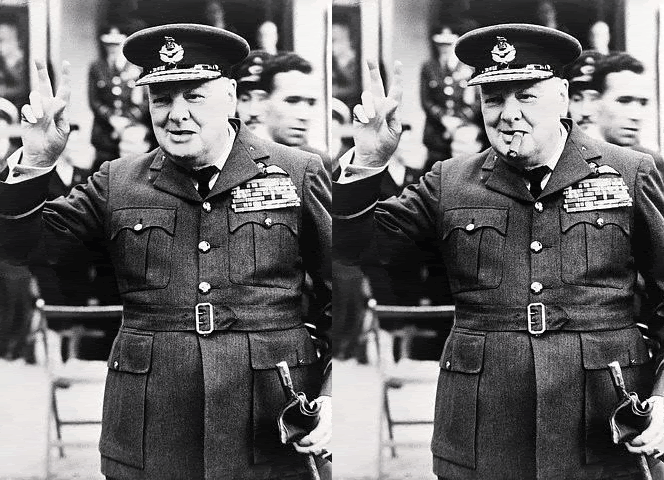
To the vast majority of the world, where the sun once never set on the British empire, Winston Churchill remains a great symbol of racist Western imperialist tyranny, who stood on the wrong side of history.
The myth of Churchill is Britain’s greatest propaganda tool because it rewrites Churchill’s true history in order to whitewash Britain’s past imperialist crimes against humanity. The Churchill myth also perpetuates Britain’s ongoing neo-colonial and neo-liberal policies, that still, to the is day, hurt the very people around the world that Churchill was alleged to have helped civilise.
The same man whose image is polished and placed on British mantelpieces as a symbol of all that is Great about Britain was an unapologetic racist and white supremacist. “I hate Indians, they are a beastly people with a beastly religion”, he once bellowed. As Churchill put it, Palestinians were simply “barbaric hordes who ate little but camel dung.”
In 1937, he told the Palestine Royal Commission:
“I do not admit for instance, that a great wrong has been done to the Red Indians of America or the black people of Australia. I do not admit that a wrong has been done to these people by the fact that a stronger race, a higher-grade race, a more worldly wise race to put it that way, has come in and taken their place.”
It is unsurprising that when Barack Obama became President, he returned to Britain a bust of Churchill which he found on his desk in the Oval office. According to historian Johann Hari, Mr. Obama’s Kenyan grandfather, Hussein Onyango Obama, was imprisoned without trial for two years and was tortured on Churchill’s watch, for daring to resist Churchill’s empire.
Apart from being an unrepentant racist, Churchill was also a staunch proponent of the use of terrorism as a weapon of war.
During the Kurdish rebellion against the British dictatorship in 1920, Churchill remarked that he simply did not understand the “squeamishness” surrounding the use of gas by civilized Great Britain as a weapon of terror. “I am strongly in favour of using gas against uncivilised tribes, it would spread a lively terror,” he remarked.
In the same year, as Secretary of State for War, Churchill sent the infamous Black and Tans to Ireland to fight the IRA. The group became known for vicious terrorist attacks on civilians which Churchill condoned and encouraged.
While today Britons celebrate Churchill’s legacy, much of the world outside the West mourns the legacy of a man who insisted that it was the solemn duty of Great Britain to invade and loot foreign lands because in Churchill’s own words Britain’s “Aryan stock is bound to triumph”.
Churchill’s legacy in the Far East, Middle East, South Asia and Africa is certainly not one of an affable British Lionheart, intent on spreading civilization amongst the natives of the world. To people of these regions the imperialism, racism, and fascism of a man like Winston Churchill can be blamed for much of the world’s ongoing conflicts and instability.
As Churchill himself boasted, he “created Jordan with a stroke of a pen one Sunday afternoon,” thereby placing many Jordanians under the brutal thumb of a throneless Hashemite prince, Abdullah. Historian Michael R. Burch recalls how the huge zigzag in Jordan’s eastern border with Saudi Arabia has been called “Winston’s Hiccup” or “Churchill’s Sneeze” because Churchill carelessly drew the expansive boundary after a generous lunch.
Churchill also invented Iraq. After giving Jordan to Prince Abdullah, Churchill, the great believer in democracy that he was, gave Prince Abdullah’s brother Faisal an arbitrary patch of desert that became Iraq. Faisal and Abdullah were war buddies of Churchill’s friend T. E. Lawrence, the famous “Lawrence of Arabia”.
Much like the clumsy actions in Iraq of today’s great Empire, Churchill’s imperial foreign policy caused decades of instability in Iraq by arbitrarily locking together three warring ethnic groups that have been bleeding heavily ever since. In Iraq, Churchill bundled together the three Ottoman vilayets of Basra that was predominantly Shiite, Baghdad that was Sunni, and Mosul that was mainly Kurd.
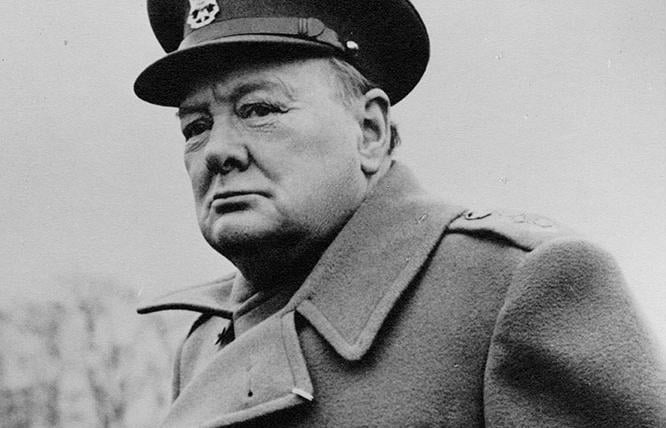
Ask almost anyone outside of Iraq who is responsible for the unstable mess that Iraq is in today and they are likely to say one word, either “Bush” or “America”. However, if you asked anyone within Iraq who is mainly responsible for Iraq’s problems over the last half century and they are likely to simply say “Churchill”.
Winston Churchill convened the 1912 Conference in Cairo to determine the boundaries of the British Middle Eastern mandate and T.E. Lawrence was the most influential delegate. Churchill did not invite a single Arab to the conference, which is shocking but hardly surprising since in his memoirs Churchill said that he never consulted the Arabs about his plans for them.
The arbitrary lines drawn in Middle Eastern sand by Churchillian imperialism were never going to withstand the test of time. To this day, Churchill’s actions have denied Jordanians, Iraqis, Kurds and Palestinians anything resembling true democracy and national stability.
The intractable Israeli-Palestinian conflict can also be traced directly back to Churchill’s door at number 10 Downing Street and his decision to hand over the “Promised Land” to both Arabs and Jews. Churchill gave practical effect to the Balfour declaration of 1917, which expressed Britain’s support for the creation of a Jewish homeland, resulting in the biggest single error of British foreign policy in the Middle East.
Churchill’s legacy in Sub-Saharan Africa and Kenya in particular is also one of deep physical and physiological scars that endure to this day.
Of greater consequence to truth and history should be a man’s actions, not merely his words. Whilst Churchill has become one of the most extensively quoted men in the English speaking world, particularly on issues of democracy and freedom, true history speaks of a man whose actions revolved around, in Churchill’s own words, “a lot of jolly little wars against barbarous peoples”.
One such war was when Kikuyu Kenyans rebelled for their freedom only to have Churchill call them “brutish savage children” and force 150,000 of them into “Britain’s Gulag”.
Pulitzer-prize winning historian, Professor Caroline Elkins, highlights Churchill’s many crimes in Kenya in her book Britain’s Gulag: The Brutal End of Empire in Kenya. Professor Elkins explains how Churchill’s soldiers “whipped, shot, burned, and mutilated Mau Mau suspects”, all in the name of British “civilization”. It is said that President Obama’s grandfather Hussein Onyango Obama never truly recovered from the torture he endured from Churchill’s men.
The Nobel Prize-winning economist Amartya Sen has proved how in Bengal in 1943 Churchill engineered one of the worst famines in human history for profit.
Over three million civilians starved to death whilst Churchill refused to send food aid to India. Instead, Churchill trumpeted that “the famine was their own fault for breeding like rabbits.” Churchill intentionally hoarded grain to sell for profit on the open market after the Second World War instead of diverting it to starving inhabitants of a nation controlled by Britain. Churchill’s actions in India unquestionably constituted a crime against humanity.
Churchill was also one of the greatest advocates of Britain’s disastrous divide-and-rule foreign policy.
Churchill’s administration deliberately created and exacerbated sectarian fissures within India’s independence movement, between Indian Hindus and Muslims that have had devastating effects on the region ever since.
Prior to India’s independence from Britain, Churchill was eager to see bloodshed erupt in India, so as to prove that Britain was the benevolent “glue holding the nation together”. For Churchill, bloodshed also had the added strategic advantage that it would also lead to the partition of India and Pakistan. Churchill’s hope was this partition would result in Pakistan remaining within Britain’s sphere of influence. This, in turn, would enable the Great Game against the Soviet empire to continue, no matter the cost to innocent Indian and Pakistanis. The partition of India with Pakistan caused the death of about 2.5 million people and displaced some 12.5 million others.
According to writer, Ishaan Tharoor, Churchill’s own Secretary of State for India, Leopold Amery,  compared his boss’s understanding of India’s problems to King George III’s apathy for the Americas. In his private diaries Amery vented that “on the subject of India, Churchill is not quite sane” and that he didn’t “see much difference between Churchill’s outlook and Hitler’s.”
Churchill shared far more ideologically in common with Hitler than most British historians care to admit. For instance, Churchill was a keen supporter of eugenics, something he shared in common with Germany’s Nazi leadership, who were estimated estimated to have killed 200,000 disabled people and forcibly sterilised twice that number. Churchill drafted a highly controversial piece of legislation, which mandated that the mentally ill be forcibly sterilized. In a memo to the Prime Minister in 1910, Winston Churchill cautioned, “the multiplication of the feeble-minded is a very terrible danger to the race”. He also helped organise the International Eugenics Conference of 1912, which was the largest meeting of proponents of eugenics in history.
Churchill had a long standing belief in racial hierarchies and eugenics. In Churchill’s view, white protestant Christians were at the very top of the pyramid, above white Catholics, while Jews and Indians were only slightly higher than Africans.
Historian, Mr. Hari, rightfully points out, “the fact that we now live in a world where a free and independent India is a superpower eclipsing Britain, and a grandson of the Kikuyu ‘savages’ is the most powerful man in the world, is a repudiation of Churchill at his ugliest – and a sweet, ironic victory for Churchill at his best.”
Amid today’s Churchillian parades and celebratory speeches, British media and schoolbooks may choose to only remember Churchill’s opposition to dictatorship in Europe, but the rest of the world cannot choose to forget Churchill’s imposition of dictatorship on darker skinned people outside of Europe. Far from being the Lionheart of Britain, who stood on the ramparts of civilisation, Winston Churchill, all too often, simply stood on the wrong side of history.
Churchill is indeed the Greatest Briton to have ever lived, because for decades, the myth of Churchill has served as Britain’s greatest propaganda tool to bolster national white pride and glorify British imperial culture.
Garikai Chengu is a scholar at Harvard University. Contact him on garikai.chengu@gmail.com

Video: Britain’s Growing Arms Sales to Saudi Arabia

Saudi Arabia Buys 'International Silence' About its Atrocities in Yemen

Since March 2015, a Saudi-led coalition has been bombing Yemen after Houthi rebels toppled its government. According to political analyst Catherine Shakdam, the international community turns a blind eye on Riyadh's war crimes in Yemen.


At least 20 people, including rescue workers and an ambulance driver, were killed recently in a series of airstrikes Saudi Arabia carried out on one target in the Yemeni province of Saada.

The "Medecins Sans Frontieres" (Doctors Without Borders) humanitarian-aid organization said a driver of one of its hospitals was killed.

This is not the first time the Saudi-led coalition has carried out a series of airstrikes against one target. The sports events center in the capital Sanaa was destroyed in seven bombardments. The operation was carried out to support the Yemeni government-in-exile in its fight against Houthi rebels. 

Coalition representative Ahmad Assiri said the kingdom is not responsible for victims of the war.


"We regret any civilians killed and wounded in Yemen. But we should not forget that Houthi rebels and the coup they staged plunged the country into chaos," he was quoted as saying by RT.

Catherine Shakdam is a political analyst, writer and commentator for the Middle East, did not agree with this.
The Saudi campaign against Yemen, one of the world’s poorest nations, has been underway for over 10 months, and its results are unclear.

The Saudis have succeeded if their goal was to kill as many Yemeni people as possible or if they wanted genocide in the country. At the same time, the international community has not even lifted a finger over the situation, Shakdam said.

She explained why the international community has not commented on Saudi airstrikes in Yemen.
"This is all about money. Saudi Arabia is very rich and can control mass media. The kingdom also can bribe its political allies," she said.

It is unbelievable that it has been 10 months since the airstrikes started and no efforts has been made to settle the conflict, Fadl al-Mutaa, a member of the Yemeni party Ansar Allah, told Sputnik Arabic.

"They have been attacking Yemen with their deadly weapons for over 10 months. They are bombing everything, from schools and hospitals to airports and water storages, and even mosques. They are killing women and children. And the international community is doing nothing," he said.

"We can only rely on Russia and its president, China and Iran that proved the efficiency of their actions," he added.

According to him, many foreign fighters, including from the US, Britain and France, have been captured in Yemen and then released in exchange for food and medicine supplies to the conflict zone.
He also said that the Yemeni government respect Russia’s stance toward the issue and wants to have good relations with Moscow.


Read more: http://sputniknews.com/middleeast/20160123/1033606490/saudi-arabia-airstrikes-yemen.html#ixzz3y7M2Krxi

Potential Saudi Nuke Purchase From Pakistan Remains A Mystery


Russ Read


Saudi Arabia’s Foreign Minister would neither confirm nor deny the potential purchase of a nuclear weapon from Pakistan recently, leaving one of the Middle East’s greatest security questions unanswered.
Foreign minister Adel al-Jubeir remained coy Thursday when a CNN reporter asked him if his country had plans to buy a nuclear weapon from Pakistan. Speculation as to whether or not Saudi Arabia would purchase a nuclear weapon from fellow Sunni Muslim ally Pakistan has been rampant since the negotiations, and eventual agreement, on Iran’s nuclear program occurred in 2015.
“I am not going to get into details of discussions we have with foreign governments, and certainly not allied governments. I’m sure you understand,” said Jubeir in response to the question Thursday, “I would not discuss these things in a public forum, certainly not on television.”
Jubeir’s response follows Tuesday remarks made by Secretary of State John Kerry that any purchase of a nuclear weapon from Pakistan by Saudi Arabia would have “all kinds of [Non-proliferation treaty] consequences. I mean, there are huge implications of that.”
The nuclear question has become part of an ongoing conflict between Saudi Arabia and the Islamic Republic of Iran, and it reached a fever pitch after Iranian protesters stormed the Saudi embassy in the Iranian capital of Tehran. The embassy assault came as a result of the execution of prominent Shia Muslim cleric Nimr al-Nimr by the Saudi government.
Iranian foreign minister Javad Zarif claimed in an interview with CNN today that “We [Iran] do not have a fight to pick with Saudi Arabia.”
Zarif claims that Iran and Saudi Arabia can co-exist peacefully in the Middle East, but noted that “unfortunately, the Saudis have had the illusion that backed by their Western allies, they could push Iran out of the equation in the region.”
Rumors of a Saudi nuclear purchase caught the public eye in May 2015 when the Sunday Times quoted an anonymous U.S. defense official as saying “the house of Saud has now made the strategic decision to move forward” to purchase a weapon “off-the-shelf” from Pakistan.
“The Sunni states will play tit-for-tat and keep up with Iranian nuclear developments. Once they achieve a nuclear energy level of development, if Iran creates moves to create a nuclear weapon, states like Saudi Arabia will move rapidly to do the same and may even consider working with their strong partners like Pakistan,” said former U.S. Army Lt. Gen. Michael Flynn in aninterview in September 2015.
Speculation on Saudi Arabia’s nuclear desires started in the 1990’s when former Saudi diplomat Muhammad Khilewi leaked documents claiming that Saudi Arabia had been interested in nuclear weaponry since 1975. Khilewi also claimed in a 1998 interview that Saudi Arabia had invested millions of dollars in the Pakistani nuclear program under the assumption that there would be a sort of nuclear quid-pro-quo between the two countries.
While the “off-the-shelf” narrative has been popular, arms-control expert Jeffrey Lewis of the Middlebury Institute of International Studies believes that Saudi Arabia could be fully capable of developing a home-grown nuclear weapon. Lewis points to Saudi Arabia’s investment in peaceful nuclear research as evidence that it could pursue a domestic weapon.
“The fancy machine tools, materials, and components that were good enough to build the nuclear weapons of the 1970s are widely available now,” wrote Lewis in a June 2015 article for Foreign Policy, “The Saudis are clearly alarmed by the possibility of an Iranian nuclear weapon. While I suspect that a lot of the talk about acquiring nuclear weapons is intended to make the United States focus on Saudi security concerns, it doesn’t help to dismiss Riyadh’s anxieties by mocking their educational system and ability to go nuclear.”

SAUDI ARABIA HAS KILLED OVER 8,278 YEMENIS

More than 8,200 people have been killed and many more injured ever since Saudi Arabia started a war on Yemen in March, a civil group says.
The Yemeni Civilian Association announced in a report on Wednesday that the ongoing Saudi attacks have claimed the lives of 8,278 people, including 2,236 children, and left 16,015 others injured.
The attacks have also destroyed or damaged:
- Around 345,722 houses
- 39 universities
- 262 hospitals
- 16 media offices
- 615 mosques
- 810 schools and educational centers
- forced the closure of around 4,000 schools
Further damaged in Saudi strikes:
- 1,113 government buildings
- 191 factories
- 59 heritage sites
- 41 sports stadiums
- 124 chicken farms
- 547 food stores
- 421 fuel tankers
Saudi attacks have destroyed or damaged:
- 530 bridges and roads
- 163 water tanks
- 140 power plants
- 167 telecommunications sites
- 14 airports
- 10 seaports
The report comes in the wake of the International Committee of the Red Cross (ICRC) warning about the dire situation of Yemeni patients amid Saudi attacks on hospitals.
Robert Mardini, who heads the ICRC’s operations for the Near and Middle East, has said the situation in Yemen is turning into one of the world’s “forgotten conflicts”.
Earlier this month, the ICRC’s outgoing health coordinator in Yemen, Monica Arpagaus, warned that hospitals in Yemen are no longer safe.
“We have incidents where hospitals have been targeted and patients have been injured and staffs have been killed,” Arpagaus said.
“Drugs, medication and medical supplies have been prevented from crossing frontlines into hospitals which desperately need these supplies.”
http://www.shiitenews.org/index.php/saudi-arab/item/20791-saudi-arabia-has-killed-over-8-278-yemenis

'Secret wife' of Saudi prince reveals monarchy’s mysteries (RT INTERVIEW)

Janan Harb, 68, has quite a life story to tell: she says she was the former Saudi king's secret wife. Harb, a Palestinian-born Christian, says she converted to Islam back in 1968 to marry the monarch.
Harb now lives in London and is a scientologist. A film is being made based on her life in the Saudi royal family. Harb is also planning to publish an autobiography by the end of 2016.
The woman spoke to RT about her first encounter with the prince.

“There was a big party for the Palestinians and the Lebanese, a Christmas party. The prince was the minister of interior at that time, he was invited, and that’s how we met,” she said.
For the next three years, Harb lived in the prince’s palace as his secret spouse.
“We had a lovely life [for] the first two years. It was a very beautiful life. But the third year was quite tragic, because it was taken seriously, and his brothers got involved.”
In 1971, Harb was deported to the UK.
“His brothers were grooming him to become a king, and didn’t accept him having a Palestinian Christian wife. I was deported without his knowledge,” she told RT.
She has since successfully sued the late king's son, winning a historic UK High Court case.
The late king’s son has been ordered to pay Harb £12 million (US$17 million), according to a deal that was struck with the king before his death.
Harb told RT she has turned to the media in the hope that the Saudi royal family will face up to its duties.
“Every time you confront the Saudis, they tell you – instead of asking or finding the truth – ‘Oh! Maybe she was a prostitute, maybe she is a money digger’… Since he [the former king] didn’t take responsibility for his father’s reputation, he bears the blame himself.”
Saudi nationals are known to have a history of tricky relations with the UK legal system.
Just this week, one Sheikh managed to escape divorce payments in the UK after he was appointed a UN envoy by a small Caribbean nation, therefore receiving diplomatic immunity.
Sheikh Walid Juffali, whose fortune from his family’s business interests is estimated at £4 billion, faced a divorce suit in London’s High Court from his second wife, Christina Estrada, a former Pirelli calendar girl, after he secretly married a Lebanese television presenter in 2012.
Last month, a Saudi millionaire was cleared of raping a teenager after he claimed he may have penetrated her accidentally after tripping and falling on her.
Saudi Arabia is notorious for its strict interpretation of Sharia law, with alcohol and gambling banned and women not allowed to drive.
Women’s rights in the country have often been in the spotlight: a few months ago, a Saudi woman posted footage of her husband sexually abusing their maid. However, it was the wife who was facing a year in jail in the end, due to the Saudi law on revenge videos.

China - Xi outlines Middle East vision


China and Arab states should build peace, promote development, boost industrialization,support stability and partner people-to-people exchanges in the Middle East, President XiJinping said on Thursday.
Addressing the Arab League headquarters in Cairo, he said China decides its position onissues based on their merits and the fundamental interests of the people in the MiddleEast.
“Instead of looking for a proxy in the Middle East, we promote peace talks; instead ofseeking any sphere of influence, we call on all parties to join the circle of friends for theBelt and Road Initiative,” Xi said.
He added that instead of attempting to fill a “vacuum”, China seeks to build a cooperativepartnership network for “win-win outcomes”.
The president said there is hope in the Middle East and all parties should look for it bypursuing dialogue and development.
“The Palestinian issue should not fall into oblivion, and we must bring hope to thePalestinian people as early as possible,” Xi said.
Earlier on Thursday, China and Egypt signed 21 documents on cooperation, endorsing afive-year plan to boost two-way ties and pledging to co-build the trans-Eurasia Belt andRoad Initiative.
The initiative was put forward by Xi in 2013 with the aim of promoting commondevelopment along the ancient land and maritime Silk Roads.
Xi and his Egyptian counterpart Abdel-Fattah al-Sisi also jointly unveiled the nameplatefor the second phase of the China-Egypt Suez Economic and Trade Cooperation Zone.
The zone has attracted many Chinese manufacturers by offering preferential policies.
Making the second stop on his three-nation Middle East visit, Xi arrived in Cairo onWednesday amid rising calls from observers for Egypt’s thirst for infrastructure andconnectivity development to be better addressed.
Sisi greeted Xi with a welcoming ceremony that included a 21cannon salute before theirofficial talks on Thursday morning.
Other pacts were signed in fields that included electricity, infrastructure, trade, energy,finance, aviation and culture.
Xi suggested that the two countries focus on cooperation in infrastructure constructionand production capacity and turn Egypt into a hub under the Belt and Road Initiative.
Xi said China is ready to take part in building major Egyptian projects such as the SuezCanal Corridor—a new channel parallel to the current canal—and the new administrativecapital city.
Sisi thanked Xi for inviting him as a guest nation leader to attend the G20 summit inHangzhou, Zhejiang province, in September.
The Egyptian leader said Cairo is ready to link its own development planning to the Beltand Road Initiative and boost infrastructure cooperation within the framework of theAsian Infrastructure Investment Bank.
An Huihou, a former Chinese ambassador to Egypt, said, “The top priority for theEgyptian administration is to develop its economy, expand employment and reinvigoratepeople’s livelihoods.”
An added, “The Egyptian economy has maintained growing momentum despite a numberof difficulties”. Annual GDP growth of 4.5 percent was reported last year.
Li Guofu, a researcher of Middle East studies at the China Institute of InternationalStudies, said that Egypt “has offered protocols of a very high level” in greeting Xi, who hadbeen accompanied by Sisi to many events during his visit.

Video - Chinese President Attends Welcoming Ceremony Held by Iranian Counterpart

Video - President Xi attends a joint press conference with Iranian President Rouhani

Video Report - 'Military Solution': If peace process in Syria fails US 'ready' for intervention

The Kremlin denies making an offer to Assad to resign

Russian presidential press secretary Dmitry Peskov denied that Vladimir Putin reportedly made an offer to Syrian President Bashar al-Assad to resign. The request was supposedly handled by Igor Sergun, the head of the Main Intelligence Directorate (GRU). “No, that’s not true,” Peskov told the TASS Russian news agency on Friday January 22.
The Financial Times, citing sources in Western intelligence, wrote on Friday about a secret mission made by Sergun, whose sudden death was announced by the Kremlin on January 4, 2016. The Financial Times writes that Sergun traveled to Damascus to persuade the Syrian president to resign voluntarily. According to the newspaper President Assad “angrily rejected” Moscow’s offer. Sergun died in early January 2016. Some sources maintain that he passed away in Lebanon, while others state that he died outside of Moscow.

http://rbth.com/international/2016/01/22/the-kremlin-denies-making-an-offer-to-assad-to-resign_561643

FRANK SINATRA - LET IT SNOW,LET IT SNOW,LET IT SNOW

Video - Excited Giant Panda Tian Tian enjoys Washington blizzard

Video - Refugees, Health Workers Battle Winter In Serbia

Michael Bloomberg 'seriously considering' third-party run for the White House

Andrew Buncombe 

The US presidential campaign was jolted on Saturday by a report saying former New York mayor Michael Bloomberg was actively considering entering the race as an independent candidate.
The report said that the 73-year-old billionaire, who twice previously considered running, is prepared to spend up to $1bn of his own money to fund a campaign. He has instructed advisers to draw up plans for an independent run and will make a decision by early March.
The report in the New York Times said that Mr Bloomberg, who served three terms as mayor between 2002-2013, had been spurred to action by the Donald Trump’s dominance in the Republican field and the stumbles of Hillary Clinton’s campaign.
In December, he commissioned a poll to see how he would compete with Donald Trump or Hillary Clinton, but the poll’s results have not been disclosed, the report said.
In both 2008 and 2012, Mr Bloomberg conferred with advisors and commission polls to assess his chances of making it to the White House, only to decide against a run.
There has been no official word from the former mayor, but the report said his advisers believed that it was still possible for him to enter the race in the coming weeks qualify to appear as an independent candidate on the ballot in all 50 states.
The report said he plans to intends to conduct another round of polling after the New Hampshire primary on February 9 to gauge whether there is an opening for him.
It said Mr Bloomberg’s aides have sketched out one version of a campaign plan that would have the former mayor deliver a series of detailed policy speeches, backed by an intense television advertising campaign.
The report pointed out that Mr Bloomberg would face daunting obstacles in a presidential campaign.
While there have been third party orindependent candidates before – businessman Ross Perot ran in both 1992 and 1996, and activist Ralph Nader has stood in numerous elections – no independent candidate has ever been elected to the White House.
Mr Bloomberg’s close Wall Street ties and liberal social views, including his strong support for abortion rights and gun control, could repel voters on the left and right, the report said.