
Saturday, January 23, 2016

The truth about Flint: Kids drank poisoned water because of the GOP’s radical, anti-democratic “reforms”


As I noted in an earlier story, the third week in December brought two startling stories highlighting the ongoing Dixiefication of the Midwest, a key ingredient in how the GOP, with its aging white male demographic base is nonetheless strategically outmaneuvering the Democratic Party on multiple fronts.

That story dealt with what happened in Wisconsin, the signing of two laws that combined to decimate state-level democracy. 
The story from Michigan, the lead poisoning of Flint through its water supply, which brought the mayor to declare a state of emergency, is much more viscerally horrifying, and has finally exploded nationally after Christmas. On Dec. 29, the state’stop environmental officer resigned; on Jan. 5, the U.S. Attorney announced an investigation, the same day that Gov. Rick Snyder declared a state of emergency.Four days later, FEMA officials arrived, but chaos still reigned as crowds of Flint protesters called for Snyder to resign and/or face criminal charges. On Jan. 13, Snyder announced Flint had experienced an outbreak of Legionnaires’ Disease, with 10 fatalities, which could be linked as well. After that, Bernie Sanders called for Snyder to resign, and Hillary Clinton blasted him in her closing statement of the Democratic debate, and every day brings additional heat and light to bear on the story.
But behind the upfront horror and outrage being felt, behind all the tragedy and drama now unfolding in Flint, what’s happening now is rooted in a state-level attack on democracy. Indeed Rachel Maddow—who first brought the story to national attention—made this very point herself, calling the law that made it all possible “the single most radical policy” in recent American history—an “emergency manager” law that essentially invalidates local self-governance.
The common theme of attacks on democracy in Wisconsin and Michigan is not an accident. The two stories are connected by virtue of being parts of a broader process—the aforementioned Dixiefication of the Midwest, without which neither of them can be fully understood, or responded to. Dixiefication is a process that’s economically regressive, culturally anti-modernist, and politically authoritarian/anti-democratic, and in that first story, I traced how Walker’s early aggressive pushing of Dixiefied anti-union agenda eventually led to a wide-ranging dismantling of the state’s good government framework of laws and regulations.
However, the Dixiefication of the Midwest itself is taking place in the context of two much wider processes—the Dixiefication of the nation as a whole, and global process of neoliberalizing economies in various different ways across very different societies. All three of these large-scale processes have been shaping regional politics as well as everyday life in the Midwest with increased ferocity since the the beginning of the Great Recession. What’s striking about the lead poising of Flint is not just how morally outrageous the story itself is, but also how it can serve to illuminate the much wider framework of corrosive harm these three social processes have produced.
Lead Poisoning Flint’s Kids
The story itself wasn’t new. On Sept. 2,  researchers from Virginia Tech University led by Marc Edwards reported that Flint’s water was “very corrosive” and “causing lead contamination in homes,” but commensurate attention and action have yet to come. So, on Dec. 14, Flint’s newly elected mayor, Karen Weaver, fought back. She declared a state of emergency regarding the citywide lead poisoning that resulted from a change in the source of city drinking water, a “cost-saving” move ordered by the city’s appointed emergency manager. Water from the Flint river corroded Flint’s water pipes, leaching lead into the water even after Flint switched back to getting its water from Detroit in October.
“The City of Flint has experienced a Manmade disaster by switching to the use of the Flint River,” Weaver’s declaration said.  “This damage to children is irreversible and can cause effects to a child’s IQ, which will result in learning disabilities and the need for special education and mental health services and an increase in the juvenile justice system.”
“We know that Flint is not in a position to bear this burden alone,” Weaver explainedon “The Rachel Maddow Show” the next day. “We are asking and looking for state and federal assistance, and the only way we were going to have this happen was to declare a state of emergency, and hopefully that gets it to the county, which will get it to the state, where the governor can make it federal.” Getting outside assistance was not a new idea. “We have been trying to get federal attention for a while,” Weaver said.
Lead poisoning was just the last straw, however. Earlier tests had detected E. coli and fecal bacteria in the water, and Flint’s water was found in violation of the federal Safe Drinking Water Act for high levels of total trihalomethanes, which according to the EPA can lead to “Liver, kidney or central nervous system problems; increased risk of cancer.”  Flint residents had reported an ongoing litany of health problems—hair loss, vomiting, diarrhea to the point of dangerous dehydration—in addition to foul, discolored drinking water. Environmental activist Erin Brockovitch lent her support,calling broader attention to the problems. Eventually, this past March, the city council voted 7-1 to “do all things necessary” to reconnect Flint’s water system to Detroit’s, a move that emergency manager Jerry Ambrose dismissed as “incomprehensible” in a statement issued the next day.
So the news about the lead poisoning came in the context of more than a year of widespread public suffering and official obfuscation, resistance and denial. Backing up the state-appointed emergency manager, and local water officials, the Michigan Department of Environmental Quality continued to insist there was nothing wrong. After Edwards said that the city’s findings that lead levels were safe amounted to “smoke and mirrors,” the MDEQ’s Communications Director Brad Wurfel wrote to the Flint Journal’s Ronald Fonger, saying, “[T]his group specializes in looking for high lead problems. They pull that rabbit out of that hat everywhere they go. Nobody should be surprised when the rabbit comes out of the hat, even if they can’t figure out how it is done.”
But the tide was rapidly turning. It quickly came out that the city’s own water testing showed that “lead levels have been rising since the city began using the Flint River for water 16 months ago.” By mid-October, the switch back to Detroit water was announced.  But irreparable damage had already been done—particularly to thousands of children under 6, who are the most vulnerable.
Michigan’s Racist Emergency Manager Law
This shocking attack on the health and welfare of young children is only the most outrageous example of how Michigan’s “emergency manager” law has robbed more than half of Michigan’s blacks of the protections of democratic self-government, putting their lives in the hands of local dictators unilaterally appointed by Gov. Rick Snyder.  “While the cities under emergency management together contain just nine percent of Michigan’s population, they contain, notably, about half of the state’s African-American residents,” the Atlantic reported in May 2013. Looked at another way, while Michigan’s population is 14.2 percent black, Flint is 56.6 percent black,Detroit 82.7 percent, Benton Harbor 89.2 percent, Highland Part 93.5 percent,Pontiac 52.1 percent (Hispanic 16.5 percent), and Ecorse 46.4 percent (Hispanic 13.4 percent).  Crushing black political power goes to the heart of what Dixiefication is all about.
Rachel Maddow first reported about the emergency manager law in April 2011, shortly after its passage, when it was first applied full-force in Benton Harbor (video/transcript); the next day she described the story of what happened there as “the single-most telling thing in American politics right now about the difference between the two parties.”  Michigan had had an emergency manager law before, as have other states, but the powers of emergency managers were limited, their purpose to restore a city’s finances to fiscal health in cases of extreme emergency.“The original Public Act 72, which had bipartisan support, was much more about creating a process to intervene when there was criminal or corrupt activity,” Flint’s previous mayor, Dayne Walling, told Eclectablog, Michigan’s leading progressive blog. “But, when you broaden it to say we’re going to use emergency managers’ tools and rhetoric to try to address long-term, structural financial problems, it doesn’t work.” he said.
Or perhaps it does work: to force the long-term costs and consequences onto those least able to pay or to resist—the very essence of Dixiefication as political economy—because the new law conferred almost unlimited power. Benton Harbor’s emergency manager, Joseph Harris, didn’t abolish the city government—he just took away all its power, with an order that said:
“[N]o City Board, Commission or Authority shall take any action for or on behalf of the City whatsoever other than:
i) Call a meeting to order.
ii) Approve of meeting minutes.
iii) Adjourn a meeting.
As Maddow described it:
The state says we can dissolve your town now. We can wipe you off the map, give your land and assets to the next town over if we want to, just roll up the whole deal and deed it over. Your town doesn‘t get a say in the matter.
Attacks on poor black children are consistent theme in this story: In Flint, they were poisoned with lead. In Benton Harbor, they were robbed of a magnificent park, a true field of dreams. In her first report, Maddow explained the details: Benton Harbor, population just under 11,000, is almost 90 percent African-American, with a per-capita income of just $10,000, just next door to St. Joseph, population 8,500, 90 percent white with a per-capita income of $33,000.  Benton Harbor—once the manufacturing center for Whirlpool appliances—has been decimated by decades of deindustrialization, but it did have one prize civic possession left: the 70-acre Jean Klock Park, abutting Lake Michigan and willed to the city in perpetuity in 1917 by former Mayor John Nellis Klock. But in recent years, a private-public partnership Whirlpool created hatched the idea of building a $500 million, 530-acre golf course and residential development, gobbling up 22 acres from the park’s center in the process. 
After years of fighting Benton Harbor residents’ opposition, the local state representative, Al Pscholka, authored the new emergency manager law with its dictatorial powers. As Maddow explained:
[H]e happens to be a former vice president for one of the major entities involved in building the luxury golf development that is set to remake Benton Harbor.
Until last year, he served as a member of the nonprofit‘s board of directors—the same one behind the golf course. And now, the first town in Michigan to feel the teeth of the Pscholka emergency manager financial martial law/Rick Snyder bill is Benton Harbor—very poor, almost entirely African-American, in his district, right where they‘re building the golf development that he himself has personally spent years bringing into existence.
Slamming the Overton Window Shut on Democracy
If that sounds sleazy, it’s only because it is.  But it’s part of a much, much bigger picture. At the time the bill was signed into law, Andy Kroll of Mother Jones wrote about its back story: the state think tank that largely shaped the law, and the funders behind it:
Since 2005, the Mackinac Center for Public Policy has urged reforms to Michigan law giving more power and protection to emergency financial managers…. In January, the free-market-loving center published four recommendations, including granting emergency managers the power to override elected officials (such as a mayor or school board member) and toss out union contracts. All four ended up in Snyder’s legislation.
Kroll went on to identify some of Mackinac’s backers, including the foundations of Charles Koch, the Walton and DeVos families, and the parents of Blackwater founder Erik Prince, among others. He also noted that Mackinac is part of network of state-level think tanks  associated with the Heritage Foundation.
What he didn’t note was that Mackinac was where the idea of the “Overton Window” comes from—a simplified model for organizing people to consistently shift the framework of policy debate in a given ideological direction. Italian Marxist Antonio Gramsci first developed the broad conceptual notion of hegemonic warfare—the struggle of ideologies to establish themselves as “common sense.” Despite decades of discussion, the American left—for a variety of reasons—has never managed to seriously assimilate his insight, and organize around it. But coming out of Mackinac, a sizable portion of the right has done just that, conceiving the struggle as a long-term process of shifting the framework of “reasonable” ideas so that crazy ideas they love become acceptable, while normal, time-tested ideas they hate become crazy. Whether a given “solution” actually works or not is immaterial in this model. In practice, failure is a feature, not a bug: it can be seized on to urge an even further shift in their preferred direction.
Which is a pretty good description of what’s been happening with emergency managers and their schemes in Michigan.  They’ve been failing in terms of poor preparation of emergency managers and abuse of power, as Chris Savage, owner of Eclectablog described for the Nation in early 2012. or in terms of how badly things actually turn out on the ground, as Laura Gottesdiener described here at Salon last June (“Something is rotten in Michigan”), providing a tour of five of the state’s major emergency manager disasters. One could add to her list the Detroit Public School system, which Eclectablog recently noted had seen its deficits rise under state-appointed managers from $137.1 million in 2009 to $238.2 million today. But the most basic failure is the one alluded to by Flint’s former Mayor Dayne Walling—the failure of trying to fix long-term systemic problems by treating them as if they were episodic local ones, the results of mismanagement and bad policy.  “The laws right now are written to mete out punishment to local officials,” Walling said, “but there need to be clear partnership requirements for the state to address fiscal stress.” 
There’s a fundamental clash of worldviews going on here, between a cooperative, reality-based problem-solving approach on the one hand—all aspects of America’s pragmatic tradition—and a moralistic crusade against designated culprits singled out for their supposed roles in causing trouble for everyone else, a hallmark of how Dixiefied politics works.
http://www.salon.com/2016/01/23/the_truth_about_flint_kids_drank_poisoned_water_because_of_the_gops_radical_anti_democratic_reforms/

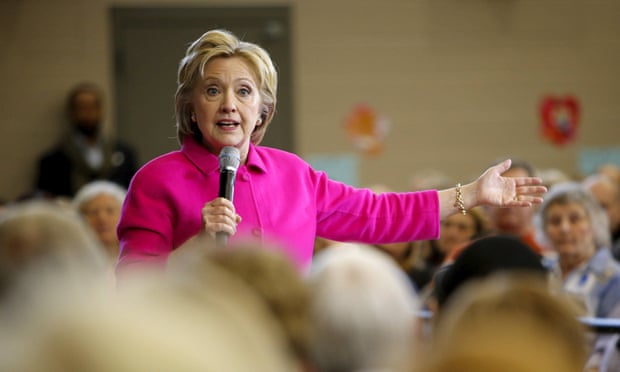
'Give us a dream': Hillary Clinton supporters look to her for aspirations


“You are my Eleanor Roosevelt” a woman told Hillary Clinton at a town hall in Rochester, New Hampshire, on Friday afternoon, eliciting cheers and applause from the crowd.
Clinton waited out the whistles and shouts that echoed through the restoredRochester Opera House; instead of acknowledging the adulation, she stood in a listening pose on the stage that looked dressed for a production of Thornton Wilder’s Our Town. She held eye contact with the woman asking the question, until the eruption subsided.
When it did, the woman – a 30-year resident of Massachusetts who more recently moved to Maine – asked Clinton to explain what she wanted her presidency to mean to the young people of the future, other than the achievement of becoming first female president. “Give us a dream” the woman implored.
It would’ve been a hard question for any candidate to answer without platitudes or bombast – one can imagine what, for instance, Donald Trump would say. Politically speaking, it was a sensitive one for Clinton, who is running on the strength of Barack Obama’s accomplishments, to have to answer to what was implicitly a criticism of her old boss.
It’s not easy for most people to say what they hope others will see in their accomplishments – especially hypothetical ones. But Clinton may have it more difficult than most to imagine herself as the focus of someone else’s aspirations. After all, she spent close to three decades focused on the aspirations of her husband, and more than two decades as the target of her political opponents’ intense and rather personalized ire.
After acknowledging the compliment with Roosevelt, Clinton gave it a go. “I really want people to feel I’m working for them, to improve their lives” she began, eventually adding “I want people to feel, with me in the White House, I get it.”
The crowd cheered her answers, whether they were “a dream” or not, and Clinton said goodbye and began shaking hands to the tune of Sara Bareilles’ Brave (a common song at Clinton speeches and rallies). She stayed, as is apparently fairly common at her town halls, until there was almost no one left with whom to shake hands or take a selfie.
The public narrative about Hillary Clinton was written long ago – some of it before millennial women were born. She was the smart one, never the “pretty one”, the ambitious one, perhaps a little too much. She was analytical instead of emotional, and went back to work instead of baking cookies to help her husband’s career. She wasn’t good at hewing to the traditional standards of feminine conduct, and she was unapologetic about it. In the 80s and 90s, that didn’t make her a popular figure.
Her 2008 campaign focused on her competency (as though anyone had ever questioned whether Hillary Clinton were smart enough, or hard-working enough), and all-but ignored the question of her likeability, even after one emotional moment in New Hampshire left many women feeling connected to her in a very personal way.
And in 2016, the relentless focus on Clinton’s appeals to women, from Lena Dunham and Demi Lovato headliners in Iowa to a Planned Parenthood’s endorsement in New Hampshire, often ignores the fact many women simply like Clinton.
She has fans, and not just women who want a woman president, or who generally support women candidates, or voters who see her as the best shot to keep a Democrat in the White House. She has real, honest-to-goodness, dyed-in-the-wool supporters who don’t just want Clinton to win the White House, but fully expect she will. And they adore her.
Dianne Rochford of Newport, New Hampshire, who attended a Clinton speech with pro-choice and pro-Clinton buttons affixed to her sweatshirt, explained her support as one might explain something obvious to a particularly stupid child.
“She is a smart woman,” Rochford said. “She has always been for women and children. She has so much experience – she’s been secretary of State. Can I go on and on and on? Yes.”
But it’s not just Clinton’s resume that’s attractive: it’s clear that some of her supporters see themselves in Clinton, and their own dreams embodied in her candidacy.
Deb Andersen, like a lot of people at Clinton’s New Hampshire events, drove up from neighboring Massachusetts to catch her speech. The 64-year-old army veteran of Desert Storm and political junkie (she tries to see all the candidates and ask questions) spent much of the rally whistling loudly with two fingers while other clapped, and tried to ask Clinton a question by shouting “President Clinton!” during the question time. Afterwards, she declared herself a fan.
“Hillary’s not just going to be a woman in the White House, she’s going to be a woman with balls in the White House,” Andersen told the Guardian.
At a Naral event in Concord, Lynne Snierson, from Salem, New Hampshire, said: “I realize that younger women don’t necessarily connect with this, but for those of us who fought in the vanguard of the feminist movement in the 60s, the thought of a woman president resonates really deeply.”
“I’m 63,” she explained, “I was obviously born in 1952 and I understand that when I was a young woman, the thought of a woman being president was pie in the sky.”
Ilyse Hogue, the president of Naral, sees the support for Clinton as part of a larger cultural moment in which women are recognizing their own power. “We trained as women to put ourselves last in every way” she said.
“To have Hillary be a woman who says that it’s not only OK to put women at the center, but that it’s important because that’s how our families thrive and our marketplaces thrive … that’s revolutionary” she added.

Video - Hillary Clinton responds to latest email controversy

Video - Wintry whiteout at the White House

Thanks To President Obama, More Than 90% Of Americans Now Have Health Insurance


Thanks to the leadership and vision of President Obama, for the first time ever more than 90% of Americans have health insurance.

In his weekly address, the President said:
When I took office seven years ago this week, more than 15% of Americans went without health insurance. For folks who did have coverage, insurance companies could deny you coverage or charge you more just because you’d been sick. And too many Americans gave up their dreams of changing jobs or going back to school because they couldn’t risk giving up their employer-based insurance plan.

We’ve changed that. As the Affordable Care Act has taken effect, nearly 18 million Americans have gained coverage. In fact, for the first time ever, more than 90 percent of Americans are covered. Up to 129 million Americans with pre-existing conditions can no longer be denied coverage or be charged more just because they’ve been sick. 137 million Americans with private insurance are now guaranteed preventive care coverage. We’ve done all this while cutting our deficits and keeping health care inflation to its lowest levels in fifty years. And we’ve begun filling the gaps in employer-based care so that when we change jobs, lose a job, go back to school, or start that new business, we can still get coverage.
If you want to know how important that is, just ask an American like Heather Bragg.
Heather’s a small business owner in Bluffton, South Carolina. Last year, she wrote me a letter and told me how, for years, her family had depended on her husband’s job for their insurance. But thanks to the Affordable Care Act, her husband Mike had the freedom to switch jobs and join Heather at the small business she’d launched a few years ago.

Through the Health Insurance Marketplace, they found better coverage that actually saved them hundreds of dollars a month. Today, Heather only pays about ten dollars for the asthma inhaler she needs. “For the first time,” Heather wrote, “we’re not living paycheck to paycheck; we’re able to pay our bills and put some money back into savings.” And because Mike doesn’t have to work nights or weekends anymore, he can coach their son’s soccer team and tuck the kids in at night. And you can’t put a price on something like that.
The ACA has given hundreds of millions of Americans something that they didn’t have before. The Affordable Care Act gave patients and consumers rights. All health insurance consumers have expanded protections, no matter what kind of health insurance that they have.
People have not had to sign up for the ACA to get many of the benefits of the reform. Everything from insurance companies no longer being allowed to arbitrarily decide who they will cover and when they can drop a policyholder to taking away the power of an insurance company bureaucrat to play doctor and withhold needed medications from sick people due to cost.
Obamacare is not perfect. There are still 29 million people without coverage, but the number of Americans who are covered has reached a record high thanks to President Obama.
The election of Barack Obama is the reason tens of millions of Americans have health insurance, and hundreds of millions have better coverage.
Elections do have consequences. George W. Bush brought the country two wars, tax cuts for the wealthy and the Great Recession. President Obama’s presidency has featured unprecedented expansion of health insurance coverage, and a new era of diplomacy, and record-setting economic growth.
The Affordable Care Act is one example of how a majority of Americans can change the country with their votes. There would be no ACA without Obama, and there would be no Obama in office without your votes.

President Obama's Weekly Address: Affordable Care Act is Making a Difference for Millions of Americans

تر څو ژمني پوره نشي بايد پښتونخوا حکومت راهدارۍ لپاره مځکه ورنکړي

د پښتونخوا ولسي تحريک مشر وايي ، تر څو چې د پاکستان مرکزي حکومت د دوی غوښتني و نه مني د خيبر پښتونخوا حکومت بايد د اقتصادي راهدارۍ لپاره مځکه ورنکړي. ډاکټر سيد عالم مسود دا خبره له مشال راډيو سره د يکشنبې په ورځ په يوه مرکه کې وکړه. د جمعې په ورځ پاکستاني وزیراعظم د اقتصادي راهدارۍ په اړه د خيبر پښتونخوا او بلوچستان د اندېښنو لرې کولو لپاره د سياسي ګوندونو يوه غونډه رابللې وه. په دې کې نواز شريف ژمنه وکړه چې د کاشغر ګوادر راهدارۍ په اړه به د صوبو له غوښتنو سره سم د ۲۰۱۸ ميلادي کال د جولايي تر ۱۵ مې نيټې به تر خيبر پښتونخوا او بلوچستان تېرېدونکې لاره بشپړوي. پښتونخوا ولسي تحريک يو له هغو سياسي ډلو دی چې د راهدارۍ په اړه يې پرله پسې احتجاج کړی دی. عبدالحي کاکړ د مرکې پر مهال له سيد عالم مسوده پوښتلي چې ايا د نواز شريف له تازه وعدو ډاډمن دی او که نه؟
http://www.mashaalradio.com/content/article/27491273.html

Pakistan's Arab Bedouin Hunters - The End Of A Species - houbara bustard


A recent verdict by the Supreme Court has made a mockery of conservation efforts in Pakistan. Despite outcry by protection organizations over hunting of the endangered houbara bustard, they have lifted a ban on it- claiming that controlled hunting was a tool for preservation and should be allowed. Only one of the judges opposed the court’s decision to conditionally allow hunting. Continuing to let moneyed foreigners indulge in the blood sport killing hundreds per trip only proves that we are more concerned with maintaining lopsided foreign relations, than protecting our diverse wildlife.
This remains a classic case of the government mishandling a simple issue- a complete ban to conserve what desperately needs attention. It is not far from the truth that the government is driven by a fear of falling out with Arab dignitaries, but what is the life of a rare bird in the face of an Arab with money? In early 2014 a Saudi prince hunted 2,100 houbaras during the course of 21 days, whereas the permit limits the holder to a maximum of 100 birds over a 10-day period. The argument then for sustainable hunting of these birds is senseless as this will happen again. This removal of the ban will probably make it harder for another ban to be put in place and signals the end of the species.
Successive governments have granted special permits to Arab dignitaries to hunt the bird on diplomatic grounds as they bring investment to the social sector. Though hunting for sport indeed is a pastime for some in Pakistan, it is morally distasteful and extremely cruel. Killing for fun, whether a bird of any other animal is one of the worst activities that men can engage in. It seems most of these men are Arabs. Our esteemed Supreme Court has lowered itself by lifting the ban.
Will the Supreme Court and Sindh Government also make sure that the proceeds from killing the birds will go to something beneficial for the people of Sindh? There is no hope for this. The same Government is also presiding over mass deaths of children in Thar due to malnutrition and starvation. For a leadership that is okay with children dying needlessly, birds must be a strange thing for them to protect.
In the context of the moral decline of a leadership that has no regards for the dignity of life as long as its not their own, the lifting of the ban makes perfect sense.

Pakistan - #CharsaddaAttack - Return of the terror


The year 2016 was supposed to be the year of final defeat of terrorism in Pakistan if the statements of high state functionaries of the country were to be believed. According to this narrative operation Zarb-e-Azb has broken the back of terrorism. Similarly if the figures quoted by Chaudhry Nisar Ali Khan, the Interior Minister and some ministers of the Punjab government about the successes of the “thousands of targeted operations” after National Action Plan are to be given any credence, 90 percent of terrorism has already been eliminated. People of Pakistan were told time and again that repetition of the tragedy of APS Peshawar of December 16, 2014 will not be allowed. But the gruesome murders of innocent people in the growing number of terrorist attacks during the first month of the new year clearly indicate that terrorism in Pakistan is returning with a vengeance. It is true that the military operation did disperse terror networks from their virtual capital but their recent resurgence clearly indicates their capacity to strike at will after regrouping. If there was any doubt about it, the Taliban attack on Bacha Khan University on January 20 has decisively removed it. The blood bath has clearly demonstrated that far from being close to elimination, the terrorists are staging a return with a bang. 
Unfortunately there is still a dangerous double speak in the anti-terror policy of the state. For example, after the approval of National Action Plan on December 24, 2014 it was categorically stated by Prime Minister Nawaz Sharif and Army Chief General Raheel Sharif that no distinction shall be made between good and bad terrorists. But soon after it became clear that the state has no intention of acting against private militias kept by Lashkar-e-Taiba (now working as JuD), Jaish-e-Mohammad and Afghan Taliban. Now these are the major networks and a number of smaller outfits work under their shadow. They are the real edifice of the terror syndicate. Moreover, although the aforementioned networks are based in Pakistan but they have a regional and international outreach. The large scale fighting in Afghanistan during the last year and a half and the recent attacks in Pathankot, India is a testimony to this fact. TTP and other smaller networks that murder innocent people (Pashtuns on both sides of the Durand Line bearing brunt of these attacks) are closely associated with these major organizations. Let’s take the case of the TTP. It is an open secret that after military operation in North Waziristan their top leadership has crossed over into Afghanistan and is based in the border areas of Nooristan, Kunar and Nangrahar. These days Pakistani media is full of the success stories of the Afghan Taliban in every nook and corner of Afghanistan including the capital Kabul. Now the question is that why do the Afghan Taliban, who are supposed to be close friends of Pakistan and a shield against anti Pakistan forces in Afghanistan, allow a handful of TTP leaders to sit in the border areas and attack Pakistan? The answer is that Afghan Taliban and TTP work hand in glove with one another. TTP provides bases, logistical support and recruits to Afghan Taliban and they in return do not disturb them in border areas in Afghanistan.
Unfortunately discussion about the presence of major “Jihadi” networks inside Pakistan is a taboo. There is a mistaken belief among some official circles that if we don’t talk about them they would remain invisible. But by their very nature terrorist outfits are designed for creating terror and when they “act” they make their savage presence felt in a horrible way by shedding innocent blood. They have time and again brought themselves on the map with a bang by striking at hard and soft targets inside Pakistan and in the region. Very often they create huge embarrassment for Pakistan, as she has to concede their illegal presence after living in denial for quite some time. Action against JeM after terrorist attack in India is a case in point. As far as Afghan Taliban are concerned their presence in Pakistan is not even officially denied. For example on January 19 some credible national dailies in Pakistan carried an AFP report about Taliban’s demand from Afghan mobile phone companies to pay them “ protection money”. But the most disturbing part of the report for Pakistani readers was the fact that meeting between representatives of Afghan mobile phone companies and Taliban Shura took place in Quetta, the capital of Balochistan province of Pakistan. It means that Quetta remains a seat of the Taliban who pose to be a parallel government of Afghanistan.
This report has not been denied by the Taliban or the Government of Pakistan.
Be that as it may, Charsada attack is a rude reminder of the fact that anti-terror campaign in Pakistan is running out of steam, basically because the state policy is systematically differentiating between good and bad terrorists, the pious noises made to the contrary not withstanding. Will Pakistan renew her anti-terrorist campaign by ultimately going after all militant organizations or will it continue to move in circles is the real question.
The concern about peace in the region deepens with the failures of all the stack holders in evolving a roadmap for peace in Afghanistan during the meetings held so far. Afghanistan has seen growing bloodshed in terrorist attacks. It goes without saying that strategic and ambitious economic initiatives such as CPEC and TAPI can’t have bright prospects in the presence of such a large scale terrorist problem in the region. The terrorist chose the date of Bacha Khan’s death to launch their attack on the students and teachers in a university named after him. They wanted to express their hatred against the legacy of peace and non-violence left behind by him. But the aforementioned legacy that has survived colonial repression and tyrannical despotism will not be vanquished by terror. In fact by their criminal act the terrorists have unintentionally diverted international attention to Bacha Khan’s life and struggle devoted to peace and non-violence that remains to be a source of inspiration for people around the world.

#CharsaddaAttack - Lessons not learnt

The tragic attack on Bacha Khan University (BKU), Charsadda, on January 20 has resurrected memories of the Army Public School (APS), Peshawar, attack in December 2014, not only because another educational institution was hit in similar style, but also because the perpetrators are the same group of terrorists. Conflicting reports spoke of sometimes four, sometimes 8-10 attackers involved. After a military operation lasting several hours, the premises were declared cleared of any malign presence. Twenty one people were killed in the attack, most of them students, and one notable death of an assistant professor who fought back against the attackers with his own firearm. Dozens were injured. The similarities with the APS attack extend to the claim of responsibility by Umar Mansoor, the leader of the Geedar group of the Tehreek-e-Taliban Pakistan (TTP) and a former activist of the Lashkar-e-Jhangvi. Although a spokesman of the TTP disclaimed the attack, calling it a violation of Sharia, the confusion may be tactically deliberate or reflect the factionalised nature of the umbrella TTP. The timing too was significant. The BKU was commemorating the death anniversary of Bacha Khan, after whom the university is named, when it was struck. The message is clear. Bacha Khan’s non-violent inclusive politics is anathema to the fanatics, as is education per se. Two facts stand out. The distance of BKU from any big town (it is located outside Charsadda amidst a rural setting) delayed the response by the military and security forces, with special forces units travelling all the way from Peshawar. Had the security guards of BKU not initially resisted the attackers, the toll may have been even more horrendous. But even the deployment of 54 security guards in the university (a sprawling campus) proved insufficient to ward off or eliminate hardened terrorists armed to the teeth with sophisticated weapons and suicide vests. Fortunately, the attackers were eliminated before they could set off their vests. ISPR DG Lt-General Asim Bajwa weighed in at a press conference with revelations that the attackers had been identified, their phone calls traced to Afghanistan and two cell phones seized from them. That serves to highlight what we have been arguing in this space for long.

The terrorism problem has been displaced to safe havens across the Afghan border or driven underground, from where the terrorists can strike at will with a surfeit of riches as far as targets are concerned. Afghanistan has asked for reciprocal cooperation in reply to Pakistan’s repeated requests for action against the TTP elements ensconced in the wild and poorly policed border area on the Afghan-Pakistan boundary. While Pakistan is pushing the Afghan Taliban towards the negotiation table with Kabul, a process fraught with difficulties and uncertainty, the safe havens on Afghan soil and ‘sleeper’ cells throughout Pakistan allow our home grown terrorists to strike at a time and place of their choosing. This brings into focus the National Action Plan (NAP), agreed with consensus by all political parties. Much criticism has now come the government’s way for not implementing the NAP properly. These sentiments echoed in parliament too. NAP remains in the twilight zone of not having an organisational structure suited to its challenges. Under the circumstances of seeming drift in its efficacious implementation, it answers to the description that success has many fathers, failure is an orphan. Since the federal interior minister seems a reluctant point man for NAP, the architecture of counter-terrorism, NAP’s main thrust after Operation Zarb-e-Azb, remains to be constructed. The National Counter Terrorism Authority remains hamstrung. In its absence, there is no central coordinating centre and shared data base to go after the terrorists throughout the country in a systematic way. Terrorists, particularly those prepared to die in their endeavours, are almost impossible to stop once they have embarked on their mission. The damage they inflict can at best be minimised (although even this minimum is painful). The only way to stop the terrorists is to pre-empt their plans by intelligence-led police operations that nip the evil in the bud. For that, the present NAP setup is wholly inadequate and therefore the government must inevitably bear the brunt of the criticism on its failures. Prime Minister Nawaz Sharif must himself now step forward and reorganise the counter-terrorism campaign if he does not want his government snowed under the weight of expectation and the tragic failures so far of NAP.

Earthquake hits parts of Pakhtunkhwa


Earthquake tremors were felt in parts of Khyber-Pakhtunkhwa on Saturday. The epicentre and the magnitude of the quake are yet to be ascertained. Tremors were felt across Chitral, Buner and Malakand. Following tremors, people rushed out of their homes and buildings amid panic.
http://www.dailytimes.com.pk/national/23-Jan-2016/earthquake-hits-parts-of-pakhtunkhwa

چیئرمین سینیٹ رضا ربانی نے چوہدری نثار سے مولانا عبدالعزیز کے حوالےسے بیان پر وضاحت طلب کرلی

چیئرمین سینیٹ رضا ربانی نے وفاقی وزیرِ داخلہ چوہدری نثارکی طرف سے 30 دسمبر 2015 کو لال مسجد کے سابق خطیب عبدالعزیز کے حوالے دیے جانے والے سینیٹ میں دیے جانے والے بیان پران سے وضاحت طلب کی ہے۔
اپوزیشن جماعت پاکستان پیپلز پارٹی کے سینیٹر فرحت اللہ بابر کی جانب سے جمعے کو سینٹ کے اجلاس میں چار دستاویزات پیش کی گئی ہیں جن میں وزیرِ داخلہ کے مذکورہ بیان پر سوالات اٹھائے گئے ہیں۔
بی بی سی سے گفتگو میں سینیٹر فرحت اللہ بابر نے کہا کہ وزیرِ داخلہ نے 30 دسمبر کو دیے جانے والے بیان میں کہا تھا کہ ’مولانا عبدالعزیز کے خلاف کوئی مقدمہ نہیں ہے اور ہمارے پاس کوثبوت نہیں ہے اس لیے ہم نے ایکشن نہیں لیا۔‘
سینیٹر فرحت اللہ بابر کہتے ہیں کہ انہوں نے سینٹ میں مولانا عبدالعزیز کے خلاف درج کی جانے والی دو ایف آئی آرز کی کاپی جمع کروائی ہیں۔
ان کا کہنا تھا ایک ایف آئی آر خود وزارتِ داخلہ کی جانب سے اکتوبر 2014 میں درج کروائی گئی تھی۔ اس میں مدعی ایس ایچ او آبپارہ پولیس سٹیشن تھے۔
انھوں نے کہا کہ جمع کروائے گئے دستاویزاتی ثبوت میں پولیس کا وہ بیان بھی شام ہے جو عدالت میں عبدالعزیز کی روپوشی کے حوالے سے دیا گیا۔
’پولیس نے عدالت میں جا کر کہا تھا کہ یہ شخص روپوش ہوگیا ہے اس لیے اسے اشتہاری قرار دیا جائے۔‘
سینیٹر فرحت اللہ بابرنے بتایا کہ سینیٹ میں ان اشتہارات کی کاپی بھی جمع کروائی گئی جو لال مسجد کے سابق خطیب کو اشتہاری قرار دینے کے لیے اخبارات میں شائع ہوئے۔
ان کا کہنا تھا کہ پولیس کا وہ بیانِ حلفی بھی جمع کروایا ہے جس میں پولیس نے اقرارکیا تھا کہ یہ اشتہارات لال مسجد اور عبدلاعزیز کے گھر کے باہر لگایا گیا ہے۔
سینیٹر فرحت اللہ بابر کہتے ہیں کہ پی ٹی آے کا وہ خط بھی سینیٹ میں جمع کروایا گیا ہے جس میں تمام موبائل کمپنیوں کو ہدایت کی گئی تھی کہ وہ ’جمعے کو خطبے کے وقت لال مسجد کے اردگرد کے علاقوں میں موبائل سروس بند رکھیں‘۔
وہ کہتے ہیں کہ جب سارے دستاویزات موجود تھے تو پھر ان سے لاعلمی کا اظہار کیوں کیاگیا۔
’کیا وزیرِ داخلہ لاعلم تھے، ڈرے ہوئے تھے یا پھر ان کے ساتھ ملے ہوئے تھے۔‘
چیئرمین سینیٹ نے سینیٹر فرحت اللہ بابر کی جانب سے جمع کروائے گئے ان تمام دستاویزات کو وزارتِ داخلہ بھجوانے کا فیصلہ کیا ہے۔
سینیٹر فرحت اللہ بابر کہتے ہیں کہ وزیرِ داخلہ کی جانب سے وضاحت پیش کیے جانے کے بعد ہی ان کی جماعت کوئی لائحہ عمل اختیار کرے گی۔
’چیئرمین سینیٹ نے یہ فیصلہ کیا کہ ان تمام دستاویزات کو وزارت داخلہ بھیجا جائے اور ساتھ ہی وزیر داخلہ 30 دسمبر والی تقریر کی کاپی بھی بھیجی جائے اور ان سے پوچھا جائے کہ آپ کے بیان اور ان ڈاکومینٹس میں جو حقائق ہیں ان میں بڑا تضاد ہے اس تضاد کی وضاحت کی جائے۔‘
خیال رہے کہ نومبر 2015 میں وفاقی حکومت نے قانون نافد کرنے والے اداروں اور خفیہ ایجنسیوں سے کہا ہے کہ وہ لال مسجد کے سابق خطیب مولانا عبدالعزیز کی سرگرمیوں پر نظر رکھیں کیونکہ ان کی سرگرمیاں امن وامان اور فرقہ وارانہ ہم آہنگی کے لیے شدید خطرہ ہیں
https://ppppunjab.wordpress.com

Pakistan - Musharraf Threatened Benazir, Siegel Reiterates


Former prime minister Benazir Bhutto's long time friend and known lobbyist, Mark Siegel, appeared before the anti-terrorism court in Rawalpindi via video link for cross questioning on Wednesday that lasted for more than six hours.
Siegel was accompanied by PPP leader and his lawyer, Farooq Naik. The duo reached the embassy in the morning determined to complete the process then and there without any further hearings. The embassy here had not allowed the media to cover the proceedings, to which Farooq Naik expressed disbelief. He said mark Siegel was a key witness in the case and the whole country, including the PPP leadership, was watching the events keenly.
Talking to The News outside the embassy after his hearing, Mark Siegel said that he was expecting the line of questions posed and was well prepared for it. He said, "There was an attempt to say that there was never a threat by Gen. Musharraf. I think I made it clear that there was, and I am not the only witness as there were others there. They tried to make it say that Ms. Bhutto did not write that email to me and of course she did. So, I think everything they challenged me on, I answered, but in any case I answered the truth."
Answering a question, he said, "It was clear I have never been paid by the party or by anyone in the family. Everyone knew that Benazir Bhutto and I worked on that book together, so it was nothing new about any of that." He maintained that he answered every question truthfully.
Mark Siegel further said that the subject was still very difficult for him. "It hurts, still. Will always hurt," he said adding that he felt it was his responsibility to appear before the court and face the questions because "at the very least she (Benazir Bhutto) deserves justice."
Even though General Musharraf has been acquitted in a couple of other high profile cases, Mark Siegel said that he doesn't know what to expect from the case, "all i know is I told the truth," he said.
- See more at: http://www.geo.tv/latest/100511-Musharraf-threatened-Benazir-Siegel-reiterates#sthash.XjDsq69w.dpuf

Begum Nasim Wali Khan - Won't surrender to Taliban terrorists

A senior leader of Pakistan's Awami National Party on Friday said her party will not surrender to Taliban terrorists after the deadly terror attack on Bacha Khan Universitythat killed 21 people, and will organise death anniversaries of Bacha Khan and Wali Khan next week.
Awami National Party (ANP) chairperson Begum Nasim Wali Khan said the death anniversaries of Khan Abdul Ghafar Khan (Bacha Khan) and Khan Abul Wali Khan will be observed on January 26.
Begum had formed her own party ANP (Wali faction) after political differences with her step-son Asfandyar Wali Khan after the death of her husband Khan Abdul Wali Khan.
The ANP will express solidarity with the bereaved families of Bacha Khan Varsity carnage, she said.
Begum said she is never scared of such acts of cowardice adding that Khan Abdul Wali Khan survived four bomb attacks and he remained alive.
The deadly terror attack on Bacha Khan University killed 21 people, mostly students on Wednesday.
The attack that killed 19 students, a professor and a staffer was a grim reminder of an assault on an army-run school in Peshawar on December, 2014 that killed 150 people, mostly students. 

Pakistan’s Monster


By Dexter Filkins
. In Mary Shelley’s “Frankenstein,” the eponymous scientist, saddened by the death of his mother, sets out to create a human replicant in his laboratory. But instead of a human, a giant grotesque emerges, with yellow eyes, over-stretched skin, and a volatile disposition. Victor Frankenstein refers to it as “the Monster” and “the Creature.’’ His creation runs wild, killing Victor’s bride and his best friend, driving its creator to torment and sadness.
The tale of Frankenstein is the proper lens through which to view the attack by Taliban gunmen this week on a school in Pakistan. The assault, at Bacha Khan University in the city of Charsadda, killed at least twenty-two people and wounded at least nineteen. In this case, Victor Frankenstein, the scientist, resembles the generals of the Pakistani military, whose Creature is the out-of-control Pakistani Taliban.
The attack in Charsadda could have been worse: guards at the university killed a man before he could detonate an explosive vest that he’d wrapped around his body. Last year, there was an even more horrific assault on a school in the nearby city of Peshawar, where Taliban gunmen killed a hundred and forty-five people, most of them children.
In both cases, Pakistan’s leaders vowed to crush the Taliban. And the Pakistani military has launched a series of offensives in the desolate reaches of the Federally Administered Tribal Areas, where the group has its headquarters. We can only hope that the Pakistani military succeeds. But this is where our sympathy should end—and where the tale of Pakistan’s Frankenstein begins.
The Afghan Taliban came together with the assistance of the Pakistan military, which helped organize the group in the mid-nineties, during the long and horrible civil war that followed the withdrawal of the Soviet Union from Afghanistan. By 1995, with tens of thousands dead, Afghanistan had devolved into a state where rapacious warlords and their gangs fought each other over the spoils of conflict, which often included the country’s young women and boys. There was no functioning government.
Pakistan’s military-intelligence service, known by its acronym, the I.S.I., feared that the chaos would spread across the border. So, spotting a group of fierce fighters driven by a medieval vision of Islam, the I.S.I. poured its support behind them. The Taliban, led by a one-eyed cleric called Mullah Omar, swept across the country and captured the capital, in 1996. (The story has been told in many places, including in “The Wrong Enemy,” from 2014, by the Times reporter Carlotta Gall.) Omar gave sanctuary to another religiously inspired madman, Osama bin Laden, and they stayed in Afghanistan until they were chased away by American forces, in 2001.
Following the American invasion, the Taliban’s leadership (Omar included) fled to Pakistan, where it was received with open arms by the I.S.I. Over the next several years, as the Americans neglected their Afghan project, the Taliban grew stronger in their safe havens. All the while, the U.S. government lavished billions on the Pakistani government and military, even as they betrayed their benefactors. In Afghanistan today, the Taliban are as strong as they have been at any point since 2001.
While the Afghan Taliban flourished in its Pakistani sanctuaries, an unintended consequence developed: the ideology of the Taliban took root in Pakistan itself. Before long, the Pakistani Taliban was born, and it was as radical—and in some cases even more radical—than its Afghan progenitor. While the relationship between the various groups of the Pakistani and Afghan Taliban is complex, there is no question that the Pakistani movement is a spin-off of the Afghan one.
For years—indeed, even today—the Pakistani generals imagined they could have it both ways: that they could support the Afghan Taliban while ignoring the Taliban inside Pakistan. The Pakistani military often aided the C.I.A.’s drone campaign in Pakistan, but, while the Americans wanted to go after both groups of Taliban, the Pakistanis typically only helped them with the Pakistani cells. The Pakistani generals were playing a double game inside a double game: they took the Americans’ billions and supported the Taliban fighters who were killing the Americans, and they secretly helped the Americans kill Pakistani Taliban in the C.I.A.’S drone war, letting the Pakistani civilian leaders take the heat.
Not surprisingly, the double-double game was too clever by half. As the Afghan Taliban flourished, the Pakistani Taliban, occupying the same safe havens in the tribal areas, spun out of Pakistan’s control. By 2009, the Pakistani Taliban was so strong that they pulled within sight of Islamabad, the capital.
Since then, the Pakistani military has mounted a number of military operations against the Pakistani Taliban and has done some real damage. Last summer, the Pakistani Army launched a major military operation against Taliban bases in Northern Waziristan, and claims to have cleared nearly two-thirds of the area. Indeed, the attacks at the schools in Charsadda and Peshawar are the Taliban’s crazed and desperate response.
We can only hope that the success of the Pakistani military in its fight against the Taliban continues. That fight is a long time coming.

Pakistan - ‘Failed foreign policy behind growing terrorism attacks’

Awami National Party central general secretary Mian Iftikhar Hussain on Friday said the country’s failed foreign policy was to blame for the growing incidence of terrorism and extremism.
He was addressing a meeting held at the party’s central secretariat to condole the victims of Bacha Khan University Charsadda terrorist attacks.
A statement issued by the party said the condolence meeting was attended by a large number of people and ANP central leaders, who offered Fateha for those lost life in the attack and prayed for the early recovery of the injured.
Mian Iftikhar said terrorism could not be eliminated from the country by conducting a military operation against militants in North Waziristan Agency only.
He said the Bacha Khan University came under attack because ANP stance about terrorism and extremism was very clear.
The ANP leader said terrorists attacked the Charsadda university to keep parents from sending children to the university.

ANP holds condolence meeting for Charsadda attack victims


He asked the provincial apex committee to review the ‘ill-planned’ security arrangements in the province.
Mian Iftikhar said terrorism couldn’t be eliminated from the country without implementing all points of the National Action Plan.
He demanded a crackdown on 70 banned terrorist outfits across the country, including Punjab, and warned if that didn’t happen, the war against terrorism won’t reach its logical end.
“We should stop differentiating between the good and bad Taliban and take indiscriminate action against all terrorist groups,” he said.
He said the number of attackers on the Bacha Khan University was more than four. He asked the government to remove confusion about it.
ANP MNA Ghulam Ahmad Bilour, who was also in attendance, said the federal and provincial governments had no right to stay in power after the massacre of Pakhtuns.
“The governments should step down if they cannot protect the life of the citizens,” he said, adding that Pakhtuns had been suffering from the war against terrorism.
Bilour said intelligence agencies had issued an alert about the Charsadda university attack but the government didn’t take proper security measures to prevent the killing of students and teachers.
He said the country’s powerful institutions should stop interfering in the internal affairs of neighbouring countries otherwise peace couldn’t be restored in Pakistan.
The ANP leader said the successive governments had patronised non-state actors in the country.
He said the government should crush those believing in the killing of civilians and should develop friendly ties with all neighbouring countries.
