Sunday, January 10, 2016

Prince Mohammed bin Salman: Naive, arrogant Saudi prince is playing with fire


German intelligence memo shows the threat from the kingdom’s headstrong defence minister.
At the end of last year the BND, the German intelligence agency, published a remarkable one-and-a-half-page memo saying that Saudi Arabia had adopted “an impulsive policy of intervention”. It portrayed Saudi defence minister and Deputy Crown Prince Mohammed bin Salman – the powerful 29-year-old favourite son of the ageing King Salman, who is suffering from dementia – as apolitical gambler who is destabilising the Arab world through proxy wars in Yemen and Syria.
Spy agencies do not normally hand out such politically explosive documents to the press criticising the leadership of a close and powerful ally such as Saudi Arabia. It is a measure of the concern in the BND that the memo should have been so openly and widely distributed. The agency was swiftly slapped down by the German foreign ministry after official Saudi protests, but the BND’s warning was a sign of growing fears that Saudi Arabia has become an unpredictable wild card. One former minister from the Middle East, who wanted to remain anonymous, said: “In the past the Saudis generally tried to keep their options open and were cautions, even when they were trying to get rid of some government they did not like.”
The BND report made surprisingly little impact outside Germany at the time. This may have been because its publication on  2 December came three weeks after the Paris massacre on 13 November, when governments and media across the world were still absorbed by the threat posed by Islamic State (IS) and how it could best be combatted. In Britain there was the debate on the RAF joining the air war against IS in Syria, and soon after in the US there were the killings by a pro-IS couple in San Bernardino, California. 
It was the execution of the Shia cleric Sheikh Nimr al-Nimr and 46 others – mostly Sunni jihadis or dissenters – on 2 January that, for almost the first time, alerted governments to the extent to which Saudi Arabia had become a threat to the status quo. It appears to be deliberately provoking Iran in a bid to take leadership of the Sunni and Arab worlds while at the same time Prince Mohammed bin Salman is buttressing his domestic power by appealing to Sunni sectarian nationalism. What is not in doubt is that Saudi policy has been transformed since King Salman came to the throne last January after the death of King Abdullah.
The BND lists the areas in which Saudi Arabia is adopting a more aggressive and warlike policy. In Syria, in early 2015, it supported the creation of The Army of Conquest, primarily made up of the al-Qaeda affiliate the al-Nusra Front and the ideologically similar Ahrar al-Sham, which won a series of victories against the Syrian Army in Idlib province. In Yemen, it began an air war directed against the Houthi movement and the Yemeni army, which shows no sign of ending. Among those who gain are al-Qaeda in the Arabian peninsula, which the US has been fruitlessly trying to weaken for years by drone strikes. 
None of these foreign adventures initiated by Prince Mohammed have been successful or are likely to be so, but they have won support for him at home. The BND warned that the concentration of so much power in his hands “harbours a latent risk that in seeking to establish himself in the line of succession in his father’s lifetime, he may overreach”. 
The overreaching gets worse by the day. At every stage in the confrontation with Iran over the past week Riyadh has raised the stakes. The attack on the Saudi embassy in Tehran and its consulate in Mashhad might not have been expected but the Saudis did not have to break off diplomatic relations. Then there was the air strike that the Iranians allege damaged their embassy in Sana’a, the capital of Yemen. 
None of this was too surprising: Saudi-Iranian relations have been at a particularly low ebb since 400 Iranian pilgrims died in a mass stampede in Mecca last year. 
But even in the past few days, there are signs of the Saudi leadership deliberately increasing the political temperature by putting four Iranians on trial, one for espionage and three for terrorism. The four had been in prison in Saudi Arabia since 2013 or 2014 so there was no reason to try them now, other than as an extra pinprick against Iran. 
Saudi Arabia has been engaging in something of a counter attack to reassure the world that it is not going to go to war with Iran. Prince Mohammed said in an interview with The Economist: “A war between Saudi Arabia and Iran is the beginning of a major catastrophe in the region, and it will reflect very strongly on the rest of the world. For sure, we will not allow any such thing.” 
The interview was presumably meant to be reassuring to the outside world, but instead it gives an impression of naivety and arrogance. There is also a sense that Prince Mohammed is an inexperienced gambler who is likely to double his stake when his bets fail. This is the very opposite of past Saudi rulers, who had always preferred, so to speak, to bet on all the horses. 
A main reason for Saudi Arabia acting unilaterally is its disappointment that the US reached an agreement with Iran over Tehran’s nuclear programme. Again this looks naive: close alliance with the US is the prime reason why the Saudi monarchy has survived nationalist and socialist challengers since the 1930s. Aside from the Saudis’ money and close alliance with the US, leaders in the Middle East have always doubted that the Saudi state has much operational capacity. This is true of all the big oil producers, whatever their ideological make-up. Experience shows that vast oil wealth encourages autocracy, whether it is in Saudi Arabia, Iraq, Libya or Kuwait, but it also produces states that are weaker than they look, with incapable administrations and dysfunctional armies. 
This is the second area in which Prince Mohammed’s interview suggests nothing but trouble for the Saudi royal family. He suggests austerity and market reforms in the Kingdom, but in the context of Middle East autocracies and particularly oil states this breaches an unspoken social contract with the general population. People may not have political liberty, but they get a share in oil revenues through government jobs and subsidised fuel, food, housing and other benefits. Greater privatisation and supposed reliance on the market, with no accountability or fair legal system, means a licence to plunder by those with political power. 
This was one of the reasons for the uprising in 2011 against Bashar  al-Assad in Syria and Muammar Gaddafi in Libya. So-called reforms that erode an unwieldy but effective patronage machine end up by benefiting only the elite. 
Oil states are almost impossible to reform and it is usually unwise to try. Such states should also avoid war if they want to stay in business, because people may not rise up against their rulers but they are certainly not prepared to die for them.

    Selena Gomez - Hands To Myself

    Cuba’s potential to become major transport hub

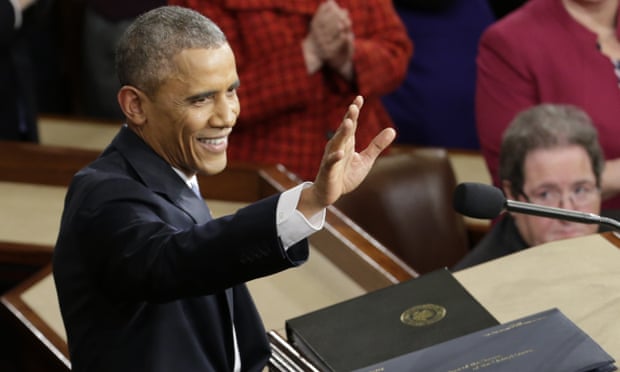
    Obama to Highlight Legacy, Future in Last SOTU

    Barack Obama - 'Non-traditional' State of the Union address will focus on America's future


    Alan Yuhas


    Barack Obama will not deliver ‘your traditional policy speech that outlines a series of proposals’ but will touch on inequality, criminal justice and gun violence.
     Barack Obama will deliver a sweeping and “non-traditional” State of the Union address that touches on inequality, criminal justice and gun violence, the White House chief of staff said on Sunday.
    “He doesn’t want this to be your traditional policy speech that outlines a series of proposals,” Obama’s chief of staff, Denis McDonough, told ABC’s This Week, during a tour of the talkshows to preview the president’s final such speech, which he will deliver on Tuesday in Washington.
    Instead, McDonough said, Obama plans to “step back and take a look at the future of this country” and “talk about the kind of country he hopes will be present not just in the course of this year, and this election year, but over the course of the next 20 years”.
    McDonough said major themes of the speech will include how inequality affects democracy, and Obama’s aim to create an “economy that gives everyone a fair shot”. He added that the president will stress that “every American has a chance to influence this democracy, not the select few” whom he said included “millionaires, billionaires”.
    “America succeeds when we draw on all 350 million Americans that we have in this country,” he said.
    Obama will not endorse a candidate before the 2016 Democratic primary election, McDonough told NBC’s Meet the Press. The president plans instead to campaign “out there” after the election, in favor of the chosen nominee.
    McDonough insisted that the president will return to the rhetoric of hope and optimism that vaulted him to the White House in 2008.
    “He’s very optimistic about the future,” he told CNN’s State of the Union – the first of five shows on which he appeared.
    The speech will be “very different than some of the doom and gloom we hear from some of the Republican candidates out there”, he told ABC.
    Pressed on what Obama hopes to achieve in his final year in office, with Congress held by the Republicans, McDonough said the president will push for the Trans-Pacific Partnership trade deal and criminal justice reform, two issues many Republicans support.
    The White House also announced the guest list of men and women who will sit with the first lady, Michelle Obama, during the address – an eclectic mix that hints at the president’s priorities for his last year in office.
    The list includes Refaii Hamo, a Syrian refugee who arrived in Detroit in December, and Saudi-American army veteran Naveed Shah, reflections of the president’s effort to resettle 10,000 refugees and his opposition to anti-Muslim sentiment.
    The president may also speak on his growing concern for mounting heroin and prescription pill abuse, something McDonough noted in remarks about therecapture of a Mexican cartel boss, and an issue highlighted by guest Cary Dixon, an opioid reform advocate.
    One seat in the first lady’s guest box will stay empty, the White House said, in memory of victims of gun violence “who no longer have a voice”. In the wake of mass shootings in California, Oregon and South Carolina and persistent gun violence in Chicago and other cities, gun control has become one of the president’s most emotional – and difficult – objectives.
    “In Dr King’s words, we need to feel the fierce urgency of now, because people are dying,” Obama told an audience last week, breaking down into tears as he spoke.
    He reminded the audience of the 20 children murdered by a gunman in Sandy Hook, Connecticut in 2012. “Every time I think about those kids, it gets me mad and, by the way, it happens on the streets of Chicago every day.”
    “The president is not making a big issue of gun control,” McDonough told CNN. “What’s happening in our country, with more than 33,000 deaths” by mass shooting a year, he said, means “this is a big issue”. 
    McDonough also suggested that Obama means to reflect on how his two terms fit in the scope of US history, past and future.
    Jim Obergefell, the plaintiff who brought same-sex marriage to the US supreme court and won its legalization last year, will sit in the guest box, as will Major Lisa Jaster, one of the first women to graduate from the army’s elite ranger school.
    Gloria Balenski, an Illinois woman who lost her job in the 2008 financial crisis, will also join as a guest, having written Obama a letter thanking him for prioritizing the economy and healthcare in his first term.
    The presence of Balenski, two Vietnam war veterans and a native Alaskan who now works as a software engineer – along with the White House’s pointed use of the phrase “great recession”– suggests a speech that will implicitly frame Obama with other reformer presidents, such as Franklin Delano Roosevelt and Lyndon Johnson.

    Americans told to cut their sugar intake in half


    New US dietary guidelines have been released that tell consumers to get no more than 200 calories per day from sugar. But the government's official advice doesn't call for red meat intake to be cut.
    Sugar
    The US government singled out sugar as the latest nutritional enemy on Thursday, as it called for Americans to reduce their reliance on the sweet, white powder.
    Releasing its new dietary guidelines, which are updated every five years based on the latest nutrition science, the government insisted for no more than 10 percent of a 2,000-calorie diet to come from sugar. At present, Americans consume up to 22 teaspoons a day.
    The latest advice was quickly hailed by doctors and some consumer groups, as the US battles an obesity and diabetes epidemic. More than one-third of adults - nearly 79 million Americans - are obese, and over the past five years that figure has shown no sign of declining.
    The new guidelines follow calls from several health experts for the US to introduce a nationwide "sugar tax" on soft drinks, which is already in effect in the city of Berkeley, California.
    A similar tax led to a 12 percent drop in sugary drinks when it was introduced in Mexico in 2014.
    In response to the latest dietary advice, the American Medical Association said it was "extremely pleased" with the recommendation, which would "significantly reduce the amount of added sugars and sugar sweetened beverages from the American diet."
    But many health campaigners and environmental groups say the guidelines - devised by the US Department of Agriculture and the Department of Health and Human Services - fall short of expectations by not including limits on red meat or recommending that consumers make food choices according to the sustainability of the ingredients.
    "USDA and HHS did not include explicit recommendations about the risks of red meat and the benefits of plant-based diets, ignoring clear scientific evidence from their own advisory committee," said conservationist Andrew A. Rosenberg of the Union of Concerned Scientists.
    The latest guidelines also call for saturated fats to make up less than 10 percent of daily calories and Americans to cut their salt intake by a third, to about a teaspoon a day. Women are advised to drink no more than one alcoholic drink per day, while men can have up to two.
    But they've dropped longstanding advice to limit cholesterol from eggs and other foods in its "key recommendations."
    The new guidelines follow several global studies that show the negative effect that sugar consumption has on human health. The issue has also hit the headlines in recent years, with one author, Dr. Robert H. Lustig, describing sugar as a "poison."
    Michael Jacobson, president of the Center for Science in the Public Interest, hailed the news. "If Americans ate according to that advice, it would be a huge win for the public's health," he said.

    Pashto Music - Sardar Ali Takkar زما روح ـ شمسُ الدین کاکړ

    "Ghost" troops slowing down Afghanistan's military


     Afghan forces  are struggling to man the front lines against a resurgent Taliban, in part because of untold numbers of "ghost" troops who are paid salaries but only exist on paper.

    The nationwide problem has been particularly severe in the southern Helmand province, where the Taliban have seized vast tracts of territory in the 12 months since the U.S. and NATO formally ended their combat mission and switched to training and support.
    "At checkpoints where 20 soldiers should be present, there are only eight or 10," said Karim Atal, head of Helmand's provincial council. "It's because some people are getting paid a salary but not doing the job because they are related to someone important, like a local warlord."
    In some cases, the "ghost" designation is more literal -- dead soldiers and police remain on the books, with senior police or army officials pocketing their salaries without replacing them, Atal said.
    He estimates that some 40 percent of registered forces don't exist, and says the lack of manpower has helped the Taliban seize 65 percent of the province -- Afghanistan's largest -- and threaten the provincial capital, Lashkar Gah. Those men who do serve face even greater danger because of the no-shows. In the last three months alone, some 700 police have been killed and 500 wounded, he said.
    The province's former deputy police chief, Pacha Gul Bakhtiar, said Helmand has 31,000 police on the registers, "but in reality it is nowhere near that."
    Nearly 15 years after the U.S.-led invasion that toppled the Taliban, and despite billions of dollars in military and other aid, corruption remains rife in Afghanistan and local security forces have struggled to hold off insurgent advances across the country. Last year the Taliban seized the northern city of Kunduz for three days, marking their biggest foray into a major urban area since 2001.
    Pakistan will host four-nation talks Monday with Afghanistan, China and the United States aimed at reviving peace talks with the Taliban, but even if those efforts succeed the insurgents are expected to stay on the offensive in order to gain land and leverage.
    The Defense Ministry declined to comment on ghost security forces. Interior Ministry spokesman Sediq Sediqqi acknowledged the problem and said an investigation has been launched, without providing further details.
    Iraq has also struggled with the ghost soldier phenomenon, a factor in the Islamic State group's rapid conquest of much of the country's north and west in the summer of 2014. In December of that year, Iraqi officials said the payment of tens of millions of dollars in salaries to nonexistent forces had been halted.
    But Afghan lawmaker Ghulam Hussain Nasiri, who has been researching the problem for more than a year, said his government is ignoring it.
    "When we say we have 100 soldiers on the battlefield, in reality it is just 30 or 40. And this creates the potential for huge catastrophes when the enemy attacks," he said.
    "It is an indication of massive corruption - the reason Afghanistan is one of the most corrupt nations in the world," he added. Afghanistan consistently ranks among the most corrupt countries in indices released by global watchdog Transparency International.
    Nasiri said the government "doesn't seem to want to know about it," and that he received death threats after revealing the names of parliamentarians who are allegedly in on the racket. He said he handed a list of 31 names of corrupt parliamentarians to the Interior Ministry but has so far received no response.
    Cash-strapped Afghanistan's security forces are entirely funded by the international community, at a cost of some $5 billion a year, most of which comes from the United States. The U.S. government's auditor of spending in Afghanistan, John Sopko, told a congressional hearing last year that Afghan government figures on security personnel and pay could not be regarded as accurate.
    "No one knows the exact numbers of the Afghan National Defense Forces," an Afghan official said on condition of anonymity because he was not authorized to brief media on the topic. He said the best internal estimates put the number at around 120,000, less than a third of what's needed to secure the country.
    The heaviest cost of the ghost soldier phenomenon is being exacted on the battlefield. Neither the government nor NATO publicizes casualty figures for local security forces, but an internal NATO tally seen by The Associated Press shows casualties are up 28 percent from 2014, when some 5,000 Afghan forces were killed.
    Last month, an army base in Helmand's Sangin district was besieged by insurgents for almost a week before reinforcements were rushed in backed by U.S. airstrikes and British military advisers.
    In the northern Helmand district of Kajaki, soldier Mohammad Islam said many of his comrades deserted their posts because they didn't believe their bodies would be sent back to their families if they died. In the absence of a body, the family would not be eligible for compensation payments.
    "Everyone knows that we are facing this fight alongside 'ghost' soldiers, and that's the reason we don't have enough men," he said. "The Taliban know it, too. When they attack us, and we're unable to protect ourselves, the big men then ask why."

    Pakistan - Nepotism displayed in all major projects: Bilawal


    Pakistan People’s Party (PPP) Co-chairman Bilawal Bhutto Zardari has on Sunday said that the government is focused only on extending the rule. He said that nepotism was displayed in all the major projects of the government. He said that the government is focusing only on colourful buses and roads, reported Dunya News.

    Talking at a combined marriage ceremony in Lahore, Bilawal said that the government is being unfair with the farmers by buying substandard wheat from Ukraine. Although he congratulated the newlywed couples, Bilawal also criticized the government on this occasion.
    Bilawal also mentioned the projects started by PPP government on this occasion. He said that the projects started by the PPP government were aimed at empowering the people of Pakistan. He said that the current government is initiating the same PPP projects under their new banner.
    The combined marriage ceremony was also attended by Bilawal’s sisters Bakhtawar and Asifa.
    http://dunyanews.tv/en/Pakistan/317048-Nepotism-displayed-in-all-major-projects-Bilawal

    BILAWAL BHUTTO - COLOURFUL BUS PROJECTS CANNOT HELP POOR

    Taking a jibe at the policies of federal government, Pakistan People’s Party (PPP) Chairman, Bilawal Bhutto Zardari on Sunday lamented that the countries resources were being wasted on ‘senseless’ projects like colourful bus schemes which cannot help the poor in any way..federal government, Pakistan People’s Party (PPP) Chairman, Bilawal Bhutto Zardari on Sunday lamented that the countries resources were being wasted on ‘senseless’ projects like colourful bus schemes which cannot help the poor in any way.
    “They are only appeasing their friends with senseless projects like ‘Sasti Roti’ and ‘Danish School’,” Bilawal snapped while address a mass wedding ceremony here.
    He said instead of introducing colourful bus schemes, the resources should have been channeled towards projects which could help overcome the problem of unemployment in the country.colourful bus schemes, the resources should have been channeled towards projects which could help overcome the problem of unemployment in the country.colourful bus schemes, the resources should have been channeled towards projects which could help overcome the problem of unemployment in the country.colourful bus schemes, the resources should have been channeled towards projects which could help overcome the problem of unemployment in the country.colourful bus schemes, the resources should have been channeled towards projects which could help overcome the problem of unemployment in the country.
    Bhutto Zardari regretted that every now and then a mega project is inaugurated and credit is claimed even for those projects that were initiated under his party’s government in the centre.centre.centre.
    Terming bread, clothing, shelter, health and education as fundamental human necessities, the PPP Chairman said it is never taken into account as to how sharply the prices and unemployment have gone up over time.
    He said government went ahead and imposed billions of taxes upon people without even bothering to obtain the parliament’s approval.government went ahead and imposed billions of taxes upon people without even bothering to obtain the parliament’s approval.government went ahead and imposed billions of taxes upon people without even bothering to obtain the parliament’s approval.
    Bilawal said the ‘Kissan Package’ introduced by the incumbent government has sparked protests.
    “There was a time before our government when the country used to import wheat. We turned the situation around to a point where we could begin to export the surplus wheat,” Bilawal claimed, regretting, today wheat is being imported from Ukrain to the detriment of the farmer.
    Head TeamPPP Bakhtawar Bhutto Zardari and Aseefa Bhutto Zardari also attended the mass wedding ceremony.
    https://ppppunjab.wordpress.com/2016/01/10/coloufrul-bus-projects-cannot-help-poor-says-bilawal-bhutto/

    Bilawa Bhutto Attends Collective Wedding Ceremony

    Chairman Pakistan People’s Party, Bilawal Bhutto Zardari attended a collective wedding ceremony on Sunday in Lahore.
    According to details, Asifa Bhutto Zardari and Bakhtawar Bhutto Zardari were also present on the occasion along with the provincial leadership of the PPP.
    The wedding ceremony, in which more than 50 couples tied their knots, was organized by a social welfare trust.
    Bilawal Bhutto Zardari extended his congratulations to the newly wedded couples and expressed his best wishes to their life ahead.

    http://dailycapital.pk/bilawal-attends-collective-wedding-ceremony/

    Saturday, January 9, 2016

    Britain under fire over arms sales to Saudi Arabia

     Ali Kheradpir

    A Saudi-led coalition has been bombing Houthi rebels in Yemen since March.
    Today, lawyers representing Campaign Against Arms Trade claimed the coalition’s air-strikes were targeting civilians.
    Law firm Leigh Day has threatened the UK government with legal action unless it suspends all licenses permitting UK produced arms to be sent to Saudi Arabia.
    Although the Saudi-led campaign in Yemen has the backing of the UN Security Council, on November 12, Leigh Day wrote to the Secretary of State for Business, Innovation and Skills saying ‘in light of alleged grave breaches of international humanitarian law’ that it was concerned about arms sales to Saudi Arabia.
    In August Stephen O’Brien, UN under-secretary general for humanitarian affairs, told the UN Security Council that the Saudi Arabian attacks ‘on civilian areas had clearly broken international law’.
    The UK’s Foreign Secretary, Philip Hammond, confirmed last month that weapons manufactured in the UK are being used by Saudi Arabia.
    The opponents of exporting weapons to Saudi Arabia said almost 6,000 people have been killed since the military campaign began and according to the UN estimates, 60 per cent of those who have been killed or wounded have been civilians.
    “The conflict in Yemen has turned the country into one of the world’s worst humanitarian crises,” Amnesty International said in a statement. “Civilian targets including hospitals, schools, markets, grain warehouses, ports and a displaced persons camp have been hit in airstrikes by Saudi-led coalition forces.
    “All sides in the conflict are responsible for causing the humanitarian crisis in Yemen. The UK is not alone in sending arms to and supporting parties to the conflict. Several other countries, including France, Germany, Iran, Italy, Russia and the US have reportedly also supplied arms to the Saudi Arabia-led coalition now fighting in Yemen, with supplies to the Houthis clouded in secrecy.”
    Saudi Arabia says Shia-armed rebels have taken control of most of Yemen and they are not the country’s legitimate government.
    The UK’s Foreign and Commonwealth Office said in a statement to parliament in November: “The UK takes its arms export responsibilities very seriously and operates one of the most robust arms export control regimes in the world. We rigorously examine every application on a case-by-case basis against the Consolidated EU and National Arms Export Licensing Criteria.”
    http://www.euronews.com/2015/12/17/britain-under-fire-over-arms-sales-to-saudi-arabia/

    SAUDI ARABIA WARPLANES TARGET YEMENI CIVILIANS BY CLUSTER BOMBS

    At least five Yemeni civilians have lost their lives in fresh Saudi Arabia airstrikes on Yemen, including one killed by a cluster bomb in the capital, Sana’a.

    According to Yemen’s al-Masirah news channel, Saudi jets pounded various districts of Sana’a, using cluster bombs early on Thursday.

    A civilian was killed and a number of others were injured during the raids. Witnesses said some of the bombs were left unexploded.

    Saudi warplanes also bombarded residential buildings in the al-Marzaq district of Hajjah Province, killing four people and injuring two others.
    Saudi Arabia began the military campaign against Yemen in late March 2015. The strikes are supposedly meant to undermine the Ansarullah movement and restore power to fugitive former Yemeni president, Abd Rabbuh Mansour Hadi.

    Rights groups had earlier exposed Saudi Arabia’s use of cluster bombs in the war on Yemen. The Human Rights Watch said in late May 2015 Saudi warplanes had targeted civilians and residential areas with cluster bombs in the northern province of Sa’ada.

    More than 7,500 people have been killed and over 14,000 others injured since the strikes began. The Saudi war has also taken a heavy toll on the impoverished country’s facilities and infrastructure.

    Yemenis have responded with attacks against Saudi forces deployed in the country as well as targets inside Saudi Arabia, Press TV reported.

    http://www.shiitenews.org/index.php/saudi-arab/item/20590-saudi-arabia-warplanes-target-yemeni-civilians-by-cluster-bombs

    Canada under pressure over $15bn arms deal with Saudi Arabia

    Canada has no plans to review a $15bn weapons contract with Saudi Arabia, the foreign minister has said, despite calls from Canadians and human rights groups to cancel the deal after the kingdom executed dozens of people last weekend.
    Stephane Dion told the national public broadcaster this week “what is done is done".
    “We have said during the campaign, the prime minister has been very clear, that we would not cancel this contract or contracts that have been done under the previous government in general,” Dion said on CBC’s Power & Politics.
    “We will review the process by which these contracts are assessed in the future. But what is done is done, and the contract is not something that we’ll revisit.”
    The comments come amid growing pressure on Prime Minister Justin Trudeau’s new government to look into the multi-billion-dollar deal that will see Ontario-based company General Dynamics Land Systems’ export light armoured vehicles (LAVs) to Saudi Arabia.
    About 500 people protested at the Canadian parliament building on Wednesday calling on Ottawa to cancel the trade deal. Protesters also condemned the killing of Shia cleric Nimr al-Nimr, who was among 47 prisoners executed in Saudi Arabia on 2 January.

    A deal ‘contingent on secrecy’

    Canada’s then minister of trade, Ed Fast, first revealed details of the agreement – the largest weapons export contract in Canadian history – in 2014. Fast said at the time that the deal would bring 3,000 jobs to southern Ontario.
    A federal crown corporation, Canadian Commercial Corp, which also acts as the main contractor supplying the LAVs, brokered the agreement.
    “The money flows through Canadian Commercial Corporation. It is by no means a private contract in the usual sense, and the government is very much involved,” said Ken Epps, an arms trade treaty policy advisor at anti-war group Project Ploughshares.
    Epps told Middle East Eye the contract is expected to span 10 years and equipment shipments may begin later in 2016. The exact number of vehicles being manufactured remains unconfirmed, he said, but the size of the contract leads him to estimate “it’s going to be in the hundreds, if not thousands”.
    A recently reported side deal General Dynamics Land Systems holds with a Belgian company that makes turrets and cannons also signals that “a tank on wheels” will be among the LAVs being sent overseas, Epps said.
    The Globe and Mail reported last year that the deal was “contingent on secrecy".
    Stephen Harper, Canada’s former prime minister, personally promised the Saudi government to keep the details of the sale under wraps, the newspaper said.
    Ottawa had also reportedly not conducted a review of the Saudi human rights record prior to the 2014 announcement, a requirement under federal export laws when military equipment is being shipped to countries “with a persistent record of serious violations of the human rights of their citizens”.
    Those regulations oblige Canada to demonstrate “that there is no reasonable risk that the goods might be used against the civilian population” in the importing country.
    “The risk of course that [the Canadian government is] taking by closing off any revisiting of the contract is that this equipment will be used either in Yemen or internally in Saudi Arabia,” Epps said, “and it’ll come back to haunt the government.”

    Saudi Arabia an ‘important partner’ for Canada

    Dion, the foreign minister, “decried” the recent executions in Saudi Arabia and said in a statement that Ottawa “raises concerns over human rights and due process” with Saudi officials regularly.
    “The Kingdom of Saudi Arabia is an important partner for Canada in efforts to counter terrorism, in contributions to the international coalition combating ISIL [Islamic State] militants and in international efforts to find a political solution in Syria,” Dion said in another release after he met Saudi Minister of Foreign Affairs Adel Al Jubeir in Ottawa in mid-December.
    The strategic importance of Saudi Arabia and other Gulf Cooperation Council countries was mentioned again in a government-briefing book obtained by The Canadian Press through an Access to Information Request.
    Federal officials reportedly advised Trudeau to strengthen ties Saudi Arabia and the United Arab Emirates, CP reported on Thursday, as this “would serve Canadian commercial and possibly security interests".

    “Current bilateral engagement includes a particular focus on Saudi Arabia and the UAE,” the memo states. “Saudi Arabia is a regional power, the only Arab country in the G20. It is a key contributor to global energy security and Canada's largest trading partner in the region.”
    Anthony Fenton, a PhD candidate at York University in Toronto researching the political economy of Canada-GCC relations, said Canada and Saudi Arabia have had 50 years of strong diplomatic and economic ties.
    Strengthening ties with Saudi Arabia today gives Canada "a seat at the table" and so long as the U.S. backs the Kingdom, so too will Ottawa. "Cultivating closer ties with the Saudis helps bolster Canada's standing as a emerging, secondary imperialist power," he told Middle East Eye in an e-mail interview.
    Fenton said it's not only the arms deal that ties Canada to Saudi Arabia; Canadian engineering firm SNC-Lavalin has 7,000 employees in the Kingdom, a US-Saudi firm recently bought the former Canadian Wheat Board, and GCC countries - Saudi Arabia and the UAE in particular - are categorized as a "priority" market for Canada, among other examples.
    And there has been no indication that this will change under the Trudeau government, Fenton said.

    "The same state functionaries who worked so hard to cultivate these ties under Harper will see no reason to take the wind out of the Canada-GCC sails, and appear to have advised the new government accordingly," he said.

    "I see no reason to expect this to change, so long as the petrodollars are flowing, and the GCC states are at war (be it against other states, IS, etc., or against their own people)."
    A recent review of Saudi Arabia’s human rights record is being kept confidential in Ottawa, The Globe and Mail reported. A request for comment from MEE to Global Affairs Canada was not immediately returned on Friday.
    But Alex Neve, head of Amnesty International Canada, told the newspaper that the results of any assessment need to be shared publicly. He also raised concerns about how the LAVs might be used by Saudi forces if protests erupt again in the Shia community in Saudi Arabia’s eastern provinces.
    “How will Saudi authorities react to that? What equipment and weaponry will they resort to? Is there a potential that armoured vehicles of this sort could be used in ways that cause or contribute to human rights violations?” said Neve, who has been using the hashtag #ExplainTheDeal on Twitter.
    Epps, meanwhile, called on Canada to implement existing regulations “to ensure that the Canadian equipment doesn’t get into the wrong hands".
    “They called for transparency,” he said, referring to the Liberal party’s federal election campaign comments last year. “Well, this would be an opportunity for them to be more transparent by opening up and even potentially [holding] public hearings on what’s happening in Saudi Arabia.”
    - See more at: http://www.middleeasteye.net/news/canada-under-pressure-over-15bn-arms-deal-saudi-arabia-957683873#sthash.a5PiezBE.dpuf

    Iran-Saudi Arabia stand-off: Saudi Arabia accused of stoking tension

    Iran’s deputy foreign minister says Saudi Arabia’s decision to severe diplomatic relations cannot cover up Riyadh’s “strategic mistake” in killing a prominent Shiite cleric.
    Hossein Amir Abdollahian has also accused Saudi Arabia of promoting terrorism and extremism in the Middle East. His comments were broadcast today on Iranian state television.
    Saudi Arabia earlier cut diplomatic relations with Iran, hours after protesters stormed and set fire to the Saudi Embassy in Tehran. It also followed harsh criticism by Iran’s top leader of the Saudis’ execution of Sheikh Nimr al-Nimr.
    Al-Nimr’s execution has opened a new chapter in the ongoing Sunni-Shiite power struggle playing out across the Middle East, with Saudi Arabia and Iran as primary antagonists.
    Tehran's police chief Hossein Sajedinia (C) asks protesters to end their rally against the execution of prominent Shiite Muslim cleric Nimr al-Nimr by Saudi authorities, and leave the area outside the Saudi embassy in Tehran. Credit: AFP
    Saudi Foreign Minister Adel al-Jubeir announced the cut in relations late on Sunday and gave Iranian diplomatic personnel 48 hours to leave his country. All Saudi diplomatic personnel in Iran have been called home after an attack on the kingdoms embassy in Tehran and a consulate.
    The decision came after the mass execution of Sheikh Nimr al-Nimr and 46 others — the largest carried out by Saudi Arabia in three and a half decades — laid bare the sectarian divisions gripping the region. Shiite protesters took to the streets from Bahrain to Pakistan while Arab allies of Sunni-ruled Saudi Arabia quickly lined up behind the kingdom.
    The standoff illustrates the kingdom’s new aggressiveness under King Salman. During his reign, Saudi Arabia has led a coalition fighting Shiite rebels in Yemen and staunchly opposed regional Shiite power Iran, even as Tehran struck a nuclear deal with world powers.
    It also represents just the latest turmoil in the two countries’ long-rocky relationship, which saw diplomatic ties between them severed from 1988 to 1991.
    Iran’s supreme leader, Ayatollah Ali Khamenei, warned Saudi Arabia on Sunday of “divine revenge” over al-Nimr’s death, while Riyadh accused Tehran of supporting “terrorism” in a war of words that threatened to escalate even as the U.S. and the European Union sought to calm the region.
    Al-Jubeir told a news conference in Riyadh that the Iranian regime has “a long record of violations of foreign diplomatic missions,” dating back to the occupation of the U.S. Embassy in 1979, and such incidents constitute “a flagrant violation of all international agreements,” according to the official Saudi Press Agency.
    He said Iran’s “hostile policy” was aimed “at destabilizing the region’s security,” accusing Tehran of smuggling weapons and explosives and planting terrorist cells in the kingdom and other countries in the region. He vowed that Saudi Arabia will not allow Iran “to undermine our security.”
    An Iraqi man holds a portrait of prominent Shiite Muslim cleric Nimr al-Nimr during a demonstration against his execution by Saudi authorities. Credit: AFP
    Central figure
    Al-Nimr was a central figure in Arab Spring-inspired protests by Saudi Arabia’s Shiite minority until his arrest in 2012. He was convicted of terrorism charges but denied advocating violence.
    While the split between Sunnis and Shiites dates back to the early days of Islam and disagreements over the successor to the Prophet Muhammad, those divisions have only grown as they intertwine with regional politics, with both Iran and Saudi Arabia vying to be the Mideast’s top power.
    Iran accuses Saudi Arabia of supporting terrorism in part because it backs Syrian rebel groups fighting to oust its embattled ally, President Bashar Assad. Riyadh points to Iran’s backing of the Lebanese Hezbollah and other Shiite militant groups in the region as a sign of its support for terrorism. Iran also has backed Shiite rebels in Yemen known as Houthis.
    In Tehran, a protest outside the Saudi Embassy early Sunday quickly grew violent as protesters threw stones and gasoline bombs at the embassy, setting part of the building ablaze, according to Gen. Hossein Sajedinia, the country’s top police official, the semi-official Tasnim news agency reported.
    Forty people were arrested and investigators were pursuing other suspects, Tehran prosecutor Abbas Jafari Dowlatabadi said, according to the semi-official ISNA news agency.
    Iranian President Hassan Rouhani condemned Saudi Arabia’s execution of al-Nimr, but also branded those who attacked the Saudi Embassy as “extremists.”
    “It is unjustifiable,” he said in a statement. Another Saudi diplomatic mission also was attacked in Mashhad.
    Australian government ‘deeply disturbed’ by Saudi killing
    Foreign Minister Julie Bishop says the Australian government is deeply disturbed by Saudi Arabia’s mass execution of 47 people.
    Ms Bishop has called on Iranian authorities to ensure proper protection of diplomatic facilities.
    “We call on all parties to look for ways to calm the recent tension and to exercise restraint in their actions and comments,” she said on Monday.
    “The Australian government supports the universal abolition of the death penalty and we are deeply disturbed by the recent executions carried out in Saudi Arabia.”