Sunday, October 11, 2015

#TurkeyAttack - Turkey bomb blasts: government blamed as thousands take to streets in Ankara

Thousands of Turkish citizens gathered in central Ankara a day after twin bombings targeted a peace rally in the city, killing over a hundred civilians in an attack that demonstrators and mourners blamed squarely on the government of the Turkish president, Recep Tayyip Erdoğan.
Witnesses and victims’ families, as well as opposition parties, ascribed direct responsibility to the government for allegedly failing to provide any security measures ahead of the peace rally, saying police officers who arrived at the scene after the bombing fired teargas at grieving families who rushed there to inquire about their loved ones.
They also blamed Erdoğan’s government for allegedly sowing chaos ahead of next month’s parliamentary polls, either to delay the elections and retain power for his ruling Justice and Development party (AKP), or to increase his chances of securing a broader majority in the elections to maintain security.
“We are grieving, we are saddened, but we are also furious,” the Kurdish opposition leader, Selahattin Demirtas, told a rally in Sihhiye Square in central Ankara. “We will struggle, fight, and win back the democracy.”
Demonstrators shouted slogans condemning the Turkish president, chanting “chief and murderer Erdoğan” and “death to fascism”.
Brief scuffles earlier broke out as police used teargas to prevent people from laying red carnations at the site of the attack, the deadliest terrorist strike on Turkish soil in recent history. The pro-Kurdish People’s Democratic party (HDP) said said some members of its delegation sustained injuries.
Organisers searched the demonstration’s attendees and patted them down to avoid a repeat of the previous day’s attack as tension and anger rose at the previous day’s bloody events.
According to the HDP, the number of people killed in the bombing stands at 128, all but eight of whom have been identified and their names published by the HDP’s crisis desk.
No group immediately claimed responsibility for the bombing, and the government has denied any part in it. The prime minister, Ahmet Davutoğlu, cited the political upheaval in both Turkey and Syria and said the attack could have been carried out by Islamic State, Kurdish militants or radical leftist groups.
Witnesses and victims’ families on Sunday said the police had not provided any protective measures for the peace rally, which had called for an end to recent bouts of violence that had gripped Turkey and was mostly attended by leftist, Kurdish and Alevi activists.
Outside Numune Hospital in central Ankara, families of victims treated at the hospital reiterated their blame for the government and its lax security, and said they were attacked with tear gas as they rushed to the scene for news of their loved ones.
One man who said he learned of his nephew’s death in the bombing on Facebook said he was tear-gassed after arriving at the site of the bombing by police.
“These are our children and they would not let us help them,” he said. “I saw arms, legs and heads severed from their bodies.”
Security analysts have pointed out the similarities to a suicide bomb attack in the Turkish border town of Suruç that killed 33 Kurdish and Turkish activists in July, which the Turkish government blamed on Isis.
The government announced it had appointed two chief civil inspectors and two chief police inspectors to investigate the Ankara attack. According to the pro-government daily Yeni Safak, one of the suicide bombers might have been identified as a man aged between 25 and 30, but no further details have yet been made public.
The two explosions occurred in an interval of a few seconds near the central train station on Saturday morning as thousands started to gather for a peace march, which was organised by several leftwing groups including labour unions and the HDP to call for an end to the escalating violence between the Turkish government and the outlawed Kurdistan Worker’s party (PKK).
Selahattin Demirtas, the co-chair of the HDP, held the government responsible for the attack and said his party, seen as one of the main targets, would not seek revenge but would ask for justice.
The government accused the Kurdish politician of exploiting the pain of others for electoral gain. On Sunday, at the memorial rally, Demirtas harshly rebuffed these claims.
“Who are you to keep threatening us? We will not allow you to kill us like this, day after day. We are the ones who are dying. We are the police, the soldiers, we are the Kurds and the Turks who are dying. Your children are not the ones that are killed,” he said. “That is why we are not the ones who should be held responsible, but you are.”
The bomb attack in Ankara came three months after the breakdown of a mutual ceasefire between the Turkish government and the PKK. Hundreds of people have been killed in the escalating violence since then.
Hours after the Ankara bombing, the PKK announced an expected unilateral ceasefire, in order to avoid acts that could obstruct a “fair and just election” on 1 November. The snap vote was called after the government failed to form a coalition following national elections in June.
The Turkish government opted to snub the offer of calm. On Saturday night, Turkish fighter jets launched airstrikes against PKK positions in Turkey and northern Iraq. A statement by the general chief of staff said 49 militants were killed and shelters and gun positions were destroyed. Security operations were also reported from the predominantly Kurdish province of Diyarbakir.

Video - Protesters throw petrol bombs at water cannons, clash with police after Ankara blasts

Afghanistan and Iraq: Lessons for the Imperial


The photographs in the New York Times told contrasting stories last week. One showed two Taliban soldiers in civilian clothes and sandals, with their rifles, standing in front of a captured U.N. vehicle. The Taliban forces had taken the northern provincial capital of Kunduz. The other photograph showed Afghan army soldiers fully equipped with modern gear, weapons, and vehicles.
Guess who is winning? An estimated 30,000 Taliban soldiers with no air force, navy, or heavy weapons have been holding down 10 times more Afghan army and police and over 100,000 U.S. soldiers with the world's most modern weaponry -- for eight years.
ISIS forces from Syria have taken over large areas of northern and western Iraq, including its second largest city, Mosul, and the battered city of Fallujah. ISIS forces in Iraq and Syria are estimated to number no more than 35,000. Like the Taliban, ISIS fighters, who vary in their military training, primarily have light weaponry. That is when they are not taking control of the fleeing, much larger, Iraqi army's armored vehicles and ammunition from the United States.
Against vastly greater numbers of Iraqi soldiers, backed by U.S. weapons, U.S. planes bombing daily, 24/7 aerial surveillance, and U.S. military advisors at the ground level, so far ISIS is still holding most of its territory and is still dominant in large parts of Syria.
The American people are entitled to know how all this military might and the trillions of dollars spent in Iraq and Afghanistan, since 2003 and 2001 respectively, can produce such negative fallouts.
Certainly these failures have little to do with observing the restraints of international law. Presidents Bush and Obama have sent military power anywhere and everywhere, regardless of national boundaries and the resulting immense civilian casualties, in those tragic, blown-apart countries.
The current perception of the U.S. in these countries is that of invaders on a rampage. Recruiting motivated fighters, including a seemingly endless supply of suicide bombers, is easier when the invaders come from western countries that for over a century have been known for attacking, carving up boundaries for artificial states, intervening, overthrowing, propping up domestic dictators, and generally siding with oligarchic or colonizing interests that brutalize the mass of the people.
It hasn't helped for these invasions to be supported by an alien culture rooted in the Christian crusades against Islam centuries ago, whose jingoism in the U.S. continues among some evangelical groups today.
But of course more contemporary situations are, first and foremost, the wonton destruction and violent chaos that comes with such invasions. With the absence of any functioning central governments and the dominance of tribal societies, the sheer complexity of the invaders trying to figure out the intricate "politics" between and within tribes and clans turns into an immense, ongoing trap for the western military forces.
When the U.S. started taking sides with the Shiites against the Sunnis in Iraq, or between different clans and tribes in Afghanistan, U.S. soldiers, not knowing the language or customs, were left with handing out $100 bills to build alliances. Our government air-shipped and distributed crates of this money. With the local economies at a standstill, public facilities collapsed, fear gripped families from violent streets and roads, and all havoc broke lose in the struggle for safety and survival.
Afghan soldiers, who are paid only $120 a month, will do almost anything to supplement their income, including selling weapons. At higher levels, bribes, payoffs, extortions create an underground economic system. The combination of lack of understanding, the systemic bribes, and the ensuing corruption has produced a climate of chaos.
Then there is the reckless slaughter of civilians -- wedding parties, schools, clinics, peasant boys collecting fire-wood on a hillside -- from supposedly pinpoint, accurate airplanes, helicopter gunships, drones or missiles. Hatred of the Americans spreads as people lose their loved ones.
Our "blowback" policies are fueling the expansion of al-Qaeda offshoots and new violent groups in over 20 countries. On 9/11, the "threat" was coming from a corner of one country -- northeastern Afghanistan. The Bush/Cheney prevaricator frenzy led to local bounty hunters taking innocent captives, falsely labeled as "terrorists," who were sent to the prisons in Guantanamo, Cuba. These actions have damaged our country's reputation all over the world.
All this could have been avoided had we heeded the advice of retired, high-ranking military, national security, and diplomatic officials not to invade Iraq and their advice not to overreact in Afghanistan. But the supine mass media, and an overall cowardly Congress let the lies, deceptions, and cover-ups by the Bush regime go unchallenged and, as Congressman Ron Paul (R-TX) put it, Bush/Cheney "lied us into the Iraq War."
It isn't as if the Taliban and ISIS are winning the "hearts and minds" of the local people. On the contrary, while promising law and order, they treat local populations quite brutally, with few exceptions. But the locals have long been treated brutally by the police, army, and militias jockeying for the spoils of conflict. Unfortunately, there is still no semblance of ground-level security.
All empires fail and eventually devour themselves. The U.S. empire is no different. Look at the harm to and drain on our soldiers, our domestic economy, the costly, boomeranging, endless wars overseas and what empire building has done to spread anxieties and lower the expectation level of the American people for their public budgets and public services.
Not repeatedly doing what has failed is the first step toward correction. How much better and cheaper it would be if years ago we became a humanitarian power -- well-received by the deprived billions in these anguished lands.
What changes are needed to get out of these quagmires and leave a semblance of recovery behind? Press those gaggles of presidential candidates, who war-monger with impunity or who are dodging this grave matter, for answers. Make them listen to you.

The key to solving the puzzle of Afghanistan is Pakistan


By Fareed Zakaria

Recent setbacks in Afghanistan — from the fall of Kunduz to the errant U.S. bombing of a hospital in that city — again raise a question. Why, after 14 years of American military efforts, is Afghanistan still so fragile? The country has a democratically elected government widely viewed as legitimate. Poll after poll suggests that the Taliban are unpopular. The Afghan army fights fiercely and loyally. And yet, the Taliban always come back.
The answer to this puzzle can be found in a profile of the Taliban’s new leader, Akhtar Mohammad Mansour. It turns out that Mansour lives part time in Quetta, the New York Times reports, “in an enclave where he and some other Taliban leaders . . . have built homes.” His predecessor, Mohammad Omar, we now know, died a while ago in Karachi. And of course, we remember that Osama bin Laden lived for many years in a compound inAbbottabad. All three of these cities are in Pakistan.
We cannot solve the problem of Afghanistan without recognizing that the insurgency against that government is shaped, aided and armed from across the border by one of the world’s most powerful armies. Periodically, someone inside or outside the U.S. government points this out. Yet no one knows quite what to do, so it is swept under the carpet and policy stays the same. But this is not an incidental fact. It is fundamental, and unless it is confronted, the Taliban will never be defeated. It is an old adage that no counterinsurgency has ever succeeded when the rebels have had a haven. In this case, the rebels have a nuclear-armed sponsor.
Pakistan has mastered the art of pretending to help the United States while actually supporting its most deadly foes. Take the many efforts that U.S. officials have recently made to start talks with the Taliban. It turns out that we were talking to ghosts. Omar has been dead for two years, while Pakistani officials have been facilitating “contacts” and “talks” with him. This is part of a pattern. Pakistani officials, from former president Pervez Musharraf down, categorically denied that bin Laden or Omar was living in Pakistan — despite the fact that former Afghan president Hamid Karzai repeatedly pointed this out publicly. “I do not believe Omar has ever been to Pakistan,” Musharraf said in 2007.
The Pakistani army has been described as the “godfather” of the Taliban. That might understate its influence. Pakistan was the base for the U.S.-supported mujahideen as they battled the Soviet Union in the 1980s. After the Soviets retreated from Afghanistan in 1989, the United States withdrew almost as quickly, and Pakistan entered that strategic void. It pushed forward the Taliban, a group of young Pashtun jihadis schooled in radical Islam at Pakistani madrasas. (“Talib” means student.) Now history is repeating itself. As the United States draws down its forces, Pakistan again seeks to expand its influence through its long-standing proxy.
Why does Pakistan support the Taliban? Pakistan’s former ambassador to the United States, Husain Haqqani, whose book “Magnificent Delusions” is an essential guide, says that “Pakistan has always worried that the natural order of things would be for Afghanistan to come under the sway of India, the giant of the subcontinent. The Pakistani army came to believe that it could only gain leverage in Afghanistan through religious zealots. Afghanistan’s secular groups and ethnic nationalists are all suspicious of Pakistan, so the only path in is through those who see a common, religious ideology.” This strategy is not new, Haqqani points out, noting that funding for such groups began in the mid-1970s, before the Soviets invaded Afghanistan in 1979.
What should the United States do? First, says Haqqani, it needs to see reality for what it is: “When you are lied to and you don’t respond, you are encouraging more lies.” He argues that Washington has to get much tougher with the Pakistani military and make clear that its double-dealing must stop. To do this would be good for Afghanistan and stability in that part of the world, but it would also be good for Pakistan.
Pakistan is a time bomb. It ranks 43rd in the world in terms of its economy, according to the World Bank, but has the sixth-largest armed forces. It has the fastest-growing nuclear arsenal, and the most opaque. It maintains close ties with some of the world’s most brutal terrorists. By some estimates, its military consumes 26 percent of all tax receipts, while the country has 5.5 million children who don’t attend school . As long as this military and its mind-set are unchecked and unreformed, the United States will face a strategic collapse as it withdraws its forces from the region.

Pakistan's Shia Genocide - Shiite man gunned down, two daughters injured in Peshawar

A Shia Muslim was martyred while his two daughters were injured when takfiri terrorists of Sipah-e-Sahaba opened fire on them in Peshawar on Thursday morning.

A man identified as Malik Jarrar Ali Haider was killed and his two minor daughters were injured when their motorbike was ambushed by gunmen on Mohammad Ali Johar Road Thursday morning.
Police said Malik Jarrar, an employee of the Afghan Refugees Commissionerate in Hayatabad, was taking his daughters Bisma and Rubab to school when the incident occurred. Malik Jarrar died on the spot while his daughters, five-year-old Bisma and 10-year-old Rubab, were injured.
The police added the assailants managed to escape after committing the crime. The two injured children were rushed to Lady Reading Hospital (LRH) where he is in stable condition.
“This is a target killing motivated by sectarianism as the man had no enemies,” said an investigation official from Khan Raziq station, adding this was the second such incident in recent times. The policeman said an ice-cream seller from the Shia community was killed outside a mosque in the last month.
http://en.abna24.com/service/centeral-asia-subcontinent/archive/2015/10/10/714436/story.html

Pak - India : A return to belligerence

M.K. Narayanan


Pakistan’s recent display of verbal aggression — Prime Minister Sharif’s attack on India at the UN — can be attributed to a new-found overconfidence. India must not be provoked into any kind of knee-jerk response but should look for method behind the madness

Prime Minister Narendra Modi’s visit to the U.S. ended on a high note, despite Pakistan introducing a sour note towards the end. Pakistan’s Prime Minister, Nawaz Sharif, addressing the UN General Assembly at about the same time as the Prime Minister was in New York, used the opportunity to make an all-out attack on India over the Kashmir issue. Not since 1971 has Pakistan launched such a frontal attack, and on this scale, in the UN. In recent years, references to Kashmir by Pakistani interlocutors have tended to be more ritualistic in character — intended mainly to ensure that the world did not forget the existence of the dispute. This time, however, there was no mistaking the viciousness of the attack.
The charge was led by the Prime Minister himself, and later followed up by Pakistan’s Permanent Representative at the UN, Maleeha Lodhi. This cannot be treated as routine, and the attacks can hardly be ignored.
Ufa thaw freezes
At their meeting in Ufa, Russia, in July, the two Prime Ministers had agreed to hold talks on a broad spectrum of issues. The about-turn within two months, hence, appears all the more surprising and inexplicable. There is reason enough, therefore, to ponder over what might have brought the two countries to this situation, and what it portends. While Pakistani leaders — both civilian and military — are not always guided by cognitive reasoning, the present onslaught should not be viewed as merely an act of defiance, but needs to be seen in the nature of a threat.
In the past, Pakistan has been quite willing to risk a conflict with India — even on specious grounds — ignoring its costs. Kargil 1999 was one example. Pakistan resorted to aggression in the Kargil sector notwithstanding the fact that both countries had, by then, become acknowledged nuclear powers. There was every likelihood of the Kargil adventure escalating into a much bigger conflict. India’s restraint alone prevented it from turning into a full-scale war. Nawaz Sharif — in his second stint as Prime Minister at that time — faced humiliation. However, in his subsequent stint, he has not demonstrated any greater sagacity or reason.
Mr. Sharif carries the image of a person who tends to ‘sail close to the wind’, living, no doubt, in the hope that this would add to his popularity, ignoring the costs involved. Kashmir has always been a ready issue for the Pakistani elite — and specially its military — to indulge in jingoism of the worst kind. A reference to Kashmir by Nawaz Sharif on the global stage was possibly aimed at whipping up patriotic frenzy at one level, but there could also be other reasons behind Pakistan’s current posture. It may, hence, be useful to decipher what lies beneath and what Islamabad may be planning.
This is important, for Pakistan has been needlessly provocative at the UN, with Mr. Sharif charging India with “keeping Kashmir under foreign occupation” and Pakistani Representative Lodhi accusing India of “human rights violations in Jammu and Kashmir” and of “supporting and sponsoring Terrorism in Pakistan”. Evidently, the speeches at the UN were aimed at provoking India, and getting it to react in a manner that would afford an opportunity to Pakistan to try and internationalise the Kashmir issue, thus reverting to the situation that existed during the 1950s and the 1960s. India must not be provoked into any kind of knee-jerk response; on the other hand, it should try and see whether there is some method behind Pakistan’s madness.
The circumstances that currently prevail in Pakistan and in the region, add another important dimension. Pakistan already faces a host of problems, including violence in the regions of Sindh, Balochistan, Southern Punjab and Pakistan-occupied Kashmir (PoK); increasing sectarian violence; rise of religious extremism, including formation of newer bodies such as the Ahle Sunnat Wal Jamaat — which have subsumed organisations such as the Sipah-e-Sahaba and Lashkar-e-Jhangvi; and continuing depredations by the Tehreek-e-Taliban Pakistan. It should normally have been on the defensive, more intent on sorting out its domestic problems than on opening a new front against India. The opposite seems to be the case. It would be facile, indeed, to solely attribute this to Pakistan’s unpredictability.
All modern states have an army. However, Pakistan’s Army has a state. The Army is the real arbiter of Pakistan’s destiny. The Pakistani ‘Deep State’ comprises the Army, the Inter-Services Intelligence (ISI) and the nuclear establishment, who call all the shots. Most influential in Pakistan is the Chief of the Army Staff, who far eclipses the Prime Minister in power and influence.
The Pakistani Army, which had been under a cloud during 2011-2013 — ever since it was discovered that Osama Bin Laden was hiding in Pakistan, and following his eventual elimination by the U.S. Special Forces — has recovered its former élan. This follows the success of Operation Zarb-e-Azb in north Waziristan and that other steps aimed at dealing with terrorism inside the country. The rising profile of the Army perhaps explains Pakistan’s recent sabre-rattling and its accusations that India was “acting as a superpower” and that Pakistan “as a nuclear power, knew how to defend itself”.
Ties with Beijing

These are signs that Pakistan is possibly becoming overconfident. One reason for such overconfidence could be the deepening of Pakistan’s economic and military relations with China. The ‘lips and teeth relationship’ that Islamabad claims to have with Beijing has already made the former’s armed forces more assertive. Promises by China of new additions to its Air Force; the range of battlefield weapons that Pakistan currently possesses, and hopes of securing more consequent to additional U.S. assistance; and an availability of short-range, medium-range and long-range missiles, have all induced greater confidence in Pakistan when it comes to its ability to take on India. Even more threatening in this context is that only very recently Pakistan announced an upgrading of its declared nuclear position. It has reiterated its resolve to maintain full spectrum deterrence capability to respond to any perceived threat from India, and seems to be of the view that it has overtaken India on several nuclear weapon-related metrics.
Such overconfidence spells danger for India. Prime Minister Nawaz Sharif’s provocative speech in the UN General Assembly is possibly an outcome of this kind of overconfidence and should thus be a wake-up call for India. India must not also ignore in this backdrop, two other important developments: one, heading the Pakistan Army today is a highly ambitious individual — Army Chief General Raheel Sharif — who has possibly accumulated more powers than any of his recent predecessors. He holds an undisputed sway because of the Army’s success in dealing with terrorism in Waziristan and Sindh. Countries having large armies led by ambitious generals are only looking for a cause.
Two, Lashkar-e-Taiba (LeT) chief Hafiz Muhammad Saeed — identified as an international terrorist — has had his cult status further enlarged. His following in Pakistan is growing, and his battle cry for “capturing Kashmir” is gaining wider resonance. The Lashkar’s terrorist infrastructure is simultaneously expanding at an alarming rate.
The rest of the world may also not mind a diversion of attention to Kashmir, to take the pressure off the current migrants’ crisis’ that threatens to undermine the fragile unity that underpins the European Union (EU). A Kashmir crisis at this juncture – which has the potential to spark a nuclear conflict — is just the kind of remedy that many European strategists could be looking for, to divert attention from a collapse of the Schengen system and dreams of a borderless Europe.
All these aspects need to be carefully weighed by India while deciding on the right kind of strategy. It must not afford an opportunity to warmongers in Pakistan to call the shots, and create a fresh set of problems for India. India must never forget that the peculiar combination of state weakness and propensity for perilous risk-taking, makes Pakistan inherently dangerous.

Independent Tallies Put Death Toll From Hajj Crush Over 1,358

The stampede last month during the hajj pilgrimage near Mecca killed between 1,221 and 1,399 people, according to independent tallies by news organizations.
That is far more than the 769 dead officially reported by Saudi Arabia. The independent tallies are based on the number of dead reported by individual countries whose citizens were in the crush.
Iran, for example, has reported the most casualties at 464. Egypt has reported 165, while Indonesia has reported 120.
The stunningly high toll for Iran has prompted repeated charges of Saudi incompetence and covering up from Iran's leadership.
The Associated Press counts 1,470 dead, which would make it the deadliest hajj tragedy ever, surpassing a 1990 stampede in which 1,426 people were killed.
AP says Saudi Arabia appears to be trying to protect its image as a steward of Islam's holiest sites.
AFP puts the toll at 1,358. The kingdom has not updated its figures since September 26, two days after the disaster.
"Discrediting the Saudi handling of the hajj undermines the kingdom's prestige and legitimacy across the Islamic world," said Bruce Riedel, a former CIA officer now at the Brookings Institution.
Also tarnishing Saudi's image was a September 11 crane crash that killed 111 people worshiping at Mecca's Grand Mosque.

Christian mother who expressed faith in Jesus living in 'hell hole' Pakistani prison


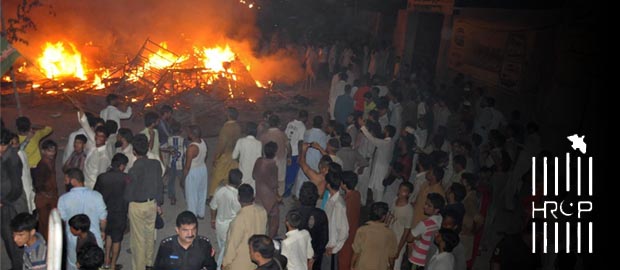
A member of the Pakistani Christian community holds a cross as he chants slogans in front of a fire during a protest rally to condemn Sunday's suicide attack in Peshawar on a church, with others in Lahore September 23, 2013. A pair of suicide bombers blew themselves up outside the 130-year-old Anglican church in Pakistan after Sunday mass, killing at least 78 people in the deadliest attack on Christians in the predominantly Muslim country.
More than a thousand Pakistani Christians and church leaders in Lahore gathered outside of Punjab's legislative assembly on Wednesday to demand that the province's legislature throw out a proposed amendment that they beleive is designed to strip voting rights from religious minorities, women and workers in local elections.
According to UCA News, the proposed amendment would alter the electoral system so that women, religious minorities, and workers would not be able to vote for their representatives in their municipal councils.
Instead of voting for their own representatives who are legally allotted to their respective social classes, the amendment would give council members from the majority party the right to select the council's two female members, a non-Muslim member and representatives for workers and youth.

Read more at http://www.christianpost.com/news/pakistani-christians-protest-amendment-to-deny-voting-rights-147324/#gMuBWscM8CGjH2Cl.99

A Christian mother, who had been locked up on death row six years ago for expressing her faith in Jesus, is reportedly living in a hell hole in Pakistani jail, The Christian Post reported.

In 2009, Asia Bibi reportedly got into an argument with a group of Muslim women who chase her away from a well because she allegedly "polluted" the water for being a Christian who is forbidden from drawing water from their well. She responded by saying: "My Christ died for me, what did Muhammed do for you?" Her remarks led to an altercation that eventually led to her imprisonment. Now, she is considered as the most famous prisoner in Pakistan today.
The Mission Network News (MNN) said that Bibi, despite being a woman and a mother, has been languishing in a prison block where ventilation and sanitation are major concerns given that there are only six toilets to share with for the close to 150 detainees in the poorly maintained Multan Jail.A member of the Pakistani Christian community holds a cross as he chants slogans in front of a fire during a protest rally to condemn Sunday's suicide attack in Peshawar on a church, with others in Lahore September 23, 2013. A pair of suicide bombers blew themselves up outside the 130-year-old Anglican church in Pakistan after Sunday mass, killing at least 78 people in the deadliest attack on Christians in the predominantly Muslim country.

Bibi also shares the block with 42 murderers, 30 drug addicts, 21 robbers, 12 kidnappers and other criminals, MNN said, citing sources close to the ALIVE network of churches.

More than a thousand Pakistani Christians and church leaders in Lahore gathered outside of Punjab's legislative assembly on Wednesday to demand that the province's legislature throw out a proposed amendment that they beleive is designed to strip voting rights from religious minorities, women and workers in local elections.
According to UCA News, the proposed amendment would alter the electoral system so that women, religious minorities, and workers would not be able to vote for their representatives in their municipal councils.
Instead of voting for their own representatives who are legally allotted to their respective social classes, the amendment would give council members from the majority party the right to select the council's two female members, a non-Muslim member and representatives for workers and youth.

Read more at http://www.christianpost.com/news/pakistani-christians-protest-amendment-to-deny-voting-rights-147324/#gMuBWscM8CGjH2Cl.99
"Multan's summers are extremely hot," said a former prisoner, according to CP. "Combine this with overcrowding, poor sanitation, heating, lighting, and ventilation in the jail, and you realise the hell hole where Asia's single cell is located."
MNN reported that Bibi has also been bombarded with constant pressure from officials and even fellow prisoners to embrace Islam.
"She is surrounded by constant Islamic prayer, with officials necessitating prisoners to sit before the Quran for hours and read the Islamic holy text. They have been told that if they praise Allah and ask for forgiveness, their sentence will be reduced,'' CP reported.
"It is not just the sound of the five times of prayer that Asia is surrounded by. Every waking hour she hears the wailing of broken and often mentally-disturbed women mixed with the sound of the Quran being read out loud. Prison is no quiet place," the report said.
Despite her deplorable situation and much prodding from those on the inside, the mother of five has reportedly kept her faith intact.
Pakistan's Supreme Court has yet to decide on Bibi's fate. Last July, her death sentence was temporarily suspended following massive campaigning by Christian and human rights groups, according to the Christian Post.
"There is hope that she might be freed,'' Wilson Chowdhry, president of the British Pakistani Christian Association, has told CP, adding this would be a "watershed moment" for all Christians falsely accused of blasphemy."
"This could be a watershed moment as never before has a Christian blasphemy law victim had to appeal to the Supreme High Court. The majority are released at High Court," Chowdhry said.
http://www.christiantoday.com/article/christian.mother.who.expressed.faith.in.jesus.living.in.hell.hole.pakistani.prison/66988.htm

Human Rights Commission holds meeting to discuss rising discrimination against Ahmadiyya in Pakistan

The state is not a silent spectator, but an active participant in the persecution of Ahmadis, accused members of the Ahmadi community at a meeting organised by the Human Rights Commission of Pakistan (HRCP). The meeting was titled, ‘Ahmadi Citizens: dealing with discrimination, exclusion’ and was held at the Regent Plaza on Sunday. “The persecution, these days, has taken a new trend as door-to-door conversions of people belonging to the faith are taking place where a cleric accompanies the area’s representatives and threats are meted out to people who refuse to give in to their demands,” claimed one participant. There has been a change of attitude – what is seen as a change in the strategy of religious parties. “Previously, there used to be an abundance of court notices against us,” said Mujeebur Rehman, a member of the community and a lawyer by profession. “Now, these people pressurise the administration, whereupon the police do not protect us but are themselves in denial,” he claimed. “Even in court cases, bails are not granted as previously the clerics made a hue and cry after a decision of the high court and the order was reversed.” The worst that can happen to any community is when the doors of justice are closed to them, he said. “The tolerance level among madrassah teachers is four per cent, as compared to the students which is 13 per cent. In Urdu medium schools, the tolerance among teachers is 17 per cent while among students, it is 47 per cent,” he said, referring to a book, titled ‘Study of Education, Inequality and Polarisation in Pakistan.’ According to Rehman, the discrepancy in these statistics lies because of the legal sanctions in place against Ahmadis. “It also shows that madrassa students are greatly affected. Work needs to be done on madrassa curriculum,” he said. “The condition is not as grave in Sindh as we see in Punjab,” said another member of the community. Shahid Ataullah, another representative and an engineer by profession, remarked that this is also true because Punjab has a larger population of Ahmadis as compared to the rest of the country, but the state is indeed under pressure from clerics. “The general public is made to believe that we are traitors and are not reliable,” said Ataullah. “This paves the way to greater problems, which are escalating through individuals in the form of blasphemy charges,” said Ataullah. Members of the community also narrated how three-day Qadyani courses were introduced that issued directives of killing them. Cursing Ahmadis within the premises of a mosque, as it doesn’t violate the sanctity of the mosque, is also part of these courses, said a member. Other than this, passport and CNIC issuance is yet another serious problem as the very mention of the word, Ahmadi, damages their their case. With regards to problems in the educational fraternity, Rehman said that Ahmadi children are discriminated against, despite scoring high in examinations, as faith has to be declared in admission forms. “We had to withdraw from the matric board and get affiliated with the Aga Khan Board. But children who are not part of the Rabwah [the official community group] continue to face problems,” he said. Ataullah pointed out how online applications for colleges only provide the option of Muslim and Non-Muslim. “An affidavit is then required to be produced in hard copy to prove your faith. This causes psychological problems among our kids,” he said. The community is also of the belief that the removal of objectives resolution and discriminatory clauses from the Constitution are key measures that can end the marginalisation of the Ahmadi community.

Read more at: https://www.rabwah.net/human-rights-commission-holds-meeting-to-discuss-rising-discrimination-against-ahmadiyya-in-pakistan/

The Mina tragedy - The Ordeal Continues

The Mina tragedy continues to haunt us, as Pakistani families still await the news of the bodies of their loved ones lost this Haj to the stampede. According to official estimates given by Pakistan’s Ministry of Religious Affairs, 87 Pakistanis have so far been killed in the stampede in Mina while 60 people are still missing. The families of those missing are still at a loss to locate the deceased. They say that the Saudi state apparatus has been insensitive in handling the situation. People are afraid of their relatives being buried in Saudi Arabia without their prior approval or proper identification process. Through most reports suggest that the Saudi authorities are not doing much to help allay fears, there are some reports that reveal that they have issued death certificates for victims and identified many victims. Over all, the situation is a blur and victims do not know what procedures to follow or who to talk to.
A resolution was moved by the leader of the opposition in the Punjab Assembly Mian Mehmoodur Rashid, demanding that the government step up efforts for missing Pakistanis in Saudi Arabia and lodge an official protest with the Saudi government. The resolution was opposed on grounds of the situation being a matter of foreign policy, one that the provincial assembly did not have jurisdiction over. Additionally, Law Minister Rana Sanaullah said that the resolution should be amended to avoid blaming the Saudi government. Rasheed argued that nothing in the resolution was objectionable. “The bodies have not been returned to the families. The matter cannot be taken lightly.”
Identification of bodies should have been the first priority of the Saudi government. Instead, social media was flooded with distasteful images of bodies being picked and moved by heavy duty vehicles, inspiring only panic in the general population. It was only the deep held respect that Pakistanis have for the Kingdom that kept criticism and outrage in control. If there had been so many deaths and so many bodies missing in any other country, the situation would have been different.

Pakistan - PML-N’s promises

More energy woes are awaiting the nation as Prime Minister (PM) Nawaz Sharif has given a new deadline of resolving the energy crisis, i.e. 2018. At the ground-breaking ceremony of the 1,180 MW Bhikki Power Plant, the PM said that he had never claimed that he would eliminate power outages in six months. It is no less than tragic that the government has failed to fulfil its promises made by Pakistan Muslim League-N (PML-N) leaders during their election campaign in 2013. Being the head of the party, the PM cannot absolve himself of the responsibility by saying he did not make a commitment of six months to end the energy crisis. He needs to take his brother and party leader Mian Shahbaz Sharif, and others, to task for befooling the nation.

 Even if we concede that it was an election gimmick, what about the performance of the PML-N government in the energy sector since coming to power? Recent revelations made by the Auditor General of Pakistan (AGP) and National Power Regulatory Authority (NEPRA) speak volumes for the government’s performance. Both painted a dismal picture of the performance of all power companies operating in the public and private sectors besides massive irregularities being detected in WAPDA and PEPCO. The power companies not only failed to meet generation, transmission and distribution targets but also sent wrong utility bills to consumers. The AGP and NEPRA are government institutions. Instead of trying to prove their findings wrong, the government needs to mend its ways. The performance of the present government seems worse in the energy sector compared to previous regimes. Long term planning and its proper implementation are what the government has failed to do. What has the government done during its two and a half years tenure? What progress has it achieved in decreasing load shedding in the country? In fact there is no improvement in the energy sector. Rather, the electricity crisis has put many industries on the verge of collapse. Though the setting up of a power plant in Sheikhupura is a good development, it is not enough. The energy crisis requires steps on a war footing, but this has been conspicuous by its absence. Even the Nandipur power project, for which the PML-N roundly castigated the previous government, has failed to take off except in cost multiplication.

The energy crisis is eroding the credibility of the PML-N government. Fingers are being raised at poor governance that has failed to end the sufferings of the masses due to the presence of incompetent ministers. Instead of ending the power crisis, the duration of load shedding has increased. Like the previous PPP government, the electricity crisis can result in the ouster of the Nawaz government. It is in the interests of the government itself that it reconsider its approach and avoid further mismanagement. The electricity crisis has worsened in the country and the government needs to work on a war footing to bring the nation out of darkness.

Malala plans to leave UK to study in California


Teenage Nobel laureate Malala Yousafzai is considering leaving Britain to study for a politics degree at Stanford University in the US.

The Pakistani schoolgirl survived a Taliban bullet to her head after being airlifted to Birmingham, where she now lives with her family.

The 18-year-old has already made a visit to the California-based Ivy League university campus, 'The Sunday Times' reported.

Her father, Ziauddin, told the newspaper that a key consideration for Malala had been the weather.

"They have 300 days of sun out of 365 days, which is a rare phenomenon in the UK. Three hundred days of sun makes a difference," he said.

Despite the severe head injuries Malala suffered in the gun attack in her native Swat Valley, northwest Pakistan, in October 2012, Malala has excelled at school in Birmingham where she is studying for A-levels in history, maths, religious studies and geography.

She is looking at university applications after acquiring her A-level qualifications by next year.

While Stanford appears to be her favoured choice, Oxford has not been ruled out and she has visited the university with a teacher from her independent girls' school in Edgbaston, a suburb of Birmingham.

Malala, who won the Nobel Peace Prize last year, has voiced an ambition to return to Pakistan one day and become a politician.

Degrees in Oxford's acclaimed PPE (philosophy, politics and economics) would prove ideal for this ambition.

"Once she called me from school and said, 'I am going to play sport. I love my headscarf but playing sport it is a problem to wear'. I said, 'Jani [sweetheart], it's your scarf. When you feel comfortable, wear it, when you do not feel comfortable, do not wear it'," her father told the newspaper.

Saturday, October 10, 2015

Video - Bill Clinton Explains Why Sanders & Trump Are Doing So Well - (Oct 7, 2015)

Video - English Defence League say 'No to Islam' & burn ISIS flag in Aylesbury

Video - Syrian army advances trying to retake Hama region from ISIS

Video Report - Dozens killed in Ankara blasts, suicide bombers behind attack

Video - President Obama Speaks After Meeting with Shooting Victims' Families in Roseburg, OR

President Obama's Weekly Address: Writing the Rules for a Global Economy

Pakistan - Polio monitoring group eyes Peshawar with concern

Members of an international observatory board on polio have expressed concern over Peshawar and Karachi turning into the last battlegrounds in the fight to eradicate the disease, urging concerted efforts between Pakistan and Afghanistan for the purpose.
Dr Rana Muhammad Safdar, the national coordinator of the Emergency Operation Centre (EOC) for polio and had attended the meeting of International Monitoring Board (IMB) in London this week, said that continued transmission of the virus in Peshawar remained a concern.
He added that the meeting pressed for concerted efforts between Khyber-Pakhtunkhwa, the federally administered tribal areas (FATA) and Afghanistan to eradicate the disease.
Dr Safdar told The Express Tribune that IMB members, as well as other participants, detailed how sewerage samples from the Peshawar-Khyber block constantly showed presence of polio virus resulting in as many as four cases from the area. “Special emphasis was also laid on Karachi where positive environmental samples continue to emerge,” he said, adding that together with northern Sindh the metropolis accounted for all the four cases reported from the province in 2015.
Appreciation for Pakistan
Senator Ayesha Raza Farooq, the prime minister’s focal person for polio, highlighted Pakistan efforts to combat the disease at the meeting and how these had resulted in an 85 per cent decline in number of cases.
IMB Chairman Liam Donaldson congratulated Pakistan for the progress achieved since the last IMB meeting in April 2014, and hoped commitment at all levels would continue till the virus is eradicated.

Pakistan - The Khorasan of ideas

By - Afrasiab Khattak

Situated at the point of convergence of ancient Iran and Turan (the Turkic world) Herat, a city in western Afghanistan, epitomises the rich ancient culture of Central and West Asia. Herat or Hairava, as mentioned in Avesta (the holy book of Zoroastrianism) is, according to Afghan historians, derived from Aria or Ariana , the ancient kingdom flourishing about 1500 B.C. The area formed a rout for the armies of Cyrus and Darius of Achaemenid Empire. In 330 B.C. Alexander the Great turned it into Alexandria Ariorum after conquering it. Herat acquired fame as an urban centre in 11th century in Islamic Khorasan that would retain its cultural significance for centuries despite the ruptures brought about by devastating invasions. It produced scholars like Khwaja Abdullah Ansari and poets like Amir Ali She’r Nawai who are a source of pride for the city even today. It represents the history of the ancient east that was rich in science, arts and culture. Thus, it was not surprising to see Herat as a venue for the conference on “Islamic Civilisation; Stagnation and Renaissance”.
The conference held on October 2 and 3 was hosted by a non-governmental organisation, the Afghan Institute for Strategic Studies. Actually it was a part of the Herat Security Dialogue held every year for the last four years by the aforementioned organisation. At first sight it appeared a bit strange to see a nexus between the theme for the current year’s conference in the format of security dialogue. But the thrust of the conference was to underline the significance of the cultural factor in the maintenance of peace and achieving progress in the region. An eight member Pakistani delegation comprising of people from diverse social backgrounds participated in the conference. The Pakistan delegation was led by Mr. Raoof Hassan, the head of an Islamabad based NGO, Regional Peace Initiative, that has facilitated bilateral Track 2 dialogue between the civil society representatives of Pakistan and Afghanistan over the last few years Actually a bilateral dialogue did take place between the two countries after the international conference).
Scholars, experts and intellectuals from fifty countries took part in the two-day conference. In eight sessions spread over two days, dozens of speakers discussed themes like ‘Moral & Political Dimensions’, ‘State and Challenges of Muslim Women’, ‘Islam and the Rest, Confrontation’, ‘Misunderstanding and Dialogue’, ‘Afghanistan’s Transformation Decade ( 2002-2014) Opportunities & Obstacles’, ‘Media, Education & Law ‘, ‘Herat School, Concepts, Practices & Contemporary Relevance’, and last but not the least ‘The Way Forward’.
There was broad support for synthesising tradition with modernity, promoting dialogue between civilisations, strengthening tolerance by getting inspiration from Sufi tradition and encouraging Muslims to excel in modern sciences. Some of the sessions were particularly impressive. In session on ‘The State & Challenges of Muslim Women’ all the four speakers, Ambassador Fauzia Nasreen from Pakistan, Ms. Nahid Farid MP from Afghanistan, Ms. Alessandra Fiorentini a social scientist from Italy and Saliha Bin Ali, a Belgian of Syrian origin enlightened the audience by pointing out various challenges faced by Muslim women in their countries or area of study and the experiences of the struggle of women in facing them. Issues like child marriage, exclusion of women from decision making processes and using religious extremism to reinforce patriarchal traditions were flagged as common. The Italian social scientist shared her study on Central Asian women’s experience of using folklore and spirituality for defending their rights. Saliha Bin Ali, whose son was killed by joining extremist militancy, is helping families in saving their children from the influence of religious extremism. Both the speakers had interesting case studies to share. There was a consensus on the need for women empowerment as a prerequisite for a renaissance in Muslim countries.
Another session that attracted particular interest was about some indigenous concepts, practices of South Asia and their contemporary relevance. Dr Sayed Akbar Shah from Jamia Milia Delhi enumerated commonalities among the mystic traditions of different eastern religions. Speaking in chaste Persian, he pointed out that originally religion was there to save humans. But after the rise of certain distortions a perception is created where humans are supposed to be there for saving religions. Dr. James Caron, Professor SOAS London presented interesting study of sociopolitical movements informed by indigenous social experience and the idea of spirituality. Of particular interest was his analysis of the Bacha Khan led Kudai Khidmatgar (Servants of God) Movement that mobilised a large portion of the population on the idea of selfless service. He also threw light on the efforts of Bacha Khan and Haji Sahib of Turangzai for educating the children of poor and common people in the early 20th century as a means for social empowerment. He added examples of social movements like the one led by Abdu Rahim Popalzai for organising sweepers in Pakhtunkhwa and the other led by Moulana Bashani for using indigenous experience and religious arguments to mobilise peasants. He described Sufism as social technology that mobilised the oppressed through spiritual logic against oppressive hierarchies by equating colonialism, feudalism and absolutism with ‘Nafs-e-Amara’. He thought most of such movements faced setbacks at the hands of theory and practice related to statism. The poetry of Jalalabad-u-Din Balkhi (Roumi) was widely quoted, recited and sung with music through out the conference. We know that some of his poetry and thought can be condemned and rejected by the contemporary ideologues of Wahabism and Salfism. But the Maulana’s poetry is still deeply rooted in Central and West Asia apart from also having a universal appeal.
After participating in the conference one could not help feeling the disconnect that Pakistan has developed during the last few decades with the rich cultural tradition of Central and South Asia by over gravitating towards the Middle East. And alas, even from the Middle Eastern traditions the choice of our religious hierarchy has not been the ‘Uloom’ (sciences) but retrogression. Iqbal had rightly pointed out the gravity of the situation in the development of nations when they are afraid to embrace new ways of life and tend to cling to the beaten path.
(These are my impressions of the proceedings of the conference. The official and more authentic report will be published by the organisers).

#JusticeForPPPMartyrs: Bilawal Bhutto strongly condemns killings of PPP candidates in Okara


ppppunjab.wordpress.com


Bilawal Bhutto Zardari Chairman Pakistan Peoples Party has strongly condemned killings of PPP candidates in Okara at the hands of terrorists and demanded their immediate arrest without any delay.

“It appears that same tactics and strategy are being used against PPP in Local government elections in Punjab which were used against the Party during general elections 2013,” he stated and stressing that use of terroristic tools to keep away the PPP from campaigning should also come under the PPO provisions.
He said that space for PPP is being squeezed in Punjab through use of terrorist activities under a planned strategy. It seems that new tools are being set to work to condense the PPP’s politics following the failure of undemocratic forces’ other options to downsize the Party.
He said that both the Federal and Punjab governments cannot be exonerated from these gory killings of PPP workers and asked them to treat the incident a terrorist attack which requires same vigor by the law enforcing agencies to catch the killers like similar incidents.
Bilawal Bhutto Zardari paid tributes to the martyred PPP workers including candidate for Chairman UC 111 Qadirabad in Okara Shaheed Alsam Channa and two others and condoled with the bereaved families.

Pashto Music - Sardar Ali Takkar آواز ـ ډاکټر راج ولي شاه خټک