Thursday, September 24, 2015

Saudi Arabia and al-Qaeda Unite in Yemen


By  and  

Al-Qaeda in the Arabian Peninsula has established itself as a de facto partner of the U.S.-backed Saudi-led campaign in Yemen.
In viewing Yemen as an important battleground in the grander struggle against Iran’s expanding regional influence, Saudi Arabia has united with a variety of Yemeni Sunni factions in an effort to crush the Houthi insurgency. This has entailed the kingdom cooperating with Sunni Islamist groups that Saudi Arabia—along with other Arab and Western governments—have designated as “terrorist” organizations. However, as the U.S. continues to wage its War on Terror in Yemen, Riyadh’s strategy is complicating the kingdom’s already chilly relationship with Washington.
Saudi Arabia’s alignment with “terrorist” groups in Yemen was highlighted in June when the Saudi-backed exiled Yemeni government of Abd Rabbuh Mansur Hadi sent Abdel-Wahab Humayqani to Geneva as one of its delegates in the failed UN-sponsored roundtable talks. In December 2013, the U.S. Treasury Department designated Humayqani a “Specifically Designated Global Terrorist,” having allegedly served as a recruiter and financier for al-Qaeda in the Arabian Peninsula (AQAP) and having orchestrated a car bombing in March 2012 that targeted a Yemeni Republican Guard base, killing seven.
Despite the international community’s condemnation of Saudi Arabia’s bombing of civilian areas in Yemen, recent victories on the part of Riyadh-sponsored forces in Aden and elsewhere seem to have inspired greater confidence in the kingdom that the Sunni Arab coalition can crush the Houthi insurgency through a prolonged military campaign. Yet, Saudi Arabia’s embrace of such extremists raises questions about whether the kingdom will attempt to achieve victory over the Houthis—viewed in Riyadh as a proxy of Iran—at any price, and serves to reemphasize concerns that many in the West have had about the company Riyadh chooses to keep.

Historical Context

After thousands of Yemeni nationals who had joined ranks with Osama bin Laden in the Soviet-Afghan War returned to Yemen in 1980s, the Saudi-backed Yemeni regime of Ali Abdullah Saleh sponsored such militants in the fight against South Yemen’s Marxist regime, and later in a campaign to defeat southern secessionists. During the 1990s, Yemen became a central location for militant Salafist groups such as AQAP’s predecessors, including Islamic Jihad in Yemen, Army Aden Abyan and al-Qaeda in Yemen (AQY).
By the early 2000s, AQY had weakened as a result of a declining membership, but Saudi Arabia’s crackdown on its own local al-Qaeda branch prompted many Saudi members to flee to Yemen. By 2009, the Saudi and Yemeni branches had merged into AQAP. In addition to targeting the central state of Yemen, Houthi insurgents, and Western nationals/interests in Yemen, AQAP has also made clear its intention to topple the ruling Saudi family, accusing it of maintaining an “unholy” alliance with the U.S.
In August 2009, then-Saudi Deputy Interior Minister Prince Mohammed bin Nayif (currently the kingdom’s Crown Prince) met with members of the public as part of a Ramadan celebration, including Abdullah Hassan Taleh al-Asiri, a militant from AQAP who claimed to have renounced terrorism and had asked to repent before the Prince. Al-Asiri’s real intentions were made clear after he entered a room with Mohammed bin Nayif and detonated an improvised explosive device carried inside him. The explosion killed Asiri but failed to assassinate the prince, leaving him with only minor injuries. It is indeed remarkable that Saudi Arabia appears to be teaming up with the group that only six years ago carried out that failed assassination attempt on Crown Prince Mohammed bin Nayif.
The de facto partnership between Riyadh and AQAP is made further evident by the fact that the Saudi-led military coalition has entirely avoided bombing AQAP targets, despite its aggressive bombing of other territories under Houthi control. While doubtful that AQAP has abandoned its objective of overthrowing the Saudi monarchy, Riyadh likely perceives its tacit alliance with AQAP as a short-term venture and is focused on the immediate task at hand.
Perhaps under the pretext of countering Wilayat al-Yemen (Yemen’s Daesh—also known as the “Islamic State”—division), Riyadh perceives strategic value in working with its rival, AQAP. Although Wilayat al-Yemen and AQAP have thus far not waged any large-scale armed campaigns again each other, their competition for recruits and the mantle of Yemen’s dominant Sunni Islamist militia lead some analysts to expect their conflicting interests to eventually pit the two groups against each other. Concerned that the Houthi takeover of swathes of Yemeni territory is aiding Wilayat al-Yemen’s ability to lure greater Sunni support through its highly sectarian and ultra-violent agenda, countering the group’s ability to gain further traction likely contributes to Riyadh’s evolving relationship with AQAP.

Implications for the West

The Obama Administration has identified AQAP as the world’s most dangerous al-Qaeda branch, and the gravest terrorist threat to U.S. national security. In 2000, al-Qaeda orchestrated the attack against the USS Cole, and two years later the group waged a suicide bombing that targeted the French oil tanker M/V Limburg. Both attacks were carried out by individuals who would come to hold prominent roles in AQAP.
Throughout 2008 and 2009, AQY/AQAP attacked Western embassies, in addition to Belgian andKorean tourists in Yemen. On Christmas Day in 2009, an AQAP affiliate unsuccessfully attempted tobomb a Detroit-bound jet, and ten months later the group made another attempt to strike the U.S. homeland by bombing two Chicago-bound cargo planes (the plot was intercepted by Saudi intelligence officials). Additionally, while AQAP’s role in the January 2015 Charlie Hedbo massacre in Paris remains a source of debate in intelligence circles, the organization claimed responsibility.
In June of this year, Washington officials voiced concern about Humayqani’s role in the Geneva talks, underscoring the U.S. and Saudi Arabia’s conflicting strategies toward the Yemeni crisis. Although Washington has provided logistical and intelligence support for the Saudi-led military campaign against the Houthis, the U.S. military’s direct involvement in Yemen since Riyadh waged Operation Decisive Storm in March has been exclusively striking AQAP targets with Washington’s controversial drone program.
Despite Saudi Arabia’s official lukewarm endorsement of the Iranian nuclear deal, Riyadh is gravely concerned about the geopolitical implications of a gradual improvement in the West’s relationship with Iran. Unsettled by the idea that Tehran will more forcefully assert its influence in the Arab world by providing more support to Iranian-backed paramilitary groups with newly available funds derived from sanctions relief, Saudi Arabia is flexing its muscles in Yemen. Viewing the Houthi insurgents as an Iranian proxy committed to establishing a client state for the Islamic Republic on Saudi Arabia’s southern border, officials in Riyadh clearly perceive a graver threat from the Houthis than from Sunni Islamist militias such as AQAP.
From Washington’s perspective, the Riyadh-led campaign in Yemen is contributing to chaotic unrest in Yemen that provides fertile ground for the local al-Qaeda branch and creates a magnet for other extremist groups. Having seized control of the Riyan airport and Mukalla (an oil rich city with a major sea port and a population of 300,000) in April, AQAP has emerged as an increasingly influential actor amidst the bloody turmoil and humanitarian crises that have spiraled out of control since the Saudi-led coalition began bombing Yemen in March. By positioning itself as a disciplined Sunni force capable of effectively countering the Houthi insurgents, AQAP has unquestionably established itself as a de facto partner of the U.S.-backed Saudi-led campaign in Yemen, despite being the primary impetus for Washington’s ongoing drone campaign there.
Ties between elements of Saudi Arabia’s ruling monarchy and global jihadist terror groups are not new. Following the 9/11 terrorist attacks, questions regarding the costs and benefits of maintaining a strong alliance with Riyadh resulted in spirited debate in the U.S. By having deep economic relations with Western nations and being the world’s top crude oil exporter, Riyadh has long used its powerful influence in the Middle East’s geopolitical order and international energy markets to foster ties with groups like AQAP with minimal objection from the kingdom’s Western allies.
In the case of Yemen, analysts contend that the Obama Administration’s support for Riyadh’s war against the Houthis has occurred within the context of Washington’s efforts to secure Saudi support for the Iranian nuclear agreement, despite U.S. reservations over the kingdom’s policies. Paris has been a strong backer of Riyadh’s campaign in Yemen, largely due to France’s interest in becoming the kingdom’s leading arms dealer. Over time, however, Riyadh’s de facto alliance with AQAP should raise further questions in the U.S. and France about whether the kingdom is a genuine partner in the global War on Terror or is a direct sponsor of groups affiliated with those who perpetrated the 9/11 and Charlie Hebdo attacks.
In Syria, where Saudi Arabia’s support for hardline jihadist militias is fueling tension in Riyadh’s relations with Western governments, the means and objectives of the kingdom are increasingly at odds with those of American and European officials. As the U.S. explores diplomatic opportunities with the Houthis in Yemen, and as EU officials begin eyeing Iran as a potential partner in regional security crises, there is a widening gulf between Western and Saudi perceptions about security considerations in the Middle East.

Saudi Arabia’s Blowback in Yemen?

Beyond implications for Saudi relations with the West, the kingdom is playing a risky high stakes game of poker by incorporating a short-term alliance with AQAP into a larger strategy of countering Iran’s alleged hegemonic aims in the Middle East. If history can serve as any guide, groups such as AQAP are unlikely to maintain any loyalty to state or other non-state sponsors that serve as allies of convenience. Riyadh has in the past sponsored jihadist movements in foreign countries—most notably Afghanistan and Pakistan—that later turned their guns on the kingdom. As the conflict in Yemen is extremely fluid, and complicated by the vast array of armed groups with a broad range of objectives and ideologies, the nation’s future political landscape is entirely unpredictable. Riyadh is taking a big risk by cooperating with armed groups on its borders that have previously exposed their hostility toward the kingdom and its Arab/Western allies.
Last month U.S. officials and local Yemeni sources reported that AQAP militants were closing in on Aden. According to unconfirmed media reports, al-Qaeda’s flag flew over an administrative building with the group patrolling some of the city’s neighborhoods. If the al-Qaeda franchise were to seize control of Yemen’s second largest city, such a dangerous development would certainly create new security dilemmas for locals already enduring a grave humanitarian crisis. It could also pose a serious threat to international traders if jihadist terrorist groups were to usurp control of both the Yemeni and African sides of the narrow Bab-el-Mandab—one of the world’s busiest shipping lanes, linking the Indian Ocean to the Mediterranean Sea.
Saudi Arabia finds its own security further imperiled by Daesh-affiliated cells that have carried out attacks against police officers, Shi’ite mosques, and Western expatriates in recent months, and with the “caliphate” leadership vowing to topple the ruling Al Saud family. Therefore, Riyadh may very well regret having pursued a short-term foreign policy that is creating conditions in Yemen in which AQAP gains the most from the nation’s chaotic and ungovernable environment. Saudi Arabia would benefit from having the same long-term orientation toward Sunni extremism as it does toward the global oil landscape.

After Beheading 100 People This Year, Saudi Arabia Joins U.N. Human Rights Council With U.S. Support


The State Department has welcomed news that Saudi Arabia will head a U.N. Human Rights Council panel. Criticism has regularly been levelled at Saudi Arabia by human rights groups due to perennial human rights violations.
Saudi Arabia beheaded over 100 people this year through June. That’s already more than they beheaded in the entirety of 2014. The regime there is also known for its use of floggings and implementation of the death penalty against people convicted as minors. A group of U.N. experts called on Saudi Arabia as recently as this week to spare the nephew of a prominent Shia cleric from beheading and crucifixion. Furthermore, Saudi Arabia is regularly the target of international rights groups’ critiques due to their complete disregard for international human rights standards on free speech, freedom of religion, and a plethora of other violations.
 “Saudi Arabia … systematically discriminates against Muslim religious minorities, notably Twelver Shia and Ismailis,” a Human Rights Watch (HRW) 2015 report on Saudi Arabia reads. This development has been widely denounced by figures who see the appointment as a way for Saudi Arabia to justify their current practices.
“[The appointment] is like a green light to start flogging Raif Badawi again!” Ensaf Haidar, the wife of Badawi said according to AJ+. Badawi, who helped found an internet discussion channel to discuss religion and politics, was sentenced to 1,000 lashes earlier this year for insulting Islam. Rights groups have rallied to Badawi’s defense but Saudi Arabia has still given him at least 50 lashes to date.
Another case of criminal punishment has caught the world’s attention as of late and this case has come to light almost synonymously with the appointment of Faisal bin Hassan Trad, Saudi Arabia’s ambassador at the UN in Geneva, to the human rights panel.
Ali-al Nimr, now 21, was arrested at 17-years-old for participating in a protest calling for social and political reforms in Saudi Arabia’s Qatif province. The area is largely inhabited by Shia Muslims, a minority that faces harsher penalties and less rights than the Sunni majority.
After his arrest, Nimr was convicted of belonging to a terror cell, attacking police with Molotov cocktails, incitement, and stoking sectarianism, CNN reported.
“Mr. al-Nimr did not receive a fair trial and his lawyer was not allowed to properly assist him and was prevented from accessing the case file,” independent experts told the UN Office of the High Commissioner for Human Rights.
In a recent interview, State Department deputy spokesman Mark Toner seemed to mangle his words when asked about Nirm’s case.
“I’m not aware of the trial that you — or the verdict — death sentence,” Toner told AP’s Matt Lee. Toner followed up by saying that the U.S. and Saudi Arabia share close ties and maintain an active dialogue and that he hoped their involvement on the Human Rights Council panel would help encourage introspection.
Two other minors, also arrested in 2012 at the Qatif protests have also been sentenced to death and are at risk of imminent execution.
“It is scandalous,” U.N. Watch executive director Hillel Neuer, told CNN. “Petro-dollars and politics have trumped human rights.”

Saudi Arabia Slammed For Plans To Execute Man Convicted As A Teen


He was 17 when he was sentenced on charges relating to his involvement in Arab Spring protests.

Saudi Arabia's plans to execute a young man who was sentenced to death in 2012, when he was a child offender, have this week led human rights advocates to condemn the Kingdom's justice system.
Ali al-Nimr was convicted at the age of 17 on charges relating to his involvement in Arab Spring protests, according to UN rights experts. 
“We call upon the Saudi authorities to ensure a fair retrial of Ali Mohammed al-Nimr, and to immediately halt the scheduled execution,” UN experts said on Tuesday. “We urge the Saudi authorities to establish a moratorium on the use of the death penalty, halt executions of persons convicted who were children at the time of the offense, and ensure a prompt and impartial investigation into all alleged acts of torture." 
Saudi state-run media site Okaz reported that al-Nimr was part of a terrorist cell and manufactured bombs, but according to Human Rights Watch these are broad charges that were part of the wider steamrolling of justice, which led to al-Nimr's conviction.
After his arrest, al-Nimr was not given access to a lawyer and was coerced to confess while allegedly being tortured, according to HRW. He was then subject to a trial that failed to properly investigate his forced confession and fell far short of international standards, according to the group's report and United Nation's rights experts findings.
These groups note that al-Nimr is the nephew of prominent dissident cleric Nimr al-Nimr, who is also on death row after he was arrested on what HRW calls vague charges relating to his criticism of the state. 
Ali Al-Nimr has subsequently lost his appeals, and Okaz reported this week that his death sentence has been upheld, which spurred human rights groups to launch a campaign to save him.
If Saudi Arabia executes al-Nimr it will add to the Kingdom's skyrocketing use of the death penalty. The country has executed over 100 people so far this year, around half of which are for nonviolent drug crimes. 
Rights groups have been unable to determine exactly what's behind the rise, which started last year under Saudi King Abdullah bin Abdulaziz, who died in January, and has continued through the reign of King Salman.
There are a number of crimes that can be punishable by the death penalty including, murder, sorcery and adultery. Executions are most commonly carried out by beheading.
Saudi Arabia routinely ranks among the world's top practitioners of the death penalty, alongside China, Iran, Iraq and the United States, according to Amnesty International. 


GERMANY SLAMS SAUDI ARABIA’S OFFER TO BUILD MOSQUES FOR SYRIAN REFUGEES AS ‘CYNICAL’

Politicians in Germany have criticised Saudi Arabia’s offer to build 200 mosques in the country for the ‘spiritual needs’ of Syrian refugees, given that the Kingdom has not offered to take in refugees fleeing from the civil war in Syria.
“No, it is more than cynical. This is no Muslim Brotherhood. Where is the solidarity in the Arab world?” Andrea Scheuer, general secretary of the Christian Social Union in Bavaria (CSU) party in Bavaria which is Chancellor Angela Merkel’s ally in the state, asked.
Saudi Arabia offered to build mosques in Germany as tens of thousands of refugees make their way to the Hungarian border to seek asylum in European countries, especially Germany, which will be taking in 800,000 migrants this year.
Saudi monarch King Salman reportedly made the offer through diplomatic channels and the news surfaced in Lebanese newspaper al diyar.
Another German politician, Stephan Mayer, the domestic policy spokesperson of both the CSU and Merkel’s Christian Democratic Union (CDU) in parliament in Berlin, agreed with Scheuer, adding, “Germany does not need a cash donation to build 200 mosques but solidarity with the refugees.”
CDU Deputy Chairman Armin Laschet also voiced his opinion and said, “Instead of talking about funding mosques, Saudi Arabia should be thinking about taking refugees.”
Following the Saudi offer, there was widespread outrage in Germany, with many newspapers expressing indignation that Germany would even consider such an offer from a country which gave out extreme punishments such as stoning, flogging and limb mutiliation.

Music Video - Demi Lovato - Cool for the Summer

Lena Dunham asks Hillary Clinton: are you a feminist? 'Yes, absolutely'


Girls creator sits down with Democratic frontrunner and the two discuss why anyone who believes in equal rights is a feminist
In a move seemingly designed to help her connect with millennial women, Hillary Clinton sat down with Girls creator Lena Dunham for an interview to be broadcast in full next Tuesday

The Democratic presidential frontrunner – whose recent efforts to court this demographic include joining Snapchat and taking selfies with Kim Kardashian – was asked: “do you consider yourself a feminist?” in a first clip of the interviewobtained by Politico.
“Yes,” replied Clinton, who appeared relaxed and happy in Dunham’s company. “Absolutely. You know, I’m always a little bit puzzled when any woman of whatever age, but particularly a young woman, says something like – and you’ve heard it – ‘well I believe in equal rights, but I’m not a feminist.’
“Well, a feminist is by definition someone who believes in equal rights. I’m hoping that people will not be afraid to say that doesn’t mean you hate men, it doesn’t mean you want to separate out the world, so you’re not a part of ordinary life – that’s not what it means at all! It just means that we believe that women have the same rights as men.”
The full interview, which was filmed in Manhattan on 8 September, will be available in the first issue of Lenny Letter, Dunham’s new online newsletter. Described as an “email newsletter where there’s no such thing as too much information”, Lenny Letter will be published to subscribers on 29 September.
Dunham - the writer and star of the Emmy and Golden Globe-winning HBO series Girls - is an ardent Clinton fan, and often posts pictures on her Instagram account to show her support of the Democratic frontrunner. She called Clinton’s “H” logoher “new tramp stamp” in April.


Video - Join Women for Hillary Clinton

Israel and America After the Iran Deal

Now that congressional Democrats have blocked a Republican effort to kill the Iran nuclear deal, attention is shifting to what America must do to reassure Israel and its American supporters that the agreement will not harm Israel’s security.
Increased cooperation between America and its regional partners, including the Arab gulf states as well as Israel, is vital to ensuring that Iran sticks to the deal, which curbs its nuclear program in return for sanctions relief. America and its partners need to find ways to keep Iran from using billions of dollars, which were frozen in overseas banks but are due to be released, to expand its use of proxies like Hezbollah to stir trouble abroad.
These are the goals of a broad legislative package now under negotiation by the White House and Democratic lawmakers. There is a risk some parties will try to overcompensate for the bitter political tensions over the Iran deal and go too far in trying to please Israel or the Arab gulf states. Republican lawmakers and other forces opposed to the Iran agreement have made clear that they will use any new legislation to continue trying to kill it.
One dubious proposal would have the United States provide Israel with a massive ordnance penetrator, or MOP, a 30,000-pound bomb that could do serious damage to Fordo, the Iranian enrichment facility built into a mountain. President Obama has already promised Israel a smaller, 4,444-pound, bunker-busting bomb. Adding MOP to the mix would be provocative and dangerous.
Some also want Congress to formally authorize the president in advance to use force in case Iran violates the deal. That may make supporters of such a proposal feel tough, but it would embolden hard-liners in Iran, undercut Iranians who want the deal to succeed and promote the illusion that threats are the best way for Washington to exert influence. Under law, presidents have wide latitude to take military action on their own; Mr. Obama has repeatedly promised he would not let Iran obtain a nuclear weapon and is prepared to use force if needed.
Since 2009, the United States has provided Israel with more than $20 billion in military aid, as well as more than $3 billion for missile defense systems and $1.9 billion in precision-guided munitions. It has also promised that Israel will be the only Middle East nation to have the advanced F-35 jet fighter. To win backing for the Iran agreement, Mr. Obama pledged to further strengthen the relationship by negotiating a new security agreement and renewing assurances that Israel, the only country in the region with nuclear weapons, will always have military superiority over its neighbors. It is probably inevitable that American aid to Israel, already a top recipient, will be increased, but Congress knows those increases come at a time of strict limits on federal spending and will undoubtedly require cuts in other programs.
America has a responsibility to help ensure the security of Israel and the gulf allies and to see that Iran adheres to the deal. But this cannot be done if Congress imposes restrictions that cause the agreement to implode or prevent the administration from taking advantage of openings to cooperate with Iran. Congress can be most helpful by creating its own process for rigorously monitoring how the accord is implemented.
The focus on America’s obligations often ignores the responsibility Israel and the gulf states have for regional security. Saudi Arabia shares much blame for the rise of extremist groups, while Israel undermines stability by failing to negotiate peace with the Palestinians.
In the end, what’s most important for Israel’s security is the relationship with the United States. Those ties were put at risk by Prime Minister Benjamin Netanyahu and congressional Republicans, who polarized the debate over the Iran deal. A crucial sense of trust needs to be rebuilt. It is unclear that this can happen soon, no matter how many promises of aid and cooperation America makes to Israel.

White House Says Obama and Putin Will Meet Next Week

By 


The White House announced on Thursday that President Obama will meet next week with President Vladimir V. Putin of Russia, ending a long period in which the American leader refused to meet with his counterpart from the Kremlin.
Mr. Putin had requested the meeting, said Josh Earnest, the White House press secretary, and considering the significant issues involving Ukraine and Syria, “it makes sense for President Obama to sit down with his counterpart and see if he can get greater clarity about Russia’s intentions inside of Ukraine.”
With Russia sending more military forces to Syria to prop up the autocratic government of President Bashar al-Assad in the country’s four-year civil war, Mr. Earnest said a meeting between American and Russian leaders might help determine “whether or not they’re willing to at least consider President Obama’s advice when it comes to reinforcing their military support for the Assad regime.”
Mr. Obama and Mr. Putin will sit down in New York at the annual session of the United Nations General Assembly. Administration officials had said privately on Wednesday that the president had decided to agree to a meeting with Mr. Putin if it could be arranged, but then said that it had not been finalized.
The announcement ended a debate inside the administration about whether such a meeting might inadvertently serve to embolden Mr. Putin. In the end, officials indicated that Mr. Obama decided to take that risk in hopes of using the opportunity to press the Russian leader on Ukraine and Syria.
White House officials said the core message of the meeting will be Mr. Obama’s insistence that Russia live up to the terms of the cease-fire in Ukraine negotiated in Minsk, the capital of neighboring Belarus. Citing Russia’s economic problems and attributing them to American and European sanctions levied over its intervention in Ukraine, Mr. Earnest said the meeting in New York would not undermine the international community’s isolation of Moscow.
“That’s not going to change because of one in-person conversation,” Mr. Earnest said.
Mr. Obama canceled a summit meeting with Mr. Putin in 2013 after Russia gave shelter to Edward J. Snowden, the former National Security Agency contractor who leaked documents. After Russia annexed Crimea and supported a pro-Russian separatist uprising in eastern Ukraine last year, Mr. Obama limited his contacts even further.
The two have generally just had passing encounters over the last year. They talked in person for a short time at a D-Day anniversary event in France in June 2014, for instance, and also had brief words on the sidelines of two international economic summit meetings in November in China and Australia.
They last talked by telephone in July after Russia joined the United States, China and three European powers in negotiating a nuclear agreement with Iran. But through it all, Secretary of State John Kerry has remained in regular contact with his Russian counterpart, Foreign Minister Sergey V. Lavrov, and American officials credited the Russians with playing a mostly helpful role during the Iran talks.

Music Video - KAMLI - Katrina Kaif

Persin Music Video - Gool Pari

Pashto Music Video - Yao De Gharib Peda Kram Khudaya

په فاټا کې امنیت ساتل د سرکار که د ولس کار دی؟

Pakistani Christian asylum sekers are being “rejected” by the government of UK

Hundreds of Pakistani Christians seeking asylum in the United Kingdom are being rejected by the British government.
According to a human rights group which advocates for the Pakistani Christians who are persecuted in their own homeland and have fled to the United Kingdom and seek asylum under the British patronage are being overlooked and rejected. The group claims thousands of such Pakistani Christians are being ill-treated in the UK.
It has been two years exactly after the deadly twin suicide blasts at the All Saints Church in Peshawar, Pakistan which claimed more than 300 lives and hundreds were injured. In the wake of rising wave of persecution of Christians in Pakistan, the list housing countries; Pakistan sits at number eight.
Despite Pakistan being the eighth most worst place for Christians to live in and the Pakistani Christians looking in the face of the storm, United Kingdom’s official visa policy for these Pakistani Christians remains restrictive and not facilitating them at all.
UK officially maintains that Christians in Pakistan are not persecuted to that extent.The policy states that, “Christians in Pakistan are a religious minority who, in general, suffer discrimination but this is not sufficient to amount to a real risk of persecution.”
The Head of the British Pakistani Christian Association (BCPA), has termed this policy statement as “flatly wrong,” and fears that “it paints a picture that is utterly at odds with the truth.” He said that the problem lies in the UK’s relying on what has been relayed by Pakistani constitution and the Pakistani government’s official stance rather than “the lived reality of Christian citizens of Pakistan.” The advocacy group in anxious that there is a methodical drive of half-truths by the Pakistani government along with the Pakistani intelligence agencies repressing the reality of miserable life in Pakistan for Christians.
Nonetheless, the policy of Home Office influences various factors beyond the borders of the UK. UNHCR also keeps an eye on UK’s policy which unequivocally influences UNHCR’s approach of not prioritising Pakistani Christian asylum seekers and refugees.
Undoubtedly, the UK policy has been affecting Pakistani Christians who are seeking asylum in other nations including Thailand, Malaysia and Sri Lanka. Consequently, these countries are forcibly deporting Pakistani Christians on the authority of the UNHCR recommendation though against the international law.
- See more at: http://www.christiansinpakistan.com/pakistani-christian-asylum-sekers-are-being-rejected-by-the-government-of-uk/#sthash.FJ3u5fet.dpuf

Pashto Music - Sardar Ali Takkar چه په مینه څوک میئن شي ـ عبدالهادي مُلا

Pakistan - In Peshawar, girls are torn away from families and sold off

On July 7, a constable at Khazana police received a call that couldn’t believe: a man was trying to sell his daughter at a market on Charsadda Road.
The police arrested the suspect, who identified himself as Wasim and claimed the girl with him was his daughter. He went to on say he was a kidney patient, recent widower and that poverty had driven him to, or at least attempt to, sell his daughter.
He further told the police he was an Afghan refugee living in Bajuar Agency but refused to share any information about his relatives.
Upon insistence, and presumably force, the police managed to get a confession out of him, which was remarkably different from his initial admission.
The man was indeed an Afghan refugee but his family was settled in the Darmangi area of the Mathra police station. His real name was Amir Shah and the girl whom he claimed was his daughter was actually a 4-year-old he kidnapped a day earlier.
Initially refusing to provide the girl’s whereabouts at the time of the kidnapping, Shah eventually revealed he abducted her from Sethi Town, following which the police was able to reach out to her neighbourhood.
Habiba is the seventh of Afghan refugee Gul Haider’s eight children. She had strayed out of her house just after iftari on July 6. However, she is one of the lucky ones to return home.
Every year dozens of minor girls are kidnapped, cases of which are hardly ever reported in the media or registered given the lax attitude of the police. In Habiba’s case, too, an entry report was registered by the Paharipura police rather than an FIR, while the police made absolutely no effort to locate the child after she was reported missing.
After Shah was caught, however, the police showed residents of the area pictures of Habiba, who was luckily identified by her neighbor, recalls Gul Haider. He goes on to say that upon contacting the police and arriving at the police station at a given time to retrieve his daughter, he was arrested and put behind bars.
“Their attitude was completely inhumane and they refused to hand me over my daughter but luckily I have a police DSP as a neighbor and I called him, who then asked the SHO and investigation team to hand her over [and release me],” he said while speaking to The Express Tribune.  His daughter, he added, was lucky to return home even after being recovered by the police.
The existence of human trafficking rings in Khyber-Pakhtunkhwa that kidnap and buy girls under the guise of marriage and then sell them to rich people in Punjab and Afghanistan is common knowledge. This trade is widespread throughout the province and yet, they manage to operate without inviting any attention from concerned quarters.
Habiba was returned to her family after the police arrested her kidnapper. PHOTO: RIAZ AHMAD/EXPRESS
In June, another Afghan refugee, Kher Baz’s nine-year-old daughter Sakina went missing in the Scheme Chowk area within the jurisdiction of the Badhaber police station. Despite her entire family’s tireless efforts, she is yet to be found.
Kher Baz had to quit his job as a truck driver and take up another fulltime job: looking for his daughter.
“My daughter Sakina has gone missing and I have been searching for her for the past couple of months. How can I return to driving, leaving things in the present state?” the father of nine said, while talking to The Express Tribune.
Sakina is not the only girl who disappeared in the same vicinity.
On March 1, 10-year-old Ayesha was kidnapped just outside her house in Ahmad Khel, Badhaber, and was taken to Khost, Afghanistan, where she was sold her to a local malik for Rs200,000.
The malik bought her as a bride for his son. Fortunately, Ayesha’s kidnappers were arrested by the Jalalabad police. While in prison, they called their relatives in Peshawar. During the call, which was intercepted by intelligence agencies, one of the suspects informed his family that they had been arrested and had sold Ayesha in Khost. The information was shared with Ayesha’s family, who arrived in Afghanistan, bought her back from the local malik and brought her home after several months.
Alarmingly, the police did not register any FIRs against Ayesha’s kidnappers, who continue to threaten her family.
Human rights activist Uzma Mehboob said that like so many crimes, human trafficking seems to be an established fact.
“Unfortunately in K-P, the police and even the government wish to remain silent on such issues but that is not the answer,” she said, while speaking to The Express Tribune. She pointed out that in Punjab, the media does not compromise on such issues and the government also takes appropriate action once a crime is reported.

Pakistan - Badaber and beyond


The US and ISAF forces pulling out of the border regions in 2011 did not help the situation and the possibility of a pocket or two of TTP types having survived there cannot be ruled out.
The Pakistan Air Force (PAF) base at Badaber, outside Peshawar, came under a pre-dawn terrorist attack this past Friday. The security detail comprising of airmen and buttressed quite effectively by the army’s rapid response force were quick to confine, contain and eliminate the 13 or so attackers. The Tehreek-e-Taliban Pakistan (TTP) has claimed responsibility for the brazen attack in which about 30 people — half of them offering or getting ready for the morning prayers — perished. Several airmen and an army officer, Captain Asfandyar Bokhari, were killed in the line of duty. By all accounts the fallen officer and men fought selflessly to defend the Badaber facility. Hats off to them; they almost certainly averted a much larger loss of life, which the terrorists most likely aimed for. Unlike the PAF bases in Peshawar and Kamra, which were attacked by the TTP in 2012, there is hardly any tactical or strategic value attached to the Badaber base anymore.

The Badaber base was originally founded as a listening outpost for the US air force and was the takeoff site of the CIA’s notorious U-2 high-altitude, long-range reconnaissance plane, which was shot down over the Soviet Union on May 1, 1960, within roughly a year of the base’s inauguration. The Soviet leader Nikita Khrushchev is said to have encircled Peshawar in red on the map after the U-2 was brought down and its pilot, Francis Gary Powers, captured. The PAF camp, called the ‘scheme’ by locals, has been a non-flying base since perhaps the mid-1960s but was a lively oasis of peaceful life for the PAF personnel and their families. US-built housing, movie theatre, sports complex and a school were all part of the Badaber charm. A game of cricket and ice cream socials at the base were always great fun. It started wilting after the air headquarters, once located five miles away, was moved out of Peshawar in the mid-1980s but even the rump facility has administrative offices and residential quarters. It is one of the two PAF facilities closest to the tribal areas, the other being the Kohat base to its south. The base sits a hop away from Kohat Road, Peshawar, without much of a land cushion, making it an attractive soft target for the terrorists, even without any strategic assets there. The TTP, however, remains on the run and was neither looking for nor perhaps capable of scoring any tactical or strategic victories. The attack was terrorism in its crudest form, with the aim to inflict maximum casualties, grab headlines, energise a jihadist base and perhaps take advantage of the souring ties between Pakistan and Afghanistan.

While stopping short of blaming the Afghan government, Pakistani officials were swift to claim that Afghan territory was used for the attack. The assertion seemed based on the intercepts of voice communication, i.e. mobile phone exchange between the attackers and their handlers. It is, however, well known that several Afghan mobile services also work for dozens of miles east of the Durand Line in the tribal areas. Chances are that the GPS coordinates of the handlers are either not known to the Pakistani authorities or do not lead to Afghanistan. The media reports that five terrorists were confirmed to be of Pakistani origin while the others might be foreigners took the wind out of the Pakistani claim’s sails. Regardless of the origins and location of the handlers, over a dozen attackers, clad in Frontier Constabulary (FC) uniforms, could not have made their way to Badaber from Kunar or Nuristan, Afghanistan or, for that matter, from Darra Adam Khel in Khyber Agency next door, on the morning of the attack. Just like the attacks on the PAF bases in Kamra and Peshawar and the Army Public School (APS), Peshawar, the terrorists had to have had local sanctuary and logistical support for days prior and indeed a mole inside the targeted base.

The media has reported the Badaber base authorities had been warned twice recently by the Khyber Pakhtunkhwa counterterrorism department about an imminent attack. Whether that warning was heeded and, if so, in what way, is not known. What is well known though is that almost all TTP honchos had escaped unscathed from first the Swat operation and then Zarb-e-Azb. Barring a couple of TTP men like Muslim Khan, who was arrested way after the Swat operation and allegedly died in custody, none of the jihadist linchpins are known to have been arrested or killed by the Pakistani forces. The TTP’s former emir, Hakimullah Mehsud, was killed in a US drone strike — an event memorialised by certain Pakistani leaders virtually wailing at his death — while his successor, Fazlullah, was able to escape from the Swat operation. Some of the jihadists were alleged to have set up shop across the border in Kunar and/or Nuristan, Afghanistan, in the exact same areas that have been a Pakistan-friendly jihadist hotbed for decades. The US and ISAF forces pulling out of those border regions in 2011 did not help the situation and the possibility of a pocket or two of the TTP types having survived there cannot be ruled out conclusively.

Afghan President Dr Ashraf Ghani’s categorical statement that his country “has never nor will it ever allow its territory to be used against other states” followed by a phone call to Prime Minister Nawaz Sharif offering condolences is a welcome sign. Dr Ghani has previously taken action in the border regions, including drone use, to flush out any terrorists that could potentially threaten Pakistan. More due diligence followed by action to smoke out any lingering elements may be in order. Afghanistan stands to gain little from a tit-for-tat use of jihadist proxies but has a world to lose, including the moral high ground it has held all along. Thankfully, Dr Ashraf Ghani’s policy and practice of zero tolerance for terrorism of all shades has been abundantly clear not only to the outside world but also to any potential adventurist inside Afghanistan.

The Afghan president’s calls to Pakistan “to jointly fight alongside Afghanistan all terrorist groups without discrimination so that peace and stability are ensured” will unfortunately fall on deaf ears again. Pakistan has spurned such requests in the past and indeed has wilfully squandered opportunities to become the anvil to the hammer of Afghan and US forces in the past decade and a half. It is also unlikely that, going forward, Pakistan will quit picking and choosing between the ‘good’ and ‘bad’ Taliban. For assorted expediencies, the kid-glove treatment to the known jihadist-infested religious seminaries, the Afghan Taliban and the India-oriented jihadists did not change even after the APS attack and are likely to remain the sine qua non of the Pakistani attitude to jihadist terror even beyond the Badaber attack.

Chairman PPP Bilalwal Bhutto extended Eid-ul-Azha greetings to Pakistani and entire Muslim world


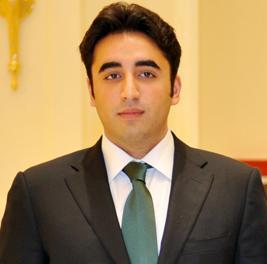
Bilalwal Bhutto Zardari, Chairman Pakistan Peoples Party has extended Eid-ul-Azha greetings to Pakistani and entire Muslim world and urged for truly following the concept of sacrifice.
Bilawal Bhutto Zardari said that Eid-ul-Azha reminds us the religious and moral duty to share our God- gifted blessings with the have-nots and poor in neighborhood.
PPP Chairman also asked the party workers to celebrate the Eid joys with their fellow countrymen to strengthen brotherhood and harmony among the people.
He also stressed upon the countrymen to keep the martyrs of Peshawar incidents and IDPs of FATA in their prayers.
https://mediacellppp.wordpress.com/2015/09/24/chairman-ppp-extended-eid-ul-azha-greetings-to-pakistani-and-entire-muslim-world/