M WAQAR..... "A man's ethical behavior should be based effectually on sympathy, education, and social ties; no religious basis is necessary.Man would indeed be in a poor way if he had to be restrained by fear of punishment and hope of reward after death." --Albert Einstein !!! NEWS,ARTICLES,EDITORIALS,MUSIC... Ze chi pe mayeen yum da agha pukhtunistan de.....(Liberal,Progressive,Secular World.)''Secularism is not against religion; it is the message of humanity.'' تل ده وی پثتونستآن
Tuesday, August 4, 2015
Islamic State claims camp in Pakistan’s tribal areas
BY BILL ROGGIO AND CALEB WEISS
A social media account linked to the Islamic State recently tweeted out two photos purporting to show a training camp in Pakistan’s northwest tribal areas. The images cannot be independently confirmed by The Long War Journal, however, the Islamic State’s Wilayat Khorasan [Khorasan Province], which operates in Afghanistan and Pakistan, is known to operate training camps right across the border in Afghanistan.
In one tweet, the Islamic State supporter said that a “Caravan of Baitullah Mehsud in Waziristan pledged allegiance to the Islamic State Wilayat Khorasan.” It is not clear if the camp is located in North or South Waziristan, but the photos show the fighters in a heavily mountainous area, within a compound on the mountainside. The banner shown in the photos reads “Shahid Hakeemullah Mehsud camp, Islamic State.”
The references to Baitullah Mehsud, the founder of the Movement of the Taliban in Pakistan, and Hakeemullah Mehsud, the group’s previous emir, indicates that the Islamic State fighters in Waziristan likely defected from the Mehsud branch of the Movement of the Taliban in Pakistan. Both Baitullah and Hakeemullah were killed in US drone strikes.
While the Islamic State’s Khorasan Province has absorbed disaffected members of the Movement of the Taliban in Pakistan, it has yet to establish a permanent presence in Pakistan’s tribal areas. If the images released by the Islamic State supporter are legitimate, then the Khorasan province now has a foothold in Waziristan, the epicenter of al Qaeda’s base of support in Pakistan. The Islamic State has been in competition with al Qaeda for the mantle of leadership in the global jihad, and the establishment of the Khorasan Province is a direct threat to both al Qaeda and the Taliban.
http://www.longwarjournal.org/archives/2015/08/islamic-state-claims-camp-in-pakistans-tribal-areas.php
Remembering the 1965 India-Pakistan war
On the 50th anniversary of the 1965 war, Mint takes a look at the war and the key developments leading up it.
Tuesday marks the 50th anniversary of the second India-Pakistan war over Kashmir.
It followed the death of India’s first prime minister, Jawaharlal Nehru, in May 1964 and his replacement by Lal Bahadur Shastri. It also came after India’s defeat at the hands of China in the October 1962 border war. The assumption was that a relatively unstable India would not involve itself in another full-scale war.
Given these developments, India appeared vulnerable. And it would have appeared to be a perfect moment for Pakistan to make another effort to seize Kashmir.
Code-named Operation Gibraltar, Pakistan launched an attack on India that saw a group of troops crossing the line of control and then the international border. This was preceded by groups of Pakistani troops infiltrating Kashmir with a plan to mingle with a population that was restive following the arrest of Kashmiri leader Sheikh Abdullah in May 1965 following his meeting with Chinese premier Chou En Lai in Algiers.
Shastri surprised many with his wartime leadership that saw Indian troops cross into Pakistani territory, bringing to nought Pakistan’s second attempt to snatch Kashmir by force. On the 50th anniversary of the 1965 war, Mint takes a look at the war and the key developments leading up it.
Floods kill dozens in Pakistan
The death toll from flash floods triggered by seasonal monsoon rains in various parts of Pakistan has risen to 118 and floodwater has inundated vast areas, leaving tens of thousands homeless, authorities said Monday.
The National Disaster Management Authority said the flooding has affected more than 800,000 people in 2,275 villages. About 2,900 houses have collapsed or are partially damaged.
The northwestern Khyber Pakhtunkhwa province is the worst affected, with 59 deaths reported there, according to NDMA's statement. The Pakistani part of Kashmir and southern part of eastern Punjab province each reported 22 deaths.
In mid-July, monsoon rains followed by flash floods badly hit the northwestern city ofChitral , where flooding destroyed several bridges, homes, mosques, hotels and a power station. Pakistan army's engineers repaired damaged bridges in Chitral, while boats and helicopters evacuated those affected.
Heavy monsoon rains and flooding also affected the scenic Gilgit Baltistan region where five deaths were reported in affected 175 villages and over 600 houses completely or partly damaged. A total of 136,000 people were affected there.
The southern part of largest Punjab province is another region badly hit by the flooding. The NDMA and Pakistani military moved tens of thousands of people from there to safety and provided relief goods. The operation was continuing in southern Punjab.
An army statement said army chief Gen. Raheel Sharif visited Layyah district, where rescue and flood relief operations are ongoing. It said he expressed deepest regret over the devastation, loss of life and property.
The rain continued Monday but weather conditions are expected to improve in coming days.
Every year, floods triggered by monsoon rains kill scores of people in Pakistan.
Monday, August 3, 2015
Pakistan - Fountainhead of sectarianism
The Pakistani parliament's arrogation of powers to act as God's representative on earth has put the very fabric of Pakistani society in danger.
Malik Ishaq’s violent death seems to indicate that the state is now ready to take on the sectarian extremism that has plagued Pakistan for a long time now. However, this is merely symptomatic relief while the underlying issue of sectarianism continues to be ignored by the state. The goal that sectarian organisations such as Lashkar-e-Jhangvi (LeJ) have pursued is to get Shia Muslims declared a non-Muslim minority in Pakistan, ironic for a country whose founding father was a Shia. They have, however, a precedent for this: the declaration of another sect as a non-Muslim minority in 1974.
The Second Amendment to the Constitution of Pakistan is the fountainhead of sectarian extremism. Not only did it violate all principles of citizenship and a citizen’s relations with the state, it dealt a deathblow to Muslim unity in Pakistan. Takfir (to declare someone an apostate) is not a recent phenomenon: Muslims have been declaring other Muslims kaafirs (infidels) for centuries now. In the 1940s, Jinnah was declared not just a kaafir but the Kaafir-e-Azam or the great infidel by the ulema (clergy) opposing him. His crime was twofold: one, he was a Shia and two, he refused to turn Ahmedis out of the Muslim League. What he achieved despite this opposition was unity between the various sects and sub-sects of Muslims. The Ahmedis especially supported the creation of the new country despite not being unmindful of the fact that at some point they may face persecution. Records show that they were well aware of the possibility of all other sects ganging up against them but went along with the idea because they thought it was best for the Muslims of the subcontinent. The Muslim unity that led to the creation of this country, however, was achieved on the basis that no Muslim had a better right to being called a Muslim than any other Muslim. This was a rejection of the clergy’s right to determine who was a Muslim and who was not a Muslim.
The Second Amendment in 1974 shattered that Muslim unity once and for all. Now the principle was established that parliament could excommunicate an entire community by passing a constitutional amendment. This legitimised sectarian politics; after all if Ahmedis could be excommunicated so could Shias or Barelvis and so and so forth, till Pakistan became a non-Muslim majority country by law. When put in this context, it makes perfect sense for Sunni extremists to do whatever they can in their power to get the state to declare Shias non-Muslim as well. Unlike Ahmedis, Shias form more than 20 percent of Pakistan’s population and therefore, by sheer arithmetic, constitutional politics are unlikely to achieve any similar result for Shias. Hence, the Sunni extremists resorted to the violence that has plagued Pakistan for three decades now.
The basic problem with this idea is that parliament can legitimately declare anyone a non-Muslim. I am not going to argue against the constitutional theory of parliamentary sovereignty, which is just another theory. The issue is beyond legal niceties. The Pakistani parliament’s arrogation of powers to act as God’s representative on earth has put the very fabric of Pakistani society in danger. In doing so it has left the door wide open for adventurers and religious bigots to seize it and take over, if not directly then by horrible sectarian violence. What the country needs is resolute leadership and what the leadership needs to do is repeal the Second Amendment to the Constitution of Pakistan. Obviously, there are no takers of this proposition in Pakistan at the moment. Yet so long as the Second Amendment remains a part of the Constitution of Pakistan, sectarianism will continue to have the justification needed for its existence. Pakistani politicians and leaders must reach out to the ulema of whatever variety and explain to them why the policies that have been followed since 1974 regarding Ahmedis have led to a disaster that encompasses not just that relatively tiny community but all of us. It does not mean of course that you or I or anyone else needs to agree with Ahmedis and their beliefs but what is necessary is to accept that no one has a better right at being called a Muslim than any other person who calls himself or herself Muslim. The decision as to who is right and who is wrong is better left to the ultimate and supreme authority i.e. God Almighty himself.
Once we have established that neither the state nor parliament has the right to decide who is a Muslim and who is not, sectarianism will wither away on its own. No longer will groups have to struggle to achieve supremacy over one another. The ulema then can finally do what it is that they are required to do: to act as shepherd to their flock and stop preaching hate against each other.
Pakistan - Cruel operation
The scenes of shanties being bulldozed by the Capital Development Authority (CDA) in Islamabad have made everyone sombre. The CDA was given the task of removing illegal settlements in the outskirts of the Capital in Sector-I/11. An anti-encroachment operation backed by police personnel and Rangers razed hundreds of makeshift dwellings, leaving their inhabitants in utter distress. Though the residents resisted the drive, they failed to stop them. All that left was debris and hopeless souls, who were looking for shelter under the open sky. In order to understand this sad episode, we need to go back to the past when then prime minister Muhammad Khan Junejo had declared all Katchi Abadis (informal settlements) regularised in 1985 due to the difficulty of relocating all their dwellers. That was not a solution to end illegal squatter colonies. That is the reason the government is still grappling with the problem even after almost three decades, obviously due to the absence of a clear policy and a lack of planning that are mainly responsible for these uncalled for tragedies.
A major influx of Afghan refugees since the 1980s exacerbated this problem. At that time, no one cared about this issue and the Afghans were given a free choice to go anywhere in Pakistan. In addition, the increasing prices of land and migration of a growing number of people from the rural to the urban areas have exacerbated the situation. Now, you can see such informal settlements and slums existing in almost all big cities of the country. The housing crisis has become a grave issue in the country. The rich have ample resources to find accommodation of their choice while those belonging to the middle class also somehow manage to get homes. It is the poor, who only earn enough to barely keep body and soul together, who cannot accumulate enough wealth to acquire proper housing. They are forced therefore to cling to little patches of ground to build their makeshift dwellings to shelter themselves and their families. The government needs to understand that the demolition of the homes of slum-dwellers is not a solution to the problem. It is sheer injustice with the poor. They too are citizens of this country and it is the government’s responsibility to provide them with affordable housing, given that the constitution provides the right to shelter, albeit this too is a right practiced more in the breach. Before launching such drives, the government should have made arrangements to relocate the displaced victims. And last but not the least, the government should evolve a clear policy and conduct proper planning to address the question of shelter, especially for the poor.
Pakistan - Business Community Striking Back - 0.3 percent tax
The business community is still on the warpath over the government’s measure to charge 0.3 percent tax on every banking sector transaction of above Rs 50,000. With markets in main cities starting to look like ghost towns due to widespread strikes, the main point to ponder over is whether this will do any good to the business community.
The tax applies to everyone, not just traders, and the Rs 50,000 amount not a high enough amount to make the tax progressive. The tax is a withholding tax, which means it can be reimbursed if income papers and tax returns are filed. However, the process to file taxes, to pay-now-get-reimbursed-later is quite cumbersome, unless tax authorities make the process easier.
On the other hand, should the business community have not already filed tax papers - something that is necessary and legally required? Transactions worth million happen in bazaars everyday, with there being no record of the transaction, except innocuous bank transfers. Do the traders not want to pay taxes? Is it really wise to let most of the economic activity in Pakistan remain informal?
This decision to extend the scope of the banking transaction tax was made to punish non-filers and encourage them to start filing their tax returns. However many parties have also joined the protests, including PTI, calling it the ‘government’s drone attack on national economy’. The to the rhetoric of poor masses being pushed towards absolute poverty is a default setting for most opposition. But sometimes, it is more a matter of pressuring people to follow the law, even if it antagonises them. As a nation we have been demanding better health and education services for decades, when our attitude towards paying taxes is abysmal. The tax, at 0.3 percent of Rs 50,000 comes to Rs 150. This may seem like a small charge when the transaction is made once a month, say, for salary. But when transactions this large are being made on a daily bases by traders the amount piles up. The outcry betrays the informal and unrecorded nature of most business in Pakistan, as well as the sheer amount of untaxed money flowing through the economy.
It has been estimated that this tax will generate Rs 35 billion in the new fiscal year. This is a good amount to start with, but the government is not clean of blame yet. Decades of lethargic planning, and the economic scandals of top leadership inspire no desire in the masses to pay taxes. There has been no effort to enhance social services, nor make them more efficient. For most people Rs 35 billion generated by taxes means Rs 35 billion lost to corruption and debt payments. Why should they give their money so willingly when they are not sure of the benefits? Because it is the legal thing to do. This reason many not seem enough, but it must suffice for now.
Pakistan needs to make #polio drops mandatory: Aseefa Bhutto #EndPolioNow

https://ppppunjab.wordpress.com
Aseefa Bhutto Zardari, who has become an international icon for Pakistan’s struggle against polio, has emphasized on measures to completely eradicate the potentially fatal and infectious disease of Polio from the country and achieve the status of Polio-free Pakistan.
“#Pakistan needs a strict policy for #polio eradication #EndPolioNow”
It was stated by Aseefa Bhutto Zardai in her tweet.
She Tweeted that “Pakistan needs to make #polio drops mandatory”
She has also tweeted that “India was able to eradicate #polio by making drops mandatory for all children under the age of 5 susceptible to the disease PK should aswell”
Ms. Aseefa Bhutto Zardari was the first child administered with polio drops when her mother Shaheed Mohtarma Benazir Bhutto introduced widespread polio campaigns in the country in 1994. Polio free Pakistan was one of the missions of Shaheed Mohtarma Benazir Bhutto, which she carried out with singular passion and worked tirelessly throughout her life for achieving this objective. Now, Aseefa Bhutto Zardari strongly committed to carrying the mission of Shaheed Mohtarma Benazir Bhutto forward.
India was able to eradicate #polio by making drops mandatory for all children under the age of 5 susceptible to the disease PK should aswell
Pakistan sleuth wants country to admit mistakes about Mumbai attacks
Tariq Khosa, who was made head of the Federal Investigation Agency (FIA) weeks after the assault that killed 166 people, acknowledged that the trial of the seven men charged for the attacks had “lingered on for far too long” and Pakistan must ensure the “perpetrators and masterminds...are brought to justice”.
In an article written for the influential Dawn newspaper, Khosa said “dilatory tactics by the defendants, frequent change of trial judges, and assassination of the case prosecutor as well as retracting from original testimony by some key witnesses” had been serious setbacks for Pakistani prosecutors.
During their meeting in the Russian city of Ufa last month, Prime Minister Narendra Modi and his Pakistani counterpart Nawaz Sharif agreed that the two sides will discuss ways to expedite the trial of the Pakistani suspects, including the use of voice samples.
Read: 26/11 probe: Lakhvi won't give voice sample, says his Pak lawyer
The seven Pakistani suspects, including Lashkar-e-Taiba (LeT) operations commander Zakiur Rehman Lakhvi, have been charged with planning, financing and executing the carnage in India’s financial hub. The slow progress of their trial and the release of Lakhvi on bail have emerged as key irritants in bilateral ties.
The Islamabad high court ruled that the trial should be completed within two months but the deadline set by it has already passed.
Khosa listed seven key facts uncovered during the Pakistani investigation.
He said Ajmal Kasab, the lone attacker captured and subsequently executed in India after his conviction, was a Pakistani national whose place of residence, initial schooling and his joining a banned militant group was established by investigators.
Read: Experts reject Pakistan's demand for more evidence on 26/11 attacks
The training camp near Thatta in Sindh province, where the LeT terrorists were trained and launched by sea, was identified and secured by investigators. The casings of explosive devices used in Mumbai were recovered from the same training camp and duly matched.
The fishing trawler used by the attackers for hijacking an Indian trawler, in which they sailed to Mumbai, was brought back to a Pakistani harbour, painted and concealed. But it was recovered by investigators and connected to the accused, Khosa wrote.
The engine of the dinghy abandoned by the terrorists near Mumbai harbour “contained a patent number through which the investigators traced its import from Japan to Lahore and then to a Karachi sports shop from where a LeT-linked militant purchased it along with the dinghy”, he added.
The money trail was followed and the accused who bought the engine was arrested.
The “ops room” in Karachi, from where the attackers were directed, was identified and secured by investigators. Communications through voice over internet protocol (VoIP) were unearthed.
The alleged commander and his deputies were identified and arrested and a couple of foreign-based financiers and facilitators were arrested and brought to face trial, he wrote.
The anti-terrorism court conducting the trial of the seven accused ruled that their consent should be obtained for recording voice samples. The suspects refused and the matter was then taken up with the sessions court, which too turned it down because there is no provision in Pakistan’s Evidence Act or Anti-Terrorism Act for collecting voice samples.
The new Fair Trial Act of 2013 caters for admissibility of technical evidence like voice samples and Khosa said “its application with retrospective effect is a moot point”.
He said the Mumbai case was “quite unique” as it involved one incident with two jurisdictions and two trials. While India managed to nab Kasab and obtained his confession to close the trial, “proving conspiracy in a different jurisdiction is more complex and requires a far superior quality of evidence,” he said.
Khosa suggested that legal experts from both countries “need to sit together rather than sulk and point fingers”. At the same time, Pakistani authorities should not forget the FIA declared various other facilitators and operatives as fugitives and the trial “will not be over with the disposal of those under arrest or on bail”.
He wrote: “Other missing links need to be uncovered after the absconders’ arrest. This case will not be over soon.”
Sunday, August 2, 2015
India-Pakistan Clashes in Kashmir
By Muhammad Akbar Notezai
July was a busy month for India-Pakistan relations. Indian Prime Minister Narendra Modi met with his Pakistani counterpart Nawaz Sharif on the sidelines of the Shanghai Cooperation Organization Summit in Ufa, Russia, with the two agreeing that their respective national security advisors would meet to discuss ways to combat terrorism.
But just a week or so after this diplomacy, the two countries once again exchanged gunfire across their disputed frontier in Kashmir. According to reports, a heavy exchange between the Indian and Pakistani troopers took place along the line of control (LoC) in Jammu’s Poonch district. As usual, each side blamed the other for the incident. An unnamed Indian defense spokesman was reported as accusing Pakistani troops of opening fire on several posts along the Line of Control that divides Kashmir. He was quoted as saying that Indian forces responded with their own barrage to the “unprovoked firing” by Pakistani forces. In contrast, Pakistani officials had earlier said in a statement that Indian troops used heavy weapons on July 18, when Muslims were celebrating the Eid-ul-Fitr (marking the end of the holy month of Ramazan), to pound Nezapir in Kashmir.
Over the past week more clashes were reported, including one in which an Indian soldier was reportedly killed by a Pakistani sniper. It was in fact the third sniper attack this month, and the 18th ceasefire violation in a month that has four people killed and 14 wounded. The exchanges have continued into this weekend.
Meanwhile, a single attack in Gurdaspur, Punjab on Monday left seven dead. India has blamed Pakistani terrorists for the attack, an accusation Pakistan has vehemently denied.
The incidents have raised concerns that the planned meeting of the national security advisors would be derailed, although for now, the talks – tentatively scheduled for late August – look to be going ahead.
A History of Trouble
Hari Singh, the last ruling Maharaja of Jammu and Kashmir, wanted to be independent but under pressure from both India and Pakistan, in 1947 elected to accede to India. That led to the first war between India and Pakistan in 1947-48. Since then, the Kashmir region has been a flashpoint between the two countries.
Since it was created in 1949, the United Nations Military Observer Group in Indian and Pakistan (UNMOGIP) has been supervising the ceasefire in the disputed Jammu and Kashmir region. Pakistani army officials say they have informed the UNMOGIP about alleged recent ceasefire violations by India and asked the monitors to investigate the incidents. Subsequently, a team visited Sialkot Working Boundary, and inspected the areas targeted by recent firing by the India Border Security Force. According to Pakistan’s Inter-Services Public Relations, the UNMOGIP officers visited the Sullehpor, Chaprar, and Milanay sectors of the Line of Control. Pakistan also summoned the Indian ambassador after a “spy drone” was downed in disputed Kashmir.
Meanwhile, New Delhi has lodged its own complaint with the UNMOGIP, when one of its civilians was killed during gunfire on the border.
The U.S., China and Russia have for years been trying to push India and Pakistan to repair relations. The antipathy between the two countries is a factor in regional conflicts, notably in Afghanistan.
In 2003, India and Pakistan did agree to a ceasefire along the Line of Control in Kashmir, and subsequently began peace talks. That process was suspended in the wake of the 2008 Mumbai terrorist attacks, which New Delhi blamed on Pakistan-based militants.
Amit Ranjan, a Delhi-based scholar, pointed out to The Diplomat that incidents regularly occur just as India and Pakistan are about to enter negotiations. According to Ranja, the blame can be laid at the feet of institutions that do not approve of talks, and which seek to derail the process. Take, for instance, the bonhomie created between the Indian and Pakistani prime ministers at Lahore in 1999, which quickly gave way to the Kargil War. Then, in 2007-08, when the two countries were looking for a breakthrough on the Kashmir issue, the devastating attacks on Mumbai occurred. There are more examples, all suggesting that those who have profited from conflict are reluctant to give peace a chance.
Now, Ranja notes, “Despite the meeting of the two prime ministers at Ufa, gunfire [has been exchanged] on the India-Pakistan international border, even on the eve of Eid, when the two sides used to exchange sweets. Who started firing is like a chicken and egg puzzle which one cannot resolve; both sides accuse the other.”
Ranja concludes that unless these institutions agree to permit a breakthrough, their machinations will always defeat the goodwill gestures of the political leaderships of India and Pakistan, scuttling any chance of peace between the two countries.
Pakistan - #Shame #PMLN - Islamabad’s evictions
There should be no confusion or lack of clarity about what has happened in Islamabad earlier this week. The government’s move to destroy Afghan Basti, a katchi abadi in I-11, and evict its tenants by force, represents nothing less than a continuation of its long war against the poor. Thousands of people have been rendered homeless, moving from a position of abject poverty to absolute destitution, hundreds have been injured, and many have also been arrested for the ‘crime’ of resisting the brutality of a state machinery inured to the use of violence against the subordinate classes. While it would be tempting to say that this incident has revealed the government’s true colours, the truth is that the government has always displayed an eager willingness to trample all over the rights of the poor in its pursuit of the interests of the rich and powerful.
When the government first began its demolition of Afghan Basti, its approach bore all the hallmarks of similar exercises undertaken in the past. Armed with a court order that conferred the proceedings with a dubious legitimacy, allowing for the settlement to be razed to the ground without even mentioning the need to help the displaced and dispossessed, the government’s description of its activities as being a ‘clean-up operation’ was inadvertently revealing; it was clear that, to the government, this settlement represented a blight on the face of Islamabad and the CDA’s plans for the city, and that its residents were little more than human detritus that needed to be disposed of to make way for shinier and flashier buildings and people. Claims that the Afghan Basti was a hub of iniquity plagued by drugs and criminality were supplemented by an openly racist narrative that associated such activities with the Afghan refugees living in the settlement; the fact that this was factually incorrect (the majority of the Afghan Basti’s residents are Pakistani citizens, and levels of crime are no higher than comparable low-income areas in other parts of the country) is also irrelevant when considering how basic human decency, if nothing else, dictates that we should treat everyone with respect and empathy regardless of their national origins.
Once again, the old bogey of ‘development’ was also invoked to justify the unjustifiable, providing a veneer of acceptability and respectability to proceedings that were anything but. As always, no real attempt was made to outline exactly what this development would be or who would benefit from it but if past experience is anything to go by, the contours of the process should be abundantly clear. With their focus on mega-projects that serve as showy symbols or ‘progress’ as well as great opportunities for graft, successive governments in Pakistan (most notably those headed by the PML-N) have repeatedly demonstrated how their visions of ‘development’ have no room for the poor. Amidst all the massive roads, glitzy buildings, and billions of dollars of investment, little to no attention has been paid to addressing the basic needs of Pakistan’s poor, with spending of healthcare, education, and welfare remaining abysmally low. Instead, shadowy cabals of well-connected businessmen, landowners, and government officials continue to carve up the economy amongst themselves, ensuring that Pakistan remains a country that exists to protect and pursue the interests of the few at the expense of the many.
In the context of the I-11 evictions, it is clear that the government has failed to provide the populace with low income housing, even though the right to shelter is enshrined in the constitution. The thousands of families forcibly removed from their homes and deprived of their belongings in Afghan Basti have been offered no compensation or any form of resettlement, and will be left to fend for themselves. For the government, and for much of society, the ultimate fate of these people is of no interest or consequence; they are invisible, intruding on the public consciousness only when they attempt to resist the forces responsible for their impoverishment, or when they disturb the comfortable status quo that characterises elite spaces and privilege in this country (as evinced by the clearly classist entrance fee introduced by Islamabad’s Centaurus Mall in the weeks prior to Eid).
To their credit, the PTI and the JI raised the issue of the I-11 evictions in parliament but did little more than engage in the verbal castigation of a government to which they are inimically opposed. This is unsurprising given that these parties, like their other mainstream counterparts, are constrained by the same structural logic that sees them all beholden to the property-owning classes and in thrall to the logic of capitalist development. They are inherently limited in the extent to which they will oppose the economic status quo, and cannot be relied upon, or expected to, engage in anything even remotely resembling a robust defence of the interests of the working classes.
Instead, resistance to the evictions was spearheaded by the Awami Workers Party whose activists were at the frontlines of the struggle helping to mobilise the residents of the settlement in their attempts to resist the bulldozers of the CDA and the batons of the police. In the event, some of these activists, as well as many residents of the Afghan Basti, were arrested and are currently being booked under Pakistan’s draconian anti-terror laws. While these arrests, like the rest of the eviction ‘operation’, are a travesty that needs to be protested against vocally and repeatedly, this entire episode, has once again, demonstrated how those who oppose the economic status quo and challenge the interests of the elite are guaranteed to be met with the full force of the state.
Pakistan - Traders’ country-wide strike on 0.3pc withholding tax, a warning to PMLN Fed Govt: PPP
Pakistan People’s Party (PPP) Karachi Division President Syed Najmi Alam, Sardar Khan, Izharul Haq Hasaanzai and Habib Hasan Balouch while addressing PMLN Federal Government said it should learn a lesson from the country-wide strike by the traders across the board against the tyrant imposition of 0.3 percent withholding tax, which was in its initial stage was 0.6 percent.
They said that the PMLN Federal Government deliberately ignored sane suggestions and advices from concerned political parties and traders’ associations and preferred to impose the tyrant decision of 0.3 percent withholding tax on all bank transactions. This led to instillation of strong wave of disappointment, hatred against the PMLN Federal Government, unrest among the traders and the masses across the board.
They said that the PPP had time and again advised the PMLN Federal Government to avoid policies and decisions that would hurt the interest of the common man and the country and also discard the idea of selling the strategic national institutions like PIA and Pakistan steel Mills but the government did not hear the cal of the day.
They once again warned the PMLN Federal Government to immediately withdraw the 0.3 percent withholding tax on bank transactions or else it should be ready to face more protests in which the PPP would be on the forefront with the traders and the masses
https://mediacellppp.wordpress.com/2015/08/01/traders-country-wide-strike-on-0-3pc-withholding-tax-a-warning-to-pmln-fed-govt-ppp/
Pakistan - #PPP supports strike call of traders
PPP Punjab expresses it total solidarity with the traders’ community and supports its strike of 1st and of 5th of August to press for their demand of withdrawal of with-holding tax, said Mian Manzoor Ahmed Wattoo, President PPP Punjab, while talking to a delegation that called on him at the PPP Punjab Secretariat here today.The delegation was led by Suhail Milk, Vice President PPP, consisting Nadir Khan, zonal president and ticket holder,Waheed Qureshi,Arif Khan,qaiser Mustafa,Chaurdhry Sadiq,Imran Athawal and Muhammad Hussain.
Mian Manzoor Ahmed Wattoo said that the government was contemplating the economic genocide of the small traders but the PPP would scuttle their malevolent designs because it always stood with the victims and against the tyrannical forces.
He added that PPP considered the small traders as its constituency and would not leave it at the mercy of the hostile circumstances created by the government of the day.
He regretted the generosity of this government as it gave hundreds of billions of rupees exemption in custom duties to the big industrialists but its parsimonious against small traders at the cost of their vital interests was unforgiving.
He advised the government to concentrate on broadening the tax net instead of levying new taxes on traders whose capacity to pay in this count was grossly limited.
He anticipated that if the government did not withdraw the tax it would embolden money laundering and flight of capital leading to shake the foundations of the country’s economy.
He also asked the government to plug the loopholes of corruption in the FBR that was causing hundreds of billions of rupees to the public exchequer. It is embarrassing and indeed cast aspersions on FBR’s performance because Tax-GDP ratio of 9% in Pakistan is the lowest among the countries of this region.
He urged the government instead of wasting time in setting up committees to look into the matter it should withdraw the withholding tax that was being deemed by traders’ community as a type of official extortion.
https://ppppunjab.wordpress.com/2015/08/02/ppp-supports-strike-call-of-traders-mian-manzoor-ahmed-wattoo%e2%80%8f/
Saturday, August 1, 2015
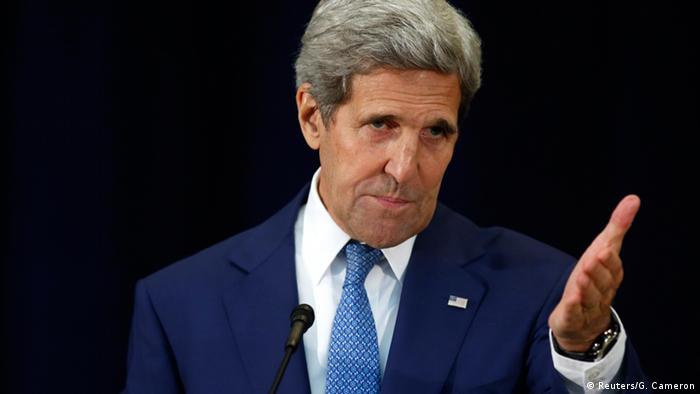
US Secretary of State Kerry begins Middle East tour
US Secretary of State John Kerry has arrived in Egypt on the first leg of his Middle East tour. Kerry will also hold a meeting with his Russian and Saudi Arabian counterparts in Qatar and attend a Gulf summit.
Ties between Washington and Cairo have been tumultuous since the popular revolt against former Egyptian President Hosni Mubarak in 2011. The United States has been particularly critical of President Abdel Fattah al-Sissi's repression of the supporters of his Islamist predecessor, Mohammed Morsi.
The relations between the two countries have begun to improve somewhat, with Washington lifting sanctions on military aid for Egypt in March.
John Kerry will hold strategic talks with Sameh Shoukri, Egypt's foreign minister, on Saturday before heading to Doha. The dialogue will be the first between the two countries since 2009, and comes days after the United States announced that it would begin the delivery of eight F-16 fighter jets to Cairo.
The top US diplomat is also expected to raise the issue of human rights violations with his Egyptian counterpart.
"We'll certainly be discussing the issue of the political environment, human rights issues while the Secretary is in Cairo. That is an important part of our regular dialogue," a US State Department official said.
Concerns about Iran
In Doha, Kerry will attend a meeting of the six Gulf Cooperation Council (GCC) members and try to allay fears among the US's Arab allies about Iran's nuclear deal with world powers, which was sealed on July 14 in Vienna.
Many Gulf states are weary about Iran's growing closeness with the United States.
The GCC foreign ministers and Kerry will also discuss the conflicts in Syria and Yemen. The US State Department confirmed that Kerry and Russian Foreign Minister Sergei Lavrov would meet on the GCC sidelines.
Kerry, whose Middle East visit does not include a stop in Israel, will leave for Southeast Asia from Doha.
Subscribe to:
Posts (Atom)