Monday, May 25, 2015

‘Kingdom of Dystopia’: Saudi Arabia seeks leadership of UN Rights Council

The very country which brought the world one of the most brutal and intolerant religious ideologies - Wahhabism, while operating the most oppressive modern-day theocracy, is vying for the presidency of the UN Human Rights Council.
Saudi Arabia has come to represent many things over the decades - theocracy, oppression, brutality and even at times downright barbarism. And seeing how the Kingdom has become infamous for carrying out death sentences by beheading, it’s safe to say that upholding the principles of human rights is not exactly the regime’s forte.
Yet, King Salman, the new self-proclaimed custodian of the Two Holy Mosques, did not flinch when he declared on May, 20 that, “The Saudi Arabian government guarantees freedom of expression and opposes discrimination.”
The comment was aimed at Bandar Al-Aiban, president of the Human Rights Commission (HRC), Mufleh Al-Qahtani, president of the National Society for Human Rights, and other senior officials during their visit to Riyadh.
The King went on confidently, “The pillars of this state are built on Islamic law that calls for the protection of human rights; and governance in the country is based on justice, consultation and equality.”
But since those pillars the King is so keenly referring to are themselves based on the Wahhabi interpretation of Islam - a sect by its very nature reactionary and fiercely oppressive towards all it does not approve of or understand – Saudi Arabia’s justice system is merely a reflection of such dystopian ideology.


Wahhabism is actually so intrinsically violent and foreign to the concept of interfaith cohesion and peaceful social coexistence that it gave birth to the so-called jihadist movement that is currently holding the Middle East and North Africa hostage – Islamic State (IS, formerly ISIS/ISIL).
Wahhabism is a sect that came to be in the 18th century at the command of Mohammed Abdel-Wahhab. To put things further into historical context, the Wahhabis, or the Ikhwan as they called themselves then, under the banner of Wahhabism raided and ransacked both the holy city of Karbala (Iraq) and Medina before marching into Mecca as conquerors. Those “faithful” hordes turned Arabia crimson red to the swing of their blades as they pillaged and massacred along the way.
Fast forward a few centuries and Wahhabism is as bloodthirsty and intolerant as ever.
When all which is not Wahhabi Islam is considered apostasy, talks of equality and justice are as intangible as mirages - and yet the Kingdom would like the world to believe in its gospel of justice.
Not content with professing the righteousness of his rule, King Salman now harbors ambitions for the Kingdom to head the United Nations Human Rights Council.
On the very same week Saudi Arabia called for “experienced swordsmen” to join the Kingdom’s execution squad, reports confirmed Riyadh is preparing to lobby the United Nations to become the next head of the Human Rights Council, after Germany’s term end in 2016.
As Hillel Neuer, executive director of UN Watch said, “that would be the final nail in the coffin for the credibility of the HRC.”
Neuer added rather eloquently, “Electing Saudi Arabia as the world’s judge on human rights would be like making a pyromaniac as the town fire chief.”
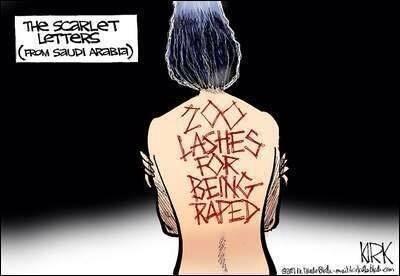
And indeed, in a country like Saudi Arabia, where women are no more than commodities to be traded off, where political prisoners are subjected to abject torture, and where beheadings are commonplace, the idea that such a regime could ever be granted such a position on the world stage rings with intolerable cynicism.
Since King Salman was declared the legitimate claimant to the throne of Saudi Arabia, 85 men and women have been put to death in macabre public displays. Among the Kingdom’s latest victims was a woman suspected of mental illness named Siti Zainab Binti Duhri Rupa. She was publicly beheaded in April.
Philip Luther, Middle East and North Africa Programme Director at Amnesty International, said at the time in a statement: “Imposing the death penalty and executing someone with a suspected mental illness smacks of a basic lack of humanity.” But, of course, such condemnations and calls for restraint have mainly fallen on deaf ears since the Kingdom wields the most powerful weapon of all - petrodollars.
Saudi Arabia, it appears, cannot be made to abide by international standards, since international law does not hold sway over the Kingdom. If the world has somewhat come to terms with the principles of American exceptionalism, perhaps the era of all-encompassing Saudi impunity is now at hand - Saudi Orwellianism anyone?
And even if both the US and EU insist on courting Riyadh – for its coffers are home to billions of dollars in arm deals and other lucrative investments – it would be difficult to whitewash 85 state-sanctioned murders, one unilateral war on Yemen, and a brutal religious crackdown against the Kingdom’s Shia community.
And if, as King Salman claimed, “There is no difference between citizens or regions. All citizens are equal in rights and duties,” then why are religious figureheads like Sheikh Al Nimr languishing in prison?
Is it fairness when cluster-bombs are unleashed over Yemen’s northern region of Saada where, as it so happens, Zaidi Muslims are the majority - a branch of Islam Wahhabi clerics have branded as takfir (infidels)? Is it right when children are left to starve under a Riyadh-run blockade on Yemen?
Allowing the Kingdom to head the UN Human Rights Council would quite simply equate to rewarding inhumanity, but then again, since values such as civil liberties and human rights have become the latest casualties in the Western powers’ eternal ‘war on terror’, maybe a theme is beginning to emerge.
Back in 2013, the US and EU failed to oppose Saudi Arabia’s election to the council. Let us see how they hold up before the petrodollar super-power this time around.
Catherine Shakdam for RT.

Report: Israel offered Saudi Arabia use of its Iron Dome technology

Arabic-language newspaper Rai al-Youm reported on Saturday that Israel has offered Saudi Arabia to use its Iron Dome anti-rocket technology. 


According to the report, the offer was made last week during meetings in Amman between the Saudis and the US ambassador to Jordan. A spokesman for the Jordanian government said that he was not aware of a meeting between the Saudis and the Israelis in Amman, the news outlet reported. 

Saudi Arabia reportedly rejected the offer, according to the London based newspaper. 

On Thursday and Friday cross border rocket attacks launched from inside Yemen killed two people in southern Saudi Arabia, Saudi Arabia's state news agency SPA reported on Friday.

SPA quoted a Civil Defense official in the southwestern province of Jizan as saying that a child was killed and three other children were wounded on Friday in the al-Tawal region.

A rocket attack on Thursday killed one citizen and wounded two others in al Hosn village, the agency reported earlier.

On Friday, Saudi-led coalition warplanes pounded Houthi-held military outposts on the hills overlooking the Yemeni capital Sanaa, as the eight-week military offensive aimed at ousting the rebels intensified over the weekend.

The airstrikes came as two Shi'ite mosques, one in the eastern province of Saudi Arabia and the other in Sanaa, were targeted by explosive devices and suicide bombers during Friday prayers.

Coalition fighter jets also targeted the presidential compound in the capital on Friday, where the Shi'ite rebels seized control in September.

The Saudi-led coalition of Sunni Arab nations intervened in Yemen's civil war on March 26 with an all out air assault to force the Iran-allied Houthis to retreat from territories they have seized since last year, and restore the power of exiled Yemeni President Abd-Rabbu Mansour Hadi.

Friday's violence followed overnight airstrikes that targeted Houthi controlled military outposts of the notorious Republican Guard troops in the capital.

At least four missiles hit one of the Guard's training camps in Sanaa late Thursday (May 21) night.

The latest spike in violence comes ahead of UN sponsored Yemen peace talks to be held in Geneva on May 28.

Social video shows Memorial Day across U.S. This ad will close in 14 seconds

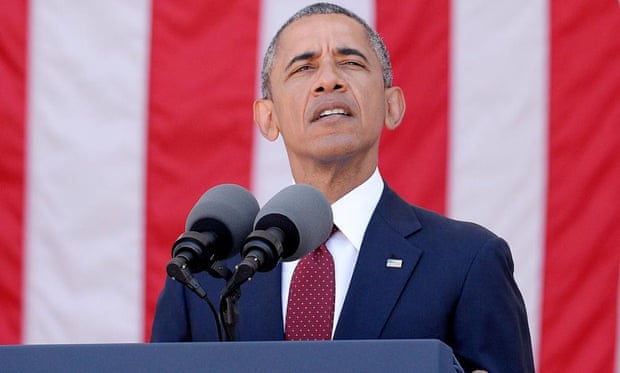
Video - President Obama Delivers Remarks at Arlington National Cemetery

President Obama marks first Memorial Day in 14 years without major US war


President Barack Obama on Monday honored soldiers who died in Afghanistan, during his annual speech at Arlington national cemetery on Memorial Day. Though troops remain stationed in Afghanistan, it was the first time in 14 years that the US had celebrated the holiday while not engaged in a major ground war.
After laying a wreath at the Tomb of the Unknown Soldier, Obama praised American soldiers for their “honor, courage, selflessness” in every war, from the Revolutionary war against Britain to the recently ended conflicts in Iraq andAfghanistan.
Ahead of the ceremony, the administration touted this as the first Memorial Day ceremony since the end of the ground war in Afghanistan, where more than 2,200 Americans died since 2001.
“This may be the first Memorial Day since the end of our war in Afghanistan, but we are acutely aware, as we speak, of our men and women in uniform, who still stand watch, still serve and still sacrifice, around the world,” Obama said.
Nearly 10,000 troops are set to remain in Afghanistan into 2016, fulfilling what the administration describes as “non-combat roles” – such as coordinating drone strikes and training Afghan security forces.
“We’ll continue to bring them home and reduce them to embassy presence by the end of next year, but Afghanistan remains a very dangerous place,” Obama said.
He honored the last two soldiers to die in the combat mission in Afghanistan, Wyatt Martin and Ramon Morris. They died when their military vehicle was hit by an improvised explosive device (IED) near Kabul in December.
Obama said Martin, 22, enlisted because he was grateful for his life in Arizona, and believed it “came with an obligation to give back, to serve”. Last summer, the president said, Martin told his sister that if he died, he would die happy.
Morris, 37, was born in Jamaica and moved to Queens, New York City as a child. “Like so many proud immigrants, he was called, compelled, to enlist in the army,” Obama said.
Obama said Morris served five tours of duty, including two in Iraq. He fell in love with a fellow reservist, with whom he had a daughter.
“These two men, these two heroes, if you saw them passing on the street, you wouldn’t have known they were brothers,” Obama said. “But under this flag, in common cause, they were bonded together to secure our liberty, to keep us safe.”
The speech came after years of claims by the administration to have created a path to the end the Afghanistan war, or indeed that it was over, followed by delays in plans for troop withdrawal.
At last year’s Memorial Day ceremony, Obama said: “By the end of this year, our war in Afghanistan will finally come to end.” At the time, about 32,000 troops were in Afghanistan.
In addition to saluting Martin and Morris on Monday, Obama honored John Dawson, the first soldier to die in “the new mission” in Afghanistan. Dawson, an army medic, was shot dead in an apparent insider attack in Jalalabad.
He also gave special recognition to the soldiers who fought in the second world war, which ended 70 years ago this year.
The defense secretary, Ash Carter, also spoke, a day after his comments to CNN about Iraqi forces being to blame for recent advances by Islamic State militants caused international disquiet.
Martin Dempsey, chairman of the joint chiefs of staff, spoke first. “Tomorrow when you resume life’s daily routines, think of the families who will return home, and leave their families in this sacred place,” he said.
Arlington national cemetery holds the remains of more than 400,000 US military members and their families. President John F Kennedy and his family are also buried there.

Video - Memorial Day ceremony in Afghanistan

Video - President Obama lays wreath at the Tomb of the Unknown Soldier

Music Video - Hamare Dil Se Mat Khelo

Music Video - Tere Bheege Badan ki

Music Video - AKHLAQ AHMAD - SONA NA CHANDI

Music Video - "Khamosh hen nazare aik bar muskura do"

Music Video - Imaandaar - Aur Iss Dil Mein Kya Rakhha Hai

BREAKING NEWS - Blast heard in Orangi area of Karachi

A powerful explosion has been heard in Faqeer Colony area of Karachi late Monday, SAMAA reported on Tuesday.

The entire area rang with intense rounds of gunshots following the blast in a house located at Pareshan Chowk in Faqeer Colony area of Orangi Town. 

According to SAMAA correspondent, the personnel of law-enforcement agencies took the area in security cordon. 

According to sources, a suicide bomber blew himself up during a search operation in the area.

DIG Feroz Shah said the blast took place near a rangers van in Mominabad.  –SAMAA

http://www.samaa.tv/pakistan/26-May-2015/blast-heard-around-golimar-karachi

له پاکستان سره د افغان چارواکو هوکړلیک حقوقي اعتبار بخښلی

د افغانستان د ولسي جرګې غړي وايي، د پاکستان له استخباراتي ادارې سره افغان حکومت له وړاندې تفاهم لیک لاسلیک کړی او حقوقي اعتبار یې ورکړی دی.
دې جرګې یاد تفاهم لیک د منلو وړ ونه باله او ټینګار یې وکړچې د ملي امنیت سلاکار، د ملي امنیت د ادارې رییس او مرستیال باید په دې اړه دوی ته وضاحت ورکړي.
د افغانستان ولسي جرګه وايي، د پاکستان له استخباراتي ادارې سره د افغان حکومت د استخباراتي اطلاعاتو تفاهم لیک د دغو هېوادونو د ملي امنیت مرستیالانو لاسلیک کړی دی.
د دې جرګې غړیو د دوشنبې ورځې په عمومي غونډه کې وویل، که څه هم دا تفاهم لیک له مخکې لاسلیک شوی او حقوقي اعتبار لري خو چارواکي باید دوی ته وضاحت ورکړي.
د خلکو استازیو وویل، چې له ای. اس. ای سره تفاهم لیک په داسې حال کې لاسلیک شوی چې ولسمشر او اجرایه رییس هم له مخکې بې خبره پريښودل شوي و او په دې کارکې ډېره ناهمغږي موجوده وه.
د ولسي جرګې د نړېوالو اړیکو د کمیسیون یوه غړي عبدالقیوم سجادي عمومي غونډې ته د تېرې ورځې د سري غونډې د رپوټ د لوستلو پرمهال د یاد تفاهم لیک د لاسلیکیدو مساله یاده کړه:
((که څه هم د ملي امنیت ریس وویل، چې دا تفاهم لیک الزامي نه دی ځکه چې رییسانو لاسلیک کړی نه دی مرستیالانو دا کار کړی.
دا چې مرستیال د خپلې ادارې په استازیتوب دا کار کړی دا مهمه نه ده چې دا تفاهم لیک الزامي دی که نه خو اصلي خبره دا ده چې دا تفاهم لیک د ادارې د مرستیال په لاسلیک سره حقوقي اعتبار خپل کړی دی.))
د ولسي جرګې د کورني امنیت کمیسیون رییس میرداد نجرابي وویل، د پاکستاني استخباراتو په لاس د افغان امنیتي منسوبینو روزنه، له جلاغوښتونکو څخه نه ملاتړ او د پاکستان دښمن د افغانستان دښمن بلل هغه مسایل دي چې له امله یې دا تفاهم لیک دوی ته د منلو وړ نه دی.
د ولسي جرګې د یادو درېیو کمیسیونونو استازیو وویل، چې افغان حکومت تراوسه پورې هم دا تفاهم نامه دوی نه ده سپارلې او تېره ورځ د ملي امنیت رییس هم له دوی سره په لیدنه کې له ځانه سره نه وه وروړې.
ولسي جرګې په داسې حال کې له ای. اس. ای سره د افغان حکومت د تفاهم لیک د لاسلیک مساله یادوي چې د ملي امنیت ادارې د یکشنبې په ورځ په یوه بیان کې د دغه تفاهم لیک وروستي کیدل او لاسلیک رد کړ.
دې ادارې وویل، چې د یاد تفاهم لیک په اړه بحث روان دی او د سیاسي او جهادي مشرانو او ملي شورا نظریات به پرې اخیستل کیږي.
د ولسي جرګې رییس عبدالرووف ابراهیمي بیا د دوشنبې ورځې د غونډې په پای کې وویل، چې له افغان ولسمشرسره یې په یوه غونډه کې دا مساله یاده کړې او هغه ژمنه کړې چې په دې برخه کې له پوره احتیاطه کار اخلي.
ښاغلي ابراهیمي وویل، د دې لپاره چې له ای. ایس. ای سره د تفاهم لیک په اړه وکیلان هم پوه شي ښه ده چې چارواکي په دې اړه عمومي غونډې ته ورشي:
((جمهور رییس وویل، چې د غونډې د ټولو ګډونوالو نظریات واوریدل او په اړه یې محتاطه یو.
هغه وویل، چې د یوې مسودې په حد کې ده او له هغې پورته څه نه دي شوي.
زما په نظر د ولسي جرګې د اهمیت په پام کې نیولو سره دا چارواکي یوه ورځ راغواړو چې موږ ته معلومات راکړي او له هغې وروسته د دغه تفاهم لیک په اړه تصمیم نیسو.))
د ولسي جرګې رییس وویل، د دې لپاره چې له پاکستان سره دا تفاهم لیک حساس دی باید په اړه یې ښکیلې خواوې له پوره غوره کار واخلي.
له ای. ایس. ای سره د معلوماتو د تبادلې تفاهم لیک په داسې حال کې لانجې زیږوي چې ځیني کارپوهان په دې اړه د بیا کتنې سپارښتنه کوي او وايي، که یې خنډونه حل نه شي کیدای شي د دغه تفاهم لیک په اساس پاکستان له تروریزم سره په ګډه مبارزه کې یوڅه مرسته وکړي.

Afghanistan - MPs Push For Nullification of NDS-ISI Agreement

A number of MPs have raised issue over a recent Memorandum of Understanding (MoU) signed between the Afghan and Pakistani intelligence services. The critics have objected to both particular facets of the agreement as well as to the overall process through which the pact emerged.

Referring to comments made by the head of the National Directorate of Security (NDS), a group of lawmakers on Monday expressed outrage at the possibility that the intelligence sharing agreement was never put up for discussion by the National Security Council.

In addition to frustrations about the lack of inclusive debate over the merits of the agreement prior to it being forged, MPs expressed concerns about the level of discord among leaders when it comes to the MoU. Reportedly President Ashraf Ghani, Chief Executive Abdullah Abdullah and NDS Chief Rahmatullah Nabil have disagreed over a number of points in the accord.

Parliament's Internal Relations Commission, Internal Security Commission and Defense Commission were directed to review the MoU this week in the presence of the national security advisor and NDS chief.

"In short, I would say that there are serious concerns on four articles of the MoU, such as the training of military cadres, joint combat between the two spy agencies against the enemy, combating separatists alongside common borders and the issue of the Durand Line," Internal Security Commission Chair Mirdad Khan Nejrabi told TOLOnews.

MP Ali Akbar Qasimi, the deputy head of Parliament's Defense Commission, suggested that there should be legal repercussions for those who sought to arrange the MoU in secrecy. "Consultations weren't conducted on the recently signed MoU, and those pushing for the agreement to be signed were trying to keep it secret," he said on Monday. "Fortunately, the MoU was disclosed, but those who did the deal should be put on trial for treason."

Despite the NDS being a central party to the MoU, some MPs claimed the NDS chief had been shut out of the decision making around it. "The things that were recommended by the NDS chief weren't included in the MoU," Internal Security Commission deputy Abdul Hai Akhondzada said. "It was prepared in line with the demands of the National Security Council and even the Chief Executive is now is disagreement."

MP Abdul Qayoum Sajjadi called for the MoU to be redacted right away. However, Speaker Abdul Rauf Ibrahimi refused the recommendation and urged for a transparent review of the agreement with the National Security Advisor. "We must value the status of the House," Ibrahimi said. "Let the National Security Advisor come to the House and offer his answers so that we can decide in light of the answers."

But not all lawmakers were appeased, with some, such as International Relations Commission members Dawood Kalakani, who accused the House Speaker of trying to avoid a vote on the MoU. "I think the Speaker of the House made a deal with the government, because the MoU was supposed to be put up for voting today and the majority of the lawmakers were against it," he said.

The National Security Advisor, NDS chief and deputy NDS chief - who all signed the agreement with Pakistan - are expected to appear in front of Parliament soon, though no official date has been set.

#PunjabPoliceGardi - Former President Zardari condemns violence against lawyers in #Daska

Former President and Co Chairman PPP Asif Ali Zardari has strongly condemned the use of brutal force against lawyers in Daska today resulting in the death of two lawyers terming it as reprehensive and unacceptable”.
Condemning the incident the former President also called for a thorough, expeditious and transparent investigation into the incident, fixation of responsibility and bringing to book those responsible for transgression of authority and the trigger happy response of law enforcing agencies.
It is most unfortunate that lawyers who protect citizens from violence and brute force should themselves be subjected to violence and brute force, he said.
The PPP Co-Chair said that the PPP will stand by the lawyers’ community in this hour. Spokesperson senator Farhatullah Babar said that former president also directed the Party to extend all support to the lawyers in their peaceful protest against the incident.
Praying for those those who lost their lives the former President also expressed his deepest condolences to the bereaved families, he said
https://mediacellppp.wordpress.com/2015/05/25/zardari-condemns-violence-against-lawyers-in-daska/

#PunjabPoliceGardi: Mian Manzoor Ahmed Wattoo expressed solidarity with the lawyers community‏


#PunjabPoliceGardi: Mian Manzoor Ahmed Wattoo expressed solidarity with the lawyers community‏

May 25, 2015
Picture
Mian Manzoor Ahmed Wattoo, President PPP Central Punjab, on behalf of PPP Punjab and on his behalf has condemned the murder of Daska Bar Association President, Rana Khalid Abbas by Punjab Police today.
He said that such brutal murder had not been taken place if the Model Town, Lahore, incidents culprits have been apprehended and brought to justice. The government and the police consider them as above law and they can get away with any type of act of violence, he added.
He expressed total solidarity with the lawyers’ community and demanded that the perpetrators should be arrested within given time to bring them in the dock.
He said that lawyers were most respectable people of the civil society who were engaged in the providing justice to the people through the courts regarding the tyranny of the executive arm of the government.
He highly appreciated the role of the lawyer community in the independence of the judiciary movement devoted to upholding the supremacy of the law in the country. Their assiduous movement for the restoration of democracy and people’s right has no parallel, he added.
https://ppppunjab.wordpress.com/2015/05/25/punjabpolicegardi-mian-manzoor-ahmed-wattoo-expressed-solidarity-with-the-lawyers-community%e2%80%8f/

Pakistan - 51 union councils in Balochistan at 'high risk' for polio virus


Balochistan Polio Emergency Cell in Pakistan has declared 51 union councils of the province to be at "high risk" for polio.

According to Dawn News, provincial Coordinator Emergency Cell Saifur Rehman said environmental samples of polio virus had already been found in the Quetta and Killa Abdullah districts of the province.

The World Health Organisation, Unicef and Balochistan Health Department (BHD) are formulating a strategy to launch an anti-polio campaign in the 51 "high risk" union councils, said Rehman.

BHD launched the second phase of its anti-polio campaign in different union councils of Quetta on Monday.

Pakistan's Shia Genocide - THREE SHIA HAZARA’S SHOT KILLED BY ASWJ TERRORISTS IN 2 SEPARATE INCIDENTS

Armed terrorists of notorious banned outfits shot martyred three Shia Hazara Muslims in Quetta Balochistan in two separate incidents of Shia target killing on Monday.
According to the Shiite News Correspondent , armed terrorists of Saudi-Indian funded AhleSunnat Wal Jamaat (ASWJ) and Taliban Pakistan killed Shia Hazara Man Anwaar Ali at Fatima Jinnah Road Quetta at Tea Shop and easily flee from the scene.
In second incident of Shia genocide in Quetta today (Monday, Two more Shia Hazara's Mohammad Hashim and Abdul Hakeem were shot martyred and three others were injured including a woman in a targeted attack in Quetta’s Jinnah Road area by Saudia-Indian funded terrorists of banned outfit AhleSunnat Wal Jamaat (ASWJ).
Though the Shiite Hazara Community staged sitin protest at Quetta and also hold the protest press conference but state machinery had failed to arrest a single terrorists Of AhleSunnat Wal Jamaat (ASWJ) and Taliban Pakistan. However, the terrorist leaders including Ramadan Mengal and others enjoyed the state security to kill their opponent sects especially Shiite Muslims in Quetta Balochistan.
Its pertaining to mention here that on April 27, three people belonging to the Hazara community were shot dead near the Mekran bus stop in Quetta’s Sattelite Town.
Sectarian violence — in particular against Shia Muslims, who make up roughly 25 per cent of Pakistan’s 200 million people — has claimed thousands of lives in the country over the past decade. The worst atrocities, however, have struck Balochistan, home to some 200,000 Shias, including the often persecuted Hazara community, according to local organisations.
The worst such attack on the Shia Hazaras took place on January 10, 2013, saw a suicide bomber blow himself up in a small snooker hall, with the overall toll close to 100.
The sources said that the Balochistan Home Minister Mir Sarfaraz Bugtti a day earlier had met with the terrorists of proscribed outfits ASWJ and Taliban in Quetta and assured them government support to perform their heinous crimes.
The question is that why the military and civil establishment remained silent on the targeted killing of Shia notables and elders in Quetta Balochistan which aims to destabilize the province and future Pakistan China economic project .. why they are not interested to take action against the ASWJ , LeJ and Taliban which links with Indian spy agency RAW and Saudi intelligence proved clearly ?
http://www.shiitenews.org/index.php/pakistan/item/16270-quetta-three-shia-hazara-s-shot-killed-by-aswj-terrorists-in-2-separate-incidents

Pakistan - Dealing with the monster of extremism

The four suspects arrested for the massacre of 45 members of the Ismaili community in Karachi are reported to have also confessed killing human rights activist Sabeen Mahmud because of her campaign against the Lal Masjid cleric, Abdul Aziz. Alumni of reputable educational institutions, these young men had connections with the violent extremists in the tribal areas and shared their hatred of Shias. According to investigators, they massacred the Ismailis both out of a sectarian motive, and to create an impact at the international level of their ability to wreak terror. Many find it hard to deal with the fact that these men have good educational backgrounds and belong to well-to-do families contrary to the common image of a terrorist who is poor and usually product of a madressah. 

It is not a black and white issue. While speaking in Quetta on Thursday, COAS Gen Raheel Sharif correctly pointed out that "our security threats are complex, multidimensional and hybrid in character." Poverty surely is a major factor contributing to the problem since the foot soldiers and suicide bombers come from disadvantaged sections of society. The thread of sectarianism runs through most madressahs, and is closely linked to the extremist cause. The regular schools' curricula - altered by the Zia regime as part of his Islamist agenda to rule - Afghan jihad, and the State's interest in other jihadist adventures have all contributed to radicalisation in society. There is also a sense of injustice against the Wests' wars in Afghanistan and Iraq, which has prompted educated young Muslims even in Western countries to join extremist causes. These factors affect different people in different ways, and hence call for a multifaceted response to the extremist challenge. 

Peace and social harmony cannot be restored through military means alone. The ongoing Zarb-e-Azb is only one part of the fight against extremism. The more demanding task is reversing radicalisation, which will take both time and a strong determination on the part of the government. So far, a lot remains to be desired. True, aside from intelligence-based operations against suspected militants and their facilitators, various press reports indicate a commendable action has been under way to halt spewing of religious hatred from the pulpit, and through pamphlets and CDs. But on other issues, the government still is in a defensive rather than offensive mode as is evident from the way Information Minister Pervaiz Rashid had to beg the pardon of some religious leaders for speaking his mind about the madressah affairs. The talk of madressah reform and audit of their finances has no sign of getting translated into action. Equally important, provincial governments have yet to get enough nerve up to revise school curricula. They need to purge school books of distortions and hate content polluting impressionable minds, and introduce Islamic values of tolerance and compassion. And to promote true learning, educational institutions must encourage rational thinking and the spirit of free inquiry. 

Turkey, Pakistan and Islam

By Yasser Latif Hamdani

Ataturk's ideas were shaped by the French idea of republicanism whereas Jinnah's liberal democratic views were influenced by the turn of the century British liberal tradition
Both Hector Bolitho and Stanley Wolpert, Jinnah’s biographers, record that Jinnah had in 1932 bought Grey Wolf by H C Armstrong on the life of Kemal Ataturk, his contemporary and then the president of Turkey, which was to influence him greatly in his political thinking. It is not too hard to see what it was about the life of the great Turk leader that was so attractive. Jinnah’s own politics till that time had been in two boats. He was an Indian nationalist who was also very concerned about the political and economic future of his community, i.e. the Muslims. Ataturk, like Jinnah, had grown up in a multicultural empire where the relations between Turks (i.e. Anatolian Muslims) and other ethnic groups were tenuous at best.

More so in the British Empire, but even in the Ottoman Empire, Muslim elites saw a steady decline in their fortunes. Ataturk, as a young Ottoman officer, was extremely concerned about the future of his people, i.e. the Turks. Kemal Ataturk initially went along with the established narrative of the Turks as the defenders of the Khilafat and Islam, mobilising support not just in Anatolia but also amongst Muslims around the world, especially in the subcontinent. Throughout the war of independence Kemal Ataturk appealed to Islam and jihad, uniting the Turkish speaking Anatolian Muslims, Arabic speaking Hatay Muslims and the Kurds behind him. The identity of the Turk was rooted in Hanafi Sunni Islam. Turkey’s equivalent of Allama Iqbal was Ziya Gokalp whose tome the Principles of Turkism helped lay the foundation of the exclusively Turkish nation, which was defined around religion (Sunni Hanafi Islam), language (Turkish) and common history (Seljuq and Ottoman). This also led to the great population exchange under the Treaty of Lausanne, which was done entirely on religious lines, i.e. all Muslims in Greece were deemed to be Turks and all Christians in Turkey were deemed to be Greeks or Armenians. Thus, the world saw one of the largest transfers of population exceeded only by the haphazard migration during the partition of India and creation of Pakistan.

Consequently, Turkey, as it came into being in 1923, was an almost exclusively Muslim state. Once the revolution was complete, however, Kemal Ataturk unceremoniously dumped the appeals to Khilafat, Islam and jihad and sought to transform Turkey into a nation state based on secularism and modern republican values. Faced with the paradox of the fact that religion was the central plank of Turkish identity, Ataturk attempted to recreate the pre-Islamic past of Turkey by insisting that Turkish was the sun language and mother of all languages. Some of these projects were obviously shelved but what survived was Ataturk’s idea that the state must be secular in order for there to be progress. That became the basis of the Kemalist ideology, which galvanised the Turks for a good 70 years.

Throughout Jinnah’s pronouncements in the 1930s as the leader of the Muslim League, we find references to Kemalist Turkey as the example for the Muslims of India to follow. Speaking to a gathering Jinnah expressed the wish to be like Mustafa Kemal but that unlike the leader of the Turks he had no army and that his only weapons were logic and reason. Upon the latter’s death Jinnah eulogised him as the greatest man of the age by following whose example there was no reason the Muslims of India should remain in a quagmire. Turkey’s second president, Ismet Inonu, was in direct contact with Jinnah. Many years ago, I chanced upon the letters exchanged between the two leaders on the political situation of India in Columbia University’s library and was struck by the spirit of camaraderie and warmth between them. There was however one key difference between the Kemalist ideology and Jinnah’s vision. Ataturk’s ideas were shaped by the French idea of republicanism whereas Jinnah’s liberal democratic views were influenced by the turn of the century British liberal tradition. Between these two strains the British liberal tradition was more tolerant of having some role for religion, separate from the state, in the organisation of society. The French idea was to build a wall of separation. However, the objective was the same: the creation of a modern republic. Unlike Kemal Ataturk, who managed to stay on as president for a considerable number of years before his death, Jinnah died too early after the creation of Pakistan to allow his secularism to take root.

Many Pakistanis have long been enchanted with the Turkish model as the ideal model for Pakistan. Paradoxically, however, Turkey’s democratisation has opened the doors for political Islam in the country. Turkey’s current president, Recep Tayyip Erdogan, is probably the most charismatic leader this country has seen since Ataturk himself and while he is reverent towards the great father of the Turks, he has rolled back many of the salient features of the Kemalist project. However, it is unlikely that he will roll back its most essential feature, i.e. the secular state. Even the most religious of Turks understands that the prosperity of their state and their nation is inextricably linked to the idea that the state must be kept separate from religion. It is not that their commitment to Islam can be questioned. Secular Turkey has perhaps preserved Islam far better than our Islamic republic has; a visit to Turkey would amply disabuse our notions of what a secular state looks like. One would argue that secular Turkey is far more Islamic in spirit than Islamic Pakistan is because the Turks do not treat Islam like a commodity. There are no self-styled muftis and allamas wreaking havoc on an illiterate population as there are in Pakistan. Mosques in Turkey are houses of spirituality and not hate. The Imam Hatip schools (the equivalent of seminaries) produce first-rate scholars of Islam, not terrorists. Nor is Turkish Islam exclusively centered around what women should or should not wear. Perhaps, most importantly, the average Turk understands that whether you are a good Muslim or bad, it is none of his business.

It is for these reasons that as a Pakistani who wishes them well, I hope and pray that they are less like us and we are more like them.

Pakistan - Bar president, lawyer killed in clash between lawyers and police in Sialkot


Lawyers Clash & Protest in Gujranwala by dawn-news


Protests erupted in several cities across Punjab after two lawyers — including Daska Bar Association President Rana Khalid Abbas — were killed and two others wounded on Monday during a clash between protesting lawyers and police in Daska tehsil of Sialkot district in Punjab.
Lawyers in various parts of Multan, Faisalabad and Gujranwala are staging protests against the killing of their colleagues. Several lawyers also resorted to attacks on police personnel and mobile vans, according to TV reports.
Lawyers attack police personnel during protest. —DawnNews screengrab
Chief Justice of the Lahore High Court took notice of the killings and summoned the heads of various lawyers organisations. The CJ also sought a report from the Daska district and sessions judge as a meeting went under way in this regard.
A lawyer and policeman clash during protests — DawnNews screengrab
During the meeting, it was decided that Rangers personnel would be sought to maintain the law and order situation in the violence-hit areas.
A lawyer is seen throwing bricks at a police van during protests. —DawnNews screengrab
Two lawyers were killed and others wounded during a clash between protesting lawyers and police in the Daska tehsil of Sialkot on Monday. ─ DawnNews screengrab
Earlier, officials of Daska Tehsil Municipal Administration (TMA) along with SHO of Daska city police station Shehzad Warraich were conducting an anti-encroachment drive in Sialkot's Daska tehsil when local residents and lawyers staged a protest, seeking more time from authorities.
The SHO opened straight fire to disperse the protesters as a result of which a pedestrian and three lawyers, including the Daska bar president, sustained gunshot wounds.
The injured were shifted to Civil Hospital Daska where Rana Khalid Abbas and another lawyer succumbed to their wounds during treatment.
Fear and tension gripped the area after the incident as lawyers and area residents took to the streets protesting against the action. Businesses and markets also closed down after the clash.
SHO Shehzad Warraich was later arrested on the orders of District Police Officer Dr Shahzad Asif Khan.
Abbas, an active leader of the local PTI chapter, was elected president of the Daska Bar Association in January this year.

Video - Pakistan - Clashes erupt across Punjab after killing of lawyers in Sialkot


Clashes erupt across Punjab after lawyers... by etribune

Pakistan Christian Congress condemn Muslim mob attack on Christians properties


Dr. Nazir S Bhatti, President of Pakistan Christian Congress PCC has strongly condemned attack of Muslim mob on homes of Christians and Church in Dhoopsarri, Lahore, on allegation of burning pages of Quran by a mentally ill and drug addict Christian.

The fear spread among Christians of Dhoopsaari, a Christian colony in Lahore when thousands of Muslims gathered and started chanting slogans “Allaha-hu-Akbar” “Burn Christian blasphemer” on homes of Christians. 

The Christians of Dhoopsaari fled from their homes to safe their lives and Muslim mob started pelting stones on Christian homes and looting valuables.


According to CLAAS, a NGO in Lahore, “Mr. Humyun Masih 27 accused of blaspheming the Holy Quran and allegedly burnt the pages of Holy Book on May 24, 2015. Mr. Humyun son of Rakha Masih is a resident of DhoopSarri, Gulshan Ravi Sandha Lahore. Clerics provoked the people of Gulshan Ravi and consequently some extremist gathered and pelted stones on Christian’s houses. Local Muslims had given threats that they will kill the Christians and burn their houses into ashes. Christian’s evacuated the area to save lives and police has sealed all area. Chaudhry Iqbal Gujar Najam, made the area cleaned to wipe away the evidence of stoning the Christians houses”

Nazir Bhatti said that violence against Christian is on its peak during rule of Pakistan Muslim League Nawaz Group PML (N) in Punjab and in federation on accusation of blasphemy which have created feeling of insecurity among millions of Christians in Punjab province of Pakistan.

“It seems that Mian Nawaz Sharif, Prime Minister of Pakistan and Chief of Pakistan Muslim League Nawaz Group PML (N) wants Christians to flee from Punjab and not interested to stop violence against Christians in Punjab” added Nazir Bhatti

75% of Christian population of total 2o million resides in Punjab province of Pakistan that is why Christian vote was crucial in formation of Pakistan in general and province of Punjab inclusion in Pakistan in particular during partition of India during British Raj. 

The Christians of subcontinent of India voted in favour of formation of Pakistan in Round Table Conferences in London of 1930-32, on request of Mohammad Ali Jinnah, President of All India Muslim League from platform of All India Christian Association and also voted for West Punjab to fall in lot of Pakistan before Boundary Commission.

The Pakistan Muslim League Nawaz Group PML (N) headed by Mian Nawaz Sharif which claims to be inheritance of All India Muslim League of Mohammad Ali Jinnah is conspiring that Christians may flee from Pakistan.

Nazir Bhatti urged Mian Nawaz Sharif to adopt adequate security of safety of life and property of Christians in Pakistan unless PCC will be forced to demand opening of borders of Pakistan and let them flee from Pakistan to Iran and India.

Pakistani Christians Under Attack - Muslim fanatic Mob Vandalizes Christian Colony

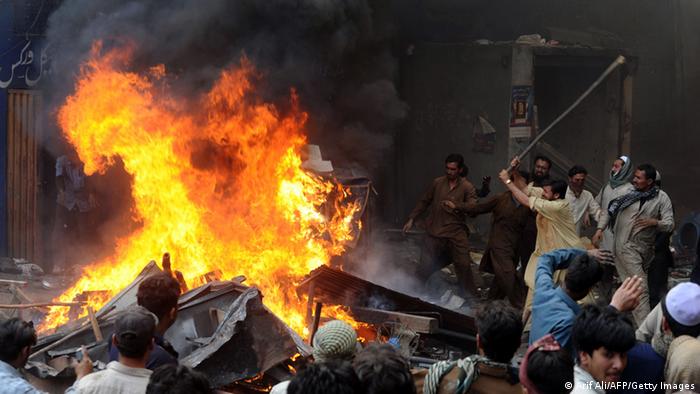
A mob rampaged through a Christian locality in this eastern Pakistani city and attempted to torch a Church after looting several houses following reports that a Christian man had allegedly committed blasphemy.

The mob vandalised the thickly-populated Sanda locality of the city last evening after police arrested a Christian man, Humayun Faisal Masih, under the blasphemy law on a complaint.

On the reports that police have arrested a suspected blasphemer, a number of people gathered outside the Ravi Road police station and demanded handing over the accused to them.

The police, however, refused and dispersed the mob which then headed to Masih's house in Sanda and looted his house and several other Christian houses.

"The Christians left their houses on the information that the mob was heading towards them. The mob looted several houses and torched the furniture and other household items after placing them on the road. It also tried to torch a Church in the locality," Christian leader Aslam Pervaiz Sahotra said.

He alleged that police reached the spot late.

Lahore senior police officer Haider Ashraf told reporters that the crowd was enraged and wanted to torch a Church but police controlled the situation.

The mob also pelted stones on police injuring about six policemen, he said.

He said that some of the agitators have been arrested and a heavy contingent of police had been deployed to control the situation in the area.

http://www.outlookindia.com/news/article/mob-vandalizes-christian-colony-in-pakistan/898612

Pakistan's Christians Under Attack - Residents of Dhoop Sari Speak out: Fear Grips Fleeing Locals

mobb
After last nights incident of the arrest of Humayun Masih who has been charged for burning Holy pages, most of the residents of the area have left their homes.
In the area of Dhoop Sari almost 100 Christians are living, out of which numerous have fled to safer locations and locks can be seen on almost every door. Other locals have reported that most of the Christian residents have fled amid fears of the Joseph Colony incident being repeated.
After last night’s arrests, a charged mob reached the house of the accused and blocked roads to protest. They had deadly weapons and there have been reports of 15 houses being looted. Aerial firing was also done.
Rashda Alamgir, a Christian woman told BBC Urdu, “When the incident happened I was at home with my kids. The mob was chanting anti Christian slogans, and destroying property. I remained confined in my home till 12am and we went from one room to another not knowing what else to do.”
She also said, “At 12am the police helped us come out of our own home and I spent the night at my relatives house. I came back in the morning.”
The local church of the area is also locked. Pastor Riaz Arif told BBC Urdu that he has sent his wife and children to a safer place. He himself is confined inside his home because his old mother is can not be left alone.
Another resident of the area said that the mob was successfully dispersed by the police but as time passed, the mob became so strong it was difficult for the police to control them and baton charge was used by the police
The resident of the locality further said the charged protesters looted belongings from houses, broke electricity meters and also broke down doors of houses.
Although a heavy contingent of police and rangers is on duty in the area, many residents have still not returned fearing their fate might be like that of residents of Joseph Colony, where 200 Christian houses were burned down after alleged blasphemy remarks.
- See more at: http://www.christiansinpakistan.com/residents-of-dhoop-sari-speak-out-fear-grips-fleeing-locals/#sthash.BTFttQoc.dpuf

Pakistan: Anti-Christian violence erupts in Lahore after alleged Quran burning


Anti-Christian violence erupted in a suburb of Lahore, Pakistan yesterday after a Christian man was accused of burning pages from the Quran, which is considered an act of blasphemy.
Humayun Masih, the man who allegedly burnt the Quran, has been described as mentally unstable.
Rev Riaz Arif of St Joseph Church, Sanda in the west of Lahore, told BosNewsLife: "Hamyun who is mentally unstable and a drug addict was burning some newspaper with holy verses."
Arif added that Masih was spotted by some Muslims, reported to the police and taken for questioning.
Sayed Zeeshanul Haq, who was among those who reported the incident to the police, told the Express Tribune: "Many people gathered on the spot and some of them even tried to burn him alive, however, we saved him and handed him to the police."
There have been contradictory reports of the incident and the wider attacks on the Christian community, though several accounts suggest that a number of homes in Sanda, where Masih lives, have been looted by a large mob of protestors.
The police also reportedly prevented the mob from setting fire to a church, and many Christians in the area have left their homes in fear.
"The police intervened promptly, and managed to avoid mass violence," Shane Cecil Chaudhry, executive director of the Justice and Peace Commission of the Bishops of Pakistan told Fides news agency. "Today the rangers patrol the area and the situation is completely under control."
Chaudhry warned not to be alarmist about the situation, adding that no one had been injured in the incident.
This is not the first time that an accusation of blasphemy has led to violence against the wider community. In March 2013 more than 100 homes were burned in a Christian community in Lahore after one of the residents was accused of blasphemy.
Fr James Channan, director of the Peace Center in Lahore, told Fides: "It is a cliché that is repeated: accusations of blasphemy, to be verified, followed by mass violence... Christians are terrified because they can suddenly be attacked.
"According to the blasphemy law, there is a procedure to be respected and no one must be allowed to take the law into his hands. Institutions and the police must ensure security and justice. On the other hand we can work to combat the culture of hatred that extremist groups spread in society, working for dialogue and harmony."
There were violent protests in Lahore in March this year after two suicide bomb attacks on churches killed 17 people. Christian leaders in Pakistan have called on the government to ensure better protection for religious minorities. Christians make up less than 2 per cent of the majority-Muslim population.
http://www.christiantoday.com/article/pakistan.anti.christian.violence.in.lahore.after.alleged.quran.burning/54626.htm