Friday, May 1, 2015

Afghanistan is Failing to Help Abused Women


BY DANIELLE MOYLAN


    Abuse against women in Afghan homes is horrifyingly pervasive; around 87 percent of Afghan women are believed to have experienced domestic abuse at least once. What is Afghanistan doing to end the abuse?

    Fatemeh, a quiet, pretty 23-year-old Afghan woman, quickly becomes overwhelmed when she describes the beatings her first husband dealt her. Just one month after their wedding five years ago, Fatemeh said he was beating her so viciously that one blow rendered her almost completely deaf in one ear. The violence was almost always sparked over small matters. “It became so that whenever I asked him for something I needed, he would refuse and beat me,” she said. I asked her for an example. “Groceries, food,” Fatemeh replied.
    Abuse against women in Afghan homes is horrifyingly pervasive. Around 87 percent of Afghan women are believed to have experienced domestic abuse at least once. Many women, who are often economically and socially dependent on the violent family members, never report the abuse. But the few Afghan women that do seek help tend to shun Afghanistan’s formal court system in favor of more traditional ways of resolving disputes. This was the case of Fatemeh’s family who went to a local council, or shura.
    “I am from a poor family, my parents are uneducated. We had no idea how the courts worked,” Fatemeh said. Pragmatic concerns were also a factor: Fatemeh’s village of Roy Abrashim is two hours by car to the nearest courts located in Herat city, and completely reliant on her abusive husband for money, she could not afford the taxi fares to travel there.
    According to a recent report by United Nation’s Assistance Mission in Afghanistan (UNAMA), Afghan women are not engaging with the country’s formal justice system, believing it to be corrupt and unprofessional. Crucially, they also often do not understand how to even begin navigating the frustrating bureaucracy for which Afghanistan’s governmental courts are notorious.
    Strengthening the formal justice system has been a pillar of international development work in Afghanistan since 2002. Yet, while women’s rights advocates generally agree that violence against women, particularly major crimes, should be addressed through a formal criminal justice system, donors have failed to address the difficulties many Afghan women face in actually accessing legal institutions.
    According to Mary Akrami, executive director of the Afghan Women Skills Development Center — an NGO that runs women’s shelters in Afghanistan — women need more than education of their rights. “We cannot forget that women need assistance to get access to justice in Afghanistan,” she said. “If a woman has an understanding of her rights but cannot access them, she will run away from her home.”
    In UNAMA’s report, only five percent of finalized cases of violence against women were adjudicated through criminal prosecution. Sixty five percent reached an outcome through non-judicial processes, including via shuras, religious authorities or families, or mediated by institutions mandated by Afghanistan’s Elimination of Violence Against Women (EVAW) law, such as the Department of Women’s Affairs.
    While traditional dispute resolution, and other non-judicial means, can deliver Afghan women a faster outcome to their cases, UNAMA also found that it often fails to meet many human rights standards and mediation principles. Hearings are held without the victim present. Many mediators, lacking formal training, are often not impartial, and an absence of regulation or rules means that outcomes for women are inconsistent.
    Worryingly, in the majority of cases outside the courts, the survivor and the perpetrator reconciled and the victim was reintegrated back into the family. In other words, Afghanistan’s informal justice system is asking women to “forget the past” in an effort to preserve families and maintain social cohesion, rather than seeking to punish the abuser.
    Despite Fatemeh’s shura being fully aware her husband was beating her, “they would always tell me to go back to him,” she said. “Because of our Afghan culture, it’s a disgrace for a married woman not to be in her husband’s home. Everyone in the community knew he was beating me.”
    Parvaneh, another young woman from Injeer, in western Afghanistan, had a similar experience when she approached her local shura about the domestic abuse she was suffering. At 13 years old, Parveneh married her cousin, 10 years her senior. Within a year, her husband, an opium addict who spent his days with other addicts at the local graveyard, was beating her regularly, leaving pronounced scars on her scalp and arms. Her local shura listened sympathetically, she said, but they too pushed her to reconcile with her husband. “They would make me feel bad,” she said. “They would convince me to go back to him.”
    In both Parvaneh and Fatemeh’s cases, the shuras were eventually able to extract promises by their husbands to stop the abuse. But with no meaningful follow-up or enforcement mechanism in place, both ultimately sought the assistance of NGOs who guided them through the bureaucratic court processes. They were lucky to get that assistance; demand for legal aid in Afghanistan far outstrips available resources.
    Both Parvaneh and Fatemeh sought divorce rather than pursue punishment of their husbands through the EVAW law. Critics of EVAW note while the law imposes criminal penalties for violence, it fails to provide additional civil remedies needed to protect Afghan women, like restraining orders, financial maintenance, or custody of children. With Afghan women often completely economically dependent on their families, in the absence of civil remedies, there is a reluctance to see their abuser punished, as it can cut off their sole financial lifeline.
    Akrami said that a lack of cooperation and coordination by those in the justice system had resulted in the unfortunate creation of “two parallel systems.” The government cannot ignore traditional justice systems, she said; with so many women preferring them, further investment is required, and rules and regulations are needed to bring the traditional justice system under a framework to avoid misjudgments and discrimination. Most importantly, said Akrami, “women must be included as key stakeholders in this process, or it will fail.”

    #MazdoorKaBhutto: PPP committed to expanding rights and privileges of workers

    https://ppppunjab.wordpress.com

    The observance of the international Labor Day is an occasion to pay homage to the workers and wage earners as well as to renew our pledge to defend the dignity and ensure decent living to the workers of the country. On this occasion we also reiterate our pledge that the PPP will not permit sacking of workers in the name of privatization and will continue to strive for expanding the rights and privileges of the working classes.
    This has been stated by Co-Chairman PPP former President Asif Ali Zardari in his message on the international Labor Day falling on Friday May 1.


    Workers are the back bone of the society the PPP Co-chair said adding also that the Party will always stand by them in their fight for dignity and rights.
    The Party will resist any attempt at retrenchment of workers in the name of privatization and will use every available forum for saving workers jobs.
    He said that the Party was proud of its record that during the previous PPP government we reinstated sacked employees, regularized contract and daily wage earners, restored trade union activities and created legislative mechanisms enabling workers seek legal remedies against any unlawful dismissals.
    We will not permit any reversal of those policies to the detriment of working classes he said.
    Both the founding chairperson and his daughter Shaheed Benazir Bhutto promised workers right to job security, decent wages and right to dignity and a rightful place in society. They also struggled alongside the labor for the attainment of these rights. We will ensure that the promises made by our Shaheed leaders are fulfilled in letter and spirit, he said.
    The struggle for improving the working conditions of workers and protection from exploitation is a continuous one and the Party will continue its struggle to secure the rightful place of workers in the society, Mr Zardari said.

    Imran Khan's admission of failure - ''Don Quixote''


    The Judicial Commission investigating Imran Khan’s charge of “a systematic and designed conspiracy” by a group of persons and institutions to rig the 2013 has heard nothing significant in this regard from the Pakistan Tehrik-e-Insaf and its lawyers in the last two weeks. Indeed, the PTI has inexplicably refrained from naming ex-Chief Justice of Pakistan, Iftikhar Mohammad Chaudhry, and his colleague ex-Justice Khalil Ramday, in the charge sheet, although the two gentlemen figured prominently in Imran Khan’s repeated accusations earlier. Much the same omission is conspicuous in the case of Geo TV which was earlier much maligned by Mr Khan. In the former case, it appears that Imran Khan’s legal eagles have advised against naming the two ex-judges before their honourable colleagues, not least because the ex-CJP has also sued Imran Khan for libel and would have relished an opportunity to thunder against him in the SC. In the latter case, Mr Khan has kissed and made up with Geo and is now receiving excessive coverage.
    The other alleged “conspirators” in Imran Khan’s charge-sheet include the Chief Election Commissioner and his four provincial colleagues, the corpus of Returning Officers, and Najam Sethi, the Caretaker Chief Minister of Punjab. Thus far, the PTI has merely presented all the petitions and data submitted to various election tribunals earlier and not recorded a pertinent slip of evidence of any planned conspiracy. Evidence of any secretly recorded conversation between Mr Sethi and Nawaz Sharif discussing “35 punctures” is also missing even though Mr Khan has never tired of hurling the accusation time and again against the ex-CM (he refuses to appear in court to defend the libel charge against him brought by Mr Sethi). Interestingly, Mr Sethi was the first to write to the JC requesting the Chairman to ask Mr Khan to bring whatever evidence he has against him so that he can defend himself against the charges and get his name cleared in the SC.
    The JC has time and again asked the PTI lawyers to address the central question of a systematic and designed conspiracy to rig the elections as per the TORs of the Ordinance setting up the JC. But the PTI is assiduously sidestepping the issue because there was no such conspiracy and there is therefore no evidence of it. In fact it is now clear that Imran Khan had conjured up the “rigging conspiracy” in pursuit of his own conspiracy to topple the elected government of Nawaz Sharif in cahoots with a section of the military Intel-establishment that wanted to perpetuate its own rule and thwart the efforts of the new army chief, General Raheel Sharif, from starting accountability from home. (A number of ex-Generals, including ex-army chief General Ashfaq Kayani, are now being investigated by the new military leadership for corrupt practices).
    Imran Khan has now said that he will accept the judgment of the JC even if it throws his allegations into the trash bin. This is yet another implicit admission of failure. He had also said he would never return to the National Assembly because it was polluted and disgusting. Yet he is now comfortably ensconced in its midst. He said he would not abandon the “dharna” until Nawaz Sharif quit government. Now the “dharna” seems like an illusion of the past and Mr Sharif is firmly in the saddle. He said the Taliban were “misguided Muslims” who should be walked the talk. Now he admits they are terrorists who should be eliminated. He said intra-party elections in the PTI were unprecedentedly free and fair. Now the very Election Tribunal headed by ex-Justice Wajihuddin that Imran Khan set up to investigate petitions of irregularities has handed down a damning verdict against these elections and top nominees of the PTI. Piqued, Imran Khan has dismissed Justice Wajihuddin and his own Tribunal out of hand. The man who claims to herald a new dawn in a new Pakistan has packed his party with corrupt, incompetent and juvenile politicians and is acting like an unaccountable and mendacious dictator even before he has ascended the throne in Islamabad.
    Inevitably, there is a price to be paid for such bull headedness and misplaced concreteness. Two recent developments, a by-election in Karachi and local elections in Cantonments across the country under army supervision, suggest that the PTI’s popularity graph is highly exaggerated and may be waning. The MQM trounced the PTI by an embarrassing margin of over 60,000 votes in Karachi despite vigourous canvassing by Khan himself. And in the Cantonment Elections, the PMLN whipped the PTI in Punjab by raking in twice as many seats. The PTI’s embarrassment was all the more acute because it was outstripped in cities like Lahore, Sialkot, Rawalpindi, etc., where it claimed “massive rigging” by the PMLN in the 2013 general elections.
    Imran Khan’s greatest asset is the idealistic and disgruntled youth of Pakistan that is looking up to him for principled and clean politics. Unfortunately, he is eroding their trust and confidence with his quixotic adventurism.

    From Pakistan to Europe: A refugee's endless journey


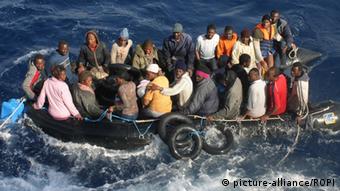
    Violence and economic problems are forcing thousands of Pakistanis to flee their country. Many of them come to Europe illegally via Libya. But is it really worth all the risk? DW talks to a Pakistani refugee in Germany.
    Mouazzam Shafi has applied for political asylum in the German city of Munich. The 39-year-old Pakistani citizen fled the country in January. He went to Dubai and then travelled onwards to Libya, from where he sailed through the Mediterranean Sea to Italy on a boat.
    But why did he put his life in danger to migrate to Europe illegally? In a DW Interview, Shafi says that political unrest, violence, and the uncertainty in Pakistan were some reasons behind his life-changing move.
    DW: Why did you decide to leave Pakistan?
    Mouazzam Shafi: There were many reasons. Some months ago, my brother-in-law was murdered over a land dispute. I was also living with him. The assassins had links to Pakistani Prime Minister Nawaz Sharif's Muslim League Party. They wanted to kill me too. I didn't expect any protection from the police because Pakistani law enforcing agencies support the powerful, and in this case a provincial lawmaker. I feared I would be either killed or implicated by the police in a false case. I had two choices – to go into hiding or leave the country.
    Who helped you flee Pakistan?
    There are travel agents in most Pakistani towns who take large amounts of money and send you abroad. One of my relatives in my town, Noshehra Warkan, told me that he knew one such agent who could send me to Libya. I didn't know about his connections with human traffickers, but I didn't care, and I was desperate to leave Pakistan. I arranged $3,000 dollars within a week and gave it to him.
    I got my Dubai visa in a week, and I left immediately – stopping over in Dubai and then moving onwards to Libya. Dozens of men from my town were already in the North African country.
    And what prompted you to go to Italy from Libya?
    When I landed in Libya, I immediately contacted the refugees from Noshehra Warkan. I had been in touch with them all this while. The security situation in Libya was worse than I had imagined. One night, a gang of armed men barged into our apartment and took away our belongings, the little money we had, and our passports.
    There were no jobs in the war-ravaged country. The militias were fighting against each other. It was a nightmarish scenario. At that time I regretted leaving Pakistan. Going to Italy was never part of my plan, but I could not stay in Libya and neither could I return to Pakistan. I was caught between the devil and the deep blue sea.
    How did you get to Italy?
    A Pakistani immigrant in Libya told me he could transport us to Italy along with a group of Syrian refugees. My family in Pakistan gave $1,000 to his family in Pakistan, after which he left us with traffickers at the Libyan port city of Zuwarah, who took us on the boat to Italy.
    How many refugees were on the boat, and what were their nationalities?
    There were some 80 people on the ferry, including women, children and old people. Most of them were from Syria. At least twenty were from the African countries. Around half were from Pakistan, Afghanistan and Bangladesh.
    Our journey started around three o'clock in the morning. It was a dilapidated wooden boat, which broke two times at sea, and we thought we would not survive. Fortunately, both times the ships sailing through the Mediterranean came to our rescue and fixed the ferry's engine.
    It was a shabby boat, any by no means suitable for that long journey. The gigantic waves would inundate the lower part of the ferry, and that's exactly where the engine was. The smoke coming from the engine was suffocating. The small boat was crammed with people, and the journey was 16-hours long. I had lost hope I would ever reach Italy.
    What were your thoughts at that time?
    I thought I would never be able to see the face of my two young children. I thought that if I had to die, it would have been better to die with my family and not at sea.
    So how did you eventually come to Italy, and then ended up in Germany?
    An Italian coast guards ship eventually saved us. We spent three days on that ship. They gave us food and clothes. When we landed on the Italian shore, the salty sea water had bruised our skin and we could barely walk due to weakness and fatigue. After staying in Italy for a few days, I came to Germany by car. People told me that in Germany the refuges got a better treatment than in other European countries.
    Are you happy to be in Germany now?
    Being a refugee in an alien country has its own issues and problems. I am not allowed to go outside a certain area. I cannot work here, and I can't rent a decent place to live in. I can't invest in Germany. The place where I live is 17 kilometers away from the main city, and only one bus goes to that city and that too only once a day. Having said that, it is true that I do not have to fear for my life now. I am alive.
    The interview was conducted by Imtiaz Ahmad.

    Pakistani court remands 47 Christians in custody after Muslim lynching following suicide attacks


    Forty-seven Pakistani Christians have been remanded in jail for their alleged involvement in the lynching of two Muslims after two deadly suicide bomb attacks on two churches which killed 17 people.

    Lahore's Anti-Terrorism Court-III Judge Haroon Latif remanded them in custody after they were produced before him by the police.

    An application was made to extend the detention of 22 people already in custody and to remand 25 other people who had been arrested and identified during the investigation parade held at Kot Lakhpat Jail.

    The judge allowed all 47 to be held by police for a further 10 days, until May 8.

    In the most recent example of atrocities committed against Christians, on March 15 two suicide bombers brazenly entered two separate churches in Youhanabad and blew themselves up.

    At least 17 worshippers were killed and more than 80 were injured.

    After the attack angered Christians got hold of two suspects and severely beat them before setting them on fire.

    Although the police have presented a number of people in court, many Christians are still unaccounted for, with their loved one fearing they have been tortured by police.

    The police is failing to accept knowledge of these missing people, saying they do not know what has happened to them.

    It will remain to be seen how the authorities deal with the Christians accused of the lynching and whether those behind the bombings that sparked the reaction will be brought to justice.

    Pakistan - The Plight of Christian Brick Kiln Workers

    More than 1.7 million bonded laborers exist in Pakistan according to International Labor Organization. Over 10,000 brick factories operate in Punjab of which only 6,300 are registered with the Labour department. These together provide employment to approximately 2.3million worker. The workers are a blend of Muslims and Christians.
    Majority of the labor is Christian and entire families are bound to work at the brick kilns because of ‘pehsgi’ or debt bondage. The normal routine of a ‘pathera’ or family working at a brick kiln is rolling balls of clay, placing them in moulds, or dealing with backed bricks under the harsh sun and in a environment marred with thick black smoke from the chimney.
    Christian families who are indebted to landlords or due to other issues end up serving at brick kilns for the rest of their lives. There seems to be absolutely no escape. Poverty is what dooms them to typically live and work at brick kilns. Bonded labor has been the dilemma of millions in Pakistan. Due to unavailability of resources to pay off debts many only dream of how a free life would be.
    Slavery, a phenomenon thought by many to have disappeared long ago, can still be found in almost every country in the world. After India and China, Pakistan is the country that is home to the most people living under slavery-like conditions. The country has over 2 million people working in conditions as slaves. They are given protection from hunger and homelessness in exchange for their freedom
    Hanif Masih is one such man whose freedom was bought by a small Christian organization in Pakistan. His families’ ordeal started when they borrowed RS 35000 from a factory owner who demanded they repay by working and living as slaves at his factory. Despite working from dawn to dusk, his debt never shrunk but kept on increasing due to falsified bookkeeping. He got married and had a baby girl while he kept on working at the kiln. Eventually he had to borrow more to cover expenses. Hanif was lucky his families’ freedom was bought back.
    Hundreds continue their daily ordeal of working like slaves. Running away does not help. They are traced, brought back and punished. Stories of rape by factory owners are common. Though some Christian organizations are working on buying back these people from slavery, they all want to be freed. They all await help and fortune, worth a few thousand rupees.

    Pakistan - The withholding tax: some disturbing facts

    According to a Business Recorder exclusive, the federal government is reviewing the adverse impact of the withholding tax (WHT) regime on the sale/purchase of immoveable properties and on the imposition of capital value tax (CVT) by provinces on property with the objective of determining whether to continue imposing this tax in the budget for the forthcoming fiscal year. With a specific reference to the tax on immoveable properties, it is relevant to note that it is a provincial subject and to impose a WHT tax on top of the CVT imposed by the provinces would normally imply lower revenue collections by the provinces mainly because the levy of higher taxes would become a challenge to meet for a small businesses/buyer of property. 

    The issue of the negative impact of WHT on provincial revenue was raised by Khyber Pakhtunkhwa (KPK) Legal Advisor who gave the example of imposing WHT on immoveable properties in addition to the provincial levy of CVT on sale/purchase of immoveable properties as the reason behind a greater number of transactions in grey areas. The Chairman Federal Board of Revenue (FBR) working under increasing pressure from the Finance Ministry to meet the newly downward revised revenue targets promised that he would examine the KPK proposal once a plausible case based on empirical evidence is presented. It is unclear whether the evidence would be provided on time to the FBR to enable a timely decision with respect to the WHT imposition in the next fiscal year's budget. 

    First off, it is necessary to acknowledge that almost 50 percent of our economy operates outside the ambit of the FBR. This does not only include the large number of extremely small businesses run by the vulnerable but also a large number of traders/business houses who claim that the reasons for their resistance to becoming filers is attributable to the misuse of discretionary powers of the FBR officials. Or in other words, these non-filers would rather pay a higher WHT instead of filing their tax returns, which as per the current budget has a higher applicable tax rate, but importantly from their perspective, disable the FBR from examining their books. For the government to enhance reliance on withholding tax, therefore, is a measure of its sustained failure to enhance documentation of the economy. It is also relevant to acknowledge that Pakistan has the lowest tax to Gross Domestic Product ratio or disturbingly the tax generated as a consequence of economic growth is much lower than in other countries. 

    To further compound the complexity of our WHT tax regime the government also imposes a WHT on the sales tax paid. Taxpayers in the country operating in the legal economy have to withhold a portion of the sales tax charged to them and deposit it in the treasury. More often than not, businesses are offered two set of prices - one where the sales tax is charged and another where it is not. Those who lay the blame squarely on small units must acknowledge the complexity of our WHT regime and the fact that a full-time accountant is required for compliance that includes filing of monthly returns of withheld tax that is an added expense that would simply push the small entity into losses. Thus in Pakistan income which is a direct tax has been transformed through an all-encompassing WHT regime into an indirect tax where businesses build it in their cost of products leading to price inflation. This is so because of the cumbersome procedure to get credit for tax deducted at source and an ordeal if refund is to be claimed in case the tax deducted is more than the tax due at the end of the financial year. To exacerbate matters further, the rates of WHT have steadily increased fuelling higher price inflation and tax evasion.

    The incidence of a direct tax is greater on the rich than on the poor because higher the income the higher the tax not only in terms of its quantum but also in terms of applicable rate. This is not so in the case of an indirect tax because incidence of an indirect tax is greater on the poor than on the rich. 

    To conclude, in the long run the government must focus on substantially lowering the WHT rates but given the focus of the PML-N government to generate greater revenue through the distinction between filers and non-filers, it is unlikely that withholding rates of tax would be reduced in the near future. 

    Pakistan - The diary of an Arab hunter & al-Bakistan


    Wallah, it is once again the season of the hunt. We Arabs love God’s magnificent creatures; we travel all over the world to find them and kill them. For there is no struggle more glorious than a Sheikh’s entourage of armed bodyguards versus a small, defenseless bird.
    In the great deserts of Arabia there are few animals to hunt. There are camels but they do not understand the idea of running away; they stand there, idiots, and it is the Sheikh who has to run away to make distance. Ya tifl, that is not good.
    That is why we come to our friends in al-Bakistan, where everyone looks like our servants from back home. They have many of these (houbara) bastards for our falcons to hunt. The Sheikh Abu bin Ibn says there will be great reward on the Day of Judgment for those who have killed the (houbara) bastards for this illegitimate bird is close to Shaitan and there is good in striking it down.
    We choose the second day of the second month for this pilgrimage to al-Bakistan; the weather is nice and hot but by the grace of God their country is a bit rural, too few malls and eight lane highways and five star hotels. I ask the locals, “Have you not been blessed with the divine gift of oil?”
    They cast their eyes downwards and make faces as if to say no. The Sheikh Riyal bin Petrolyam tells me people do strange things with oil in al-Bakistan, like but it in their hair or in their food. I say no, no, you have to find Americans and sell it to them but the Sheikh says they do not understand.
    The hospitality here is heartwarming and we truly feel part of a global Muslim Ummah which is why we build balace sized homes with electrified fences to keep the locals out.
    We start the hunt on a Friday for verily on this day there is a blessing upon those who carry radar devices and radio transmitters in a ten vehicle cavalcade. This year we go to the inhospitably arid dunes of Chagai.
    Ya Habibi, this is the thrill of the hunt; pitting yourself in air-conditioned cars against harsh deserts, ferocious foreign journalists and keepers of wildlife reservations. Wallahthere is nothing more dangerous than an enraged conservationist.
    And though we do not gamble verily we make a bet of 40 camels to see who can strike down a (houbara) bastard before the other, and this time Sheikh Abu bin Ibn’s falcon did fly away and when he started firing upon the houbara bushes in anger, the recoil set him upon the hot desert floor and the bullet hit a passerby and there was much rejoicing, for surely God smiles upon him who falls down while firing a rifle.
    Then we heard the crown prince had landed in al-Bakistan and upon seeing the airport at the capital had remarked, “Is this a joke?” but then the prince told the Sheikhs that whatever has been promised to you has been promised tenfold, and in dollars, to the government of al-Bakistan for truly he is a friend who lets his brother hunt in his home.
    The Sheikh Riyal bin Petrolyam tells me people do strange things with oil in al-Bakistan, like but it in their hair or in their food. I say no, no, you have to find Americans and sell it to them but the Sheikh says they do not understand.
    For even though the locals are forbidden to strike the (houbara) bastard, for Arabs that they establish a special hunting license, called a keffiyeh, that is worn around the head and makes blessed all animals killed while wearing it.
    This follows a long tradition of Arabs enjoying safaris in South Asia from the days of Muhammad bin Qasim who made the journey to hunt the prized wildlife known as Maharajas.
    But some people try to make bad this relationship like last year when an al-Bakistani bureaucrat whispered ill things about the crown prince saying he had personally destroyed the habitat of hundreds of flying creatures and should no longer be given a visa. Surely, as justice is served on the wings of the falcon, the bureaucrat is now washing dishes somewhere in Sibi and close bond between Arabs and whatever these locals call themselves is preserved.
    When the crown prince joined us in Chagai, he explained that in nature many things had been made good for man, and the bastard is one of them, for the bastard is good for the kindling of an Arab’s passions and keeps him young and virile.
    And the Sheikhs Wiz bin Khalifa, Khalid bin Naum and Sahil bin Kahil did raise a toast of halal wine to his speech and there was much rejoicing.

    http://herald.dawn.com/news/1153035/the-diary-of-an-arab-hunter

    Pakistan - What’s our Hindustan problem?

    By Ayaz Amir


    Perhaps there are a thousand justifications for Pakistan to have a large standing army. Perhaps there are many reasons, and valid ones at that, for Pakistan to possess a nuclear capability. But for Pakistan the overriding reason for tanks, missiles and nuke capability is not the Arabian Sea, not the Himalayas, but India.

    What are we afraid of? What are our generals afraid of? Is Pakistan a morsel on a map that anyone can swallow? But we conduct ourselves and we talk as if we face an ‘existential’ threat from our neighbour to the east. I wish we would take this word existential out of our lexicon. It has been worked to death. The only threat Pakistan faces is: 1) from incompetence and 2) from fantasies about ‘jihad’ — about conquering lands to our west and east, fantasies which have brought us to our present pass.

    If only we had remained a normal country without the urge to hitch our national wagon to distant stars we could have avoided so many of our troubles and become the crossroads of east and west, and Central Asia and the Indian Ocean, that we can still become if only we choose to transcend some of the strange notions that afflict our national thinking.

    India came to divide Pakistan much later, in 1971…and wouldn’t have succeeded in that either if we by our folly had not prepared the ground for Indian intervention. We divided India much before, in 1947. The one war which India exploited to its advantage was the 1971 war. All the rest — from Kashmir to Kargil, and the 1965 war in between — were started by us, convinced of victory because we had fed ourselves on the notion that one Muslim soldier was equal to ten Hindu soldiers.

    Our security state, this constant siege mentality which is a feature of the security state, is because of India, and the motives and intentions we attribute to it. Suppose Indian intentions are really what we take them to be. Suppose India really wants to undo and destroy Pakistan. The more important question is: what are its capabilities? Is Pakistan a sandbag construction that India or any other power can do with it what it pleases? Is Pakistan a pawn on a chessboard, a puppet on a string?

    But to hear our generals and strategic thinkers — may all of them get American visas and go and live in Florida and California — it seems that across the planet there is no state as fragile as Pakistan, and no enemy state as malevolent as India. What is this inferiority complex, this sense of constant insecurity, driven constantly into the Pakistani mind?

    As if our obsession with India wasn’t enough, our worthies had to go and get involved in Afghanistan, nurturing militias and irregular armies to wage ‘jihad’. But even when the Soviets fled from Afghanistan, our worthies weren’t happy…they had to undertake ‘jihad’ in Kashmir. The 1989 uprising in Kashmir was to begin with a local, indigenous uprising. If our ideological think-tankers in our national school of ideology, aka ISI, had their senses about them they would have kept it that way. But they had to intervene, with the result that a native, homespun uprising was distorted and diminished. 

    China is bringing investment to Pakistan. Along with its expertise and money why don’t we also import some of its strategic thinking? China has a stand on Taiwan and not even the United States dare cross what China considers to be its red lines on that issue. But does China train ‘jihadi’ armies for the liberation of Taiwan? Are there are any Hafiz Muhammad Saeeds or Maulana Masood Azhars or Zakiur Rehman Lakhvis kept in reserve for planting the flag of liberation in the capital, Taipei? Has China set up any Muridke for Taiwan?

    So what world are we living in? The turnaround in the army’s thinking — and thank God we see the beginning of a change — will never be complete unless that thinking applies both to the Afghan border and the Indian border…unless we do away with the Muridke syndrome.

    ‘Jihad’ as an instrument of foreign policy was always a misplaced priority. It has come back to haunt us. How the Americans and the Saudis encouraged us on that path, patting us on the back and applauding our heroism and valour. We were stupid enough to fall for that drama, some of our strategic heroes going so far as to take credit for the breakup of the Soviet Union. But if this path was wrong then it is absolute folly now.

    Which doesn’t mean declaring war on the Jamaat-ud-Daawah, or others of its kind, but bringing them in from the cold and making them part of the national mainstream. No one does disaster relief better than the Jamaat-ud-Daawah. If we had any imagination Hafiz Saeed would be made permanent relief commissioner of Pakistan, with the rank of a cabinet minister.

    If there are Indian atrocities in Occupied Kashmir, Pakistan has a moral duty to speak up, regardless of Indian protestations. China wears Taiwan on its heart. Let Kashmir be our lost Jerusalem (the late romantic writer A Hameed used to say that Amritsar was his lost Jerusalem — I am taking the phrase from him). But the days of Muridke-style ‘jihad’ are over.

    India has not reciprocated our peace gestures, says our PM. Let India remain a prisoner of its sullenness. That should not concern us. We don’t need to remain a prisoner of our paranoia. China has a history of bad relations with Vietnam. But Vietnam has shown the resolution to stand up to China. Finland had a history of fraught relations with the old Soviet Union. But through courage and wisdom it stood up to the Soviet Union. In terms of land and people we are bigger than Vietnam and Finland. What earthly reason is there for us to be afraid of any of our neighbours?

    Our military posture towards India is based on false premises. Leave alone our nuke capability, our conventional strength is enough to deter any aggressor. North Korea’s handful of nukes are enough to keep both the US and Japan scared. We have a virtual arsenal, yet to hear our Gen Kidwai’s talk it seems that if we weren’t to carry out missile tests every few months India would overrun us. It is high time we got rid of such thinking.

    Pakistan needs to grow up. It needs to put its house in order. We don’t need more missiles. We need better governance, more investment in our people. We need a higher standard of leadership. And we don’t need scare-mongering. Let Indian politicians indulge in sabre-rattling. Let Indian generals talk of cold-start doctrines. Let our response to such talk be a sardonic smile.

    Thursday, April 30, 2015

    Music Video - Michael Jackson - Scream

    Watch This 6th Grader Cut Off President Obama for Talking Too Much

    “Mr. President, let’s move on to the next question,” is not something you hear that often in Washington, especially not on friendly panel discussions. But Osman Yahya is not your typical presidential interviewer; he’s a sixth-grader.
    President Obama sat down with a group of students Thursday to talk about a new initiative to get more kids to read, but the Maryland middle schooler stole the show with a brisk demeanor and pointed questions. His decision to cut off one of Obama’s characteristically long-winded answers won plaudits on social media.
    When a student asked Obama to explain how he gets writer’s block, Yahya asked him to first explain what writer’s block is. When a second-grade class asked the president whether he enjoyed reading, Yahya pointed out that the president had already answered that question and moved along to the next question. When the president began to wax poetic about his love for reading, Osman stopped him. “I think you’ve sort of covered everything about that question,” said Yahya, a student at Bennett Middle School in Salisbury, Md.
    The interview was the highlight of a “virtual field trip” hosted by Discovery Education as a part of their “Of The People” series which gets kids across the country an inside look at how leaders in Washington work and make decisions. The focus of Thursday’s discussion was a White House effort to get more kids access to libraries.
    But even Washington reporters had to admit, it was Yahya’s show all the way.
    http://time.com/3841996/barack-obama-osman-yahya/

    US Lawmakers Debate Response to Baltimore Unrest


    The unrest in the East Coast city of Baltimore, triggered by the death in police custody of 25-year-old resident Freddie Gray, sparked emotional debate in the U.S. Congress Thursday. Not surprisingly, Republican and Democratic lawmakers expressed different views on the best ways to tackle poverty, inequality and policing problems.

    Baltimore Native Nancy Pelosi Calls for Peace


    Former House Speaker Nancy Pelosi is sometimes referred to as the “daughter of Baltimore” because her father and brother were both mayors of the city many years ago. She told reporters that the riots this week were not as bad as the violence that erupted after the assassination of civil rights leader Martin Luther King, Jr. when her brother was mayor in 1968, but she said it has been a sad week.

    “All of us who love justice and all of us who love Baltimore are deeply saddened by the death of Freddie Gray and deeper wounds that have been laid bare in the Baltimore community,” she said.

    Pelosi called for peace and non-violent action in her native city. She said the root causes of the furor unleashed this week are very complex, but access to a good education and job training for all would be a good place to start.

    African American Lawmakers Call on Congress to Act

    On the House floor Thursday, several members of the Congressional Black Caucus also spoke passionately about Baltimore and offered their apologies to the family of Freddie Gray, whose spinal cord was severed while in police custody.
    Democratic Representative Marcia Fudge of Ohio apologized to Gray’s family, saying Congress’ own policy failures are partly to blame.

    “When you disinvest in education, when you provide no places for kids to play and no summer jobs, Baltimore happens. When you refuse to provide resources for job training, for decent housing and you have a lack of resources to the communities of highest need, Baltimore happens," she said.

    Fudge said the budget Congress is working on this week continues to prove that the majority of the people in the House of Representatives care little about the plight of poor and underserved communities.

    Speaker Boehner Calls for New Solutions

    Republican House Speaker John Boehner also expressed his condolences to the Gray family, as well as recovery wishes to the police who were injured in violence in the city this week. He said he disagrees with President Barack Obama that government programs can help fix the underlying problems.

    “Now the president has suggested more taxpayer money is the answer," he said. "Again, we believe the answer is more jobs and more opportunity.”

    Boehner said the U.S. government has invested hundreds of billions of dollars in well-intended programs designed to help people get out of poverty, but those programs are not working.  He said people do not want to be dependent on government services.

    President Does Not Plan a Visit

    Earlier this week, Obama spoke at length about the situation in Baltimore, saying there is no excuse for violence or looting. But he said the United States needs to do some soul searching about the way people of color are treated by police, and about the inequality and poverty that fuels unrest.

    White House spokesman Josh Earnest said the president has no plans to travel to Baltimore, because he does not want to divert city policemen to help provide security for him.

    Video - President Obama’s “Virtual Field Trip” with Students on the Power of Reading

    Video - President Obama - A Walk with the Teacher of the Year

    Video Music - Urdu Ghazal - Ab ke hum bichray

    Homophobia in Pakistan


    Because of lack of understanding and the extent to which religion dictates societal morality, there appears to be little hope left for homosexuals to demand their basic rights.
    To even talk about it here is taboo and to profess to it is a sure call for victimisation. This area has never been studied academically here nor has there been any data collected in this regard. The only source of information on it is through personal anecdotes and confessions, majorly from male prostitutes. This creates a problem in understanding the gaps homosexuals feel in living their lives securely in society and the perception about them on humanistic grounds. Religion abhors homosexuality. Society finds it unforgivable to consider homosexuals as having the right to live freely and securely. To add insult to injury, successful attempts have been made to demoralise and dehumanise homosexuals. There lies the contention of their right to dignity being heavily compromised by right wing conservatives and the radical elements in society that punish them for their sexual orientation, which they consider as being unnatural.
    Before one delves further into the subject of the criminalisation of homosexuality, it is first important to understand what homosexuality is. In common terms, it is understood as the orientation of an individual to feel sexually attracted to another person of the same gender. It is argued that same sex orientation is inbred and naturally occurring while others assert that it is acquired and is unnatural. Whatever the case may be, there is no denying the fact that homosexuals exist in Pakistan and they are not allowed dignity and freedom to follow their lifestyle openly here.

    Homophobia is a common phenomenon in Pakistan. The person speaking in defence of homosexuals is the odd one out and is even vulnerable to the dangers of a criminal backlash. The reason for this is the narrow view people hold about diverse sexual orientations despite the fact that homosexuality is not something new in Pakistan. Prevalent homophobia causes much distress and psychiatric problems in our closet gay community. It is unfair to lay the blame on homosexuals for their orientation because, in their minds, they do not consider themselves to be of the gender they were born with. This is double jeopardy for them: cursed by society and by their religion they find themselves helpless in finding dignity. This is also the reason why they suffer from emotional conflicts, the sense of guilt they suffer from. Families are hardly ever around to support them and refuse to accept that their children are born with a different orientation. There have also been fatwas issued by several clerics against homosexuals. There have been incidents of how gays have been brutally murdered with clubs and stones for their sexual preference.

    Last year, a man named Ejaz Muhammed confessed to the crime of killing three men whom he said were gays. His motive was to send a warning to homosexuals for the ‘evil’ they were spreading in society and society at large commended the serial killer who murdered his victims in cold blood. What got this man to hate homosexuals was his own personal experience of being sexually abused by a male adult when he was 10 years old. What he seemed to have blurred out was the difference between sexual abuse and consensual sex between two adult individuals. This is an important case to mention as it demonstrates how a lack of understanding of consensual sex can lead to malice against those with different orientations. What is found to be ironic is that there is not a single protest against child sexual abuse and rape, which are often witnessed in ‘religious’ seminaries and places where adults are in control of children whilst, in comparison, two consenting adults are conveniently dehumanised. There is also another avenue to explore further the reason why sexual abuse of children and adolescents is on the rise. This is so because, in a closed society that does not acknowledge homosexuality as normal, cases of exploitation of defenceless children who have no concept about sexuality are prevalent, which can indirectly be linked to sexual frustrations here.

    In Pakistan, homosexuality can be implied as a criminal act under the Pakistan Penal Code (PPC). Section 377 of the PPC states imprisonment of up to 10 years for carnal intercourse against the “order of nature”. Nature here is a contested terminology as scientific determinants have to be brought in here to consider same-sex orientation as an unnatural order, which, due to the narrow prism of the religiously indoctrinated mindset, has never been considered here. Thus, there is very limited knowledge on the subject in Pakistan. Because of this lack of understanding and the extent to which religion dictates societal morality, there appears to be little hope left for homosexuals to demand their basic rights. Quite recently, the US consulate hosted an event for the Lesbians, Gays, Bisexuals and Transgender (LGBT) group in Pakistan, which became the subject of trenchant criticism in the media and the dangerous exposé of its members has caused them to receive death threats. As a result, LGBT members had to go into hiding for fear of their lives.

    The punishing attitude of society towards homosexuals is a serious concern as it robs the individual of his/her right to live confidently and effectively. It is also discouraging to see how homosexuals are discriminated against and threatened for the lifestyle they adhere to. Instead of understanding their behaviour in all honest neutrality, morality based on religion has superseded general empathy. People have been blinded by their hate and bigotry against those who do not conform to their conventional stereotypes. This is the sad predicament of people who do not align themselves to socially dictated orientations. There is no way for them to get redress for their grievances because they are not given their due acknowledgement and are thus cornered and ostracised.

    Pakistan - Meet Swat’s first Christian contender for LG polls


    Only six years ago, girls in Swat were barred from leaving their homes and their education was banned by the Taliban. However, since the security forces drove out the militants, the district’s women have made great strides in raising their voices for their rights. From Malala Yousafzai campaigning for girls education to Tabassum Adnan working for women’s rights and Humaira Shaukat becoming Swat’s first women lawyer.
    Hina Patras, a representative of Swat’s small Christian community, has now joined the ranks of these brave women. Patras, 25, has become the first Christian woman to contest local government polls for a district councillor seat in Saidu Sharif.
    Patras has a master’s degree in sociology and is a social worker by profession.
    “Serving people was my innate drive,” Patras tells The Express Tribune. Her passion only grew after she joined an NGO and came across those marginalised by society.
    For Patras, fighting for minorities’ rights and resolving their problems is not the only factor that pushed her to contest elections; she wants to serve humanity irrespective of religion and creed.
    “In my social work, when I meet poor communities, particularly women, my heart sinks. I want them be happy and prosperous, with equal rights,” she says, adding the major hurdle in women speaking up for their rights is lack of awareness and education.
    The problems minorities are facing in Swat are a bit complicated; they do not face discrimination from locals, but they feel that the government does not take their needs seriously, she says. “We (Christians) have no proper church or graveyard, and we are only considered fit for lower positions such as sanitary workers and peons, in government departments despite being highly educated,” she says.
    However, Patras is confident that if elected she would resolve these issues as she believes she has the support of minorities and Muslims alike.
    Patras is aware that working in a male dominated set-up will not be easy but she says her parents encouraged her in her cause. “Some people tried to put pressure on me to give up the idea of contesting. They said politics is not a woman’s job but I will show them that women can be better at it than men, if they have the support of their community and passion to serve,” she says.
    After finding out that Patras will be contesting, many women have already started listing their demands. “Girls want me work on establishing a playground and women’s university. They also want skill training schools in Swat,” she says.
    A staunch supporter of girls education, Patras says many women have received higher education but do not make use of it for various social reasons, which should not be the case.
    “I will mainly focus on women rights violations in the area because domestic violence, underage marriages, dowry demands, denial of legal share in property, acid throwing and swara affect me emotionally,” she adds.
    Patras says she will do all she can to fight for women’s rights and for the rights of marginalised people, but she also calls for collective action. “Alone I cannot do much, but collectively we can make a difference.”
    A staunch believer in equality, Patras says, “I am not a minority, I am an equal citizen of this country.”

    Pakistan - Grisly murder


    Karachi has become a centre of target killings, grisly murders, assassinations and sectarian violence. The latest victim of this death-trap was Dr Syed Waheedur Rehman, an Assistant Professor at the University of Karachi, who was shot dead by unidentified assailants in broad daylight. Rehman expired after receiving bullet wounds in the face, head and chest. The Karachi University suspended all educational activities and examinations for two days in the wake of the killing of its faculty member. Despite the ongoing operation by the law enforcement agencies with the help of the army, there seems no end to such killings. It seems that they all have failed to restore peace in the biggest city of Pakistan. So far, the police are clueless about the murderers. Speculations are ripe that it was a sectarian murder, because the late professor belonged to the Shia community. Another opinion is that Professor Rehman was a close associate of Dr Shakeel Auj who was murdered last year and he was pursuing this case. It was widely speculated that the deceased was linked to a seminar on Balochistan to be held at the university on May 6. Confirming that Rehman — popularly known as Yasir Rizvi — was not Shia, police said the murder could be a case of mistaken identity and hence, sectarian killing. A fifth academician has been murdered in Karachi in less than a month. Are these murders a carefully planned counter-narrative aiming to prove those people wrong who claim that targeted killings have declined after the Rangers' operation in Karachi?

    Whatever the reason may be, the law enforcement agencies need to thoroughly probe this case and resolve this murder mystery. The murder of a capable educationist is a national loss. Although the President and the Prime Minister have taken notice of this brutal killing, yet the culprits must be captured and handed down punishments on an immediate basis for committing such a heinous crime. The matter should not be limited to mere condolences and protests. By killing intellectuals, the extremists are clearing the ground for their mindless faith and ideas. The silent majority will pay a big price for their silence. Soon they will come after everyone that raises a voice for justice and accountability. Already rampant violence has terrorised citizens and serious efforts are needed to rid Karachi of criminal elements.