Thursday, April 30, 2015

May Day Preparations in Pakistan


The Pakistan Trade Union Defence Campaign is fully geared for massive May Day activities in more than 70 cities and towns in Pakistan.


A poster for May Day has already been published and pasted on the walls of major industrial units and working class districts across the country. A special issue of Mazdoor Nama (Worker’s News) has been published and will be sold in May Day rallies and public meetings across the country. Mazdoor Nama is the organ of PTUDC. It carries reports and news from the working class and its struggles which are usually not covered by the mainstream media.
The first issue of Mazdoor Nama in March was warmly welcomed by Labour unions and federations all over the country and they were eager to support this cause. The sensationalist headlines and debates in bourgeois media have nothing to report on the harsh realities of life and the exploitation of the working class. In this situation Mazdoor Nama is the only ray of hope for workers to extend solidarity and to develop their own media in order to disseminate their experiences to fellow workers in other sectors.
Back Page M NThe current issue of Mazdoor Nama also contains a report on the plight of immigrant workers in Saudi Arabia and a recent strike of construction workers in Dubai. There are also reports on unsafe working conditions in Pakistan, a successful strike in Forward Sports (a manufacturer of footballs in Sialkot), of public meetings and protests of workers of WAPDA and SNGPL as well as solidarity messages from PTUDC. Furthermore there is an editorial highlighting current problems of workers in Pakistan and a showing that the only way out is for the workers to take power themselves.
Once again this year, May day takes place amid a terrible situation for the working class. Millions of children have to work hard every day for their survival and in order to support their families. Women are being exploited in unsafe and unhealthy working environments where they work long hours  and where sexual harassment has become a regular occurrence. An eight hour working day has become a distant dream in a situation where it is normal to work 12 to 14 hours a day. At the same time, the public sector is rapidly being privatised by the ruling class, although the workers do resist these attacks.
This year May Day will be highlighted by the movement of WAPDA and SNGPL (power and gas companies) workers against privatisation. In many places PTUDC will be organizing activities jointly with the WAPDA Hydro union. At other places workers in Railways, Post Offices, Steel works, Sanitation, Hospitals, Food and Beverages industries - like Unilever, Coca Cola and Nestle- Chemical industries and other sectors will be co-hosting May Day activities with PTUDC. Thousands of leaflets on current issues have also been published in every place and will be distributed during our activities.
Among other things PTUDC posters put forward the slogan of raising the minimum wage to 10 grams of gold. This demand means raising the current official minimum wage four times (and actual wages five times.) We also raise demands to end privatization, unemployment and the casual contract system and for the introduction of permanent employment for all workers. All of this is tied to the slogan of the expropriation of all industry and the commanding heights of the economy under the democratic control of workers.
We appeal to workers of the world to show solidarity with the Pakistani working class, which is suffering under the brutalities of capitalist system and to support the work of PTUDC. You can support this struggle by donating to PTUDC and to support its revolutionary work. Please contact contact@marxist.com for more information on how you can support us.

Pakistan - #PPP4Labour - PPP committed to expanding rights and privileges of workers

https://mediacellppp.wordpress.com

The observance of the international Labor Day is an occasion to pay homage to the workers and wage earners as well as to renew our pledge to defend the dignity and ensure decent living to the workers of the country. On this occasion we also reiterate our pledge that the PPP will not permit sacking of workers in the name of privatization and will continue to strive for expanding the rights and privileges of the working classes.
This has been stated by Co-Chairman PPP former President Asif Ali Zardari in his message on the international Labor Day falling on Friday May 1.
Workers are the back bone of the society the PPP Co-chair said adding also that the Party will always stand by them in their fight for dignity and rights.
The Party will resist any attempt at retrenchment of workers in the name of privatization and will use every available forum for saving workers jobs.
He said that the Party was proud of its record that during the previous PPP government we reinstated sacked employees, regularized contract and daily wage earners, restored trade union activities and created legislative mechanisms enabling workers seek legal remedies against any unlawful dismissals.
We will not permit any reversal of those policies to the detriment of working classes he said.
Both the founding chairperson and his daughter Shaheed Benazir Bhutto promised workers right to job security, decent wages and right to dignity and a rightful place in society. They also struggled alongside the labor for the attainment of these rights. We will ensure that the promises made by our Shaheed leaders are fulfilled in letter and spirit, he said.
The struggle for improving the working conditions of workers and protection from exploitation is a continuous one and the Party will continue its struggle to secure the rightful place of workers in the society, Mr Zardari said.

#PPP4Labour: Bilawal Bhutto pledges to stand guard against any injustice to labour


https://ppppunjab.wordpress.com


Chairman pledges to stand guard against any injustice to labour -

Bilawal Bhutto Zardari Chairman Pakistan Peoples Party (PPP) has reiterated the commitments of the past leadership towards the labour and working classes and pledged he would continue to stand guard against any exploitation or injustices to the toiling majority of the nation.

In his message on the Labour Day falling on May 1, the PPP Chairman said Shaheed Zulfikar Ali Bhutto and Shaheed Mohtarma Benazir Bhutto laid sound foundations for the labour rights through legislations and labour policies giving them trade union rights. Former President Asif Ali Zardari even gave share in the state production units under Benazir Employees Stock Option Scheme to the employees, including labour for their empowerment. Besides, the PPP leadership also eliminated black laws against the working class.
Bilawal Bhutto Zardari pointed out that the cause of labour and working class has always been dear to his Party and steps will be taken in future for more empowerment this particular segment of Pakistani society as PPP derives its strength more from them than any other political party in the country.
PPP Chairman extended reassurances to the working classes and hoped that Peoples Labour Bureau will again become a vibrant wing to further help the Party to formulate policies and struggle for their rights in the light of vision of our martyred leadership.

Peshawar tornado: The 44 lives that could have been saved

Earlier on Sunday a tornado hit Peshawar and its surroundings, leaving dozens dead and many more injured; the unprecedented extreme weather startled residents and local climatologists. They don’t even have a name for it in Pushto.
On April 26, winds blowing over 110 km per hour, accompanied by rain and hail, destroyed structures and lives in Peshawar and adjoining areas.
By Monday, 44 were dead, another 200 injured, and millions were lost in property and livestock. Officials at the Pakistan Meteorological (Met) Department claim they had forewarned about “rain with dust-thunderstorm” for Peshawar.
Tornadoes are infrequent and thus, are not well known in Pakistan. They usually occur in March or April when days are getting warmer, but the nights are still cold. Similar weather conditions were reported in March 2001 in Chak Misran village (Sargodha), and in Bahadurpur village near Head Marala in March 2011. Scores died as a result. Because of climate change, one should expect the unexpected to occur frequently.
Pakistan has always experienced floods. Several political tenures have been cut short by floods in successive years. Despite the humongous losses in life and property, the society and the State has neither planned nor acted to mitigate the devastating impacts of natural disasters. The devastating earthquake in 2005, which caused the death of over 85,000 and injured many more, should have served as the final warning to the eternally unprepared nation.
The equally devastating floods in 2010 revealed that Pakistanis were not ready yet again. They would rather deal with the aftermath than plan to minimise their exposure. With the unexpected changes in climate, the frequency and severity of natural disasters may exceed the resilience of the people.
Pakistan should act now to prevent future grief and losses that may exceed the nations’ collective capacity to heal.
The provincial authorities in KP reported that most deaths and losses occurred in informal settlements. The high-speed winds tore through the mud houses. Trees were uprooted and crushed structures underneath them. The low-income households, whose mud houses were destroyed, may not have the resources to fortify their humble abodes against earthquakes and tornadoes. But what about the rest? In the rural KP, hujras of even the landed gentry could best be categorised as informal structures.
If the people are not prepared to deal with natural disasters, so is not the State. KP’s minister of information, Mushtaq Ghani, revealed that the province did not have a weather warning system. Strange! A nation armed with nuclear weapons lacks sufficient warning systems.
Mr. Ghani claimed that the Met department, operated by the feds, shared the last weather forecast on April 17 that carried no warning. The Met office’s website lists a press release dated April 17 that warned of rain and thundershowers for April 18 to 20. Officials at the Met claim they had warned of rain and thunderstorms for Peshawar two days in advance of April 26. Their website though mentions no warnings for April 26.
What the bickering between the KP government and the Met exposes is the lack of preparedness of the State. Shirk the blame is the name of the game. Expect no one to resign; it will be too honourable for the politicians or the State functionaries.
Earlier in 2011, the environment portfolio was devolved to provinces. Given that many environmental concerns are national, or global, an exclusive provincial mandate for the environment was not a prudent move. As a result, the Ministry of Planning in Islamabad took over the climate change portfolio. A new Ministry of National Disaster Management was subsequently created and ultimately renamed as the Ministry of Climate Change in April 2012. In the spirit of change, the PML-N government in 2013 disbanded the ministry only to resurrect it later.
Pakistan, at least on paper, has been making some efforts on climate change. The country now has a dedicated ministry for climate change lead by Senator Mushahidullah Khan.
In fact, Pakistan approved, but failed to implement, the first National Climate Change Policy in September 2012. How effective is the minister beyond issuing warnings of imminent environmental disasters is yet to be seen.
What the nation needs is preparedness against unforeseen and frequently occurring natural disasters whose devastating impact compounds because of an ill-prepared state and the society. Our shortcomings turn manageable natural disasters into unmanageable human disasters.
The society in general and the electronic media, in particular, have a big role to play, especially when the State continues to falter on its responsibilities. The electronic media must include weather warnings in their routine programming to warn those who may want to act accordingly. Reporting on the dead afterwards is not as helpful as forewarnings.
At the same time, ordinary citizens should play a larger civic role in preparing the society for disasters. The Pakistan Weather Portal, an independent effort by Babar Hussain, was an excellent weather blog dedicated to developments in Pakistan. It is sad to see the blog is no longer active.
Babar and others like him in Pakistan should continue with their altruist efforts because the State seems unprepared to forewarn the citizens of natural and other hazards.

Nepal earthquake: Pakistan sends beef masala to feed survivors in Hindu-majority nation

By KASHMIRA GANDER 


As Nepal attempts to recover from a devastating earthquake which has killed over 5,500 people, Pakistan has made a serious cultural error by sending food containing beef to the deeply Hindu nation.
Aid including food and temporary shelters has been flown from across the world into Nepal,  where a magnitude earthquake hit on Saturday. On Tuesday, Pakistan sent Nepal packets of beef masala to help feed survivors.
However, the Hindu nation regards cows as sacred, and has a ban on slaughtering the creatures. The law stems from the idea that cows are sacred animals, to be respected as one would respect their mother.
An unnamed doctor, who is one of a group of 34 sent from India to work at Kathmandu's Bir Hospital, told India’s Mail Todaynewspaper: "Most of the local people are not aware of the contents. When they understand, they avoid it."
He added: “Pakistan has hurt Nepal's religious sentiments by supplying the masala. Shockingly, it did not care about the sensitivity of the matter.”
Photographs of the packages show they originated from Nowshere Cantt in Pakistan, and contain potato bhujia and beef masala.
Tasneem Aslam, spokesperson for Pakistan's ministry of foreign affairs, told Mail Today: "I am not aware of the issue... I am not responsible for the dispatch. The relief aid is sent by the National Disaster Management Authority."
As aftershocks continue to ripple through the earth, the death toll following the earthquake has reached 5,489, according to police.
The figure does not include the 19 people killed at Mount Everest - five foreign climbers and 14 Nepalese Sherpa guides - when the quake caused an avalanche at base camp.

Pakistan: 10 sentenced to life in prison for attack on Malala Yousafzai

By Zahir Shah and Greg Botelho

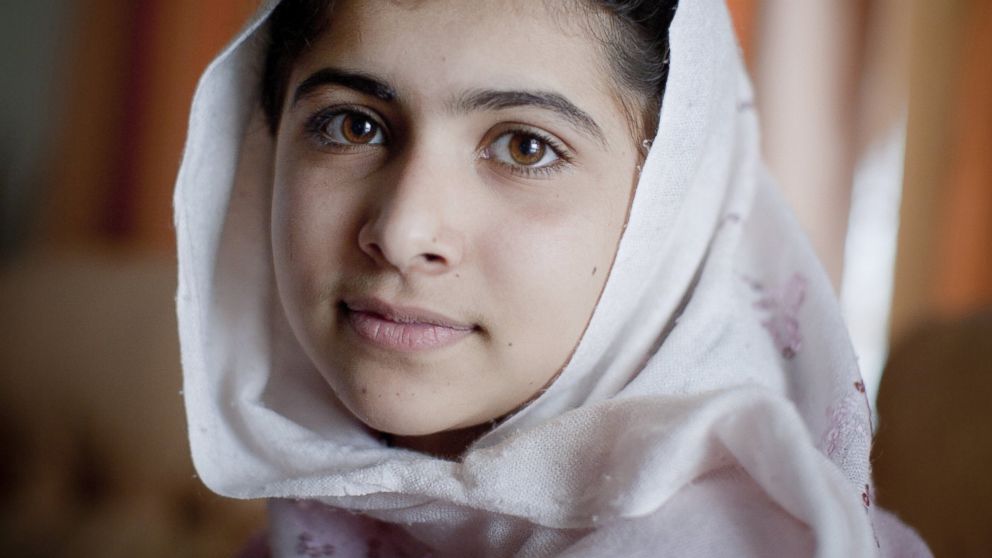
Ten people have been sentenced to life in prison for their roles in the 2012 attack on Nobel Peace Prize-winning activist Malala Yousafzai, a judge announced Thursday.
The assailants' conviction and sentences follow a trial that included testimony from both sides, Pakistani antiterrorism judge Mohammad Amin Kundi said. They could be eligible for release in 25 years.
The 10 were arrested in Swat, a district of Pakistan's Khyber Pakhtunkhwa province, Pakistani army spokesman Maj. Gen. Asim Bajwa said last September.
That was nearly two years after the then 15-year-old Yousafzai, whom Taliban militants despised for her outspoken support of girls' right to an education, was shot as she was traveling home on a school bus.
Authorities in Pakistan said the people involved in the attack were linked to the Pakistan Taliban and were taking orders from its leader, Mullah Fazlullah. In fact, the Taliban claimed responsibility for the assault against Yousafzai, whom they labeled "a symbol of the infidels and obscenity" for her activism, including a BBC blog documenting her harrowing experiences.
It's not known if the men who directly attacked Yousafzai -- who was born in the Swat city of Mingora but has since moved to England -- were among those convicted and sentenced this week.
    Around the time of their arrest, Bajwa said that "we were able to track down the entire gang," known as Shura. All of them are residents of Malakand, which is also in Khyber Pakhtunkhwa province.
    Yousafzai not only survived that attack, she went on to become an even more vocal and influential international activist. In fact, her efforts helped earn her the Nobel Peace Prize -- which she shared with India's Kailash Satyarthi -- last year.

    Wednesday, April 29, 2015

    Video Music - Eminem - Guts Over Fear ft. Sia

    Video - Slow quake relief raising tensions in Nepal

    Video - UN: 8 million people affected by Nepal 7.8 quake

    Video - CrossTalk: Putin's 15 Years

    Video Report - Running on empty in Yemen

    Video - NYC Rally to Protest Death of Freddie Gray

    Turkey, Saudi Arabia and Qatar pose serious threat acting as hotbeds of extremism

    http://www.sana.sy/en/

    Assistant Foreign and Expatriates Minister Ayman Sousan said Turkey, Saudi Arabia and Qatar, acting as hotbeds of extremism and obscurantist thinking, pose a serious threat to the international and regional stability and peace.
    He was speaking to a delegation of Syrian expatriates from Sweden whom he briefed on the reality of the terrorist aggression waged against Syria, during a meeting on Wednesday.
    Sousan said the threat posed by the afore-mentioned countries necessitates that the international community take a serious stand to compel them to abide by the Security Council resolutions related to fighting terrorism and halting support to the terrorist organizations.
    He dismissed in particular Turkey’s direct involvement in the aggression on Syria as a flagrant violation of the international law.
    The Syrian people, nevertheless, are bent on confronting this aggression with the same determination and will by which they had previously brought an end to the Turkish occupation of the Arab countries, Sousan said.
    For their part, the delegation members voiced the solidarity of the Syrians abroad with the homeland and their readiness to provide everything necessary to boost Syria’s steadfastness in the face of the aggression.

    Saudis ‘floundering’ over Yemen war, analyst says

    Press TV has conducted an interview with Mark Sleboda, an international relations and security analyst in Moscow, to discuss Saudi Arabia’s ongoing aggression against Yemen.
    The following is a rough transcription of the interview.
    Press TV: Mark Sleboda over 30 days now these Saudi airstrikes, US-backed in terms of at least what we are looking at in terms of their planes and now we noticed not even a Saudi coalition, at least our sources says this is a Saudi attack on Yemen. What is your reading into this?
    Sleboda: First of all, this is Saudi-US axis and we have to make it perfectly clear the United States is a full partner. The US is at war in another Middle East country. They are providing C4ISR, reconnaissance, intelligence, re-fueling, ammunitions for the Saudi and their lackey [P]GCC allies’ attacks on Yemen.   
    First of all that the attacks are going very badly. The Saudis principally have two goals on this case. First is to stop the Houthi alliance advance and the other one is to restore their ousted puppet [Yemen’s former President Abd Rabbuh Mansour] Hadi to power.
    It is impossible to see how they might achieve either one of them without a truly massive ground intervention of hundreds of thousands of troops from them and neighboring countries and we have seen before Saudi ground interference in Yemen has failed disastrously time and time again over the last half a century.
    So they are very reluctant to do this. I think they do not know what to do. They have tried to rebrand their attacks on Yemen calling it “hope” instead of “storm” but I do not think any of that really matters on the ground. 
    On the ground we see two principle effects. The Houthi alliance is advancing despite the attacks, and also the opponents of both them and supposedly the ousted president, al-Qaeda is advancing as well.
    We could have a very possible result of all of this, is that al-Qaeda makes some of the greatest gains because of the Saudi attacks.
    Press TV: Do you think a ground invasion is eminent?
    Sleboda: I think Saudi Arabia intended a ground invasion at some point but some cooler and more level heads seem to have at least put this process on pause. They are re-assessing and seeing how that alone is not a guarantee of any success.
    The Saudi-US axis and their allies want to achieve a political result against the prevailing popular sentiments in the ground in Yemen by military force. The US itself when it put its full military force to bear has failed at this time and time again in the Middle East and Saudi supported only from behind the scenes by the US and only tacitly by other [Persian] Gulf state Arab allies ...
    I do not think they know what they are doing at this point. They are floundering. They do not know what to do.

    337 Bahraini Opponents Sentenced to 2845 Years in Jail in 1st Quarter: Report

    More than 1600 detainees in Jow central prison were subjected to torture, humiliating treatment and deprivation of basic rights during the first quarter of 2015, LHRD said in its report.
    The report further said that 653 people, including 16 women and 119 children, were detained in the January-March period.
    337 political prisoners were sentenced to a total of 2845 years, including 32 life sentences. Three were sentenced to death.
    Sayed Hadi al-Mousawi, the head of the Liberties and Human Rights Department in Al Wefaq, said 2691 peaceful protests have been held across the country, including 1022 protests that were suppressed by the regime forces that used tear gas and shotguns.
    The report added that 413 torture cases were recorded in the 3-month period.
    559 house raids were also reported, the report said, adding that 278 were arrested during the house raids.
    72 opponents, including 49 political and human right activists abroad, were stripped of their nationality, according to the report.
    Referring to the continued detention of Sheikh Ali Salman, the secretary general of Al Wefaq, al-Mousawi called for his immediate release, saying the charges against him are baseless.
    He also referred to the detention of Sayed Jamil Kadhem, the head of Al Wefaq Shura Council, and Nabeel Rajab, the prominent human rights activist, during the 3-month period.
    Anti-government protesters have been holding peaceful demonstrations across Bahrain since mid-February 2011, calling for an end to the al-Khalifa dynasty.
    Violence against the defenseless people escalated after a Saudi-led conglomerate of police, security and military forces from the Persian Gulf Cooperation Council (PGCC) member states - Saudi Arabia, Kuwait, the United Arab Emirates, Oman and Qatar - were dispatched to the tiny Persian Gulf kingdom on March 2011, to help Manama crack down on peaceful protestors.
    So far, hundreds of protesters have been killed, hundreds more have gone missing and thousands of others have been injured.

    Everyone Is Losing Yemen’s War

    BY ADAM BARON


      Saudi Arabia wants to convince the world that it is on the verge of victory in the poverty-stricken country. The truth is, only more destruction and death lies ahead.
       On April 26, I had the privilege of witnessing Yemen’s acting foreign minister, Riad Yassin, deliver a press conference to a rapt audience in London. From an opulent hotel in Kensington, he issued a full-throated defense of his boss, embattled President Abed Rabbo Mansour Hadi, who is exiled in Riyadh, Saudi Arabia, after fleeing from the advancing Houthis, a Zaidi Shiite rebel group that has gradually taken over much of Yemen. The Houthis and Ali Abdullah Saleh — Hadi’s predecessor — Yassin stressed, are responsible for Yemen’s ills; the only solution is international backing for Hadi and his adversaries’ total defeat.
      These exercises in public relations have grown all the more common since a Saudi-led coalition launched Operation Decisive Storm, a military offensive ostensibly to bolster Hadi and defeat the Houthis and their ally, former President Saleh. The key message of these speeches is always that — despite the pernicious nature of their adversaries — victory is just around the corner. Saudi Arabia’s military spokesman has cast the offensive as a historic success, even saying that the alliance achieved its goals within the first 15 minutes of the operation. Houthi leaders, meanwhile, claim that they’ve weakened Saudi Arabia tremendously, going as far as to claim that they’ll soon be on Mecca’s doorstep.
      Saudi Arabia made another victory lap last week, announcing the end of Operation Decisive Storm and the beginning a new phase, dubbed Operation Renewal of Hope. A statement from Riyadh explained the change by saying the previous operation had “achieved its goals” and had successfully protected Saudi Arabia and neighboring countries from the Houthis. But though the kingdom initially signaled an end to the air campaign and the beginning of a political process, virtually nothing has changed on the ground — coalition airstrikes have continued in Sanaa, the capital, and elsewhere as the two sides seemingly remain locked in a zero-sum struggle for power.
      The truth, however, is that no one is winning this war. And while all parties involved in Yemen seem far from reaching their goals, there is one clear loser: the Yemeni people.
      Even if the war stopped tomorrow, rebuilding the damage would still take years. The airstrikes have destroyed swaths of Sanaa, the Houthis’ heartland of Saada, the central city of Taiz, and other cities, while a brutal air and sea blockade has essentially prevented food and water from reaching the impoverished country. The World Health Organization has warned of the “imminent collapse of health care services,” and reports have put the death toll at more than 1,000 people — but that’s just in the major cities. A number of diplomats and officials from countries active in funding development projects in Yemen have quietly grumbled that the military action of the past month has effectively erased decades of work.
      But despite furious diplomatic efforts, it is hard to believe that a peace deal is in the cards. In the heated climate, any unilateral concessions risk being interpreted as signs of weakness. Houthi leaders have defended their actions by casting their situation as an existential battle; unsurprisingly, many of the Houthis’ opponents do the same. The conflict’s increasing regionalization has gone so far as to elide Yemenis’ agency in the whole struggle, suggesting that the power to resolve the conflict may be slipping from their hands.
      There is simply little if any trust among Yemen’s various factions. Amid the rubble, Yemen’s social fabric has also been destroyed: The incursions of Saleh-backed troops and Houthi fighters have likely managed to destroy the few remaining tatters of Yemen’s unity, as the largely northern forces have laid waste to the once-charming port city of Aden, causing dozens — if not hundreds — of civilian casualties. Derogatory, hateful terms for Shiites, directed at the Houthis, pour out of the mouths of many Yemeni Sunnis — most of whom would have scarcely imagined using them a few years ago. In the early, hopeful days of the 2011 protests, members of the Sunni IslamistIslah party worked with the Houthis against Saleh, optimistically casting any tensions as the result of the problems of the old order. Many of them are now in Houthi detention, while still others — in a mirror of Houthi rhetoric casting Islah as a virtual arm of al Qaeda — have brazenly called all Houthis the enemies of God.
      It’s worth stressing that the Saudi-led coalition has made some progress. The Saudis and their allies have succeeded in taking out the bulk of the aerial and ballistic capabilities of the Houthis and their allies in the Yemeni armed forces. But the Saudis have failed to weaken the Houthis’ hold on Sanaa or pave the way for Hadi’s return. Nor have they managed to spur the creation of a united anti-Houthi force. The motley mix of Islamists, tribesmen, and southern separatists are arguably only united by what they oppose.
      I — admittedly, somewhat selfishly — constantly think back to my many Yemeni friends. This war is not even over, and Yemenis have already lost so much; it has been chilling to hear friends tell of the destruction of their homes in one breath and thank God for the survival of their loved ones in another.
      During past crises, whenever a friend would bring up the possibility of leaving Yemen for greener pastures, I’d strongly advise them against it, stressing how much good they could do in their own country. In light of recent events, however, I’ve increasingly questioned the wisdom of such advice. Does remaining in Yemen spell doom for intelligent and ambitious Yemenis? Is their country trapped in a downward spiral from which there is nothing to do but escape and not look back? Or, when the dust eventually begins to clear, will they be the ones who must take up the mantle of rebuilding Yemen, finally paving the way to the brighter day that once — just a few years ago — seemed in reach?

      Video - Hillary Clinton on 'hard truths about race and justice'

      President Obama Addresses Baltimore Riots on The Steve Harvey Morning Show: 'Police Need to Build More Trust'


      President Barack Obama once again condemned the violent riots in Baltimorein the wake of 25-year-old Freddie Gray's death, as he spoke on The Steve Harvey Morning Show Wednesday. 
      "Unfortunately we've seen these police-related killings or deaths too often now, and obviously everybody is starting to recognize that this is not just an isolated incident in Ferguson or New York, but we've got some broader issues," Obama told host Steve Harvey on the radio show. 

      "The kind of violence that we saw from a handful of individuals in Baltimore – there's no excuse for that," he said. "That's just criminal behavior. It's counter-productive because it hurts the very communities that are already suffering a tragedy with Freddie Gray's death."
      Gray died after suffering a spinal injury while in police custody earlier this month. His family called for an end to the horrific violence, which saw rioters setting fire to buildings across Baltimore on Monday evening. "Instead what you got is focus on a CVS burning," Obama said. "People who engage in that kind of violence, it needs to stop." 

      He added: "My hope is that people heed the call of Freddie Gray's family." 

      Obama went on to say that it's important for all communities, not just Baltimore, to address these problems in a serious way. "This is not just a job for the Justice Department; it's a job for all of us as a society." 

      While he commended the police officers who have helped quell the unrest in Baltimore, he urged them to try to focus on building up their relationship with the community in the future. 

      Police officers "have got to build more trust. It's in their interest to root out people who aren't doing their job … instead of the closing of the ranks we see," Obama said. 

      "My heart goes out to the police officers who were injured in the past few days," he added. "They showed extraordinary restraint … It shows how tough a job like policing can be." 

      Continued Obama: "We put them into communities … where young people think it's much more likely they're going to prison than going to college … You've got communities that have been disinvested for years. If you send police officers into those situations, where the drug trade is the primary economy and you say your job is to basically contain that … then it's not surprising that you end up with a situation of enormous tension between those communities and those police officers. 

      "We're not going to change this overnight," Obama concluded. "It requires focus."

      Video - President Obama Celebrates the 2015 National Teacher of the Year

      U.S. - What Came Before Baltimore’s Riots

      The riots that devastated urban America during the 1960s were often ignited by acts of police brutality that inflamed poor African-American communities where the police were seen not as protectors but as an occupying force. These same tensions resurfaced last year in the suburban St. Louis community of Ferguson, Mo., where riots broke out after a white police officer shot and killed Michael Brown, a black teenager. They have now erupted on a larger stage, in Baltimore, after the death of Freddie Gray, a young black man who suffered a catastrophic injury while in police custody.
      President Obama has condemned as inexcusable the looting and arson that spread across the face of the city after of Mr. Gray’s funeral. But he also implied that the Baltimore Police Department had “to do some soul-searching.” Indeed it does: A well-documented history of extreme brutality and misconduct set the stage for just this kind of unrest.
      Proof can be found in a meticulously reported investigation by The Baltimore Sun of lawsuits and settlements that had been generated by police-brutality claims. “Over the past four years,” the investigation noted, “more than 100 people have won court judgments or settlements related to allegations of brutality and civil rights violations.” The victims included a 15-year-old boy riding a dirt bike, a 26-year-old pregnant woman who had witnessed a beating, a 50-year-old woman selling church raffle tickets, a 65-year-old church deacon and an 87-year-old grandmother aiding her wounded grandson.
      The report, published last fall, detailed what it called “a frightful human toll” inflicted by the police: broken bones, head trauma, organ failure, and even death, occurring during questionable arrests. It found that judges and prosecutors routinely dismissed charges against the victims and that city policies helped to hide the extent of the human damage. Settlements prohibited the victims from making public statements. The Sun estimated that the cash-strapped city had spent $5.7 million on settlements and $5.8 million on legal fees since January 2011.
      Baltimore residents were familiar with these and other stories of police abuse when Mr. Gray’s case fell into the public spotlight earlier this month. The police chased and apprehended him on April 12, allegedly because he had “made eye contact” with a lieutenant and then ran away. Cellphone videos of his arrest showed him being dragged into a police van, appearing limp and screaming in pain. The police have acknowledged that they delayed in calling for medical help. When he arrived at the police station, medics rushed him to the hospital, where he slipped into a coma and died a week later. His family has said that 80 percent of his spinal cord was severed and that his larynx had been crushed. This account is at odds with a police report claiming that “the defendant was arrested without force or incident.”
      The Baltimore Police Department has a particularly egregious history and has entered into a voluntary reform agreement with the Justice Department. But there is no reason to believe that it is unique in terms of its toxic relations with the people it is meant to protect.
      Indeed, over the last five years, the Justice Department has opened 21 investigations into local police departments around the country and is enforcing reform agreements with 15 departments, some investigated by previous administrations.
      Mr. Obama was right on the mark when he observed on Tuesday that tensions with law enforcement had simmered in African-American communities for decades and now seemed to be bursting into view once a week.
      “This has been a slow-rolling crisis,” he said. “This has been going on for a long time. This is not new, and we shouldn’t pretend that it’s new.”
      He also said that addressing the problem would require not only new police tactics but new policies aimed at helping communities where jobs have disappeared, improving education and helping ex-offenders find jobs. The big mistake, he said, is that we tend to focus on these communities only when buildings are burning down.

      Hillary Clinton: Baltimore Unrest Shows Need for Change


      Democratic presidential candidate Hillary Clinton spoke out on the unrest in Baltimore Wednesday in a speech in New York. She is the first presidential candidate to publicly address the situation in detail, though some of the Republican presidential contenders have touched on the issue, deploring street violence and urging calm.

      Clinton’s remarks came in a speech at Columbia University.  “What we have seen in Baltimore should, indeed I think does, tear at our soul.  My heart breaks for these young men and their families.  We have to come to terms with some hard truths about race and justice in America," she said.

      Clinton said the U.S. needs to confront a number of issues in the wake of the unrest in Baltimore following the death of a young black man, Freddie Gray, in police custody.  The Gray case is the latest in a series of deadly encounters between young black men and police around the country over the past several months.

      Clinton said it was time to end what she called “the era of mass incarceration” of young, low-level criminal offenders, as well as the lack of funding for drug and mental health programs.

      But Clinton also said those behind the recent violence in Baltimore should be held accountable.  “So the violence has to stop," she said. "But more broadly let’s remember that everyone in every community benefits when there is respect for the law and when everyone in every community is respected by the law.”

      Clinton is the only announced Democratic candidate for the November 2016 election, although that likely will change on Thursday, when Vermont's Senator Bernie Sanders, an independent who usually votes with the chamber's minority Democrats, is scheduled to join the race.

      Obama’s View

      To some extent, Clinton’s remarks echoed those of President Barack Obama, who spoke at length about the violence in Baltimore in a White House appearance on Tuesday. Obama sought to strike a balance between shining a spotlight on the some of the deep-seated problems behind the violence in Baltimore, and on those who were intent on taking advantage of the situation.  “That is not a protest.  That is not a statement.  It is people - a handful of people - taking advantage of the situation for their own purposes. And they need to be treated as criminals," said President Obama.

      The president noted a number of recent incidents involving young black men and police across the country that resulted in the use of deadly force, and said these raise troubling questions in many communities.  “Moms and dads across the country might start saying this is a crisis," he told his audience at the White House, which included news media. "What I would say is, this has been a slow rolling crisis and this has been going on for a long time.”

      Republican Contenders Speak Out

      Republican presidential contenders have also weighed in.  Former Florida governor Jeb Bush said the violence in Baltimore emphasized the need for a “commitment to the rule of law and law enforcement.”

      Wisconsin Governor Scott Walker tweeted that he is praying “for the restoration of peace” in Baltimore.

      Texas Senator Ted Cruz, one of three announced Republican candidates, said the Freddie Gray case should be “thoroughly and impartially investigated.” He condemned those behind the violence and looting in Baltimore.

      One Republican who has become prominent in connection with the unrest is Maryland Governor Larry Hogan, who is newly elected and is not running for president. Baltimore was reported calmer Tuesday night after police enforced a curfew. Hogan said: “Our primary mission again is to maintain order and to begin to repair the damage inflicted by the violence.  Acts of violence and destruction of property cannot and will not be tolerated.”