Friday, April 10, 2015

President Obama Spoke To Raul Castro By Phone

President Obama, Cuban Leader Raul Castro Expected to Meet on Saturday


By 

President Obama and Cuban leader Raul Castro are expected to have a "discussion" at the Summit of the Americas on Saturday, the White House said Friday.
In a press briefing in Panama City, Deputy National Security Advisor Ben Rhodes said they "anticipate they will have a discussion tomorrow.” There is currently no bilateral meeting on the schedule, but the White House did not rule out a formal meeting between the two leaders.
A historic meeting between U.S. Secretary of State John Kerry and Cuban foreign minister Bruno Rodriguez in Panama Thursday night brought the highest level talks between the two estranged countries since the Cuban revolution.
Castro and Obama arrived within minutes of each other at the same military air field in Panama Thursday night for the Summit of the Americas. Shortly after arrival, the two presidents spoke by phone, according to a Facebook post by Jorge Leganoa, the deputy director of Cuba's state-run National Information Agency. According to the post, the call came “minutes before” the meeting between Kerry and Rodriguez.
But it may be soon surpassed by the highly anticipated, face-to-face, bilateral meeting between U.S. President Obama and Cuban President Raul Castro expected to take place Saturday.
Castro and Obama arrived within minutes of each other at the same military air field in Panama Thursday night for the Summit of the Americas. Shortly after arrival, the two presidents spoke by phone, according to a Facebook post by Jorge Leganoa, the deputy director of Cuba's state-run National Information Agency. According to the post, the call came “minutes before” the meeting between Kerry and Rodriguez.
A White House Official confirmed to ABC News that a call occurred, but said it actually happened earlier.
"I can confirm that President Obama spoke with President Castro on Wednesday, before President Obama departed Washington," the official said.
The call marks the second time the two leaders spoke by phone. The first lasted approximately 45 minutes and occurred shortly before a Dec. 17 announcement that began the restoration of diplomatic ties between and the U.S. and Cuba.
The summit is the seventh chief-of-state-level gathering among North, Central and South American countries, but the first to include Cuba, which had been previously blocked from attendance by the United States.
The talks come as the U.S. State Department delivered its review of Cuba's status on the states-who-support-terrorism list to the White House.
The review was delivered to the White House Wednesday, according to sources, and is in the president's hands. It recommends Cuba be removed from the list, as President Obama hinted in Jamaica Thursday.
"Throughout this process, our emphasis has been on the facts," Obama said in Jamaica. "We want to make sure that, given this is a powerful tool to isolate those countries that genuinely do support terrorism, that when we make those designations we've got strong evidence that's the case, and as circumstances change that list will change, as well."
President Obama could announce his decision while at the summit and is only awaiting sign-off from cabinet members who oversee national security, according to White House sources.
The terror list has been a major hurdle for the Cuban government, which wanted it lifted before full diplomatic ties are restored. Both countries are expected to announce the opening of embassies and an easing of travel restrictions for their diplomats soon.

At least 16 killed in 2 explosions in Afghanistan

Pakistan - PPP begins finalizing recommendations for election reforms

https://ppppunjab.wordpress.com


The first meeting of the Election Reforms Committee of the ppp was held in the Party’s secretariat in Islamabad to formulate recommendations for electoral reforms.
The meeting presided over by the Convener of the Committee former Chairman Senate Nayyer Bokhari was attended by Senators Farooq Naek, Farhatullah Babar, Rubina Khalid, Nafeesa Shah MNA, ex MNA Ch Manzoor and former MPA Aamir Fida Piracha .
Spokesperson Senator Farhatullah Babar said that the Committee has been tasked review various reports prepared recently by various bodies including civil organizations and NGOs on electoral reforms and lessons drawn from the party’s experience of last general elections in 2013 and formulate recommendations for election reforms. The Committee’s recommendations will then be forwarded to the Central Executive Committee of the party for adoption of Party’s position on electoral reforms.
The meeting also discussed the strategy about raising election issues before the just established Judicial Commission on 2013 general elections.

Lakhvi release proves Pakistan not serious about fighting terror

 BJP on Friday slammed Pakistan for the release of Mumbai terror attacks mastermind Zaki-ur-Rehman Lakhvi, saying it has not fought the war against terror "seriously" and that the development has made it clear it is not very keen on establishing its credentials on fighting terror.
"In the release of Lakhvi, Pakistan has not fought the war on terror sincerely. The handlers of Mumbai terror attacks were never tried in court and thus they have been released," Union Minister Nirmala Sitharaman said.
Asked whether Lakhvi's release is a setback to Indian government, she said, "Much more than being a setback to the government, I would think that Pakistan's intention on proving that it is very clear on tackling terror has now come out clearly that they are not very keen on establishing their credentials on fighting terror."
She said however much Pakistan would claim on the speed, duration and progress of the trial are all matters on which the Indian government has repeatedly reminded Pakistan that they have to "walk the talk".
"And they haven't done (so). And today they have gone to this extreme...," she said.
Asked if the government would take up the issue with Pakistan, she said, "I am sure something of the kind will happen, I will certainly seek information from the Home Minister and Defence Minister."
BJP spokesperson G V L Narasimha Rao said it was only due to the efforts of the government that Lakhvi was forced to be put behind bars after several attempts by Pakistan to get him a reprieve from court.
"Such decisions affect mutual relations between the two countries," he said, adding that "India wants talks with Pakistan but the present development (release of Lakhvi) is unfortunate and disappointing".
He said India is watching Pakistan's lack of sincerity in bringing to justice the mastermind of 26/11 attacks and it has repeatedly failed to create a conducive environment for bilateral talks. "India will only look for results and we would expose Pakistan's soft approach towards terrorists and also people who are exporting terror to India," he said.
The Lahore High Court ordered suspending the detention of 55-year-old Lakhvi under the Maintenance of Public Order after the Pakistan government failed to present sensitive records against him in the court.

U.S. Slams Pakistan's Freeing of Mumbai Attacks 'Mastermind'

The United States on Friday denounced the decision by Pakistani authorities to free the alleged mastermind of the 2008 Mumbai attacks, Zaki-ur-Rehman Lakhvi, on bail.
State Department spokesman Jeff Rathke said Washington was "gravely concerned" and had "communicated that concern to senior Pakistani officials over the course of many months and as recently as yesterday."
"Terrorist attacks are an insult on the collective safety and security of all countries," Rathke added.
Earlier, a Pakistani prison official confirmed that Lakhvi -- wanted by India for his alleged leading role in a three-day onslaught on civilian targets in Mumbai that left 166 dead -- had been released.
A judge first granted him bail in December. Pakistan's government responded with a series of detention orders, but judges repeatedly canceled them.
Then, on Thursday, the Lahore High Court ordered his release, conditional on a two million rupee ($20,000) bond.

Pakistan - Terrorist Lakhvi's release: ''State’s Hypocrisy''

The Zakiur Rehman Lakhvi trial saga has come full circle, as it was inevitable supposed to.
Four months after the Islamabad High Court granted bail to Lakhvi in the Mumbai terror attack case – which caused massive uproar all over the country, forcing the government t hastily detain him under the Protection of Public Ordinance – Lakhvi’s detention has been declared illegal, and he is free to leave the Adiala jail on bail if he deposits 20 lakh rupees as surety bonds; a mere formality.
The government has once more miserably failed at prosecuting Lakhvi’s case, not only has it failed, it seems like it didn’t even try hard this time around.
Lakhvi’s conviction could have been the watershed moment this country needed in the struggle against extremism, yet the government’s failure undercuts the progress made since the commencement of the military operation.
It makes those stirring parliamentary speeches seem hollow, the symbolic monuments towards the APS victims, duplicitous, and makes the state’s stance on terrorism, hypocritical.

The hypocrisy is so blatant that it insults the public’s intelligence.
The original trial was stalled for years, with either the accused, or the judge, or the witness not present at the court premises due to ‘security concerns’.
It is an astonishing fact that the state can manage a traditional military parade in the middle of a full-blown war against militants without a hitch, but cannot provide enough security for the proper functioning of a court trial.
One only has to compare Lakhvi with the other high-profile resident of Adiala jail to see the government’s intentions –the resident being Ayyan, the supermodel.
She is detained in B-class cells and her case is being investigated with an unmatched zeal; the investigators are pulling evidence from all sorts of places, such as CCTV footage and phone records.
On the other hand the state does not have enough evidence to convict Lakhvi, who was arrested at a militant training facility, is being detained based on ‘sensitive information’ provided by intelligence agencies and is the self-declared commander of a banned group.
One only has to look at his lodgings – a collection of rooms with open visiting hours and access to television and internet – to determine where the government’s loyalties lie.

If the death of 132 children cannot force the government to mend its way; it hard to see what will.

Pakistan - Terrorist Lakhvi's release: India lodges strong protest


 India on Friday lodged a strong protest with Pakistan over the release of 26/11 mastermind Zakiur Rehman Lakhvi from jail even as Islamabad tried to put the blame on New Delhi.

Indian envoy in Islamabad met Pakistan foreign secretary to protest Lakhvi's release.

According to MEA, Islamabad has been told that this is the most negative development in so far as bilateral ties are concerned.
Indian envoy told Pak foreign secretary that Lakhvi's release has reinforced the perception that Pakistan has a dual policy on dealing with terrorists.

"Our high commissioner has registered our strong concerns with the foreign secretary of Pakistan at the release of a principal accused in the Mumbai terrorist attack of 2008," the external affairs ministry spokesperson said.

India has found strong backing from France on the issue with President Francois Hollande calling Lakhvi's release 'shocking'.

Pakistan, meanwhile, has reacted strongly to India's charges and has instead blamed New Delhi for Lakhvi's release.

"Inordinate delay on part of India in extending cooperation complicated Lakhvi's case and weakened the prosecution," Pak foreign office said.


"We respect the judicial process and are confident that it would serve the interest of justice," it said.

Lakhvi, who guided 10 LeT gunmen from a control room during the 26/11 Mumbai attack, walked free earlier on Friday after being under detention for six years.
55-year-old Lakhvi, mastermind of the nearly 60-hour siege, was released from Adiala Jail in Rawalpindi after authorities received the order from the Lahore High Court, setting free the LeT operations commander.

On Thursday, a Pakistani court had ordered his release.

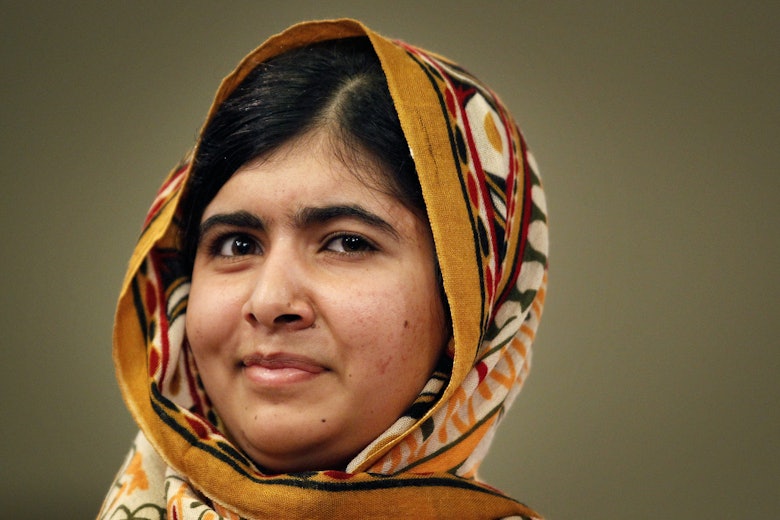
5 Reasons Malala Yousafzai Documentary 'He Named Me Malala' Will Be An Important Film


By 


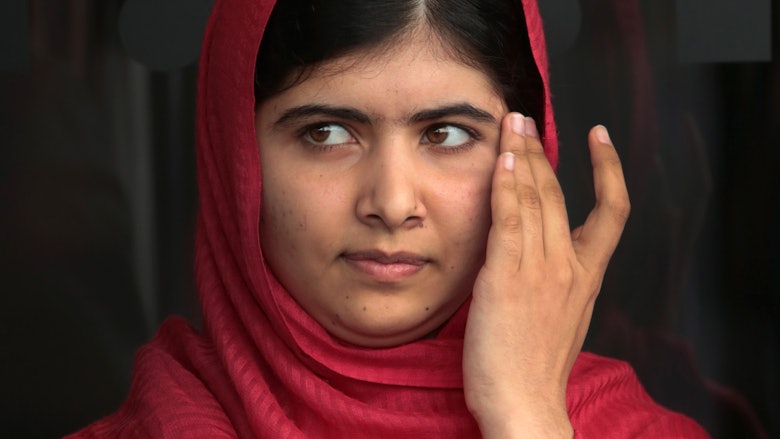
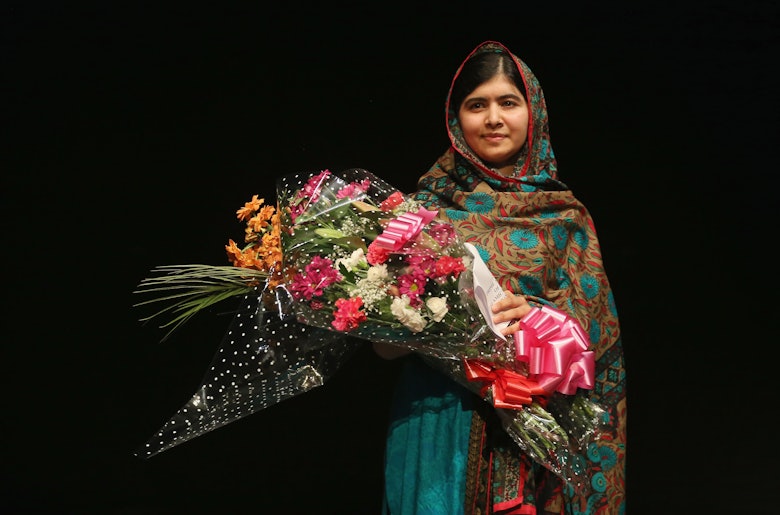
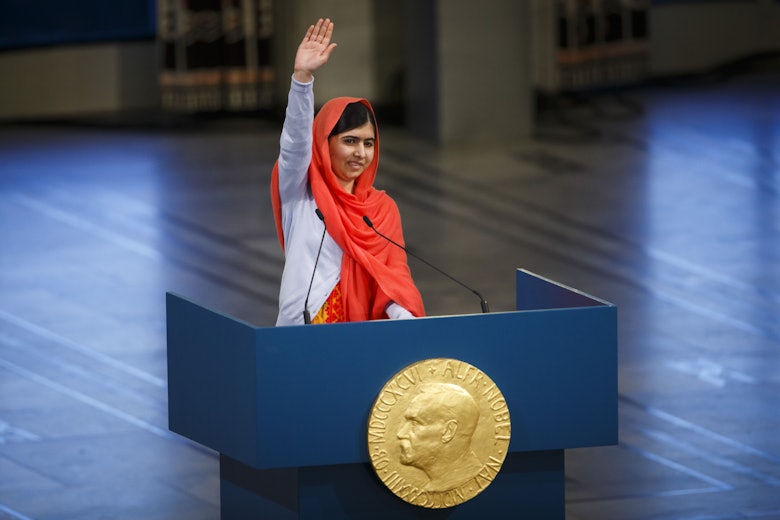
The documentary He Named Me Malala about the young Pakistanti activist and modern sociopolitical icon Malala Yousafzai is one step closer to release. Fox Searchlight has officially acquired the worldwide rights to the film, which was directed by acclaimed filmmaker Davis Guggenheim (Waiting for Superman, An Inconvenient Truth). Just last year, Malala Yousafzai became the youngest Nobel Laureate. Since being wounded by Taliban gunmen  for standing up for the rights of children and young women, she has become an international advocate for education accessibility. According to Fox Searchlight executives Steve Gilula and Nancy Utley, “Malala’s incredible journey is both heartbreaking and inspiring. Her bravery in the face of adversity brought us to tears. The chance to bring her story to a global audience will be an honor for all of us here at Searchlight.”tion
When the film is going to be released has yet to be announced, however this acquisition is a huge step in the documentary’s distribution. It will hit the theaters at some point later this year and I have no doubt it will be a major awards contender. He Named Me Malalatakes a look into Yousafzai’s personal journey as well as the importance of her work in the context of global issues and movements. Here’s why He Named Me Malala is going to be one of the most, if not the absolute most important film of the year.

It’s Her Story, In Her Words

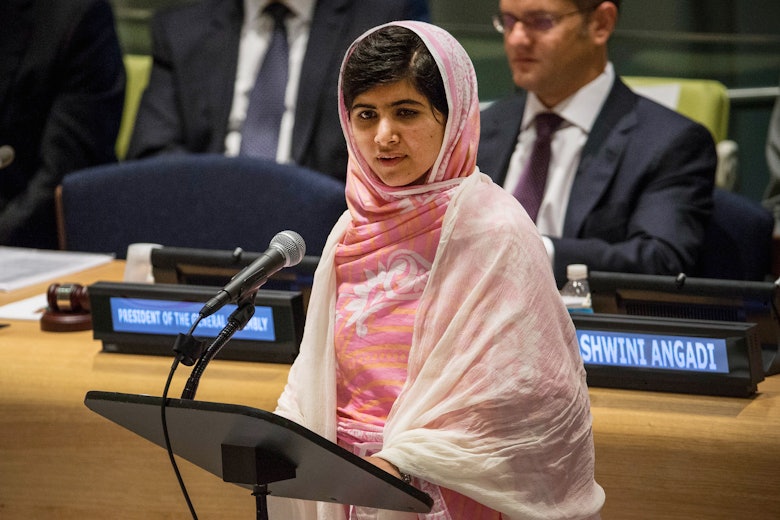
When the Taliban attempted to assassinate the young activist, rather than hiding, Malala spoke up and used her terrifying experience to raise awareness about education worldwide. When speaking to the UN she pronounced, “They thought that the bullet would silence us. But they failed.” The more people hear her story in her own words, the more power they hold. 

It Will Shine Light on Important Issues

Since Malala Yousafzai has become an international role model, she has used her many platforms to speak about the social ills that are breaking our world apart. He Named Me Malala will help Yousafzai tell even more people about how the rights to education for children, and especially young women are being threatened worldwide as well as the grim reality of living within a Taliban occupation.

She is a Uniting Force

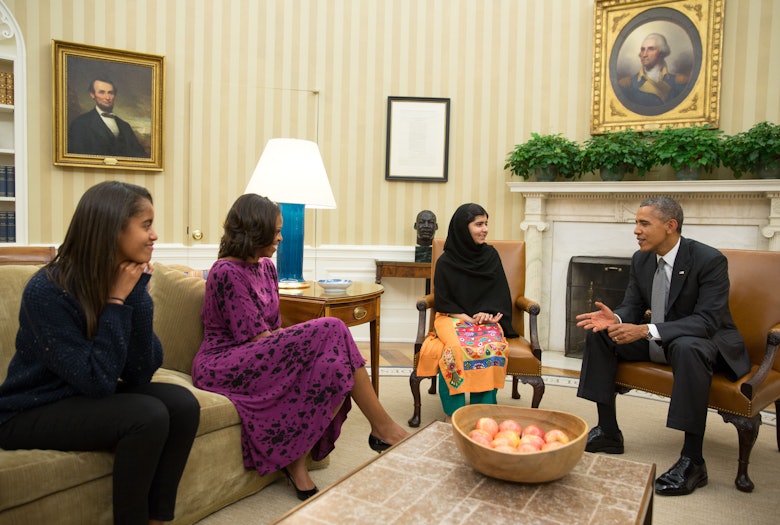
Malala Yousafzai has spoken in front and worked with the entire United Nations, Barack Obama, Queen Elizabeth II and Archbishop Desmond Tutu among many others. She is respected by so many leaders across the globe that she has the power to truly bring people together to have a conversation about what needs to change to make our world safer for the young people growing up in it. With the release of this film, her message will go even further.

It Will Scare, Threaten, and Upset Plenty of People

Just like all important works of art often do. As inspiring as this film will be, it will also be a difficult one to stomach. Her survival is harrowing and the threats to her life are deeply unnerving. Some might be scared by the truth of her story and there are plenty of people out there who feel threatened by her voice. But I hold on to the belief that there are more people who will feel empowered by it.

There’s No Such Thing as “Too Many Young Female Leaders”

It’s not often there are two whole hours in cinema dedicated to telling the story of young women who are changing the world and the course of history as we know it. We can all learn something from He Named Me Malala and I have no doubt it will become required viewing in schools around the world.
http://www.bustle.com/articles/73061-5-reasons-malala-yousafzai-documentary-he-named-me-malala-will-be-an-important-film


Malala gets an asteroid of her own


The youngest Nobel Peace Prize winner and girls' education campaigner Malala Yousafzai now has an asteroid named after her, the Malala Fund announced through its blog on Wednesday.
--> NASA Astronomer Dr. Amy Mainzer explains why she named this asteroid for Malala
Dr. Amy Mainzer, astronomer at NASA's Jet Propulsion Laboratory in California, USA, named Asteroid 316201 after Malala.
He said, "It is a great honour to be able to name an asteroid after Malala. My postdoctoral fellow Dr. Carrie Nugent brought to my attention the fact that although many asteroids have been named, very few have been named to honor the contributions of women (and particularly women of color)."
Dr. Mainzer discovered the asteroid, which gives her the right to name it, in the Main Belt between Mars and Jupiter. It orbits the Sun every 5.5 years; you can see its approximate location in the image below.
The formal designation of the asteroid is 316201 Malala, or 2010 ML48. The asteroid is the red dot in the upper right of the image. This is an infrared image of the asteroid (as narrated by Malala Fund blog), which means we are sensing the heat it emits rather than the sunlight it reflects off its surface.
Malala, now 17 and the youngest recipient of the Nobel prize, is an education campaigner in Pakistan who was shot in the head by a Taliban gunman two years ago.
She has already received a host of awards, standing ovations and plaudits from the United Nations to Buckingham Palace.

Yemen Crisis - Iran’s stance


Amid heightened regional diplomacy, Iranian Foreign Minister Javad Zarif’s visit to Pakistan can be termed crucial in the wake of the worsening Yemen crisis. While the foreign minister sought Pakistan’s support to Iranian opposition to a military operation against the Houthi forces, the visit is aimed at bolstering relations between the two neighbouring countries. Addressing a joint press conference with Adviser on Foreign Affairs and National Security Sartaj Aziz, the Iranian diplomat laid out a four-stage plan for talks, calling for an immediate ceasefire followed by humanitarian assistance, dialogue among Yemenis and the formation of an ‘all-inclusive government’. Zarif said a consensus was emerging around the Iranian four-point plan following talks with Oman, Turkey and Pakistan. "We need to work together in order to put an end to the crisis in Yemen," Zarif said. The visiting Iranian top official has stressed the need for finding a political solution to the Yemen conflict. The Iranian stance can be termed appropriate because it carries all the ingredients that can be applied for bringing back regional stability. The statement is sensible and negates the propaganda against Iran’s intentions in the Yemen conflict. History testifies that Iran cannot be solely blamed for the ongoing civil war in Yemen. Rather other factors are equally responsible for the crisis. In fact, the nature of the civil war in Yemen is not completely sectarian as is being projected by the media. Other factors including the presence of conflicting groups like Zaidi Shiitte rebels called Houthis, separatists from South Yemen and political loyalists are equally responsible for the ongoing civil war that actually started in 2011 when government loyalists and opposition tribesmen clashed during protests in Yemen.

The narrative shows that Iran has been acting responsibly and its role is not as bad as portrayed by the media. It is backing a political solution to the Yemen conflict through a ceasefire. On this basis, it has heightened its diplomatic moves for stopping the civil war in Yemen while safeguarding its own interests. On the other hand, Washington is backing the coalition and it is stepping up weapons deliveries and intelligence sharing. The US and some other Arab states accuse Iran of meddling in Yemen. Iran's president on the other hand has warned Saudi Arabia and its allies that their airstrikes campaign in Yemen is a ‘mistake’ and called for a halt to the strikes. The air bombardments have so far proved ineffective in defeating the Houthi rebels. Instead these have increased the sufferings of Yemeni citizens and the situation in war-torn Yemen is worsening day by day. The number of casualties is increasing and the supply of aid has been disrupted that may cause a bigger human catastrophe sooner or later in Yemen. At this juncture, the Iranian demand for a ceasefire is logical. All stakeholder countries must pave the way for the start of a meaningful dialogue process for finding a permanent solution to the conflict.

Amid this imbroglio, Islamabad finds itself in an awkward position on Yemen, reluctant to offend oil-rich Saudi Arabia with which it has long enjoyed close military and economic ties but also not wanting to get involved in a war that could fan sectarian tensions at home. After three days of discussions in parliament, there is a broad consensus among lawmakers that Pakistani involvement in the war in Yemen would not be advisable and Islamabad should act neutrally in the whole fiasco. At the same time, Pakistan needs to build better ties with its immediate neighbour Iran that offers huge prospects of trade and energy imports once sanctions are lifted against Tehran. In this regard, the government must exploit the opportunity of the Iranian official’s visit to Pakistan and reciprocate the goodwill gesture of Iran. During separate meetings with the Prime Minister and Chief of Army Staff, the Iranian foreign minister has discussed the possibilities of increasing bilateral relations and called for a mechanism to resolve border issues. All Pakistan needs to do is that it should act neutrally and respond positively to all those offers extended by its neighbours that favour its own national interests.

Pakistan declines Saudi call for armed support in Yemen fight

BY MOHAMMAD MUKASHAF

 Pakistan's parliament voted on Friday not to join the Saudi-led military intervention in Yemen, dashing Riyadh's hopes for powerful support from outside of the region in its fight to halt Iranian-allied Houthi rebels.
Saudi Arabia had asked fellow Sunni-majority Pakistan to provide ships, aircraft and troops for the campaign, now in its third week, to stem the influence of Shi'ite Iran in what appears to be proxy war between the Gulf's two dominant powers.
While Saudi Arabia has the support of its Sunni Gulf Arab neighbors, Pakistan's parliament voted against becoming militarily involved.
"(Parliament) desires that Pakistan should maintain neutrality in the Yemen conflict so as to be able to play a proactive diplomatic role to end the crisis," it said.
The Saudi-led coalition began air strikes in Yemen against the Houthis on March 26 after the rebels, who already control the capital, began a rapid advance towards the southern port city of Aden.
Saudi Arabia is concerned that the violence could spill over the border it shares withYemen, and is also worried about the influence of Shi'ite Iran, which has denied Saudi allegations it has provided direct military support to the Houthis.
Iran's supreme leader Ayatollah Ali Khamenei has called the Saudi's involvement inYemen "genocide," raising tensions between the regional powers as fighting on the ground in Yemen threatens all-out sectarian war.

A suicide car bomb detonated outside a security building used by Houthi militiamen in central Yemen on Friday, killing at least 20 people, residents and a local official said.
The local branch of the global Sunni militant group Al Qaeda claimed the attack in the city of Bayhan in Shabwa province, which has witnessed heavy fighting between the Shi'ite Houthi fighters and local militiamen who have been supported by days of Saudi-led air strikes.
Residents said dozens were injured in the huge blast, including several civilians, in the first car bombing since fighting in Yemen rapidly escalated last month.
FIRST INTERNATIONAL AID FLIGHTS
Coalition air strikes hit Yemen for a sixteenth straight day. In Sanaa, they targeted weapons storage sites used by soldiers loyal to former president Ali Abdullah Saleh, a powerful supporter of the Houthis.
The air raids, which hit the Defence Ministry and other facilities, lasted for hours, residents told Reuters. "The sky was lit up," said Fadel Muhammad. "We heard big explosions."
Saleh is still influential in the military, despite giving up power in 2012 after mass protests against his rule, complicating efforts to stabilize the country.
Troops loyal to him are backing Houthi forces fighting his successor President Abd-Rabbu Mansour Hadi, a former general seen by the Houthis as a pawn of Sunni Gulf Arab monarchies and the West. Hadi has fled to Saudi Arabia.
Yemen's 150,000 barrel-per-day Aden refinery has shut as the conflict worsened, industry sources said. The refinery earlier suspended its tender process for importing oil products, due to the crisis and several tankers headed to the country have been diverted away.
Aden residents said electricity and water had been cut off in several districts, rubbish had been left uncollected and hospitals were unable to cope with the number of wounded.
Fishermen from villages around an hour's drive west of the stricken city said dozens of families in the last two days have taken to the Arabian Sea on rented boats to seek safety in Djibouti in East Africa.
"The humanitarian situation in Aden is catastrophic and disastrous, both in terms of the rising number of killed and injured as well as in declining capabilities of medics, along with shortages in water and electricity," local health ministry official Al-Khadr Lawsar said.
"We call on fighters to adhere to international law and respect the work of ambulances and medical staff in the field," he added, citing the fatal shooting of two brothers working for the Red Crescent while evacuating wounded last week.
Aden residents reported heavy explosions from coalition air strikes and naval bombardment on Houthi positions which shook windows throughout the city.
An Indian ship captain working in Aden was killed in shelling on the city’s dockyard overnight, his company announced, and local media reported that Houthi and allied army units had fired mortars into the area.
An air strike hit a local government compound in the northern suburb of Dar Saad and fires in Aden's outskirts sent plumes of smoke into the air.
Two planes carrying emergency medical aid landed in Sanaa on Friday, the first deliveries from international aid groups since the heavy fighting began.
They were brought in by the International Committee of the Red Cross and the United Nations Children's Fund, UNICEF, which had been trying for days to get aid flights into the country.

Thursday, April 9, 2015

Music Video - Salt-N-Pepa - Push It

Video - President Obama Speaks at a Town Hall With Young Leaders of the Americas in Jamaica

Terrorists kill 2 Iranian signal officers near border with Pakistan


Terrorists have killed two signal officers working for the Islamic Revolution Guards Corps (IRGC) near the southeastern border with Pakistan.
A local official confirmed Thursday that the two officers were killed as they were returning from work in the mountainous areas of the Mehrestan, a city located at the southern extreme of the province of Sistan-Baluchestan.
Rashid Parsayi, the governor of Mehrestan which is locally known as Zaboli and is located 335 kilometers south of the provincial capital city of Zahedan, said unidentified gunmen fired at the two officers who were descending Birak Mountain.
The two slain officers have been identified as Morteza Mohammad-Baqeri and Mohammad Mohammadi Soleimani. The pair worked at the telecommunications unit of IRGC in the neighboring Kerman province.
On Monday, terrorists killed eight border guards in a border area in the southeastern town of Negur before fleeing to Pakistan to escape being hunted down by security forces. The incident came after IRGC busted a major terror group in the region earlier in the day.
Sistan-Baluchestan province has seen similar attacks by terrorists who launch hit-and-run attacks and flee to neighboring Pakistan. Iran has repeatedly criticized its eastern neighbor for failing to rein in the terrorists.