Abduction and forced conversion of Christian women on rise in the country according to local organisation.
According to a Pakistani non-governmental organization Movement for Solidarity and Peace (MSP), there has been a sharp rise in the incidents of abduction and later forced conversion of Christian women oftentimes by giving them in marriage to Muslims. There has been a caustic increase in gender based violence against the religious minorities. Women from religious minorities specifically Christians and Hindus are being targeted. The organization states: every year between 100 to 700 Christian women,usually between the ages of 12 and 25 are abducted, converted to Islam, and married to the abductor or third party.
The organization has prepared a report titled, “Forced Marriages & Forced Conversions in the Christian Community of Pakistan.” The Movement for Solidarity and Peace has diagnosed a particular tendency. It says: in most of these abduction cases the parents of Christian victims file a police report, but in response the abductor’s relatives or friends file another police complaint on behalf of the abducted Christian woman, claiming that she wilfully married and converted to Islam, and that her parents are now “harassing” her unlawfully.
The report further points out: after kidnapping, these Christian women experience tormenting such as, “sexual violence, rape, forced prostitution, human trafficking and sale, or other domestic abuse.” Subsequently, when these victimized women are produced before the court and asked to testify if they were abducted, these women (and sometimes children) give a statement in favour of their captors for fear of threats to their life, and those of their family.
On the other hand, Movement for Solidarity and Peace says: the report is based on field research compiled by legal expert Emad Ansari during the summer of 2012; it includes numerous interviews with local CSOs, national policymakers and diverse stakeholders from amongst the Pakistani judiciary. The organization’s research has been markedly supported by nationally acknowledged daily newspaper “Dawn.” The news paper exposed an investigative account of one such incident: a Hindu girl whose parents filed a police complaint about her forced conversion. Hindus also suffer abduction of their women and forcible conversion to Islam.
The investigation shows that it is quite difficult to actually say whether the marriage was contracted with complete wilful consent.
However, this issue was also highlighted in a USCIRF report. The report underlined that Pakistani Christians are an afflicted and socio-economically deprived community, about 80 per cent of which leads life in miserable poverty. The report states that as a consequence of their lesser number and poor financial status they are subjected to human trafficking and sale through debt transfers, physical abuse, and economic exploitation. Under these circumstances, the abuse of Christian women is much easier and the crimes go unpunished with impunity. The report however, does not rule out wilful conversions due to socio-economic reasons.
- See more at: http://www.christiansinpakistan.com/abduction-and-forced-conversion-of-christian-women-on-the-increase/#sthash.W88EdW3g.dpuf

When the US decided to resist Moscow’s occupation of Afghanistan during the Cold War, it was not Afghanistan that the US had come to save. It was just another move in Washington’s anti-communist worldwide campaign, the ill-advised Soviet intervention providing a heavan-sent opportunity. The US supported jihadi insurgents as a weapon to defeat the Soviet Union and communism generally. With hindsight, the jihadi seeds planted in that war eventually grew into the hopelessly crooked trees of al Qaeda, the Afghan Taliban, and other terrorist groups.
This is exactly what has happened in Syria. Without learning any lessons from the Afghan conundrum, the US and its allies, both in the west and amongst Arab states, fed to the anti-Bashar al-Assad forces an uninterrupted flow of weapons. Al Qaeda affiliated groups were supported in Libya and Syria. This policy stoked a new wave of anti-American sentiments across the Muslim world and gave the Islamists another filip, thanks to the US and its allies. In a matter of a few years, the proxies fighting for the US broke up into various factions, each having its own agenda to pursue in the cauldron of the Syrian war. It then became difficult to either control them or know what to do about this simmering fundamentalist swamp. Now that it has been revealed that Muslims from Europe and the US were heading to Syria, Somalia to participate in jihad, the alarm bells have gone off.
European Union (EU) officials are increasingly worried about the stream of Europeans joining the extremists in Syria, where they are trained and radicalized in special camps. Some officials fear these freshly trained Europeans will return home as ticking time bombs. According to EU Home Affairs Commissioner Cecilia Malmstrom, the foreign fighters in Syria are “very dangerous people”. EU Counterterrorism Coordinator Gilles de Kechove said even a small number of determined jihadists “pose a high security threat”. To stem the flow of home-grown jihadists, the EU has agreed to prevent young fighters from leaving and to monitor returnees.
Empires wage wars to expand their influence and strike terror in the hearts of weaker countries. They tend to operate on the wrong assumption that the sun can never set on them. The intoxication of power makes them do things that eventually become the reasons for their own downfall. The question is, will all this monitoring and laws prevent the west from receiving a taste of its own concocted medicine?
The Express Tribune News
The Sindh Government has decided to recruit youth from minority community for the security and protection of minorities and their worship places.
Talking to a delegation of Christian community led by Haroon Mehraj at Chief Minister House in Karachi on Wednesday, the Chief Minister Sindh Syed Qaim Ali Shah said the provincial government has principally decided to recruit the youths from minority communities in Sindh Police and to depute them for the security of minorities’ and their worship places. They would be deputed after providing them with necessary training, said Shah.
During the meeting, the chief minister directed the Sindh police and all district administrations to provide security to all minorities including Christian’s community within their respective areas.
“PPP represents minorities and its government will protect their rights at any cost,” said CM Sindh.
The Provincial Minister for Minorities Gian Chand Esrani and Special Assistant to CM Rashid Rabbani were also present during the meeting.
Responding to the security concerns of the visiting delegation, Shah directed DIG Karachi East to resolve the security problem and ensure security to the Christian community at Essa Nagri, Gulishan-e-Iqbal Town Karachi. He also issued directives to commissioner Karachi for resolving the problems being faced by Christian community in Karachi.
The chief minister also said that he has already issued strict instruction to the higher authority of Sindh Police and all district administrations for providing security and launching other social upliftment programs within their jurisdictions.
The meeting was also informed that many development schemes have also been included in the current annual development plan 2014-15.
The minister for minorities said that he would personally monitor the on going development schemes in the rural Sindh to get the first hand information about the problems being faced by minorities and ensures qualitative work and protection of the worship places.
He assured the Christians community that he would visit Essa Nagri to observe the issues that they faced first hand.
http://tribune.com.pk/
After a long period of speculation, which also included attempts at peace talks, Pakistan on June 15 launched a military operation against militants in the troubled North Waziristan agency of Federally Administered Tribal Areas (Fata).
On its 15th day, a new phase of the offensive began, with the military launching a ground operation in Miramshah – the main town of North Waziristan.
As the Pakistan Army embarks on this critical mission, get all the updates of the operation, code-named Zarb-e-Azb, here.
All stories relating to Zarb-e-Azb can be found on this trend page as well.
Below is an interactive Google map of North Waziristan, which follows the Zarb-e-Azab Operation, and will be updated as information flows in.
Navigate military strikes and areas of influence from the key on the left. To get details of individual attacks, hover over the pins and click them. Zoom in for a closer look, change the display type or switch extra layers off .
The yellow pins mark recent drone strikes that have occurred in the region, while blue pins mark suicide attacks.

By Anna Mahjar-Barducci
Every country in the Islamic world has its own Boko Haram. As in Nigeria, where Boko Haram stands for "Western education is forbidden”, extremists in Balochistan, Pakistan's largest province, are saying "no" to education. Last May, the little-known armed group Tanzeem-ul-Islam-ul-Furqan (TIF) had warned all private schools imparting co-education and Western education to immediately shut down in the Panjgur district. The movement started an anti-West campaign, targeting 23 English-language learning centers to shut down and stop imparting co-education and teaching in English, which they say is "Haram (prohibited) in Islam."
Actually, according to TIF's rhetoric, not only should boys and girls be segregated in school, but they should not even learn English. The English language is perceived by the group as a vehicle to introduce Western values in Pakistan, and thus dangerous to learn. English is considered particularly dangerous for female students, as it can corrupt their moral principles. TIF actually invites parents to enroll their daughters in public schools, which teach only Urdu (Pakistan's official language).
The anti-West operation started last May, when the group's armed masked men barged into one language center. The men destroyed the school’s furniture and tore textbooks. A few days later, a bus taking female students to the Oasis School, a well-known private school in Panjgur, was attacked by the militants, who burned the bus and subjected its driver and the school's head to a violent beating. They threatened the owner with dire consequences if he did not shut down the school. Then they escaped, flashing victory signs in the presence of security forces. In reaction to the attack, all private schools have shut down temporarily in the district.
The Islamic extremists also circulated a threatening pamphlet warning parents to keep their daughters away from English language centers. The pamphlet read:
For 15 years, Western and European people have tried to promote their mindset and culture to Muslims, and have introduced private schools and English language centers[.] ... [This mindset] has led our daughters and sisters towards vulgarity[.] ... We have seized mobile phones from so-called teachers and in them we have seen girls' phone numbers and messages from them as well as offensive videos. So we request all parents to kindly keep their daughters away from such so-called schools. We strictly order van and car drivers not to take any girls to school from now on, and request that parents enroll their daughters in public schools rather than private schools. We also request these [private] schools' staff to stop teaching girls immediately. ... If anyone does not follow our requests, then they will be faced with a critical situation. Signed, Tenzeem Islami Al-Furqan.
U.S. officials identify Balochistan as a critical center of Taliban and al-Qaeda activity. In fact, in recent years, the province has experienced the exponential growth of Islamic radical groups, which have been mushrooming around the country. Moreover, many observers believe that high-profile al-Qaeda figures and ranking Taliban members, including Afghan Taliban leader Mullah Muhammad Omar, have fled Afghanistan or Pakistan’s tribal areas for sanctuary in Balochistan. The provincial capital of Quetta is believed to serve as a critical hub for financing and organizing Taliban and al-Qaeda operations.
Some rallies were organized in protest of the attacks on English centers. Girls and women marched in protest in Panjgur and other towns of Balochistan, asking to “break the silence.” However, these protests were hardly heard. According to Balochistan News, the core problem is that the presence of religious terrorists is encouraged by the same Pakistani authorities who are supposed to fight them. The Balochi media outlet stresses that TIF enjoys the protection of the Pakistan Inter-Services Intelligence (ISI), often accused of being behind jihadi-inspired groups in Pakistan.
Balochistan News says that the ISI's long-term plan is to create an illiterate generation in Balochistan, in order to curb the region's separatist demands. In particular, the ISI wants to minimize the role of women in the Balochi nationalist movements. Not allowing girls to learn English will make it easy to control them. They will manage to read only propaganda newspapers in Pakistan and won't be able to access foreign media outlets. Furthermore, in Pakistani public school, girls will be brainwashed with misogynist views. A Balochi English teacher at the Baam English Learning Centre in Panjgur, which shut down recently, explains the following: "English is essential for our girls’ future. You have to be able to speak it to go to college. Since our school opened in 2005, many girls received scholarships and went on to study universities all over Pakistan. Apparently, this threatens these men, who are surely uneducated and would prefer girls to be backwards."
Balochistan News writes that Pakistan and ISI are worried about the "growing educational consciousness" among Baloch youth. "Today, Baloch youth including girls […] are rejecting obsolete system of state and ISI backed feudal lords, but this is not acceptable to ISI because they see the involvement of Baloch females in Baloch national movement for independence as their demise."
English and women are elements of emancipation in the Balochi society. The international community should stand up – before Balochistan, which was known in the past for its entrenched secularism, is turned into another Islamist beacon.
 By Kyla Ryan
After a particularly shocking case, will Pakistan finally revise its laws?
In Pakistan, when a person is believed to have brought shame to a family’s name, they can be subject to what is known locally as karo-kari, or an “honor-killing.”
The majority of honor killing victims are women, for reasons such as committing adultery, marrying without the family’s consent, refusing to marry a man chosen by the family, and sometimes even for being a victim of rape. The United Nations estimates that perhaps up to 5,000 honor killings occur each year worldwide, with around 1,000 victims in Pakistan alone. In fact, the number may be even higher because most honor killings occur in rural areas, where they often go unreported.
A recent case that could trigger change in Pakistan occurred on May 27. Pakistani woman, Farzana Parveen was three-months pregnant when she was stoned to death by her family outside the high court of Lahore, the country’s second largest city. Her father called it an “honor killing,” because his daughter was planning to marry a man whom her family was against, bringing “shame” to the family. In fact, man she intended to marry had killed his previous wife in order to propose to Parveen.
An amendment to Pakistani law in 2004 held that honor killings should be treated as regular murders. However, under Pakistan’s Hudood Ordinance, adopted in 1979, the status of women remains inferior to that of men, putting women at serious disadvantage inside the justice system.
The Hudood Ordinance was adopted as part of the “Islamization” of the country, and is a set of laws that criminalizes adultery and non-marital sex. This blurs the line between rape and adultery, especially since under these laws a woman’s testimony is only worth half as much as a man’s. In court, a woman’s testimony needs to be backed by four men. Therefore, victims of rape can be accused of adultery or fornication if they cannot provide sufficient evidence of the rape.
Pakistan’s amendment to the law regarding honor killings also does not address the fact that the offender can make deals with the victim’s family, or be forgiven in the name of God, in which case the offenses are dropped, and the offender can go unpunished.
The Hudood Ordinance may have been adopted to establish an Islamic society, but it does not have universal support among Islamic authorities. For example, the Federal Shariat Court ruled in 2006 that a female should not be charged for adultery without evidence, and that this was not acceptable based on the Qur’an. Earlier, in 2002, the Council of Islamic Ideology recommended that the Hudood Ordinance be amended, arguing for instance that an offender should still be sentenced even in the absence of male witnesses.
Article 9 of Pakistan’s Constitution, “Security of Person,” states that no person should be deprived of their life or their rights unless as a consequence of the law. Article 8 states that the government cannot enforce a law that denies basic rights. Little wonder, then, that critics consider the Hudood Ordinance unconstitutional.
Pakistan’s Prime Minister Nawaz Sharif called the stoning of Parveen “totally unacceptable.” It remains to be seen whether the atrocity will bring lasting change.

The Philippines' Department of Foreign Affairs raises alert level 3 in Afghanistan because of 'heightened tensions' after the presidential elections
The Philippine government urged its nationals in Afghanistan on Tuesday, July 8, to leave the Central Asian country as violence increased during the presidential elections.
In a statement, the Philippines' Department of Foreign Affairs (DFA) advised voluntary repatriation by raising crisis alert level 3 in Afghanistan.
The DFA cited “the heightened tensions in that country following the conduct of the presidential elections last June 14.”
The DFA said: “Alert level 3 is declared when violent disturbances or external aggression occurs in a limited area of a country. With this announcement, Filipinos in Afghanistan are strongly encouraged to volunteer to return to the Philippines.”
It added that the Philippine government “maintains a total ban on the deployment of Filipino workers to Afghanistan.”
The DFA “continues to monitor the political and security developments in Afghanistan,” it added.
An estimated 4,000 Filipinos are now working for US contractors in Afghanistan, DFA spokesman Charles Jose told Agence France-Presse.
The Philippines does not maintain an embassy in Kabul, with its diplomatic representation in that country under the Filipino mission in Pakistan, he added.
Instability feared
The DFA's warning came after former World Bank economist Ashraf Ghani won Afghanistan's presidential election, according to preliminary results Monday, July 7.
Ghani's poll rival, Abdullah Abdullah, rejected the outcome as “a coup against the will of the people.”
Fraud allegations immediately sparked a dispute and stoked concerns of instability after the figures showed Ghani collected 56.4% of the run-off vote against ex-foreign minister Abdullah's 43.5%.
Afghanistan's international backers have lobbied hard to try to ensure a smooth election process, but the contested outcome realized their worst fears and risks, setting back gains made since the fall of the Taliban in 2001.
The deadlock has already tipped Afghan politics into a crisis at the same time that the Taliban have underlined their strength with a major offensive in the southern province of Helmand.
The insurgents, who see the election as a plot of the United States to control Kabul, threatened to target voters, and violence spiked on both polling days, but there was no major militant attack.
Afghanistan has been battered by decades of conflict, and any power struggle would undermine claims that the hugely costly US-led military and civilian mission has helped to establish a functioning state.

Kamran Khan, host of Geo News programme ‘Aaj Kamran Khan Kay Sath’, said on the programme on Monday that the prestige of Pakistan Muslim League-Nawaz (PML-N) is at the lowest ebb. The number of terrorist incidents in the country has decreased because of the massive action against the terrorists. Arsalan Iftikhar’s allegation can have serious repercussions on Imran Khan’s future.
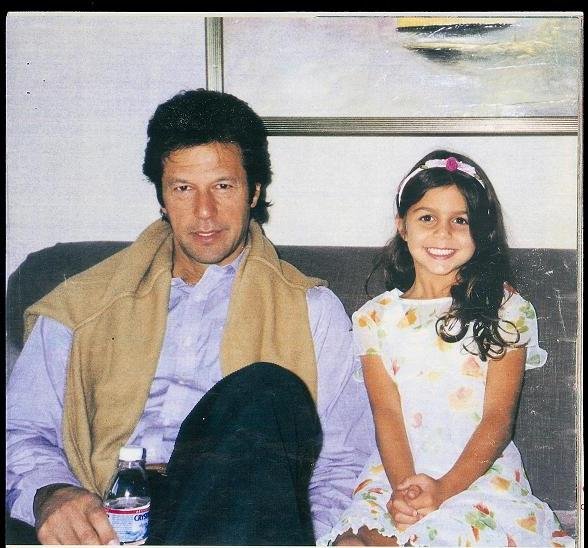 Kamran Khan, while commenting on Arsalan Iftikhar’s allegations against Imran Khan, said that the allegation against the chief of the Pakistan Tehreek-e-Insaf, Imran Khan, has been an old one, but it has once again been levelled forcefully. The allegation is that Imran Khan is the father of a 20-year-old young woman who lives in the USA, and that she was born out of wedlock; that Imran Khan has confessed to being her father, and that a US court has also given its verdict in this regard.
Kamran Khan said that this time round, the allegation has been levelled by Arsalan Iftikhar, the son of Imran Khan’s latest target, former chief justice Iftikhar Muhammad Chaudhry. Kamran Khan said that this is a very serious charge which, if proved, can have some very adverse effects on the future of Imran Khan and the PTI.
Arsalan Iftikhar has filed an application with the Election Commission of Pakistan asking the ECP to provide him with a copy of Imran Khan’s nomination papers on the basis of which he (Arsalan Iftikhar) wants to file a reference under Article 62/63 of the Constitution in which he would take the plea that Imran Khan had mentioned the names of his two sons in the nomination papers, but he did not give the name of, what Arsalan Iftikhar alleges to be, “his daughter who was born out of wedlock”. Therefore, Imran Khan’s membership of the Parliament be suspended and action taken against him.
In a different segment of the programme, Kamran Khan said that what happened in the last 30 days — from the Karachi airport attack to the political hibernation of federal Interior Minister Chaudhry Nisar and to his having been persuaded to come out of his hibernation and into the mainstream — has dealt the government’s reputation with a severe blow.
In order to save Pakistan from the terrorists a decisive action is underway, and the Chief of the Army Staff, General Raheel Sharif, is visiting the frontline.
Kamran Khan said that nobody can doubt the fact that the future of the country rests on the Pakistan Army’s Operation Zarb-e-Azb against the terrorists.
The Chief of the Army Staff, General Raheel Sharif, is visiting the frontline where the war for Pakistan’s survival is being fought. This is a very important visit of General Raheel Sharif.He met the officers and Jawans and gave them a pat on the back for a job well done and told them that their next step is to completely destroy all the centres of terrorism in and around North Waziristan.
Kamran Khan said that as a result of the massive operation against terrorism, there has been a substantial decrease in the number of terrorist incidents inside Pakistan.
In a still different segment of the programme, Kamran Khan said that the events of the last one month have badly tarnished the image of the leadership of the PML-N and that of the government as well. Serious differences among the stalwarts of the ruling party have come to light. The media spotlight in this regard has been on the very important leader of the PML-N, Chaudhry Nisar Ali Khan, about whom media reports have been saying for the last three weeks that he had chosen to isolate himself due to his differences with some fellow cabinet members. Ch Nisar remained absent from Parliament for some time. However, Ch Nisar had a meeting with Prime Minister Nawaz Sharif on Sunday, and on Monday he issued a written statement in which he denied the news about differences, but he did say a few words about those one or two ministers who had a grudge against him.
Kamran Khan said that the writ of the government was affected and especially on June 20 when Pemra decided that it was revoking the ban on Geo News and at the same time it also decided to impose a ban on ARY News, but despite the Pemra decision ARY News transmission continued uninterrupted throughout and even the cable operators turned a deaf ear to the Pemra decision, but, ironically, Geo News and other channels of Geo Network remained shut contrary to Pemra decision. This example clearly shows that the government is losing its writ. Government ministers did not have the courage to get Pemra orders implemented. Geo News remained off air despite government orders to restore its transmission while the channel that was supposed to be off air remained on in contravention of government orders.
Kamran Khan said that the Lahore Model Town incident was a major incident that substantially damaged government’s reputation. The way the police attempted to remove barriers from outside the house of Tahir-ul-Qadri upon his return to the country and the killing of ten people there severely damaged the reputation of the government.

After months of tension caused by cyber security and maritime disputes, an annual meeting between senior Chinese and US officials, which starts Wednesday in Beijing, is hoped to put the brake on a downward spiral in Sino-US relations.
The sixth China-US Strategic and Economic Dialogue (S&ED), which aims to address problems between the world's two largest economies, will be held until Thursday.
Among the issues the two sides are expected to discuss are the ongoing tensions in the South China Sea, denuclearization of the Korean Peninsula, the valuation of the Chinese yuan, and an ongoing deadlock in negotiations over updates to a 16 year-old World Trade Organization Information Technology Agreement.
Chinese State Councilor Yang Jiechi and US Secretary of State John Kerry will co-chair the strategic track of the dialogue, while China's Vice Premier Wang Yang and US Treasury Secretary Jacob Lew will jointly head the economic track.
This year's S&ED comes at a critical time, as the Washington Post noted that "the US-China relationship is facing its stiffest test since then US president Richard Nixon traveled to Mao Zedong's China in 1972."
Washington has sided with Tokyo, which is locked in a territorial dispute with Beijing in the East China Sea, by sending fighter jets to an Air Defense Identification Zone set up by China and voicing explicit support for Japan during Obama's East Asia visit.
In May, the US indictment of five Chinese military officers over so-called cyber espionage further irked China, which halted a China-US cyber security working group due to meet under the framework of the S&ED.
Even before the S&ED formally starts, the two sides have already traded blame.
On Monday, China's Assistant Foreign Minister Zheng Zeguang told a press briefing that the US "has made some wrong remarks and acts on maritime issues and cyber issues, bringing negative impact on bilateral relations."
Zheng also dismissed the charges against the five Chinese officers as "intentionally fabricated by the US."
A US official, who briefed reporters en route to Beijing, said Tuesday China's claim to the South China Sea is "problematic," and the tensions are "very relevant to the United States as a Pacific power," reported AFP.
Yuan Zheng, a research fellow with the Institute of American Studies at the Chinese Academy of Social Sciences, partly agreed that bilateral ties are at a low ebb.
"While it seems the threat of a confrontation looms, past experiences in China-US relations proved that whenever a confrontation is about to break out, the two leaderships will pull back from hostility," Yuan told the Global Times on Tuesday.
Da Wei, director of the Institute of American Studies at the China Institute of Contemporary International Relations, cited the "strategic interdependency" between China and the US, saying that neither country can afford mutual destruction to their economy or security.
Some people have said a clash between China and the US is inevitable due to the structural problems between an established power and a rising power.
China holds the view that Washington's Asia pivot aims to constrain its development, while the US suspects that China wants to push it out of the region.
"No one can deny the existence of structural problems, but if we let the structural problems dominate bilateral ties, there will be a lose-lose situation," said Yuan. "Both countries realized the problem, so they decided to build a new type of great power relations, which stresses no confrontation or conflict."
"In the past seven months, bilateral ties went through a downward spiral, but I don't think the bottom has fallen out of the structure," he said.
A similar view was also voiced by the US side on Tuesday.
"The US-China relationship is a motion picture. It shouldn't be looked at as a snapshot," a second US official traveling with Kerry was quoted as saying by Reuters. "It is that grand epic big Hollywood motion picture in which there are a lot of actors and a lot of interests at stake, and the trajectory of any particular issue takes time to play out."
The current round of the S&ED will provide a platform for candid and even blunt exchanges between the two sides. The economic track, which might see progress on the Bilateral Investment Treaty, is expected to help stabilize the relationship.
"What really matters isn't the agreement list delivered after the S&ED. It is the positive momentum injected into bilateral ties by the dialogue following the negative trajectory of the past months," Da said.
Yuan shared similar sentiments, noting Washington has already started pulling back. "Both sides will use the S&ED and Barack Obama's visit to Beijing in November to create a favorable atmosphere for warming ties."
Prior to the start of the S&ED, the fourth China-US Strategic Security Dialogue was held in Beijing on Tuesday. The meeting was chaired by China's Vice Foreign Minister Zhang Yesui and US Deputy Secretary of State William Burns.
Chinese President Xi Jinping will attend the opening ceremony of the S&ED events and deliver a speech. Xi and Premier Li Keqiang will meet the US delegations.
 By MICHAEL D. SHEAR and JEREMY W. PETERS
President Obama urged Congress on Tuesday to quickly provide almost $4 billion to confront a surge of young migrants from Central America crossing the border into Texas, calling it “an urgent humanitarian situation.”
But the request immediately became entangled in the fierce political debate over immigration: Republicans said they were wary of Mr. Obama’s request and could not immediately support it, given what they called his administration’s failure to secure the Mexican border after years of illegal crossings. Mr. Obama could face resistance from members of his own party as well.
The president said he needed the money to set up new detention facilities, conduct more aerial surveillance and hire immigration judges and Border Patrol agents to respond to the flood of 52,000 children. Their sudden mass migration has overwhelmed local resources and touched off protests from residents angry about the impact on the local economy. In a letter to congressional leaders, Mr. Obama urged them to “act expeditiously” on his request.
Republican lawmakers who have long demanded tougher enforcement of immigration laws along the border expressed cautious support on Tuesday for beefing up the federal presence in the Rio Grande Valley, where most of the children have been crossing into the United States.
But many Republicans, especially in the House, remain deeply suspicious of the president’s commitment, a mistrust that led to a stalemate on a broader immigration overhaul and now threatens to at least delay speedy passage of Mr. Obama’s $3.7 billion spending request.
“Let’s remember, this administration went around for years saying the border has never been more secure than it is now,” said Senator Marco Rubio of Florida, a potential Republican presidential candidate in 2016. “I think that’s been exposed as a fallacy over the last three weeks.”
Speaker John A. Boehner said the president’s plan failed to deploy the National Guard, an idea the White House said would not be effective. And Representative John Carter of Texas said he was wary of any measure that gave Mr. Obama too much autonomy.
“The president caused this self-inflicted crisis on the border by refusing to enforce the law,” said Mr. Carter, a senior member of the House Appropriations Committee, which is likely to be asked to approve the request. “And now he is requesting a $3.7 billion bailout from the taxpayers to rectify his mistakes.”
Some Democrats, like Senator Robert Menendez of New Jersey, have expressed strong misgivings about any plan that would allow for unaccompanied children to be sent back home to dangerous situations.
The charged politics will shadow a long-planned trip that Mr. Obama began on Tuesday and will include a two-day stop in Texas. The trip will underscore the difficulties for the White House on immigration. The president is calling for immediate action on the border even as he remains under pressure by activists to relax deportations.
After insisting that Mr. Obama had no plans to visit the Texas-Mexico border, White House officials said he would meet with Gov. Rick Perry.
Mr. Perry, who is considering a second run for the Republican presidential nomination, had declined to participate in a photo opportunity with Mr. Obama in front of Air Force One, prompting a last-minute offer by the White House for the two to meet.
A Perry spokesman said they would meet privately and attend a round-table discussion with religious leaders and local officials.
The president’s funding request is certain to revive legislative passions that prompted Mr. Obama to promise sweeping executive actions to get around Republican opposition to a bill that would provide a path to citizenship for 11 million illegal immigrants. Republicans in both chambers hinted Tuesday that they might insist on corresponding spending cuts or make other demands that Mr. Obama and his allies are likely to oppose.
Senator John Cornyn of Texas, the chamber’s No. 2 Republican, said that Mr. Obama’s request lacked the substantive policy changes needed to deal with issues like detaining those who cross the border illegally and ensuring that they show up for court dates once they are apprehended.
“Apparently the president has given up on any effort to effect the kind of reforms that he knows and his administration knows are necessary,” Mr. Cornyn said.
White House officials said the president was not backing away from a request last week for more flexibility in how enforcement agents treat the Central American migrants who are surging across the border. A 2008 law aimed at combating human trafficking requires officials to provide extra legal protections for migrants from countries that do not share a border with the United States.
Those protections are not provided to Mexicans, who are often quickly returned home after being caught trying to enter the United States illegally. White House officials said they would like Congress to allow officials to process migrants from places like Honduras and Guatemala as quickly as Mexicans. One White House official said the administration was seeking to have “one approach to children coming from the region.”
Officials pressed members of Congress on Tuesday to consider the funding request separately from the changes in legal authority. But some lawmakers suggested that they wanted to deal with both issues together. The resulting clash could end up as a replay of the gridlock that prevented the bipartisan immigration bill that passed the Senate in 2013 from being considered in the House.
Senator John McCain, Republican of Arizona, said that Congress needed to repeal the 2008 human trafficking law. “The message has to be, ‘If you cross our border illegally, you will be returned immediately,’ ” he said.
Others have called for an even more aggressive deportation plan than the president’s
Senator Jeff Flake, Republican of Arizona, said the Department of Health and Human Services, which takes in many of the unaccompanied children, needed to be cut out of the process so that law enforcement officials could ship them home more quickly.
Mr. Cornyn said Congress should look at allowing the United States armed forces to stop drug and human trafficking.
An email to supporters from Heritage Action for America, a political action committee, signaled the kind of difficulty that Mr. Obama’s request might face from Tea Party conservatives. The group called it “a nonstarter because it seeks to address the symptoms, not the cause.”

India continues to battle poverty, child and maternal deaths, according to a United Nations report on the Millennium Development Goals (MDG) that said while several key global targets have been met, more sustained effort is needed to cover disparities by the 2015 deadline.
 The ‘Millennium Development Goals Report 2014’, launched by U.N. Secretary-General Ban Ki-moon here on Monday, said many global MDG targets on reducing poverty, increasing access to improved drinking water sources, improving the lives of slum dwellers and achieving gender parity in primary schools have already been met.
Many more goals are within reach by their 2015 target date, the report said, adding that if current trends continue, the world will surpass MDG targets on malaria, tuberculosis and access to HIV treatment.
The report is the most up-to-date “global scorecard” on efforts to achieve the eight mostly anti-poverty goals agreed by world leaders at a UN summit in 2000.
It, however, said that some MDG targets related to largely preventable problems with available solutions, such as reducing child and maternal mortality and increasing access to sanitation, are slipping away from achievement by 2015, despite major progress.
“We know that achievements have been uneven between goals, among and within regions and countries, and between population groups,” Mr. Ban said, adding that unless imbalances are addressed through bolder and more focused interventions, some targets will not be met, including in key areas such as childbirth, maternal mortality, universal education, and environmental sustainability.
The overwhelming majority of people living on less than 1.25 dollars a day belong to Southern Asia and sub-Saharan Africa, with one third of the world’s 1.2 billion extreme poor living in India alone in 2010.
India also had the highest number of under-five deaths in the world in 2012, with 1.4 million children dying before reaching their fifth birthday.
While Southern Asia has made “strong and steady” progress in reducing child deaths by more than halving its under-five mortality rate, yet nearly one in every three deaths still takes place in the region.
Despite progress in all world regions, the maternal mortality ratio in developing regions - 230 maternal deaths per 1,00,000 live births in 2013 — was 14 times higher than that of developed regions, which recorded only 16 maternal deaths per 1,00,000 live births in 2013.
Highlighting the extreme differences in maternal mortality among countries, the report said that almost one-third of all global maternal deaths are concentrated in the two populous countries — India and Nigeria.
India has an estimated 50,000 maternal deaths (17 per cent) while Nigeria has an estimated 40,000 maternal deaths (14 per cent).
The report further stated that despite a large increase in sanitation coverage, with an additional two billion people gaining access to an improved sanitation facility, it seems unlikely that the MDG target of 75 per cent coverage will be met by 2015.
“In 2012, a billion people still resorted to open defecation, a practice that needs to be brought to an end, as it poses a huge risk to communities that are often poor and vulnerable already,” the report added.
“Open defecation is most prevalent in Southern Asia, Oceania and sub-Saharan Africa. The vast majority — 82 per cent — of people practicing open defecation now live in middle-income, populous countries, such as India and Nigeria,” it said, adding that nearly 60 per cent of the one billion people practicing open defecation live in India.
With the 2015 deadline for achieving the landmark goals less that 550 days away, the report said many of MDGs have been met or are within reach. Among the targets that have been met is that the world has reduced extreme poverty by half.
In 1990, almost half of the population in developing regions lived on less than 1.25 dollars a day. This rate dropped to 22 per cent by 2010, reducing the number of people living in extreme poverty by 700 million.
Efforts in the fight against malaria and tuberculosis have shown results with an estimated 3.3 million deaths from malaria being averted between 2000 and 2012 due to the substantial expansion of malaria interventions.
The intensive efforts to fight tuberculosis have saved an estimated 22 million lives worldwide since 1995.
“If the trends continue, the world will reach the MDG targets on malaria and tuberculosis,” it said.
Access to an improved drinking water source became a reality for 2.3 billion people and the target of halving the proportion of people without access to an improved drinking water source was achieved in 2010, five years ahead of schedule.
In 2012, 89 per cent of the world’s population had access to an improved source, up from 76 per cent in 1990.
Hunger also continues to decline, but immediate additional efforts are needed to reach the MDG target, the report said.
The proportion of undernourished people in developing regions decreased from 24 per cent in 1990-1992 to 14 per cent in 2011-2013. However, progress has slowed down in the past decade.
“Meeting the target of halving the percentage of people suffering from hunger by 2015 will require immediate additional effort, especially in countries which have made little headway, the report added.
Launching the final push towards the United Nations targets, Mr. Ban appealed to member states that the global post-2015 objective must be to “leave no one behind”.
Mr. Ban said the world is “at a historic juncture, with several milestones before us.”
Citing gains made in the fight against malaria and tuberculosis and access to HIV treatment, Mr. Ban underscored that the report makes clear “the MDGs have helped unite, inspire and transform...and the combined action of Governments, the international community civil society and the private sector can make a difference.”
“Our efforts to achieve the MDGs are critical to building a solid foundation for development beyond 2015. At the same time, we must aim for a strong successor framework to attend to unfinished business and address areas not covered by the eight MDGs,” said the U.N. chief.

British Foreign Secretary William Hague told Afghanistan's leaders on Tuesday they should learn from crisis-hit Iraq's failures and ensure an orderly transfer of power.
"It's important that Afghanistan's leaders work together," Hague told reporters during a trip to New Delhi, hours after presidential candidate Abdullah Abdullah claimed victory in the disputed Afghan election despite preliminary results favouring his rival Ashraf Ghani.
"We look to them to ensure there is an orderly, legitimate and constitutional transfer of power to a new president in Afghanistan," he said.
The Afghan election stand-off has sparked concern that protests could spiral into ethnic violence at a time when Iraq has been struggling to form a new government amid a raging Sunni Islamist insurgency.
"Iraq has suffered from the failure to have a sufficiently inclusive government in recent years," Hague said, referring to the political polarisation over a new government aimed at countering the militant onslaught in Iraq.
"I hope Afghanistan will learn from that failure."
Afghanistan faces a difficult transfer of power after President Hamid Karzai's 13-year rule ends and as 50,000 US-led troops wind down their battle against Taliban insurgents.
COAS General Raheel Sharif does not like terrorists. This seems clear from his consistent stance on terrorism, stretching back to his time as IG Training and Evaluation. Reportedly he played an important role in convincing other senior officers that assorted militants inside Pakistan are a greater threat than India. While he was patient with the government’s negotiations policy, since the go ahead was given he has relentlessly said that operation Zarb-e-Azb will target all terrorists irrespective of their affiliations to former ‘strategic assets’ such as the Haqqani network. On examination most statements by the military contain a clever loophole, that any terrorist who “takes up arms against Pakistan” will be targeted. However, on the face of it, the army is moving wholesale against terrorists of “all hues” and the COAS has forcefully pushed for complete eradication of all foreign and domestic terrorists. His statement to troops in Miranshah on Monday that the army will “chase and hunt down terrorists across the country” is a welcome development. If General Sharif’s statements are any indication, increasingly the sense in the security establishment is that the operation will only be successful once the terror infrastructure spread throughout the country is destroyed. This was an infrastructure established during the 1980s Afghan war, which was left in place because of its potential strategic value but that has turned into this country’s most significant existential threat. Defence Minister Khawaja Asif reiterated this point in an interview on Monday when he said that entering the Afghan war was “a mistake” and that the government has recognised and abandoned the policy of ‘good versus bad Taliban’.
The question is whether the rest of the establishment recognises that the network of radicalisation does not stop with extremist terrorist groups but includes sectarian organisations engaged in homicide and hate-propaganda. Indeed groups like Lashkar-e-Jhangvi and others may not be as vocal as the tribal area terrorists but it is clear they support the terrorist goals of a religiously homogenous state with control based on their perverted interpretation of Islamic law, and are willing to use violence to achieve that end. They have certainly cultivated links to the global jihadist movement inspired by al Qaeda, which terrorists in the tribal areas are fully a part of. It was recognition that our former ‘assets’ were now being controlled by ‘Jihadist global’ that forced the establishment to re-evaluate its ties with them. Violent sectarian movements in Pakistan will inevitably go down that road soon; it is built into their DNA. Their ‘loyalty’ to Pakistan is a matter of convenience and will be abandoned when opportunities for greater power present themselves. This infrastructure must be disabled and the army is the only institution in the country capable of doing the job. Whether this is General Sharif’s intent remains to be seen, his encouraging statements to that effect notwithstanding.


Germany inflicted a historic 7-1 rout on hosts Brazil on Tuesday to reach the World Cup final as Miroslav Klose became the all-time leading scorer in the history of the tournament.
Brazil have never suffered such a big defeat in any international tournament and never put on such a shambolic defensive performance as during an 18 minute first half period when Germany scored four goals, three of them in just 179 seconds.
Thomas Mueller scored in the 11th minute, Klose after 23 to take his World Cup total to 16, Toni Kroos in the 24th and 26th minutes, Sami Khedira after 29 and substitute Andre Schuerrle in the 69th and 79th minutes. Oscar scored Brazil's goal in the 90th minute.

The U.S. Secretary of State John Kerry says any action to take power by extra-legal means will cost Afghanistan the financial and security support of the U.S.
"We call on all Afghan leaders to maintain calm in order to preserve the gains of the last decade," he said. "There is no justifiable recourse to violence...or for resort to extra-constitutional measures or threats of the same."
In a statement, the U.S. State Department Spokeswoman, Jen Psaki said a full investigation of fraud allegations was needed to ensure confidence in the final outcome.
"A full and thorough review of all reasonable allegations of irregularities is essential to ensure that the Afghan people have confidence in the integrity of the electoral process and that the new Afghan president is broadly accepted inside and outside Afghanistan," it said.
On Monday, the Independent Election Commission (IEC) announced preliminary results of the runoff presidential election Monday evening with Ashraf Ghani Ahmadzai leading with 56.44 percent.
Presidential candidate Abdullah Abdullah fell behind with 43.56 percent. Monday's results were made up of 100 percent of votes cast across the country.
Head of IEC Ahmad Yousuf Nuristani said the total number of voters announced this evening was eight million; exactly 8,109,403.
Mr. Ahmadzai led the preliminary results with exactly 4,485,888 votes, with Mr. Abdullah trailing behind with 3,461,639 votes; a difference of exactly 1,024,249 votes between the two candidates.
The final result of the election will announce on July 22.

Afghan presidential candidate Abdullah Abdullah has claimed victory in the country's disputed presidential election and blamed fraud for putting him well behind rival Ashraf Ghani in preliminary results.
"We are proud. We respect the votes of the people. We were the winner," Abdullah told thousands of cheering supporters in a giant tent in central Kabul on July 8.
"We will not accept a fraudulent result -- not today, not tomorrow, never," he added.
But Abdullah called for the country to remain unified.
"We don't want civil war. We don't want a crisis," he said. "We want stability, national unity, not division."
Abullah told supporters that he had held talks on the crisis by phone with U.S. President Barack Obama and Secretary of State John Kerry. He said Kerry will visit Kabul on July 11 to discuss the election.
Earlier, Abdullah supporters chanted "Death to Karzai!" They tore down a large portrait of the outgoing president and replaced it with an image of Abdullah.
Dozens of Abdullah supporters also tore down a portrait of President Hamid Karzai at Kabul's international airport.
Ghani, a former finance minister, and Abdullah, a former foreign minister, have accused each other of trying to manipulate the results.
Earlier on July 8, in a sharply worded statement, Kerry warned that any attempt to seize power in Afghanistan "by extra-legal means" would cost the country its international aid.
Kerry voiced the "gravest concern" about reports of suggestions of a "parallel government" and said Washington expected Afghan electoral institutions to investigate "reasonable allegations of irregularities."
Some Abdullah supporters have suggested his camp should declare victory and form a parallel government.
Abdullah did not appear to address such calls in his remarks to supporters on July 8.
In a July 8 statement, the Russian Foreign Ministry called on Abdullah and Ghani to refrain from steps that could aggravate the situation and wait until the final results are announced later in the month.
Afghanistan’s Independent Election Commission (IEC) said on July 7 that preliminary results from the June 14 second-round ballot show Ghani with 56.44 percent of the vote compared to 43.56 percent for Abdullah.
Commission Chairman Ahmad Yusuf Nuristani stressed that the results could change after taking into consideration allegations of fraud or a review of votes that could later be invalidated.
The hotly contested outcome of the election has sparked concerns about a wider split along ethnic lines in Afghanistan.
Ghani attracts support from Pashtuns in the south and east, while Abdullah's loyalists are Tajiks in the north -- echoing the ethnic divisions of the civil war in the 1990s.
The international community had pressed for a smooth transition of power in Afghanistan ahead of the planned withdrawal of international forces by the end of 2014.
Rhetoric rarely matches reality but, even allowing for government exaggeration, the gap between what was promised to the IDPs when the operation in North Waziristan was launched and what has been provided to them is far too large. The government has so far released Rs330 million which may sound like an impressive number but, given that there are well over 700,000 IDPs, amounts to little more than Rs470 per person. The distribution of food aid has been equally poor, with only 4,500 tons of relief goods being disbursed so far. The government had promised all necessary aid to people who have been left homeless through no fault of their own but it has failed to keep its word. Part of the problem is funding. We need to make up a shortfall of $235 million but the only foreign donors who have come to our rescue are the US, who pledged $31 million and the UAE, who said they will give us $20.5 million. All our other usual allies are missing, perhaps because they feel that since we are fighting an internal war it should be up to us to account for all the problems that arise from the military operation. Finance Minister Ishaq Dar, has, however, announced that no formal request will be made for donations from other countries and the government has so far allocated Rs2 billion for the IDPs.
The most shocking response has come from the provinces, with the Khyber Pakhtunkhwa and Punjab governments offering $5 million, Sindh offering $0.5 million and Balochistan unable to contribute anything. In the case of Khyber Pakhtunkhwa the reticence is understandable since it is hosting most of the IDPs and has been suffering the economic fallout of militancy since 2011. But Punjab and Sindh should have done better. The impression the rest of the country is giving to the IDPs is that we have launched military action in their areas and now washed our hands off the problem. Out of the over half a million IDPs, only 2,700 have come to Punjab and even that has the provincial government worried. As the richest and most powerful province in the country, Punjab perhaps feels that it can shield itself from the problems that afflict the rest of Pakistan. It should instead be using its wealth to help out the most vulnerable. With the federal and Punjab governments willing to spend tens of millions of dollars on white elephant construction projects surely they can spare more funds for the IDPs. If we don’t even take care of their basic needs now how will we ever be able to rehabilitate the IDPs after the operation is over? And what happens to the much-talked about goal of winning the hearts and minds of the tribal people who have long been oppressed by those wielding guns and purveying ruthlessness?
http://www.pakistantoday.com.pk/
Two-hundred non-Muslim families include the about 62,251 families that have left North Waziristan in the wake of the military offensive against terrorists in the tribal region, the United Nations High Commissioner for Refugees (UNHCR) said.
These families particularly include Christian and Hindu residents of North Waziristan who lived in solidarity with local tribesmen and are currently taking refuge in school buildings across Khyber Pakhtunkhwa that are hosting the internally displaced population from the region.
Upon the Pakistani government’s official request, the UNHCR began aiding these IDPs with critical relief products. The UNHCR has provided approximately 10,574 family kits of essential needs that included jerry cans, buckets, mosquito nets, mats, blankets, kitchen sets, plastic sheets, sanitary cloths and soap.
Other agencies and NGOs were also providing victuals, medical facilities, clean water, as well as assistance to satisfy other vital requirements of the displaced.
Jet fighters carried out airstrikes on suspected militant hideouts destroying seven of them while 13 militants were also killed on Tuesday during the Zarb-i-Azb operation in the North Waziristan tribal region.
The Inter-Services Public Relations (ISPR) confirmed that the airstrikes were carried out early morning in the Degan area of North Waziristan.
Army sources further claimed that seven militant hideouts were destroyed and 13 militants, including foreigners, were killed in airstrikes in Degan.
The death toll, however, could not be independently verified.
The strikes came a day after Chief of Army Staff General Raheel Sharif visited the troops in North Waziristan.
 http://mediacellppp.wordpress.com/
It is common knowledge that there is a shortage of water in the city. People don’t have enough clean drinking water – or even dirty water to use for their daily chores.
So considering that the situation is bad within the city limits, it’s only safe to assume that it is worse on the islands that surround the city. Wrong.
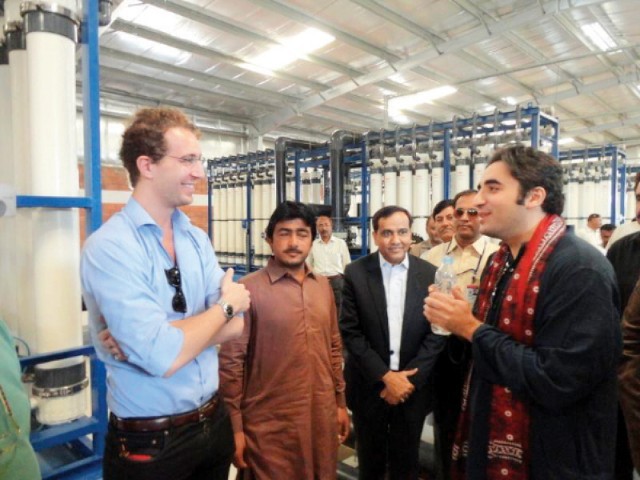
While the islands around Keamari, Baba and Bhit, have been neglected by the government and city administration time and again, there are people taking an initiative to ensure that the people living there have access to safe and clean drinking water. These people include the patron-in-chief of the Pakistan Peoples Party (PPP) Bilawal Bhutto Zardari, his father and uncle.
Feeling parched
The seawater along the coasts of these islands is filthy and full of garbage. Three months ago Pak Oasis Pvt Ltd set up and is currently running a water filteration plant for the islands. They manage to distribute water to the entire village – about 17,000 people. Eventually, the adjoining village will also receive water and they will be able to provide another 15,000 people with clean water.
This project is being run under the Shaheed Benazir Bhutto Water Schemes for Lyari and Keamari. The reverse osmosis plant – RO2 – was initiated in 2010 was finally completed last year and became functional three months ago when the water board gave it access to water. The plant runs at a cost of Rs140 million and is generating about 0.1million gallons of water for the village.
Bilawal Bhutto took a special interest in setting up the project when he visited the plant nearly four years ago. At the time, he said he wanted to build a village which would serve as a model for others. This village, he claimed, he would monitor himself to make sure that there was running water available for fishermen.
A water expert from Dubai, David James, was visiting the islands for monitoring purposes and claimed that this was a model project and should be replicated all over the city.
“The desalination plants here use the latest reverse osmosis technology to provide safe drinking water to everyone on the island,” he said. “Despite the high levels of pollution in the seawater, it goes through a pretreatment and water conditioning process to ensure that it meets the World Health Organisation standards.
The water expert claimed that this water was better than bottled water.
Thirsty for more?
With access to clean water, many villagers claim they can finally relax.
Bashir said that being a fisherman, he knew that life was tough but having access to an unlimited supply of water was nothing short of a miracle. “Now my children can bathe with clean water whenever they want,” he said. “My wife can cook meals without running across the village to get water.”
According to another villager, Salma, she used to send her youngest daughter to get a can of water for Rs40 every day. “My husband would bring Rs50 or Rs100 home every day and more than half of the money would go on purchasing a limited amount of water.”
Nargis, a lady health worker who lives on the islands, said that the project had been a blessing for them as they didn’t have to worry about water any more.
The president of the Pakistan Fishermen Union, Dr Yousuf, claimed that since the plant was installed, more than 99% of their thirst for water had been quenched.
 BY MIRWAIS HAROONI AND MARIA GOLOVNINA
Afghan presidential contender Abdullah Abdullah's camp rejected preliminary results of last month's run-off election on Monday as a "coup" against the people, putting him on a dangerous collision course with his rival, Ashraf Ghani.
The Independent Election Commission on Monday announced that Ghani won the June 14 second round with 56.44 percent of the vote, according to preliminary results. The tally might change when the final official numbers come out on July 22.
Abdullah's camp responded angrily, saying the result was invalid as it did not throw out all the fraudulent votes.
"We don't accept the results which were announced today and we consider this as a coup against people's votes," said Mujib Rahman Rahimi, a spokesman for Abdullah's campaign.
His rejection sets the stage for a possible bloody standoff between ethnic groups or even secession of parts of the fragile country, which is already deeply divided along tribal lines.
Abdullah, a former anti-Taliban resistance fighter, has long alleged widespread fraud in the messy and protracted vote and insisted results should be delayed until all problematic poll stations have been audited.
Son of a Pashtun father and a Tajik mother, he draws much of his support from the Tajik minority in northern Afghanistan and is capable of drawing massive crowds who are likely to be equally enraged by Monday's announcement.
Ghani, for his part, has strong support from Pashtun tribes in the south and east. In the southern city of Kandahar, hundreds of people took to the streets late on Monday to celebrate.
Officials warned this was not the final result, however.
"The announcement of preliminary results does not mean that the leading candidate is the winner and there is possibly the outcome might change after we inspect complaints," IEC chief Ahmad Yousuf Nuristani told reporters.
The United States echoed the view.
"We have seen today’s announcement of preliminary results and note that these figures are not final or authoritative and may not predict the final outcome, which could still change based on the findings of the Afghan electoral bodies," State Department spokeswoman Jen Psaki said in a statement.
"Serious allegations of fraud have been raised and have yet to be adequately investigated."
The deadlock over the vote has quashed hopes for a smooth transition of power in Afghanistan, a concern for the West as most U.S.-led forces withdraw from the country this year.
Earlier on Monday, rival camps tried to find a last-minute compromise to keep Afghanistan from sliding into a protracted period of uncertainty.
Nuristani said the commission had received a request from Abdullah's camp to review ballot papers from more than 7,000 polling stations on suspicion of fraud - which could significantly alter the result if recounted.
"We announced preliminary results today and it is now the complaints commission's duty to inspect this case," he said. "We are ready to provide any assistance until the end of the process.”
DANGEROUS STANDOFF
The vote to pick a successor to Hamid Karzai was intended to mark the first democratic transfer of power in Afghan history, a crucial step towards stability as NATO prepares to withdraw the bulk of its troops by the end of the year.
Western powers, particularly the United States, had hoped for a trouble-free process that would show that 12 years of their military involvement in Afghanistan were not in vain and contributed to the country's nation-building.
But the process has been fraught with accusations of cheating from the start.
Without a unifying leader accepted by all sides, Afghanistan could split into two or more fiefdoms along tribal fault lines, or even return to the bloody civil war of the 1990s.
Abdullah has accused Karzai, also a Pashtun, of playing a role in the alleged rigging in Ghani's favour and says he would accept the vote only if he saw firm evidence that fraudulent votes had been thrown out and the final result was clean.
Taliban insurgents remain a formidable security risk after vowing to disrupt the election process. On Monday, they killed a district police chief in the western city of Herat and attacked a check point in northern Afghanistan.

The Independent Election Commission (IEC) announced preliminary results of the runoff presidential election Monday evening with Ashraf Ghani Ahmadzai leading with 56.44 percent.
Presidential candidate Abdullah Abdullah fell behind with 43.56 percent.
Tonight's results were made up of 100 percent of votes cast across the country.
Head of IEC Ahmad Yousuf Nuristani said the total number of voters announced this evening was eight million; exactly 8,109,403.
Of the, little over eight million votes, 62.37 percent of the voters were male and 37.63 percent were female.
Dr. Ghani-Ahmadzai led the preliminary results with exactly 4,485,888 votes, with Dr. Abdullah trailing behind with 3,461,639 votes; a difference of exactly 1,024,249 votes between the two candidates.
During the announcement Nuristani said that the IEC accepts the fact that there were technical problems as well as frauds that took place in the election process.
He emphasized, after the announcement of the results, that these are not the final results.
"The announcement preliminary result does not mean the winner has been announced," Nuristani said. "The investigation of votes could have impacts on the final results, so we demand the candidates and their supporters to stay calm."
He added that on Election Day a total of 928 polling sites were closed, of which 579 were closed prior to elections, 299 sites votes were not cast and 50 stations were declared closed by the election commission because of security reasons.
In reaction to the preliminary results, Mujib Rahman Rahimi, spokesman to Abdullah's electoral camp, said they expected a total of seven million votes including frauds, but IEC chairman's announcement of eight million votes was unexpected.
"We do not accept the results announced this evening by the IEC," Rahimi told TOLOnews.
According to the IEC runoff election timeline, the publication of the final results will be July 22.
A new report terms Pakistan as one of the most dangerous countries in the world for religious minorities.
In line with a recent report publicized by Minority Rights Group International (MRG): Pakistan is one of the most dangerous countries in the world for religious minorities. The Minority Rights Group International sent this report to Fides Agency which was released to create Human Rights violation awareness. This report sent by the Minority Rights Group International notes: since 1980, attacks on minority groups (Christians, Hindus, Muslims, Shiites and Hazaras) have been on the rise and also the “targeted killings” have reached unprecedented levels.
This report was based on the official figures and facts thus available to the organization. Their report further discussed that: the attacks against Shiite and Hazaras communities have a “disturbing level” (700 Shiites killed in 2013). The organization termed the Pakistani Government’s counter-action as “totally inadequate” response of the Pakistani government, which “should send a clear message, showing that such attacks are unacceptable and do not go unpunished. The organization further state in this report that: Turning a blind eye to the atrocities, the government legitimizes a culture of impunity among the militant groups, while minorities live in fear everyday. If criminals are not brought to justice quickly, more mass violence on minority groups is likely to happen.
Furthermore, the report states that: most of the attacks are carried out by three militant groups Sipah-e-Sahaba Pakistan (SSP), Lashkar-e-Jhangvi (LEJ) and Tehreek-e-Taliban Pakistan (TPP). The main targets are, above all, professionals, doctors, lawyers, politicians, businessmen, religious leaders and human rights activists. According several interviews of local Human Rights activists conducted by the Minority Rights Group International, these attacks are designed to depress and sideline the religious minority communities living in Pakistan; causing massive exodus of the Christians from Pakistan. The report highlights that the “climate of fear” is being stimulated with hate campaigns conducted in mosques, schools, public spaces and social media.
- See more at: http://www.christiansinpakistan.com/a-recent-report-tags-pakistan-as-dangerous-country-for-religious-minorities/#sthash.NHHkezKe.dpuf

Most of the problems the PML-N faces are caused by the prime minister’s highly personalised style of governance. The PML-N has no party life, no decision making bodies, no internal discussion and debate. The party chief keeps party members at arm’s length. Not to speak of ordinary lawmakers, even cabinet ministers cannot turn to him for help or advice. Nawaz Sharif continues to retain several portfolios, relying on bureaucrats instead of sharing his responsibilities with party colleagues. The cabinet meetings are infrequent as key decisions are taken by a kitchen cabinet that mostly comprises family members.
As there are no clear policy directions, one hand in the government does not know what the other is doing. Cabinet ministers openly contradict each other. A few months back Ch Nisar publicly ridiculed Sartaj Aziz on his statement regarding Washington’s assurance to suspend drone strikes. While Nisar called most TTP leaders patriots, some of his colleagues described them in TV shows as criminals and cutthroats who were out to destroy the country.
Instead of reconciling the differences between important leaders, there has been a tendency to look the other way as they fought against each other. The struggle for influence and power led some of the party old timers to form factions. Nawaz Sharif’s policy of promoting different leaders at different times further strengthened the tendency. This has led to the ongoing face-off between the interior minister and the party leadership.
The prime minister is reportedly going to expand the cabinet. The step is welcome as it would remove one of the old grievances among the ruling party parliamentarians. What is needed on Sharif’s part is to run the party on democratic lines. Decisions should be taken at proper forums after thorough discussions instead of being made arbitrarily and at the spur of the moment. None should be allowed to defy them. Differences within the party are useful only if they are expressed at proper forums and kept within manageable limits.
The Express Tribune
First the Khan of the hujra used to beat me, and now the cleric beats me.
These are some of the simplified lines from poet Heran Mohmand that, despite their misery, resist by virtue of naming and shaming the perpetrator of violence.
Nearly a decade of militancy and violence has hardened the poets from North Waziristan Agency. The bloodshed and insecurity has taken a toll on their work while simultaneously painfully turning it into fodder for their writings which reflect the chaos they witness every day, says poet Saleem Zaheer.
The tribal poet, a member of the Wahdat Adabi Tolna of Miranshah, has written several war poems that emanated out of his first-hand experience of the conflict in North Waziristan.
“Poets jot down what they observe in their surroundings and their work is rife with personal experiences and perspectives on their environment,” he says. This is why the poetry of Waziristan is markedly different from what you will find in parts of Khyber-Pakhtunkhwa which speak more of resistance. “Us Waziristanis are suppressed from all sides,” Zaheer says. “Not only are we victims of militancy but of Pakistani society as well.”
But despite living in deplorable circumstances, the agency’s poets have long managed to organise a monthly meeting in which they recite poetry on peace, which is the need of the hour. These gatherings emerged from the tradition of reciting poetry at events like weddings. Abdul Nasir Makhdoom, a Pashto poet from Bannu, is one person who has regularly visited North Waziristan for such gatherings. A large number of people show up, he says. “If there is peace they will write about peace and if there is war the poet will write on war,” he explains. There is no escaping your environment.
According to Makhdoom, many poets who regularly wrote war poems have come to Bannu and seen the miseries of the people displaced from the agency. “They have changed their minds and want to write about peace now,” he claims. The poets seem to understand that they can do something to lift spirits and push for peace in the area. They felt bound by the realities of war. Their conscience did not allow them to turn away from it; they had to write about it. But now they understand that resistance in the form of imagining peace is also important. In the words of one poet:
“The words brought to me by the Zephyr are clear. The message of the massacre in every village is clear. By telling lies, the conscience pricks, if you tell the truth, you will know your fate.”
They feel, however, that their contributions are generally neglected by the media. Zaheer laments that the government and the people of Pakistan have neglected tribal poets for decades. “Neither the government nor any civil society organisation has arranged any platform for poets to showcase their work,” he adds.
The good news is that in Bannu, the Wazir tribes of the agency have their own literary societies and have decided to hold a gathering on Eid for internally displaced poets,” adds Makhdoom. “The agenda will be peace.”
 Although this year too, as usual, the PPP held seminars to condemn the July 5, 1977 military coup against Zulfikar Ali Bhutto’s government, it was inescapable that the party commemorated arguably one of the most important days in its history more with a whimper than a bang. Seminars reiterating the party’s adherence to the democratic system, going to the extent of promising support to the incumbent PML-N government against all attempts to destabilise democracy and replace it with some ‘doctored’ dispensation that would be essentiality a back door anti-democratic dispensation, were held in Islamabad, Lahore, Karachi and Quetta. The PPP reiterated its stance despite what it described as differences with the government. Senator Raza Rabbani stretched logic by arguing that the recent revelations of the US’s National Security Agency’s (NSA’s) spying on the PPP when it was in power in the last government proved that not only reactionary internal forces but also foreign imperialists were behind Bhutto’s overthrow and eventual hanging by General Ziaul Haq. Whereas the argument that the US was hostile to Bhutto because of his efforts to unite the Muslim world and give Pakistan a nuclear deterrent hold weight, to extrapolate backwards in a completely different context and time the NSA’s ‘universal’ spying on governments, political parties, organisations and even individuals as proving the point of imperialist hostility is a tenuous case. Of course the PPP’s argument that the country is suffering from religious extremism, sectarianism and terrorism because of General Zia’s ‘contributions’ to these phenomena is difficult to disagree with.
The thrust of the PPP leaders and speakers’ speeches on the day centred on proving the credentials of the PPP as a democratic, anti-imperialist party. The first part is proved by the track record of the PPP since the restoration of democracy in 1988 and again in 2008. However, the latter description, including what was once the PPP’s progressive or even socialist bent, would be difficult to trace in the party’s pronouncements or practice for long years now. That bent owed much to the spirit of the 1968-69 movement against Ayub Khan’s dictatorship in which the demand for the restoration of democracy was underlined with very many radical formulae in the direction of a socialist order. All that has been history for a very long time now and the PPP currently, despite its exertions, would be hard put to it to establish itself as a party of the left currently. The main reason for this decline, and the weakening of the party generally, is the loss of its once redoubtable fortress of Punjab. How the mighty have fallen if one recalls that in the 1970 elections, the received wisdom was that even if the PPP put up a lamppost as a candidate in the 1970 elections in Punjab, it would win against all comers. Bhutto’s overthrow in 1977 and subsequent hanging by General Zia in 1979 was of course a body blow to the PPP and forced it to struggle for survival against the military dictatorship’s repression as well as struggle for the restoration of democracy, the high point of which was the MRD movement of 1983. The crushing of that movement sounded with hindsight the death knell of the PPP’s left wing orientation as well. The PPP’s subsequent political trajectory under Ms Benazir Bhutto reflected a pragmatic acceptance of the currents of the time, centred on liberal democracy and neo-liberal economics. That of course left little or no room for left wing ideas. Not only did the PPP as an organisation decline in its stronghold Punjab since 1977 because of extreme repression, its subsequent leadership in Punjab never proved equal to the task of survival, revival and dynamism required in Punjab on the basis of the original programme of the rights of workers, peasants and the common man. Incremental abandonment of the party’s left ideology has rendered it, apart from leadership issues, weak and ineffective in Punjab. The results of last year’s elections prove the point, in which the PPP was virtually wiped out in Punjab, where the contest was largely between the right wing PML-N and the PTI. The party has been reduced to a rump party with support only in Sindh.
To restore its glory days, the PPP will have to return to its left roots, especially in Punjab, and bring in a leadership in the province capable of inspiring the demoralised ranks of its workers and supporters.
 By Lasanda Kurukulasuriya
 Pakistani asylum seekers in limbo as authorities get tough. A view from Sri Lanka
While asylum seekers have been known to originate from Sri Lanka in large numbers seeking a better life in western countries, it is a little unusual for the island to make the news for hosting them. An influx of asylum seekers from Pakistan to Sri Lanka has created such a situation, and has caught the UN High Commission for Refugees (UNHCR) and others unprepared, it seems.
The suspension a week ago of the visa-on-arrival facility for Pakistani nationals travelling to Sri Lanka signalled that the issue had reached a turning point with immigration authorities. The arrest and detention of 142 Pakistani asylum seekers and refugees last month came without warning, and has created a climate of fear and insecurity among the community of 1,433 asylum seekers and 185 refugees who are Pakistani nationals, currently in Sri Lanka. Most of them are from the Ahmadi community, considered apostate in Pakistan, while there are some Christians and Sunni Muslims too. The steep increase in arrivals took place in 2013.
In 2012, asylum seekers of all nationalities totaled just 200, and refugees 103, according to the UN refugee agency.
While there have been media reports that suggest those arrested are to be deported, the agency’s Colombo office says there were no deportations as of June 30, 2014. The UNHCR has not been informed of the government’s intentions with regard to the detainees, nor the charges against which the arrests were made. It has reminded the Sri Lankan government of its obligation to observe the principle of ‘non-refoulement,’ which forbids the handing over of victims of persecution to their persecutors.
“Sri Lanka is not a signatory to the 1951 Convention Relating to the Status of Refugees or its 1967 Protocol,” according to Dushanthi Fernando, a spokesperson for UNHCR. “The cooperation with UNHCR is based on the agreement signed between the UNHCR and the government of Sri Lanka in 2005 that contains references to UNHCR Statute, 1951 Convention and 1967 Protocol. In addition, Sri Lanka is bound by observance of the principle of non-refoulement that has attained the status of international customary law.
The Ministry of External Affairs (MEA) says the visa- on-arrival facility, which allows a 30-day stay with the possibility of extension, was designed to promote tourism, but has been abused by some Pakistanis who used it to gain entry to the country and then walked into the UNHCR to claim refugee status. “We don’t want such people to come here and be a nuisance to the local community,” says A.M.J. Sadiq, Director General of Public Communications MEA.
The MEA maintains that immigration authorities made the policy change decision.
Repeated attempts to reach the Controller of Immigration for comment were unsuccessful.
“No one wants to leave their motherland. All we want is safety for our lives and for our children to have a future,” says Maria (56), a physiotherapist who has been living for over a year with her husband and son (17) in the coastal town of Negombo, 38 kilometres north of Colombo where most of the community is concentrated.
Speaking on the phone, she says, she was a Christian who engaged in evangelism and faced death threats in Pakistan. She ran a clinic back home, but had to keep shifting and eventually had to close it. “We have religious freedom in Sri Lanka” says Maria (not her real name).
The task of ascertaining the genuineness of an asylum claim is said to take up to two years. The UNHRC says once people are recognised as refugees the agency supports them “until a durable solution is found for them”.
This usually means relocation in a third country ready to accept them.
The asylum seekers in Negombo are partly supported by a Netherlands-based organisation called Pakistani European Christian Alliance (PECA) that pays their rent, it is learnt. The local mosques and churches in this predominantly Catholic town also assist them.
“My concern is for the children — there are about 60 — with no proper school education,” says Fr. Terrence Bodiya Baduge, the parish priest of St. Sebastian’s church. He had arranged informal classes for the children with volunteers from among the asylum seekers, but the school had to close when three of its five teachers were arrested during the recent roundup and taken to a detention centre in Boossa, the pastor adds. An Urdu language mass held twice a month was also discontinued, as people no longer came because of fear.
He observes, it is possible that not all asylum seekers’ cases are genuine, but humane considerations take precedence. “I’m helping them because they are human beings,” he says.
Given the suddenness of the visa policy change and arrest of the Pakistani nationals with no reasons given, the media have also speculated on the realpolitik dimension of these developments. Reports point out that when India’s new Prime Minister Narendra Modi met Sri Lanka’s President Mahinda Rajapaksa for bilateral talks following his swearing in ceremony in New Delhi in May, one of the concerns he raised was the possibility that Pakistani terrorist groups were using Sri Lanka to plan attacks against India.
“The Sri Lankan administration is in danger of falling between two stools, in its inept handling of its relations with India and Pakistan,” says political analyst Dr Dayan Jayatilleka. “The possibility of deportation of Pakistanis seems to me to be a Sri Lankan sop to a neighbouring Cerberus.” Elaborating, he says, Indo-Lanka relations have been eroded by several issues, above all the non-fulfillment of the Sri Lankan leadership’s pledge to the government of India to fully and expeditiously implement the 13th amendment to the constitution which makes for devolution of power to the provinces, most pertinently the Tamil dominated Northern Province. “…The Sri Lankan ruling elite seems to have settled on assuaging India’s security threat perceptions with relation to the use of Sri Lanka as a transit point or staging post by Islamic extremists. The crackdown on Pakistani immigrants takes place against this backdrop.”