Tuesday, November 5, 2013

Pakistan: Glorifying TTP killers; ignoring victims

All of a sudden, a massive uproar over the death of a deadly killer—Hakimullah Mehsud, who along with his sister militant organizations involved in illegal war against the state of Pakistan, is being heard all over the country. The PTI, ignoring cries of mothers, sisters, fathers and brothers who lost their dear ones in the TTP bombings, has stood up, in the garb of peace talks, for the oppressors who met his logical end. Thus the party has given a deadline to the government to cut off NATO supplies to punish the Americans for eliminating enemy of the people of Pakistan. Though Imran Khan is not a supporter of the TTP by all means yet he is raising hue and cry as if Pakistan, in heat of dialogue process, had unilaterally abandoned the use of military might against the TTP which was continuously targeting the innocent people in hundreds and the Americans had downed a friend of Pakistan. In a complex situation like this, the TTP was playing its cards a bit more sensibly as compare to its opponents—the government of Pakistan; it used its bombers to show off its muscles, setting reluctantly right foot forward for the peace talks, and submissive government of Pakistan withdrew its military might like defeated souls to bring the killers on the negotiating table, leaving troops to salute their aggressors-cum-slaughterers at the negotiation venue. The Americans did not agree with the coward policy that the political and military leadership of Pakistan was pursuing in the falsified hope for winning peace in the region. They eliminated the man whom they considered enemy of their troops. However, it enraged Pakistan’s leadership. We do not endorse the Americans’ dictate or military intervention in the internal affairs of Pakistan at any cost but we do oppose emotional rhetoric that most of the political leadership is executing over the death of Hakimullah. He was enemy of the state of Pakistan and its people. He has met with his logical end, and all those who are following him should be given a loud and clear message that they too, sooner or later, will meet the same fate if they fail to comply with the state. The Pakistan army has offered supreme sacrifices for the defense of the country and for safety of the people. Thus it should not be sidelined like bench of cowardice fighters. Had the Pakistan army targeted Hakimullah it would have pleased the entire nation. The heirs of the victims of the terrorists must have worn a welcome smile on their faces. Notwithstanding the Americans’ so-called heroics, the number one enemy of Pakistan is gone and many more to follow till misguided elements drop their guns. To achieve peace in the region, the government has to judiciously use carrot and stick policy rather than glorifying the TTP, ignoring the victims.

People’s Workers Union wins Pakistan Steel CBA referendum

http://mediacellppp.wordpress.com/
People’s Workers Union (PWU) has won Pakistan Steel Mills (PSM) referendum and become Collective Bargaining Agent (CBA) for next three years. The referendum was held on Monday on the directives of NIRC and witnessed about 80 percent of turnover as out of 10,179 registered voters some 8,191 workers cast their votes. Some 18 polling stations were set up at Pakistan Steel for the polling which started at 8 am and continued till 5 pm without any interruption. According to unofficial result Pakistan Steel Peoples Workers Union secured 4,264 votes, Pakistan Steel Labour Union (PASLU) 3,570 votes and a coalition of Workers League and United Workers Union (UWU) bagged only 288 votes. While, some 54 votes were declared invalid/ rejected. With this victory for the fifth consecutive period PWU has become PSM CBA, earlier PWU had won PSM referendum in 1995, 1995, 2008, and 2010. After result a large number of workers reached CBA office Pakistan Steel to celebrate the victory of PWU. While, addressing the workers gathered at CBA office, Shamshad Qureshi chairman PWU said that this victory is reward from Allah because of our efforts for the national asset. He said that PWU is against the privatisation and will make all efforts to stop the sale of Pakistan Steel. He also demanded the one go bailout package for revival of Pakistan steels and said that timely availability of raw materials will be our first priority to run this mills at maximum production capacity. Shamshad Qureshi also presented rich tribute to the Zulfiqar Ali Bhutto and Benazir Bhutto and said that the PWU historical victory was the result of unprecedented sacrifice of the PPP leaders. “Pakistan Peoples Party will oppose the privatisation agenda in the senate and in the national assembly, besides protest on the streets”, he added. Meanwhile Sindh Chief Minister Syed Qaim Ali Shah has congratulated the PWU over its historical victory in the referendum and said that PSM was the gift of Shaheed Zulfiqar Ali Bhutto to the people of Pakistan. Moreover, Waqar Mehdi, Special Media Advisor to Chief Minister also greeted the victory of PWU.

اسامہ بن لادن کی طرح حکیم الله محسود دیوبندی بھی پاکستانی فوج کی آغوش میں چھپا ہوا تھا

میرانشاہ: وزیرستان کے علاقے ڈنڈی درپہ خیل کے ایک دکاندار سمیع اللہ وزیر نے حکیم اللہ محسود پرحملے کا منظر اپنی آنکھوں سے دیکھا۔ اے ایف پی سے بات کرتے ہوئے سمیع اللہ نے بتایا کہ وہ روزانہ باقاعدگی سے ایک قافلے کو سامنے والی شاندارعمارت میں آتے جاتے دیکھاکرتا تھا اور سوچتاکہ یہاں کوئی بہت ہی اہم ہستی رہتی ہوگی۔ سیاہ شیشوں والی4 سے 5بڑی گاڑیوں پر مشتمل یہ قافلہ روزانہ صبح سویرے روانہ ہوتا اور بعد مغرب کے لوٹتا۔ ایک دن سفید شال اوڑھے ایک شخص کو اس عمارت میں داخل ہوتے دیکھ کر مجھے لگا کہ وہ حکیم اللہ محسود ہے مگر پھر میں نے سوچا کہ وہ بھلا یہاں کہاں ہوسکتا ہے ورنہ آسانی سے ڈرون حملے میں مار نہ دیا جائے، مگر وہ وہی نکلا۔ اس دن ہم دکان بند کررہے تھے کہ جب اس کی گاڑی آئی۔ ابھی وہ عمارت میں داخل ہونے ہی والی تھی کہ اچانک ایک میزائیل نے اسے اڑادیا۔ وزیر نے مزید کہاکہ چند ہی لمحوں میں طالبان کی نفری آئی اور علاقے کو گھیرے میں لے لیا۔ ذرائع کے مطابق حکیم اللہ محسود کی رہائش گاہ یہ عمارت اور منسلک فارم ہاؤس کی قیمت اندازاً1لاکھ 20ہزار ڈالر ہے۔ وہ یہاں اپنی2بیویوں کے ساتھ مقیم تھا۔ شمالی وزیرستان کے لیے پاکستان آرمی کا ہیڈکوارٹر یہاں سے صرف ایک کلومیٹر کے فاصلے پرواقع ہے۔ مقامیوں کے نزدیک یہ اس خطرناک علاقے کی سب سے محفوظ جگہ تھی۔ فوجی کیمپ کے اتنے قریب حکیم اللہ کی رہائش نے اسامہ بن لادن کی اقامت گاہ کی یاد تازہ کردی جو ایبٹ آباد میں پاکستان ملٹری کی سب سے معتبراکیڈمی کے بالکل قریب واقع تھی۔ - See more at:
http://lubpak.com/archives/288719#sthash.JwXhThGr.dpuf

Pakistan's Jamaat-e-Islami: THE TREASON OF CALLING TERRORISTS MARTYRS

Jamaat-e-Islami’s Khyber Pakhtunkhwa chapter chief, Prof. Mohammad Ibrahim, says Hakimullah Mehsud and his companions who were killed in a U.S. drone strike on Nov. 1 are martyrs. They are martyrs, he says, because “they were eliminated when they were in the process of dialogue for permanent peace [sic] in Pakistan.” Ibrahim’s statement, which doesn’t come as a surprise, nonetheless raises many questions. But first, a word about Jamaat’s position: The party, while trying to stay in the mainstream, has made many Freudian slips on where it stands on Al Qaeda and the Taliban. Intelligence reports over the years have determined a clear connection between many Al Qaeda terrorists and Jamaat leaders at various tiers. One of its Khyber Pakhtunkhwa leaders, Siraj-ul-Haq—who was a senior minister in the Muttahida Majlis-e-Amal government and is the Jamaat’s pointman again in the coalition government in the province with Pakistan Tehreek-e-Insaf—was very close to Pakistani Taliban commanders in Bajaur, including Maulvi Faqir. Ditto for Haroon Rashid, another Jamaat leader from Bajaur. When Osama bin Laden was taken out in a U.S. raid in Abbottabad, several Jamaat leaders publicly declared him a martyr. The party’s position is therefore clear even as it continues to present itself as a moderate political force and resorts to dissembling and lying on television programs and in the rightwing press. The Pakistani government, and by extension the Pakistan Army, has a clear position on Al Qaeda as well as on the Tehreek-e-Taliban. Despite an ill-thought move to talk to the Taliban, that position, legally and constitutionally, remains unchanged. The Army continues to operate in the federally-administered tribal areas under Article 245 of the Constitution and has, over the years, lost thousands of soldiers in this fight. Intelligence reports also indicate activity of hostile agencies in the area and the links of various groups that are a part of the Taliban franchise with these agencies. At the minimum, therefore, the government needs to call the Jamaat out on its position. This step can also be taken by the Army, which can petition the Supreme Court against Jamaat’s position which clearly runs contrary to that of the state and its Constitution. The Jamaat emir, Syed Munawar Hasan, unless he is in agreement with Ibrahim, needs to clarify Ibrahim’s words and remove him for taking a treasonous stance on the issue. If Hasan does not do that, Ibrahim’s statement should be deemed to be the official position of the Jamaat. In that case, the petition must also name the Jamaat emir and the party itself. War-fighting requires a clear friend-enemy distinction. This war cannot be won until the terrorist can be dislocated from the context that strengthens him. Fighting among the people, which is what this irregular war is all about, must also understand the importance of audiences as also of communicating messages. Jamaat’s position and its agenda must therefore be seen in and through the interpretive structures that seek to influence the discourse. In this case, the discourse is being influenced in favor of a terrorist outfit and against the state. A state can afford to ignore such signaling only at its own peril. Given the urgency of the situation and the looming threat, the state of Pakistan, represented by the Pakistan Muslim League (Nawaz) government at this point in time will have to move fast and with resolve to put down attempts by individuals or entities, political or otherwise, to muddy the waters and present terrorist groups as examples to be emulated. Of course, the state must utilize its legal structures to do this. The Jamaat must be given the opportunity to present its viewpoint and the issue should be fairly adjudicated. What is important at this point is to signal to sundry elements who want to have their cake and eat it too. They cannot be allowed to play on both sides of the fence.

Monday, November 4, 2013

Escalation of terrorist violence must push Beijing to address root causes

Last week, an SUV careered along a pavement in front of the portrait of Mao Zedong to the north of Tiananmen Square, ploughed into a crowd and burst into flames, killing three occupants in the car and two pedestrians, and injuring some 40 other people. After two days of silence, the authorities said it was a terrorist attack that had been "carefully planned, organised and premeditated" by several people from Xinjiang . The perpetrators had been identified as the three occupants of the car, Usmen Hasan, his wife and his mother. A petrol container, an iron rod, two machetes and a flag imprinted with an extremist religious message were found in the car. Within 10 hours of the car crash, the police had caught five suspects in connection with the attack. Although Beijing tried to play down the ethnic identity of these Xinjiang people, their distinctive names draw a clear link to China's Uygur ethnic minority. The Tiananmen attack signals that Chinese domestic terrorism may have reached a new dimension, in terms of the devastation and impact it generates, for three reasons.First, it was the first terrorist attack in Beijing. To make things worse, the attack occurred on the verge of Tiananmen Square, the very heart of the capital city and the nation's political centre. The symbolic intent of the attack cannot be understated. Terrorist violence had previously been confined to Xinjiang in the far west, but authorities had long been apprehensive about an attack in the heart of the nation. Now that the day has come, the Chinese government may feel a compelling need to prevent copycat actions by tightening security not only in Beijing but also in other eastern population centres. Second, it was probably the first successful suicide attack in China. A similar case was the horrendous - albeit low-profile, for complicated reasons - suicide bombing plot targeting a Beijing-bound passenger plane in 2008. If that had not been foiled, it would have caused a catastrophe. By any means, the Tiananmen attack can be categorised as a suicide attack, generally a phenomenon that occurs outside China, in the context of the global jihad waged by militant Islamists. Suicide attacks are usually carried out by an individual wearing an explosive vest or driving a vehicle filled with explosives. Today, terrorist organisations around the world rely increasingly on such attacks, because they are lethal, inexpensive, accurate, secure and shocking. Suicide bombings are terrifying; a mere rumour of an impending attack can cause great panic and paranoia. It is for these reasons that they have spread from the Middle East to Pakistan, Sri Lanka, Russia, the United States, and now to China. Third, the suicide attack involved female bombers, whose participation signals a dangerous trend, if not a turning point, with regard to the security situation in China. The wife and mother in the Tiananmen attack, together with the 19-year-old Uygur woman plotting to bomb the Beijing-bound plane, bring to mind the female Tamil Tiger warriors in Sri Lanka and the "black widows" of Chechnya. In an interview, Rebiya Kadeer, the exiled political leader of the Uygur community, chose to justify the Tiananmen attack, saying that the Uygurs might have done it out of desperation "because there is no channel for the Uygur people to seek redress". In the US, State Department spokeswoman Jen Psaki declined to call the incident a terrorist attack, and reaffirmed American support for Uygur human rights. Apparently, both women tried to avoid condemning what is believed to be a terrorist attack. Although terrorism is understandably difficult to define, there should be a minimum consensus that any deliberate attack on innocent civilians is unacceptable. Terrorism is the common enemy of all the people and the countries in the world. The UN General Assembly has stressed on many occasions its unequivocal condemnation of terrorism in all its forms and manifestations, committed by whomever, wherever and for whatever purposes. In a nutshell, nothing can justify terrorism. Owing to the escalation of terrorist violence, Chinese citizens expect their government more than ever to protect them, but counterterrorism is not an easy job. The reality is that no society is immune from terrorism, just as nobody is immune from cancer. As a rule, suicide attacks are not the desperate acts of lone outlaws, but are undertaken by motivated individuals in broader social conditions that breed terrorism. For the government, the right response is not to fall victim to the psychological paralysis that suicide terrorists aim to achieve, but to take concrete measures to address the breeding conditions.

Hakimullah Mehsud was hardly Pakistan's great hope for peace

US drone strikes trouble Pakistan's politicians, but peace talks with the Taliban leader may well have come to nothing
Samira Shackle
Hakimullah Mehsud, leader of the Taliban in Pakistan, was killed in a US drone strike on Saturday. Photograph: Ishtiaq Mehsud/AP Hakimullah Mehsud, leader of the Pakistani Taliban, was responsible for the deaths of thousands of innocent Pakistanis. Under his leadership, the Taliban targeted Pakistani soldiers and civilians, slaughtered Shia Muslims and almost derailed this year's general election by selectively targeting liberal parties. Yet the news of Mehsud's death in a US drone strike on Saturday has not been unanimously well received. The interior minister, Chaudhry Nisar Ali Khan, sounded as if he was in mourning when he said: "This is not just the killing of one person, it's the death of all peace efforts." Imran Khan, who heads the provincial government in the north-western province of Khyber Pakhtunkhwa, has reiterated a threat to block Nato vehicles from passing through his province unless drone strikes are discontinued. While journalists and others pointed out that Mehsud was terrorising the population of Pakistan, most politicians sounded ambivalent at best. This reaction is partly the result of immediate political concerns. The conservative government of Nawaz Sharif came to power in May on a platform of peace talks with the Taliban and action against drone strikes. A few weeks ago, Mehsud took the unusual step of giving an interview to the BBC in which he said that his organisation was open to talks. Politicians from both Sharif and Khan's parties are presenting Mehsud's death as a devastating blow to these efforts. Nisar and others have even suggested the US deliberately timed the strike to undermine dialogue. The Tehreek e Taliban Pakistan (TTP), which Mehsud had led since 2009, has tentatively said that talks may still go ahead, but it is likely that Mehsud's death will delay the process. Of course, the overblown rhetoric coming from politicians fails to acknowledge that talks with the Taliban were at an embryonic stage. Mehsud's outlandish conditions for dialogue included the imposition of a harsh version of Islamic law across the country. Peace talks with the TTP have taken place before, and have always ended in failure, so it perhaps an over-statement to imply that had Mehsud survived, peace in Pakistan would have prevailed. Drone strikes, however, remain politically difficult. The public is divided, but the prevailing mood – encouraged by politicians – is that their use is yet another US violation of Pakistan's sovereignty. As always in Pakistan, the real picture is complex (many people in the areas most affected by terrorism actually support drone attacks, despite civilian deaths), but anti-Americanism is also rife. Even if a common enemy has been killed, it is difficult to celebrate if it is the result of Americans intruding on Pakistani soil. In Pakistan, it can be difficult to have any political discussion without the blame eventually being pinned on America. This paranoia is the result of years of perceived – and often real – double-crossing by the Americans. The confused reaction that results is reflected in how people who deplore terrorism and hate the TTP speak admiringly of the Afghan Taliban because they are standing up to American invaders. Pakistan has taken a heavy toll in the war on terror. At least 35,000 people have died in terrorist violence since 2001, a figure that dwarfs the combined death toll in all western countries. Ultimately, the death of a single Taliban leader will make little difference to the group's campaign of terror as the power structures are decentralised enough to absorb such losses. Which begs the question: what hope is there for peace? Clearly, the leaders of Pakistan and the US have yet to find any credible options.

NATO chief urges Pakistan to keep Afghan transit lines open

NATO chief Anders Fogh Rasmussen urged Pakistan on Monday to keep open supply lines to NATO forces in Afghanistan despite anger over a U.S. drone strike that killed the Pakistani Taliban leader. Pakistan said on Sunday it would review its relationship with the United States after Pakistani Taliban leader Hakimullah Mehsud was killed two days earlier in North Waziristan, near the Afghan border. "I feel confident that the Pakistani authorities will maintain open supply routes and transit routes because it is in Pakistan's own interest to contribute positively to stability and security in the region," Rasmussen told a news conference. The Pakistani government denounced Mehsud's killing as a U.S. attempt to derail peace talks with the Pakistani Taliban, who have killed thousands in their campaign to impose Islamist rule. Some Pakistani politicians have demanded that transit routes through Pakistan, used to supply NATO-led forces in Afghanistan, be cut in response. Pakistan is the main route to supply U.S. troops in landlocked Afghanistan with everything from food and drinking water to fuel. Any closure could be a serious disruption as U.S. and other Western forces prepare to withdraw most of their troops from Afghanistan by the end of next year. Pakistani cooperation is also seen as vital in trying to bring peace to Afghanistan, in particular in nudging the Afghan Taliban, allied to, but separate from, the Pakistani Taliban, into talks with the Kabul government. Pakistan and the United States agreed in July 2012 to reopen land routes to Afghanistan, ending a seven-month crisis that damaged ties between the two countries. Without the Pakistani route, NATO forces are forced to use more expensive methods, such as airlifts, to bring supplies in. Rasmussen declined to comment on the drone strike that killed Mehsud but appeared to lend support to U.S. actions, saying "terrorism constitutes a threat to the whole region". He said he believed the Pakistani authorities, including the government and the military, realized it was in Islamabad's interest to ensure peace and stability in Afghanistan. "The security of Afghanistan and Pakistan is inter-linked. There can't be security in the one country without security in the other," he said.

As U.S. withdraws from Afghanistan, poppy trade it spent billions fighting still flourishes

By Ernesto Londoño
The United States is withdrawing troops from Afghanistan having lost its battle against the country’s narcotics industry, marking one of the starkest failures of the 2009 strategy the Obama administration pursued in an effort to turn around the war. Despite a U.S. investment of nearly $7 billion since 2002 to combat it, the country’s opium market is booming, propelled by steady demand and an insurgency that has assumed an increasingly hands-on role in the trade, according to law enforcement officials and counternarcotics experts. As the war economy contracts, opium poppies, which are processed into heroin, are poised to play an ever larger role in the country’s economy and politics, undercutting two key U.S. goals: fighting corruption and weakening the link between the insurgency and the drug trade.
The Afghan army opted this spring for the first time in several years not to provide security to eradication teams in key regions, forgoing a dangerous mission that has long embittered rural Afghans who depend on the crop for their livelihoods. Experts say that, in the end, efforts over the past decade to rein in cultivation were stymied by entrenched insecurity in much of the country, poverty, and the ambivalence — and, at times, collusion — of the country’s ruling class. With a presidential election just months away, political will for anti-drug initiatives is weak among members of the Afghan elite, many of whom have become increasingly dependent on the proceeds of drugs as foreign funding dries up, said Jean-Luc Lemahieu, who heads the U.N. Office on Drugs and Crime (UNODC) in Afghanistan. “Money is less and less available within the licit economy,” he said. “The real danger is the weakened resistance to corruption and to involvement in a distorted political economy, which weakens your resistance to collusion with the enemy.” As U.S. forces have withdrawn from Afghanistan — roughly 51,000 American troops are left, down from a peak of 100,000 — insurgents have fought particularly hard to reclaim lost ground in Helmand province, the center of Afghanistan’s poppy industry, U.S. military officials have said. In its latest progress report on Afghanistan to Congress, the Pentagon warned that the 2013 poppy harvest was expected to be “considerably” bigger than 2012’s, citing warmer early-season weather, the drawdown of NATO troops and the high price for poppies. The July report characterized the reach of counternarcotics efforts by the Afghan government and its foreign partners as “small but not insignificant.” The report noted that demand remains high, drug-smuggling networks remain resilient, and “insurgent penetration of that market is extensive and expanding.” The UNODC is scheduled to release its yearly Afghan opium survey report next week. Experts and Western diplomats in Kabul have said they expect the report to show a dramatic expansion of cultivation from 2012, when the agency estimated that 154,000 hectares of land were used to harvest poppy. U.S. officials say they have established a competent, well-trained Afghan counternarcotics police agency and a special drug court to discourage the trade. But the long-term sustainability of those efforts is uncertain as the West reassesses spending levels in Afghanistan after 2014, when the U.S. combat mission is due to end, and continues to shift increasing responsibility for security to the Afghans. Haroon Rashid Sherzad, Afghanistan’s deputy counter­narcotics minister, said getting at the root causes of its drug problem would take a generation and vastly expanded regional cooperation. “The concern I have is whether the international community realizes the importance of this problem for global instability and security,” he said in an interview, singling out regional neighbors in particular. “They should understand that the drug economy is fueling terrorism, destabilizing the region and the global village. It is vanishing the achievements of the past 10 years.” Soon after the 2008 election, as the new Obama administration weighed a Pentagon request to deploy tens of thousands of additional troops to the worsening conflict, the White House set out to overhaul its approach to counternarcotics. Until then, the United States and its allies in Afghanistan had turned a blind eye to the drug links of several warlords they backed. Richard Holbrooke, who would become President Obama’s top envoy for the region, argued that the United States needed a robust inter­agency approach to fight the drug trade. It would include aggressive interdiction, strengthening rule-of-law institutions and taking down the heads of the trade — even if that meant pursuing senior government officials. The Drug Enforcement Administration, which had just more than a dozen agents in Afghanistan, deployed several dozen more to the war zone, embedding small teams in U.S. military bases. DEA officials said they became alarmed by how intertwined the trade and the insurgency had become. Taliban leaders had long taxed poppy farmers, but more insurgents were running drug labs and smuggling networks, investigators found. “At first, they saw it as a means to achieve their ends, as a funding source,” said a senior DEA official in Kabul who spoke on the condition of anonymity to provide a candid assessment of the problem. “As so often happens with drugs, it corrupted them. You get money and power and influence and all those things through drug trafficking, not to mention houses and fancy cars.” The booming trade had a peculiar feature that stunned agents who had tackled cartels in Colombia and Southeast Asia. Unlike drug networks in those regions, where rivalry among kingpins often turned violent, Afghan drug traffickers were surprisingly collaborative. “They seem to operate more as a collective,” said the DEA official. “They’ll share land. They’ll share labs, chemists. It was surprising to those of us who came from areas where that was a problem.” The DEA and members of Afghanistan’s counternarcotics police had considerable success in interdiction operations and brought a steady stream of cases to a drug tribunal funded by the U.S. and British governments. But few top kingpins were prosecuted. Extraditing cartel chiefs to the United States was not an option, because Kabul and Washington do not have an extradition treaty. The State Department funded manual eradication initiatives that were run by provincial officials. It also established a monetary rewards system for governors of provinces that remained poppy-free or had significant declines in cultivation. The U.S. Agency for International Development, meanwhile, launched programs to increase the appeal of alternative crops. Critics of the West’s counternarcotics policies say that while some of those initiatives were well thought out, ultimately they were too little, too late. The office of the special inspector general for Afghanistan reconstruction noted in its latest quarterly report that drug interdictions have dropped as the U.S. drawdown has gained steam. The DEA operations, the report added, will be largely constrained to Kabul; without the military, agents will have limited ability to move around the country safely. Drug trafficking is all but guaranteed to flourish unimpeded in Kandahar and Helmand, the southern provinces where the largest share of U.S. troops were killed during the war, the auditing agency warned. “Poor security, a small Afghan [counternarcotics] security force, minimal assets and lack of intelligence to identify opium production networks are likely to allow drug traffickers to move and operate largely unimpeded in these important provinces,” the inspector general said in the September report. Hajji Sha Wali, an elder in Helmand province, said poppy farmers were once open to heeding the calls from Kabul and international officials suggesting they plant alternative crops. “They told us they would give us alternatives, build bridges for us, but they didn’t keep their promises,” Wali said in a phone interview from his home district, Marja. Most ordinary Afghans dislike the drug trade, he added, but a growing number are turning to it out of necessity or coercion. “But people are very impoverished, and costs are rising every day. Meanwhile, the armed opposition forces are getting people to plant poppy so they can make money from it.” The senior DEA agent said the fight against drugs will probably become more challenging in the years ahead. “This is going to be the Afghans’ fight to carry forward,” he said. “We will continue to be here in some numbers to support and assist them and continue to advise, but it definitely has to be turned over to them.” Lemahieu, the U.N. official, said the counternarcotics institutions the West is leaving behind represent a model of the type of effort that could ultimately make a dent. But they lack political support and remain woefully small, he said. “If you leave 2,700 counternarcotics police to clean up Afghanistan of drug activity, good luck,” he said. “It’s not going to happen.”

Baloch Liberation Party changes its name to Balochistan Independence Movement

Balochwarna
The central organising committee of Baloch Liberation Party has unanimously decided to change the party’s name to Balochistan Independence Movement (BIM) on Saturday. “The party’s flag and aims and objectives will remain unchanged, we have only decide to change the name of the party,” The BLP said in a press release. The meeting also discussed regional and international issues.
The BIM said that Baloch struggle for freedom has succeeded in gaining a space on international agendas and it was becoming clear on international level that Baloch have no other demand than the freedom of Balochistan. “Provincial autonomy, fare share in power and other state narratives are contrary to Baloch demands because Balochistan is an occupied territory and Baloch sovereignty has been violated. Baloch are in a state of war from past many years and only the establishment of a free Baloch state under supervision of international guarantors can end this war,” the BIM said in its press release. They further said China was betraying the ideology of Chairman Mao by siding with brutal state of Pakistan and giving assistance to Pakistan to crush the Baloch freedom struggle. The meeting lauded the international community for supporting Baloch point view in relation to Iran-Pakistan gas pipeline. They said the United Nations and the rest world should pressurise China to its activities and leave Balochistan. The Balochistan Independence Movement also announced to support the shutter down call of Baloch Salvation Front on Baloch Martyrs Day, 13 November. They appeal the Baloch nation and business owners to support the shutter-down call. The BIM said: “This day is a day to remember the Baloch national martyrs and pay tribute to them. This is also the day to renew the resolve to continue the struggle for a free united and independent Baloch national sate.”

Balochistan: Voice for Baloch Missing Persons Long March leaves for Khuzdar

http://balochwarna.com/
A large number of Baloch tribal elders and political activists greeted the protest march of Voice for Baloch Missing Persons in Surab yesterday as they visited the grave of Jalil Reki Baloch. The participants of the march have reached to Anjeera last night and will be walking towards Khuzdar today. Talking to media person the vice chairman of Voice for Baloch Missing Persons, Qadeer Baloch said that many people were bothered by the popularity of the long march and they have started to pressurise families of the participants, adding that: “houses of several people have been raided for supporting the long march.” He vowed that the march will continue till the final destination. “Those who thought we will get tired in a day or two should know that blood is gashing from feet our sisters and daughters but they are determined to continue the march at all costs,” said Qadeer Baloch. Voice for Baloch Missing Persons Secretary General Banuk Farzana Majeed Baloch strongly condemned the print and electric media for ignoring the march. She said there are women and children participating in the peaceful protest march but media is completely turning a blind eye which shows media’s unfair attitude against Baloch people. She further said: “The media should tell us what our fault is and why they are ignoring our march for the recovery of our loved ones. We have been marching for past eight days but the media is completely silent and by ignoring our peaceful and democratic protest the media is pushing us against the wall.” The Voice for Baloch Missing Persons leaders have urged the Baloch youth and Baloch writers to highlight the ‘VBMP Long March’ as much as they can to let the international community know about this historical peaceful march and urge the international media to give coverage to the plight of enforced-disappeared activists in Balochistan.

U.S: Kerry backs militant's killing

U.S. Secretary of State John Kerry defended on Monday the drone strike that killed the Pakistani Taliban leader but added that Washington was sensitive to any Pakistani concerns, after Islamabad denounced the attack as a blow to peace talks. Hakimullah Mehsud, who took over as the leader of the al Qaeda-linked Pakistani Taliban in 2009, was killed on Friday, along with three others, in a U.S. drone strike in northwest Pakistan. The Pakistani government denounced Mehsud's killing as a U.S. bid to derail peace talks and summoned the U.S. ambassador on Saturday to complain. Some politicians called for blocking U.S. military supply lines into Afghanistan.Kerry said that while he welcomed any discussions "we are sensitive to the concerns of the country and we look forward to working very closely with the government of Pakistan." "We intend to continue to work together with them (Pakistanis) through the strategic dialogue that we have established in order to work through these kinds of challenges." He added of Mehsud: "This is a man who absolutely is known to have targeted and killed many Americans, many Afghans and many Pakistanis. A huge number of Pakistanis have died at the hands of Mehsud and his terrorist organization."

Pakistan’s social media’s silence on target killing of Ahmadiyya Muslims by Deobandi terrorists

by Sarah Khan
Pakistani bloggers continue to ignore target killing of Ahmadiyya Muslims by Deobandi terrorists Within the last week, the third member of an Ahmadiya Muslim family in Karachi has been martyred by the Takfiri Deobandi terrorists of Sipah-e-Sahaba (ASWJ-LeJ, allied with Deobandi Taliban TTP). His killing is part of an ongoing wave of target killing of Ahmadiyya Muslims all over Pakistan and more specifically in Karachi. According to Asian Human Rights Commission’s report (4 Nov 2013): “Mr. Bashir Ahmad Kiyani (70), was murdered as a result of religious hatred in Karachi. He was shot dead while on his way to Friday Prayer Services at the nearby Mosque in Korangi, Karachi. In the last three months both Mr. Kiyani’s son and son-in-law were also killed by Muslim fundamentalists. According to the details known, Mr. Bashir Ahmad Kiyani and an Ahmadi child was going to the Ahmadiyya worship place “Baitul Hamd” when unknown assailants opened fire at both of them. Mr. Kiyani received one bullet in the temple and two in the chest while the child was struck in the leg. They were immediately shifted to the nearest hospital where Mr. Kiyani succumbed to the injuries; the child’s condition is stable. Mr. Kiyani is survived by his widow and five children. His body was brought to Rabwah where a great number of citizens attended funeral prayers” We all know that Pakistan’s corporate media is beholden to the ISI-sponsored Deobandi terrorists (aka Taliban and ASWJ-LeJ), and just as they have muffled the ongoing Shia Genocide in Pakistan, they have also been mute on the ongoing killings of the Ahmadiyya Muslim community. In this deafening silence of acquiescence, where are the voices of Pakistan’s much trumped “alternative media”? Where are the Friday Times, Kala Kawa, New Pakistan, Pak Tea House, My Bit for Change, Teeth Maestro, Bolo Bhi and Five Rupees? Where are Sharmeen Obaid-Chinoy, Sana Saleem, Raza Rumi, Ejaz Haider and Nadeem F. Paracha? Why are they silent on the identity of the target killed (Ahmadiyya Muslims) and the target killers (Deobandi terrorists)? Why don’t they write blog posts, start hash-tags, participate in national and international campaigns to highlight the identity of the target killed and the killers? Why are they hiding that more than 100 Ahmadiyya Muslims were massacred in two mosques in Lahore by none elese than Deobandi terrorists of ASWJ-LeJ sponsored by PML-N, ISI and Saudi Arabia? If Shia Genocide can be obfuscated by misrepresenting it as “Iran-Saudi” proxy war, what about the continued killings of Ahmadiyya Muslims by the same ASWJ-Taliban nexus that also has the blood of Christains, Shias and Sunni Barelvis (Sufis) on its hands? It is one thing to suck up to one another on social media and stifle debate so that no one is left out of the gravy train at the next Social Media Forum or Literary festival. It is one thing for Nadeem Paracha and Rumi to constantly praise pro-establishment pro-PMLN propagandist Najam Sethi on social media. But should this be at the cost of silence on the continued killings of Ahmadi Muslims? With his close connections to the Sharifs and with his promotion of ASWJ via The Friday Times blog (edited by Raza Rumi) and Geo TV, we all know why Najam Sethi and his cohorts will be silent against the repeated violence by ASWJ-Taliban against Ahmadi Muslims. Instead they are busy in promoting Deobandi clerics who openly spew venom against Shias, Ahmadis, Sunni Barelvis and Christians. Who has not seen the youtube clip in which a Deobandi cleric threatened Shahbaz Bhatti Shaheed, the same cleric was promoted as a prophet of peace by the TFT blog editor. But what about the rest of Pakistani bloggers, Twitterati and social media activists? Where are their voices in the explicit condemnation of Deobandi terrorists of ASWJ-LeJ. It seems that it is not fashionable to condemn Deobandi terrorists in Pakistan’s self-proclaimed “alternative media”!
- See more at: http://lubpak.com/archives/288709#sthash.vDIKUGqB.dpuf

Gunmen kill four Shias in Karachi

At least four Shia Muslims, including two doctors, were gunned down Monday and three others were injured in different parts of Karachi, police officials said. A doctor was shot dead in Manghopir neighbourhood in the western district and another was gunned down around noon at Tariq Road in the eastern part of the city. They were identified by police as Dr Sher Ali and Dr Naseem Zaidi. “The killing pattern shows that they were apparently carried out on sectarian grounds,” Javed Alam Odho, the deputy inspector general of police told AFP. The other two victims were killed in central district when unknown attackers burst into a tailor's shop and opened fire. The owner and a worker were killed and three others were injured. “The attack seemed to be on sectarian lines as all of the people inside the shop were Shias,” senior police officer Aamir Farooqi said. The latest attacks came ahead of the beginning of the Muslim holy month of Muharram, when Shias mourn the seventh century martyrdom of Hussain, the grandson of prophet Mohammad, along with his family members. Shias make up around a fifth of Pakistan's predominantly Sunni Muslim population. Police are already carrying out operations against criminal groups to curb sectarian and political killings. Security would be further tightened in the month of Muharram, they said. “We are already carrying out the operation against sectarian and other elements and we would certainly intensify our efforts during the coming days,”Odho said. Karachi, a city of 18 million people which contributes 42 per cent of Pakistan's GDP, is rife with murder and kidnappings and has been plagued for years by ethnic, sectarian and political violence.

Egypt Protests and Pakistan Religious Inequality

http://www.sharnoffsglobalviews.com/
Where is the outrage when Shias, Christians, Hazaras, and other religious groups are bombed and assassinated in the name of religion?
The recent weeks witnessed wide scale protests in Pakistan in support of Muslim Brotherhood, highlighting the atrocities going on in Egypt committed by the army allegedly with the support of the West. Egypt is indeed going through a severe crisis and conflict, where both official and unofficial sources have confirmed scores of Egyptian deaths — which is condemnable and unacceptable. But again, the Muslim or Western Conspiracy theory is emanating from the protests in Pakistan, calling for the restoration of democracy in Egypt and an end to “Muslim” killings. Those who view Egypt as an Islamic State fail realize that the country has a greater influence of secularism compared many Muslim countries. Egypt’s long-term fruitful ties with Israel are a good example of that. Many Pakistani protestors ignored the fact that more than 47 Coptic Egyptian Churches have been burnt, destroyed, or looted during the conflict, making the Copts as equal victims. The attackers were not non-Muslims from the West. And thus the Muslims are not the lone victims. If protests are to be made, they should be made to support the Muslims in Egypt as well, but that is where Pakistan’s current religious and social dilemma comes into play. Pakistan also recently saw a major suicide attack on a Cathedral in Peshawar, killing more than 80 innocent Christians. Even though the attack targeted Pakistanis because of their religious background, there were no major protests by Muslims in support of their Christian compatriots. There is a general perception that only “Sunni” Muslims are the true Muslims, without giving space to other sects. This mindset plays a negative role in tolerance for non-Muslims from the ultra conservative Muslims in the country. Furthermore, amid all these developments, many protests for Egypt arranged by religious parties are calling for restoration of democracy in Egypt. Such demonstrations coming from parties, such as Jamaat e Islami and Jamiat e Ulema e Islam, which have remained avid supporters of dictatorships in the past is somehow baffling. Also, another irony in these protests is that for the same religious parties, democracy is incompatible for Pakistan, as their manifestos call for implementation of Islamic law in the country. On the other hand, these parties have also shied away from condemning their chief financiers, Saudi Arabia and United Arab Emirates, who announced support for the Egyptian dictatorship, coupled with proposing multibillion aid packages. A further saddening fact is when in Pakistan or other Muslim states, the common people – including minorities or people from other sects – are killed by militants, none of these parties, or even the people, come forward to protest against the known culprits. Nothing is wrong with protesting for a country where people are dying. What’s wrong is the discrepancy and double standards resulting in ignorance of atrocities occurring at home. The sole problem with these protests is that most of them are based on the rhetoric that “Sunni brethren” in Egypt are persecuted. Why can’t the same people protest when Shias, Christians, Hazaras, or other religious minority groups are bombed and assassinated in the name of religion? Why can’t the people be equally vocal and come forward for the Christians, and other non-Muslims whose places of worship are burnt on allegations of blasphemy? And why can’t the people protest for the inequality faced by non-Sunni Pakistanis in various ways of life. The West may have different standards for democracy when it comes to Muslims, but as Muslims do we have the same standards for humanity and human lives? For that purpose, let us leave the Egyptian uprising as a normal political process, that they would go through, and thus would need our lecturing on whether to allow a dictator or not. It’s their country to manage; let us focus on our own, and set our own house in order first.

U.S. Rejects Claim That Drone Strike Hurts Pakistan Peace Talks

http://www.rferl.org/
The United States has brushed aside claims that a drone strike that killed Pakistani Taliban leader Hakimullah Mehsud had destroyed the country's nascent peace process. A State Department official said that talks with the militants are an "internal matter for Pakistan." "We refer you to the government of Pakistan for further details," the statement added. It insisted Pakistan and the United States had a "shared strategic interest in ending extremist violence." It also said it could not confirm that Mehsud had been killed in Pakistan’s tribal northwest on November 1. Earlier on November 2, Pakistan's interior minister slammed the U.S. strike that killed Mehsud as an "attack on the peace process." Chaudhry Nisar said "every aspect" of Pakistan's cooperation with the United States would be reviewed. "It is not the killing of one person or many people. It is the killing of peace efforts in this region," Nisar said. "This is a secret attack on peace process. This drone strike has not been carried out by Pakistan. As I am speaking to you, we have summoned the U.S. ambassador [to protest the strike]." The Pakistani foreign office said Mehsud's death was "counterproductive to Pakistan's efforts to bring peace and stability to Pakistan and the region." Information Minister Pervez Rashid said: "We will not allow the peace talks to be killed." Pakistani Prime Minister Nawaz Sharif had pledged to talk with the Taliban to try to end its campaign of violence, which has left thousands of people dead in bombings and shootings. Also on November 2, the Taliban's ruling council reportedly nominated a new leader to replace Mehsud: Khan Said, also known as Sajna. Mehsud took over the Pakistani Taliban in August 2009 after a drone strike killed the previous leader. The Pakistani Taliban is an umbrella of militant groups separate from but allied with the Afghan Taliban.

Terrorist Mehsud's death: A setback or an opportunity?

Experts say that instead of expressing anger and grief over the killing of the Pakistani Taliban's leader Mehsud in a US drone strike, Islamabad should use it as an opportunity to tame the Islamist militants.
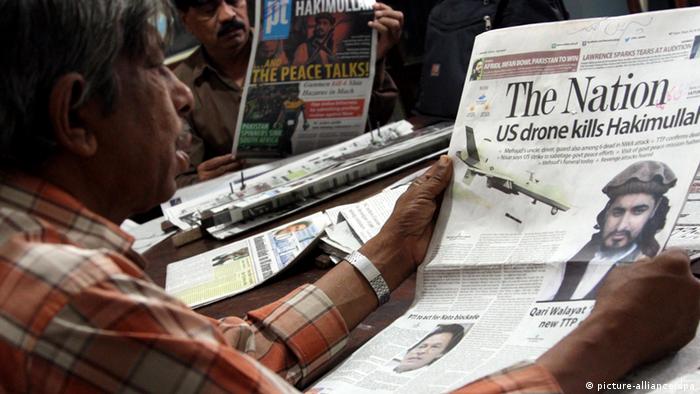
Hakimullah Mehsud - the head of the Tehrik-i-Taliban Pakistan (TTP) - was killed in a US drone strike on Friday, November 1, along with four other people, including two of his bodyguards, in the semi-governed North Waziristan area bordering Afghanistan. Mehsud, one of the most feared Taliban militants, became the head of the TTP in 2009 at the age of 30 after his predecessor Baitullah Mehsud died in US drone strike. The US had put a bounty of $5 million (3.6 million euros) on Hakimullah Mehsud's head for the killing of the seven CIA employees. A TTP spokesman said Sunday that Asmatullah Shaheen Bhittani, the head of the organization's supreme shura (council), had been appointed as their interim head. He said no decision had been taken on the permanent replacement of Mehsud.The Pakistani government has reacted angrily to the strike. Prime Minister Nawaz Sharif's government reacted by summoning the US ambassador in Islamabad to protest the attack. Chaudhry Nisar Ali Khan, the country's interior minister, said the strike on the Pakistani Taliban's most important leader was "not just the killing of one person, it's the death of all peace efforts."
Taliban vow revenge
Many in the Islamic Republic - where anti-US sentiment runs high - share their government's views on Mehsud. They also fear that the Taliban - which have claimed responsibility for the murder of thousands of Pakistanis in the last six years - will retaliate by unleashing more violence in the country, and that if there was any hope of "peace" with Islamists, it ended with Mehsud. "There was finally a glimmer of hope for peace in Pakistan. It has vanished. The Taliban are going to avenge the death of Mehsud and it is very bad for the country," said Shaukat Rehman, a shop owner in the southern city of Karachi. And he is right. The militants have vowed revenge: "Every drop of Hakimullah's blood will turn into a suicide bomber," said a Taliban spokesman. "America and their friends shouldn't be happy because we will take revenge for our martyr's blood."
Islamabad reviews cooperation with Washington
The Pakistani government claimed that a government peace delegation had been due to meet Mehsud in the Taliban stronghold North Waziristan before Friday's strike. This is why it claims the US drone strike was an "attack" on the peace talks. The government has shown its displeasure over Mehsud's death to an extent that the foreign minister said Islamabad was reviewing "every aspect" of cooperation with Washington. The US maintains it has an understanding with Islamabad on counter-terrorism policies for the region. Drone strikes have become a thorny issue for Pakistani leaders, who face mounting criticism from the public for their inability to convince the US to halt them. While acknowledging that more militants have been killed in such strikes than civilians, Islamabad has nonetheless repeatedly called for an end to these strikes, saying they are a violation of its sovereignty and territorial integrity.
Future of peace talks
After winning the May 11 elections, Prime Minister Nawaz Sharif had made it clear that his party would rather engage in "peace talks" with Islamist militants than launch military operations against them. The center-right Tehreek-e-Insaf - Imran Khan's Movement for Justice Party - which governs the volatile province of Khyber Pakhtunkhwa, also opposes military action against the Islamists. Reacting to Mehsud's killing, Khan threatened to block NATO's crucial supply route to Afghanistan. London-based Pakistani journalist and researcher Farooq Sulehria told DW he was surprised at Islamabad's reaction to Mehsud's assassination and that the Pakistani Taliban had denied PM Sharif's claims that his government had contacted them and arranged to meet. He called government's peace talk claims a "sham" and added that its stance on the Taliban is "full of contradictions." "The government's objective is not to achieve peace. It is afraid of the Taliban's retaliatory attacks," Sulehria told DW. "Their real aim is to bring the angry Taliban factions back under the Pakistani military's command so a unified offensive can be launched to re-capture Kabul once the NATO troops leave Afghanistan in 2014." Saleem Asmi, a Karachi-based senior Pakistani journalist, agrees: "The supposed parameters of peace talks were never defined, and there had never been even a hint from the Taliban that they were even interested in the process. "How can an unborn process be described as having been 'murdered' by the drone strike?" he questioned.
Strategy 'workable'
Aamir Rana, executive director of the Islamabad-based think tank Institute of Peace Studies, is one of many experts who think that the Sharif government's dialogue strategy with the Taliban is the right path to restoring peace in the country. The dialogue strategy with the Taliban is workable," Rana told DW, adding that it was also "a good sign that Sharif wants to have an upper hand in formulating the counter-terrorism strategy, and is not relying totally on the military."
'Taliban not weakened'
Liberal Pakistanis have welcomed the death of Mehsud and say it will weaken the TTP. But experts warn against too much optimism. The say that while Mehsud's killing is a serious blow to the Pakistani Taliban, drone strikes alone cannot eliminate the militants. Arshad Mahmood, a peace activist in Islamabad, believes that Mehsud's death gives Pakistan's rulers the upper hand in negotiating with the Taliban. "The government should use it as an opportunity. It should force the Islamists to accept Pakistan's law and constitution," he told DW. "But to do that, the Pakistani state has to change its policies and transform the country." Analysts say that Islamabad's reaction to Mehsud's death suggest it is far from a transformation of this kind.

In Pakistan, Drone Strike Turns a Villain Into a Victim

By DECLAN WALSH
In life, Hakimullah Mehsud, the leader of the Pakistani Taliban, was Public Enemy No. 1: a ruthless figure who devoted his career to bloodshed and mayhem, whom Pakistani pundits occasionally accused of being a pawn of Indian, or even American, intelligence. But after his death, it seems, Pakistani hearts have grown fonder. Since missiles fired by American drones killed Mr. Mehsud in his vehicle on Friday, Pakistan’s political leaders have reacted with unusual vehemence. The interior minister, Chaudhry Nisar Ali Khan, denounced the strike as sabotage of incipient government peace talks with the Taliban. Media commentators fulminated about American treachery. And the former cricket star Imran Khan, now a politician, renewed his threats to block NATO military supply lines through Khyber-Pakhtunkhwa — a province his Tehreek-e-Insaf party controls — with a parliamentary vote scheduled for Monday. Virtually nobody openly welcomed the demise of Mr. Mehsud, who was responsible for the deaths of thousands of Pakistani civilians. To some American security analysts, the furious reaction was another sign of the perversity and ingratitude that they say have scarred Pakistan’s relationship with the United States. “It’s another stab in the back,” said Bill Roggio, whose website, the Long War Journal, monitors drone strikes. “Even those of us who watch Pakistan closely don’t know where they stand anymore. It’s such a double game.” To many Pakistanis, though, it is the United States that is double-dealing, and sentiments like Mr. Roggio’s exemplify typical American arrogance. Shireen Mazari, a senior official in Mr. Khan’s party, has urged the Pakistani military to shoot down drones. But if the equivocation over Mr. Mehsud’s death seems to be just another manifestation of the cankerous relationship between the two countries, albeit a particularly troubling one, it is rooted in a complex mix of psychology and politics that may be central to the way Pakistanis see their arch allies, the Americans. Partly, it is a product of Pakistan’s failure to counter a stubborn insurgency. After years of Taliban-induced humiliations and bloodshed, and of heavy American pressure to step up military action against the Taliban, Pakistan’s political and security establishments still agree that starting peace talks with the Taliban is the best course. Such talks may have had slim chances of success — previous negotiations quickly foundered — but Mr. Mehsud’s death appears to have thoroughly derailed them, at least for now. Beyond that, analysts say, Pakistanis have a consistent, if relatively recent, history of rooting for people the West has deemed villains, and against people the West has praised. Aafia Siddiqui, a Pakistani woman who is serving an 86-year jail sentence in New York for trying to kill Americans in Afghanistan, is a virtual national hero, popularly known as the “daughter of the nation.” On the other side, Malala Yousafzai, the teenage education activist who was shot in the head by the Taliban last year, making her an icon around the world, has been demonized in Pakistan, where she is regularly called a C.I.A. agent or a pawn of the West. These adversarial reactions stem in part from Pakistanis’ perception of their country’s history with the United States. In their view, it is a long story of treachery, abandonment and double-crossing: The United States, many Pakistanis believe, used Pakistan during the Cold War, dropped it in the 1990s and has spent much of its time since trying to steal the army’s nuclear arsenal. Then came the C.I.A. drones. In recent years, that resentment has been bolstered by a growing sense of impotence among Pakistanis: The country’s own security forces failed to find or capture Osama bin Laden, for instance, and it also took an American drone to kill the previous Taliban leader, Baitullah Mehsud, in August 2009. “In a sense, this has nothing to do with Malala or Aafia Siddiqui or Hakimullah,” said Adil Najam, a professor of international relations at Boston University who is Pakistani. “These people are just characters in a larger relationship that has become so poisonous.” The problem, some analysts say, is that hostility toward the United States may be clouding Pakistanis’ ability to discern their own best interests. In the conflagration over Hakimullah Mehsud’s death, Mr. Najam said, the government has failed to distinguish between opposition to drone strikes and to the removal of a homicidal, militant enemy. “It’s very destructive that we can’t untangle these two things,” he said. “The reaction has become absolutely absurd.” Analysts say this reaction also holds lessons for the Obama administration, showing that drone strikes, for all their antiseptic appeal, will always struggle for legitimacy because the covert program operates in the shadows of international law — no matter how big the target it takes out. For now, the ball is in Mr. Khan’s court. If his party votes on Monday to block American supplies bound for Afghanistan, it will make life difficult for Prime Minister Nawaz Sharif, who opposes closing the supply lines but has nonetheless vowed to press ahead with Taliban peace talks. It is concern for the fate of those talks that has been given as justification for the most vehement criticism of the killing of Mr. Mehsud. But amid all the enthusiasm for negotiations, Pakistani politicians have yet to publicly address the first hurdle: deciding what the government would be willing to concede to the Taliban, given that the movement’s central aim is to overthrow the state itself.

Pakistan:Imran’s plan emotional

The Leader of the Opposition in the National Assembly, Khursheed Shah, said on Sunday that the decision of the Pakistan Tehrik-i-Insaf (PTI) Chairman Imran Khan on the closure of Nato supplies in reaction to the drone attack killing of Taliban leader Hakimullah Mehsud was emotional and hasty and needed to be reviewed positively.
He said that the Pakistan People’s Party (PPP) condemned drone strikes as well as militancy in all its forms and called for the implementation of the decisions of the All Parties Conference (APC). He said this after the PPP meeting presided over by former president and Party’s Co-chairman Asif Ali Zardari at Bilawal House.The meeting greeted the Hindu community of Pakistan on the occasion of Deewali. Spokesperson Senator Farhatullah Babar said that the meeting discussed in depth the current political situation in the country.The PPP leadership discussed militancy, dialogue with the militants in the light of the APC decisions and the difficulties being faced by the people as a result of the poor law and order situation, continued loadshedding and galloping inflation. Issues related to the local bodies polls and laws to strengthen the anti-terror legislative framework were also discussed.The meeting called for holding of party-based local bodies elections in all provinces and decided to vigorously pursue the goal of party-based local elections at all available forums. The party also discussed the recent draft legislation purported to further strengthen anti-terror laws.The meeting cautioned against hasty and thoughtless legislation that militated against the human rights of citizens and decided to resist any move that undermined the people’s basic rights. Makhdoom Ameen Faheem, Faryal Talpur, Yusuf Raza Gilani, Raja Pervaiz Ashraf, Khursheed Shah, Syed Qaim Ali Shah, Raza Rabbani, Farhatullah Babar, Chaudhry Abdul Majid, Mehdi Shah, Qamar Zaman Kaira, Naveed Qamar, Farooq Naek, Dr Fehmida Mirza, Latif Khosa, Jehangir Badr and other important leaders of the party were present on the occasion.

PPP Senior leaders meet with Former President Asif Ali Zardari, overall political situation discussed

http://mediacellppp.wordpress.com/
A meeting of the senior leadership of the PPP was held Sunday night in Bilawal House Karachi. The meeting, presided over by former President Mr. Asif Ali Zardari, was attended among others by Makhdoom Ameen Faheem, Ms. Faryal Talpur, Yousuf Raza Gillani, Raja Pervez Ashraf, Khursheed Shah, Syed Qaim Ali Shah, Raza Rabbani, Farhatullah Babar, Ch. A. Majid, Mehdi Shah, Qamar Zaman Kaira, Naveed Qamar, Farooq Naek, Dr. Fehmida Mirza, Latif Khosa, Jehangir Badar, Akhunzada Chattan, Manzoor Watto, Imtiaz Safdar Waraich, Rehman Malik, Yousuf Talpur, Ali Nawaz Shah, Rukhsana Bangash, Fozia Habib, Islamuddin Sheikh, Malik Hakmeen, Nisar Khuhru, Sadiq Umrani, A Qadir Patel, Ch. Yasin, Manzoor Wassan, Murad Ali Shah, Ms. Samina Khalid Ghurki, Javed Baloch and Ms. Belum Hasnain. Spokesperson Senator Farhatullah Babar said that the meeting discussed in depth the current political situation in the country. The issue discussed and deliberated upon included among other fight against militancy, dialogue with the militants in the light of APC decisions and the difficulties faced by the people as a result of poor law and order situation, continued load shedding and galloping inflation. Issues relating to local bodies polls and laws to strengthen anti-terror legislative framework were also discussed. The meeting condemned drone strikes as well as militancy and extremism in all its forms and manifestations and called for the implementation of the decisions of the APC. The meeting underlined the need for all political forces in the country to work towards strengthening democracy and thwart any attempt to weaken the democratic processes and institutions. The meeting called for holding of party base local bodies elections in all provinces on party based polls and decided to vigorously pursue the goal of party based local elections at all available forums. The Party also discussed the recent draft legislations purported to further strengthen anti-terror laws. The meeting cautioned against hasty land thoughtless legislation that militated against human rights of citizens and decided to resist any move that undermined the people’s basic rights.
The meeting greeted the Hindu community of Pakistan on the eve of Deewali today.

Pakistan's Musharraf step closer to release after bail

A Pakistani court has granted bail to former military ruler Pervez Musharraf over the 2007 army operation to oust militants from Islamabad's Red Mosque. The court approved bail on condition Mr Musharraf pay bonds totalling $2,000. BBC correspondents say he has now been bailed in all the cases against him, which makes it likely he will be released from house arrest. But the former general remains on a government exit control list and cannot leave the country. Speaking outside the court, his lawyer said Mr Musharraf had no intention of leaving Pakistan.

Pakistan: The drone didn’t kill a Taliban peacemaker

By Damien McElroy
Pakistan’s 'outrage’ over last week’s strike is merely more cover for its own inadequacies
The American drone strike that killed the Pakistan Taliban leader Hakimullah Mehsud last week has apparently caused outrage in Islamabad and threatens a breach in relations between the two countries. It is claimed that this latest exercise of Washington’s military muscle has jeopardised a tentative peace process that Pakistan’s leaders were trying to put in place. But is this really the case? As the wars of Afghanistan and Pakistan begin to fade away, a dangerous delusion is taking their place: that a diplomatic solution acceptable both to the West and the Islamists is achievable. Mehsud, we should remember, was a brutal and effective guerrilla dedicated to imposing strict Islamic law in Pakistan and Afghanistan, and the destruction of Western influence across the region. He was responsible for the deaths of thousands in his own country, including the lorry bomb that destroyed the Marriott hotel in Islamabad in 2008. Yet the politicians in Pakistan have reacted with shrill indignation, treating the demise of the 34-year-old as a national humiliation and the removal of a potential peacemaker in a pivotal position to change the course of the conflict. Nawaz Sharif, the prime minister, who just last week claimed to have instituted a dialogue with the Taliban, has now ordered a full review of relations with Washington. Imran Khan, the cricketer turned anti-American politician, has demanded a crippling embargo on shipments to Nato troops in Afghanistan from Pakistani ports. Is any of this serious or can President Barack Obama take Islamabad’s umbrage with the customary pinch of salt? We have been here before, after all. In the wake of the raid to kill Osama bin Laden, who was hiding for years near Islamabad, a similar wave of outrage was manufactured to cover up Pakistan’s inadequacies. From the White House point of view, Mehsud was not a peacemaker: first and foremost he was the warlord who plotted the Times Square bomb attacks and the suicide blast that killed seven CIA operatives in Afghanistan in 2009.Indeed, this regular scalping of the Taliban’s top leadership has greatly assisted the American leader move towards his goal of ending the second of the two big wars he inherited from George W Bush. But there is no doubt that despite the deadly toll on the Taliban, the political cost of the drone strikes is undoubtedly rising. As combat forces are withdrawn from Afghanistan the pursuit of peace talks has come to dominate the West’s policy in the region. As a result it is getting harder to quash suggestions that the campaign of assassinations threatens to upend the delicate build-up to a peace process with the Taliban. Just last week David Cameron convened a summit between Mr Sharif and the Afghan president Hamid Karzai to push efforts to draw the Taliban to the negotiating table. It yielded a breakthrough when Islamabad agreed to allow a meeting between the Afghans and Mullah Baradar, the Taliban’s deputy leader, who is under house arrest in Pakistan. Yet even as that deal was being sealed, a desert drone operator based somewhere in Nevada was homing in on Mehsud’s movements in Waziristan. Mr Karzai and Mr Sharif can with some justification complain that their Western allies are sending contradictory signals. Do they want to talk to the Taliban or not? Winston Churchill once said that jaw-jaw was better than war-war, but this celebrated injunction is often misunderstood, as President Obama is well aware. There is no simple choice between talking and fighting. In fact no one really knows if the Taliban are ready to talk to their enemies, either in South Asia or in the West. Last week, a senior US diplomat said there was almost no chance of a Northern Ireland-style peace process between the Afghan government and the Taliban getting under way by next year. Even before the attack on Mehsud, the chances of a parallel peace initiative between Pakistan and the Taliban were rated as unlikely. While the clock is ticking on the war in Afghanistan, America’s enduring challenge in South Asia is coming into sharper focus. Taliban commanders like Osama bin Laden’s remaining acolytes in the al-Qaeda high command are an enemy Washington cannot ignore while its local allies engage in diplomatic manoeuvres. In any case, President Obama has already responded to Pakistani anger by sharply curtailing the use of drones. There have been 24 strikes on Waziristan so far in 2013, a dramatic decline since the high point of the campaign in 2010, when 117 were recorded. But the precision of the drone as a weapon of war makes it too precious to abandon. Harold Koh, a former State Department legal advisor and one of the US leader’s inner circle, discussed the pitfalls facing America earlier this year in a speech at Oxford University. Mr Koh warned of the “forever war” in which the US constantly fixed its sights on groups that were “part of” or “associated with” al-Qaeda in open-ended conflict. Not long after Mr Koh’s remarks, President Obama set out clear new rules for targeting terrorists abroad which make uncomfortable reading for states like Pakistan. He said drone strikes must take place when the target cannot be captured and where the local authorities cannot act independently against the terrorist. In other words, Islamabad cannot demand an end to drone strikes while it continues to grapple ineffectually with the wider threat posed by the Taliban.

Mike Rogers Defends Drone Killing Of Pakistani Taliban Leader

A U.S. lawmaker whose committee oversees the intelligence community on Sunday defended the drone strike that killed a Pakistani Taliban leader and said it would help keep American troops safe. Representative Mike Rogers, who chairs the House of Representatives' permanent intelligence committee, said the slain militant, Hakimullah Mehsud, was a "bad guy" who was connected to attacks against Pakistani soldiers and to the Taliban in Afghanistan, which has forced closures of many schools for girls. "This was a bad guy," Rogers said on CBS' "Face the Nation." "There's some information recently that concerned us about the safety of our troops. I feel a little better for our troops today than I did before this event happened." Mehsud, who took over as the leader of the al Qaeda-linked Pakistani Taliban in 2009, was killed on Friday, along with three others, in a U.S. drone strike in northwest Pakistan. The Pakistani government denounced the killing as an attempt by the United States to interfere with peace talks between Pakistan's government and the Taliban. Pakistani officials said they would review ties with Washington and some politicians there called for blocking critical U.S. military supply lines into Afghanistan. The Pakistani Taliban has beheaded Pakistani soldiers and orchestrated suicide bombings that have killed thousands of civilians. Rogers also said Mehsud had ties to a failed attempt to bomb New York's Times Square in 2010. He said U.S. intelligence agencies, including the embattled National Security Agency, collect and contribute the kinds of information that make such strikes possible. "We deal with these threats every single day, and they are big, they are real and they affect real people," Rogers said. "And I'll tell you, we should protect our soldiers in the field and we should also protect their families who are here back in the United States. And we should use every means that is legal, protects civil liberties and gets the job done." He and Senator Dianne Feinstein, who heads the Senate intelligence committee, defended the NSA, which has come under heavy criticism for weeks for reportedly listening into the phone conversations of U.S. allies, including German Chancellor Angela Merkel. U.S. officials have maintained that President Barack Obama was unaware that Merkel and other leaders were being monitored. The White House has halted some of the surveillance programs, such as those focused on the International Monetary Fund and World Bank headquarters. Rogers said the intelligence agencies are the "good guys," and that some U.S. and foreign officials likely knew more about the spying than they let on. "I think there are going to be some 'best actor' awards coming out of the White House this year and some 'best supporting actor' awards coming out of Europe," he said. Feinstein, who also appeared on "Face the Nation" on Sunday, said the uproar over the spying was more of a political issue than a liability for the intelligence agency.
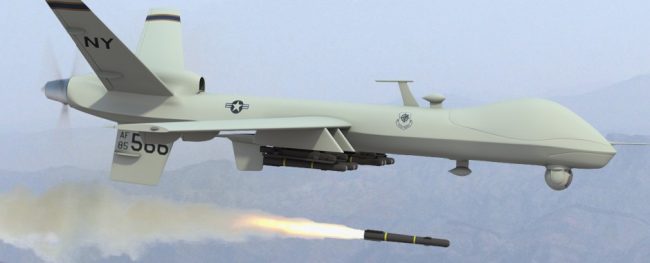
Pak-Iran:IP gas pipeline: another lost opportunity

Iranian Oil Minister Bijan Namdar Zanganeh reportedly stated in Dubai that "the contract for supplying gas to Pakistan is likely to be annulled," and cited Pakistan's inability to pay for the cost of laying the pipeline as the major impediment to its implementation. His assessment was based on the government of Pakistan's recent request to the Iranian government to extend financial assistance of 2 billion dollars that would enable it to lay the pipeline on its side of the border. The question arises as to whether this is the sole reason behind Zanganeh's recent prognosis on the likelihood of project implementation. Informed sources within the Ministry of Petroleum and Natural Resources told Business Recorder that the PML-N government had requested Iran to renegotiate the price of gas. Dr Salman Shah, Advisor to Prime Minister Shaukat Aziz on Finance during the Musharraf era, revealed that in 2007 the price agreed was 45 percent of crude oil parity and he questioned the agreement signed by the PPP-led coalition government setting the price at 82 percent of crude oil price in the international market. Dr Shah also suggested that the National Accountability Bureau (NAB) be directed to investigate the matter of pricing. Ever since, Iran has become an Islamic Republic it has not shown any soft corner for its predominantly Sunni neighbour - Pakistan - to lend it a helping hand. It was the Shah of Iran who agreed to establish a Pak-Iran Refinery project in Pakistan after establishment of a Pak-Iran textile project in Balochistan and also a paper mill in Karachi under the umbrella of an RCD project (Security Papers Limited). The refinery proposal was later shelved. In the eighties, Gen. Ziaul Haq used to be termed a President Jimmy Carter's poodle by Radio Tehran for Pakistan's increasing co-operation with the West opposing Soviet invasion of Afghanistan - another neighbour of Iran. Since the sanctions were hurting Iran economically and it was feeling isolated; Iran finally agreed to sign the gas contract with Pakistan without Indian participation (before imposition of sanctions, Iran was not willing to sign gas supply contract without Indian participation) and also provide help in the laying of pipeline on Pakistan's side which is estimated to cost 2 billion dollars. Pakistan is not blameless also in this on and off scenario on supply of gas. It has earlier tried to equate domestic cost gas with Iranian supply, ie, if Iran wanted $4 per mmcfd - Pakistan would offer $2 per mmcfd. Pakistan government under General Ziaul Haq was unwilling to annoy the American administration when the offer was made by an Australian company (BHP) which wanted to develop the South Pars gas field and lay a pipeline up to Sui. Zardari government finally agreed to purchase natural gas at 82 percent of the international oil price. PML-N on coming to power felt this was quite high as it would cost Pakistan 12 dollars per mmcfd. PML (N) government wrote to Iran to renegotiate and reduce the gas supply price. Now that Iran has laid the pipeline within a short distance from its Bandar Abbas port it has the option to use the same funds which it committed to Pakistan to put up a CNG liquefaction plant and a terminal for export of LNG to the Far East provided the Western sanctions are diluted. It may also be recalled that India backed out of the IP gas pipeline project even when the price was set at 45 percent of crude oil parity on the grounds that it is not economically feasible given the massive differential between the domestic gas price and the IP gas pipeline price. The price of IP gas is estimated at 12 dollars per million metric British Thermal Units (mmbtu) while Pakistan's domestic price of gas is only 4.5 dollars per mmbtu. Granted that 12 dollars per mmbtu is much cheaper than alternate sources of gas (namely from Turkmenistan) as well as LNG from Qatar yet the question arises as to why the previous government deemed it prudent to renegotiate a much higher price. There is no doubt that Iran has, over decades of negotiations on the IP gas pipeline project, succeeded in upping the price of IP gas several times. In other words, Iran may have actually taken advantage of the severe energy crisis in Pakistan and astutely negotiated the price to meet its own burgeoning economic needs to generate foreign exchange, an objective that was held hostage to the economic sanctions against the country. Pakistan therefore clearly came out as the loser in these negotiations. Thus there is a need to not only explore the possibility of price renegotiation given that this project's completion would be well before other mega projects notably ongoing hydel projects that would enhance generation capacity but also to stay the Finance Minister's hand to transfer dedicated funds (in GDS) to the treasury. We understand Pakistan is caught between the rock and a hard place. It wants to avoid imposition of UN sanctions or the anger of its main cash provider - the United States of America. Its failure of our foreign policy to make our friends in the West understand that an energy-starved Pakistan needs gas from Iran. At 12 dollars per mmcfd Iranian piped gas is cheaper than imported LNG. Equating either with imported LNG or lesser priced coal gasification is wrong. Both options require not only more investment but also time. It smacks of our failure not to meet the full potential of the economy. We are losing over two percent of growth due to energy shortages. Pakistan requires to tap all options ie Pak-Iran piped gas; LNG imports; imported coal as well as usage of domestic Thar coal; nuclear plus alternate fuels such as solar and wind to meet the growing needs of economy and domestic consumers.

Bomb blast blows up building in Peshawar

Express News
The telephone exchange building in the Meli Khel area of Peshawar was blown up in a bomb explosion, Express News reported on Monday. The building was empty and therefore there was no loss of life.

Pakistan: More Shia Hazaras murdered

The genocide being suffered by the Shia Hazaras in Balochistan seems to have no end in sight. On Friday, six innocent Shia Hazara coalminers working in the Macch area of Bolan district, were mercilessly gunned down for one reason only — their faith. No group or individual has come forward to claim responsibility but the finger of suspicion points towards the Lashkar-e-Jhangvi (LeJ), an extremist organisation that has been striking against the country’s Shia community, particularly the Hazaras. Coalminers in Macch have been attacked before for the same reason but this time the assailants were successful in inflicting fatalities. This is because the law enforcement agencies have not been able to protect the Shia Hazara community completely, despite improvement in their security in Quetta. One need not dig too far back to realise the extent of the butchery against the Hazaras. In January and February this year, the Hazara community in Quetta were targeted and 150 were killed in bomb attacks. The killings were so vicious that the frustrated community laid their dead out on the streets, demanding justice. However, this justice they wish to see seems to be little more than a wish so far. Hazaras are regularly being killed in Balochistan, with even Shia pilgrims travelling from and to Iran not being spared. There is a ruthless campaign against the Shias taking place right before our eyes but it seems as though we would prefer to keep them closed. To his credit, the new Chief Minister (CM) of Balochistan, Dr Abdul Malik Baloch, has taken some steps to make his capital city safe for the Shia community. One can see that no major attack on the Hazara community has taken place since his government took over because of the measures he has taken. However, the CM needs to be reminded that the atrocities perpetrated against the Hazaras are not limited to Quetta. Due to the tragic nature of sectarian crime, groups like the LeJ will leave no stone unturned in hunting down their prey. Their resolve can be seen when Shias are killed in all parts of the province just like they were in Macch on Friday. It is with a heavy heart that it must be admitted that this may not be the last attack on the Hazara community. The federal government must work with the provincial authorities in Balochistan to root out this evil before more such attacks occur.

Sunday, November 3, 2013

UK must act to halt mutilation of girls – report

Female genital mutilation must be treated as human rights abuse, say nurses and midwives

Thousands of girls in danger of genital mutilation are being failed by the health and justice systems, a coalition of health professionals has warned in a report that recommends aggressive steps to eradicate the practice in the UK. Female genital mutilation (FGM) should be treated the same as any other kind of child abuse and evidence of it must be reported to the police, according to the report. Janet Fyle, a policy adviser of the Royal College of Midwives and one of the report's authors, said that just as it was inconceivable that a health worker would not report evidence of child abuse to the police, it should be equally important to report evidence of FGM. "If we are applying child protection laws, we cannot pick and choose which crimes against children we pursue," she said. "We are not asking for more money or legislation, we are just asking that child protection laws should work for all children not just some." According to the report more than 66,000 women in England and Wales have undergone FGM and more than 24,000 girls under the age of 15 are at risk of it. Despite its regular occurrence, FGM has not resulted in a prosecution in Britain, whereas in France there have been about 100. The report – Tackling Female Genital Mutilation in the UK – will be launched at the House of Commons on Monday by the Royal Colleges of Midwifery, Nursing and Obstetricians and Gynaecologists, the Unite union and Equality Now. It has been praised by the government. FGM is carried out in Africa and the Middle East by Muslims and non-Muslims. It predates Islam and is not called for in the Qur'an although it mostly occurs in countries that became Islamic. In countries such as Somalia and Egypt more than 90% of women have undergone some kind of FGM but it is also common in Ethiopia, Eritrea, Mali and Sierra Leone. Although FGM has been outlawed in the UK since 1985, migrants from countries where FGM is common have continued the practice here or by taking girls to their home countries for it to be performed. Since 2003, Britons can be prosecuted for acts of FGM abroad. The report recommends that FGM must be treated as child abuse and evidence of it should be collected by the NHS and shared with the police and education officials. It also recommends that health workers who detect evidence of FGM should treat it as a crime and inform the police. The former director of public prosecutions, Keir Starmer, said it was only a matter of time before prosecutions for FGM took place. "Through working together closely with the police, health and social care professionals and the third sector, we are now in a much better place to have a successful prosecution against those who perpetrate this practice," he wrote in the report's foreword. "It is only a matter of time before this happens and this will send a very powerful message that FGM is a crime that will not be tolerated in a modern multicultural society."The report recommends that health workers identify girls at risk and treat them as if they were at risk of child abuse. Girls at risk are defined as girls born to a woman who has undergone FGM or a child who lives closely with someone who has. It also calls for a government-funded awareness strategy, similar to the HIV campaigns, and for health workers to be held accountable for their success or failure in monitoring FGM among patients and sharing information. The report clearly emphasises the importance of an individual's safety over the respect for religious and racial sensibilities, a point welcomed by Shaista Gohir, the chairwoman of the Muslim Women's Network. "We need to be mindful of cultural and religious sensibilities but safeguarding the child from FGM has to be the priority. If a child is at risk it is better to protect them rather than religious and cultural feelings," she said. The report's launch will be hosted by the public health minister, Jane Ellison, who has praised the report but not yet endorsed any of its recommendations. She said: "One of my priorities as public health minister is to work towards eradicating female genital mutilation. Having supported this report during its development, I welcome its publication and the lead that the organisations involved, representing so many healthcare workers, are showing." A spokesman for the Department of Health said ministers had yet to study the report's recommendations. Other suggestions include that medical staff should question all new young female patients to determine the prevalence of FGM in their families and that teachers and schools should highlight the issue with at-risk groups and individuals. Sarian Karim, a 36-year-old community worker from Peckham, south London, who suffered FGM as an 11-year-old in Sierra Leone, welcomed the report. "FGM is a normal thing for us. We don't know it is against the law, but I know that it damages girls and leaves them scarred for life – mentally and physically. "It is very important that everyone knows that FGM is illegal. We suffer from a lot of complications [because of the procedure]. "We want those people who work in schools to have guidelines and be able to inform, prepare and protect children."

Lovers Of Sharia Law: The $120,000 farmhouse where Pakistan Taliban chief Hakimullah Mehsud died

With marble floors, lush green lawns and a towering minaret, the $120,000 farm where feared Pakistani Taliban leader Hakimullah Mehsud died in a US drone strike was no grubby mountain cave. Mehsud spent his days skipping around Pakistan's rugged tribal areas to avoid the attentions of US drones. But his family, including two wives, had the use of an eight-roomed farmhouse set amid lawns and orchards growing apples, oranges, grapes and pomegranates. As well as the single-storey house, the compound in Dandey Darpakhel village, five kilometres (three miles) north of Miranshah, was adorned with a tall minaret -- purely for decorative purposes. Militant sources said the property in the North Waziristan tribal area was bought for Mehsud nearly a year ago for $120,000 -- a huge sum by Pakistani standards -- by close aide Latif Mehsud, who was captured by the US in Afghanistan last month. An AFP journalist visited the property several times when the previous owner, a wealthy landlord, lived there. With the Pakistan army headquarters for restive North Waziristan just a kilometre away, locals thought of Mehsud's compound as the "safest" place in a dangerous area. Its proximity to a major military base recalls the hideout of Osama bin Laden in the town of Abbottabad, on the doorstep of Pakistan's elite military academy. "I saw a convoy of vehicles two or three times in this street but I never thought Hakimullah would have been living here. It was the safest place for us before this strike," local shopkeeper Akhter Khan told AFP. This illusion of safety was shattered on Friday when a US drone fired at least two missiles at Mehsud's vehicle as it stood at the compound gate waiting to enter, killing the Pakistani Taliban chief and four cadres. The area around Dandey Darpakhel is known as a hub for the Haqqani network, a militant faction blamed for some of the most high-profile attacks in Afghanistan in recent years. Many left the area during the Taliban's rule in Afghanistan, coming back after the US-led invasion following the 9/11 attacks. Samiullah Wazir, a shopkeeper in the area, told AFP he would regularly see a convoy of four or five SUVs with blacked-out windows leave the compound early in the morning and return after sunset. "We thought that somebody very important must be living in this house," Wazir said. "One day, I saw a man wearing a white shawl entering the house and I thought he looked like Hakimullah, but I thought 'How can he live here because he could be easily hit by a drone strike?'" But Hakimullah it was and on Friday he returned to his compound for the final time. "We were closing the shop when his vehicle came and was about to enter the house when a missile struck it," Wazir said. "Moments later, an army of Taliban came and they cordoned off the area."

Kuwaiti woman arrested in Saudi Arabia for driving sick father to hospital

A Kuwaiti woman was arrested in Saudi Arabia for driving a car while taking her diabetic father to the hospital. The arrest comes just one week after Saudi women protested the driving ban in the conservative Gulf monarchy. The woman was driving a Chevrolet Epica with her father in the passenger seat when she was pulled over in an area located near the border with Kuwait, Saudi police told Kuwait Times newspaper. She explained that she was taking her sick father to the hospital, but officers were unsympathetic. The woman was detained and is now being held in custody pending an investigation, police said. The media report provided no information on whether her sick father made it to the hospital. There are close ties between Kuwaitis and Saudis in the area, with people from both countries crossing the border on a regular basis. However, Kuwait has surged ahead in terms of female rights. Women in the country are allowed to drive, vote, and run for political office. In Saudi Arabia, attempted reforms from King Abdullah often face resistance from the country’s senior clergy. Saudi woman are not allowed to drive cars, travel abroad, open a bank account, or work without permission from a male relative. Last Saturday, a protest took place against the driving ban, which resulted in 16 female drivers being stopped by police. They were fined 300 riyals (US$80) each and forced along with their male guardians to pledge to obey the kingdom’s laws. Activists said that more than 60 Saudi women got behind the wheel to protest the driving ban.