Monday, October 21, 2013
US rejects Nawaz Sharif's call for intervention in Kashmir
Pakistan: Govt steps not in favor of masses, country
Leader of the Opposition in the National Assembly Syed Khursheed Shah has said that his party desires that the Pakistan Muslim League-Nawaz (PML-N) government should complete its constitutional tenure but the steps taken by the sitting government are not in favour of the country and its people. Talking to media persons here on Sunday, Khursheed Shah said despite inauspicious decisions made by the government, the Pakistan People’s Party (PPP) will not create disturbance in the law and order situation through violent protests and politics of rampage. He said the PPP desires peace in the country and resolution of problems being faced by the countrymen. He said the party was ready to extend all support in this regard. The opposition leader said some elements wanted to revive the politics of past decades but the PPP was showing great patience in the larger interest of the country and its people.Khursheed Shah said his party had offered a lot of sacrifices for democracy, therefore it will oppose any conspiracy to derail it. “We want to avoid politics of ‘Go Go’ as it increases hatred among the masses affiliated with various political parties and often results in violence,” he said. “If the PPP had moved to the streets along with the PTI against the alleged rigging in elections, then what would have happened,” he questioned.The opposition leader expressed the hope that Prime Minister Mian Nawaz Sharif’s visit to the US will be fruitful.He said that Bilawal Bhutto Zardari has now stepped-in in active politics and will lead the party to take it to new heights of popularity among the masses.http://mediacellppp.wordpress.com/
هر ماښام پېښور کې طالبان ګشتونه کوي، اسفندیار خان
http://www.mashaalradio.com/content/article/25141806.html

Pakistan: A Christian Family Threatened As They Participated In Protest Against Church Bombings
 A Christian family faces life threats as they remain hiding since they reportedly participated in protests held against the twin suicide blasts at a local Church. They have been reportedly receiving death threats for protesting against twin suicide attacks; in which their friends were killed. “All in all no less than 171 people died and some 150 people were injured in the deadliest blasts at Peshawar’s All Saints Church,” officials said.
A resident of Peshawar Waqas Pervez, 26years old, told that,” Me and my family were “forced to flee” Peshawar, the capital of Khyber Pakhtunkhwa province, and now hide in another city after suspected Muslim militants threatened to kill me, my mother and other relatives.”
He added, “The men were angry that I was openly expressing grief at an anti-violence demonstration about the loss of his friends and those who were injured in the suicide attacks.”
“The problems began on Monday, September 23, when I and other Christians were protesting on University road near a Christian cemetery to mourn our loved ones and to express concerns over the suicide attacks. As we walked towards the Jamia Mosque, clerics and others came out and tried to stop the protesters and scatter them,” he said.
Both the demonstrators and attackers were injured, according to witnesses.
“Clerics from the locality vowed to avenge the injuries and they started looking for the people who were leading the protest,” Pervez said.
“A day after, several men came to my house; where they threatened me and my mother who was injured in the attack. My father Griffon Pervez, my brother Fahad Pervez and my maternal uncle Johnson Younas tried to stop them, but they were assaulted also. My uncle was injured and they threatened to kill the whole family,” Pervez stated. He said,” My family was forced to leave everything behind and now lives hiding in another city.”
However, a local priest who’ identity has not been disclosed for security reasons, helped them escape by providing them means and assistance. Human Rights Activists say,” This isn’t an isolated case. Christians in Pakistan have complained about persecution for their faith in several parts of this heavily Islamic nation.”
- See more at: http://lubpak.com/archives/287197#sthash.34NHn1zQ.dpuf
A Christian family faces life threats as they remain hiding since they reportedly participated in protests held against the twin suicide blasts at a local Church. They have been reportedly receiving death threats for protesting against twin suicide attacks; in which their friends were killed. “All in all no less than 171 people died and some 150 people were injured in the deadliest blasts at Peshawar’s All Saints Church,” officials said.
A resident of Peshawar Waqas Pervez, 26years old, told that,” Me and my family were “forced to flee” Peshawar, the capital of Khyber Pakhtunkhwa province, and now hide in another city after suspected Muslim militants threatened to kill me, my mother and other relatives.”
He added, “The men were angry that I was openly expressing grief at an anti-violence demonstration about the loss of his friends and those who were injured in the suicide attacks.”
“The problems began on Monday, September 23, when I and other Christians were protesting on University road near a Christian cemetery to mourn our loved ones and to express concerns over the suicide attacks. As we walked towards the Jamia Mosque, clerics and others came out and tried to stop the protesters and scatter them,” he said.
Both the demonstrators and attackers were injured, according to witnesses.
“Clerics from the locality vowed to avenge the injuries and they started looking for the people who were leading the protest,” Pervez said.
“A day after, several men came to my house; where they threatened me and my mother who was injured in the attack. My father Griffon Pervez, my brother Fahad Pervez and my maternal uncle Johnson Younas tried to stop them, but they were assaulted also. My uncle was injured and they threatened to kill the whole family,” Pervez stated. He said,” My family was forced to leave everything behind and now lives hiding in another city.”
However, a local priest who’ identity has not been disclosed for security reasons, helped them escape by providing them means and assistance. Human Rights Activists say,” This isn’t an isolated case. Christians in Pakistan have complained about persecution for their faith in several parts of this heavily Islamic nation.”
- See more at: http://lubpak.com/archives/287197#sthash.34NHn1zQ.dpuf
Malala inspires school curriculum
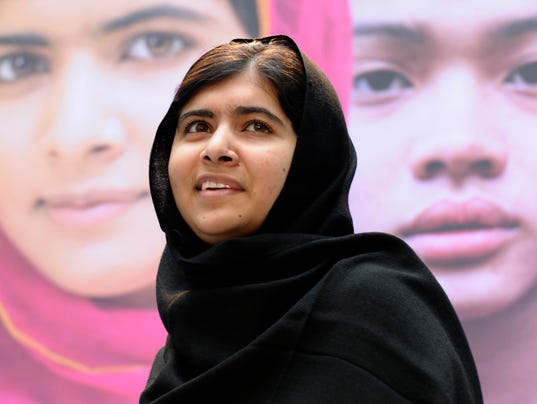 George Washington University announced Monday that faculty members are creating multimedia curriculum tools to accompany a book recently released by the teen, Malala Yousafzai. Several faculty members will pilot the curriculum early next year for both college and high school instruction. Free of charge, it will focus on themes such as the importance of a woman's voice and political extremism, the university said.
The tools won't just look at the teen's story, but also how the same issues get reflected elsewhere, such as when girls face child marriage and pressures to leave school, said Mary Ellsberg, the director of the university's Global Women's Institute.
"It's going to be really interactive and really encourage students to do ... activities outside of school, it will encourage them to get engaged in the communities and as well to help the Malala Fund directly," Ellsberg said.
The university's Global Women's Institute is partnered with the Malala Fund, a nonprofit that seeks to ensure girls around the world have access to education.
In 2012 when a Taliban gunman walked up to a bus taking Malala and other children home from school in Pakistan's volatile northern Swat Valley and shot Malala in the head and neck. Another girl on the bus was also wounded. Malala now resides in Britain, where she was flown for medical care. Her memoir is "I am Malala."
George Washington University announced Monday that faculty members are creating multimedia curriculum tools to accompany a book recently released by the teen, Malala Yousafzai. Several faculty members will pilot the curriculum early next year for both college and high school instruction. Free of charge, it will focus on themes such as the importance of a woman's voice and political extremism, the university said.
The tools won't just look at the teen's story, but also how the same issues get reflected elsewhere, such as when girls face child marriage and pressures to leave school, said Mary Ellsberg, the director of the university's Global Women's Institute.
"It's going to be really interactive and really encourage students to do ... activities outside of school, it will encourage them to get engaged in the communities and as well to help the Malala Fund directly," Ellsberg said.
The university's Global Women's Institute is partnered with the Malala Fund, a nonprofit that seeks to ensure girls around the world have access to education.
In 2012 when a Taliban gunman walked up to a bus taking Malala and other children home from school in Pakistan's volatile northern Swat Valley and shot Malala in the head and neck. Another girl on the bus was also wounded. Malala now resides in Britain, where she was flown for medical care. Her memoir is "I am Malala."
Benazir Bhutto: ''October 2007’s fateful upheaval''
The so-called progressive intelligentsia, devoid of any confidence in the working masses, are clueless about the perspectives of a mass movement There is hardly a day when the news coming out of Pakistan does not have some form of a calamity or trauma with harrowing footage splashing across television screens. Terrorist attacks or suicide bombings, earthquakes, floods, other natural disasters, unbearable price hikes, collective suicides of impoverished families, selling of children and human organs and so many other horrific events have become a norm in this tragic land. It has been years if not decades that the beleaguered masses of this country have had any blissful respite. A generalised despair stalks the land. This condition is also reflected in the political, cultural, moral, social and ethical milieu that prevails at the top of this crisis-ridden social (dis)order. The body language and utopian promises of the rulers sans sentiment, vigour or belief lay bare their collapse of any confidence in the system they represent. The masses are bewildered and stuck in this quagmire of deprivation, destitution and devastation. The filthy rich and mighty are unashamedly flaunting their ill-gotten opulence of wealth and the spiralling gap between the haves and have-nots is straining society acutely.By:Lal Khan


Pakistan Christian Congress urges US to condition aid with human rights
http://www.pakistanchristianpost.com/Dr. Nazir S Bhatti, President of Pakistan Christian Congress PCC in a letter to US President Barak Obama have appealed to raise issues of safety and security of Christians in Pakistan, to stop misuse of blasphemy laws against religious communities in Pakistan and to restore democratic election process on reserved seats for minorities in parliament instead of un-democratic selection system in a meeting with Prime Minister of Pakistan Mian Nawaz Sharif on October 23, 2013, as such issues undermine true spirit of human right and democracy in Pakistan. “PCC urges US to condition all civil and military aid to Pakistan with human rights, religious freedom and social justice” said Nazir Bhatti PCC Chief added “The Pakistan Muslim League Nawaz Group PML (N) which is ruling over a decade in Punjab province of Pakistan where Christian are second biggest population have failed to protect life and property of millions of Christian who have been targeted on pretext to blasphemy laws and culprits are never brought to justice” There was suicide attack on All Saints Church Peshawar where 113 Christian worshipers were killed and more than 150 injured on September 22, 2013, but no federal or provincial compensation promised is paid not injured are provided with adequate medical assistance. Nazir Bhatti said “Selection system adopted by Pakistan to fill on reserved seats of Minorities and Women is un-democratic and contrary to Article 226 of constitution of Islamic Republic of Pakistan and requires restoration of election system in which Christian, Hindus, Sikhs and Ahamdiyyia Muslims may elect their representation with their votes” The Pakistan Christian Post PCP will release contents of letter of Dr. Nazir S Bhatti to President Obama tomorrow.
Pakistan: Taliban leaders issue anti-media edict
http://www.thenews.com.pk/The Shura Ulema Mujahideen of Tehrik-e-Taliban Pakistan (TTP) has issued a fatwa against what it declared as propaganda by many foreign and some Pakistani media outlets. It said instead of narrating facts, this media because of making propaganda has assumed the status of an agent of imperialist powers.In a 20-page edict, an attempt was made to prove by quoting Quranic verses, Ahadis and sayings of experts of Fiqh that during the war those indulging in propaganda despite warning are to be killed. Shura Ulema Mujahideen was asked in a questioner by TTP commander Ihsanullah Ihsan what is the status of that media which sides with Western and secular powers during the present war, dubs Mujahideen terrorists and enemy of peace, writes ‘killed’ for Taliban and ‘martyred’ for their opponents, considers defence of democracy as its policy, promotes obscenity and shamelessness, and calls itself as independent and impartial. In the edict, such media was declared as totally partial.
Malala — the Noble one

One of the stories my parents often told us when we were children was of a man who was on board a ship full of passengers that capsized mid-sea. The drowning passengers shouted for attention, some scrambled to hold on to floating objects, others tried to swim to safety, all except this one man who did nothing at all. When a lifeboat came to his rescue, he let it pass. “God will save me,” he said. When a life jacket was thrown at him, he let it be. “God will save me,” he said again. Finally, when a rescue helicopter threw a rope down at him, he refused to grab it. “God will save me” were his last words. And so, when the man met his Creator, feeling let down and cheated, he asked, “Dear God, I was your believer, your humble servant, I prayed for you to save me and I believed you would, but you never came for me!” To this, the Creator replies, “You damn fool! I sent you a lifeboat, you refused to get on it, I sent you a life jacket, you refused to wear it, I sent you a helicopter, you refused to climb up. What more do you want from me?” Such is the story of Pakistan — a history pock-marked with lost opportunities. Remember, we did not start off so badly; we got here over time as a direct result of our own flawed decisions and deeds. Easy as it is to hold divinity responsible for not salvaging us, the truth is, we have been blessed with several role models, several opportunities and several heroes and leaders, but we failed to take heed. A quote contentiously attributed to Abraham Lincoln goes “Any nation that does not honour its heroes will not endure”. Let’s hope for Pakistan’s sake that Linclon’s words are not prophetic, for we are a nation rich with tales of our leaders and heroes falsely persecuted and executed, their lives tortured, their graves defiled, their names wiped out of school book syllabi, while traitors chargeable with treason are glorified and terrorists are bred and incubated in the name of patriotism and religion. Yet, every few decades, from the soil of our beloved country that cloaks our long gone leaders, our real patriots and heroes, springs a new seedling of hope. This time, its name is Malala — the bravest girl in the world. In the moments leading up to the Nobel Peace Prize announcement, Abdul Hai Kakar, the well-respected journalist who had prompted Malala to write her BBC diaries tweeted, “The bullets fired by Taliban to kill Malala inadvertently killed Taliban’s narrative” “… and stirred a new awakening in Pakistanis”, I added. You may deride us for being naive and implausibly wishful, or perhaps, forgive us for being caught in an emotional moment, for is that not what Malala does — inspire hope infused with courage to defy fear and believe in the impossible. But what can’t be denied is that the sight of young girls praying and singing for Malala’s win, men and women from all four provinces declaring their support for her mission, TV channels airing dedications, all culminated into a crescendo of national fervour, which in itself was a very special, awe-inspiring moment. “Dartay hain bandookon walay ek nihatti larki say” words once written for Shaheed Benazir Bhutto, who Malala says is her inspiration and role model, are being repeated today for her, and aptly so. What this remarkable little girl has achieved through her bravery and resilience, armed with nothing more than her pen and a heart full of desire for education, has exposed the cowardice of many. “Phailay hain himmat kay ujalay ek nihatti larki say”. Now the question is, will we take Malala’s cue to change our children’s future, or yet again, miss the opportunity. Will we educate and empower our girls or will we disregard our role model, our hero, a teenage Pakistani girl who has become a global ambassador for education? Are we going to grab hold of the rope thrown at us and be pulled up, or are we going to drown while waiting for a miracle? The choice is a no-brainer. Let’s do it.By Alizeh Iqbal Haider
Rawalpindi : Girls’ school receives threatening letter from TTP
 Security was tightened around the Federal Government Girls High School, R.A. Bazaar, after a threatening letter sent by the outlawed Tehrik-i-Taliban Pakistan (TTP) warned that the institution should be closed otherwise it would be blown up.
The one-page handwritten letter was found on the premises of the building by the school staff some time between October 10 and 11.
Sources in the police said the letter contained some sayings about the respect and status of women in Islam and then addressed the administration of the school.
“It is a message from Ameer Sahib Abdul Wali of TTP Mohmand Agency that the girls’ school should be closed. Thank God, we have been successful in every bomb attack and will be successful in future too. And we can carry out bomb attacks anytime...”
The sources said after the threatening letter, police presence had been enhanced around the building during school timings.
The chief executive of the cantonment board was also sent a letter to remove vendors and other encroachments around the school building located at Chungi No 22.
All educational institutions in the city remained closed for about a week till October 20 for the Eidul Azha holidays.
When contacted, a senior police officer confirmed that a letter had been found by the F.G. school staff before Eidul Azha.
“Apparently, the letter written by TTP Mohmand Agency was thrown into the school compound and later found by the school staff,” the police sources said.
The police officer, who requested anonymity, was reluctant to give details about the contents of the letter.
He said the station commander and the chief executive of the cantonment board visited the school to inspect the security measures.
When asked about the authenticity of the letter, the police officer said it was yet to be determined.
However under the present situation, the letter could not be taken lightly. Security around the school has been enhanced for the safety of the students, he added.
It may be recalled that on October 20, 2008, three simultaneous bomb threats to three schools in the garrison city forced the evacuation of hundreds of students.
The first call was made to the administration of Faizul Islam High School at Raja Bazaar and the second to the F.G. High School Sarwar Road. However, both the calls turned out to be a hoax.
The third bomb threat call was received by the management of the Punjab College in Commercial Market, Satellite Town.
No explosive device was found on the premises of the school building by the bomb disposal experts.
On October 17, 2008, the Federal Government High School on Abid Majeed Road was evacuated after a caller threatened the school administration that a bomb had been planted in the building.
The police traced the caller who turned out to be a class- 10 student of a school in Lalazar.
A senior police officer associated with intelligence added: “In the past, there had been no such threat to close any educational institution. However, some boy schools had received telephonic threats.”
Meanwhile, the law enforcement agencies have been directed to beef up security around the residences of American nationals, restaurants and hotels being operated by foreign nationals as the TTP have planned to target them, sources in the law enforcement agencies said.
Security was tightened around the Federal Government Girls High School, R.A. Bazaar, after a threatening letter sent by the outlawed Tehrik-i-Taliban Pakistan (TTP) warned that the institution should be closed otherwise it would be blown up.
The one-page handwritten letter was found on the premises of the building by the school staff some time between October 10 and 11.
Sources in the police said the letter contained some sayings about the respect and status of women in Islam and then addressed the administration of the school.
“It is a message from Ameer Sahib Abdul Wali of TTP Mohmand Agency that the girls’ school should be closed. Thank God, we have been successful in every bomb attack and will be successful in future too. And we can carry out bomb attacks anytime...”
The sources said after the threatening letter, police presence had been enhanced around the building during school timings.
The chief executive of the cantonment board was also sent a letter to remove vendors and other encroachments around the school building located at Chungi No 22.
All educational institutions in the city remained closed for about a week till October 20 for the Eidul Azha holidays.
When contacted, a senior police officer confirmed that a letter had been found by the F.G. school staff before Eidul Azha.
“Apparently, the letter written by TTP Mohmand Agency was thrown into the school compound and later found by the school staff,” the police sources said.
The police officer, who requested anonymity, was reluctant to give details about the contents of the letter.
He said the station commander and the chief executive of the cantonment board visited the school to inspect the security measures.
When asked about the authenticity of the letter, the police officer said it was yet to be determined.
However under the present situation, the letter could not be taken lightly. Security around the school has been enhanced for the safety of the students, he added.
It may be recalled that on October 20, 2008, three simultaneous bomb threats to three schools in the garrison city forced the evacuation of hundreds of students.
The first call was made to the administration of Faizul Islam High School at Raja Bazaar and the second to the F.G. High School Sarwar Road. However, both the calls turned out to be a hoax.
The third bomb threat call was received by the management of the Punjab College in Commercial Market, Satellite Town.
No explosive device was found on the premises of the school building by the bomb disposal experts.
On October 17, 2008, the Federal Government High School on Abid Majeed Road was evacuated after a caller threatened the school administration that a bomb had been planted in the building.
The police traced the caller who turned out to be a class- 10 student of a school in Lalazar.
A senior police officer associated with intelligence added: “In the past, there had been no such threat to close any educational institution. However, some boy schools had received telephonic threats.”
Meanwhile, the law enforcement agencies have been directed to beef up security around the residences of American nationals, restaurants and hotels being operated by foreign nationals as the TTP have planned to target them, sources in the law enforcement agencies said.
Pakistan's women police fight criminals, militants and scorn
Five killed in Quetta blast
 A bomb blast in Rawalpindi-bound Jaffar Express killed five and injured several other passengers, according to a report.
More deaths are feared as many victims are critically injured. The blast took place in Dera Murad Jamali which severely damaged three coaches of the train.
The police relief workers immediately reached the scene of the crime and removed the victims to the Civil Hospital.
The Police have cordoned off the area and began collecting evidence from the scene of the blast. All the trains from Quetta have been stopped from leaving after the blast.
Akbar Bugti Express and Bolan Express are among the train barred from leaving Quetta, it was learnt here.
Few weeks back, a bomb exploded on a passenger train in central Pakistan, killing a toddler and wounding 13 others.
The device on the Shalimar Express from the eastern city of Lahore to Karachi went off as it passed through fields near the town of Toba Tek Singh in Punjab province.
Pakistan is battling a homegrown insurgency and faces near-daily bombings and shootings in the troubled northwest, but attacks on the railway are relatively rare.
A bomb near the waiting lounge for the luxury Lahore-Karachi Business Express train last year killed two people.
A bomb blast in Rawalpindi-bound Jaffar Express killed five and injured several other passengers, according to a report.
More deaths are feared as many victims are critically injured. The blast took place in Dera Murad Jamali which severely damaged three coaches of the train.
The police relief workers immediately reached the scene of the crime and removed the victims to the Civil Hospital.
The Police have cordoned off the area and began collecting evidence from the scene of the blast. All the trains from Quetta have been stopped from leaving after the blast.
Akbar Bugti Express and Bolan Express are among the train barred from leaving Quetta, it was learnt here.
Few weeks back, a bomb exploded on a passenger train in central Pakistan, killing a toddler and wounding 13 others.
The device on the Shalimar Express from the eastern city of Lahore to Karachi went off as it passed through fields near the town of Toba Tek Singh in Punjab province.
Pakistan is battling a homegrown insurgency and faces near-daily bombings and shootings in the troubled northwest, but attacks on the railway are relatively rare.
A bomb near the waiting lounge for the luxury Lahore-Karachi Business Express train last year killed two people.
Bilawal Bhutto visits mausoleum of Abdullah Shah Ghazi, offers Fateha
http://mediacellppp.wordpress.com/Bilawal Bhutto Zardari, Patron-In-Chief of Pakistan People’s Party paid a visit to the mausoleum of Abdullah Shah Ghazi in Karachi and laid floral wreath today evening. He prayed and offered Fateha at the mausoleum and paid glowing tributes to the Sufi saints of Sindh who spread Islam through love, peace, brotherhood and harmony teachings of the world’s fastest growing religion. Bilawal Bhutto Zardari was accompanied by Syed Owais Muzaffar during the visit.
Khyber-Pakhtunkhwa: Bloody beginning: Five months, three dead lawmakers
The Express TribuneThe incumbent Khyber-Pakhtunkhwa (K-P) Assembly has lost three people within five months, while a similar number of lawmakers were killed during five years of the previous assembly. The mounting number of incidents hints terrorism is growing in the wake of Pakistan Tehreek-e-Insaf (PTI) led government’s relatively slower response to these attacks as compared to its predecessor, the Awami National Party (ANP). ANP stuck to its stance till the end and blamed militants for all terrorist attacks in the province. The present assembly first lost Farid Khan, who was gunned down by assailants on June 3 soon after he took oath as a lawmaker. Farid himself avoided holding the Taliban directly responsible for terrorism incidents. This was followed by Imran Mohmand, hailing from Mardan. Mohmand was killed in a suicide attack on June 18 along with 30 others. And most recently, on October 16, Israrullah Gandapur was killed in another such attack on his hujra in DI Khan, where he was meeting visitors on Eidul Azha. ANP parliamentary leader Sardar Hussain Babak ascribed these attacks to lack of ownership by the provincial government. He questioned the PTI’s strategy to deal with terror and said the issue has so far not appeared on their priority list. “They are just turning a blind eye to a reality that is blankly staring them in the face,” Babak said. The PTI’s attitude is like that of careless parents whose children eventually face problems, he added. “The government should come out of its imaginary world and take up its challenge. Other political parties and the nation will stand by them.” He asked the government to take a clear stand against militancy and said if even ministers are not safe, then one can only imagine the situation the general public faces. “The federal government should not be blamed for terrorism in the province as other provinces like Punjab have secured their people by taking responsibility for their area,” he added. In the previous provincial assembly, Alamzeb Khan from Peshawar was killed in an attack in February 2009 and Dr Shamsher Ali Khan from Swat was killed when a suicide bomber exploded in his hujra in December the same year. Mohammad Ali Khan was injured in an attack on Aftab Sherpao in March 2012 but he died later in November. The most high-profile victim was ANP’s Bashir Ahmad Bilour who was assassinated in a suicide attack on December 22.
Pakistan: Important questions: Talks with the US
 THE stage is set this week for what is shaping up to be, by historical standards, a low-key meeting between a Pakistani prime minister and an American president. Prime Minister Sharif has made the obligatory statement about drones ahead of the visit, but has made it clear that he is not spoiling for a fight or a showdown. For its part, the Obama administration has indicated that monies owed to or aid meant to be delivered to Pakistan will be cleared in the months ahead – a boost to the federal government that is struggling on the fiscal front. In addition, a White House statement ahead of Prime Minister Sharif’s visit has given priority to economic issues rather than the more contested security ones. So all is well, then? The truth, as ever, is a fair bit more complicated than that.
Economic issues are rightly being given importance but Pakistan’s problems are far deeper than any aid package or monetary assistance for military operations can help resolve. The Sharif government appears unwilling or unable to take the hard steps to structurally turn around the Pakistani economy, so what can an aid or trade partner — no matter how big — really achieve? On the security front, both sides appear to prefer to leave the principal issues left unsaid in public statement: a post-2014 Afghan settlement; the Sharif government’s bid for talks with the TTP; the internationalist jihadis in Fata and Pakistan proper; and non-violent extremism that creates an enabling environment for violent militancy. Mr Sharif has mentioned drones and his government’s desire to see drone strikes stopped, but that is a conversation unlikely to go very far. What, President Obama and his team will likely ask, is Pakistan doing about the very serious regional and international terrorist threat that lurks in Fata? And how exactly is Pakistan going to deal with the TTP threat, in the dialogue stage and later?
Yet, that does not mean Pakistan does not have important questions of its own to ask. Is the White House any clearer about how to nudge the reconciliation process in Afghanistan forward? How will the highly disruptive and damaging cross-border movement — from both sides — along the Durand Line be managed as foreign forces pull out next year and then managed beyond that in 2014? On both sides then, the security-related questions that will likely be discussed aren’t just tough but also have no good answers. On the bright side, at least both sides are again talking to one another and not at each other.
THE stage is set this week for what is shaping up to be, by historical standards, a low-key meeting between a Pakistani prime minister and an American president. Prime Minister Sharif has made the obligatory statement about drones ahead of the visit, but has made it clear that he is not spoiling for a fight or a showdown. For its part, the Obama administration has indicated that monies owed to or aid meant to be delivered to Pakistan will be cleared in the months ahead – a boost to the federal government that is struggling on the fiscal front. In addition, a White House statement ahead of Prime Minister Sharif’s visit has given priority to economic issues rather than the more contested security ones. So all is well, then? The truth, as ever, is a fair bit more complicated than that.
Economic issues are rightly being given importance but Pakistan’s problems are far deeper than any aid package or monetary assistance for military operations can help resolve. The Sharif government appears unwilling or unable to take the hard steps to structurally turn around the Pakistani economy, so what can an aid or trade partner — no matter how big — really achieve? On the security front, both sides appear to prefer to leave the principal issues left unsaid in public statement: a post-2014 Afghan settlement; the Sharif government’s bid for talks with the TTP; the internationalist jihadis in Fata and Pakistan proper; and non-violent extremism that creates an enabling environment for violent militancy. Mr Sharif has mentioned drones and his government’s desire to see drone strikes stopped, but that is a conversation unlikely to go very far. What, President Obama and his team will likely ask, is Pakistan doing about the very serious regional and international terrorist threat that lurks in Fata? And how exactly is Pakistan going to deal with the TTP threat, in the dialogue stage and later?
Yet, that does not mean Pakistan does not have important questions of its own to ask. Is the White House any clearer about how to nudge the reconciliation process in Afghanistan forward? How will the highly disruptive and damaging cross-border movement — from both sides — along the Durand Line be managed as foreign forces pull out next year and then managed beyond that in 2014? On both sides then, the security-related questions that will likely be discussed aren’t just tough but also have no good answers. On the bright side, at least both sides are again talking to one another and not at each other.
'Not in interest of Pakistan's people': US resumes aid with $1.6bn deal
 The US has quietly approved $1.6 billion in military and economic aid to Pakistan, a signal that the relationship is being restored after a falling out over the operation that killed Osama Bin Laden, as well as America’s deadly drone strikes.
The two countries have recently announced a restart of their strategic partnership after a long break. But despite Prime Minister Nawaz Sharif’s upcoming trip to Washington, the two are not displaying any public happiness at the prospect of cooperation: Pakistan is uncomfortable with its image of dependency on the US, while the latter would prefer not to be seen as too close to a government frequently accused of corruption by a substantial portion of its population.
A number of crises have existed between the two: the 400 civilians killed by drone strikes in the last decade coupled with America’s failure to adequately inform Pakistan of its operations -including the one to capture Bin Laden. Or the two dozen Pakistanis killed by mistake in November 2011.
The US State Derpartment’s deputy special representative for Afghanistan and Pakistan, Dan Feldman, told the AP that "Pakistan's long-term stability is of critical national security interest to the US, so we remain committed to helping achieve a more secure, democratic and prosperous state, including through continued civilian and military assistance."
But there is still no transparency in the relationship between the two. And with the withdrawal of US troops from Afghanistan coming up, questions remain as to who benefits most from this partnership.
Anti-war activist with the international ANSWER coalition, Richard Becker, does not see the developments as surprising. He explains it as a multifaceted situation involving, on the one hand, the American desire to keep China, its adversary, in check; on the other – keep a foothold in the region by subsidizing a widely unpopular, but powerful, Pakistani military establishment.
“We witnessed a charade in the US and Pakistan for many years, where the US carries out these blatant violations of international law… and the government pretends to object; the money keeps flowing and the charade keeps going on… [The] US views Pakistan as another asset in its strategy of surrounding China.”
The sum to be donated kept changing as well. The State Department told Congress in late July that $295 million would be spent to assist Pakistan’s military. Twelve days later, the figure grew to 386 more million on top of that.
And August 13 saw the arrival of two more notifications – worth $705 million, to help the country’s forces fight insurgents in western Pakistan.
Secretary of State John Kerry’s August visit to Pakistan underlined the restart of a “strategic dialogue” between the two countries, with emphasis on both military matters and fostering investment. One of Pakistan’s biggest problems, aside from terrorism and corruption, is its chronic power shortages. A part of the investment is supposed to go toward studies leading up to the construction of a new dam, which, according to USAID, could provide 60 million people with electricity, as well as 1 million acres of crop land. But of the entire $1.6 billion, only $20 million will go toward those studies. The actual construction is projected to be a massive $15 billion.
Pakistan still has not managed to secure construction money from the World Bank, while the Asian Development Bank is waiting for the US and India’s approval before it provides anything toward the dam’s construction – something Pakistan has heavily lobbied for.
Neither the US, nor Pakistani officials at its Washington embassy have agreed to comment on the upcoming investment ahead of Sharif’s visit to the US. An atmosphere of secrecy continues as briefings concerning the money are mostly held behind closed doors.
Therefore, according to Becker, it remains difficult to surmise who actually gets the money, where it goes once it arrives.
“The political system in Pakistan in unsavory and it is an unsavory government, I believe, in Washington as well. And together they wanted to disguise what they are really doing, which is not in the interest of the people of Pakistan or Afghanistan or the US for that matter”, Becker believes. “But it is in the interest of empire and those who collaborate with the center of power in Washington.”
Furthermore, Becker sees the relationship to be complicated by the widely criticized ties the Pakistani political establishment has with the very terrorist groups that Washington pledges to help it fight.
“It is a complex relationship that is very un-transparent, which is designed to carry out the interests of Washington.”
The US has quietly approved $1.6 billion in military and economic aid to Pakistan, a signal that the relationship is being restored after a falling out over the operation that killed Osama Bin Laden, as well as America’s deadly drone strikes.
The two countries have recently announced a restart of their strategic partnership after a long break. But despite Prime Minister Nawaz Sharif’s upcoming trip to Washington, the two are not displaying any public happiness at the prospect of cooperation: Pakistan is uncomfortable with its image of dependency on the US, while the latter would prefer not to be seen as too close to a government frequently accused of corruption by a substantial portion of its population.
A number of crises have existed between the two: the 400 civilians killed by drone strikes in the last decade coupled with America’s failure to adequately inform Pakistan of its operations -including the one to capture Bin Laden. Or the two dozen Pakistanis killed by mistake in November 2011.
The US State Derpartment’s deputy special representative for Afghanistan and Pakistan, Dan Feldman, told the AP that "Pakistan's long-term stability is of critical national security interest to the US, so we remain committed to helping achieve a more secure, democratic and prosperous state, including through continued civilian and military assistance."
But there is still no transparency in the relationship between the two. And with the withdrawal of US troops from Afghanistan coming up, questions remain as to who benefits most from this partnership.
Anti-war activist with the international ANSWER coalition, Richard Becker, does not see the developments as surprising. He explains it as a multifaceted situation involving, on the one hand, the American desire to keep China, its adversary, in check; on the other – keep a foothold in the region by subsidizing a widely unpopular, but powerful, Pakistani military establishment.
“We witnessed a charade in the US and Pakistan for many years, where the US carries out these blatant violations of international law… and the government pretends to object; the money keeps flowing and the charade keeps going on… [The] US views Pakistan as another asset in its strategy of surrounding China.”
The sum to be donated kept changing as well. The State Department told Congress in late July that $295 million would be spent to assist Pakistan’s military. Twelve days later, the figure grew to 386 more million on top of that.
And August 13 saw the arrival of two more notifications – worth $705 million, to help the country’s forces fight insurgents in western Pakistan.
Secretary of State John Kerry’s August visit to Pakistan underlined the restart of a “strategic dialogue” between the two countries, with emphasis on both military matters and fostering investment. One of Pakistan’s biggest problems, aside from terrorism and corruption, is its chronic power shortages. A part of the investment is supposed to go toward studies leading up to the construction of a new dam, which, according to USAID, could provide 60 million people with electricity, as well as 1 million acres of crop land. But of the entire $1.6 billion, only $20 million will go toward those studies. The actual construction is projected to be a massive $15 billion.
Pakistan still has not managed to secure construction money from the World Bank, while the Asian Development Bank is waiting for the US and India’s approval before it provides anything toward the dam’s construction – something Pakistan has heavily lobbied for.
Neither the US, nor Pakistani officials at its Washington embassy have agreed to comment on the upcoming investment ahead of Sharif’s visit to the US. An atmosphere of secrecy continues as briefings concerning the money are mostly held behind closed doors.
Therefore, according to Becker, it remains difficult to surmise who actually gets the money, where it goes once it arrives.
“The political system in Pakistan in unsavory and it is an unsavory government, I believe, in Washington as well. And together they wanted to disguise what they are really doing, which is not in the interest of the people of Pakistan or Afghanistan or the US for that matter”, Becker believes. “But it is in the interest of empire and those who collaborate with the center of power in Washington.”
Furthermore, Becker sees the relationship to be complicated by the widely criticized ties the Pakistani political establishment has with the very terrorist groups that Washington pledges to help it fight.
“It is a complex relationship that is very un-transparent, which is designed to carry out the interests of Washington.”
Sunday, October 20, 2013
Is Turkey’s secular model broken?

With the government lifting the ban on the Islamic veil in public administrative buildings, restricting the sale of alcohol and taking control of the army, the Turkish secular opposition is worried. Are the Islamists trying to change a society founded on the separation of prayer and power? We investigate a country torn between Islam and secularism.Under the leadership of the AKP – the party for Justice and Development – Turkey has grown into a regional powerhouse. When the Islamist and conservative party came to power 11 years ago, the country was just recovering from a serious financial crisis. Since then, it has enjoyed renewed growth and begun the negotiation process to join the EU. But talks with the EU are now bogged down, and the Islamist policies of Prime Minister Recep Tayyip Erdogan are raising concern, in a state born from the nationalist and secular vision of Mustafa Kemal Atatürk. On September 30, the prime minister unveiled a series of reforms, including the right of some civil servants to wear the Islamic headscarf, in a clear tip of the hat to the country’s most conservative fringe. Veiled university students have welcomed the reform. Another landmark was a law voted last spring to restrict the sale of alcohol. Prime Minister Erdogan said the law would create a “pious generation” rather than one of “drug addicts”. The secular opposition reacted strongly, denouncing a “creeping Islamisation” of Turkey. The same anger at the government’s policies, perceived as authoritarian and Islamist, was expressed in the mass social protests of last June. But the government cracked down hard on the protesters, sending a clear warning ahead of next March’s elections.
Western media keep mum on Bahrain protests
 Despite the heavy-handed oppression by the Al Khalifa regime against Bahraini citizens, Western mainstream media outlets have censored the pro-democracy protests in the Persian Gulf kingdom.
Former CNN journalist Amber Lyon has stated that Bahrain is paying the American news network to ignore the regime’s brutal repression and create content that shows Bahrain is in a favorable light.
“What CNN is doing is [that] they are essentially creating what some people have termed 'infomercials for dictators'. And that’s the sponsored content that they are airing on CNN International that is actually being paid for by regimes and governments. And this violates every principle of journalistic ethics,” she said.
Lyon further noted that even though CNN says its content is editorially independent, Bahrain can affect that.
And, the British royal family that has the final say on issues related to the state-funded BBC network, has established close relationships with Bahraini King Hamad bin Isa Al Khalifa.
While the Western media keep ignoring the Bahraini regime’s human rights abuses, Manama keeps cracking down on its own population.
Latest reports show Bahrain has even stepped up its campaign of intimidation against pro-democracy activists by arresting a large number of people over the past two months.
The Bahraini uprising began in mid-February 2011. Protesters initially called for political reforms and a constitutional monarchy, a demand that later changed to an outright call for the ouster of the ruling Al Khalifa family following its brutal crackdown on popular protests.
Scores have been killed, many of them under torture while in custody, and thousands more have been detained since the popular uprising began in the Persian Gulf kingdom.
Physicians for Human Rights say doctors and nurses have been detained, tortured, or disappeared because they had "evidence of atrocities committed by the authorities, security forces, and riot police" in the crackdown on anti-regime protesters.
Despite the heavy-handed oppression by the Al Khalifa regime against Bahraini citizens, Western mainstream media outlets have censored the pro-democracy protests in the Persian Gulf kingdom.
Former CNN journalist Amber Lyon has stated that Bahrain is paying the American news network to ignore the regime’s brutal repression and create content that shows Bahrain is in a favorable light.
“What CNN is doing is [that] they are essentially creating what some people have termed 'infomercials for dictators'. And that’s the sponsored content that they are airing on CNN International that is actually being paid for by regimes and governments. And this violates every principle of journalistic ethics,” she said.
Lyon further noted that even though CNN says its content is editorially independent, Bahrain can affect that.
And, the British royal family that has the final say on issues related to the state-funded BBC network, has established close relationships with Bahraini King Hamad bin Isa Al Khalifa.
While the Western media keep ignoring the Bahraini regime’s human rights abuses, Manama keeps cracking down on its own population.
Latest reports show Bahrain has even stepped up its campaign of intimidation against pro-democracy activists by arresting a large number of people over the past two months.
The Bahraini uprising began in mid-February 2011. Protesters initially called for political reforms and a constitutional monarchy, a demand that later changed to an outright call for the ouster of the ruling Al Khalifa family following its brutal crackdown on popular protests.
Scores have been killed, many of them under torture while in custody, and thousands more have been detained since the popular uprising began in the Persian Gulf kingdom.
Physicians for Human Rights say doctors and nurses have been detained, tortured, or disappeared because they had "evidence of atrocities committed by the authorities, security forces, and riot police" in the crackdown on anti-regime protesters.
Zubaida Khanum passes away
 Pakistani film industry's renowned playback singer, Zubaida Khanum, died in Lahore owing to cardiac arrest. She was 78.
"She had been dealing with old age related problems but Saturday night's heart attack proved fatal," her son Faisal Bokhari said. Khanum passed away yesterday and was today laid to rest at Raiwind graveyard in Lahore.
Born in 1935 in Amritsar, her family migrated to Lahore after partition. Khanum started her singing career in 1950s and instantly got famous thanks to her melodious voice. She ruled the Urdu/Punjabi playback singing scene throughout the decade.
Her voice was filmed on leading actresses of 50s - Musarrat Nazir and Sabiha Khanum. Her debut film was 'Shehri Babu' (1953).
Some of her memorable songs include 'Kaise kahoun mein alvida', 'Balam tum haar gaye jeeta mera pyar' (Baghi), 'Masti mein jhoom jhoom re', 'Ho dil jala na dil wale' (Koel), 'Aaye mausam rangeelay suhane' and 'Ghoonghat utha loun yah ghoonghat chupa loun' (Saath Lakh).
Khanum made actress Meena Shorey's debut on the Pakistani film screen in 'Sarfarosh' (1956) memorable with her evergreen songs like 'Mera nishana dekhe zamana' and 'Teri ulfat mein sanam dil ne buhut dard sahe'.
The singer's smash hits included 'Kiya hua dil pe sitam' from 'Raat ke Rahi' (1960) composed by A Hamid. She sang more than 200 songs in 147 movies.
Khanum married renowned cameraman Riyaz Bokhari in early 60s and quit playback singing.
Pakistani film industry's renowned playback singer, Zubaida Khanum, died in Lahore owing to cardiac arrest. She was 78.
"She had been dealing with old age related problems but Saturday night's heart attack proved fatal," her son Faisal Bokhari said. Khanum passed away yesterday and was today laid to rest at Raiwind graveyard in Lahore.
Born in 1935 in Amritsar, her family migrated to Lahore after partition. Khanum started her singing career in 1950s and instantly got famous thanks to her melodious voice. She ruled the Urdu/Punjabi playback singing scene throughout the decade.
Her voice was filmed on leading actresses of 50s - Musarrat Nazir and Sabiha Khanum. Her debut film was 'Shehri Babu' (1953).
Some of her memorable songs include 'Kaise kahoun mein alvida', 'Balam tum haar gaye jeeta mera pyar' (Baghi), 'Masti mein jhoom jhoom re', 'Ho dil jala na dil wale' (Koel), 'Aaye mausam rangeelay suhane' and 'Ghoonghat utha loun yah ghoonghat chupa loun' (Saath Lakh).
Khanum made actress Meena Shorey's debut on the Pakistani film screen in 'Sarfarosh' (1956) memorable with her evergreen songs like 'Mera nishana dekhe zamana' and 'Teri ulfat mein sanam dil ne buhut dard sahe'.
The singer's smash hits included 'Kiya hua dil pe sitam' from 'Raat ke Rahi' (1960) composed by A Hamid. She sang more than 200 songs in 147 movies.
Khanum married renowned cameraman Riyaz Bokhari in early 60s and quit playback singing.
Pakistan: Swati girl proves her mettle in English poetry
ZARI Layaq, a young student of English literature hailing from Madyan, district Swat, recently brought out her first collection of English poetry titled ‘The invisibles’.
She is the only daughter of noted Pashto poet Layaqzada Layaq, who is author of several books. She is the first-ever Pakhtun Swati girl to have penned down poetry in English.
Drawing inspiration from her poet father at a very tender age Zari Layaq used to participate in poetry recital competitions in school and study books carrying fairy tales.
She used to get fascinated by the scenic beauty of her native village. The crystal water rills, green meadows and the snow-capped mountains all paved way for Zari Layaq to express herself in poetry.
Currently, she is doing her Masters in English literature from the English Department, University of Peshawar. Spreading over 110 pages, the book contains over 80 beautiful long and short poems mostly images of natural beauty that are reflective of the young poet’s flight of imagination.
Some of these poems are emblems of a sad commentary on social injustices while a few others are focusing on bizarre images of our brutal society.
In a brief rhymed poem captioned ‘Webbing minds’ the poet says:
They weaved around Her infant mind The deadly web Of customs grand It visibly and clearly shows the stifling situation in which Pakhtun women are living under the garb of so-called traditions. Most Pakhtun girls are tied into wedding lock even before their births while some are destined to suffer the ‘grand customs’ in their infancy.
In another short poem titled ‘The hidden fire’ Zari portrays the unfulfilled dreams of a Pashtun girl.
Constructing without hands She is confident I can see I can see In her eyes The light of fire That glows With blow of dreams This is, however, a positive image of Pakhtun women that they are confident to realise their dreams owing to strength of their willpower and determination.
The poet wants to say that despite odds in the form of social barriers a Pakhtun woman can rise from the ashes because she has now the enlightenment and awareness necessary for voicing her problems. She can realise her dreams and can face the modern day challenges.
Yet in an another inspiring poem this time longer one, ‘Killing skills’, the poet remarks that poor are punished for being poor, though not poor in intellect and art. It points to the philistinism and violence ingrained in our society to the bone marrow.
The book ends on the note of both hope and a question posed by two short poems.The first one ‘Breathing hearts’ relates the power of pen.
With might of pen A verse composed Turned into melody of beating hearts The solemn sound of raining rain The last poem, ‘Who will win?’ comments on the deadly race going on between people of the world for their deeds and breeds.
Who will win the race of deeds In this big world Of various breeds Social activist, educator and editor of an online literary magazine ‘Sahar’ Azra Nafees Yousafzai hailing from Dir in her remarks on the book told Dawn that it was very heartening and encouraging to know that girls from far-flung areas were motivated and determined to get into the field of literature. “I am personally glad that Pakhtun girls are fearlessly breaking shackles and are set to instill new life in literature,” she said.
Ms Yousafzai added that there were many Malalas, who were struggling to restore peace in Khyber Pakhtunkhwa through education. “I see clouds with silver lining,” she hoped.
This epigrammatic piece is in fact a critical comment from a young Swati girl poet on the global race among nations and world powers for serving their varied vested interests. But the preceding poetic piece gives us a hope that change can be brought through the might of pen.
The pen symbolising ‘education’ is probably the only option that can change the plight of Pakhtun women.
Afghanistan Loya Jirga will determine whether US troops remain after 2014
A national meeting to discuss the fate of a future security deal with the United States will be held in the third week of November, Afghan officials said on Saturday. The key gathering will decide if America and its allies will keep troops in Afghanistan after 2014 or pack up and leave. Sadeq Mudaber, a member of the convening commission, said the consultative assembly of tribal elders, or Loya Jirga, will start at some point between 19 and 21 November and could last as long as a week. He expected up to 3,000 people may attend. A week ago, the US secretary of state, John Kerry, and President Hamid Karzai reached an agreement in principle on the major elements of a deal that would allow American troops to stay after combat troops serving with a Nato-led international military coalition depart at the end of 2014. But in making the dal, Karzai said a potentially deal-breaking issue of jurisdiction over those forces must be debated by the Loya Jirga before he makes a decision. "In our recent negotiations with the US, we also discussed another important topic, and it was the topic of immunity for US troops in Afghanistan," Karzai said Friday in his weekly radio address. "The decision in this respect is beyond the capacity of Afghan government, and only the Afghan people maintain the authority to decide on it, and the Loya Jirga reflects the will of the Afghan people." If the Loya Jirga decides to tell Karzai that it is against American demands that US military courts and not Afghan ones have jurisdiction over any crimes committed by its forces serving there, then it is extremely unlikely that Karzai will sign the deal. If they agree, then the bilateral security agreement will be sent to parliament for approval. The US wants to keep as many as 10,000 troops in the country, to train and mentor Afghan national security forces and go after the remnants of al-Qaida, but if no agreement is signed all US troops would have to leave by the end of next year. President Barack Obama said in an interview with The Associated Press he would be comfortable with a full pullout of US troops. Many American allies have also indicated they will not keep troops in the country if there is no US presence. Billions of dollars in funding for Afghan forces and development will also likely be at stake. In Iraq, a similar deal fell apart after US officials were unable to reach an agreement with the Iraqis on the same issue that would have allowed a small training and counterterrorism force to remain there. The US completely pulled out of Iraq after the deal collapsed. Although they are holding their own against the Taliban, the Afghan security forces are generally considered to be not yet fully prepared to go at it without further foreign training and international funding. Violence has already escalated following the steady withdrawal of foreign troops. An insurgent suicide bomb attack Friday against a foreign military convoy in Kabul killed two civilians. The Loya Jirga will also take a close look at the entire 32-page deal, Modaber said, with each section being examined by separate committees. The commission that will organize the Loya Jirga is headed by former Afghan president Sebghatullah Mujadidi, who told reporters he initially disagreed with holding one because the basic points had already been covered by a Strategic Partnership Agreement that Karzai signed with Obama last year. He was convinced to go through with the meeting, however, because of the importance of the deal.Member of convening commission says assembly of tribal elders will start between 19 and 21 November
Pakistan: Unlearning hate
 It may not be that easy to let go of all the hatred and intolerance for those whose way of thinking has over the years only been fed bigotry and a fear of the ‘other’. Children, however, are a different story. The answer to obscurantism in our society may then perhaps lie in what we teach our young – the books we use. After all, to a very considerable extent, it was exactly this – text – that was used to change mindsets in the 1980s as well. What is needed now is a reversal of sorts. In this context the latest initiative taken by the Sindh government must be welcomed. Sindh Education Minister Nisar Ahmed Khuhro has set up an advisory committee on textbooks reform to review material taught at the primary level, and remove from it discriminatory matter promoting intolerance, extremism and violence. Instead fundamental human rights and democracy are to be promoted. While this is a positive step, it should not remain confined to one province alone. Post-18th Amendment it has been up to the provincial governments to set education policies. We only wish that a uniform policy on such curriculum reform could be followed nationwide. What we have seen in the recent past has been quite the opposite, with the teaching of comparative religion at a school in Punjab turned into a major issue by the government following a media campaign.
There has been a complete refusal on the part of our governments to appreciate that learning about other religions – and communities – can only promote tolerance and understanding and poses no threat to faith or patriotism. In Khyber Pakhtunkhwa meanwhile, a province that probably faces the most daunting challenges, the PTI government has undone certain reforms introduced by the previous setup; there has been talk of reintroducing ‘pro-jihad’ texts. This makes for a rather sorry situation when in practice KPK under the PTI should have been leading the way to bring a change for the better. Both the government – central and provincial – and civil society need to push for a unified national approach that promotes tolerant learning and education devoid of hate and fear. To take on the challenges of today’s Pakistan, the generations we are teaching must learn to embrace the immense cultural, lingual and religious diversity of our nation. There was once a time we were able to at least acknowledge this diversity. The violence we see today is more a product of closed minds. Would it not be better for the state to use books and knowledge to counter it than resorting to violence itself?
It may not be that easy to let go of all the hatred and intolerance for those whose way of thinking has over the years only been fed bigotry and a fear of the ‘other’. Children, however, are a different story. The answer to obscurantism in our society may then perhaps lie in what we teach our young – the books we use. After all, to a very considerable extent, it was exactly this – text – that was used to change mindsets in the 1980s as well. What is needed now is a reversal of sorts. In this context the latest initiative taken by the Sindh government must be welcomed. Sindh Education Minister Nisar Ahmed Khuhro has set up an advisory committee on textbooks reform to review material taught at the primary level, and remove from it discriminatory matter promoting intolerance, extremism and violence. Instead fundamental human rights and democracy are to be promoted. While this is a positive step, it should not remain confined to one province alone. Post-18th Amendment it has been up to the provincial governments to set education policies. We only wish that a uniform policy on such curriculum reform could be followed nationwide. What we have seen in the recent past has been quite the opposite, with the teaching of comparative religion at a school in Punjab turned into a major issue by the government following a media campaign.
There has been a complete refusal on the part of our governments to appreciate that learning about other religions – and communities – can only promote tolerance and understanding and poses no threat to faith or patriotism. In Khyber Pakhtunkhwa meanwhile, a province that probably faces the most daunting challenges, the PTI government has undone certain reforms introduced by the previous setup; there has been talk of reintroducing ‘pro-jihad’ texts. This makes for a rather sorry situation when in practice KPK under the PTI should have been leading the way to bring a change for the better. Both the government – central and provincial – and civil society need to push for a unified national approach that promotes tolerant learning and education devoid of hate and fear. To take on the challenges of today’s Pakistan, the generations we are teaching must learn to embrace the immense cultural, lingual and religious diversity of our nation. There was once a time we were able to at least acknowledge this diversity. The violence we see today is more a product of closed minds. Would it not be better for the state to use books and knowledge to counter it than resorting to violence itself?
“More drones are better”: demand the indigenous people of Waziristan and tribal areas
The Economists in their recent article endorse the Peshawar declaration of 2010. The indigenous population of tribal areas see the drones as a blessing. LUBP has written about the Peshawar declaration in both English and Urdu. Reports by Jinnah Institute aimed at justifying the establishment’s long-standing Afghan policy, the strategic depth policy that has brought nothing but destruction to the Pakhtun and has created religious bigotry in Pakistan, have been exposed and debunked by LUBP.
Dr. Farhat Taj commented on the report:
The report is misleading and marred by selection as well as projection biases. It is prejudiced against the Pakhtun in Pakistan and Afghanistan and reflects the view of a narrow vested interest in Pakistan that has been engaged in the genocide of the Pakhtun for three decades. – See more at: http://lubpak.com/archives/56620#sthash.Y2JlXZ5b.dpuf
A 2012 report by some Pakistani and non Pakistan students of Stanford University and New York University raised more questions instead of properly addressing the existing ones.:
Malala Reunited With Schoolmates At Edinburgh Event

Dawood Ibrahim, Hafeez Saeed have Pakistan government shield
Petition: ‘Nawaz can’t create Pakistan Cricket Board ad hoc committee’
The Express TribuneA writ petition has been filed at the Lahore High Court challenging the constitution of an ad hoc committee by Prime Minister Nawaz Sharif to run the Pakistan Cricket Board’s (PCB) affairs. Petitioner Aftab Maqsood said that the prime minister, now also the patron-in-chief of the PCB, was not authorised to constitute an interim management committee. He said that the prime minister had acted beyond his powers. Maqsood said PCB elections should be held without delay. He asked the court to set aside the interim management committee and direct the prime minister to hold elections. On Tuesday, Prime Minister Nawaz Sharif, in the face of two looming deadlines, dissolved the PCB and constituted an interim management committee to run the game’s affairs in the country. The committee comprised Najam Sethi, former cricketers Zaheer Abbas and Haroon Rasheed, former PCB chairman Shahryar Khan and former team manager Naved Cheema. The move came a few days before a meeting with the International Cricket Council (ICC) in London on October 18, which also corresponded with a court-imposed deadline to hold fresh elections in the PCB. Former PCB caretaker chairman Sethi led the IMC after being ‘unanimously elected’ as chairman by the members. He represented Pakistan at the ICC Board meeting in London on Friday and Saturday. “An Interim Management Committee (IMC) has been constituted to ensure that PCB remains enabled to continue to perform day-to-day domestic and international functions for the promotion of the game and in line with the directions of the court,” said a PCB media release, “The supersession of the Board shall remain in force for a period of not more than 90 days unless extended by the Patron [Sharif].” Sethi was named as interim chairman by the prime minister in June to replace Zaka Ashraf who was suspended by the Islamabad High Court (IHC) after a writ petition on his election as PCB chairman. However, the IHC, through another judgment in July, curtailed Sethi’s power and asked to hold fresh election within 90 days –October 18 being the deadline. But the PCB was unable to comply due to complications pertaining to elections of regional associations.
“Strong evidence” Pakistan military approved US drone strikes: UN report
A recently released UN report suggests there is “strong evidence” that top Pakistani military and intelligence officials approved US drone strikes on Pakistani soil during 2004 and 2008.
The study says in some cases, even “senior government figures” gave their approval to the strikes in the country’s militancy-hit tribal areas.
“There is strong evidence to suggest that between June 2004 and June 2008 remotely piloted aircraft strikes in the Federally Administered Tribal Areas were conducted with the active consent and approval of senior members of the Pakistani military and intelligence service, and with at least the acquiescence and, in some instances, the active approval of senior government figures,” says the report by Ben Emmerson, UN Special Rapporteur on human rights and counter-terrorism.
The report, however, does not elaborate on the details of the evidence collected.
Islamabad officially condemns US drone attacks as a violation of its sovereignty and counter-productive in the fight against terrorism and militancy.
In April this year, former military dictator Gen (Retd) Pervez Musharraf admitted in an interview to CNN that his government had given approval “only on very few occasions”.
Musharraf, who ruled over Pakistan until 2008 after coming to power in a bloodless coup as army chief of staff in 1999, said drone strikes were discussed and approved “at the military and intelligence levels” but only “two or three times”.
Together with a study by the UN Special Rapporteur on extrajudicial executions, Christof Heyns, Emmerson’s interim report will be debated at the UN General Assembly on October 25, 2013.
"In an apparent reference to Pakistan, Heyns’ report suggests consent from military or intelligence officials may not be enough to satisfy legal requirements for the US to conduct drone strikes on foreign territory, according to international, humanitarian and human rights law."
“Only the State’s highest government authorities have the power to give consent to use force. It is not sufficient to obtain consent from regional authorities or from particular agencies or departments of the Government,” says the report, which lays down the legal conditions for the use of drones in armed conflicts around the world.
The report adds that though consent may not necessarily be made public, it must be “clear between the States concerned that consent is being given to a use of force, and the parameters of that consent should also be made clear.”
“Once consent to the use of force is withdrawn, the State conducting the targeting operations is bound by international law to refrain from conducting any further operations from that moment,” it says, adding that states “cannot consent to violations of international human rights law or international humanitarian law on their territory.”
Emerson, during his international investigation into drone strikes and targeted killings, visited Pakistan in March this year and was provided with statistics by the Ministry of Foreign Affairs recording at least 330 drone strikes in Fata since 2004.
According to the numbers provided by the Pakistani government, US drone strikes have resulted in at least 2,200 deaths in Pakistan, out of which the government confirms at least 400 were civilians, with an additional 200 individuals regarded as “probable non-combatants.”
“Officials indicated that, owing to underreporting and obstacles to effective investigation, those figures [of civilian casualties] were likely to be an underestimate,” says the report.
Emmerson urged the United States to “release its own data on the level of civilian casualties” caused by drone strikes to increase the level of transparency on the controversial campaign.
Pakistan: 722 suspects rejoined terrorist groups after acquittal: report
From 2007 till now the courts have released 1,964 alleged terrorists, says an official government document.
More serious still is the fact that of those released, 722 have rejoined terrorist groups while 1,197 are still actively involved in anti-state activities, according to the official document available with Dawn.
In other words, the document reveals that nearly 60 per cent of those acquitted of terrorist activities are still involved in anti-state activities. Though the wording of the document is vague it appears to suggest that those being monitored are still involved in militant activities.
According to the information, after their acquittal 12 of the suspected terrorists have been killed - four of them in drone attacks in the Federally Administered Tribal Areas (Fata) and eight during the operations conducted by security forces.
On the other hand, 33 of those acquitted have been re-apprehended and are currently confined to jails and internment centres under the ‘Action in Aid in Civil Power Regulations 2011.’
The provincial breakdown presents even more interesting details. The highest number of those released is from Khyber Pakhtunkhwa and Fata (1,308) followed by Islamabad, Gilgit-Baltistan and Azad Kashmir with 517, Punjab (83), Sindh (47) and Balochistan (9).
This also shows that the state is keeping track of those who have been suspected of terrorist activities and released by the courts.
Defence analyst Air-Vice Marshall (retired) Shahzad Chaudhry said intelligence agencies do keep check on the suspects who managed release in high-profile cases of terrorism.
They monitor their activities to make sure that after acquittal the suspects would not be involved in terrorist activities again.
Sometimes when the released suspect gets involved in an anti-state activity the agencies try to apprehend and detain him in an internment centre, he said. Since there is no legal cover for the detention after acquittal, certain quarters sometimes termed the detained suspect a missing person.
Interestingly, all nine of those acquitted by the courts in Balochistan have re-joined terrorist groups though in absolute numbers the other provinces outstrip Balochistan – in KP-Fata 555 (of the 1,308 acquitted) while in Islamabad-GB-AJK 97 (of 517) have rejoined terrorist groups.
In Sindh 22 out of the 47 released have re-joined terrorist groups while in Punjab the number is 39 out of 83 acquitted.
This also means that in terms of percentage, Balochistan is followed by Sindh where nearly 45 per cent of those released have rejoined terrorist groups (the figure for Balochistan is 100 per cent).
However, if the category of activities being confirmed is considered, Islamabad-GB-AJK leads with over 70 per cent of those released now still being suspected of ‘activities’ followed by KP-Fata.
However, the numbers are higher for those who are described as having their “activities confirmed” – 736 for KP-Fata; 403 for Islamabad-GB-AJK; 34 for Punjab and 24 for Sindh.
These figures show that in all the four provinces and Islamabad the majority of those acquitted have either “re-joined terrorist groups” or their activities “are being confirmed”.
The highest number of those arrested (after having been acquitted by the courts) is a miserly 13 for Islamabad-GB-AJK followed by 10 by Punjab, nine by KPK-Fata and one by Sindh.
On the other hand, no one acquitted by the courts in Balochistan has been ever re-arrested.
This is not the first document that has highlighted the trend of those acquitted returning to the activities they were suspected of.
According to a report of a security agency submitted to the Federal Review Board (a judicial body formed by the Supreme Court to examine the detention cases of suspects) the men accused of plotting attacks on former president Pervez Musharraf, the Danish embassy, Surgeon-General Mushtaq Baig and a military bus in R.A. Bazaar had re-joined the terrorist outfits after their acquittal by the courts.
The story of the doctor brothers
Dr Akmal Waheed, a cardiologist, and his brother Dr Arshad Waheed were accused of having links with Al Qaeda, attacking the convoy of the Karachi corps commander in 2004 and financially aiding and harbouring activists of the banned outfit, Jundullah.
They were, however, exonerated of the charges in 2006. Two years later in March 2008, it was reported that Dr Arshad was killed in a US drone attack in Waziristan.
Two accomplices of the acquitted brothers, Mohammad Ilyas alias Qari Jamil and Mohammad Rizwan alias Shamsul Haq, are in Adiala Jail in Rawalpindi. Both were tried, along with others, for allegedly attacking the Danish embassy, a serving army general and a military bus.
The district administration of Islamabad on the request of Inter Services Intelligence (ISI) issued their detention orders but the IHC in last year set aside these orders.
On December 15, 2010, the ATC of Islamabad acquitted Qari Ilyas of the charges of being involved in a suicide attack which had killed 15 policemen and two civilians near Islamabad’s Melody Market on July 6, 2008.
The policemen were guarding a congregation to mark the first anniversary of the July 2007 military operation against the clerics of the Lal Masjid. According to the prosecution, Qari Ilyas was allegedly giving instructions to the suicide bomber before he launched the attack on the policemen.
It has repeatedly been reported that the weak prosecution and half-baked evidence led to the acquittal of hundreds of suspects allegedly involved in high-profile terrorist activities.
Because of threats, backtracking of witnesses and weak evidence, the trial courts acquit the accused persons.
If the suspects are detained over some suspicions, they are set free at the high court level as most of the time intelligence agencies and police fail to produce credible evidence and sufficient supportive material to justify their detention.
Ibad, Zardari meet; discuss security situation of Karachi
http://www.thefrontierpost.com/Sindh Governor Dr. Ishratul Ibad and former president Asif Ali Zardari have discussed various issues and particularly prevailing law and order situation of Karachi.
What right have Muslims to copyright the name Allah, asks Pakistan daily
http://www.themalaysianinsider.com/
BY ELIZABETH ZACHARIAHA newspaper in Muslim-majority Pakistan has joined in the chorus of criticism against Putrajaya over the use of the word Allah by non-Muslims. The English-language Daily Times, in its editorial piece in conjunction with the Eid-al-Adha celebrations, was critical of the controversial ruling by the Court of Appeal which reversed a previous High Court ruling, allowing Catholic weekly Herald to use Allah in its Bahasa Malaysia section. It lamented that the problem with Muslims is that they looked at their religion like it was an "insecure entity" that needed to be protected with special care and attention lest it gets smeared and nullified. "The recent example of this attitude is displayed in Malaysia where the government has gone so far as proscribing Christians from using Allah as their God’s name." "Who has given Muslims the liberty to copyright the name of Allah? It is His name, and He is the God of the universe, as He has said in the scriptures," the editorial stressed. On Monday, a three-man panel of the Court of Appeal, in its judgment, ruled that "the word was not an integral part of the Christian faith and practice and that such usage if allowed, will inevitably cause confusion within the community". The editorial questioned why Malaysia would deny people of other faiths to "own God in all His attributes", pointing out that every religion believed in the existence of God. "Is this how piety in Islam is preserved or managed? In fact, being Muslim is no guarantee that we have reached that threshold. "Is this what the glory of Islam had been all about, something that we want to revert to and long for?" it questioned. The spirit of tolerance, sacrifice, patience, devotion and simplicity, Daily Times noted, was where Islam's glory lay, adding that these were the attributes that the prophets of the Quran had left for the Muslims to "cherish and follow". "With retrogressive steps such as prohibiting Christians from using the name of Allah or destroying churches and killing Shias or Ahmedis, we cannot attain that goal," it said. On Monday, The National - a United Arab Emirates daily - called the Malaysian court ruling "wrong", pointing out that the word Allah was never exclusive to Islam but both Christians and Jews used the word to refer to God even before the coming of Islam. "The Malaysian decision overlooks not merely the theology, but also the etymology of the word. The word 'Allah' is derived from the Arabic 'al-ilah', the God. It has found its way across the world and entered Malay from Arabic," the editorial added. - October 18, 2013.
Pakistan: Ahmedis and Eid
Former President Zardari for unity against dictatorial mindset
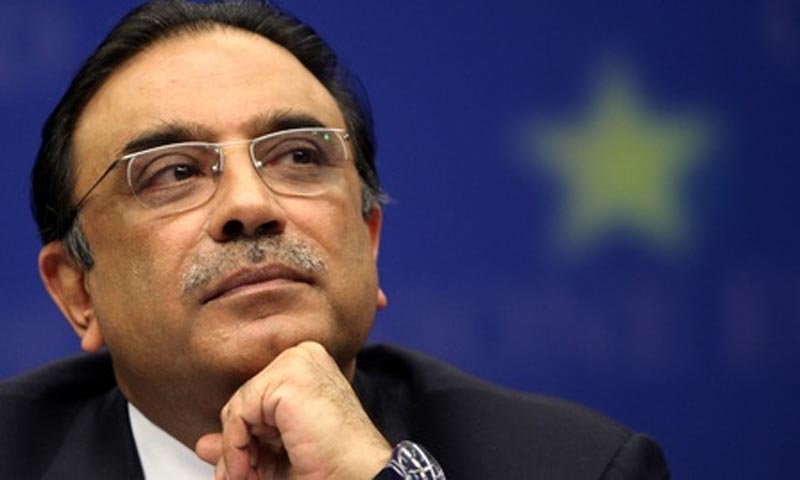 Urging democratic forces to get united and guard against “dictatorial mindset”, former president Asif Ali Zardari warned on Friday against efforts to undermine parliament.
“The days of direct assault on parliament are over but we must be vigilant against the dictatorial mindset that seeks to ambush parliament in different ways,” he said in a message released by the PPP’s media centre on the sixth anniversary of the massive bomb attack in Karachi’s Karsaz area, leaving over 150 workers of the party dead.
The bomb attack targeted the home-coming rally of former prime minister Benazir Bhutto.
“On this occasion, I would like to caution the democratic forces against the dictatorial mindset that refuses to bow before parliament and people’s verdict despite restoration of democracy and several milestones achieved in the path of (this) journey,” he said.
He said the parliament represented the will of the people and served as a shield against dictatorship.
“It must be strengthened, not undermined. We must stand together against all those who perceive parliament as a threat to their dictatorial ambitions and seek to undermine it behind various facades. The PPP will not allow anyone to undermine parliament. Let there be no doubt about it.”
Mr Zardari recalled that on Oct 18 in 2007 battle lines were drawn between forces of democracy and militants and extremists. “Since then the battle lines have sharpened. The battle must continue till it is won,” he said.
He paid tribute to the victims of Karsaz tragedy and said that the PPP would carry forward the democratic and egalitarian mission of its leaders Benazir Bhutto and Zulfikar Ali Bhutto.
The former president asked the people to remember in their prayers the personnel of the armed forces and civil law-enforcement agencies and the people who had rendered sacrifices in the fight against extremism.
Addressing an Eid Milan party in Naudero (Larkana) on Thursday, Mr Zardari said that the PPP’s Sindh government would generate electricity from coal and provide it to people at subsided rates. It will boost the process of industrialisation in the province. He said Sindh had the right to 50 per cent royalty on its gas reserves and the PPP was committed to ensuring that its benefits trickled down to the people.
Pointing to the PPP’s mandate in Sindh and its majority in Senate, he said he had always avoided the point of no return in politics because he did not want to derail democracy.
“We will support positive steps of the government and reserve the right to criticise its negative approaches,” he said. “We have given time to the government to see its performance and whether it serves people.”
Mr Zardari said that a “third force” was pitting politicians against each other but it must not be allowed to succeed. “Our leaders had rendered tremendous sacrifices for restoration of democracy,” he recalled.
He said that port in Karachi supported the economy of not only Sindh but of Pakistan too but the city needed a better security situation.
He praised the youth for supporting the PPP in elections.
Mr Zardari said that as president, he had handed over his powers to parliament to strengthen democracy. He condemned religious extremism and said the war against terrorism in Afghanistan might pose a threat to Pakistan.
Sindh Chief Minister Syed Qaim Ali Shah said the PPP had won majority of seats in Sindh because of unflinching support and love of the people. He said that even a 10-party alliance had failed to cause any dent in the PPP’s popularity.
He criticised the PML-N government for its failure to end electricity crisis and said contrary to promises made by it hours of loadshedding were increasing.
Urging democratic forces to get united and guard against “dictatorial mindset”, former president Asif Ali Zardari warned on Friday against efforts to undermine parliament.
“The days of direct assault on parliament are over but we must be vigilant against the dictatorial mindset that seeks to ambush parliament in different ways,” he said in a message released by the PPP’s media centre on the sixth anniversary of the massive bomb attack in Karachi’s Karsaz area, leaving over 150 workers of the party dead.
The bomb attack targeted the home-coming rally of former prime minister Benazir Bhutto.
“On this occasion, I would like to caution the democratic forces against the dictatorial mindset that refuses to bow before parliament and people’s verdict despite restoration of democracy and several milestones achieved in the path of (this) journey,” he said.
He said the parliament represented the will of the people and served as a shield against dictatorship.
“It must be strengthened, not undermined. We must stand together against all those who perceive parliament as a threat to their dictatorial ambitions and seek to undermine it behind various facades. The PPP will not allow anyone to undermine parliament. Let there be no doubt about it.”
Mr Zardari recalled that on Oct 18 in 2007 battle lines were drawn between forces of democracy and militants and extremists. “Since then the battle lines have sharpened. The battle must continue till it is won,” he said.
He paid tribute to the victims of Karsaz tragedy and said that the PPP would carry forward the democratic and egalitarian mission of its leaders Benazir Bhutto and Zulfikar Ali Bhutto.
The former president asked the people to remember in their prayers the personnel of the armed forces and civil law-enforcement agencies and the people who had rendered sacrifices in the fight against extremism.
Addressing an Eid Milan party in Naudero (Larkana) on Thursday, Mr Zardari said that the PPP’s Sindh government would generate electricity from coal and provide it to people at subsided rates. It will boost the process of industrialisation in the province. He said Sindh had the right to 50 per cent royalty on its gas reserves and the PPP was committed to ensuring that its benefits trickled down to the people.
Pointing to the PPP’s mandate in Sindh and its majority in Senate, he said he had always avoided the point of no return in politics because he did not want to derail democracy.
“We will support positive steps of the government and reserve the right to criticise its negative approaches,” he said. “We have given time to the government to see its performance and whether it serves people.”
Mr Zardari said that a “third force” was pitting politicians against each other but it must not be allowed to succeed. “Our leaders had rendered tremendous sacrifices for restoration of democracy,” he recalled.
He said that port in Karachi supported the economy of not only Sindh but of Pakistan too but the city needed a better security situation.
He praised the youth for supporting the PPP in elections.
Mr Zardari said that as president, he had handed over his powers to parliament to strengthen democracy. He condemned religious extremism and said the war against terrorism in Afghanistan might pose a threat to Pakistan.
Sindh Chief Minister Syed Qaim Ali Shah said the PPP had won majority of seats in Sindh because of unflinching support and love of the people. He said that even a 10-party alliance had failed to cause any dent in the PPP’s popularity.
He criticised the PML-N government for its failure to end electricity crisis and said contrary to promises made by it hours of loadshedding were increasing.
Pakistan polio outbreak puts global eradication at risk
Subscribe to:
Posts (Atom)