M WAQAR..... "A man's ethical behavior should be based effectually on sympathy, education, and social ties; no religious basis is necessary.Man would indeed be in a poor way if he had to be restrained by fear of punishment and hope of reward after death." --Albert Einstein !!! NEWS,ARTICLES,EDITORIALS,MUSIC... Ze chi pe mayeen yum da agha pukhtunistan de.....(Liberal,Progressive,Secular World.)''Secularism is not against religion; it is the message of humanity.'' تل ده وی پثتونستآن
Thursday, October 10, 2013
Squandered chance: Bail for Musharraf
Foreign donors urged to help bar Afghan rights violators from polls

Afghanistan's aid donors should use their leverage to force the government to ban human rights violators from competing in a presidential election next year, a human rights group said on Wednesday.
Afghanistan's allies will be hoping the election, due next April, will set the country on a firm path to stability as it takes over responsibility for its security with the withdrawal of most foreign troops by the end of 2015.
Among the candidates who registered for the election by a Sunday deadline are several who have faced accusations of rights abuses during many years of war and turbulence.
The U.S-based group Human Rights Watch called for rights violators to be excluded as candidates.
"Had the Afghan government in the last decade properly addressed crimes of the past, several current candidates would now be disqualified from seeking office - or would even be serving time," said Brad Adams, Asia director at Human Rights Watch.
"Foreign donors should press the Afghan government to ensure future elections are not being contested by serious rights abusers."
One political leader accused of rights violations, General Abdul Rashid Dostum, in an apparent response to public pressure, this week took the unprecedented step of apologising for past bloodshed.
He has been accused of mistreatment that led to the death of enemies during the civil war in the 1990s and early the next decade.
"I want to be step ahead on this path and say that I apologize to all those who have suffered on all sides in the conflict," Dostum said on his Facebook page.
The apology did not convince some.
An analyst for the Afghanistan Analysts Network think-tank said it was aimed at forging an alliance for the polls.
"The statement was overtly linked to the election," wrote the analyst, Kate Clark.
The election is considered the most crucial since the U.S.-led overthrow of the Taliban regime in 2001, with more than a decade of Western-led reforms resting on its outcome amid increasing Taliban violence.
President Hamid Karzai is barred by the constitution from running for a third term but his older brother, Qayum, has registered as a candidate.
Foreign concern about Afghanistan was underscored last week when Norway took the rare step of cutting aid on the grounds that Afghanistan had failed to meet commitments to protect women's rights and fight corruption.
Four killed, 30 hurt in Quetta blast

At least four persons were killed and several others injured in a blast near city police station in Liaquat Bazar on Thursday.
Police and rescue teams reached the sport and the wounded were shifted to hospital while emergency was declared in Civil Hospital.
According to police, the bomb was implanted in a motorcycle. Security forces cordoned off the area and started search operation.
Earlier, an explosion killed one person and injured several others near a restaurant in busiest area of Lahore’s Old Anarkali.
Meanwhile, another explosion targeting polio team at Peshawar’s Ring Road injured three Khasadar Force officials.
Malala beats Snowden, wins EU human rights prize
The Express Tribune News
Pakistan Tightens Internet Controls, Civil Surveillance
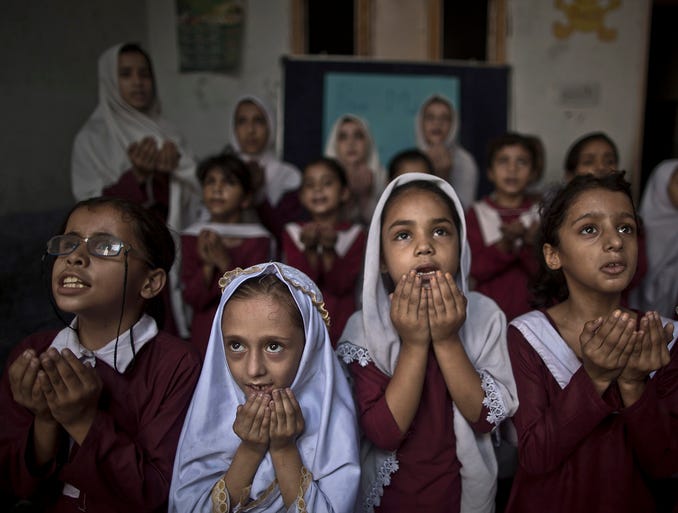
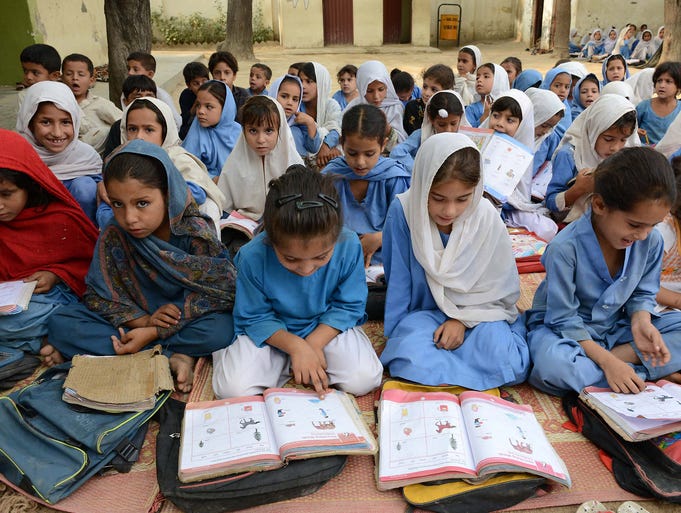
Girls in Pakistan see Taliban victim Malala as heroine
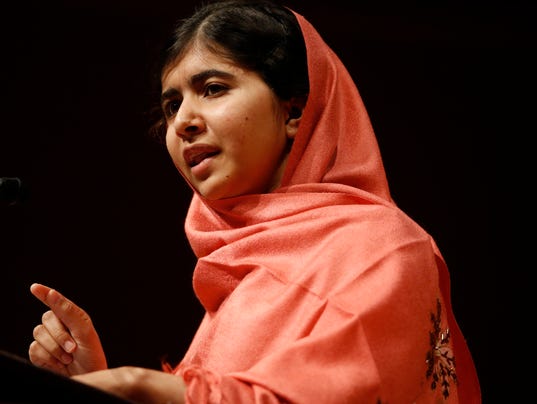
Four years ago, Palwasha Yousafzai longed to go to school.
It was early 2009 and the Taliban was in control of the villages of the Swat Valley. The Islamist group had banned all types of entertainment, including television, radio and music and forbidden local women from going shopping and girls from attending school.
"Every day I would stand near the window pane and wait for an opportunity to go out of the house," recalled Palwasha, 14, now a seventh-grader at Al Razi School and College Kanju in Swat.
"I lost interest in revising my schoolwork, especially knowing that hundreds of girls' schools were already burned down and that I had little hope of going back to school," she said.
What gave her hope, she said, was a blog written anonymously by a teenage Pakistani about the trials of being a girl in a strict Muslim country. That girl, Malala Yousafzai, was attacked a year ago by the Taliban for her words, and is a candidate this year for the Nobel Peace Prize. The winner of the prize will be announced Friday.
"In that turmoil, it was (Malala's) diaries on BBC that became the voice for many girls like me," Palwasha said.
Many schoolgirls like Palwasha in Malala's home region are crossing their fingers, saying she should win, and hoping she'll do so against possible contenders such as WikiLeaks leaker Pfc. Bradley Manning and Russian President Vladimir Putin.
That's because Palwasha, who hails from a farming family, says Malala is someone who showed girls like her that they could go to school, have a future even though things seemed so bleak back when Taliban ruled the lush Swat Valley after pushing its way into power in 2007. An offensive by the Pakistan military two years later largely drove the Taliban from the area.
"In my family, women from the previous generations would help their men in the fields and not much importance would be given to their education," she said. "But now the tables have turned."Even so, there is much left to be done in the region and many local girls are hoping that if 16-year-old Malala wins the Nobel, it will raise awareness about how important it is for females to get educated: In Pakistan, only 40% of females can read.
Purkha Gul, 16, a 10th-grader at the Swat Girls Model School likens uneducated females to ticking bombs for the country. She says educating girls is key to curbing terrorism, which she calls "the biggest challenge for our country."
"We remember how the illiterate women in our neighborhood gave their jewelry to the Taliban and sacrificed their sons, brothers and husband to fight against Pakistan's army because all they could understand was that the fight was for Islam," she said.
Purkha also bitterly recounts how a friend died because she was female and local mores prevented her getting medical treatment in time.
"She died just because the doctor was a male and the family wasn't willing to get her examined," she said. "This is what lack of education can do — it can cost lives."
While Malala has been hailed internationally, some locals aren't as happy about all the attention surrounding the young activist. The Taliban this week reissued a threat against her life, which it tried to take when a Taliban terrorist shot Malala in the head in Mingora, Swat, one year ago Wednesday.
The assassination attempt as she was walking from school made headlines worldwide. Malala's father, who ran a school for girls, was allowed to bring her to England for brain surgery and to repair her face. She has remained in that country ever since.Some locals in Pakistan call Malala a "U.S. agent" and the shooting episode a mere "drama" and wonder why she gets so much attention. "Why only Malala? … Why doesn't the world cry for those children who have been killed by U.S. drone attacks?" are questions typical of many on local social-networking sites.
But analysts say that those voices are just threatened by what Malala stands for and is trying to change.
"Those who so easily buy conspiracy theories about Malala being a U.S. agent or who go against Malala are usually the same people who you will find justifying the murderous, criminal acts of the Taliban in some way, absolving them of responsibility by pointing to the U.S. invasion of Afghanistan or the drone attacks," said Beena Sarwar, a Karachi-based artist, journalist and filmmaker who focuses on human rights and gender issues.
The United States continues to target Taliban and other extremists in Pakistan with missiles fired from drones, or small unmanned planes. The U.S. military has been fighting the Taliban in Afghanistan since the Sept. 11, 2001, attacks that were orchestrated by Osama bin Laden, who was protected by the Taliban.
"These people conveniently forget that the mindset involved in the attack on Malala is the same as the one that was attacking female workers and teachers and girls' schools in the western border areas before 9/11," Sarwar said.
The Taliban has often attacked schools that teach girls, which its clerics say is forbidden by God. Some authorities have reported the possible poisoning of food in girls' schools.
"The textbooks, laws, and unofficial yet official narratives continue to promote it — and there is confusion because on the one hand Pakistan is fighting these criminals, and on the other we continue in some way or other to propagate their ideology," Sarwar said.
The Pakistani military has been accused of cooperating with the Taliban, and has in the past cut deals with its militants giving them control over territory in return for cease-fires. But it has launched offensives against it in Swat, and some here say things are getting better, though slowly.
In Mingora, Sovia Fazal, an 11th-grader at the Swat Children Academy, says her family encouraged girls' education and that she and her four sisters were treated equally with their two brothers within the family.
"My father took serious interest in educating all his daughters – I study science and my elder sister is studying medicine in Swat," she said, admitting her family is unusual in local society.
And that is why Sovia hopes Malala wins the Nobel Peace Prize — to make such opportunities the norm.
"Last year when I first heard about the assassination, I was scared for Malala," she said. "Since then, I have just prayed for her safety and it's amazing how she has become even stronger. She is brave — and there is so much to learn from her."
Malala: a girl with a big story and bigger dreams
A year ago, 15-year-old girl was shot by a Taliban gunman. She survived and managed to take her campaign for girls' education international. And now Malala could soon become the youngest Nobel Peace Prize laureate.
The title of her book speaks for itself: "I am Malala: The Girl who Stood up for Education and Was Shot by the Taliban."
On the cover there is a portrait of the teenager wearing a headscarf. She has a serious expression on her face. On Tuesday, October 8, the autobiography of Malala Yousafzai was published - one year after she was attacked by the Taliban in her home town in Pakistan.
On October 9, 2012, Malala was on a bus heading home after school with friends. She had been well-known in her native Swat Valley and had been a thorn in the Taliban's side. The daughter of a teacher, she had openly advocated education for girls - despite a ban placed by the Taliban. On that Tuesday after school, a Taliban gunman stormed into the bus, asking, "who is Malala?" and shot her in the head.
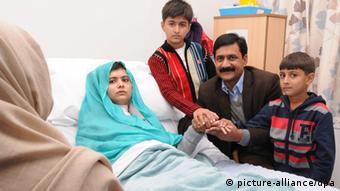
At first, her condition was critical. Malala received an emergency operation after being flown to a military hospital in Peshawar. She was then transported to Islamabad for further treatment. Still in critical condition, she was flown to Britain, where she fought for her life for the next few months in hospital. Today, she lives there lives in Birmingham with her family.
Waking up as an icon
Thank God I'm not dead." Those were her first thoughts when she woke up from a coma around a week after the attack, Malala wrote in her book. She also wrote that she held no grudge against the man who shot her and that she did not want retribution.
International media cosely followed the recovery of the 16-year-old girl, who had turned into an icon - a symbol of the fight against Taliban oppression.
The Islamists admit that they had failed in their goal to silence her. And when Malala was able to address the UN nine months after her attack, she had a much larger stage than she or the Taliban could have ever imagined.
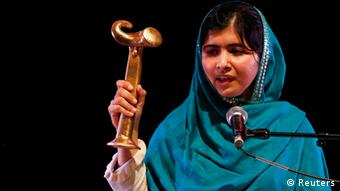
The young Pakistani woman is celebrated in the West; she has received a number of prizes for her dedication. Among others, she won the International Children's Peace Prize in September this year and was also named Amnesty International Ambassador of Conscience 2013.
After giving her speech on her 16th birthday before a specially convened youth assembly at the UN in New York in July 2013, she received an invitation from the Queen of England to visit Buckingham Palace. She has also been nominated for the Nobel Peace Prize, which will be handed out this Friday, October 11 and is seen as a favorite among the candidates.
Fans and foes
"If she wins, it is almost like we all are winning," said Gul Panrha, a girl in the sixth grade from Swat Valley. Fazal Khaliq, a teacher at Malala's school in Pakistan, said he was proud of his former student. "Because of what she suffered, she did something good for her country; Swat Valley used to be synonymous with terrorism." He added that Malala was to thank because the world now knew that the Swat Valley was also home to peace-loving people with an appreciation for education.
Not everyone in Pakistan, however, supports Malala. On the contrary: "after the attack, after she left the country and especially after she spoke before the UN, there has been a downright disgusting campaign against her," said Britta Petersen, head of the Heinrich Böll Foundation's Islamabad office. For months Petersen has observed mixed reactions among Pakistanis to Malala's campaign for girls' education - a very emotional topic for many. "Malala's father has been accused of instrumentalizing his daughter. He has been called a pimp and people have called her a 'whore of the West.'"
Utopian dream?
Ahead of the publication of her book, Malala Yousafzai gave an in-dept TV interview with the BBC. In it, she encouraged talks with the Taliban, saying they were "needed for peace."
"The best way to solve problems and to fight against war is through dialogue." She also said she wanted to return to Pakistan as soon as possible and get involved in politics. A goal that might prove unrealistic, said Britta Petersen.
"At the moment it looks as though one of the reasons Malala is living in Great Britain is because it is simply too dangerous for her in Pakistan." With regards to Malala's dream of returning to her home and having a positive impact on the future of the country, the expert added: "it's not very likely to happen."
Tensions In Pakistani Town After Muslims Dig Up Hindu Grave
http://www.rferl.org/Tensions are mounting in a southern Pakistani town after Islamic fundamentalists dug up the grave of a Hindu man. Police said on October 8 that the unrest in the town of Pangrio in the southern Sindh Province flared after an Islamist party, Ahle Sunaat Wal Jamaat, objected to the burying of a Hindu man in a Muslim graveyard. Local police chief Shaukat Ali Khatian said a Muslim crowd dug up the body and dragged it through the streets of Pangrio. Hindus and Muslims have coexisted in Sindh for centuries. They have lived side by side and shared graveyards but the rise of Islamist extremists in rural Sindh has inflamed tensions. The province is home to most of Pakistan's small Hindu community. They number an estimated 2 million among a population of 180 million.
Lahore: One killed, several injured in Old Anarkali blast
A strong explosion occurred in the Old Anarkali area of Lahore Thursday morning that killed one person and injured many others, Geo News reported.
According to the initial reports, a time device exploded in a restaurant in Old Anarkali area of Lahore that killed one man and injured several others who were shifted to Mayo Hospital for treatment.
Three injured including a woman were said to be in critical condition, hospital sources told.
Several nearby shops were also damaged due to the impact.
Police told that the blast occurred in a local restaurant where the time bomb, weighing one kilogram, was fixed under the counter.
Police and rescue teams reached the blast site immediately and kicked off efforts to shift the injured to the hospital.
Epidemic: Peshawar records first dengue cases
After infecting thousands of people in the rest of the province, dengue made its way to Peshawar where two cases were reported on Wednesday.
Khyber Teaching Hospital (KTH) Communication Officer Farhad Khan told The Express Tribune the two people infected with the disease were brothers Muhammad Bilal, 26 and Bakht Jamal, 20, both residents of Gulbahar.
Khan said the brothers were administered treatment and their condition is stable. He added 38 patients with dengue fever had been brought to the hospital from across the province.
According to the Khyber-Pakhtunkhwa Health Department, 340 patients are still admitted in various hospitals, while 30 people have died.
According to official records, 7,242 cases of dengue have been confirmed from Swat, 112 from Mardan, 223 from Malakand, 111 from Lower Dir, 48 from Shangla, 31 from Mansehra, 20 from Buner, 18 from Abbottabad and five from Haripur.
However, according to the district health office in Mingora, 81 new cases of the disease were reported by late Wednesday evening, increasing the total count to 8,040.
Around 49 dengue patients have been brought from Swat and Dir to the Hayatabad Medical Complex and 14 have been shifted to the Lady Reading Hospital from Swat since the outbreak.
Mingora
Meanwhile, dengue fever claimed three more lives on Wednesday taking the official death toll to 30 and unofficial to 50. Twenty seven-year-old Farman Ali, a resident of Malookabad, died in Peshawar while 30-year-old Faisal Hayat, a resident of Mingora and 70-year-old Jamal Khan died in Saidu Teaching Hospital (STH).
Furthermore, 51 dengue positive patients were admitted to the STH bringing the total number of patients registered with the hospital to 4,322.
“Currently, 177 patients are hospitalised in STH including 126 males and 51 females. Around 25 patients are in critical condition in the intensive care unit, whereas one was referred to the Lady Reading Hospital in Peshawar,” said STH spokesperson Dr Wasil Ahmed.
Pakistan: ‘Minorities treated unfairly in polls’
Musharraf: Bail for Pakistani Ex-Leader Paves Way for His Exit
By DECLAN WALSH-
A Pakistani court granted bail on Wednesday to Pervez Musharraf, the country’s former military ruler, clearing the way for him to leave the country as early as Thursday, his lawyers said.
Mr. Musharraf, 70, has been under house arrest at his villa outside Islamabad since April, facing criminal charges in three cases related to his nine years in power, from 1999 to 2008. The prospect of a former army chief facing potential imprisonment appeared, for a time, to signal new limits to the unofficial immunity from prosecution that Pakistan’s top generals have long enjoyed.
Mr. Musharraf had already been granted bail in two of the three cases, and the decision on Wednesday to grant bail in the third — related to the death of Akbar Khan Bugti, a Baluch nationalist leader killed in a military operation — opens the door for him to avoid prosecution entirely.
Mr. Musharraf’s lawyers said that his bail payment of $20,000 could be processed as early as Thursday morning; he could then leave Pakistan immediately. Ahmad Raza Khan Qasuri, the vice president of Mr. Musharraf’s political party, the All Pakistan Muslim League, said that Mr. Musharraf might go to see his 90-year-old mother.
“He’s a free person — he can go out whenever he likes,” Mr. Qasuri said in a telephone interview. “His mother, who is a very aged lady, lives in Dubai. He might go tomorrow or the day after to see her. But his base will continue to be in Islamabad.”
Still, Mr. Musharraf has rebuffed previous entreaties from his advisers, and from senior military leaders, to leave Pakistan, particularly if doing so would prevent him from returning to fight his battles in court. Aides say that Mr. Musharraf, a former commando with a famous stubborn streak, insists on clearing his name and does not want to spend his retirement in exile.
But for the military, his case has become an unwelcome distraction, complicating relations among the army, the civilian government and the courts, and raising the prospect of a troubling precedent.
Mohammed Amjad, secretary general of Mr. Musharraf’s party, told reporters outside his home that if Mr. Musharraf leaves Pakistan, it will be only temporarily. “He will not escape from Pakistan,” Mr. Amjad said.
Mr. Musharraf has been detained at his luxurious farmhouse outside Islamabad rather than in prison for security reasons, following Taliban threats to his life. Aides say he has been confined to two rooms in the house, which has a swimming pool and sweeping lawns, and has had limited access to his friends and family.
Still, in a country where senior military officers are generally considered to be above the law, the sight of a former military ruler facing justice in a civilian court is a startling novelty.
Besides the three current criminal cases, Mr. Musharraf faces potential treason charges over his role in suspending the Constitution in 2007, though few analysts believe that the government of Prime Minister Nawaz Sharif is likely to go ahead with those charges.
Mr. Musharraf was disqualified from running in the general election in May, in which his party performed poorly. More generally, few Pakistanis have shown much enthusiasm for returning him to power.
One factor in Mr. Musharraf’s present calculation might be the position of his nemesis, Chief Justice Iftikhar Muhammad Chaudhry, whom he tried to fire in 2007. With Mr. Chaudhry due to retire in December, analysts say that Mr. Musharraf might be waiting until then to decide whether his long-term future lies in or out of Pakistan.
Pakistan: Musharraf ‘free to move’ as court grants bail in Bugti murder case
Daily TimesThe Supreme Court Wednesday granted bail to former military ruler Pervez Musharraf over the death of Baloch nationalist Akbar Bugti, his lawyers said, bringing closer his possible release after nearly six months of house arrest. Musharraf has now been granted bail in three major cases against him, including one relating to the assassination of former prime minister Benazir Bhutto. His lawyer said the ruling meant he was a “free man”. But he is likely to remain under heavy guard at his villa on the edge of Islamabad, where he has been under house arrest since April, because of serious threats to his life. Musharraf was head of state in 2006 when Akbar Bugti was killed during an army operation. His lawyer Ibrahim Satti said a three-member Supreme Court bench had granted bail in the Bugti case in return for surety bonds worth two million rupees. Another counsel for Musharraf, Qamar Afzal, said bail was granted due to lack of evidence. “Pervez Musharraf is a free man now after getting bail in the Bugti case,” Afzal said. As well as the Bugti and Bhutto cases, Musharraf also faces cases over the suspension of judges during emergency rule, which he imposed in 2007. The Taliban have threatened to kill the 70-year-old former general. After getting bail in the Bugti case, the sub-jail status of Musharraf’s residence will likely end as the court has already granted him bail in judges’ detention and Benazir murder cases. The bench, headed by Justice Nasirul Mulk and comprising Justice Sarmad Jalal Usmani and Justice Musheer Aalam Khan, asked Musharraf to submit two surety bonds of Rs 1 million each. The court observed that substantial evidence was not available to establish that Musharraf was involved in the criminal conspiracy regarding the murder of Bugti. “This is a case of criminal conspiracy for which solid evidences are required, and due to their unavailability, there is no justification for rejection of the bail plea,” the court ruled. It asked Balochistan Additional Prosecutor General Tahir Khattak about the evidences which had been gathered against Musharraf and whether anyone had witnessed him conspiring against Bugti. Khattak told the court that according to the statements of co-accused, Musharraf had ordered action against Bugti. He stated that a CD recording was also available to prove this. Khattak said that Bugti was killed on the directives of Musharraf.
Pakistan: Federal, KP govts afraid of Taliban: ANP
The Spokesman for ANP Zahid Khan has said that both federal and KP governments are too afraid of Taliban, to criticise Taliban openly.
Talking exclusively to Online on Wednesday , he said that hesitant attitude of both these governments had fostered, encouraged militancy and terrorism in Country , while he also challenged PTI to account for countless dead and wounded in KPK.
He also acknowledged the helplessness of government to provide gas to masses due to depleted resources, while he defended the provision of commodity to household consumers as of being topmost priority of government; besides urging for paying more attention towards public transportation.
He also confirmed that both Prime Minister and opposition leader have reached consensus over a recommendation for NAB chairmanship, which, considering the past 5-year dismal and obdurate record of only government’s whims, forcing regular opposition references in Supreme Court, was a good omen.
Zahid Khan also expressed his annoyance over PTI’s reservations over almost everything, every issue, which PTI always translated into “hidden deals”.
“Take our (ANP’s) example, having maximum reservations, complaints about polls-riggings, backed by adequate proofs; yet we did not allow democracy to be derailed, and accepted all results with an open mind and heart”, he said.
He also berated government’s indecision and (yet) claims of progress in dialogue bid with Taliban, after every meeting with Maulana Fazl-Ur-Rehman, which was always denied by Taliban.
“These very aspects were responsible for bombings and killings in KPK”, he complained, wondering “and who would be responsible for all the resulting destruction and mayhem”.
He was chagrined over lack of understanding by both governments, about Taliban’s intention and reputation, who never even acknowledged the Constitution of Pakistan.
“Earlier we were always told that we are fighting America’s war, so why don’t we simply call this American war off?” he lamented.
He also said that PTI-led KPK government had no plans to block NATO supplies.
Malala Yousafzai: Accolades, applause and a grim milestone

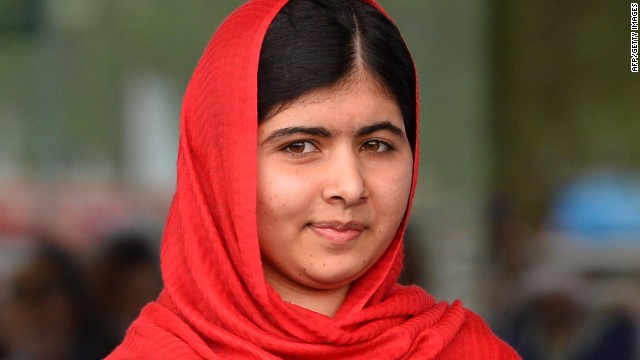
By Ben Brumfield and David Simpson, CNNA year ago Wednesday, Malala Yousafzai was riding the bus home from school when a Taliban gunman climbed aboard and shot her in the head. She nearly died. Now, the 16-year-old advocate for girls' education is a popular favorite for the Nobel Peace Prize to be awarded Friday. To mark the anniversary of the shooting, her memoir, "I am Malala," came out Tuesday. The phrase has become a battle cry for the right to an education around the world. The memoir follows her odyssey from near-death to global fame in just a year's time. It also gives a vivid account of her everyday life in Pakistan's Swat Valley and how she developed a love for education. Her public fight to get that education and for the right of girls to get one, too, is what put her at odds with the Pakistani Taliban. They banned girls from schools in the Swat Valley in 2009. Malala anonymously blogged for the BBC in opposition to that order, drawing the Islamist militants' rage. New threat The Taliban renewed their death threat against her Monday. Spokesman Shahidullah Shahid said the teenager was targeted because she was used in propaganda against the Taliban. "If there is any opportunity we can target, she would be on our hit list again." The Taliban have denied Malala was targeted for promoting education for girls. "Taliban are not opposed to girls education, if it's within the ambit of Shariah and Islamic education, but they could not support anti-Islamic agendas and Westernized education systems," Shahid said. The militant group destroyed over 170 schools between 2007 and 2009, the U.N. said. Malala answers In an interview with Malala on "The Daily Show" on Tuesday, Jon Stewart asked her what she would do if a Taliban assassin came calling again. "I'll tell him how important education is, and that I even want education for your children as well," she said Tuesday. And I would tell him, 'that's what I want to tell you, now do what you want.'" Fighting the Taliban is important, but through peace, dialogue and education, she said. But the Taliban often prefer to let their guns do the talking. Malala has lived outside of her homeland ever since she was shot last year. Her odyssey The gunman who climbed on board that school bus wounded Malala in the head and neck. The driver hit the gas. The assailants got away. Malala was left in critical condition. Doctors fought to save her life, then her condition took a dip. They operated to remove a bullet from her neck, and as brain swelling threatened her life, a surgical team cut out a section of her skull to relieve the pressure. After surgery, she was unresponsive for three days. She was flown to the U.K. for intensive medical treatment and multiple surgeries to repair the damage the bullets had done. Doctors there covered the large hole in her skull with a titanium plate. Malala has kept the piece of skull that had been removed as a souvenir of her fight. It is nothing short of a miracle that the teen education advocate is still alive and even more astounding that she suffered no major brain or nerve damage. Global stage The attempt on Malala's life propelled her and her cause onto the global stage. Beyond her hospital room in her new home in the UK, a world sympathetic with her ordeal transformed her into a global symbol. An avalanche of support poured in, including from world leaders. The U.N. started a global education program for girls called "I am Malala," the name she has chosen for her biography. This year, the Malala Fund was created to support education for girls around the world. She recovered and addressed the United Nations in New York on her 16th birthday, July 12. "They thought that the bullets would silence us, but they failed," she said. "And then, out of that silence, came thousands of voices."
Wednesday, October 9, 2013
Malala's Pashto Interview..............د طالبانو له سوچ سره مخالفه یم. ملاله
د تعلیم مبارزې ملالې یوسفزۍ ویلي دي چې هغې د طالبانو پر ضد پروپیګنډه نه کوله، بلکې د هغوی د سوچ او مفکورې مخالفه ده. نوموړې دا خبره د مشال راډیو له خبریال عبدالحي کاکړ سره په یوه ځانګړې مرکه کې کړېده، چې نن د اکتوبر پر نهمه نېټه پر هغې د برید یو کال پوره کېدو په مناسبت ده. ملالې وویل، کله چې طالبانو په سوات کې د نجونو پر تعلیم بندیز ولګاوه نو دې یې مخالفت وکړ او د تعلیم او ښځو حقونو لپاره یې هلې ځلې پیل کړې. ملاله په نړیواله توګه د تعلیم مبارزې په توګه پېژندل شوې ده او د ۲۰۱۳ز کال د سولې نوبېل انعام لپاره هم په کتار کې ده. دا لومړی ځل دی چې تر ویشتو وروسته ملالې د پښتو ژبې له یوې رسنۍسره خبرې کوي.
The Kind Executioner: Of Z.A. Bhutto’s final moments
Pakistani-American writer Mumtaz Hussain’s script The Kind Executioner was shortlisted in the drama category amongst the official finalists of the Hollywood Screenplay Contest last week. Now, Hussain is ready to transform this script, which portrays the relationship between late Prime Minister Zulfikar Ali Bhutto and his executioner, into a movie.
Hussain says his project, which is in English, is a piece of fiction derived from the last years of Bhutto’s life. “I am delighted to learn that my script has been appreciated because I am working hard to make this film my singular achievement,” Hussain told APP. The writer hails from Jhang but has lived in New York for the past couple of years.
The production will portray the relationship between the popular prime minister and his executioner Tara Masih, who believed Bhutto (executed in 1979) was a saviour of Pakistan. The script, which was evaluated by a team of writers and experts, is said to be intense in terms of both its dialogue and drama.
The Kind Executioner will be an attempt to cinematically answer questions in the audience’s mind by symbolism, and Hussain is confident that the average Pakistani, who doesn’t really have an interest in history or politics, will be able to enjoy it. He promises it will be meaningful, with unique transformations and expressions. He did not disclose too many details as he is keen on preserving the audience’s curiosity till the project is ready for release.
Hussain has held several exhibitions as a modern artist and has also published a collection of short stories in Urdu.
The winning scripts of the Hollywood Screenplay Contest, the body that has shortlisted Hussain’s film, the winning scripts are forwarded to several leading production companies and literary agencies. The screenplays are scored and evaluated on a multi-point scale with criteria including concept, structure, plot, pacing, character, dialogue, style, theme and marketability.
In Pakistan, vaccinating children against polio can be a deadly job
With a few drops of vaccine, Gulnaz shields another child from the devastating effects of polio.
It's a simple but potentially life-saving task. It's also incredibly dangerous -- not for the children, but for Gulnaz, who works in one of the most violent parts of Karachi.
Last year, her niece and sister-in-law -- also polio workers -- were gunned down by men on motorcycles. The U.N.'s children's agency, UNICEF, said they were shot to death for vaccinating the children . But the deaths haven't stopped Gulnaz, who is using one name for safety reasons.
"Everybody in my family was suffering from shock. Some of them tried to stop me, telling me not to do this job anymore because two coffins leaving one house leaves a mark," she said.
Anti-polio campaigns have been targeted by militants ever since U.S. intelligence used a fake vaccination program to help in its hunt for al Qaeda leader Osama bin Laden in 2011. The CIA used a fake vaccination program to collect DNA samples from residents of bin Laden's compound to verify his presence there.
Taliban to U.S.: End drone strikes, or no more polio vaccines
That wasn't a polio campaign, but the fallout still lingers. Since July 2012, at least 22 polio workers have been killed.
Still, Gulnaz remains undeterred.
"After this tragedy, I'm not scared at all. In fact, I feel even stronger and more determined," she said. "Every woman in this country who is doing this job is praying for me. When I'm working in the field I'm with my partner, but I also sense that my niece and sister-in-law who were killed are walking alongside me."
Gulnaz and her partner are escorted by paramilitary soldiers who seal off the area -- guarding each end of a street to ensure that young children get access to the crucial drops of vaccine that most parents and children around the world can simply get from their local doctor.
Unrelenting attacks
On Monday alone, two people were killed and 13 others were wounded in a bombing that targeted polio workers in northwest Pakistan, police said.
That blast took place on the outskirts of the violence-plagued city of Peshawar.
At the U.N., money backs up vow to eradicate polio by 2015
The bomb was detonated remotely as polio vaccines and accompanying materials were being handed out to health workers, said Najeeb-Ur-Rehman, a senior police superintendent.
Last year, a Taliban commander in northwest Pakistan announced a ban on polio vaccines for children in the region as long as the United States continues its campaign of drone strikes.
It wasn't immediately clear if the Taliban played a role in the most recent attacks.
A father's dilemma
Osman was infected with polio as a child and wanted to make sure his children were vaccinated.
But after the raid that killed bin Laden, he decided not to vaccinate his 3-year-old son, Musharraf. The boy became one of the 28 cases of detected polio in Pakistan in 2013.
"I'm not stupid or illiterate. I made sure my other children got the drops," Osman said. "But I was very angry and wary of aid workers, because if they are cooperating with spy agencies, then it's better to keep away from them. I am sad my youngest suffered, but I don't regret my decision."
Osman, who is using only one name for safety reasons, changed his mind only after the government released a booklet with a series of religious edicts from Muslim scholars telling parents that polio drops are safe.
Polio is a highly infectious viral disease that can cause permanent paralysis in just hours. It has been eradicated around the world except for three countries where it is endemic: Pakistan, Nigeria and Afghanistan.
After the number of cases spiked sharply last year, Pakistan stepped up its eradication efforts. The numbers fell from 173 in 2011 to 58 in 2012, according to the Global Polio Eradication Initiative.
"I am appealing to my fellow Pashtun society, to give their kids polio drops," Osman said.
It's a message that health care workers hope others will hear. It could not only make their jobs safer, but also save children from a lifetime of disability.
In Pakistan's Pashtun tribal belt, Taliban reject peace talks
The Pakistani Taliban envoy drew his white trousers up before settling on the floor of a mud-walled house in Pakistan's ethnic Pashtun tribal region near the Afghan border.
Bodyguards, their long hair spilling out from traditional flat caps, listened warily for the occasional sound of a drone aircraft overhead.
Carefully, Shahidullah Shahid laid out the conditions for peace talks with the Pakistani government: release all Taliban prisoners, withdraw the army from the tribal areas where the Taliban are entrenched, and stop U.S. drone strikes.
The Pakistani Taliban, an umbrella group of factions operating independently from their Afghan Taliban allies, are fighting to set up an Islamic state in Pakistan but the government is trying to negotiate a peace settlement to end years of fighting.
"Drones really stop us from moving freely in the area," Shahid, the main spokesman for the Pakistani Taliban, told a small group of reporters on a recent visit to Waziristan.
"But even if our enemies use an atomic bomb, we would not stop our jihad."
Despite the government's push for talks, violence has risen sharply since Prime Minister Nawaz Sharif came to power in a May election. Churches, buses and markets have all been hit, reflecting the Taliban's resolve to keep fighting.
"Islam doesn't need democracy. Islam itself is a complete system," Shahid said, adding that there had been no direct peace contacts between Sharif's representatives and the Taliban.
Taliban officials who escorted Reuters on the trip requested that the exact location of the interview not be revealed.
Pakistan sponsored the rise of the Taliban in neighboring Afghanistan in the 1990s but now faces its own home-grown insurgency. It is keen to find a lasting solution to the problem which has devastated communities and ruined the economy.
"At the start of negotiations, you don't threaten them, you speak from a position of strength but you don't try to irritate them," Sartaj Aziz, Pakistan's foreign policy chief, said last month.
ALERT FOR PEACE
Pakistan's semi-autonomous Pashtun lands along the Afghan border, known as the Federally Administered Tribal Areas (FATA), have never been brought under the full control of any government.
British forces for years battled Pashtun rebels promoting jihad, or holy war, against the colonialists. In the 1980s, the region became the staging area for a new holy war, against Soviet occupiers over the British-drawn border in Afghanistan.
These days, in areas such as Waziristan, support for a peace deal is strong. Homes and shops have been flattened by army operations, militant fighting and drone strikes.
Cars with black tinted windows barrel down roads cratered by roadside bombs. Reflecting the army's nervousness, checkpoints open fire on any vehicles approaching after a curfew at dusk.
Pakistan's government publicly condemns U.S. drone attacks on its territory but militants say that the fact the strikes continue means that Pakistan tacitly approves them.
"I listen to the radio at night, when there is news about peace talks my family is all alert," said 55-year-old Khan Alam, who fled fighting between the army and the militants. "I want to go back to my own home, my orchards, my fields, my graveyard."
Observers believe the government and the militants are playing for time ahead of the pullout of most overseas forces from Afghanistan by the end of next year.
The militants hope victory for the Afghan Taliban would spur their fight against the Pakistani state. Pakistan hopes the end of the war in Afghanistan will convince the Pakistani Taliban to end their fight.
In recent weeks, smaller Taliban factions like Jundullah, which has many fighters from outside the Taliban heartland in the Pashtun areas, have become active.
Jundullah claimed an attack on a church in the frontier town of Peshawar that killed more than 80 people last month and an attack on a polio vaccination team on Monday.
Such bloodshed casts doubt over the proposed talks and even raises questions about the chances of convincing the fractious militants of the need for peace.
"After what the Taliban have done, what kind of peace can they have?" said Saifullah Mahsud of the FATA Research Center, a think-tank that works in the tribal areas. "There are divisions but they know they have to stick together to survive."
Rift appears in PTI over ‘flawed’ policies
Rifts emerged within the ruling Pakistan Tehreek-i-Insaf on Tuesday after one of its MPAs submitted an application to the Khyber Pakhtunkhwa Assembly speaker for a separate seat in the House.
“The party leadership in Khyber Pakhtunkhwa has deviated from its policies and manifesto and therefore, I have requested the speaker to allot me a separate seat in the House as soon as possible,” PTI MPA Javed Naseem from Peshawar told Dawn here.
Mr Naseem said PTI had pledged to eradicate corruption and follow merit if it came to power, but some of its ministers and leaders were trying to maintain the status quo and were reluctant to take action against ‘corrupt officers’.
“I am neither acceptable to the treasury benches nor the opposition and that is why I have asked the speaker to allot me a separate seat,” he said.
He claimed that many PTI MPAs were not happy with the provincial government’s policies and they would soon submit applications to the speaker to allot them separate benches.
The MPA complained that he had provided a list of officers in Peshawar Development Authority and other departments to the relevant quarters, who were allegedly involved in corrupt practices, but the ministers were reluctant to initiate inquiry against them.
He said he had also discussed the issues with Chief Minister Pervez Khattak time and again, but in vain.
Asked what would be his future line of action if the speaker did not allot him a separate seat, Javed Naseem said he would quit as lawmaker.
“I have given 12 years of my life to PTI, which was voted to power to eradicate corruption, injustice from society and observe merit. If the party can’t deliver and fulfil its commitments to the people, then I should not sit in the assembly,” he said.
Earlier in the House, the disgruntled lawmaker came down heavily on the provincial government over ‘flawed’ policies when the opposition benches protested political interference in posting and transfer of senior officers in police and health departments.
He said one ‘committed sub-engineer’ was transferred from Peshawar to Torghar district only because he was not acceptable to Jamaat-i-Islami, coalition partner of the ruling PTI.
He said the officer was punished for honesty and was transferred to a remote area.
OPPOSITION’S WALKOUT: A stalemate exists between the government and the opposition over the district advisory development committees.
The opposition members complained that the chief minister had appointed MPAs of the treasury benches as chairpersons of DDACs in the districts, where lawmakers of the opposition parties were in majority.
The opposition benches staged a walkout to protest on the matter.
On a point of order, Pakistan Muslim League-Nawaz MPA Wajeh Zaman Khan said the government despite assurances had yet to resolve grievances of the opposition parties regarding appointment of chairpersons of the committees.
He said female MPA of PTI Maliha Tanveer, who belonged to another district, had been appointed the DDAC chairperson in Mansehra, where the opposition lawmakers had won most seats in the May 11 elections.
Mr Wajeh Zaman said another female lawmaker of the ruling party, Zareen Riaz, had been appointed the head of the committee in Lakki Marwat district, where the opposition MPAs ere in majority.
He also criticised the government for transferring district police officer from Mansehra to Dera Ismail Khan.
The PML-N MPA said the people in Mansehra protested against the transfer of the police officer and blocked roads on Tuesday.
He urged the government to follow merit and stop postings and transfers on political grounds.
Other members of the opposition parties also protested against the government’s ‘discriminatory policies’ for the appointment of DDAC chairpersons and left the House.
Later, the treasury members on the directive of Deputy Speaker Imtiaz Shahid persuaded the opposition to end protest.
Minister for Works and Services Department Yousaf Ayub assured the House that the chief minister would meet parliamentary leaders of the opposition parties within two days to address their ‘genuine’ grievances.
He rejected the opposition’s allegations about violation of policy in postings and transfers.
RESOLUTION: The assembly unanimously passed a resolution to demand of the federal government to dissolve the Earthquake Rehabilitation and Reconstruction Authority over failure to achieve the desired results.
Maulana Asmatullah of JUI-F tabled the resolution, which asked the centre to transfer the Erra funds to the provincial government to undertake reconstruction activities in the earthquake-affected districts of the province.
Earlier, PML-N MPA Sardar Aurangzeb Nalotha said the federal government had decided to dissolve Erra and an inquiry had been conducted into the alleged irregularities.
Pakistan: Autocracy takes roots in NA
In a democratic system the National Assembly provides infrastructure of the Standing Committees comprising the members of the House to look after the day-to-day affairs of the country and execute the projects of the government. Thus in the parliamentary form of the government, the House elects members of the Standing Committees within one month after forming of the government. Lady luck does not favour the nations being ruled by the weak and fragile democracies; Pakistan is no exception. The PML-N formed the government under the leadership of Mian Nawaz Sharif for the third term that many believed had enough exposure and experience to run the democratic show—at least better than the previous government. But contrary to the expectations, after coming into power, outnumbering the opponents in vote-count, the government, perhaps, lost its interest in the National Assembly. The elections of the 34 NA Standing Committees were held but only after six weeks’ delay. A notification to this effect is still being awaited for convening the meetings of these committees that are supposed to elect their heads. The inordinate delay has left the entire process in limbo. Hence barring Finance Bill, the federal government is yet to undertake any legislation which is simply not possible in the absence of fully functional Standing Committees. If the government has ignored the formation of the mandatory standing bodies, the weak Opposition, for obvious reasons, has not shown any sense of urgency to this effect either despite the lapse of over one hundred days that are mostly considered as crucial to set tune of the government for the rest of the tenure. So far, the PML-N government has hardly taken up any issue of the national importance in the National Assembly to evolve consensus amongst the elected members of the people across Pakistan rather it preferred to use informal forum of the All Parties Conference to discuss the issue of terrorism. Similarly, the incumbent rulers have announced to sell off 31 national institutions including PIA, PSM and Railways but it is yet to raise infrastructure to execute the plan. Similarly, the matter of supreme importance like the decision to raise the prices of power and oil was taken with the consultations amongst the Prime Minister and his cronies rather than taking the National Assembly into confidence. What to talk of others, the government is yet to initiate consultation process with the Opposition over the appointment of the Chairman of the Public Accounts Committee that establishes transparency and credibility of the rulers. The tendencies in the power corridors indicate that an autocratic rule is more likely to reign supreme in days, months and even years to come, and the National Assembly will be used as a rubber stamp which is the natural outcome in any state where the politics of dynasty becomes an acceptable norm.
Malala to return ‘as soon as possible’
WE all know Malala the victim, Malala the activist, and Malala the icon. What we only get glimpses of, however, is Malala the 16-year old girl. Despite being catapulted into the world stage, she’s still a young lady who, like many her age, enjoys a good joke, fights with her younger brothers and is also a fan of the Twilight series of movies predominantly enjoyed by teenage girls the world over.
“I like Edward the vampire, more than Jacob the werewolf because vampires live forever,” she says as she refers to the central characters of Twilight, between whom the leading lady of the series has to choose.
“It’s fun to get away from the real world and enter a new world where you can take your mind away from your daily life. I think that’s really important,” she says in an interview with Dawn newspaper and CityFM 89.
But the real world just won’t be denied. It’s been a busy week for this child activist. There have been dozens of interviews, a book launch, meetings with global leaders and celebrities alike, an invitation to Buckingham Palace and — last but never least — talk of a Nobel prize.
Is that a fair burden to place on these shoulders? Will the prize, as some have argued, prevent her from enjoying a ‘normal’ life?
“I do want to enjoy my life,” she says after a moment of consideration. “But if I have to give up a few minutes of playing cricket, or fighting with my brothers, then that’s what I’ll do. What’s important to me is the cause of education and I want to fight for those millions of children who are out of school, who are suffering from terrorism, or are forced to labour, who do not even have food to eat or who are homeless. If I have to give up a little normality for that, then that’s what I’ll do.”
But does she feel she deserves the prize itself?
“In my opinion I haven’t done enough to deserve the prize,” she replies candidly. “There are a lot of people who deserve the prize and I think I still have a lot of work to do.”
From there the conversation turns to her family. We’ve heard a great deal about her father, who has clearly been a major influence on her life but what about her mother? What has her role been through these trying times?
“People only know about my father, but my mother loves me and has always supported me and encouraged me. She’s a great woman! She never stopped me or my father from continuing our campaign and always told me I was doing the right thing.” The attack, the coma and the very fact of moving away from home has, however, been hard on Malala’s mother. “It was hard for her when she saw I could not smile, that the left side of my face was paralysed. Even my voice changed and it was very tough on her. I lost hearing in one ear and that too was hard for her because she’s a mother and she wants her daughter to be perfect. Even today she prays constantly that I should be the same Malala I was then, before the attack. I think God is listening to her prayers because I’m recovering every day,” she says.
Adjusting to life in the UK has been difficult for Malala as well. “At home I was just Malala, but here they treat me differently. I think my personality of being ‘only Malala’ or being a normal child…that’s gone now.” There’s a note of sadness in her voice as she says this, but then she perks up the very next instant. “I think it will get better with time,” she says.
“There’s no sun here in Birmingham,” she sighs as she recalls the valley of Swat where she was born and grew up. It is clear that, despite the global platform she now occupies, she misses her home. That begs the question: Will she ever come home?
“Yes,” she replies without hesitation. “I love my home and I miss it and I now realise how beautiful Swat is and how precious Pakistan is. I’ll come home as soon as possible but first I have to empower myself with knowledge, I need to study hard and equip myself with the weapons of education. So yes, I’ll be back as soon as possible and I’ll continue my campaign for education.
Malala Yousafzai: A strong message, a mighty machine
The story of Malala Yousafzai is already the stuff of legend. She’s the Pakistani teenager who dared to defy the Taliban, surviving a horrifying assassination attempt to emerge as a symbol of bravery, and a campaigner for girls’ education, telling the United Nations last month to send books and pens, rather than tanks, to troubled parts of the world.And that’s not counting this week. On Sunday, she received an invitation to a Buckingham Palace reception with the Queen. On Tuesday, the now 16-year-old published her autobiography, I Am Malala. (The title is a chin-up answer to the Taliban gunman who boarded a school bus last Oct. 9, asking “Who is Malala?” before shooting her in the head). The book immediately shot onto bestseller lists.MARK MACKINNON
Malala : '' A symbol of resistance '
The Tehreek-e-Taliban Pakistan (TTP) has stated that it will target her again because she is a supporter of the ‘infidel West’. This accusation by the Taliban is, unfortunately, an idea that is gaining some traction with right-wing individuals and conspiracy theorists in Pakistan who think she is an ‘agent’ of the US, being highlighted to fulfil some nefarious goals. If that is true — and we mean to address the Taliban and the suspicious elements in the country — Malala is being lauded by the entire world, East to West, and has been appreciated for her unfailing efforts by people from all walks of life, then how can she be called an agent of the imperial superpower? How can someone with ulterior motives, and that too a little child, allow herself to be shot in the face by militants who would have surely killed her?
She is a hot favourite for the Nobel Peace Prize for two reasons: first of all, she has emerged as a symbol of resistance against Taliban ideology, which strives to see nothing less than women locked up in their homes and society regressing back into the dark ages. The world needed someone to wrestle strength and hope back from the militants. Secondly, after the devastating attack against her, she has advocated love and enlightenment through education, forgiving her attackers publicly. She has recently advised the government in Pakistan to talk to the militants in attempts to find peace. The little warrior for education is also one of Pakistan’s strongest proponents of peace but her idealism and naivety are evident. Two of the strongest political parties in Pakistan, the PML-N at the centre and the PTI in Khyber Pakhtunkhwa, were both loud backers of the negotiations process but the spate of deadly attacks that ravaged the country in the wake of their call for peace have made even these political parties rethink their strategy. Grudgingly, even they are beginning to agree that effective operations against the militants may be the only way to ensure peace. While Malala talks of only peace and second chances, the Taliban speak only of second attempts to murder and cause widespread destruction. It should be clear to our countrymen whose side they should be on.
The Malala story
Come Friday we will know if teenager Malala Yousafzai becomes the second Pakistani since Dr Abdus Salam to win the Nobel Peace Prize. She is now widely considered a front-runner for the prize. The announcement by the Nobel committee will come almost precisely a year after Malala was shot. A powerful BBC documentary has revisited the events of that day, reviving global interest in her. If she is awarded the Nobel, it will be our moment of pride. But this Friday may also be our day of shame, for then we will also have maintained our 100 percent record of driving Nobel Laureates out of the country. There are still many in this country who propound preposterous theories on how Malala faked the shooting or is working for the CIA. Another view goes that the girl, for whom an international UN day is now marked to promote literacy, has been turned into a kind of brand. Conspiracy theories abound, and perhaps we see at times the green of envy. There can be some reason for concern as perhaps there has been too much commercialisation and exploitation. But what does all this do to change the real Malala story?
Words scarcely exist to describe her bravery and poise, first for writing her journal when Swat was under militant control, then for refusing to be silenced by a horrific murder attempt and continuing to speak out and working for girls’ education. In a series of interviews given in conjunction with the release of her autobiography, ‘I Am Malala’, the sixteen-year-old has shown all the qualities that should make her an undisputed heroine at home, not a fount for political controversy. She has talked of human rights and freedom in a manner so articulate that we tend to forget that she is still a young girl. The weight that has been placed on her shoulders is too great but it is one she wears well. Malala continues to spread her message – but doesn’t plan on stopping there. She has said that she foresees a future in politics which would be most welcome even if we can’t help but continue to fear for her life. While mincing no words about the TTP’s brutality and their abuse of religion, she has also graciously said she favours talks with the militants. The TTP do not seem impressed and have put out a statement saying they will continue to target her and kill her if they can because she serves ‘infidels’. Clearly the girl inspires a great deal of hatred in them. That is only to be expected since there is no greater testament to the brutality and inhumanity of the TTP than this brave girl who had the courage to stand up to their bullying and nearly paid the ultimate price for it. For some reason Malala has become such a lightning rod that even her most innocuous statements lead to political wrangling. Such is the destiny of those who make the difficult choice of going against the grain. The question to be asked is not whether Malala deserves to win the Nobel Peace Prize; it’s whether the Nobel Peace Prize deserves a winner as worthy as her.
Malala and the TTP: A staggering contrast
IT is a year today since Malala Yousafzai was shot, and it is the country’s good fortune that she not just survived but is doubly determined to continue to campaign for education. Given all that she has been through, it would not have been surprising perhaps had she displayed revanchist sentiments against the TTP which launched grievous harm on her person and under whose thrall she earlier spent time in Swat. But Ms Yousafzai is being quoted across the world’s media for the best of reasons, saying that she wants to change Pakistan’s future through political activity and compulsory education. And while some consider unexpected her remarks on Monday about talking to the Taliban, is that really the case? “The best way to solve problems and to fight against war is through dialogue and … through peaceful ways,” she commented. Even in the context of people who almost killed her, there is recognition that hatred can produce no future.
All of this throws into even starker relief the ugliness of those who consider her a target. Even as Ms Yousafzai spoke of peace, the TTP spokesman Shahidullah Shahid denounced her courageousness and said that his group would try to kill her again. The young girl’s steadfastness of purpose and the ambassadorial role that has settled upon her has no doubt irked the TTP, but nothing can be more shameful than the contrast between the victim that wants peace and the perpetrators of violence that desire to peddle death. At the other end of this opprobrious spectrum, Maulana Samiul Haq, chairman of his own faction of the Jamiat Ulema-i-Islam, accused Ms Yousafzai of having been “hijacked” by Western and anti-Islam powers, even though the logic — given that the West wants the TTP eliminated — is tenuous at best.
This is far from the first time the TTP has taken a position that bodes ill for long-term success in the dialogue option. On Oct 5, its spokesperson shocked the nation by saying the TTP approved of the bombing of Peshawar’s All Saints Church since it was in keeping with the Sharia. The Sept 10 resolution of the all parties’ conference that offered talks to the TTP could have paved the way for the group to renounce violence, pledge loyalty to the Constitution and begin to integrate itself in the mainstream by joining the political process. But Shahidullah Shahid’s statement appears to be a reaffirmation of the TTP leadership’s hubris, and peace could be a long time coming.
Gordon Brown: Malala Proves One Person Can Make A Difference
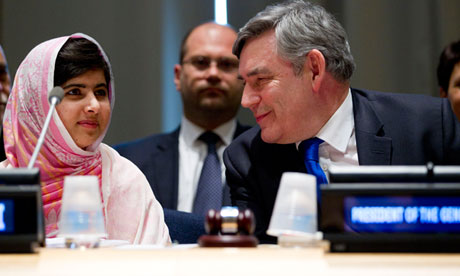
Malala Yousafzai, the teenage Pakistani advocate for girls' education, has made many friends worldwide since she survived an assassination attempt by the Taliban last year.
One of those supporters is former U.K. Prime Minister Gordon Brown, who also serves as UN special envoy for global education.
He told RFE/RL's Radio Mashaal recently that Malala is a symbol of how much one individual can do when she believes firmly in a cause.
"Malala is a brave, courageous, wonderful young woman who has shown the world that the determination and courage to stand up for your principles can mean huge sacrifices but can also show the world that good can come when you stand up for your principles," Brown said.
Brown also said Malala has already made a difference in the education situation for girls in Pakistan. After she was shot in the head on a school bus by Taliban gunmen on her way home from school, thousands of schoolchildren demonstrated in support of her demand that girls be able to attend schools safely and freely.
"When I visited Pakistan a month after Malala was shot, I found that thousands of girls and boys were supporting her campaign, and [I found] that the government introduced legislation to bring about free compulsory education -- they created stipends for 3 million girls," Brown said.
"Most recently, the new government has announced they will double the spending on education from 2 percent to 4 percent of national income. And much of this is due to the influence that Malala and her father and the cause she represents has had on the Pakistani people."
But Malala has also had a global reach. Brown said that as she now travels the world speaking on behalf of children's education, she has equally called for the world not to forget the plight of Syrian children in refugee camps in neighboring countries.
Asked if he feels Malala now has a good chance of winning this year's Nobel Peace Prize, Brown said that whether she receives it or not she is already a winner for making children's education such an important issue around the world.
"People are not talking about the importance of girls getting schooling, people are now talking about why 57 million children are not able to go to school because we have not the schools and the teachers or because we have child labor and child marriage preventing girls from going to school," Brown said.
Malala currently lives in Birmingham, in the U.K., where she received treatment after she was shot.
'Malala has turned a tragedy into something positive'
By Sayeeda Warsi
Malala Yousafzai’s story begins with her parents being commiserated with after producing a baby girl. In their part of northern Pakistan, she says, rifle shots ring out in celebration of a baby boy’s arrival. But there is no such fanfare for females: their destiny is to cook and clean, to be neither seen nor heard.
When Mr and Mrs Yousafzai were married, a small boy was placed on their laps to encourage the birth of a son. It didn’t work: their firstborn was a girl who “popped out kicking and screaming”. Her father was mocked by relatives for bothering to add her name to the family tree, which only featured men.
So how did Malala, who barely warranted a mention in her family’s genealogy, become destined for the history books as a powerful symbol for girls’ universal right to an education?
Her memoir I am Malala tells us how.
Almost a year ago, the world became aware of Malala when she was shot by the Taliban for what they deemed a crime: going to school, and fighting for that right. Born in 1997, she had grown up with her two younger brothers (the boy-on-the-lap trick eventually worked) in Mingora, the biggest city of Swat Valley in Kyber Pukhtunkwa (KPK), previously known as the North West Frontier.
Malala gained fame – and some notoriety among the strict, anti-Western mullahs – for writing an anonymous blog on girls’ education for BBC Urdu, before revealing her identity and campaigning more vocally on girls’ rights.
Her story, written with foreign correspondent Christina Lamb, starts with the details of her upbringing, her grandparents’ and parents’ backgrounds, and her childhood.
The narrative, however, soon becomes like a treacherous KPK road: unpredictable and full of obstacles. En route to Malala’s attempted assassination, we read about the 1999 military takeover of Pakistan; the attacks of September 11 2001; yet another war in neighbouring Afghanistan; the assassination of Pakistan’s first woman Prime Minister, Benazir Bhutto; and the killing of Osama bin Laden – all through the eyes of a girl who is almost as young as this tumultuous century.
After Malala turns 10, Taliban rule hangs over the lives of the people of Swat. She sees fanatical extremists destroy the cherished Buddhist landmarks of her city. She sees them brainwashing her neighbours and pocketing their wages. She also sees, with her own eyes, the beheaded victims of their purges.
But the recurring theme of her tale is the assaults on the rights of women and girls. Every chapter sheds a glaring light on women’s subordination.
Her family's situation deteriorates further when the Taliban gain control of Swat. Despite Islam’s rich history of women in public life – as scholars, politicians, businesswomen and doctors – the Taliban launches an assault on the very heart of equality, blowing up girls’ schools. Malala’s father, a prominent school owner, looks to be in grave danger.
And yet, on October 9 2012, it was the very embodiment of girls’ education who was targeted: Malala. At point-blank range, she was shot in the head on her school bus, the bullet passing her left eye and going into her shoulder. Two friends were also hit.
Amid the blood and the chaos and the confusion, the author does not miss a pertinent parallel: that while her attackers are trying to kill this outspoken proponent of female education, her mother is, for the first time since she left school at the age of six, attending lessons herself.
This scene, and the ensuing chapters on her touch-and-go medical condition and bit-by-bit recovery, make for harrowing reading. What brought this story closer to home for me was that Malala is the same age as my daughter. When I heard the news of her attempted assassination, I was quick to make the case to Foreign Secretary William Hague for the UK to offer what assistance it could.
What was even more poignant was reading her reflections on her country. I spent time living in Pakistan, and I am now proud to be the government minister with responsibility for that country – the country from which my parents originate.
Like Malala, Pakistan is relatively young, but it has suffered a great deal in a short time. In recent years, Pakistan has lost more than 40,000 people in terrorist attacks. It has also endured some of the world’s worst natural disasters, from the 2005 earthquake to the 2010 floods. At the same time, its political pendulum has swung, shakily, between elections and military takeovers, with its first ever full democratic elections taking place only this year.
Malala and her family have an answer to some of the man-made problems: education. As she says, describing her father: “Education had been a great gift to him. He believed that lack of education was the root of all Pakistan’s problems. He believed schooling should be available for all, rich and poor, boys and girls.”
That is why the UK government is working with the government of Pakistan to deliver better quality and more widely available education. This will put four million children in school by 2015, recruit and train new teachers, and construct or rebuild more than 20,000 classrooms.
She may not have warranted an entry on her family tree, but today Malala is known across the world. “I’m one of the few fathers known by his daughter,” Mr Yousafzai is quoted as saying towards the end of the book. She has turned a potential tragedy into a positive – bringing to the world’s attention that crucial issue of a girl’s right to an education. This is certainly not the last we have heard from Malala.
Subscribe to:
Posts (Atom)