 An MP for Bangladesh's main opposition party has been sentenced to death by a war crimes court for charges including murder and genocide during the 1971 war of independence with Pakistan.
Salahuddin Quader Chowdhury, the first member of the Bangladesh National Party (BNP) to be tried by the court, was found guilty of nine out of 23 charges.
The BNP and his lawyers argue that the trial was politically motivated.
Previous verdicts against Islamist leaders have been followed by protests.
The war crimes tribunal was set up by the Awami League-led government in 2010 and opposition parties have accused it of pursuing a political vendetta against its opponents.
Tribunal's Chairman Justice ATM Fazle Kabir said: "We are of the unanimous view that the accused deserves the highest punishment for committing such crimes that troubled the collective conscience of mankind."
But human rights groups and the BNP have both said that the tribunal falls short of international standards.
"We will do whatever we need to do to show the world that this is a farce," the Reuters news agency quoted Chowdhury's wife, Farhat Quader Chowdhury, as saying immediately afterwards.
Mr Chowdhury's lawyers say that they will appeal against the conviction at the Supreme Court.
The BBC's Mahfuz Sadique - who was in court - says that Mr Chowdhury repeatedly interrupted the tribunal judges as they delivered their two-and-a-half hour verdict.
"This judgement came from the [law] ministry. A copy of the verdict has been available on the internet since yesterday," Mr Chowhury cried out after the announcement of his conviction and sentencing had been finally completed.
Our correspondent says that Mr Chowdury's lawyer also claimed that the verdict was a foregone conclusion - but allegations that it was available online beforehand are impossible to substantiate.
Attorney General Mahbubey Alam has dismissed the allegations as "out of the question, incorrect... and merely an assumption".
Lawyers sympathetic to the BNP meanwhile are reported to have threatened to "try everyone connected" with the war crimes tribunal once the party returns to power.
Senior BNP official Khandker Mahabub Hossain said: "Everyone related with the trial will be tried some day on this soil."
Security was tight in Dhaka where the verdict was heard in a packed courtroom.
But troops were also deployed to Chittagong, the home district of Chowdhury where he has been re-elected six times - and where there is likely to be anger at the verdict.
Trauma of independence
Analysts say the tribunal's verdicts have exposed profound divisions in Bangladeshi society.
Last month when the Supreme Court gave the death penalty to a senior leader of the Jamaat-e-Islami party, Abdul Kader Mullah, there were demonstrations both for and against the decision.
The sentences handed down to its leaders over the last few months have unleashed a wave of unrest, pitting supporters of Jamaat against pro-government groups.
But this rupture goes back to the very origins of Bangladesh when some groups, including Islamist groups like Jamaat, opposed the struggle for independence from Pakistan.
The special court was set up in 2010 by the government to deal with those accused of collaborating with Pakistani forces who attempted to stop East Pakistan (as Bangladesh was then) from becoming an independent country.
It is trying nine Jamaat leaders and two members of the BNP - they have always denied any role in war crimes committed by pro-Pakistan militias.
Chowdhury is the first of those BNP members - and the first sitting MP - to be sentenced.
Prosecutors accused him of genocide, abduction, committing atrocities against Hindus and forcefully converting a number of Hindus to Islam.
During the war his father was an influential politician who worked to prevent Bangladesh breaking away. The prosecution also said that his father's residence in Chittagong was turned into a torture cell at that time.
Bangladesh government figures estimate more than three million people were killed during the war. Other researchers put the figure at between 300,000 and 500,000.
Tuesday, October 1, 2013
Bangladesh MP Salahuddin Quader Chowdhury to hang for 1971 war crimes
An MP for Bangladesh's main opposition party has been sentenced to death by a war crimes court for charges including murder and genocide during the 1971 war of independence with Pakistan.
Salahuddin Quader Chowdhury, the first member of the Bangladesh National Party (BNP) to be tried by the court, was found guilty of nine out of 23 charges.
The BNP and his lawyers argue that the trial was politically motivated.
Previous verdicts against Islamist leaders have been followed by protests.
The war crimes tribunal was set up by the Awami League-led government in 2010 and opposition parties have accused it of pursuing a political vendetta against its opponents.
Tribunal's Chairman Justice ATM Fazle Kabir said: "We are of the unanimous view that the accused deserves the highest punishment for committing such crimes that troubled the collective conscience of mankind."
But human rights groups and the BNP have both said that the tribunal falls short of international standards.
"We will do whatever we need to do to show the world that this is a farce," the Reuters news agency quoted Chowdhury's wife, Farhat Quader Chowdhury, as saying immediately afterwards.
Mr Chowdhury's lawyers say that they will appeal against the conviction at the Supreme Court.
The BBC's Mahfuz Sadique - who was in court - says that Mr Chowdhury repeatedly interrupted the tribunal judges as they delivered their two-and-a-half hour verdict.
"This judgement came from the [law] ministry. A copy of the verdict has been available on the internet since yesterday," Mr Chowhury cried out after the announcement of his conviction and sentencing had been finally completed.
Our correspondent says that Mr Chowdury's lawyer also claimed that the verdict was a foregone conclusion - but allegations that it was available online beforehand are impossible to substantiate.
Attorney General Mahbubey Alam has dismissed the allegations as "out of the question, incorrect... and merely an assumption".
Lawyers sympathetic to the BNP meanwhile are reported to have threatened to "try everyone connected" with the war crimes tribunal once the party returns to power.
Senior BNP official Khandker Mahabub Hossain said: "Everyone related with the trial will be tried some day on this soil."
Security was tight in Dhaka where the verdict was heard in a packed courtroom.
But troops were also deployed to Chittagong, the home district of Chowdhury where he has been re-elected six times - and where there is likely to be anger at the verdict.
Trauma of independence
Analysts say the tribunal's verdicts have exposed profound divisions in Bangladeshi society.
Last month when the Supreme Court gave the death penalty to a senior leader of the Jamaat-e-Islami party, Abdul Kader Mullah, there were demonstrations both for and against the decision.
The sentences handed down to its leaders over the last few months have unleashed a wave of unrest, pitting supporters of Jamaat against pro-government groups.
But this rupture goes back to the very origins of Bangladesh when some groups, including Islamist groups like Jamaat, opposed the struggle for independence from Pakistan.
The special court was set up in 2010 by the government to deal with those accused of collaborating with Pakistani forces who attempted to stop East Pakistan (as Bangladesh was then) from becoming an independent country.
It is trying nine Jamaat leaders and two members of the BNP - they have always denied any role in war crimes committed by pro-Pakistan militias.
Chowdhury is the first of those BNP members - and the first sitting MP - to be sentenced.
Prosecutors accused him of genocide, abduction, committing atrocities against Hindus and forcefully converting a number of Hindus to Islam.
During the war his father was an influential politician who worked to prevent Bangladesh breaking away. The prosecution also said that his father's residence in Chittagong was turned into a torture cell at that time.
Bangladesh government figures estimate more than three million people were killed during the war. Other researchers put the figure at between 300,000 and 500,000.
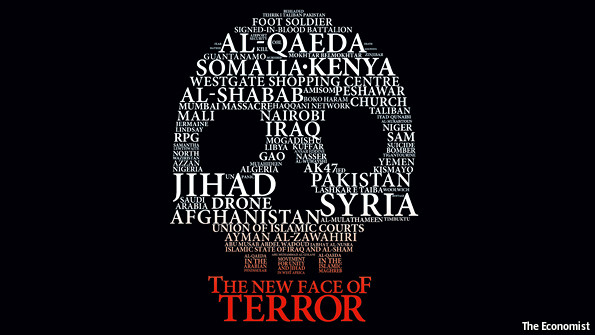
Al-Qaeda returns.....The new face of terror
http://www.economist.com/news/leaders/21586832-west-thought-it-was-winning-battle-against-jihadist-terrorism-it-should-think-again
U.S. government shutdown begins after Congress fails to break impasse
Centre for Human Rights Education Pakistan concerned on Security situation in Khyber Pakhtunkhwa
http://www.pakistanchristianpost.com/Center for Human Rights Education- Pakistan and its member organization has expressed deep concerns over the three recent incidents of terrorism in Peshawar, the Provincial Capital of Khyber Pakhtun khwa (KPK) Province and has demanded urgent and effective actions to save the lives of the people. Enough lip service has been done but now the people want to see a concrete policy, effective strategy and action to stop terrorism. Today’s (September 29) bomb blast at Qisa Khwani Bazaar, recent attack on the government employee’s bus and deadly attack on the Christian community in a Church on September 24, 2013 has raised feelings of fear among the people and shows the failure of the security apparatus and the government. It is very sad that the federal and the provincial governments has not shown their seriousness after the deadly attack on the Church and remained failed to stop the other two attacks in the same city. This is a very serious situation. Therefore, Centre for Human Rights Education- Pakistan calls upon the government, Pakistan’s security apparatus and other political forces to pay attention to the worsening law and order situation and fulfil their responsibility of securing people’s right to life. Centre for Human Rights Education views that "It is good to have debate on whether to go for a dialogue or any other action to deal with the issue of terrorism. But the government ultimately needs to decide in consultation with other genuine political forces about the option it needs to adopt in the current circumstances. However while making any decision it should be kept in mind that the Pakistan’s territory and the lives of its people cannot be kept hostage in the hands of the terrorists who do not our law, our political system and the sovereignty of our country and want to impose their agenda by force. This is never acceptable".
Pakistan flirted with terrorism as state policy: US official
 A day after Prime Minister Manmohan Singh asked Pakistan to shun terrorism to make peace with India, a top US defence official suggested that over time Islamabad "flirted" with terrorism as state policy.

Imran Khan’s Appeasement of Taliban
Imran has long pleaded that the only way to combat terrorism is by partnering with and empowering Taliban. Here comes his “revolutionary” new idea, of inviting TTP to open an office, that has merited wide coverage.by A Z
 And if the strategy had to be summed up in one word, it would be, “Collaborate!” Yes, collaborate with Taliban. Let me phrase it this way, “Empowering TTP to Prevent Violent Terrorism in the Islamic Republic of Pakistan”. Sounds catchy, doesn’t it? Almost as catchy as “Man-Caused Disasters”, “Scourge of Democracy”, “Bane of Free Markets” and comes from the same school of thought. Imran is the Chancellor of The University of Denial, whose motto is that the best way to fight terrorism in Pakistan is not to talk about it. And “Not talking about it” is a big part of PTI’s strategy. Here’s what Imran had to say and Asma Jahangir’s riposte to it.Imran warns repeatedly that drone attacks lead to terrorism. The LEJ has “Loose Lips, Kill Shias”, and “Loose Stereotypes” blow up ordinary Pakistani women and children to avenge drone attacks. This strategy treats terrorism as a persistent side issue, rather than a violent existential threat to the state and its subjects. And its only answer is to keep appeasing the extremist groups to entreat them to not to blow us up. Empowering Taliban is a transparent defense of Taliban and other organizations engaged in violent radical activities within our national territory.Rather than countering the violence perpetrated against the citizens of Pakistan, it pretends those attacks have never been made, and urges the state to continue partnering with the extremists. A course that leads national law enforcement to unwittingly work with the terrorist organizations. Fighting terrorism with more Islamism is Imran’s approach and it derives from his long-held fondness for Taliban. This is the fulcrum of appeasement. On the one hand Imran and those like him argue that terrorists are a tiny minority of a tiny minority. On the other, if the Republic of Pakistan fails to mend its ways and appease them, they warn that the bloodshed will continue and will spread. Imran now stands blatantly exposed as the apologist for a radical movement which has wrought mayhem all across Pakistan. Imran’s new strategy could have been written by Munawar Hassan. And, probably, it was. Even if it was not, what Imran has in common with the loose ideologues is that neither of them wants to allow a serious discussion about terrorism in Pakistan. Instead they want the conversation to be about how overblown and how dangerous the talk of fighting terrorism is. But if the idea of fighting Taliban is overblown, then why is it dangerous? And if it is dangerous, then why is it overblown?
TBX1
Imran replaces terrorism with vague euphemism. With words so generic that they mean nothing at all. And the content is equally generic. Swap out a few words and it could be about any social problem in Sweden or Norway.
But that’s the essence of this strategy. Inaction and ignorance. Ten years of inaction. Months of silence followed by hours of noise. It is not a rhetoric that sets out real goals and objectives. Its only objective is to sideline serious efforts to combat Taliban and replace it with blank buzzwords. Because he has no idea what’s out there anymore. To know the enemy is the first step toward defending against an attack. But how do you defend against a threat, when you can’t even spell its name? The terrorists of the TTP. The Orwellian blankness of Imran’s strategy is a space of ignorance to mask the truth of terrorism. The enemy is reduced to a social problem, terrorism to justifiable violent extremism, and the war on terror to nonsense.
Postscript: It’s about time the likes of sensible people like Asad Umar start questioning their presence among the likes of Imran, Pervez Khattak, Arif Alvi etc.
- See more at: http://lubpak.com/archives/285103#sthash.MC1DGR4F.dpuf
Balochistan: Confessions of a Punjabi Girl
The Baloch HalBy Naeema Saeed A Few days ago, I told the editor of the Baloch Hal that I wanted to write for the paper. I see the Baloch Hal as an endeavor, being a part of which would be nothing less than a privilege for any Pakistani. But what could I possibly write about? The things which bother us are predominantly too “Pakistani” that are, ethnically, irrelevant to many in Balochistan. They are irrelevant because the people over there are routinely abducted and are mercilessly butchered. Yet, this does not stir the national conscience. But what else do I know about Balochistan? Hardly much! I only know about the eventual tragedies resulting from decades’ long negligent behavior and unfulfilled promises. And amongst those tragedies too, I am aware of only a fraction, and within that fraction, the state plays the victim as do the dissident groups. Finally, I had decided that I would write about the things the Punjabis have knowingly or unknowingly sacrificed for Pakistan and yet their acts are not acknowledged rather their attitude is seen as the imperial power that colluded with the establishment. However that evening I met a gentleman who has been working with a donor agency. He wanted to make a proposal regarding peace resolution, conflict prevention or something like that. “Why not explore Balochistan?” I asked. He was reluctant. Nobody goes there, he explained. The law and order situation is at its worst in Balochistan. He even said that he would be rather work in Afghanistan, where his organization is already working. For quite a while, I have had a defensive attitude for the Pakistani side. I sympathize with the Punjabis especially, not out of chauvinism but because I believe that the establishment and the Punjabis are not the same and they are often mistakenly deemed as interchangeable. I believe that most of the Punjabis are the well-wishers of the people living across Pakistan yet they are ignorant of about what is being done elsewhere in their name. I believe that the Punjabis are so zealously Pakistani and Muslim that to them being anything else is sort of a sin. So they do not like being Punjabi and they do not recognize or appreciate any other ethnic identity. Many of them do not appreciate the existence of other sects and religions too. It is unfortunate but in a way the Punjabis of Pakistan were never totally free from the colonial imprints. They have been fighting a war of self-assertion and identity for a long time. During all this time, they had not been at peace with themselves or with their surroundings. The Punjabis speak Urdu and appreciate English speaking people. The Punjabi language is usually shunned away as a language, especially in urban areas. So, their Pakistani selves have suppressed their native culture. They imitate the West and at the same time eulogize the Muslim conquerors. They think that Mahmood Ghaznavi is the real hero and they intentionally skip Bhagat Singh in national archives. Many of them know nothing of Bacha Khan. All I see is that the Punjabis are suffering from cultural cringe and an identity crisis. They assert the Pakistani self so much that they often overlook the basic tenet of the constitution i.e. Pakistan is a federation. A federation does not simply imply that there should be two tiers of government. It implies unity in multiplicity. Federations rule out regulating cultural differences. It is not merely a congregation of the units, states, provinces or cantons. It is celebration of diversity. Yet, many Pakistani and the most of the Punjabis ignore these facts. Because of the complexes surrounding their identity, I sympathize with the Punjabis. However, on that very day when the guy told me that working in Balochistan is the last of all options, my all delusions vanished away. It dawned upon me that the Punjabis and the rest of Pakistanis are not simply ignorant, they are deliberately ignorant. Their fault lies in ignoring the dark reality intentionally. The fault lies with the media too. Recently two earthquakes jolted the province of Baluchistan. In spite of that, all we see are few still shots and footages on television channels. The new island in Gwadar, on the contrary, was given live coverage in news bulletins. I believe even 2011 London riots were given better coverage by the Pakistani media than the earthquakes in Balochistan that have claimed hundreds of lives. In the backdrop of this indifference, every Pakistani is a culprit. We want to own Balochistan without putting any effort for it. This definitely is a form of imperialism. We blamed the state machinery for the Dhaka tragedy. In the age of flourishing electronic and social media we cannot play innocent anymore. We know the situation in Balochistan is unstable but we just ignore and sit idly. This surely is not going to help. Another disgraceful episode was the pre-election campaigns of Pakistani politicians. Many claimed legitimacy by just setting foot in Balochistan. They branded arranging one political rally in Quetta as their success. That surely is a point of mourning. It points out to the irony that they had been absent from Balochistan for years without caring about what had been going on and they appeared on the scene for political maneuvering just before the general elections. Moreover what about post-election scenario? There is silence again. Pakistanis know that the conditions are bad, but how and why they are they so bad? They do not know and their attitude shows that they are not very keen either to change the status quo. All the government does is to blame India and so do many media persons. To improve the situation, we need to find out our own faults and work on them. Nobody from outside could have flared up the situation to the extent that we have done in Balochistan. It is high time that we in the Punjab realized our responsibilities toward Balochistan. Naeema Saeed, based in Lahore, is a student of law and a freelance journalist who has previously worked with Geo Television
Pakistan: Massive hike in POL, power rates from today
Pakistan: Leadership inertia
Imran Khan's Yet another fake measure

Clarity needed: Blasts in Khyber-Pakhtunkhwa

PESHAWAR: Of anger and despair: Political, civil rights leaders demand operation against militants

Pakistan: Govt drops petrol, electricity bombs on masses

 In a move that is feared to unleash a new wave of massive inflation across the country, the government has enormously increased the prices of petroleum products and electricity tariff effective from Tuesday (October 1), Geo News reported Monday.
According to sources at the Ministry of Petroleum, the petrol price has been raised by Rs4.12 and that of diesel by Rs4.69 per litre. Now a litre of petrol and diesel will be available to the consumers at Rs113.25 and Rs116.95 respectively.
The price of light diesel has been jacked up by Rs2.81 per litre to Rs101.24.
Earlier today, the government had notified a staggering rise in electricity tariff of up to Rs5.89 per unit with effect from October 1.
The above steps are expected to let loose a huge storm of price hike, as rates of all the essential items including edibles will sharply go up in the coming days. The worst-hit will once again be the masses including the people belonging to low and fixed income brackets.
U.S. government shutdown to start after budget negotiations fail
Monday, September 30, 2013
Russia Gets Poor Marks for Wellbeing of its Elderly – Report
 Russia earns low marks on a global index that rates countries by the quality of life and wellbeing of their old folk, ranking 78th out of 91 countries in the first-ever Global AgeWatch Index released Monday.
The index, which lists Sweden at number one and Afghanistan at rock bottom, ranks countries’ performances in the domains of income security; health status, including psychological wellbeing and life expectancy; employment and education; and what’s called the “enabling environment,” which measures how socially connected older people feel, whether they have easy access to transportation, how safe they feel, and their level of civic freedoms.
It was on the enabling environment that Russia stumbled badly, ranking 90th out of 91 countries, with only Pakistan scoring worse, Silvia Stefanoni, chief executive of senior citizens’ advocacy group HelpAge International, which put together the index with support from the United Nations Fund for Population and Development (UNFPA), told RIA Novosti.
In particular, social connections – whether older people felt they could rely on a friend or relative, for example, if they had a problem – “scored very low in Russia,” Stefanoni said, adding that Russia also received below-average marks for health status, ranking 78th out of 91.
The poor health ranking was due largely to the fact that life expectancy in Russia is only 69, or 15 years less than what the index calls “the current norm,” and healthy life expectancy, or the number of years a person can expect to live without disability or severe illness, is only 58 years in Russia.
Even though Russia’s economy is growing, older Russians are also “poor compared to other members of the population,” Stefanoni said as she explained why Russia ranked only 69th in income security.
But all was not doom and gloom for Russia’s elderly, she said.
“There have been very encouraging signs recently, like an increase in the value of the pension” paid to older Russians by the state, she said.
And in the employment and education criterion, Russia ranked 21st “because many older people in Russia are highly educated,” Stefanoni said.
HelpAge International used internationally comparable data gathered by organizations including the World Bank and Gallup polling agency to compile the Global AgeWatch Index, which the advocacy group hopes will spur debate about the needs of the world’s ageing population and give countries benchmarks to compare themselves to as they devise policies for their seniors.
Russia needs to pay attention to its old folk, Stefanoni said, noting that the proportion of older people in the Russian population is expected to jump from 19 percent today to nearly 31 percent by 2050.
Countries for Russia to emulate include Sweden, which sits at the top of the index because of “its social policy across life, which means older people get into later life with health and other social policies, like a universal pension, that help them to age better,” Stefanoni said.
The United States, which ranked eighth overall, was also a good model, ranking second behind Norway for education and employment, and 16th for its enabling environment (the Netherlands was top of the list in that category).
But Americans did not do so well on income security, where they ranked a comparatively poor 36th, “which for a very wealth country is not that high,” Stefanoni said.
Israel: Netanyahu's positive ties with Obama worry Israel’s far Right over Iran, Palestinians
Deputy defense minister Danon says Right was surprised by Oslo and Gaza withdrawal and another surprise must be prevented; Feiglin says PM's idea that world would take action to prevent a nuclear Iran has collapsed.
U.S. Government shutdown likely as midnight deadline looms
 Democratic Rep. Chris Van Hollen said the reason there isn't a budget is because Republicans refused to negotiate months ago. "They want to go to conference with 45 minutes left. That is a recipe for a government shutdown," Van Hollen said.It's been 17 years since the last government shutdown. The next one looks likely to be less than an hour away.
A shutdown appeared certain Monday night as House Republicans acknowledged they can't overcome Senate objections to a proposal that includes provisions aimed at derailing Obamacare.
The plan now is to have another vote that would request a conference with the Senate to work out their differences. The move, which would not avert a shutdown, was slammed by Senate Majority Leader Harry Reid.
He rejected the House's proposal to meet, saying "we will not go to conference with a gun to our head."
For the second time Monday, the Senate rejected a House Republican effort to derail Obamacare tied to a proposal that would avert the shutdown.
The Senate voted to table amendments that would have delayed the individual mandate in the health care law and eliminated health insurance premium subsidies for members of Congress, their staffs and the president.
In the latest volley of legislative ping pong over a short-term spending plan needed to avoid the shutdown, House Republicans were expected to meet to discuss their next steps.
"The government is going to shut down ... I don't know for how long," GOP Rep. Devin Nunes of California told CNN while leaving Speaker John Boehner's office.
Earlier, Senate Democrats had rejected a House proposal by a 54-46 vote on strict party lines.
President Barack Obama made a previously unscheduled statement to reporters on Monday afternoon, blasting the attempts by House Republicans to undermine Obamacare that he said threaten to harm the economy with a shutdown.
"You don't get to extract a ransom for doing your job, for doing what you're supposed to be doing anyway, where just because there's a law there that you don't like," the president said.
Obama later called Boehner and other party leaders in the House and Senate, the White House said, but a Boehner spokesman indicated there was no breakthrough.
Moderate GOP revolt against Boehner?
GOP sources told CNN that moderate House Republicans were trying to galvanize what would amount to a rebellion against Boehner and their tea party colleagues by defeating the latest proposed spending plan with attached anti-Obamacare provisions.
However, a procedural vote on the measure passed with only six Republicans voting "no."
Without congressional approval of new spending legislation, parts of the federal government will begin shutting down when the current fiscal year ends at midnight, forcing agencies to furlough thousands of workers and curtail some services until there is a resolution.
"I feel sad about it. We expect more from our Congress," said Vick Temple, a worker for the Federal Aviation Administration who told CNN he faced being furloughed in a shutdown.
Polls show public opposition to a shutdown, and stocks ended lower Monday on Wall Street due to concerns over the economic impact.Republican Rep. Renee Ellmers of North Carolina said on CNN's "New Day" that her party continues to be deeply concerned about Tuesday's scheduled opening of Obamacare health insurance exchanges and "keeping the checkbook out of Barack Obama's hands and the damage can be done there."
Get up to speed on the showdown
Rep. Debbie Wasserman Shultz, D-Florida, appearing alongside Ellmers, characterized the Republican strategy of tying overall government operations to at least a delay in health care changes as "irrational."
"It jeopardizes the economy and it makes no sense," she said.
On Monday morning, Obama told reporters he wasn't resigned to a shutdown, but he signaled its likelihood even as he indicated possible talks with congressional leaders.
"I suspect that I will be speaking to the leaders today, tomorrow and the next day," Obama said at a joint appearance with visiting Israeli Prime Minister Benjamin Netanyahu, who acknowledged the Washington brouhaha by thanking the president for meeting with him "on what I know is a very busy day for you."
Legislative ping pong
Last week, the Senate voted down a House GOP plan to eliminate funding for Obamacare in a short-term spending plan to keep the government running in the new fiscal year that begins Tuesday.
Democrats have pressured Boehner to give up a losing fight over Obamacare forced by tea party conservatives and instead hold a vote on a "clean" spending plan that includes no provisions seeking to undermine the health care reforms.
On CNN, Wasserman Schultz predicted that such a measure would pass easily with support from all Democrats and more moderate Republicans.
Some Republicans expressed frustration Monday with the tactics of their congressional colleagues. Veteran GOP Sen. John McCain of Arizona noted that any attempt to repeal Obamacare would fail because of Obama's veto, which would require a two-thirds majority in the Senate to overcome.
"There's not 67 votes in the United States Senate, therefore, ergo, we're not going to repeal Obamacare," McCain said. "OK? That's it. We may do this for a day. We may do it for a week. We may do it for a month. It's going to end up the same way. "
GOP Rep. Charlie Dent of Pennsylvania told CNN Chief Congressional Correspondent Dana Bash that whichever party was to blame, a shutdown will make everyone look bad.
"At this point, the hourglass is nearly empty," Dent said. "Now that we've sent over two volleys to the U.S. Senate and they rejected both."
Trying again would only yield the same result, he continued, adding that "sooner or later, we have to pass a clean resolution to fund the government before the end of the day."
"I believe the votes are there to do it," Dent said.
10 ways the shutdown would affect you
Obamacare a GOP focus
Obama and Democrats reject what they call Republican efforts to use the threat of a government shutdown to force negotiations on the president's signature health care reforms.
Noting that the 2010 Affordable Care Act has been upheld by the Supreme Court, they say it is settled law that voters endorsed last year by re-electing Obama over GOP candidate Mitt Romney, who campaigned on repealing it.
A new CNN/ORC poll shows that Americans are not happy about the prospect of a shutdown, which is happening because Congress has been unable to pass a budget for the new fiscal year that begins Tuesday.
A game of chicken between Dems, GOP
According to the poll, 68% of Americans think shutting down the government for even a few days is a bad idea, while 27% think it's a good idea.
And it appears most Americans would blame congressional Republicans for a shutdown: Sixty-nine percent said they agreed with the statement that the party's elected officials were acting like "spoiled children."
Democrats, however, weren't far behind: Fifty-eight percent of respondents said they too were acting like spoiled kids.
A poll later showed public support for Congress at record low levels.
Stock traders also seemed solidly against a shutdown. The Dow Jones Industrial Average fell by more than 120 points, or nearly 1 percent, and the other two major indexes also closed lower.
Among major economic issues that could result from a shutdown: delays in processing FHA housing loan applications -- a potential drag on the housing recovery -- and the potential loss of government spending that's helping prop up the economy, said Christine Romans, host of CNN's "Your Money."
"You've got an economy right now that's very tied to government spending and government contracts, so that could have a ripple effect all across Main Street," she said on CNN's "New Day."
If the government does shut down, it would be the first time it has happened in more than 17 years. That previous shutdown, sparked by a budget battle between Democratic President Bill Clinton and a Republican Congress, lasted for 21 days.
While the military will remain on duty, as will many essential public safety, health and welfare operations, many government offices will close. About a quarter of the federal government's 3.3 million employees -- those frequently referred to as "nonessential" -- will be told to stay home from work until the shutdown is over.
Late Monday, Obama signed a bill to guarantee pay for active duty military if the government shuts down.
Attorney General Eric Holder and Defense Secretary Chuck Hagel said essential crime prevention and military services would continue, but some workers would be furloughed. Holder said he would cut his pay by the same amount as the most severely affected Justice Department employees because "we are all in this together."
Meanwhile, the two parties persisted in blaming the other side as the shutdown deadline neared.
Pakistan: Govt increases power tariff by Rs 5.89 per unit
 The government on Monday announced to increase electricity price by Rs 5.89 per unit for domestic consumers effective from October 1.
Domestic consumers using more than 200 units would be exempted from the increase however, those consuming up to 300 units would pay Rs 3, 022 along with 10 paisa per unit as Nelum Jhelum surcharge, 1.5 % as tarrif, Rs 35 as TV fee and 17% as GST.
Rs 5, 551 would be charged on consumption of 400 units while Rs 7, 457 would be charged on consumption of 500 units.
The tariff for consumption of 600 units would be Rs 9, 364 and Rs 11, 270 for 700 units.
Meanwhile, a bill of Rs 13, 413 would be charged on consumption of 800 units, Rs 15, 556 on 900 units and Rs 17, 699 on consumption of 1000 units.
Moreover, the consumers would separately pay the fuel adjustment charges imposed by NEPRA.
USA should push regime change in Saudi Arabia
 According to Dave Ottoway, writing for the Foreign Policy Research Institute, "There is practically no civil society in Saudi Arabia. The country is run by the al-Saud royal family in partnership with a highly conservative religious establishment espousing a fundamentalist theology known as Wahhabism. The alliance goes back to the mid-eighteenth century. Both the House of al-Saud and the Wahhabi religious leadership are against freedom of religion, democracy, a free press, and the public mixing of unmarried men and women. Wahhabi clerics are also against movie houses; public dancing; drinking, women's sports centers; girls exercising in schools, and women driving. We could not have a conference like this in Saudi Arabia. The women would be in another room listening on a TV monitor or, if it was an international meeting, there might be a barrier down the center. Neither the royal family nor the Wahhabi religious establishment is interested in elections. Only the chambers of commerce are allowed to have elections-businessmen who are absolutely no threat to the establishment."
In short, Saudi Arabia's rulers are more ruthless than those in North Korea or anywhere else on the planet. Why aren't members of the US Congress championing sanctions against Saudi Arabia instead of Russia, Cuba and Iran? Why does the world's most powerful nation bow down before the House of Saud even as it becomes less dependent on Persian Gulf and Saudi oil? Where and when did the special relationship with Saudi Arabia begin?
The Saudi Kingdom's leaders were not concerned with communism but reprisals by other tribes in the region. According to Ottoway "the primary concern...was an imminent attack by the forces of the Hashemite royal families ruling in Jordan and, at the time, also in Iraq. They had a grudge to settle after being driven out of the holy cities of Mecca and Medina by the al-Sauds in the 1920s. To deal with the Hashemite threat, the king wanted to enter a formal military alliance with the U.S. and obtain arms urgently on a grant basis... Roosevelt's Secretary of the Navy, William Knox, told Congress in March 1944 that the war had made the U.S. government extremely anxious about oil. He pronounced what was to become America's postwar oil policy, namely 'to provide for acquisition of oil resources outside the limits of the United States for the safety and security of the country.' That was the rationale for our becoming more and more involved with Saudi Arabia....In February 1945, Roosevelt met Abdulaziz [the Saudi King] in person aboard the USS Quincy in Egypt's Great Bitter Lake. The two countries date their special relationship to this meeting. As far as anybody knows, they did not talk about oil, but about Palestine. The king was concerned about what the U.S. was going to do regarding the establishment of a Jewish state and whether the Palestinians would have a state. This issue goes right back to the beginning of our relationship, and it continues right up until today."
So nearly 70 years later, American leadership feels the need to maintain what should be called a "monstrous relationship" with the world's preeminent totalitarian regime. Then again, the US intelligence community knows exactly what the Saudi's are up to, even supporting their funding of cannibals fighting in Syria.
Saudi's Fund Hannibal Lector Insurgent Group: USA Thrilled
Saudi Arabia is the primary sponsor of the cannibalistic insurgent groups in Syria led by Abdul Samad Issa and Abu Sakkar. These groups are linked to Al Qaida groups that the US supports: Nusra Front and Islamic State in Iraq/Syria. Issa and Sakkar were seen in video footage executing Syrian soldiers, beheading a Catholic priest, and eating a human liver after hacking it out of a dead Syrian soldier. According to the Telegraph UK during a meeting between Prince Bandar and Russian President Vladimir Putin-in which Prince Bandar bin Sultan, Saudi intelligence chief, said he spoke for the USA--the Bandar tried to bribe the Russian President into letting go of his support for the President of Syria, Bashir Assad (or what remains of Syria) in exchange for Saudi manipulation of regional oil and gas markets to bolster Russian prices for energy resources. In the meeting the Saudi's claimed that they control the Chechen insurgents whether they are fighting against Russia or Syrian troops. The Saudi's told Putin that they would make sure the Winter Olympic Games at Sochi in 2014 would not be attacked by the Saudi-backed Chechens if he accepted the Saudi offer.
The Telegraph UK reported that Putin was quite blunt in his response. American leaders should take note: "'Our stance on Assad will never change. We believe that the Syrian regime is the best speaker on behalf of the Syrian people, and not those liver eaters,'" he said, referring to footage showing a Jihadist rebel eating the heart and liver of a Syrian soldier."
Over at the Economist (owned, in part by Pearson PLC), there is news of great rejoicing over the results of Saudi Arabia's anti-Arab Spring/Democracy projects. To wit: "Yet things may be tilting nicely back in the Saudis' favour. Post-uprising messes in Bahrain, Egypt, Libya, Syria, Tunisia and Yemen have all served to dampen the general enthusiasm for revolution. The toppling of the Muslim Brotherhood's Muhammad Morsi as Egypt's president in July was especially gratifying. Egypt's generals, many with close ties to the Saudis, are back at the helm. Qatar, the small but punchy Gulf emirate that had annoyingly backed the Brothers, has been put back in its box. And for now at least, Mr Mubarak is out of prison. Small wonder the kingdom is showering Egypt with aid, and loudly voices diplomatic support in the face of criticism for the new regime's ruthless suppression of its opponents...The turnaround has been particularly satisfying for Prince Bandar bin Sultan, who served for two decades as ambassador to America but now runs Saudi intelligence. Back in the old days, he played a quiet but crucial role in America's covert cold-war forays, providing funds, when the CIA could not, to Afghan mujahideen, Nicaraguan Contras and the Iraqi army then fighting Iran."
Saudi and US Intelligence: Making the World Safe for Dictatorships
The pattern is mercenary and capitalist. Those base values allow the two countries to find common ground. Since 1945 US and Saudi Arabian government/intelligence organizations have worked together to skirt oversight in the USA and subsequently engage in bloodthirsty operations to maintain the status quo.
The status quo, in this instance, means the purchase of enormous amount of armaments from US defense contractors that are not needed for the internal defense of the Kingdom. At one point in the late 1990's the Saudi's did not have enough qualified pilots to operate all the aircraft they were sold. It is a jobs agreement between the US and Saudi's to keep US weapons manufacturing lines open. Such an arrangement was likely reached long ago. With the US providing a security umbrella for Saudi Arabia since 1945, such large weapons purchases are hardly necessary.
It means the USA keeping its mouth shut and not commenting too loudly on the wicked internal matters of Saudi Arabian life and the lives of foreign laborers there. It is turning a blind eye to suppression in Bahrain, the millions displaced in Iraq, Afghanistan and Syria (thanks to US policies/interventions), and the destruction of Christian communities. This makes a mockery of the USA as a beacon of human rights.
It means the Cold War has not ended and the long term goal remains: weaken and destabilize Russia, Iran and China.
The status quo also means that democracy/socialist movements of today are viewed as the communism of yesteryear.
Iran is looking pretty good these days.
U.S: With Shutdown Near, Talk Is of Who’s at Fault, Not of a Deal
 By ASHLEY PARKER
House Republicans showed no sign of backing down in the escalating budget fight on Monday, signaling a readiness to shut down the federal government unless Democrats agreed to delay or undo parts of the 2010 health care overhaul.
Republican members of the House will gather at 2 p.m. Monday to plot their next move. The Senate is scheduled to convene at that hour as well, and Democrats plan to quickly kill the House’s latest proposal, which would delay implementation of the health care law for a year and repeal a tax on medical devices that helps pay for the law’s expansion of coverage to the uninsured.
The confrontation — which threatens to close federal offices and facilities, idling thousands of workers around the country — stems from an unusual push by Republicans to undo a law that has been on the books for three years, through a presidential election, and that the Supreme Court largely upheld in 2012. A major part of the law is set to take effect Tuesday: the opening of insurance exchanges, where people without health insurance will be able to obtain coverage.
Absent a last-minute agreement by the two parties, parts of the federal government that President Obama does not deem essential will shut down at 12:01 a.m. on Tuesday.
Republicans argue that the Obama administration has itself delayed elements of the law. They say that at a minimum it should be postponed for a year to eliminate what they see as bureaucratic problems and harmful consequences for businesses and individuals. Republicans also say they have compromised by retreating from their insistence that all money be stripped from the health law.
Democrats say that Republicans are being driven by the most extreme elements of their party to use the federal budget to extract concessions on health care that they could not win through the traditional legislative process. They say that the push to halt the health care law just as Americans will be able to sign up for coverage is outrageous, and that a governmentwide shutdown will threaten the nation’s slow economic recovery and cause widespread and unnecessary disruptions for the public. Democrats have won support from some Senate Republicans, who see a shutdown as damaging to their party.
“I still hold up a small hope that the Republicans will come to their senses, that the mainstream Republicans will say ‘enough already,'” Senator Charles E. Schumer, Democrat of New York, said on “Morning Joe” on MSNBC on Monday, urging the House Republican leadership to put a spending bill without policy prescriptions to a vote on the floor. “The question is, does Speaker Boehner need to engage in something like the ancient practice of sacrifice, this time to the right-wing gods? Do we have to sacrifice the economy, help for millions of middle-class people?”
On the House floor Monday morning, Speaker John A. Boehner of Ohio showed no signs of relenting, arguing that the health care law “is not ready for prime time.”
“The House has done its work,” he said. “We passed a bill on Saturday night — sent it to the United States Senate — that would delay Obamacare for one year, and would eliminate permanently the medical device tax that is costing us tens of thousands of jobs that are being shipped overseas.”
Mr. Boehner criticized the Senate for not working over the weekend, a move by Senator Harry Reid of Nevada, the Democratic majority leader, to run down the clock and leave House Republicans with undesirable options before the government shuts down after midnight: to either pass a spending bill without policy prescriptions to keep the government financed and open, or to double down on their hard-line stance and possibly be blamed for a shutdown.
“Senate decided not to work yesterday,” Mr. Boehner continued. “Well, my goodness, if there’s such an emergency, where are they? It’s time for the Senate to listen to the American people, just like the House has listened to the American people, and to pass a one-year delay of Obamacare and a permanent repeal of the medical device tax.”
Mr. Reid has repeatedly said that Senate Democrats plan to table portions of the House spending bill, including provisions to delay the health care law by one year, repeal a medical device tax and allow businesses to opt out of contraception coverage for their employees. The Senate is set to send back to the House a stripped-down spending bill, giving Republicans just hours to offer an alternate plan before the government would shut down and hundreds of thousands of workers would be furloughed.
Mr. Boehner had hoped to persuade the unruly conservative members of his conference to save the fight to defund the health care law until a debate on the debt ceiling, in which he believes Republicans hold more leverage and Mr. Obama would be forced to negotiate. But House Republicans were ecstatic Saturday when Mr. Boehner and his leadership team in a closed-door meeting presented their plan to allow Republicans to use the stopgap spending measure to delay the full effect of the Affordable Care Act.
On Sunday, House Republicans had already started trying to assign blame, with more than a dozen members holding a news conference on the steps of the Capitol to complain that the Senate had refused to work over the weekend.
“Now today, we see the Senate doors are shut. They’re locked,” said Representative Cathy McMorris Rodgers of Washington, the chairwoman of the House Republican Conference. “Senator Harry Reid says it is ‘inevitable’ that the government is going to shut down. Well, if the Senate doesn’t act, it may be inevitable. But we’re here to say that the Senate needs to act. Why are they waiting? Why aren’t those doors open?”
Speaking on CNBC on Monday morning, Representative Marsha Blackburn, Republican of Tennessee, echoed her party’s view that it is Senate Democrats and Mr. Obama, not House Republicans, who are forcing a possible government shutdown.
“What we want to do is solve the problem, and we’ve been trying to do it, and we’re disappointed that the Senate decided that they didn’t want to stay here and work,” Ms. Blackburn said. “We’ve been trying to solve the problem. We’re not the ones that want a shutdown.”
As legislators try to stave off a shutdown, a few options — albeit unlikely ones — have emerged. House Republicans could pass a short-term measure to finance the government that does not include any of their health care delays, in order to buy more time to come up with another plan. Or House Republicans could try to force Mr. Reid to accept a repeal of the tax on medical devices — a step that many Democrats also support — in exchange for the House’s not sending over a bill with new language that would require members of Congress and their staffs, as well as White House staff members, to buy their health insurance on the new exchanges, without any government subsidies.
U.S: Government shutdown Q&A: How long? What's the impact?
U.S: Senate set to defeat Obamacare delay
At American University of Afghanistan, anxiety about the future as U.S. pullout nears
 By Ernesto Londoño
It is easy to drive past the American University of Afghanistan, barricaded by blast walls and guard towers. There is no sign, no American flag, no emblem.
But those who slip through its nondescript door enter a tiny corner of this country that is unique, wondrous and heavily subsidized by U.S. taxpayers. Young men and women mingle freely, in contravention of the country’s conservative social norms. Some female students walk around unveiled, a break with custom that is unthinkable elsewhere in the country. Inside classrooms, American professors stoke lively debates and use cutting-edge technology.
In many ways, the university embodies the type of country that the United States set out to build a decade ago; some still hope that the school will endure as a pillar of the legacy of America’s longest war. Yet, as U.S. troops prepare to end their combat mission in Afghanistan by the end of next year, there is a foreboding about the future on this campus, and a sense that the school may not survive as the incubator of talent and entrepreneurship that Washington sought to create.
Long-term funding for the university is uncertain, and many students have come to see their degrees as a ticket out of Afghanistan.
The country could be headed toward another civil war, said Sayed Mansoor Afzali, the vice president of the university’s student government association, who crammed a four-year degree program into three — determined to graduate before the end of 2014.
The majority of students are making plans to leave the country, Afzali said, adding: “It’s a minor group, those who believe they can stay here and build a career for themselves.”
Like just about everything else that the West has built in Afghanistan over the past decade, the American University of Kabul remains half-complete, heavily reliant on foreign aid for the foreseeable future and seized by a paralyzing question: How much will endure after the U.S. military leaves by the end of next year?
What has been built, though far from perfect, is nonetheless remarkable, said Leslie Schweitzer, who heads the Friends of the American University of Afghanistan, a Washington-based fundraising group. She said graduates have been snatched up by government ministries and the Afghan private sector.
“Keeping them in the country is very, very important,” Schweitzer said. “You can see these leaders develop, and you see in them a desire for a transparent government. These are the people who will make it happen.”
Around campus these days, students talk about the end of 2014 with anxiety and resignation.
“It’s a big fear for everyone,” said Mubareka Sahar Fetrat, 17, one of the hundreds of Afghan women attending college on State Department scholarships. “When I talk to people, no one is optimistic for the future.”
The war economy that turned Kabul into a boomtown and gave this battle-scarred capital a flare of modernity is flattening. As American officials insist that Afghans are now in the lead — a talking point widely interpreted as an unmistakable sign of disengagement — students who have tied their fate to the U.S. project here are struggling to understand where that leaves them. Female students, in particular, appear eager to parlay their American degrees into a way out of the country.
Khatera Amine, 20, a political science major, says she might want to lay down roots in Kabul at some point. But not before getting a master’s degree abroad and dodging what she sees as a looming period of chaotic transition.
“Most of the girls here are really afraid that after 2014 the Taliban regime might come back and we won’t be able to be educated or leave home,” said Amine, a vivacious, wide-eyed student who worries that the political elite will cut a deal with the Taliban once the Americans leave. Her top choice would be a U.S. graduate program, but she would settle for pretty much anywhere else, given the difficulty of obtaining an American visa. “The big effect will be on women — so, of course, we worry,” she added.
That sense of gloom is hard to reconcile with the high hopes for the university and Afghanistan in 2005, when the war in Iraq was turning into a quagmire and America’s other, less visible war, appeared to be going comparatively well. Laura Bush, the first lady at the time, traveled to Kabul that spring to announce that the United States would fund an American university in Kabul to “aggressively reach out” to Afghan women.
“We are only a few years removed from the rule of the terrorists, when women were denied education and every basic human right,” she proclaimed in a speech in Kabul. “That tyranny has been replaced by a young democracy, and the power of freedom is on display across Afghanistan.”
After the commitment was announced, the Afghan government provided an 85-acre lot for the campus. The small, decaying property was itself a sobering reminder of how suddenly and dramatically this country has been transformed when power has changed hands over the years. It had been the site of an American school in the 1960s and 1970s before it became an intelligence hub during the Soviet occupation in the 1980s.
The United States made its first big investment in the university in 2008, awarding a $42 million U.S. Agency for International Development grant. By the end of the year, more than 350 students had enrolled, gradually turning the run-down compound into a lively campus.
The following year, C. Michael Smith, a veteran college administrator, was startled to get a call inquiring whether he would consider running the school. Smith was exhausted after four years at the helm of the American University of Nigeria, which he was hired to launch after a Nigerian entrepreneur provided the funding.
“We were at a point where we thought we’d take a break and recuperate our strength,” he said in a phone interview, chuckling. “I was a bit reticent.”
After a trip to Kabul, Smith took the job. During subsequent years, as security deteriorated in much of the country, the university grew steadily. Its first graduates walked away with diplomas in 2011. This year, the school launched a law department, enrollment rose to nearly 1,000, and school leaders broke ground on a sleekly designed $5 million building — funded by the Pentagon — to run a business incubator for women.
“For the long-term viability of a vibrant, pluralistic state, this is probably the most important investment we can make,” said Ryan C. Crocker, a former U.S. ambassador to Afghanistan, who traveled to Kabul in the spring to deliver a commencement speech.
The university gets about 60 percent of its funding from USAID and the rest from tuition, much of which is subsidized by State Department grants.
This year, USAID approved a new $42 million grant to keep the school afloat for the next five years. Smith said his goal is to find the revenue to wean the school from foreign funding by at least an additional 20 percent within that time frame. But he acknowledges that will be an uphill battle as the Afghan economy contracts because of a slowdown of Western aid.
Smith, aided by the fundraising group in Washington, has stepped up efforts this year, hoping to find a major donor willing to sink significant capital into the venture. The torrent of bad news about Afghanistan is the biggest challenge, he said.
“You have to break through an initial impression that everything here is nothing but violence and chaos, a disbelief that there could possibly be a university here worth supporting,” Smith said.
Imran Khan responsible for blasts: ANP
http://paktribune.com/news/Senior leader of the Awami National Party (ANP) Ghulam Ahmed Bilour said on Sunday that the Pakistan Tehreek-e-Insaf (PTI) chairman Imran Khan was responsible for the bomb blasts and should be questioned in this regard. The ANP leader visited the site of bomb blast in Qissa Khawani Bazaar outside Khan Raziq police station, and talking to the media strongly condemned the incident. Bilour said all the political parties of the country gave a mandate to the government for a dialogue with the Taliban, adding that people are dying but the government is not starting negotiations. Bilour said he is not demanding the resignation of the PTI from the government but it is a fact that the government has failed to provide security to the public, adding that now it is difficult to afford the burden of dead bodies. He said attacks are happening on a daily basis. "We are receiving the bodies of our beloved ones. What kind of change is this," Bilour questioned. Meanwhile, ANP Senator Zahid Khan said terrorist attacks are happening in the province while the rulers are enjoying power. "If they cannot bring peace to the city then they should hand over the city to the culprits," Zahid Khan said.
Subscribe to:
Posts (Atom)