 Human Rights Watch has slated Saudi Arabia for violating international human rights obligations after it jailed seven people for up to 10 years for ‘inciting protests’ via Facebook. The indicted denied charges and said they were tortured into confession.
The sentencing after a two-month long trial took place on June 24, according to Human Rights Watch (HRW), which it has obtained the court judgment, and revealed the procedure “violates international human rights principles.”
The seven men were arrested between September 23 and 26, 2011. They have been kept in the General Investigations Prison in the capital of Saudi’s Eastern Province, Damman for a year-and-a-half without being charged. They have been tried by Specialized Criminal Court, set up in 2008 to deal with terrorism-related cases. The trial began on April 29.
The charges against the seven vary. However, they all have been accused of joining Facebook pages aiming to “incite protests, illegal gathering, and breaking allegiance with the king” and “of assisting and encouraging these calls are corresponding with the Facebook pages’ followers and concealing them,” the HRW cited the court judgment.
They have been also convicted of violating Article 6 of the Anti-Cyber Crime Law, which bans producing, sending, or storing any material via an information network that “harms public order.”
“Breaking allegiance [with the king] comes by way of arms and it comes by way of protests, marches, and writing articles and publications … the behavior of the [second] course … is sometimes the more dangerous and more malicious method,” the presiding judge concluded in the judgment.
None of the seven was accused of directly participating in protests, nor of using or advocating violence.
Abd al-Hamid al-Amer has got harshest sentence – 10 years in prison for founding two Facebook groups in early 2011 which supported of a prominent Shia sheikh and religious leader Tawfiq al-Amer, arrested for publicly calling for a constitutional monarchy.
Prosecutors said that those pages were used to call for followers “to join the movements” and “gave them ideas and guidance on the important sites in which to protest and set the timing [of the protests].”
All seven accused have admitted they participated in Facebook pages titled “al-Ahsa March 4 Youth Movement” and “The Free Men of al-Ahsa”, but did not know that was unlawful. Therefore, they denied accusations of having intentions to break allegiance with the king or harm public order, but the prosecution produced signed confessions.
During the trial, the accused reported to the court that confessions were signed under torture by the intelligence officers, but the judge overruled the claim as “not acceptable,” due especially to “their inability to prove the allegations of coercion and torture.”
According to one of the seven convicts’ family members, the men had not lawyers as they could not afford them. Under Saudi Arabia’s Criminal Procedure Law, unlike in many countries, there is no provision for a public defender for those who cannot afford a lawyer, HRW reported.
Moreover, as Saudi Arabia has no written penal code, prosecutors and judges tend to criminalize acts based on their own interpretation of Islamic law.
HRW insists the whole procedure lacks clearness and violates “international human rights principles, such as those that prohibit arbitrary arrest and guarantee fair trials.”
The men intend to appeal their sentences.
The HRW has stressed that the trial also comes against Article 15 of the Arab Charter on Human Rights, which Saudi Arabia ratified in 2009.
“No crime and no penalty can be established without a prior provision of the law. In all circumstances, the law most favorable to the defendant shall be applied,” the article states.
The HRW has called on the European Union’s High Representative Catherine Ashton and EU member states’ representatives, who are meeting with their Gulf region counterparts in Bahrain on June 30, to condemn the convictions and publicly “press Saudi Arabia to stop jailing human rights activists and peaceful dissidents.”
“Sending people off to years in prison for peaceful Facebook posts sends a strong message that there’s no safe way to speak out in Saudi Arabia, even on online social networks,” said Joe Stork, deputy Middle East director at Human Rights Watch. “If the EU doesn’t raise these cases with Saudi officials this weekend, its silence will look like craven compliance with the rights abuses of an authoritarian state.”
The latest conviction of the seven followed a wave of similar cases of convictions of peaceful dissidents and human rights activists in June, according to HRW.
Sunday, June 30, 2013
HRW slams Saudi Arabia after 7 ‘tortured’ men jailed for ‘inciting protests’ on Facebook
Human Rights Watch has slated Saudi Arabia for violating international human rights obligations after it jailed seven people for up to 10 years for ‘inciting protests’ via Facebook. The indicted denied charges and said they were tortured into confession.
The sentencing after a two-month long trial took place on June 24, according to Human Rights Watch (HRW), which it has obtained the court judgment, and revealed the procedure “violates international human rights principles.”
The seven men were arrested between September 23 and 26, 2011. They have been kept in the General Investigations Prison in the capital of Saudi’s Eastern Province, Damman for a year-and-a-half without being charged. They have been tried by Specialized Criminal Court, set up in 2008 to deal with terrorism-related cases. The trial began on April 29.
The charges against the seven vary. However, they all have been accused of joining Facebook pages aiming to “incite protests, illegal gathering, and breaking allegiance with the king” and “of assisting and encouraging these calls are corresponding with the Facebook pages’ followers and concealing them,” the HRW cited the court judgment.
They have been also convicted of violating Article 6 of the Anti-Cyber Crime Law, which bans producing, sending, or storing any material via an information network that “harms public order.”
“Breaking allegiance [with the king] comes by way of arms and it comes by way of protests, marches, and writing articles and publications … the behavior of the [second] course … is sometimes the more dangerous and more malicious method,” the presiding judge concluded in the judgment.
None of the seven was accused of directly participating in protests, nor of using or advocating violence.
Abd al-Hamid al-Amer has got harshest sentence – 10 years in prison for founding two Facebook groups in early 2011 which supported of a prominent Shia sheikh and religious leader Tawfiq al-Amer, arrested for publicly calling for a constitutional monarchy.
Prosecutors said that those pages were used to call for followers “to join the movements” and “gave them ideas and guidance on the important sites in which to protest and set the timing [of the protests].”
All seven accused have admitted they participated in Facebook pages titled “al-Ahsa March 4 Youth Movement” and “The Free Men of al-Ahsa”, but did not know that was unlawful. Therefore, they denied accusations of having intentions to break allegiance with the king or harm public order, but the prosecution produced signed confessions.
During the trial, the accused reported to the court that confessions were signed under torture by the intelligence officers, but the judge overruled the claim as “not acceptable,” due especially to “their inability to prove the allegations of coercion and torture.”
According to one of the seven convicts’ family members, the men had not lawyers as they could not afford them. Under Saudi Arabia’s Criminal Procedure Law, unlike in many countries, there is no provision for a public defender for those who cannot afford a lawyer, HRW reported.
Moreover, as Saudi Arabia has no written penal code, prosecutors and judges tend to criminalize acts based on their own interpretation of Islamic law.
HRW insists the whole procedure lacks clearness and violates “international human rights principles, such as those that prohibit arbitrary arrest and guarantee fair trials.”
The men intend to appeal their sentences.
The HRW has stressed that the trial also comes against Article 15 of the Arab Charter on Human Rights, which Saudi Arabia ratified in 2009.
“No crime and no penalty can be established without a prior provision of the law. In all circumstances, the law most favorable to the defendant shall be applied,” the article states.
The HRW has called on the European Union’s High Representative Catherine Ashton and EU member states’ representatives, who are meeting with their Gulf region counterparts in Bahrain on June 30, to condemn the convictions and publicly “press Saudi Arabia to stop jailing human rights activists and peaceful dissidents.”
“Sending people off to years in prison for peaceful Facebook posts sends a strong message that there’s no safe way to speak out in Saudi Arabia, even on online social networks,” said Joe Stork, deputy Middle East director at Human Rights Watch. “If the EU doesn’t raise these cases with Saudi officials this weekend, its silence will look like craven compliance with the rights abuses of an authoritarian state.”
The latest conviction of the seven followed a wave of similar cases of convictions of peaceful dissidents and human rights activists in June, according to HRW.
Massive protests in Egypt begin
CBS/APThousands of opponents and supporters of Egypt's Islamist president began massing in city squares in competing rallies Sunday, gearing up for a day of massive nationwide protests that many fear could turn deadly as the opposition seeks to push out Mohammed Morsi. Waving Egyptian flags, crowds descended on Tahrir Square in the heart of Cairo, one of multiple sites in the capital and around the country where they plan rallies. Chants of "erhal!" or "leave!," rang out in the square, birthplace of the 2011 uprising that toppled autocrat Hosni Mubarak. On the other side of Cairo, thousands of the Islamist leader's backers gathered not far from the presidential palace in a show of support. Some wore homemade body armor and construction hats and carried shields and clubs — precautions, they said, against possible violence. There is a sense among opponents and supporters of Morsi that Sunday's rally is a make-or-break day, hiking worries that the two camps will come to blows despite vows by each to remain peaceful. Already at least seven people, including an American, have been killed in clashes the past week, mainly in Nile Delta cities and the coastal city of Alexandria. The demonstrations on Sunday, the anniversary of Morsi's inauguration as Egypt's first freely elected leader, are the culmination of growing polarization since he took office.In one camp are the president and his Islamist allies, including the Muslim Brotherhood and more hard-line groups. They have vowed to defend Morsi, saying street demonstrations cannot be allowed to remove a freely elected leader. The other is an array of secular and liberal Egyptians as well as moderate Muslims and Christians — and what the opposition says is a broad sector of the general public that has turned against the Islamists. They say the Islamists have overstepped their election mandate, accusing them of trying to monopolize power and woefully mismanaging the country. The opposition believes that with sheer numbers in the street, it can pressure Morsi to step down — perhaps with the added weight of the powerful military if it signals the president should go. "Today, the people will triumph over fascism," prominent pro-democracy campaigner and bestselling novelist Alaa al-Aswany wrote on his Twitter account. Underlining the potential for deadly violence, a flurry of police reports on Sunday spoke of the seizure of firearms, explosives and even artillery shells in various locations of the country, including Alexandria and the outskirts of Cairo. In an interview published Sunday in The Guardian, Morsi — who has three years left in his term — said he had no plans to meet the protesters' demand for an early presidential election. "If we changed someone in office who (was elected) according to constitutional legitimacy — well, there will (be) people or opponents opposing the new president too, and a week or a month later, they will ask him to step down," Morsi told the British daily. "There is no room for any talk against this constitutional legitimacy," he said. As the crowds swelled in Tahrir, traffic in the capital's normally clogged streets was light at midday as many residents chose to stay home for fear of violence or a wave of crime similar to the one that swept Egypt during the 18-day, anti-Mubarak uprising. Banks were closing early and most government departments were either closed for the day or were thinly staffed. Most schools and colleges are already closed for the summer holidays. Thousands of Morsi's supporters have staged a sit-in since Friday in front of the Rabia al-Adawiya Mosque near the Ittihadiya presidential palace. In the evening, anti-Morsi crowds plan to march on the palace, and Morsi supporters have vowed to defend it if it is attacked. The opposition protests emerge from a petition campaign by a youth activist group known as Tamarod, Arabic for "rebel." For several months, the group has been collecting signatures on a call for Morsi to step down. On Saturday the group announced it had more than 22 million signatures — proof, it claims, that a broad sector of the public no longer wants Morsi in office. It was not possible to verify the claim. Morsi's supporters have questioned the authenticity and validity of the signatures, but have produced no evidence of fraud. Morsi, who has three years left in his presidential term, claims that Mubarak loyalists are behind the planned protests. His supporters say Tamarod is a cover for thugs loyal to Mubarak. The 22 million signatures, while they have no legal weight, deal a symbolic blow to Morsi at a time when he is widely seen by Egyptians to have failed to tackle the country's most pressing problems, from surging crime rates and high unemployment to fuel shortages and power outages. If verified, the number of people who signed the petition calling on Morsi to step down would be nearly twice the number who voted for him a year ago in a run-off that he won with around 52 percent of the vote. Tamarod organizers said they discarded about 100,000 signed forms because they were duplicates. Adding to his troubles, eight lawmakers from the country's interim legislature announced their resignation Saturday to protest Morsi's policies. The 270-seat chamber was elected early last year by less than 10 percent of Egypt's eligible voters, and is dominated by Islamists. A legal adviser to Morsi also announced his resignation late Saturday in protest of what he said was Morsi's insult of judges in his latest speech on Wednesday. With a sense of doom hanging over the country, Defense Minister Gen. Abdel-Fattah el-Sissi last week gave the president and his opponents a week to reach a compromise and warned that the military would intervene to prevent the nation from entering a "dark tunnel." The weeklong ultimatum expires on Sunday. Army troops backed by armored vehicles were deployed Sunday in some of Cairo's suburbs, with soldiers, some in combat gear, stood at traffic lights and major intersections. Morsi had called for national reconciliation talks in a Wednesday speech but offered no specifics. Opposition leaders dismissed the call as cosmetics. Asked by The Guardian whether he was confident that the army would not intervene if the country becomes ungovernable, Morsi replied, "Very." The Egyptian leader, however, said he did not know in advance of el-Sissi's comments last week.
Peshawar blast death toll reaches 17
 At least 17 people including a child were killed and 32 others sustained injuries in a powerful blast near Badaber police station, Geo News reported.
Police said militants targeted security forces convoy in the attack.
The dead and injured have been rushed to Lady Reading Hospital. Condition of six injured is said to be critical.
Police and Law Enforcement Agencies (LEAs) have cordoned off the area.
Deputy Commissioner Peshawar Javed Marwat has confirmed that 15 people have been killed and 30 wounded in the attack.
Hospital sources said 16 bodies and 32 injured were present in the hospital.
Bomb Disposal Squad (BDS) said that at least 40 kg explosive material was used in the attack.
Ten nearby shops and vehicles were badly damaged.
Security forces have launched search operation in the area, Marwat added.
AFP adds: "The car bomb was parked in a market packed with the general public. When the FC convoy comprising of three vehicles passed by, the bomb exploded and hit a vehicle in the convoy," police official Shafiullah Khan told AFP.
"But many civilians were killed and wounded in the attack because there was a big rush in the market at the time," he added.
"So far, we have reports that two Frontier Corps soldiers have been injured. We don't know about any other losses," a military official told AFP on condition of anonymity.
Obamas tour Robben Island
http://www.timeslive.co.za/
 President Barack Obama is paying tribute to the man who inspired his political activism by taking his family on a tour of the island prison where anti-apartheid leader Nelson Mandela spent 18 years confined to a tiny cell.Obama's visit to Robben Island comes as Mandela is hospitalised for a third week in critical condition. Obama was near Mandela's Pretoria hospital Saturday, but did not see him due to the family's wishes and instead met privately with Mandela's relatives.
His schedule Sunday begins with a flight to Cape Town, near Africa's southernmost tip and then a helicopter ride to the museum on Robben Island. Obama visited when he was a senator but this time is bringing his family. He said he's eager to teach them about Mandela's role in overcoming white racist rule, first as an activist and later as a president who forged a unity government with his former captors.
He told reporters Saturday he wants to "help them to understand not only how those lessons apply to their own lives but also to their responsibilities in the future as citizens of the world, that's a great privilege and a great honour."
Obama, who has spoken movingly about Mandela throughout his trip to Africa, praised the former South African president's "moral courage" during remarks from the grand Union Buildings where Mandela was inaugurated as his nation's first black president.
"We as leaders occupy these spaces temporarily and we don't get so deluded that we think the fate of our country doesn't depend on how long we stay in office," Obama said during a news conference with South African President Jacob Zuma.
Obama's ascent to the White House has drawn inevitable comparisons to Mandela. Both are their nations' first black presidents, symbols of racial barrier breaking and winners of the Nobel Peace Prize. And Obama attended his first political rally while a 19-year-old college student protesting apartheid.
Zuma said Obama and Mandela "both carry the dreams of millions of people in Africa and in the diaspora who were previously oppressed."
Mandela's legacy also will be a prominent theme throughout Obama's speech later Sunday at the University of Cape Town, said White House deputy national security adviser Ben Rhodes. The president will emphasis "the ability for societies to change," Rhodes said, along with the need for democratic development and empowering young people.
Rhodes said Mandela's vision was always going to feature prominently in the speech given that the address will follow Obama's visit to Robben Island, the prison where Mandela was confined for 18 years. But the former South African leader's deteriorating health "certainly puts a finer point on just how much we can't take for granted what Nelson Mandela did."
Obama is also expected to emphasise how Mandela's democratic vision is hardly complete. While there has been progress here that "nobody could have possibly imagined," Rhodes said, millions of people on the continent still live in poverty and governments still struggle with corruption.
Harkening back to a prominent theme from his speech in Ghana in 2009, Obama will emphasise that Africans must take much of the responsibility for finishing the work started by Mandela and his contemporaries.
"The progress that Africa has made opens new doors, but frankly, it's up to the leaders in Africa and particularly young people to make sure that they're walking through those doors of opportunity," Rhodes said.
Obama will speak at the University of Cape Town nearly 50 years after Robert F. Kennedy delivered his famous "Ripple of Hope" speech from the school. Kennedy spoke in Cape Town two years after Mandela was sentenced to life in prison.
Kurdish protester's killing fuels anti-government march in Istanbul
Thousands of protesters have gathered in Istanbul in an anti-government rally to denounce government use of force against the demonstrators and to show solidarity with the Kurds after a Kurdish protester was killed in southeastern Turkey on Friday.
Saturday’s Taksim Square protest was dispersed after a couple of hours following a police warning, as law enforcement used shields to push the crowd away from the square. Water cannon trucks were also present but no water was fired.
"Murderer police, get out of Kurdistan!" some protesters chanted as they approached the cordoned area. "This is only the beginning, the struggle continues. The murderer state will pay!"
Around 1,000 people have remained after the warning and were pursued by police on to the side streets where ten people were detained according to the Hürriyet Daily. The June 29 protest had been planned as part of larger unrelated anti-government demonstrations but then turned out to voice solidarity with the Kurdish community following an incident on Friday when government forces killed an 18-year-old Kurd, Medeni Yildirim, and wounded at least 10 protesters as they fired on a group of some 250 people that was protesting the construction of a gendarmerie in the Lice district of Diyarbakir province.
Thousands gather in streets on 30 June, FJP offices torched
http://www.egyptindependent.com/
 Thousands of protesters gathered across Egypt’s squares on Sunday in solidarity to opposition groups' call for protests to mark one year since President Mohamed Morsy's inauguration and to demand early presidential elections.
A number of offices of the Freedom and Justice Party (FJP), the political arm of the Muslim Brotherhood, were torched early Sunday by protesters indignant towards the ruling regime. This continues a cycle of violence over the past weeks between the president's Islamist supporters and liberal opponents as both camps geared up for the 30 June protests.
Protester security groups were stationed around the Defense Ministry in Abbasseya, where they erected barbed wire fences near al-Khalifa al-Maamoun Street.
In Alexandria, tens of protesters stormed the FJP's bureau in the district of Hadara and tossed its contents outside. A number of citizens managed to force the protesters out of the office.
The FJP's media secretary in the province, Atef Abul Eid, said in a statement that the attack only resulted in the burning of the party's banner. He accused the Tamarod campaign and the National Salvation Front, both opposition groups, of "using thugs" to attack Muslim Brotherhood headquarters.
In Beni Suef, in Upper Egypt, demonstrators set fire to the party's office in Abasiri and Mermaha. That followed violent attacks using bird shot between Brotherhood members and opponents.
Clashes at Abasiri left 35 injured on Saturday.
In Gharbiya, thousands of the president's opponents at al-Shoan Square in Mahalla hoisted banners demanding the ouster of the president and the Brotherhood.
In Damietta, three opposition demonstrators were injured at al-Saa Square following clashes with unknown individuals who fired their guns in the air and stabbed several protesters with bladed weapons. The attackers attempted to set fire to protesters’ tents but were thwarted by demonstrators who caught one of the assailants and beat him.
Peshawar attack: Bomb kills 14
 A powerful blast has killed at least 14 people in the north-western city of Peshawar in Pakistan, officials say.
The bomb attack was aimed at a convoy of security forces, they said. At least 25 people were wounded, and vehicles and shops damaged.
Peshawar is on the edge of Pakistan's semi-autonomous tribal region - the main militant haven from which attacks are often launched.
It has been hit by dozens of bombings and killings over recent years.
Last Monday, a senior police and his driver were shot dead in the city.
No-one has claimed responsibility for that attack or Sunday's bombing, but suspicion will probably fall on the Taliban, which has been waging a bloody insurgency against the government.
The attack comes during a two-day visit to Pakistan by the British Prime Minister David Cameron.
Although the blast apparently targeted security forces, many of the dead and injured appeared to be civilians, reports AP news agency.
3 children among 11 killed in explosion near Peshawar
The Express Tribune NewsEleven people – including three children – were killed while 18 others sustained injuries in an explosion in the Badaber area near Peshawar, Express News reported on Sunday. According to the initial details, the blast targeted an FC convoy. The injured were taken to the Lady Reading hospital and Combined Military Hospital. The injured include security officers, women and children. The explosion was followed by an exchange of fire between FC officers and armed assailants. Police have cordoned off the area and started a search operation. The exact nature of the blast is not known as yet.
Pakistan: Govt approves hike in POL prices

 Government on Saturday approved the price increase in petroleum products as advised by Oil and Gas Regulatory Authority (OGRA). The summary dispatched to the finance ministry was approved on Saturday, elevating the price of petrol by Rs 2.66 to Rs 102.42 per liter, while the price of diesel increased by Rs 3.66 to reach Rs 108.36 per liter. The price of light diesel has been raised by Rs 3.04 per liter, while price of kerosene oil has been increased by Rs 2.50 to Rs 96.68 per liter. OGRA will issue the notification of price increases today (Sunday). The new prices would be implemented from July 1, 2013. - See more at: http://www.pakistantoday.com.pk/2013/06/30/news/national/govt-approves-hike-in-pol-prices/#sthash.hVZHj3tJ.dpuf
PPP had understanding with PML-N that CJ would go on leave after restoration
 Leader of the Opposition in National Assembly Khursheed Shah has revealed that there was an understanding with the Pakistan Muslim League-Nawaz (PML-N) that the chief justice would go on leave if he was restored.
Speaking to reporters after meeting Finance Minister Ishaq Dar here on Friday, Khursheed Shah said that the PPP had no objection to judges’ restoration.
He said that Prime Minister Nawaz Sharif should not have formed a committee on Swiss cases.
“The matter is before the court. We will face it there. The judiciary should deliver justice indiscriminately.”
“It seems that the chief justice is waiting for his retirement as there is no progress in Bhutto murder case.”
Muhammad Mian Soomro, if made the NAB chief, could be controversial, he opined.
To a question, he said that trying Pervez Musharraf for Nov 3 emergency instead of October 12 martial law was like pardoning someone on murder and giving punishment for baton charge.
Pakistan: The missing PM
 ANYONE seen him around? Sixty-plus, portly, formerly bald? Won an unexpectedly solid mandate a few weeks ago? Sharif? Nawaz? Where is he? The prime minister has pulled a disappearing act. And left behind is a stuttering, directionless government that, like many before it, seems to think talk is action.
It began with the budget. Forget sand, this was a line drawn in water — the government believing it could invent whatever numbers it wanted because the IMF wouldn’t push very hard in the end.
And as if to reinforce the belief that the IMF wouldn’t push very hard in the end, the Taliban got their office in Doha and the boys here broke out the halal champagne to celebrate their triumph.
Five, ten, fifteen billion to prop up an ailing Pakistani economy in return for bringing the Afghan Taliban to the negotiating table? Surely, yes.
So Dar gave us the ridiculous exercise of a budget of made-up numbers — and it took just 36 hours for the first fiction to manifest itself.
Good idea/bad idea, smart move, dumb move, once Dar decided against giving federal employees an increment, he needed to stand his ground. That, after all, was the only way to demonstrate the government is serious about the business of putting its fiscal house in order.
But to cave so early on a measure so small in the larger scheme of things — the sharks circling instantly knew what it meant: there is no will for reform.
And if the will is lacking, so is the vision: Dar opted to spur growth by pumping money into the usual project-oriented development budget instead of getting the state out of the state of over-regulation it has found itself in.
Budget, fail. And through it all, Sharif was missing.
(When your multi-million-dollar watch is a bigger talking point than anything you’ve said during your first budget cycle, you know something’s not right, and probably very wrong.)
India was supposed to be the big foreign-policy breakthrough Sharif would work on — and work on soon. And that meant dealing with the boys too.
The Indians have long wanted two gestures to help them move on from Mumbai: wrap up the trial in the Pindi ATC of those implicated in the Mumbai attacks, and muzzle Hafiz Saeed and ilk a bit.
Sharif bought into that idea and suggested speeding up the trial. Sorry, that currently isn’t possible, the boys demurred. And that was that.
On the US, the Sharif camp is selling the line that the PM is taking personal interest in sustaining the relationship. Swell idea. But let’s see how that’s working out.
SRAP Dobbins visits Pakistan and he’s told he’ll only be seeing Sartaj. Then Sharif decides to join the meeting — something the N-League is bandying as a sign of a hands-on PM. In the world of diplomacy, though, it’s just a sign of no coordination and little preparation.
But the real kicker is what happened next: Gen K also decided to join. And it was the government that had to relay to the Americans the second addition to a meeting the government had earlier insisted it wanted to keep one-on-one. Egg, face.
Real embarrassment, though, had already been delivered. In the wake of Doha, the Foreign Office put out a smug, self-congratulatory statement that made the eyes water.
Why was Sharif’s Foreign Office claiming credit for a long-running process that he couldn’t possibly have had anything to do with all these years while sitting in the opposition? Why not just ask the boys to use the ISPR to put out their smug, self-congratulatory message?
So much for the PM-as-FM-and-DefMin idea getting off to a good start.
Epitomising Sharif not putting a foot wrong between the election and government-formation and not putting a foot right since government-formation is Balochistan.
The de facto PM Nisar has been busy snarling and growling about all manner of security and intelligence failures in the province. But where’s the action? Why not sack the IGFC Balochistan or the ISI sector in-charge, the principal operational drivers of security policy in the province?
On and on, and on, the list goes.
Are we talking to the TTP or preparing to fight them? Is the power sector being fixed at the cost of creating a new class of super rich? How will the country’s drift towards international isolation be slowed, let alone reversed?
The one question that Sharif has attempted a half-hearted answer to is Musharraf. But he had little choice: the budget session was ending and the Supreme Court had asked the government what it intends to do with Musharraf. Sharif had to speak.
So what has happened to Sharif? When on the rare occasion he has been seen and on the even rarer occasion he has been heard, he looks like he has the weight of the world on his shoulders.
Never a great orator or particularly animated to begin with, Sharif appears listless and enervated. His own party is worried — and even more worried that they have no real answers to why he’s disappeared on them.
Could this be the beginning of a replay of May 2008 to Oct 2011, when the PML-N slept through the first three years of the last assemblies before Khan jolted Sharif into action?Maybe, maybe not.
But it’s another reason to want Khan back to his nagging and taunting best — and soon. Khan appears to be only man on earth who can goad Sharif and the PML-N into action.
Saturday, June 29, 2013
Bahrain: High School Student Sentenced to One Year Imprisonment for a Tweet
http://abna.ir/On 25 June 2013, the lower criminal court headed by a member of the ruling family, Shaikh Rashid Bin Ahmed Al-Khalifa, sentenced child Ali Faisal Alshofa (17 years old), a high school student, to 1 year in prison for insulting the king, Hamad Al-Khalifa, on Twitter. Ali Al Shofa was arrested in a house raid at dawn on 12 March 2013. He was kept in detention for two months pending investigation, until he was released on bail of BHD 100 on 8 May 2013 while still on trial. Ali was accused of posting an insulting tweeting using the account @alkawarahnews, which he denied relation with, and his lawyer Merfat Janahi submitted evidence that the account is still running by other persons. The BCHR again points to the blatant absence of any form of independent or fair judiciary system according to international standards; as the judge presiding in the case stems from the same family as the king, the subject of the lawsuit. Last month, on 15 May 2013, the court sentenced five other twitter users to one year imprisonment each, also on the charge of insulting the king on twitter. (Details on http://bahrainrights.org/en/node/6122). In total, more than 106 months of imprisonment were collectively delivered since June 2012 against twelve online users for charges related to freedom of expression on social network websites. Said Yousif AlMuhafdha, Head of Documentation and Monitoring at the BCHR and acting Vice President, has a case pending in court for disseminating false news on Twitter. He was acquitted by the court, but the public prosecution appealed the acquittal, and the trial will resume on 1 July 2013. Earlier this month, the BCHR reported the abduction and incommunicado detention of online user Jaffar Al-Demstani on 20 June 2013 for tweeting about the torture of his father, Ebrahim Al-Demstani. (Read more on http://bahrainrights.org/en/node/6188). The ongoing crackdown on online users and the use of the judicial system to limit their freedom of speech is in direct violation with the Universal Declaration of Human Rights, Article 19: “Everyone has the right to freedom of opinion and expression; this right includes freedom to hold opinions without interference and to seek, receive and impart information and ideas through any media and regardless of frontiers.” Based on the above information, the Bahrain Center for Human Rights demands that the Government of Bahrain: Immediately release all persons sentenced to prison for their online activities, as well as all other political detainees who are being held for practicing their fundamental rights to freedom of expression and peaceful assembly, which are guaranteed by international law. Guarantee the basis of free trials and independence of the judicial system according to international standards. Drop all charges related to freedom of expression in cases that are currently ongoing in court. Withdraw all national and local laws that would restrict freedom of opinion and expression, or prevent the transmission of information.
In South Africa, Obama continues his focus on youth

President Obama speaks at the University of Johannesburg, his latest pitch to young people during his tour of Africa.
Workers and BDP members march in Istanbul to protest Lice clashes

 Turkish public sector workers joined members of the pro-Kurdish Peace and Democracy Party (BDP) in a peaceful march through Istanbul's İstiklal Avenue to protest the killing of a demonstrator by the security forces in the southeastern Diyarbakır province yesterday. Clashes had broke out in Diyarbakır's Lice district between soldiers and demonstrating villagers who were denouncing the construction of a gendarmerie outpost.
The group held banners reading, "We don't want outposts but peace" and "Resist Lice, resist Gezi Park." BDP deputies Sırrı Süreyya Önder, who was also very active during the early Gezi Park protests, and Sabahat Tuncel also participated in the march.
Protestors also held posters of Medeni Yıldırım, the 18-year-old victim of the Lice clashes.
Peace won’t come this way
Önder said that the government was showing a lack of determination in the peace process. “Someone who wants peace does not waste time building outposts. Civilians expressing their outcry in a peaceful way were fired upon. All their wounds were on their back. Peace won’t come this way,” Önder said.
He also said that there were many parallelisms between the social demands of Gezi Park protesters and Kurdish people. The government should use this brutal incident as a reason to review its policies,” he added.
Tuncel also slammed the attempt of building outposts, saying that it reminded the Kurdish people of torture and death.
"The ruling Justice and Development party should remove the commander of the gendarmerie station and do what's right. You didn't understand Gezi Park, and if you don't understand Lice you will be unable to cope with the [peace] process," Tuncel said.
“All those who don’t come out into the streets will be accomplice of the massacre,” she added.
Turkish security forces had opened fire killing 18-year-old Medeni Yıldırım and wounding ten others during a demonstration against the construction of a new gendarmerie outpost in the Kayacik village.
The incident had raised huge outcry and fear that it could derail the ongoin peace process as the Interior Ministry commissioned four inspectors to investigate into the incident.
Egypt protest: Crowds gather for big anti-Morsi rally
 Crowds are gathering in Cairo's Tahrir Square ahead of a mass rally to demand the resignation of Egypt's Islamist President Mohammed Morsi.
Thousands of people could be seen overnight milling in the square, focus of the protests which brought down his predecessor, Hosni Mubarak.
Sunday is the first anniversary of Mr Morsi's inauguration as president.
Tensions has been high ahead of the rally. At least three people, including a US citizen, died in unrest on Friday.
Washington has warned Americans not to travel to Egypt.
The UK urged its citizens to "avoid all demonstrations and large gatherings" while France said citizens should "limit movements to those strictly necessary".
Protesters are unhappy with the policies of the Islamist president and his Muslim Brotherhood allies.
Thousands of supporters of Mr Morsi, who was elected by a small margin, rallied in the capital on Saturday.
US President Barack Obama has said America is "looking with concern" at the situation.
Obama appeal
Opposition activists say more than 22 million people have signed a petition seeking a snap election. They have urged the signatories to come out on Tahrir on Sunday.
Flags and tents form a base camp on the square from where protesters plan to march President Morsi's office.
Amr Riad, 26, told Reuters news agency: "We're peaceful but if those who come at us are violent we'll defend ourselves."
Speaking in South Africa, Mr Obama urged "all parties to make sure they are not engaging in violence and that police and military are showing appropriate restraint".
"We would like to see the opposition and President Morsi engage in a more constructive conversation about [how] to move their country forward," he said.
Reports say that Cairo International Airport has been unusually busy as both expatriates and Egyptians leave the country.
Bloodshed
On Friday, US national Andrew Pochter and another man were killed in the northern Egyptian city of Alexandria as protesters stormed an office of the Muslim Brotherhood.
Mr Pochter, who was in the country to teach English to children and improve his own Arabic, was killed apparently while using a mobile phone to take pictures.
His family said in a statement that he had been stabbed by a protester while observing demonstrations.
The other fatality in Alexandria on Friday was an Egyptian man who was shot dead, according to medical sources.
Another man, said to be a journalist, was killed by an explosion in Port Said and five other people were injured.
President Morsi earlier this week offered a dialogue - a move rejected by his opponents.
Mr Morsi, who hails from the Muslim Brotherhood, became Egypt's first Islamist president on 30 June 2012, after winning an election considered free and fair.
His first year as president has been marred by constant political unrest and a sinking economy.
Middle-class rage sparks protest movements in Turkey, Brazil, Bulgaria and beyond
 By Anthony Faiola and Paula Moura
As protests raged in Turkey and were set to explode in distant Brazil, Asen Genov sat in his office in Bulgaria’s capital on the cloudy morning of June 14, about to strike the computer key that would spark a Bulgarian Spring.
Only months earlier, public outrage over high electricity bills in the country had brought down a previous government, but Genov saw more reason for anger when the new administration tapped a shadowy media mogul to head the national security service. Furious, Genov posted a Facebook event calling for a protest in Sofia, the nation’s capital, though he was dubious about turnout for a demonstration focused not on pocketbooks but on corruption and cronyism in government.
“We made bets on how many would come. I thought maybe 500,” said Genov, a 44-year-old who helps run a fact-checking Web site.
But as he arrived in Sofia’s Independence Square, people were streaming in by the thousands, as they have every day since, with the snowballing protests aiming to topple the government.
“We are all linked together, Bulgaria, Turkey, Brazil. We are tweeting in English so we can understand each other, and supporting each other on other social media,” said Iveta Cherneva, a 29-year-old author in Sofia, who was one of the many people protesting for the first time. “We are fighting for different reasons, but we all want our governments to finally work for us. We are inspiring each other.”
Around the globe, this is the summer of middle-class discontent, particularly in the developing world. From Istanbul to Rio de Janeiro, from Bulgaria to Bosnia, the pent-up frustrations of an engaged citizenry are being triggered by a series of seemingly disparate events.
Government development of a park in Turkey has erupted into broad unrest over freedom of expression in a society that, under a devout and increasingly authoritarian leader, is witnessing the encroaching power of Islam. A hike in bus fares in Brazil, meanwhile, has touched off an uproar over official waste, corruption and police brutality. But what do they have in common? One small incident has ignited the fuse in societies that, linked by social media and years of improved living standards across the developing world, are now demanding more from their democracies and governments.
In the Bosnian capital of Sarajevo, thousands of furious residents across ethnic lines united on the streets this month, at one point blockading lawmakers inside parliament for 14 hours to protest government ineptitude in clearing a massive backlog of unregistered newborns. Public anger erupted after a Facebook posting — about a 3-month-old baby whose trip to Germany for a lifesaving transplant had been delayed by the backlog — went viral.
Thousands of protesters, including an outpouring of middle-class citizens, are expected Sunday in Cairo’s Tahrir Square. They return to the touchstone plaza of the Arab Spring in a nation that exchanged a dictator for what many Egyptians now see as a new government unwilling or unable to fix a corrupt bureaucracy and inefficient economy.
Indeed, on the heels of the Arab Spring, Spain’s “indignados” and the U.S. Occupy movement, some observers see a new class of protest emerging among the global citizenry. If the 1960s were about breaking cultural norms and protesting foreign wars, and the 1990s about railing against globalization, then the 2010s are about a clamor for responsive government, as well as social and economic freedom.
“These are a group of people who are better educated and more connected through technology,” said Robin Niblett, director of Chatham House, the London-based think tank. “In parts of the developing world, this is a new middle class, where the definition of success is not survival. It’s about quality of life, about future opportunity and freedom of expression.”
Solidarity in Brazil
Cecilia Siqueira de Oliveira, a 33-year-old design student living in the teeming Brazilian metropolis of Sao Paulo, had never seen herself as a street protester. Yet she found herself gripped by news this month of the uprising in Turkey. She was especially touched by a photo she’d seen from faraway Istanbul, of a man calmly playing the piano amid a huge throng of agitated demonstrators.
Posting the photo on her Facebook page, she wrote, “Wouldn’t it be good if Brazilians did that?”
A few days later, Brazil was on its feet.
A series of protests were playing out on Paulista Avenue, one block from her two-bedroom apartment. What was originally a movement against high bus fares was morphing into mass demonstrations against ingrained corruption, shoddy public services, high taxes and rising inflation.
Like other Brazilians, Oliveira had been disgusted by recurring political corruption scandals, a lackluster transit system and poor public services. She also thought the current and past governments had exaggerated the improvements in Brazilian lifestyles during a now-ebbing era of high growth. What burned her most, though, were the images of violence she was witnessing on television, with riot police firing rubber bullets and gas canisters at the crowds — a response that brought only more demonstrators out.
Finally, on June 17, she decided to join the hordes that were filling the streets.
“There were all kinds of people — the suits, the elderly, young people, families with children,” Oliveira said. As she marched, she recalled how emotional she felt watching people throwing shredded paper from their windows and turning their lights on and off as a sign of solidarity with the protesters below.
Three days later, more than 1 million Brazilians were on the streets of cities across the country. In the past, she and her friends had commiserated about how the only things that brought Brazilians together were soccer and Carnival. That had clearly changed.
“People realized it was worth going into the streets,” Oliveira said. “It’s incredible that in a country mad about soccer, that will host the World Cup, people are not talking about matches on social media. They are discussing politics and economics.”
Empowerment in Turkey
Serkan Zihli, a 32-year-old public relations consultant for an array of glamorous Istanbul art galleries and fashion designers, had just landed from a Mediterranean vacation when his smartphone lit up. “Get to Gezi Park,” said the text from a friend. “They’re coming.”
For months, Zihli had been part of a group of activists seeking to block a government plan to mow down the park and build a shopping mall in the only green space left in Taksim, a nightlife district in the glittering metropolis that literally straddles East and West. But this was not just about protecting trees.
Turkey had seen years of surging economic growth, but a growing number of middle-class Turkish citizens thought it had produced willy-nilly construction that came with zero thought to urban planning, as well as backroom deals with untold levels of graft. Taking a cue from the Occupy movements, protesters entered Gezi Park with tents, intent on blocking the bulldozers.
The fight was already emerging as a bigger symbol for secular Turks who felt increasingly boxed in by the ruling party of Prime Minister Recep Tayyip Erdogan. The government-backed plan called for building a shopping mall inside a reconstruction of a long-demolished army barracks remembered by progressive Turks as a place where, in 1909, religious conservatives sought to stage a coup against reformers.
The plan followed what Zihli and others called a pattern of Erdogan’s Islam-tinged and ever-more authoritarian government. Erdogan had railed against birth control while his ruling party floated curbs on legal abortions. Journalists critical of the government have been arrested. Just last month, Turkey’s parliament passed sweeping new restrictions on alcohol, banning night sales and liquor advertising. In a country that once prided itself on its secular identity, Erdogan suggested ayran, a salty yogurt, replace raki, an anise-flavored alcoholic beverage, as Turkey’s national drink.
As security forces moved in to clear Gezi Park, Zihli — more used to gallery receptions in fashionable Istanbul circles — suddenly found himself engaging in running battles with police. The government response went ignored or underplayed by cowed segments of the Turkish media, leaving word to spread through Facebook, Twitter and other social media, with rage against official repression drawing massive new support for the still-ongoing civil unrest.
Shot by a rubber bullet and doused by water cannons, Zihli kept coming back, feeling more and more empowered. Protesters grew more enraged as Erdogan took to national television, denouncing them as foreign-sponsored rabble-rousers.
“I’m not a very political person, but for the first time in my life, I felt I could understand what was lacking in our democracy,” Zihli said. “Democracy isn’t just about having elections. It’s about respecting the points of view of all your citizens; it’s about freedom and not forcing your will.”
Repeatedly, Erdogan, addressing his faithful, sought to paint the protesters as debauched and morally bankrupt, claiming they had entered a mosque near the protest site and drank alcohol there. The allegations were quickly denied by a mosque official, who was then promptly hauled in for six hours of questioning by Istanbul’s antiterrorism police.
“All Erdogan does every day is prove our point with his actions,” Zihli said. “This is about our love for our country and our love for freedom, and no, we’re not going to stop.”
Tear gas is a symptom of Turkey’s weak democracy

BY: CLAIRE BERLINSKII live blocks from Taksim Square and Gezi Park in Istanbul. I never imagined that Gezi Park would bring what academics call Turkey’s “democratic deficits” to worldwide attention. But I never doubted that something would. My proximity to Taksim ensures that even when I’d rather ignore my journalistic instincts and get an early night’s sleep, I have no choice but to follow the story wherever it leads – because it leads to my apartment. When police attack, the crowds run up my street trailed by cops and tear gas. Like everyone in my neighbourhood, I’m now able to tell exactly what lachrymatory agent they’re using. The tear gas, however, is the symptom. The “democratic deficits” are the disease. The conventional wisdom is that Prime Minister Recep Tayyip Erdogan does not understand the full meaning of “democracy,” believing that having won several elections, he is now a monarch. Partly correct. But the problems are deeper still, and even Mr. Erdogan’s megalomania is just a symptom of this disease. Consider this: In what kind of democracy does the prime minister decide where to build a shopping mall, particularly when the courts have already halted the project? To grasp the explosion over Gezi Park, you need to understand the details of Turkey’s “democratic deficits.” The most economical way to explain them is how Cem Toker, the secretary of Turkey’s very-minority Liberal Democratic Party, put it to me: “Democracy doesn’t exist in any shape or form here, so there are no problems with democracy in Turkey – kinda like no car, no engine problems.” He is exaggerating only slightly. Yes, Turkey holds regular elections. But the rest of the institutions we associate with “democracy” are so weak that everyone living here knew this car was going to crash. Aengus Collins, a thoughtful observer of Turkey, suggests a deeper way to consider this. He uses Larry Diamond and Leonardo Morlino’s markers of “high quality” democracy: rule of law, participation, competition, vertical accountability, horizontal accountability, freedom, equality and responsiveness. These phrases may sound academic, but to people who daily experience their absence, the path from these terms to tear gas is a straight line. Behind these protests are bitter grievances. Among the most bitter is the dysfunctional Turkish legal system – in particular, the government’s use of it against opponents. Mr. Erdogan has introduced constitutional referendums enabling him to pack the courts with his supporters, and used the courts to shut down hostile media on technical grounds or through punitive taxation. The courts have imprisoned dissenters. Potentially dangerous challengers have fled the country to evade arrest. As for “participation,” this too has been gravely undermined, particularly for the generation that grew up in the wake of the 1980 coup. In Turkey’s very recent past, forms of organization, assembly and protest that healthy participatory democracies require have not only been discouraged, but met with consequences so terrible that parents teach their children that they cannot win, so don’t even try. Anyone who thinks this has changed since Mr. Erdogan came to power is gravely mistaken: Consider the case (one among thousands) of students Ferhat Tüzer and Berna Yılmaz, arrested for holding up a banner that read, “We want free education and we will get it.” They were sentenced to 81/2 years. “Competition” may be the most challenging problem of all. Turkey’s 10-per-cent election threshold ensures that a party with 9.9 per cent of the popular vote receives no representation in the National Assembly. The d’Hondt method, which favours large parties, is used to distribute the seats among the remainder. Finally, Turkey uses a closed-list system: Voters choose a party rather than an individual candidate. This keeps power in the hands of party elites; individual voters can’t choose – or hold to account – the person who represents them. As for freedom, the imprisonment and harassment of journalists is so ubiquitous that they scarcely need the state to censor them any more; they do it themselves. When these protests began, Turkish stations broadcast anything but news about them: They showed documentaries about penguins. “Vertical accountability” describes the way elected leaders are held accountable for decisions by voters; “horizontal accountability” describes the way they are held accountable by legal and constitutional authorities. Again, don’t look for either here. Without press freedom, voters have scant information by which to judge their elected officials. This has led to such deep distrust of journalists that as a friend put to me, “We don’t mind when they put them in jail. We’d mind if they locked up the streetwalkers, though. At least they perform a useful service.” The penultimate refuge of horizontal accountability, flawed though it was, disappeared in a 2010 referendum that changed the composition of the nation’s highest courts, giving Mr. Erdogan the power to handpick loyal jurists. The very last limit on his power was the military. Its senior figures are now in prison, convicted on the basis of evidence that would have been thrown out of anything but a handpicked court. While no proper democracy is mediated by military coup, the electorate had become conditioned to the idea that in extremis, the military would protect them from their mistakes. This promoted the growth of an immature electorate unaccustomed to thinking rigorously about voting and its consequences. It should now be clear why there’s no way to bring Turkey’s corruption under control. Politicians have no motivation to do so. On paper, Turkey’s Law on Political Parties requires political parties to maintain records of all income and expenditure, but it doesn’t require them to publish records. So no one has any idea where the money is coming from or going – although everyone knows it is coming from places it shouldn’t and going to people it oughtn’t. Turkey was no democratic paradise before the rise of the Justice and Development Party (known as the AKP). But the AKP has cynically reduced the idea of democracy to the proposition that democracy is elections and nothing more. Unsurprisingly, many are unsatisfied, particularly because rising incomes have permitted them, for the first time, to consider problems less urgent than merely putting food on the table. Unfortunately, it’s too late. So thoroughly has Mr. Erdogan consolidated his power that the most likely outcome of these protests will be yet another unwanted construction project – the building of new prisons. Waves of arrests are taking place now, even as the world assures itself that the protests are “dying down.” Yes, they are dying down, but in a more literal way than you might realize. Claire Berlinski is a freelance writer who lives in Istanbul. She is the author of There is No Alternative: Why Margaret Thatcher Matters.
Egypt braces for day of rival protests

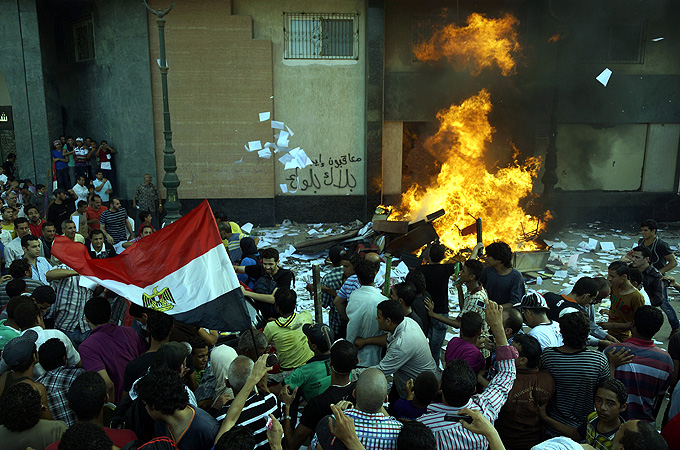 Egypt was bracing for a day of violence and protest as supporters and opponents of President Mohamed Morsi prepared for mass rallies following a night of clashes that left three people dead.
Rival demonstrators pitched tents and began sit-ins on Saturday to prepare for Sunday's rallies, a year to the day of Morsi's election. The demonstrations were planned after opponents called for Morsi's resignation and snap elections, which prompted pre-emptive demonstrations on Friday by the Muslim Brotherhood and its allies.
Morsi met the interior minister, Mohamed Ibrahim, and defence minister Abdel-Fattah el-Sisi Saturday to discuss plans to secure strategic locations, the state new agency Mena said.
Al Jazeera's Hoda Abdel Hamid, reporting from Cairo, said the anxiety was palpable.
"This country has been galvanised, focused on June 30. Listening to both sides, you can expect there to be some trouble. Both sides look at this as a matter of survival - the end game.
"They feel that whoever has the upper hand will be able to lead the country, even though there is no proof that will happen, that is the mindset at the moment. There is a lot of anxiety among Egyptians."
No backdown
She added that while Sunday's protests were the focus, others feared about what will come afterwards
"Everything is uncertain in this country. Many people are not so much worried about tomorrow but what happens next if president Morsi does stay in power - and every indication says that he will.
"There is no sign the opposition is willing to sit down with the president and there is no sign that the president has any concessions. No one is backing off," our correspondent said.
She said it remained to be seen what role the military would take in any trouble. The army has said it would not sit idle and watch Egypt slip into chaos. Now we don't know what threshold the military has, where it will say enough is enough," she added.
The military has not directly intervened despite fatal attacks on Friday. The offices of the Freedom and Justice Party, the political arm of the Muslim Brotherhood from which Morsi hails, were set on fire in Alexandria and at Aga in Daqahliya. Its offices were stormed in Beheira.
Two people were killed in Alexandria, including an American student who was stabbed to death while taking pictures of the clashes, and an Egyptian journalist was killed in Suez Canal city.
Morsi's opponents, a collection of leftists, liberals, Christians and also deeply religious Muslims, accuse him of hijacking the revolution and concentrating power in the hands of Islamist groups.
Supporters galvinised
Morsi supporters spent the night outside the Rabaa Al-Adawiya mosque in Cairo's Nasr City neighbourhood, where tens of thousands gathered on Friday to defend the legitimacy of Egypt's first freely elected president.
"It's not just about Morsi, it's about legitimacy and the state. We can't go backwards," said protester Kamal Ahmed Kamel.
Cameron, Zardari talk bilateral ties, Afghanistan

Welcome to Canada, Rimsha Masih!

By Tahir GoraIt's not just the breaking news; it's also the big news now that a persecuted teen girl, Rimsha Masih from Pakistan, has arrived in Canada. Welcome to Canada, Rimsha Masih! A family member of mine spotted her in our neighbourhood and brought it to my attention. I immediately contacted The International Christian Voice Canada, the organization that was working for her safe exit from Pakistan. The organization confirmed her arrival in Canada. She arrived here couple weeks ago, I learnt further. Maybe the organization was not releasing the news in the wake of security issues. But this poor girl made worldwide headlines last August when she got arrested by Islamabad police on accusations of burning pages from Koran. A Pakistani court evidence later that Imam Mosque, Khalid Jadoon Chishti, had allegedly desecrated Koran pages himself and who trapped little Rimsha in blasphemy law. Pakistan's newspaper Dawn reported, "Mohammad Shahzad and Awais Ahmed, said they had urged Chishti (Imam) not to interfere with the papers but he told them it was the only way to expel the Christians from the area." He was subsequently released on bail. Khalid Jadoon Chishti is free in Pakistan now. Other Imams -- and their aggressive mobsters -- are still unleashed in Pakistan as well.

Obama urges House to pass immigration reform by August
Saudi Arabia: No woman in women's talks! Twitter pic amazes the world


China media warns Philippines of 'counterstrike' in South China Sea
Xinjiang riots futile in face of united Chinese power

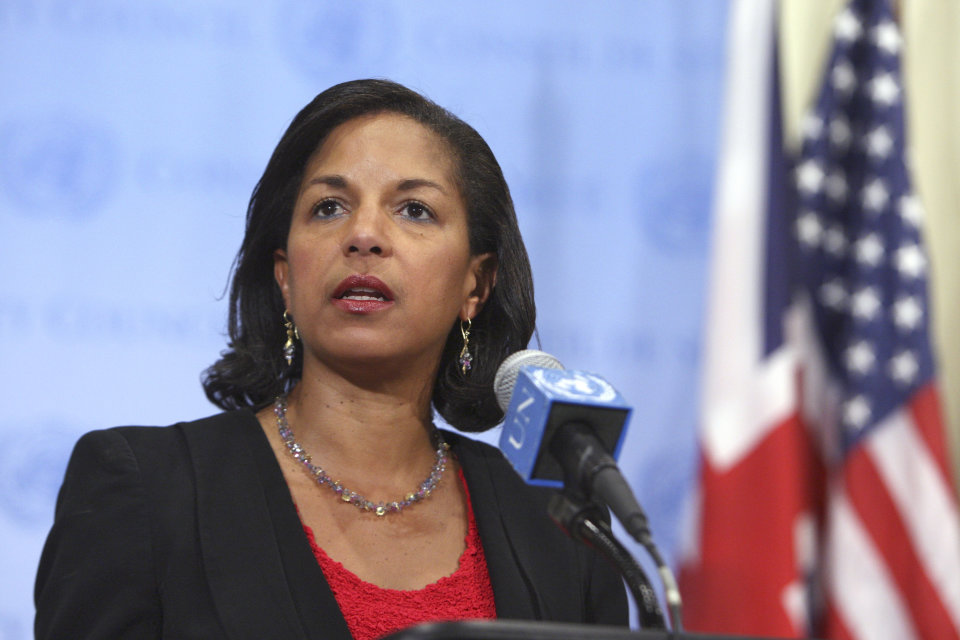
Susan Rice: Snowden leaks haven't weakened Obama
Obama to meet Mandela's family privately, but not the anti-apartheid icon
 President Barack Obama and the first lady will meet privately with Nelson Mandela's family Saturday, but they will not visit the ailing anti-apartheid icon at the hospital.
The president and Michelle Obama will not see him "out of deference to Nelson Mandela's peace and comfort, and the family's wishes," the White House said in a statement.
Obama starts his first full day of activities in South Africa, a nation where hearts are heavy over the poor health of the revered statesman.
His visit to Africa's biggest economy is part of a three-nation trip that started in Senegal, and will end in Tanzania next week.
A meeting between the two would have had historic significance.
Like Obama, Mandela broke through racial barriers to become the first black president of South Africa. The two have met before, but that was prior to Obama's election to the highest political office in the United States. He was a senator at the time.
Mandela retains massive popularity despite his retirement from the presidency in 1999.
He was hospitalized in critical condition with a recurring lung infection three weeks ago, and is clinging to life at a Pretoria hospital.
Though his condition has improved, his health remains delicate, according to his ex-wife, Winnie Mandela. Government spokesman Mac Maharaj has said he remains critical but stable.
As his condition has deteriorated, South Africans have gathered outside the hospital, praying, lighting candles and leaving notes for the man they refer to as "tata," the Xhosa word for father.
Obama, who has hailed him as a hero, had not ruled out a visit to see him. However, he had said it is up to the family.
"I don't need a photo op, and the last thing I want to do is to be in any way obtrusive at a time when the family is concerned with Nelson Mandela's condition," he said Friday.
Mandela became an international figure while enduring 27 years in prison for fighting apartheid, South Africa's system of racial segregation. He was elected the nation's first black president in 1994, four years after he was freed.
Even as he has faded from the spotlight, he remains popular worldwide as an icon of peaceful reconciliation.
"If and when he passes from this place, one thing I think we'll all know is that his legacy is one that will linger on throughout the ages," Obama said.
The trip aims to bolster investment opportunities for the U.S., address development issues such as food security and health, and promote democracy. It comes as China aggressively engages the continent, pouring billions of dollars into it and replacing the United States as Africa's largest trading partner.
Obama's schedule Saturday includes an arrival ceremony in Pretoria and a news conference with his South African counterpart, Jacob Zuma.
A day later, he will visit Robben Island, where Mandela spent a majority of his decades in prison.
Obama to thank his hero Mandela
http://www.timeslive.co.za/

Barack Obama will express "profound gratitude" for Nelson Mandela, as his hero's battle for life adds a emotional edge to his first visit to South Africa as president.Obama said he did not need a photo-op with Mandela following speculation he could visit the anti-apartheid icon and his fellow Nobel peace laureate in the Pretoria hospital where he has been for more than three weeks. Fears for Mandela health, weighing heavily on Obama's three-nation Africa tour, eased slightly Friday, as the 94-year-old's ex-wife Winnie said there had been a "great improvement" though he was still said to be in a critical condition. Obama, who met Mandela once in Washington in 2005, said his primary concern was for the comfort of the ex-South African president and the well-being of his family. "The last thing I want to do is to be in any way obtrusive," Obama said as he flew from Senegal to South Africa, the second leg of a three-nation tour his administration sees a chance to make up for lost time on the continent. "I think that the message we'll want to deliver is not directly to him but to his family, is simply profound gratitude for his leadership all these years," Obama said. Mandela, who turns 95 next month, has been in intensive care for three weeks for a recurrent lung disease dating from his years in apartheid-era prisons. But after taking a turn for the worse last weekend, he has since shown tentative signs of recovery. Supporters have been gathering outside the hospital to offer prayers for the man who negotiated an end to decades of racist white minority rule and went on to become South Africa's first black president. "I came to pray for our father Nelson Mandela. We are wishing for our father to be fine," said Thabo Mahlangu, aged 12, part of a group from a home for abandoned children who travelled to Pretoria. A wall of handwritten prayers for Mandela's recovery has become the focal point for South Africans paying tribute to the father of their nation, with singing and dancing by day and candlelight vigils at night. One message read: "If you can fight prison, you can beat this". Another said: "You are such an incredible inspiration to millions". A visit by Obama to Mandela's former jail cell on Robben Island, off Cape Town, on Sunday in particular is expected to be laden with symbolism. Before then, Obama will try to make sure that the main message of his tour, that the United States sees Africa as poised for explosive growth after years as an aid recipient, is not eclipsed. He will hold talks and a press conference in Pretoria on Saturday with President Jacob Zuma before travelling to Soweto to hold a town hall style conversation with young leaders from all over the African continent. Back in Pretoria Saturday evening, Zuma will throw an official dinner for the US leader. After touring Robben Island Sunday, Obama will visit former Archbishop Desmond Tutu's youth foundation HIV centre before delivering the central speech of his African tour at the University of Cape Town. Obama leaves South Africa Monday, for the final stop on his tour, Tanzania. The US leader will not be greeted warmly by all South Africans. "NObama" demonstrations were held in Pretoria by a coalition of leftist, pro-Palestinian and anti-drone groups. The group was protesting against what it described as the "arrogant, selfish and oppressive foreign policies" of the United States. Mandela has been hospitalised four times since December, mostly for a stubborn lung infection. The man once branded a terrorist by the United States and Britain walked free from prison near Cape Town in 1990. He won South Africa's first fully democratic elections in 1994, forging a path of racial reconciliation during his single term as president, before taking up a new role as a roving elder statesman and leading AIDS campaigner. As he languishes in hospital, his relatives are fighting a legal battle, reportedly over where members of the family should be buried. On Friday, sixteen members of the Mandela family brought an urgent application to a regional court, reportedly to force Mandela's grandson Mandla to return remains of family members to a plot in the ancestral village where Mandela has said he wants to be buried. Mandla, a local chief in nearby Mvezo, had exhumed the remains of three of Mandela's children in Qunu in 2011 and brought them to his village, allegedly without the consent of the rest of the family.
Out-of-school children: Pakistan ranks second in the world
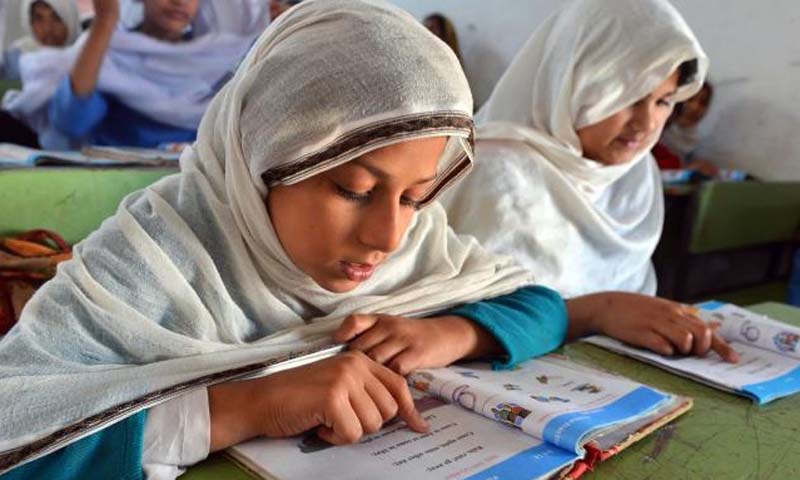 Pakistan ranks the second with the most out-of-school children in the world with only Nigeria ahead of it, said a child rights body on Thursday.
In its annual report titled ‘The state of Pakistan’s children 2012’, the Society for the Protection of the Rights of the Child (Sparc) said about one fourth of the 19.75 million children in Pakistan aged five to nine were out of school and factoring in adolescents increased the number to 25 million. Of them, seven million children (aged three to five) had yet to receive primary schooling.
“The country reduced its spending on education from 2.6 per cent to 2.3pc of the GNP (gross national product) over the decade and ranks 113th of the 120 countries on the Education Development Index,” said the Sparc report launched in a hotel here on Thursday.
At the provincial level, Punjab has the highest NER (net enrolment rate) for children in primary schools at 61pc followed by Sindh with 53pc, Khyber Pakhtunkhwa with 51pc and Balochistan with the lowest at 47pc. Pakistan has an NER of 74.lpc for all age groups enrolled either in primary, secondary or higher education.
Pakistan has the lowest youth literacy rate with 70.7pc. Only 61pc of girls are literate as compared to 79pc boys in the age group of 15-24 years.
Progress has been slowest in low-income countries, especially Pakistan, where only 15pc children received pre-primary education in 2010. It quoted a recent report saying 63pc of children aged three to five years were not receiving any education related to early childhood development.
The country ranks 129th among the 135 countries on the Gender Gap Index 2012 according to the Global Gender Gap Report. Data shows that gender parity for primary schools in Azad Kashmir is close to 1 (0.97). The GPI for Punjab stands at 0.98, in Balochistan it is 0.83 and in Sindh 0.81.
The report said 43pc children born in Pakistan were afflicted with stunting. It was estimated that 21.7pc children were severely and 21.3pc were moderately stunted.
It quoted the United Nations Children's Fund as saying that under five years mortality rate had declined from 122 per 1,000 births in 1990 to 72 per 1,000 births in 2011; far from reaching the assigned target of 52 per 1,000 births as per the millennium development goal.
More than 423,000 children die before reaching their fifth birthday, and almost one in five of these deaths are due to pneumonia.
Pakistan accounted for nearly 30pc of all polio cases recorded worldwide. A total of 142 cases were reported in 2010; 198 cases in 2011. In 2012, the official reports show, 58 cases were recorded, excluding cases in the North and South Waziristan agencies.
It is estimated that 2.1 million cases of measles are reported annually in Pakistan and 21,000 of the reported cases die of complications from the disease. Pneumonia and diarrhoea account for 29pc of deaths among children under five worldwide or more than two million a year; with Pakistan ranking fourth among the countries with the highest prevalence of the disease.
A total of 55 of 96,000 infants, children and adolescents had been identified as HIV positive in Pakistan In 2012, around 5,659 cases of violence against children were reported across Pakistan from January to October 2012. These included 943 murders, 1,170 cases of injuries, 302 of sodomy; 204 of child trafficking, 410 of forced marriages and 164 of Karo-kari (honour killing) incidents, and 260 cases of missing children. Other incidents of violence included 407 cases of sexual assault, 547 torture cases, 323 child suicides, 530 kidnappings and 176 Vani cases.A total of 3,861 cases of child sexual abuse were reported in different parts of the country last year. Most of the cases were reported in Punjab (68pc), followed by Sindh (19pc), Khyber Pakhtunkhwa (5pc), Balochistan (3pc) and FATA (3pc).
The report said 197 of the 3,581 victims of drone strikes since 2004 were children.
The participants said children in Pakistan had to cope with a lack of educational opportunities, poor health conditions, a near absence of protection for poor and vulnerable children, miserable conditions in juvenile jails and continued employment of children in hazardous occupations.
Violence against children remains culturally entrenched as children in Pakistan have to cope with physical violence, sexual abuse, trafficking, recruitment in armed conflicts and acid attacks. In the absence of a national database on violence against children, the report relied on secondary sources to give the prevalence of various forms of violence against children.
Subscribe to:
Posts (Atom)