 Protesters in Saudi Arabia have held a rally in the western region of Hejaz to protests against an increase in illegal detentions.
Demonstrators took to the streets of Hejaz on Thursday, carrying placards and shouting slogans demanding the release of political prisoners.
The rally is the latest in a growing wave of protests over the detention of a group of women and children in the central province of al-Qassim.
The group was arrested by regime forces while they were staging a sit-in outside al-Safra Prison in Buraidah on Monday, demanding that authorities release their relatives.
Since February 2011, protesters have held demonstrations on an almost regular basis in Saudi Arabia, mainly in oil-rich Eastern Province. They were primarily calling for the release of political prisoners, freedom of expression and assembly, and an end to widespread discrimination.
The calls soon turned into demands for the downfall of the ruling Al Saud royal family, especially after security forces killed five protesters and injured many others in Eastern Province in November 2011.
In October 2012, Amnesty International called on the Saudi authorities to "end their repeated moves to stifle people’s attempts to protest against the widespread use of arbitrary detention in the country,” and to respect the right of people to peaceful protests.
Activists say there are over 40,000 political prisoners in jails across the kingdom. They say some of the people behind bars are being kept without charge or trial - some of them for up to 15 years.
Thursday, February 28, 2013
Saudi protesters in Hejaz demand end to illegal detention
Protesters in Saudi Arabia have held a rally in the western region of Hejaz to protests against an increase in illegal detentions.
Demonstrators took to the streets of Hejaz on Thursday, carrying placards and shouting slogans demanding the release of political prisoners.
The rally is the latest in a growing wave of protests over the detention of a group of women and children in the central province of al-Qassim.
The group was arrested by regime forces while they were staging a sit-in outside al-Safra Prison in Buraidah on Monday, demanding that authorities release their relatives.
Since February 2011, protesters have held demonstrations on an almost regular basis in Saudi Arabia, mainly in oil-rich Eastern Province. They were primarily calling for the release of political prisoners, freedom of expression and assembly, and an end to widespread discrimination.
The calls soon turned into demands for the downfall of the ruling Al Saud royal family, especially after security forces killed five protesters and injured many others in Eastern Province in November 2011.
In October 2012, Amnesty International called on the Saudi authorities to "end their repeated moves to stifle people’s attempts to protest against the widespread use of arbitrary detention in the country,” and to respect the right of people to peaceful protests.
Activists say there are over 40,000 political prisoners in jails across the kingdom. They say some of the people behind bars are being kept without charge or trial - some of them for up to 15 years.
President Zardari reiterates govt's commitment to curb militancy‚ sectarianism
Radio PakistanPresident Asif Ali Zardari has reaffirmed that the government will undertake every possible effort to bring to justice the perpetrators of Quetta carnage. Talking to a delegation of Hazara community in Quetta today (Thursday)‚ he said the federal government is providing every support to the provincial government in investigating the heinous incident. The president advised Balochistan governor to personally oversee that the bereaved families get relief. Later‚ during a meeting on law and order situation in Balochsitan‚ the President was apprised of various measures being taken to provide security to the people. The meeting was informed that the security arrangements in and around Quetta city have been beefed up and Frontier Corps has been given the powers of Police under Anti-Terrorism Act. Earlier talking to various delegations in Quetta‚ the president reiterated the government's commitment to curb militancy and sectarianism. He said fight against militant and sectarian mindset may be hard and long but will not rest till we have defeated this enemy of the state and the country. Earlier‚ the President also laid the foundation stone of Nolang Dam in Quetta to be constructed at a cost of 18 billion rupees. It is being constructed at River Mola in District Jhal Magsi. On completion‚ it will help irrigate 47‚000 acres of land. Radio Pakistan's Quetta correspondent says the work on the Dam will start next month.
‘Whole of Bangladesh is now Shahbagh’
 The organisers of ‘Ganajagaran Mancha’ of Shabagh intersection were overwhelmed by the huge crowd thronging the city’s commercial hub Motijheel to join a rally.
 This was the third rally organised in Dhaka outside Shahbagh, where the unprecedented protest against the life sentence of Jamaat leader Abdul Quader Molla, galvanised millions of Bangladeshis to take to the street.
The two other protest rallies were held at Mirpur and Rayerbazar, both witness to a spate of mass murders during the 1971 Liberation War.
The organisers said although their movement demanding death sentence to war criminals and a ban on Jamaat started at Shahbagh, it has already spread across all corners of Bangladesh.
“Our protest is not only confined to Shahbagh, it has reached everywhere across the nation,” Bangladesh Chhatra Moitree President Bappaditya Basu told the rally.
He called upon the people to set up ‘Ganajagaran Mancha’ at each school, college and locality.
Demonstrations at the iconic Shahbagh intersection, now christened as ‘Prajanma Chattar’, rolled into the 23rd day on Wednesday.
The International Crimes Tribunal-2 on Feb 5 awarded life imprisonment to Molla, sparking off a wave of anger and frustration, drawing people to Shahbagh to form mass protests.
The Islamist party which opposed Bangladesh’s birth also held a rally at Motijheel on the day prior to the start of the Shahbagh movement.
The rally by the ‘Ganajagaran Mancha’ in the business district came a day before the ICT-1 is expected to deliver a verdict on Jamaat leader Delwar Hossain Sayedee on charges of crimes during the nation’s nine-month bloody independence struggle in 1971.
People from the broad spectrum of the society started flocking to Motijheel carrying national flags and shouting slogans. Thousands of students of the city’s several schools and colleges also joined in.
The rally kicked off around 3.40pm with singing of national anthem.
The wife of Liftman Zafar Munshi, who died in an attack by the activists of Islami Chhatra Shibir – the student affiliate of the Jamaat-e-Islami – came and expressed solidarity with the movement.
”You have already shown Jamaat-Shibir that they have no place in this country by rejecting two of their strikes”, said Imran H Sarkar, spokesperson for the ‘Ganjagaran Mancha’.
“I urge you to resist tomorrow’s strike by Jamaat and Shibir and show them their places.”
Thousands of supporters roared in solidarity with the resistance call from ‘Ganjagaran Mancha’.
Talking directly to the International Crimes Tribunal, he said, “We do not impose any pressure on you. Please continue working in a neutral manner. Do not fear Jamaat -Shibir’s anarchy and terror.”
He demanded death penalty for Sayedee saying, “Support the call of the nation. Do not be confused. Do not have fear.”
The blogger also requested media outlets to not run any advertisements for institutions involved with Jamaat-e-Islami.
Speaking at the rally, Bangladesh Chhatra Union General Secretary Hassan Tarek slated the international human rights organisations for ‘questioning on-going the trial process of the war criminals’.
He alleged such organisations had indeed opposed Bangladesh’s War of Independence from Pakistan.
Bangladesh Chhatra League General Secretary Siddiqui Nazmul Alam also spoke on the occasion
There will be a continuous sit-in at Shahbagh starting from Wednesday night. People from all walks of life have been asked to join a mass procession that will be taken out from Shahbagh at 10am on Thursday amidst the shutdown
The protesters went back to Shahbagh following the end of the rally.
'Alllah’s house no political office'
A delegation of the Olama Mashayekh slated Jamaat for using mosque to further their political agenda after expressing solidarity with the protest.
“Mosque is not an office of any political party,” Maulana Abdul Momen Shiraji said in his address to the thousands in the rally.
He said the Baitul Mukarram National Mosque is the ‘house of Allah’, ‘not a party office’.
“Those who set the house of Allah on fire do not conform to Islam.”
Shiraji said: “Islam talks about humanity, peace and love towards other religions. Over 100,000 messengers of Allah talked about humanity in Islam.
He also urged everyone to stay alert against the on-going conspiracies related to Islam.
Olama Mashayekh Parishad’s Abdul Halim Shiraji said,” Islam does not suit Jamaat. Don’t pay heed to propaganda by those who had led killing, rape and loot.”
He alleged Jamaat was spreading false propaganda against the slain Shahbagh movement activist Ahmed Rajib Haider that he had defamed Islam.
He supported the demands of the youths for hanging the war criminals saying: “The law of Allah permits killing for a killing. So these killers deserve nothing other than death sentence.”
“They (war criminals) deserve several deaths. The Olama Mashayekhs will pronounce their death sentence as per the Sharia law if tribunals fail to do so,” he added. - See more at: http://bdnews24.com/bangladesh/2013/02/27/whole-of-bangladesh-is-now-shahbagh#sthash.FPT2Uasc.dpuf
BANGLADESH: ''Sayedee reaps as he sowed''
http://www.thedailystar.netWith the death sentence pronounced on Maulana Delawar Hossain Sayedee by the International Crimes Tribunal-1 yesterday, it is comeuppance for him. This has resonated with most people of the country as the Shahbagh Chattor expresses its jubilation over the verdict. Elaborate procedures have been observed with the defense and the plaintiff making out their cases based on the witness accounts as well as other evidences produced before the court. It has been a long-drawn out process after which the verdict has been delivered in pursuit of the due process of law. The defendant has already expressed its intention to appeal the tribunal's verdict. It is only after the disposal of the appeal that the legal process will have been exhausted. In the essence, the International Crimes Tribunals and their procedures have been successfully tried out with the result that the processes have been strengthened for justice to be done to the victims of the crimes against humanity in the 1971 Liberation War. It is a vindication of the long arm of law reaching the heinous perpetrators after 42 years since their diabolical acts in collusion with the Pak occupation forces. Having said that, we are shocked at the scale of violence and mayhem perpetrated by the Jamaat-Shibir elements and their supporters. The death figures reached four in Chittagong, two in Rangpur and one each in Dinajpur and Sirajganj within hours of delivering the verdict. What appalls us is the torching of a temple in Noakhali. All this can't go on, life must return to full normality. The law enforcement agencies and the BGB are doing their best to quell the disturbances and we hope the situation will be brought under control expeditiously. We urge restraint from all sides in the greater interest of our beloved country.
Terrorized Ethnic Group to Form Force in Pakistan

 Inside the ruins of a market demolished by a powerful bomb, four tiny white candles —dwarfed by the scale of the destruction — flickered gently in the freezing rain as dazed Shiite Muslim Hazaras wept for the nearly 90 people killed in the blast.
Condemning the Pakistan government for doing little to protect them, the small ethnic group has vowed to set up their own defense force to deal with Sunni extremists they blame for the bombing and a series of other ferocious attacks that have killed nearly 400 ethnic Hazaras in the past 18 months, nearly half in the first two months of this year.
The bomb earlier this month in the Pakistani city of Quetta ripped a swath of devastation that flattened a three-story building and left the ruins of scores of single-room shops exposed to the rain. Blood-soaked rugs were all that was left of a carpet store.
"The ones who did this — they are not human. They are animals," said Surha, a young woman who goes by one name, a common tradition here. She spoke as she grieved at the site, more than a week after the bombing.
Shiite leaders blame inaction by Pakistan's security service for the rising violence against them in Quetta, the capital of southwestern Baluchistan province. They told The Associated Press recently that they are petitioning the provincial administration of Baluchistan to approve a Hazara-led defense force to work with local police."Of course, I blame the government," Surha said, her voice getting louder.
Wrapped in a large beige shawl to ward off the cold, she recounted how two of her young cousins died in the bombing after returning home from school to help their father in his used clothing shop.
Her face was wracked in pain. Her voice cracked. "The government is responsible for this situation because daily it is happening to us and nothing is done to stop it."
Many Hazaras, who are mostly Shiite Muslims, migrated from neighboring Afghanistan during the past century. They are easily recognized by their distinctive Central Asian facial features, which Hazara leaders say make them easy targets for militant Sunnis.
"We can't hide who we are. You can see it in our faces. I don't see it getting better," said Allama Muhammad Juma Asadi.
His school, Jamia Imam Sadiq, is just a couple blocks from a massive bombing that killed more than 100 people on Jan. 10. Terrified students ran into the street. It was chaos, he said.
When a second explosion leveled the market on Feb. 16, Hazara leaders began to talk of self-protection and raising a security force of their own.
"Very soon we will have our own people at the checkpoints," Asadi said. "We have discussed setting up our own protection force with the administration."
Radicals have attacked non-Hazara Shiites elsewhere in the country, but some of the worst attacks have occurred in Baluchistan where most Hazaras live. A virulent anti-Shiite group, Lashkar-e-Janghvi, has taken responsibility for all the attacks. The militant organization is made up of radical Sunni Muslims and reviles Shiites as heretics.
About 20 million of Pakistan's 180 million people are Shiites, who mostly live in harmony with the majority Sunni population. But militant groups from both sides have sprung up in Pakistan over the decades, often with suspected financial links to Saudi Arabia, which is ruled by a Sunni monarchy, and Iran, a Shiite powerhouse in the region."A crumbling state has failed to stop slaughter after slaughter and to provide even basic security to its hapless citizens leaving them at the mercy of the murderers," militant expert and author Zahid Hussain recently wrote in a local newspaper.
The February explosion claimed the lives of 17 members of Bostan Kishtmand's family, which owned more than 20 small shops in the area.
"I went a little out of my mind when I went to the hospital and saw all of my relatives, all dead," Kishtmand said in broken English. "Something went wrong in my head."
After the January bombing, Baluchistan's provincial administration was fired and responsibility for the region's security came under the federal government. It ordered the paramilitary Frontier Corps to restore calm in Baluchistan, a sparsely populated province that was wracked by a bloody secessionist movement nearly two years ago. That gave way to the current round of brutal sectarian bloodletting.
In the February attack, militants loaded a water tanker with about 1,000 kilograms (2,200 pounds) of explosives. It passed undetected through two checkpoints manned by Frontier Corps.
Days after the explosion, the ground around the market was still covered in scores of muddy children's clothes, sweaters, dozens of winter jackets and tiny sandals. Several of the stores in the market had sold used children's clothes.
The explosion was timed to have the most devastating effect, Asadi said. It occurred after 7 p.m., when offices were closed and families were in the market shopping. Three schools in the area all held evening classes to teach students English and computer skills.Fifteen-year-old Inayat Hazara had been improving his computer skills at a nearby institute when the explosion occurred. He touched a dirty white bandage that covered much of his neck as he recalled the explosion, and the horror of the blood and bodies of his fellow students lying nearby.
"The noise was everywhere, my ears hurt. People were screaming and I couldn't see at first the dust in the air was so thick," he said.
Like tiny missiles, thousands of glass shards ripped through the computer lab where he was studying, he said.
"Everyone wants a good life, but I don't know how you have it here," he said.
Retired senior police officer Faqir Hussein said he supported a special protection force, but warned that a Hazara-only one could spark even more sectarian conflict.
A city of nearly 3 million people, Quetta is divided into neighborhoods that include ethnic Pashtuns and Baluch — another minority that dominates Baluchistan province. Hussein said that the other groups often live and work in Hazara-dominated areas, but that Hazaras themselves rarely go outside their own neighborhoods.
He said a mixed protection force would be preferable at checkpoints where the neighborhoods intersect.
"If a Pashtun comes to a checkpoint, he won't accept to be stopped and searched by a Hazara and that could start violence," explained Hussein, who is a Hazara.
He said there were parts of Quetta that are "no-go" areas for Hazaras because militant Sunnis are hiding among the local Baluch and Pashtun populations. While they might not support the militants, many local people are too terrified to turn them in.
Among the worst parts of Quetta is Sariab Road, a main avenue that is dominated by Pashtuns and Baluch. It has been the scene of numerous attacks and bombings.
Hussein turned down a job at the police training academy because he would have to drive along the avenue.
"Not because I am a coward, but I also don't want to commit suicide and it would have been suicide to drive everyday on Sariab Road," he explained. "Today not one Hazara drives on that road."
US openly opposes Pak-Iran gas pipeline project
 In its latest opposition of Pakistan-Iran gas pipeline project, the US State Department on Wednesday said it is in Pakistan’s interest to avoid any activity that can hit it with sanctions.
The State Department said that it was providing Pakistan with alternatives that would avoid any sanctions violation.
"We recognise that Pakistan has significant energy requirements but we really think there are other long-term solutions to Pakistan's energy needs," said deputy acting spokesman Patrick Ventrell.
"And so we've been assisting as a government to contribute to the alleviation of the energy crisis in Pakistan," he said.
"It's in their best interests to avoid any sanctionable activity, and we think that we provide and are providing ... a better way to meet their energy needs in some of the assistance we're providing."
Iran's supreme leader Ayatollah Ali Khamenei on Wednesday urged the visiting Pakistani president to press ahead with a much-delayed $7.5 billion gas pipeline project despite US opposition.
"The Iran-Pakistan gas pipeline is an important example of Tehran-Islamabad cooperation, and despite hostilities towards the expansion of ties we must overcome this opposition decisively," Khamenei told Asif Ali Zardari, his office reported.
The gas pipeline project is strongly opposed by Tehran's archfoe Washington.
"Accessing safe energy source is the first priority for any country including Pakistan. In this region, the Islamic republic is the only nation that has safe energy resources and we are ready to provide Pakistan its energy needs," the all-powerful Khamenei said.
Zardari, who also met with his Iranian counterpart Mahmoud Ahmadinejad, was quoted by the leader's office as saying: "We deeply believe in boosting bilateral ties.
"The international and regional players have tried in vain to prevent expansion of Iran-Pakistan ties but the people have learnt how to act against the enemy of Islam."
The pipeline project has run into repeated problems, including Pakistan's difficulty in finding funds and opposition to the project from Washington, which has slapped Iran with a raft of sanctions over its nuclear activities.
In 2010, Iran and Pakistan agreed that Tehran would supply between 750 million cubic feet (21 million cubic metres) and one billion cubic feet per day of natural gas by mid-2015.
Islamabad has said it will pursue the project regardless of US pressure, saying the gas is needed to help Pakistan overcome its energy crisis that has led to debilitating blackouts and suffocated industry.
Iran has almost completed the pipeline work in its territory, but Pakistan has not yet started construction of 780 kilometers (490 miles) of the pipeline on its side, which is said to cost some $1.5 billion.
Sanctions-hit Iran finally agreed to finance one third of the costs of laying the pipeline through Pakistani territory to Nawabshah, north of Karachi, with the work to be carried out by an Iranian company.
Pakistani officials in mid-December said Iran had promised a $500 million loan and that Islamabad would meet the rest of the cost.
- See more at: http://www.thenews.com.pk/article-90080-Pakistan-should-avoid-any-sanctionable-activity:-US-State-Dept#sthash.FnRTX5OK.dpuf
Bangladesh: Celebration at Projonmo Chattar
http://www.thedailystar.net
 The Shahbagh demonstrators shouted ecstatically as they celebrated the death penalty of Jamaat-e-Islami leader Delawar Hossain Sayedee Thursday afternoon.
The International Crimes Tribunal-1, dealing with the wartime crimes against Jamaat nayeb-e-ameer or vice-president Sayedee, handed down the verdict in a jam-packed courtroom.
The 73-year-old Jamaat leader was handed down the penalty for eight wartime criminal offences as his party enforced a hartal threatening anarchy across the country assuming that “an unjust judgement would be awarded to Sayedee”.
People regardless of their age, sex and class were seen showing V-sing as they were demonstrating for the last 24 days demanding death penalty to war criminals.
They were also shouting with cheerfully, chanting historical slogan "Joy Bangla" as the news of Sayedee death penalty spread at the Shahbagh intersection, popularly known as Projonmo Chattar.
Immediately after the proclamation of the verdict, Imran H Sarker, convener of Blogger and Online Activist Network, said, "This verdict is for the people."
Dedicating the verdict to the martyrs who laid down their lives during the country's Liberation War in 1971, Imran urged people to came out into the streets and celebrate the judgement peacefully.
"Hand over Jamaat-Shibir men to law enforcers. Don't take law in your hands," he said.
Earlier in the morning, thousands of people joined a procession brought out from the capital's Shahbagh intersection on Thursday defying the dawn-to-dusk hartal enforced by Jamaat-e-Islami.
Around 10,000 people from all walks of life under the banner of Gonojagoron Mancha took part in the procession, which started from Projonmo Chattar around 10:50am.
Marching through Matsya Bhaban, Bijoynagar intersection, Kakrail, Malibagh, Mouchak, Moghbazar and Banglamotor, the procession returned to Shahbagh around 12:15pm.
While parading the city streets, the demonstrators were chanting different anti-hartal slogans like "Oboidha hartal, mani na, manbo na" (we do not and will not accept illegal hartal).
On Wednesday, Jamaat called the countrywide daylong hartal assuming that "an unjust punishment" would be awarded to its leader Delawar Hossain Sayedee hours after a tribunal fixed today (Thursday) for delivering the verdict of a war crimes case filed against Sayedee.
People regardless of religion, cast and creed imbued with the spirit of '71 were seen started converging at the Shahbagh intersection since Thursday morning to voice against the hartal and demanding capital punishment to all war crimes accused.
Many others were seen joining the procession from different points to express their solidarity with the demonstrators, who are continuing their movement for the 24th consecutive day demanding capital punishment to all war crimes accused.
Meanwhile, the mass signature campaign, which began on February 22, continued Thursday.
On Wednesday, the demonstrators held a grand rally at Shapla Chattar in the capital's Motijheel and vowed not to fall asleep till the verdict in the war crimes case against Sayedee is delivered today.
They called upon people to resist Thursday's hartal and continue their routine activities as they had done on the three previous shutdowns called by Jamaat and its allies.
The movement began on February 5, hours after Jamaat assistant secretary general Abdul Quader Mollah was sentenced to life in prison for rape, killing and genocide in 1971 during country's Liberation War.
It was the verdict of a life sentence given to Jamaat leader Quader Mollah that brought the youths to the streets. They demand nothing but the death sentence to war criminals for their atrocious crimes against humanity in 1971. As the country awaits another verdict today, all eyes are towards Shahbagh and the court.
On February 21, the organisers wrapped up the nonstop protests and announced a series of countrywide programmes, including grand rallies at different points in and outside Dhaka. They also declared that protesters would return to the intersection 24 hours before a war crimes verdict.
Ever since the protest began, the otherwise busy Shahbagh throbbed with the spirit of resistance amid swelling public anger at the impunity the war criminals and Jamaat-Shibir enjoyed over the last 42 years.
Bangladesh Sentences War Criminal to Death
VOA NEWSA Bangladeshi war crimes court has sentenced a senior Islamist opposition leader to death for crimes committed during the 1971 war against Pakistan for Bangladesh's independence. The court in Dhaka Thursday handed down the sentence to Delwar Hossain Sayedee, a senior member of the Jamaat-e-Islami party, for atrocities including rape and mass killings. Sayedee's lawyer has called the verdict unjust and vowed to appeal. The verdict sparked violence among demonstrators in several cities, leading to at least two deaths in clashes between police and protesters in the district of Sirajganj. Sayedee is the third Jemaat party member to be sentenced for war crimes since the tribunal was established in 2010. On January 21, the court sentenced Abul Kalam Azad to death in absentia, finding him guilty of torture, rape, and genocide. On February 5, it sentenced Abdul Quader Mollah to life in prison on similar charges. At least eight more Jemaat members are still on trial. Human rights organizations have questioned the fairness of the trials, saying members of the defense have been unduly pressured. Jamaat-e-Islami called for a general strike Thursday to denounced the trial and demand Sayedee's freedom. Bangladesh fought a nine-month war against Pakistan in 1971 to obtain its independence. The government says three million people died in the violence, although other estimates put the death toll lower.
US Congressman declares Dr Shakil Afridi an ‘American hero’
The Express Tribune News
 US Congressman Dana Rohrabacher introduced a resolution in the House of Representatives declaring Dr Shakil Afridi a hero.
According to a press statement, the resolution expressed that Dr Afridi is an ‘American hero’ and should be immediately released from Pakistani custody.
The statement said that Americans owe Dr Afridi a debt for helping find former al Qaeda leader Osama bin Laden.
Congressman Rohrabacher said that Dr Afridi and his family have “paid a terrible price at the hands of our so-called allies – the Pakistani government. We cannot continue to turn our back on Dr Afridi. He risked his life to provide the intel our forces needed to locate and eliminate Osama bin Laden and he now languishes in a Pakistani prison serving a 33-year sentence.
“He has been tortured, his family has been attacked and he is still in a desperate situation. It behooves us as Americans to state in a unified voice to his Pakistani captors, Dr Afridi should be freed.”
The sponsors of the resolution include Representatives Bachmann, Gerlach, Higgins, Hunter, Lummis, Poe, Salmon, Loretta Sanchez and Stockman, the statement added.
Congressman Rohrabacher has previously introduced bills calling for Balochis to be given right of self-determination, and for Dr Afridi to be given the Congressional Gold Medal.
Dr Afridi had been working with the US Central Intelligence Agency (CIA) for years before the Bin Laden raid, providing intelligence on militant groups in Pakistan’s tribal region.
He helped the agency hunt down Bin Laden after which he was sentenced to 33 years in prison last year in May for his links to a banned militant group.
FM Khar welcomes Russia's interest in regional‚ trans-regional energy projects
Radio PakistanForeign Minister Hina Rabbani Khar met Chairperson of the Federal Council (Senate) of the Russian Federation Ms. Valentina I. Matviyenko in Islamabad on Thursday. The discussions on the occasion spanned the wide spectrum of Pakistan-Russia bilateral relations as well as important regional and international issues. Foreign Minister Khar and Chairperson Matviyenko commended the two Parliaments for their vital role in enhancing Pakistan-Russia bilateral relations. They also expressed satisfaction at the expansion in bilateral relations and the increasing frequency of high level exchanges. Hina Rabbani Khar conveyed her appreciation for Russian assistance towards the Project of Modernization‚ Reconstruction and Expansion of Pakistan Steel Mills. She also welcomed Russia's interest in regional and trans-regional energy projects including CASA-1000 and TAPI. The two leaders also exchanged views on a number of regional and international issues including the situation in Afghanistan and the Middle East.
Wednesday, February 27, 2013
نون لیگ کی مشکل...دیوار پہ دستک…منصور آفاق
Daily Jang
امریکی خارجہ کمیٹی کے چیئرمین سینٹر رابرٹ مینی ڈیز نے نواز شریف سے ملاقات کرلی اور اس کے بعد نون لیگ کے ترجمان پرویز رشید نے میڈیا پر آکر یہ بیان بھی دے دیا کہ نون لیگ انتہا پسندانہ گروپوں اور فرقہ وارانہ تنظیموں سے سیٹ ایڈجسٹمنٹ نہیں کرے گی اور اسی سے بات جوڑتے ہوئے انہوں نے یہ بھی کہا کہ پنجاب حکومت لشکر جھنگوی کے خلاف کریک ڈاؤن کرنے پر پُر عزم ہے۔ سوال پیدا ہوتا ہے کہ عامر میر کی رپورٹ میں تو نون لیگ کے کالعدم تنظیم سپاہ صحابہ کے ساتھ تعلقات کا انکشاف کیا گیا تھا (اس وقت سپاہ صحابہ نے اپنا نیا نام اہلسنت و الجماعت رکھا ہوا ہے) ان کے متعلق پرویز رشید نے کوئی بات نہیں کی۔ لشکر جھنگوی کے ساتھ نون لیگ کی سیٹ ایڈجسٹمنٹ سے انکار کیا۔ اس اعلانِ انکار پر مجھے اُس برطانوی دوست کی بات یاد آگئی جو لشکرِ جھنگوی کے ساتھ ہمدردی رکھتا ہے، میں نے جب اس سے کہا کہ اب جب تحریک طالبان پاکستان بھی مذاکرات کا نام لے رہی ہیں تولشکرِ جھنگوی کو بھی چاہیے کہ مذاکرات کی طرف آئے۔ حکومت ان کے ساتھ مذاکرات کیلئے تیا ر ہوسکتی ہے، تو اس نے کہا ”میری اطلاع کے مطابق کے پنجاب کے وزیر قانون رانا ثنااللہ کی وساطت سے لشکرِ جھنگوی کے نون لیگ کے ساتھ مذاکرات ہو رہے ہیں۔ رانا ثنا اللہ اگرچہ لبرل آدمی ہیں، انہیں ایک ٹی وی انٹرویو میں اس کا اقرار کرتے ہوئے ہچکچاہٹ محسوس نہیں ہوئی تھی کہ میری بیٹی بہت اچھا ڈانس کرتی ہے مگرلشکر ِ جھنگوی کے ساتھ ان کے روابط کا معاملہ بھی خاصا مشہور ہو چکا ہے۔ اصل حقیقت تو اللہ جانتا ہے مجھے تو صرف یہ معلوم ہے کہ وزیرداخلہ رحمان ملک نے بھی یہاں تک کہہ دیا ہے کہ رانا ثنا اللہ لشکرِ جھنگوی کے سرپرست ہیں اگر وہ ہاتھ اٹھا لیں تولشکرِ جھنگوی کو کنٹرول کیا جا سکتا ہے۔ ایک اطلاع کے مطابق نوازشریف نے سعودی حکومت کے ساتھ وعدہ کیا تھا کہ وہ ایک مخصوص مذہبی جماعت کے پندرہ امیدواروں کے مقابلہ میں اپنے امیدوار نہیں کھڑے کریں گے۔ مگر گذشتہ دنوں سعودی عرب پر پاکستان میں دہشت گردی کے الزام نے نون لیگ کو مشکل میں ڈال دیا ہے۔ سعودی عرب پر پاکستان میں دہشت گردی کرانے کا الزام سب سے پہلے برطانوی اخبار” گارڈین“ میں لگایا گیا تھا اس کے بعد یہ بات میڈیا پر کھل کر ہونے لگی کہ سعودی عرب پاکستان میں دہشت گردوں کی پشت پناہی کر رہا ہے۔ اگرچہ یہ الزام بہت پہلے وکی لیکس نے سعودی عرب پر لگایا تھا کہ اس مقصد کیلئے سالانہ کی فنڈنگ مختلف انداز میں صرف جنوبی پنجاب میں فراہم کررہا ہے لیکن پچھلے کچھ دنوں یہ شور بہت بڑھ گیا ہے۔ سعودیہ کی طرف پاکستان میں ہونے والی دہشت گردی کی وجہ بھی عجیب و غریب بیان کی جارہی ہے۔کہا جارہا ہے کہ پچھلے پانچ سالوں سے سعودیہ پاکستان سے اس لئے ناراض ہے کہ پاکستان کے سربراہ شیعہ مسلک سے تعلق رکھتے ہیں۔ یہ بھی سننے میں آیا ہے کہ نون لیگ میں بھی شیعہ مسلک سے تعلق رکھنے والے لوگوں کی پذیرائی نہیں کی جاتی کیونکہ نواز شریف پر سعودیہ میں قیام کے دوران وہابیت کے خاصے اثرات مرتب ہوئے ہیں۔ ایک اطلاع کے مطابق نوازشریف سعودیہ کی وساطت سے امریکہ کو مسلسل باور کرا رہے ہیں کہ پاکستان میں نون لیگ کی حکومت امریکہ دوست حکومت ہوگی مگرقرائن یہ کہہ رہے ہیں کہ وہ کامیاب نہیں ہونگے کیونکہ امریکہ اور سعودی عرب کے دوستی میں کئی دراڑیں پڑ چکی ہیں اور امریکہ وہاں تبدیلی کے بارے میں سنجیدگی سے غور کر رہا ہے۔ امریکی صحافی سونیا شاہ نے بہت عرصہ پہلے اپنی کتاب میں لکھا تھا کہ امریکی گریٹر مڈل ایسٹ پلان کے مطابق سعودی عرب ایک غیر فطری ملک ہے سو اس کی تقسیم ضروری ہے۔ منصوبے کے مطابق سرزمین حجاز کو بین الاقوامی متبرک علاقہ قرار دے دیا جائے گا، سعودی عرب صرف ریاض اور اس کے گردو نواح تک محدود کردیا جائے گا۔ اس پلان پر کام کی رفتار تیز کردی گئی ہے سعودی عرب بھی اس امریکی پلاننگ سے بخوبی واقف ہے سو وہ اس کے مطابق اپنے اقدامات کرتا رہتا ہے لیکن اس وقت پاکستان میں دہشت گردی کے حوالے سے دنیا بھر میں جس طرح سعودی عرب کو ٹارگٹ کیا جارہا ہے وہ حیرت انگیز ہے، اس کے بین الاقوامی مقاصد جو بھی ہوں مگر نون لیگ کو اس عمل سے بہت سخت نقصان ہو رہا ہے کیونکہ نون لیگ کی بین الاقوامی سیاست کی عمارت نواز شریف کی سعودیہ کے شاہی خاندان کے ساتھ دوستی کی بنیاد پر کھڑی ہے۔ تازہ ترین اطلاعات کے مطابق لشکر جھنگوی کے سربراہ ملک اسحاق سعودیہ میں عمرے کے علاوہ کئی اہم ملاقاتوں کے بعد جب واپس لاہور پہنچے تو انہیں پنجاب پولیس نے گرفتارکر لیا ہے۔ سعودی دباؤ کے باوجود پنجاب حکومت کا یہ کام صرف اپنی ساکھ کو بچانے کا عمل ہے۔ ملک اسحاق پر اس وقت تک ستر افراد کے قتل کے مقدمات قائم ہوئے چودہ سال مسلسل جیل میں رہتے ہوئے انہوں نے لشکر جھنگوی کی سپہ سالاری کی۔ سری لنکن کرکٹ پر حملے کا الزام بھی انہی پر لگایا جاتا ہے۔ عدالتوں نے انہیں 34مقدمات سے بری کیا ہے۔کہا جاتا ہے کہ وہ کوئی مذہبی بیک گروانڈ نہیں رکھتے نہ ہی کسی مدرسہ سے فارغ التحصیل ہیں مگر بڑے بڑے علمائے کرام انہیں بڑا مرتبہ دیتے ہیں۔گذشتہ جولائی میں انہیں رہائی دی گئی پھر رانا ثنا اللہ کا ذکرِ خیر آگیا۔کہتے ہیں ملک اسحاق کی رہائی میں پنجاب کے وزیر قانون نے اہم کردار ادا کیا تھا۔ اس میں تو کوئی شک نہیں کہ عدلیہ کے ساتھ رانا ثنا اللہ کے وہ مراسم ہیں جوآسمانوں پر بنائے جاتے ہیں۔ سو ابھی ایکسال اور رانا ثنا اللہ کی اہمیت و حیثیت سے ذرہ بھر انکار بھی ممکن نہیں مگر اب رانا صاحب کیلئے سپاہ صحابہ اور لشکر جھنگوی کا زیادہ دیر تک ساتھ دینا ممکن نہیں رہا۔ نون لیگ کو بھی اس مخصوص شدت پسند مذہبی طبقے سے ووٹ لینے کیلئے کوئی نیا راستہ اختیار کرنا پڑے گا اور امریکہ کی خوشنودی کیلئے بھی پھر سے جاتی عمرہ کی سڑک کلٹن ڈرائیو وے سے ملانی پڑے گی کیونکہ اس سلسلے میں ان دنوں ترکی کے اہل اقتدار بھی کوئی اہم کردار ادا نہیں کر سکتے۔ - See more at: http://beta.jang.com.pk/NewsDetail.aspx?ID=68619#sthash.cR3ZEKKt.dpuf
Bangladesh: Sleepless at Shahbagh, ears to tribunal
http://www.thedailystar.net
 Protesters at Shahbagh have vowed not to fall asleep till the verdict in the war crimes case against Sayedee is delivered today. As hours ticked away last night, people from all walks of life took position at the intersection in solidarity, with the number growing as the night wore on.
“Shahbagh is wide awake; Projonmo Chattar is wide awake. And we will remain awake,” declared Imran H Sarker, convener of Blogger and Online Activist Network that began the protest on February 5 demanding capital punishment to all war criminals.
“Our demonstration will continue till the verdict is given. After the verdict of death sentence, we will celebrate and return home with joy,” Imran told a grand rally at Shapla Chattar in the capital's Motijheel as the Shahbagh movement passed its 23rd day yesterday.
Meanwhile, on the eve of the long-awaited verdict in Jamaat leader Delawar Hossain Sayedee's case, protesters reoccupied the intersection to press home their demand.
Spirited protesters chanted anti-Razakar slogans, demanding that Sayedee is handed down a death sentence.
It was the verdict of a life sentence given to Jamaat leader Quader Mollah that brought the youths to the streets. They demand nothing but the death sentence to war criminals for their atrocious crimes against humanity in 1971. As the country awaits another verdict today, all eyes are towards Shahbagh and the court.
“We want to tell the tribunal that since we began our movement on February 5, we did not exert any undue pressure on you. We have only asked that you continue your work in your own way, impartially,” Imran told the Motijheel rally.
He urged the tribunal members not to be afraid of the anarchy and violence by Jamaat-Shibir.
“We strongly believe that nothing but a death sentence is punishment enough for the crimes committed in 1971,” said Imran, “Please respect people's demand.”
He also called upon people to resist today's hartal and continue their routine activities as they had done on the three previous shutdowns called by Jamaat and its allies.
Protesters will bring out an anti-hartal procession from Shahbagh at 10:00am today.
On February 21, the organisers wrapped up the nonstop protests and announced a series of countrywide programmes, including grand rallies at different points in and outside Dhaka. They also declared that protesters would return to the intersection 24 hours before a war crimes verdict.
Ever since the protest began, the otherwise busy Shahbagh throbbed with the spirit of resistance amid swelling public anger at the impunity the war criminals and Jamaat-Shibir enjoyed over the last 42 years.
Yesterday, people started to flock to the protest venue, Motijheel, long before the rally began at 3:00pm. Motijheel being a commercial area, many were seen to join the protest in office dress. Hundreds of service holders left their offices to take to the streets and then cheered to the demands of the protesters.
Many shops, financial institutions and businesses shut themselves down at their peak hours in a rare gesture of solidarity.
“The shops and businesses were all closed in 1971. Why can't we close our businesses for a few hours today to show our support for the movement of the youths?” said a businessman.
Responding to BNP leader Fakhrul Islam Alamgir's comment that the youths should be more loving, Imran said: “We have plenty of love. The youth of today has no shortage of love. But this love is for the people of this country, for the freedom fighters, for the martyrs of the Liberation War.
“There is no question of having love for the war criminals. We have nothing but hate for them. We condemn such comments.”
He also castigated the political leaders who still had friendly relations with some war criminals.
Criticising a remark by BNP lawmaker Nilufar Chowdhury Moni on TV that not 30 lakh people were killed during the war, Imran said, “She [Nilufar] has distorted the history of our Liberation War. I want to request the government to make a law that would cancel the parliament membership of an MP who attempts to distort the history of the Liberation War.”
He also urged people to boycott all institutions of Jamaat-Shibir and called upon the owners of media outlets to reject advertisements of those companies.
Local MP Rashed Khan Menon, different political and cultural activists, among others, joined the rally.
After the rally ended around 6:00pm, protesters brought out a procession and marched towards Shahbagh to reoccupy the Projonmo Chattar.
Several hundred protesters were chanting fiery slogans demanding death penalty to Sayedee and other war criminals early hours today.
Iran, world powers agree to expert talks on Tehran's nuclear program
 Iran says talks with world powers in Kazakhstan to try to resolve its nuclear crisis were a "positive step".
Chief negotiator Saeed Jalili said the US, UK, France, China, Russia and Germany (the P5+1) had been "more realistic" than in the past.
The EU's chief delegate said she hoped Iran was "looking positively" at proposals presented at the talks.
International powers suspect Iran of seeking to develop nuclear weapons - a charge Iran strongly denies.
Iran insists its purposes are purely civilian, asserting it needs enriched uranium to make medical isotopes.
Russia and Iran said technical experts from both sides would meet in March, and the P5+1 group would meet with Iran again in Almaty on 5 and 6 April.
The multilateral discussions were the first since a round in July 2012 ended without a breakthrough.
Hagel, Kerry offer softer tone on foreign policy
http://www.timesofisrael.com
New secretary of defense suggests US ‘can’t dictate to the world,’ while secretary of state calls Iran’s government ‘elected’The two newest members of Obama’s cabinet expressed views on Wednesday that will likely be grist for the mill for the administration’s foreign policy critics. Shortly after he was sworn in Wednesday, Defense Secretary Chuck Hagel told a group of Pentagon officials that the US “can’t dictate to the world, but we must engage the world.” The remarks, which according to Reuters appeared to be unscripted, went on to emphasize the importance of alliances in American foreign and defense policy. “We must lead with our allies,” Hagel said. “No nation – as great as America is – can do any of this alone. We have great power and how we apply our power is particularly important. That engagement in the world should be done wisely. And the resources that we employ on behalf of our country and our allies should always be applied wisely.” Hagel’s views have faced close scrutiny during the weeks-long nomination process that ended with his approval by the Senate on Tuesday by the narrowest margin in history, 58-41. Hagel’s detractors, including most Republican senators, said he was too soft on threats such as the Iranian nuclear program, overly critical of Israel, and too skeptical regarding the efficacy of employing American power. His comments Wednesday will likely be seen by some of these opponents as vindication of their opposition to his appointment. Hagel’s swearing-in ceremony was conducted behind closed doors. His remarks, delivered after the ceremony, also touched on the massive cuts the Pentagon faces on March 1 due to the looming budget sequester. Meanwhile, John Kerry was in Paris Wednesday as part of his first European tour as secretary of state. In a press conference with French Foreign Minister Laurent Fabius, Kerry seemed to offer a rhetorical olive branch to the Iranian government he had appeared to threaten only days earlier, saying the government was “elected” and calling for direct bilateral discussions between the US and the Islamic Republic. “Iran is a country with a government that was elected and that sits in the United Nations,” Kerry said, according to Foreign Policy. “And it is important for us to deal with nation-states in a way that acts in the best interests of all of us in the world.” He added that “Iran knows what it needs to do, the president has made clear his determination to implement his policy that Iran will not have a nuclear weapon.” The comments seemed markedly gentler than Kerry’s statements earlier in the week. On Monday, Kerry had warned that “the window for a diplomatic solution simply cannot by definition remain open forever. But it is open today. It is open now. There is still time but there is only time if Iran makes the decision to come to the table and negotiate in good faith.” While the US is “prepared to negotiate in good faith, in mutual respect,” Kerry didn’t flinch from speaking of “terrible consequences [that] could follow failure. “And so the choice really is in the hands of the Iranians,” he said, “and we hope they will make the right choice.” Kerry’s latest comment on the Iranian regime ran counter to past views expressed by the White House and among many observers in the West that Iran’s 2009 elections saw rampant fraud in favor of the victor, President Mahmoud Ahmadinejad. Many have also pointed to laws that require candidates for high office to be vetted by the regime’s religious leaders as evidence of the less-than-democratic nature of the regime. On January 31, in the middle of his confirmation hearings in the Senate Armed Services Committee, Defense Secretary Chuck Hagel expressed similar sentiments to Kerry’s, arguing Iran was an “elected, legitimate government.” At the time, following criticism by senators, Hagel retracted the comment and said he’d only meant to suggest Iran’s government is recognized by the international community. “What I meant to say, should have said, it’s recognizable, it’s been recognized, is recognized at the United Nations. Most of our allies have embassies there. That is what I should have said,” Hagel explained.
VOA Journalist Attacked in Pakistan
 Voice of America is urging authorities in Pakistan to take additional steps to protect journalists in the volatile Northwestern Tribal areas, where a reporter for a local TV network was killed today and a VOA journalist narrowly escaped harm in a shooting incident on Monday.
Local journalist Fayaz Zafar, a regular contributor to VOA’s Deewa Radio and other local stations, was returning to his home in the Swat Valley with two other journalists, when they were attacked by suspected Taliban gunmen. Police escorting the reporters fired back at the gunmen and foiled the attack.
"I am thankful to almighty Allah for protecting me and will continue balanced journalism in future," Zafar said in a statement after the attack.
In Washington, VOA Deewa Radio Chief Nafees Takar said, “We are grateful the police were able to intervene to stop this attack and we hope authorities will take additional measures to protect journalists who risk their lives to provide the region with news and information.”
The Committee to Protect Journalists has also called on Pakistan to launch an investigation into the targeted murder of veteran journalist Malik Mumtaz, who was shot dead by unidentified gunmen as he drove to him home Wednesday in North Waziristan.
In January of 2012, local VOA reporter Mukarram Khan Aatif was killed near Peshawar in an attack claimed by the Taliban. Pakistan has consistently ranked one of the most dangerous places in the world for journalists.
VOA Deewa broadcasts regional and international news to over 40 million Pashto-speaking Pakistanis and Afghans through shortwave and medium wave radio, Internet and on direct-to-home satellite.
For more information about this release contact Kyle King at the VOA Public Relations office in Washington at (202) 203-4959, or write kking@voanews.com. For more information about VOA visit the Public Relations website at www.insidevoa.com, or the main news site at www.voanews.com.
Anti-regime protesters call for prisoners release in Saudi Arabia
 Saudi protesters have staged fresh demonstrations against the Al Saud regime, calling for the release of political prisoners.
Anti-regime protesters took to the streets in the capital Riyadh and the central province of al-Qassim on Tuesday night to voice their solidarity with a similar protest rally held earlier.
On Monday, female demonstrators held a protest in Buraidah, the capital city of al-Qassim Province, to show their outrage at the Saudi regime’s illegal detention of dissidents.
They also burned the picture of Saudi Interior Minister Mohammad bin Nayef during the protest.
Since February 2011, protesters have held demonstrations on an almost regular basis in Saudi Arabia, mainly in Qatif and the town of Awamiyah in Eastern Province, primarily calling for the release of all political prisoners, freedom of expression and assembly, and an end to widespread discrimination.
However, the demonstrations have turned into protests against the Al Saud regime, especially since November 2011, when security forces killed five protesters and injured many others in the province.
Amnesty International has called on Saudi authorities to stop using excessive force against the protesters.
Afghans worry about international aid vacuum
Associated PressAfghan street children are packed into classrooms, raising their hands to answer math questions and bending their heads over art projects as part of a program funded by the European Union. But the money is about to disappear after a four-year grant expires next month, and the Afghan government isn't ready to fill the gap. That leaves thousands of poor children who spend most of their days hawking goods on the street poised to lose their only access to an education. The impending withdrawal of U.S. and other foreign combat forces means more than a loss of firepower. International aid is also on the decline because of donor fatigue and fears of deteriorating security after nearly 12 years of war. The pullout of most international troops by the end of 2014 will leave many areas without the protection required for foreign aid workers. Even those workers who have more freedom of movement are concerned violence will increase as Afghan troops take over and the Taliban push to regain control. Worried about losing hard-won gains, many Afghan and international aid organizations are racing to finish projects or find new sources of funding to provide basic services such as health care, education and electricity that the weak central government has been unable to deliver. "The situation in Afghanistan is day by day becoming critical, but the international community is less interested," said Mohammad Yousef, founder of the children's program Aschiana. Afghanistan has received $60 billion in international civilian assistance since 2002. In a bid to defuse concerns about a mass exodus, international donors last year pledged $16 billion in development aid for Afghanistan through 2015, but they also promised to channel half of that through the Afghan government despite concerns about corruption and mismanagement. The money that has flowed into Afghanistan since the 2001 U.S. invasion that ousted the Taliban and their al-Qaida allies has led to drastic improvements, with nearly 8 million children, some 40 percent of them girls, enrolled in school — up from just over 1 million when girls were banned from school under the Taliban. The U.S. Agency for International Development in Afghanistan also has built or refurbished more than 680 schools, and child mortality has been halved with improved health facilities and other services. But Afghan and international activists are worried projects could be abandoned and progress reversed. "There is the prospect of a lot of white elephants being left behind. That's a really sad prospect," said Louise Hancock, head of policy and advocacy for Oxfam in Afghanistan. "People are fed up with Afghanistan," she said. "A lot of people are worried they haven't got value for what's been put in." With its own development budget for Afghanistan slashed nearly in half, the U.S. has shifted its priorities from quick-fix projects showing immediate results such as building schools, clinics and other infrastructure to trying to help the Afghan government operate and maintain the facilities and develop programs. The European Union is maintaining its development aid levels at about 250 million euros ($330 million) a year, but it too is increasingly channeling that money through the Afghan government. Afghan officials insist the shift may mean more money but that it will be used more efficiently after years of uncoordinated spending. "The government of Afghanistan has been working hard to face the challenge," Economics Minister Abdul Hadi Arghandiwal said. "Sooner or later the government has to be able to provide these services." Jonathan Crickx, the EU's media adviser in Afghanistan, said the Aschiana grant had been scheduled to end in 2012 but already was extended once. "The reason why this project is not going to be renewed is that the Afghan government asked the European Union to concentrate its funding on specific sectors, increase alignment with national priorities and deliver more aid on budget, through relevant Afghan ministries," Crickx said. In line with that request, the 27-nation EU is "phasing out its social protection projects and strengthening its action in the health sector," he added. The Aschiana program, founded in 1995 by Yousef, an Afghan engineer who was touched by the story of a boy shining his shoes, provides educational and vocational programs as well as an emergency shelter and assistance for displaced children. Those activities, along with programs in the cities of Herat and Mazar-i-Sharif, will stop on March 31, when the EU funding comes to an end, the organization said. "Kids don't get enough focus even though they ... face danger of falling prey to drug dealers, prostitution and international trafficking," Yousef said during an interview in his second-floor office, heated with a wood stove in a Dickensian complex on the edge of Kabul. Abdul Qadir, a 14-year-old who makes about 150 Afghanis (about $3) per day selling plastic bags to drivers and people buying fruit and vegetables at outdoor markets in the afternoons, spends his mornings practicing carpentry at Aschiana. He said he dropped out of school to help earn money for his family. "When I'm working on the street, I don't feel comfortable because of the dust and pollution," he said. "I'm doing this now because my father needs my help. In the future, I want to be a good carpenter." While the bulk of international financial assistance goes to military costs, more than $6 billion a year, or nearly 40 percent of Afghanistan's gross domestic product, has been spent on civilian aid, the World Bank said in a report last May. "Such aid dependency is almost unique," the World Bank said, adding that only a few smaller entities such as Liberia and the Palestinian territories have on occasion received more aid per capita. The World Bank and activists have urged international donors to pull back gradually. "The economic system we have created is not a real economy. It's a fake economy," said Mohammad Zafar Salehi of the Afghan women's rights group Young Women for Change. "If the international community withdraws too suddenly, all this hard work that they did over the last 10 years will vanish."
Iranian Leader Regrets over Sectarian Killings in Pakistan
Iranian Supreme Leader Ayatollah Seyed Ali Khamenei in a meeting with visiting Pakistani President Asif Ali Zardari voiced deep regret over the recent massacres in neighboring Pakistan, and urged Islamabad to take decisive action in response to put an end to such moves, warning that division among Muslims has long been a Zionist goal. During the meeting here in Tehran on Wednesday, the Supreme Leader described sectarian strife in Pakistan as a dangerous microbe sent to Pakistan from abroad, and added, "The sectarian massacre in Pakistan is really regrettable, and decisive action needs to be taken in order not to allow this issue to disturb Pakistan's national unity."
Meantime, he expressed confidence in the ability of the Pakistani government to overcome this problem, and hoped that Zardari's government would embrace success in "consolidating religious and ethnic unity and Pakistan's progress".
The Supreme Leader cautioned that large parts of problems in the Muslim community have been sown and stirred by enemies of Islam, and said reviving and activating the human, natural and geographical capabilities and abilities of the Muslim world will extend a major help to the settlement of these problems.
Elsewhere, Ayatollah Khamenei stressed the need for the Muslim nations to reinvigorate and develop their relations, and warned, "Sowing discord and division among the Islamic Ummah (community) has been proved to be the planned goal of the Zionists and other arrogant states."
He noted the brotherly bonds between Iran and Pakistan, and said, "We seriously believe that the two countries' economic, infrastructural, political, social and security ties should be reinvigorated."
The Iranian Leader also pointed to the gas pipeline which is due to take Iran's rich gas reserves to Pakistan as a crucially important instance of Tehran-Islamabad cooperation, and called for ignoring the opposition shown by certain actors to the development of Iran-Pakistan relations.
He reminded Pakistan's urgent need to stable and secure energy resources, similar to every other country, and added, "They Islamic Republic of Iran is the only country in the region which enjoys secure energy resources and we are ready to supply Pakistan's need in this ground."
President Zardari arrived in Tehran earlier today to discuss bilateral ties and regional developments with senior Iranian officials.
The Pakistani president, who is heading a high-ranking delegation to Iran, met with his Iranian counterpart Mahmoud Ahmadinejad in the afternoon and is due to attend a dinner banquet thrown in his honor by President Ahmadinejad.
 Last week, an advisor to the Pakistani prime minister on petroleum and natural resources said President Zardari "would pay a visit to Iran" in a bid to finalize a deal on Iran-Pakistan gas pipeline project as the two countries' oil ministers inaugurated construction of the 781-kilometer-long Pakistani side of the gas line.
The Pakistani official also stated that the project would inaugurate on due time, which is December 2014.
On Wednesday, Iranian and Pakistani oil ministers inaugurated construction of the 781 km of Iran-Pakistan (IP) gas pipeline in Pakistan's soil.
An Iranian-Pakistani joint contractor has been commissioned to begin construction of the IP gas pipeline.
The Iranian oil minister and his accompanying delegation agreed with their Pakistani counterpart to set up a joint contracting company between the two countries in a bid to complete the construction of the IP gas pipeline in next 15 months.
The IP gas pipeline stretches from Iran-Pakistan border to Navabshah region in Pakistan and it covers 781 km of the total 1,881 km of the pipeline.
Apart from it, both countries also discussed the finances involved in the project. The interest rate for Iran's 500-million-dollar loan to Pakistan and the date for the start of the repayment of the loan by Pakistan were among other topics in the discussions.
Demand for natural gas in Pakistan has outstripped supply in recent years, putting existing reserves under immense pressure.
The 2700-kilometer long pipeline was to supply gas for Pakistan and India which are suffering a lack of energy sources, but India has evaded talks. In 2011, Iran and Pakistan declared they would finalize the agreement bilaterally if India continued to be absent in the meeting.
During the meeting here in Tehran on Wednesday, the Supreme Leader described sectarian strife in Pakistan as a dangerous microbe sent to Pakistan from abroad, and added, "The sectarian massacre in Pakistan is really regrettable, and decisive action needs to be taken in order not to allow this issue to disturb Pakistan's national unity."
Meantime, he expressed confidence in the ability of the Pakistani government to overcome this problem, and hoped that Zardari's government would embrace success in "consolidating religious and ethnic unity and Pakistan's progress".
The Supreme Leader cautioned that large parts of problems in the Muslim community have been sown and stirred by enemies of Islam, and said reviving and activating the human, natural and geographical capabilities and abilities of the Muslim world will extend a major help to the settlement of these problems.
Elsewhere, Ayatollah Khamenei stressed the need for the Muslim nations to reinvigorate and develop their relations, and warned, "Sowing discord and division among the Islamic Ummah (community) has been proved to be the planned goal of the Zionists and other arrogant states."
He noted the brotherly bonds between Iran and Pakistan, and said, "We seriously believe that the two countries' economic, infrastructural, political, social and security ties should be reinvigorated."
The Iranian Leader also pointed to the gas pipeline which is due to take Iran's rich gas reserves to Pakistan as a crucially important instance of Tehran-Islamabad cooperation, and called for ignoring the opposition shown by certain actors to the development of Iran-Pakistan relations.
He reminded Pakistan's urgent need to stable and secure energy resources, similar to every other country, and added, "They Islamic Republic of Iran is the only country in the region which enjoys secure energy resources and we are ready to supply Pakistan's need in this ground."
President Zardari arrived in Tehran earlier today to discuss bilateral ties and regional developments with senior Iranian officials.
The Pakistani president, who is heading a high-ranking delegation to Iran, met with his Iranian counterpart Mahmoud Ahmadinejad in the afternoon and is due to attend a dinner banquet thrown in his honor by President Ahmadinejad.
Last week, an advisor to the Pakistani prime minister on petroleum and natural resources said President Zardari "would pay a visit to Iran" in a bid to finalize a deal on Iran-Pakistan gas pipeline project as the two countries' oil ministers inaugurated construction of the 781-kilometer-long Pakistani side of the gas line.
The Pakistani official also stated that the project would inaugurate on due time, which is December 2014.
On Wednesday, Iranian and Pakistani oil ministers inaugurated construction of the 781 km of Iran-Pakistan (IP) gas pipeline in Pakistan's soil.
An Iranian-Pakistani joint contractor has been commissioned to begin construction of the IP gas pipeline.
The Iranian oil minister and his accompanying delegation agreed with their Pakistani counterpart to set up a joint contracting company between the two countries in a bid to complete the construction of the IP gas pipeline in next 15 months.
The IP gas pipeline stretches from Iran-Pakistan border to Navabshah region in Pakistan and it covers 781 km of the total 1,881 km of the pipeline.
Apart from it, both countries also discussed the finances involved in the project. The interest rate for Iran's 500-million-dollar loan to Pakistan and the date for the start of the repayment of the loan by Pakistan were among other topics in the discussions.
Demand for natural gas in Pakistan has outstripped supply in recent years, putting existing reserves under immense pressure.
The 2700-kilometer long pipeline was to supply gas for Pakistan and India which are suffering a lack of energy sources, but India has evaded talks. In 2011, Iran and Pakistan declared they would finalize the agreement bilaterally if India continued to be absent in the meeting.
Iran's Leader Tells Pakistani President That Pipeline Must Go Ahead
Iranian Supreme Leader Ayatollah Ali Khamenei has told the visiting Pakistani president that a $7.5 billion gas pipeline project to bring Iranian gas to his country must go ahead.
Khamenei's office quoted him as telling President Asif Ali Zardari in Tehran on February 27, "The Iran-Pakistan gas pipeline is an important example of Tehran-Islamabad cooperation, and despite hostilities toward the expansion of ties we must overcome this opposition decisively."
Earlier, Zardari discussed the pipeline project with his Iranian counterpart, Mahmud Ahmadinejad.
The pipeline agreement is due to be signed during Zardari's two-day visit.
Zardari was welcomed by Iranian Oil Minister Qassem Soleimani at Mehrabad airport on February 27.
Zardari will sign the pipeline agreement and a deal for Iranian help in building an oil refinery in the Pakistani port city of Gwadar.
Iran is offering to sell Pakistan some 21.5 million cubic meters of gas daily via the pipeline and also provide a loan of some $500 million for building the Pakistani section of the pipeline.
The oil refinery is expected to have the capacity to process some 400,000 barrels daily.
The projects have had trouble attracting investors due to U.S. objections.
America must not "dictate" to world, new defense chief says
http://www.reuters.comDecorated Vietnam veteran Chuck Hagel was sworn in as U.S. defense secretary on Wednesday after a bruising Senate confirmation battle, promising to renew old U.S. alliances and forge new ones without attempting to "dictate" to the world.
Rosa Parks statue unveiled in Capitol
http://usnews.nbcnews.com
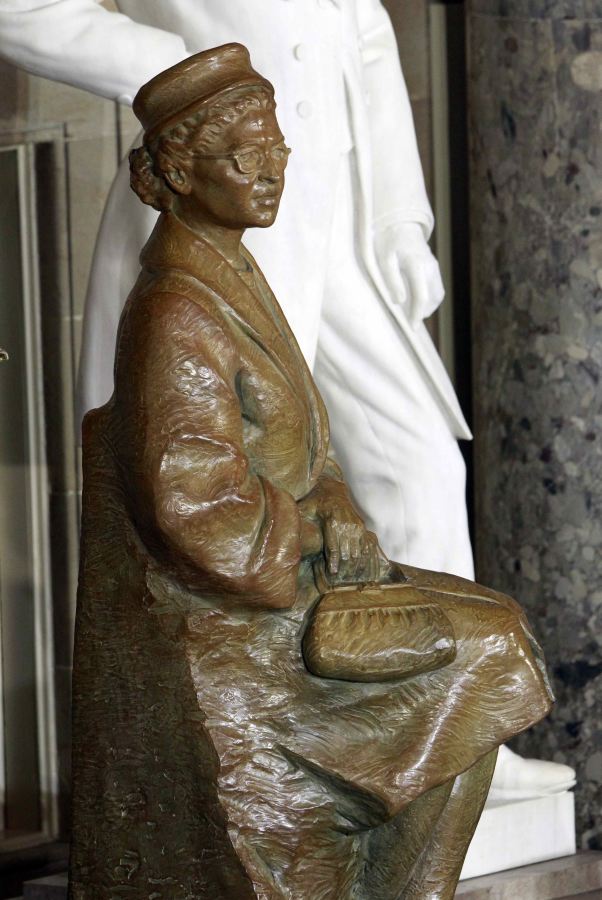 More than half a century after she refused to give up her seat on an Alabama city bus, Rosa Parks has an immovable place in the U.S. Capitol — the first black woman to be honored with a statue there.
President Barack Obama and congressional leaders from both parties said at an unveiling Wednesday that the depiction was fitting: Parks is shown seated, hands clasped in front of her, eyes fixed forward.
“Rosa Parks’ singular act of disobedience launched a movement,” Obama said. “The tired feet of those who walked the dusty roads of Montgomery helped a nation see that to which it had once been blind.”
On Dec. 1, 1955, Parks, then a 42-year-old seamstress, broke the law by refusing to give up her seat to a white passenger on a packed bus. Her arrest touched off a yearlong boycott of the bus system, a turning point in the civil rights movement. In 1956, the Supreme Court banned segregation on public transportation.Parks died in October 2005, at age 92, and would have turned 100 this month.
On Wednesday, Rep. James Clyburn, D-S.C., and the highest-ranking black member of Congress, called her “the first lady of civil rights, the mother of the movement, the saint of an endless struggle.”
The statue’s unveiling took place on a day when memories of the civil rights struggle were not far from mind in Washington. Across the street, with Clyburn watching, the Supreme Court heard arguments on whether provisions of the Voting Rights Act of 1965 should stand. The act requires nine states, mostly in the South, to get federal permission to change voting rules.The statue of Parks, 9 feet tall and in bronze, will be in Statuary Hall, where the House of Representatives met in the early 1800s. It is part of a collection of 100 in five locations in the Capitol.
Among the others in Statuary Hall are William Jennings Bryan and Daniel Webster. House Speaker John Boehner pointed out that the statue of Parks will be “right in the gaze” of that of Jefferson Davis, president of the Confederacy. He said her unassuming presence should inspire people to “draw strength from stillness.”
Parks was given the Presidential Medal of Freedom in 1996 and the Congressional Gold Medal in 1999, but Rhea McCauley, a niece, told The Associated Press before the unveiling that this honor would be different.
“The medal, you could take it, put it on a mantel,” she said. “But her being in the hall itself is permanent.”
More than 50 of Parks’ relatives had planned to attend the ceremony, and two of them, a niece and a longtime friend, helped Obama and congressional leaders yank down the shroud that covered the statue.
The sculptor was Eugene Daub of San Pedro, Calif.
“She seemed to me a very — not shy, but modest. A very modest woman, and I wanted that to come through,” he told NBC News. “That she wasn’t ever looking for attention or celebrity, but she was just doing what she had to do.”
Obama said that Parks’ story is a reminder that “we so often spend our lives as if in a fog, accepting injustice, rationalizing inequity” — like the bus driver, he said, but also like the other passengers.
“Rosa Parks tells us there’s always something we can do,” he said.
Father of Newtown victim: Ban assault weapons
http://xfinity.comcast.net
 Battling tears, the father of one of the first-graders slain at the December elementary school massacre in Connecticut pleaded with senators on Wednesday to ban assault weapons like the gun that killed his 6-year-old son.
"I'm not here for sympathy," Neil Heslin, a 50-year-old construction worker who said he grew up with guns and had been teaching his son, Jesse, about them. "I'm here because of my son."
Heslin spoke for 11 minutes, his voice barely audible and breaking at times, to the Senate Judiciary Committee that is deeply divided over the issue of curbing guns.
The panel was holding a hearing on a bill by Sen. Dianne Feinstein, D-Calif., to ban assault weapons and ammunition magazines that can carry more than 10 rounds. Feinstein and her allies said her measure would reduce the deaths such high-powered firearms can cause, but Republicans on the panel said the move would violate the constitutional right to bear arms and take guns away from law-abiding citizens who use them for self-defense.
Heslin said he supports sportsmen and the Second Amendment right for citizens to have firearms. But he said that amendment was written centuries before weapons as deadly as assault weapons were invented.
"No person should have to go through what myself" and other victims' families have had to endure, Heslin told the lawmakers.
He recalled the morning of Dec. 14, when 20-year-old Adam Lanza used a Bushmaster assault weapon to kill 20 first-graders and six staffers at the Sandy Hook Elementary school in Newtown, Conn.
"He said it's all going to be OK," Heslin said his son told him when he dropped him off at school. He added, "And it wasn't OK."
Despite Newtown and other mass shootings, the bruising, difficult path through Congress that gun control legislation faces was underscored Wednesday when the chairman of the House Judiciary Committee said he opposes universal background checks for gun purchases, a central piece of President Barack Obama's plan for curbing gun violence. Rep. Bob Goodlatte, R-Va., told reporters that the proposal could lead to creation of a federal gun registry — which the Obama administration has said will not happen.
Wednesday's Senate Judiciary hearing was its third since the Newtown tragedy made gun violence a top-tier national issue. The Judiciary panel could begin writing legislation as early as Thursday, but that session is likely to be delayed until next week.
Numerous relatives and neighbors of victims of Newtown, as well as other shootings at Aurora, Colo., and Virginia Tech filled the large hearing room.
At one point, Feinstein played a video showing how a bump fire slide, a piece of equipment added to an assault weapon, allows it to rapidly fire many rounds of ammunition, much as a machine gun would.
"The need for a federal ban has never been greater," Feinstein said.
The panel's top Republican, Sen. Charles Grassley of Iowa, expressed sympathy for gun violence victim, but said existing gun laws are not being adequately enforced, including background checks designed to prevent criminals from getting weapons.
"We should be skeptical about giving the Justice Department more laws to enforce" when it's not enforcing current ones, Grassley said.
Grassley said he believed Congress will eventually take action on boosting penalties for illegally trafficking guns, on more adequately keeping guns from people with mental problems, and encouraging states do a better job of reporting mental health records of potential gun buyers to the federal background check system.
At one point, Sen. Lindsey Graham, R-S.C., used his questioning of Milwaukee Police Chief Edward Flynn to argue that the current background check system is not being well enforced, since only a handful of the roughly 80,000 people annually who fail those checks are prosecuted for filing documents saying they qualify to own the weapons.
Uncharacteristically for a Senate hearing, Flynn interrupted the senator, saying, "I want to stop 76,000 people from buying guns illegally," a reference to the gun purchases that the background check system blocked last year. "That's what background check does."
His remark drew applause from spectators in the room.
Across the Capitol, the House Education and Workforce Committee planned to hear from school safety experts and counselors about how to keep students safe.
"How can we be confident that something like this does not happen again?" asked John Kline, R-Minn., the Republican panel's chairman as the meeting began.
His Democratic counterpart, Rep. George Miller of California, said school safety is linked to firearms.
"Sandy Hook is an event that calls us on us as policymakers to do something. ... A school must be a place where children feel secure," Miller said. "Turning schools into armed fortresses is not the answer."
Instead, he said schools need to add counseling services and mental health programs.
In their prepared testimony, witnesses there were careful not to endorse the NRA's suggestion that armed volunteers in schools were a realistic answer to prevent future attacks.
"I cannot emphasize enough how critical it is for officers to be properly selected and properly trained to function in the school environment," said Mo Canady, executive director of the National Association of School Resource Officers.
Despite the raw emotion, Feinstein's effort to ban assault weapons is expected to fall short due to opposition by the National Rifle Association and many Republicans, plus wariness by moderate Democrats.
Feinstein's bill has attracted 21 co-sponsors, all Democrats. Including herself, it is sponsored by eight of the 10 Judiciary panel Democrats — precarious for a committee where Democrats outnumber Republicans 10-8. Democrats on the panel who haven't co-sponsored the measure include the chairman, Pat Leahy of Vermont, who said Monday he hadn't seen the bill.
Obama made bans on assault weapons and large capacity magazines key parts of the gun curbs he proposed in January in response to the Connecticut school massacre.
The cornerstone of his package is a call for universal background checks for gun buyers, some version of which seems to have a stronger chance of moving through Congress. Currently, only sales by federally licensed gun dealers require such checks, which are designed to prevent criminals and others from obtaining firearms.
Feinstein's bill would ban future sales of assault weapons and magazines carrying more than 10 rounds of ammunition but exempt those that already exist. It would bar sales, manufacturing and imports of semiautomatic rifles and pistols that can use detachable magazines and have threaded barrels or other military features. The measure specifically bans 157 firearms but excludes 2,258 others in an effort to avoid barring hunting and sporting weapons.
Feinstein, who helped create a 1994 assault weapons ban that expired in 2004, and other supporters cite studies showing use of the firearms in crimes diminished while the prohibition lasted. A 2004 report said the proportion of gun crimes involving assault weapons dropped by up to 72 percent in five cities studied.
Opponents cite data from that same study showing assault weapons were used in only 2 percent to 8 percent of gun crimes, arguing that a ban would have little impact. The study also estimated there were 1.5 million assault weapons owned privately in the U.S. in 1994, and an estimated 30 million high-capacity magazines as of 1999, which critics say means exempting them would diminish a ban's effect
Pakistan has decided to shut its side of the check posts from March 8
 Pakistan Interior Minister Rehman Malik Wednesday said Pakistan will close down all check posts functioning along Afghan border region from March 8.
Talking to media persons here, Rehman Malik said only those holding valid visas will be allowed to travel across the border.
He lamented that despite Pakistan's repeated demand of the Afghan government to install a biometric system at its check posts the latter has failed to do so. "Now, Pakistan has decided to shut its side of the check posts from March 8," the Pakistan Interior Minister added.
Distrust between ISAF and Afghans increases
http://www.dw.deISAF is looking into allegations that US special forces in the Afghan province of Wardak have been working with locals responsible for torture and murder. They have been ordered to pull out within the next two weeks. US special forces have been given two weeks to withdraw from the province of Wardak, a hotbed of Taliban activity that is just a few kilometers west of Kabul. In August 2011, eight Afghans and 30 Americans were killed when a Chinook helicopter was shot down by the Taliban. Recently, there have been many allegations of misconduct on the part of Afghan local militia trained by US forces. Many people are thought to have disappeared. "The special forces search houses, harassing the population and they are also responsible for the killing of innocent people," Afghan presidential spokesman Aimal Faizi told Deutsche Welle.He said that many inhabitants had complained to the government in Kabul and that's why President Hamid Karzai had taken the decision to order the US special forces to pull out. He added that there were photos and other evidence that "the special forces took part in harassment and killings." He also said the Afghan security forces had been ordered “to prevent house searches in Maidan Wardak to protect the life and property of the population." No evidence At a news conference, spokesman for the US-led NATO mission Brigadier General Gunter Katz said: "We're looking at those allegations, we didn't find any evidence and we will talk to our colleagues and Afghan partners to find a solution."On a visit to London, US Secretary of State John Kerry confirmed that the complaints would be investigated. "With respect to Afghanistan and Wardak province, I understand the concerns that they have expressed. Any complaints that they may have ought to be appropriately evaluated, and they will be, I can assure you." A defense official in Washington pointed out that no ISAF troops themselves had been involved in alleged misconduct in Wardak province. Nonetheless, the latest incident has only served to exacerbate relations between Kabul and Washington which are already quite fraught. Karzai said earlier this month that Afghan security forces would be banned from calling for NATO air strikes in residential areas after 10 civilians died in one such strike. Karzai has said that civilian deaths could sap support for foreign troops and fuel the insurgency. DW.DE
Journalist shot dead in North Waziristan
The Express TribuneA journalist from North Waziristan was killed by unidentified men while he was on his way home in Miranshah village on Wednesday. According to the initial details, a car with tinted windows intercepted Malik Mumtaz’s vehicle and opened fire, killing him on the spot. Mumtaz was a senior journalist working with The News International. Mumtaz covered the country’s tribal area for 20 years and his last few stories were related to the anti-polio drive in the region and the military operation. Mumtaz is survived by his wife, two sons and a daughter. He was also the Chairman of the Miranshah Press Club, Geo News reported. The Tehreek-e-Taliban Pakistan (TTP) condemned the murder of Mumtaz who was president of the local press club. “He was a good reporter and was serving tribal people, we condemn his killing and salute his services for tribal people,” TTP spokesman Ehsanullah Ehsan told AFP by telephone from an undisclosed location. The TTP denied involvement in the killing. The Tribal Union of Journalists announced one week of mourning. Given the number of on-duty journalists killed in Pakistan, the country is known for being one of the deadliest places to report the news. As many as seven journalists were killed in Pakistan in 2012. Five of these journalists killed were gunned down in targeted attacks.
ANP announces return to Sindh govt

 A meeting of the core committees of Pakistan Peoples Party (PPP) and Awami National Party (ANP) was held at the Chief Minister House on Wednesday.
A statement issued by the CM House in Karachi said that both parties discussed various matters and that at the request of PPP, the ANP announced its ‘unconditional return’ to the Sindh government.
The statement said that it was decided at the meeting that from tomorrow, the MPAs of ANP will sit on the treasury benches of the Sindh Assembly.
Amir Nawab of ANP will also resume the responsibility of his department.
The statement said that Agha Siraj Durrani of the PPP congratulated the ANP core committee on behalf of the Sindh Chief Minister Syed Qaim Ali Shah, and said that CM Sindh has welcomed this decision.
The meeting was attended by Agha Siraj Durrani, Muhammad Ayaz Soomro and Rashid Hussain Rabbani from the PPP and Rana Gul Afridi, Amir Nawab and Yunus Buneri from the ANP.
EU lifts ban on import of Pakistani fish products
 The European Union has decided to allow import of Pakistani fish products. These products were subject to a ban in European Union since 2007.
Pakistan’s fishery establishments were de-listed by the European Commission (EC) in 2007 after the EU inspectors found systemic enforcement failure and serious deficiencies in the sanitary quality of the fish.
After a concerted effort by the Ministry of Commerce, Marine Fisheries Department and Pakistan’s Trade Mission in Brussels, European Union has finally agreed to lift the ban from March 12th 2013 and two Pakistani fish-processing establishments have been allowed to export its fish products to the European Union.
The European Commission had decided to recommend to the 27 member states, for inclusion of two Pakistani Fishery establishments in the approved list that are authorised to export fishery products to the EU.
The member states were given the deadline till February 26th, 2013 to file their objections. Since, no such objection was made by any of the member states, the names of the two fishing establishments were duly accepted by the EU.
Any consignment exported from these two approved establishments in Pakistan, after 12th March 2013, would be able to enter the EU.
All the fishery consignments destined for EU will be inspected by the Marine Fisheries Department prior to the shipment and by the the European port when they get there.
The EC held that re-listing would be done after the relevant stakeholders in Pakistan could improve the hygiene conditions in the fishery processing establishments.
The Government of Pakistan has been working with the stakeholders to bring in the desired improvements. The laboratory services of MFD have been modernized; MFD microbiology and chemical labs have been internationally accredited; hygiene conditions in fishing vessels, landing & auction sites, fish processing plants have been improved; around 200 fishing boats have been modified.
Before the de-listing, Pakistan’s export of fish to Europe amounted to 38.72 million in 2006.
Zardari,Ahmadinejad Stress Expansion of Iran-Pakistan Ties
Iranian President Mahmoud Ahmadinejad and his Pakistani counterpart Asif Ali Zardari in a meeting laid emphasis on expanding mutual cooperation between the two countries and utilizing their vast capacities in line with the interests of both nations as well as regional nations.
During the meeting in Tehran on Wednesday, the two presidents explored avenues for the further expansion of bilateral relations between Tehran and Islamabad.
President Ahmadinejad pointed to the enemies' efforts to prevent enhancement of ties between Iran and Pakistan, and said, "Iran and Pakistan have and will stand beside each other with a strategic outlook."
The Pakistani president, for his part, stressed expansion of brotherly ties between the two countries, and said, " The two countries have mutual trust and consolidated relations today despite the will of all those who intend to ruin Tehran-Islamabad relations and impede our path of cooperation."
President Zardari arrived in Tehran today to discuss bilateral ties and regional developments with the Iranian officials.
The Pakistani president, who is heading a high-ranking delegation to Iran, is slated to meet with his Iranian counterpart, Mahmoud Ahmadinejad later today.
Zardari, who is heading a high-ranking delegation to Iran, is also slated to meet with Supreme Leader of the Islamic Revolution Ayatollah Seyed Ali Khamenei today before attending a dinner banquet thrown in his honor by President Ahmadinejad.
Last week, an advisor to the Pakistani prime minister on petroleum and natural resources said President Zardari "plans to pay a visit to Iran" in a bid to finalize a deal on Iran-Pakistan gas pipeline project as the two countries' oil ministers inaugurated construction of the 781-kilometer-long Pakistani side of the gas line.
Asim Hussain told reporters in Islamabad that Zardari would pay a visit to Tehran in the near future to hold talks with Iranian officials over the gas pipeline project.
The Pakistani official also stated that the project would inaugurate on due time, which is December 2014.
On Wednesday, Iranian and Pakistani oil ministers inaugurated construction of the 781 km of Iran-Pakistan (IP) gas pipeline in Pakistan's soil.
An Iranian-Pakistani joint contractor has been commissioned to begin construction of the IP gas pipeline.
The Iranian oil minister and his accompanying delegation agreed with their Pakistani counterpart to set up a joint contracting company between the two countries in a bid to complete the construction of the IP gas pipeline in next 15 months.
The IP gas pipeline stretches from Iran-Pakistan border to Navabshah region in Pakistan and it covers 781 km of the total 1,881 km of the pipeline.
Apart from it, both countries also discussed the finances involved in the project. The interest rate for Iran's 500-million-dollar loan to Pakistan and the date for the start of the repayment of the loan by Pakistan were among other topics in the discussions.
Demand for natural gas in Pakistan has outstripped supply in recent years, putting existing reserves under immense pressure.
The 2700-kilometer long pipeline was to supply gas for Pakistan and India which are suffering a lack of energy sources, but India has evaded talks. In 2011, Iran and Pakistan declared they would finalize the agreement bilaterally if India continued to be absent in the meeting.
According to the project proposal, the pipeline will begin from Iran's Assalouyeh Energy Zone in the south and stretch over 1,100 km through Iran. In Pakistan, it will pass through Baluchistan and Sindh but officials now say the route may be changed if China agrees to the project.
Tuesday, February 26, 2013
Syria claims Turkey enabling al-Qaida

Damascus complains to UN that Ankara enables terrorist organizations "to receive funding and arms, enter Syrian territory.”Syria submitted a letter of complaint last week to the UN Secretary-General Ban Ki-moon alleging that Turkey is enabling “Al-Qaida, as well as the Nusra Front and other terrorist organizations, to assemble, take refuge, receive funding and arms, engage in smuggling, and enter Syrian territory.” The Syrian delegation, representing the regime of President Bashar Assad, claims those same organizations are responsible for the killing of civilians and the destruction of public and private property in Syrian lands. Citing international law, the delegations claims that Turkey’s actions are “tantamount to an act of aggression,” a violation of the UN charter and of Syria’s right to self-determination.“I hate to side with the Syrian government, but in this case the accusation is correct,” said Michael Rubin, a former Pentagon official now with the American Enterprise Institute in Washington. “By any objective measure, Turkey has become a state-sponsor of terrorism for its support not only of Hamas, but also of al-Qaida affiliates and the Nusra Front,” he said. The letter is an escalation in an increasingly tense relationship between the two countries. In the past week alone, Turkish Prime Minister Tayyip Erdogan has called Assad a “mute devil” for his willingness to attack his own people, and the Turkish government has encouraged efforts to refer Syria to the International Criminal Court for committing crimes against humanity. “The regime has lost its legitimacy,” Turkish Foreign Minister Ahmet Davutoglu said in a speech to the UN Human Rights Council in Geneva. “It is no longer governing. It is surviving by oppression, terror and massacres.” But whether or not to label the Nusra Front a terrorist organization, as the United States and NATO have done, has become a political debate in Turkey that has revealed a subtle delineation between jihadist and terrorist. Just a week ago at a Turkey-EU Joint Parliamentary Commission, Davutoglu said, in reaction to questions on the Nusra Front’s classification, that “for [Turkey], jihad is a sacred notion. Let us not taint this notion by using it like neo-cons and pro-Israelis in America.” An estimated 300,000 Syrian refugees have flooded Turkey, a NATO ally committed in public statements to the war on terrorism. Protests have erupted in recent days in Turkey’s southern provinces over the government’s involvement in the Syrian conflict, and against the deployment of US Patriot missile batteries, which became operational just weeks ago. Iran’s government-sponsored television network, Press TV, reported claims today that Turkish nationals were taking drugs and crossing over the border to fight Assad’s forces, while maintaining a “constant arms flow” to rebel groups. “It comes down to ideology,” says Rubin. “Turkey would rather support al-Qaida affiliates than have secular Kurds like the PYD [Syrian-Kurdish Democratic Union Party] consolidate control along its border.”
Janet Jackson secretly married to Qatari Wissam Al Mana


Marriage took place last year in a 'private and beautiful ceremony'Janet Jackson has revealed that she married her billionaire Qatari boyfriend Wissam Al Mana last year. Jackson comes out in the open in the wake of numerous reports on her impending lavish and extravagant wedding in Doha.Jackson, 46, the younger sister of the late singer Michael Jackson, wed the businessman Wissam Al Mana, 37, last year but kept the news under wraps. In a statement (which was later posted on her Twitter page) Jackson and Al Mana said, "The rumors regarding an extravagant wedding are simply not true". "Last year we were married in a quiet, private, and beautiful ceremony. "Our wedding gifts to one another were contributions to our respective favorite children's charities."Earlier reports claimed that Jackson and Wissam allegedly got engaged in 2011 after Wissam, a billionaire whose family has extensive reaches in the real estate and media spheres, proposed to her with a stunning 15 carat diamond ring. Wissam is the managing director of Al Mana Retail, which represents A/X Armani Exchange, and he's a shareholder in the Saks Fifth Avenue. Reorts also suggested that Janet and Wissam will be wedded in a Muslim ceremony. A renown Turkish author, Adnan Oktar (aka Harun Yahya), is also making the claim that the 46-year-old Janet Jackson has converted to Islam — as did her brother, Michael Jackson — and is choosing to keep her new religion a secret from her fans. But these reports have neihter been confirmed nor denied by the couple.The couple met in December of 2009 after Janet gave a special performance in the Middle East and the rest, so it seems, is history. The American singer is known for keeping her private life from the media, rarely speaking out about her ex-husbands. She married soul singer James DeBarge in 1984, and the marriage was annulled a year later. Her 1991 marriage to music video director Rene Elizondo ended in divorce in 2000.
Nearly half Saudi women are beaten at home
Nearly half Saudi women are beaten up by their husbands or other family members at home and many of them are hit by sticks and head cover, according to a university study published in local newspapers on Tuesday.
Surprisingly, the study found that the Bedouin men who still dwell the desert in the conservative Gulf Kingdom, are less violent than Saudi men in urban areas.
The study was conducted by Dr Lateefa Abdul Lateef, a social science professor at King Saud University in the Capital Riyadh. It involved female students at the university and some Saudi women covered by the government’s social security.
“The study showed that nearly half those covered by social security and more than a third of the female students at the university are beaten up at home,” Dr Lateefa said, quoted by the Saudi Arabic language daily Almadina.
“Husbands were found to be beating their wives more than others….they are followed by fathers, then brothers then sons…hands and sticks were found to be used mostly in beating women, following by men’s head cover and to a lesser extent, sharp objects.”
The study showed that husbands beating their wives included both educated and non-educated men and that “those dwelling in the desert are less violent with their wives than those living in cities or villages.”
The study found that the main reasons for violence against women include poor religious motives, drug addiction and alcoholism, arrogance and a tendency to control, psychological problems, poverty, and unemployment.
Subscribe to:
Posts (Atom)