 The death toll in Saturday’s bomb blast near Hazara Town in Quetta climbed to 84 and triggered another wave of protest across the country against sectarian violence and the inability of the powers that be to round up the terrorists unleashing such carnage with regular impunity.
Most of the dead were Hazara Shias; a community that has been repeatedly targeted over the past couple of years. The dead included many women and children; some of whom were charred beyond recognition because of the fire that followed the massive explosion heard all over Quetta.
The banned Lashkar-e-Jhangvi (LeJ) claimed responsibility for the attack and said the target was the Shia community of Hazara Town. Along with their dead, members of the Hazara Shia community picketed a thoroughfare of Quetta on Sunday demanding action against LeJ and refusing to bury those killed until those responsible were rounded up.
A similar protest in January – following serial blasts in Quetta targeting the Hazara Shias – saw the federal government dismiss the provincial government and declare Governor’s Rule in Balochistan. Since Governor’s Rule and more powers to the security forces in the province has had little impact on sectarian violence, the Hazara Shias this time round have become more vocal in demanding action against LeJ despite the inherent risks in naming the organisation that wants Shias to be declared infidels in Pakistan.
Even as protests spread to different parts of the country – including Islamabad, Lahore and Karachi – mass graves were dug up in Quetta for the burial of those killed in the blast. Emotionally drained by the unrelenting attack on their community, the Hazara Shias lamented that they now had no burial space for their dead; such is the rate at which they are being killed.
Sunday, February 17, 2013
Hazara Shias protest with their dead against sectarian violence
The death toll in Saturday’s bomb blast near Hazara Town in Quetta climbed to 84 and triggered another wave of protest across the country against sectarian violence and the inability of the powers that be to round up the terrorists unleashing such carnage with regular impunity.
Most of the dead were Hazara Shias; a community that has been repeatedly targeted over the past couple of years. The dead included many women and children; some of whom were charred beyond recognition because of the fire that followed the massive explosion heard all over Quetta.
The banned Lashkar-e-Jhangvi (LeJ) claimed responsibility for the attack and said the target was the Shia community of Hazara Town. Along with their dead, members of the Hazara Shia community picketed a thoroughfare of Quetta on Sunday demanding action against LeJ and refusing to bury those killed until those responsible were rounded up.
A similar protest in January – following serial blasts in Quetta targeting the Hazara Shias – saw the federal government dismiss the provincial government and declare Governor’s Rule in Balochistan. Since Governor’s Rule and more powers to the security forces in the province has had little impact on sectarian violence, the Hazara Shias this time round have become more vocal in demanding action against LeJ despite the inherent risks in naming the organisation that wants Shias to be declared infidels in Pakistan.
Even as protests spread to different parts of the country – including Islamabad, Lahore and Karachi – mass graves were dug up in Quetta for the burial of those killed in the blast. Emotionally drained by the unrelenting attack on their community, the Hazara Shias lamented that they now had no burial space for their dead; such is the rate at which they are being killed.
Sindh, Balochistan mourn over Quetta killing
 A day of mourning is being observed in Sindh and Balochistan over the killing of 80 people in Quetta on Saturday, our sources reported.
Mourning day is being observed in both the provinces on government level. The national flag will remain half-mast in Sindh and Balochistan.
Meanwhile, Hazara Democratic Party has appealed for shutter down strike in Quetta against the blast. Political and religious parties have supported it.
Karachi Goods Transporters Association and Oil Tankers Association have also announced to halt supply of goods across the country.
President Asif Ali Zardari telephoned Governor Balochistan Zulfiqar Magsi and directed him to monitor relief operation himself besides providing security to Hazara community.
Meanwhile, announcing compensation for the bereaved families of Quetta blast victims, Governor Balochistan, Zulfikar Magsi, Saturday night pinned the rampant terrorism on the intelligence agencies' failure to do their job, our sources reported.
"Seemingly, the agents are either too scared to go after the terror-mongers or too clueless to even know who they are dealing with", said he talking to media here after visiting Combine Military Hospital (CMH) to inquire after the health of victims,.
They have no idea whatsoever, what's going on, which is alarming, Magsi added.
"It's their job to preempt such attacks. That's what they are paid for. Alas! They failed all these innocent people who died in this catastrophic bomb blast", the governor said further.
Magsi also announced a compensation worth Rs100,000 for the bereaved families of each fatal victim of the Quetta blast.
Shiites lash out after Pakistan bombing kills 81
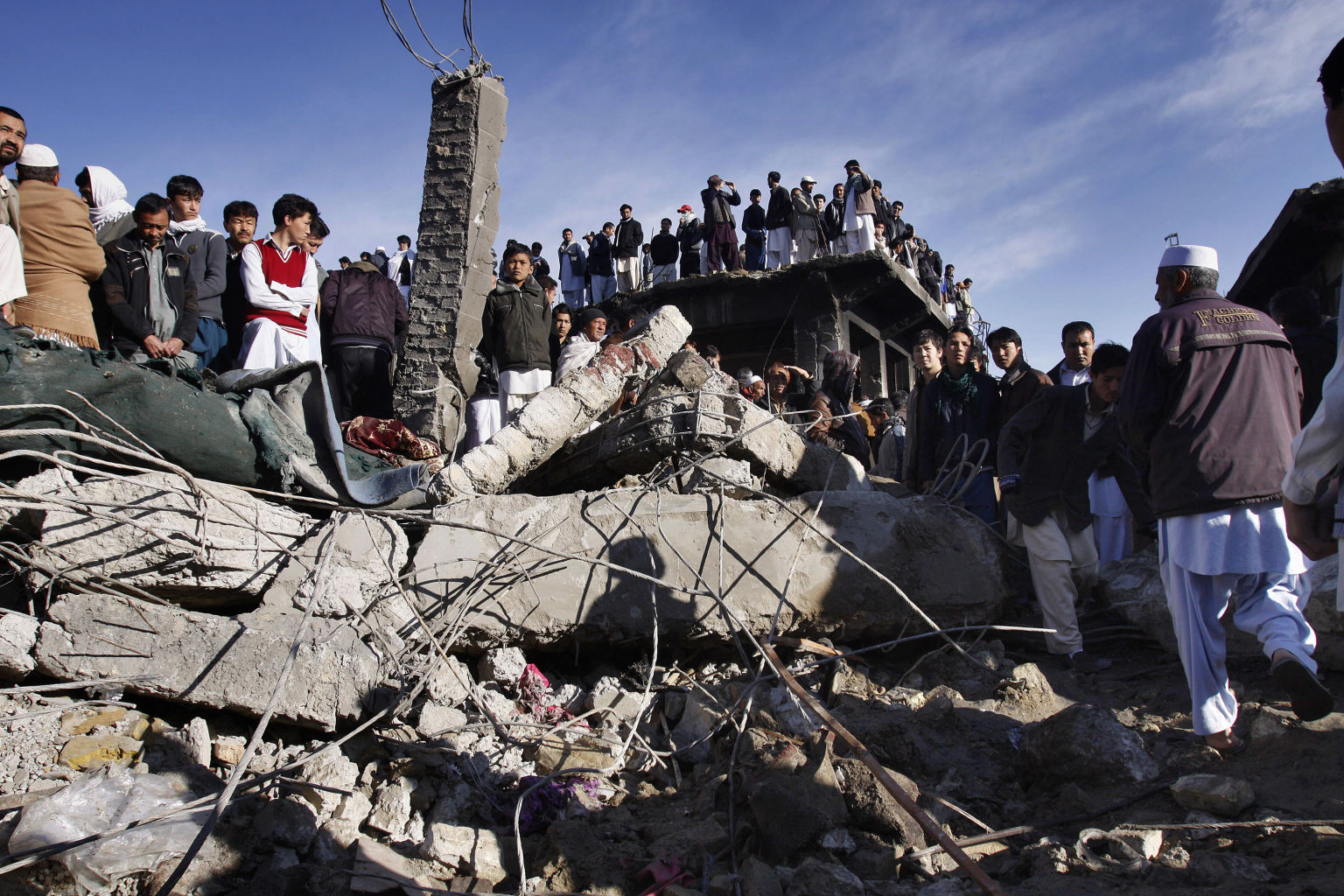 Angry residents on Sunday demanded government protection from an onslaught of attacks against Shiite Muslims, a day after 81 people were killed in a massive bombing that a local official said was a sign that security agencies were too scared to do their jobs.
Saturday's blast at a produce market in the city of Quetta also wounded 160 people and underlined the precarious situation for Shiites living in a majority Sunni country where many extremist groups don't consider them real Muslims.
Most of the dead and wounded were Hazaras, an ethnic group that migrated from Afghanistan over a century ago. Shiite Muslims, including Hazaras, have often been targeted by Sunni extremists in the province of Baluchistan where Quetta is the capital, the southern city of Karachi and northwestern Pakistan.
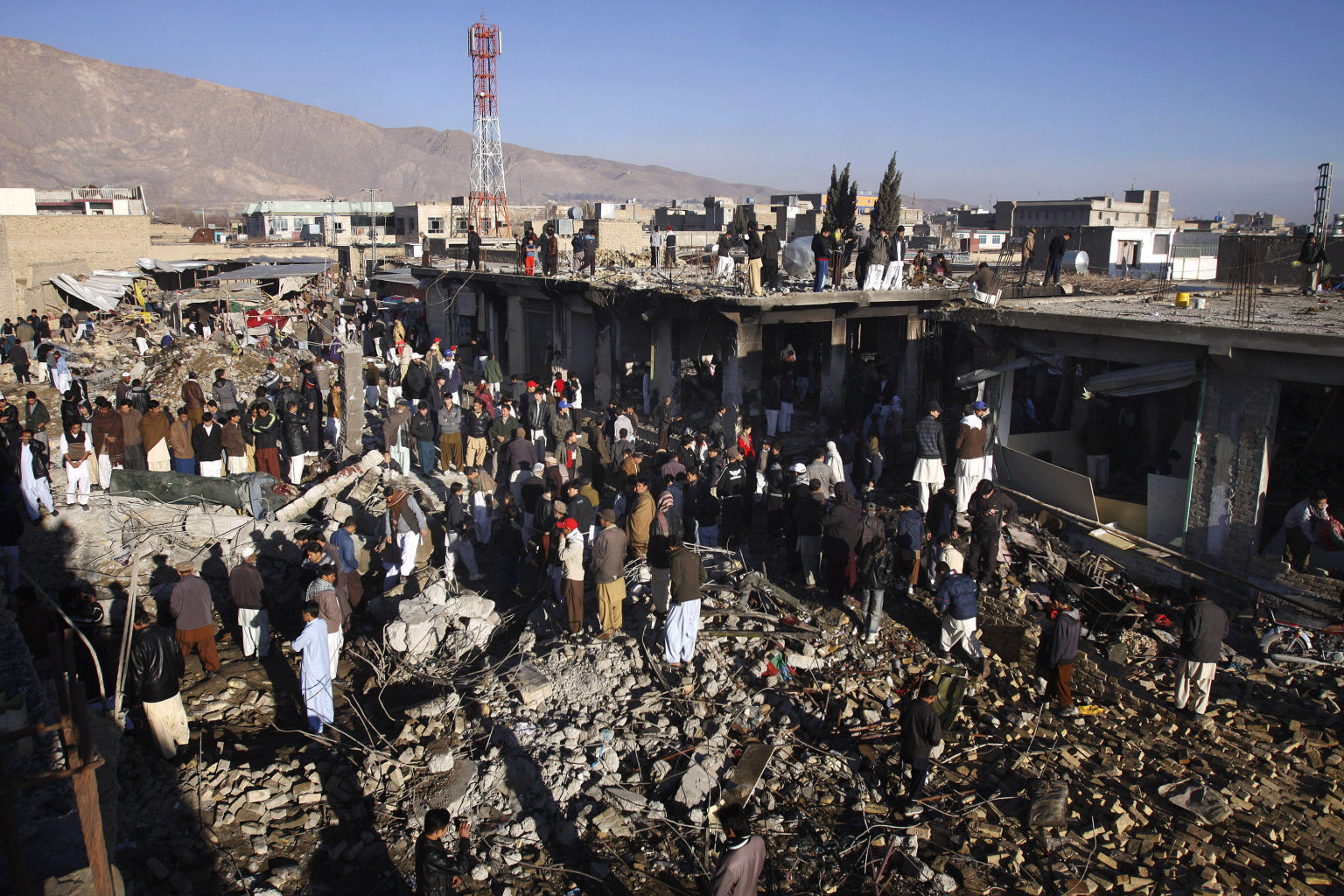 At the blast site, members of the Hazara community helped authorities dig through rubble to find the dead or survivors. Most of their efforts were focused on a two-story building that was completely destroyed. More than 20 shops nearby were also demolished.
Clothing and shoes were scattered through the concrete rubble, broken steel bars and shattered wooden window frames littering the streets.
One of those helping, 40-year-old Qurban Ali, was instructing young people to be patient and careful while removing the rubble, lest they hurt themselves or survivors still buried in the debris. His cousin Abbas was still missing after the blast.
Like many Hazaras, he lashed out at the people who perpetrated the violence.
"Who are these people who made us Hazara so grim and sad? Why are they after us?" he asked. "Not one month or week passes here without the killing of a member of the Hazara community ... Why is the government — both central and provincial — so lethargic in protecting Shiites?"
Near the rubble, a group of more than 50 women were wailing and beating their heads in mourning.
On the road to the neighborhood where the attack occurred, Hazara youth burned tires and chanted for the arrests of the killers. A number of Shiite groups also staged a sit-in and were demanding the immediate removal of the chief secretary of Baluchistan and the top police official, said Rahim Jaffery, who heads a Shiite organization called the Council for the Protection of Mourning.
"We are demanding the city (protection) be handed over to the army so that the killing of Hazara Shiites can be stopped," he said.
Jaffery said a mass funeral for the victims had been planned for Sunday afternoon but all Shiite groups were meeting to decide whether to stage a protest similar to one in January when they refused to bury their dead for four days.
That protest led the prime minister to sack the chief minister of the province and his cabinet and put Governor Zulfiqar Magsi directly in charge of the region — a move that many Shiites thought would help protect their community. But the governor's comments revealed his frustration at a job growing ever more difficult.
Magsi said the blast was the result of a failure of the security and intelligence agencies in the province.
"Officials and personnel of these institutions are scared (of the terrorists). Therefore they don't take action against them," he said in comments that were broadcast on local television.
A militant group called Lashkar-e-Jhangvi called one local television station to claim responsibility for the attack.
Pakistan's intelligence agencies helped nurture Sunni militant groups like Lashkar-e-Jhangvi in the 1980s and 1990s to counter a perceived threat from neighboring Iran, which is mostly Shiite. Pakistan banned Lashkar-e-Jhangvi in 2001, but the group continues to operate fairly freely in their war against Shiites.
Last year was particularly deadly for Shiites in Pakistan. According to Human Rights Watch, more than 400 were killed in targeted attacks across the country. The human rights group said more than 125 were killed in Baluchistan province, most of whom belonged to the Hazara community.
Human rights groups have accused the government of not doing enough to protect Shiites.
Pakistan faces growing anger over sectarian bombings
By Reuters/http://tribune.com.pkPakistan’s unpopular government, which is gearing up for elections expected within months, faced growing anger on Sunday for failing to deliver stability after a sectarian bombing in the city of Quetta killed 81 people. The country’s leaders have done little to contain hard-line Sunni Muslim groups which have stepped up a campaign of bombings and assassinations of minority Shias. On Saturday, Lashkar-e-Jhangvi (LeJ), seen as the most ruthless Sunni sectarian group, claimed responsibility for the attack in Quetta, which deepened suspicions among Shias that Pakistan’s intelligence agencies were turning a blind eye to the bloodshed or even supporting extremists. “The terrorist attack on the Hazara Shia community in Quetta is a failure of the intelligence and security forces,” Nawab Zulfiqar Ali Magsi, governor of Balochistan province, said while touring a hospital. Leaders of the ethnic Shia Hazara community called on the government to take decisive action, and Pakistanis warned that sectarian violence was spiraling out of control. “The government is responsible for terrorist attacks and killings in the Hazara community because its security forces have not conducted operations against extremist groups,” said Aziz Hazara, vice president of the Hazara Democratic Party. “We are giving the government 48 hours to arrest the culprits involved in the killing of our people and after that we will launch strong protests.” The death toll from Saturday’s bombing rose overnight, with most of the casualties in the main bazaar of the town, capital of Baluchistan, near the border with Afghanistan. Most of the dead were Hazaras. A senior security official said the figure could rise as 20 people were critically wounded. On Sunday, people searched for survivors under blocks of cement torn off buildings by the blast. A large blood stain could be seen on a wall near the site. Many shops and bazaars were closed. Relatives of the wounded responded for an appeal for blood made by hospitals. “The government knows exactly who is doing what and who is behind all this,” said Mohammad Imran, a local trader. “If the government wants (to prevent it), no one can take even a kitchen knife into any market.” In the capital Islamabad, about 400 people, including some Sunnis, staged a protest demanding the government to stamp out extremism. “There is a law of the jungle, but in this country I think there is not even a law of the jungle,” said Syed Abbas Naqvi, a Shi’ite. “A person who is extremely helpless, vulnerable and powerless is always made the target of barbarity whereas all brutal people like the terrorists, Taliban and others who carry out these merciless acts, roam free all over the country.” Protests were also held in other cities, including the commercial capital Karachi, and in Quetta. Poverty, corruption, power cuts Public anger has been growing over a host of other issues in the run-up to elections, from widespread poverty to power cuts to corruption. But waves of major sectarian attacks have highlighted its poor track record on security. Critics say Pakistan’s intelligence agencies previously supported groups like LeJ to fight against Indian forces in Kashmir and failed subsequently to control them. Now Shias in Quetta and other cities say they are under siege. “We have grown tired of picking up the bodies of our loved ones,” said Nasir Ali, 45, a government employee. “I have lost three family members so far in such blasts.” LeJ has also said it was behind a bombing last month in Quetta which killed nearly 100 people, one of Pakistan’s worst sectarian attacks. After that incident, Shia leaders called on Pakistan’s military to take over security in Quetta and take on the LeJ. Sectarian violence is piling pressure on the US backed administration, which already faces a Taliban insurgency, to ensure stability. “Unless we decide to unite, we will continue to get killed, said Malik Afzal, a Sunni student. “Today they (Shias) have died. Tomorrow we (Sunni Muslims) will die. The next day, others will get killed.” Pakistani intelligence officials say extremist groups, led by LeJ, want to destabilise the nation through sectarian violence and pave the way for a Sunni theocracy. More than 400 Shias were killed in Pakistan last year, many by hitmen or bombs.
Hazaras face yet another pogrom
 At least 72 persons, including women and children, were killed and 177 others wounded in a massive explosion here in Hazara Town at Kirani road on Saturday, police said.
Official sources confirmed the number of casualities, and said the explosives were fitted in the hidden cavities of a water tanker which went off at around 5:30pm.
Police said the blast took place in Aliabad bazaar in Hazara Town when people were busy in their routine shopping. This resulted in the death of as many as 65 people on the spot, most of them from the Hazara Shia community. The other persons died after they were shifted to hospital, sources said.
All the injured, some of them in a precarious condition, were rushed to different hospitals in the city, where an emergency had been declared.
A large number of people also rushed to hospitals to inquire about the victims.
The blast caused suspension of the electricity supply to the area.
It was the second largest bomb attack to have hit the city. The Alamdar road blast of January 10, was the largest ever bomb explosion. Police experts said that more than 800kg explosives were used in the bomb.
Police and law enforcement agencies reached the area, but the angry mob did not allow them to reach the spot. Later, Chief Secretary Balochistan Babar Yaqoob Fateh Muhammad directed Inspector General Police Balochistan Tariq Omer Khitab, Commissioner Quetta Kambar Dashti and Capital City Police Officer (CCPO) Mir Zubair to reach the spot and supervise the rescue operation. The blast created a 10-foot long and four-foot deep crater, said official sources.
Eyewitnesses told The News that a large amount of smoke rose at the site after the big bang of the explosion which forced the people to run for safety. A man injured in the explosion, Shah Hussain, said he saw nothing but darkness. “When I opened my eyes in the hospital I was being treated.”
Balochistan Governor Nawab Zulfiqar Ali Magsi in his condolence message expressed deep concern over the Hazara town bomb explosion which claimed the lives of over 65 people. He directed the law enforcement to enhance the security and safety measures in the city. He directed the shifting of all the seriously injured to Karachi’s hospitals for the best medical treatment.
Meanwhile, the Hazara Democratic Party (HDP), Pakhtunkhwa Milli Awami Party (PkMAP), JUI-F and others strongly condemned the blast. The HDP gave a shutter down strike call for today (Sunday) to protest against the explosion.
Our correspondent/ agencies add: President Asif Ali Zardari and Prime Minister Raja Pervaiz Ashraf have strongly condemned the Quetta blast which resulted in the loss of precious lives and property.
In their separate messages, they directed the concerned authorities to provide the best medical assistance to the injured. They expressed sympathies with the bereaved families and reiterated the resolve of the government to continue its fight against terrorism undeterred till its logical conclusion.
Quaid-e-Millat Jafariya Allama Syed Sajid Ali Naqvi, TNFJ chief Agha Syed Hamid Ali Shah Moosavi and Secretary General Majlis-e-Wahdat-e-Muslimeen (MWM) Allama Nasir Abbas Jaffery also strongly condemned the blast in Quetta and demanded of the government to arrest the culprits behind the brutal act.
In their separate statements, they said the elements behind such acts should be unmasked. The Shia Ulema Council also announced a three-day mourning throughout the country.
The Return of Another Tragedy in Quetta
Editorial:The Baloch HalMore than 60 people, mostly members of the Hazara community or the followers of Shia Islam, were killed on Saturday in Quetta city. Activists linked to the “banned” Sunni-militant organization, the Lashkar-e-Jhangvi, have accepted responsibility for the attack which was carried out in Hazara Town area, an economically poor Hazara-majority neighborhood. Considering the impunity with which the Lashkar carries out these terrorist attacks on innocent civilians, one often sounds incorrect to describe it as a ‘banned’ organization. On the contrary, the so-called banned organization remains in the news more regularly than most other political and religious organizations because it keeps carrying out attacks after attacks. Yesterday’s massive bombing comes only a month after the extraordinary bombings on January 10 which killed more than 100 people, mostly Shias and Hazaras. That said, nothing has changed in the troubled province even after the imposition of the governor’s rule. Since the Balochistan government was sacked because of its failure to establish peace in the province, the government has not made a single public statement against sectarian groups nor has it come forward with a clear policy to grapple with the menace of terrorism employed in the name of religion. People should not be fooled by the mere statements of condemnation from the President, the Prime Minister and other important political figures. Because these statements are already prepared and saved in official computers. The staff of political figures issue these statements to the media with minor changes in the existing template as soon as they come across a breaking news on the television channels. Politicians mean their publicity. When a political leader ‘condemns’ an act of terror, it should only be treated as political rhetoric. Rulers should be trusted only when their actions speak louder than their words. Sometimes, their statements of condemnation are printed or put on air even before they hear about a tragedy. So, let’s stop debating which leader condemned a terrorist attack. What we should be asking as the real question is what the government and these political parties have done to truly address the issue of sectarian attacks. Unfortunately, the answer is ‘nothing’. Since the imposition of the governor’s rule, the government has not detained even a single Lashkar activist which clearly gives credence to the speculations that the religious extremist groups enjoy the support of the Pakistani security establishment. When the Human Rights Watch (H.R.W.), a globally respected human rights watchdog, accused the security forces of having ties with these extremist groups, the Pakistani military reacted furiously and refuted the statement. Instead of taking the H.R.W. statement seriously and reviewing its flawed policies and connections supportive of Islamic extremist groups, the military described the H.R.W. statement as a ‘pack of lies’. By now, we should be clear: The killing of 80 innocent people is not a ‘pack of lies’. It is the sad reality of our times. The country’s security establishment and political leadership should stop their double game. Whatever support is offered to the Lashkar and other religious groups by the security establishment it should not end. We have caused enough damage to our populations by playing politics in the name of religion and the s0-called ‘national interest’ While Saturday’s attacks was more powerful but less deadly as compared to the one that took place on January 10th, the official response has been relatively more positive and encouraging. Unlike Balochistan’s indifferent former chief minister Nawab Raisani, Govenor Nawab Zulfiqar Ali Magsi demonstrated better leadership on Saturday. He has announced a day of official mourning; pledged a reward of Rs. ten million against anyone with information about the terrorists involved in Saturday’s killings and, above all, the governor visited the hospital to speak to the victims of the blast. Governor Magsi’s caring gesture is deeply reassuring for the aggrieved families although much more is expected of him and the government he leads in order to end the cycle of attacks against the Shias, Hazaras. Governor Magsi has held the failure of security agencies and intelligence agencies responsible for Saturday’s carnage. Since Balochistan currently lives under governor’s rule, Mr. Magsi is not separate from the government. As the chief executive of the province, he cannot get away from his responsibilities by only blaming the security apparatus. It is his responsibility to ensure good governance and transparency in the affairs of the government. The threat of the Lashkar has increased significantly in the recent times which has also resulted in the killing of several police officers. That said, the Lashkar, just like the Pakistani Taliban, are rapidly getting out of the government’s control. Within the government, the blame game should stop and authorities should cooperate with each other to make sure that more such attacks do not take place in the future. We need a grand strategy to get rid of these deadly attacks. Besides the government, religious scholars and members of the community should assist with authorities to bring the religious extremists to justice.
Lashkar-e-Jhangvi Issues Fresh Warning to Balochistan’s Shias
The Baloch HalThe banned Lashkar-e-Jhangvi, an underground Sunni militant group that accepted responsibility for Saturyday’s deadly bomb blast in Quetta which killed around 80 people, has said it would continue its anti-Shia operations despite the governor’s rule or even if the military takes control of Balochistan. Abu Bakar Siddiq, a spokesman for the underground organization, told the local media on the telephone that government should not live under any illusions that his organization would stop its activities after the imposition of the governor’s rule. According to him, Saturday’s was a suicide blast carried out by “our friend Omar Farooq”. “We wish to warn the government that the governor’s rule cannot deter us from our obligation [to kill the Shias] and we want to tell the Shias that they should not consider themselves safe under the governor’s rule. Until Islamic rule, as guided by the companions of Prophet Mohammad, is enforced, Shias should not feel safe. We will attack them even if the army is called in Balochistan” The spokesman said it was the second attack his organization had carried out against the Shias this y ear (2013) but they possessed at least twenty more similar “ready trucks” such as the one used in Saturday’s attack on the Shias. All twenty of its “prepared suicide bombers” only await instructions from the top leadership of the organization. “We do not fear the governor rule or the military regime. We love to embrace martyrdom. Inshallah [god willing] we will attack the Shias inside their homes on Alamdar Road, Marri Abad Road and Hazara Town. We urge all the Sunnis to support us. They should attach bombs to their bodies against the Shias and ‘support’ the LeJ. The spokesman said, “either we or the Shias will live in Quetta.” He dispelled the impression that some elements in the government were supporting his organization. “We have never needed anyone’s help nor will we require that. We are solely fighting this war in Allah’s name which will end in making Balochistan a graveyard for the Shias.”
Quetta tragedy: Death toll reaches 80
 The death toll of Kerani Road bombing has reached 80, bringing the number of injured down to 173 as more of the critical victims succumbed to their wounds, Geo News reported.
 DIG Wazir Khan Nasir was reported by a foreign news agency as saying that all the dead belonged to Hazara community and the death toll might rise.
A large number of women and children are among the victims of the mega blast that hit Quetta on Saturday.
CCPO Quetta said the Improvised Explosive Device (IED) the terrorists planted in a watertank was armed with around 800-1000 kilograms of high-grade detonable material.
He said people with critical injuries would be flown to Karachi through military aircraft C-130.
According to reports the explosion demolished several markets in the area.
More casualties were feared as many of the injured were in critical condition.
Adjacent areas reverberated with intense firing following the blast while heavy contingent of police and Frontier Corps (FC) rushed to the spot and cordoned off the area. They were not allowing people including media men to reach the spot.
Rescue sources said plumes of smoke were seen shortly after the huge blast. Many vehicles were also damaged due to the blast.
Enraged people took to the streets and protested the blast, pelting vehicles with stones and blocking roads. Most of the people were busy in shopping as the blast hit market.
Various religious and political parties have announced to mark day of mourning over the tragic incident.
Victims will not be buried until demands are met
The Majlis-e-Wahadat-ul-Muslimeen said Sunday that the sit-in of the Hazara community would continue and victims would not be buried until their demands were met.
The demands include calling in the army to take control of Balochistan and taking action against those involved in such horrific acts.
HDP gives 48 hour ultimatum
Hazara Democratic Party (HDP) has given a 48-hour ultimatum to authorities concerned for the arrest of miscreants involved in Kerani Road carnage.
Addressing a hurriedly called press conference here on Sunday, vice chairman HDP Azizullah Hazara said they had given a 48-hour ultimatum to the authorities for the arrest of elements involved in the Kerani carnage, adding if the culprits were not brought to book, protests would be held outside BHC on daily basis.
Mourning in Sindh, Balochistan
The governments had Sindh and Balochistan observed a day of mourning over the killing of 80 people in Quetta on Saturday.
Meanwhile a shutter down strike on the call of the Hazara Democratic Party was held in Quetta.
Karachi Goods Transporters Association and Oil Tankers Association also announced to halt supply of goods across the country.
Saturday, February 16, 2013
China needs to adhere to NK policy

Dr. Ayesha Siddiqa: Persona non grata at Karachi Literature Festival #KLF
 Karachi Literature Festival (KLF), an annual international literary festival held in Karachi, starting from February 15 till 17, will be having no anti-army analysts moderating any sessions this year to avoid discomfort for pro-army analysts.
Interestingly, Dr Ayesha Siddiqa, an intellectual, author and op-ed writer, was assigned the status of ‘persona non grata’ by organisers of KLF for creating discomfort for the British, pro-Pakistan Army author Anatol Lieven in last year’s session.
The session was about the book of Anatol Lieven ‘Pakistan a hard country’ which was not received well by some analysts in the country for its military-friendly approach, and could not do well in liberal circles.
Dr Ayesha Siddiqa, who is considered an anti-military analyst and was co-moderator during, last year’s session, asked some pinching questions from Anatol Lieven, which caused discomfort for the British author.
She was not called to moderate any KLF 2013 session and was not invited to participate in the festival despite a request from Lahore University of Management Sciences (LUMS) professor Dr Muhammad Waseem.
“I talked to KLF organisers and they told me that I was awarded the status of persona non grata,” Ayesha Siddiqua told Pakistan Today.
“LUMS Professor Dr Muhammad Waseem called me a few months back and told me that he wished that I should moderate a session at KLF 2013,” Dr Siddiqa said.
“I accepted the offer from Dr Waseem and he sent my name as a co-moderator to KLF organisers but he could not get a response from the management of the literary festival, she said, adding that Dr Waseem called KLF organiser Raheela and Muneeza for sending her the invitation to moderate the session with him.”
“Over this I contacted KLF organisers for their non-serious attitude on Dr Waseem’s request following which they told me that the administration of the festival has granted me the status of persona non grata,” Dr Siddiqa said.
“Last year I had a one-on-one discussion with pro-military British author Anatol Lieven on his book ‘Pakistan: a hard country’ but on arrival, KLF organisers had told me that Mohsin Hamid and Ghazi Salahuddin would also participate in the session with me,” she said.
“Some of my friends in the KLF organising team told me that Mohsin Hamid and Ghazi Salahuddin were added on the request of Anatol Lieven,” she said, adding that they also told her that the British author asked the organisers to remove her name but they added names of two more persons instead, to ease Lieven.
“Failing this, Anatol Lieven was brought to me by one of the KLF organisers for negotiations regarding what I had to put forth into the discussion, but I refused,” Dr Siddiqa added. “In this year’s KLF, the Urdu version of my book Military Inc. would be exhibited with the title ‘Khaki Company’,” she added.
LUMS Professor Muhammad Waseem when approached confirmed he had sent the name of Dr Ayesha Siddiqa for co-moderating a session at KLF 2013.
“I called KLF organisers many times and later I was informed that the literary festival has a very low budget and they cannot afford travelling expenses of Lahore-based defence analysts,” he said. “Now I have two Karachi-based persons in the session,” he added.
KLF DIRECTOR DENIES: KLF Director Ameena Saiyid told Pakistan Today that all decisions regarding speakers are taken by the KLF committee. “No one can force us to invite anyone. We try to get new authors every year for the benefit of the audience or we get authors who have published a new book. Ayesha is not entitled to be invited every year. She is not persona non grata and is welcome to attend KLF…it is free and open to all,” she said.
Anti-Islamist blogger killed in Bangladesh violence
indiatimes.comA Bangladeshi blogger who had been critical of the Islamist groups has been killed, prompting the protesters here to continue their round the clock sit-in vigil demanding death penalties for 1971 war criminals. Rajib Haidar, 30, an architect and Shahbagh protest activist, was stabbed to death near his house at Pallabi in the capital last night. "We have launched a massive manhunt for killers of Rajib Haidar... the detective branch and the CID (Criminal Investigation Department) separately took fingerprints to track down the assailants," a police spokesman told. The protestors at Shahbagh accused fundamentalist Jamaat- e-Islami (JI) of killing Haidar with lethal weapons last evening while he was returning home. The killing prompted the protesters to go back to their 24-hour movement instead of seven-hour programme which they had declared hours before the death. Haidar's death came hours after violence at southeastern Cox's Bazar district that left three people dead. The violence broke out after JI activists turned violent following Friday prayers to protest their top leaders' trial for war crimes. JI and their student affiliate Islamic Chhatra Shibir were trying to wage counter protest attacking or torching vehicles and attacking policemen apparently under a hit ad run strategy to halt their stalwarts' ongoing trial. The violence saw deaths of at least 14 people including Haidar, who apparently came under wraths of the Islamists for his internet blog campaign demanding ban on the JI politics and boycott of the health, banking and other services as part of the youngsters "non-political and non-partisan" movement. "We announce from here, we will not go back home until the war criminals are hanged, his (Haidar's) assailants are exposed to justice and politics of Jamaat and Shibir is banned," said a leading organiser of the Shahbagh protest. Meanwhile, JI has called a nationwide general strike on Monday and enforced a localised one in Cox's Bazar today to protest deaths of three of the party's activists yesterday.
Bangladesh’s PM hints at backing ban of Islamic party
 Bangladeshi Prime Minister Sheikh Hasina indicated Saturday she would back a ban on the country’s largest Islamic party, as tens of thousands of people joined the funeral of an anti-Islamist blogger.
Hasina said after a meeting with the mourning relatives of Ahmed Rajib Haider that the Jamaat-e-Islami party, whose members are suspected in the blogger’s murder, had “no right to be in politics in free Bangladesh”.
Demonstrations championed by the country’s online activists have seen thousands take to the streets for the last two weeks demanding the execution of leaders of the Jamaat-e-Islami party who are on trial for war crimes.Rival protests by Islamists demanding a halt to the trials of Jamaat leaders including its chief and deputy chief over their role in the 1971 independence war have turned violent across the country, leaving 13 people dead.
Late on Friday Haider, an organiser of the anti-Islamist protests, was hacked to death with a machete near his Dhaka home.
Police have yet to comment on a possible motive, but his brother said Haider was targeted by Jamaat’s student wing for his online activities. Fellow blogger Shakil Ahmed said a pro-Jamaat website had last week named Haider as a target.
Hasina visited Haider’s home on Saturday and hinted in comments to reporters that she would back a ban for Jamaat.
“Anyone can assume who were behind this,” she said, alluding to Jamaat.
“Many claim they are a democratic political party, a democratic force. Now it is proved that they believe in terrorism not democracy, she said.“We will do to them what is necessary. They have absolutely no right to be in politics in free Bangladesh.”
Thousands of people including war veterans joined the funeral late Saturday at Dhaka’s Shahbag intersection, where protests have been staged against Islamist groups since February 5.
Local police chief Sirajul Islam told AFP at least 50,000 people attended the funeral.
“We touched his coffin and vowed that we won’t leave the protests until the government finds his killers, and bans Jamaat and its student wing Islami Chhatra Shibir,” said blogger and protester Mahbubur Rahman.
Clashes between police and Islamists have intensified since last week after a senior Jamaat leader was sentenced to life imprisonment for mass murder.
Jamaat and the main opposition Bangladesh Nationalist Party have said the trials are based on bogus charges and are part of a wider political vendetta.
The government rejects the accusations and says the trials are needed to heal wounds of the nine-month war in which it says three million people were killed, many by pro-Pakistani militia whose members allegedly included Jamaat officials.
The killing on Friday was the second attack in Dhaka against a blogger critical of Islamist groups in less than a month, after the stabbing of a self-styled online “militant atheist” by three unidentified men.
Afghans skeptical of Obama troop withdrawal
Is Balochistan ready for elections?
EDITORIAL :DAILY TIMES
The three-member bench headed by the Chief Justice of Pakistan has shown concern over the ability of both the federal and the provincial government in conductng the elections in Balochistan. The political situation in the province does not guarantee a peaceful campaign, leave alone polling, whoch generally is considered a D-day for the contesting parties. Balochistan is engulfed in a myriad issues, all so heinous in nature that unless the current repressive policies are reversed, peaceful elections will remain a distant dream. The Frontier Corps (FC), considered the source of all that is wrong in the province, has recently been given unfettered police powers. How should one interpret this decision, when even the Supreme Court (SC) has said there is enough evidence to prove that the FC has been pursuing a policy of kill and dump against dissidents. This can either be considered an act of ignorance by the government or sheer inability to understand the gravity of the situation. Either way, it is the people of the province who are paying the cost. As far as the provincial government is concerned, it has been a failure par excellence, a conglomerate of money minters, considering themselves beyond the power of the law and accountability. The manner in which Aslam Raisani ruled the province for nearly five years, and the way he has been tolerated and allowed to wreak havoc on the lives of the people is indeed no way to handle sectarianism, terrorism, nationalism, kidnapping for ransom and enforced disappearances, all rampant across the province. Even though the Assembly is dysfunctional in the wake of Governor’s rule, peace is still a rare commodity.
The SC, like any serious institution or person in the country, is worried about the ability of the province to hold free and fair elections. Dera Bugti is simmering in crisis. Close to two hundred thousand people of the Bugti tribe are living in camps as IDPs. They are not enrolled as voters. The main worry of the SC is that if the Election Commission of Pakistan is not given a free hand to register all legitimate voters of Balochistan, the holding of the election would be marred. The election is perhaps the only hope for change for the Baloch people. This change will be further enhanced if the true representatives of the province, the leaders hiding in the mountains or abroad are talked to. Their involvement in mainstream politics is all the more imperative to bring about a truly representative government in Balochistan. Unfortunately, there has been no movement toward this end by the ruling political forces of the country. The nationalist guerrillas in the province would keep fighting unless their concerns are addressed, i.e. redressing past grievances and rights for the future. No matter how much we deny it, the truth is that these people have been denied resources and power to choose a path of of their liking. Then we call it a federal state. Balochistan is perhaps a prime example of going against the spirit of federalism.
The SC has reiterated, as it has been doing for ages now, that the missing persons must be produced. Just like any other hearing, this too ended with the law enforcers promising to do the needful. The government has to wake up now. There is no need to reiterate the importance of these elections for Pakistan and its stability. Law and order is the prerequisite for peaceful and credible polling. Will the government put its act together wisely to address such an important issue? An answer to this will tell whether Balochistan is ready for elections or not.
Taliban in Kabul will mean Islamist takeover in Pakistan

 If the Taliban and Al Qaeda were to take power in Afghanistan after American troops withdraw, it would lead to an Islamist takeover of Pakistan, a new book says.
Given the growing demand in the US to end its involvement in Afghanistan, American economic and military aid to Kabul maynot last long after 2014, says the "Endgame in Afghanistan" (Sage).
Author Hiranmay Karlekar warns that if and when that happens, the embattled Hamid Karzai regime in Kabul might not even last as long as the Najibullah government did after the Soviet Union pulled out.
The consequent Taliban-Al Qaeda takeover "may then lead to an Islamist takeover of Pakistan's army and government", says the 353-page book, a comprehensive account of the Afghan conflict.
At the same time, Karlekar argues that Pakistan's present leadership, both civilian and military, "fully realize that they are in no position to dispense with American civilian and military aid.
"Equally, they do not want to destroy the Haqqani (militant) network and the Afghan Taliban which they consider to be their strategic assets..."
The books says the Pakistani state would also not desist from activities that undermine the American position and the Karzai government so as to install a pliant regime in Kabul.
"They are ... inheritors of a skill that their predecessors had turned into an art - taking Americans for a ride.
"They will, therefore, huff and pull on the brink but take care not to leap over."
But the situation in Pakistan would change if Islamists either take over or dominate the army, the author says.
While detailing the "deep-rooted radical tendency in Pakistan's security forces", the book says the possibility of a jehadi takeover of the army cannot be ruled out.
"The Pakistani army, however, is still a disciplined force," it says.
"By all indications, its top brass would not want to have an irreparable breach with the US.
"It is true that officers with liberal backgrounds and warm links with the West are getting increasingly fewer.
"But even the conservative ones may not want a sharp deterioration of ties with the US because that may mean a drastic curtailment, if not complete stoppage, of military aid, which has been considerable."
Pak asks UK to limit Indian influence in Afghanistan
indiatimes.comWith the UK trying to broker an agreement between Pakistan and Afghanistan on Taliban reconciliation, Islamabad, it is learnt, has asked London to limit Indian activities in war-torn Afghanistan. It is not clear what the UK response has been, but diplomatic sources said Afghan and the British role in a possible Taliban reconciliation deal between Islamabad and Kabul would be high on the agenda, when British PM David Cameron meets Prime Minister Manmohan Singh for talks on Tuesday. Cameron is on a working visit to India. Sources said Pakistan had made this request to Cameron during last week's trilateral meeting with Hamid Karzai at Chequers, the British PM's country home. Cameron had hosted both leaders for the trilateral that is searching for a viable way to bring the Taliban into the mainstream in Afghanistan, get Pakistan to release Taliban leaders, who are in Pakistani custody. Pakistani media reported that after the Chequers meeting that Pakistani President Raja Pervaiz Ashraf asked the UK to give Islamabad the military hardware that they would leave behind after 2014. Pakistan's news daily, The News, reported this week that in response, Cameron was quoted as saying, "Your friends are our friends and your enemies are our enemies." The UK has apparently promised some equipment to Uzbekistan — it is using the Northern Distribution Network to transport its men and materiel out. India will also be holding its own trilateral meeting on Afghanistan on Tuesday. Senior officials from India, Afghanistan and the US will meet to coordinate activities in Afghanistan, an exercise that has assumed more importance, thanks to the impending drawdown of US troops from that country. The first meeting of the trilateral took place on the sidelines of the UNGA last September. It is also predicated on the continuing activities in Afghanistan by India and the US after 2014. In fact, the Afghan government has asked India to intensify its activities inside Afghanistan even after the US withdrawal. There is growing wariness within India about the apparent consonance of interests between UK and Pakistan. India believes that the UK may be helping Pakistan achieve its core interest — of facilitating a Taliban return in Afghanistan and a return to the strategic comfort of the 1990s. Pakistan is not likely to release the Taliban leaders without important concessions to their core interests. Pandering to these could end up seriously destabilizing Afghanistan as well as threatening Indian security interests. Indian officials said they did not seriously believe that the UK would want to undermine India: hence, New Delhi would seek greater clarity from the British leadership regarding their intentions. British officials insist India had been kept in the loop at every step of the way — from a phone call by the British foreign secretary after the trilateral meeting to regular official interaction between the foreign offices.
President Zardari orders Balochistan governor for Hazaras security
Pakistan President Asif Ali Zardari condemned the Saturday's bomb blast targeting Hazara Community in Quetta and ordered Balochistan Governor Zulfiqar Magsi to adopt all necessary measures to ensure provision of security to the Hazaras.
President Zardari telephoned Magsi after the deadly bomb explosion, got himself apprised on the situation and ordered the latter to himself monitor the relief operation.
The President also ordered the law enforcement agencies to provide all possible help to the Hazara Community.
Bomb kills 64 in Pakistan's Quetta

 Sixty-four people including school children died on Saturday in a bomb attack carried out by extremists from Pakistan's Sunni Muslim majority, police said.
A spokesman for Lashkar-e-Jhangvi, a Sunni group, claimed responsibility for the bomb in Quetta, which caused casualties in the town's main bazaar, a school and a computer center. Police said most of the victims were Shi'ites.
Burned school bags and books were strewn around.
"The explosion was caused by an improvised explosive device fitted to a motorcycle," said Wazir Khan Nasir, deputy inspector general of police in Quetta.
"This is a continuation of terrorism against Shi'ites."
"I saw many bodies of women and children," said an eyewitness at a hospital. "At least a dozen people were burned to death by the blast."
Most Western intelligence agencies have regarded the Pakistani Taliban and al Qaeda as the gravest threat to nuclear-armed Pakistan, a strategic U.S. ally.
But Pakistani law enforcement officials say Lashkar-e-Jhangvi has become a formidable force.
 TENSIONS
Last month the group said it carried out a bombing in Quetta that killed nearly 100 people, one of Pakistan's worst sectarian attacks. Thousands of Shi'ites protested in several cities after that attack.
Pakistani intelligence officials say extremist groups, led by Lashkar-e-Jhangvi, have escalated their bombings and shootings of Shi'ites to trigger violence that would pave the way for a Sunni theocracy in U.S.-allied Pakistan.
More than 400 Shi'ites were killed in Pakistan last year, many by hitmen or bombs, and the perpetrators are almost never caught. Some hardline Shi'ite groups have hit back by killing Sunni clerics.
The growing sectarian violence has hurt the credibility of the government, which has already faced criticism ahead of elections due in May for its inability to tackle corruption and economic stagnation.
The schism between Sunnis and Shi'ites developed after the Prophet Muhammad died in 632 when his followers could not agree on a successor.
Emotions over the issue are highly potent even today, pushing some countries, including Iraq five years ago, to the brink of civil war.
Pakistan is nowhere near that stage but officials worry that Sunni extremist groups have succeeded in dramatically ratcheting up tensions and provoking revenge attacks in their bid to destabilize the country.
Iran, Pakistan to sign gas pipeline agreement
 Iran and Pakistan are set to sign an agreement on the construction of a multi-billion-dollar natural gas pipeline between the two Asian countries.
Pakistan’s public sector firm Interstate Gas Systems and Tehran-based Tadbir Energy Development Group will sign the contract in Islamabad on Friday, the English-language Pak Tribune reported.
Adviser to the Pakistani Prime Minister on Petroleum and Natural Resources Asim Hussain said on Thursday that the Iranian company would complete the process of constructing the pipeline in 15 months.
Pakistani firms Frontier Works Organization (FWO), Sui Southern Gas Company (SSGC) and Sui Northern Gas Pipelines Limited (SNGPL) will also take part in the construction of the gas pipeline.
Tadbir Energy Development Group will reportedly undertake all engineering procurement and construction work for the first segment of the project, which starts from the Iran-Pakistan border and costs around USD250 million.
The Iranian firm will also carry out the second segment of the project, and extend the financing later to USD500 million.
The remaining amount is expected to be generated through Pakistan’s Gas Infrastructure Development Cess (GIDC).
The Iran-Pakistan gas pipeline, projected to cost USD1.2-1.5 billion, would enable the export of 21.5 million cubic meters of Iranian natural gas to Pakistan on a daily basis.
Iran has already constructed more than 900 kilometers of the pipeline on its soil.
Pakistan: Religious persecution: Hundreds protest Shia killings
The Express TribuneThe Imamia Coordination Council (ICC) has asked the government to constitute an independent anti-terrorism cell headed by the Peshawar corps commander to take necessary action against terrorist networks. The declaration was passed in a protest on Friday against sectarian killings. It was endorsed by leaders of Shia representative organisations. The ICC rally started from Kucha Risaldar, passed through Qissa Khwani, and then to Khyber Bazaar where it took the shape of a public gathering. Participants carried pictures of victims of target killings and placards inscribed with inter-religious harmony slogans, condemning sectarian attacks in the country. Hundreds of men, women and children from Peshawar took part. The protest aimed to draw the authorities’ attention to the recent spike in killings in the city. According to the Millat-e-Jafria, 90 people belonging to Shia families have been killed over a fortnight. Since January, two prominent doctors and a lawyer have been assassinated in Peshawar, while Additional Sessions Judge Ihtisham Ali survived a targeted attack, which injured him severely. “We ask the government and law enforcement agencies to protect our elders, children and women from being targeted and demand those involved in such heinous crimes be brought to justice,” said Muzafar Ali Akhunzada, a member of the Imamia Jirga at the rally. A meeting of representative Shia organisations will be called in the city soon, Akhunzada told The Express Tribune. At this meeting, a collective decision will be taken on the future course of action in light of escalated violence. Majlis Wahdatul Muslimeen’s Maulana Irshad Khalili, former senator Maulana Syed Muhammad Jawad and Maulana Nazir Hussain also spoke on the occasion. They asked security agencies to plug the flow of funds from foreign states to militant groups which instigate sectarian violence. They demanded compensation for the families of all civilians killed in terrorist incidents – akin to the compensation for families of slain armed forces and police personnel.
World leaders asked to stop atrocities against Hazaras
Daily Times
BY: Dr Saleem Javed
It is alleged that the intelligence services, the Inter-Services Intelligence, sections of which have a history of involvement with extremist forces, have links in some ways to the Lashkar-e-JhangviAt least 271 renowned poets from 89 countries have written an open letter to the United Nations Secretary General Ban Ki-moon, President of the European Commission José Manuel Barroso and President of the United States Barack Obama demanding an end to Hazara genocide in Pakistan and Afghanistan. The signatories are mostly national and international award winners including Austrian Nobel laureate, Elfriede Jelinek, French novelist Nancy Louise Huston, Wikileaks former spokesperson, Birgitta Jonsdottir, Beyond Margins Award winner, Amiri Baraka of USA, New Zeeland national Poet, Vincent O’Sullivan and President of International Poetry Festival, Gaston Bellemare. The letter published on February 07, 2013 reads, “As recently as Thursday, January 10, 2013, more than one hundred Hazara were killed in an organised terrorist attack on the city of Quetta, Pakistan. In the past few years, more than a thousand Hazaras were killed in similar attacks in Pakistan.” The poets have demanded the world leaders to “properly insure the security and safety of the Hazara people and culture” and to exert “diplomatic pressure on both the Afghan and Pakistani governments to immediately cease acts of discrimination against the Hazara.” Although an absolute minority in Pakistan, the Hazaras are the third largest ethnic group in Afghanistan after Pashtuns and Tajiks. However, they have suffered centuries of persecution and prejudice at the hands of Afghan rulers, and recently massacred and apostatised by the Taliban’s Islamic Emirate. “In August 1998, the Taliban killed more than ten thousand Hazaras in the northern city of Mazar-i-Sharif,” the letter elaborates further. Kamran Mir Hazar, a Hazara poet based in Norway, who has crafted the letter, believes that “the stories and the plight of Hazaras become unforgettable once they are embedded in the world literature.” In the poet’s words, “The poets are away from filthy political games and express themselves independently, which gives credibility to the campaign contrary to the political statements.” The letter has been translated in a number of major languages in order to get worldwide attention. “We are committed to raising the voice for the voiceless and persecuted community through literature, which is quite long lasting”, Kamran added. President Asif Ali Zardari’s UK visit this year also coincided with an adjournment debate in the House of Commons about atrocities committed against the Hazaras in Pakistan. While British Prime Minister, David Cameroon was hosting Afghan and Pakistani presidents to talk about peace, a number of British parliamentarians including the Parliamentary Under Secretary of State, Alistair Burt, were holding a debate in the House of Commons on February 04, 2013. MP Labour John Denham in his opening remarks mentioned the British Hazara community’s efforts in organising a lobby of parliament during the Holocaust Memorial Day. “That event asks us all each year to be aware that genocidal persecution on religious and ethnic grounds is not simply an appalling past event but an ever-present danger that we have to be aware of. The persecution of the Hazara community, in Quetta and other parts of Balochistan, is undoubtedly persecution for religious and ethnic reasons — it bears those strong hallmarks — and that is the issue I want to raise today”, he added. Giving an account of the persecution faced by the ethno-sectarian minority in Pakistan John said, “The killings started in 1999. Since then, more than 1,000 Hazaras have been killed in Quetta, 3,000 or more have been injured, and 55,000 or so have been forced to flee to Europe or Australia. All of those came from a population of between 500,000 and 600,000.” While explaining the reasons of expressing specific concerns over this particular issue despite reports of sectarian killings across Pakistan, the MP said, “I understand that the Hazaras of Quetta are 33 times more likely to be killed by political violence than members of the wider Shi’a community in Pakistan. That constitutes a focus on a particular religious and ethnic group.” “Hazara students in Quetta have dropped out of university, following attacks on student transport. Hazara people have also faced difficulty in accessing civil service jobs. As has already been pointed out, however, not a single terrorist has yet been prosecuted. On the rare occasions when individuals have been arrested, they have been released. The provincial governor has been replaced, but little action seems to have been taken as yet”, he further added. John was of the view that the failure of the Pakistan authorities to safeguard the Hazara community is surely beyond doubt, but concerns remain about a much more sinister involvement. It is alleged that the intelligence services, the Inter-Services Intelligence, sections of which have a history of involvement with extremist forces, have links in some ways to the Laskhar-e-Jhangvi. “I want to put it on record that I do not know whether such links are documented or what the strength of the evidence is, but the concerns about those potential connections are widely shared among those I have spoken to”, John claimed. Nodding to Denham’s speech Fiona Mactaggart of the Labour Party demanded a “proper judicial inquiry to expose what is happening and to call the Government of Pakistan to account.” The British parliamentarians asked Parliamentary Under Secretary of State at the Foreign and Commonwealth Office that “the plight of the Hazaras in Quetta should be explicitly raised when the conditions of aid to Pakistan are discussed.” “A decade ago, there were 300 students at the main university in Quetta. After all the death threats and the persecutions, there are not any today. About 80 percent of Hazara businesses have either had to be sold or closed down. There are 3,000 orphans or children living in poverty because the main breadwinner has been killed”, Conservative MP Iain Stewart added. Parliamentary Under Secretary of State, Alistair Burt while responding to the parliamentarians’ demands reminded Pakistan of its founder, Muhammad Ali Jinnah’s promises with quotes from his speech in the first constituent assembly. Jinnah said that there should be “no discrimination between one caste or creed and another” for Pakistan is founded with the “fundamental principle that we are all citizens and equal citizens of one state.” Although Pakistan has yet to fulfil Jinnah’s dream of a nation made up of “equal citizens of one state.” The Minister, however, appreciated President Zardari’s public acknowledgement about the problems faced by Pakistan’s minorities and promises that his government would work to end the discriminations. The minister ended his speech by reminding Pakistan’s Foreign Minister, Hina Rabbani Khar, of her promises made at the universal periodic review of Pakistan in Geneva in October 2012. “As the House has made clear this evening, how the Hazara community and its issues are treated will form part of the judgment on how Pakistan is responding to the challenges it is rightly setting itself.”
Bomb kills 15 in southwest Pakistan
Associated PressPakistani police say a bombing at a vegetable market has killed 15 people and wounded 50 others in the country's southwest. Senior police officer Wazir Khan Nasir said the bomb was detonated by remote control in a Shiite Muslim-dominated residential area of Quetta. Women and children were among the victims, he said, adding that the death toll could rise. Quetta is the capital of Baluchistan province, where the Shiite minority has been attacked several times in recent months. Baluch nationalist groups are fighting an insurgency there to try to gain a greater share of income from the province's gas and mineral resources. Islamic militants and the banned sectarian group Lashker-e-Jhangvi are also active in the province.
Friday, February 15, 2013
Horsemeat blame game ricochets across Europe
 Accusations, denials and threats to sue reverberated round Europe on Friday as meat traders, food processors, retailers and governments all rejected blame for horsemeat found in ever more beef dishes across the continent.
In France, wholesalers and officials traded grievances, while more products were removed from sale in Britain, Germany, Austria and Norway; police raided factories in several countries and Dutch prosecutors accused one meat supplier there of fraud.
 No one is reported to have fallen ill from eating horse in the month since it was first identified in Irish beefburgers, but evidence of widespread mis-labeling and revelations of a complex market in which produce crisscrosses the EU trading bloc have damaged Europeans' confidence in the food on their plate.
Governments have come under pressure to act and to explain lapses in quality control, while supermarkets, fast-food chains and ready-meal manufacturers are battling to save reputations, some fighting for their very survival amid a welter of lurid headlines playing on a popular queasiness about eating horses.
 A French meat company with a famous name accused by the government in Paris of knowingly passing off horsemeat as beef hit back angrily on Friday, accusing ministers of jumping to a hasty conclusion, as its workers feared for their livelihoods.
"This verdict arrived at by the ministers ... has condemned 300 families to death," said the Spanghero company's marketing director Christophe Giry, referring to its 300 employees.
"We're being used as scapegoats for politicians and everybody," he added. "They needed to find a head."
"The government has been too hasty," said company boss Barthelemy Aguerre, a day after ministers said it could not have failed to realize cheap meat from Romania was horse not beef.
"I think we will prove our innocence," he added.
Consumer Affairs Minister Benoit Hamon said: "At the very least there was a lot of negligence ... Millions of consumers have been duped, so we had to act quickly."
At Spanghero's factory - a red and white corrugated-iron-clad building in Castelnaudary, a town famed for its cuisine near the southern city of Toulouse - workers were throwing carcasses, sausages and burgers into a dumper truck on Friday.
The Spanghero family, a dynasty of French rugby players who founded the firm but sold it in 2009, bemoaned the loss of their good name: "We have been plunged into dishonor," said Laurent Spanghero, whose brother once captained the national rugby team.
The Romanian government and abattoirs that routinely slaughter horses have said their exports were properly labeled.
DUTCH RAID
Dutch prosecutors launched a criminal investigation into an as yet unnamed company believed to have been falsely labeling beef mixed with horsemeat after searching a plant in the south.
They said it was "suspected of forgery, fraud and money laundering" and added: "It is believed the company processed horse carcasses from Ireland and mixed them with beef."
In a separate development, a Dutch businessman who was convicted last year of selling falsely labeled horsemeat, denied suggestions of involvement in the latest scandal.
After a senior Romanian food safety official identified Jan Fasen's company Draap Trading as a buyer of horse meat from Romania, a lawyer for Fasen, who is based in Breda in the southern Netherlands said in a statement he denied all allegations, including of being a key figure in a fraud network.
He noted that Fasen was appealing against last year's conviction, which court documents show involved the sale of beef mixed with horse to two French companies.
Governments have highlighted that horsemeat poses little or no health risk - though some carcasses have been found tainted with a painkiller given to racehorses but banned for human consumption - and have said retailers are ultimately responsible for ensuring the products they sell are what they claim to be.
One supermarket chain, Kaiser's Tengelmann in Germany, said it plans to sue Comigel, a French supplier of frozen beef lasagne and other ready meals, for selling it horsemeat: "We feel cheated and deceived," Tengelmann boss Raimund Luig said.
"We will definitely file for damages."
German discount supermarket chain Lidl said it had taken beef tortelloni off its shelves after Austrian health authorities said they found horsemeat in one sample made by Liechtenstein-based Hilcona. The latter blamed its supplier.
Compass Group, the world's biggest caterer, and Whitbread, Britain's biggest hotel group, added to the list of firms withdrawing beef products found to contain horse.
DAMAGE CONTROL
Also in Britain, leading chain Tesco, one of the earliest casualties of horse-tainted beefburgers, highlighted a different approach to defending its reputation, telling customers they would be able to track the implementation of systems it is putting in place to ensure the origins of its food are clear.
British supermarket bosses signed an open letter to consumers telling them they "share their anger and outrage" at finding food safety "compromised by fraudulent activity or even, as alleged, an international criminal conspiracy".
That move came after Prime Minister David Cameron, himself under pressure from voters, appeared to chide the retailers.
Britain's Food Standards Agency, set up in 2001 after the "mad cow disease" scandal saw British beef banned by European neighbors, said on Friday that of 2,501 tests for horse DNA in samples of beef products from shops, 29 had shown traces above 1 percent.
Authorities in the northwestern English county of Lancashire said they were recalling pies from 47 local school kitchens after they provisionally tested positive for traces of horse DNA. "This does not appear to be a food safety issue, but I've no doubt parents will agree we need to take a very firm line with suppliers," County Councillor Susie Charles said in a statement.
EU governments approved an EU-wide program of DNA tests on beef products to assess the scale of a food scandal involving mislabeled horsemeat, the bloc's executive said on Friday.
The initial one-month testing plan will also check horsemeat for potentially harmful drug residues, after six horses slaughtered in Britain tested positive for the anti-inflammatory phenylbutazone, which is illegal in meat for human consumption.
The British government and the European Union have called for a high-level meeting to investigate the scandal, and it will be on the agenda of a February 25 EU farm ministers' meeting.
Child rape case roils Saudis
http://www.ocregister.comThe conflicts at the heart of the Saudi Arabian judicial system came to light this week over attempts to release a controversial cleric convicted of torturing, raping and killing his 5-year-old daughter. The ensuing public debate reveals deep schisms in Saudi society, particularly where women and children are concerned. Fayhan al-Ghamdi was arrested after his daughter, Lama al-Ghamdi, arrived at a hospital with severe head and body injuries. It was determined that she had been repeatedly raped. When asked how he could treat his own daughter is such a cruel fashion, al-Ghamdi said that he beat her after he began to doubt that Lama was still a virgin.Lama's mother, who is divorced from the father, is campaigning to have her ex-husband executed, which she argues is the proper Islamic punishment for his crime. Unfortunately, Fayhan al-Ghamdi has a significant following in the kingdom due to his frequent appearances on television, where he holds himself out as an expert of religious law and practices. Reports began circulating this month that al-Ghamdi was being released after paying so-called "blood money" to Lama's mother, amounting to approximately $50,000. The judge overseeing the case was reported as saying that such payment was adequate to see the cleric released from jail. This news quickly generated anger among many Saudis. Surprisingly, given the traditional close coordination between the religious establishment and the civil government, the Justice Ministry quickly intervened, stressing that al-Ghamdi was still in custody. Widespread outrage over Lama's brutal death has been building, and the Saudi royal family is clearly not entirely deaf to public opinion. Indeed, other reports claimed that the case against the cleric is actually still open and that his ex-wife intends to testify against him, in order to push for a more stringent penalty. Even if it is unlikely that al-Ghamdi will be given the death penalty, public sentiment is demanding much harsher treatment. The rights of women continue to be a hot-button issue in the kingdom. While King Abdullah is making some measureable progress on women's rights, through increased educational, employment and travel opportunities, the extremely conservative religious institutions in his country regularly impede his progress. Critics contend that Lama's fate was a direct result of Saudi Arabia's lack of meaningful laws to protect women and children from abuse, as well as the unwillingness of officials to conduct investigations and prosecute cases that are controversial and embarrassing to the clerical establishment. However, the mere fact that this emotional debate has broken through to the international media is a powerful sign of how these issues generate intense interest and concern among Saudis. Dissent in Saudi Arabia has always been a very tricky business. Much press has been given to King Abdullah's recent appointment of 30 women to the Shura Council, the top advisory body in this absolute monarchy. Of course, as has been seen in many countries many times before, the daily realities of working-class women, who must fight their battles for equality and personal safety from a position of grinding poverty, is in many ways largely unrelated to the advancement of a handful of elites into limited positions of influence and affluence. It is important to understand clearly Saudi Arabia's unique position regarding women's rights. No other country, arguably, restricts women to quite the same degree. Not Iran, not North Korea. In fact, no other Muslim country places the same comprehensive and systematic legal limitations on women as does Saudi Arabia. Whatever religious ideas purport to motivate the prohibition on women driving, or doing everyday tasks, like working or traveling without a man's consent, such notions do not hold sway for hundreds of millions of Muslims around the world. They are unique to Saudi Arabia. Importantly, al-Ghamdi's brutalization of Lama was not the result of a religious decision. He acted out of anger, which the law is duty-bound to punish. Watching the Saudi government respond, and the upwelling of public anger against this atrocity, may be an encouraging sign that the country is progressing towards a level of public discourse that will allow it to better adapt to the modern world. Saudi Arabia faces many challenges, and its poorest citizens suffer disproportionately from the rigid rules enforced by conservative clerics. Lama's tragic fate is just one example of the heart-wrenching consequences of the status quo. Hopefully, as the country struggles to address this crime, and the circumstances that allowed it to happen, Lama's suffering may ultimately have some positive consequence after all. Of course, this would be of little consolation to her grieving mother. Hopefully, Saudi officials will take the necessary steps to ensure that there are no more Lamas, and that women, young and old, are protected, not by isolating them from society, but by empowering them within their society.
Saudi Arabian human rights activist calls for child abuse law
A Saudi Arabian human rights activist has called for the approval of new laws in the country on child abuse and domestic violence after a five-year-old Saudi girl was beaten to death by her father.
"The absence of laws produce cases like Lama, who died waiting for justice, and this absence of legislation will keep producing others like Lama we may or may not know about," Fawziah al Bakr wrote in a Saudi newspaper.
The five-year-old Lama al-Ghamdi was admitted to a hospital in Saudi Arabia’s capital city, Riyadh, last March after suffering severe injuries including a crushed skull, broken ribs, bruises and burns. She died of her injuries in October.
Lama was reportedly tortured and beaten to death by his father, Fayhan al-Ghamdi, who is a Saudi cleric.
"There is an immediate need to call for a draft law that clearly defines all forms of abuse including verbal, psychological, physical, and sexual abuse. [These] behaviors should be clearly identified by lawmakers and Sharia laws and codified,” Bakr pointed out.
She also noted that the Saudi Arabian laws need "to catch up with Saudi society."
A campaign has also been launched in Saudi Arabia by a women’s rights activist Manal al-Sharif over the issue.
Human right activists have repeatedly warned that domestic violence is on the rise in Saudi Arabia.
Abuse of Black Workers in Saudi Arabia Dates Back to 20th Century
http://allafrica.comSaudi Arabia and several countries in the Middle East have every now and then hit the headlines for wrong reasons. It has either been a house-maid thrown off the balcony by his irate employer or a worker being returned to Kenya in a coffin. What many Kenyans do not know is that Saudi Arabia, and several of the Middle Eastern countries, are very conservative. We are in the 21st century yet even a female university graduate is not allowed to drive a car. She also has to be accompanied by a chaperon even when she goes shopping. Generally, the females there appear very submissive. However, there is one exception to this - Dr Nawal el Saadawi. The intrepid Egyptian women rights fighter, who combines medicine with writing to get her points across. But the Middle East needs another 100 of such female warriors - Saadawii is but one drop in the ocean. Saudi Arabia has gained the notoriety of administering brutal punishment to its alleged offenders. For instance, it was recently reported in a British paper that up to "45 foreign house-maids were to be beheaded". The same source quotes a human rights group insinuating horrendous slaughters where up to 69 were executed last year, 75 the year before. These include five women, one of whom was beheaded for witchcraft and sorcery. The typical Kenyan teenager would consider this as intrusive authority and chant "Haki yetu, Haki yetu". Not so in the Middle East! This explains why the typical employer there, with the mindset of a slave master, flies into an uncontrollable rage and pushes a "rebellious" Kenyan house-maid off the balcony. But why do Kenyans travel overseas to seek employment? Jobs are difficult to come by here at home and the salaries are generally miserable except for a lucky few. Hence Kenyans will go anywhere to seek their fortunes. They are all over the world - we are told that Kenyans top the list of sub-Saharan Africans in the US. The truth is that the USA with all its short-comings is a modern democratic state. Saudi Arabia is not. I had a sojourn in Lesotho. The pay there was much better than in Kenya. However, the black Southern Africans have their own problems. They tend to look down on other Africans, especially those from the north of the Limpopo River whom they call Makoerekoere - those whose languages we do not understand. Back to Saudi Arabia. She has had a chequered history with East Africa. In the late 18th century, the Sultan of Oman helped drive out the Portuguese from East Africa, pushing them all the way to Mozambique , which remained their stronghold. The reigning Sultan, then known as Seyyid Said, was attracted to the Zanzibar island and the coastal littoral. He however encountered resistance from the Mazrui family of Mombasa The subsequent heavy-handedness of the Omanis was greatly resented by the Mazrui and their Swahili supporters. The well-known scholar, Professor R.W. Beachey in his book, The Slave Trade of Eastern Africa , surmises "that the local Swahili were restive under Omani rule is evident from their exodus to Mafia, and from letters to Goa from the Sultan and notables of Kilwa, pleading for the return of the Portuguese as preferable to the Omani". Indeed, the Mazrui had every now and then successfully defied the pretensions of Seyyid Said. But in the 1830s, Seyyid Said became more wily. We are told that he enticed the prominent members of the Mazrui clan into the Fort Jesus stronghold for a feast. The moment they were inside, the gates were locked up and the feast became a nightmare as the hapless guests were bound hand and foot. They were loaded onto boats heading for the Persian Gulf. We are also told that several were tossed overboard into the shark-infested waters and the remnants languished in Omani dungeons. Thereafter, Seyyid Said made Zanzibar his capital and turned East Africa into his commercial hegemony based on the odious ivory and slave trade. This explains why several employers in the Middle East maintain a mindset of a slave master, especially when dealing with Africans. And in Africa itself, countries such as the Sudan, Mauritania, Northern Mali and Niger still practise a form of slavery on the dark-skinned segments of their populations. A dark-skinned African in the Arab world is still regarded as a slave unless proven otherwise. Yes the African diplomats are feted with cosmetic dignity in the Arab world but the ordinary African is treated with contempt. This, in many ways, explains why the Kenyan workers there are generally treated as lesser humans. The government did the right thing to suspend travel arrangements to the Middle East. This should be supported by all patriotic Kenyans.
Thousands of Opposition Protesters Rally in Bahrain
VOA.COMThousands of opposition supporters held demonstrations in Bahrain's capital Friday, leading to clashes for a second day. Anti-government protesters jammed a major highway that links several Shi'ite-populated areas to the capital, Manama, to mark the second anniversary of an uprising against the country's Sunni rulers. The march along the main highway was largely peaceful, however breakaway groups clashed with riot police in nearby neighborhoods. Witnesses say demonstrators threw stones and police fired tear gas. Friday's demonstrations began early in the morning and lasted almost all day. During protests on Thursday, a teenage boy was killed by police gunfire on the outskirts of the capital. And overnight Thursday to Friday, a policeman in Manama died after being hit by a homemade explosive. The majority Shi'ite opposition called for the nationwide demonstrations to mark the anniversary of the 2011 uprising amid the wave of pro-democracy movements in other Arab countries. Protesters are demanding democratic reforms in Bahrain and an end to the Sunni monarchy's perceived discrimination against Shi'ites. Bahrain's government crushed the demonstrations in March 2011, sending security forces to clear a protest encampment in Manama and bringing in troops from neighboring Sunni-led Gulf states to restore order. Street battles between Bahraini security forces and Shi'ite demonstrators have continued, mostly outside of Manama. At least 55 people have been killed since the uprising began.
One killed, 26 injured in clashes between protesters and Egyptian police

 One person has been killed and at least 26 injured in clashes between anti-government protesters and Egyptian police.
On Friday, thousands of Egyptians held demonstrations against and in support of the government of President Mohamed Morsi in the capital.
Clashes broke out outside the presidential palace after anti-government demonstrators attacked the building with stones and petrol bombs on Friday night, and 13 people were injured.
In response, police used tear gas and water cannon to turn back hundreds of people from the president’s residence.
Another 13 people were injured in clashes in other parts of Cairo.
The death occurred in Gharbiya governorate, which is located 80 kilometers north of Cairo.
“One was killed in Gharbiya governorate when a vehicle hit him during an anti-government protest,” Egyptian Health Ministry spokesman Ahmed Omar said.
Anti-government protesters also attacked security forces in the country's second largest city, Alexandria, on the same day.
They demanded that Morsi make efforts to realize the goals of the revolution that toppled dictator Hosni Mubarak in 2011.
Thousands of Egyptians also staged demonstrations in Suez, Port Said, and many other cities and towns to call on Morsi, who took office in June 2012, to fulfill his election promises.
Earlier in the day, about 5,000 Egyptians staged a demonstration in Cairo in support of Morsi.
The demonstrators gathered in front of Cairo University for the event, which they dubbed the "No to violence" march. Some of the protesters carried banners that read "Yes to Islamic law" while others chanted: "People want the law of God to be implemented."
They condemned the recent wave of violent anti-government demonstrations that broke out three weeks ago around the second anniversary of the beginning of the revolution.
Many Morsi supporters said that the opposition's incessant demonstrations calling for reform have hurt the economy and have seriously undermined the campaign for change.
The Egyptians launched the revolution against the pro-Israeli regime on January 25, 2011, which eventually brought an end to the 30-year dictatorship of Mubarak on February 11, 2011.
Obama addresses gun violence, economy in Chicago
 President Barack Obama returned to Chicago today for several hours to address the gun violence that has plagued his hometown, suggesting that tougher gun laws, community involvement and improving urban economic conditions can help.
The murders in Chicago last year are "the equivalent of a Newtown every four months. Americans are asking for common sense proposals to make it harder for Americans to get their hands on a gun,” Obama said before an audience at Hyde Park Academy on the South Side.
The president pointed out that gun control won't stop every crime. Government can’t solve every problem, the community has to be involved, he said."A child opens fire on another child, there is a hole in that child heart that government can't fill, only community, parents, teachers and clergy and fill that. In too many neighborhoods ...the future only extends to the next street corner or the outstretches of town," Obama said.
Obama circled back to economic questions, saying that too many children in America lack the belief they will be able to succeed in life, and the country needs to fix that. "This is not just a gun issue," he said.
And he called for strengthening the American "If a child grows up with parents who have work and some education and can be role models," the child gets "a foundation" that helps them succeed, he said.
The visit came just days after the funeral of Hadiya Pendleton, a teenager killed in a shooting a mile from the Obamas’ South Side home. After attending the services for Pendleton, first lady Michelle Obama invited her parents to join her in the balcony for the president’s State of the Union address Tuesday night.
Obama said he was proud of the young men from Hyde Park Academy that he met with earlier this afternoon.
“These are all exceptional young men. I’m proud of them because a lot of them have had some issues, that part of the reason (they) are in the program. I explained that I had issues too when I was their age.
“I had an environment that was a little bit more forgiving. When I screwed up, the consequences were a little less harsh than when kids on the South Side."
At the school, members of the Pendleton family had arrived, including her parents, Cleopatra and Nathaniel. Also on hand were members of the Wortham family. Chicago Police Officer Thomas Wortham IV was fatally shot in front of his parents’ Chatham home in 2010 when attackers tried to rob him of a new motorcycle.
Religious leaders including the Rev. Byron Brazier, pastor of Apostolic Church of God in Woodland, and the Rev. Michael Pfleger, pastor of St. Sabina Catholic Church, are in the audience.
Among the city's political class, Obama adviser David Axelrod and Chicago Alds. Pat Dowell, Leslie Hairston and Willie Cochran were there. Mayor Rahm Emanuel, Gov. Pat Quinn and U.S. Sen. Dick Durbin are scheduled to attend.
Students sat in the bleachers alongside people in the community. The ROTC acted as volunteer ushers. ROTC member Timeca Donahue, 16, said the mood at the school has been "very tense and exciting."
"This is a once in a lifetime experience. It's extraordinary. It's hard to believe it's really happening," she said.
ROTC member Lola Oni, 17, said she is pleased that the president is trying to pass gun control laws.
"He's an important person and people look up to him," she said. "If he does pass those laws, it will reduce some of the shooting but people still will have guns."
Stephanie Gordon, founder of the chicago chapter of One Million Moms for Gun Control, said she recently recruited Cleopatra Pendleton to join the group.
"She can bring a voice," Gordon said. "Every member has a strong voice and are flaming the fuel to bring about stronger gun laws. There are so many inconsistencies in the laws across the country. The NRA is so well funded that our voices tend to get squeezed out.
"We don't believe strict gun laws are the only answer but they are a concrete place to start. We're hoping that Congress votes so that the community gets a vote."
The stop at Hyde Park Academy was billed by the White House as one of several stops the president is making to press for the economic package he outlined in his State of the Union speech. But the crowd was packed with gun control advocates.
Pam Bosley, who said her son, Terell, was fatally shot in 2006 in a crime that remains unsolved, indicatd she's convinced the president's appearance will signify more than just a brief political fascination with urban violence. "We're going to keep pushing this," Bosley said.
Rev. Pfleger, a longtime supporter of stronger firearms laws, said Obama's appearance is not an embarrassment for Emanuel as the city battles rising gun violence. "Nobody asked that when the president went to Tucson" after a gunman wounded U.S. Rep. Gabby Giffords and killed six others, Pfleger said.
Rather, Pfleger said he expects the president's speech will mark the beginning of a new federal focus on urban violence. "It's not to embarrass anybody, it's just to help us deal with an issue that needs White House, administration, Justice Department, education department, all the way down to the parent on the street," Pfleger said.
"When he comes, his administration comes behind him," Pfleger said. "So all of a sudden, if coming out of this becomes not only the focus on urban America, this has not been done before," Pfleger said. "Remember, urban America. Aurora, Tucson, Connecticut is not urban America. This is saying we're recognizing in America what we've been ignoring for a long time. The primary victim of violence in this country has been black and brown, and America has ignored it. So now he's putting the attention on it."
Air Force One landed at 1:23 p.m. at O'Hare International Airport.
The president, wearing a black overcoat, walked off the jet accompanied by many members of the Illinois Congressional delegation,
Obama was greeted by greeted by Mayor Rahm Emanuel, whom he patted on the back before boarding the Marine One helicopter.
After a quick flight with a clear view of the skyline and the lake shore, Marine One landed at 1:48 p.m. at the Burnham Park landing zone, very close to Lake Michigan and slightly south of McCormick Place.
The president walked to his limousine and the motorcade headed to the school.
Late this afternoon, Obama is scheduled to head to Florida for some rest and relaxation during the President's Day weekend, the White House has said.
The president’s emphasis this week is on promoting job creation and economic recovery, aides say, in the belief that solutions to violence and other social problem hang in the balance.
He and Vice President Joe Biden have made the case in recent weeks that the solution to gun violence isn’t just about gun control, but also about improving access to educational opportunities, social programs and mental health services.
To clear these pathways to the middle class, Obama on Tuesday night proposed creating “promise zones” in 20 struggling communities, helping them develop plans and leverage federal resources to increase economic activity.
He also proposes a plan to support summer and year-round jobs for low-income youth and to put long-term unemployed and low-income adults back to work.
Clergy, activists, parents and others in Chicago have said they are eager to hear a plan of action from the president to curb violence.
Annette Nance-Holt, whose 16-year-old son Blair was killed in 2007, said that if the president can set up a task force in Newtown, Conn., where a gunman killed 20 children and six adults at an elementary school Dec. 14, he can do the same in Chicago.
Cathy Cohen, founder of the Black Youth Project, said she hopes to hear a plan on how to get illegal guns off the street and how to get young people working.
Clergy said they hope the president talks about broader factors contributing to the city's violence, such as a high unemployment rate and a lack of adequate funding for local schools.
Chicago's homicides in recent years have numbered far below their annual total of more than 900 in the early 1990s. But while Chicago topped 500 homicides last year, the total fell below 500 in New York City, which has about three times the population of Chicago.
Scientists break down Russia meteor crash
A meteorite crashes into a Russian city, an asteroid barrels toward Earth's direction-- two unrelated events that make us wonder about how dangerous in the infinite frontier.
Obama tears up as he honors Newtown educators
U.S. President Barack Obama awards presidential medals posthumously to six educators killed in the Newtown school massacre.
Subscribe to:
Posts (Atom)