Saturday, December 29, 2012

Last-minute fiscal cliff talks in Senate

Associated Press
Senate leaders groped for a last-minute compromise Saturday to avoid middle-class tax increases and possibly prevent deep spending cuts at the dawn of the new year as President Barack Obama warned that failure could mean a "self-inflicted wound to the economy." Obama chastised lawmakers in his weekly radio and Internet address for waiting until the last minute to try and avoid a "fiscal cliff," yet said there was still time for an agreement. "We cannot let Washington politics get in the way of America's progress," he said as the hurry-up negotiations unfolded. Senate Republicans said they were ready to compromise. "Divided government is a good time to solve hard problems_and in the next few days, leaders in Washington have an important responsibility to work together and do just that," said Sen. Roy Blunt of Missouri, delivering his party's weekly address. Even so, there was no guarantee of success. In a blunt challenge to Republicans, Obama said that barring a bipartisan agreement, he expected both houses to vote on his own proposal to block tax increases on all but the wealthy and simultaneously preserve expiring unemployment benefits. Political calculations mattered as much as deep-seated differences over the issues, as divided government struggled with its first big challenge since the November elections. Speaker John Boehner remained at arms-length, juggling a desire to avoid the fiscal cliff with his goal of winning another new term as speaker when a new Congress convenes next Thursday. Any compromise legislation is certain to include higher tax rates on the wealthy, and the House GOP rank and file rejected the idea when Boehner presented it as part of a final attempt to strike a more sweeping agreement with Obama. Yet lawmakers have until the new Congress convenes to pass any compromise, and even the calendar mattered. Democrats said they had been told House Republicans might reject a deal until after Jan. 1, to avoid a vote to raise taxes before they had technically gone up and then vote to cut taxes after they had risen. Nor was any taxpayer likely to feel any adverse impact if legislation is signed and passed into law in the first two or three days of 2013 instead of the final hours of 2012. Gone was the talk of a grand bargain of spending cuts and additional tax revenue in which the two parties would agree to slash deficits by trillions of dollars over a decade. Now negotiators had a more cramped goal of preventing additional damage to the economy in the form of higher taxes across the board — with some families facing increases measured in the thousands of dollars — as well as cuts aimed at the Pentagon and hundreds of domestic programs. Republicans said they were willing to bow to Obama's call for higher taxes on the wealthy as part of a deal to prevent them from rising on those less well-off. Democrats said Obama was sticking to his campaign call for tax increases above $250,000 in annual income, even though he said in recent negotiations he said he could accept $400,000. There were indications from Republicans that estate taxes might hold more significance for them than the possibility of higher rates on income. One senior Republican, Sen. Jon Kyl of Arizona, said late Friday he was "totally dead set" against Obama's estate tax proposal, and as if to reinforce the point, Blunt mentioned the issue before any other in his broadcast remarks. "Small businesses and farm families don't know how to deal with the unfair death tax_a tax that the president and congressional leaders have threatened to expand to include even more family farms and even more small businesses," he said. Officials said any compromise was likely to ease the impact of the alternative minimum tax, originally designed to make sure that millionaires did not escape taxation. If left unchanged, it could hit an estimated 28 million households for the first time in 2013, with an average increase of more than $3,000. Taxes on dividends and capital gains are also involved in the talks, as well as a series of breaks for businesses and others due to expire at the first of the year. Obama and congressional Democrats are insisting on an extension of long-term unemployment benefits that are expiring for about 2 million jobless individuals. Leaders in both parties also hope to prevent a 27 percent fee cut from taking effect on Jan. 1 for doctors who treat Medicare patients. There was also discussion of a short-term extension of expiring farm programs, in part to prevent a spike in milk prices at the first of the year. It wasn't clear if that was a parallel effort to the cliff talks or had become wrapped into them. Across-the-board spending cuts that comprise part of the cliff were a different matter. Republicans say Boehner will insist that they will begin to take effect unless negotiators agreed to offset them with specified savings elsewhere. That would set the stage for the next round of brinkmanship — a struggle over Republican calls for savings from Medicare, Medicaid and other federal benefit programs. The Treasury's ability to borrow is expected to expire in late winter or early spring, and without an increase in the $16.4 trillion limit, the government would face its first-ever default. Republicans have said they will use administration requests for an extension as leverage to win cuts in spending. Ironically, it was just such a maneuver more than a year ago that set the stage for the current crisis talks over the fiscal cliff.

The Sexiest Music Videos of 2012

2013: crunch in Syria?

Foreign Minister Sergei Lavrov spoke for to media after discussing the Syrian crisis with international envoy Lakhdar Brahimi at a meeting in Moscow on Saturday. "The main obstacle to having the crisis settled is unwillingness to compromise on either side. Accordingly, Russia continues to urge world powers to try to persuade the conflicting sides to become less uncompromising and seize on the resolutions of the Geneva conference on Syria as a real chance to find a way out of the current mayhem in their country." Unfortunately, the National Coalition for Syrian Revolutionary and Opposition Forces, which has already been recognize by the US, the EU and the Arab League as the sole legitimate representative of the Syrian people, continues to insist that the Assad regime must go. Lavrov said Russia wants to explain to the Coalition’s leader Ahmed Moaz al-Khatib that this position leads nowhere: "We offered him a meeting in Moscow or a neutral capital of his choice. But strangely, he declined the offer, saying Russia must change its position first and even apologize for its previous stance on Syria. I suspect Mr Khatib has little experience as a politician. I believe it would be much better for his campaign if he was informed about Russia’s position first hand, rather than through biased and sometimes grossly distorted reports carried by the Western media." Mr Brahimi rejected speculation that the UN is considering a peacekeeping mission in Syria. Mr Lavrov described the latest recall of United Nations and Arab League observers from Syria as an unforgivable blunder. He argued that the UN must expeditiously mount a new and much stronger Syria peacekeeping mission. Lavrov and Brahimi agreed that the Syrians are now unable to start a national dialogue without outside help. They said they hope the required help is on its way, and the Syrian conflict will start fizzling out before next summer.

Britain most unequal nation in Europe

Official figures show Britain is the most unequal country in Europe and that the wealth gap between the country’s rich and poor is twice as wide as any EU member state. An analysis by the Office for National Statistics revealed that some regions in Britain are up to 10 times poorer than London according to its Gross Value Added (GVA) measure. Based on the data, the poorest areas are the Wirrel, West Wales and the Valleys with just £11,000 in GVA per person compared to the inner-London figure of £111,000. The other regions seen on the poverty league tables are Cornwall and the Scilly Isles, Tees Valley and Durham, Lincolnshire and South Yorkshire. The revelations have drawn angry reactions from officials in the poorest regions including Welsh Treasury spokesperson Jonathan Edwards MP who denounced failure of successive London governments to tackle inequality, saying such differences are "immoral" and show a complete failure of economic planning. Frances O'Grady, who will take office as the Trades Union Congress (TUC) general secretary in a few days, also said the situation creates major economic obstacles for the government. "These regional inequalities are making whole areas of the country unaffordable, creating employment black-spots in other parts and are holding back our economy,” she said. Grady added that failed wage growth and cuts to vital benefits “will serve only to entrench existing inequalities."

Broken-up Britain? UK epidemic of separated families

http://rt.com
Research by the Organization for Economic Co-operation and Development (OECD) shows that the UK has one of the highest rates of family breakdown in the western world and that only 69% of children live with their mother and father. The UK came only behind Belgium, Estonia and Latvia for broken homes and well below the average for OECD countries of 84%. The analysis looked at the living arrangements of children between the ages of 0-14 in 30 OECD member countries, it was reported in the UK media. The worst country for broken families was Latvia with just 64.9% of children living with both parents. Finland had the most children living with both their mother and father at 95.2%. Italy stood at 92%, with Germany at 82%, and the US ahead of Britain on 70.7%. The statistics also showed that the number of kids in the UK living with just their mother was 27.6%, while children living with their father was just 2.4%. Christian Guy from the Centre for Social Justice explained that the figures were a depressing wake up call for UK politicians. “Timid politicians are becoming numb to Britain’s sky-high family breakdown rates. Behind too many front doors, instability damages adults and children. Yet, as these OECD figures show, broken families are not some inevitable feature of modern society or social progress.” The Marriage Foundation, a pro-marriage campaign group, said that the figures reflected an “appalling epidemic of family breakdown.” “The latest UK data tells us that 450 out of 1000 children will experience the break-up of their parents before their 16th Birthday, largely as a result of the trend away from marriage, in particular the collapse away from unmarried families,” said Harry Benson, the Marriage Foundation’s communications director. He continued that the figures should “convince politicians of all colors of their utter failure to deal with the central social problem of our times.” He said that family breakdowns cost the government £44 billion ($71 billion) a year but yet they have no policy to reduce or prevent the continued rise of families breaking up. But Iain Duncan Smith, the Secretary of State for Work and Pensions said the government has invested £30 million in relationship support to prevent family breakdown. “Across government we’re working to improve the support available for families who experience abuse at home by more effectively punishing the perpetrator and doing more to educate young people about domestic violence,” he said. In May this year the Centre for Social Justice, a think tank run by Iain Duncan Smith, found that the coalition government was failing to deal with the “tragic breakdown of family life.” It also found that the welfare system penalized couples. Overall the report gave the collation 4 out of 10 for measures to “reverse family breakdown” and just 2 out of 10 for their approach to the voluntary and community sector.

Russians’ nostalgia for USSR is dwindling

Some 56 per cent of Russians still regret the dissolution of the Soviet Union, according to a poll published on the eve of the 90th anniversary of the foundation of the first Socialist state. However, this is almost 10 per cent less than a decade ago, a survey by All- Russian Public Opinion Research Center (VCIOM) revealed. A third of Russians do not mourn over the collapse of the Soviet Union 21 years ago. That is 6 per cent more than in 2002. The majority of respondents who feel nostalgic about the end of the Soviet era are those above 45 years of age, with low education level, non-internet users and residents of capital cities of Russian regions. Youngsters, people with higher education and active web users – on the contrary – prefer life in modern Russia. Two thirds of those questioned agreed that Soviet Union furthered the cultural and economic development of peoples that lived on the territory of the country. At the same time, 20 per cent believe that it was the other way round. The state that once united 15 republics dissolved in December 1991, after the leaders of Russia, Ukraine and Belarus signed the document which marked the end of the Soviet empire. Two decades on, over a half of Russians are confident that the collapse of the USSR could be prevented, the pollster found out. Still, 35 per cent stated that it was inevitable. Shortly after the disintegration of the country, people were split on the reasons behind it. Back in 1992, 27 per cent of citizens thought that the communist state was doomed as the transition to democracy began. With the passage of time Russians have changed their opinion: now 45 per cent of people blame politicians for bringing the Soviet empire to an end. On December 8, 1991, the leaders of Russia, Ukraine and Belarus signed the agreement on the creation of the Commonwealth of Independent States. The document known as “The Belavezha Accords” managed to provide for a peaceful disintegration of the USSR. On December 12, 1991, the Supreme Soviet of the Russian Soviet Federative Socialist Republic ratified the accords on behalf of Russia and at the same time denounced the 1922 Treaty on the Creation of the Soviet Union. Several days later – on December 25, 1991 – the first and only Soviet President Mikhail Gorbachev stepped down from office, declaring the USSR extinct.

Pakistan: Muslim mob attacked Christian worshipers on Christmas Day in Islamabad

http://www.pakistanchristianpost.com
When President of Pakistan Asif Ali Zardari and Chairman ruling Pakistan Peoples Party PPP Bilawal Bhutto Zardari where cutting Christmas cake presented by National Harmony Minister a Pakistani Catholic Dr. Paul Bhatti and photo session was being enjoyed by Archbishop of Karachi Bishop Joseph Coutts and Karachi Diocese Bishop of Church of Pakistan Sadiq Daniel in Karachi on December 25, 2012, a Muslim mob equipped with lethal weapons was firing at innocent Christian worshipers who were coming out of different Churches in Iqbal Town of capital city of Pakistan Islamabad. It was 12:00 noon, in Iqbal Town in Islamabad, on December 25, 2012, when Christian worshipers were coming out of different Churches after performing Christmas prayers, more than one hundred Muslim extremists equipped with automatic rifles, pistols and sticks attacked the Christian women, children and men. Ashraf Masih, when running to save his life was hit with bullet in his leg, Iqbal Masih received bullet injuries in his leg and arm, Shahzad Masih was injured fell on ground and was beaten with sticks mercilessly by mob, Yousaf Masih was seriously injured while more than one dozen Christian women, men and children received injuries. The area police of Shahzad Town Police Station arrived on scene to maintain law and order and arrested only two Muslims named Mohammad Khalid and Mohammad Riasat Satti and sent injured Christians for medico-legal in hospital. The case under Section 452, 109, 324,148,149 PPC was registered in First Information Report FIR number 669/2012, in Shahzad Town PS against 35 unknown and 4 nominated Muslim attackers but police released one nominated arrested accused Mohammad Riasat Satti same evening of December 25, 2012. The tension was high all over Pakistan and special security arrangements were adopted by government after a religious decree of one Muslim cleric against celebrations of Christmas and participation of Muslims in it. A religious decree (Islamic Fatwa) issued on Facebook by one Muslim cleric Ibtisam Elahi Zaheer as “We should be tolerant towards people of other religions but we cannot participate in religious ceremonies and events of non-Muslims. Christmas is religious event of Christians and according to their theology Jesus was son of Allah born to Allah on this particular day so we need to avoid this event and should not greet them. Muslims can eat their food and are allowed to marry chaste women of Christians but Christmas cannot be celebrated by Muslims because it is against the concept of monotheism in Islam” The National Harmony Minister Dr. Paul Bhatti and State Minister Akram Gill were also busy in photo shoots with high ranking officials and Shahzad Town Police Station officials were not arresting Muslim attackers but twisting incident in communal riots. Mr. Basharat Khokhar, a human right activist, based in Islamabad was first to reach Iqbal Town today to negotiate with administration to remove blockades from areas of Christian residents who were under siege from Christmas day and running out of food supplies and milk for children on fear of safety and security of life from further attacks of Muslim mob. Pakistan Christian Post contacted DSP Arshad Ali Khokhar and SHO Fiaz Ahmad Ranjha of Shahzad Police Station for information on not arresting Muslim accused in FIR but none was available to respond. The news of this attack on Christians on Christmas Day was intentionally blocked by media and administration of capital city Islamabad.

President Obama's Weekly Address

Obama presses Congress to resolve fiscal cliff

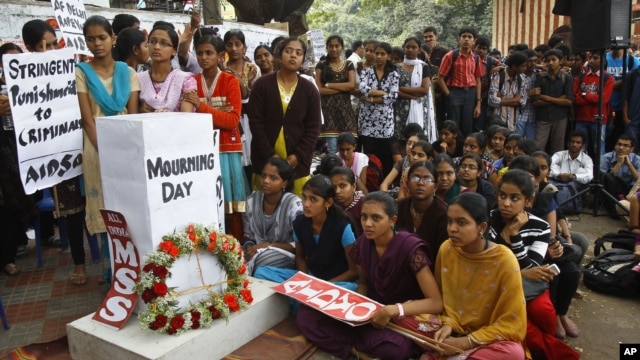
Death of India rape victim stirs anger, promises of action

A woman whose gang rape provoked protests and rare national debate about violence against women in India died from her injuries on Saturday, prompting promises of action from a government that has struggled to respond to public outrage. The unidentified 23-year-old medical student suffered a brain injury and massive internal damage in the December 16 attack and died in hospital in Singapore where she had been taken for treatment.
Protesters rallied peacefully in the capital New Delhi and other cities across the country to keep the pressure on Prime Minister Manmohan Singh's government to get tougher on crimes against women. That was in contrast to the pitched battles protesters fought with police last weekend. The six suspects held in connection with the attack on the student on a New Delhi bus were charged with murder following her death, police said. The maximum penalty for murder is death. Authorities, worried about the reaction to the news of her death, deployed thousands of policemen, closed 10 metro stations and banned vehicles from some main roads in the heart of New Delhi, where demonstrators have converged since the attack to demand improved women's rights. Despite efforts to cordon off the city centre, more than 1,000 people gathered at two locations. Some protesters shouted for justice, others for the death penalty for the rapists. Most sex crimes in India go unreported, many offenders go unpunished, and the wheels of justice turn slowly, according to social activists who say that successive governments have done little to ensure the safety of women. Political leaders vowed steps to correct "shameful social attitudes" towards women in the world's biggest democracy. "The need of the hour is a dispassionate debate and inquiry into the critical changes that are required in societal attitudes," Prime Minister Manmohan Singh said in a statement. "I hope that the entire political class and civil society will set aside narrow sectional interests and agenda to help us all reach the end that we all desire - making India a demonstrably better and safer place for women to live in." The woman, beaten, raped and thrown out of a moving bus, had been flown to Singapore in a critical condition by the Indian government on Thursday. "She was courageous in fighting for her life for so long against the odds but the trauma to her body was too severe for her to overcome," Kelvin Loh, chief executive officer of the Mount Elizabeth Hospital in Singapore said in a statement announcing her death from multiple organ failure. The Indian government has chartered an aircraft to fly the student's body back to India, along with members of her family, T.C.A. Raghavan, the Indian high commissioner to Singapore, told reporters. The body was taken from the hospital to a Hindu undertaker in Singapore and hours later, lying in a gold an yellow coffin selected by Indian diplomats, the body was driven in a hearse to the airport. "DETERMINATION" Hundreds of protesters took to the streets in the northern Indian city of Lucknow. In Hyderabad, in southern India, a group of women marched to demand severe punishment for the rapists. Protests were also held in the cities of Chennai, Kolkata and Mumbai. "For some reason, and I don't really know why, she got through to us," well-known columnist Nilanjana Roy wrote in a blog on Saturday. "Our words shriveled in the face of what she'd been subjected to by the six men travelling on that bus, who spent an hour torturing and raping her, savagely beating up her male friend." Sonia Gandhi, the powerful leader of the ruling Congress party, directly addressed the protesters in a rare broadcast on state television, saying that as a mother and a woman she understood their grievances. "Your voice has been heard," Gandhi said. "It deepens our determination to battle the pervasive and the shameful social attitudes that allow men to rape and molest women with such impunity." The victim and her male friend were returning home from the cinema, media reports say, six men on their bus beat them with metal rods and repeatedly raped the woman. Media said a rod was used in the rape, causing internal injuries. Both were thrown from the bus. The male friend survived. The six suspects have all been arrested and are in custody. The attack has put gender issues centre stage in Indian politics. Issues such as rape, dowry-related deaths and female infanticide have rarely entered mainstream political discourse. Analysts say the death of the woman dubbed "Amanat", an Urdu word meaning "treasure," by some Indian media could change that, although it is too early to say whether the protesters calling for government action to better safeguard women can sustain their momentum through to national elections due in 2014. The outcry over the attack caught the government off-guard and it was slow to react. It took a week for Singh to make a statement on the attack, infuriating many protesters who saw it as a sign of a government insensitive to the plight of women. The prime minister, a stiff 80-year-old technocrat who speaks in a low monotone, has struggled to channel the popular outrage in his public statements and convince critics that his eight-year-old government will now take concrete steps to improve the safety of women. "The Congress managers were ham-handed in their handling of the situation that arose after the brutal assault on the girl. The crowd management was poor," a lawmaker from Singh's ruling Congress party said on condition of anonymity. Commentators and sociologists say the rape has tapped into a deep well of frustration many Indians feel over what they see as weak governance and poor leadership on social issues. A global poll by the Thomson Reuters Foundation in June found that India was the worst place to be a woman because of high rates of infanticide, child marriage and slavery. New Delhi has the highest number of sex crimes among India's major cities, with a rape reported on average every 18 hours, according to police figures. Government data show the number of reported rape cases in the country rose by nearly 17 percent between 2007 and 2011.

India files murder charges against suspects in brutal gang rape

India Mourns 23-Year-Old Gang Rape Victim

The young Indian victim of a brutal gang rape has died in Singapore, where she had been taken for treatment. Thousands of people staged peaceful protests in the Indian capital -- where the incident took place -- despite tight security to prevent mass demonstrations. As Anjana Pasricha reports from New Delhi, the incident has sparked widespread calls for social change. From people on the street, to the country's top leaders, messages of grief and vows to prevent similar crimes poured in as news spread of the death of the 23-year-old rape victim. The young woman died early Saturday morning in Mount Elizabeth Hospital in Singapore of severe organ failure, 13 days after she was brutally beaten and raped by a group of men in a moving bus in New Delhi. She had undergone multiple surgeries in the capital before being flown to Singapore Thursday for special treatment. India's High Commissioner to Singapore T.C.A. Raghavan said the victim's family members were by her side when she died. "In the end it was the scale of her injuries which proved too much," said Raghavan. Thousands of people came out into the streets in cities like Mumbai, Bangalore and New Delhi to mourn her death, demand justice for her and safety for women. The biggest protests were in the capital, where the crime took place. Hundreds of young people gathered at several locations, although authorities closed several metro stations and many roads and deployed hundreds of police to prevent mass demonstrations. But the protests were quieter than those last week which had turned violent. In some parts of the city, people marched in silence, others held up placards. They all demanded a safer city and speedier justice for crimes against women. Many shouted slogans. In the evening they lit candles in her memory. The protestors termed it “Black Saturday”. "We want safety as our first priority" "We should be able to breathe peacefully and walk on the streets" “I do not feel safe at all….” “It is not just about the government, I think the people of this country need to realize that what they have made this country, we have to change this…” Across the country, ordinary people and media paid tribute to the young girl, calling her "braveheart" and "India's Daughter," and saying her death should be honored by bringing about social change. There is widespread public outrage against authorities for not doing enough to prevent such crimes and assure safety of women. Murder charges have now been added to the rape charges brought against six suspects in the case. Prime Minister Manmohan Singh, in a statement, said he understood the reactions from a young India that genuinely desires change. He said "It would be a true homage to her memory if we are able to channelize these emotions and energies into a constructive course of action." Delhi's Chief Minister Sheila Dikshit said the victim has shaken India's conscience. "Our hearts are burdened with grief and shame. And this is not a moment for speeches or words, but for deep reflection. I would like each one of you to be calm and peaceful," said Dikshit. Home Minister Sushilkumar Shinde vowed strict action against the accused. Shinde says the government will heed public calls for strict punishment for the guilty and ensure that such incidents do not happen again. Home Secretary R.P.N. Singh said authorities are committed to bringing about change to ensure women's safety. "The government will work overtime to try and bring about laws and steps that will ensure that no other person, no other citizen of the country has to undergo the same kind of trauma," said Singh. India's government has been criticized for being slow to understand the outrage that followed the incident, in a country where crimes against women are growing, and where police figures show that rape is among the fastest growing crimes, even though many rapes go unreported.

Fresh Gas Reservoir Discovered in Balochistan

The Baloch Hal
The Oil and Gas Development Company Limited (OGDCL), operator of Zin Exploration licence, together with joint venture partner Government Holdings Pvt Ltd (GHPL) has discovered gas reservoir bearing zone from its well Zin SML-I located in District Dera Bugti of Balochistan. Ministry of Petroleum and Natural Resources (MPNR) in a statement said that MD OGDCL who called on Dr Asim Hussain Advisor to Prime Minister on Petroleum and Natural Resources informed the Advisor about the new discovery. MD OGDCL briefed Dr Asim Hussain that preliminary assessment shows estimated reserves in place of about 1.06 TCF, which would be confirmed by further appraisal wells. It is of low calorific value gas but with the right technology, can be enhanced to better quality gas. Advisor on Petroleum expressed confidence that this discovery will add to the hydrocarbon reserves base of the Joint Venture Partners, brining significant earnings for the country. It is worth mentioning that the Zin SML-I well was drilled down to depth of 1050 meters targeting to test the potential of Sui Main Limestone formation. The target zone age has tested 8.05 MMSCFD gas through 128”/ 64” choke.

Pakistan: PM Ashraf orders to block Youtube again

Prime Minister Raja Pervez Ashraf has ordered PTA to block video sharing website Youtube once again after it was briefly restored on Saturday. The decision to block Youtube was made after the clips of the anti-Islam film could still be viewed on the website. According to the PTA all Internet Service Providers (ISPs)had blocked the website. Earlier on Saturday, PTA lifted the ban on Youtube. In a tweet last night, Interior Minister Rehman Malik said Youtube would be restored within 24 hours. “There was a great demand to unblock Youtube,” Malik tweeted. The video sharing website had been blocked after violent protests over the posting of an anti-Islam film. Speaking to Geo News, DG PTA said talks were underway with Google to remove blasphemous content from Youtube. Prior to this, Youtube has been blocked in Pakistan in 2008 and 2010

Khyber-Pakhtunkhwa: 95% success rate of TB treatment in K-P

The Express Tribune
The provincial government is training private doctors and laboratory technicians to provide free treatment and diagnoses facilities to people infected with tuberculosis (TB) in Khyber-Pakhtunkhwa (K-P). The initiative has been taken by the Khyber-Pakhtunkhwa and National Tuberculosis Control Programme in collaboration with the Public Private Mix (PPM) programme of the World Health Organization. Addressing an awareness seminar titled ‘Fighting TB Together’ on Friday, PPM Provincial Coordinator Saeed Abid said they had trained around 200 doctors and 50 laboratory technicians in 11 districts of the province, who will provide free of charge medicines and diagnosis facilities. Saeed said that 40,000 people were affected from TB annually in K-P alone. He added that 231 out of every 100,000 people in the country had contracted TB, making Pakistan have the sixth highest number of TB patients in the world. Dr Maqood Ali Khan, technical focal person for the provincial TB control programme, said 1,000 centres in the province have given free treatment to over 36,000 patients while 230 centres are providing diagnosis facilities for TB. “The success ratio of patient treatment in K-P is 95%, higher than other provinces,” said Dr Maqood, adding that the rate would improve once private hospitals were included in the programme and more awareness had been raised. Dr Maqood further said a state-of-the-art TB Resistance Laboratory was established in Hayatabad Medical Complex that is treating Multidrug Resistance TB. It is a dangerous type of TB which is developed when patients do not get treatment on time. The treatment for the disease is very costly. Dr Fazal Khan from the National TB Control Programme said that people aged 15-35 were mostly affected by TB. Symptoms become visible when a person’s immunity level decreases. TB is an infection primarily affecting the lungs that is caused by bacteria called micro-bacterium tuberculoses. It is generally spread through breathing in the same space as an infected person through close contact. The main symptoms include weakness, weight loss, night sweats, coughing for more than two weeks and chest pain. Medical experts recommend consulting hospitals and TB centres for a diagnosis. The government is providing eight months free-of-cost treatment in all major hospitals and a number of other centres in the country. According to the World Health Organisation Tuberculosis Report 2012, 8.7 million people contracted TB in 2011 across the world, with 1.4 million cases being fatal. TB is one of the top killers of women worldwide and killed 0.5 million women last year.

Pakistan: ‘Postal staff filing fake receipts’

Frontier Post
Several complaints have been received by NAB (KP) against Postal Authorities with the allegations that the recipients of the money from Benazir Income Support Programme (BISP) are charged Rs.100/- to Rs.200/- per person by the concerned postal employees. On the other hand, money is embezzled through fake receipts, according to NAB sources, and not delivered to the needy persons at all. NAB (KP) initiated inquiry into the matter to ascertain the factual position and find to all those involved in the scam of the Postal Services Deptt. The BISP is aimed at distribution of money among the poor and needy individuals in the country. The programme is meant to extend helping hand to all those deserving persons who are in dire need of financial support so that their suffering may be alleviated on priority basis. Under this program the money is released to the Postal Services Deptt for distribution through local post office network. Obviously, the post office staff stands responsible for releasing the money to the deserving and qualified persons upon having genuine receipts.

Blast outside Karachi railway station kills six

At least six people were killed when a loud explosion ripped apart a passenger bus parked outside the gates of Karachi Cantonment Station, the main railway station in the city. The large blast completely ripped opened the roof of the bus, scheduled to depart for Sargodha, which caught fire following the explosion. “There are reports of five people being killed in the blast. The injured have been shifted to Jinnah Hospital,” said Ahmed Chinoy, the head of the Citizen Police Liaison Committee (CPLC). At least 48 other people were also injured in the blast, with five of them said to be in critical condition, hospital officials said. “We have received 48 patients, some of which are critical. Six people killed have been shifted to the mortuary,” confirmed Seemi Jamali, a senior doctor at the Jinnah Hospital. It was not immediately clear what had caused the blast, officials said, adding that a bomb disposal team was trying to determine whether it was caused by a bomb or an exploding compressed natural gas cylinder. “So far, we are unable to say whether the explosion was a terrorist attack or a cylinder blast,” said Chinoy. Karachi’s Cantt Station is one of the busiest areas of the city. It is one of the main terminals for inter-city travel as well as outside the city. The bus and coach terminals right outside the station are also used by hundreds everyday for travel to different parts of the country. Police had cordoned off the area while an emergency was imposed at the Jinnah Hospital, which is located close to the blast site.

Friday, December 28, 2012

Video: A tribute to Benazir Bhutto -''Tu sab Ki bibi zinda hai''

Pakistan: Report documents recent persecution of religious minorities

http://www.catholicculture.org
Five Christian churches, three Hindu temples, and one mosque of the Ahmadiyya Muslim community were attacked in Pakistan in 2012, according to a report prepared by the Pakistani Bishops Conference’s Justice and Peace Commission. 95% of Pakistan’s 190 million people are Sunni or Shia Muslims. The report also cited “cases of forced occupation of land destined as places of worship” and “the murders of those engaged in the construction of places of worship.”

Are women safe in India?

Brahimi's shuttle diplomacy rekindles hopes of solution to Syrian crisis

The UN-Arab League envoy to Syria Lakhdar Brahimi is conducting a shuttle diplomacy in yet another drive to end the 21-month-long Syrian crisis, rekindling hopes of a possible breakthrough given the apparent Russian-U.S. rapprochement and resolve to find an exit for the intractable crisis. Brahimi has held meetings with Syrian President Bashar al-Assad and representatives of the opposition groups during his recent visit to Syria. His talks were culminated by a suggestion to form a transitional government with "full executive powers." However, he stopped short of defining the future role of Assad. Brahimi, who would leave Syria Saturday for Moscow for further talks, revealed that he would have discussions with U.S. officials soon. Media reports said Brahimi has carried with him to Syria a proposal to form a transitional government with broad executive powers. The proposal suggests that Assad keep power till the end of his presidential term in 2014 without having the right to run once again for the next presidential elections. After a meeting with Brahimi on Tuesday, opposition groups in Syria talked about some "positive" results, but refused to discuss any settlement that does not include the departure of the Assad government. General coordinator of the opposition National Coordination Body, Hassan Abdel-Azim, told reporters that Brahimi would work to reach an international consensus, especially a Russian-U.S. one, to solve the crisis. Abdel-Azim indicated that the Syrian government has agreed on a number of points, most notably the cessation of violence and the formation of a transitional government with full authority. However, he stressed that the issue of Assad's staying in power during the transitional period remains the only sticking point, adding that Brahimi assured him that his mission did not fail and he has unwavering resolve to achieve a breakthrough. Brahimi would reportedly return to Geneva to work on achieving a U.S.-Russian compatibility for another Geneva conference. If he gained such a consensus, a new resolution would be issued by the UN Security Council, binding both the opposition and the Syrian government. Russian Foreign Minister Sergei Lavrov has recently warned that the chances of resolving the Syrian crisis on the basis of the Geneva Conference still exist, but dwindle. Yet, he said that those chances should be sustained, because " bloody anarchy" would be the alternative. The Geneva conference's statement, which was endorsed by the " working group" on Syria on June 30, calls for the formation of a transitional government in Syria combining representatives of the government and the opposition to hold legislative elections and presidential elections. Both Brahimi and Lavrov have reiterated that the Geneva conference is still the suitable basis to build on. Brahimi said during a press conference in Damascus that the provisions of the Geneva conference are suitable for every time and everywhere. Likewise, Lavrov said the recent trilateral contacts in Geneva attended by Russia, the United States and Brahimi have emphasized that the possibilities to find common points regarding the implementation of the Geneva conference's provisions still exist. "We are determined to proceed in this way. The ball is now in the court of our partners who support a political solution verbally but in fact incite the continuation of the war to topple Bashar al-Assad," Lavrov said. He stressed that any settlement requires coordinated efforts by all external parties that should "speak with one voice and work for seating the Syrian government and the opposition groups to the negotiating table." Russia, the Syrian government's main ally that had vetoed three U.S. resolutions against Syria and refused to follow suit of some other countries in recognizing the opposition coalition as the sole representative of the Syrian people, has lately shown leniency in dealing with the coalition. Mikhail Bogdanov, Russian deputy foreign minister, said his country has sent an invitation to Ahmed Maaz Khatib, head of the opposition coalition, to meet with Syrian representatives in Moscow, Geneva or Cairo. On Wednesday, Alexander Ukashevi, spokesman for the Russian foreign ministry, said Moscow would continue contacts with all spectrums of the Syrian opposition "that are interested in understanding the Russian position more clearly." A Syrian government delegation headed by Deputy Foreign Minister Faisal Mikdad is now in Moscow to discuss the Syrian crisis with Russian officials and sound out whether the Geneva conference is still workable. Syria has previously made it clear that the Geneva conference is the best formula to find a way out of the crisis. Observers believe that following the recent visit of Brahimi to Damascus, an international tendency, especially a Russian-U.S. one, toward a political solution to the Syrian crisis has been crystallized.

Saudis hold anti-regime demo in Qatif

A large number of Saudi Arabians have held a demonstration in the eastern city of Qatif to protest against a deadly attack by government security forces that left an 18-year-old dead.
On Friday, Qatif residents took to the streets to denounce the House of Saud, in defiance of the 22-month crackdown in Eastern Province. In Qatif on Thursday, Ali al-Marar was killed and several others were injured when Saudi security forces in two sports-utility vehicles "indiscriminately" opened fire on demonstrators, who were calling for political and social reforms and the release of political prisoners. Government forces even fired at people on rooftops, according to eyewitness reports. There have been numerous demonstrations in Saudi Arabia's Eastern Province since February 2011, with protestors calling for political reform. Anti-government protests have intensified since November 2011, when security forces opened fire on protestors in Qatif, killing five people and leaving scores more injured. Activists say there are over 30,000 political prisoners in Saudi Arabia. In October 2012, Amnesty International called on the Saudi authorities to stop using excessive force against pro-democracy protestors. “The Saudi authorities must end their repeated moves to stifle people’s attempts to protest against the widespread use of arbitrary detention in the country,” Philip Luther, Amnesty International’s director for the Middle East and North Africa, said on October 16. “The right of people to peaceful protest must be respected and the security forces must refrain from detaining or using excessive force against people who exercise it,” he added.

Jordanian protesters hold nationwide demos, call for reforms

http://www.presstv.ir
Jordanian protesters have taken to the streets across the country to call for political reforms and price cuts. During demonstrations on Friday, protesters called on the government to prevent the prices of everyday goods, and especially fuel, from rising, Jordan’s Petra news agency reported. Prices of everyday items have soared in Jordan in recent months. The prices of natural gas cylinders, diesel fuel, and gasoline increased by 54, 33, and 15 percent respectively on November 13, when government subsidies were withdrawn to tackle a budget deficit of 3.5 billion dinars ($5 billion). The demonstrators also chanted slogans against the country’s intelligence agency, demanded the release of prisoners arrested during previous anti-government demonstrations, and called for a boycott of parliamentary elections scheduled for January 23. Jordanians have been holding demonstrations since January 2011, demanding political reforms, including the election of the prime minister by popular vote and an end to corruption. Since the demonstrations began, Jordanian ruler King Abdullah II has sacked three prime ministers to appease the protesters.

Obama 'modestly optimistic' on fiscal cliff deal

A political summit Friday at the White House left it to the Senate's top Democrat and Republican to work out a compromise to avoid the country going over the fiscal cliff, participants said. Senate Majority Leader Harry Reid, D-Nevada, told reporters that the next 24 hours would be "very important" toward efforts to reach a deal to lessen the harshest impacts of the fiscal cliff, a combination of broad tax hikes and deep spending cuts due to take effect at the start of the new year. "Whatever we come up with is going to be imperfect. Some people aren't going to like it, some people are going to like it less," Reid said on the Senate floor after the high-stakes meeting with President Barack Obama, other congressional leaders and top administration officials. Reid's Republican counterpart, Sen. Mitch McConnell of Kentucky, expressed hope that he and Reid could agree on a plan to present to their respective caucuses "as early as Sunday." Obama said he was "modestly optimistic" that the Senate leaders would be able to forge an agreement, even as he warned "nobody's going to get 100% of what they want." Absent such a deal, Obama said his latest proposal should be put to a vote. He predicted it would pass the House and Senate with bipartisan support. Economists warn that continued stalemate could trigger a recession as government spending is slashed, including for the military, and taxes go up on everyone, due to the expiration of lower rates dating to the administration of President George W. Bush. Diminished hope for a substantial agreement in Washington depressed stock indexes on Wall Street this week despite other encouraging economic news. Consumer confidence has also softened. Prior to Friday's late afternoon meeting, which lasted just over an hour, a source familiar with the matter said Obama would propose the framework for a scaled-back agreement that he described last week. In his later remarks, Obama described his plan as holding down tax rates on middle-class Americans -- which he described as family income up to $250,000 -- while letting rates increase for top income brackets. It also would extend unemployment benefits and "lay the groundwork" for economic growth and deficit reduction. At the very least, Reid said he was preparing legislation for a vote by Monday that would include elements favored by Obama. "I look forward to hearing any good-faith proposals Senator McConnell has for altering this bill," Reid said in a statement that followed his floor remarks. The White House meeting came with the Senate back in town for a rare end-of-year appearance before a new Congress convenes January 3. Boehner plans to bring the House back on Sunday. Senators from both parties earlier expressed opinions on the negotiations that ranged from optimism to frustration. "When the dust settles and everything is said and done, federal individual income taxes are not going to go up on almost all Americans next year," GOP Sen. Lamar Alexander of Tennessee said. Democratic Sen. Chuck Schumer of New York told NBC's "Today" show he was "a little more optimistic today" about a deal being reached. "Sometimes it's darkest before the dawn," Schumer said, noting the renewed engagement by McConnell and House Speaker John Boehner, the top congressional Republicans. Republican Sen. Bob Corker of Tennessee downplayed Friday's meeting on CBS "This Morning" as a seeming political ploy "to make it look like we're doing something." "This is a total dereliction of duty at every level," added Corker, who has urged Republicans to compromise on the central issue of letting tax rates increase on top income brackets. "I've been very surprised that the president has not laid out a very specific plan to deal with this, but candidly Congress could have done the same. And I think the American people should be disgusted," he said. On Thursday, McConnell vowed his side would not "write a blank check for anything Senate Democrats put forward just because we find ourselves at the edge of the cliff." Reid, however, argued Republicans undermined a potentially major agreement over the past two years by refusing to compromise on their opposition to higher tax rates for the wealthy.The principal dispute continues to be over taxes, specifically Democrats' demand to extend most of the tax cuts passed under Bush while allowing higher rates of the 1990s to return on top income brackets. During his re-election campaign, Obama said this would protect 98% of Americans and 97% of small businesses from tax hikes. Republicans have opposed any kind of increase in tax rates, and Boehner suffered the political indignity last week of offering a compromise -- a $1 million threshold for the higher rates to kick in -- that his GOP colleagues refused to support because it raised taxes and had no chance of passing the Senate. Democrats have rejected the GOP proposals, which would extend all Bush-era tax cuts and revise prescribed spending cuts, calling them insufficient and saying they would shift too much deficit reduction burden on the middle class. One possibility is the fiscal cliff takes effect and taxes go up in January, then Congress steps in to bring tax rates back down for at least some people -- allowing them to say they're lowering taxes, even if rates for top income brackets are higher in 2013 than they were in 2012. Obama and Democrats have leverage, based on the president's re-election last month and Democrats' gains in the House and Senate in the new Congress. In addition, polls consistently show majority support for Obama's position on taxes, and Democrats insist the House would pass the president's plan with Democrats joined by some Republicans if Boehner allowed a vote on it. However, anti-tax crusader Grover Norquist has vowed to back primary challenges against Republicans who violate his widely signed pledge not to raise taxes. Even if a deal is reached, Norquist predicts more budget showdowns every time the government needs additional money to operate. The two sides seemingly had made progress early last week on forging a $2 trillion deficit reduction deal that included new revenue sought by Obama and spending cuts and entitlement changes desired by Boehner. Boehner appeared to move on increased tax revenue, including higher rates on top income brackets and eliminating deductions and loopholes. But his inability to rally all House Republicans behind his plan raised questions about his role and what comes next. All this has fueled disdain for politicians by many Americans. Such contempt is deserved, said Rep. Steven LaTourette, an Ohio Republican, who is retiring from Congress. "I think America should be embarrassed by its leadership in D.C.," he told CNN on Friday. "The fact that we have been unable to do things, and instead worried about our next elections. ... I think it's sinful."

Egypt's 'civil servants' told not to criticise president Morsi

ahram.org.
Diplomats and journalists say they are being pressured to abandon their opposition of the president.
Some Egyptian diplomats and media personnel have complained that they are being pressured by their bosses into refraining from criticising Egypt president Mohamed Morsi. Opposition forces have frequently accused Morsi of attempting to curb freedoms since the influential Muslim Brotherhood group propelled him into office in Egypt's first freely contested elections earlier this year. “I was summoned into the office of the assistant (foreign) minister; he said we were all partners in making the (January) Revolution a success and now we should be sensible to help the president deliver the hopes and dreams of the Revolution," said a young diplomat about what he considered as an explicit warning by his boss. "He added a few incoherent words about the national role of the foreign service, its independence and so on; then he asked me to be ‘careful’ and not to confuse my role as a diplomat with that of an activist." According to this diplomat, who asked for his name to be withheld to spare the disclosure of the identity of his boss, other young diplomats were given the same warnings. “One of them was told that his overt opposition to the president would undermine his chances to go a good post and another was told that the minister (of foreign affairs) is so angry with his ministry being looked at as disloyal by the president,” the same diplomat added. During the past few weeks, some diplomats have declined to bow to orders issued by Foreign Minister Mohamed Kamel Amr to promote the president’s political choices, Ahram Online has learnt. Others have declined to observe the referendum over a controversial draft of the constitution. In the two cases the minister received written and open letters from the concerned diplomats. Meanwhile, on their internal diplomats' Facebook group, the Lotus, Egyptian diplomats have openly criticised the president’s decisions and what they perceived as the "unsatisfactory state of foreign relations due to the choices of the president". To prompt an end to this, the minister had re-issued a decree, which was in place during the transitional rule of the Supreme Council of Armed Forces (SCAF), to prohibit discussion over state affairs through the Lotus under the pretext that this attitude "poses a threat to state secrets”.
Restrictions on media?
The attempt to rein in criticism against President Morsi at the foreign ministry is not unique in key state bodies. Editors and broadcasters at the state-run Radio and TV channels have been rebuked, according to their accounts, by the minister of information and his aides for their participation in the activities of political opposition. According to one broadcaster of an entertainment programme, her head of section openly told her “we have photos of you taking part in the demonstrations against the political leadership next to the presidential palace”. “I told him he did not need get the photos because, yes, I was there and yes I would go there again and if he wants me to be legally penalised, he needs to start an official investigation into my professional conduct – otherwise he has no business with my political choices,” she said. Meanwhile, three news broadcasters and anchors of political shows on the radio and TV say they hate being on air doing an interview with one of the opposition figure because "no matter how hard we try to force a limit on the criticism made against the president and his political decisions, our effort is never appreciated by the minister". Minister Salah Abdel-Maqsoud, who is known for his affiliation with the Muslim Brothehrood, recently said that he would have put a member of Brotherhood members at the head of every Radio and TV section had there been enough of them at his ministry. Beyond the state ministries, Egyptians working at some regional organisations have also complained of similar treatment. Two Egyptian officials at the Arab League say they received “indirect” and “polite” remarks from their heads of departments over their political activism. One said she offered to take a leave without pay if her activism was a source of embarrassment and the other said that she informed her boss that she “had participated in every day of the demonstrations of the 25 January Revolution and that today nothing is going to stop her".

Indian rape victim dies in hospital

http://www.dw.de
A 23-year-old Indian woman who was raped by six men on a bus, has died of her injuries in a Singapore hospital. The hospital said in a statement she "died peacefully," after almost two weeks fighting for survival. Mount Elizabeth Hospital said in a statement that the young Indian woman died of her injuries early on Saturday morning. She was gang-raped, beaten and then thrown from a bus by six men on December 16.
"We are very sad to report that the patient passed away peacefully at 4.45 a.m. [local time, 2045 UCT on the previous day] on 29 December, 2012," Kelvin Loh, the chief executive of Mount Elizabeth Hospital, said in a statement. "Her family and officials from the High Commission of India were by her side. The Mount Elizabeth Hospital team of doctors, nurses and staff join her family in mourning her loss." The 23-year-old was traveling with a friend, who was also set upon by the men, on a bus in New Delhi when the attack occurred. The attackers apparently hailed from rural, conservative areas of the country but had moved to New Delhi. Her ordeal has prompted public protests demanding greater protection from sexual violence for women. The chief minister of West Bengal state, Mamata Banerjee, on Friday pledged 65 all-female police stations dealing with crimes against women. She said that ten of them were already up and running.

Pak-Afghan: Fresh attack prompts closure of Torkham border

Pakistani authorities closed the Torkham border crossing with Afghanistan on Friday following reported assaults on Pakistani labourers by Afghan troops. The development came a day after Afghan National Army (ANA) soldiers reportedly beat up two Pakistani citizens and tore up their travel documents. ANA troops stopped a Pakistani driver’s vehicle, thrashed him along with his cleaner passenger, and took away the cash they were carrying, said Wing Commander Colonel Mushtaq Ahmad while talking to journalists at Torkham border. The driver, Yar Khan, and his cleaner, Lal Gul, also spoke to the media, and said they were beaten up by ANA personnel at Pul-e-Charkhi checkpoint near Kabul. They said the Afghan army men warned them to never enter Afghanistan again. After the border was closed, Afghan police official Nisar Afghani apologised to Col Ahmad, as well as political administration official Mairaj Khan, and tried to convince them to open the border – but his efforts were unsuccessful. Last Friday, 29 Pakistani labourers were harassed by ANA personnel at Pul-e-Charkhi after which Pakistani authorities closed the Torkham border for six hours – however, after negotiation with Afghan authorities, it was re-opened. Afghan labourers beaten Meanwhile, Afghanistan protested over attacks on its nationals by unidentified men in Khyber Agency and demanded an investigation into the incident. The Afghan foreign ministry said that unidentified men harassed Afghan nationals and tore up their passports and other travel documents near Landi Kotal town. “The Afghan foreign ministry expresses serious concerns over the incident of maltreatment and beating of Afghan nationals in Khyber Agency on Thursday,” said a statement emailed to The Express Tribune. Afghan Ambassador Umer Daudzai noted that whenever the two countries make progress to strengthen their bilateral relationship, incidents like these happen. “Both sides are trying their best to contain the current problems and to prevent such incidents in the future,” Daudzai told The Express Tribune. The foreign ministry as well as the Afghan Embassy in Islamabad are taking up the issue with Pakistani authorities to bring those responsible to justice. Afghan officials in the eastern Afghan province of Nangarhar meanwhile said that three children under the age of ten died of cold following the closure of the Torkham border. Ahmad Zia Abdulzai, the spokesperson for the Nangarhar governor, said in Jalalabad that the children were waiting on the Afghan side of the border in severe cold and rain to cross into Pakistan but “died of harsh weather”. An Afghan border police official, Idrees Momand, was quoted by the Afghan media as saying that the three children were sick and had been waiting to cross the border for treatment in Pakistan.

Bilawal Bhutto: '' The son also rises ''

Editorial:Daily Times
Twenty four-year-old Bilawal Bhutto Zardari, son of President Asif Ali Zardari and former Prime Minister Benazir Bhutto and current Chairman of the Pakistan People’s Party, launched his political career on Thursday with a fiery speech before the tens of thousands who had flocked to the Bhutto family’s ancestral graveyard, Garhi Khuda Baksh, to observe the fifth anniversary of Benazir Bhutto’s assassination. Bilawal’s speech comes several months before national elections are expected to be held. He is too young to participate in the elections himself — the minimum age is 25 — but is bound to be a key asset for the ruling PPP. The question is, with Bilawal, can we hope to see a fervent return to the liberal and progressive ideology that the PPP has been associated with and revered for in the past? Even critics of the party cannot deny the impact of Bilawal’s speech. Whipping up the emotions of the crowd, he spoke remarkably, with feeling but logically, and his beautiful, lyrical speech sounded like poetry, not prose. He sounded uncannily like his mother and grandfather, Zulfikar Ali Bhutto, both gifted — and self-taught orators and among the finest leaders Pakistan has produced. Bilawal’s mastery of the Urdu language has silenced all those who were sceptical about him for being raised abroad. Bilawal defended the achievements of the PPP during its tenure — progressive legislation, economic growth, fighting terrorism — and spoke out against the incessant meddling of the agencies. He also took a swipe at the judiciary, which has clashed with the current government, and asked why those arrested for involvement in Benazir’s murder have yet to be convicted. Many, however, were left wondering why the party has not done more to push the investigation forward during its over four years in power and whether we will ever see closure. At a time where the PPP has been criticized for not taking a stronger stand against terrorism, Bilawal spoke bravely against militancy and paid tribute to Salmaan Taseer, Shahbaz Bhatti, Bashir Bilour and Malala Yousafzai. He made it clear that fighting terrorists is his highest priority — not only because they snatched his mother from him but because they currently pose the greatest existential threat to Pakistan. Bilawal also spoke in favour of gender equality, something that must be highlighted and welcomed. Although critics are quick to denounce what they deem “heirloom politics”, it is a fact that dynastic politics has long been a part of the political culture in South Asia. The positive aspect here is that, as his father said in his speech on Thursday, Bilawal is currently on a learning curve and taking time to understand how to handle the grave challenges that lie ahead. Bilawal is also younger and representative of a new generation replete with modern ideas — whether related to energy, the economy or the internet — and new mechanisms. He will bring new energy to the tasks, and this is something to be celebrated. He may be the right person to mobilize Pakistan’s greatest asset, its youth, which makes up 65 percent of the population. This is also the PPP’s chance to harness one of its greatest assets — its workers or so-called jiyalas and perhaps Bilawal can be the one to put his finger on that pulse and bring about the change that is so desperately needed. Irrespective of who wins the next elections, the party’s responsibilities and determination to tackle Pakistan’s very serious problems remain very much on the agenda.

Asif Ali Zardari raises hand of his son Bilawal Bhutto
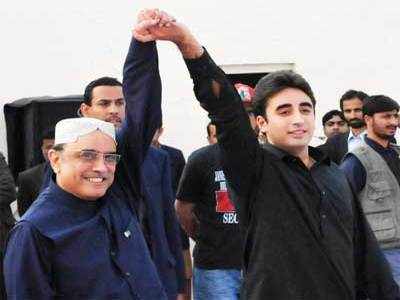
In this handout photo released by the Press Information Department, Pakistan's President Asif Ali Zardari, left, raises the hand of his son Bilawal Bhutto Zardari during a rally to mark the fifth anniversary of Pakistan's assassinated leader Benazir Bhutto in Garhi Khuda Baksh, Larkana, on Thursday, Dec. 27, 2012 in Pakistan. Bilawal Bhutto Zardari, 24-year-old son of Bhutto launched his political career Thursday with a fiery speech before thousands of cheering supporters observing the fifth anniversary of his mother's assassination.

Fresh polio case in Peshawar

Khyber Pakhtunkhwa on Thursday recorded a new polio case amid the World Health Organisation’s concerns about poor vaccination campaigns and the missing of immunisation targets. An official of National Institute of Health in Islamabad told Dawn that poliovirus was found in eight-month-old Ammar Umar, a resident of Yakatoot II union council in Peshawar. He said the child received two doses of oral polio vaccine. The new case, the 26th in Khyber Pakhtunkhwa, brings this year’s countrywide polio count to 57. Until now this year, 20 fresh polio cases have been reported in Federally Administered Tribal Areas, four each in Sindh and Balochistan, two in Punjab and one in Gilgit-Baltistan. Peshawar, which missed targets in 10 per cent of its UCs against the 95 per cent set in the National Polio Eradication Programme, 2012 in five rounds, leads with six cases recorded by infected districts in the country. WHO senior coordinator for polio eradication in Pakistan Dr Elias Durry told Dawn that the new polio case from Peshawar highlighted the fragility of the achievements by the country’s polio programme during the current year. “We must reach all children and give them oral polio vaccine to safeguard them against poliomyelitis. It is very important to ensure that each and every child is immunised during every polio campaign,” he said. Officials associated with the vaccination campaign in the province said the number of cases had reduced to 57, while the number of infected districts and tribal agencies had come down to 28 in 2012 from 58 last year. They said the Expanded Programme on Immunisation, which was responsible for vaccination, missed around 80,000 of the 5.2 million children in every campaign. The officials said the unvaccinated children, around 16,000 immunisation refusal cases, remained in certain areas risking the health of immunised children. They said the most daunting task of EPI was to vaccinate the children who recently missed on immunisation due to the killing of health workers in the province. According to them, the assassination of workers in coordinated campaign is the first armed violence against immunisation teams. The officials said after Taliban banned polio vaccination in Waziristan a few months ago, it was the first manifestation of violence, which had scared away low-paid health workers engaged for immunisation. “We have to vaccinate 2.39 million children, who remained unvaccinated due to the suspension of the campaign last week over the killing of polio workers,” an official said, adding that the violence could adversely affect the campaign slated to begin early next month. The officials said the health department would continue with the planned immunisation programme in high-risk areas focusing on vaccination of persistently missed children.

North Waziristan drone strike

At least five people were killed Friday in a suspected US drone strike in North Waziristan tribal region, intelligence officials said.
According to the intelligence sources, the US predator targeted a compound in Gurbaz village of North Waziristan’s Shawal district, close to the border of South Waziristan agency, firing two missiles and killing five suspected militants inside. Shawal district of North Waziristan region is considered a bastion of Taliban and al Qaeda-linked militants. North Waziristan, which is close to the Pakistan-Afghanistan border, is one of the seven regions in Pakistan’s Federally Administered Tribal Areas (FATA), governed by tribal laws. An extremist insurgency led by the Pakistani Taliban plagues the region while the area is known to be infested with militants, including the al Qaeda, Taliban and other armed extremist organisations. Attacks by unmanned US aircraft are deeply unpopular in Pakistan, which says they violate its sovereignty and fan anti-US sentiment, but US officials are said to believe the attacks are too important to give up.

President Zardari lays foundation stone of various projects in Sindh

Radio Pakistan
President Asif Ali Zardari on Friday inaugurated various developmental projects aimed at further improving the communication infrastructure and enhancing the education facilities in Sindh province. The projects inaugurated today included a 61-Km Larkana-Naudero-Lakhi Road‚ a 19-Km Sakrand-Shaheed Benazirabad‚ 15 Km Ratodero-Naudero Road via Garhi Khuda Baksh. The President also inaugurated Shaheed Benazir Bhutto University of Veterinary and Animal Sciences Sakrand‚ Shaheed Benazir Bhutto Chair & Convention Centre/Hall of the Sindh University Jamshoro and also laid the foundation of Dadu Campus of the Sindh University. Giving details of the projects inaugurated today‚ Spokesperson to the President Senator Farahtullah Babar said that Shaheed Benazir BhuttoUniversity of Veterinary and Animal Sciences‚ Sakrand‚ established at the cost of Rs. 3000 million approximately‚ is the first veterinary institution in Sindh and second in the country. The University has main campus in Sakrand and additional campus in Larkana. It will have six faculties‚ two directorates and one institute. He said that the President also inaugurated Shaheed Benazir Bhutto Chair & Convention Centre/Hall of the Sindh University Jamshoro that has been established in memory of the great leader and former twice-elected Prime Minister of the country. The SMBB Chair‚ Spokesperson said‚ besides compiling database covering aspects of her life will carry out research studies in the field of development sciences with special focus on devising pro-poor policies for sustainable economic development of the country and the Sindh province in light of aspiration of the martyred leader. It will also initiate gender development studies with emphasis on women issue‚ their role in the nation-building and democratization process‚ the state of human rights‚ freedom of speech and other issue that hinder their march towards prosperity. Spokesperson said that the President Zardari today also laid the foundation of Dadu Campus of the Sindh University which at present is housed in a sharing limited accommodation with Ustaad Bukhari Government Degree College Dadu. Spokesperson said that in view of the importance of the institution disseminating education in the country especially in the rural areas of Sindh‚ there was an urgent need for setting up full-fledge campus of the University. He said the Sindh Government has recently allotted land measuring 50 acres free of cost for the establishment of the campus at the distance of less than two kilometers in the south of Dadu City. Spokespersons said that Sindh Government has also included a scheme for construction of main/permanent campus of Sindh University at Dadu in the current year ADP 2012-13 with an allocation of Rs. 100.000 million during his year. Senatore Farhatullah Babar said that while inaugurating the road projects President Zardari urged the need for building road network throughout the country to attract investment and fully exploiting the geo strategic location of the country. The President said that geo strategic location of Pakistan at the cross roads of Central and South Asia offers the country to serve a huge market of over 3 billion in our neighborhood. He said that the roads inaugurated today will further improve connectivity of interior Sindh with the economic life line N-5 and the Indus Highway. Spokesperson said that while highlighting importance of the ports at Karachi and Port Qasim for the economic and industrial development of the country‚ the President said that present government has completed seven road projects costing 18 billion rupees in Sindh adding that because of the location of these two ports‚ roads and highways in Sindh have become very important. The Government‚ he said‚ is according the greatest attention to road network in the province and termed the road projects costing nearly four billion rupees‚ a gift to the people of interior Sindh. Commenting on Government's measures for promoting an investor-friendly environment‚ the President recounted various measures that have resulted into offering huge incentives to the investors and business community. He said that recently a law has been enacted whereby incentives and facilities offered to the investors and entrepreneurs cannot be withdrawn without Parliament's approval. The President said that despite the challenges of terrorism and natural disasters the economy has shown great resilience and is steadily recovering. Referring to positive results of government's initiatives ‚ the President said that Interest rates have come down twice recently and large scale manufacturing has also increased this year compared with last year besides growth shown by services sector and constantly increasing per capita income. The President said that Karachi Stock Exchange which was trading at5500 points in 2008 has performed tremendously and is trading at above 16000 points at present. The President said that Government was alive to the challenge of energy shortage in the country and said the country was not deficient in energy resources but these resources needed to be exploited. He said that solar and wind energy have great potential in meeting the energy crisis. The President also referred to 50 MW wind power project inaugurated two days before in Sindh and said that it was the first major wind project in the country. Pakistan‚ he said‚ has abundant sunshine that can be used for power generation and the abundant coal reserves of the country are ready to be converted into electricity and diesel. Highlighting country's mineral wealth‚ the President said that Pakistan is blessed with all kinds of precious minerals which are lying untapped and urged for exploiting this wealth. The President while commenting on challenges of extremism and militancy to the region said that the best way to fight extremism is to generate economic activity in the region. He termed poverty and economic deprivation as breeding grounds for extremism and said that economic security was the most effective weapon to fight extremism. Roads and connectivity projects‚ he said‚ will enhance economic security. On Government's efforts for peace in the region ‚ the President said that we have liberalized visa regime and improved trade relations with India which he said will contribute to stability in the region. Promotion of regional trade‚ the President said‚ is an important component of our growth strategy and added that present Government has concluded Free Trade Agreements with China‚ Sri Lanka and Malaysia besides Preferential Trade Agreements with Iran‚ Mauritius and Indonesia. Pakistan has also extended its trade relations to the ECO countries and Central Asian Republics‚ the President said on the occasion. The President on the occasion urged the need for more roads‚ more educational institutions and more infrastructure projects to meet the needs of a growing population. In this context he commended the Sindh Government for initiating massive developmental program "Sindh Development Package" and the Karachi-Hyderabad super highway which is being up-graded to a 6-lane Motorway. In addition 17 development projects costing 78 billion rupees have been undertaken in Sindh‚ the President said and reiterated firm resolve of the Government to change the face of the rural population. He assured that Government will left no stone unturned in improving the standards of living of common people in the remote areas of the country. The President on the occasion also touched on government's steps for poverty eradication and said that the Government has launched a major drive against poverty and has introduced ‘Benazir Income Support Programme for the poorest which he said was supporting millions of poor families across the country.

Bilawal did not say anything against judiciary

Federal Information Minister Qamar Zaman Kaira claimed on Friday that Pakistan Peoples Party (PPP) chairman Bilawal Bhutto Zardari did not say anything against the judiciary in his December 27 speech in Garhi Khuda Bukhsh, reported Express News. Speaking to the media at Sukkur airport, Kaira said that the PPP respects the judiciary, and a free judiciary is a sign of a strong nation. The minister also clarified that Bilawal had not called for the arrest for his mother Benazir Bhutto’s killers, but had appealed for punishment to be given to the arrested accused.

Thursday, December 27, 2012

Khyal Mohammad: Mugh you da Khybar Zalmi

China must and is able to withstand pressure

Since the United States adjusted its global strategy to return to the Asia-Pacific region, China-U.S. strategic relations and China's security environment has undergone significant historical changes. From a geopolitical perspective, since the end of the Cold War, the U.S. global strategy has gone through two major historical stages. In the first 10 years (in the 1990s), the strategic focus was on Eastern Europe. The main strategy was presented by the NATO’s eastward expansion and European Union’s eastward expansion. In the first 10 years in the new century (2000-2010), the strategic focus is to expand in the Middle East and Central Asia, with launching wars in Afghanistan and Iraq as its main strategy. Around the second 10 years in the new century, the United States has ceased its strategic task in Central Asia and the Middle East for a while. Despite that the war in Afghanistan and Iraq is not very smooth, the United States succeeded in overthrowing the anti-American regimes in Afghanistan and Iraq and established the pro-American regimes. Therefore, the strategic focus of the United States shifting from Central Asia and the Middle East to East Asia entirely followed its strategic step as planned. Since the adjustment of the U.S. strategic focus, a series of its strategic initiatives in East Asia can be summarized as follows: Politically establishing united frontline around China; making military deployment targeted at China; and undermining the economic influence of China. Out of the hegemonic geopolitical need, the United States will not allow the emergence of a unified geopolitical plate that is out of its control on the other side of the Pacific. In addition, the most developed and prosperous cities are gathered in the coastal region of southeast China, therefore the region is vital for Chinese economy. As the main transportation mode for China's foreign trade and energy supply is via the sea route, taking control of the transportation line from West Pacific Ocean to India via Malacca means seizing the lifeline of the Chinese economy. Therefore, it is necessary for the United States to put its strategic focus on Asia, especially East Asia, which is fatal for China.The strategic focus shifting on the Asia-Pacific region means that the United State has targeted China as its main objective of its global strategy in the current situation, pushing China to the position where it has nowhere to retreat or hide, but only accepts the truth. From the historical experience of the Cold War between the United States and the Soviet Union, there must be murder accompanied behind the containment. In Africa, the United States excludes China's economic interests and political influence; in the Middle East, it controls China’s energy throat; and in the neighboring countries of China, it seeks and supports a force to contain China. It even directly ruins the key to the security and the development of China in East Asia. Together with internal penetration, evolution and division of China, what the U.S. did is not simply containment with a purpose of stopping expansion, but a curb with the purpose of manipulation or even choke. There are only two ways for China to choose: Either withstanding the external pressure, taking an independent place in the multi-centered world pattern in the future; or following the step of the Soviet Union, and experiencing the survival ravages. The sharpness of the struggle is self-evident, but with 5,000 years’ cultural heritage and 63 years’ revolution achievements, China will be able to overcome the challenges.

Obama seeks deal as US 'fiscal cliff' looms

President Barack Obama has cut short his holiday and was returning to Washington as no deal appeared in sight to avoid the year-end "fiscal cliff" of higher taxes and deep spending cuts that could spin the still-fragile economy back into a recession. Obama's decision prompted Speaker John Boehner to reconvene the US House of Representatives on Sunday, December 30 through January 2, the final day of the current Congress, according to Reuters news agency. The US treasury secretary earlier warned that the government would hit its borrowing limit on Monday, the final day of the year. Obama made phone calls to congressional leaders late on Wednesday before leaving his Hawaiian vacation for Washington, the White House said on Thursday. The US appears to be headed over the fiscal cliff, Senate Democratic Leader Harry Reid said on Thursday. He blamed Boehner for failing to agree on a compromise with the Democrats. He said Boehner cared more about keeping his position when the new US Congress comes in on January 3. On Wednesday, Treasury Secretary Timothy Geithner told Congress that he would take "extraordinary measures as authorised by law" to postpone a government default. But he said uncertainty over the outcome of the fiscal cliff negotiations made it difficult to determine how much time those measures would buy. In recent days, Obama's aides have been consulting with Reid's office, but Republicans have not been part of the discussions, suggesting that much still needs to be done before Congress can pass a deal, even a small one, by Monday. At stake are tax cuts that expire on December 31 and revert to the higher rates in place during the administration of President Bill Clinton in the 1990s. That means $536bn in tax increases that would affect nearly all Americans. In addition, the military and other federal departments would have to cut $110bn in spending. The changes are part of a long-delayed need for the government to address its chronic deficit spending. Concessions demanded Obama has sought to include an increase in the borrowing limit, Boehner and other Republican leaders have demanded concessions in return. Top US Senate Republican Mitch McConnell said he will meet Obama on Friday at the White House. "I'm going to be down there at the president's meeting, and we'll see who else is there," McConnell told reporters Thursday, declining to say whether the other three leaders in Congress, including Boehner, would attend the meeting. The Senate is due in session on Thursday, although the immediate agenda includes other matters. The House has no plans to convene, following last week's rebellion in which conservatives torpedoed Boehner's legislation to prevent scheduled tax increases on most, while letting them take effect on million-dollar wage earners. Obama insists that no tax cuts be extended for anyone earning over $400,000 per year. Geithner said the negotiations over tax and spending policies made it difficult to predict how long he can delay reaching the borrowing limit. The absence of a specific timeframe may be intended to pressure Republicans to allow a debt limit increase in a potential budget deal. For now, Treasury will take several steps to delay reaching the limit. Geithner said it will stop selling Treasury securities used by state and local governments to support their own sales of tax-exempt bonds. That will keep the department from accumulating more debt. And the department will stop investing in government retirement funds. The two sides may strike a short-term agreement before New Year's that postpones spending cuts until spring, according to the Associated Press.