Friday, November 2, 2012

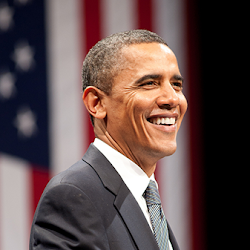
President Barack Obama: My vision for America

For the past few days, all of us have been properly focused on one of the worst storms of our lifetimes. We mourn those who were lost. And we pledge to stand with those whose lives have been turned upside down for as long as it takes them to recover and rebuild. Because when hardship hits, America is at its best. The petty differences that consume us in normal times quickly melt away. There are no Democrats or Republicans during a storm -- only fellow Americans. That's how we get through the most trying times: together.Four years ago, we were mired in two wars and the worst economic crisis since the Great Depression. Together, we've battled our way back. The war in Iraq is over, Osama bin Laden is dead, and our heroes are coming home. Our businesses have created more than 5 million new jobs in the last two and half years. Home values and 401(k)s are rising. We are less dependent on foreign oil than at any time in the last 20 years. And the American auto industry is back. We're not there yet. But we've made real progress. And on Tuesday, America will get to choose between two fundamentally different visions of what makes America strong.I believe America's prosperity was built on the strength of our middle class. We don't succeed when a few at the top do well while everyone else struggles to get by -- we're better off when everyone gets a fair shot, everyone does their fair share, and everyone plays by the same rules. When Bill Clinton was president, he believed that if America invested in the skills and ideas of its people, good jobs and businesses would follow. His economic plan asked the wealthiest Americans to pay a little more so we could reduce our deficit and still invest in job training and education, research and technology, better health care and a dignified retirement. And what happened? By the end of his second term, our economy created 23 million new jobs. Incomes rose. Poverty fell. Deficits became the biggest surplus in history. The path Governor Romney offers is the one we tried for eight years after President Clinton left office -- a philosophy that says those at the very top get to play by a very different set of rules than everyone else. Bigger tax cuts for the wealthy that we can't afford. Encouraging companies to ship jobs and profits overseas. Fewer rules for big banks and insurance companies. They're the policies that caused this mess in the first place.In the closing weeks of this campaign, Governor Romney has started calling himself an agent of change. And I'll give him one thing -- offering another $5 trillion tax cut weighted towards the wealthy, $2 trillion in defense spending our military didn't ask for, and more power for big banks and insurance companies is change, all right. But it's not the change we need. We know what real change looks like. And we can't give up on it now.Change is an America where people of every age have the skills and education that good jobs require. We took on banks that had been overcharging for student loans for decades, and made college more affordable for millions. Now we'll recruit 100,000 math and science teachers so that high-tech, high-wage jobs don't end up in China, and train 2 million workers at community colleges for the skills local businesses need right now. Change is an America that's home to the next generation of manufacturing and innovation. I'm not the candidate who said we should "let Detroit go bankrupt," I'm the president who bet on American workers and American ingenuity. Now I want a tax code that stops rewarding companies that ship jobs overseas, and starts rewarding companies that create jobs here; one that stops subsidizing oil company profits, and keeps supporting clean energy jobs and technology that will cut our oil imports in half. Change is an America that turns the page on a decade of war to do some nation-building here at home. So long as I'm commander-in-chief, we'll pursue our enemies with the strongest military in the world. But it's time to use the savings from ending the wars in Iraq and Afghanistan to pay down our debt and rebuild America -- our roads and bridges and schools. Change is an America where we reduce our deficit by cutting spending where we can, and asking the wealthiest Americans to go back to the income tax rates they paid when Bill Clinton was president. I've worked with Republicans to cut a trillion dollars of spending, and I'll do more. I'll work with anyone of any party to move this country forward. But I won't agree to eliminate health insurance for millions of poor, elderly, or disabled on Medicaid, or turn Medicare into a voucher just to pay for another millionaire's tax cut. The folks at the very top don't need another champion in Washington. The people who need a champion in Washington are the Americans whose letters I read at night; the men and women I meet on the trail every day. The cooks and cleaning staff working overtime at a Las Vegas hotel. The furniture worker retraining for a career in biotechnology at age 55. The teacher who's forced to spend less time with each student in her crowded classroom. Her kids, who dream of becoming something great. Every small business owner trying to expand and do right by his or her employees -- all of these Americans need a champion in Washington. When these Americans do well, America does well. That's the change we need right now. It's time to finish what we've started -- to educate our kids, train our workers, create new jobs, new energy, and new opportunity -- to make sure that no matter who you are, where you come from, or how you started out, this is the country where you can make it if you try. The America we believe in is within our reach. The future we hope for is within our sights. That's why I'm asking for your vote this Tuesday.

Russia slams Clinton for Syria opposition remarks

Russia on Friday blasted US Secretary of State Hillary Clinton's call for an overhaul of the Syrian opposition and accused Washington of trying to solve the conflict on its own terms. The Russian foreign ministry said Clinton's comments on the Syrian National Council (SNC) no longer representing the entire anti-regime movement clashed with the agreements world powers reached on the conflict in Geneva in June. "We heard direct orders (from the United States) about what the Syrian opposition should do to form a 'government in exile,' and about who should join such a government -- up to specific people," the Russian statement said. It noted that Washington and Moscow had both agreed in Geneva to support setting up a transition government that would be decided by the Syrians people as a first step for ending the 20-month crisis. Clinton this week said the SNC "can no longer be viewed as the visible leader of the opposition" -- comments that came just days ahead of an important Syrian opposition meeting in Qatar. Russia also accused US officials of starting to simply ignore Russia and China's joint resistance to what Moscow sees as international efforts to topple Syrian President Bashar al-Assad. "US representatives are saying that they do not intend to wait for a change in Russia and China's position. So they are bluntly making clear that they see the Syria conflict being settled exclusively on their terms," the ministry said. Russia and China have vetoed several UN Security Council resolutions to end the crisis in Syria. Moscow has viewed the ruling Syrian government as its last important Middle East ally and has refused to cut military cooperation with Assad's regime.

Saudi Parties Call for Nationwide Rallies Early November

Saudi Arabia's political parties called for nationwide demonstrations early next month to demand release of political prisoners in the country. The Saudi parties are preparing for several protest rallies on November 2 concurrent with the demonstration in Kuwait. Founder of Saudi Arabia's Islamic Ummah (nation) Party Sheikh Mohammad bin Saad Al-Mofarrah has called on the public throughout the country to stage nationwide demonstrations to call for political prisoners, including those detained during the recent protest rallies in the country. Salafi figures in Kuwait plan to stage a demonstration codenamed 'Keramat al-Vatan 2 (Homeland Dignity 2)' in a bid to reject a revision of electoral laws ordered by Kuwaiti Emir Sheikh Sabah al- Ahmad al-Jaber al-Sabah. Salafi opposition figures have already declared that they would hold protest rallies after Muslims' Eid al-Adha to oppose against reforms in electoral laws. Over 100 Salafis and 11 police forces were injured during conflicts last Sunday in Kuwait. The clashes came after Kuwaiti Emir ordered the revision in the laws ahead of snap parliamentary scheduled for early December. The Kuwaiti Emir has recently dissolved the parliament formed in 2009 and paved the way for snap elections for the second time in 2012 and 5th time over last 6 years.

UN Chief Concerned Over Bahrain Protest Ban

http://www.rttnews.com
United Nations Secretary-General Ban Ki-moon on Thursday expressed concerns over the recent restrictions imposed on public demonstrations and other public gatherings in Bahrain and urged authorities in the Gulf Kingdom to lift those restrictions without delay. "The Secretary-General believes these restrictions could aggravate the situation in the country and urges the Government of Bahrain to lift them without delay," Ban's spokesperson was quoted as saying in a news release issued on Thursday. The spokesperson said the U.N. chief also called on protesters in Bahrain to "ensure that any demonstrations are, in fact, peaceful," and stressd that "recent violence that reportedly killed two police officers is unacceptable." Further, he reiterated his earlier appeal to the Bahraini authorities to "abide fully by international human rights standards, including respect for freedom of expression and peaceful assembly and association." The Secretary-General "reaffirms his belief that there needs to be an all inclusive and meaningful national dialogue that addresses the legitimate aspirations of all Bahrainis, as this is the only way towards greater stability and prosperity for all Bahrainis," the spokesperson noted. Ban also called on the Bahraini government to "complete the full implementation" of recommendations contained in the Bahrain Independent Commission of Inquiry, which the King of Bahrain established in June 2011 to investigate incidents that occurred during unrest in the tiny Middle-East State that year. The Commission reportedly found that government forces had used excessive force during the protests in February and March 2011, which left at least 35 people dead, including five police officers, reports said. The Commission also found evidences of torturing some detainees.The Commission's 17 recommendations included creation of independent bodies to investigate claims of human rights violations, review of convictions and sentences of individuals detained during the unrest, and avoidance of detention without prompt access to lawyers and without access to the outside world, with all cases of detention subject to effective monitoring by an independent body. On October 30, Bahrain banned all protest gatherings and threatened legal action against groups encouraging demonstrations and clashes. The move is believed to be aimed at crushing the oil-rich Kingdom's anti-government uprising spearheaded by the majority Shia population, who have been complaining about discrimination by the ruling Sunni royal family. It is estimated that at least 60 people have been killed since pro-democracy protests broke out in Bahrain in February 2011 as a fallout of the 'Arab Spring' that saw the toppling of entrenched rulers in North Africa and the Middle East. The Bahraini government had suppressed last year's unrest with the help of troops from other GCC (Gulf Cooperation Council) States. Nevertheless, the country continues to witness frequent protests staged by the Opposition and Bahrain's Shia majority, who have long been complaining about discrimination in housing and government jobs. They have been demanding greater political rights and want the Sunni monarchy to hand over most of its powers to the elected Parliament.

Bahrain protest ban fails to stop street clashes

'UN must suspend Bahrain membership for rights violations'

A Bahraini political activist says the United Nations must suspend the membership of the Persian Gulf kingdom due to Manama regime’s human rights violations, Press TV reports. “They have to tell the Bahraini government we are going to suspend your membership because you violated all these human rights and the freedom of assembly, [and] the right to expression, and for this reason people were killed, people were tortured, people were jailed, opposition leaders are still in jail, teachers, physicians are in jail,” President of the Bahraini Medical Association Osama Alaradi said in an interview with Press TV on Friday. The Bahraini revolution began in mid-February 2011, when the people started holding mass demonstrations. The Bahraini government promptly launched a brutal crackdown on the peaceful protests and called in Saudi-led Arab forces from neighboring Persian Gulf littoral states. Dozens of people have been killed in the crackdown, and security forces have arrested hundreds, including doctors and nurses accused of treating injured revolutionaries. “They had been trying to suppress the Bahraini people for the past actually two or three decades but they were not able to, because Bahraini people are determined to achieve their rights, their basic rights,” Alaradi said. He further argued that, expressing concern over the situation in Bahrain is not enough and as an international organization, the UN, should take action with regards to the violations taking place in the kingdom. “I know they are admitting that the Bahraini government is violating the basic rights of assembly, [and] freedom of expression, but just to say that we are really concerned about that and this may aggravate the situation is really not enough at all.”

PAKISTAN: Quality education still a long way off

As evening approaches in the centre of Pakistan’s capital Islamabad, children gather at a small playground, chatting and laughing. It is a scene played out in countless parks across the country, but the children are not here to play after school - they are here to attend one.
For three hours every evening, free classes run here for anyone who wants to attend, with the idea being that some of the many children who live on Islamabad’s streets, or work in its markets and houses, might benefit. Mohammad Ayub, who runs the unofficial school, began teaching children whose parents could not afford to send them to school in 1988. Despite the fact that state-run primary schools do not charge fees and many provide free textbooks, other expenses (such as stationery, uniforms and transportation) mean that for many poor families, schools are unaffordable. “It became quite popular and many parents who couldn’t afford a meal - forget education - would send their children to my little school in the evenings,” Ayub said. The school, which relies on volunteers and donations, is one of dozens of informal institutions in the capital which are helping to educate children. Pakistan has made limited progress in improving the quality and reach of its education system, and millions of children are missing out on schooling altogether in what the governments of Pakistan and the UK have termed an “education emergency”. Despite making education a fundamental constitutional right in 2010, Pakistan has no chance of fulfilling its Millennium Development Goal of achieving universal education by 2015. Over seven million primary-aged children do not attend school, according to a 2011 report by the Pakistan Education Task Force (PETF), a body which includes senior education officials and independent experts. The UN Education, Scientific and Cultural Organization (UNESCO) said in 2010 that 30 percent of Pakistan’s population lives in a state of “extreme educational poverty” - receiving less than two years of education. “We could clearly see that an emergency was unfolding. Fifty percent of children of primary school age were not attending school or not completing it,” said Shahnaz Wazir Ali, social sector adviser to the prime minister and PETF co-chair, adding: “We can no longer treat the education sector with a business-as-usual approach.” PETF reckons the economic cost to Pakistan of not educating its people effectively translates into hundreds of millions of dollars in lost productivity. A success story Many of those who have finished Ayub’s informal school in Islamabad have gone on to complete high school and college, and today have jobs they could never have dreamed of. Ayub estimates that 20 percent of the students finish grade 10, with around 10 percent going on to complete degrees at colleges. Many, like Yasmin Nawaz, a 30-year-old mother of three who graduated from the school in 1994, became teachers themselves. “I finished middle school, grade 8. My parents couldn’t afford to send me to high school, but Master Ayub said I must,” Nawaz said. “He paid for my textbooks and my exam registration fee, and in return, I taught here at the school. I then taught elsewhere as well.” Despite the clear return on this investment and Pakistan’s pledge to spend at least 4 percent of its GDP on education, that figure has been decreasing. Education spending today stands at less than 1.5 percent of Pakistan’s GDP, according PETF.“The government recognized this problem early on. We’ve been working hard, on our own and with our major partners, especially the British government, to improve the situation,” Ali said. “Much more needs to be done but the government has taken some significant decisions and implemented them too.” These efforts include investments in teacher training, infrastructure and providing textbooks to students, but it is not merely a matter of getting children into school. The quality of their education also needs to be addressed, analysts say. “One of the solutions you hear to the problems in Pakistan’s education sector is for the private sector to step up and fill the gap,” Abbas Rashid, executive director of the independent Society for the Advancement of Education, told IRIN. “Around 30 percent of students are attending private schools, but what kind of education are they getting?” Poor quality Private schools, analysts say, are preferred by parents over government schools, despite the higher fees, but the quality of education at these schools is often only marginally better. “The issue is: better does not necessarily mean adequate,” said Rashid. According to the 2011 Annual State of Education Report (ASER) compiled by the South Asian Forum for Education Development, 45 percent of grade 5 students in public schools can only read a grade 2-level story in Urdu. The number is only slightly better in private schools - 57 percent. That parents are concerned about quality is reflected by the fact that many of the students at Mohammed Ayub’s school attend government schools in the morning. Seven-year-old Rimsha Samuel goes to a government primary school in the morning, and after lunch, heads to Ayub’s school for further classes. “After I study here, I understand my lessons really well. I don’t forget and do well in tests,” Samuel said. Lack of resources not the only problem Meanwhile, Ayub says: “Do I think the education system in Pakistan has let the children of this country down? Sure… But the reason for that is not lack of resources. If resources were an issue, where did they get money for all these school buildings where teachers don’t teach… There’s just no will to improve the situation.” Experts agree that just throwing money at the problem will not solve it, and that policy and governance are issues that have to be dealt with at the same time to achieve any lasting results. “Money is one of the main issues, but there is a problem with how policies are made. And they are constantly changed, not using the research that has been carried out on the sector,” said Fareeha Zafar, an independent education expert. Accountability “There is the issue of governance, there are no accountability mechanisms. For example, even if you do have sufficient teachers - which we don’t - if they are not in school, it is not possible to achieve anything.” The LEAPS (Learning and Educational Achievement in Pakistan Schools) project and PETF estimate that teachers in government schools, despite being paid more than their private sector counterparts and having greater job security, are not present one-fifth of the time. Government school teachers often use political connections and union action to protect themselves. “Even if a senior officer reports a teacher that is not performing or not even attending school, it is very difficult to take action because they will involve the unions or go to an MNA [member of the National Assembly],” said Zafar. “Even if you get that [teacher accountability], the quality of education, of textbooks, is an issue. So all of this needs to be considered, not just what is spent on education, but how.”

Afghanistan’s game plan

Things are apparently happening right according to plan in Afghanistan. The presidential polls will be held on schedule in April 2014, negating concerns that President Hamid Karzai was seeking a delay in elections. The presidential polls will coincide with the drawdown of tens of thousands of foreign troops, who are expected to exit the country by the end of 2014. Moreover, provincial elections, originally scheduled for mid-2013, will also be held on the same as the presidential elections, while the parliamentary elections will be held in 2015. According to this future calendar of political events, it seems like Afghanistan is not doing too badly. The process of electoral democracy is finally getting consolidated and the impending exit of foreign forces will pave way for true Afghan self-governance. But, while the political roadmap might appear quite orderly in Afghanistan, things are not too upbeat for the war-torn country. The Taleban insurgency, instead of rescinding, has been in fact growing in the last few months. On the occasion of Eid Al Adha, a suicide bomber struck people coming out of a mosque in the northern part of the country and killed 45 people. Wedding processions and high-profile government functionaries have been targeted recently. Hamid Karzai’s ethnically fractious government has not only blatantly failed in controlling the violence the country, it is also ridden with rampant corruption and inefficiencies. In fact, public officials are quite openly involved in illegal drug and arms trade. Moreover, the electoral process has been far from perfect. The 2009 elections, which re-elected Karzai, were tainted by allegations of fraud and experienced only 33 per cent turnout. Even though $13 million in funds have been pledged this year to help the Afghans prepare for the elections — with EU being the major contributor — there is no guarantee that they will actually elect a leadership any stronger than the present one. There’s a great danger that the forthcoming elections would bring about another contentious result and spark bitter in-fighting amidst the top political contenders. This scenario, especially during a time of fragile security created by the departure of the US troops, can lead to a power vacuum that will threaten to further destabilise the country. Thus, the game plan for Afghanistan, as envisioned by the Afghan leaders and the Western countries, might seem like it is right on schedule, but there’s no guarantee that its execution and results will be fruitful.

US Study Says Afghans Not Ready to Manage Forces

A U.S. government audit warns Afghanistan’s security forces may not be able to sustain themselves beyond a 2014 pullout of international troops. The audit found problems with the hiring and training of competent administrators to do everything from run power plants to basic accounting and purchases. Afghan uniformed police in Helmand Province learn to read and write under an internationally funded literacy program. It is one of many in parts of the country that are now under Afghan government control. It is here where the U.S. and NATO are fighting one of their biggest challenges in preparing Afghanistan to take full responsibility for its security before international forces pull out in 2014. Nearly 70 percent of Afghans are functionally illiterate, and that makes it difficult to find qualified people to manage supply systems and infrastructure to sustain its security forces. Those forces are growing. U.S. Defense Secretary Leon Panetta - at a NATO meeting in Brussels last month - said efforts to train them are paying off. "The number of Afghan security forces has now grown to about 350-thousand, and that larger force has maintained its recruitment and retention rates. Those forces have taken the lead to very complex combat operations, and they are suffering the vast majority of coalition casualties - a further sign that the Afghans have the willingness to sacrifice and take the fight to the enemy for their own future,” Panetta said. But a report by the Special Inspector General for Afghanistan Reconstruction suggests those gains could be jeopardized. The report looked at the Afghan government’s operations and maintenance capabilities and concluded they are undeveloped - making the force incapable of sustaining itself when international troops leave. It said one major problem is the high number of soldiers and contractors who are illiterate and cannot do things like basic accounting and purchasing, or read manuals and blueprints to operate power plants. Security analyst Gary Schmitt of the American Enterprise Institute in Washington says the deficiencies are a major threat to peace in the country after 2014. “Like every soldier, if you don't have food, if you don’t have equipment, if you don’t have ammunition, and particularly in a fledgling military like Afghanistan’s, what happens is people leave. The desertion rate is already high but if you’re not being equipped and you’re facing an enemy, you’re not going to stay in place. So it’s a serious question,” Schmitt said. The U.S. administration has decided to pull American forces out by 2014, and Afghan leaders support that decision. But they say they will still need international support beyond the withdrawal date. Analysts say the inspector’s general report raises further question of whether Afghanistan is ready to secure itself beyond 2014.

Malala Yousufzai status updates

Doctors treating Malala Yousufzai said she continues to make good progress and remains in a stable condition at the Queen Elizabeth Hospital Birmingham.

Balochistan firing: 13 killed as van catches fire

The Express Tribune News Network
At least 13 people were killed and several sustained injuries when their van caught fire after a shoot-out at a small petrol pump in Khuzdar, Express News reported on Friday. According to initial details, the van was parked at the petrol pump when unknown armed men opened fire on the vehicle. Express News correspondent Irfan Rana said that petrol drums at the pump caught fire because of the shooting, and as a result, burnt the van. The injured have been taken to a nearby hospital.

India: 5,000 visas likely for Pakistan cricket fans

The Home Ministry and security agencies have swung into action to complete the modalities for issuing visas to Pakistani cricket fans visiting India for the limited-over series later this year. According to sources in the Ministry, India is likely to give 5,000 visas to Pakistani nationals but only after due diligence and by following stricter guidelines. “On earlier occasions, India has been liberal in granting visas to Pakistani nationals… but this time Indian agencies want to take extra precaution in allowing cricket fans from the neighbouring country following revelations that Pakistan-based terror groups had sent their operatives to India earlier to do recce to possible targets,” a senior Ministry official said. From next week, senior Ministry officials will hold a series of deliberations with their counterparts in the External Affairs Ministry, besides security and intelligence agencies to prepare a road map for issuing visas to Pakistani nationals for the cricket series. “On Monday, a high-level meeting will take place at the Home Ministry to decide on types of visas and other guidelines to be adopted. As there will be various matches, it will also be decided whether to give Pakistani fans a match-specific visa or for the entire series…it is crucial to ensure that Pakistani fans do no disappear during their stay in India,” the official said. The Home Ministry has formed a special committee that includes Additional Secretaries Khurshid Ahmed Ganai and K. Skandan to look into all issues. Home Secretary R.K. Singh has already held deliberations with BCCI officials and assured them all help, in terms of security preparedness and logistical support, to ensure successful completion of the much-awaited sporting event. The India-Pakistan comprises three ODIs and two Twenty-20 Internationals that will be played between December 2012 and January 2013. The ODIs are likely to be played in Chennai, Kolkata and New Delhi, while India would host Twenty-20 matches in Bangalore and Ahmedabad. Accordingly, the Ministry officials will hold meetings with the civil and the police administrations of the respective State governments. Post 2008 Mumbai terror attacks, India severed cricketing ties with Pakistan, though both nations have been playing matches in various competitions at neutral venues. They have not played a bilateral series since Pakistan’s tour of India in 2007. However, in the Cricket World Cup semi-final in Mohali last year, Prime Minister Manmohan Singh and his then Pakistani counterpart Yousuf Raza Gilani watched the match. Sena, MNS oppose matches Mumbai Staff Reporter writes: The Shiv Sena and the Maharashtra Navnirman Sena on Thursday vehemently expressed their opposition to the Pakistan cricket team’s tour to the country next month, terming it a matter of “national shame.” In an editorial in his party mouthpiece Saamna, Shiv Sena chief Bal Thackeray castigated the Manmohan Singh-led UPA government as “an enemy of national pride.” The Sena chief also came down heavily on the Board of Control for Cricket in India (BCCI), accusing it of “betraying the country for [the] sake of money” and making Indian cricketers a part of that process of betrayal. “Except for Kapil Dev and Sunil Gavaskar, no cricketer has opposed playing cricket with Pakistan,” said Mr. Thackeray. Alluding to Pakistan’s role in the 26/11 Mumbai terror strike and the 2001 Parliament attack, Mr. Thackeray said allowing Pakistan cricketers to play on Indian soil was tantamount to insulting the martyred jawans. “By allowing them to play, we are not valuing the blood spilled by them [Indian jawans] in our battles against Pakistani aggression.” He also censured Home Minister Sushilkumar Shinde, as he had “offered his services to Pakistan,” by giving the green signal for the tour. MNS chief Raj Thackeray, Mr. Thackeray’s nephew, has also vociferously opposed the tour. “Raj saheb had already declared that we will not allow any India-Pakistan match to be played in Maharashtra,” said MNS MLA Shishir Shinde.

Malala's Schoolmate Says Taliban Bullet Has Only Strengthened Her Resolve

Radio Free Europe/Radio Liberty
Recovered after being struck by a Taliban bullet, 16-year-old Kainat Ahmad is now focused on two things -- continuing her education and seeing her best friend again. Ahmad was wounded during the attempted murder last month of teen peace activist Malala Yousafzai, targeted by the Pakistani Taliban for her criticism of the hard-line group's influence in the restive Swat Valley. On November 1, Ahmad returned to the girls' school she and Malala attend in Mingora, the capital of the Swat district. Ahmad spent nearly a week in a hospital in Mingora after being struck by a bullet in her right arm when Taliban gunman fired on the vehicle she and Malala were riding in. Malala is slowly recovering in a British hospital from a serious bullet wound to her head. Ahmad says she's looking forward to the day when Malala will join her at school and says everyone in the community is praying for her recovery. 'We Are All Capable' While the 10th grader says her friend's relentless promotion of girls' education incurred the wrath of the Taliban, Ahmad says the incident has only strengthened her resolve to pursue an education. She says Malala's courage and defiance has made her an inspiration to a generation of Pashtun girls. "Girls will be attracted to an education because of Malala," Ahmad says. "Many are saying, 'If Malala can do what she did, why can't we do something similar?' They say, 'We all are capable.'" Ahmad says girls' education is necessary for the progression of society and is an avenue for opportunity.Education is a must for both boys and girls. The boys can pursue any jobs," she says, "but girls need a respectable profession where nobody can point fingers at what they do." She says the early October shooting has given her a career goal. She wants to become a doctor. "I will work very hard to become a doctor so I can serve the poor and my nation," she says. The shooting of Malala because of her activism for peace and child rights focused global attention on the Taliban's opposition to girls' education. Rallies condemning the shooting and in support of Malala were held nationwide. The Taliban threatened journalists and media outlets across the country in the wake of the shooting and even said they would try to kill Malala again if she survived. Malala's story continues to dominate headlines in Pakistan, reflecting the public's outrage over the shooting.

Pakistan's anti-graft body summons three former generals

http://timesofindia.indiatimes.com
Pakistan's top anti-corruption agency has summoned three retired generals, who were allegedly involved in the lease of railway land to a golf club at a throwaway price resulting in the loss of over Rs 16 billion. The National Accountability Bureau (NAB) has summoned former Lieutenant Generals Javed Ashraf Qazi and Saeeduz Zafar and former Maj Gen Hamid Hassan Butt in connection with the lease of land to the Royal Palm Golf Club in Lahore, a media report said today. The retired army officers have been asked to appear before an investigation team at the NAB headquarters in Islamabad, The News quoted its sources as saying. Their case is likely to be referred to the courts for a decision. According to NAB officials, the Generals caused a loss of over Rs 16 billion to Pakistan Railways by leasing its lands at a throwaway price. The Standing Committee on Railways of the National Assembly or lower house of Parliament recently issued directions to the NAB to conduct an inquiry into the alleged involvement of the Generals in the case. NAB officials informed the Parliamentary panel that the lease of the railways land to the golf club lacked transparency. The panel was further informed that the Generals were allegedly involved in the controversial lease process. Initially, 103 acres were leased and this was later extended to 140 acres while ignoring the highest bid. NAB officials informed the Parliamentary panel that the Royal Palm Golf Club had agreed to raise the lease amount. The NAB is likely to recover Rs 16.18 billion from the contractor of Royal Palm Golf Club for Pakistan Railways.

Altaf for referendum on ‘Taliban’s or Jinnah's Pakistan’

The MQM chief Altaf Hussain has directed party workers to organize referendum in the country. Muttahida Qaumi Movement (MQM) chief Altaf Hussain during his telephonic conversation has directed the MQM Coordination Committee to organize a referendum and ask the masses whether they want Taliban’s or Quaid-e-Azam’s Pakistan? He has directed his party workers to organise the referendum throughout the country on the same day. He said that the counting of votes should be done in the presence of senior retired judges, lawyers or prominent citizens. The MQM chief has appealed to Pakistanis that since the country was passing through a difficult time of its history, they should perform their national duty and vote without any fear or pressure.

Zardari orders ‘operation’ in Karachi

Expressing displeasure at the worsening law and order situation in Karachi, President Asif Ali Zardari has directed the law enforcing agencies to conduct raids on the dens of criminal elements. Chairing a meeting at the Chief Minister House on Thursday, the president also took notice of proliferation of the arms and weapons in the metropolis and observed that the arms licences should be Smart Card-based to ensure that no fictitious licences were issued. Taking note of the use of mobile phones by the militants and criminals, Zardari also asked the government to work out a plan to ensure that no SIMs are available at the retail shops and the outlets of mobile companies, rather they are posted to the CNIC addresses of the applicants. The president directed the interior minister to frame draft in this regard for the cabinet’s approval. The president advised the provincial law minister to work on enacting suitable legislation, in consultation with all stakeholders, for the protection of the witnesses. He observed that one of the reasons hindering effective prosecution was that witnesses backed out due to fear and insecurity. He advised the government to study the model of witness protection laws adopted in other countries in the wake of rising militant activities for this purpose. Briefing the media, Presidential Spokesperson Senator Farhatullah Babar said the meeting was attended by Acting Sindh Governor Nisar Ahmed Khuhro, Chief Minister Syed Qaim Ali Shah, Federal Interior Minister Rehman Malik, provincial ministers, IG Police, DG Rangers, Secretary General to the President and senior federal and provincial officials. CM Qaim Ali Shah briefed the president about the overall law and order situation in the province, especially in the metropolis. The federal interior minister also gave an overview of the security situation. Farhatullah said that President Zardari emphasised that maintenance of order was a shared responsibility of all the political forces and concerted efforts should be made by all concerned for ensuring peace in the metropolitan city. Zardari said that no effort should be spared in ensuring smooth law and order and no discrimination be made in dispensing justice to the law-violators. He said that ensuring security of the citizens was the prime responsibility of the government and all efforts should be taken in this regard. Chairing a meeting on the establishment of Pakistan Kidney Institute (PKI) at Islamabad, the president said that public-private partnership model can be successfully followed to overcome the shortage of medical facilities for catering to the growing health needs of a booming population of the country. Those who were present during this meeting included Prof Dr Saeed Akhter, Dr Syed Nayer Mahmud, Dr Manzoorul Haq Qazi, CEO and President Shifa International Hospital and other doctors associated with the project. President Zardari said that in view of rising numbers of kidney and urological diseases, there was an urgent need to establish a state of the art institute that could cater to these diseases especially of the poor segments of society who cannot afford exorbitant diagnostic and treatment cost involved with such diseases. In this context the president commending the role of Prof Dr Adibul Hasan Rizvi and the Sindh Institute of Urology and Transplant (SIUT) in Karachi being the leading institute in this field in the country, remarked that in view of the shortage of such state-of-the art facilities especially for the people of the upper region of the country, there was an urgent need to establish one in the capital city for catering to the growing demands of an increased population. Prof Dr Saeed Akhter briefed the president about the feasibility of establishment Pakistan Kidney & Liver Institute in collaboration with COMSATS Institute of Information Technology (CIIT). According to the proposal, the Institute is envisioned to be a not-for-profit organisation where 50% patients will be paying while 50% beds will be for non-paying poor patients. The revenue generated from the paying patients would be utilised in providing relief to the poor patients. It said that in near future, liver services will also be added to Institute. The proposal stated that PKI will work as an independent organisation under its board in collaboration with COMSATS. The meeting was informed that land was available for the establishment of PKI. The president also appreciated the role being played by the doctors of the private sector in the establishment of this centre of excellence in urology, nephrology liver diseases and Transplantation. During a meeting on Sindh Medical University, the president directed for significantly increasing the number of merit-based as well as seats for student from rural Sindh so as to provide opportunities to those deserving students who despite talent cannot reap the benefits of establishment of university due to limited number of seats. Those present during the meeting included Acting Governor Nisar Ahmed Khuhro, CM Qaim Ali, Federal Minister Dr Farooq Sattar, Dr Noshad Sheikh, Dr Tariq Rafi, SMU VC, alumnus of Sindh Medical University and concerned senior officials. The president commended the role the university has played so far in imparting medical education to the students. He also called upon the provincial government to resolve legislative issues of the SMU. The last meeting in the series was with the Sindh Chapter of Civil Service Academy Alumni wherein the president also laid the foundation of a housing society for the civil servants. According to the prepared text of the speech, President Zardari observed that an efficient, effective and dedicated civil service could play a decisive role in finding solutions to the issues confronted by the country that continue to haunt us and hinder our progress. He said that the government believes in safeguarding the legitimate interests of the civil service of Pakistan and was conscious of the need to attract the best talent in civil services. He said that the government was also aware of reforming the pay packages of the civil servants, and catering to issues such as transportation and the housing facility in big cities like Islamabad, Lahore, Karachi, Peshawar and Quetta. The president assured the government would do its best to resolve the problems that stand in the way of a motivated and satisfied civil service.

ANP chief says situation in Karachi is very uncertain

ANP Chief Asfandyar Wali Khan on Thursday condemned the killing of ANP workers at Landhi Town Karachi and urged the workers to keep patience. In a statement issued from Bacha Khan Markaz ANP chief Asfandyar condoled with the families of Abdurahaman, ward President of ANP Landhi Town, vice president Abid Khan, Sajid Khan, vice president UC-6 Mian Jan, Mohammad Salim and Niaz Badsha and prayed for their departed souls. Asfandyar said continuation of target killing in Karachi, which is the financial hub of the country, has created an uncertain situation in the city where people have been feeling very insecure. He said tolerance and non-violence is the policy of ANP which should not be perceived as weakness because ANP knows how to raise voice for the rights of Pukhtuns in every corner of the world. Urging Sindh government to bring the target killers to book, ANP leader said government should ensure the protection of life and property of Pukhtuns as well as other suppressed nations in Sindh. He said Pukhtuns could not be deterred through such terrorist attacks and they will win the war against terrorism at every cost as it is important to win this war for the protection of next generation. He urged the workers that to keep patience and without indulging in violence continue their political activities as well as continue support the families of the martyred workers.

Security beefed up in Peshawar

Security is on high alert in Peshawar in the backdrop of security forces’ operation against extremists in Khyber Agency and due to Friday prayers, Geo News reported. According to police, security forces are battling against the extremists in the adjoining tribal belt of Peshawar due to which additional police check posts have been set up in the suburban areas of Matini and Budh Bair while additional troops have also been deployed. Policemen have been stationed at the mosques of Peshawar Cantt and in interior areas while walk-through gates have been installed at main mosques. The main road leading to the Saddar Bazaar has also been closed due to security risks.

Pakistan Inflation: who is responsible?

Federal Finance Minister Dr Hafeez Sheikh was reportedly criticised by his cabinet colleagues for the rise in food prices. The Prime Minister is said to have emphasised the need to check sky-rocketing prices especially given that elections are around the corner. This was subsequent to the claim by the Ministry of Finance that inflation had come down from a high of 25 percent in 2008/09 to 8.8 percent at present. This claim requires highlighting two relevant facts. First and foremost the mechanism for the calculation of the food component of the Consumer Price Index was changed during the last fiscal year. Previously perishable and non-perishable food items were lumped together with tobacco, betel leaves/nuts and alcoholic beverages. The two are now separated resulting in a massive decline in the weightage given to food relative to beverages, tobacco and betel nuts/leaves: only 7.13 percent for the former and a whopping 17.8 percent for the latter. The reason for the change was given as a variation in consumption patterns, however, it is not clear what was the basis for this specific assessment. In addition, there is a need to highlight the fact that the Finance Ministry refused to accept the government-approved extensive surveys that began in 1996 to evaluate the change in sectoral contributions to the GDP and insisted that the old base year 2001 be used, a year with particularly low output as Pakistan was a pariah state till that time due to a bloodless coup by Musharraf in 1999. The 2001 base year allowed the government to forecast a growth rate of 4 percent while the Federal Bureau of Statistics announced a rate of 3.2 percent but was forced to revaluate the data and release a 3.7 percent growth estimate. And, secondly, the reason for food inflation is the inability of the government to ensure that high support prices for major crops lead to lower consumer prices as input costs are rising at a faster pace - input prices that are mainly linked to sustained poor governance in the power sector. The Cabinet was also informed that salaries had been increased by 115 percent during the last four years, accounting for former premier Gilani's decision to raise salaries by an unprecedented 50 percent in one year followed by 15 percent in the two subsequent years, while inflation has been around 11 to 12 percent. The implication was that wage earners were better off in real terms. However, ignored are two related facts. First, the salary rise was limited to civil servants both at the federal and provincial levels and was cited as a major reason for the failure of the provinces to invest adequate amounts for infrastructure and social sector development projects. All other wage-earners were not offered such attractive pay rises and needless to add the bulk of those employed in the country are in the private sector with agriculture/forestry accounting for 45.1 percent of total employed, manufacturing 13 percent and wholesale and retail trade 16.5 percent. Secondly and equally pertinently in a situation where budget deficits are reaching unsustainable levels resulting in high inflation, any rise in wages would simply generate wage-push inflation. The Finance Minister in turn blamed his Cabinet colleagues by referring to the pressure on his ministry to keep extending large bailout packages to the power sector, the PSM, the PIA and Pakistan Railways, to name just a few, without any attempt to improve governance of these entities that is undeniably the major factor for the demand for bailout packages. It is notable that the Finance Minister as the head of a committee to resolve the energy crisis resisted demands for a grant to retire part of the power sector circular debt to enable Pakistan State Oil to purchase fuel from abroad, urging the relevant ministry to first prepare a plan to improve governance but he was invariably forced to give in when asked by his more senior colleagues. In short, the minister correctly implied that he needs support from his cabinet colleagues to ensure that inflation remains low. The responsibility for controlling inflation technically rests with the State Bank of Pakistan (SBP). It was for this purpose that the International Monetary Fund's 2008 Stand-By Arrangement had amongst others two conditions: (i) to keep interest rates high to mop up excess liquidity - excess because of indiscriminate printing of money; and (ii) legal provisions relating to operational independence of the SBP be reviewed. It is pertinent to point out that the SBP Governor has recently made disturbing statements in which he has challenged the government's statistics and urged the Finance Ministry to arrest its domestic borrowing and reduce pressure on the SBP to print money.

Pakistan: Blasphemy allegations against girls’ school termed conspiracy

DAILY TIMES
Teachers, students, their parents and residents of Ravi Road area on Thursday condemned the attack on Farooqi Girls High School and termed allegations of blasphemy against the school a “controversy”. Carrying placards and shouting slogans against violence, hundreds of girl students protested outside Lahore Press Club against Tuesday’s mob attack on the school. They urged government high-ups, clerics and residents of the area to let their school reopen. The placards read “Release Principal Sir Asim”, “Release our spiritual father”, “CJ take suo motu notice”, “Attack on our school is a conspiracy”, “We have the right to education” and “We are also lovers of Prophet Muhammad (PBUH)”. The students also showed the torn book which their teacher had used while preparing the content in question. Famous for producing good results in matriculation examinations, Farooqi Girls High School was caught in a controversy after its teacher of class 6 handed out an assignment to students carrying “blasphemous” content. An angry mob attacked and set the school on fire on Tuesday while an FIR was also registered against Asim Farooqi, owner and principal of the school. However, the protesting students claimed that a conspiracy had been hatched against the school for its excellent performance and progress. Talking to Daily Times, they said they had been given Islamic teachings at the school and its administration had nothing to do with blasphemy. They requested the chief justice of Pakistan to take suo motu of the controversy and order steps for early reopening of their school. Fatima, mother of a student, said the mob attacked the school without probing the blasphemy allegations. “Had the protesters let police complete investigation, things would have been different,” Fatima said. “I myself was shocked when I read the content in question. But I calmed down after I came to know that the torn page of the book led the teacher to write wrong lines,” she said. Another student said that girls in Pakistan would suffer due to this incident. She compared the ransacking of school with the last month’s attack on education icon Malala Yousufzai.

US to enhance job opportunities in KP, Fata

THE FRONTIER POST
US Deputy Chief of Mission Ambassador Hoagland Thursday told the KP government officials that the United States was committed to improving infrastructure and expanding economic opportunities in KP and Fata. Ambassador Richard Hoagland in his day long visit to the provincial capital on Thursday held meetings with Governor Khyber Pakhunkwa Barrister Masood Kausar and Chief Minister Amir Haider Khan Hoti wherein he affirmed the importance of the US-Pakistan relationship and highlighted US assistance to Khyber Pakhtunkhwa and FATA, including projects to rebuild infrastructure and livelihoods in the region during his recent visit to Peshawar. Ambassador Hoagland told KP Governor Masud Kausar and Chief Minister Ameer Haider Khan Hoti, that the United States is committed "to helping Pakistan become a secure, economically vibrant and stable democracy and looks forward, with Pakistan, to the day that assistance is no longer needed." Ambassador Hoagland also detailed US assistance to the region, which has built more than 470 kilometers of roads, launched more than 2,000 community-based projects, provided clean drinking water for more than two million residents in the FATA, and pledged to help local officials increase educational and economic opportunities and reconnect the region to the rest of Pakistan. During brief chat with local newsmen Ambassador Hoagland highlighted the on-going cooperation between the two countries in combating terrorism: "We are working together with your leadership to realize this vision, and we are grateful for the partnership we share with the government at the national, provincial, and city level. It truly is an enduring relationship that we are building here in the Fata and KP."

President Zardari directs for indiscriminate action against miscreants in Karachi

Radio Pakistan
President Asif Ali Zardari who reviewed law and order situation at a meeting in Karachi on Thursday directed to take indiscriminate action against miscreants in the city. He also directed the federal and Sindh authorities to work in unison to restore peace in Karachi. Interior Minister Rehman Malik briefed the meeting about the overall law and order situation in the country particularly in Karachi. He said suspending the mobile telephone service for four hours at Eidul Azha helped in averting any untoward incident. Sindh Governor Ishratul Ibad Khan and Chief Minister Syed Qaim Ali Shah also attended the meeting. The President taking note of the use of mobile phones by the militants and criminals asked the Government to work out a plan so that no sims are delivered at the retail shops and outlets of mobile companies. He said sims should be posted on the addresses of the applicant as mentioned in the Computerised National Identity Card. The President directed the Interior Minister to frame draft policy in this regard for the Cabinet's approval. He advised Law Minister of the provincial government to work on enacting suitable legislation‚ in consultation with all stakeholders‚ for the protection of the witnesses. He advised the Government to study the model of witness protection laws adopted in other countries in wake of rising militant activities for this purpose. President Zardari also took notice of proliferation of the arms and weapons in Karachi and observed that the arms licenses should be Smart Card based as to ensure that no fictitious licenses were issued. He emphasized that maintenance of order was a shared responsibility of all the political forces and concerted efforts should be made by all concerned for ensuring peace in the metropolitan city.

Pakistan needs to upgrade education

Daily Times
Pakistan’s educational system needs to change dramatically to meet the needs of the 21st century, but any changes introduced needs to be sustainable over time. These views were expressed by experts while addressing the inaugural session of an international three-day conference on ‘In Search of Relevance and Sustainability of Educational Change’ organised by Aga Khan University’s Institute for Educational Development (AKU-IED) in collaboration with United Nation Children’s Fund (UNICEF) and Higher Education Commission (HEC), Islamabad, held here at AKU auditorium on Thursday. Education needs to move on with the times, to be responsive to the emerging needs of present day societies. This was well illustrated by an enactment of The Saber-Tooth Curriculum, a satirical commentary explaining how unexamined traditions of schooling could result in resisting needed changes, written by an American educator and writer, Harold Raymond Wayne Benjamin. Experts further said that provincial governments would need to lead the change, as education was a provincial subject after the 18th Constitutional Amendment. Addressing the audience, a renowned educationist and the chief guest, Dr Pervez Hoodbhoy said that the 18th amendment had empowered the provinces to bring change, but they had failed to take any initiatives so far. “Pakistan presents a particularly challenging environment for affecting change, but there are some grounds for optimism. A clearer understanding of how the education environment can be better managed, both inside and outside the classroom, will doubtlessly be important in moving towards this goal,” he said. Dr Greg Moran, Provost AKU, addressing the session via a recorded video, stressed on the need to establish a link between relevance and sustainability in educational reforms if they are to have any impact on the quality of education. Earlier, Dr Muhammad Memon, Director AKU-IED, stressed on the importance of setting a firm direction for improving the quality of education and reform efforts. “The education system needs to be made responsive, resilient and agile for leading changes for sustainability. Students need education that is holistic, relevant, meaningful and enlightening”, added Dr Memon. He also emphasised on the need for preparing a policy framework that recognises teachers’ professional status and integrity. During his keynote address through a video link, Dr Andy Hargreaves, the Thomas More Brennan Chair, Lynch School of Education at Boston College, highlighted the importance of teacher quality in effective and sustainable educational change. “There is no better sign of a system, community or society than how it treats, supports and develops its teachers,” he concluded. Eminent scholars and experts in education presented papers and participated in panel discussions on the first day of the three-day conference.

Pakistan parents arrested for acid killing

Al Jazeera
Couple allegedly beat and poured acid on their 15-year-old daughter after seeing her talking to a boy.
Pakistani officials say police have arrested a couple for allegedly killing their 15-year-old daughter by throwing acid on her because she was seen talking with a young man. Local government official Masood-ur-Rehman says the couple was arrested on Tuesday in Pakistan-administered Kashmir. Police officer Imtiaz Ali says the parents confessed to killing the girl a day earlier because they believed she had sullied the family's honour. Local police officer Tahir Ayub told AFP news agency that the father, Mohammad Zafar, had had suspicions about his daughter Anvu Sha and became enraged when he saw her with a boy outside their home on Monday. "Zafar beat her up and then poured acid over her with the help of his wife. She was badly burnt but they did not take her to hospital until the next morning, and she died on Wednesday," Ayub said. Doctor Mohammad Jahangir of the state run Kotli hospital confirmed the death, saying the girl was brought to hospital in a "very critical condition" with almost 70 percent burns. Anvu Sha's married elder sister alerted police and demanded they investigate the incident in Khoi Ratta district, 140 kilometres north of the state capital Muzaffarabad. "The parents have confessed, saying that they suspected the girl had illicit relations with a boy," Ayub said. "We have registered a murder case against the girl's father and mother." Honor killings are widespread in Pakistan, where scores of women are murdered every year for marriages or relationships not approved by their families.

U.S. blames Imran Khan of using Toronto detention for 'political reasons'

Pakistan Tehreek-e-Insaf (PTI) chief Imran Khan used his recent detention in Toronto by U.S. authorities for political mileage, according to U.S. Deputy Chief of Mission Richard Hoagland. "A lot of the story that went out was not very accurate, but played up for political purposes," The Express Tribune quoted Hoagland, as saying. Hoagland added that in principle nobody is ever stopped from entering the United States for their political beliefs. Furthermore, Hoagland said counter-terrorism was most important in U.S.-Pak relations. "The sooner we contain terrorists the more peaceful the methods (of counter-terrorism) will become," he said. "The Strategic Pause" an interim period of a difficult relationship between both the countries was now paving way for a "more mature but restrained relationship" based on diplomatic, military and intelligence sharing, Hoagland further said.

Imran detention played up for political reasons: Hoagland

Imran Khan’s recent detention in Toronto by US authorities was used for political mileage by the Pakistan Tehreek-e-Insaf (PTI) chief, said the US Deputy Chief of Mission Richard Hoagland in a talk with a select group of journalists on Thursday. Hoagland said, “A lot of the story that went out was not very accurate, but played up for political purposes.” He added that in principle nobody is ever stopped from entering the United States for their political beliefs. Furthermore, Hoagland said counter-terrorism was most important in US-Pak relations. “The sooner we contain terrorists the more peaceful the methods (of counter-terrorism) will become,” Hoagland said. “The Strategic Pause” an interim period of a difficult relationship between both the countries was now paving way for a “more mature but restrained relationship” based on diplomatic, military and intelligence sharing, said the US diplomat. Elections in the US The US diplomat added that no matter who won the US presidential elections, there would be “no pendulum swing in foreign policy.”

Thursday, November 1, 2012

Politics 2012: Race to the White House

Storm-ravaged New Jersey Shore starts to rebuild

New Jersey is Ground Zero of superstorm Sandy, where the low-lying coastline is still in a critical state as residents slowly come to terms with the devastation.Duration

Officials and experts praising FEMA for its response to Hurricane Sandy

Following Hurricane Katrina seven years ago, FEMA became a national punching bag, ridiculed for its slow and cumbersome response to the disaster along the Gulf Coast. In the aftermath of Hurricane Sandy this week, the Federal Emergency Management Agency and its administrator W. Craig Fugate are garnering more positive reviews from public officials in northeastern states hit by the superstorm, as well as from disaster-management experts. “The president has been outstanding in this and so have the folks at FEMA,” New Jersey Gov. Chris Christie (R) said Tuesday on NBC’s “Today” show. Officials from Maryland, Pennsylvania, New York and other storm-struck states have also praised the federal agency’s performance. “My impression is that this is a different agency than we’ve seen over the last decades, one that post-Katrina had lost a lot of credibility,” said Joseph E. Trainor, an assistant professor with the Disaster Research Center at the University of Delaware. Trainor added that the FEMA-led pre-positioning of equipment and supplies and the “unprecedented” federal major disaster declaration before the storm hit “shows a level of agility that didn’t exist a couple of years ago.” In a conference call with reporters Thursday, Fugate brushed off a question asking for an assessment of FEMA’s performance. People affected by the storm “don’t care how many press releases you’ve put out,” Fugate said. “. . . All they want to know is: When is my power coming back on? And can you help them get a place to stay?” Dissatisfaction with FEMA’s performance could rise as power outages and other problems continue. In the hard-hit New York borough of Staten Island, local officials and residents complained Thursday of a slow government response, prompting pledges from members of Congress that more help would be coming. “A lot of people doubt the capacity of government to learn from past mistakes, but the evidence so far in this case is that there has been learning on the part of the federal government on how to prepare for disasters,” said Edward Alden, director of the Renewing America Initiative at the Council on Foreign Relations. Republican presidential nominee Mitt Romney has backed off a suggestion made during a 2011 primary debate in favor of curtailing federal disaster response and letting states and the private sector take on a bigger role. “We cannot afford to do those things without jeopardizing the future for our kids,” Romney said at the time. On Wednesday, the Romney campaign issued a statement supporting FEMA. “I believe that FEMA plays a key role in working with states and localities to prepare for and respond to natural disasters,” Romney said, adding that as president, he would ensure FEMA has the funding it needs to work with states and localities “in the best position to get aid to the individuals and communities affected by natural disasters.” FEMA’s primary role during disasters is to serve as a coordinator of other federal agencies as well as state, local and nonprofit resources. Much of the credit for FEMA’s improved image has been given to Fugate, a plain-spoken former paramedic who served as head of Florida’s emergency agency during Katrina. Fugate, who described himself Thursday as “the most impatient . . . person in the world” has made it a priority to better coordinate federal efforts with state and local governments as well as the private sector. Fugate “is very well-grounded in the history and science of disaster management,” said James Kendra, director of the Disaster Research Center at the University of Delaware. “He has a lot of regard for first-responders and looking at disasters from the community perspective.” “The track record of FEMA in the past has been not a lot of attention paid to the body of research,” Kendra added. Until Katrina, few of FEMA’s administrators had experience in emergency management, and the agency did not put a high priority on natural disasters. FEMA was “reinvigorated” by funding and management changes from the Post-Katrina Emergency Management Reform Act of 2006, said Richard Sylves, a professor with the Institute for Crisis, Disaster and Risk Management at George Washington University. “The agency’s reputation is a lot better, and it’s more responsive,” Sylves said. “State and local governments generally have good relations with FEMA.” President Obama, who directed FEMA “to cut through red tape,” has expressed satisfaction with the agency’s performance. “You all deserve a pat on the back,” Obama said Wednesday during a visit to FEMA, according to pool reports. One criticism leveled at FEMA’s performance came from its former administrator, Michael Brown, who served under President George W. Bush during Katrina. Brown suggested during a radio interview Monday that the Obama administration’s preparations were “premature” before the storm hit land. “Better to be fast than to be late,” Fugate responded in an interview Tuesday with NPR.

Hurricane Sandy : Estimate of Economic Losses Now Up to $50 Billion

Economic damages inflicted by Hurricane Sandy could reach $50 billion, according to new estimates that are more than double a previous forecast. Some economists warned on Thursday that the storm could shave a half percentage point off the nation’s economic growth in the current quarter. Losses from the storm could total $30 billion to $50 billion, according to Eqecat, which tracks hurricanes and analyzes the damage they cause. On Monday, before the storm hit the East Coast, the firm estimated $10 billion to $20 billion in total economic damages. The flooding of New York’s subways and roadway tunnels and the extensive loss of business as a result of utility failures across the region were behind the sharp increase in the estimate, the firm said. “The geographic scope of the storm was unprecedented, and the impacts on individuals and on commerce are far larger,” said Tom Larsen, Eqecat’s senior vice president and product architect. “Lost power is going to contribute to higher insurance losses.” Eqecat predicted that New York would bear 34 percent of the total economic losses, with New Jersey suffering 30 percent, Pennsylvania 20 percent and other states 16 percent. That includes all estimated losses, whether covered by insurance or not. The estimates and the share that will be covered by insurers are far from certain at this point, as government officials, property owners and insurance adjusters struggle to assess the destruction. While the stock market, banks and other financial institutions regained some of their stride on Thursday, other sectors like retailing, transportation and leisure and hospitality face a much longer and more difficult recovery. With fuel in short supply in many areas and utilities warning that power may not be back for a week or more in some areas, businesses found themselves preparing for the equivalent of a long siege. FedEx, for example, was trying to rent fuel tankers for its trucks in New York and New Jersey as commercial gas stations ran dry. “We’re reaching out to everyone who has a gasoline tanker that we can move to these areas,” said Shea Leordeanu, a spokeswoman for the company. While FedEx had stocks of oil in advance of the storm for generators, it was not prepared for the gas shortages that caused long lines at stations on Wednesday and Thursday. “There has not been an impact yet, but this is something we can see as an issue and we’re concerned,” she said. As logistical problems mounted, and damage estimates surged, economists raised their estimates of the storm’s impact. “I think the effect will be quite big,” said Julia Lynn Coronado, chief economist for North America at BNP Paribas. “In the fourth quarter, we’re probably looking at an impact of half a percentage point.” She said some of those losses would be made up in the first quarter of 2013, as insurance reimbursements were distributed and homeowners and businesses rebuilt. Hurricane Sandy will rank high among disasters in terms of economic impact but will not be at the top of the list, said Mark Zandi of Moody’s Analytics. He estimated that the losses would be less than half of those suffered because of the 9/11 terrorist attacks and from Hurricane Katrina. Moody’s Analytics also put the impact in the $50 billion range, with about $12 billion in losses falling in the New York City metropolitan area. About $20 billion of that total is from lost economic activity like meals not served in restaurants, canceled plane flights and bets not placed in casinos, Mr. Zandi estimated. The rest, about $30 billion, will be from property destruction, including damage to homes, cars and businesses, Mr. Zandi said. Eqecat said it believed that various forms of insurance would cover $10 billion to $20 billion of the total cost. Other losses will be borne by individuals and businesses, or covered by federal government programs like the National Flood Insurance Program. Much of the federal spending will be used to repair damaged public infrastructure, rather than for private property. Eqecat said that if insured costs remained at the lower end of its predicted range, at $10 billion, then about 60 percent of the losses would be covered by homeowners’ and, to a lesser extent, auto insurers. The remainder would be covered by commercial and industrial insurance. The firm’s officials said that if total insured losses rose to the higher end of its predicted range, it would be because of costs like business-interruption losses — and in that case, commercial insurers pay more. They said this possibility would depend to a great extent on how long power failures continued. They said there were no solid data yet on the number of transformers and power lines that had been knocked out. They added that in some cases, power might not be restored until well into December. Moody’s issued a report on Thursday stating that the large nationwide insurers had “diversified exposures and strong capital bases to withstand” payouts related to the storm. It added, however, that the costs could disrupt the capital bases of smaller regional insurers. State Farm, the largest writer of home and auto insurance in the region, reported having received nearly 25,000 homeowners’ claims and 4,000 auto claims as of Wednesday. Those numbers are probably a fraction of the eventual totals. Some of the losses will not be recouped. Lost Halloween sales will be especially painful for some retailers, according to a separate analysis by Moody’s. “As shoppers in the affected regions focus on the storm, other discretionary spending will fall and not be recouped,” Moody’s said.

Clinton Assails Romney on Swing Through Ohio

Bill Clinton swept through a campaign visit to Ohio on behalf of President Obama on Thursday, blasting Mitt Romney and his surrogates for implying that Jeep might begin manufacturing vehicles in China at the expense of American jobs and for suggesting that Colin L. Powell endorsed Mr. Obama because both men are black. Mr. Clinton, 66, started the day with a campaign stop in Wisconsin and made his first Ohio stop here, outside Toledo, his voice as hoarse as it often was 20 years ago when he campaigned for president. Much of his appearance was a reprise of his speech at the Democratic National Convention and other campaign talks that have praised Mr. Obama’s economic, health care and student loan policies. “My voice is a little weak,” he told a crowd of about 1,900 students and other supporters at Owens Community College. “But I wasted it in a good cause.” In fact, the pace of his appearances for Mr. Obama was evident a few minutes into his speech when Mr. Clinton said, “I’m honored to be here in Pennsylvania to support President Obama.” “Ohio!” many in the crowd shouted. “I have a Pennsylvania line in the speech,” Mr. Clinton explained. But it was a forgiving crowd. “It’s O.K,” one woman screamed. “Give ‘em hell, Bill,” a man shouted a few minutes later. Mr. Clinton reveled in the opportunity to attack Mr. Romney over the Republican ticket’s widely criticized commercial that left the misleading impression that Chrysler — the corporate parent of Jeep – would build Jeeps in China at the expense of American jobs. The automaker says it is discussing new Jeep production in China for sales within China, but that would not affect jobs in the United States, and that it is adding workers in Toledo. The Romney campaign has stood by the accuracy of the commercial. “Mr. Romney has come into Ohio time and time again and tied himself in knots,” Mr. Clinton said. “So what’s their latest scam? You’ve probably seen it — they say that Jeep is moving jobs to China.” Many in the crowd also shouted “China!” as Mr. Clinton said it, almost drowning his raspy voice. “The truest thing the Romney campaign ever said was, they have no intention of having their campaign be dictated by fact-checkers,” Mr. Clinton added. Mr. Clinton also took a shot at John H. Sununu, the former New Hampshire governor and one of Mr. Romney’s chief surrogates, who last week had suggested that Mr. Powell, the former secretary of state under George W. Bush, may have endorsed Mr. Obama for a second time because they are both of the same race. “Oh, he endorsed him because they are both black,” Mr. Clinton said, using his own paraphrase of Mr. Sununu’s comments. (Mr. Sununu had quickly backtracked last week, saying he did not doubt Mr. Powell’s endorsement was based on anything other than support for Mr. Obama’s policies.) And Mr. Clinton wasn’t finished. He mentioned how the Romney campaign had, in Mr. Clinton’s words, stated that “now the Italians are taking your jobs away.” (Chrysler is majority-owned by Fiat – the “Italians” – and the Romney commercial’s voiceover had stated that Mr. Obama had “sold Chrysler to Italians who are going to build Jeeps in China. Mitt Romney will fight for every American job.” Text shown on the screen had also said, “Plans to return Jeep output to China.”) Chrysler’s chief executive, Sergio Marchionne, e-mailed his employees earlier this week to “unambiguously restate our position: Jeep production will not be moved from the United States to China,” adding that “it is inaccurate to suggest anything different.” Mr. Clinton, who says he has Irish ancestry, closed his remarks here by joking, “Pretty soon, they’ll come after the Irish – and I’m toast.”

Michael Bloomberg Endorses Obama For Reelection

New York City Mayor Michael Bloomberg endorsed President Barack Obama for reelection on Thursday, Bloomberg TV reported and The Huffington Post confirmed. The mayor, an Independent, did not endorse a candidate in the 2008 election and hadn't seem poised to do so this time around either. But he said in an op ed published on his website that his eagerness to see action on climate change legislation persuaded him to back a second term for the president. Bloomberg also explained that while he admired Mitt Romney, his stance on a number of social issues gave him pause. I believe Mitt Romney is a good and decent man, and he would bring valuable business experience to the Oval Office. He understands that America was built on the promise of equal opportunity, not equal results. In the past he has also taken sensible positions on immigration, illegal guns, abortion rights and health care. But he has reversed course on all of them, and is even running against the health-care model he signed into law in Massachusetts. If the 1994 or 2003 version of Mitt Romney were running for president, I may well have voted for him because, like so many other independents, I have found the past four years to be, in a word, disappointing. Bloomberg's endorsement was one of the few remaining with any political significance in the presidential race. It remains to be seen whether it comes too late in the cycle to make a difference. The mayor won't be hitting the stump for the president, owing to the massive cleanup job he must now oversee in the wake of Hurricane Sandy. But it appears that it was the storm itself that prompted him to offer up his support. "The devastation that Hurricane Sandy brought to New York City and much of the Northeast – in lost lives, lost homes and lost business – brought the stakes of Tuesday’s presidential election into sharp relief," Bloomberg said. His endorsement seems likely to dominate the few remaining media cycles in the presidential race, if only for its unexpectedness. Just a week ago, Bloomberg had been highly critical of both Obama and Romney in an interview with The New York Times. Obama said he was honored to receive the endorsement. "While we may not agree on every issue, Mayor Bloomberg and I agree on the most important issues of our time -- that the key to a strong economy is investing in the skills and education of our people, that immigration reform is essential to an open and dynamic democracy, and that climate change is a threat to our children's future, and we owe it to them to do something about it," he said in a statement. "Just as importantly, we agree that whether we are Democrats, Republicans, or independents, there is only one way to solve these challenges and move forward as a nation -- together."

Christie, Obama form pre-election bond in Sandy's wake

Hurricane Sandy deals short-term blow to U.S. economy

The mammoth storm Sandy, ravaging in the densely-populated East Coast of the United States, was predicted to deal a short-term blow to the world's largest economy and may further affect financial markets. Economic losses caused by Sandy, whose sheer breadth has taken scores of lives, cut power supply to millions and flooded subways, were preliminarily estimated to outdo Hurricane Irene which cost the United States 7 billion dollars and 4.5 billion dollars in insured losses last year. RMS, a firm calculating disaster exposure, said in a report on Tuesday that Sandy is much more severe and has impacted New York City to a much worse degree than Irene. Unlike Irene which landed at the weekend, Sandy came ashore on Monday, shutting down business and even the New York Stock Exchange, the first weather-related closure of Wall Street in 27 years, said the company. In a preliminary evaluation, IHS Global Insight, a forecasting company, said damages from storm Sandy could reach 20 billion dollars, with around 10 billion dollars insured. Disaster modeling company AIR Worldwide said that Sandy could cost the United States insured losses from 7 billion dollars to 15 billion dollars, the third largest amount in U.S. history. The company's estimation excluded losses caused by flood submerging subways or tunnels. State Farm Insurance Company said on Monday that it had received 6,000 insurance claims for houses and 900 for cars, much more than the 1,000 claims it faced 24 hours after Hurricane Issac made landfall in Louisiana in August. Although Sandy's total impact on the economy has yet to be felt and its damage is unlikely to last long, it would apparently hurt the economic output of the fourth quarter. According to IHS Global Insight, "the effect on growth for the fourth quarter will not be catastrophic but might still be noticeable, especially in an economy with little momentum anyway." The firm said the lost output in the affected regions would subtract as much as 0.6 percentage points from the economic growth in the fourth quarter. The most affected economic sector for short term was the crude oil industry, as Sandy shut down 70 percent of U.S. East Coast refineries. More concerns were raised after a Phillips 66 refinery in Linden, New Jersey that produces 238,000 barrels a day of fuel ground to a halt due to power cut. Although the power supply has already been recovered, no timetable for resuming oil production has been set yet. Sandy also forced several ports and railroads to close, causing logistical problems in delivering fuel. More than half of gasoline service stations in New York City and New Jersey were shut because of depleted fuel supplies. Concerns about oil supply helped push up the gasoline futures, which in turn led to a rise in the price of benchmark crude. However, analysts from BNP Paribas, a French global banking group, said the impact of Sandy on U.S. oil production would not last long, because the timely shut-down of machines to ward off the damage from water would enable refineries to resume pumping fuel soon. Meanwhile, the New York Stock Exchange (NYSE) reopened Wednesday after an unprecedented two-day shutdown of trading. However, the effects of Sandy were still being felt. On Wednesday a failed backup power generator forced Knight Capital, a top U.S. market maker, to inform clients to send trades to other brokerages. Stocks for insurers, airlines, and transportation industry dipped temporarily while stocks for Home Depot and Lowe, two major American home improvement chains, rose as investors anticipated more business for the the two companies as people made repairs in the aftermath of the devastating storm. Ted Weisberg, a veteran of the trading floor for 43 years at NYSE said the reactions from different sectors would be relatively short-lived.

Sandy causes 300,000-gallon diesel spill into water near New Jersey

http://rt.com
A major oil spill has occurred in the strait of water separating Staten Island, NYC and the state of New Jersey. The spill, of more than 300,000 gallons of diesel fuel, reportedly occurred in the wake of Superstorm Sandy. The Coast Guard said the incident occurred in the Arthur Kill tidal strait as fuel leaked from the Motiva oil tank facility, according to a report by NBC New York. Some 200 people have been working to contain the spill. By Wednesday evening all the spilled oil was believed to be contained by booms put in the water, the Coast Guard said, according to AP. Environmental officials in New Jersey say 336,000 gallons of diesel fuel spilled after a storage tank was lifted and ruptured by a water surge caused by Superstorm Sandy on Monday night. Oil has already started to wash up on a nearby shore, authorities said. The New Jersey Department of Environmental Protection commented that the company operating the oil tank facility reported the spill and hired contractors to clean it up. President Barack Obama earlier toured Sandy-devastated areas of New Jersey and reasserted the government’s support for any victims, saying “we are here for you, and we will not forget.” He also put aside politics to praise New Jersey Governor Chris Christie, a Republican and vocal supporter Mitt Romney, for his relief efforts. “I want to let you know that your governor is working overtime,” Obama said. Christie returned the kind words, later tweeting the he accepts Obama’s help and “appreciate his good will”.

Bruce Springsteen set for Sandy benefit

Bruce Springsteen and Jon Bon Jovi are to perform at a benefit concert for victims of Hurricane Sandy on Friday. The rock stars are natives of New Jersey, which was one of the areas hardest hit by the storm. They will be joined by other stars including Billy Joel, Sting and Christina Aguilera on the live one-hour telethon to be broadcast on NBC. Money raised from Hurricane Sandy: Coming Together will go to the American Red Cross relief efforts. Hosted by Today show presenter Matt Lauer, the concert will be recorded from NBC's New York studios at Rockefeller Plaza. It will be broadcast live across NBC's other cable networks including Bravo, CNBC, E!, Syfy and USA at 20:00 EST (00:00 GMT) and tape-delayed on the west coast. The commercial-free telethon will also be streamed live on NBC's website. Making the announcement on his morning programme, Lauer added more acts would be announced on Friday. President Barack Obama visited New Jersey on Wednesday to see the worst affected areas after the storm hit on Monday. More than 70 people were killed in the US, while some 20,000 people remain trapped in their homes by sewage-contaminated floodwater. NBC organised a similar benefit after Hurricane Katrina in 2005 which raised $50m (£31m) for the Red Cross.

U.S. Presidential race still tied with six days to go

The presidential race remained effectively tied on Thursday, with President Barack Obama backed by 47 percent of likely voters and challenger Mitt Romney supported by 46 percent in a Reuters/Ipsos daily tracking poll.
The race has been stable in the last days before Election Day on Tuesday. Obama has remained at 47 percent and the Republican Romney at 46 percent support in the online poll for three days running. It is a statistically insignificant difference between them despite a barrage of late campaign ads and the effects of devastating Hurricane Sandy. Backing for both candidates seemed solid. Only 11 percent of Romney's supporters said they might change their mind, and just 8 percent of Obama's backers indicated the same about the president as he seeks re-election. About a quarter - 26 percent - of registered voters said they have already cast their ballots. Among them, Obama leads by 52 percent to 43 percent. The number is not necessarily predictive because Democrats are typically more likely to vote early than Republicans. For the survey, a sample of 5,575 registered voters and 4,556 likely voters was interviewed online from October 28-November 1. The precision of Reuters/Ipsos online polls is measured using a credibility interval. In this case, the poll has a credibility interval of plus or minus 3.0 percentage points for registered voters and 3.4 for likely voters.

New Jersey: Sandy Throws Roller Coaster Into the Ocean

In New Jersey, superstorm Sandy destroyed several blocks of Atlantic City's world-famous boardwalk and wrecked several other boardwalks up and down the coast. A Seaside Heights roller coaster was left partially submerged in the ocean.

Sandy recovery: Death toll up, gasoline lines grow after monster storm

Subways started running again in much of New York City on Thursday for the first time since Superstorm Sandy, but traffic at bridges backed up for miles, long lines formed at gas stations, and crowds of hundreds of people, some with short tempers, waited for buses. Lines formed at gas stations amid fuel shortages around the U.S. Northeast and emergency utility crews struggled to reach the worst hit areas and restore power to millions of people.At least 82 people in North America died in the superstorm, which ravaged the northeastern United States on Monday night, and officials said the count could climb higher as rescuers searched house-to-house through coastal towns.
More deaths were recorded overnight as the extent of destruction became clearer in the New York City borough of Staten Island, where the storm lifted whole houses off their foundations. Authorities recovered 15 bodies from Staten Island. Among those still missing were two boys aged 4 and 2 who were swept from their mother's arms by the floodwaters, the New York Post reported. In all, 34 people died in New York City. In hard-hit New Jersey, where oceanside towns saw entire neighborhoods swallowed by seawater and the Atlantic City boardwalk was destroyed, the death toll doubled to 12. The trains couldn't take some New Yorkers where they needed to go. There was no service in downtown Manhattan and other hard-hit parts of the city, and people had to switch to buses. But some of those who did use the subway, after three days without service, were grateful. About 4.7 million homes and businesses in 12 U.S. states remained without power early Thursday as utilities scrambled to restore service disrupted by Sandy, U.S. Department of Energy data showed. Power companies had restored electricity to more than 3 million customers across states on the East Coast. In total, Sandy left more than 8 million customers in 21 states from North Carolina to Maine when the storm came ashore in New Jersey late Monday. Three days after Sandy slammed the mid-Atlantic and the Northeast, New York and New Jersey struggled to get back on their feet, the U.S. death toll stood at more than 70, and more than 4.6 million homes and businesses were still without power. Nearly 20,000 people remained stranded in their homes by floodwaters in Hoboken, N.J., across the river from the New York, and swaths of the New Jersey coastline lay in ruins, with countless homes, piers and boardwalks wrecked. Downtown Manhattan, which includes the financial district, Sept. 11 memorial and other tourist sites, was still mostly an urban landscape of shuttered bodegas and boarded-up restaurants. People roamed in search of food, power and a hot shower. Some dispirited and fearful New Yorkers decided to flee the city. Flights took off and landed Thursday at LaGuardia Airport, the last of the three major New York-area airports to reopen since the storm. With the electricity out and gasoline supplies scarce, many stations across the metropolitan area closed, and the stations that were open drew long lines of cars that spilled out onto roads. New Jersey power company Public Service Enterprise Group Inc (PSEG) CEO Ralph Izzo said on Thursday that Hurricane Sandy's tidal surge caused significant damage to the electric transmission system and some switching stations. The storm left 1.7 million customers without service at the peak, he said, adding that the company has already restored service to about a million.