M WAQAR..... "A man's ethical behavior should be based effectually on sympathy, education, and social ties; no religious basis is necessary.Man would indeed be in a poor way if he had to be restrained by fear of punishment and hope of reward after death." --Albert Einstein !!! NEWS,ARTICLES,EDITORIALS,MUSIC... Ze chi pe mayeen yum da agha pukhtunistan de.....(Liberal,Progressive,Secular World.)''Secularism is not against religion; it is the message of humanity.'' تل ده وی پثتونستآن
Thursday, July 12, 2012
Terrorist attack kills 9 in Lahore
Gunmen shot dead nine police and prison staff as they slept on Thursday, the second attack on security forces since Islamabad reopened a NATO supply corridor.
Police said the dawn attack, in which 10 gunmen stormed a residential property housing officers from the northwest who were in the city for training, bore the hallmarks of a similar assault on an army camp on Monday.
The killings raise fears of a fresh wave of violence in Punjab that will be vital in upcoming general elections, and which for the past year had seen a lull in attacks blamed on Taliban-linked insurgents.
Punjab police chief Habibur Rehman said the attackers came on three motorcycles and one car, armed with Kalashnikov rifles and hand grenades.
They then stormed the building in the densely populated area of Ichra, where up to 35 police and prison staff were sleeping early Thursday.
"Nine people have died so far in this attack," Rehman told reporters at the scene.
Rescue workers wrapped bodies in white sheets and survivors sobbed over the deaths of their colleagues as bullet casings lay discarded outside the two-storey grey building, television footage showed.
Lahore city police chief Aslam Tareen told AFP that nine people were also wounded.
There was no immediate claim of responsibility, but police blamed the "same gang" who killed seven security personnel at an army camp in Punjab's district of Gujrat, 150 kilometres (100 miles) southeast of Islamabad, on Monday.
"All defunct organisations are working in close cooperation with each other" to attack security forces, Rehman told reporters.
A senior security official told AFP that in Monday's attack it was "highly likely" that the gunmen belonged to a banned organisation in league with the Taliban.
Considered Pakistan's cultural capital and close to the Indian border, Lahore is a city of eight million that in 2010 suffered a string of high-profile bombings blamed on Taliban and Al-Qaeda.
Wednesday, July 11, 2012
Haqqani Network:US Senators push legislation FTO label
Two key US Senators have introduced legislation in the US Senate asking for the Haqqani Network to be designated as a Foreign Terrorist Organisation (FTO), saying it fits the criteria outlined for the FTO.
Senator Dianne Feinstein, head of the Senate Intelligence Committee, and vice chairman of the committee Senator Saxby Chambliss issued a press release on Tuesday saying they have asked, in the bill, for the State Department to designate the Haqqani Network as an FTO.
The release stated that the “FTO designation makes it illegal to provide material support or resources to the Haqqani Network, an organisation responsible for the deaths of hundreds of US, Afghan and coalition service members in Afghanistan and countless civilians.”
The bill comes a day after Congress was to vote on a bill calling for the Secretary of State to report whether the Haqqani Network met the criteria of being designated as an FTO or not. The House has yet to vote on that bill.
“You cannot negotiate with terrorists, and in my view that’s exactly what the Haqqani Network is,” said Senator Feinstein. “I have urged the State Department to designate Haqqani as an FTO for more than two years. Meanwhile, the organisation continues to kill Americans in Afghanistan and launch brazen and indiscriminate attacks against innocent men, women and children in the region.”
In the press release, Senator Chambliss dubbed the Obama administration’s failure to designate the Haqqani Network as a FTO as indefensible. “The Haqqanis have conducted numerous attacks against our military personnel, assaulted our embassy in Kabul and continue to pose a grave threat to the security and interests of the United States. It is well past time to designate this network as a terrorist group,” he stated.
According to the criteria of the FTO designation, the organisation can be dubbed as such if it is foreign, engages in terrorist activity which threatens the security of United States citizens or the national security of the United States.
US officials have repeatedly called on Pakistan to take action against the Haqqani Network, which they have blamed for a series of attacks on US-led forces in Afghanistan, and an attack on the US Embassy in Kabul.
The press release said that the Senators had also written to Secretary of State Hillary Clinton in May, asking her to immediately designate the Haqqani Network as a FTO.
“The Senate legislation is cosponsored by Senators Richard Burr (R-N.C.), Mark Warner (D-Va.), Bill Nelson (D-Fla.), Marco Rubio (R-Fla.) and Mark Udall (D-Colo.)”, said the press release.
Shahbaz inciting parochialism
Qaira has said the Punjab CM was inciting parochialism in the guise of politics.
Talking to media after the meeting of the Federal Cabinet, Federal Information Minister Qamar Zaman Kaira said the PM apprised the Cabinet that he has received a letter from Registrar of the Apex Court through the Attorney General in which the Supreme Court has sought information about progress on implementation of National Reconciliation Ordinance.
The Federal Cabinet was informed that Prime Minister Raja Pervaiz Ashraf had received the Supreme Court Registrar’s letter in the NRO implementation case and forwarded it to the Ministry of Law.
He said the Prime Minister has sent the letter to the Law Ministry to take the cabinet into confidence on the issue.
Qamar Zaman Kaira said that the Law Minister informed the cabinet that under Rule sixteen of the Rules of Business‚ the matter should be forwarded to the cabinet for approval.
He said the PM directed the Law Minister to give a quick response. He said that the even a special meeting of the cabinet can be convened‚ if necessary‚ to finalize the issue.
He said the federal cabinet approved that there would be no load shedding at Taraveeh‚ Sehar and Iftar timings during Ramazan.
He said the federal cabinet also approved Rs 2.5 billion rupees Ramazan Package and 57000 utility stores throughout the country will offer subsidy on a number of daily use items.
The Information Minister said the cabinet approved in principle to increase quote for non-Muslims in the National and provincial assemblies proportionate to their population.
Row over Veena Malik's Kannada movie
The Times of IndiaEver since it went on the floors, Sandalwood's Dirty Picture: Silk Sakkath Maga has been a talking point in Gandhinagar. From Pakistani starlet Veena Malik being a part of the project, to Ekta Kapoor sending a legal notice with regard to the title of the film, the Trishul directorial has been in the news often. The latest is a protest staged by a political outfit against the choice of heroine in the film — Pak actor Veena Malik — with a demand that she be replaced by an Indian actor. But Trishul remains unfazed by the criticism. "India is a democratic country and I have the freedom to do what I want, including making a film of my choice. We're not doing anything wrong. Let them take me on. I know how to answer them. I don't have any objectionable content in my film, so why should I feel guilty? Let them watch the movie and then decide if there's anything offensive in it," adds the director. The political outfit has raised objection with regard to Veena's nationality and her being a part of the film. "What does her nationality have to do with acting? I don't think that everyone from Pakistan is a trouble maker. Don't we have traitors in our own country?" asks Trishul. As for replacing Veena, the director says he will not entertain such suggestions. "Nobody in Sandalwood, Tollywood, Bollywood or Kollywood can match Veena's calibre. She's an all-rounder. Until now, people have only seen one side of Veena. I will portray the other side in my film," asserts Trishul. He further adds that the level of commitment shown by the actor so far has been remarkable. "Be it sentimental or bold scenes, Veena does them with panache. Even though she doesn't understand Kannada, she knows the dialogues. Our film will be high on entertainment and nowhere have we made any reference to Veena's origins or shown something that will offend audiences," he sums up. Contributed by Madhu Daithota 'We will not allow the film to release' Pakistan has been branded a terrorist nation and Veena Malik has been sent to India to find out what is happening in the country. We should not entertain people from an enemy nation. Why do we need a Pakistani actor? Why not a Kannadiga? Does Veena Malik have something that our actors don't have? I will present a memorandum to the Karnataka Film Chamber of Commerce tomorrow about this issue. At no cost will we allow the release of the film. In fact, I want details about every member on Veena's crew. What is the guarantee that they are not terrorists?
VIDEO: Imran, Nawaz Our Supporters, Cameron Minter
In response to a question about the possibility of an anti-US government coming to power in the next general election, Munter said both Pakistan Tehrik-e-Insaf chief Imran Khan and PML-N chief Nawaz Sharif had assured him that their parties "support" the US. "I've met both Imran Khan and Nawaz Sharif and they have assured me that their parties fully support the United States," he said.
Pakistan: Police demolish Ahmadi worship place minarets in Kharian
The Express TribuneSix minarets of an Ahmadi place of worship, Bait-ul-Hamd, were demolished by the Kharian city police Tuesday night. The demolition took place on the application of Saqib Shakeel Ghazi, Syed Iftikhar Kazmi and others from the Barelvi religious organisation called Tehreek-e-Tahaffuz-e-Islam. It had been filed to the Kharian police station. The application asked the police to take action under the Section 298 B and C of the 1984 ordinance, which declares it illegal for Ahmadis to act or look like Muslims, to practice or propagate their faith and to call their worship place a “mosque”. There were no court orders for the demolition. Police personnel, under the supervision of DSP Sultan Meeran, assisted by SHO Kharian Sadar Police Station Raja Zahid went to the worship place located near Kabari Bazar, Pul Nullah in Kharian. Ahmadi community spokesperson Nasir Dar told The Express Tribune that six minarets had already been demolished whereas the police would demolish the two bigger ones later on as one was attached to the worship place’s electric supply and the other would fall on the building if not taken apart with the help of skilled labour. The Kalma written on the front of the worship place’s entrance was also removed by the police as well, and the complimentary quotes about Prophet Muhammad (PBUH) were whitewashed. SHO Raja Zahid said, “Everything was done amicably and peacefully and 80% of the work has been completed.” Zahid further told The Express Tribune that after receiving the application from the afore-mentioned religious organizations, two meetings with the Ahmadi community and the applicants of the religious organization were held. Afterwards a committee formed by DSP Sultan Meeran decided that it would be better to demolish the minarets. Zahid added that “noted and respected citizens were part of this committee also.” SHO Raja Zahid said that the decision to demolish the minarets and other similar actions taken regarding Baitul Hamd were done “after a mutual consensus of the parties involved and the Qadiani community members who were very cooperative”. “The reason for taking armed police personnel was for the protection of the Qadiyani community also,” said a police official. Zahid added that, “We made sure that we were respectful, but the law of 298-B clearly states that Qadianis cannot call their worship place a ‘mosque’, so if it cannot be called that, then it cannot resemble the mosque either,” said Zahid. However, Ahmadi community representative Nasir Dar interprets the “mutual consensus” differently. Dar said, “In our meeting with the police and the applicants, we told them that they can take off the Kalma and whitewash the quotes, but the minarets should only be taken off unless there is a court order to do so.” “In fact we pleaded that the minarets should not be touched but nobody paid attention to our plight,” added Dar. He said that the community could not do anything except let the demolition happen because they do not disobey the law. Dar alleges that during the two combined meetings with the Tehreek-e-Tahaffuz-e-Islam members and the SHO, Saqib Shakeel Ghazi threatened that if the police did not demolish the minarets, they would do so themselves. Bait-ul-Hamd was built in 1980, four years before the 1984 Ordinance. The spokesperson for the Ahmadi community in Pakistan, Saleemuddin said, “Is there a patent for the design of a minaret that these people have?” “All kinds of buildings have minarets and domes as part of their designs then why can’t the Ahmadis retain the ones which are on the pre-1984 worship places?” Speaking to The Express Tribune, Hussain Naqi, a senior member of the Human Rights Commission of Pakistan said “The police and state are not timid in such incidents, they are not even appeasing to the extremist elements but conniving with them.” Naqi added that the Chief Justice of Pakistan should take a suo motu. “Till the blasphemy laws are repealed such incidents will keep happening,” he said, adding that the police whitewashing the complimentary quotes for the Prophet and taking off the Kalma tiles was an act of blasphemy as well. This is the third major incident this year which involves the status of an Ahmadi place of worship. In May 2012, a lower court in Lahore, ordered the police to act as per law on an application which asked for the demolition of Baitul Zikr in Lahore. In March, couplets of the Holy Quran written on tiles at the Sultanpura place of worship in Lahore were desecrated when police got them removed via labourers.
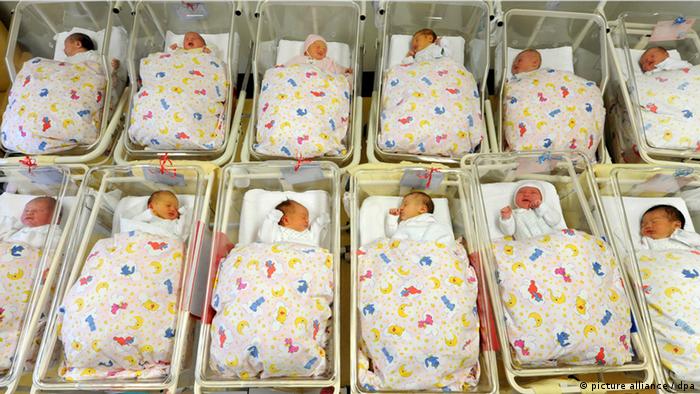
World Population Day
http://www.dw.de/dw/article/0,,16087508,00.htmlMore than 7,057,608,000 are expected to be alive on earth by the end of World Population Day this Wednesday. The global population is still growing overall, but demographic discrepancies are widening. More than 7 billion people inhabit planet earth, with the overall growth continuing unabated on World Population Day. According to figures from DSW, the German world population foundation, the number of people on earth rises by 2.6 per second, 158 per minute, over 225,000 per day, or almost 83 million per year. Modern population growth is fueled primarily by Africa, Asia and Latin America, while populations are steady - or even sinking - in much of Europe. DSW estimates that the number of people in Africa will increase more than threefold this century, reaching around 3.5 billion. A spokeswoman for the DSW foundation, Ute Stallmeister, told the dapd news agency that this was largely owing to the number of unplanned births in Africa. World leaders will convene in the British capital on Wednesday for the London Summit on Family Planning, which hopes to raise $4 billion (3.25 billion euros) to give an additional 120 million women access to contraception by 2020. The UN estimates that 220 million women in the developing world do not want children, but also cannot access contraception. The cause has attracted high-profile patrons such as Microsoft mogul Bill Gates. "Because we didn't have contraception or family planning on the agenda, we weren't putting new money into it," Gates said in an interview with the Reuters news agency. "We weren't saying this is a priority. So this is our moment in time to say this is a priority and we need to fund it." Countries like Germany, on the other hand, are dealing with lower birth rates and higher life expectancies, with the population dropping slightly even after being bolstered by immigration. "It's a challenge of historic dimensions, because the number of people of employment age will drop by about 30 percent by 2050," social scientist Steffen Kröhner told Germany's ARD broadcaster in an interview. "I wouldn't class it as a catastrophe. But we will have to say farewell to a lot of things, not least the idea of perpetually increasing wealth. And we will need to come up with totally new ways of thinking when it comes to pensions, healthcare, and infrastructure in more sparsely populated rural areas."
GIVING QUETTA A DECENT LOOK
For decades, Quetta remained ignored capital of this Province as the officials normally paid no heed to its needs, mainly on its basic infrastructure. This can be proved that there was a park in central Quetta where the officials, all aliens, allowed construction of dozens of concrete building eliminating the only breathing space of this provincial capital. It was the level of interests of the officials who ruled Quetta. Seldom local officials were posted in Quetta. All DMG and CSS officials were brought and given sensitive posting and the locals were never trusted. The second element was that they encouraged and patronized the corrupt to pilfer the public money so that Quetta is denied a decent infrastructure right from the very outset. The corrupt elements were responsible for constant overflow of gutters, heaps of garbage everywhere, polluted water for human consumption and no replacement of rusty pipeline laid almost a century ago. No plan was prepared to provide drinking water to the entire population and without any discrimination. The fund provided for development of surface dam to boost portable water supply were embezzled by officials from the Federal Government. One official of Haj scandal fame was responsible for embezzling more than 34 billion of WASA destroying the whole project in connivance with the scholarly ministers in the Cabinet.
We hope that the Chief Secretary will effectively supervise the spending on infrastructure development in Quetta ensuring quality construction and disallow any pilferage of public money so that the benefits should go to the people—not to the ministers or the corrupt officials, engineers and contractors.
The prime job is to stop the constant overflow of gutter and sewerage water on main roads, stop people dumping waste in the open drain line or storm water drains of Quetta and finally, quality of construction should be ensured while building all roads or overhead bridge or flyovers.
Pakistan’s first super model
The Express TribuneNo fashion model of the 1970s got paid in the thousands, except for the larger-than-life Rakhshanda Khattak, who had to travel a rough road to make a name for herself in the still fledgling Pakistani fashion industry. Once, her husband Husain Javeri, a jeweller who hardly ever skipped work, decided to accompany her to a modeling gig. After watching his wife having to bend, stretch and contort her body for the perfect pose, and that too for the pittance she was being paid, he approached the advertisement director and demanded his wife be paid ten times the amount to make it worth her time. That was the amount of money someone would have to pay him to be away from his wife, he said. The director was shocked but since he could not afford to lose her, he agreed. Following this incident, Rakhshanda went on to become the highest-paid and yet the most sought after young model of her time. The Burmese-Pathan woman had her photos splashed across fashion layouts in various English and Urdu magazines. She did commercials ranging from products such as paints and toothpaste. She boasted a height many envied, and could drape her curvaceous figure — a far cry from the anorexic waif look of the New York and Paris fashion world that has caught up with Pakistani models — in a classical sari or sashay about in casual bell bottoms, and still look desirable. When she entered a room, heads turned as men stealthily gazed at her while women inspected her style. Besides being gifted by exotic looks, she was a woman of many talents. Rakhshanda was fluent in five languages. She was the first Pakistani woman to earn a black belt in karate and the second black belt in Jiu-jitsu. This helped her execute her own stunts in an action-packed feature film named Jane Bond 008 in 1971. While her stunts awed audiences, something else captured the attention of the women: The black-and-white Pakistan-Iran collaboration (that included an Iranian producer and male lead actor) featured the young actress wearing a low-waist sari. And such was the impact of her fashion statement that it became a rage with young women to drape saris closer to their hips. Rakhshanda forayed into the show business when a family friend offered to cast her in a marketing campaign for his products. She did a few projects with him, and when she got noticed by other agencies she exploded into the limelight. She was not represented by a management company or fashion house because such entities did not exist at the time. Advertising agencies were shady and models had to monitor their photo shoots on their own to make sure they were not being used without permission and due payment. Since there were no modeling agencies or styling salons, most models did their own hair, makeup and wardrobe. The typical fees for a modeling photo shoot was somewhere around Rs300, and that too was often delayed or worse, pocketed by the agencies. That was until her husband, the man who managed to steal her heart from her elite group of admirers, got her more. They were married in 1970. Husain owned a famous jewelry store on Victoria Road, which later became Abdullah Haroon Road, and he designed some of the jewellery that Rakhshanda wore at the posh social gatherings. He would sometimes sell the jewellery by the end of the party, and this never pleased Rakhshanda. He would pacify by her saying, “Don’t worry I’ll make you something much better!” Which he would, but then when these fine pieces of jewelry were displayed on Rakhshanda and the opportunity came to sell, he probably did so. Rakhshanda and Husain, along with their son Chengis, migrated to Alberta, Canada, at the end of 1979 to be closer to one of Husain’s brothers. Later in 1983, the Javeri family became naturalised Canadian citizens. The fame and spotlight that Rakhshanda left behind in order to begin life in her new homeland left a vacuum that she filled by turning to designing her own clothes and cooking. She attended the Southern Alberta Institute of Technology and got her red seal in cooking and baking. Usually people specialise in being a chef or a baker, but she mastered both and topped both her classes. Her love for clothes got her working in designer stores. She would go on to become a manager at every store she worked. Rakhshanda’s love for Pakistan never died and, according to her son Chengis, she came back to Pakistan 22 times in the 30 years since she migrated. She missed the sense of community that came with friends and family. She also missed the Karachi night life, which pretty much waned over the years as political change of the 1980s spread conservatism in society. Rakhshanda died in her Alberta condo in December 2011. She is survived by her son, who is an artist and actor in Alberta, and her five sisters, four of whom live in Pakistan while the other lives in Texas. Rakhshanda ruled the hearts of millions during her prime, and her departure from the industry left her fans wistful for more. Now that she has taken a final bow from this world, fans like me celebrate the legacy she has left behind. Rakhshanda Khattak, no doubt, was Pakistan’s first super model.
Afghans protest over woman's public execution
Dozens of Afghan women's rights activists took to the streets Wednesday to protest against the recent public execution of a young woman for alleged adultery, which was captured in a horrific video.
The 22-year-old victim was shot dead as dozens of men cheered in a village about 100 kilometres (60 miles) north of the capital Kabul.
The execution was blamed by the authorities on Taliban militants and caused global outrage, with world leaders denouncing the Islamists, who are waging an insurgency against the Western-backed government.
"We want justice," the protesters, almost all women, shouted as they marched from the women's affairs ministry towards the UN headquarters in Kabul.
"The execution of the woman by the Taliban was a crime... the government must do everything to bring the culprits to justice," parliamentarian Shinkai Karokhail, who joined the march, told AFP.
"This is the duty of the government to deliver justice."
President Hamid Karzai condemned the killing as un-Islamic and unforgivable, while security forces have launched a manhunt for those responsible.
The commander of NATO's 130,000 troops in Afghanistan, General John Allen, offered to help local security forces track and capture the men involved in what he called "an atrocity of unspeakable cruelty".
Public executions of alleged adulterers were common when the Taliban were in power from 1996 until 2001, when they were ousted by a US-led invasion for harbouring Al-Qaeda leader Osama bin Laden after the 9/11 attacks.
After four years, music in Swat returns to where it belongs: under the open sky
The Express TribuneAfter a hiatus of four years, folk musicians returned to entertain audiences under the open sky through their dance and renditions of music in Mingora on Monday. The musicians were performing at a wedding without any security restrictions. People of all age-groups were seen dancing to the beats, singing along with the performers. The event was open to all. “After a day’s work, I was in no mood to come here. But after hearing excited voices and blaring music, I came running to watch it live. I have to say, it’s just marvellous,” said Zahir Khan, a resident of Amankot. Idrees, a young boy who was dancing at the function, said, “I’m feeling ecstatic, we have been starved for this kind of entertainment for so long.” Music constitutes an integral part of celebration in Pakthun society. They hold musical concerts at wedding ceremonies, which are attended by not only relatives and friends but also outsiders frequently. “It is our custom to hold musical nights on weddings, which saw a temporary interval when terrorists uprooted the social fabric in this land. But it is good to see such events happening again,” Syed Karim Shilmani, a music lover, said. Even during the hard times under militancy, he never stopped listening to music, ever so secretly, he told The Express Tribune. Some of the musicians who had come from parts of Khyber-Pakhtunkhwa seemed excited over the overwhelming response and hospitality of the audience. “We frequent Swat for concerts. It’s a great source of joy for us. But then we had to discontinue for security reasons,” said one musician. Muntazir, a singer from Sakhakot, said, “We are really excited to be performing here for the wedding ceremony of our friend.”
LAHORE: Liked the laptops? Now pay more fee
Punjab University Vice Chancellor Mujahid Kamran, selected by Punjab Chief Minister Shahbaz Sharif, has decided to go one step ahead in destroying the CM’s efforts to lure the youth into voting for him in the upcoming elections by raising the PU examination fee by a whole 20 percent, Pakistan Today learnt on Tuesday. “This move is going to hit the poor students the hardest and we condemn the CM and his blue-eyed VC for making this decision without taking this into consideration,” students said, adding “Why did the Punjab government not give funds to the PU if they felt the need to raise exam fee? What is the point of laptops when we are going to have to pay increased fee for sitting in exams?”
“This standard adopted by the CM is hypocritical. On one hand he is raising the slogans of going out of his way to facilitate the youth, especially the poor, in acquiring education. On the other hand he has raised the examination fee,” they said.
Meanwhile, student unions across various campuses have also condemned the move and have announced protest demonstrations all over the province if the decision is not taken back.
PU holds examinations for BA/BSc and MA/MSc in various colleges affiliated to it all over the province. Recently, a 20 percent in the BA/BSc and a 10 percent increase in the MA/ MSc examination fees were announced. This decision is going to effect students from far-flung areas of Bahawalpur, Hafizabad, Lahore and Sialkot, sources said.
“The CM and the VC seem to be beyond any and all accountability. We are poor, every day is a battle to earn livelihood and such news come as salt to our wounds,” said Sabiha Bibi, a mother of a BA student, adding “there has never been any government in Punjab that is as anti-education as Shahbaz Sharif’s.” A PU student who got a laptop three months ago under Punjab CM’s laptop scheme, said the students too were annoyed with the CM over this decision. “The PU administration is trying to make up for the money it spent on the distribution ceremony,” she added.
“I am willing to return my laptop if the fee raise is taken back,” another student said.
“I have no idea why the fee is being raised,” an official of PU, asking not to be named, said, adding that the university was a public institution and the examination fee should not be so high.
STUDENT UNIONS VOW TO LAUNCH MOVEMENT: Activists of the students unions have also opposed the increase in the fees. PU Islami Jamiat-e-Taliba IJT Nazim Haq Nawaz said the CM had gone back on his promise of reducing fee.
Insaf Students Federation General Secretary Waqas Iftikhar said CM was spending billions on advertisements campaigns but there was no relief for the poor. He said spending people’s money on advertisement was cruelty. MSF VP Tanvir Gujjer said students were ready to come on roads against the Punjab government if it does not stop PU administration. He said this increase in fee was irrational and would be opposed.
USAID provides education opportunities for FATA students
DAILY TIMESThe 81 recipient of US-funded scholarships, who has scored A and A+ grades during the recent ninth grade’s board examination (SSC Part1 examination) in FATA, were recognised in a ceremony held on Tuesday by the United States Agency for International Development (USAID). Five US-sponsored students scored above 490 points out of the total of 525, and two of them topped the Abbottabad and the Charsadda boards. Dr Marilyn Wyatt, the US awife, congratulated the students and wished them future success. “Without education, achieving sustainable human development remains an illusion,” said Dr Marilyn Wyatt. “I am proud that the US government is working with the Pakistani government and the FATA Secretariat to build a stronger economy where more young people like these we see here today can have a chance to apply their talent,” she said. These students were among the 1,363 FATA boys and girls who had received USAID-funded scholarships since 2008 to complete their secondary, vocational, or college-level education. Currently, 183 students remain enrolled under the scholarship programme in the following categories: Bachelor in Advanced Engineering Programme, Diploma in Advanced Engineering, and the Secondary School Certificate.
Nawaz, Imran are US supporters
DUNYA TVMunter has claimed that both Nawaz Sharif and Imran have assured him that they are US supporters. US ambassador to Pakistan Cameron Munter said that restoration of Nato supply is not enough; Pakistan is, yet, to do a lot of things. Talking to UK News channel, Munter said that he has met Imran Khan and Nawaz Sharif and both of them have assured him that they are staunch supporter of the US. He said that restoration of Nato supply is not enough; Pakistan would have to do a lot of things in order to curb terrorism and enhance economic cooperation. Blockage of Nato supply was a challenge for Pakistan who was deprived of more than 50 friends, he said. He said that fight against common enemy was possible only when Nato supply is restored properly. He accepted that the US offered an apollogy to Pakistan on Salala check post but the reality is that the issue was resolved when both the states recognized that both of them would have to deliver jointly. He said that the US is in dire need of endurance and broad-mindedness regarding its ties with Pakistan, adding that Pakistan may become part and parcel of solution to these issues but for this purpose it would have to express true responsibility of leadership, he said. The US envoy made it clear that Pakistan would have to have firm confidnce in masses’ power as masses are the sole power of any nation. He said that Pakistan would also have to admit that he is confronted with hectic challenges which may be resolved with the help and support of the people.
Imran, Nawaz assured of pro-US government
The US Ambassador in Pakistan Cameron Munter on Tuesday revealed that PTI chief Imran Khan and PML-N president Nawaz Sharif both assured him of a pro-US government after next elections, DawnNews reported.
The US ambassador, during an interview with BBC Urdu, said that talks did not end at Nato supply restoration, adding that there was still a lot to do for economic development and to eliminate terrorism.
He said that he has held meetings with chiefs of Pakistan Muslim League-Nawaz and Pakistan Tehrik-i-Insaf, adding both the leaders had assured him that they completely support the US.
Commenting on situation in Afghanistan, Munter said that Pakistan has to become part of solution and not problem.
The US envoy said that both countries will have to work together to eliminate insurgents’ hideouts inside Pakistan so as to ensure assistance in Afghan war.
The ambassador said the Nato supply blockade had isolated Pakistan from 50 friendly countries and the resumption had opened the doors for further cooperation. Moreover, he said that the issue of expenses was not part of the negotiations for the resumption of the supply routes.
Tuesday, July 10, 2012
The two realities of Pashtuns and Baloch
By:Amir MateenPeople in Balochistan hate it when the self-styled armchair experts sitting in Islamabad, Lahore and Karachi generalize about them. Baloch intellectual Dr Janazeb Jamaldini is incensed every time “my Punjabi friends” call him Balochi. “Well, I like to tell them that I am a Baloch and my language is Balochi.” Pashtuns are equally upset when others mix Baloch with Balochistani. “It pains me to explain that I am not a Baloch but a Pashtun who lives in Balochistan,” said former National Assembly Speaker Nawab Wazir Jogezai. Dr Jamaldini asked a group of media persons recently to “please go and tell your tv anchors to stop generalizing us as if we are a monolithic monster.” Balochistan is so huge-44 per cent of Pakistan and the size of Britain-that every area has its own set of unique issues. The issues of Mekran which does not have a strong sardari system and lively political culture are different from, let’s say, Dera Bugti where Nawab Akbar Bugti has left a huge vacuum. Or the issues of Zhob vary from the problems in Sibi or Mastung. But there is one generalization that can be safely attempted: the story of Pashtuns in Balochistan is different from the reality of Baloch. Both live in their own ethnocentric worlds. The Pashtun belt is relatively stable. Their lands are more fertile, endowed with finer flora and fauna. They also have better availability of water which translates into better orchards and agriculture, which remains the biggest employer in the absence of any industry. Pashtuns would like to claim that they are more industrious and hardworking. Their superior work ethics is reflected by their dominance in business, trade and transportation in Balochistan. Pashtuns are definitely better educated-girls more than boys. Loralai girls win most top educational positions in Balochistan. This places Pashtuns at advantage in job market, services and educational quotas wherever merit is concerned. These are, of course, also the bounties of living in a belt that is relatively safer. Pashtuns have their share of problems like the ever growing crime, the spillover of Afghanistan in the shape of talibanisation, drugs and arms smuggling. But the nature of their issues is different from the ones that Baloch face. Insurgency hardly exists in Pashtun areas. Never has. Here it is more kidnappings for ransom than target killings. This goes without saying that they are equally weary of army’s over reach in Balochistan and want more power and resources for the province. But their bigger grouse is now directed against the estranged bedfellows-the Baloch. Pashtuns feel they are being held back and squeezed by Baloch. “We don’t have any insurgency in our areas,” says Pashtunkhwa Milli Awami’s former Senator Raza Mohammad, “why should we suffer; Pashtuns are the biggest ethnic group and they should be adjusted in jobs and quotas accordingly.” Pashtuns, like Hazaras, fume that their students get admission in medical college by securing more than double marks of Baloch. Pashtuns claim they are equal in population if not more. However, they lag behind Baloch in area who are in majority in 20 out of 30 districts. Understandably, Pashtuns would like the distribution of resources on the basis of population and merit. Interestingly, Pashtun nationalists have always opposed Punjab for favouring the population formula but in a twist of irony they now want this to be exercised in Balochistan. It makes sense that Baloch should support the continuation of the affirmative action of sorts through district quotas. This is the only way Baloch can try to match Pashtun dominance such being the nature of their reality. The total collapse of law and order, the rampant targeted killings and bomb explosions in Baloch areas has exacted a huge tall on ordinary people. The abundant natural resources of the Baloch areas cannot be used because of lawlessness. The long coast line, including Gwadar Port, fails to take off under the circumstances. Business is down. Unemployment particularly among the youth is increasing. Movement is restricted because of insurgency. The clock of life stops ticking after sunset. Markets and offices remain frequently closed because of violence and strikes. People in most Baloch towns live without basic amenities like clean drinking water, sewage system or electricity supply. Life in thousands of remote villages that pockmark the rugged plains and barren mountains is even more miserable. The biggest loss is in education. The educational structure in the Baloch belt has crumbled in the face of lawlessness. Schools are either closed or partially functional in the absence of teachers and resources. Examination cheating is rampant. The ones who manage to get degrees are handicapped in skills because of bad schooling. They drop out even when they get admission in higher or professional colleges. Information Technology University in Quetta enrolls 90 per cent students from Balochistan on open merit. Only three students from Gwadar have managed to pass out in seven years out of an annual badge of 1500 students. The rest simply drop out. A whole generation of Baloch is growing up with little or no education. “Our future generations will also pay for the educational lapse,” said BNP’s Munir Baloch, pointing out that the leadership in earlier insurgencies was conscious about this. “The present lot of leaders who have no ideological training do not understand. Or they do not care.” Baloch dominate the executive political power-only one Pashtun became Chief Minister in 42 years. But their ratio in government machinery will continue to shrink because of the relative educational backwardness. Much to the Baloch chagrin, the gap left by the settler teachers is being filled by the better qualified Pashtuns. Almost all replacement of roughly 80 Punjabi teachers in the Balochistan University who left because of tension are Pashtuns. Baloch lag behind Pashtuns in competitive examination, promotions and postings because of their better schooling. As other ethnic groups are scared to work in Balochistan the gap is filled by Pashtuns from other provinces who easily gel with their local tribesmen. This will lead to more Pashtun dominance —hence more Baloch anxiety. The reality of Baloch and Pashtuns, it seems, is going to grow further apart.
Population Day on 11th
APPWorld Population Day will be observed on July 11 across the world including Pakistan. It is an annual event, observed on July 11, which seeks to raise awareness of global population issues. The event was established by the Governing Council of the United Nations Development Programme in 1989. It was inspired by the public interest in Five Billion Day on July 11, 1987, approximately the date on which the world’s population reached five billion people. The world population on the 20th anniversary of Five Billion Day, July 11, 2007, was estimated to have been 6,727,551,263. This year’s theme is Universal Access to Reproductive Health Services.
Hurdles to Muslim women's rights
BY IDA LICHTER From:The AustralianAN injured horse last month disqualified equestrian Dalma Malhas from representing Saudi Arabia at the London Olympics. She would have been the first female athlete from the kingdom. Brunei and Qatar have entered several women for the first time, and although most Muslim countries send female athletes to various events, few boast outstanding women contestants. Why are they lagging so far behind the rest of the world and does the Arab Spring herald any change? In May, the Muslim Women's Sport Foundation in London honoured a number of athletes, including Halet Ambel, the first Muslim woman Olympic competitor, who represented Turkey in 1936; African American Ibtihaj Muhammad, who will fence for the US this year wearing the hijab, and Sadaf Rahimi, a 17-year-old boxer from Afghanistan. The Kabul stadium where Rahimi trained for the London Olympics was a former Taliban site for women's executions.Other outstanding sportswomen include Pakistani Naseem Hameed, who won a gold medal in the 100m track event at the South Asian Games in 2010, and Moroccan hurdler Nawal El Moutawakel, who won gold at the 1984 Olympics and later became minister of sports. Since 1993, the Islamic Federation of Women's Sport has held female-only, multi-sport, Women's Islamic Games every four years, adhering to Islamic dress code and hosted by Iran. In ancient Greece, women also held their own games every four years, as women were excluded from the Olympics. International perspectives on Muslim women's sport are invariably influenced by Islamist states such as Saudi Arabia and Iran and their economic clout. Religious opinions vary, and in Saudi Arabia they range from an obligation to keep fit and healthy to accusations of immorality, destruction of virginity and subversive Western corruption. Reformer Halima al-Muzaffar has noted the large number of Saudi women who suffer from obesity or osteoporosis. Exercise would be beneficial, but the government closed many ladies' gyms in 2009 and 2010, claiming they were unlicensed. New applications were refused. The few private women's soccer teams compete clandestinely, and women are barred from sporting events in stadiums. To be fair, King Abdullah has embarked on reform, reducing the power of the mutaween or religious police and promising voting rights for women in the 2015 municipal elections. As in the case of lifting the driving ban, granting women freedom to pursue sports could unravel the sexual segregation, full body cover and male guardianship of women demanded by the religious autocracy that legitimises the monarch's rule. Women might leave the house without their husband's permission or spend time in mixed company. Dress codes have proved contentious in soccer. The International Federation of Association Football banned the hijab in 2007 because of the danger of choking and this led to the exclusion of the Iranian women's soccer team from the London Olympics. The ban was reversed after introduction of a Velcro fastener and was recently ratified. Anita Defrantz, US member of the International Olympic Committee, has denied claims of discrimination against women who wear the hijab, but in order to remain true to its values, the IOC should observe religious neutrality in athletic dress code. They could also suspend Saudi Arabia and Iran for discrimination, sanctions they applied against South Africa between 1964 and 1992, and Afghanistan under the Taliban at the 2000 Sydney Olympics. The Arab Spring has borne bitter fruit, as the ascendant Muslim Brotherhood advance an Islamist agenda that may spell oppression for women. Suzanne Mubarak, wife of Egypt's ousted president, organised the Womathon for Peace event to promote women's health and cultural diversity through sport, but her initiative is probably buried in the dustbin of odious association. Muslim sportswomen already have a forum for piety at their own Games, and international sporting organisations should, at least, resist bending their own rules to accommodate Islamist countries that legislate against women's rights. The real hurdles are entrenched, archaic traditions authorised by religion and legislated in state politics. Ida Lichter is the author of Muslim Women Reformers: Inspiring Voices Against Oppression
Abdus Salam:Pakistan shuns its only Nobel laureate - physicist linked to discovery of 'God particle'

The pioneering work of Abdus Salam
, Pakistan's only Nobel laureate, helped lead to the apparent discovery of the subatomic " God particle" last week. But the late physicist is no hero at home, where his name has been stricken from school textbooks.
Praise within Pakistan for Salam, who also guided the early stages of the country's nuclear program, faded decades ago as Muslim fundamentalists gained power. He belonged to the Ahmadi sect, which has been persecuted by the government and targeted by Taliban militants who view its members as heretics.Their plight along with that of Pakistan's other religious minorities, such as Shiite Muslims, Christians and Hindus has deepened in recent years as hardline interpretations of Islam have gained ground and militants have stepped up attacks against groups they oppose. Most Pakistanis are Sunni Muslims.
Salam, a child prodigy born in 1926 in what was to become Pakistan after the partition of British-controlled India, won more than a dozen international prizes and honors. In 1979, he was co-winner of the Nobel Prize for his work on the so-called Standard Model of particle physics, which theorizes how fundamental forces govern the overall dynamics of the universe. He died in 1996.
Salam and Steven Weinberg, with whom he shared the Nobel Prize, independently predicted the existence of a subatomic particle now called the Higgs boson, named after a British physicist who theorized that it endowed other particles with mass, said Pervez Hoodbhoy, a Pakistani physicist who once worked with Salam. It is also known as the "God particle" because its existence is vitally important toward understanding the early evolution of the universe.
Physicists in Switzerland stoked worldwide excitement Wednesday when they announced they have all but proven the particle's existence. This was done using the world's largest atom smasher at the European Organization for Nuclear Research, or CERN, near Geneva.
"This would be a great vindication of Salam's work and the Standard Model as a whole," said Khurshid Hasanain, chairman of the physics department at Quaid-i-Azam University in Islamabad.
In the 1960s and early 1970s, Salam wielded significant influence in Pakistan as the chief scientific adviser to the president, helping to set up the country's space agency and institute for nuclear science and technology. Salam also assisted in the early stages of Pakistan's effort to build a nuclear bomb, which it eventually tested in 1998.
Salam's life, along with the fate of the 3 million other Ahmadis in Pakistan, drastically changed in 1974 when parliament amended the constitution to declare that members of the sect were not considered Muslims under Pakistani law.
Ahmadis believe their spiritual leader, Hadrat Mirza Ghulam Ahmad, who died in 1908, was a prophet of God a position rejected by the government in response to a mass movement led by Pakistan's major Islamic parties. Islam considers Muhammad the last prophet and those who subsequently declared themselves prophets as heretics.
All Pakistani passport applicants must sign a section saying the Ahmadi faith's founder was an "impostor" and his followers are "non-Muslims." Ahmadis are prevented by law in Pakistan to "pose" as Muslims, declare their faith publicly, call their places of worship mosques or perform the Muslim call to prayer. They can be punished with prison and even death.
Salam resigned from his government post in protest following the 1974 constitutional amendment and eventually moved to Europe to pursue his work. In Italy, he created a center for theoretical physics to help physicists from the developing world.Although Pakistan's then-president, Gen. Zia ul-Haq, presented Salam with Pakistan's highest civilian honor after he won the Nobel Prize, the general response in the country was muted. The physicist was celebrated more enthusiastically by other nations, including Pakistan's archenemy, India.
Despite his achievements, Salam's name appears in few textbooks and is rarely mentioned by Pakistani leaders or the media. By contrast, fellow Pakistani physicist A.Q. Khan, who played a key role in developing the country's nuclear bomb and later confessed to spreading nuclear technology to Iran, North Korea and Libya, is considered a national hero. Khan is a Muslim.
Officials at Quaid-i-Azam University had to cancel plans for Salam to lecture about his Nobel-winning theory when Islamist student activists threatened to break the physicist's legs, said his colleague Hoodbhoy.
"The way he has been treated is such a tragedy," said Hoodbhoy. "He went from someone who was revered in Pakistan, a national celebrity, to someone who could not set foot in Pakistan. If he came, he would be insulted and could be hurt or even killed."
The president who honored Salam would later go on to intensify persecution of Ahmadis, for whom life in Pakistan has grown even more precarious. Taliban militants attacked two mosques packed with Ahmadis in Lahore in 2010, killing at least 80 people.
"Many Ahmadis have received letters from fundamentalists since the 2010 attacks threatening to target them again, and the government isn't doing anything," said Qamar Suleiman, a spokesman for the Ahmadi community.
For Salam, not even death saved him from being targeted.
Hoodbhoy said his body was returned to Pakistan in 1996 after he died in Oxford, England, and was buried under a gravestone that read "First Muslim Nobel Laureate." A local magistrate ordered that the word "Muslim" be erased.
Alleged Taliban Execution Shatters Image Of 'Taliban-Free' Province
http://www.rferl.org
PARWAN,AfghanistanJust months ago, it was billed as "Taliban-free." How, then, did Afghanistan's Parwan Province come to be the target of international condemnation over the public execution of a young woman for adultery? The village of Qimchok, located in the province's remote Shinwari district just 100 kilometers from Kabul, today finds itself at the center of a large-scale manhunt. Reports from Parwan on July 9 say foreign troops and members of the Afghan National Army have entered Shinwari in a bid to apprehend militants involved in the killing. Their arrival shatters any notion that Parwan Province's proximity to the Afghan capital translates into greater security. Global attention is now set squarely on the shocking video of the execution and news that the Taliban has established its own shadow government and laid down its own laws in several of the province's northern districts. And whereas officials once spoke about relative tranquility in a province that is home to Bagram Air Base -- the largest U.S. military base in Afghanistan -- observers find themselves drawing comparisons to public executions carried out during Taliban rule from 1996 to 2001. Only in February, Parwan Governor Abdul Basir Salangi went so far as to declare the province "the backbone of security" in Afghanistan. Recent Appearance? Pressed on his previous claims regarding Parwan, Salangi on July 9 was quick to insist that the Taliban had only recently entered the province. "The Taliban recently appeared in this area and the government had no other option than to launch a military campaign," Salangi said. "The Taliban would from time to time arrive and disrupt the roads in the Shinwari and Siagird districts. Eventually, the government launched an operation and set up checkpoints." The governor says that operation was carried out "about a month ago," highlighting late May or early June on the calendar as a point of increased Taliban activity. In an interview with RFE/RL, Salangi also shed light on the execution that was described on July 9 by Afghan President Hamid Karzai as a "heinous and unforgivable crime." Contrary to widespread media reports, Salangi said the execution of the young woman took place three weeks ago, not last week. Video of the execution, obtained by the Reuters news agency, shows a burqa-clad woman kneeling by a ditch before a crowd of onlookers. After a sentence is read out against her, a man with an assault rifle shoots her repeatedly at close range. Salangi says he does not know how the video was obtained initially by the government, but that Afghan authorities decided to release it on July 8. According to Salangi, two Taliban commanders involved in the execution were sexually involved with the woman, either through rape or romantically. In order to save face, the two men, Mullah Azatullah and the other known only as "Qader,” held a makeshift trial and hastily executed her within a few hours to settle their dispute. The Taliban has officially denied responsibility for the execution, but Salangi insists the men involved were members of that Islamist group. He believes the Taliban has denied responsibility because the actions of the two commanders contravenes Shari'a law, in which the defendant must always be tried in an Islamic court, or in this case in the presence of other Taliban members. There are unconfirmed rumors that Mullah Azatullah and "Qader" were subsequently killed by Murza Khan, a Taliban commander in the same group. Salangi believes Khan personally intervened after the execution and killed the two commanders for their disobedience. "[The Taliban] is a criminal that is an enemy of Shari'a law," Salangi says. "In one hour they came to a decision and killed [the victim]. That's the reason why they didn't reveal their crimes. They didn't want it to [appear in] the media. Usually, even when a car crashes they take responsibility."
ANP balks at supporting partner
The 22nd amendment bill was placed before the Senate today. One of the primary clause in the introduced legislation is the removal of the bar on dual nationality in Pakistan’s parliament.
The government’s coalition partner, the Awami National Party (ANP) has refused to put their weight behind the bill.
Pakistan Peoples Party stalwarts, Senator Raza Rabbani and Aitzaz Ahsan are reportedly hesitant in supporting the proposed amendment.
Ex-chairman of the Senate, Farroq H. Naek presented the 22nd amendment bill.
Naek said that Pakistan had agreements with 16 countries over dual nationality, and therefore citizens of such countries should be allowed to contest elections.
The law minister said that Article 63(1)(c) of the constitution was unfair to Pakistanis residing in foreign countries.
Members of ANP in the Senate questioned the motives of the proposed legislation, while clearly stating that the party will oppose such an amendment.
The bill has been submitted before the relevant standing committee for deliberation. Naek stated that those members opposing the bill would have the opportunity to voice their concerns.
While dual nationals have the right to vote in general elections, the Supreme Court of Pakistan has disqualified members of parliament as the court found them to be in direct violation of Article 63.
Peshawar: Badabare primary school blown up
A primary school located in Badabare in the outskirt here was blown up with explosives on Tuesday, however no loss of life occurred, Geo News reported.
Police said that the blast took place in the night between Monday and Tuesday. The miscreants had planted explosives beside the boundary wall of a primary school located at Mashoo Gaggar in the vicinity of police station Budbare, which exploded with a big bang. The school was partially damaged, police said.
Pakistan's false blasphemy pretext:Savagery in the name of religion
Editorial:The lynching in Bahawalpur of a man accused of desecrating the Holy Quran is symptomatic of a horrific brutalization of this society. The man, said to be mentally ill, was snatched from the custody of police and set alight. The police and the law of the land could not prevent the cruelty. He was murdered in cold blood without getting a chance to prove innocence. Ever since the Zia regime sowed the seeds of extremism in this country there have been several similar dreadful incidents of mob vigilante. In one case in Gujranwala, after the estranged wife of a Hafiz-e-Quran accused him of having desecrated the Holy Book, he too was burned to death by a horde and his body dragged in the city's streets. About three years ago, owner of a factory near Lahore was killed by a mob led by a disgruntled worker, on a false blasphemy pretext. Many others, mostly Christians, have been implicated in false blasphemy cases. These are but just a few of the numerous examples of savagery committed in the name of Islam, which places great emphasis on justice and compassion. As the present ghastly example shows the law enforcers are helpless to provide protection to the accused. And in instances where the law takes its course, lawyers are too afraid to defend the accused. In one such situation a few years ago, the Bishop of Faisalabad felt so frustrated at his helplessness to help a fellow Christian imprisoned on blasphemy charges engage a lawyer that he committed suicide. When cases are brought before the courts, judges are not free to apply their minds in pronouncing judgement. They can deliver justice at their own peril. About 15 years ago, a PPP-appointed judge of the Lahore High Court, Justice Arif Hussain Bhatti, was gunned down in his chamber after he exonerated two Christians in a blasphemy case; one of the men was shot dead while waiting for a bus to go home. It needs to be noted that often the accusers either have a personal score to settle with the accused or a property grab motivation. As a matter of fact, no one is safe on this account. Hence, rights groups have been demanding an amendment to the blasphemy laws, written by the Ziaul Haq regime, to prevent false allegations. Religious parties are fiercely opposed to any such amendment. Unfortunately they also remain silent when incidents such as the present one happen. That encourages people like the killers in Bahawalpur to take the law into their own hands.
Pakistan's Tribal Belt: Integrate FATA
Daily Times
By:Azizullah KhanAll spectrums of tribal society are unanimous on the point that the colonial era system should be replaced by a modern, regular system, which is in place in the other parts of Pakistan FATA is the backwater and black hole of Pakistan. Why would it not be? In the 65-year history of Pakistan, its strategy towards FATA has been ‘how not to heed it’ or, as dictated by the regional strategic environment, ‘how to exploit its battle-friendly environment’. The underlying principle is to apply myopic policy shortcuts and carry on with them. History testifies to this notion. For the first 34 years of its history, Pakistan’s policy for FATA was to feed its dwellers the propaganda that they were the real liberators of Azad Kashmir (as they fought against India in the 1948 war). It was to impress upon them that they were not only a part of Pakistan but also its defenders, although we know that official books of Pakistan know them as ‘bandits’. To cement this manufactured perception of tribals, terms like ‘ghayoor qabail’ (honourable tribes) were concocted and applied. This tactic worked effectively; the tribals felt and seemed content with this title, bragged about it, and forgot to demand provision of health, education and communication facilities. With the Soviet attack on Afghanistan in 1979, the scenario changed completely. A bloody war broke out in the neighbourhood of FATA, reckoned as a most suitable and effective launching pad for the so-called jihad against atheist communism. Pakistan enthusiastically became a frontline ally of the US with two prime objectives in mind. One was to push Pakhtun nationalism in the background, which was at its peak at that time, and the second was to get the US to acquiesce in the nuclear bomb on which Pakistan was working at that time. FATA’s harsh terrain and socio-political milieu was optimally exploited against communism (in other words, in favour of the two objectives) with sheer disregard for the social and political life of the hapless tribals. Now the term ‘mujahideen’ being supplemented by the decades-old ‘ghayoor’ became a tool of choice for the Islamic connection that was needed to be stressed upon. Mujahideen from across the world were gathered and trained in FATA in particular and the whole Pakhtun belt in general. From here, they were launched against the Soviet Union in Afghanistan. We know that thousands lost their lives but can the suffering of those mothers and sisters be felt whose beloved sons and brothers lost their lives in the war that is now admitted to be a war of aliens? The brutality continued through the Taliban era into the war on terror era of the 21st century. Now it became transparent that FATA was being seen through a foreign policy prism. Earlier, the Taliban regime was to be installed in Kabul and, after its ouster by the US, to help the now defunct regime have a respectable position in post-US Afghanistan, only to protect our vital interests, which are said to be at stake. Thanks to its geographic location, FATA predictably turned out to be of great help in both the projects. In this process, the exploitation of FATA reached its climax, which laid bare the exploitative nature/character of a political structure of the colonial era and so prompted an assertive demand for its replacement. All spectrums of tribal society are unanimous on the point that the colonial era system should be replaced by a modern, regular system, which is in place in the other parts of Pakistan. They are clamouring for their formal integration with mainland Pakistan. But so what? There are so many ways to dodge them. If one group expresses its demand of merger with Khyber Pakhtunkhwa (KP), you create another group to demand a separate province and so muddy the waters. If they press their demand, and warn that war might break out between these groups, it is better to throw the question on the backburner. The hardships borne by the tribals in the last decade precipitated two beneficial outcomes. First, they realised and acknowledged that their system was outdated and needed to be replaced and second, the Pakistan army has started development projects like constructing dams, building schools and health centres. The tribals are thankful, but that should not divert attention from the real issue, which is the formal integration of FATA. The tribals are divided over the integration issue; one group says that it should be declared a separate province and the other says that it should be merged in KP. Should FATA be merged into KP or declared a separate province? The first thing that needs to be done is to disallow traditional maliks and political agents any role in the process of integration of FATA because they are the beneficiaries of the status quo and would never want to disturb it. Also there is no need for a referendum as the majority of the people of FATA are uneducated, unable to take an informed decision, and hence open to manipulation. In my opinion, a different method should be adopted for settlement of the deadlock. Three two-member committees should be constituted. One should arrange sessions in major cities with bureaucrats from FATA. Another committee should arrange similar sessions with students and university teachers from FATA in the major universities of Pakistan. A third committee should visit every Agency and register the opinion of samples of laymen and influential personalities (other than traditional maliks). Two questions should be asked from every respondent: (1) Whether FATA should be a separate province or merged in KP? (2) Why? (Rationale behind the opinion should be inquired). The answer to the second question should be registered as a small comment, which will help in the further development of FATA. Due importance should be given to the opinions of students, bureaucrats and teachers as they are the people who know the pros and cons of the matter. They know about the system of KP and FATA, therefore they can judge the scenario better. Though this method is cumbersome, its output would be ideal. Besides an internal demand, there is also an external factor that calls for an urgent integration of FATA. Recently, a few articles appeared in the US press that hinted at the US’s intention to create trouble for Pakistan in FATA. The US is already blaming Pakistan for allegedly playing a negative role in the war on terror, so if her diktat is not capitulated to then there is a chance that she will try to create problems for Pakistan. FATA being a rugged territory will attract her negative designs. Lest it happen, we should integrate FATA so that no one can dare to cast doubt on its status. Its integration will end its suitability as a launching pad for extremist movements. The writer is a freelance columnist. He can be contacted at khetranazk@gmail.com
Pakistan: Hidden forces trying to make grand alliance against PPP-led govt
Daily TimesSome clandestine powerful segments of the establishment and right-wing intelligentsia are in vigorous action to combine all the scattered opposition politico-religious parties on one platform to initiate a crushing movement to oust the PPP-led coalition government from the corridors of power, Daily Times has learnt from well-placed sources. The sources privy to this development confided to this scribe that certain sections of the establishment are engaged in behind-the-curtain activities to bring all big and small political parties to on one platform on the same pattern exercised in the past by making Islami Jamhoori Ittehad (IJI). According to the sources, the first plan is to unite only political parties having strong reservations against the PPP-led coalition government and in the second phase the religious parties would be invited to strengthen the proposed move against the present regime. The toughest task for them is to bring Pakistan Tehreek-e-Insaf and Pakistan Muslim League-Nawaz (PML-N) on one platform, although PML-N is willing to join hands with PTI even on the ground of settling a formula of give and take in the upcoming elections, but Imran Khan is so pragmatic about the power of his tsunami that he thinks he needs no support from the PML-N for staging an anti-government move. The sources said the hidden hands are convincing them to act on ‘united you stand, divided you fall’. “The problem in uniting them on one platform is that Imran Khan, a sole decision maker of his party, is not convinced by his party’s inner group led by ex-PPP government’s foreign minister Shah Mehmood Qureshi,” sources said. The sources said that the PML-N central leader is ready to shake hands with PTI on the ground that it could sacrifice some key constituencies for Imran Khan’s party if Khan withdraws his condition of quitting Punjab government. Just for a friendly gesture, the PML-N announced to support Shaukat Bosan, a brother of PTI leader Sikandar Bosan, an independent candidate for by-election in the constituency of Multan NA-151 against Abdul Qadir Gilani, a son of former prime minister Yousaf Raza Gilani. The sources said the dream of forming a coalition against the government could not be materialised until Imran Khan renounced his often-repeated saying that a “momin” would not put his finger twice in a hole to be bitten by a snake. PTI leader Mian Mahmood Rasheed without naming any leader of his party confirmed that some leaders are trying and favouring alliance with the PML-N to avoid the PPP’s next government. However, a majority of the leaders is against the move and anticipate that the alliance would cause real damage to the party, he added. PTI Central Information Secretary Shafqat Mahmood, categorically denying any move for electoral alliance with the PML-N, said the party leadership is confident to contest forthcoming elections independently. PML-N Deputy Secretary General Ahsan Iqbal said political coalition was a part of democratic process and emergence of a grand political alliance comprising those parties, which are not part of the present collation government, including the PTI, could not be ruled out. He said an alliance before the general elections was necessary to oust the PPP from power.
Monday, July 9, 2012
Punjab has no electricity because its govt is lazy
The PPP government is working to find a permanent solution to the energy crisis in the country as 22 small dams are in their final phase while work on Bhasha, Neelum Jhelum and other big projects is also in progress.
This was stated by Coordinator to the President of Pakistan, Naveed Chaudhry on Sunday. “The government is working not only to overcome the energy shortage but the real issue before it is to produce power at lower rates,” he added.
He said the previous PPP government had made Pakistan a power-surplus country in 1996 by introducing independent power producers (IPPs) but inherited the energy crisis when it came to power in 2008.
“The government also empowered the provinces to set up power projects up to 50MW but the Punjab government took no action and in a bid to conceal its failure and inefficiency, tried to exploit the energy crisis for publicity and defame the federal government,” he added.
“All provinces are being treated equally by the federal government and no province is being granted any special favours in this regard. Punjab is receiving more electricity than any other province in accordance to its population,” he added. He said the Punjab chief minister had diverted funds towards Sasti Roti, Ashiana, laptops and other projects to open floodgates of corruption and did not spend a single rupee for electricity generation.
“The Punjab government also failed to implement recommendations of the energy conference, avoided granting two holidays a week and adopted a course of confrontation with the federal government,” he added.
Annan meets Assad in Damascus, heads on to Iran

Kofi Annan said he had constructive talks in Damascus on Monday with Syrian President Bashar al-Assad, who said the U.N. peace envoy's plan to end 16 months of bloodshed was being undermined by U.S. political support for "terrorists".
Within hours, Annan was due to head for Iran for talks with Syria's main ally in the region.
"I just had a positive and constructive discussion with President Assad," the United Nations special envoy said.
"We agreed an approach which I will share with the opposition," he told reporters. Once again, Annan stressed the important of halting violence and promoting political dialogue -- the key points of the plan he put forward in April.
Syrian Foreign Ministry spokesman Jihad Makdissi said in a Twitter message: "In both meetings we reassured Annan of Syria's commitment to implement the 6-points Plan and hoped other side is mutually committed."
In a television interview aired on Sunday, Assad accused Saudi Arabia, Qatar and Turkey, as well as the United States, of supplying arms and logistical support to the rebels trying to overthrow him.
"We know that (Annan) is coming up against countless obstacles but his plan should not be allowed to fail, it is a very good plan," he told Germany's ARD network.
"The main obstacle (is) that many countries don't want (it) to succeed. So they offer political support and they still send armaments and send money to terrorists in Syria," Assad said, according to a transcript of the interview, held in English.
SECTARIAN LINES
Syria, led by members of a sect related to Shi'ite Islam, has alleged that the Sunni-led Gulf monarchies are supporting unrest among its Sunni majority as a way to check rising Shi'ite influence in the region, most notably that of Shi'ite Iran.
Anti-Assad activists in Syria reported army shelling and clashes with rebels on Monday in Deir Ezzor, Deraa, Homs, Aleppo and a neighborhood of Damascus. Residents also reported the sound of gunfire in the capital.
An activist website said over 100 Syrians had been killed on Sunday, most of them civilians.
U.S. Secretary of State Hillary Clinton said on Sunday that Syrian opposition forces were growing more effective and the sooner the violence ended, the better the chances of sparing Syria's government a "catastrophic assault" by rebel fighters were.
While Assad has faced sanctions and international condemnation over his crackdown on dissent, major Western and Arab powers have shied away from direct military action.
Turkey has reinforced its border and scrambled fighter aircraft several times since Syria shot down a Turkish reconnaissance jet on June 22 over what Damascus said were Syrian territorial waters in the Mediterranean. Ankara said the incident occurred in international air space.
"SAND RUNNING OUT"
"The sooner there can be an end to the violence and a beginning of a political transition process, not only will fewer people die, but there is a chance to save the Syrian state from a catastrophic assault that would be very dangerous not only to Syria but to the region," Clinton told a Tokyo news conference.
She appeared to be referring to the possibility of Syrian rebels launching such an assault on state institutions rather than to any outside intervention.
"There is no doubt that the opposition is getting more effective in their defense of themselves and in going on the offence against the Syrian military and the Syrian government's militias. So, the future ... should be abundantly clear to those who support the Assad regime," Clinton added.
"The sand is running out of the hour glass."
Syria's navy fired live missiles from ships and helicopters over the weekend, in an exercise aimed at demonstrating its ability to "defend Syria's shores against any possible aggression", state media said.
Rami Abdelrahman, head of the Syrian Observatory for Human Rights, said residents of al-Sharifa in the wider Deir Ezzor province on Sunday reported that rebels had captured a working tank for the first time and were using it to attack army positions.
The rebels have gained confidence in recent weeks, staging bolder attacks, holding pockets of territory across the country and clashing with troops only a few miles from the presidential palace in Damascus.
Video: Taliban shoot woman 9 times
A shot rings out, but the burqa-clad woman sitting on the rocky ground does not respond.
The man pointing a rifle at her from a few feet away lets loose another round, but still there is no reaction.
He fires a third shot, and finally the woman slumps backwards.
But the man fires another shot.
And another. And another.Nine shots in all.
Around him, dozens of men on a hillside cheer: "God is great!"
Officials in Afghanistan, where the amateur video was filmed, believe the woman was executed because two Taliban commanders had a dispute over her, according to the governor of the province where the killing took place.
Both apparently had some kind of relationship with the woman, said Parwan province governor Abdul Basir Salangi.
"In order to save face," they accused her of adultery, Salangi said.
Then they "faked a court to decide about the fate of this woman and in one hour, they executed the woman," he added.
Both Taliban commanders were subsequently killed by a third Taliban commander, Salangi said.
"We went there to investigate and we are still looking for people who were involved in this brutal act," he said.
It is not clear from the video when it was filmed.
The killing took place in the village of Qimchok, not far north of the capital Kabul.
Lawmaker Fawzia Koofi called it a huge backward step for women's issues in Afghanistan.
"I think we will have to do something serious about this, we will have to do something as women, but also as human beings," she said. "She didn't even say one word to defend herself."
Koofi wept on Saturday as she watched the video of the execution.
The United States condemned the killing "in the strongest possible terms," calling it a "cold-blooded murder."
"The protection of women's rights is critical around the world, but especially in Afghanistan, where such rights were ignored, attacked and eroded under Taliban rule," the American embassy said in a statement on Sunday.
The NATO-led International Security Assistance Force in Afghanistan also condemned the execution.
"Let's be clear, this wasn't justice, this was murder, and an atrocity of unspeakable cruelty," ISAF commander Gen. John Allen said in a statement Sunday. "The Taliban's continued brutality toward innocent civilians, particularly women, must be condemned in the strongest terms. There has been too much progress made by too many brave Afghans, especially on the part of women, for this kind of criminal behavior to be tolerated."
The public execution is the latest and among the most shocking examples of violence against women in Afghanistan, but it is far from an isolated case.
The Taliban also does not have a monopoly on the violence, cautioned Christine Fair, with the Center for Peace and Security Studies at Georgetown University.
"It's really important to not see this exclusively in terms of the Taliban, but this is a set of practices that actually have existed and continue to exist throughout Afghanistan," she said.
Nearly nine out of 10 women suffer physical, sexual, or psychological violence or forced marriage at least once in their lifetimes, Human Rights Watch said in its 2012 annual report.
The country has 14 shelters for abused women, a number which the campaign group says "does not meet even a small fraction of the need."
Hundreds of students and teachers at girls' schools in the country have been hospitalized with suspected poisoning this year alone. Girls were forbidden to go to school when the Taliban ruled the country from 1996 to 2001.
Salangi, the provincial governor, spoke to CNN about the killing on Sunday, the same day that representatives of more than 80 nations and organizations met to consider pouring billions more aid dollars into the country.
U.N. Secretary General Ban Ki-moon urged delegates including U.S. Secretary of State Hillary Clinton not to demand complex reforms in exchange for the money.
"Afghan institutions are still in their nascent stages," he said. "The very programs which offer the best hope of sustainability of Afghan institutions should not be held hostage to complex preconditions."
Clinton said donors at the conference pledged about $16 billion for Afghanistan over four years. That amount did not include money from the United States because any foreign aid must be approved by Congress.
Under a security pact with Afghanistan, nearly all U.S.-led NATO troops will withdraw from the country by the end of 2014.
"We can ask the question what will happen when we leave, but let's remember that this is actually happening while we're still there," said Fair, with Georgetown.
Will more money solve Afghanistan's problems?
http://www.aljazeera.comDonors at a conference on Afghanistan have pledged to give it $16bn in civilian aid over four years, in an attempt to safeguard its future after foreign forces leave in 2014.The pledge came as Afghanistan agreed to new conditions to deal with endemic corruption. The Afghan economy relies heavily on international development and military assistance, becoming particularly dependent on foreign donations since the US invasion in 2001. It is one of the world's 10 poorest countries and has received nearly $60bn in civilian aid since 2002. According to the World Bank, foreign aid makes up to 97 per cent of the country's gross domestic product. And 90 per cent of the Afghan government's funding comes from foreign sources - which as the World Bank has warned - makes it particularly vulnerable to economic collapse if international donors pull funding too fast. According to the World Bank and the Organisation for Economic Co-operation and Development (OECD), the US is by far the largest donor with official development assistance reaching nearly $3bn between 2009 and 2010. Japan, the second-largest donor, gave over half a billion dollars to Afghanistan during the same period, and is expected to provide up to $3bn by 2016. Germany and Britain come next as major donors - they said they will maintain aid funding levels to Afghanistan. Its neighbouring countries are also among the 70 countries and organisations attending the donors' conference. It is hard to verify figures but Iran said, in 2010, it provided $500m for reconstruction projects such as religious schools. And Pakistan announced in May this year that it gave $20m to help the country 'build itself and fight against the militants', this money was used to support Afghan security forces. As for India, it recently pledged $500m in aid - a move likely to raise Pakistani fears about Indian influence in Afghanistan. So, why does the world continue to be so generous with Afghanistan despite past blunders? Inside Story, with presenter Sohail Rahman, discusses with guests: Janan Mosazai, the spokesman for the Afghan foreign ministry; Waheed Omer, a political commentator and former spokesman for the Afghan president Hamid Karzai; and Omar Samad, from the the think tank, US Institute of Peace, also a former spokesman for the Afghan foreign ministry and a former Afghan ambassador to Canada and France. "Just as we met in Chicago three months ago to safeguard Afghanistan's security future, today we have chartered a way forward for Afghanistan's economic requirements. I believe we have made a good committment to putting Afghanistan on a path to economic self-sufficiency. As Afghanistan's capacity and revenues increase, our contributions can decline."Hillary Clinton, the US secretary of state.
$16 Billion in Civilian Aid Pledged to Afghanistan, With Conditions
By JANE PERLEZAn international donor’s conference on Sunday pledged $16 billion for the economic development of Afghanistan in the next four years, but for the first time made it a condition that the Afghan government reduce corruption before receiving all of the money. The agreement, called the Tokyo Framework of Mutual Accountability, says that foreign governments will assure Afghanistan a steady stream of financing in exchange for stronger anticorruption measures and the establishment of the rule of law. Up to 20 percent of the money would depend on the government meeting governance standards, according to the document, which was released here on Sunday. The money pledge, along with the plans for the Afghan security forces laid out at a NATO summit meeting in May in Chicago, represent a diplomatic success for American officials, who have lobbied for long-term international support for Afghanistan. There had been concerns that the economic crunch in the West and donor fatigue would leave President Hamid Karzai of Afghanistan and his American backers scrambling to come up with the money needed to run and secure Afghanistan, where the government’s expenses far outstrip its revenues. Addressing the conference here in Tokyo, Secretary of State Hillary Rodham Clinton said the lives of all Afghan civilians needed to improve after a decade of war. To accomplish that goal, a number of steps were needed, she said. “That must include fighting corruption, improving governance, strengthening the rule of law, increasing access to economic opportunity for all Afghans, especially for women,” she said. Mr. Karzai, who is under increasing pressure from international donors to fight corruption, including within his extended family, acknowledged in his own speech to the conference that corruption had undermined the legitimacy of his government. But Afghans were not the only ones responsible for corruption, he said: “We will fight corruption with strong resolve where it occurs and ask the same of our international partners.” Representatives of more than 70 countries attended the conference. Mrs. Clinton did not specify how much the United States would contribute to the $16 billion, saying that Washington would maintain its level of financing. The Obama administration request to Congress for Afghan civilian assistance for 2013 was $2.5 billion, slightly more than the $2.2 billion that lawmakers approved for 2012. Congress, given budget constraints and public weariness with the war in Afghanistan, would almost certainly appropriate less than the $2.5 billion requested, American analysts said. The United States is the biggest donor to Afghanistan’s economic development programs. Japan, the host of the conference, announced a pledge of $5 billion over five years. Germany, another large contributor, would give an estimated $550 million for the next four years, said Dirk Niebel, the minister for economic cooperation and development. Diplomats at the conference said they were pleased with the pledge of $16 billion. The Japanese government said international donors had spent $35 billion on economic development in Afghanistan in the past decade, about twice that committed on Sunday for the next four years. With recession in Europe and war fatigue in the United States, the possibility of cutbacks in aid for infrastructure projects, schools and health clinics seemed real, several diplomats said. Before the Tokyo conference, the Afghan government trimmed estimates of what it said it needed in order to fit the outcome on Sunday. The governor of the Afghan Central Bank said several weeks ago that up to $7 billion annually would be needed to accelerate economic development. Last week, Mr. Karzai said $4 billion would be sufficient, and the World Bank estimated that Afghanistan needed $3.9 billion a year through 2024 to boost development. Money for the Afghan Army and police forces is separate from that raised in Tokyo. Financing for the Afghan security forces after 2014 is expected to total about $4.1 billion a year. Beyond the $16 billion, other financing that has been pumped into the Afghan economy through the decade of war would be reduced as countries withdraw military and diplomatic personnel in the next few years, said Brian Katulis, a senior fellow for national security at the Center for American Progress in Washington. “With many countries heading for the exits and drawing down both military and diplomatic personnel in the next few years, the Afghan government is going to see a reduction in the amount of money it gets from the international community in any case,” Mr. Katulis said. If the Afghan authorities fail to do a better job curbing corruption, “then the whole framework for international support could collapse,” he said. After addressing the conference Mrs. Clinton met with the Pakistani foreign minister, Hina Rabbani Khar, for a one-on-one discussion, their first meeting since Pakistan, seven months ago, closed down the route that the United States military uses to transport supplies to Afghanistan. Last week, the route was reopened after Mrs. Clinton issued a statement saying that the United States was “sorry” for the deaths of two dozen Pakistani soldiers in American airstrikes last November. The route’s closing forced Washington to redirect supplies at a cost of more than $1 billion, and threatened to hurt the United States’ counterterrorism efforts. In the meeting with Ms. Khar, and at a later session with Ms. Khar and the Afghan foreign minister, Zalmai Rassoul, Mrs. Clinton emphasized again the need for Pakistan to shut down the Haqqani terrorist network that has mounted attacks in Afghanistan against American and NATO targets, a senior State Department official said.
Subscribe to:
Posts (Atom)