BY:Jamil Omar
Daily Times
The ultimate case against any government is its performance in office and its highest court is the elections. Let the people decide the fate of the PPP and its leadership
Iqbal Bali’s hunger strike in Islamabad was a milestone in the lawyers’ movement. When Chief Justice (CJ) Iftikhar Chaudhry invited Bali to personally thank him for his support, Bali characteristically replied: “You do not have to thank me. I did it for democracy and the rule of law, not for you.” Bali passed away soon afterwards, probably from complications resulting from his long hunger strike. Were he around, Bali would surely have raised his voice against the Supreme Court’s recent order in the NRO case. He may well have addressed the CJ directly in his typical fashion as follows:
My dear Chaudhry sahib, I am writing to record my great disappointment in you and your honourable brothers. When you were down and out the nation stood by you because you symbolised democracy and the rule of law. But ever since your restoration you have chosen to implement justice in a very slanted manner. You have consistently, some say deliberately, targeted a democratically elected civilian government while overlooking a host of other flagrant cases of political corruption. In this singular pursuit you have cast aside all restraint and resorted to extreme judicial activism.
The stated justification for your actions is “(to) uphold and maintain the dignity of the court and to salvage and restore the delicately poised constitutional balance in accord with the norms of constitutional democracy”. Sounds great, but I wonder by what stretch of judicial imagination your famous order to fix the price of sugar at Rs 46 per kg can be considered as upholding the dignity of the court or seen as an attempt to restore constitutional balance. Through hindsight, it now seems to be a deliberate interference in the work of the executive with the intention to undermine its authority and thereby wreck the constitutional balance. May I respectfully submit that the honour of our courts and the cause of justice in our land would have been better served had you implemented urgently needed judicial reforms in order to ensure cheap and quick justice, rid the courts of corruption and clear the cases backlog, and you should have ensured transparency, merit and objectivity in the appointment of judges and checked the growing hooliganism of the lawyers’ community.
It is interesting to hear you speak of constitutional democracy, for this is exactly where your elite brotherhood may ultimately cause most harm. Remember that famous Freudian slip that escaped from the mouth of one of your own brothers in open court: “We cannot allow parliament to declare Pakistan a secular state.” Mr Jinnah must have turned in his grave at this. If the recent order is anything to go by, it reads like a medieval Qazi’s fatwa, basing itself more on scriptures than sense. Its rambling, repetitive and tendentious text is full of unwarranted conclusions and unproven allegations. Prosecuting a democratically elected government on the basis of such an order would cause serious political turmoil anywhere; in today’s Pakistan it may well be a historic tragedy.
The Supreme Court order indicts the government for its general contemptuous attitude and two specific failures: NAB did not investigate in-depth the wrong appointments of Adnan Khawaja and Ahmad Riaz Sheikh or take action against Malik Mohammad Qayyum, and the federal government did not write to the Swiss authorities. Basing themselves merely on this your brothers have drawn a very broad conclusion: “Such an attitude, approach and conduct prima facie shows that the co-chairperson of the said political party, the prime minister and federal minister for law have allowed loyalty to a political party and its decisions to outweigh and outrun their loyalty to the state and their ‘inviolable obligation’ to obey the constitution and all its commands.”
Democracies are a far from perfect system and conflicts of interest between state institutions are not uncommon. Sometimes they arise on account of personalities and at other times on account of the law itself, as was vividly demonstrated in the state of Florida during the 2000 US elections. Mature nations resolve such conflicts through mutual accommodation and consensus; others sink into mutually destructive turf wars. Today, Pakistan seems to be headed for an unnecessary collision between the Supreme Court and parliament. Prima facie there is not much of a case for toppling an elected government but then in Pakistan given proper support from the ‘right’ quarters, our judiciary has hanged an elected prime minister, and hence there is ample room for concern.
Pakistan is faced with a foreboding scenario that can easily turn ugly. A few individual whims can easily transform the six options mentioned in the Supreme Court order into another non-negotiable ‘six points’. To avoid a tragedy resulting from our own naivety, let us heed the words of a local sage who recently wrote: “The people are familiar with the strong case against the military’s encroachment in the political domain; no less strong is the argument against the judiciary’s intervention in politics. What may be legally permissible is often politically wrong and laws are at best silent on the kind of give and take without which governance by consensus is not possible.”
Keeping I A Rehman’s above wise and timely counsel in mind, the judiciary and the government need to arrive at a consensus. A closer look at the six options suggests that an accommodation may be reached along the following lines:
Option one bases itself on religion and laws thrust upon the constitution by General Ziaul Haq to decree ex parte that the prime minister is not an honest person and therefore unfit to hold office. Similar allegations have also been levelled against the president and the law minister.
This is unnecessarily confrontational. As the court has chosen to make Allah a party to the dispute, may I humbly suggest that this option be left to the will of the Almighty.
Option two recommends initiating contempt of court proceedings against the prime minister, law minister and law secretary and possible disqualifications.
The government should submit and the court should pardon matters of contempt.
Option three recommends the appointment of a commission to implement court orders. The Swiss Court issue should be deferred while the president enjoys immunity. The remaining court orders to be implemented by the government.
Option four requires the president to request the court to decide on his immunity.
The president’s immunity in matters under review should be proclaimed by the court.
Option five requires the chairman NAB to be removed for misconduct; further investigations into wrongdoings of others involved need to be looked into.
Appoint a new consensus figure as NAB chairman, follow this by a Truth and Reconciliation exercise covering all related matters, especially those pertaining to improper appointments/promotions, etc.
Option six explores the possibility of showing judicial restraint and leaving the matter to the better judgement of the people or their representatives in parliament to appropriately deal with the delinquent.
Political delinquents are best dealt with politically. Let the people decide, hold early elections.
In conclusion, let me repeat that the ultimate case against any government is its performance in office and its highest court is the elections. Let the people decide the fate of the Pakistan People’s Party (PPP) and its leadership. Meanwhile, Mr Nawaz Sharif should fight his battles in the political arena and not resort to undemocratic ways to topple governments or keep a hold on the Senate and Imran Khan should desist from his favourite hobby of hawai (aerial)-firing.
The writer is co-President Awami Party.
Tuesday, January 17, 2012
China supports Pak political forces to maintain stability

China supports all Pakistani political forces to maintain national stability and development, the China’s Foreign Ministry Spokesman said.
Liu Weimin made the remarks at a regular press release, commenting on the recent political instability in Pakistan, Xinhua reported.
"As Pakistan’s friendly neighbor, China supports all Pakistani political forces to maintain unity and harmony, from the overall situation of social stability and economic development," Liu said.
China has consistently adhered to the principle of non-interference in internal affairs of other countries, he added.
Recently, relations between Pakistan’s civilian government and military leaders have deteriorated over an alleged memo that sought U.S. help to stop a possible military coup.
Contempt notice against PM challenged
A petition was filed on Tuesday in the Lahore Registry of the Supreme Court against a contempt notice issued against Prime Minster Yousaf Raza Gilani in the backdrop of the National Reconciliation Ordinance (NRO) implementation case.
According to a private television channel, Barrister Zafarullah, in his petition, argued that under the Article 248-1 of the Constitution, the premier also enjoyed immunity as did the president.
The petition further said that writing a letter to Swiss authorities was not the job of the prime minister.
It said that the court should have summoned the law secretary and the law minister before calling the prime minister before it on Jan 19.
Aitzaz Ahsan appointed PM’s counsel
Barrister Aitzaz Ahsan met Prime Minister Syed Yusuf Raza Gilani at Prime Minister’s House here on Tuesday.
In the meeting, it was agreed that Barrister Aitzaz Ahsan would appear in the Supreme Court of Pakistan along with the Prime Minister as his counsel on January 19.
In the meeting, it was agreed that Barrister Aitzaz Ahsan would appear in the Supreme Court of Pakistan along with the Prime Minister as his counsel on January 19.
Monday, January 16, 2012
Pakistan's NA adopts pro-democracy resolution
Rejecting amendments introduced by the Pakistan Muslim League-Nawaz (PML-N), the National Assembly on Monday adopted the pro-democracy resolution moved by Awami National Party (ANP) chief Asfandyar Wali Khan with majority vote, while the Jamiat Ulema-e-Islam-Fazl, one of the opposition parties, also supported the resolution. The PML-N members walked out of the session to protest against the passage of the resolution.
However, the treasury benches introduced an amendment in paragraph four of the original text of the resolution on the advice of the PML-N with the modification that ‘the House reiterates that sovereignty lies with Almighty Allah and to be exercised by the people of Pakistan and parliament is the repository of the collective wisdom of the people”. Earlier, Asfandyar Wali’s resolution stated: “This House reiterates that sovereignty lies with the people of Pakistan and the parliament is the repository of the collective wisdom of the people.” Taking part in the debate on the resolution, Opposition Leader Chaudhry
Nisar Ali Khan said there was no threat to democracy and the government was finding itself in a blind alley due to its own follies. “It is time for soul searching and dispassionate self assessment … the real PPP stalwarts have been sidelined and unwise advisers have brought the government to this stage,” he said. Defending the PML-N’s amendments, Nisar said how could a democratic government and parliament oppose a demand for obeying Supreme Court orders?
“An independent parliament cannot be established without an independent judiciary and independent judiciary is impossible without an independent parliament,” he said, asking the treasury benches to incorporate the PML-N’s amendment in the resolution. He said if the people and the solution of their problems was not part of the resolution, it would lack support of the masses and would be weightless. He said the government was on a confrontational path with the institutions to save one man’s skin. Nisar said the opposition would not offer its shoulders to anyone for undemocratic change in the country.
“If we succeed winning majority in the House, we will bring a no-confidence motion against the prime minister,” he said, asking the PPP allies to part ways with the government.He said there was complete mess in the country and the attorney general had rebutted the prime minister’s statement vis-à-vis army chief and ISI DG’s replies to the apex court in the memo case. Without naming Babar Awan, Nisar said former office-bearers of Ziaul Haq Foundation were now calling the shots in the PPP.
PML-N MNA Sardar Ayaz Sadiq moved his party’s amendments in the resolution. The Pakistan People’s Party and its allies rejected the amendments in which it had asked the government to fully implement all apex court decisions “in letter and spirit” and take immediate steps to resolve the issues being faced by the people at the grassroots level through “corruption-free services”. The PML-N had also proposed an amendment in the paragraph No 3 of the government’s resolution and asked the government to substitute the words, “and all state institutions must strictly function within the limits imposed on them by the constitution”, with the following: “and in this regard calls upon the government to immediately implement, in letter and spirit, all previous resolutions of parliament and all decisions of the superior judiciary.”
The resolution passed by the House says: “This House believes that the present democratic dispensation‚ which is about to complete four years‚ came in to being as a result of great sacrifices rendered by the people of Pakistan. This House reiterates the belief of the democratic forces that the future of Pakistan and well being of its people lies in the continuation and strengthening of democratic institutions and constitutionalism for the resolution of national issues‚ strengthening of the federation and empowering the people of Pakistan. This House believes that for the furtherance of democracy and democratic institutions the basic constitutional principle of trichotomy of powers must be fully respected and adhered to and all state institutions must strictly function within the limits imposed on them by the constitution. This House endorses and supports the efforts made by the political leadership for strengthening democracy and reposes full confidence and trust in them.”
Israelis Facing a Seismic Rift Over Role of Women
By ETHAN BRONNER and ISABEL KERSHNER
JERUSALEM — In the three months since the Israeli Health Ministry awarded a prize to a pediatrics professor for her book on hereditary diseases common to Jews, her experience at the awards ceremony has become a rallying cry.
The professor, Channa Maayan, knew that the acting health minister, who is ultra-Orthodox, and other religious people would be in attendance. So she wore a long-sleeve top and a long skirt. But that was hardly enough.
Not only did Dr. Maayan and her husband have to sit separately, as men and women were segregated at the event, but she was instructed that a male colleague would have to accept the award for her because women were not permitted on stage.
Though shocked that this was happening at a government ceremony, Dr. Maayan bit her tongue. But others have not, and her story is entering the pantheon of secular anger building as a battle rages in Israel for control of the public space between the strictly religious and everyone else.
At a time when there is no progress on the Palestinian dispute, Israelis are turning inward and discovering that an issue they had neglected — the place of the ultra-Orthodox Jews — has erupted into a crisis.
And it is centered on women.
“Just as secular nationalism and socialism posed challenges to the religious establishment a century ago, today the issue is feminism,” said Moshe Halbertal, a professor of Jewish philosophy at Hebrew University. “This is an immense ideological and moral challenge that touches at the core of life, and just as it is affecting the Islamic world, it is the main issue that the rabbis are losing sleep over.”
The list of controversies grows weekly: Organizers of a conference last week on women’s health and Jewish law barred women from speaking from the podium, leading at least eight speakers to cancel; ultra-Orthodox men spit on an 8-year-old girl whom they deemed immodestly dressed; the chief rabbi of the air force resigned his post because the army declined to excuse ultra-Orthodox soldiers from attending events where female singers perform; protesters depicted the Jerusalem police commander as Hitler on posters because he instructed public bus lines with mixed-sex seating to drive through ultra-Orthodox neighborhoods; vandals blacked out women’s faces on Jerusalem billboards.
Public discourse in Israel is suddenly dominated by a new, high-toned Hebrew phrase, “hadarat nashim,” or the exclusion of women. The term is everywhere in recent weeks, rather like the way the phrase “male chauvinism” emerged decades ago in the United States.
All of this seems anomalous to most people in a country where five young women just graduated from the air force’s prestigious pilots course and a woman presides over the Supreme Court.
But each side in this dispute is waging a vigorous public campaign.
The New Israel Fund, which advocates for equality and democracy, organized singalongs and concerts featuring women in Jerusalem and put up posters of women’s faces under the slogan, “Women should be seen and heard.” The Israel Medical Association asserted last week that its members should boycott events that exclude women from speaking on stages.
Religious authorities said liberal groups were waging a war of hatred against a pious sector that wanted only to be left in peace.
That sector, the black-clad ultra-Orthodox, is known in Israel as Haredim, meaning those who tremble before God. It comprises many groups with distinct approaches to liturgy as well as to coat length, hat style, beard and side locks and different hair coverings for women. Among them are the Hasidim of European origin as well as those from Middle Eastern countries who are represented by the political party Shas.
As a group, the ultra-Orthodox are, at best, ambivalent about the Israeli state, which they consider insufficiently religious and premature in its founding because the Messiah has not yet arrived. Over the decades the Haredim angrily demonstrated against state practices like allowing buses to run on the Sabbath, and most believed the state would not survive.
The feeling was mutual. The original Haredi communities in Europe were decimated in the Holocaust, and when Israel’s founding prime minister, David Ben-Gurion, offered subsidies and army exemptions to the few in Israel then, he thought he was providing the group with a dignified funeral.
“Most Israelis at the time assumed the Haredim would die off in one generation,” said Jonathan Rosenblum, a Haredi writer.
Instead, they have multiplied, joined government coalitions and won subsidies and exemptions for children, housing and Torah study. They now number a million, a mostly poor community in an otherwise fairly well-off country of 7.8 million.
They have generally stayed out of the normal Israeli politics of war and peace, often staying neutral on the Palestinian question and focusing their deal-making on the material and spiritual needs of their constituents. Politically they have edged rightward in recent years.
In other words, while rejecting the state, the ultra-Orthodox have survived by making deals with it. And while dismissing the group, successive governments — whether run by the left or the right — have survived by trading subsidies for its votes. Now each has to live with the other, and the resulting friction is hard to contain.
“The coexistence between the two is breaking down,” said Arye Carmon, president of the Israel Democracy Institute, a Jerusalem research organization. “It is an extreme danger.”
Mr. Carmon compared the strictly religious Jews of Israel to the Islamists in the Arab world, saying that there was a similar dynamic at play in Egypt, with tensions growing between the secular forces that led the revolution and the Islamic parties now rising to prominence.
“Today there is not a city without a Haredi community,” said Rabbi Abraham Israel Gellis, a 10th-generation Jerusalem Haredi rabbi, as he sat in his home, an enormous yeshiva on a hill outside his window. “I have 38 grandchildren and they live all over the country.”
But while the community has gained increased economic might — there is a growing market catering to its needs — what is lacking is economic productivity. The community places Torah study above all other values and has worked assiduously to make it possible for its men to do that rather than work. While the women often work, there is a 60 percent unemployment rate among the men, who also generally do not serve in the army.
It is this combination — accepting government subsidies, refusing military service and declining to work, all while having six to eight children per family — that is unsettling for many Israelis, especially when citizens feel economically insecure and mistreated by the government.
“The Haredi issue is a force flowing underground, like lava, and it could explode,” Shelly Yacimovich, a member of the Israeli Parliament, and leader of the Labor Party, said in an interview. “That’s why it must be dealt with wisely, helping them to join modern society through work.”
While change has begun — thousands of Haredi men are learning professions, more are getting jobs and a small number have joined the Israeli Army — the community is in crisis. Many ultra-Orthodox leaders feel threatened by the integration into the broader society by some of their followers, and they are desperately holding on to their power.
“We have to earn a living,” said Rabbi Shmuel Pappenheim, a reformist Haredi leader from the town of Beit Shemesh. “We are a million people with a million problems. The rabbis can shout a thousand times against it but it won’t help them. And so we have the extremism — on both sides.”
Dan Ben-David, executive director of the Taub Center for Social Policy Studies in Israel, said fertility rates in the Haredi community made the issue especially acute; the very religious Jews are the only group in Israel having more children today than 30 years ago.
“They make up more than 20 percent of all kids in primary schools,” he said. “In 20 years, there is a risk we will have a third-world population here which can’t sustain a first-world economy and army.”
And, Mr. Ben-David added, what children learn in the ultra-Orthodox school system — largely unregulated by the state as a result of political deals — is unsuited for the 21st century, so even those who wish to work are finding it hard to find jobs.
“Their schools do not give them the skills to work in a modern economy and no training in civil or human rights or democracy,” Mr. Ben-David said. “They don’t even know what we are talking about — what we want from them — when we talk about discrimination against women.”
The Haredi community thinks this is a wild misunderstanding of its views.
Rabbi Dror Moshe Cassouto, a 33-year-old Hasid, lives with his wife and four sons in the Jerusalem neighborhood of Mea Shearim, one of the centers of Haredi life in Israel. He never looks directly at a woman, other than his wife, and he believes that men and women have roles in nature that in modern society have been reversed, “because we live in darkness.”
His goal is to spread the light. “God watches over the Jewish nation as long as it studies Torah,” he said.
Still, the spitting and Nazi talk horrify him. He says hard-liners have caused harm to the Haredim.
Asked about the recent troubles, Rabbi Cassouto shook his head and said, “A fool throws a stone into a well and 1,000 sages can’t remove it.”
Day of service honors Martin Luther King Jr.

The nation paused Monday to remember the Rev. Martin Luther King Jr., the civil rights icon who would have turned 83 this year had a bullet not cut short his life.
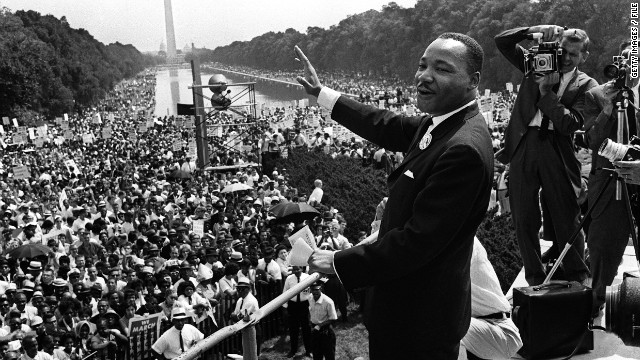
President Barack Obama marked the holiday with a service project at the Browne Education Campus in Washington on Monday morning.
He told the group it was the third year that he, his wife Michelle and daughters Malia and Sasha have engaged in some sort of service on King's birthday. While Malia was present Monday, Sasha "couldn't make it today," the president said.
"We're going to be doing a whole bunch of stuff to make the (school) facilities even better than they already are," Obama said.
He said there is "no better way" to honor King's life than by doing something on behalf of others.
"There's nobody who can't serve, nobody who can't help somebody else," he said. "Whether you're 7, or 6, or whether you're 76, you can find the opportunity to make an enormous amount of difference in your community."
Later Monday, the first couple will attend the Let Freedom Ring Celebration at the Kennedy Center.
In America blog: Full Martin Luther King Jr. Day coverage
U.S. Attorney General Eric Holder is scheduled to speak at the King Day at the Dome rally in Columbia, South Carolina on Monday, according to organizers of the event. The event will "commemorate Dr. King's life, draw attention to economic and educational equalities in the state, and protest the Confederate battle flag flying in front of the (state capitol) building," organizers said.
A federal holiday to honor King, who was assassinated in April 1968, was first observed in 1986. In 1994, Congress also designated it a national day of service.
On Monday, a group including Washington Mayor Vincent Gray, civil rights activist Dick Gregory and the Rev. Al Sharpton placed a wreath at the memorial honoring King.
"We must be reminded as to why Dr. King has been the one to deserve such a monument and such a holiday," Sharpton said. "... What he did was hold a banner of freedom and equality that actually transformed this nation."On Sunday, park rangers also placed wreaths at the memorial. Members of King's family stood beside the towering 30-foot statue of him as crowds sang "Happy Birthday" at a ceremony.
"We're celebrating the best of what we are, but also what we must become, knowing that we've not arrived there yet," Martin Luther King III said.
On the civil rights leader's birthday -- January 15, 1968 -- Martin Luther King Jr. was planning a "poor people's campaign" to bring together Americans from all walks of life to demand "decent jobs with decent pay," his son said.
"He did not live to see that come to fruition, and so, 44 years later, we're still challenging our nation, particularly in light of the fact that there's so much poverty rampant in this nation," Martin Luther King III said.
The Martin Luther King Jr. memorial in Washington opened to the public last year. Sunday's ceremony came several days after officials confirmed that a controversial quote on one side of the monument would be corrected.
The line currently reads: "I was a drum major for justice, peace and righteousness."
The quote, which holds a prominent place among more than a dozen King's most notable lines at the site, sparked controversy last summer when poet Maya Angelou said it made the civil rights leader appear arrogant.
King's original words, from a 1968 sermon at Ebenezer Baptist Church in Atlanta, were: "If you want to say that I was a drum major, say that I was a drum major for justice. Say that I was a drum major for peace. I was a drum major for righteousness. And all of the other shallow things will not matter."
Angelou said that leaving out the "if" changes the meaning.
Interior Secretary Ken Salazar has given the National Park Service 30 days to consult with the Martin Luther King Jr. National Memorial Project Foundation, members of the King family and others to decide on a more accurate version of the quote, an official at the Interior Department said last week.
King's son said Sunday that he supported the move, because future generations may not know the context of the quote.
"It could be confusing. For us today, no, but for generations yet unborn, they may not understand," he said.
Will Pakistan Prime Minister Yousuf Raza Gilani have to quit? Trust vote today

Pakistan's President Asif Ali Zardari and Prime Minister Yousuf Raza Gilani have met coalition partners ahead of a vote on a resolution moved by the government that asks the country's political leadership to endorse the supremacy of Parliament over every other institution, including the executive and, importantly, the judiciary.
Just a few hours ago, Pakistan's Supreme Court issued a contempt of court notice to Prime Minister Gilani for not implementing its orders and asked him to personally appear in court on Thursday next, January 19. The country's highest court is hearing a critical case on the issue of re-opening of graft charges against President Asif Ali Zardari, and it might have the last word on the survival of the embattled civilian government, which has also been in a public confrontation with the country's powerful military in recent days.
Locked in combat with both the military and the judiciary, PM Gilani has positioned today's vote on a pro-democracy resolution not as a trust vote for his government, but as a "democracy versus dictatorship" vote. Sources say that the President and Prime Minister may keep out of that vote as the government seeks to underscore that it is looking to protect not the ruling Pakistan People's Party (PPP) but the institution of democracy. If the government wins this vote, as it is expected to do with the majority it has in Parliament, Mr Gilani will carry a moral advantage with him when he appears in court on Thursday.
Opposition leaders like Imran Khan have said they are firmly against the Zardari government, but also firmly against allowing a military coup.
In grey, rainy Islamabad today, however, it is not a military coup but a constitutional coup that is being talked about now and, analysts say, events this week could lead up to the ouster of the Zardari-Gilani government through the juduciary or, at least, to early elections. The opposition would like early elections; Imran Khan, who has seen enormous crowds at rallies of his Tehreek e Insaaf party, tweeted today, ""In the history of Pakistan, this is the first free judiciary. the PPP govt is manipulating it only to hide its own theft and corruption. Only a puppet leader can inflict harm that Zardari's government has inflicted on Pakistani People."
Even Mr Gilani said yesterday, "We never said that I will be the Prime minister for 5 years. I never said that. However, I said that Parliament will complete its term and people have elected parliament for five years."
Today, he faced the fury of a seven-member Supreme Court bench, which was appalled on being informed by Attorney General Anwar-ul-Haq that he had no instructions from the government, despite a court deadline that it must make clear its plans by Monday on re-opening of corruption cases against President Zardari.
The corruption cases against the President were closed under the controversial National Reconciliation Ordinance (NRO), which was promulgated by the then Pakistan President General Pervez Musharraf in 2007. It grants amnesty to senior politicians. In 2009, the Supreme Court had ordered that this amnesty should end. Last week, the court warned Prime Minister Gilani that he could be disqualified and that action could also be taken against President Zardari if the government kept defying its orders on the issue. In a scathing attack, it had said that Mr Gilani "may not be an honest person on account of his not being honest to the oath of his office" and had then set the government the deadline of today to explain its plans.
The government has so far refused to blink on this matter, as it has in its stand-off with the military, brought on by what is being called the memogate scandal. Today, American businessman Mansoor Ijaz, who was expected to testify before a judicial commission, did not do so, delaying his trip home and seeking time till January 25 to testify. Mr Ijaz's lawyers say he is being threatened. He has applied for a visa in Switzerland.
Mr Ijaz claims to have carried a secret memo to Washington from Mr Zardari's representatives, asking for help to avert a military coup, soon after the US operation that killed Osama bin Laden in Pakistan. The militray says it believes the memo is authentic. The government denies that memo.
Last week, matters came to a head with Mr Gilani and the military exchanging strong words in public, amid fears of yet another military coup in Pakistan. The military warned that Prime Minister comments could pose "grievous consequences for the country" after the latter told the Chinese media that the chiefs of the army and main intelligence agency, the Inter-Services Intelligence (ISI), had acted "an unconstitutional and illegal" manner while making submissions to the Supreme Court on the scandal.
As the military huddled, there were fears of a military coup, but those fears ebbed by the end of the week as there were attempts to ensure that Pakistan came back from the brink. Both President Zardari and Mr Gilani met Army Chief General Ashfaq Pervez Kayani over the weekend.
With the Army Chief by his side, Mr Gilani described the armed forces as a "pillar of nation's resilience and strength" and lauded their services in the defence of the country. But on Sunday he refused to take back what he had said about the Army and ISI on their deposition in the memogate matter, asserting he was responsible only to the Pakistan Parliament.
"I am answerable to Parliament. And if somebody has any complaint, I will not answer any individual. I am answerable to Parliament and whenever Parliament asks, I will put my views before it," Mr Gilani said.
70 million people from two districts of Sindh drinking canal water
Pakistan Christian Post
About 70 million population of Larkana and Dadu districts in the far flung areas drinking untreated Rice Canal, Dadu Canal and Warrah canal irrigation water as well using for drinking of animals and human beings. A harmful constant extremely dangerous due to urban sewerage pours directly into the all canals.
There is a high risk of water borne diseases and of water borne deceases contaminated water due to an environment of sub-soil contamination passing through Science and Engineering College, Schools and dispensaries at Airport road via Mashori pump station and after making polluted the agricultural land around at Larkana damaged its nature surrounding.
In Larkana untreated sewerage water goes into the Rice Canal and Dadu Canal directly, thereby polluting irrigation system and using of such polluted water, which is dangerous for the people of area among the lives of peoples are asset.
It is quite remarkable that the huge cities of Pakistan are facing an overall shortage of fresh water and potable water, but those cities have been already precious and wide range of opportunities of sweet water, they must protect a precious gift of God otherwise they may lose at any stage.
After billions of expenditures on sewerage scheme in Larkana around, there is no sewerage way out and all the water treatment land occupied by the influentials in Larkana and even the Journalists’ colony for a long.
It is pertinent to be mentioned here that for these purposes to drain out seepage or other means, SCARP Wapda charging millions of rupees of electricity and other expenditures including employee salaries every month as well yearly budget, but the pumps around Larkana have been removed and no electricity poles and transformers of LA 30, LA 20, LA 19 and others, all are made functionless as water cannot enter into 2 R sub-drain, but the SCARP and Municipal corporation performance is zero observed after a survey.
According to reports, Municipal and its concerned departments have been failed to take minimize the steps required for the primary treatment of industrial and contaminated effluent/sewage systems in the suburbs of urban areas in Larkana and other parts, which eventually resulting thousands people suffering from gastro/abdominal diseases.
For a long there is no value of a common man even the high expenditure of salaries and different projects of the use of huge budget to providing sweet water all were in doldrums, because all the new schemes during the Nazims were totally failed and no one millions of scheme properly working in Larkana and other parts of district sources told.
For the welfare of people, several times raised questions about their ultimate destiny and hazardous/various diseases spreads and failures of the project but all in vain, while they do not pay any heed to the people’s health and ecology of a human is a greater importance.
The river water of Rice Cannal, Dadu Cannal and Warrah canal is also not properly fit for drinking, fishing and bathing purposes, due to the fecal-coliform bacteria are always found very high, which is due to the disposal of large quantity of untreated municipal waste into the Rice Canal and Dadu Cannal.
The Bakrani pumps drain out untreated sewage of Larkana 2-R sub-drain south system made with mud and uncovered by the SCARP department that ultimately drain into Rice Canal at Mashori pump station.
This 2-R sub-drain while passing parallel to the Bakrani road that called an Air Port Road of Larkana through the lands of different Khatedars, have been damaged due to high seepage, submerged them with sewerage water, where aquatic plants have been grown indicating the submerging water around the Larkana, the nature having high nitrogen and phosphors contents and caused great nuisance, so there is menace of spread of water borne diseases in the area.
The Airport road (Bakrani road) of Larkana via agricultural lands to Mashori pump have been dangerously affected both the side due to the sewerage water due to continue seepage of sewerage water into the land around Larkana.
Several projects are in doldrums due to the seepage around Larkana and further millions of expenditures carried out for; resulting submerged about hundreds of acres of land around Larkana by the sewerage water.
The people of Larkana have demanded the higher authorities to look into the matter and resolved their issues
Bill Gates extends condolences to Arfa’s father
Microsoft owner Bill Gates on Monday offered condolences to Arfa Karim’s father over death of youngest Microsoft Certified Professional.
In his message, Gates said he was saddened to learn about Arfa’s death. Gates said Arfa was a genius student and he was shocked over her death.
It is pertinent to mention here that upon hearing about Arfa's illness, Bill Gates had hired a panel of doctors to extend medical treatment to her and even offered to her father to shift Arfa to a Dubai hospital.
Meanwhile, after the sad demise of teenage computer ace Arfa Karim, the Sindh and Punjab governments have resolved naming Media City in Karachi and Technology Park in Lahore after her.
Pakistani lawmakers to vote on support for democracy
Pakistani lawmakers are expected to vote Monday on a resolution supporting the country's democratic system after weeks of public speculation and political intrigue about the possibility of a coup in the volatile nation.
At the same time, a panel appointed by the Supreme Court is holding a hearing on a scandal over an anonymous memo that has severely strained relations between military and civilian authorities.
The resolution due to be voted on Monday by the National Assembly, the lower house of Parliament, was put forward Friday by the Awami National Party, part of the governing coalition led by Prime Minister Yousuf Raza Gilani's Pakistan Peoples Party (PPP).
It called for support for the democratic system in general -- something a majority of lawmakers are unlikely to vote against -- without naming any political parties or individuals, suggesting that it was designed to bolster the government while avoiding the risk of hurting the prime minister or the PPP.
"This house endorses and supports the efforts made by the political leadership for strengthening democracy and reposes full confidence and trust in them," part of the resolution reads.
The vote comes after the embattled Pakistani president, Asif Ali Zardari, met with Army Chief General Ashfaq Pervez Kayani on Saturday -- a sign, some say, that shows tensions between Pakistan's civilian and military leadership are cooling down.
Zardari and Kayani met to discuss the "current security situation," presidential spokesman Farhatullah Babar said.
A second meeting between civilian and military leadership took place afterward, as Gilani convened the Cabinet's defense committee.
The meetings came a day after Pakistani and British official denied a report that Gilani had contacted the British High Commission to express fears that a military coup was imminent in his country. Officials from both countries said such a call never took place.
Saturday's meeting signaled an easing of tensions between the military and the president, said retired Brig. Mehmoud Shah.
"It's a good beginning to soothe the tension that's gripping the country," said Shah, a military analyst. "It shows the two sides are prepared to talk and want the democratic system to move forward."
During the prime minister's meeting with leaders, he stressed that Pakistan's sovereignty is non-negotiable, according to a news release.
"We would reject any approach that would tend to compromise our sovereignty, honor and national dignity," Gilani said. "Our contribution and steadfast commitment to stability and peace at home and in our region is unquestionable and second to none. "
For Pakistan, there is a need for national unity, especially between the military and the civilian government, he said.
"Together in complete harmony with each other and other vital institutions we can change the country's destiny and accord, its rightful place in the comity of nations," he said.
Military officials did not immediately comment on the meetings and their outcomes.
The military and the government have been locked in an uneasy standoff after allegations of a secret effort by the government last year to ward off a possible military coup by curbing the army's power with Washington's help.
That compounded tensions created by the U.S. killing of al Qaeda leader Osama bin Laden on Pakistani soil in May, which deeply embarrassed the military, and NATO airstrikes in November that killed two dozen Pakistani soldier near the Afghan border, putting further pressure on relations with Washington.
The Supreme Court panel holding a hearing Monday is investigating an unsigned memo sent to the Pentagon that allegedly called for Washington to help avert a military coup and curb the military's powers.
The Pakistani-American businessman Mansour Ijaz, who drafted the memo, says he did it on the instructions of Hussain Haqqani, a former Pakistani ambassador to the United States who resigned last year under mounting pressure.
The memo enraged military leaders who are cooperating with the Supreme Court. The court is investigating to determine whether Zardari was aware of the memo.
The government has denied involvement, but the Supreme Court's eventual findings could threaten Zardari and his government.
The president is also facing pressure from the Supreme Court on another front.
The court is pushing the government to pursue old corruption charges against thousands of politicians and bureaucrats, including Zardari. The politicians were granted amnesty by a decree issued by then President Pervez Musharraf in 2007.
In 2009, the Supreme Court ruled the decree was unconstitutional, but the government has yet to pursue and reopen the cases.
The Supreme Court is running out patience and last week threatened to censure the government if it did not taking action -- including the possibility of disqualifying Gilani.
Pakistan SC orders contempt charges against Gilani

The Pakistan Supreme Court on Monday ordered contempt charges against Prime Minister Yousuf Raza Gilani in the National Reconciliation Ordinance (NRO) case, a corruption amnesty issued by former military ruler Pervez Musharraf in 2007.
Gilani has been ordered by the seven-member bench of the Supreme Court led by Justice Nasir-ul-Mulk to appear before it in person on January 19 for failing to reopen corruption cases against President Asif Ali Zardari and over 8,000 others.
Gilani has been ordered to personally appear in court to explain why contempt proceedings should not be initiated against him for deliberately disregarding the court's orders on the reopening of the corruption cases.
While pointing out that the Gilani government has been issued directions several times by the Supreme Court to implement its orders regarding the NRO cases, the government had deliberately not acted on these orders.
With the issue of the contempt notice to Gilani, another round of confrontation between the government and the judiciary is brewing. The ruling Pakistan People's Party is already in a face off with the powerfull military over the memo scandal.
Earlier, while hearing the case the apex court had directed Attorney General Anwarul Haq 20 minutes to speak to the government and seek advice on the NRO case.
Gilani, cornered by the Supreme Court and the powerful military, could seek a vote of confidence in the National Assembly to save his embattled government.
Gilani is expected to win the vote on a resolution that seeks endorsement and support for "efforts made by the political leadership for strengthening democracy" and calls for reposing "full confidence and trust" in the leadership on Monday evening even as reports claim the powerful military led Army Chief General Ashfaq Parvez Kayani would rally behind the Supreme Court.
The Pakistani Prime Minister has been defiant and told Parliament that the country does not need another dictators but a strong democracy. He has also rejected the Army's demand that he retract his criticism of the military, saying "I will not answer to any individual as I am answerable to Parliament."
The NRO introduced by former president Musharraf in 2007 cleared corruption cases between 1986-1999 and let off many tainted politicians and bureaucrats. Several murder charges were also dropped under the NRO.
Many say the NRO allowed former Pakistan prime minister Benazir Bhutto to return to Pakistan. She was assassinated in December 2007.
The Supreme Court declared the NRO unconstitutional in 2009.
Little optimism over promised Bahrain reforms
Al Jazeera
A new round of modest constitutional reforms proposed by the king of Bahrain will do little to stop the nearly year-old uprising in the island kingdom, activists and opposition leaders said on Sunday.
King Hamad bin Isa Al Khalifa delivered a televised address on Sunday morning in which pledged to limit the power of the executive branch. Under the proposed reforms, members of parliament would have more power to question cabinet ministers, and more protection from dismissal by the king.
But the speech will not be a breakthrough for the Bahraini government as it tries to stop a nearly year-long uprising. Members of Al Wefaq, the country's largest opposition party, quickly dismissed the changes as "cosmetic" and demanded much wider reforms.
"Nothing was new. The opposition was expecting something like this from 10 years before," said Ali al-Aswad, a member of Al Wefaq. "This is not the demand of the street. The demand is different now, after what has happened in all the Arab countries."
'A better balance'
All of the proposed reforms are small in scale. The king promised "new safeguards" to limit his ability to dissolve the lower house of parliament, for example: He would have to "consult" with leaders of both houses, and the head of the constitutional court, before dismissing lawmakers, an action which right now requires only the approval of the king and the prime minister, who is also the king's uncle.The proposed changes would also require the king to issue a "royal order" explaining the process for appointing members of the Shura Council, the 40-member upper house, which is entirely appointed by the king.
Parliament would also play a larger role in determining the state budget, and the lower house would have the right to "question and withdraw confidence from ministers," who are also appointed by the king.
All of these changes are in proposed constitutional amendments, which Al Khalifa said will be transmitted to the parliament.
"The proposed amendments bring greater harmony in the relationship between the executive and legislative branches, in order to achieve a better balance between them," the king said in his speech.
The changes outlined on Sunday would partly fulfill one of the core recommendations from the "national dialogue" conducted over the summer. Many others, including efforts to reduce corruption and "sectarian division," remain unimplemented.
Al Wefaq withdrew from that dialogue, which it called "not serious," though some other opposition representatives remained involved.
Activists admit that some of the proposed reforms are modest steps in the right direction, but complain the king is moving far too slowly.
"People very clearly wanted an elected government, they want parliament that has actual power," said Nabeel Rajab, the head of the Bahrain Centre for Human Rights in Manama. "If we go into this detail, and go step by step... it's going to be 100 years before an elected parliament has power."
A 'different direction now'
The king has delivered several high-profile addresses in recent weeks, one in December to mark Bahrain's national day, another in November after an official commission released its report on abuses committed during this year's unrest. None of them included major concessions sought by the opposition, like a general amnesty for prisoners.
Several activists and members of Al Wefaq described the speeches as "missed opportunities."
"Even Assad issued an amnesty today," said one Bahraini activist reached by telephone, referring to Syrian president Bashar al-Assad, who issued a "general amnesty" on Sunday. "Why couldn't Khalifa do the same?"
The king's speech instead included a few thinly-veiled swipes at members of the opposition. He promised, for example, to work with anyone who "has a genuine patriotic desire for further progress and reforms." The government has often tried to portray protesters as obstructionist.
Al Wefaq has demanded much wider reforms than those offered on Sunday, including the creation of a fully elected legislature and an elected prime minister. Activists outside of Bahrain's formal political parties, particularly among the youth, tend to go further, calling for the ouster of the Khalifa family which has ruled for two centuries.
Al Wefaq has tried to moderate those demands, but politicians warn that the king's speech - which several called a "missed opportunity" - will only anger the opposition.
"If we accept this, we will have no power in the streets. We couldn't control the streets," al-Aswad said. "The youth might go in a different direction now."
Kuwait police abused transgender women: HRW

Human Rights Watch said that, pending repeal of the law, the Kuwaiti interior ministry should issue a moratorium on arrests of individuals and the government should work to protect transgender individuals.

Human Rights Watch on Sunday accused Kuwaiti police of torturing and sexually abusing transgender women and called on the Gulf state to hold officers accountable.
In a report, the New York-based group said that police have been using a “discriminatory” amendment to the penal code passed by parliament in 2007 which arbitrarily criminalizes “imitating the opposite sex.”
Transgender women are individuals who are born male but identify themselves as female.
The arbitrary and ill-defined provisions of the law have allowed numerous abuses to take place against them, said the 63-page report based on interviews with 40 transgender women, as well as with interior ministry officials, lawyers, doctors, and members of civil society.
The accusations were based on the accounts of the 40 victims “all of whom gave almost a similar story on what they faced,” Rasha Moumneh, HRW's Middle East and North Africa researcher, told a press conference in Kuwait City.
“We have met with officials from the interior ministry ... and presented the findings to them but have not yet received any response,” Moumneh said, adding that Human Rights Watch does not know the exact number of transgender women in Kuwait.
Kuwaiti police have a free rein to determine whether a person’s appearance constitutes “imitating the opposite sex,” without any specific criteria being laid down for the offence, the report said.
Transgender women reported being arrested even when they were wearing male clothes and then later being forced by police to dress in women’s clothing.
In some cases documented by Human Rights Watch, transgender women said police arrested them because they had a “soft voice” or “smooth skin.”
“No one ̶ regardless of his or her gender identity ̶ deserves to be arrested on the basis of a vague, arbitrary law and then abused and tortured by police,” Sarah Leah Whitson, HRW’s Middle East director, said in a statement.
“The Kuwaiti government has a duty to protect all of its residents, including groups who face popular disapproval, from brutal police behavior and the application of an unfair law,” the statement said.
Abuses include degrading and humiliating treatment, such as being forced to strip and paraded around police stations, being forced to dance for officers, sexual humiliation, verbal taunts and intimidation, HRW said.
“In several cases, Human Rights Watch found that police officers took advantage of the law to blackmail transgender women into sex,” the report said.
Redress for these violations was difficult for fear of retribution and re-arrest, said the rights watchdog.
“HRW calls on the Kuwaiti government to repeal the amendment to article 198, criminalizing imitating the opposite sex,” the report said.
Pending repeal of the law, the interior ministry should issue a moratorium on arrests of individuals and the government also should work to protect transgender individuals, it said.
Obama honors Martin Luther King

President Barack Obama celebrated the legacy of slain civil rights leader Martin Luther King Jr. with his family on Sunday, clapping and swaying to the boisterous strains of "Amazing Grace" at a historic Washington D.C. Baptist church.
On the eve of the holiday marking King's birthday, the president, First Lady Michelle Obama and their daughters, Sasha and Malia, attended a service at Zion Baptist Church.
The Reverend Keith Byrd Sr. called on congregants to keep King's legacy alive and welcomed the first family.
"[The Obamas] came here to worship, and we want them to worship," Byrd said. "Bless you and thank you for joining us."
Deacon Hendri Williams, who also spoke at the service, closed his remarks by highlighting King's belief in the importance of religion and quoted from a letter King wrote from the Birmingham, Alabama, city jail to his fellow clergy in 1963.
King, a Baptist pastor, said the church was "not merely a thermometer that recorded the ideas and principles of popular opinion; it was a thermostat that transformed the mores of society," Williams said quoting from the now famous letter.
A recipient of the Nobel Peace Prize in 1964, King, was assassinated in 1968.
The Zion Baptist church was founded in 1864 by African Americans who migrated to Washington from Fredericksburg, Virginia.
Khanpur massacre: 20 more Shia Muslims victim to Pakistan army’s policy of Strategic Depth

Shia Muslims continue to pay the price for Pakistan army’s policy of Strategic Depth
While Pakistan’s pro-military establishment media initially tried to misrepresent (by attributing it to an electric transformer blast) the latest terrorist attack on the Shia Muslims in Khanpur (Punjab) commemorating the Chehlum of Imam Hussain (the Holy Prophet’s (PBUH) grandson), it has now emerged that the latest atrocity was yet another terrorist attack.
While Pakistan’s “liberal” media went into overdrive over a fraud, few of them are moved about the latest mass murder of Shia Muslims. Aside from an odd token comment, they will quickly move on to the next topic.
Processions of Shia Muslims, who make up about 20% of Pakistan’s population, have often been attacked by militant Deobandi / Wahhabi groups who consider Shias as apostates of Islam. The Jihadi (Deobandi/Wahhabi) militants have deep ties with al-Qaida and Pakistani Taliban insurgents, and are known to have tacit support of Pakistan army and judiciary.
There was no claim of responsibility for Sunday’s attack but early suspicions focused on Lashkar-e-Jhangvi (also known as Ahle Sunnat Wal Jmaat group led by Ahmed Ludhianvi), a militant group with deep roots in the area. Lashkar-e-Jhangvi has claimed several of the worst attacks in Baluchistan, and last December took responsibility for an attack in the Afghan capital, Kabul, that killed at least 63 Shiite worshippers. The group’s main recruiting ground, however, has been in southern Punjab, and its leader, Malik Ishaq, is from Khanpur town. Mr. Ishaq was released from jail in July 2011 and spent several months under house arrest in the area, but is currently in a Lahore jail, Mr. Chatta, the police chief, said.
Bonhomie must prevail
EDITORIAL:THE FRONTIER POST
The tiff between the civilian leadership and the military command must be put paid to at any rate as this is what the supreme national interest demands compulsorily and obligatorily. Any clash between state institutions has never served a nation; it has rather invariably hurt it, often irreparably. And in our given unenviable conditions, a clash would certainly be just disastrous, to say the least. There is no room whatsoever for any sort of intransigence, haughtiness and egotism, so direly are we placed presently quite visibly. In the greater national interest, the past be left behind to look towards the present and the future, particularly when both the civilian leadership and the top brass are no aliens but compatriots, neither definitely wishing their nation ill. Bonhomie must prevail between the two at any cost and stridency must cease to be matched with stridency in any event. Reconciliation must necessarily become their inspirational and guiding light. Harmony between the two must come about imperatively.And, for a change, compulsive cheerleaders and conspiracy-theorists must take rest, stop trying driving wedges between the two leaderships with their fond shenanigans and not add to the woes of the masses feeling so dismayed over the tiff that, in the first place, should not have been there at all. Already, this squabbling has begun exacting a heavy cost on the nation. Although vile militants and terrorists prowling on the land are intrinsically demoniac mercenary killers, given to evil-doing at the behest of their wicked masterminds and financiers, it cannot be ruled out if from this discord they have taken a bigger heart to ply their trade of bloodletting. Over these very days, they have veritably stepped up their terrorist activities, singling out security assets in particular for their murderous assaults.No lesser worrisome are the tricks being played on us by our American friends while our two leaderships are taken up by their own imbroglio. Their ostentatious pious stance about this acrimony will be insane to take at its face value. It has deeper motives. By apparently standing on our civilian leadership’s side, they in reality are enveloping it with an unbridgeable gulf with the military top brass so as to play their end-game in Afghanistan by sidelining Pakistan. Their rhetoric of Pakistan being indispensable for any Afghan peace dispensation is, curiously, no more heard as fervently as in the past. By every indication, Pakistan is not in the loop of the peace dialogue they have initiated with the Afghan Taliban. Notably, over these past ten year, they had been vilifying the Pakistani establishment on every world forum on accusation of harbouring Taliban leader Mullah Omar and his top companions in Quetta, labeling them as Quetta Shura, touting it to at Pakistan army’s and ISI’s beck and call. And now they are planting leaks in their media that Pakistan is not aboard the peace dialogue because the Taliban want Pakistan out of it. But in their own statements confirming their talks with the Americans, the Taliban have expressed no such reservations. Nor have they said they want Pakistan out because they want to conduct their dialogue with the Americans uninfluenced by it. It is the Americans who are saying this. Their real intent could then well be understood from this. They indeed had even kept Afghan President Hamid Karzai in dark on their dialogue with Taliban. He too came to know of it when media reports surfaced that the Taliban were about to open their office in Qatar in connection with their peace talks with the Americans. In a huff, Karzai withdrew his ambassador from that Gulf state. And seemingly the dialogue stalled. It is to be seen if at all Karzai will be on the negotiating table, for the caveat that the Taliban do not want to talk peace with him as they view him simply as a US puppet and hence no plausible peace interlocutor. The Americans are, anyway, promising him to lead the peace dialogue once their talks with Taliban get into greater stride. How would they do it must be known to them. But, to all intent and purposes Pakistan, for the time being at least, is just out. A bickering Pakistani top leadership surely stands them in good stead to perpetuate their ulterior designs in Afghanistan, where we already have been left high and dry in spite of suffering tremendous human, material and multifarious losses by stupidly becoming their Afghanistan adventurism’s part. To India, they have got a strategic partnership pact with Afghanistan, which in time will be of great grief to us. The Iranians too have clinched a defence agreement with Afghanistan. And while we have laid down the lives of some 5,000 security personnel and 35,000 civilians for the sake of Afghanistan’s peace and security, we have been left in the cold to watch others embed there. Our own security concerns in Afghanistan have been given a short shrift. If nothing else, at least this must impel our civilian leadership and the military top brass to set aside their discords, create harmony in their ranks and put up a united front for our security concerns’ redress in Afghanistan. Otherwise, our western border will become as much a permanent security headache for us is the eastern border.
The tiff between the civilian leadership and the military command must be put paid to at any rate as this is what the supreme national interest demands compulsorily and obligatorily. Any clash between state institutions has never served a nation; it has rather invariably hurt it, often irreparably. And in our given unenviable conditions, a clash would certainly be just disastrous, to say the least. There is no room whatsoever for any sort of intransigence, haughtiness and egotism, so direly are we placed presently quite visibly. In the greater national interest, the past be left behind to look towards the present and the future, particularly when both the civilian leadership and the top brass are no aliens but compatriots, neither definitely wishing their nation ill. Bonhomie must prevail between the two at any cost and stridency must cease to be matched with stridency in any event. Reconciliation must necessarily become their inspirational and guiding light. Harmony between the two must come about imperatively.And, for a change, compulsive cheerleaders and conspiracy-theorists must take rest, stop trying driving wedges between the two leaderships with their fond shenanigans and not add to the woes of the masses feeling so dismayed over the tiff that, in the first place, should not have been there at all. Already, this squabbling has begun exacting a heavy cost on the nation. Although vile militants and terrorists prowling on the land are intrinsically demoniac mercenary killers, given to evil-doing at the behest of their wicked masterminds and financiers, it cannot be ruled out if from this discord they have taken a bigger heart to ply their trade of bloodletting. Over these very days, they have veritably stepped up their terrorist activities, singling out security assets in particular for their murderous assaults.No lesser worrisome are the tricks being played on us by our American friends while our two leaderships are taken up by their own imbroglio. Their ostentatious pious stance about this acrimony will be insane to take at its face value. It has deeper motives. By apparently standing on our civilian leadership’s side, they in reality are enveloping it with an unbridgeable gulf with the military top brass so as to play their end-game in Afghanistan by sidelining Pakistan. Their rhetoric of Pakistan being indispensable for any Afghan peace dispensation is, curiously, no more heard as fervently as in the past. By every indication, Pakistan is not in the loop of the peace dialogue they have initiated with the Afghan Taliban. Notably, over these past ten year, they had been vilifying the Pakistani establishment on every world forum on accusation of harbouring Taliban leader Mullah Omar and his top companions in Quetta, labeling them as Quetta Shura, touting it to at Pakistan army’s and ISI’s beck and call. And now they are planting leaks in their media that Pakistan is not aboard the peace dialogue because the Taliban want Pakistan out of it. But in their own statements confirming their talks with the Americans, the Taliban have expressed no such reservations. Nor have they said they want Pakistan out because they want to conduct their dialogue with the Americans uninfluenced by it. It is the Americans who are saying this. Their real intent could then well be understood from this. They indeed had even kept Afghan President Hamid Karzai in dark on their dialogue with Taliban. He too came to know of it when media reports surfaced that the Taliban were about to open their office in Qatar in connection with their peace talks with the Americans. In a huff, Karzai withdrew his ambassador from that Gulf state. And seemingly the dialogue stalled. It is to be seen if at all Karzai will be on the negotiating table, for the caveat that the Taliban do not want to talk peace with him as they view him simply as a US puppet and hence no plausible peace interlocutor. The Americans are, anyway, promising him to lead the peace dialogue once their talks with Taliban get into greater stride. How would they do it must be known to them. But, to all intent and purposes Pakistan, for the time being at least, is just out. A bickering Pakistani top leadership surely stands them in good stead to perpetuate their ulterior designs in Afghanistan, where we already have been left high and dry in spite of suffering tremendous human, material and multifarious losses by stupidly becoming their Afghanistan adventurism’s part. To India, they have got a strategic partnership pact with Afghanistan, which in time will be of great grief to us. The Iranians too have clinched a defence agreement with Afghanistan. And while we have laid down the lives of some 5,000 security personnel and 35,000 civilians for the sake of Afghanistan’s peace and security, we have been left in the cold to watch others embed there. Our own security concerns in Afghanistan have been given a short shrift. If nothing else, at least this must impel our civilian leadership and the military top brass to set aside their discords, create harmony in their ranks and put up a united front for our security concerns’ redress in Afghanistan. Otherwise, our western border will become as much a permanent security headache for us is the eastern border.
Ansar Burney condemns Khanpur blast
Ansar Burney Trust International chairman Ansar Burney has strongly condemned the bomb blast at Chehlum procession in Khanpur on Sunday, says a press release. Burney expressed deep grief and sorrow over the loss of life of the innocent people. He said the Punjab government should arrest the culprits and give them exemplary punishment. He said those who spread hypocrisy and hate on the name of Islam are the enemies of humanity. He urged the people to remain calm and peaceful.
Pakistan's government faces critical day in court
www.sfgate.com
A political crisis gripping Pakistan could take a decisive turn today when its embattled government appears before the Supreme Court, which is ordering it to reopen a stalled graft probe against the president or face dismissal.
The crisis comes at a time of continuing strikes by presumed religious extremists who want to install a hard-line Islamist government in the nuclear-armed nation. On Sunday, a bomb blast in eastern Pakistan killed 14 people in a Shiite religious procession.
The court hearing represents one front in what amounts to an assault on the government by the powerful military, opposition politicians and the Supreme Court. The showdown has all but paralyzed decision making, and threatens fresh turmoil just as the United States wants Islamabad's help in negotiating an end to the war with the Taliban in neighboring Afghanistan.
Tensions spiked over an unsigned memo delivered to Washington last year offering the United States a raft of favorable policies in exchange for its help in thwarting a supposed army coup. Prime Minister Yousuf Raza Gilani criticized the army for cooperating with a Supreme Court probe into the affair, and has said the standoff is nothing less than a choice between "democracy and dictatorship."
Gilani's comments followed a warning from the generals - who were infuriated by the memo - of possible "grievous consequences" ahead.
Against this backdrop, the Supreme Court has been pressing for investigations into allegations of corruption against President Asif Ali Zardari dating back to before his time in office. He and other leading politicians had been protected by a politically inspired amnesty agreed to in 2008 that the court struck down in 2009, leaving him vulnerable.
Last week, the court threatened to dismiss Zardari and Gilani if they continue to ignore its demands. It ordered government representatives to appear in court today to explain what they planned to do.
Sunday, January 15, 2012
Healthline 10 Surprising Health Benefits of Beer
Beer drinkers rejoice: Your favorite brew may be healthier than you think.
For years, wine drinkers have indulged without guilt, reveling in the news that red wine can help protect against heart disease. Recent research shows that beer can also be good for what ails you, from reducing risk for broken bones to helping warding off diabetes and mental decline. It can even increase longevity, a large study suggests.
However, the key to tapping into beer’s benefits is moderation, meaning just one 12-ounce beer per day for women and two for men. Heavy drinking ups the threat of liver damage, some cancers, and heart problems. Bingeing on brewskis can also make you fat, since a 12-ounce regular beer has about 150 calories, while light beer has about 100.
Here are 10 surprising—and healthy—reasons to cheer about your next beer.

1. Stronger Bones
Beer contains high levels of silicon, which is linked to bone health. In a 2009 study at Tufts University and other centers, older men and women who swigged one or two drinks daily had higher bone density, with the greatest benefits found in those who favored beer or wine. However, downing more than two drinks was linked to increased risk for fractures.
For the best bone-building benefits, reach for pale ale, since a 2010 study of 100 types of beer from around the word identified these brews as richest in silicon, while light lagers and non-alcoholic beers contained the least.
2. A Stronger Heart
A 2011 analysis of 16 earlier studies involving more than 200,000 people, conducted by researchers at Italy’s Fondazion di Ricerca e Cura, found a 31 percent reduced risk of heart disease in those who quaffed about a pint of beer daily, while risk surged in those who guzzled higher amounts of alcohol, whether beer, wine, or spirits.

More than 100 studies also show that moderate drinking trims risk of heart attacks and dying from cardiovascular disease by 25 to 40 percent, Harvard reports. A beer or two a day can help raise levels of HDL, the “good” cholesterol that helps keep arteries from getting clogged.
3. Healthier Kidneys
A study in Finland singled out beer among other alcoholic drinks, finding that each bottle of beer men drank daily lowered their risk of developing kidney stones by 40 percent. One theory is that beer’s high water content helped keep kidneys working, since dehydration increases kidney stone risk.
It’s also possible that the hops in beer help curb leeching of calcium from bones; that “lost” calcium also could end up in the kidneys as stones.
4. Boosting Brain Health
A beer a day may help keep Alzheimer’s disease and other dementia at bay, researchers say.
A 2005 study tracking the health of 11,000 older women showed that moderate drinkers (those who consumed about one drink a day) lowered their risk of mental decline by as much as 20 percent, compared to non-drinkers. In addition, older women who downed a drink a day scored as about 18 months “younger,” on average, on tests of mental skills than the non-drinkers.
5. Reduced Cancer Risk
A Portuguese study found that marinating steak in beer eliminates almost 70 percent of the carcinogens, called heterocyclic amines (HCAs) produced when the meat is pan-fried. Researchers theorize that beer’s sugars help block HCAs from forming.
Scientists also have found that beer and wine contain about the same levels of antioxidants, but the antioxidants are different because the flavonoids found in hops and grapes are different.
6. Boosting Vitamin Levels
A Dutch study, performed at the TNO Nutrition and Food Research Institute, found that beer-drinking participants had 30 percent higher levels of vitamin B6 levels in their blood than their non-drinking counterparts, and twice as much as wine drinkers. Beer also contains vitamin B12 and folic acid.
7. Guarding Against Stroke
Researchers at the Harvard School of Public Health found that moderate amounts of alcohol, including beer, help prevent blood clots that block blood flow to the heart, neck and brain—the clots that cause ischemic stroke, the most common type.
8. Reduced Risk for Diabetes
Drink up: A 2011 Harvard study of about 38,000 middle-aged men found that when those who only drank occasionally raised their alcohol intake to one to two beers or other drinks daily, their risk of developing type 2 diabetes dropped by 25 percent. The researchers found no benefit to quaffing more than two drinks. The researchers found that alcohol increases insulin sensitivity, thus helping protect against diabetes.
9. Lower Blood Pressure
Wine is fine for your heart, but beer may be even better: A Harvard study of 70,000 women ages 25 to 40 found that moderate beer drinkers were less likely to develop high blood pressure—a major risk factor for heart attack—than women who sipped wine or spirits.
10. Longer Life
In a 2005 review of 50 studies, the U.S. Department of Agriculture (USDA) reported that moderate drinkers live longer. The USDA also estimates that moderate drinking prevents about 26,000 deaths a year, due to lower rates of heart disease, stroke, and diabetes.
These benefits appear to apply in other countries as well, with an earlier study reporting that, “if European beer drinkers stopped imbibing, there would be a decrease in life expectancy of two years—and much unhappiness.”
For years, wine drinkers have indulged without guilt, reveling in the news that red wine can help protect against heart disease. Recent research shows that beer can also be good for what ails you, from reducing risk for broken bones to helping warding off diabetes and mental decline. It can even increase longevity, a large study suggests.
However, the key to tapping into beer’s benefits is moderation, meaning just one 12-ounce beer per day for women and two for men. Heavy drinking ups the threat of liver damage, some cancers, and heart problems. Bingeing on brewskis can also make you fat, since a 12-ounce regular beer has about 150 calories, while light beer has about 100.
Here are 10 surprising—and healthy—reasons to cheer about your next beer.
1. Stronger Bones
Beer contains high levels of silicon, which is linked to bone health. In a 2009 study at Tufts University and other centers, older men and women who swigged one or two drinks daily had higher bone density, with the greatest benefits found in those who favored beer or wine. However, downing more than two drinks was linked to increased risk for fractures.
For the best bone-building benefits, reach for pale ale, since a 2010 study of 100 types of beer from around the word identified these brews as richest in silicon, while light lagers and non-alcoholic beers contained the least.
2. A Stronger Heart
A 2011 analysis of 16 earlier studies involving more than 200,000 people, conducted by researchers at Italy’s Fondazion di Ricerca e Cura, found a 31 percent reduced risk of heart disease in those who quaffed about a pint of beer daily, while risk surged in those who guzzled higher amounts of alcohol, whether beer, wine, or spirits.
More than 100 studies also show that moderate drinking trims risk of heart attacks and dying from cardiovascular disease by 25 to 40 percent, Harvard reports. A beer or two a day can help raise levels of HDL, the “good” cholesterol that helps keep arteries from getting clogged.
3. Healthier Kidneys
A study in Finland singled out beer among other alcoholic drinks, finding that each bottle of beer men drank daily lowered their risk of developing kidney stones by 40 percent. One theory is that beer’s high water content helped keep kidneys working, since dehydration increases kidney stone risk.
It’s also possible that the hops in beer help curb leeching of calcium from bones; that “lost” calcium also could end up in the kidneys as stones.
4. Boosting Brain Health
A beer a day may help keep Alzheimer’s disease and other dementia at bay, researchers say.
A 2005 study tracking the health of 11,000 older women showed that moderate drinkers (those who consumed about one drink a day) lowered their risk of mental decline by as much as 20 percent, compared to non-drinkers. In addition, older women who downed a drink a day scored as about 18 months “younger,” on average, on tests of mental skills than the non-drinkers.
5. Reduced Cancer Risk
A Portuguese study found that marinating steak in beer eliminates almost 70 percent of the carcinogens, called heterocyclic amines (HCAs) produced when the meat is pan-fried. Researchers theorize that beer’s sugars help block HCAs from forming.
Scientists also have found that beer and wine contain about the same levels of antioxidants, but the antioxidants are different because the flavonoids found in hops and grapes are different.
6. Boosting Vitamin Levels
A Dutch study, performed at the TNO Nutrition and Food Research Institute, found that beer-drinking participants had 30 percent higher levels of vitamin B6 levels in their blood than their non-drinking counterparts, and twice as much as wine drinkers. Beer also contains vitamin B12 and folic acid.
7. Guarding Against Stroke
Researchers at the Harvard School of Public Health found that moderate amounts of alcohol, including beer, help prevent blood clots that block blood flow to the heart, neck and brain—the clots that cause ischemic stroke, the most common type.
8. Reduced Risk for Diabetes
Drink up: A 2011 Harvard study of about 38,000 middle-aged men found that when those who only drank occasionally raised their alcohol intake to one to two beers or other drinks daily, their risk of developing type 2 diabetes dropped by 25 percent. The researchers found no benefit to quaffing more than two drinks. The researchers found that alcohol increases insulin sensitivity, thus helping protect against diabetes.
9. Lower Blood Pressure
Wine is fine for your heart, but beer may be even better: A Harvard study of 70,000 women ages 25 to 40 found that moderate beer drinkers were less likely to develop high blood pressure—a major risk factor for heart attack—than women who sipped wine or spirits.
10. Longer Life
In a 2005 review of 50 studies, the U.S. Department of Agriculture (USDA) reported that moderate drinkers live longer. The USDA also estimates that moderate drinking prevents about 26,000 deaths a year, due to lower rates of heart disease, stroke, and diabetes.
These benefits appear to apply in other countries as well, with an earlier study reporting that, “if European beer drinkers stopped imbibing, there would be a decrease in life expectancy of two years—and much unhappiness.”
US urges Pakistan to hold dialogue on Balochistan
he US has urged Pakistan to “really lead and conduct a dialogue that takes the Balochistan issue forward”, says the US State Department.
State Department spokesperson Victoria Nuland addressed the issue in a “twitter-briefing” that the department holds every Friday, allowing people from around the world to tweet their questions to her.
“This was a very popular question on our feed, so we wanted to make sure that we answered it today,” said Ms Nuland who focused on the violence plaguing Balochistan instead of tackling political issues raised in most of the tweets.
“The United States is deeply concerned about the ongoing violence in Balochistan, especially targeted killings, disappearances and other human rights abuses,” she said.
“This is a complex issue. We strongly believe that the best way forward is for all the parties to resolve their differences through peaceful dialogue.”
The State Department official noted that the US took the allegations of human rights abuses very seriously and had discussed these issues with Pakistani officials. “And we also urged them to really lead and conduct a dialogue that takes this issue forward,” she concluded.
While her answer may not satisfy Baloch nationalists who had sent most of the questions, it would still irk Pakistani authorities who do not want the Balochistan issue to be discussed at international forums.
Washington-based Baloch nationalists are hoping that Ms Nuland’s response would set an example and encourage other governments and international organisations, such as the United Nations, to address the issue.
The question that Ms Nuland responded to came from Pakistan from a person who identified himself only as “Cadet 1081” and asked: “Pakistan is committing genocide of the Baloch nation, why does the US not intervene in Balochistan and make us get our freedom?”
While Ms Nuland confined herself to addressing the issue of human rights violations, other respondents did not. “Pakistan is not killing Baloch people. Only the followers of Balach and Hyrbyar want freedom,” wrote Mr Spirit 110.
“Pakistan is killing innocent Baloch people and the world is blind. It is our right to be free,” wrote Behuman.
Pakistani Judges acting as petitioners
DAILY TIMES
Veteran civil rights activist and former president of the Supreme Court Bar Association Asma Jahangir has said that she has read the verdict in the NRO case but unfortunately reached the conclusion that the judges were playing their role not as a judge but a petitioners’ lawyer.
She said that it seems that the judiciary was rendering the role of lawyers in the Memo as well as NRO case so what could be done when an institution had decided to send home a democratic government. She said that the government has always been stuck in a blind alley, but now a screen has been erected in front of it after the recent political standoff.
Talking to Daily Times here on Saturday, she suggested to the PPP coalition government in the centre to deal with the current political situation boldly, taking a principled stance on their constitutional rights and should also bring all the matters in the house to open debate and if there was found some need to amend the constitution for removing ambiguity about the institutional jurisdictions that must be taken.
Asma Jahangir said that MQM’s role in the recent scenario was most important to continue the democratic system and the PPP’s coalition government and if they would continue their alliance and support the democratic forces, democracy would prevail in future.
The human rights activist also suggested that the government should move a resolution to strengthen parliament and the democratic system in the country. She also urged the judiciary not to get stuck on the NRO issue but take up thousands of other pending cases.
On a query about the Memo scandal, she said that it would fizzle out into nothingness, adding that the American national Mansoor Ijaz’s arrival or absence would make no difference in the case. “It makes no difference whether Ijaz flies into Pakistan or not,” she maintained.
Highlighting the judiciary and establishment’s coalition in the past, she said that the judiciary and establishment had always been together and now when they were realizing that the judiciary and establishment might be separated, their perception has changed again.
To a query about Imran Khan’s PTI and its support from the establishment, she said that the establishment had always been supporting a segment of politicians; previously it had created one such segment in 1985 and now it needs another.
Answering another query related to the Lahore Bar Association elections and the chances of the military establishment’s influence in the lawyers community during the polls, she said that the men in boots never passed from here (Bar Associations), adding they were previously thumping their boots gently; but now, they are forcefully thudding them.
Deaths in attack on Pakistan Shia procession
www.aljazeera.com
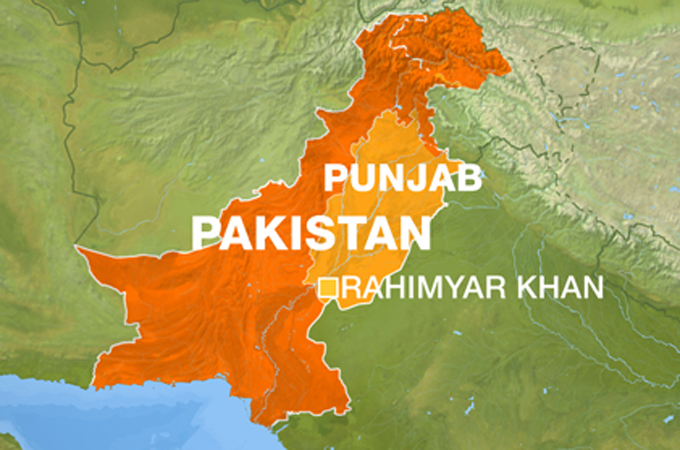
A blast has hit a Shia Muslim religious procession, killing 14 people and wounding 20 others, in Pakistan's central Punjab province, local police say.
The explosion hit the gathering in Rahim Yar Khan district where Shias were marking the 40th day of mourning of the death of the Prophet Mohammad's grandson Imam Hussain.
"Fourteen people have been killed and 20 more injured," Suhail Zafar, a senior police official, told Pakistan's private Geo TV channel.
The injured have been taken to local hospitals, he said.
Another police officer told the Associated Press news agency that a crowd of mourners started throwing rocks at police after the blast. Police officers had to lob tear-gas canisters into the crowd to control them.
The processions of Shia Muslims, who make up about 20 per cent of Pakistan's population, are often attacked by armed Sunni Muslim groups who consider them apostates of Islam.
U.S. intelligence report on Afghanistan sees stalemate
L.A.TIMES
The U.S. intelligence community says in a secret new assessment that the war in Afghanistan is mired in stalemate, and warns that security gains from an increase in American troops have been undercut by pervasive corruption, incompetent governance and Taliban fighters operating from neighboring Pakistan, according to U.S. officials.
The sobering judgments, laid out in a classified National Intelligence Estimate completed last month and delivered to the White House, appeared at odds with recent optimistic statements by Pentagon officials and have deepened divisions between U.S. intelligence agencies and American military commanders about progress in the decade-old war.
The detailed document, known as an NIE, runs more than 100 pages and represents the consensus view of the CIA and 15 other U.S. intelligence agencies. Similar in tone to an NIE prepared a year ago, it challenges the Pentagon's claim to have achieved lasting security gains in Taliban strongholds in southern Afghanistan, according to U.S. officials who have read or been briefed on its contents.
In a section looking at future scenarios, the NIE also asserts that the Afghan government in Kabul may not be able to survive as the U.S. steadily pulls out its troops and reduces military and civilian assistance.
"Its viability is tenuous," said one official, citing the report.
Although the review gives the U.S. military and its allies credit for driving the Taliban out of some areas last year, it says the gains were not enough to bolster the weak central government in Kabul, haven't diminished the Taliban's will to keep fighting, and haven't instilled confidence among Afghans in much of the country.
As a result, the NIE warns that the overall difficulties could jeopardize the Obama administration's plans to withdraw most U.S. troops and hand over responsibility for the war to the Afghan government by 2014.
The findings prompted a sharp response from Marine Corps Gen. John Allen, the U.S. commander of Western forces in the war, and Ryan Crocker, the U.S. ambassador to Afghanistan, who filed their objections in a one-page written dissent. The comment was also signed by Marine Corps Gen. James Mattis, commander of Central Command, and Adm. James Stavridis, supreme allied commander of the North Atlantic Treaty Organization.
Military and Pentagon officials argued that assumptions used by intelligence agencies were flawed.
"It assumes a quicker drawdown of U.S. support to the Afghan government than a lot of people are projecting, " said one U.S. official familiar with Pentagon thinking, speaking of the assessment.
Military officials also cited what they claim are gaps in the intelligence agencies' understanding of the Taliban leadership's thinking, the officials said.
Some in Congress and the Obama administration are concerned that the bleak assessment suggests little progress was made in the last year. During that time, the U.S. has suffered more than 400 military fatalities and spent more than $100 billion. As of Wednesday, 1,873 Americans had been killed in Afghanistan since U.S. forces invaded in late 2001, according to the website icasualties.org.
Army Gen. David H. Petraeus wrote a dissent to last year's NIE when he was U.S. commander in the war. He is now CIA director, and he pledged during his Senate confirmation hearings not to allow his personal views as a former commander to color the CIA's analysis.
The recent NIE agrees with the military that Afghan Taliban fighters have found safe haven in Pakistan's tribal areas. After a six-week lull, CIA drone strikes resumed this week in North Waziristan, reportedly killing four people Wednesday, but U.S. officials warned that drone strikes alone cannot prevent Afghan insurgents from regrouping there.
"It's all about the safe haven," one congressional official said. "That has to be solved."
Military officials have acknowledged that there are no easy answers, and that a peace deal may be the only solution.
The Taliban has suffered heavy losses, particularly in southern Afghanistan, but it also has gained ground in the country's east, near Pakistan, according to officials briefed on the NIE. But the intelligence community is not convinced that military gains in the south can be maintained once large numbers of U.S. forces withdraw.
The Afghan army and in particular the police face enormous problems contending with the insurgency as U.S. assistance declines, the document concludes. But it also raises doubts about whether Afghan civilian ministries can govern successfully in the south and other areas.
In late 2009, President Obama agreed to deploy 33,000 additional troops to Afghanistan, and the total U.S. force in the country peaked at about 100,000 last summer. The U.S. now has 91,000 troops there, and all combat forces are scheduled to withdraw by 2014.
Pentagon planners assume that a residual force will remain to train and assist the Afghans, but the White House has yet to sign off on that. The Obama administration is negotiating a long-term military alliance with the government of Afghan President Hamid Karzai.
Pentagon officials insist that the troop increase has put the Taliban on its heels.
"We're moving in the right direction and we're winning this very tough conflict," Defense Secretary Leon E. Panetta told troops on Dec. 14 at Forward Operating Base Sharana in the eastern province of Paktika.
Pentagon spokesman George Little said Wednesday that Panetta continues to believe there has been "substantial progress." The key, he said, is "to strengthen Afghan security forces and to build toward a long-term relationship with Afghanistan."
National intelligence estimates often carry significant weight in U.S. policy circles, although they are hardly immune from errors.
Most famously, the 2002 NIE on Iraq judged with high confidence that Saddam Hussein was secretly amassing chemical and biological weapons, and trying to build a nuclear bomb. The George W. Bush administration repeatedly cited that NIE before the 2003 invasion of Iraq, but it ultimately was proved inaccurate in almost every respect.
Although they declined to discuss the contents of the current NIE, some members of Congress with access to intelligence said they are concerned about the lack of progress in Afghanistan.
"I think there are real problems," said Sen. Dianne Feinstein (D-Calif.), who chairs the Senate Intelligence Committee. "There have been gains in security … but the Taliban is still a force to be reckoned with. They still occupy considerable land in the country."
Rep. Jan Schakowsky (D-Ill.), a member of the House Intelligence Committee, said the Obama administration should release an unclassified version of the NIE for public debate.
"I do think it would be very helpful to release an unclassified version," she said. "Given the expense and the lives that are at stake, the American people should see some of the top-line conclusions of the NIE."
Pakistanis' distrust of foreigners impedes aid groups
By: Alex Rodriguez
Los Angeles Times

Pakistan's suspicions of foreign aid groups rose last year after the CIA staged a fake vaccination campaign to catch Osama bin Laden.
International aid groups say they're under siege in Pakistan, demonized by hard-line Islamists, viewed as spies by suspicious Pakistanis and, now, increasingly sidelined by the government.
The groups report that in the last year, they began to feel unwanted in the country, and in some cases persecuted. Nongovernmental organization visa requests languished or were outright rejected. New travel restrictions hampered aid workers' movement. Some workers were arrested and harassed.
Western aid officials believe that the Pakistani government's suspicions about the groups rose dramatically last year after the U.S. commando raid that killed Osama bin Laden in May in the military city of Abbottabad.
To many Pakistanis, a phony vaccination campaign engineered by the CIA to help pinpoint Bin Laden's whereabouts in the weeks before the raid reinforced long-held conspiracy theories that Western humanitarian projects camouflaged espionage operations.
"All of a sudden we were all doing subversive spy work; we generally feel that's how we're viewed here," said a Western aid official, who, like other Westerners interviewed for this article, asked to remain anonymous because of the sensitivity of the subject. "Obviously, we don't like any of those associations. That's what we're fighting against all the time."
The Pakistani government denies allegations of a clampdown on the groups.
"It's not the policy of the government of Pakistan," said a senior Pakistani official, who spoke on the condition of anonymity because he is not authorized to talk about such matters. "We are here to facilitate international NGOs."
Aid officials see it differently. A U.S. citizen working for a Western group was detained for nine days last year in the southern city of Sukkur after Pakistani authorities discovered he had overstayed his visa by a day, said a source familiar with the incident. Local police finally decided to deport him, but not before parading him in front of TV crews.
"There were a lot of rumors that he was a spy," the source said. "It was a way for local authorities to assert themselves and show who's boss, to show they were watching."
The aid group Save the Children had to fly eight of its expatriate workers out of the country last summer because of concern that Pakistan's main intelligence agency, Inter-Services Intelligence, might detain them, Britain's Guardian newspaper reported last fall. A Pakistani doctor involved in the fake CIA vaccination campaign had falsely claimed that he worked for Save the Children, helping trigger the government's scrutiny of the group. The doctor is now in Pakistani custody and faces possible treason charges.
The International Committee of the Red Cross announced this month it had shut down three of its offices in northwestern Pakistan because it had become increasingly difficult for some of the organization's personnel to access those offices. Other offices will also be shut down soon, said Marek Resich, a spokesman for the Red Cross mission in Pakistan. The organization will maintain its offices in Islamabad, Peshawar, Karachi and Quetta.
Resich would not say whether Pakistani authorities were impeding the organization's work, or why Red Cross personnel were unable to get to their offices. However, a source familiar with the closures said the Red Cross shut down the offices because authorities last year began barring non-Pakistani Red Cross workers and officials from visiting branch offices in the northwest.
Last summer, a top Red Cross official complained about the growing level of government interference in Pakistan.
"To live and work and get permission to do anything has become more difficult," Pascal Cuttat, the departing head of the Red Cross delegation in Pakistan, said in July during a news conference in Geneva. "Everyone is struggling with the bureaucracy."
Pakistanis have always been suspicious of foreigners, particularly Westerners. Hard-line Islamist clerics and analysts routinely warn that the U.S. will one day wrest control of the country's nuclear arsenal, or that CIA agents lurk behind every corner.
In 2011, the animosity reached new heights with the killing in January of two Pakistani men by a CIA contractor, and with the Bin Laden raid and subsequent revelation about the CIA vaccination ruse.
"It was a very weird year," said Jerome Voisin, a field coordinator with the French aid group Solidarites, which conducts relief efforts in Sindh province, a region devastated by floods in 2010 and '11. "It seems international NGOs are not seen here as partners. There is this kind of suspicious climate here."
Dozens of nongovernmental organizations work in Pakistan, and some have had a presence in the country for decades. Aid groups were instrumental in providing relief to victims of a devastating earthquake in 2005 that ravaged northern Pakistan and killed 79,000 people. In 2010, they helped the country begin its arduous recovery from the catastrophic floods that affected more than 20 million people and caused billions of dollars in damage.
International NGOs are overseen by the Pakistani Finance Ministry's Economic Affairs Division, which every year reviews each group's mission plan.
The strained relationship between Pakistani authorities and the international aid community took its toll on the world's response to floods in Sindh province last year, which displaced more than 1.8 million people. Western NGO officials said the Pakistani government waited five weeks before allowing international aid organizations to provide relief to flood victims.
The delay reflected the government's desire to scrutinize and control the international response to the disaster, the Western officials said. But instead of facilitating a global response to the floods, the government's approach "killed it," said a senior official with the Pakistan Humanitarian Forum, an umbrella advocacy group for the international aid community in Pakistan. "The whole thing was dead on arrival.... The delay made it impossible to catch up."
Another Western aid official said, "Many people we met had already been on the side of the road for a month and a half, without any food or shelter. During that period, people died on the side of the road."
Los Angeles Times
Pakistan's suspicions of foreign aid groups rose last year after the CIA staged a fake vaccination campaign to catch Osama bin Laden.
International aid groups say they're under siege in Pakistan, demonized by hard-line Islamists, viewed as spies by suspicious Pakistanis and, now, increasingly sidelined by the government.
The groups report that in the last year, they began to feel unwanted in the country, and in some cases persecuted. Nongovernmental organization visa requests languished or were outright rejected. New travel restrictions hampered aid workers' movement. Some workers were arrested and harassed.
Western aid officials believe that the Pakistani government's suspicions about the groups rose dramatically last year after the U.S. commando raid that killed Osama bin Laden in May in the military city of Abbottabad.
To many Pakistanis, a phony vaccination campaign engineered by the CIA to help pinpoint Bin Laden's whereabouts in the weeks before the raid reinforced long-held conspiracy theories that Western humanitarian projects camouflaged espionage operations.
"All of a sudden we were all doing subversive spy work; we generally feel that's how we're viewed here," said a Western aid official, who, like other Westerners interviewed for this article, asked to remain anonymous because of the sensitivity of the subject. "Obviously, we don't like any of those associations. That's what we're fighting against all the time."
The Pakistani government denies allegations of a clampdown on the groups.
"It's not the policy of the government of Pakistan," said a senior Pakistani official, who spoke on the condition of anonymity because he is not authorized to talk about such matters. "We are here to facilitate international NGOs."
Aid officials see it differently. A U.S. citizen working for a Western group was detained for nine days last year in the southern city of Sukkur after Pakistani authorities discovered he had overstayed his visa by a day, said a source familiar with the incident. Local police finally decided to deport him, but not before parading him in front of TV crews.
"There were a lot of rumors that he was a spy," the source said. "It was a way for local authorities to assert themselves and show who's boss, to show they were watching."
The aid group Save the Children had to fly eight of its expatriate workers out of the country last summer because of concern that Pakistan's main intelligence agency, Inter-Services Intelligence, might detain them, Britain's Guardian newspaper reported last fall. A Pakistani doctor involved in the fake CIA vaccination campaign had falsely claimed that he worked for Save the Children, helping trigger the government's scrutiny of the group. The doctor is now in Pakistani custody and faces possible treason charges.
The International Committee of the Red Cross announced this month it had shut down three of its offices in northwestern Pakistan because it had become increasingly difficult for some of the organization's personnel to access those offices. Other offices will also be shut down soon, said Marek Resich, a spokesman for the Red Cross mission in Pakistan. The organization will maintain its offices in Islamabad, Peshawar, Karachi and Quetta.
Resich would not say whether Pakistani authorities were impeding the organization's work, or why Red Cross personnel were unable to get to their offices. However, a source familiar with the closures said the Red Cross shut down the offices because authorities last year began barring non-Pakistani Red Cross workers and officials from visiting branch offices in the northwest.
Last summer, a top Red Cross official complained about the growing level of government interference in Pakistan.
"To live and work and get permission to do anything has become more difficult," Pascal Cuttat, the departing head of the Red Cross delegation in Pakistan, said in July during a news conference in Geneva. "Everyone is struggling with the bureaucracy."
Pakistanis have always been suspicious of foreigners, particularly Westerners. Hard-line Islamist clerics and analysts routinely warn that the U.S. will one day wrest control of the country's nuclear arsenal, or that CIA agents lurk behind every corner.
In 2011, the animosity reached new heights with the killing in January of two Pakistani men by a CIA contractor, and with the Bin Laden raid and subsequent revelation about the CIA vaccination ruse.
"It was a very weird year," said Jerome Voisin, a field coordinator with the French aid group Solidarites, which conducts relief efforts in Sindh province, a region devastated by floods in 2010 and '11. "It seems international NGOs are not seen here as partners. There is this kind of suspicious climate here."
Dozens of nongovernmental organizations work in Pakistan, and some have had a presence in the country for decades. Aid groups were instrumental in providing relief to victims of a devastating earthquake in 2005 that ravaged northern Pakistan and killed 79,000 people. In 2010, they helped the country begin its arduous recovery from the catastrophic floods that affected more than 20 million people and caused billions of dollars in damage.
International NGOs are overseen by the Pakistani Finance Ministry's Economic Affairs Division, which every year reviews each group's mission plan.
The strained relationship between Pakistani authorities and the international aid community took its toll on the world's response to floods in Sindh province last year, which displaced more than 1.8 million people. Western NGO officials said the Pakistani government waited five weeks before allowing international aid organizations to provide relief to flood victims.
The delay reflected the government's desire to scrutinize and control the international response to the disaster, the Western officials said. But instead of facilitating a global response to the floods, the government's approach "killed it," said a senior official with the Pakistan Humanitarian Forum, an umbrella advocacy group for the international aid community in Pakistan. "The whole thing was dead on arrival.... The delay made it impossible to catch up."
Another Western aid official said, "Many people we met had already been on the side of the road for a month and a half, without any food or shelter. During that period, people died on the side of the road."
Oil prices, Iran are increasingly sources of concern,worry lists for 2012
Washington Post

The price of crude oil and growing tensions with Iran are bubbling to the top of economists’ and policymakers’ worry lists for 2012, as U.S. and European Union sanctions threaten to reduce the sales of Iranian oil and put pressure on one of the world’s largest petroleum exporters.
“It’s been in the background for quite some time,” said Edward Yardeni, a leading investment strategist. “I’ve characterized it as one of the four horsemen of the apocalypse for 2012. Now it’s come from behind to be at the head of the pack.”
The push for tighter sanctions on Iranian oil exports comes at a time when oil prices are already high. Last year was a record-shattering year for oil prices, which averaged $107 a barrel, about 14 percent more than in the previous record year of 2008, according to figures from the Organization of Petroleum Exporting Countries.
The U.S. oil import bill — for crude and refined products — jumped about $125 billion from 2010 to 2011.
Rising oil prices could hurt the fragile global economy, which includes economists’ other big worry: Europe.
Barclays Capital analysts noted on Friday that in terms of the euro currency, oil prices “have now almost matched their previous peak of July 2008,” draining money from economies already struggling with the sovereign debt crisis. Three of Europe’s most troubled economies — Greece, Spain and Italy — are also the E.U.’s biggest importers of Iranian crude and would be most affected by a new ban. (The United States already bars imports of Iranian crude oil.)
“At current prices, the world economy is going to grow at 3 percent to 3.5 percent this year,” said Adam Sieminski, chief energy economist at Deutsche Bank. “That’s not great, but okay. At $125 a barrel, it is only going to grow 2.5 percent, and that’s not very good. And at $150, we might only grow 1 percent, and that’s a disaster.”
Many analysts do not think Iran would risk military conflict by carrying out its threat to close the Strait of Hormuz, used by tankers carrying 17 million barrels of oil a day, about a fifth of the world’s consumption. E.U. leaders meet Jan. 23 to decide whether to embargo Iranian crude, but oil prices fell Friday on reports that any import ban would be phased in or delayed six months.
Within that time, a new overland pipeline from the United Arab Emirates would open and Libyan output, damaged by civil war, would probably return to normal. And European refiners, who buy about 600,000 barrels of Iranian oil daily, could line up new suppliers.
Moreover, that delay would give Iran yet another chance to negotiate international inspections of its nuclear program. “That’s the end game,” said Julian Lee, an energy expert at the London-based Center for Global Energy Studies, “to get the Iranians to sit at the table and talk and put in proper monitoring of their nuclear industry. The sanctions aren’t an end in and of themselves.”
Meanwhile, U.S. and European efforts to put a crimp in Iran’s exports appear to be having an effect already.
U.S. restrictions on doing business with Iran’s central bank have been felt in India, the second-largest buyer of Iranian oil. Refiners there are seeking new suppliers after India’s government threatened not to sign a waiver to protect them from U.S. sanctions, according to Lloyd’s List. In addition, Lloyd’s List said, since Iran’s threat to close the Strait of Hormuz, Turkish banks used by Indian refiners to pay for Iranian crude are refusing to transfer those funds.
Japan has also said it would trim its purchases of Iranian oil. Japan imported more than 300,000 barrels a day of oil from Iran in the first 11 months of 2011, according to the International Energy Agency. That provided 10 percent of Japan’s oil imports.
While Iran’s customers are looking for new supplies, Iran is looking for new customers. Oil exports are the country’s main source of income, providing $73 billion of revenue in 2010 and covering half the national budget, according to Energy Department figures.
Lee said Iran was thought to be talking to Venezuelan leader Hugo Chavez about disguising Iran’s oil by mixing it with Venezuela’s. A veteran oil trader in London said Iran could also offer small discounts to tempt independent refiners into buying its crude. He added that Iran could also be looking, as it has in the past, for barter deals such as one in which Cuba might swap sugar for oil.
Iran’s greatest hope for rerouting its exports would be to sell more to its biggest customer, China, which imported about 550,000 barrels a day last year. But a contract dispute has led to a temporary decline in Iranian sales to China. And it isn’t clear how much China wants to rely on one source of oil or how much China can add to its strategic stockpiles.
Some companies will seek waivers to continue to do business with Iran; Japan said it would seek waivers to continue reduced purchases.
Some companies already have waivers. The Italian oil giant ENI has a waiver to continue to receive 10,000 barrels a day of Iranian crude oil as payment for work ENI did on two Iranian fields under old agreements, a company spokesman said. At the current rate, it would take until 2014 for ENI to be fully paid.
Although tensions over Iran may be adding as much as $5 a barrel to the price of oil, according to experts and traders, it is not the only geopolitical factor fueling high petroleum prices.
Nigeria, which produces about 2 million barrels a day, is facing Islamic violence in its north, nationwide protests over the end of fuel subsidies and strikes by major unions. Instability in Libya and Iraq threaten exports there as well.
Moreover, while Saudi Arabia, which produced 10 million barrels a day toward the end of last year, says it can boost output by another couple of million barrels a day to make up for other countries’ lost production, many oil experts fear that the kingdom would be physically unable to do that.
The world’s spare oil production — recently about 4 percent of daily production of 89 million barrels — is important in maintaining stable prices. If sanctions did block Iranian sales, part of that spare capacity would be used.
Deutsche Bank’s Sieminski says he has three “normal” or “standard” worries: “Can the Federal Reserve get the U.S. economy going? Can the Europeans solve their sovereign debt problem? And will China have a soft landing?” He said that, now, “on top of that we have geopolitical concerns mostly related to oil.”
The oil fears are at odds with the others. “With the macroeconomic issues, the worry is that we won’t get enough oil demand. With the geopolitical issues we worry that we won’t have enough oil supply,” he said. As a result, he predicted, “we had a lot of oil price volatility in 2011 and it doesn’t look like 2012 is going to improve much.”
Subscribe to:
Posts (Atom)