M WAQAR..... "A man's ethical behavior should be based effectually on sympathy, education, and social ties; no religious basis is necessary.Man would indeed be in a poor way if he had to be restrained by fear of punishment and hope of reward after death." --Albert Einstein !!! NEWS,ARTICLES,EDITORIALS,MUSIC... Ze chi pe mayeen yum da agha pukhtunistan de.....(Liberal,Progressive,Secular World.)''Secularism is not against religion; it is the message of humanity.'' تل ده وی پثتونستآن
Tuesday, October 18, 2011
Hamas Frees Israeli Soldier as Prisoner Swap Begins
An Israeli soldier held for more than five years by the militant Palestinian group Hamas was traded on Tuesday for hundreds of Palestinian prisoners in Israeli jails in an elaborate exchange that could shake up regional politics.
Buses containing the Palestinian prisoners — the first group of what will eventually be more than 1,000 — made their way into Egypt and from there to the West Bank and Gaza Strip where jubilant relatives awaited and celebrations were planned.
The soldier, Sergeant First Class Gilad Shalit, was taken from Gaza, where he had been held since being abducted in a cross-border raid in 2006, into Egypt and from there to Israel, where he was given a quick medical check and declared in good health. He changed into a military uniform before being flown by helicopter to an Israeli military base where he met with Prime Minister Benjamin Netanyahu and was reunited with his family.
“Today we are all united in joy and in pain,” Mr. Netanyahu said in a televised address from the air base shortly after.
Sergeant Shalit was interviewed on Egyptian television before being handed over to Israel. Sitting in a blue checked shirt and speaking Hebrew, he smiled and reflected on the questions before answering them. He looked thin and pale but appeared otherwise healthy.
Asked if he had feared that he would never get out, Sergeant Shalit answered that he worried it would take many more years although in the past month he suspected a deal was in the works. He said he was told of his release a week ago.
Asked what he missed most in prison, he replied, “My family and my friends and seeing and talking with people. The worst was having to do the same thing every day over and over.”
He was told that Israel still had thousands of prisoners and was asked if he would like them released. “I will be happy for them to be released if they don’t return to fight us,” he said. “I very much hope that this deal will advance peace.”
The chief spokesman of the Israeli military, Brig. Gen. Yoav Mordechai, told reporters after Sergeant Shalit was handed over to Israelis, “Not far from here, Gilad’s tank was attacked and two armored corps soldiers were killed. In the same area, Gilad Shalit, accompanied by the commander of the south is at this moment being brought to the Amitai base. There he will have medical checks but before that he will talk with his family.”
Egyptian television showed Sergeant Shalit being rushed through the Rafah crossing terminal from Gaza into Egypt accompanied by Hamas and Egyptian officials.
Soon afterward, an Israeli military statement said: “Gilad Shalit crossed the border into Israel, ending over five years in captivity.”
Fawzi Barhoum, a Hamas spokesman, told Al-Jazeera television that the first step of the agreement was complete. Speaking from the Rafah crossing point, Mr. Barhoum warned Israel against “maneuvering or playing with any article of the agreement.” He added that Egyptian mediators assured Hamas that they would not allow Israel to violate the agreement.
Throngs of excited Palestinians woke to mosque loudspeakers crying “God is great” and “Victory to God” as they awaited the arrival of buses carrying the 477
prisoners on Tuesday. Another 550 are expected to be released in two months. Two women prisoners due to be sent to Gaza were demanding instead to be sent to Egypt.
Dozens of returnees began arriving in Ramallah in the West Bank where they were to attend a reception given by Mahmoud Abbas, president of the Palestinian Authority. Although the exchange was negotiated by his rivals in Hamas, the release of prisoners was a source of national celebration.
At Rafah, the mother of one of the men who captured Sergeant Shalit in June 2006 arrived with his photograph. Her son, Mohammad Azmi Firwana, 23, from Khan Younis, was killed in the operation.
“I have come to greet the prisoners because they are all like my sons and daughters,” said the woman, Ahlam Firwana. “We have not got Mohammad’s body back yet. We have heard nothing.”
After his medical check, Sergeant Shalit — who had recently been promoted from staff sergeant to sergeant first class — was brought to the Tel Nof air force base south of Tel Aviv, where he was met by Mr. Netanyahu, Defense Minister Ehud Barak and Lt. Gen. Benny Gantz, the military chief of staff. His family was there with him as well.
Earlier in the day, as Israeli officials began to gather there, Israeli television showed the Shalit family leaving their home in northern Israel to be taken by helicopter to the base, where an out-of-use F-15 warplane stood sentry at the entrance and signs with his image lined the road, proclaiming, “How good that you have come home.”
The mechanics of the deal were complex but apparently moved smoothly just after dawn.
In Gaza, the Hamas-run government took busloads of journalists in a tightly controlled media operation to the Rafah Crossing with Egypt shortly after dawn on Tuesday. Armed members of Hamas’s militant wing, the Qassam Brigades, lined the main highway to the crossing where the prisoners were to be released. They were wearing black and green bandanas and balaclavas. Some carried Kalashnikov assault rifles while others bore rocket-propelled grenade launchers.
Many hundreds, perhaps thousands, of the guards — at some points posted every 15 feet — had apparently been deployed to forestall disruptions. A celebratory rally was planned at Brigades Park in one of Gaza’s largest open spaces where a stage has been erected for the Hamas prime minister, Ismail Haniya, to address the crowd and publicly welcome the returnees.
One of the returning prisoners, Yehya Sinwar, a co-founder of an early security wing of Hamas, is also scheduled to speak.
The buses carrying the prisoners drove through a huge crowd of Hamas police and a drum band and honor guard. The freed prisoners got off the buses one by one and ran a gantlet of people who cheered them, held up camera phones, saluted and patted them on the back. Some were given sashes with the Palestinian colors.
Along the length of Salahuddin Street, the main north-south road that runs the length of the Gaza Strip, Hamas activists attached Islamist banners to streetlights on Monday, welcoming home the 131 Gaza returnees from among Palestinian prisoners being released by Israel.
Both Israel and the divided Palestinian leadership — Fatah runs the West Bank while Hamas controls the Gaza Strip — were making elaborate preparations for the handover, which will end five years in captivity for Sergeant Shalit; hundreds of the Palestinians have been held much longer. Rafah is the Gaza of Gaza — isolated, poor and, for years, all but cut off from the rest of the coastal strip during the era of Israeli settlements here, which ended in 2005.
The community is not just where the Shalit saga was to end, barring a last-minute change, but it was also where it began. In June 2006, Hamas and two other militant factions mounted a surprise raid on an Israeli military post at Kerem Shalom, after having dug a long tunnel beneath the Rafah sands under the border, capturing Sergeant Shalit. He has not been seen in public since.
He was the first captured Israeli soldier to be returned home alive in 26 years.
In Israel, there were elaborate preparations for his return, a calibrated mix of relieved celebration and acknowledgment — both of the pain and death that the released Palestinians caused many families and of the risk that their release may pose.
Several petitions to block or alter the exchange were rejected by Israel’s high court on Monday. The scene at the courtroom was emotionally charged, with some families who lost members in terrorist attacks assailing the Shalit family and the government.
Prime Minister Netanyahu sent letters to the bereaved families saying he understood their heartache.
“I know that the price is very heavy for you,” he wrote in the letters. “I understand the difficulty to countenance that the evil people who perpetrated the appalling crimes against your loved ones will not pay the full price that they deserve. During these moments I hope that you will find solace that I and the entire nation of Israel embrace you and share your pain.”
After a more extensive medical examination and some time with the officials and his family, Sergeant Shalit and his family are to be transported by helicopter to their home in northern Israel. Reporters and onlookers will be barred from his neighborhood to give the family a measure of privacy. Chiefs of major Israeli news organizations vowed to respect the restrictions.
With a hammer in his hand, Hussein al-Rifi, 20, paused on Monday while hanging flags in Gaza to say that he was happy to help with the preparations, “to show the people that Hamas still exists in Gaza and to make the happiness of the prisoners complete.”
As he spoke, a bulldozer was smoothing the sandy ridges that run on each side of the highway to beautify the route. Later, five numbered buses arrived at the barred crossing gates at Rafah, ready to pick up the released prisoners; they were followed by a busload of Hamas police officers to form an honor guard.
In the West Bank, President Abbas was to greet the prisoners to be released there at a ceremony in Ramallah. Though the exchange was negotiated by his rivals in Hamas, Mr. Abbas was expected to try to make it as much of a nonpartisan Palestinian achievement as possible.
Atallah Abu al-Sebah, Hamas’s minister of prisoners’ affairs, said the prisoners released in Gaza would first be greeted inside the Rafah crossing by 200 officials and up to four members of each prisoner’s family. There would be a “short official reception,” including the Palestinian national anthem.
Mr. Sebah said that any prisoners who needed accommodation, including those who did not have families in the strip, would be put up in hotels for one month, irrespective of whether they were associated with Hamas, Fatah or other factions. They would then be moved to apartments being prepared for them around Gaza.
“We call upon our Palestinian people to put our brothers from the West Bank in their hearts and eyes, regardless of their affiliation,” he said. “It is enough that they belong to Palestine.”
Afghanistan launches technical study of railway networks
According to officials in Ministry of Mines of Afghanistan, the technical studies of railway network construction between capital Kabul and northern city of Mazar-e-Sharif and capital Kabul to Torkham border has been started by the officials.
According to a statement released by the Ministry of Mines of Afghanistan, the railway network construction has been discussed between the concerned departments in Ministry of Mines of Afghanistan.
The statement further added, the officials decided to start the survey work and construction of railway network for the better transportation of Ainak Copper.
According Wahidullah Shahrani Mines Minister of Afghanistan, the decisions for the primary construction of railway network between Kabul and Torkham border and the second phase of railway network construction from Kabul to Hairatan with the length of 921 kms, was finalized last year.
MCC which has been awarded the exploration of Ainak copper mine announced the tender of Railway Network construction and the project was awarded to China Railway.
China Railway has implemented a number of projects in Afghanistan and is familiar with the territory.
According to the statement of Ministry of Mines of Afghanistan, China Railway will start its preliminary technical study of Railway Construction between capital Kabul to Mazar-e-Sharif and capital Kabul to Torkham border in the near future.
Pakistani women playing vital role in all departments
Foreign Minister Hina Rabbani Khar has said that Pakistan is one of the leading country in the developing states where the women had been empowered more as compared to other countries and they are playing vital role in different departments.
She was addressing a reception hosted by British High Commissioner Adam Thomson at the British High Commission on Monday night ahead of the Commonwealth Heads of Government meeting taking place in Perth, Australia on 28th October.
The theme of the event was ‘Women as Agents of Change’ and the British High Commissioner was joined at the event by Australian High Commissioner Timothy George.
Hina Rabbani Khar said it was the credit of Pakistan that Shaheed Benazir Bhutto was the first woman prime minister of Muslim countries.
She said speaker of National Assembly is women and many other departments have significant representation of women.
Hina Rabbani Khar said from agriculture to business, women are actively participating in all the fields in Pakistan.
She said a number of legislation had been passed by the parliament with the support of all the political parties for the protection and empowerment of women.
Highlighting the importance of Benazir Income Support Programme, initiated by the present government, she said, the programme is aimed at the economic empowerment of the women through out the country.
British High Commissioner Adam Thomson addressing the reception said, “The Commonwealth is an important international forum for the UK, Australia and Pakistan, bringing together over 2 billion people from 54 countries- one third of the world’s population.”
He said, “The UK is committed to playing a leading role in developing our links with the Commonwealth.”
He said, “Today we are celebrating one of the core messages of this year’s Commonwealth Heads of Government Meeting, which is “Women as Agents of Change”.
The British High Commissioner said,” Today, we have highlighted just a few of Pakistan’s women who are playing inspiring roles across all areas of Pakistani society.
This is just a small example of the important role that women play in Pakistan every day.”
He said, “It is vital that Pakistan continues to encourage the involvement of women in all aspects of society, and we continue to support the government of Pakistan in achieving this.”
The High Commissioner also recognised some of the best entries to the British High Commission’s online competition where it asked people from across Pakistan to send stories of Pakistani women who had inspired them or inspired change in their communities.
British High Commissioner Thomson said, “It’s important to recognise not just those inspirational women in the public eye but also those who work hard to bring a better life to those in their communities.”
He said, “We received many entries to our online competition highlighting many of Pakistan’s inspirational women.
Some were teachers who have inspired their students to strive to achieve their potential, some were mothers who worked tirelessly to look after their families and drive their children to succeed, and some were inspirational women working with those less fortunate in their communities to make a better life for those around them.”
The British High Commission used today’s event to celebrate the women, recognising their achievements at every level, and from every part of the country.
The British High Commission produced a video to recognise the inspirational stories of women in Pakistan from Fehmida Mirza, Speaker National Assembly to Zahida Kazmi, Pakistan’s first woman taxi driver as well as other exceptional women from politics, business, the NGO sector and the arts, recognising their contribution to Pakistan and their inspirational messages to women across the country.
Australian High Commissioner Timothy George speaking on the occasion said Australia is proud to host coming Commonwealth Summit in the last week of this month.
He said the Commonwealth Organization comprising over 50 countries is very dynamic body working for the welfare of the member states.
The Australian High Commissioner expressed the hope that coming Commonwealth Summit will prepare the agenda for further development, progress and prosperity of the member states.
A large number of women from different walks of life including sports, media, health, parliament, politics, business, economic, art and culture and social welfare departments and diplomats attended the reception.
Prime Minister Gilani lays Foundation Stone of Bhasha Dam
Prime Minister Syed Yusuf Raza Gilani Tuesday laid foundation stone of the US 12 billion dollar Diamir Bhasha dam that would generate 4500 MW electricity and store over 8 Million Acre Feet of water to meet country’s growing power and irrigation needs.
The dam, world’s highest concrete dam on River Indus would produce 19 billion units of electricity annually and enhance life of Tarbela Dam by over 35 years.
Prime Minister Gilani was accompanied by Minister for Defence Ch. Ahmed Mukhtar, Governor Gilgit Baltistan Pir Karam Ali Shah, Chief Minister GB Mehdi Shah, Minister for Kashmir Affairs and Gilgit Baltistan Manzoor Ahmed Wattoo, Minister for Information Dr Firdous Ashiq Awan, Minister for Water and Power Syed Naveed Qamar and Governor Khyber Pakhtunkhwa Barrister Masood Kauser and Chief Minister Amir Haider Khan Hoti.
Pakistan in the jaws of militancy
S has said that militant outfits pose a grave threat to Pakistan and both the countries are standing up against this menace shoulder-to-shoulder, Geo News reported.
Spokesperson, Mark Toner, expressed these views during a daily state department briefing.
Going forward, he stressed that we’re working together with Pakistan.
“We want to find ways that we can act jointly on our shared challenges. We continue to pursue those interests. We’re obviously – as we’ve said many times, Pakistan is under enormous threat from extremist groups. We want to find ways to work constructively with them to address these challenges”, said he.
To a question he said that our work in Pakistan was geared towards building the kind of institutions that will strengthen Pakistani democracy. US wanted to see a strong democracy emerge in Pakistan that works side by side with the military, and that’s to the benefit of the Pakistani people moving forward, he added.
He refused to confirm Secretary Clinton’s visit to Pakistan on 20th for a two-day visit, saying he is not going to confirm it.
Baluchistan's press under siege
www.cpj.org
Reporters in Pakistan's conflict-stricken province of Baluchistan have been organizing to display their anger against the continued death threats they have been receiving from government secret services, religious militant groups, and armed nationalist organizations. Their most recent demonstration on October 1 was only one in a string of protests to confront the problem.
Baluchistan is a deadly province for correspondents, where state and non-state actors violently interfere in journalists' professional work, with the aim of controlling how they and their enemies are portrayed in the media. On September 11, Javid Naseer Rind, the deputy editor of the Urdu-language Daily Tawar, was grabbed by intelligence agents and has not reappeared, his relatives say. Soon after Rind's disappearance, the paper's editor, Khadim Lehri, went into hiding after receiving threats on his life.
The men and their families are right to fear for their safety, At least three Daily Tawar reporters, Abdul Hameed Hayatan, Siddiq Eido, and Rehmatullah Shaheen, were killed last year. [CPJ is investigating these cases to determine whether the murders were related to journalism.]
The paper blames the Pakistani government, where they have found little sympathy for their situation. At a recent hearing, the Baluchistan High Court threatened to imprison journalists for six months if they publish the statements of militant organizations that have been banned because of their involvement in violence and terror. The court says the publication of the groups' activities glorifies violence, and has little sympathy for the journalists' plight.
"If you can't face the pressure then stop publishing newspapers," Chief Justice Qazi Faiz Essa told reporters at the hearing.
Journalists have not found understanding from the militant side. The Lashkar-e-Jhangvi (LeJ) is an Islamic extremist group that aims to eradicate the minority Shia sect or convert its followers to Sunni Islam. On September 20, the group killed around 30 Shia pilgrims in an attack on a passenger bus. The LeJ wants newspapers to publish its press releases word for word, local journalists say.
"The LeJ does not recognize the high court decree and forces reporters to violate the law," said one senior journalist who requested anonymity for safety reasons.
Reporters who have spoken to LeJ representatives on the phone say the organization insists that it has a "religious responsibility" to warn reporters at least three times before killing them. "If reporters defy our warning for a third time then we naturally get the religious endorsement to kill them," a journalist in Baluchistan's capital city Quetta cited an LeJ spokesman as saying. A newspaper editor, when contacted by this writer, said journalists would land in trouble if they dared to omit from the militants' press releases the derogatory language denouncing the government.
The threats are taken seriously. "It is scary how much these organizations already know about each reporter's family, home address and travel routes. They say if they can kill top army officers, then journalists can't escape either," the editor said.
Ayub Tareen, a senior BBC journalist, was recently threatened by the Baluch Liberation Front, a separatist nationalist armed group, because of the latter's complaint of receiving what the group called "insufficient coverage."
"They rang me up and inquired why the BBC covered the activities of their rival group [Baluch Liberation United Front, which] they termed as a 'fake' organization. I said my job was not to judge which organization was fake or authentic. As a reporter, my responsibility is to find out which group claims responsibility for an important attack," he told this writer. Since the warnings, Tareen has changed his daily routine and reduced his reporting. His colleagues offered to relocate him to a safer location, but he declined.
Caught between the government and the militants, reporters say they have found little sympathy from their editors either. With no control over their editors' decisions on how to edit or where to place a story, they are at the receiving end of complaints from the factions they are covering in the field. Government intelligence agencies such as the Inter-Services Intelligence, religious extremists groups and nationalist groups quickly complain to the reporters if their activities are not covered. And with the complaints come more threats.
Benazir was about to reveal Musharraf’s rigging plan’ Before the assassination: ‘
The Express Tribune
As the political battle for Punjab heats up, Governor Latif Khosa appears to have joined the ranks of PPP leaders who have been lashing out at their party’s political opponents, alleging on Monday, for instance, that former prime minister
Benazir Bhutto had been hours away from revealing former president Pervez Musharraf’s plan to rig the 2008 elections on the day she was assassinated.“A PPP special committee had compiled a 600-page dossier to disclose Musharraf’s plan of marginalising the PPP’s mandate through rigging. The committee was scheduled to meet and present the report to visiting US senators but Benazir Bhutto was assassinated that very day,” said Khosa while inaugurating a National Registration and Database Authority (Nadra) registration centre in Chakwal district.
Khosa, who claims to have been on that committee, said that the dossier was available on the PPP website.hosa lambasted Punjab’s ruling PML-N for trying to launch a movement to topple the PPP-led government.
“They are afraid of the PPP’s success in the upcoming elections,” said Khosa, in what appears to be a reference to the March 2012 Senate elections where the PPP is expected to win at least a strong plurality if not an outright majority in the upper chamber of parliament.
Monday, October 17, 2011
Tensions Flare as G.I.’s Take Fire Out of Pakistan
American and Afghan soldiers near the border with Pakistan have faced a sharply increased volume of rocket fire from Pakistani territory in the past six months, putting them at greater risk even as worries over the disintegrating relationship between the United States and Pakistan constrain how they can strike back.
Ground-to-ground rockets fired within Pakistan have landed on or near American military outposts in one Afghan border province at least 55 times since May, according to interviews with multiple American officers and data released in the past week. Last year, during the same period, there were two such attacks.
May is also when members of a Navy Seals team killed Osama bin Laden in the house where he lived near a Pakistani military academy, plunging American-Pakistani relations to a new low. Since then, the escalation in cross-border barrages has fueled frustration among officers and anger among soldiers at front-line positions who suspect, but cannot prove, a Pakistani government role.
The government’s relations with the United States frayed further after senior American officials publicly accused Pakistan of harboring and helping guerrillas and terrorists. Last month, Adm. Mike Mullen, the chairman of the Joint Chiefs of Staff at the time, called the insurgents who attacked the American Embassy in the Afghan capital “a veritable arm” of the ISI, Pakistan’s military intelligence service.
Pakistani officials have repeatedly denied aiding fighters for the Taliban and the Haqqani militant network, who operate on both sides of the border. They insist they try to prevent cross-border incursions or violence.
In this climate, American officers were in a difficult position when describing the attacks. Many, especially those who might be identified, painstakingly tried not to blame Pakistan directly.
“I don’t have the smoking gun,” said Col. Edward T. Bohnemann, who commands the 172nd Infantry Brigade, which has hundreds of American soldiers in outposts near the border. “Do I have my thoughts, just because it happens so often? Yes, I have my thoughts. But there isn’t a smoking gun.”
But other officers viscerally rejected Pakistan’s official position, and said elements of the Pakistani military or intelligence service were most likely involved.
“The level of command and control, and the level of sophistication of the IDF, is showing that there is some type of expertise being employed,” said one American officer, using the acronym for indirect fire, the term the military uses for mortar, artillery and rocket attacks. The officer spoke on the condition of anonymity because of the diplomatic tensions.
The precise reasons for the increase in rocket fire are unclear. Whether the surge in attacks indicates Pakistani military retaliation, an emboldened insurgency, some degree of both or some other factors cannot be determined from the data alone.
The attacks covered by the military’s data included those on three American-Afghan outposts — Forward Operating Base Tillman, Combat Outpost Boris and Combat Outpost Margah — and usually involved two to four rockets each, officers said. The incoming fire has continued through recent days, including an attack last Friday that set buildings ablaze at Forward Operating Base Tillman.
The data release does not include attacks against American military positions in provinces other than Paktika or against Forward Operating Base Lilley, in the same province, which is used by the C.I.A.
But it does include attacks from several insurgent positions just inside Afghanistan, some within 200 yards of the border, from where rocket crews fire and then rush to Pakistan.
There were at least 102 of these so-called close-border attacks against the same outposts since May, including one on Oct. 7 that the American military called the largest and most coordinated insurgent operation in the province since 2009. Last year, during the same period in the same places, there were 13 close-border attacks. Most of the indirect-fire attacks, officers said, have been with 107-millimeter rockets, which have a range of about five miles. They were designed in China in the 1960s but have been reproduced by several nations. The exact source of the rockets was not immediately clear. Chunks of expended munitions examined by The New York Times had minimal markings, preventing a ready identification.
The perils and sensitivities surrounding the rocket fire starkly underscored the longstanding difficulties faced by the latest rotation of soldiers in the Afghan war, who are in front-line positions built by previous units, under fire, but with restrictions on firing back or when planning operations to deter more attacks.
Another officer, who analyzed each incident, said attacks often come from positions next to Pakistani military or Frontier Corps border posts. He said there has been no sign of Pakistani units trying to stop the firing, or of willingness to help American units identify who is shooting at them.
He offered a commonly held assessment: “They are getting help,” the officer said of the insurgents. “It’s PakMil,” he added, using the acronym for Pakistani military.
Asked what evidence supported this claim, he said: “Contact with the PakMil when these incidents are going on is often nonexistent. We usually can’t get a hold of these guys. When we do get a hold of these guys, they say they are not aware or can’t see it. Looking at the terrain, it is very hard to believe.”
The officer pointed on a map to several frequently used firing sites. Then he pointed to Pakistani military positions. Some Pakistani military positions were less than a mile from insurgent firing positions — and had clear line of sight. The officer asked not to be identified.
Other officers added that the Americans have been lucky so far. None of the rockets have wounded an American soldier since July 1, roughly when the current unit began to arrive in the province. A 107-millimeter rocket that struck Forward Operating Base Tillman on July 27, however, wounded 18 Afghan guards, three of them fatally. The rocket was fired from Pakistan, officers said.
Several officers said that a rocket could strike an American building any day, to similar effect. “Eventually we’re going to get hit, and we’re going to lose soldiers,” one said.
This officer was especially frustrated, he said, because an operation planned for early October, in which soldiers intended to sweep on foot through a firing position on Afghan soil beside the border, was canceled by senior officers in Bagram, where the regional American command is located.
The general who soldiers said had canceled that mission did not reply to a written request to be interviewed.
The day after the cancellation, journalists at Forward Operating Base Tillman observed rockets fired from that position onto the base. Enlisted soldiers there seethed.
The soldiers explained the usual practices.
When taking fire from Afghanistan, they said, they return fire with barrages of high-explosive and white phosphorus artillery rounds. (The burning effects of white phosphorus, they said, can detonate rockets waiting on launchers; for this reason, white phosphorus falls within rules guiding the soldiers’ use of force.)
When receiving fire from Pakistan, they said, they do not return fire with white phosphorus and fire far fewer high-explosive rounds. Attack helicopters and aircraft are also less likely to fire ordnance the closer the firing position is to the border, they said, even if it is on the Afghan side.
Several soldiers complained of what they called the “politics” limiting their choices. “We’re just sitting out here taking fire,” one soldier said. “If they want us to do our jobs, let us do our jobs.”
Senior officers described a tactical and strategic puzzle.
On one hand, soldiers said a principle of any modern military defense is that they patrol to and beyond the range of weapons systems that can menace them, and, in this case, at least to the border of the nation that the United States, in essence, has underwritten. On the other, heavy return fire against the firing positions inside Afghanistan has not prevented the attacks from continuing, so it is not clear that more fire into Pakistan would stop the cross-border firing, either.
And Colonel Bohnemann noted a complicated history. Afghan units have patrolled to the border, he said, and then been fired on by Pakistani military units who claimed they mistook the Afghans for insurgents. That fighting included Pakistani artillery fire.
The risk of having an American patrol face similar fire has been reasonable grounds for caution when planning sweeps near the border, and when returning fire over it, he said.
“Am I frustrated?” he asked. “Yes. Would I like to fire more? Yes. But do I want to be sure not to escalate out of frustration? Absolutely.”
One recent attack — which both marked an escalation from Pakistan and hinted at the coordination and expertise behind it — occurred on Oct. 3, when four 122-millimeter rockets were fired at one of the outposts.
These rockets, known as Grads, are larger, more lethal and have a greater range than 107-millimeter rockets. They had not been fired at the American outposts here in recent memory, officers said, and perhaps had not been fired before.
Each round struck closer than the previous one, which indicated, four military officers said, that whoever fired them from Pakistan was communicating with a forward observer near the outpost, and adjusting the fire.
The Americans’ counterbattery radar indicated that the firing position was less than 100 feet from a Pakistani Frontier Corps border post, several officers said.
The Americans contacted a Pakistani military officer who lives on Forward Operating Base Tillman and serves as a liaison between the two militaries. His answer cast the episode into gray.
“He called me back a few minutes later and said that border position is unoccupied and empty, and has been for years,” Colonel Bohnemann said. “That may be an absolutely true statement,” he added. “I don’t know.”
Population could hit 10 billion
Just 12 years after the arrival of the 6 billionth individual on the planet in 1999, humanity will greet the 7 billionth arrival this month. The world population continues its rapid ascent, with roughly 75 million more births than deaths each year. The consequences of a world crowded with 7 billion people are enormous. And unless the world population stabilizes during the 21st century, the consequences for humanity could be grim.
A rising population puts enormous pressures on a planet already plunging into environmental catastrophe. Providing food, clothing, shelter, and energy for 7 billion people is a task of startling complexity.
The world's agricultural systems are already dangerously overstretched. Rainforests are being cut down to make way for new farms; groundwater used for irrigation is being depleted; greenhouse gases emitted from agricultural activities are a major factor in global climate change; fertilizers are poisoning estuaries; and countless species are threatened with extinction as we grab their land and water and destroy their habitats.
The economic challenges are equally huge. Population is growing most rapidly in the world's poorest countries -- often the places with the most fragile ecological conditions. Poor people tend to have many more children, for several reasons. Many live on farms, where children can be engaged in farm chores.
Poor societies generally suffer from high rates of child mortality, leading parents to have more children as "insurance" against the possible deaths of children. Girls rarely make it to high school, and are often married at a very young age, leading to early childbearing. And modern methods of contraception may be unavailable or unaffordable.hen poor families have six or eight children, many or most of them are virtually condemned to a lifetime of poverty. Too often, parents lack the wherewithal to provide decent nutrition, health care and education to most of them. Illiteracy and ill health end up being passed from generation to generation. Governments in poor countries are unable to keep up, their budgets overmatched by the need for new schools, roads and other infrastructure.
So the arrival of the 7 billionth person is cause for profound global concern. It carries a challenge: What will it take to maintain a planet in which each person has a chance for a full, productive and prosperous life, and in which the planet's resources are sustained for future generations? How, in short, can we enjoy "sustainable development" on a very crowded planet?
The answer has two parts, and each portends a difficult journey over several decades. The first part requires a change of technologies -- in farming, energy, industry, transport and building -- so that each of us on average is putting less environmental stress on the planet. We will have to make a worldwide transition, for example, from today's fossil-fuel era, dependent on coal, oil and gas, to an era powered by low-carbon energies such as the sun and wind. That will require an unprecedented degree of global cooperation.
The second key to sustainable development is the stabilization of the global population. This is already occurring in high-income and even some middle-income countries, as families choose to have one or two children on average. The reduction of fertility rates should be encouraged in the poorer countries as well. Rapid and wholly voluntary reductions of fertility have been and can be achieved in poor countries. Success at reducing high fertility rates depends on keeping girls in school, ensuring that children survive, and providing access to modern family planning and contraceptives.
Two centuries ago, the British thinker Thomas Robert Malthus famously warned that excessive population growth would cut short economic progress. That is a threat still with us today, but it is a warning, not an inevitable outcome.
We face an urgent task: to adopt more sustainable technologies and lifestyles, and work harder to achieve a stable population of some 8 billion or so by mid-century, rather than the current path, which could easily carry the world to more than 10 billion people by 2100.
Indian Film Industry Mourns Jagjit Singh's Demise
The evergreen singer 'Jagjit Singh' is no longer amongst us, but his songs and contribution to the Music Industry will always remain alive in our hearts & soul !
Jagjit Singh: A singer for all ages
Daily Times
Last week, the legendary ‘Ghazal King’, Jagjit Singh, died at the age of 70 across the border in India. Having being hospitalised after suffering a brain hemorrhage, he breathed his last at the Lilavati Hospital in Mumbai.
Jagjit spent decades entertaining music lovers across the world and had a wide fan following in Pakistan. Born on February 8, 1941, he was a singer, composer, activist and entrepreneur. He sung in several languages, including Hindi, Urdu, Punjabi and Nepali. Several bureaucrats, politicians, students, artists and people from all walks of life appreciate his ghazals and have been deeply grieved by his demise.
Jagjit’s fans say that his voice has a certain stability that is rare among ghazal singers, and the world will always remember him. Considered the pioneers of modern ghazal singing, Jagjit Singh and his wife Chitra Singh recorded a number of hits that are matchless in composition and melody. There are millions around the globe that enjoy listening to his ghazals, and his listeners included people of all ages.
“Artists respect their fans because listening to a song or a ghazal itself means that the listener is paying tribute to the singer,” a bureaucrat, who requested anonymity, told Daily Times. I enjoy his ghazals whenever I have time, most of which are hits from the 80s and 90s,” he said, adding, “Such material is hard to find these days.”
Jagjit’s music became popular in mass media through films such as ‘Prem Geet’, ‘Arth’ and ‘Saath Saath’, and TV serials ‘Mirza Ghalib’, and Kahkashan. He is considered to be the most popular ghazal singer and composer of all time in terms of commercial success. With a career spanning five decades and comprising 80 albums, the range and breadth of his work has been regarded as genre-defining.
In the 90s, Singh and his wife were struck by grief when their only son, Vivek, died in a road accident at the age of 19. He accidentally drove into a stationary truck, the impact of the crash killing him. Released after their son’s death, the duo’s album ‘Someone Somewhere’ was the with ghazals sung by both, after which Chitra Singh quit singing.
Jagjit would often sing “Mitti Da Bawa”, which was originally sung by Chitra in a Punjabi film, which relates to his own story of losing a loved one at a young age. Experienced artists and musicians often say that grief is the essential element to bring out an original art piece. And it is grief that every listener relates to subconsciously, whether it is in the form of a painting, poem or a music track.
Baloch missing persons: Relatives receive threats to end strike
/tribune.com.pk
The relatives of Baloch missing persons have been threatened to end their hunger strike camp set up outside the Quetta Press Club, confirmed Qadir Baloch, father of missing Baloch Republican Party (BRP) leader Jaleel Raiki.
Talking to The Express Tribune, Qadir accused the government functionaries and a pro-government organisation of sending him threats through cell phone and by visiting his residence and hunger strike camps.
“We had set up this camp about one and half year ago which is the sole platform for the relatives of missing persons to raise their voice. Families from far-flung areas come to register their protest,” he said.
He said that two men had visited the camp and asked to him to end the strike. “He told me if I want my son alive then I must end the strike. I argued that if you people release all the missing persons then we will end our strike.”
Qadir said he had a list of those missing persons whose relatives are on strike.
“We have been on token hunger strike for the past 522 days and are demanding immediate release of our missing relatives. Our voice has been heard by international humanitarian organisations like Amnesty International, Human Rights Watch and others; and now some elements are threatening us to end the strike,” he added.
Qadir, who was sitting alone at the camp, said he realises the pain that a family feels after losing a loved one. “I informed the HRCP and other organizations about these threats.”
The relatives of the missing persons said they observed hunger strike outside Supreme Court, National Press Club and in Karachi but to no avail.
According to Voice for Baloch Missing Persons (VFBM), an organisation striving for the recovery of missing persons, over 8,000 people are missing from Balochistan and they have complete information or data about 1,300 missing persons. They said the mutilated and bullet riddled bodies of over 200 Baloch missing persons were found dumped.
Kharotabad: A Taliban safe haven
People in Kharotabad are living in constant fear of possible drone attacks in their neighbourhood, considering that over the past six months, the Afghan and local Taliban seemed to covet this part of Quetta as a veritable ‘vacation spot’.
Every four months,
Taliban fighters return from war fronts in Afghanistan and rent out dozens of residential accommodations in this vicinity, The Express Tribune has learnt.
Their presence is becoming a major concern for people living in adjoining areas, especially because this is the same area where the US alleges the Quetta Shura is hiding out.
A few madrassahs in Kharotabad are also providing ‘free’ accommodation to these militants.
They move freely as if to defy invisible observers, who they think are keeping a watch over them, making it obvious to them that Kharotabad is a safe haven for the Taliban.
Creating an army
Students from religious seminaries in the province are being recruited for the Afghan Taliban movement, a dime a dozen. They are reportedly ‘trained for jihad’ in Afghanistan by Afghan ‘commanders’, before they are sent on designated terror missions.
At least six to eight new, unarmed recruits leave Kuchlak Bazar, located near Quetta, on brand new 75CC motorbikes every morning, headed towards Afghanistan.
They are, it is learnt, told to avoid travelling on main highways to dodge security forces and instead take lesser known mountainous routes via Kuchlak to Qamar Din Karez town on the Pak-Afghan border.
They also avoid travelling in groups – two persons per motorbike. They are also given Rs5,000 each, in addition to sufficient money for fuel.
A majority of these boys join Taliban with their parent’s consent, while many others embark on this ‘holy mission’ without the knowledge of their guardians.
The ideology faction of the Jamiat Ulema-e-Islam (JUI), led by MNA Maulana Esmatullah and his party members, is a motivating force for these young students of Balochistan.
Mullah Omar’s messages to people in Pakistan and other parts of the world are also sent through Kandahar to Quetta.
Free medical care for war-wounded Taliban
The Afghan and local Taliban who are wounded during their missions in Afghanistan, are reportedly receiving free medical treatment at five prominent private hospitals, a majority of which are situated on the Airport Road.
The administration at these hospitals told The Express Tribune that an international NGO of world repute, funds their medical care.”We are being paid by this NGO for the medical care being provided to the wounded or sick Taliban militants,” the administrator at Dr Abdul Khaliq Memorial Hospital alleged.
The NGO does not allow the police or intelligence agencies access to these “under-treatment” Taliban. The NGO puts up a ‘don’t know’ front “We have not set up any field hospitals in Balochistan to provide medical assistance to the Afghan Taliban or other militants,” the NGO’s head of sub-delegation told The Express Tribune.
However, he said, the NGO is supporting three private hospitals in Quetta for providing medical assistance to wounded people. “Doctors at Ikram Hospital and Imdad Hospital are providing medical assistance to people injured in bomb blasts, firing incidents and other forms of violence.”
Hundreds of patients, mostly Afghans, receive treatment at these private hospitals in the provincial capital, he added.
Qaeda plotting to kidnap Bilawal Bhutto
The National Crisis Management Cell (NCMC) has revealed that al-Qaeda has been planning to abduct Pakistan People’s Party’s Chairman Bilawal Bhutto-Zardari from Karachi, DawnNews reported on Monday.
Intelligence agencies sent a report to the interior ministry stating that al-Qaeda was planning to abduct Mr Bhutto-Zardari and that other officials could also be targeted by the organisation, sources said.
After receiving the report, the NCMC informed the provincial interior department, Inspector-General Police Sindh and Director-General Sindh Rangers of the plot and recommended strict measures to ensure the security of the PPP chairman.
Sources moreover said that a high-level meeting at the provincial interior department on October 14 had alerted the police and had also decided to launch searches to apprehend al-Qaeda members.
Pakistan badlands inspire belated literary success
A retired Pakistani civil servant nearing 80 may not sound like the most obvious debut author to take the international publishing world by storm, but
Jamil Ahmad has done precisely that.
Over a cup of tea and a glass of lime juice, he talks about a career as an administrator along Pakistan's desolate borders with Afghanistan and Iran, and how he turned those memories into a book that has earned rave reviews.
"The Wandering Falcon"
, published by Riverhead Books in the United States this month, captures the raw romance of Pakistan's wildest terrain -- associated today in the West with Taliban lairs and Al-Qaeda terror plots.
Seduced by tales of 'cowboys and Indians' as a schoolboy, Ahmad quickly developed a lifelong passion for the tribal way of life in Pakistan's southwestern province of Baluchistan and the tribal areas along the Afghan border in the northwest.
He joined the civil service in 1954 and later became commissioner of Swat, a northwestern district where Pakistan in 2009 led a major operation against a Taliban insurgency, and of Waziristan, today the focus of the CIA's most active drone war against Taliban fighters.
He served at the embassy in Kabul from 1978 to 1980, a crucial time for both Afghanistan and Pakistan, coinciding with the Soviet invasion of the former.
When he showed his German wife Helga some poetry, she dismissed it as "rubbish" and told him to write about something he knew -- namely, the tribal way of life.
The result was a manuscript finished in 1974 and tucked away in a drawer. Helga, "like a bulldog", kept showing it to people over 20 years.
Then Ahmad's brother heard a short story competition on the radio, called up Helga for a photocopy and submitted the draft, which attracted local attention and ultimately wound its way to the publishers.
The book is a collection of gently interlinking short stories, all but one featuring Tor Baz, a boy born to a couple who elope. He becomes the "Wandering Falcon" after his parents are killed.
Contemporaries have queued up to pay homage to Ahmad for what Kashmir writer Basharat Peer described as "one of the finest collections of short stories to come out of South Asia in decades".
With the United States fighting a covert war against militants in Pakistan and locked into the 10-year conflict in Afghanistan, Ahmad's US editor hopes the book will shed light on a region isolated from the outside world.
Laura Perciasepe says it is a "clear and powerful story" set in an area "of great interest and importance to American readers, but so little understood".
Ahmad's age and background clearly set him apart from the urbane group of young writers responsible for a renaissance in Pakistani literature that has found a captive audience in the West following the 9/11 attacks.
For one thing, Ahmad has never been fond of cities. For another, he doesn't like to travel. He turned down invitations to book launches in India and the United States "because of all that checking in at airports and hotels".
Something of a "wandering falcon" himself, he moved constantly as a child around India with a father who worked in the judiciary. "There was no anchor point. We moved all the time."
Today he lives in Islamabad largely for practical reasons because as Helga said, what would they do about doctors and dentists in Chitral, up in the Hindu Kush mountains where he originally wanted to retire.
Sipping a blend of Earl Grey and Darjeeling, and lighting up one cigarette after another, he chuckles over fond memories of Baluchistan, training in Britain and even a brief stint at the Irish Peat Board.
He sees tribes as the earliest building blocks of humanity, which functioned for centuries until they started clashing with nation states and empires.
"There's a tribal gene, as I said, somewhere embedded in each one of us," he says.
But Ahmad writes also of a lost world.
It is difficult to imagine today, for example, a civil servant living with his German wife on a hill miles from anywhere with only a militia post for company.
In Baluchistan, Helga was frequently left alone, having to look after three children under five without electricity or running water.
Once, Ahmad got a message saying "the tap is leaking". He thought "silly girl, what do I do, sitting on the Iranian border?".
"So I came back after 10 days and I find the message she sent was 'the baby is seriously ill' and the militia has transmitted the other side of the paper, which was her personal note that the tap was leaking," he said.
By then, the crisis was over and the baby had recovered -- doused in olive oil, the only remedy to hand.
Ahmad is reluctant to be drawn into politics, but he is angry about what he sees as the destruction of the tribal leadership as a result of Pakistan and the United States sponsoring the Afghan mujahedeen against the Soviet occupation.
"I'm angry about it. I could call them Frankensteins, these monsters who were created and they stood by and watched the tribes being decimated."
For the moment, he has no clear plans for another book.
But a consummate storyteller, he is captivated by the quirky characters and tragic incidents that helped set the mood for his book, and says perhaps he could write more about the background of tribal life.
For example, there was one of his seniors so bored living in the middle of nowhere that he submitted fortnightly reports on the number of flies killed in the office -- a practice that head office promptly demanded of others.
Then there was a colleague who always dressed for dinner, gently mocked by the others for donning a cummerbund in the wilderness.
And the day that a group of pretty models came looking for help when their bus from Tehran to Mumbai broke down. Ahmad was sitting under a tree, in his pyjamas.
Today, he passes the time smoking, reading and playing cards. No snob, one book on the go is a bestselling crime thriller.
"I love reading trash," he smiles.
Prime Minister Gilani advises media to favour educational issues over political
Prime Minister Syed Yusuf Raza Gilani on Monday asked media to expand their “sole craving for political issues” and focus more on highlighting educational and health issues. “You shouldn’t focus only on politicians, or when there will be new election, or who will be the new prime minister, or whether army chief will take over or not. Instead you should promote educational issues,” Gilani said while addressing the award-distribution ceremony of PM’s Entrepreneurial Challenge, at National University of Science and Technology here. The Prime Minister said education and health are the government’s top most priorities.
“It is immaterial that I remain here or not. It is our new generation which you should project and encourage,” he said directing to the media persons present on the occasion.
He hoped that in view of his advice, tomorrow’s newspapers would give prominence to the news of “my very own brilliant students” rather than highlighting the prime minister, opposition or the army chief.
Millions of Pakistanis face food insecurity
Millions of Pakistanis were facing food insecurity due to high food prices, Prime Minister Yousuf Raza Gilani said and added that the government was aware of the challenge.
"The food insecurity caused by high food prices is an issue that, unfortunately, is faced by millions in Pakistan," Gilani said in his message on the occasion of World Food Day observed every year Oct 16.
He said the day "highlights the growing trends of high food prices and its impact on the most vulnerable".
Pakistan has a population of about 180 million.
"Pakistan has experienced high volatility in food prices, particularly in the last two years, after the devastating floods that have washed away standing crops, eroded thousands of acres of agricultural land and critically impacted the farming community in the country," Associated Press of Pakistan quoted him as saying.
The prime minister said: "In such critical times, the objective of achieving food security assumes greater importance and urgency."
"It is absolutely essential that at the national and provincial level, sensitivity and awareness about food security gets translated into implementation of policies that would address shortage of food, particularly in the more vulnerable segments of the population where women and children in the rural areas suffer the most from malnutrition," he added.
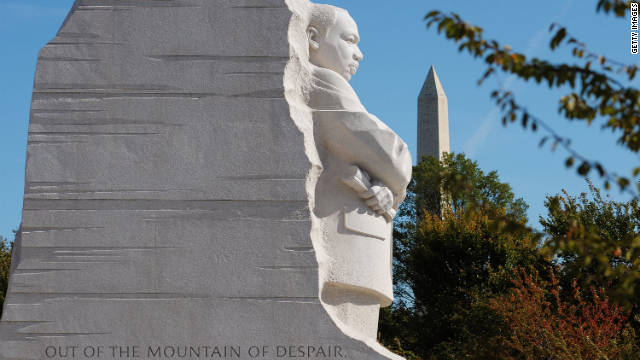
Obama unveils Martin Luther King statue in Washington
US President Barack Obama has dedicated a new memorial to the assassinated civil rights leader, Martin Luther King, at a ceremony in Washington.
Addressing the crowd, Mr Obama said that Dr King was now among the founders of the American nation.
The 30 ft (9m) granite statue lies near the spot where Dr King delivered his famous "I have a dream" speech in 1963.
The ceremony had been due to take place in August but was postponed due to Hurricane Irene.
'Draw strength'
President Obama toured the monument with his wife, Michelle, and his two daughters.
Speaking to an audience of tens of thousands, he said Americans were right to celebrate Dr King's dream, and vision of unity.
"On this day, in which we celebrate a man and a movement that did so much for this country, let us draw strength from those earlier struggles," he told the crowd on the National Mall in the US capital.
"When met with hardship, when confronting disappointment, Dr. King refused to accept what he called the 'is-ness' of today. He kept pushing for the 'ought-ness' of tomorrow," Mr Obama said.
"In this place, he will stand for all time, among monuments to those who fathered this nation and those who defended it."
The statue is situated between the memorials for Presidents Thomas Jefferson and Abraham Lincoln.
Born in Atlanta, Georgia, in 1929, Martin Luther King was a clergyman and leading figure in the US civil rights movement.
He was assassinated in 1968 during a visit to Memphis, Tennessee, aged 39.
Occupy Wall Street: China says protests time for 'reflection'
China's Foreign Ministry said on Monday global protests sparked by the Occupy Wall Street movement in the United States were a cause for "reflection", but the reflection should be focused on ensuring the world's healthy economic growth.
Anti-greed protesters rallied globally on Saturday, denouncing bankers and politicians over the international economic crisis, with violence rocking Rome where cars were torched and bank windows smashed.
"We have noticed the media has reported a lot about this issue recently. We think that there are many issues here which people ought to think about," ministry spokesman Liu Weimin told a regular news briefing.
"We have noticed that in the media there has been comment, discussion and reflection about these activities. But all these reflections ought to be conducive towards maintaining the stable and healthy development of the global economy," he added.
Galvanised by the Occupy Wall Street movement, protests began in New Zealand, touched parts of Asia, spread to Europe, and resumed at their starting point in New York with 5,000 marchers decrying corporate greed and economic inequality.
But online calls for similar protests in mainland China over the weekend fizzled, in a country whose leaders are wary of any kind of demonstrations.China's ruling Communist Party earlier this year came down hard on dissidents and rights activists after calls circulated on the internet for Chinese people to follow the lead of the Arab Spring and rise up to against their government.
The Global Times, a widely read Chinese tabloid published by Party mouthpiece the People's Daily, noted in an editorial that "western countries can withstand street demonstrations better, since their governments are elected".
"The conflicts may be minor or serious, but it will not bring significant change," it added. "China needs to stay calm and observe how the street movements in the Western world develop and to make the rights choices for its own good."
Shahbaz Taseer being kept near Pak-Afghan border
Interior Minister Rehman Malik said Monday that Shahbaz Taseer was alive and being kept near the Pak-Afghan border, Geo News reported.The Interior Minister while speaking to the media said there were no further details available about Shahbaz Taseer.Shahbaz Taseer the son of former governor Punjab Salman Taseer was kidnapped on August 26, 2011 from the Gulberg area of Lahore while oh his way to work.
Occupy Wall Street reaches 1-month birthday
www.cbsnews.com
The month-old Occupy Wall Street movement continues to grow, with nearly $300,000 in the bank and participants finding satisfaction in the widening impact they hope will counter the influence on society by those who hold the purse strings of the world's economies.
The expanding occupation of land once limited to a small Manhattan park in the shadow of the rising World Trade Center complex continued through the weekend, with hundreds of thousands of people rallying around the world and numerous encampments springing up in cities large and small.
For the most part, the protest action remained loosely organized and there were no specific demands, something Legba Carrefour, a participant in the Occupy D.C. protest, found comforting on Sunday.
"When movements come up with specific demands, they cease to be movements and transform into political campaign rallies," said Carrefour, who works as a coat check attendant despite holding a master's degree in cultural studies. "It's compelling a lot of people to come out for their own reasons rather than the reasons that someone else has given to them."
The demonstrations worldwide have emboldened those camped out at Manhattan's Zuccotti Park, the epicenter of the movement that began a month ago Monday. But there is conflict too. Some protesters eventually want the movement to rally around a goal, while others insist that isn't the point.
"We're moving fast, without a hierarchical structure and lots of gears turning," said Justin Strekal, a college student and political organizer who traveled from Cleveland to New York to help. "... Egos are clashing, but this is participatory democracy in a little park."
Even if the protesters were barred from camping in Zuccotti Park, as the property owner and the city briefly threatened to do last week, the movement would continue, Strekal said.
Wall Street protesters are intent on building on momentum gained from Saturday's worldwide demonstrations, which drew hundreds of thousands of people, mostly in the U.S. and Europe.
Nearly $300,000 in cash has been donated through the movement's website and by visitors to the park, said Bill Dobbs, a press liaison for Occupy Wall Street. The movement has an account at Amalgamated Bank, which bills itself as "the only 100 percent union-owned bank in the United States."
Donated goods ranging from blankets and sleeping bags to cans of food and medical and hygienic supplies are being stored in a cavernous space donated by the United Federation of Teachers, which has offices in the building a block from Wall Street near the private park protesters occupy.
Among the items are 20 pairs of swimming goggles (to shield protesters from pepper-spray attacks). Supporters are shipping about 300 boxes a day, many with notes and letters, Strekal said.
"Some are heartwrenching, beautiful," and come from people who have lost jobs and houses, he said. "So they send what they can, even if it's small."
Strekal said donated goods, stored for a "long-term occupation," have been used to create "Jail Support" kits consisting of a blanket, a granola bar and sanitary wipes for arrested protesters to receive when they are freed.
The movement has become an issue in the Republican presidential primary race and beyond, with politicians from both parties under pressure to weigh in.
President Barack Obama referred to the protests at Sunday's dedication of a monument for Martin Luther King Jr., saying the civil rights leader "would want us to challenge the excesses of Wall Street without demonizing those who work there."
Many of the largest of Saturday's protests were in Europe, where those involved in long-running demonstrations against austerity measures declared common cause with the Occupy Wall Street movement. In Rome, hundreds of rioters infiltrated a march by tens of thousands of demonstrators, causing what the mayor estimated was at least million ($1.4 million) in damage to city property.
U.S. cities large and small were "occupied" over the weekend: Washington, D.C., Fairbanks, Alaska, Burlington, Vt., Rapid City, S.D., and Cheyenne, Wyo. were just a few. In Cincinnati, protesters were even invited to take pictures with a couple getting married; the bride and groom are Occupied Cincinnati supporters.
More than 70 New York protesters were arrested Saturday, more than 40 of them in Times Square. About 175 people were arrested in Chicago after they refused to leave a park where they were camped late Saturday, and there were about 100 arrests in Arizona — 53 in Tucson and 46 in Phoenix — after protesters refused police orders to disperse. About two dozen people were arrested in Denver, and in Sacramento, Calif., anti-war activist Cindy Sheehan was among about 20 people arrested after failing to follow police orders to disperse.
Activists around the country said Saturday's protests energized their movement.
"It's an upward trajectory," said John St. Lawrence, a Florida real estate lawyer who took part in Saturday's Occupy Orlando protest, which drew more than 1,500 people. "It's catching people's imagination and also, knock on wood, nothing sort of negative or discrediting has happened."
St. Lawrence is among those unconcerned that the movement has not rallied around any particular proposal.
"I don't think the underlying theme is a mystery," he said. "We saw what the banks and financial institutions did to the economy. We bailed them out. And then they went about evicting people from their homes," he said.
In Richmond, Va., about 75 people gathered Sunday for one of the "general assembly" meetings that are a key part of the movement's consensus-building process. Protester Whitney Whiting, a video editor, said the process has helped "gather voices" about Americans' discontent.
"In regards to a singular issue or a singular focus, I think that will come eventually. But right now we have to set up a space for that to happen," Whiting said.
Some U.S. protesters, like those in Europe, have their own causes. Unions that have joined forces with the movement have demands of their own, and on Sunday members of the newly formed Occupy Pittsburgh group demanded that Bank of New York Mellon Corp. pay back money they allege it overcharged public pension funds around the country.
New York's attorney general and New York City sued BNY Mellon this month, accusing it of defrauding clients in foreign currency exchange transactions that generated nearly $2 billion over 10 years. The company has vowed to fight the lawsuit and had no comment about the protesters' allegation about pensions.
Lisa Deaton, a tea party leader from southern Indiana, said she sees similarities between how the tea party movement and the Wall Street protests began: "We got up and we wanted to vent."
But the critical step, she said, was taking that emotion and focusing it toward changing government.
The first rally she organized drew more than 2,500 people, but afterward, "it was like, 'What do we do?'" she said. "You can't have a concert every weekend."
___
'NYPD uses intimidation against OWS'
The New York Police Department (NYPD) has so far resorted to 'intimidation' in its attempts to quell the Occupy Wall Street (OWS) protests, an American journalist tells Press TV.
“The NYPD has so far reacted by intimidation and instigation and has continued to treat the protesters like criminals and reacted in some cases quite violently to them,” he said, adding that, “Each time they do so, it only strengthens the movement,” Nathan Schneider, editor of the website Waging Nonviolence said on Sunday.
“With every passing day over the course of these protests, I've just been amazed and wondering what the NYPD is thinking, because every action it takes seems to only hurt their image in the public eye and improve that of the protests,” he added.
He pointed out that that the ongoing anti-corporatism protests have ended the US media blackout over “the incredible influence of corporations, especially financial institutions, on our politics and society.”
The movement has achieved “an incredible victory,” as it has been successful to get its message across, Schneider added.
The OWS movement was initiated on September 17, when a group of people began rallying in New York's financial district to protest 'corporate greed' and top-level corruption among other instances of social inequality in the United States.
The campaign has now spread to tens of major US cities, including Seattle, Los Angeles, Dallas, and Boston, as well as hundreds of communities across the nation, with more Americans joining the demonstrations each day.
Meanwhile, Britain, Germany, Italy, Spain, Ireland, and Portugal are also some of the countries that have recently seen huge OWS-inspired protest rallies.
2,000 Occupy Wall Street protesters nabbed in US
The US police have arrested nearly two thousand Occupy Wall Street (OWS) protesters since the outbreak of the anti-corporatism and -corruption movement in New York in mid-September
Fresh arrests come as the movement is spreading across the globe.
The police have come up with various charges against the demonstrators in order to clear the streets filled with protest tents.
Chicago police say they have made 175 arrests on Saturday after protesters refused to obey orders to leave public areas and as more than 2,000 people marched from the Federal Reserve Bank of Chicago to Grant Park.
Also on Saturday, nearly 90 demonstrators were detained in New York, while police forces apprehended over 70 people in Phoenix and Colorado.
Protesters have, however, pledged to remain on the streets, despite the heavy-handed clampdown.
The OWS movement was initiated on September 17, when a group of people began rallying in New York's financial district to protest 'corporate greed' and top-level among other instances of social inequality in the United States.
The campaign has now spread to tens of major cities, including Seattle, Los Angeles, Dallas, and Boston, as well as hundreds of communities across the nation.
More and more Americans are, meanwhile, joining the demonstrations each day.
According to a Press TV survey published on Saturday, many believe that the American Awakening -- represented by the OWS movement -- stems from misguided financial policies of the US establishment, thought to be behind the country's current economic crisis.
Britain, Germany, Italy, Spain, Ireland, and Portugal were also some of the countries that saw huge OWS-inspired protest rallies on Saturday.
About 175 arrested early Sunday in Chicago protest
Police arrested around 175 demonstrators at a nascent protest camp in a downtown Chicago park early on Sunday, hauling them away in vans and buses even as protesters vowed to carry on their campaign against economic inequality.
The Chicago protests, linked to the Occupy Wall Street movement that sparked weekend demonstrations around the world, drew more than 2,000 people on Saturday and into the early hours of Sunday. Marches in New York and Los Angeles attracted about 5,000 people each on Saturday.
But the predawn arrests scuttled, at least for now, plans by the Chicago protesters to build a protest camp similar to that in New York's Zuccotti Park, the Manhattan hub of the Occupy Wall Street movement that began last month.
After the arrests, demonstrators in Chicago said they were plotting a way forward, grappling with issues including trespassing laws barring occupation of public spaces, organizing challenges and dropping temperatures.
The arrests happened after protesters marched on Saturday from Chicago's financial district, where some have spent the night on sidewalks, to Grant Park where they hoped to set up camp despite a law barring the public from city parks after 11 p.m.
"We went in knowing that we were going to occupy," said Kyle Miskell, a 24-year-old computer technician, adding he was among those arrested. "We were hoping the city would say, 'OK, let them occupy here.' But it didn't work out that way."
Police warned them to leave. But some protesters linked arms around the tents, saying they were willing to be arrested. Others stood across the street to chant and sing on the sidewalk in a gesture of solidarity.
"They were given warnings, advised of the statute and that they were in violation, and they chose to stay," Chicago Police spokesman Daniel O'Brien said.
Police took down close to 30 tents after hauling away the last of the arrested protesters early on Sunday, protesters said. At least one protester said the police acted "humanely."
Miskell said the protesters "definitely need a more permanent residence" more comfortable than the financial district sidewalk they currently occupy.
"Sleeping on the streets in November and December in Chicago is not a good idea," he said.
Another Chicago protester, an intensive care nurse, said that as the Chicago movement grew it needed a "more visible, yet safe" place to call home.
"There has been talk about people trying to reoccupy Grant Park tonight. When the police were tearing down the tents, there was a chant of 'We have more tents,'" said the woman, 31-year-old Heather Fallon.
ARRESTS IN OTHER CITIES
In New York, where the movement began when protesters set up camp on September 17, 92 demonstrators were arrested on Saturday and early on Sunday for disorderly conduct and resisting arrest, police said.
More than a dozen were demonstrators arrested in Washington Square Park for violating the park's midnight curfew.
Another roughly 20 protesters were arrested late on Saturday in Raleigh, North Carolina, and about 50 were arrested in Phoenix.
In addition to the U.S. protests, demonstrations stretched into Sunday in London, where about 250 people set up camp outside St Paul's Cathedral, vowing to occupy the site indefinitely to show their anger at bankers and politicians over the global economic crisis.
The protests, in Asia and Europe as well on Saturday, were mostly peaceful apart from in Rome, where the demonstration sparked riots.
American protesters are angry that U.S. banks are enjoying booming profits after getting bailouts in 2008, while many ordinary Americans are struggling to stay afloat in a difficult economy with more than 9 percent unemployment.
They also believe the richest 1 percent of Americans do not pay their fair share in taxes and want a more equitable economic system.
Some protesters said they were pleased with the weekend's turnout, although some marches were smaller than organizers had expected and it was unclear if the movement, largely driven by social media, would sustain its momentum. Critics have accused it of lacking clear goals.
Occupy LA organizer Clark Davis was exuberant over the 5,000 people who marched through the streets of Los Angeles and gathered peacefully outside City Hall.
"Wow, they really showed up," he said.
In New York, Troy Simmons, production manager for a health food business, said he was surprised turnout was not larger.
"People don't want to get involved. They'd rather watch on TV," he said.
President Barack Obama goes on the road to promote jobs
cnnAfter his jobs bill sputtered in the Senate, President Barack Obama will use a three-day bus tour to North Carolina and Virginia this week to push lawmakers to pass every element of it in multiple bills.
On the first day of the tour Monday, the President will make stops in the Asheville area of North Carolina.
During the trip, "the president will challenge Congress to get to work this week passing every element of the American Jobs Act piece by piece," Deputy Press Secretary Josh Earnest said.
The first part Obama will focus on is a proposal to prevent teacher layoffs, as well as saving jobs of police officers and firefighters, Earnest said.
A similar trip to the area last year also focused on jobs, when Obama visited Forsyth Tech in December 2010 to highlight the school's biotechnology program.
Jobs, or rather the lack of them, is issue number one in North Carolina's Triad area -- bound by Greensboro, Winston-Salem and High Point.
Many in the area commute to Winston-Salem and beyond for work as jobs in the surrounding Piedmont communities have dried up.
While the two states are key battlegrounds in the presidential race, the trip is "an official trip," and no part of it is paid for by the re-election campaign, Earnest said.
He rejected suggestions of a political motive for the choice of states, saying the president has been "traveling across the country to make the case" for his plan.
Obama's senior strategist David Axelrod vowed Sunday that every part of the bill will reach a vote.
"The American people support every single plank of that bill, and we're going to vote on every single one of them," Axelrod said on ABC's "This Week."
Despite saying last month that it was "not an a la carte menu," Axelrod said Sunday that "we hope to assemble the entire plan, and we're going to take votes on each one of them."
He would not say which part of the $447 billion plan would come first.
Obama announced that the broad initiative would be broken into smaller, separate bills.
"In the coming days, members of Congress will have to take a stand on whether they believe we should put teachers, construction workers, police officers and firefighters back on the job," he said in a statement Tuesday.
"They'll get a vote on whether they believe we should protect tax breaks for small business owners and middle-class Americans, or whether we should protect tax breaks for millionaires and billionaires."
On Monday, demonstrators in Southern California say they'll gather outside the Pelican Hill Golf Club to protest the GOP's stance on the president's jobs bill. House Speaker John Boehner and Reps. Dana Rohrabacher and Ed Royce will be there for a fund-raising event.
"Members of the Courage Campaign, teachers and healthcare workers will deliver a petition to Speaker Boehner signed by 25,000 Courage Campaign members ... demanding that he hold a vote on President Obama's American Jobs Act," a statement from the group said.
House Majority Leader Eric Cantor, R-Virginia, meanwhile, indicated there could be agreement on some elements.
"Let's work together. Let's find some of the things in his plan that we agree with and let's go ahead and do that for the American people," he told "Fox News Sunday."
The past week was an indication that "we can come together," Cantor told "Fox News Sunday," citing the passage of three trade bills.
Cantor did not make clear exactly where areas of agreement may be. But he cited the need to help small businesses find capital, unemployment insurance reform, and infrastructure spending as broad ideas for which both sides have expressed support.
Cantor insisted a plan the GOP has put forward is "for America's job creators."
"We're not going to be for tax increases on small businesses," he said of the president's plan.
Republicans filibustered the Senate version of the jobs bill last week, though a handful of Democrats had said they would have opposed the measure if it had made it to the chamber's floor.
Speaking to a conference in Las Vegas on Sunday, Senate Majority Leader Harry Reid urged the GOP to "get off of this kick of saying that the only thing that will create jobs is to lower taxes."
"I say to my other friends on the other side of the aisle, if you don't like what we're trying to do, give us something that is constructive that we can do to create jobs," said Reid, D-Nevada.
"If lower taxes was a way to a great a economy, during the George Bush years, we would have been on fire economically, but we weren't," he added.
Obama last week called on Republicans to show a plan that independent economists say would "actually put people back to work."
Independent analysts who looked at the president's proposals in September estimated they could produce between 750,000 and 1.9 million jobs.
Asked whether Republicans have any such analysis for their jobs proposal, Cantor responded that the plan "is taking pieces of our overall vision for this country and saying, you know what? We've got to provide incentive for the private sector to grow."
Earnest, in a telephone news conference, noted that Cantor did not cite an independent analysis suggesting the Republican plan would create jobs. And on Fox, Cantor challenged a report by Moody's Analytics that suggests the president's plan would add 1.9 million jobs next year.
On CNN's "State of the Union," Democratic National Committee Chairwoman Debbie Wasserman Schultz said, "Polling shows overwhelming support for Congress to pass the entire bill. It's absolutely critical."
Obama says the bill would be fully paid for. It includes a so-called "millionaire's surtax," increasing the taxes on income over $1 million.
Pakistan leans toward talks with Taliban, not battle
Amid growing American frustration with Pakistan’s handling of Islamic militancy, the government here appears less willing than ever to challenge insurgent groups and is more inclined to make peace with them.
In a series of recent statements, Pakistani officials have rejected the notion of robust military action against insurgents based in its tribal belt and instead called for truces. At a recent summit, political leaders issued a resolution that did not condemn terrorism but said their policy is dialogue. The decree was widely viewed as having been rubber-stamped by the powerful military, whose top two figures briefed the conference.
The approach has puzzled U.S. officials and renewed debate in Pakistan about how to handle insurgents who have killed thousands in attacks nationwide.
Much remains unclear about the potential for peacemaking, including which militant groups would be included or willing. But some analysts say Pakistan has lost the resolve to battle homegrown insurgents who many here view as disgruntled brethren.
“Everyone went along with what the army wanted” at the recent political summit, said Rahimullah Yousafzai, a Pakistani journalist and expert on militancy in the northwest. “It became obvious that the military has no appetite for military operations.”
Many here express skepticism about talks, arguing that such efforts had failed in the past. But the idea is backed by Islamic parties and other political leaders.
In interviews, politicians and security officials said Pakistan views the Pakistani Taliban, an umbrella insurgent group that is an offshoot of the Afghan movement, as splintered enough to be open to peace deals mediated through tribal elders or clerics. And the United States, they note, is supporting a similar approach in Afghanistan.
“If by giving a chance to peace, any terror is eliminated, it’s the best option,” Interior Minister Rehman Malik, a leading ruling party figure, said in an interview. He added that he had received armistice offers from militants: “They want to talk.”
Pakistan’s fragile civilian government regularly condemns terrorism, and the army has executed several operations in the country’s northwest, including against Pakistani Taliban factions in the Swat Valley and South Waziristan. The battles have scattered some militant leaders, leaving the organization weakened but still capable of carrying out deadly attacks. But there is little public enthusiasm for large-scale military action, which could displace millions of people.
Meanwhile, Pakistan is jockeying for inclusion in any Afghan political settlement, which security officials here believe will bring Afghan Taliban representatives into the government. The army therefore sees little incentive to antagonize Pakistan insurgents, who commingle with their Afghan counterparts, security analysts said.
‘A focus on peace’
Pakistani Prime Minister Yousuf Raza Gilani called last month’s political conference as tensions with the United States soared over American allegations of Pakistani state support for the Haqqani network, an Afghan group based in the Pakistani tribal area of North Waziristan. Participants, in a rare show of unity, unanimously rejected the U.S. claims and called for a “new direction and policy with a focus on peace and reconciliation” with “our own people in the tribal areas.”
Two days later, Gilani told local media that a parliamentary committee would monitor talks that could include all Taliban factions, including the Haqqani network, but warned that failure could prompt military action. Army chief Gen. Ashfaq Parvez Kayani, however, suggested otherwise to reporters, saying: “Military operation is not a solution to every problem. We’re done with those operations where we had to.”
An American official said the United States was unsure what to make of the resolution. “We’ll be watching, of course, and asking through military channels what the [Pakistanis] have in mind,” said the official, who spoke on the condition of anonymity to discuss a sensitive relationship.
The United States has stepped up a campaign of drone strikes against the Haqqani network, targeting the group with several strikes in recent days.
Taliban reaction to the Pakistani overture has been wary. One top commander, Faqir Mohammed, was quoted by local media as saying he welcomed talks — but that they must lead to the establishment of Islamic law. Mohammed later denied willingness to talk.
“There have been contacts between the government and militants through indirect channels,” said a tribal elder from the Waziristan region. “Both sides are seeking guarantees before starting.”
A Pakistani intelligence official pointed to the recent defection of one Pakistani Taliban commander, Fazal Saeed Haqqani, as an argument for truces, which he said exploit insurgent infighting. Pakistan, the official said, “met Haqqani’s demands,” including by releasing some of Haqqani’s imprisoned relatives.
Others bemoan the idea of talks as surrender, though many critics remain enthusiastic about reconciliation in Afghanistan. Javed Ashraf Qazi, a senator and former intelligence chief, said the Afghan Taliban is fighting a foreign occupation, while the Pakistani Taliban seeks to create an Islamic caliphate.
“These are our own citizens who have revolted against the state . . . and therefore they should be subjected to the law,” Qazi said. “They have the blood of innocent people on their hands.”
Pakistan’s numerous past attempts at peacemaking with domestic insurgent groups provide ample reason for doubt. Some analysts say a 2006 deal in North Waziristan helped create a haven in the area, from which the Haqqani network and other fighters now operate freely.
The Pakistani army has maintained truces with a few factions, including one led by Hafiz Gul Bahadur, whose North Waziristan-based forces attack U.S. troops in Afghanistan and are closely allied with the Haqqani network. Some analysts speculate that the army has struck other secret deals that it wants to avoid jeopardizing.
The military and the Taliban are “ happy nowadays because there are fewer attacks — on both sides,” Yousafzai said.
Subscribe to:
Posts (Atom)