M WAQAR..... "A man's ethical behavior should be based effectually on sympathy, education, and social ties; no religious basis is necessary.Man would indeed be in a poor way if he had to be restrained by fear of punishment and hope of reward after death." --Albert Einstein !!! NEWS,ARTICLES,EDITORIALS,MUSIC... Ze chi pe mayeen yum da agha pukhtunistan de.....(Liberal,Progressive,Secular World.)''Secularism is not against religion; it is the message of humanity.'' تل ده وی پثتونستآن
Saturday, August 20, 2011
Karachi red with blood again
Violence in Karachi seems to be spiralling out of control as 22 more people, including five policemen, were gunned down in the country’s financial hub since Thursday midnight, bringing the death toll in the last three days to 72. The killings contradicted Interior Minister Rehman Malik’s claim that not a single incident of targeted killing had taken place in the city since Thursday midnight.
The Karachi Chamber of Commerce and Industry (KCCI), meanwhile, demanded the government deploy the army to restore order in the city but Malik and Sindh Home Minister Manzoor Wasan said the police and paramilitary personnel would be able to bring peace to the violence-stricken city.
According to details, five Elite Force personnel were killed and 40 others injured when unidentified gunmen opened fire on their bus in the Korangi area late on Friday night. A deputy superintendent of police was among those injured. According to a private TV channel, the policemen were in plain clothes and were to be deployed A man was gunned down in Orangi Town while police found two trussed up bodies in the Lyari stream near the Khamosh Colony area. Another two bodies were found in the Bakra Peeri area while six people were killed in North Nazimabad, Kharadar, Gulshan-e-Iqbal, Mobina Town, Liaquatabad and Kemari Town areas.
According to police, another body was found in a gunny bag near Kharadar Jamaat Khana, while a man was gunned down and another sustained bullet injuries in Kemari. Another man was shot dead in Mobina Town. The deceased was said to be a worker of a political party. Unidentified armed men shot a person in the C area of Liaquatabad, killing him instantly while another was killed and one injured in Block 5, Gulshan-e-Iqbal area. Armed men cordoned off the Chakra Goth area of Korangi and opened indiscriminate firing on houses. They later broke into the houses and tortured the residents, killing two and injuring several others. Most of the residents of the area were Sindhi. There were also reports of a rocket being fired in the Agra Tag area of Lyari. No casualty was reported in the attack. However, two shops and a warehouse were damaged.
Meeting: Meanwhile, Malik and Sindh Chief Minister Qaim Ali Shah presided over a meeting to review the ongoing situation in the metropolis and decided that stern action would be taken against killers, hooligans and extortionists. Malik said every state force would be used to maintain law and order in Karachi, adding that the perpetrators would not be spared. Later, addressing a press conference, Malik said targeted killings in Karachi had come to an end. “Not a single killing was reported since midnight of Thursday,” he claimed. “As many as 52 people have been arrested and would be presented to the media soon,” he said. In a statement, Sindh Home Minister Manzor Wasan said the army was not required to control the law and order in the city. “Police can control the situation… demands of army deployment in the city is a political tactics,” he said.
Complacency of the ruling elite
EDITORIAL:Daily Times
PML-N chief Mian Nawaz Sharif recently gave a call for fresh elections. He asked the nation to stand up to the government and not allow anyone to play with their mandate. Mr Sharif was of the view that the problems being faced by Pakistan could only be resolved if elections were held immediately. Prime Minister Gilani rejected Mr Sharif’s call for early elections and said that the next elections would be held on time. The timing of Mr Sharif’s demand is interesting. For quite some time, members of the PML-N had been demanding mid-term polls but Mian sahib kept ignoring these demands and was quite content with letting this government complete its term. So why has Nawaz Sharif changed his mind now? There could be a few factors. One of them is that the PML-N’s popularity in Punjab has suffered greatly due to its mismanagement and misgovernance. If Mr Sharif thinks this is a good a time to go back to the electorate, he is in for a surprise. Chief Minister Shahbaz Sharif’s government has not performed well ever since it came to power in Punjab. Their so-called pro-people projects like Sasti Roti Scheme have proved to be anything but helpful for the public. Instead, these projects only led to more corruption and became a burden on the provincial exchequer. If the PML-N wants to go for an election again, it may not turn out to be an advantageous move because the party hardly has an organisation outside central Punjab. Mian sahib’s call thus seems more like a pressure tactic. Whether this will put the government under any pressure seems unlikely given Prime Minister Gilani’s nonchalant attitude.
Mr Gilani said that all the state institutions were working within the ambit of the constitution and were following democratic norms and processes, so he was unaware of what Mr Sharif was pointing at. The PPP-led coalition government should complete its tenure but that does not mean it can afford to be complacent. The PPP keeps trotting out its achievements, i.e. the 18th Amendment and NFC Award, which are great achievements indeed, but the government should not sit sanguine and pretend that everything is hunky-dory. Nobody wishes to tilt against democracy but a democratic dispensation also has to deliver. In a country like Pakistan, people lose patience with democratic governments when they fail to deliver. The government needs a wakeup call. Unemployment has risen considerably under this regime while inflation has broken the back of the masses. The global recession and terrorism have contributed to many of these problems but the government has not done much to address the issues of concern to the masses. This reflects poorly on the PPP and its ability to deliver.
As far as institutions are concerned, the ongoing tussle between the executive and the judiciary is cause for concern. The government might be on good terms with the military since it is doing its bidding in virtually all matters, but this can hardly be taken to mean that every institution is working within its parameters. By not challenging the military’s control over the country’s foreign and security policies, especially when the civilian politicians had a chance post-Osama bin Laden’s death, the government has not done the country or itself any favour. By trying only to safeguard its interests, taken to mean mere completion of its term, the PPP is increasingly disappointing the electorate. Thus the prime minister’s complacency is certainly misplaced. In order to restore the faith of the masses in democracy, the PPP must work harder towards reforms and good governance. Pakistan needs stability, not another uniformed ‘saviour’ who might take advantage of the current malaise.
11,604 terrorist attacks in 72 countries in 2010
There were 11,604 terrorist attacks in 72 countries in 2010, which resulted in 49,901 victims, according to the annual US report on terrorism. “Although the number of attacks rose by almost five percent over the previous year, the number of deaths declined for a third consecutive year, dropping 12 percent from 2009,” the report said. The US State Department released its Reports on Terrorism on August 18. The annual report, which breaks down global terrorist attacks and terrorist group activity by region and country, includes a statistical annex that is prepared by the National Counterterrorism Center (NCTC). The report includes a list of 47 foreign terrorist organisations designated by the United States, and it lists four nations designated as state sponsors of terrorism: Cuba, Iran, Sudan and Syria. Based on a yearlong collection of reports from every nation, of the 49,901 victims of terrorist acts, there were 13,186 people killed in 2010.
In the grip of holocaust... ''Jamrud Mosque Blast''
Editorial:THE FRONTIER POST
50 killed in Jamrud mosque blast
More than 50 persons, including men and children, were killed and over 100 others injured when a suicide bomber struck a mosque in Jamrud during Friday congregation in Khyber Agency, officials said. The blast took place at Jamia Masjid Madina in Sherabaz Madokhel in Ghundai area of Tehsil Jamrud, Khyber Agency. Hundreds of people were offering Friday praye
How many a Jamrud is this hapless unfortunate nation fated to undergo grievously? Where is the administration? And what the leadership is doing? Don’t they both know that the nation all over the country is in the grip of a vicious holocaust and that they both must be on their toes to stop this horrific carnage? As some 50 innocent worshippers were blown up into pieces and over 100 lay critically gored in pools of blood in the Jamrud mosque, weren’t both the administration and the leadership hibernating blissfully in some secure niche? Why the mosque had not been secured by tight security shield when it obviously was a potential target of terrorism? Jamrud is well within the range of the militancy-blighted region. And just a modicum of common sense could tell the state security apparatus and its political masters that the vile thugs could possibly target the mosque lethally on a Friday as it would draw the faithful in larger numbers than the normal on this august day during the holy month of Ramadan. Who doesn’t know that the unconscionable vile thugs who though feign their thuggery to be religiously motivated have no qualms in sinning against the believers? The inhuman savages rather gloat over the heartless killing and maiming of the faithful in the places of worship and pridefully claim responsibility for the holocaust. So why had the guardians of law left the Jamrud mosque so insecure that the wicked suicide bomber walked into it unobstructed and blew himself up to soak it with human blood and limbs so horrifically?For how long are the security echelons and the political bosses to keep lulling a distressed and anguished citizenry that a thug bent upon killing himself is hard to stop? Why is the vile character not disabled in his very lair before he crawls out for his sinful mission to inflict death, injury and destruction on the innocent citizenry? Why no orchestrated, coordinated and sustained counter-terrorism campaign has been put in place as yet to prostrate and behead the monstrosity of terrorism stalking all over the land so freely and so bloodily? What for is that huge money-guzzling security apparatus? Only for hibernating and for coming into action with lame excuses and preposterous explanations after the terrorists have struck? And what for is the political leadership? To issue trite customary condemnations and condolences only? Why no heads roll; no questions are asked; and no explanations are demanded? For how long are the political bosses to keep so fiddling and the security flanks remain so asleep while the country is so dangerously caught up in terrorism and criminality?
Karachi is aflame, with the dreadful sight of mutilated bodies in gunny bags staging a return to the beleaguered port city. To salvage the nation’s key economic hub, not kid gloves but an iron fist is essentially called-for to trounce and demolish the merchants of death and mayhem prowling in the city so fearlessly. Yet the leadership has set up just a committee to deal with the situation. For heaven’s sake, what will this committee do where the security apparatus indispensably must be put to the task that it must do but is not doing? Will the committee oversee the burial of the bodies received in gunny bags?Has indeed the leadership lost all its marbles that it is bringing forth loathsome childishness and child-like immaturity where wisdom of the highest order is required so necessarily? If it is not up to the job, which it shows conclusively it is not, shouldn’t it activate the inter-agency consultative and decision-making processes to cope with a very perilous situation the country is in indisputably? Why should just a bunch of politicos of mediocrity huddle up together in a high official mansion and take some expedient decisions about a colossal situation which is palpably beyond their depth and comprehension? The country is precariously adrift to chaos and anarchy. It can afford no more of a bloodied Jamrud and a flaming Karachi. The dreadful drift has to be reversed in any event, an effort which has no room at all for dirty politicking, petty politics and obscene expediencies. Already, it is too late; there is no more time left to fritter away in launching a comprehensive campaign to bring back the country to sanity, peace and normality. If the political leadership fails to do this, the nation will of course be hurt irreparably but it itself will never be forgiven by the posterity for this sin of its against a hapless people who had had the misfortune of having it at the helms at this point in time.
Egypt decides to withdraw ambassador from Israel
The Egyptian Cabinet says it has decided to withdraw its ambassador from Israel over the deaths of Egyptian security forces in fighting after an ambush targeting Israelis near the border between the two countries.
The Cabinet statement issued early Saturday says the ambassador will be withdrawn until Israel investigates the shooting deaths of five Egyptian security forces.
The decision comes after Egypt's official news agency blamed the Israelis for shooting and killing the five while chasing militants who killed eight Israelis in Thursday's ambush across the border in southern Israel.
The Israeli military promised to investigate.
Friday, August 19, 2011
UN urges Pakistan to probe journalist killings
The office of the UN’s human rights commissioner urged Pakistan on Friday to investigate a recent spate of killings and disappearances of journalists.
“In the past eight days alone, we have received reports on the killing of one journalist, Munir Shakir, in Balochistan on 14 August, 2011, and the disappearance of another journalist, Rehmatullah Darpakhel, three days earlier in North Waziristan on 11 August,” OHCHR spokesman Rupert Coleville said.
“We call on all responsible parties to immediately stop such violations of human rights, and we urge the government to take immediate steps to independently investigate these cases,” he said.
Coleville explained that these were far from being isolated incidents.
“Pakistan is cited by various journalist groups as one of the most dangerous if not the most dangerous place for journalists” in the world, he said.
Citing figures from the non-profit Committee to Protect Journalists, Coleville said that 16 reporters were killed in 2010 and nine journalists had died so far in 2011.
“But two journalists in eight days is quite intense,” he said.
“We’ve already raised it this year…and we wanted to highlight that nothing has changed since then, and if anything it is getting worse,” he warned.
“None of the cases have been fully or satisfactorily investigated,” Coleville added.
Thousands protest against violence in Karachi, Pakistan
Thousands of people gathered in front of the Governor House in Karachi Friday afternoon to protest against the recent violence and target killings in the city, which have claimed dozens of lives over the last couple of days, reported local Urdu TV channel Geo.
Local watchers believed that the angry protesters including the victims of the target killings in the city could turn violent as local residents have almost lost the confidence in the government's ability to check the rampant violence going on in the city for months.
The Karachi-based Federation of Chamber of Commerce demanded the army to take control of the city.
Since Wednesday over 45 people were reportedly killed in different firing incidents in various parts of the city. In July alone, over 300 people lost their lives in different political and ethnic violent in Karachi, bring to over 1,000 the total number of people killed in bloody violence in the city this year.
Located on the southern tip of Pakistan along the Arabian sea, Karachi is the country's largest economic center which contributes more than 60 percent of the country's tax revenues.
However, the rampant violence in the city has constantly put the businesses of the city to a standstill. Daily loss resulting from violence at its peak time in the city reportedly stands at about 100 million U.S. dollars.
The deteriorating law and order situation has caused a big concern in the country. Even the Pakistani army, in a very rare gesture, has recently expressed concerns over the growing violence in the city.
The main cause of the incessant violence and target killings in the city is the conflict between two groups, namely Muttahida Qaumi Movement (MQM) and Awami National Party. They are the two old rivals in Karachi.
MQM represents the powerful Urdu-speaking population immigrating from India in 1947 when Pakistan got independence. ANP represents the Pashtun-speaking people from the country's northwest and southwest.
The two groups are in constant clashes with each other over political issues and business interests. The latest conflict between the two groups in the city is due to the restoration of the elected local government system introduced by the then Pakistani President Musharraf in 2001, which is believed to benefit MQM and hurt the interests of ANP in Sindh province, of which Karachi is the capital.
Karachi in flames
Editorial:THE NEWS
Karachi is reaching a state of complete anarchy. At least thirty-four people have been killed in the last 24 hours with violence escalating following the death of former PPP MNA Waja Karim Daad. Rival groups used rockets and bombs to launch attacks against each other on Wednesday, plunging the city into mayhem. There are no signs that the havoc has ended or that security forces will be able to get the situation under control anytime soon. In fact, things seem to be deteriorating as more killings are being reported from various parts of the city. The murderous tide has branched out of Lyari and enveloped other parts of the city. At least eight more bodies in bags were found on Thursday. Some 15 others had been discovered the previous day – many of them dumped by unidentified persons even as terrified residents looked on helplessly. The worst aspect of the killings is that no one seems to be able to get matters under control. In fact, the government at both the provincial and central levels has not even been able to articulate precisely what it is planning to do.
The bottom line is that such mayhem simply cannot be allowed to continue. For a long time Karachi has barely seen a day of peace. Things have continued along a path which spells disaster for the people. It is obvious that the killings are a result of growing political tensions in the city and of the schism that has divided people on the basis of both their ethnic background and political affiliation. The absurd statements made in the past by members of the ruling party have only added to the tensions and exacerbated things – much like the vines and creepers of a forest taking over a garden within which people had for some time enjoyed at least relative harmony. It is clear that, whatever security plans exist for Karachi, they are not working. Rangers and police personnel have reportedly stood by and watched as the killers fired volleys of bullets and bodies fell to the ground. Normal life has been shattered and, as has been noted on more than one occasion, the ongoing instability means a devastating blow to an economy which already stands on very shaky ground. Worse still is the formidable human cost of the unrest in a city torn apart by bloodshed.
40 dead in Pakistan mosque bombing
A bomb exploded in a mosque in a Pakistani tribal region as hundreds were gathered for prayers Friday, killing at least 40 people and wounding 85 others in the first major attack in the country during the Muslim holy month of Ramadan.
The attack came despite a period of relative calm in Pakistan, which has suffered numerous Taliban-led insurgent attacks in recent years. No group immediately claimed responsibility, but the Taliban and other Islamist militants have previously attacked mosques.
The bomb went off in Ghundi, a village in the Khyber tribal region, a part of Pakistan's tribal belt. Khyber has long been a base for Islamist militants, and the Pakistani army has waged multiple operations aimed at pacifying the region but with limited success.
Khyber also is a key region for the U.S. and NATO, because a large portion of non-lethal supplies heading to U.S. forces in Afghanistan passes through it.
Some 300 people had gathered for prayers Friday afternoon in the Sunni mosque, and many were on their way out when the bomb exploded, local administrator Iqbal Khan said. Officials said there was some evidence a suicide attacker was involved.
Saleem Khan, 21, said people panicked after the blast, and that amid the smoke, cries and blood, several ran over him when he fell.
"Whoever did it in the holy month of Ramadan cannot be a Muslim," he said from a hospital bed in the main northwest city of Peshawar. "It is the cruelest thing any Muslim would do."
TV footage from the scene showed a heavily damaged building. Prayer caps, shoes and green prayer mats were scattered across a blood-splattered floor, while ceiling fans were twisted and walls blackened. Men comforted a young boy who wept as he held his hand to his heart.
At least 40 people were killed, and 85 wounded, local administrator Fazal Khan said.
Islamist militants such as the Pakistani Taliban have targeted mosques before, especially if they believe alleged enemies — such as army soldiers — are using the facility.
The Pakistani Taliban and affiliated groups are staging attacks in Pakistan because they oppose Islamabad's alliance with the United States.
Also Friday, two U.S. missiles struck a house in a tribal region that was once a Pakistani Taliban stronghold, killing four people, intelligence officials said.
The missile strike came as Pakistani-U.S. relations are seriously strained after the unilateral American raid that killed al-Qaida leader Osama bin Laden in northwest Pakistan. The continued missile strikes, which Pakistan officially opposes, suggests Washington considers the tactic too valuable to give up.
Though Pakistan objects to the covert, CIA-run missile program, it is believed to have aided it in the past. The U.S. rarely acknowledges the program.
The two missiles hit a house Friday in Sheen Warsak village in the South Waziristan tribal area, according to two Pakistani intelligence officials who spoke on condition of anonymity because they were not authorized to speak to reporters.
The identities of the dead were not immediately clear. Although U.S. officials insist the vast majority of victims in the strikes are militants, Pakistanis and some human rights activists have said civilians are often caught up in the attacks.
South Waziristan is a lawless stretch of rugged territory that was largely under the control of the Pakistani Taliban until October 2009, when the country's army launched an operation against the insurgents. However, militant activity is still occasionally reported in the region.
It is nearly impossible to independently verify the information from the region because access is heavily restricted.
__
Jamrud mosque explosion
At least 30 people have been killed as a result of a blast targeting a mosque located in the Jamrud Tehsil of the Khyber Agency Friday while more than 100 are injured, Geo News reported. The roof of the mosque collapsed following the blast.
The blast took place after Friday prayers and according to the local administration, the bomb was planted in the mosque.
The intensity of the blast is not yet known but major damage has been caused to the mosque. Rescue efforts are underway to recover those trapped underneath the rubble.
The blast took place after Friday prayers and according to the local administration, the bomb was planted in the mosque.
The intensity of the blast is not yet known but major damage has been caused to the mosque. Rescue efforts are underway to recover those trapped underneath the rubble.
Pakistani Veterans Beef Up Bahrain Security Forces
voanews.com
Pakistan’s president, Asif Ali Zardari, made a one-day visit to the Middle East kingdom of Bahrain this week. Substantive details of his meetings with King Hamad bin Isa al-Khalifa were not made public. But Bahrain has been gripped by anti-government protests, part of the “Arab Spring” sweeping across the region. The Bahraini government has been soliciting help from Pakistan to put down demonstrations.
According to analysts and Bahraini human rights activists, Bahrain's government has been recruiting former soldiers and policemen from Pakistan at a steady rate to bolster the security forces.
Former CIA officer Bruce Riedel, who has extensive experience in South Asia, says Bahrain has been recruiting Pakistani veterans for decades. But he says the eruption of the pro-democracy demonstrations in the Gulf state in March has sparked a sharp increase in the recruiting.
"This winter, when the very serious demonstrations began and it looked like the regime might even be toppled at a certain point, their hiring of mercenaries went up substantially," said Riedel. "And they began sending out basically want ads in major Pakistani newspapers advertising well-paying jobs in the Bahraini police and the Bahraini National Guard for any experienced soldier or policeman in Pakistan."
The ads placed in Pakistani newspapers call for ex-riot police and riot control instructors, military police, non-commissioned officers, and other military and security specialists - as well as cooks and mess hall waiters - for the Bahrain National Guard. The ads were placed by the Fauji Foundation, an organization set up to help veterans and their families. Calls to the foundation seeking comment were not returned.
A senior Pakistani source says President Zardari and King Hamad discussed the issue of recruitment during the Pakistani leader’s visit to Bahrain Wednesday. But asked to comment on the matter, a Pakistani embassy spokesman said the recruitment of veterans is done through private channels and has nothing to do with the Pakistani government.
Riedel says hundreds, if not thousands, of unemployed Pakistani military and police veterans were hired. Most have come from the province of Baluchistan in southwest Pakistan.
Nabeel Rajab, president of the Bahrain Center for Human Rights, says the Pakistani recruits have behaved with a heavy hand toward demonstrators.
"They’re uneducated," he said. "They’re told they are going to go to a holy war in Bahrain to kill some non-Muslims or kafir [infidel] or Shias. They are paid well, maybe. They are staying in isolation in Bahrain. They have their own settlement, away from local citizens. And those are maybe responsible for a lot of killing and a lot of systematic torture and human rights violations committed in the past months and years."
Asked how he knew they were Pakistanis, he said the recruits speak Urdu instead of Arabic. In fact, he says, demonstrators would insult the policemen and guardsmen in Urdu.
Rajab says that although the government has lifted the state of emergency and instituted a commission of inquiry into the human rights abuses, the anti-government protests have continued.
Bahrain is a monarchy ruled by Sunni Muslims, a minority in the kingdom. Shi’ite Muslims make up the majority of the population and have been in the forefront of the pro-democracy protests, calling for reforms and more equitable treatment.
Nabeel Rajab, who also serves as deputy secretary-general for the International Federation for Human Rights, says Bahrain's government is wary of Shi’ites serving in security positions.
"Because of their Shia religious background, the government or ruling family, they don’t employ them in the army," he said. "So always they have a gap in the army or the police. They need to employ somebody. The second thing is that to deal with the protesters, to deal with those democracy and human rights protests, the government of Bahrain imports or brings in mercenaries from several countries, mainly from Pakistan."
Bruce Riedel, now a senior fellow at the Brookings Institution’s Saban Center for Middle East Policy, says the Bahraini policy has aggravated the Shia-Sunni sectarian divide.
"The fact that the [ruling] Khalifa family is importing Sunni Pakistani mercenaries to repress the Shia majority only underscores the perception of the Shia majority that the regime is not interested in genuine reforms, not interested in building a constitutional monarchy, but interested in repressing the majority simply because they are Shias," he said.
Repeated calls and e-mails to the Bahrain Embassy in Washington seeking comment got no response.
Riedel adds that for Bahrain's rulers, there is a side agenda to the recruitment.
"Many of these Sunni Pakistani troops, if they’ve served well and served long enough, will also be offered Bahraini citizenship at the end of their career - an offer that is intended to try to increase the demographic size of the Sunni minority on the island. And that only intensifies Shia frustration with the way things are governed in Bahrain," he said.
The issue also has diplomatic repercussions. Iran, a Shi’ite nation, has voiced concern about the Bahraini government’s response to the demonstrations. In March, a 1,600-man Gulf Cooperation Council force, led by another Sunni monarchy, Saudi Arabia, went into Bahrain. In April, Iran summoned the Pakistani ambassador to hear official concern about Bahrain's recruitment of Pakistani mercenaries to help put down the protests. According to Iranian press reports, Iranian officials warned of “serious ramifications” for Pakistani-Iranian relations if the recruitment continued.
Who is Anna Hazare? ...What is Lokpal Bill?
Very few social activists have captured the attention of Indians across the globe as Anna Hazare did during his "fast unto death" over the issue of the Lokpal Bill in New Delhi in April 2011.
Hazare, a Gandhian by belief, outlook and practice, has become the face of India's fight against corruption. During his fast over the Lokpal Bill, Hazare, a quintessential traditional Indian by looks and mannerism, managed to inspire and mobilize the support of even the ultra-modern Indians - Indians for whom the word "social" only means having a profile on social networking sites.
The "Anna Hazare fast" can be described as the first real "social networking movement" in India. Hazare, a former Army man, began his social activism from Ralegan Siddhi, a village in Ahmednagar district in Maharashtra, where he successfully led a movement against alcoholism and made Ralegan Siddhi a "model village".
From a soldier to a social reformer, and a right to information crusader, Anna Hazare's journey of four decades has been unprecedented in terms of a non-violent yet effective campaign of resurrecting a barren village into an 'ideal village' model and empowering the faceless citizen through pioneering work on Right to Information. His efforts to empower grampanchayats, protect efficient government officeWhat is Lokpal Bill?
rs from frequent transfers and fight against the red tapism in government offices have also received accolades.
Hazare's campaign was instrumental in the implementation of the Right to Information Act in Maharashtra, which is considered one of the best RTI Acts in India.
A Ramon Magsaysay award winner, Anna Hazare, like his idol, Mahatma Gandhi, has triggered a debate over the use of fast as a means of protest in India. By sheer commitment and simplicity, he has demonstrated that Gandhian principles are relevant even in the 21st-century India.
What is Lokpal Bill?
The Lokpal is a body with a chairperson who is or was a Chief Justice of India and eight other members.
The Lokpal Bill, an effort to rein in the pervasive corruption in public life, was first floated in the late 60s, but failed to become law despite successive attempts.
Implementation of the Lokpal bill will hopefully reduce corruption in India.
The basic idea of the Lokpal is borrowed from the office of the ombudsman in other countries.
It provides for filing complaints of corruption against ministers and members of parliament with the ombudsman.
The government's Lokpal Bill has kept the Prime Minister and the judiciary as well as conduct of MPs in Parliament out of the ambit of the anti-corruption watchdog. The PM, however, will come under the purview of Lokpal after he demits office.
The bill gives permission to Lokpal to probe any Union minister or officials of Group 'A' and above rank without any sanction.
According to the government's draft, the body will have a chairperson and eight members, including four judicial members - who will be former or sitting judges of Supreme Court or chief justices of the high court.
The Lok Ayuktas in the states does not come under the purview of this bill as the Centre cannot intervene in the powers of the state.
The Lokpal will have its own prosecution and investigation wing with officers and staff necessary to carry out its functions.
Anna Hazare prepares to launch protest
Indian social activist Anna Hazare departed New Delhi's Tihar jail on Friday and led a massive procession of supporters through the city streets, preparing to launch a 15-day hunger fast and demonstration to pressure the government to enact strong anti-corruption reforms.
Hazare waved to his supporters from atop a raised platform on a truck moving slowly along with the crowd. Supporters were waving national flags and singing and dancing; others threw flower petals on Hazare. Heavy rains fell, complicating the situation for organizers, but thousands of supporters weren't deterred by the weather.
Hazare's procession and demonstration is the culmination of several days of high drama in India's capital. The 73-year-old military veteran-turned-activist was arrested Tuesday after he refused to accept police restrictions on the size and length of his planned corruption protest. By Thursday, he had cut a deal with police for a 15-day demonstration with no limits on the number of attendees.
Hazare is pushing for the creation of a powerful anti-corruption ombudsman in India known as a Lokpal agency. He and his team of activists believe the government's Lokpal proposal isn't strong enough because it doesn't allow for the prosecution of sitting prime ministers and judges, and because civil society plays little role in selecting who would run the agency.
In coming days, Hazare's team and the government will likely be looking for face-saving ways to compromise, analysts said. Some Indian news reports said Hazare's side might be willing to forego having the judiciary under the ambit of the Lokpal so long as the government swiftly moves separate legislation to ensure judicial accountability.
At the rain-soaked Ramlila grounds where Hazare will carry out the hunger strike and protest, one of his aides, former cop Kiran Bedi, was rallying supporters in a Hindi chant of "Until the Lokpal bill passes, we won't leave! We won't leave!" Despite being worked over by grounds crews overnight, the site was in bad shape after the late morning monsoon. The large expanse of dirt had turned in many places into large muddy puddles traversed by electrical cables, raising safety questions. A tent was set up to protect attendees from the rain but could fit only about 500 people—the site can hold tens of thousands.
Groups of college students and schoolchildren were arriving at Ramlila ahead of Hazare's visit, skipping classes to join the demonstration.
"We're bunking our lectures to support Anna all day, no matter if it rains," said Choitali Ghosh, 19, a student at Delhi University.
She said Mr. Hazare should resist any temptation to compromise with the government.
"We've been compromising for 64 years—no compromises!" she said.
Two explosions rock British Council on Afghan independence day
CNN.COMAt least two suicide bombers attacked the British Council in the Afghan capital Friday, killing at least three people, including two police officers, officials said.
Five people were also injured in the attack inside the heavy-guarded Kabul neighborhood, a strike that coincides with the 92nd anniversary of Afghan independence from Great Britain.
The first militant drove a vehicle packed with explosives toward the Council's main security gate before detonating the device, according to Afghan police spokesman Hashamap Stanikzai.
The second man then attempted to enter the compound wearing a vest filled with explosives. He also detonated himself, Stanikzai said.
Gunfire could be heard throughout the incident, and military helicopter circled overhead, said Muhammad Zahir, a police spokesman.
The British Council is located in the same complex as the British Embassy in downtown Kabul.
The Taliban has claimed responsibility for the attack, the group's spokesman said.
The attack occurred not far from the Intercontinental Hotel, the scene of another insurgent attack in June against a high-profile western target.
Saboteurs rule Karachi
EDITORIAL:Daily Times
In a fresh spate of violence in Karachi, 33 people have lost their lives since Wednesday, including a former Pakistan People’s Party (PPP) MNA Waja Karimdad, who was shot dead by armed men on motorcycles outside a local restaurant. Violence erupted in the metropolis when five residents of Lyari were found shot dead on Wednesday morning. Police has termed it a gang war between rival groups in Lyari. However, it admitted that a few of the killings had resulted out of political and ethnic biases. Whether these widespread killings can be attributed to a bout of war between criminal gangs or not, the murder of Karimdad is a very serious matter and it cannot be dismissed as merely criminal or accidental. Karimdad was founder of the PPP in Lyari, the stronghold of the ruling party and he had been elected twice as MNA from the district. The murder of a senior politician cannot be condemned enough. Life has increasingly been becoming precarious in Karachi. Previously, it was believed that the MQM and the ANP were major players in the violence but the events that have transpired recently suggest that the problem in Karachi has many aspects. There are a number of heavily armed criminal gangs in different areas of Karachi. And the tension in Lyari reflects that a political turf war has started even in the PPP’s stronghold. Some observers see the latest unrest in Lyari and its neighbourhood as a result of a tussle between the PPP and the criminal gangs.
Protestors led by the leader of the defunct People’s Aman Committee (PAC) gathered outside the chief minister’s house after the funeral of the five slain Lyari residents and despite assurances given by the authorities, Lyari and its suburbs remained in the grip of unrest. Miscreants attacked many localities with hand grenades and even fired rockets at buildings. Police and other law enforcement agencies remained helpless throughout. And the citizens of the metropolis kept waiting for Interior Minister Rehman Malik’s stern action against the saboteurs as he had promised in the first week of this month. He had also ordered deployment of additional police and paramilitary troops in Karachi to control the unrest. But unfortunately the writ of the state could not be seen anywhere in the city. Market associations have given a strike call protesting against the killing of two traders in a hand grenade attack as they had refused to pay bhatta to the criminal gangs. In Karachi, the money extortion mafia is working along with land and drug mafias. It is also believed that the main political parties, the PPP, MQM and ANP, use street goons and other criminal gangs for throwing their weight around. The latest patch up of the PPP and the MQM had once again raised hope that it would reduce the violence in the city of up to 18 million people. But there is not letup so far.
Karachi has been a victim of unrest since the last two decades. According to the Human Rights Commission of Pakistan, almost 800 people have been killed in Karachi in ethnically and politically motivated violence since the beginning of the year. More than 300 people were killed in the last month alone. We have been repeating in this space that restoring peace in Karachi is imperative for Pakistan’s economic growth. The law and order situation in Karachi seems completely out of control. The government had better wake up and take serious steps to overcome the chaos. All parties should be invited to sit together and brainstorm over the issue. Police should be empowered and supported to launch operations without discrimination and nab the culprits regardless of their political or ethnic affiliations.
Nawaz eyeing his return to NA, expiry of his agreement made with General Musharraf.
The PPP’s Deputy Parliamentary Leader in Punjab Assembly, Mr Shaukat Mahmood Basra said here on Thursday that Mian Nawaz Sharif had wanted the sacrifice of the present democratic set-up only to reach the National Assembly after expiry of his agreement made with the Saudi kings and General Musharraf.
He was reacting to PML-N chief Mian Nawaz Sharif’s fresh call for general election. Basra said the PML-N chief was now dreaming of going to the National Assembly after expiry of the stipulated (bar) period.
The PPP leader said that Nawaz Sharif was not a politician. “He is a civil dictator, who went to Jeddah after singing an agreement with a dictator,” Basra said and added that dictators were always afraid of democratic system.
“This is the reason why the Sharif brothers liked dictators the most instead of democratic governments. This explains why the PML-N wants an end to the PPP government.”
M Basra said the PPP was firm in its decision to give due rights to the people of south Punjab; but, he said, the PML-N did not want this to happen.
He said PPP and PML-Q had submitted a resolution in Punjab Assembly Secretariat demanding of the federal government to take necessary constitutional steps to pave the way for a new province comprising southern Punjab.
He said his party was also having consultations with legislators belonging to all political parties to evolve political consensus on the issue. He said naming of new province was a trivial and secondary issue and any suitable name could be given to it which is non-controversial.
Thursday, August 18, 2011
Saudi Arabia vs. the Arab Spring
Saudi Arabia is widely perceived as leading the counterrevolution against the Arab Spring uprisings. In reality, the Kingdom’s response is centered, as its foreign and domestic policy has long been, on stability. The Saudis don’t want anti-Saudi forces, including such enemies as Iran and Al Qaeda, to increase their influence in the Middle East.
Some of the older Saudi leaders have seen this movie before. The nationalist revolutions of the 1950s and 1960s, inspired and galvanized by Gamel Nasser’s Egypt, nearly toppled the House of Saud. Nonetheless, today’s Saudi princes appear to recognize that something has genuinely changed in the Middle East: The younger generation of Arabs is no longer prepared to accept unaccountable, corrupt and brutal governments.
Saudi Arabia, a self-proclaimed bulwark of Islamic conservatism, where popular democracy has never been considered a legitimate form of rule, has been more aggressive in some arenas than in others. Domestically, the royal family struck quickly, adopting a ban on public demonstrations and acts of civil disobedience. The Kingdom’s traditional interpretation of Islam construes political legitimacy in terms of a ruler’s proper application of Islamic law. In return, his subjects owe him obedience within the constraints of Sharia religious law.
Dissent, should it arise, must always take the form of well-intentioned advice given to the ruler in a private setting. Public demonstrations of dissent are regarded as contrary to Islam, because they foster divisiveness and lead to civil strife. The highest council of Saudi religious scholars recently declared demonstrations to be categorically un-Islamic. Confronted with the possibility of mass demonstrations on March 11 - the so-called Day of Rage on a Facebook page - the Saudi rulers enforced that ruling by deploying massive numbers of security forces in the streets.
They also played the Shia card, an effective trump in Sunni-majority Saudi Arabia. The rulers argued that public protests throughout the region were being orchestrated by Shia Iran, and were anti-Sunni and sectarian. The threat of chaos, evident now in Libya, Syria and Yemen, also weighed in the royal family’s favor. The House of Saud has a long historical claim on rule in Arabia, and its promise of stability remains key to its durability.
A massive government subsidy package also accounted for domestic calm. Abruptly, some $130 billion was added to spending projections over the next five years. Salaries for all public servants, a majority of the national work force, were raised, as was the total number of public-sector jobs. King Abdullah pledged large numbers of new housing units, an important gesture in a country where young people, especially young married couples, cannot easily access the housing market.
In neighboring Bahrain, the Saudis also moved quickly to bolster the Sunni-minority regime against a rising tide of protest led by the island kingdom’s Shia majority. Saudi troops marched into Bahrain under the banner of the Gulf Cooperation Council, and the Saudi rulers issued clear instructions to adopt an iron-fisted policy with the demonstrators, again arguing that Iran’s nefarious hand was at play in subverting the country.
No doubt, the Saudis believe that a Shia-led Bahrain would lead to Iranian dominance at their very doorstep. Here, too, the Kingdom employed its policy of largesse through the GCC, promising Bahrain $10 billion over the next decade. Other large-scale financial commitments were made to Oman and Jordan, both Saudi allies that have managed to silence early whispers of mass protest.
Farther away, in Libya and Syria, the Saudis have said little, perhaps to avoid picking the losing side in uncertain circumstances. The Kingdom has no love for Libyan leader Muammar el-Qaddafi, who tried to assassinate King Abdullah and has waged a concerted anti-Saudi propaganda campaign for at least a decade. The Saudis would surely like to see Qaddafi deposed, but they have no real stake in the Libyan uprising’s outcome.
Closer to home, the Kingdom despises Syrian President Bashar al-Assad for his alliance with Iran and duplicity in Lebanon. But his fall would present the Saudis with the risk of a country led by the Muslim Brotherhood. Even worse is the prospect of Syria falling into chaos, dragging Lebanon - and maybe the broader region - with it.
The Assad regime’s use of excessive force, especially the deliberate killing of thousands of mainly Sunni civilians, has nonetheless recently spurred a tougher stance. King Abdullah has called the killings unacceptable, and has withdrawn his ambassador from Damascus. The actual policy implications, however, remain to be determined.
Neighboring Yemen is a much more immediate threat. The opposition is hopelessly divided, and the tribal and military leadership is utterly compromised. Ominously, the south is being taken over by hardcore Islamists, some allied with Al Qaeda. Throwing money around won’t work in Yemen, which is too large and complex to be pacified. In fact, the country is on the verge of total collapse.
Today, the Saudis see 24 million Yemenis - hungry, heavily armed and envious of Saudi wealth - looking across the border. If civil war erupts, the Saudis will not be able to stop the waves of refugees. But the Kingdom remains paralyzed, still wavering on whether to allow President Ali Abdullah Saleh, who is convalescing in Saudi Arabia from injuries sustained in a bomb attack, to return to Sana’a to resume his rule.
For all of their wealth and planning, the Saudis remain vulnerable to the turmoil surrounding them. Great change is coming to the Middle East. It is far from clear that a Saudi policy of stability at all costs will strengthen the regime.
The writer is a professor of Near Eastern studies at Princeton University.
By Bernard Haykel
U.S. calls for Syrian leader al-Assad to step down
President Barack Obama called Thursday for Syrian leader
Bashar al-Assad to step down -- significantly ratcheting up international pressure against a regime that has been criticized for its harsh crackdown against anti-government protesters in recent months.
"The future of Syria must be determined by its people, but President Bashar al-Assad is standing in their way," Obama said in a written statement. "We have consistently said that President Assad must lead a democratic transition or get out of the way. He has not led. For the sake of the Syrian people, the time has come for President Assad to step aside."
U.S. authorities also imposed new economic sanctions against Damascus, freezing Syrian government assets in the United States, barring Americans from making new investments in Syria and prohibiting any U.S. transactions relating to Syrian petroleum products, among other things.
Obama administration officials previously said al-Assad has "lost legitimacy" and that Syria "would be better off" without him. Until now, however, U.S. authorities had resisted calling explicitly for his ouster.
The public call for al-Assad's to step down -- long awaited in many quarters -- was closely coordinated with European, Turkish and Arab allies. It came one day after al-Assad told the head of the United Nations that military and police operations against anti-government protesters have stopped, according to a statement released by the U.N. secretary-general's office.
"These are very strong measures," said Andrew J. Tabler, Syria expert at the Washington Institute for Near East Policy. "These are also unprecedented. We've never targeted Syria energy before. It is the regime's Achilles heel."
Tabler -- also the author of "In the Lion's Den: An Eyewitness Account of Washington's Battle with Syria" -- said no one expects al-Assad "to tip over tomorrow" but he said "these are devastating blows."
He said 90 percent of Syria's oil sales go to European Union countries and the EU is meeting on Friday to do the same thing that the United States has done.
The leaders of France, Germany and the United Kingdom joined Obama Thursday in calling on al-Assad to step down.
"Our three countries believe that President Assad, who is resorting to brutal military force against his own people and who is responsible for the situation, has lost all legitimacy and can no longer claim to lead the country," British Prime Minister David Cameron, French President Nicolas Sarkozy and German Chancellor Angela Merkel said in a statement.
"We call on him to face the reality of the complete rejection of his regime by the Syrian people and to step aside in the best interests of Syria and the unity of its people."
U.S. Secretary of State Hillary Clinton said the United States "will take steps to mitigate any unintended effects of the (new) sanctions on the Syrian people."
"These actions strike at the heart of the regime, by banning American imports of Syrian petroleum and petroleum products, and prohibiting Americans from dealing in these products."
Clinton also said the United States expects that other countries "will amplify the steps we are taking."
A leading Republican joined Obama in calling for al-Assad to step down. House Majority Leader Eric Cantor called Syria "a proxy for Iran, a supporter of terror, and a threat to United States interests and our allies in the region. "
He cited "recent atrocities and Assad's brutalization" of fellow Syrians as "extremely alarming and reflect a long history of anti-American hostility."
U.S. officials, who asked not to be named because of the sensitivity of the matter, have said they expect similar calls for al-Assad to step down in coming days from other leaders.
Senior U.S. officials, diplomats and members of the Syrian opposition have argued that the next several weeks will be critical in terms of isolating al-Assad, strengthening sanctions against the regime, and bolstering domestic opponents of the regime.
The campaign against al-Assad, involving intense diplomatic outreach by Clinton and Obama himself, has been based on the one the United States used in Libya, where the Obama administration built international consensus for the NATO mission to protect civilians.
While there has been little talk of military intervention in Syria, Clinton and Obama have been working with European, Turkish and Saudi leaders to coordinate tougher diplomatic and economic action against al-Assad.
On Thursday, the U.N. Security Council will hold consultations on Syria, when they will be briefed by the organization's High Commissioner for Human Rights Navi Pillay.
Officials said Pillay is expected to give a sober assessment of the situation on the ground in Syria.
France and other European countries are continuing to push for a Security Council resolution condemning the al-Assad regime, but they are still facing stiff resistance from Russia, China, Brazil, India and South Africa. The United States is pushing for special session on Syria at the U.N. Human Rights Council in Geneva, Switzerland, as early as next week.
Diplomats say they hope Pillay's briefing Thursday will generate momentum for further action, including widespread calls for al-Assad to step down over the coming days, and build consensus toward the Security Council resolution, which could serve as a pretext for further action.
Pakistani Rupee hits rock-bottom
The rupee on Thursday fell to a record low because of negative sentiment surrounding the country's economic outlook, and strong dollar demand for oil import payments amid soft inflows.
Dealers said they expect the local unit to stay under pressure for now, as dollar payments are typically higher in July and August because of stronger oil demand and debt payments
The rupee closed at 86.80/85 to the dollar -- its weakest ever closing -- down from 86.64/70 on Wednesday.
The previous weakest close by the rupee was 86.75/80 on August 1.
"The rupee hit a record low of 86.85 today, and the main reason for the rupee being under pressure is because it's sentiment driven," said a dealer at a foreign bank.
Stalled payments from a bailout programme by the International Monetary Fund (IMF) is also negatively impacting the rupee.
The IMF has criticised the government for its patchy implementation of fiscal reforms, and has held back the sixth tranche of an $11 billion loan programme since August last year.
IMF and Pakistan officials were due to meet last month, but the meeting has been delayed and no new date has been announced.
Dealers said increased remittances from Pakistanis working abroad had supported the rupee and shielding the currency from a sharp fall in recent weeks, but the increased dollar demand over the last week pushed the rupee lower.
According to official data, remittances rose 38.57 percent to $1.1 billion in the first month of 2011/12 fiscal year, compared with $791.18 million in the same period last year.
In the currency market, stocks fell more than 1.2 percent because of the deteriorating security situation in the country's financial hub.
In the money market, overnight rates rose to 13.40 percent, compared with the previous day's close of between 10.75 percent and 11.0 percent amid tight liquidity in the interbank market.
Libyans demand new constitution
Demonstrators in the rebel stronghold of Benghazi gather to demand a new draft constitution and a united army.
Obama to issue new proposals on job creation, debt reduction
The Washington Post
President Obama has decided to press Congress for a new round of stimulus spending and tax cuts as he seeks to address the great domestic policy quandary of his tenure: how to spur job growth in an age of austerity.
Obama will lay out a series of ideas in a major address right after Labor Day, when he and a largely antagonistic Congress will return from vacation, the White House said Wednesday. The president is thinking about proposing tax cuts for companies that hire workers, new spending for roads and construction, and other measures that would target the long-term unemployed, according to administration officials and other people familiar with the matter. Some ideas, such as providing mortgage relief for struggling homeowners, could come through executive action.
Obama also plans to announce a major push for new deficit reduction, urging the special congressional committee formed in the debt-ceiling deal this month to identify even more savings than the $1.5 trillion it has been tasked with finding.
In packaging the two, he will make the case that short-term spending can lead to long-term savings.
“We can’t afford to just do one or the other. We’ve got to do both,” Obama said Wednesday in this farming town in northwestern Illinois, population 671, the last stop of his three-day bus tour through the rural Midwest.
He did not reveal details. But his remarks and additional comments from advisers and others familiar with the White House’s planning suggest that he will pressure Republican lawmakers this fall to back off their objections to additional spending in the short term. Many Democrats have expressed frustration that the White House allowed Republicans during the debt-ceiling negotiations to focus solely on deficit reduction while not pushing harder for steps that would energize the economy.
“When Congress gets back in September, my basic argument to them is this: We should not have to choose between getting our fiscal house in order and jobs and growth,” Obama said in an earlier stop Wednesday in Atkinson, Ill.
The president’s decision to lay out a jobs plan — announced on the final day of his bus tour — follows months of criticism from lawmakers in both parties that the White House has not addressed the country’s stubbornly high unemployment rate.
The issue is consistently a top concern for voters, and with 15 months to go before Obama stands for reelection, polls show deep disappointment in his handling of the economy.
A Gallup poll released Wednesday showed that just 26 percent of Americans approve of the president’s handling of the economy. More than a third, according to a Washington Post-ABC News survey last month, said he has made economic matters worse.
Deficit reduction
Compounding the White House’s challenge is the fact that many voters, particularly independents, who have been turning their backs on the president in recent surveys, want to see serious deficit reduction — a goal that might seem at odds with any program to boost spending.
Republican lawmakers signaled Wednesday that they are unlikely to embrace any new spending.
“We must put an end to the policy uncertainty constantly being driven by this administration,” House Majority Leader Eric Cantor (Va.) wrote in a memo to colleagues. “That means stopping the discussions of new stimulus spending with money that we simply do not have.”
The question hanging over Obama’s economic speech next month is how far he will go beyond the ideas he has already proposed, including the renewal of a payroll tax cut and the passage of three free-trade bills.
White House officials have largely reached a consensus that the president should propose more steps to help the economy, but that the American public doesn’t have an appetite for heavy federal spending and that Congress is unlikely to a pass anything new of significant ambition.
At a corn seed factory on Wednesday in Atkinson, Obama touched on an idea that could be under consideration: an overhaul of unemployment insurance that would make the program more flexible, pay for job training and pay companies to hire jobless workers. The federal government in the past has tried, with mixed success, to spur hiring through a special tax cut.
A wide range of independent economists agree that the best prescription for the ailing recovery is pairing efforts to boost the economy now, which would include spending increases and tax cuts, with efforts to tame the national debt over the coming decade, through spending cuts and tax increases when the economy is in better shape.
White House allies, many of whom have pushed Obama in recent weeks to focus on job creation, said Wednesday that the president faces a stiff political test in explaining to voters the merits of short-term spending and long-term reduction of the federal deficit.
“That’s not that easy from a public relations perspective, but the imperative is to change the debate to job creation,” said John Podesta, president of the liberal Center for American Progress.
Rep. Chris Van Hollen (Md.), one of six Democrats on the newly formed “supercommittee” that will try to find ways to cut the debt, said Obama will have to “clearly articulate why those twin goals work together and why they do not work at cross purposes.”
He added: “The good news is that the American people seem to be in the same place that the right policy would dictate. Clearly they want to focus on jobs and the economy, but they also recognize the need to develop a long-term plan to reduce the deficit.”
Obama faces pressure from his own base. On Wednesday, a leading member of the Congressional Black Caucus lashed out at him for not visiting any black communities during his bus trip. The comments from Rep. Maxine Waters (D-Calif.), coming at a caucus jobs event in Detroit, illustrated the brewing tensions between African American political leaders and the first black president over black unemployment, which now tops 16 percent.
“We’re getting tired,” Waters said, according to a video taken at the public forum and published by the Web site TheGrio.com. “We want to give the president every opportunity to show what he can do and what he’s prepared to lead on. . . . But our people are hurting. The unemployment is unconscionable. We don’t know what the strategy is.”
Obama’s challenges
Obama’s performance during the bus tour illustrated the multiple challenges he faces — and the multiple messages he’s seeking to deliver.
At times, he struck the pose of an above-it-all leader urging Washington to compromise on a “balanced” agreement to cut the nation’s debt. Other times, he was a partisan infighter attacking the 2012 Republican presidential candidates and Congress. At times, he adopted the role of an everyman coming to the heartland to hear what locals had to say.
“You’ll hear a lot of folks . . . say that government is broken. Well, government and politics are two different things,” Obama said in Cannon Falls, Minn., on the first day. “Government is Social Security. Government are teachers in the classroom. Government are our firefighters and our police officers.”
The next day, at a rural economic forum in northeastern Iowa, he expressed a more limited view of Washington.
“America is going to come back from this recession stronger than before,” he said. “I’m also convinced that comeback isn’t going to be driven by Washington.”
In the end, he said later in the day, “it’s not either-or.”

Christine O'Donnell storms out of Piers Morgan CNN interview
Former Delaware US Senate candidate Christine O’Donnell stormed off the set of "Piers Morgan Tonight" last night, in objection to the CNN host's "rude" questions.
Beer Ice Cream
In the summer, few things bring more joy than beer and ice cream. It seems like destiny that the two should hook up.
A group of buddies in Atlanta discovered their calling by accident when someone spilled a bottle of beer next to an ice cream maker. They decided to pour a bottle of beer into the ice cream maker, and presto--a company was born.
That company is now Frozen Pints, offering six flavors of beer ice cream: Peach Lambic, Honey IPA, Brown Ale Chip, Cinnamon Espresso Stout, Vanilla Bock and Malted Milk Chocolate Stout. According to the website, they use the "finest craft beers and freshest local ingredients to bring you flavor combinations you've never experienced before."
Though don't expect a good buzz from the frozen treat. "You will be pleased (saddened?) to hear that you'd have difficulty getting tipsy - it'd take multiple pints to equal a standard beer," the FAQ reads.
Frozen Pints has been making its debut at Atlanta-based beer events, and is looking to establish a retail presence soon. Is Beer & Jerry's on its way?
KARACHI BLEEDS: Arrest target killers or go home, warns CCPO Khi
CCPO Karachi Saud Mirza
has warned police officials to arrest target killers or go home, Geo News reported.
Chairing a high-level meeting at central police office, CCPO Saud Mirza said target killers are roaming freely in the city while police force is doing nothing.
DIGs and SPs participated in the meeting. The meeting reviewed deteriorating situation in Karachi. CCPO said no action has been taken against the target killers and other miscreants whose list and action orders against them was issued.
Mirza said out of 100 arrested target killers 96 were arrested by CID. He further said time has come to work without any kind of pressure.
He directed the officials to remove SSP or SHO if they are reluctant to work.
Syria's Assad says military operations 'stopped'
BBC.COM
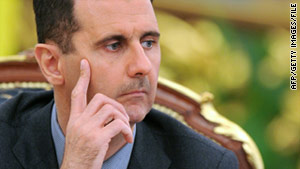
Syrian President Bashar al-Assad
has told UN chief Ban Ki-moon that military operations against protesters have "stopped", a UN spokesman said.
He was responding to a demand from Mr Ban during a phone call that "all military operations and mass arrests must cease immediately," the UN's Farhan Haq said in a statement.
Mr Assad is under international pressure to end his violent crackdown.
Activists say more than 20 people were killed on Wednesday alone.
Nearly 2,000 people are believed to have been killed and tens of thousands have been arrested since the crackdown began in March.
In the latest assault, Syrian forces fired on parts of the port city of Latakia, killing dozens and driving some 5,000 Palestinian refugees from their camps.
'Excessive force'
"The secretary general expressed alarm at the latest reports of continued widespread violations of human rights and excessive use of force by Syrian security forces against civilians across Syria," the UN statement said.
Mr Ban "emphasized that all military operations and mass arrests must cease immediately. President Assad said that the military and police operations had stopped," it added.
The UN chief called on Damascus to introduce "credible" reforms and offer full co-operation to a UN human rights investigation into the crackdown.
The UN said Mr Assad listed the reforms he planned to take, which included constitutional change and elections, while also agreeing to receive a UN humanitarian mission.
The BBC's Jim Muir in Beirut says the Syrian authorities have staged highly-publicised troop withdrawals from three trouble-spots in the past couple of weeks - first the central city of Hama, then Deir al-Zour in the east, and now the Ramel district of Latakia on the western coast.
But troops and tanks were pulled out only after they had done the job of restoring control by force, and there are many other instruments of security left behind to maintain the government's grip, he says.
At this stage in the uprising, our correspondent adds, it is clear that if the regime really were to stand down all its many instruments of control - there are believed to be at least 17 different security organisations - large parts of the country would slide out of its grasp.
The UN Security Council is due to hold a special session on Syria later on Thursday.
President Bashar Assad came to power in 2000 following the death of his father, Hafez.
He has responded to the challenge to his power with a combination of force and the promise of reforms, but has been unable to quell the revolt.
Given what has been happening on the ground, neither Mr Assad's critics abroad nor the activists in Syria give much credence to the regime's ability to reform itself from within, our correspondent says.
The unrest began following the toppling of Tunisian President Zine al-Abidine Ben Ali and Egyptian President Hosni Mubarak early this year.
Violence intensifies in Karachi; 20 killed overnight
There was no rest in violence in the city as 20 more people were killed since Wednesday mid-night, DawnNews reported.
Sixteen bodies have been found in different parts of the metropolis while one man was gunned down in the Baldia Town.
Four bodies were recovered from the Shershah area, three each from Baldia Town, Kakri Ground and the Garden area.
Two bodies were found in Maripur while one from the Mangoper area.
One body recovered from the Baldia Town was of a fire extinguisher Liaquat Azhar who was kidnapped yesterday by unknown men. All the bodies bore marks of torture and gun shots.
The hike in violence started after a former lawmaker of the Pakistan People’s Party was killed in the Lyari area on Wednesday. Three other people were also killed in the firing incident.
Bomb attacks and firing incidents have resulted in deaths of 37 people in last 24 hours in the city.
Province status for Fata, FRs demanded
Conditionally welcoming the Fata reforms announced by the federal government, the Khyber Union, a Khyber Agency-based social and political organisation, has demanded that tribal agencies and Frontier Regions (FRs) should be made a separate province and all anti-human rights clauses in the Frontier Crimes Regulations (FCR) be nullified.
Addressing an Iftar party at a hotel on Wednesday, Haris Khan, the Khyber Union president, said in order to bring tribal areas into mainstream of the society, basic amendments were needed in the century-old draconian law of FCR as it had deprived people of their fundamental rights.
“The extension of Political Parties Act to Fata was not the demand of tribal people, rather it is the desire of the political parties to merely increase their vote bank,” Haris Khan argued.
Referring to the unlimited powers enjoyed by political agents, he cautioned that no amendments would work until the executive was separated from the judiciary. He said the recently introduced amendments to the FCR were not supposed to change tribal life in a major way. However, he added that these small changes could prove a step forward for bringing major reforms in Fata.
The gathering was also addressed by the Khyber Union General Secretary Saleem Khan, Press Secretary Haji Bismillah Khan and former agency councillor Suhbat Khan Afridi.
Taliban Cashing In as Pakistan's Karachi Is Torn Apart by Violence
The worst violence to hit Karachi in more than a decade is helping the Taliban to raise cash and allowing their fighters to rest in Pakistan’s largest city, The Times of London reported Thursday.
More than 300 people were murdered in Karachi last month, the majority simply because of the language they spoke. The chaos is allowing the nexus between extremist Islamist groups and criminal gangs to thrive like never before, security officials told the newspaper.
Extortion, drug, land and weapon mafias are bankrolling the insurgents, while fighters and commanders use the city to rest and gain medical treatment, according to political parties. The worst tension in recent weeks has been between the Urdu-speaking majority and Pashto-speaking migrants from the tribal regions of Pakistan.
The Pakistani government refuses to publish census data on the numbers of Pashtuns living in Karachi, but estimates range from three million to five million. Most live in illegal colonies that ring the northern outskirts of the city. The violence has created no-go areas in which Taliban fighters and commanders can operate with almost total impunity.
Overlooking Orangi Town, South Asia’s largest slum, is the notorious district of Katti Pahari, where a road has been blasted through the mountain. The intention was to create a barrier between an overwhelmingly Pashtun district and another dominated by Mohajirs, Urdu-speaking Pakistanis originating from India who make up the biggest group of the city’s 20 million population. Instead, it has become a bottleneck and shooting alley.
It was from Katti Pahari that the worst of the recent violence was unleashed in a four-day assault on the district of Malir. Naushad Asim, whose brother Mohammed, a factory worker, was murdered during it, said, “It was just after sunset when my brother went out to fix his car. He was attacked by men who were wearing beards and long hair and had camouflage jackets. They looked like Afghans.”
The bodies of gang members and political activists are dumped in sacks with their hands and feet tied -- but civilians are left where they fall, the ambulance drivers, whose job it is to clear the corpses, said.
Mohammed Raza Haroon, a leading figure in the MQM, a party that draws most of its support from the Mohajir community, denied that it was orchestrating violent retaliations. “If the MQM did not appeal for peace this city would be on fire,” he said. Although careful to avoid making overt ethnic claims, he said that its opponent, the Awami National Party (ANP), was giving shelter and support to the Taliban.
Shahi Syed, president of the ANP, an overwhelmingly Pashto-speaking organization, denied this as a smear and graphically abused the Taliban by way of proof.
Although there is no chance of the Taliban seizing the whole of Karachi, it is acting with ever greater impunity within pockets that it controls in collusion with criminal gangs. All sides agree that the insurgents and criminals are exploiting the space left by an administration and police force hamstrung by political and ethnic conflict.
“This place is going to turn into Beirut,” Syed said. “It’s dividing on ethnic grounds. We are in a dangerous position.”
US firm slammed over Afghan police training
http://surgar.net
Audit finds contractor DynCorps failed to provide nearly 60 per cent of the instructors needed to train Afghan police.
A US-based military contractor has failed to provide nearly 60 per cent of the instructors needed to train Afghan police under a contract with the US government, according to an audit issued on Monday.
The audit focused on the transfer of the Afghan police training programme from the US State Department to the US Defence department.
The investigation, carried out jointly by both departments, criticised both institutions for a lack of co-ordination in regards to police training in Afghanistan, which is a priority for the US-led NATO coalition as it prepares to transfer security to Afghan forces.
Under a $1bn, two-year contract signed between the Defence Department and DynCorps International in December 2010, the firm was required to have instructors in place within a 120-day deadline.
Defence officials "reported that the incoming contractor did not have 428 of the 728 required personnel in place within the 120-day transition period," said the audit.
The most notable discrepancy was in the number of police mentors that DynCorps was supposed to provide to the Afghan forces.
The audit said that 213 of the 377 required "Fielded Police Mentors" were not in their positions during the transition period.
It said the shortage "placed the overall mission at risk by not providing the mentoring essential for developing the Afghan government and police force."
Police mentors
A spokesman for the Afghan ministry of interior declined to comment on the matter, saying he needed time to study nuances of the report.
But a former deputy minister of interior, aware of previous deals with contractors, said he was not surprised by the findings.
"We have repeatedly stressed that we need to train our trainers and Afghanise the process," General Hadi Khaled told Al jazeera.
"This system right now is not sustainable. They pay lots of money for brief contracts, without actually listening to the needs of the Afghan police."
The audit criticised both the US state and defence departments for a lack of co-ordination on training programmes and for failing to create a clear plan to oversee and monitor the transition from one contractor to another.
State and defence "officials relied on independently developed contractor plans, some of which were not feasible and did not address inherently governmental tasks," it said.
One example of such lack of co-ordination was in the training weapons transfered from one contractor to the next.
The audit said "39 days into the transition, Department of State officials announced that some of the weapons the outgoing contractor used could not transfer to the new Department of Defence contractor because the weapons were purchased with Department of State funds".
An understanding was reached in regards to the transfer of weapons only 67 days into the transition period.
The two departments also failed to develop a security clearance process for the personnel that transferred from the previous contractor to the new.
"Not until … 95 days into the transition, did DoD [Department of Defence] and DoS [Department of State] officials develop a strategy to mitigate this issue," the audit said.
Sustainability in question
The report comes amid a major increase in efforts to train and expand Afghan security forces, paving the way for the eventual exit of NATO-led coalition troops.
The NATO mission aims to train a 134,000-strong police force by October as it prepares the Afghan forces to take over security responsibility by 2014.
But many, like General Khaled, raise questions about the quality of the trainers flown into the country and the system put in place.
Contractors such as DynCorps bring in trainers who are not professional police officers, but rather former army or private guards, he said.
"The trainers are not professional, they have turned the police into a fighting force such as the army and NATO. The police are supposed to be following the judiciary, as a preventive force," he said.
Problems of co-ordination, both within US entities as well as with other NATO member nations, has often been cited as one of the reasons for the Afghan police being less prepared than the Afghan army as transition looms.
"A GOA [US Government Accountability Office] official testified that DoD and DOS had a history of being unable to effectively collaborate and co-ordinate on previous Afghan National Security Forces projects," the audit said.
"[An] official stated that despite a prior 2005 audit recommendation for DoD and DOS to develop a co-ordinated and detailed plan to sustain the Afghan National Security Forces, the agencies developed no such plan."
Indian movies leaving no bad effects on young minds
THE NATION
There were no bad affects of Indian movies which were being screened in Pakistani cinemas. Our new generation is very conscious, informative then how the Indian movies can affect our new generation.
This was stated by famous poet, columnist and top rated ace playwright Asghar Nadeem Syed in a talk with The Nation. A good number of famous drama serials are on his credit. These days his drama ‘Tum Ho Kay Chup” is being aired from a private TV channel, which is very popular among the viewers.
Asghar justified his statement by saying that Indian movies were being seen in every home of Pakistan on cable. These were also seen on DVDs in every home. No film is good or bad, it has to be screened. Our new generation have a vast vision and wisdom, how they can take bad affects from the Indian movies. It was not true that Indian movies were spreading bad affects in Pakistan. Every thing is not bad as we are facing a global competition. Indian society was far ahead from us and we should see them with open mind. He said we would have to change our mindset and should not close eyes like a cat. Rather we should face the world that how they were progressing, Asghar stressed.
He said it was the right of the peoples to earn their livelihood and also the right of the cinema owners to earn even if Indian movies are screened. Very few films are being made in Pakistan and in this situation we should not be afraid if cinema owners are screening Indian movies.
I have so many offers from the Indian side. Director Anees Bazmi, Anil Kapoor’s company and Javed Akhtar have asked me so many times to come to India and work with them. Now I have to see that how I can work with them. Boundaries are for the human beings and there were no boundaries for the film, music and literature, Asghar maintained.
Asghar said when we write a book, it means we have written the book for the whole world. Like book, film is also for the whole world and the whole world see the movies.
He said drama was passing through a difficult phase these days, but with the passage of time every thing will be settled. He said Pakistan was facing so many problems and we should select the social issues for dramas.
About the Pakistan film industry Asghar said there was no film industry ever in Pakistan, there was also not good producers and good directors, there was no tradition of film and also there were no good studios and loboratories in Pakistan. Due to non existence of TV, their films had done business, Asghar said.
Now we should not expect any good from the old Pakistani film makers. They should voluntarily leave this work due to whom, the Pakistani film industry has been ruined, Asghar justified.
Now the new talented and educated youth should come forward. Those who were taking education of films, theatre and TV from the universities and other institutions. I am also teaching film, theatre and TV at a private university as the head of the department, he revealed.
He said my students assisted Shoaib Mansoor in making of his blockbuster film ‘Bol’. They were able to do work, so they did work with Shoaib Mansoor. So things are growing gradually and the revolution would come one day and the educated youth would take the command of the film industry.
Asghar said the real thing was education and for making a good film someone should be educated. While the present lot of the film makers do not want to take awareness. The financer who finances a film wants back his money and he has no trust on the present directors. He asked why the financer had run away from Pakistan film industry, because he knows that present lot can not recover his money. Shoaib Mansoor knows the work, he knows how to make a film that was the reason the financers were coming to him. The financer would give his money to that man who is wise and knows the work.
Good dramas were being produced from Karachi and Lahore as the young guys, who were making dramas were very genius. Haseeb Hassan, Babar Javed and others are doing very good dramas. He said when we do not study, how can we produce and direct drama.
‘Hawaian’, ‘Chand Grehan’, ‘Nijat’, ‘Ghulam Gardish’, ‘Doorian’ ‘Khuda Zameen Se Gaya Nahin’ and Piyaas were his most hit serials.
Wednesday, August 17, 2011
Moderate quake strikes Afghanistan
A 5.2-magnitude earthquake struck Afghanistan's mountainous Hindu Kush region early Thursday, US seismologists said.
The quake hit at 04:22am (2352 GMT Wednesday) just over 200 kilometres (130 miles) north of the capital Kabul, the United States Geological Survey said.
Its epicentre was 55 kilometres deep.
Northern Afghanistan and Pakistan are frequently hit by earthquakes, especially around the Hindu Kush range near the collision of the Eurasian and Indian tectonic plates.
A 7.6-magnitude earthquake in Pakistan in October 2005 killed 74,000 people and displaced 3.5 million.
Subscribe to:
Posts (Atom)