http://nation.com.pk
Rocket and bomb attacks, target killing and indiscriminate series of firing have become a norm in Karachi and indicate that there is no writ of the government. On Sunday alone, 25 people were gunned down for no fault of theirs. The number of casualties and the kind of most sophisticated weapons being used by warring factions raise the most vital question: who is behind this blood-shedding? Despite the fact that those involved in this painful battle are local, it is clear that there are foreign elements that are providing funding and supplying arms and ammunition. As long as weapons in such a large quantity would remain in unsafe hands, there is no possibility of peace returning to the City of Lights. Should one believe that whatever is happening in Karachi is the end result of a political conspiracy to convert the beautiful metropolis of Sindh into a graveyard? It must be recalled that in 1980s, Nooriabad Industrial Zone was the hub of production activity but due to extortion mafia, industrialists abandoned their units and migrated to Gadoon Amazai and later shifted to Punjab. Now the residents of Karachi have started shifting to other parts of the country since they are convinced that city is not worth living.
The most unacceptable situation is that no one is ready to accept responsibility as far as federal and provincial governments are concerned. Calling meetings, appointing commissions and issuing statements have never resolved an issue of this proportion. Therefore, President Zardari’s four-man committee or calling a meeting in Islamabad would not lead to any solution. One possible solution could be to hand over Karachi to the army for a combing operation to de-weaponise its population and eliminate no-go areas. If two of the three main stakeholders believe this would help, why is this not being done by taking the third partner into confidence that the proposed operation would not be any group specific? What needs to be feared is the chances of Karachi lawlessness spreading to other cities of the country. Is anybody bothered about it? Apparently none!
Tuesday, July 26, 2011
Egypt women demand equal rights in new charter
Fifteen Egyptian groups called on Tuesday for women's rights to be guaranteed in the new constitution, after a popular uprising that toppled the regime paved the way for a new charter.
"We are not proposing a new constitution, but we want women's rights to be included," Amina ElBendary, a professor of Arab and Islamic Civilisation at the American University in Cairo, and one of the signatories, told a news conference.
"We have simply put forward some suggestions of clauses which could be included in the next constitution," she said.
After eight weeks of research in various parts of Egypt, the 15 groups are calling for a women's quota in parliament and in local councils, as well as equal rights for women at work and in education.
"The women we have met are very concerned about their rights, they want the law to protect them," said Azza Soleiman, a long-time women's rights activist.
"The women are not questioning the sharia," the Islamic law on which personal status laws are based, "but they want the law clearly defined because the interpretations can vary," she said.
"We don't want Egypt to adopt the same interpretation as in Saudi Arabia," said Soleiman.
The statement comes as Egyptians await a new constitution, after the previous one was suspended by the Supreme Council of the Armed Forces (SCAF) which took power when president Hosni Mubarak was ousted in February.
The SCAF has said parliamentary elections would take place before the end of the year, after which a new constitution would be drafted and a presidential election would be set.
But a debate has raged over whether elections or a new constitution should come first.
It is expected that early elections would benefit the well-entrenched Muslim Brotherhood, and many have called for a constitution first so as not to give Islamists too much power in drafting it.
The military rulers recently announced that the women's quota in parliament, established by Mubarak, would be abolished.
In the last parliamentary elections in 2010, women had a quota of 64 seats in the 445-member parliament, or around 13 percent.
Karzai outlines Afghan 'conditions' for future US ties
Afghan President Hamid Karzai on Tuesday outlined conditions governing negotiations for a future strategic partnership with the United States as he met defence chiefs at his palace.
The new US ambassador in Kabul, Ryan Crocker, has said the US has no interest in permanent military bases in the country and does not want to project its influence in the region by remaining in Afghanistan.
But fears remain among many Afghans over any long-term American presence in the country following the departure of all foreign combat troops by the end of 2014.
Karzai said Afghanistan's conditions included foreign forces working within Afghan legal rules, US troops not taking prisoners or maintaining jails, and an end to controversial night raids by elite commandos.
He gave no details how the demands would shape negotiations, as he addressed heads of the army, police and intelligence services in a speech marking the end of the first phase of security transitions from foreign to local forces' control.
"There are many other conditions on the economy and sovereignty and all other aspects... and about respect to the Afghan constitution," Karzai said.
"They also have their own conditions, but we haven?t agreed on anything yet."
Seven parts of the country were ceremonially handed over from foreign to Afghan forces last week, although NATO officials say it will be up to two years before each area will assume full control for security and governance.
All Western combat troops are due to leave by the end of 2014.
"NATO and the international community are helping our country. But this will not go on forever and we don't want it forever," Karzai said.
"We are not proud of that. The good news will come when we, Afghans, are protecting our own homeland.
"It will happen only with hard work and sacrifice. Especially from our Afghan forces," he added.
Critics have said the process is premature because Afghan forces are not ready to hold off the Taliban, and they say it is motivated by a political timetable as coalition nations start to bring some of their troops home.
The deputy head of the United Nations mission in Afghanistan, Michael Keating, said in a statement Tuesday that the focus on the first phase of transition must be used to improve Afghanistan's institutions.
"Transition will only succeed with adequate investment in development, governance and the rule of law," he said.
"The momentum around transition must be captured to fast-forward efforts to strengthen Afghan institutional capacity, especially at the provincial level."
Pakistan has failed to invest in prevention measures since last year's floods
Pakistan has failed to invest in prevention measures since last year's floods that killed 1,750 people and is vulnerable to another disaster this monsoon season, Oxfam said Tuesday.
The relief agency marked one year since the beginning of the 2010 disaster, when flooding inundated a third of Pakistan, by calling for more to be spent on reconstruction, suitable housing and early-warning systems.
About 21 million people were affected by the worst floods in Pakistan since the country was founded in 1947, and tens of thousands of people are still living in emergency camps.
"Pakistan needs to act now. Investing in measures today that reduce the impact of disasters is essential to save lives and safeguard development gains in the future," said Neva Khan, head of Oxfam in Pakistan.
"It will ensure schools built with aid funds are not washed away and that farmers can keep the crops they have toiled over. A year after Pakistan's mega floods it's time we learnt this lesson."
Releasing a new report entitled "Ready or Not", Oxfam said that 37,000 people were still in camps in Sindh, the worst-hit province, and 800,000 families nationwide were without proper homes one year on.
It warned that river embankments had not been rebuilt, leaving villages more open to flooding, and that two to five million people were likely to be affected by this year's monsoon floods.
"Villagers in areas that we work fear new flooding. Many are planting fewer crops than usual as they are worried that their harvests will be destroyed in fresh floods," Khan said.
"In some areas, where fresh flooding has already begun, families have started to dismantle their houses and move to higher ground as they are scared of losing everything again."
The Pakistan government's response to the 2010 floods, which began in the last week of July, was widely criticised, with much of the emergency relief aid coming from foreign donor nations.
Kaniz Mai, 48, a farm worker from Punjab province, told a press conference in Islamabad that Pakistani authorities "did nothing for our protection and we handled the situation ourselves".
"We therefore appeal to people to make arrangements themselves before any tragedy hits," she said. "Nothing is expected from the government this year and they are not going to do anything in the future."
Crops, roads, schools, electricity lines and bridges were all washed away last year in a country already suffering from Islamist militant attacks and political instability.
Pakistan's chronic corruption has also made donors wary of giving more money, and the Oxfam report said a UN appeal had a shortfall of $600 million for "early recovery activities".
Acted, a French aid group, said in its own report marking one year since the floods that Pakistan was still in desperate need of help despite international focus now being on other disaster zones such as Somalia.
"Initial response to the UN fund-raising was strong, but humanitarian aid is falling off," Acted said. "Sustained commitment by international actors is crucial to fill the gaps, enable reconstruction and ensure food security."
Two people have died in flash floods in Rawalpindi in recent days, but the government has not reported any serious flooding and the meteorological department predicts the 2011 monsoon will be below average.
"So far there has been no unusual impact on river flows, which remain normal," chief meteorologist Arif Mehmood told AFP. "Our forecast also suggests there will be no flooding in the next 15 days."
The strength of the annual downpour between July to September is vital to hundreds of millions of farmers across South Asia who rely on the rains to irrigate their crops for much of the rest of the year.
Afghanistan hits back over U.S. aid spending report

Afghanistan's government hit back Tuesday over a U.S. watchdog report on aid spending in Afghanistan last week, saying several assertions in the report were wrong and that future audits needed to be "more balanced and accurate."
Afghanistan's finance ministry said while it welcomed outside scrutiny, any funds that had been misused or ended up in the hands of insurgents were not the government's responsibility because only a fraction of aid flowed through state coffers.
The ministry also said its relations with the current U.S. Treasury Attache had been "strained" over the past year and that it looked forward to resuming a "professional" partnership when an "effective" replacement had been selected.
The comments follow a report released last Wednesday by the Special Inspector General for Afghanistan Reconstruction (SIGAR), a watchdog created by U.S. Congress to scrutinize how U.S. aid money is spent in Afghanistan.
The finance ministry said it was "disappointed" that in the eight months spent in Afghanistan, the auditors "were unable" to meet with any senior finance ministry official.
"The government would welcome the opportunity to participate in future audits, strengthening Afghan capacity and resulting in more balanced and accurate findings," the ministry said, adding that "several assertions ... misrepresent the facts."
In the report, SIGAR said Afghan President Hamid Karzai had banned U.S. government advisers from the central bank and that the atmosphere there had become "hostile" for U.S. officials training bank regulators and trying to uncover financial crimes.
The central bank has been at the center of controversy for months and its governor, Abdul Qadir Fitrat, resigned in June saying he feared for his life over his role investigating the collapse of Kabulbank, the country's biggest private lender.
The bank handed out hundreds of millions of dollars in unsecured loans to a roster of the country's elite.
The Afghan government called his resignation "treason" and charged Fitrat was partly responsible for the fraud scandal.
Fitrat, who chose to announce his resignation in the United States, said "high political authorities" in Kabul had undermined the central bank's effort to investigate Kabulbank. The Kabulbank crisis has led to a suspension of IMF funds.
Tuesday, the finance ministry said the central bank "refutes that its environment is hostile to international advisers" and was seeking renewed support in implementing measures set by the IMF to strengthen its financial sector.
It said the government had recently written to the IMF's new director, Christine Lagarde, asking for her "personal intervention" in technical support for the central bank "after international support had been fully removed."
GOVERNMENT NOT TO BLAME
SIGAR also stated that Congress had appropriated over $70 billion since 2002 to implement security and aid projects in Afghanistan but neither country had done enough to ensure money was not siphoned off to militants or whisked abroad.
But Afghanistan's finance ministry said of that $70 billion less than $2.1 billion had been channeled through the government and only $46 million had been used "at the discretion of the Afghan government," representing 0.07 percent of all U.S. funds.
"Funds that are being misused, or channeled to support the activities of insurgent groups, are not the responsibility of the government," it said.
Afghanistan relies on foreign aid for around 90 percent of its spending but many international donors are reluctant to channel aid through the country's ministries because of a lack of capacity and rampant corruption.
Public sector corruption in Afghanistan is seen as worse than in any other country except Myanmar and Somalia, according to corruption watchdog Transparency International.
Karzai has acknowledged graft exists in his government but has said foreigners are also to blame.
Monday, July 25, 2011
Dynastic politics in Pakistan
Daily Times
According to a report, Hamza Shahbaz Sharif — son of Punjab Chief Minister Shahbaz Sharif — will become the next provincial general secretary of the PML-N. Hamza’s uncle, PML-N chief Mian Nawaz Sharif, wants him to don this mantle as he is supposed to be the future of the party. Most political parties in Pakistan hold sham elections when it comes to inner-party democracy. The PPP, PML-Q, ANP and PML-N are all examples of dynastic leadership. The PML-Q is run by the Chaudhry brothers; the PPP was led by the Bhuttos and now Bhutto-Zardaris; the ANP is run by Khan Abdul Ghaffar Khan’s family while the PML-N is dominated by the Sharif family. It is ironic that all these political parties that never tire of reminding us of their belief in democracy deny the possibility of any inner-party democracy. Dynastic politics does not let the best talent from political parties come forward and claim what can be theirs on merit. It implies that our politicians have made their parties personal fiefdoms by passing on party leadership as an inheritance to their successors.
Dynastic politics, though seen to be relatively unstable, is not without precedent in the subcontinent. The Nehru-Gandhi dynasty of India, Zia and Mujib families of Bangladesh and the Bandaranaike family of Sri Lanka have all been extremely popular despite practising this brand of politics. Somehow the people of South Asia have an affinity for dynasties but what most people fail to realise is that this is as bad as a monarchy or dictatorship. It is unfortunate that while parties like the Muttahida Qaumi Movement (MQM) and the Jamaat-e-Islami (JI) do not follow dynastic rule, our largest mainstream political parties are unable to wean themselves away from it. The MQM started off as an ethnic party but now claims to be a national party. The JI is a religious political party. Both of them do not represent democratic credentials in their truest form. As for Imran Khan’s Pakistan Tehreek-e-Insaf (PTI), it is a one-man show and Mr Khan is an autocrat when it comes to his party. The PML-Q and the ANP have their own importance and vote bank, but the PPP and the PML-N are the two mainstream national political parties and vital for democracy to flourish in Pakistan.
When it comes to the PPP, the Bhutto legacy had its roots in the fact that the cadres of the PPP had an affinity for the Bhutto family’s charisma because Zulfikar Ali Bhutto at a critical moment in our history managed to sway such a great mass of people in his favour. Benazir Bhutto, even in her youth, had a deep understanding of the inner dynamics of the PPP and it was for this reason that she strove to secure for herself the position of PPP chief in spite of the presence of several older and mature politicians (referred to derisively as ‘the uncles’). After Ms Bhutto’s assassination in December 2007, President Asif Ali Zardari was made the party chairman and he in turn made Bilawal Bhutto-Zardari PPP’s co-chairman. As for the PML-N, the Sharif brothers are paranoid about their power base eroding and thus jealously guard their position as party leaders. Many individuals in their party have been sidelined when they became more popular than the Sharifs.
It is quite amazing that in a democratic dispensation, there is no democracy within most political parties, which is a contradiction in terms. For good leadership to emerge in Pakistan, we need to do away with political fiefdoms and dynastic politics.
Sunday, July 24, 2011
Pakistani movie ''Bol'' bowls over diplomats.

A special screening of the record busting film, Bol, was held Friday for the diplomatic community at the American embassy. The movie was introduced by the US Ambassador to Pakistan, Cameron Munter, who played a perfect host to the evening. In his opening remarks, Munter was generous in his praise for Geo and lauded its efforts in making such a bold movie which had taken on a number of controversial social issues. Talking to The News, post screening, the US ambassador opined that it was critically important for the West to see such movies that not only revealed the physical magic of Pakistan’s culture and architecture but even more importantly, introduced the world to the social and intellectual parallel narratives taking place in Pakistan. Movies like Bol, he felt, would go a long way in breaking the stereotype image of Pakistan as unlike TV talk shows and newspapers, the wide screen was the perfect forum to capture the imagination of the western mind.
Speaking on behalf of the Jang group, Resident Editor, The News, Mohammad Malick said that Bol was another bold attempt by the group aimed at reviving not just Pakistani cinema but Pakistani liberal thought as well. He said that the Jang Group had never shirked from taking up controversial issues in the larger national interest and had repeatedly taken up principled stances on issues like independence of judiciary, tax evasion etc. He said that Geo Films’ first endeavour, Khuda Kay Liye, also directed by Shoaib Mansoor, too had tackled an equally explosive national issue.

The gathering burst into applause when told that Bol had also made another record by being the first Pakistani movie to cross the $1 million mark in box office receipts. Malick also thanked Ambassador Munter, Ms. Courtney Beale and the other members of the US embassy for hosting the event.
As the movie went about on its roller coaster of emotions, quite a few gentlemen and ladies could be seen discreetly wiping away a tear or two while laughter too lifted the mood every now and then. Talking to The News after the screening of Bol, the diplomatic community expressed its pleasant surprise both at the intense intellectual content as well as the top-notch production standards. While everyone appreciated the quality of English subtitles, the common lament remained about the absence of subtitling of the songs though that little blip did not seem to affect the foot tapping fever. According to one diplomat, he was as much captivated by the physical richness of the frames depicting the old parts of Lahore and its vibrant personality, as the immensely challenging narrative. There was a candid acceptance of the fact that a majority had not deemed it possible for such a “brave movie”, as put by one, to be made and released in Pakistan in the “prevailing circumstances”.
Virtually every diplomat urged the release of the movie (with English subtitles) in western countries though opinions differed on the duration of the movie itself. Ambassador Munter wouldn’t want any cuts but Mrs. Munter thought bringing the movie to 90 minutes would be great as the western audience is used to such duration. The opinion remained equally split amongst the rest of the guests but while there were different opinions on this count, everyone agreed on Bol being a sterling production worthy of making a place in Oscars. Heck, for once even every Pakistani and American present appeared to be in total agreement. And that says it all for the movie aptly titled, Bol.
Construction of bridge over Indus to start soon
The Khyber Pakhtunkhwa Governor, Barrister Masood Kausar has said, the formal launching of the long awaited project for construction of a new bridge over Indus River at Khushalgarh is now a matter of days and with its completion, a new era of socio-economic uplift of the people of Kohat Division in particular and of the province and the country will usher.
This project of vital importance will great positive impact in over all economic development of the country and would significantly contribute in generating jobs opportunities, since it is going to act a major supply route for oil and gas, being produced in Karak and Kohat districts to the rest of the country”, he added.
He was talking while inspecting the site of the new bridge on Saturday. The Governor was also accompanied by Provincial Minister for Housing, Malik Amjad Khan Afridi, Commissioner Kohat Division, Sahibzada Muhammad Anis and D.I.G Police Kohat Mr. Masood Khan Afridi while the General Manager of National Highway Authority, Mr. Fazal Nawab Khattak briefed the Governor about salient features of the project
The Governor noted with appreciation that half of the amount of the total cost of the entire project is already readily available with the NHA which expected to be completed at a total cost of Rs.1500 millions in two years time.
Barrister Masood Kausar further pointed out, “truly this is a project of vital importance in all respects and with its completion a long standing dream of the people of Khyber Pakhtunkhwa especially of Kohat Davison and its surrounding tribal areas will be materialized. We, he remarked, have been anxiously waiting to have an easy and viable land route access to rest of the country and we are thankful to the President Asif Ali Zardari, Prime Minister Syed Yusuf Raza Gilani and Federal Minister for Communication Dr. Arbab Alamgir Khan as well as the provincial government particularly the Chief Minister Mr. Amir Haider Khan Hoti for their keen interest and making out of the way arrangements to ensure launching of the project”, the Governor said. Barrister Masood Kausar also took keen interest in the dualization of the roads on both ends of the bridge; right upto Kohat and the other side in Punjab as well and assured the NHA to help them in getting financial resources for the project.
Now, he remarked, the possibility to develop an oil refinery in the area has also been strengthened and the people of Kohat Division would also listen good news in this respect as well. The Governor also appreciated the spirit and cooperation of the Commissioner of Koah, Sahibzada Anis for his efforts in removing technical hurdles in the widening of the road on the western side of the bridge.
Meanwhile the Governor also inspected the site of the project which is situated adjacent to the existing time old Khushal Garh Bridge”.
In a condolence message, the Governor while expressing his heartfelt sympathies with Mr. Muhammad Rashad Khan and other members of the bereaved family has prayed for the eternal peace of the departed soul and courage to the bereaved family to bear the irreparable loss with patience and fortitude.
NATO hands model anti-Taliban province to Afghans
NATO troops on Sunday handed control of the Panjshir valley, a fiercely anti-Taliban province, to Afghan forces in the latest of a series of security transitions.
Panjshir, around 130 kilometres (80 miles) northeast of the capital Kabul, is one of Afghanistan's most peaceful regions and is the sixth of seven areas to be put under local forces' control over the past week.
Although the transition timetable has been roundly criticised as politically motivated amid scepticism over the ability of Afghan forces to ward off the Taliban rebels, Panjshir is cited as ripe for the handover.
Panjshiris, mainly ethnic Tajiks, pride themselves on having kept out the Taliban and repelled the Soviet Union after its 1979 invasion, and the beautiful valley is now a favoured picnicking spot for visitors from Kabul.
"Transition in Panjshir is very symbolic because in the last 10 years the security of Panjshir has been taken by its own people. It's an example for other provinces," said defence minister Abdul Rahim Wardak, speaking at the official transition ceremony.
"Defending one's own land is the role and responsibility of every Afghan."
"The enemy cannot harm anyone in this province. We all have to learn from the people of Panjshir," he said.
The area was the home of Ahmad Shah Massoud, the country's much loved anti-Soviet and anti-Taliban commander who was assassinated by al-Qaida suicide bombers two days before the September 11, 2001 attacks.
Dominated by the snow-capped mountains of the Hindu Kush and a fast-flowing river in steep valleys, rusting hulks of Soviet tanks line Panjshir's roads -- symbols of the Russians' failure to win the area despite 10 attempts.
US and Afghan officials hope this history and natural beauty will in future bring tourists to Panjshir and boost the nation's economy as foreign forces pull out and as aid money falls in the years ahead.
Massoud's tomb in the province is being developed into a $10 million attraction complete with mosque, library and conference centre.
Officials expect Massoud's legacy to act as a focal point for tourism, along with adventure activities such as mountain trekking and kayaking.
But tourists may be scarce for many years due to record levels of violence in the country-wide insurgency against the Western-backed government.
To complete the first stage of transitions, most of Kabul province will be handed over to local forces shortly in a process focused on the withdrawal of 150,000 NATO-led troops by the end of 2014.
Kabul city has been under Afghan security since 2008.
Khyber Pakhtunkhwa's Tobacco revenue
Tobacco is grown in Swabi, Mardan, Charsadda and Mansehra districts in Khyber Pakhtunkhwa and Okara, Sahiwal and Gujrat districts of Punjab. Its crop as per hectare yield is higher than many countries of the world and fetches huge revenue for the country. The crop is cultivated on over 6.5 million hectares in both the provinces with a production of 136 thousand tons. About one million people are associated with its growth, manufacturing, distribution and retailing; and growers are 32 per cent of them, the main chunk. The sale of the crop and its end product-cigarettes, cigar and pipe tobacco
— makes a hefty 4.4 per cent of the total GDP that is over Rs30 billion in real terms. Total revenue from this industry is in excess of Rs60 billion, including Rs18.17 billion in excise duty and Rs15.54 billion in sales tax. But Khyber Pakhtunkhwa is restricted to collect about Rs280 million in cess development fund while Rs180million was the annual share of the Pakistan Tobacco Board (PTB). This board was established in 1968 owing to the crop’s economic importance and its objective included conducting research and solving growers’ problems. It has regional offices in Peshawar and Lahore.
It was in this background that leaders of top political parties got together at Swabi, the house of tobacco production, on Friday to demand that Khyber Pakhtunkhwa should be empowered to collect all the revenue generated by tobacco. Such an authorization for the province has become all the more important following the devolution of power that saw the transfer of agriculture to provinces. Local journalists sponsored the debate on “Status of Tobacco Crop after the Eighteenth Amendment”. ANP MNA Pervez Khan from Swabi set the tone of the discussion by saying that tobacco manufacturing companies were exploiting growers by paying them much less than the crop’s actual price. He called for the dissolution of the Pakistan Tobacco Board for failing to work for the growers` welfare, and instead serving the tobacco companies’ interests. Jamaat-i-Islami leader Mohammad Usman said the centre had been receiving Rs45 billion to Rs48 billion through sale and excise taxes on cigarette and tobacco and this ratio has almost deprived the growers of their rights. Other speakers observed that all revenue generating from tobacco must go to province, particularly Khyber Pakhtunkhwa that was producing 90 per cent of the crop. The fact that the PTB fixed earlier this month the price of the commodity that growers feel is below the cost of production. PTB fixed the price at Rs124.30 per kg while the production cost is Rs170 per kg, according to farmers.
What the meeting at Swabi observed and how the farmers reacted to the PTB affairs, manifests that growers are not getting even the production expenses and the PTB has a definite tilt in favour of tobacco companies. Let the board’s affairs be investigated by the provincial governments of Punjab and KP and if the body is doing nothing to the objectives of farmers’ welfare, it may be dissolved to bring in some viable arrangement to conduct research for improvement of the tobacco quality and quantity. The devolution of tobacco growth is also a genuine demand and the federal government has to meet this constitutional obligation.
Pabbi, Peshawar: The hepatitis headquarters


There is no way one can tell when will Senior Minister Bashir Ahmed Bilour’s promise of new pipelines into the streets of the metropolis Peshawar will start supplying fresh water and rid us of the germ and rust infested water we are drinking. The minister has just made an announcement of intention by the government. When will the plan be approved, when will estimates be made and okayed, funds released, tenders called, work order issued and the actual work on the ground start, when will the whole work be completed. There are a lot of ifs and buts to be crossed and a lot of years to wait before the people of Peshawar take a sip from the water supplied by these new pipelines which have only been announced by the senior minister. In the meanwhile, the city of Peshawar and probably Pabbi, Nowshera and Khyber Agency seem to be emerging as the hepatitis headquarters of the province, The disease may become a full blown endemic in these areas as we wait for such time when the new pipelines are ready to supply fresh and uncontaminated water. Till then all of us should prey that somehow, it does not cause our deaths. The senior minister is not an ignorant man and knows that a sick population not only increases financial burden of the government in health expenditure and stretches thin the ability of the health services to cater to so many sick individuals, it also takes off many workers from the job force and adds to the poverty of the already poor. A free camp for diagnosing hepatitis in Peshawar found out that 14.20 percent individual out of the people they examined had this deadly and fast spreading hepatitis. That is not to say that contaminated water causes only this ailment. It can cause a number of illnesses from skin rashes, itches, stomach disorder, constant headache, aching joints and blindness. You name it and contaminated water has the ability to cause that disease. It is a matter of with what is the water contaminated. The ratio of hepatitis in the rest of the country is about 8 percent which means that in Peshawar and the nearby areas the rate of people getting this disease is just a tad less than double. And this is not the first time that there have been published statistics which revealed that this disease was fast spreading in this area. Doctors report that by the number of patients they are diagnosing, the next most affected area might be Pabbi and the surrounding villages like Dagbisood, Mohibbanda, Khudrizo, and many other villages on the way from Peshawar to Nowshera. The reason is said to be that because the area of Pabbi is in a depression and like the bottom of bowel water flows into it from the surrounding areas. This has raised the water level there and with it many chemicals under the ground and harmful for human health have dissolved in the water. In Peshawar however, it is not the underground water level but rather the rusty, leaky old pipelines which are supplying mixture of fresh and sewerage which is causing all these diseases, the most deadly and costly to treat of course is hepatitis. In Khyber agency which borders Peshawar city, the conditions of sanitation and supply of fresh water is not different rather worse and if data is collected it would show as much worse results There is a move in the government circles to provide free treatment right away to individuals diagnosed with this ailment. The number of such individuals can run into millions just in Peshawar and the surrounding areas and it would cost billions of rupees if the government really carries out its intentions. However, the fact is that had this money been spent on time in providing fresh and clean water to the citizens, this sickness and many others would not have even existed and the currently stationed doctors would have been looking after the patients with normal ailments which are present in any population. Still one would wish that the government wakes up to the magnitude of the issue and starts an awareness campaign among the international community and ask for help in this regard. It is not a job which a provincial government can do alone. Both the cure of hepatitis and laying fresh water pipelines in the whole city.
Pakistan's Dynastic politics: Hamza likely to be made provincial general secretary
SHAME SHAME SHAME SHAME.
Nawaz Sharif, at a recent meeting here in the city, had told PML-N leaders that it was time for Hamza to take on a bigger role as he was the party’s future. Nawaz recently made his son-in-law Cap (r) Safdar chief organiser of the party’s youth wing.
No more than one candidate would be nominated for each post. If Khosa preferred a central office, his son MNA Saifuddin Khosa could be made general secretary in Punjab and Hamza president.
So that means the common workers of the party have no right to move up the ladder. PML-N should be re-name to “Nawaz & Family League”.It is the sign of the weakness of political party that it has to be kept in the “family’. Why are Pakistani parties so weak? Inbreeding is not a sign of health.Moonis Illahi, Hamza Shehbaz are the royal blood and not the true representatives of the 98% people of this poor nation. People should condemn family politics.
It is important for a country like Pakistan with fudal system still intact and flourishing to have a grass root political movement from labours and peasants. Only this would ensure their rights and an end to this repressive system.
Hina Rabbani Khar,Woman, 34, fills void as Pakistan's foreign minister .
Arizona Daily Star
After a five-month hiatus, Pakistan - a country with tense relations with its eastern and western neighbors and a deteriorating relationship with the United States - finally has a new foreign minister.
Hina Rabbani Khar, 34, was sworn in this past week as the country's head of foreign policy. Khar is not only the youngest person but also the first woman to occupy the prestigious post in Pakistan's 64-year history.
Khar's appointment is not exactly a surprise as she had been serving as a sort of junior foreign minister since February, when a Cabinet reshuffle saw former Foreign Minister Shah Mahmood Qureshi lose his job. The circumstances of Qureshi's dismissal remain unclear, but the fact that it took five months to replace him gives a measure of the current government's internal tensions as well as friction with the powerful military establishment, which traditionally holds sway over Pakistan's foreign policy.
Najam Sethi, a political analyst and editor-in-chief of the Friday Times, said Khar's appointment is the result of a compromise between President Asif Ali Zardari, who needs someone he can trust politically; and the army, which Sethi said is "very comfortable" with the choice of Khar as the new foreign minister.
"The reason they got her as foreign minister is that she is very amenable and pliable," Sethi said. "In this country the foreign minister can't be an independent entity."
Khar started her political career in 2002 as a member of the National Assembly and later served as a minister in former President Pervez Musharraf's government. She then switched her political affiliation to the current ruling party - Pakistan Peoples Party - and in 2008 was named senior official in the present government's finance ministry.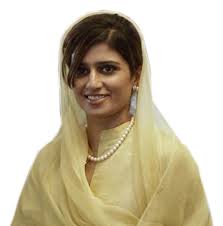
Her latest appointment has received mixed reviews. While some observers have deemed her political and diplomatic credentials too thin for such a prominent position and have hinted at the disadvantage of being a young woman in South Asia's male-dominated political environment, others have saluted Khar's femininity and youth as a breath of fresh air.
"We must hope these factors alone can bring in some fresh thinking into the running of foreign policy and how to improve Pakistan's declining standing in the region," the Express Tribune, a local English daily, wrote in an editorial. "Ms. Khar has shown over her relatively brief career as a politician that she is quite capable of going about her mission with determination and sincerity."
Determination will be only one of the qualities required for the task at hand. Tension between Pakistan and the United States has been rising steadily this year after a CIA contractor killed two Pakistanis and a U.S. raid targeting Osama bin Laden was seen here as a breach of national sovereignty.
Meanwhile, recent allegations of cross-border attacks have marred Pakistan's warming ties with Afghanistan.
After a five-month hiatus, Pakistan - a country with tense relations with its eastern and western neighbors and a deteriorating relationship with the United States - finally has a new foreign minister.
Hina Rabbani Khar, 34, was sworn in this past week as the country's head of foreign policy.
Khar's appointment is not exactly a surprise as she had been serving as a sort of junior foreign minister since February, when a Cabinet reshuffle saw former Foreign Minister Shah Mahmood Qureshi lose his job. The circumstances of Qureshi's dismissal remain unclear, but the fact that it took five months to replace him gives a measure of the current government's internal tensions as well as friction with the powerful military establishment, which traditionally holds sway over Pakistan's foreign policy.
Najam Sethi, a political analyst and editor-in-chief of the Friday Times, said Khar's appointment is the result of a compromise between President Asif Ali Zardari, who needs someone he can trust politically; and the army, which Sethi said is "very comfortable" with the choice of Khar as the new foreign minister.
"The reason they got her as foreign minister is that she is very amenable and pliable," Sethi said. "In this country the foreign minister can't be an independent entity."
Khar started her political career in 2002 as a member of the National Assembly and later served as a minister in former President Pervez Musharraf's government. She then switched her political affiliation to the current ruling party - Pakistan Peoples Party - and in 2008 was named senior official in the present government's finance ministry.
Her latest appointment has received mixed reviews. While some observers have deemed her political and diplomatic credentials too thin for such a prominent position and have hinted at the disadvantage of being a young woman in South Asia's male-dominated political environment, others have saluted Khar's femininity and youth as a breath of fresh air.
"We must hope these factors alone can bring in some fresh thinking into the running of foreign policy and how to improve Pakistan's declining standing in the region," the Express Tribune, a local English daily, wrote in an editorial. "Ms. Khar has shown over her relatively brief career as a politician that she is quite capable of going about her mission with determination and sincerity."
Determination will be only one of the qualities required for the task at hand. Tension between Pakistan and the United States has been rising steadily this year after a CIA contractor killed two Pakistanis and a U.S. raid targeting Osama bin Laden was seen here as a breach of national sovereignty.
Meanwhile, recent allegations of cross-border attacks have marred Pakistan's warming ties with Afghanistan.
Saturday, July 23, 2011
Russia Reclassifies Beer

Until the moment Russia’s President Dmitry Medvedev signed a bill that reclassified beer as an alcoholic beverage, any drink or “foodstuff” in beer’s case under 10% alcohol (beer is around 5% alcohol) was not considered alcoholic.
The World Health Organization along with other health agencies have been scrutinizing Russian consumption of beer which has almost surpassed the consumption of vodka, the Russian staple alcohol.
Most likely because it is being advertised as a more healthy choice than vodka, beer has been selling out rapidly during the past few years as vodka’s popularity slightly waned.
Popularity of beer

is so high that beer is casually drunk almost everywhere in public by almost everyone, including public service workers which presented both a health and working problem.
The huge availability of beer at anytime and anywhere in contrast to other alcoholic beverages also makes beer more popular.
In order to control sales and consumption, the Russian government slapped a 200% tax onto the beer industry just last year.
The bill that President Medvedev signed will now allow Russian officials to control beer to the same degree as other alcohol meaning that like other “adult beverages” (vodka included), the sale of beer will be banned in unlicensed stores, kiosks and train stations.
The entire bill will take effect in the year 2013 which will also restrict the selling of beer between the hours of 11 P.M. and 8 A.M.
Khyber Pakhtunkhwa starts Polio campaign from July 25


A 3-day polio campaign would begin from July 25 in four districts of Khyber Pakhtunkhwa province in which drops would be administered to the children below 5 years of age.
Deputy Director of EPI Dr Janbaz Afridi told Geo News that a polio campaign would begin in Mardan, Nowshera, Batgram and Tang from July 25 which would continue till July 27.
Polio drops would be administered to more than 0.7 million children during the campaign, he added.
Gandhara art exhibition opens in South Korea
A 10-day exhibition of the Gandhara art and Khyber Pakhtunkhwa photography opened in South Korea’s capital, Seoul, on Friday.

The exhibition sponsored by the Tourism Corporation Khyber Pakhtunkhwa (TCKP) is being attended by the ambassadors and Buddhist scholars from 32 countries across the world. Artists, archaeologists and historians will deliver lectures on Buddhism and Gandhara art and civilisation.
 A press release of the TCKP Media Cell said rare relics, antiques, antiquities and ancient photos of Khyber Pakhtunkhwa have been put on display in the exhibition for the visitors and researchers of the Gandhara art and civilisation.

The exhibition is aimed at introducing and promoting the Gandhara civilisation in South Korea and other countries of the Buddhists world. Peshawar valley was once the centre of Gandhara art and its several cities and towns including Chota Lahore and Hund in Swabi district, Takhtbhai in Mardan and Taxila in Punjab were the centres of Buddhist civilisation.
Gandhara is mentioned in the Rig-Veda, the oldest book of Aryans, which dates back to the second millennium BC engraved on the rock edicts of the Achaemenian emperor of Iran when it was part of that empire.
The Gandhara art has not only influenced the art of India but every part of Buddhist world including Tibet, Sri Lanka, Burma, Korea, Indonesia, Thailand, China, Japan and Central Asian states.
The exhibition sponsored by the Tourism Corporation Khyber Pakhtunkhwa (TCKP) is being attended by the ambassadors and Buddhist scholars from 32 countries across the world. Artists, archaeologists and historians will deliver lectures on Buddhism and Gandhara art and civilisation.
The exhibition is aimed at introducing and promoting the Gandhara civilisation in South Korea and other countries of the Buddhists world. Peshawar valley was once the centre of Gandhara art and its several cities and towns including Chota Lahore and Hund in Swabi district, Takhtbhai in Mardan and Taxila in Punjab were the centres of Buddhist civilisation.
Gandhara is mentioned in the Rig-Veda, the oldest book of Aryans, which dates back to the second millennium BC engraved on the rock edicts of the Achaemenian emperor of Iran when it was part of that empire.
The Gandhara art has not only influenced the art of India but every part of Buddhist world including Tibet, Sri Lanka, Burma, Korea, Indonesia, Thailand, China, Japan and Central Asian states.
One woman's challenge to Syrian regime
CNN.COM
She asks that we call her "Laila" but it is not her real name, as she has to protect her identity for her own safety.
A human rights activist and lawyer, Laila says she has been to at least two dozen anti-government demonstrations in and around Damascus and wanted to observe firsthand violations by the Syrian regime.
"The security forces jumped in front of the protesters and there was less than 10 meters between them and the security forces started shooting," she recalls of one protest.
At least five people next to her were shot and killed, despite that fact the demonstrations were peaceful, she says.Asked how often she witnessed security forces firing on protesters, she replies, "all the time, every time."
But a top adviser to Syrian President Bashar al-Assad maintains that the government is not attacking peaceful protesters and claims "armed gangs" are responsible for the violence.
The unrest in Syria began in March this year after teens were arrested for writing anti-government graffiti in the southern city of Daraa.
As the clashes intensified, demonstrators changed their demands, from calls for freedom and an end to abuses by the security forces to calls for an end to President Bashar al-Assad's regime.
On Wednesday, Human Rights Watch said security forces have intensified their campaign of mass arrests in cities that have had anti-government protests.
The cities include Hama, Homs, and suburbs around Damascus, the group said.
But Laila insists all of the protests she has seen have been peaceful.
"How do these protests finish every time?" she asks rhetorically. "By the security forces and al-Shabiha (pro-regime gangs) attacking the protesters."
Laila says she also visits wounded demonstrators and catalogues their stories -- though she says she has to hide their identities as it would put their lives in danger.
She herself was detained once, for 48 hours, but released unharmed. She believes her legal knowledge kept her safe.
However, she says it's different for others.
"I see how they treat the prisoners there," she says. "They don't find them like human beings in front of them.
"They make the prisoners being naked and they beat them every step of the way. Like if they want to go to toilet they will beat them all the way. I saw how they force a prisoner to drink from toilet water."
But she remains relentless and undeterred in her mission to tell this story. She is forced to sneak around her own city, constantly looking over her shoulder, risking her life time and time again.
The protesters themselves seem similarly undeterred, posing an unprecedented challenge to the Syrian government.
For the first time in 50 years the old method of the military putting down or buying off opposing voices isn't working, according to Beirut-based political analyst Rami Khoury.
"So there is a kind of slight schizophrenic response which I think is a function of the regime not knowing how to deal with this mass political change," he says.
"They never faced anything like this before, they don't have the tools to deal with this kind of approach, and that's why you see these apparently contradictory political and military responses that don't seem to make any sense."
On the one hand, he says, the government has realized there has to be a political solution -- hence the national dialogue conference and talk of significant reforms.
But at the same time the regime continues down the military route, refusing to let up, targeting what it says are "armed gangs" fueled by foreign powers, intent on bringing down Assad's government.
"This nature of challenge has never been experienced by these regimes and we can see that they don't quite know what to do," Khoury says.
In Homs, activists fear the government is deliberately stoking sectarian tensions in its desperate bid to cling to power.
The feeling among many is that the demonstrations and resulting bloodshed will continue for months.
According to Khoury, this will happen until the Syrian economy starts to buckle.
"So the combination of internal economic stress and external political pressure I think will force everybody to finally look for a political way out of this," he says.
"It's hard to see a political reform process that will actually satisfy either side completely. It's very difficult, what you have is an existential challenge to the nature of this government and regime, done by people who are prepared to risk their lives."
People like Laila.
"You asked me why I am going out? Because it's our country ... and it's our responsibility to make it better."
Local journalist battles plight of Afghan women
CNN.COM
In some countries, the written word brings more than just readers to those bold enough to publish.
Local journalists who attach their names to scrutinizing articles in Afghanistan are often subject to threats of kidnapping, acid attacks and death -- especially if the writer is a woman.
That's the daily reality for Afghan journalist Farida Nekzad, who says she's been threatened by extremist groups warning her against publishing articles that cast a critical lens on local customs and national politics.
"You have to fight everyday," said the former managing editor of the Pajhwok News Agency, the country's largest local provider of independent news.
"You have to accept the risk, and that's why we face such challenges."
The once fledgling news agency began as a small project in 2003, and later flourished into a nation-wide network of correspondents with eight bureaus and an average output of three dozen stories per day, according to its website.
Nekzad began as a journalist there, also having worked as a radio reporter.
Earning her stripes covering the local effects of the U.S.-led war and her country in transition, she took over as managing editor and began training a corps of budding young journalists.
Many of them were women.
"Everyone needs information, particularly women need to know and have information for their awareness," she told CNN. "I think one of the ways we can do something is by starting with this profession."
But after years of receiving threatening e-mails and phone calls, the prospect of violence became reality when a bomb detonated on the driveway of her home.
"I was displaced from my home for nine to about 10 months," forced to leave because her neighbors complained.
They said "you have to leave your building," according to Nekzad.
Leaving Pajhwok in 2009 in an effort to lower her profile, the longtime journalist says she sought to avoid the limelight that had brought extremists to her door.
"The threats and warnings scared me," said Nekzad, who at the time was pregnant with her daughter, Muska.
But she had also laid the ground-work for what would become her next venture, working alongside her husband to set up a separate news agency called "Wakht," meaning "Time."
Today, Nekzad is the agency's director, overseeing a staff of more than two dozen journalists who cover Afghanistan's forbidding terrain in an effort to root out stories in all of its 34 provinces.
And again, many of her reporters are women."She typifies the double jeopardy under which women journalists in Afghanistan are forced to operate," said Bob Dietz, Committee to Protect Journalists Asia Program Coordinator. "Reporting and editing and running a news operation is tough enough there, but doing it as a woman makes it much more of a challenge."
Even after the ouster of the Taliban from Kabul in 2001, social and cultural restrictions against women in Afghanistan have remained heavy-handed.
Despite the adoption of a constitution that greatly expands women's legal rights, most women are never taught to read.
About 14% of Afghan women are currently literate, according to a statement from the Ministry of Education.
They "are uneducated and away from education," said Nekzad. "Women need for women to share their experiences, share their problems and share their challenges of how they suffer."
But with Internet access restricted and its penetration especially low in rural areas, online news agencies -- like Wakht -- struggle to deliver information beyond the country's few metropolitan areas.
Still, there are signs afoot of a quietly developing women's rights movement.
Last week, a handful of women -- mostly Kabul residents -- marched in the capital streets, carrying placards in protest of male harassment.
And yet with NATO in the process of a drawn-down, handing over the first seven designated areas to Afghan Security Forces, many fear the effects of a resurgent Taliban or a negotiated settlement that allows militants to come back.
"This is really a very critical question," said Nekzad. "The biggest problem is that there is no guarantee (for women's safety)."
The veteran journalist said that while she supports negotiations that could lead to peace, she questioned "who will guarantee that the Taliban...will agree that women should be a part of the activity and a part of the society to work?"
Although the troubles of Afghan women were there prior to the Taliban's arrival in the mid-90s, the hard-line group has traditionally taken a tough stance against them.
"When the Taliban first entered Kabul, the religious police beat men and women in public for not having long enough beards or not wearing the burka properly," wrote Pakistani author Ahmed Rashid in his widely-acclaimed book "Taliban."
Still, the costs of the near decade-long conflict seems to appeal less and less to the war-weary public of Europe and the United States, whose electorates are still reeling from the aftermath of recession.
Last month, nearly three-quarters of Americans polled said they support the United States pulling out some or all of its forces out of the country.
How those factors will affect international resolve to promote local institutions and bring about lasting security in Afghanistan is still unclear.
Pakistan:Crimes against women
Daily Times
Aurat Foundation has presented its first bi-annual report covering cases of violence against women in the country from January to June 2011. According to the report, crimes against women constituted three percent of total crimes, and on average, 28 crimes against women took place each day in the reporting districts. Regions of Punjab and Sindh reported more crimes against women compared to those of Khyber Pakhtunkhwa (KP) and Balochistan. The most frequently reported crime against women was abduction in addition to early/forced marriages, rape, honour killings, acid attacks, burning, domestic violence, trafficking, harassment, sexual assault, torture and injury.
Not a day goes by without reports of criminal activities against women, which seem to be steadily increasing in volume. Perhaps the increase in volume is because more crimes are reported now compared to previous years. In a patriarchal society like ours, women have historically been subjected to sexual harassment, domestic violence, inhumane treatment and brutalities like acid attacks and honour killing due to the deep-seated bias against them. Even today, the situation of women in Pakistan has not improved much. Women belonging to the lower and middle classes are subjected to ill treatment at the hands of their employers, husbands, in-laws, brothers, and sometimes even their parents. They have to suffer harassment and discrimination whenever they step outside their homes, which leaves them highly vulnerable to being harmed physically, sexually or psychologically by the men in their communities.
Although the present government has passed a law against harassment of women at the workplace, there is still a long way to go. Regrettably, the government did not pass bills on acid attacks and domestic violence and a bill proposing amendments in the criminal law to protect women. Unjust traditional practices like vani, sawara (marriage of women to settle disputes) and karo kari (honour killing) are being handed out and implemented by illegal panchayats (informal courts). There is a need to improve women’s status by upholding their rights. Their engagement in mainstream politics by allocating them 17 percent seats in the national and provincial assemblies and Senate and 33 percent in local bodies and their appointment on a few important assignments is laudable, but we still lag far behind in improving the status of women in our society. Our women constitute more than half of the country’s population. We cannot progress meaningfully until they are provided due respect and rights.
Balochistan and the army’s ‘concerns’
EDITORIAL:
Daily Times
The Commander of the army’s Southern Command, Lieutenant General Javed Zia, has said the army “considers the killing of missing people an abhorrent act” but tried to take away the blame from the army high command by adding, “Certain ‘elements’ who do not believe in the courts are involved in killing and throwing the dead bodies of missing persons...however, there is no such policy by army chief General Kayani.” Lieutenant General Javed Zia expressed his concern that the way things were going, it might result in Balochistan breaking away from the country. On the one hand it is a good thing that the army has finally realised what the consequences of the kill and dump policy could be but on the other it is quite audacious of the army to sweep everything under the carpet and blame ‘certain elements’, unnamed. The people of Balochistan have long been saying that the Frontier Corps (FC) is running a parallel government in the province. The intelligence agencies and the FC are accused of the abductions of thousands of Baloch people and hundreds of deaths of Baloch nationalists. This is not without reason.
On Friday, unidentified gunmen killed Jumma Khan Raisani, senior leader of the Balochistan National Party-Mengal (BNP-M), along with three other people in Khuzdar. In the past, the military used to target dissident separatists but for some time now it has been targeting moderate nationalists. Despite several military operations in Balochistan over the past decades, the state of Pakistan has not been able to achieve what it wanted: to make the Baloch subservient to the establishment’s highhandedness. The Baloch are a proud people with an iron will. They do not succumb lightly to oppression. After a forceful accession, the Pakistani establishment has tried to oppress the Baloch for over six decades now. The demands of the Baloch are legitimate. Provincial autonomy was finally given to all provinces this year under the 18th Amendment but the way successive governments, both military and civilian, have tried to undermine the Baloch struggle for rights has alienated the people of Balochistan. Military might cannot and will not ‘tame’ the Baloch if that is what the military establishment has in mind. The only solution is political. For this to happen, the government needs to first stop the ongoing military operation and then talk to the Baloch leadership, especially those leaders who are living in exile.
General Zia may have tried to ‘dispel’ the notion that the army wanted to capture the resources of Balochistan by saying the army would not get anything from these profit-making projects but the truth is that these projects are not benefitting the Baloch either. Settler colonialism is the actual beneficiary of these projects and the army has high stakes in such ventures. Inspector General (IG) FC Major General Obaidullah Khan was also present when General Zia expressed his ‘concern’. Instead of pretending to be a silent Buddha, Major General Obaidullah Khan should have been ashamed of what the FC is doing under his command in Balochistan. How many more deaths would it take for the army and the FC to own up to their mistakes? Showing ‘concern’ is not enough. What is needed is an end of the oppressive military regime in the province. The Baloch genocide must stop. The army cost us half our country back in 1971. It must retreat now before history is tragically repeated. *
Friday, July 22, 2011
Obama pushes compromise plan,Senate to vote on GOP debt measure
The Senate is set to vote Friday on the "cut, cap and balance" deficit reduction plan backed by tea party conservatives but dismissed by President Barack Obama.
This plan, which calls for cutting the nation's debt by about $3.7 trillion over the next 10 years, was passed by the Republican-led House of Representatives on Tuesday.
"Cut, cap and balance" is widely acknowledged to have virtually no chance of clearing the Senate or overcoming a promised presidential veto. Voting on it, however, allows Republicans to demonstrate their preference for steps favored by many in the tea party movement.
The plan includes the requirement that Congress pass a balanced budget amendment to the U.S. Constitution before agreeing to extend the federal debt ceiling.
The vote will happen some time Friday, said Senate Majority Leader Harry Reid said.
Obama was continuing Thursday to pursue a different plan that White House Press Secretary Jay Carney called the most "significant deficit reduction package possible."
The president and Vice President Joe Biden met for almost two hours Thursday with Democratic leaders from the House and Senate as sources indicated the negotiations were focusing on a deal to cut $3 trillion in federal deficits over the next 10 years that would be accompanied by a debt ceiling increase.
According to the congressional aides who spoke on condition of not being identified, the possible deal remains in limbo over a disagreement on whether to extend Bush-era tax cuts for families earning more than $250,000 a year. Nothing has been agreed to yet, they noted.
The possible deal would include spending cuts expected to total $1 trillion or more agreed to in earlier negotiations led by Biden, the sources said. It also would reform entitlement programs by changing the eligibility age for Medicare over time, and using a more restrictive inflation index for Social Security benefits, according to the sources.
On taxes, it would permanently extend the Bush tax cuts for families earning less than $250,000 while allowing the cuts to expire at the end of 2012 for those with income above that, the aides said. At the same time, the deal would include a commitment to reform the tax code next year, which is expected to lower all tax rates and eliminate loopholes and subsidies, the sources said.
However, House Speaker John Boehner, R-Ohio, wants the deal to make all of the Bush tax cuts permanent while keeping the commitment to tax reform, the sources said. Republicans oppose any tax hikes, and their resistance has been a major obstacle to any deal in the negotiations so far.
Some sources said the deal would work in two stages, with spending cuts and a debt ceiling increase occurring right away while entitlement reforms and tax reforms would occur later.
Earlier, Carney denied a report by the New York Times that Obama and Boehner were close to reaching a deal.
"There is no deal. We are not close to a deal," Carney told reporters. "There is no progress to report."
A spokesman for Boehner's office echoed Carney, denying any reportable progress. House Majority Leader Eric Cantor, R-Virginia, told reporters he was "unaware of any deal that has been struck."
Other signs pointed to possible movement in the talks. Carney signaled to reporters earlier in the week that Obama may now be willing to sign a short-term debt limit extension if Democratic and Republican leaders are close to agreement on a broader deficit reduction deal that includes both tax hikes and spending reforms.
Obama previously indicated he would veto any short-term extension.
Boehner huddled with some Republican freshmen after meeting with Obama on Wednesday night, and is set to hold meeting with the entire House GOP caucus Friday. He told reporters Thursday that while some House Republicans wouldn't compromise, he didn't believe they "would be anywhere close to the majority."
The highly contentious negotiations -- reflecting the core ideological beliefs of both parties -- have now become a race against the clock. If Congress fails to raise the $14.3 trillion limit by August 2, Americans could face rising interest rates, a declining dollar and increasingly jittery financial markets, among other problems.
The seriousness of the overall situation was reinforced last week when a major credit-rating agency, Standard and Poor's, said it was placing the U.S. sovereign rating on "CreditWatch with negative implications." Another major agency -- Moody's Investors Services -- said it would put America's bond rating on review for a possible downgrade.
"Even if Washington did raise the debt ceiling after just a few harrowing days following a default ... we envisage that the economy could fall quickly back into recession," Standard and Poor's said in a report Thursday
Lawmakers are also continuing discussions focused on the $3.7 trillion debt reduction blueprint put forward by the "Gang of Six," a group of three Democratic and three Republican senators.
Under the group's proposal, $500 billion in budget savings would be immediately imposed, with marginal income tax rates reduced and the controversial alternative minimum tax ultimately abolished.
The plan would create three tax brackets with rates from 8% to 12%, 14% to 22%, and 23% to 29% -- part of a new structure designed to generate an additional $1 trillion in revenue. It would require cost changes to Medicare's growth rate formula as well as $80 billion in Pentagon cuts.
Obama has praised the plan, calling it "broadly consistent" with his approach to debt reduction because it mixes tax changes, entitlement reforms and spending reductions.
Congressional leaders, however, have warned that there is most likely not enough time to translate the Gang of Six plan into legislation, tie it to a debt ceiling hike and pass it by August 2. In addition, the proposal has been hit with a barrage of criticism from both the right and the left.
Conservatives have complained about some of the plan's tax changes, while liberals have warned it would cut entitlement benefits too deeply.
Extreme heat settles over portions of East Coast
A heat wave blamed for as many as two dozen deaths settled over portions of the East Coast as the National Weather Service issued an extreme heat warning for much of the Mid-Atlantic, saying Friday would be the hottest day in the region.
The highest heat index values -- how hot it feels -- could reach 115 degrees in some locations, the weather service said.
"These triple-digit temperatures are forecast to remain in place across the eastern U.S. through Saturday," it said.
How hot is it where you live? Share your photos, videos and stories
The weather was expected to cool off slightly to the mid-90s by Sunday, according to the National Weather Service.
The warnings came as the heat wave broke 55 record highs and tied 60 more records in portions of the Midwest and the Ohio Valley, forecasters said.Millions were also being warned to avoid strenuous activity and exercise outdoors after the National Weather Service issued a number of code red air quality alerts -- meaning air pollution levels are considered unhealthy for the general population -- in a handful of cities, including Baltimore and Washington D.C.
Beat-the-heat advice from a pro
The heat has affected many outdoor activities, prompting one Minneapolis movie theater marquee to read, "We have AC. Who cares what's playing," and one Canadian couple to forgo their original plans while visiting the Twin Cities.
Scott Hoffort and his wife, Colleen, of Saskatchewan, Canada, arrived in Minneapolis Sunday with their camping gear, planning for a vacation spent mostly outdoors at a campground. Instead they're now doing "more touristy" things.
"We went from camping in a tent to staying in hotels, so that we could get air conditioning," said Hoffort said. "We spent a fair amount of time in the Mall of America yesterday because of the heat."
Heat hurts your insides too
About 100 people, primarily teenagers, were overcome Thursday by the heat at the Vans Warped Tour in Camden, New Jersey, where more than 12,000 people gathered at the outdoor concert, authorities said.
"I just, I guess got overheated and I got really dizzy," 17-year-old Maureen Meckly, who attended the concert, told CNN affiliate KYW. "I had to grab onto her (friends') shoulder to tell her I was passing out."
In Wildwood, New Jersey, tourists and residents beat the heat by heading to the ocean.
What a heatstroke feels like
But for some working hot food concession stands at Morey's Piers in Wildwood there was little relief.
"Sometimes it's so hot, I can't even breathe," Erik Perez, who works at Curley's Fries, told KYW.
In Newark, New Jersey, Mayor Cory Booker announced that facilities were available in every ward to help keep citizens cool.
"It is imperative that our residents drink plenty of fluids, stay indoors in a cool climate, and avoid strenuous activity," Booker said in a statement. "I urge our senior citizens and Newark residents who lack air conditioning to come to one of our cooling centers."
In New York, Con Edison called on customers to stay cool and not waste energy.
"Store owners who leave doors open with the A/C running could be subject to fines from the city," ConEd said.
The first confirmed heat-related death in Kansas City was declared Thursday, but it stemmed from a death last month. A 57-year-old man was found dead in his home on June 5, according to Dan Ferguson, who works for Jackson County.
In addition to the man's death, there are 13 other possible heat-related deaths in Missouri -- the youngest was a woman in her mid-30s, and the oldest were two women in their mid-70s, said Jeff Hershberger, spokesman for the Kansas City Health Department.
It may take six weeks to several months for officials to process toxicology tests to determine whether all 13 died of heat-related causes, Hershberger said.
In Wisconsin, a 65-year-old man from Fountain Prairie was confirmed by health officials to have died from heat-related causes Thursday, according to CNN affiliate WKOW. Columbia County Medical Examiner Angela Hinze said the man had underlying medical conditions that were made worse when he was helping a family member outside with housework.
In Oklahoma, four heat-related deaths have been confirmed since May, said Cherokee Ballard, a spokeswoman for the state medical examiner. Three of those occurred in the past 30 days, including a 3-year-old boy in a car in Norman and a 69-year-old man from Blackwell, she said.
An additional eight Oklahoma deaths may be related to the heat, she said, with most occurring in July.
CNN affiliate WPXI reported Thursday that a child accidentally locked in a hot car was rescued in Spring Hill, Pennsylvania. The girl's mother locked her keys in the car and immediately called for help, the report said. The girl was not hurt.
The high heat is also taking its toll on animals.
In South Dakota, 1,500 head of livestock have been lost to the heat, Larry Olsen of the Farm Service Agency told CNN affiliate KSFY.
Dozens of cattle died south of Harmony, Minnesota, CNN affiliate KTTC reported. And on a cattle farm just across the border in northern Iowa, an estimated 100 cattle died, the report said.
At the Brookfield Zoo just outside Chicago, staff kept water misters in exhibits and gave some animals huge blocks of ice filled with meat and fruit.
Afghan reconciliation process
EDITORIAL:Daily Times

Having tried to keep Pakistan out of the reconciliation process in Afghanistan, the US is now looking at Islamabad to press the Afghan Taliban to cooperate. US Secretary of State Hillary Clinton said that Washington has noted Pakistan’s “legitimate interests” in Afghanistan, which is why it expects Pakistan to ask the Afghan Taliban to join the reconciliation process. This means that now noises of Pakistan’s central role in Afghanistan are being heard in the US. This is a realistic approach given how it is impossible to keep Pakistan out of the loop when the Afghan Taliban as well as the Haqqani network are in its fold. As the end game in Afghanistan comes closer, regional relationships and politics are all in a flux. This can be judged by President Asif Ali Zardari’s whirlwind trips. From Iran to Afghanistan to Saudi Arabia, the president has been rather busy. Ostensibly, President Zardari went to Iran to sort out the gas pipeline issue. He went to Afghanistan to condole with President Hamid Karzai at the loss of his half-brother. The president’s trip to Saudi Arabia could be looked at from two angles. One, ask for economic cooperation (read more oil and money). Two, to allay Saudi fears about greater cooperation with its archrival, Iran.
The solution to the Afghan quagmire does not rest in Pakistan’s hand solely. There are other major players who have stakes in this region. India has its own concerns. Ms Clinton tried to reassure India that “drawing down is not the same as disengaging” but at the same time she was also clear that everyone needs “to be on the same page for this to work...whether we live in Kabul or Islamabad, New Delhi or Washington”. It shows that the US is well aware of all stakeholders. Iran and Saudi Arabia are also important when it comes to Afghanistan. Iran hosted a counterterrorism summit in Tehran last month in which the leaders of Iran, Afghanistan and Pakistan “stressed their commitment to efforts aimed at eliminating extremism, militancy, terrorism, as well as rejecting foreign interference, which is in blatant opposition to the spirit of Islam, the peaceful cultural traditions of the region and its peoples’ interests”. As for Saudi Arabia, it wields considerable hold over the extremist forces in the region owing to Saudi-funded madrassas and covert and overt support to sectarian outfits. Pakistan’s military establishment created the Afghan Taliban and continues to support them. Thus it was a bit surprising to hear Prime Minister Gilani say that Pakistan believes in non-interference policy in Afghanistan. The prime minister obviously made this statement for public consumption but everybody is aware of ground realities.
The US, Afghanistan and other countries have been asking Pakistan for a long time now to stop providing safe havens to terrorist outfits. Pakistan has so far not acceded to this demand. Now, with formally being asked to play a central role in the Afghan reconciliation process, our military might think it has achieved the desired outcome. Unfortunately, this is a miscalculation. If and when the Afghan Taliban come to power in Afghanistan either through a power-sharing deal or directly once the foreign troops withdraw, Pakistan will be in further trouble. The local Taliban will be the actual beneficiaries of this deal. There will be more terrorist attacks in Pakistan. The only way to deal with it is to break our ties from all terrorist factions and launch a genuine crackdown against them. Peace in Pakistan will return once we realise how faulty our policies have been.
Power outage wreaks havoc in Khayber Pukhtunkhaw,Punjab

The people in the provinces of Punjab and Khayber Pukhtunkhaw losing patience over protracted power outage burst out on the roads and streets, while the situations in Sindh and Balochistan appear no different.
The people went on strike and blocked the roads in Shab-e-Qadar areas adjacent to the Mohmand Agecy, the strike at Khazakhela in Swat protesting prolonged power outage persisting, the rural and urban people of Chichawatni irked by the power breakdown came out on the roads and angrily protested, in Multan at Masumshah Road and other areas the citizens kept protesting against the non-supply of electricity since yesterday, however, on the assurance of the Wapda officials for soon restoring the electricity supply the demonstrators peacefully dispersed.
The situations in Sindh and Balochistan are no better. The people passing nights sleepless, while there being no electricity end in daytime the business and the industry suffering huge losses, while the daily wage earners rendered jobless.
Pakistan embassy in Washington biggest spender
The Pakistan embassy in Washington leads in terms of annual expenditures among all 121 foreign missions which the country maintains throughout the world, the National Assembly was informed on Thursday.
In reply to a question by Mr Muhammad Ali Khan, the lower house of the parliament came to know that during 2009-2010, the Pakistan embassy in Washington spent Rs775.172 million.
A written answer submitted by Foreign Minister Hina Rabbani Khar further said the embassy had consumed Rs 474 million till March this year. Complete data on expenditures for 2010-2011 have yet to be collected.
Besides the embassy in Washington, the foreign ministry has a healthy presence in a number of other American cities as well.
In Chicago, the government spent Rs38 million in 2009-2010 and Rs39 million up to March this year. The expenditure at Houston was Rs39 million in 2009-2010 and Rs26 million up to March 2011, for Los Angeles the amounts were Rs74 million and Rs59 million, for New York (consul general`s office) Rs122 million and Rs 90 million New York, Rs270 million in 2009-2010 and Rs229 million till March 2011.
These figures show that despite Pakistan`s stop-start relationship with the United States, the Foreign Office has a substantial presence in that country. And their annual expenditures prove that the country`s diplomats in the US have busy lives.
An official of the Foreign Office defended the heavy presence in the US, saying the large Pakistani community benefited from it.
On the other hand, the Pakistan embassy in China has spent Rs107 million only during 2009-2010 and Rs80 million up to March this year Assembly.
Other foreign missions of the country which every year consume a significant amount of their annual expenditures include: Abu Dhabi Rs100 million in 2009-2010; Berlin Rs175 million; Dhaka Rs114 million, Dubai, Rs123 million, Geneva Rs244 million, Jeddah Rs138 million, Kabul Rs156 million, London Rs281 million, Moscow, Rs148 million, New Delhi, Rs237 million, Paris, Rs109 million, Singapore, Rs104 million, Tehran, Rs98 million, and Tokyo Rs99 million.
CRITERIA: In reply to a question about the criteria for establishing a mission abroad, the foreign minister said Islamabad “interacted with all countries that it recognised.” The minister further said resident missions were maintained in states depending on their political and economic significance as well as requirements of the expatriate community.
The prime minister is the competent authority to appoint ambassadors from among officers of the Foreign office of BS-20 and above depending upon their seniority and suitability for posting under consideration.
Instability in Balochistan
Southern Command Commander Lt Gen Jawaid Zia expressed his grave concern over the killings of Baloch missing persons and the dumping of their bodies in the streets and said that it might result in Balochistan breaking away from the country.
Lt Gen Jawaid Zia made these observations while talking to local editors and senior journalists at Quetta Press Club on Thursday. Inspector General of Frontier Corps Balochistan Major General Obaidullah Khattak was also present on the occasion.
In his first ever face-to-face chat with the local press, the lieutenant general said that the military had no hand in the disappearance of Baloch citizens, their killing, or their disposal in the streets of Balochistan. He said that the army realised that it was a very serious and highly sensitive issue and caused hatred.
“Certain ‘elements’ who do not believe in the courts are involved in the killing and throwing the dead bodies of missing persons, however despite that, if some are at fault and involved in some crime, this is not the way and there is no such policy of Army Chief General Kayani,” he said. He said that he was aware of the feelings aroused against the country and government when families lost their kith and kin. He said that the army was making efforts to restore the people’s confidence in their country.
He categorically dispelled the impression that the army wanted to capture the resources of Balochistan by setting up mines and initiating mineral projects, and said that the army would get nothing from these profit-making projects. He said that these projects were for the benefit of the people of the province. He said that no country could win wars without the support of its people. He said that the army wanted to set role models by taking active part in bringing about prosperity in Balochistan.
To a question about the relationship of the General Headquarters with the provincial government, he said that he and his corps were enjoying excellent support in various projects. He stated that the army was not a separate entity from the government and that they desired to help each other in various fields in Balochistan, particularly education. He said that the presence of the army chief, Balochistan governor and chief minister under one roof, in a meeting aimed at development of Balochistan, and was reflective of their unity.
He said that the army had decided to celebrate Independence Day by arranging different events for a whole week prior to the month of Ramazan. He said that a number of sports events had already begun, while the prize distribution ceremonies would be held on 14th August.
Mega music festival kick offs in Ayubia today
The Tourism Corporation Khyber Pakhtunkhwa (TCKP) has made all arrangements for a mega musical gala wherein singers and artistes from across the country would participate to entertain the audience in the three-day event at the scenic tourist resort of Ayubia, in the Galiyat region.The event entitled ‘National Folk Music Festival’ is opening today (Friday) where for the first time some of the famous artistes from Khyber Pakhtunkhwa, Gilgit-Baltistan, Azad Jammu and Kashmir, Balochistan, Sindh and Punjab would perform at one venue – Ayubia Chairlift Midpoint, a press release of the TCKP Media Cell said.The musical extravaganza would help bring closer people of diverse ethnicities. The organisers hope to establish an atmosphere of social and cultural exchange and dialogue in order to inculcate respect and appreciation diversity.According to them, such initiatives make the society more tolerant, peaceful and it promotes coexistence. Concerts by leading pop stars every evening and various colourful cultural shows, fun and food are also part of the three days festival. It will be a rare occasion for families to enjoy both pop and folk music of different parts of the country at one venue.Art performers from all the four provinces, Azad Kashmir and Gilgit-Baltistan will perform traditional dances including Khattak Dance, Wazir Attan, Gatka of Hazara in Khyber Pakhtunkhwa, Cholistan and Multani dances of Punjab, Leva dance of Balochistan, Jhoomer and Tharri dances ofSindh and famous Azad Jammu Kashmir and Gilgit-Baltistan dances.Mudassar Zaman, Afshan Zebi, Sami,Rizwana Khan, Aamir Zeb, Janas Khan, Khumaryan, Ismail Junaid, Karan Khan, Khalid Malik, Hamad Beg and others would perform in the ‘Khyber Pakhtunkhwa Evening’ on the first day of the gala on Friday.’Folk Music of Pakistan’ is another attractive item on the second day’s itinerary wherein Gulzar Alam, Ahmad Gul, Akhtar Channaal, Nadeem Abbas Lonewala, Shazia Khushk, Rukhsana Kashmiri, Safdar Hussain, Mumtaz Ali, Rehmat Bano, Pervez and others would enthral the audience. Rabi Pirzada, Amanat Ali, Humera Arshad, Roxen Band, Faakhir and others would perform in the ‘Pop Night’ on the final night on Sunday. Revival of such cultural events, traditional melas and festivals are meant to provide opportunities to the famous artistes to bring their talents to fore in a conducive atmosphere.These activities would also help promote social and cultural exchange among the diverse communities and ensure sustainability and open up possibilities of growth, continuity, replications and networking with other similar groups, arts councils and various organisations working for the promotion and preservation of culture.TCKP has in the past held various festivals in Hazara district at venues like Khanpur, Naran and Ayubia. Easily accessible from cities like Islamabad and Abbottabad, and at an hour’s driving distance, the Galiyat region comprising many hillstations is a tourism and culturally rich area frequented by thousands of tourists
It's the Leadership, Stupid

Wajid Ali Syed
Journalist and documentary producer
There is never a dull moment in Pakistan. You'll always find big news of one sort or another. If it's not extremists killing hundreds of people in broad daylight in a crowded marketplace, then it's a suicide bomber blowing himself up in a mosque or a shrine. If it's not supporters of extremists rallying in the streets of Lahore or Islamabad, then it's some kind of anti-America protest.
But this kind of political upheaval and violence happen in almost every country, more so if it's an epicenter of al Qaeda and Taliban activities. What distinguishes a failed state from the rest is their response to such upheaval and the ability to restore law and order according to the wishes of the people. This ability is ensured by the leadership of the country. It was the leadership of Abraham Lincoln that united different states. It was the leadership of Lyndon Johnson that implemented civil rights. It was the leadership of Mohammad Ali Jinnah who lead a movement for the rights of Muslims in India. It was the leadership of Gandhi that got India freedom. Surely the standards of leadership have diminished in the last two decades. America was ruled by George W. Bush, and Pakistan is now ruled by a weak political establishment.
If you want to see an example of the sorry state of the current political leadership in Pakistan, consider the statements issued by government officials after the recent mayhem in Karachi. In just four days, as many as 100 people were brutally killed by rampaging gunmen in the streets. One would expect that the government would step in to put a stop to the carnage and vow to bring the killers to justice; instead, Interior Minister Rehman Malik claimed that the reported figures of deaths due to targeted killings was not accurate. According to the Minister, 70 percent of the victims died at the hands of their wives or girlfriends. It's not a joke that most Pakistanis wished Malik had a wife or girlfriend like that. Even if one were to accept Malik's creative explanation, wouldn't it makes sense to ask why law and order was not maintained? Are rogue-minded wives and girlfriends above the law?
Two days after the paramilitary was called in to restore calm in the city and the two political parties -- PPP and MQM representatives -- cooled down their ferocious war of words, the Interior Minister claimed that foreign forces were behind the unrest, saying that Israeli-made weapons were being used by "miscreants" in the killings. If one were to follow the Minister's explanations to their logical end, one would conclude that the aforementioned wives and girlfriends got ahold of Israeli-made weapons, or that Israel declared war with Pakistan and hired proxies to do its dirty work in the streets of Karachi. Such theories truly boggle the mind.
Baluchistan is a province that has been plagued by waves of kidnappings, killings, a separatist insurgency and sectarian violence. The situation there is also blamed on a foreign conspiracy, and the army is periodically sent in to quell the violence. Surely most politicians believe that army is not the answer and a political deal is required to resolve the issues within Baluchistan. Apparently a political resolution is not possible, because the Chief Minister of the province is busy dealing with his own "health issues".
The same chief minister, Raisani, has courted controversy before. A few months ago, the local media and members of a few political parties started identifying public officials who had fake degrees. Several were dismissed from their positions. Some of them even managed to get back into the political scene after their voters re-elected them. The issue turned into a national saga. Responding to the scandal, Baluchistan's chief minister remarked that "a degree is a degree, no matter whether it's authentic or fake."
These incidents reveal that Pakistan is not only facing serious terrorism threats on daily basis from insurgents and militants, but also a grave crisis of political leadership. The insurgent threat cannot be defeated with military force alone. Pakistan's political leaders have to demonstrate strong will and vision. The unfortunate reality is that Pakistan is suffering from a leadership vacuum and the politicians are neither serious about their jobs nor willing to act responsibly.
Subscribe to:
Posts (Atom)