Saturday, July 25, 2020
U.S. - Corporate Insiders Pocket $1 Billion in Rush for #Coronavirus Vaccine


Vaxart’s shares soared. Company insiders, who weeks earlier had received stock options worth a few million dollars, saw the value of those awards increase sixfold. And a hedge fund that partly controlled the company walked away with more than $200 million in instant profits.
The race is on to develop a coronavirus vaccine, and some companies and investors are betting that the winners stand to earn vast profits from selling hundreds of millions — or even billions — of doses to a desperate public.
Across the pharmaceutical and medical industries, senior executives and board members are capitalizing on that dynamic.
They are making millions of dollars after announcing positive developments, including support from the government, in their efforts to fight Covid-19. After such announcements, insiders from at least 11 companies — most of them smaller firms whose fortunes often hinge on the success or failure of a single drug — have sold shares worth well over $1 billion since March, according to figures compiled for The New York Times by Equilar, a data provider.
In some cases, company insiders are profiting from regularly scheduled compensation or automatic stock trades. But in other situations, senior officials appear to be pouncing on opportunities to cash out while their stock prices are sky high. And some companies have awarded stock options to executives shortly before market-moving announcements about their vaccine progress.
The sudden windfalls highlight the powerful financial incentives for company officials to generate positive headlines in the race for coronavirus vaccines and treatments, even if the drugs might never pan out.
Some companies are attracting government scrutiny for potentially using their associations with Operation Warp Speed as marketing ploys. For example, the headline on Vaxart’s news release declared: “Vaxart’s Covid-19 Vaccine Selected for the U.S. Government’s Operation Warp Speed.” But the reality is more complex.
Vaxart’s vaccine candidate was included in a trial on primates that a federal agency was organizing in conjunction with Operation Warp Speed. But Vaxart is not among the companies selected to receive significant financial support from Warp Speed to produce hundreds of millions of vaccine doses.
“The U.S. Department of Health and Human Services has entered into funding agreements with certain vaccine manufacturers, and we are negotiating with others. Neither is the case with Vaxart,” said Michael R. Caputo, the department’s assistant secretary for public affairs. “Vaxart’s vaccine candidate was selected to participate in preliminary U.S. government studies to determine potential areas for possible Operation Warp Speed partnership and support. At this time, those studies are ongoing, and no determinations have been made.”
Some officials at the Department of Health and Human Services have grown concerned about whether companies including Vaxart are trying to inflate their stock prices by exaggerating their roles in Warp Speed, a senior Trump administration official said. The department has relayed those concerns to the Securities and Exchange Commission, said the official, who spoke on the condition of anonymity.
It isn’t clear if the commission is looking into the matter. An S.E.C. spokeswoman declined to comment.
“Vaxart abides by good corporate governance guidelines and policies and makes decisions in accordance with the best interests of the company and its shareholders,” Vaxart’s chief executive, Andrei Floroiu, said in a statement on Friday. Referring to Operation Warp Speed, he added, “We believe that Vaxart’s Covid-19 vaccine is the most exciting one in O.W.S. because it is the only oral vaccine (a pill) in O.W.S.”
Well-timed stock transactions are generally legal. But investors and corporate governance experts say they can create the appearance that executives are profiting from inside information, and could erode public confidence in the pharmaceutical industry when the world is looking to these companies to cure Covid-19.
“It is inappropriate for drug company executives to cash in on a crisis,” said Ben Wakana, executive director of Patients for Affordable Drugs, a nonprofit advocacy group. “Every day, Americans wake up and make sacrifices during this pandemic. Drug companies see this as a payday.”
Executives at a long list of companies have reaped seven- or eight-figure profits thanks to their work on coronavirus vaccines and treatments.
Shares of Regeneron, a biotech company in Tarrytown, N.Y., have climbed nearly 80 percent since early February, when it announced a collaboration with the Department of Health and Human Services to develop a Covid-19 treatment. Since then, the company’s top executives and board members have sold nearly $700 million in stock. The chief executive, Leonard Schleifer, sold $178 million of shares on a single day in May.
Alexandra Bowie, a spokeswoman for Regeneron, said most of those sales had been scheduled in advance through programs that automatically sell executives’ shares if the stock hits a certain price.
Moderna, a 10-year-old vaccine developer based in Cambridge, Mass., that has never brought a product to market, announced in late January that it was working on a coronavirus vaccine. It has issued a stream of news releases hailing its vaccine progress, and its stock has more than tripled, giving the company a market value of almost $30 billion.
Moderna insiders have sold about $248 million of shares since that January announcement, most of it after the company was selected in April to receive federal funding to support its vaccine efforts.
While some of those sales were scheduled in advance, others were more spur of the moment. Flagship Ventures, an investment fund run by the company’s founder and chairman, Noubar Afeyan, sold more than $68 million worth of Moderna shares on May 21. Those transactions were not scheduled in advance, according to securities filings.Executives and board members at Luminex, Quidel and Emergent BioSolutions have sold shares worth a combined $85 million after announcing they were working on vaccines, treatments or testing solutions.
At other companies, executives and board members received large grants of stock options shortly before the companies announced good news that lifted the value of those options.
Novavax, a drugmaker in Gaithersburg, Md., began working on a vaccine early this year. This spring, the company reported promising preliminary test results and a $1.6 billion deal with the Trump administration.
In April, with its shares below $24, Novavax issued a batch of new stock awards to all its employees “in acknowledgment of the extraordinary work of our employees to implement a new vaccine program.” Four senior executives, including the chief executive, Stanley Erck, received stock options that were worth less than $20 million at the time.
Since then, Novavax’s stock has rocketed to more than $130 a share. At least on paper, the four executives’ stock options are worth more than $100 million.
So long as the company hits a milestone with its vaccine testing, which it is expected to achieve soon, the executives will be able to use the options to buy discounted Novavax shares as early as next year, regardless of whether the company develops a successful vaccine. Silvia Taylor, a Novavax spokeswoman, said the stock awards were designed “to incentivize and retain our employees during this critical time.” She added that “there is no guarantee they will retain their value.”
Two other drugmakers, Translate Bio and Inovio, awarded large batches of stock options to executives and board members shortly before they announced progress on their coronavirus vaccines, sending shares higher. Representatives of the companies said the options were regularly scheduled annual grants.
Vaxart, though, is where the most money was made the fastest.
At the start of the year, its shares were around 35 cents. Then in late January, Vaxart began working on an orally administered coronavirus vaccine, and its shares started rising. Vaxart’s largest shareholder was a New York hedge fund, Armistice Capital, which last year acquired nearly two-thirds of the company’s shares. Two Armistice executives, including the hedge fund’s founder, Steven Boyd, joined Vaxart’s board of directors. The hedge fund also purchased rights, known as warrants, to buy 21 million more Vaxart shares at some point in the future for as little as 30 cents each. Vaxart has never brought a vaccine to market. It has just 15 employees. But throughout the spring, Vaxart announced positive preliminary data for its vaccine, along with a partnership with a company that could manufacture it. By late April, with investors sensing the potential for big profits, the company’s shares had reached $3.66 — a tenfold increase from January.
On June 8, Vaxart changed the terms of its warrants agreement with Armistice, making it easier for the hedge fund to rapidly acquire the 21 million shares, rather than having to buy and sell in smaller batches.
One week later, Vaxart announced that its chief executive was stepping down, though he would remain chairman. The new C.E.O., Mr. Floroiu, had previously worked with Mr. Boyd, Armistice’s founder, at the hedge fund and the consulting firm McKinsey.
On June 25, Vaxart announced that it had signed a letter of intent with another company that might help it mass-produce a coronavirus vaccine. Vaxart’s shares nearly doubled that day.
The next day, Vaxart issued its news release saying it had been selected for Operation Warp Speed. Its shares instantly doubled again, at one pointing hitting $14, their highest level in years.
“We are very pleased to be one of the few companies selected by Operation Warp Speed, and that ours is the only oral vaccine being evaluated,” Mr. Floroiu said.
Armistice took advantage of the stock’s exponential increase — at that point up more than 3,600 percent since January. On June 26, a Friday, and the next Monday, the hedge fund exercised its warrants to buy nearly 21 million Vaxart shares for either 30 cents or $1.10 a share — purchases it would not have been able to make as quickly had its agreement with Vaxart not been modified weeks earlier.
Armistice then immediately sold the shares at prices from $6.58 to $12.89 a share, according to securities filings. The hedge fund’s profits were immense: more than $197 million.“It looks like the warrants may have been reconfigured at a time when they knew good news was coming,” said Robert Daines, a professor at Stanford Law School who is an expert on corporate governance. “That’s a valuable change, made right as the company’s stock price was about to rise.”
At the same time, the hedge fund also unloaded some of the Vaxart shares it had previously bought, notching tens of millions of dollars in additional profits.
By the end of that Monday, June 29, Armistice had sold almost all of its Vaxart shares.
Mr. Boyd and Armistice declined to comment.
Mr. Floroiu said the change to the Armistice agreement “was in the best interests of Vaxart and its stockholders” and helped it raise money to work on the Covid-19 vaccine.
He and other Vaxart board members also were positioned for big personal profits. When he became chief executive in mid-June, Mr. Floroiu received stock options that were worth about $4.3 million. A month later, those options were worth more than $28 million.
Normally when companies issue stock options to executives, the options can’t be exercised for months or years. Because of the unusual terms and the run-up in Vaxart’s stock price, most of Mr. Floroiu’s can be cashed in now.
Vaxart’s board members also received large grants of stock options, giving them the right to buy shares in the company at prices well below where the stock is now trading. The higher the shares fly, the bigger the profits.
“Vaxart is disrupting the vaccine world,” Mr. Floroiu boasted during a virtual investor conference on Thursday. He added that his impression was that “it’s OK to make a profit from Covid vaccines, as long as you’re not profiteering.”
https://www.nytimes.com/2020/07/25/business/coronavirus-vaccine-profits-vaxart.html?action=click&module=Top%20Stories&pgtype=Homepage
#Chinese Dream: Xi’s attempted coup against #Pakistan
China's Communist leader has managed the creation of a supra-constitutional CPEC Authority.
Xi Jinping is all set to sideline the democratically elected representatives and civil servants of the people of Pakistan so as to expand his direct influence over the political and economic processes of the country.
Since 2016, Xi, the general secretary of the Communist Party of China has been forcing the Pakistani establishment to put pressure on the government (it was Nawaz Sharif’s government back then) to sideline the Planning Ministry’s role in the implementation and monitoring of the multibillion-dollar China-Pakistan Economic Corridor (CPEC).
Xi pushed for the creation of a supra-constitutional CPEC Authority that would freelance the management of the predatory infrastructure and power-generation projects under his direct command.
The proposal was rejected then, but last year it was again presented before the prime minister of the country – now Imran Khan. The reason given was timely completion of the projects.
This time the prime minister is a full-fledged puppet of the military establishment, and therefore it was easier than before to manipulate the law to fulfill Xi’s desire to take over the Planning Ministry of Pakistan, and in future the country itself.
I consider Pakistan’s Ministry of Planning, Development and Special Initiatives one of the most crucial state institutions, whose senior bureaucrats could implicitly scrutinize and resist Xi’s draconian CPEC scheme, as they had access to all of the secret documents on the agreement and were involved, directly and indirectly, in the decision-making process.
So long as the reins were under the control of civilian institutions led by representatives of the people and civil servants, thorough accountability of Xi’s master plan at least at some level and at some point in time – if not at once – was possible. Sidelining the civil institutions altogether would allow Xi to play on both sides of the board.
The agreement was so highly confidential that even the secretary of maritime affairs once refused to show it to the Senate Standing Committee on Finance. So one can imagine what an above-the-law sort of deal it must be.
The CPEC Authority was established in October last year using a presidential ordinance (without parliament’s approval) for four months and then was given another four-month extension. But Xi wants permanent control. And now that the establishment has its puppet in the Prime Minister’s House, it is putting all of its efforts into making the Authority more powerful and a permanent part of the constitution by pushing it through parliament.


Since the Authority has come into existence, its chairman has been a retired lieutenant-general.
Xi doesn’t want the Belt and Road Initiative or any of its components to be held accountable or face resistance. He knows that his Chinese Dream of indoctrination of a majority of free people of the world by 2050 will not be fulfilled if the people of the countries victimized by the BRI come to know about his strategy to destroy their futures and those of their future generations.
The truth is that he is burdening those countries in debt traps while they are already suffering from intense balance-of-payments crises. Xi will slowly poison Pakistan and other poor economies by creating extreme shortages of foreign-exchange reserves. In the end, these countries will have to accept the invasion of their political and economic systems by the Communist Party of China.
Four months ago, an inquiry into the workings of independent power producers (IPPs) took place in which two major coal-fired power-plant projects that were built under the CPEC – Huaneng Shandong Ruyi Energy and Port Qasim Electric Power Company – were found involved in corruption as they had misrepresented interest during construction to loot almost US$226 million from the dollar-strapped Pakistani economy.
The supra-constitutional CPEC Authority will act as the CPC’s subsidiary in Pakistan and will be responsible for conceiving, implementing, expanding, enforcing, controlling, regulating, coordinating, monitoring, evaluating and carrying out all activities related to the CPEC.
Furthermore, it will have the constitutional power to initiate an investigation and impose penalties against any public office holder (including the prime minister and president of Pakistan) or any other person who is directly or indirectly engaged in CPEC-related activities who willfully resist directions, instructions or specified orders of the CPEC Authority.
Even the prime minister’s powers will be limited to what is specified in the CPEC Authority Bill 2020. So he too will have to obey Xi’s commands.
According to a news report (that soon after its publication was mysteriously taken down), the chairman of the Authority – who, as noted above, is a retired lieutenant-general – will co-chair the Joint Cooperation Committee as the democratically elected planning minister will be removed from this position.
The JCC is the main decision-making body of CPEC. It has members from both Pakistan and China. But every year the Chinese officials at the JCC meetings browbeat the Pakistani officials as they review the making of Xi’s version of the East India Company.
As the world moves toward 2050, Xi’s plan of China’s ultimate control of the majority of the emerging-market economies is becoming crystal clear. At the cost of its sovereignty, territorial integrity and freedom of its people, the “selected” government of Pakistan is finding a permanent place in Xi’s basket.
Today he will attempt coup against the Ministry of Planning; next in his playbook could be its Defense Ministry, IT Ministry, Human Rights Ministry, Petroleum Ministry and many more.
#Pakistan - PCTB bans 100 books for being ‘against Two Nation Theory’

Punjab Curriculum and Textbook Board (PCTB) on Thursday banned 100 textbooks it found to be “against” the two-nation theory or deemed “unethical and illegal”.PCTB Managing Director Rai Manzoor Nasir addressing a press conference here said these books were being taught in renowned private educational institutions.
He said around 10,000 books were recovered from these institutes and they were also further investigating the matter.
He said as many as 30 committees had been constituted for inspection of around 10,000 books recovered from these institutes, including those published by Oxford, Cambridge, Link International Pakistan, Paragon Books and 31 other publishers.
30 committees to review 10,000 other books
Mr Nasir said some of the books had not printed even the correct date of birth of founder of Pakistan Quaid-e-Azam Muhammad Ali Jinnah and national poet Allama Muhammad Iqbal, while some others contained “blasphemous material” against some religious personalities and wrong maps of Pakistan. Similarly, there were 36 districts of Punjab, but some of these books were still mentioning 35 districts of the province, he regretted.
He said the government won’t tolerate this type of material being taught to Pakistani children and would ban such books. “We will conduct complete inspection of these books within six months and will not allow these books and material against Islam and Pakistan [to be taught],” he said.
A meeting of the Teaching Staff Association University of Engineering and Technology Lahore was held at the UET on Thursday.
The meeting was presided over by TSA President Dr Fahim Gohar Awan, who expressed concern over not conducting financial audit and not holding syndicate elections by the UET administration.
He deplored that the UET administration had been ignoring the association’s long-standing demand for a third-party audit of the UET for the last 10 years.
“We appreciate the historic initiative of Punjab governor to remove bureaucratic hurdles to university cases files,” he said.
He said the varsity management should also be instructed to remove the obstacles in the application process regarding the problems of teachers and other employees.
“Despite passage of several weeks, the applicants are not informed of the decisions that generate negativism among teachers and employees,” he said, demanding 10-day response time for such applications.
Treasurer Dr Mustafa Habib, Social Secretary Dr Tanveer Qasim and Executive Member Dr Muhammad Yousuf were also present. Secretary Dr Amir Akhlaq, Vice President Dr Tariq Nawaz, Dr Waseem attended the meeting online.
https://www.dawn.com/news/1570813
President Balochistan National Party (BNP-Mengal) Sardar Akhtar Mengal called on Chairman Pakistan People’s Party Bilawal Bhutto Zardar
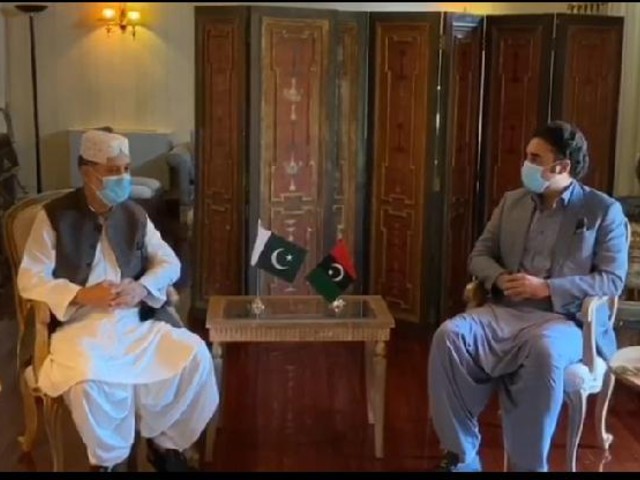
In the meeting that lasted for two hours the two leaders discussed in depth the current political situation in the country. They also agreed to meet more often and continue the dialogue at the level of leadership as well as the level of delegates and representatives.
Sardar Akhtar Mengal was accompanied by MNA Agha Hassan Baloch central information secretary of the Party and BNP-M MPA Mir Amal Kalmati from Gawadur.
Later MNA Jam Karim Bijar also called on the Chairman PPP separately in Zardari House today.
https://www.ppp.org.pk/2020/07/25/president-balochistan-national-party-bnp-mengal-sardar-akhtar-mengal-called-on-chairman-pakistan-peoples-party-bilawal-bhutto-zardar/
Friday, July 24, 2020
Turkish gov’t bars events at Atatürk monuments as Hagia Sophia opens for prayers
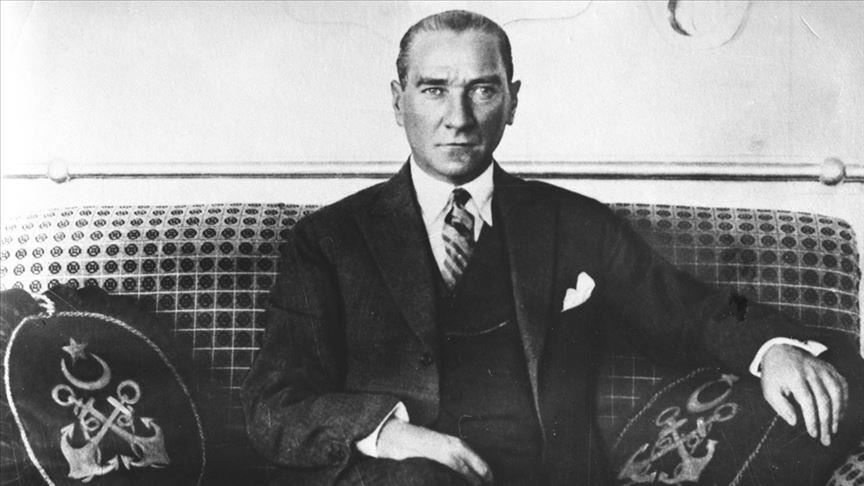
Turkish authorities closed off the mausoleum of Turkey’s founder Mustafa Kemal Atatürk and other monuments honoring him on Friday, barring non-government organizations from celebrating the 97th anniversary of a 1923 treaty that defined the borders of modern Turkey.
The restrictions on events commemorating the day the Lausanne Treaty was signed came as Istanbul’s Hagia Sophia opened for Muslim prayers. Turkish President Recep Tayyip Erdoğan on July 10 ordered the Hagia Sophia open to Muslim worship after Turkey's highest administrative court ruled that Atatürk’s decree to repurpose the Ottoman-era mosque into a museum was illegal.
Representatives from the Kemalist Thought Association (ADD), the Association for Supporting Contemporary Life (ÇYDD), as well as various other NGOs and bar associations were slated to visit Anıtkabir, Atatürk’s final resting place, but found the site barricaded off by Ankara police on grounds of disinfecting the site against Turkey’s COVID-19 epidemic, said Haber 3 reported.
"It has become a crime to speak of Atatürk, the Republic and Lausanne to defend the foundations of the Republic of Turkey. We are barred from entering Anıtkabir,” the news website quoted ADD chairman Hüseyin Emre Altınışık as saying.
“We cannot accept this. Until we are allowed inside, we will wait here and continue our struggle. Today, Hagia Sophia is free, Anıtkabir is banned."
Turks on social media slated the government for the Anıtkabir’s closure. One Twitter user wondered why Turkey’s main opposition Republican People’s Party (CHP) did not comment on the matter.
“There is even better opposition in primary school election,” he said.
Another user tweeted: “Whose idea do you think it is to arrange a mass prayer at the Hagia Sophia, as if in a counter-revolution, and close Anıtkabir because they are ‘disinfecting’ it?”
Throughout his tenure as Turkey’s head of state, Erdoğan and his ruling Justice and Development Party have systematically chipped away at Turkey’s secular foundation by pressing a more Islamist-oriented agenda. The Hagia Sophia’s conversion – a long-standing demand by Turkey’s Islamists – was seen as another step toward the president’s lifelong political goal.
Earlier on Friday, Altınışık said non-government organisations had intended to lay wreaths at Atatürk monuments in Turkey’s 81 provinces but were notified of a ban for such gatherings by provincial and district governors via telephone, according to ABC newspaper.
"There is no official writing, there is only telephone. Our branches wanted to know the rationale for this ban, but they just said, ‘We got instructions by phone’,” Altınışık said. “All our branches had made their applications to their respective provincial and district governors 10 days ago.”
The Treaty of Lausanne was signed in 1923 to officially settle the conflict stemmed from World War I between the Ottoman Empire and Allied countries. The peace agreement defined the borders of the modern Turkish Republic.
Izmir’s Metropolitan Municipality said it would continue on with a series of events to mark the Lausanne Treaty anniversary, which was expected include film screenings, exhibitions, presentations and music performances, starting at 17:00 local time, according to ABC.
Egypt Grand Mufti says Turkey's Hagia Sophia mosque conversion is impermissible in Islam
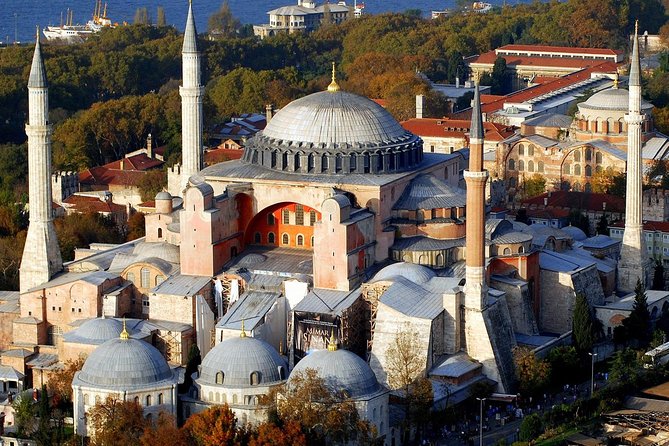
Egyptian Grand Mufti Shawky Allam said on Saturday that Turkey's conversion of Istanbul's Hagia Sophia into a mosque is impermissible in Islam, Haber 7 news website reported.
“We, as Muslims, are commanded to preserve churches. Prophet Muhammad was always recommending in wars not to destroy temples or kill monks,” Allam said during a televised interview.
Churches and mosques must be preserved around the world, as has been the case during the entirety of Egypt's history, Allam said, making reference to a previous fatwa by Laith bin Saad Fakih of Egypt who ruled that churches are part of earth's architecture in Islam.
Turkish President Recep Tayyip Erdoğan declared Hagia Sophia a mosque on June 10, after a top court annulled the 6th-century historical site’s conversion to a museum by modern Turkey’s founding father, Mustafa Kemal Atatürk. The president’s decree constituted a major step for his party in fulfilling a long-standing demand by its core Islamist voter base.
https://ahvalnews.com/hagia-sophia/egypt-grand-mufti-says-turkeys-hagia-sophia-mosque-conversion-impermissible-islam
#Pakistan: Protests erupt over #Parachinar bomb attack

A bombing in the majority Shiite town of Parachinar, near the Afghan border, has brought crowds of protesters to the streets. Angry locals say security forces are failing to protect them from Sunni extremists.
Hundreds of protesters rallied against government troops in the northwestern Pakistani town of Parachinar on Friday after an explosion ripped through a local market, wounding 18 people.
The blast took place in a mostly Shiite neighborhood on Thursday as people were out buying fruit and vegetables, officials said. No one has claimed responsibility for the attack.
Soon after the bombing, protesters came out onto the streets and staged a sit-in in front of the local press club, where many stayed overnight, protester Ali Turi told German news agency DPA.
DW's correspondent in the provincial capital Peshawar, Mudassar Shah, said protesters hold Pakistani forces directly responsible for the violence. Many question how such attacks can happen when there is a heavy troop deployment in the area and such tight security surrounding the town, he added.
"Several elders are of the view that they have informed the government about the suspicious movements of the terrorists in the area," he said.
'Wave of violence'
Parachinar, which lies in a predominantly Shiite region near the border with Afghanistan, has repeatedly been targeted by Sunni militants in recent years. The town is surrounded by areas that were once controlled by the Taliban and that today still serve as hideouts for the group.
The Pakistani government and army have said the region has been cleared of extremists, despite continuing attacks.
Rights group Pashtun Tahafuz Movement (PTM) said it would call further protests if those behind Thursday's bombing weren't arrested.
"This new wave of violence is going on for several months. We want an end to it," PTM leader Manzoor Pashteen told DPA.
According to Pakistan's Dawn newspaper, this week's blast was the third such explosion in the area in as many months. DW correspondent Shah said it also came after a heavy gun battle last week between local Sunnis and Shiites vying for land.
Ali Begum, the only female candidate from the area to run in Pakistan's 2018 general elections, told DW that an attack always happens when people forget the last deadly incident.
In June 2017, the town was hit by twin blasts that killed at least 80 people and wounded more than 200 others.
#Pakistan - Govt giving NRO to Kulbhushan: #PPP Chairman Bilawal Bhutto Zardari
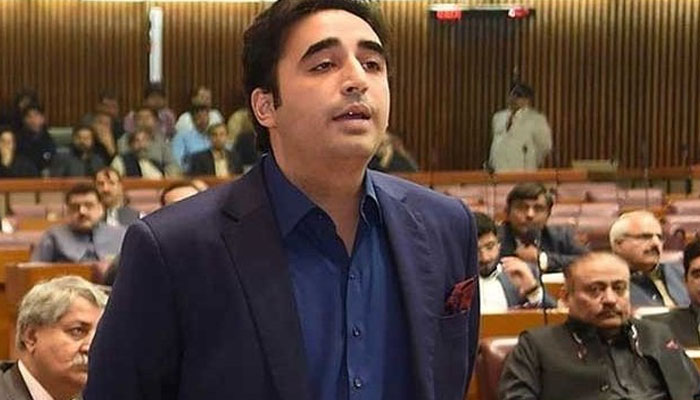
Saying that the incumbent government gave record number of NROs, Bilawal Bhutto Zardari said the rulers also arranged the same facility for Ehsanullah Ehsan, the spokesman for Tehrik-i-Taliban Pakistan and released him.
The International Court of Justice (Review and Reconsideration) Ordinance, 2020 would allow the Indian spy to file review appeal against military court’s verdict against him.
Bilawal said the PTI government and Prime Minister Imran Khan are giving concessions similar to the National Reconciliation Ordinance (NRO) to convicted Indian spy Kulbhushan Jadhav. “You gave NRO to Ehsanullah Ehsan, Jahangir Tareen, BRT Peshawar accused persons, those responsible for sugar and wheat crises and now extending NRO like concessions to Kulbhushan,” Bilawal said.
The two main opposition parties, the PML-N and PPP leaders came harsh on the government for promulgating the ordinance saying the law, which compromises country’s dignity was not acceptable to them. “The prime minister should tell as to why the government is compromising on country’s dignity by facilitating a terrorist who admitted to have carried out terrorist acts in Pakistan,” the PML-N parliamentary leader Khawaja Asif earlier said.
Later, Bilawal Bhutto prevented the government from laying the ordinance while pointing out lack of quorum in the House after completing his speech. “We cannot sit in the House where such an ordinance is being laid,” Bilawal while announcing to walkout after pointing out lack of quorum said.
Minister of State for Parliamentary Affairs Ali Muhammad Khan while referring to rules said the member who points out lack of quorum, should sit in the House while counting is in progress.
However, the chair first suspended proceedings for a few minutes and then adjourned proceedings till Friday after counting as required number of members were not present in the House.
The PPP chairman said while in opposition, the PTI had taken a stance against accepting the jurisdiction of the International Court of Justice in the case.
On that Shireen Mazari said it was also PPP, which refused to accept jurisdiction of International Court of Justice in Pakistan.
“If you are not accepting the jurisdiction of the international courts, it should not mean that you give NRO to Indian spy through the Pakistani laws,” Bilawal in response said.
He said Imran Khan who used to say that he would not give NRO to anybody, extended NRO to Indian pilot Abhinandan after offering him tea.
Bilawal said the government promulgated the ordinance when Parliament was in session. Neither the issue was made public nor the opposition parties were taken into confidence. “Now you are laying the ordinance in the assembly following our protest,” he said.
He said that Ehsanullah Ehsan was also given NRO and was released questioning whether any action was being taken to arrest him. “Who will be answerable to martyrs of APS Peshawar,” he said.
Earlier, the PML-N leader Khawaja Asif said the PTI leadership, which used to abuse their government on issue of Kubbhushan, now was acting as facilitator for the Indian spy.
The PML-N leader said the Indian forces were carrying out genocide of Kashmiris but on the other hand, the Pakistan government is opening trade with India and promulgating ordinance to facilitate Indian spy. “You made Kulbhushan as an abuse for us and now you are before him,” he said.
He made it clear that the ordinance was not acceptable to them as Kulbhushan confessed to his crime of terror activities in Pakistan and as a result he was awarded the death penalty.
“The prime minister should tell as to why he is compromising on dignity of Pakistan and as to who is friend of Modi,” he said adding the law was against country’s dignity and respect and was not acceptable to them.
The opposition members raised slogans as the minister for human rights Dr Shireen Mazari attempted to respond to opposition members. “For God’s Sake, listened to me,” she said.
Meanwhile, Minister for Information and Broadcasting Shibli Faraz informed the House that 50 percent outstanding payments of the media for PTI government’s two-year tenure have been cleared.
Minister for Information told the House during question hour that the remaining fifty percent will be cleared in a week time as Prime Minister Imran Khan has given special directions on the matter. He said the outstanding amount of the last two years was Rs1.15 billion. “The remaining 50 percent amount will be cleared in the next one week,” he said.
The Minister for Information and Broadcasting said the present government has not recruited any person in state-run TV except the top management to uplift the national broadcaster. He regretted that the institutions such as state-run TV, PIA and Pakistan Steel Mills were destroyed by previous governments through political appointments.
The PML-N member Chaudhry Birjees Tahir who raised question of payment of dues to media houses, however, expressed his concerns over restrictions on media and anchors and closure of television channels. “For how long such restriction on media will continue,” he questioned.
The House today passed a motion authorising the Speaker to appoint a Parliamentary Committee in consultation with the Chairman Senate, making recommendations to the National Assembly and Senate regarding legislative business pending before both the Houses.
The motion was moved by Adviser on Parliamentary Affairs Babar Awan.
Bilawal calls Matiullah’s Jan’s abduction ‘attack on freedom of speech’

The abduction of journalist Matiullah Jan was an attack on Pakistan’s democracy and media, which is in all ways against the country’s laws, PPP Chairperson Bilawal Bhutto Zardari said on Friday.
In a media briefing at the journalist’s house in Islamabad, he said that one can dislike Matiullah Jan and his views but kidnapping him was an attempt to snatch the freedom of speech from the public.
“An attack such as this one is not only unlawful and against the Constitution, but also inhumane,” Bilawal said.
“I have come here today to extend my support to Matiullah Jan because what happened with him can happen with you or me as well,” he added.
Responding to Bilawal, the journalist thanked the PPP chairperson and other political parties for supporting him. “Freedom of speech is not only important for journalists but also Parliament and the judiciary,” he said.
Matiullah Jan was abducted on Tuesday from Islamabad’s Sector G-6. He was picked up from outside the school his wife works at around 11:10am.
A CCTV camera installed at the school has captured the incident and it showed people wearing black uniforms taking the journalist away.
He was released 12 hours later. His abductors left him near Fateh Jang after driving him around in a car for 11 hours blindfolded, according to his lawyer Shahid Abbasi.
Matiullah Jan, an outspoken journalist, has often come under attack on social media for his views. Last week, the Supreme Court had initiated contempt proceedings against him over a ‘derogatory’ tweet against the court and its judges.
Thursday, July 23, 2020
The cost of speaking truth to power in Imran Khan’s Naya Pakistan — you might not return home

Since 1992, 61 journalists, including the likes of The Wall Street Journal’s Daniel Pearl have been killed in Pakistan while performing their duties.
The 12-hour abduction-and-return of journalist Matiullah Jan, known for his criticism of the military and the government alike, has proved yet again that Pakistan is being run by the unknowns. These known unknowns know that they can get away with anything, thanks to the culture of impunity that protects them.
All it takes is a Vigo, three cars, an ambulance and some na-maloom afrad (unknown persons) to whisk away a detractor of the mighty Pakistani State. But when the act is recorded on a CCTV camera, it gives no room for denial. This is what happened to Matiullah Jan, a vocal critic of the government and the military — a job he’s done so well over the years that he had to lose his position with Waqt News in 2018. His views and reportage had earned him a spot on Director General Inter-Services Public Relations’ (DG-ISPR) list of journalists involved in anti-State activities on social media. Jan was attacked in 2017 by two men with bricks who smashed the windscreen of his car in Islamabad while his children were inside the vehicle.
Ask questions with caution
While the Supreme Court has taken cognizance of Jan’s abduction, and sought a police report in two weeks, the senior journalist continues to face the top court’s contempt proceedings in a different case. Latif Khosa, a member of the Pakistan Bar Council expressed concern around Jan’s abduction in broad daylight: “Is this a banana republic?” Only if this were a question.
Jan’s abduction shows how out-of-depth and incompetent the Imran Khan government is when it comes to walking the talk. On enforced disappearances, the prime minister is on record to have said that if in his tenure, any agency harasses an innocent citizen, then either he’ll stay or the agency. He will resign, an empathetic Khan had promised. He was once a protesting voice against the human rights abuse by the very State which now guards him: “Shame for all Pakistanis that families’ find the state makes loved ones simply disappear!”
The phenomena of “missing persons” is not new. Upright journalists being hounded by State agencies is also not new. What is new is the noose around the media that continues to be tightened in an attempt to stifle their freedoms — all this in Imran Khan’s civil-military hybrid regime that promises a Naya Pakistan.
Or face enforced disappearances
Since 1992, 61 journalists, including The Wall Street Journal’s Daniel Pearl, Asia Times Islamabad Bureau Chief Syed Saleem Shahzad and Geo News reporter Wali Babar have been killed in Pakistan while performing their duties.
The threats and attacks against such people for just doing their job lurks constantly. Geo News host Hamid Mir survived assassination attempt in 2014 at and The News reporter Umar Cheema was abducted, tortured and humiliated by the State agencies in 2010. Zeenat Shahzadi, a Lahore-based news reporter who was covering the case of Indian national Hamid Ansari was abducted under mysterious circumstances in 2015. Columnist Gul Bukhari was kidnapped and then released in 2018. While some are returned at midnight, some are forced into oblivion. This is the price you have to pay, it seems like a new social contract.
Enforced disappearances have long been used as a weapon by the Pakistani State to silence the known or the unknown citizens alike. It is a technique of terror, hence the impunity around it. There are hundreds and thousands of people, especially in Balochistan and the erstwhile Federally Administered Tribal Areas, who have suffered because of the successive Pakistani governments looking the other way when it comes to bringing the ‘unknown’ abductors to justice. So much so, that before a United Nations Human Rights Committee in 2017, Pakistan called the enforced disappearances voluntary disappearances — the victims abduct themselves and release themselves.
The abduction of Matiullah has brought back memories of the previous incidents of enforced disappearances and attacks on Pakistani journalists in particular.
Pakistan’s largest media conglomerate Geo Group’s Editor-in-Chief Mir Shakilur Rehman remains under arrest without any formal charges, now for over 132 days. The Geo Group alleges that the arrest is part of PTI government’s personal vendetta against Rehman and his TV channel.
24News HD Chief Executive Officer Mohsin Naqvi announced earlier this month that he was shutting down the channel after repeated “blackmailing of the federal government” over channel’s licence suspension. This led to the Lahore High Court staying Pakistan Electronic Media Regulatory Authority’s suspension of the channel’s licence, allowing it to operate.
Imran Khan’s ministers like Faisal Vawda don’t shy away from even abusing journalists on Twitter. In one such brawl on the social media platform, Vawda went on to remind Umar Cheema of The News about the reporter’s abduction and how his head was shaved off after his release.
Vawda has said that anyone disloyal to PM Khan in Pakistan Tehreek-e-Insaf should be hanged. But you won’t ever hear any condemnation on this from the office of the prime minister. For all said and done, in Naya Pakistan, the Pakistan media, in Khan’s opinion, is freer than the British media.
Subscribe to:
Posts (Atom)