 The French Foreign Minister Fabius wants closer trade ties with the Persian Gulf. Riyadh, Tehran's enemy, bought six French frigates for 1 billion Euros in October. Qatar wants French Rafale fighter jets. And so... the result is a France aiming to increase its presence in the Middle East flexing its muscles.
Gianni Charter of Paris
CartaCapital
To general surprise, the French Foreign Minister, Laurent Fabius, did not accept to seal the nuclear deal between the group P5 +1 and Iran on Sunday 10 in Geneva. France is a country with veto power of the five permanent members of the UN Security Council, and therefore the next round of negotiations was postponed to the next day 20 of November.
The reason for the surprise? On Saturday 9 there was an agreement, according to the British Foreign Secretary William Hague about to be signed by all present, including the representative of the sixth country, Germany.
Mohammad Javad Zarif, the chancellor of the new Iranian President Hassan Rouhani , had reason to smile. Not since the 1979 Islamic revolution, had the dialogue between Western countries and Iran appeared to have been so decisive.
And particularly between Iran and the United States. For Barack Obama , who has sent his Secretary of State John Kerry to repair fiascos fed by Uncle Sam in the Middle East, an agreement would be, at least for now, a way to prevent a U.S. war against Iran.
More: the agreement with Iran, and then we enter the realm of naïve U.S. optimism, could heal the divisions between Shiite-led Iran and the Sunni, like those of the reactionary Saudi Arabia, an ally of Uncle Sam. In this geopolitical framework - we continue to dream - there would be peace between Shiite Iran supporting the Syrian Alawite leader (Shia sect) Bashar al-Assad and the Saudis who finance civil war in Syria, the Sunni opposition, a bag of wild cats including fundamentalists.
As always, after the unexpected news given by Fabius, the customary diplomatic ballet began. From the chief diplomat of the European Union (EU), Catherine Ashton, we hear: "There has been real progress, but some differences remain."
However, there was fury expressed by Iran. From his Twitter account, the Supreme Leader, Ali Khamenei, anti-American until the election of Rouhani, shot in English: "French officials have been openly hostile against Iran in recent years." The Facebook account of Fabius was flooded with phrases like this: "The wall of the French embassy in Tehran is how many meters?"
In fact, the actions of Fabius come as no surprise. For a start, the ex-premier could not be considered a novice in international politics. France wants to strengthen its political influence in the Persian Gulf. And, by extension, it wants closer trade ties with the region. In October, Saudi Arabia acquired six French frigates for 1 billion euros. In July, the UAE paid 1 billion euros for a French air defense system. And Qatar, ubiquitous in France, would be interested in buying French Rafale fighters .
The French Foreign Minister Fabius wants closer trade ties with the Persian Gulf. Riyadh, Tehran's enemy, bought six French frigates for 1 billion Euros in October. Qatar wants French Rafale fighter jets. And so... the result is a France aiming to increase its presence in the Middle East flexing its muscles.
Gianni Charter of Paris
CartaCapital
To general surprise, the French Foreign Minister, Laurent Fabius, did not accept to seal the nuclear deal between the group P5 +1 and Iran on Sunday 10 in Geneva. France is a country with veto power of the five permanent members of the UN Security Council, and therefore the next round of negotiations was postponed to the next day 20 of November.
The reason for the surprise? On Saturday 9 there was an agreement, according to the British Foreign Secretary William Hague about to be signed by all present, including the representative of the sixth country, Germany.
Mohammad Javad Zarif, the chancellor of the new Iranian President Hassan Rouhani , had reason to smile. Not since the 1979 Islamic revolution, had the dialogue between Western countries and Iran appeared to have been so decisive.
And particularly between Iran and the United States. For Barack Obama , who has sent his Secretary of State John Kerry to repair fiascos fed by Uncle Sam in the Middle East, an agreement would be, at least for now, a way to prevent a U.S. war against Iran.
More: the agreement with Iran, and then we enter the realm of naïve U.S. optimism, could heal the divisions between Shiite-led Iran and the Sunni, like those of the reactionary Saudi Arabia, an ally of Uncle Sam. In this geopolitical framework - we continue to dream - there would be peace between Shiite Iran supporting the Syrian Alawite leader (Shia sect) Bashar al-Assad and the Saudis who finance civil war in Syria, the Sunni opposition, a bag of wild cats including fundamentalists.
As always, after the unexpected news given by Fabius, the customary diplomatic ballet began. From the chief diplomat of the European Union (EU), Catherine Ashton, we hear: "There has been real progress, but some differences remain."
However, there was fury expressed by Iran. From his Twitter account, the Supreme Leader, Ali Khamenei, anti-American until the election of Rouhani, shot in English: "French officials have been openly hostile against Iran in recent years." The Facebook account of Fabius was flooded with phrases like this: "The wall of the French embassy in Tehran is how many meters?"
In fact, the actions of Fabius come as no surprise. For a start, the ex-premier could not be considered a novice in international politics. France wants to strengthen its political influence in the Persian Gulf. And, by extension, it wants closer trade ties with the region. In October, Saudi Arabia acquired six French frigates for 1 billion euros. In July, the UAE paid 1 billion euros for a French air defense system. And Qatar, ubiquitous in France, would be interested in buying French Rafale fighters .
Tuesday, November 12, 2013
France blocked nuclear deal with Iran for an obvious reason
The French Foreign Minister Fabius wants closer trade ties with the Persian Gulf. Riyadh, Tehran's enemy, bought six French frigates for 1 billion Euros in October. Qatar wants French Rafale fighter jets. And so... the result is a France aiming to increase its presence in the Middle East flexing its muscles.
Gianni Charter of Paris
CartaCapital
To general surprise, the French Foreign Minister, Laurent Fabius, did not accept to seal the nuclear deal between the group P5 +1 and Iran on Sunday 10 in Geneva. France is a country with veto power of the five permanent members of the UN Security Council, and therefore the next round of negotiations was postponed to the next day 20 of November.
The reason for the surprise? On Saturday 9 there was an agreement, according to the British Foreign Secretary William Hague about to be signed by all present, including the representative of the sixth country, Germany.
Mohammad Javad Zarif, the chancellor of the new Iranian President Hassan Rouhani , had reason to smile. Not since the 1979 Islamic revolution, had the dialogue between Western countries and Iran appeared to have been so decisive.
And particularly between Iran and the United States. For Barack Obama , who has sent his Secretary of State John Kerry to repair fiascos fed by Uncle Sam in the Middle East, an agreement would be, at least for now, a way to prevent a U.S. war against Iran.
More: the agreement with Iran, and then we enter the realm of naïve U.S. optimism, could heal the divisions between Shiite-led Iran and the Sunni, like those of the reactionary Saudi Arabia, an ally of Uncle Sam. In this geopolitical framework - we continue to dream - there would be peace between Shiite Iran supporting the Syrian Alawite leader (Shia sect) Bashar al-Assad and the Saudis who finance civil war in Syria, the Sunni opposition, a bag of wild cats including fundamentalists.
As always, after the unexpected news given by Fabius, the customary diplomatic ballet began. From the chief diplomat of the European Union (EU), Catherine Ashton, we hear: "There has been real progress, but some differences remain."
However, there was fury expressed by Iran. From his Twitter account, the Supreme Leader, Ali Khamenei, anti-American until the election of Rouhani, shot in English: "French officials have been openly hostile against Iran in recent years." The Facebook account of Fabius was flooded with phrases like this: "The wall of the French embassy in Tehran is how many meters?"
In fact, the actions of Fabius come as no surprise. For a start, the ex-premier could not be considered a novice in international politics. France wants to strengthen its political influence in the Persian Gulf. And, by extension, it wants closer trade ties with the region. In October, Saudi Arabia acquired six French frigates for 1 billion euros. In July, the UAE paid 1 billion euros for a French air defense system. And Qatar, ubiquitous in France, would be interested in buying French Rafale fighters .
Saudi Police Kill Three Ethiopian Workers

 The Saudi police have killed three Ethiopian migrants who were preparing to return home following a brutal crackdown on clandestine workers in the Persian Gulf kingdom, Ethiopian officials said Tuesday.
"The act of killing innocent civilians is uncalled for, we condemn that," Foreign Ministry spokesman Dina Mufti told reporters, saying he had been informed of the death of three Ethiopian citizens, AFP reported.
Ethiopia announced last week it would repatriate its citizens living in Saudi Arabia without legal status after a seven-month amnesty period allowing immigrants to gain legal status expired.
Dina said the government has called for an investigation into the deaths and said that a delegation has been sent to Saudi Arabia to help the repatriation process.
"We have asked also for an investigation into the killings," he said, adding that Addis Ababa had dispatched a team to Saudi Arabia to take care of Ethiopians there, and either register them or bring them home.
Each year, large numbers of Ethiopians move to the Middle East looking for jobs. Around 200,000 women sought work abroad in 2012, according to Ethiopia's Ministry of Labor and Social Affairs.
Many of those leaving face physical and mental abuse, poor working conditions, low pay and discrimination, the International Labor Organization reports.
Last month, the Ethiopian government said it was barring young women and men from moving to the Middle East, amid reports of widespread abuse.
With 91 million citizens, Ethiopia is Africa's most populous country after Nigeria, but also one of the continent's poorest, with the majority of people earning less than two dollars a day.
Around 27 percent of women and 13 percent of men are unemployed, according to the ILO.
The Saudi police have killed three Ethiopian migrants who were preparing to return home following a brutal crackdown on clandestine workers in the Persian Gulf kingdom, Ethiopian officials said Tuesday.
"The act of killing innocent civilians is uncalled for, we condemn that," Foreign Ministry spokesman Dina Mufti told reporters, saying he had been informed of the death of three Ethiopian citizens, AFP reported.
Ethiopia announced last week it would repatriate its citizens living in Saudi Arabia without legal status after a seven-month amnesty period allowing immigrants to gain legal status expired.
Dina said the government has called for an investigation into the deaths and said that a delegation has been sent to Saudi Arabia to help the repatriation process.
"We have asked also for an investigation into the killings," he said, adding that Addis Ababa had dispatched a team to Saudi Arabia to take care of Ethiopians there, and either register them or bring them home.
Each year, large numbers of Ethiopians move to the Middle East looking for jobs. Around 200,000 women sought work abroad in 2012, according to Ethiopia's Ministry of Labor and Social Affairs.
Many of those leaving face physical and mental abuse, poor working conditions, low pay and discrimination, the International Labor Organization reports.
Last month, the Ethiopian government said it was barring young women and men from moving to the Middle East, amid reports of widespread abuse.
With 91 million citizens, Ethiopia is Africa's most populous country after Nigeria, but also one of the continent's poorest, with the majority of people earning less than two dollars a day.
Around 27 percent of women and 13 percent of men are unemployed, according to the ILO.
Egypt’s secular parties hampered by disorganization, infighting
 By Erin Cunningham
Plagued by infighting, disorganization and disparate ideologies, the non-Islamist parties that backed the July coup against Egyptian President Mohamed Morsi are struggling to capitalize on the downfall of their chief political foe and his Muslim Brotherhood backers.
A coterie of liberal, leftist and other secular and nationalist groups adamantly supported Morsi’s ouster and later cheered on a brutal security crackdown that killed more than 1,000 people and crippled the Islamists’ ability to organize politically.
But even with the competition gone, and with parliamentary elections expected early next year, Egypt’s non-Islamists remain adrift.
Having failed to articulate clear political messages or to construct a solid electoral base, some of these groups are relying on the popular military or the pervasive anti-Islamist sentiment for political survival.
Leftist politician Hamdeen Sabahi and liberal al-Wafd party leader Sayed al-Badawi are the latest of a number of prominent non-Islamist figures to publicly endorse for president the defense minister and coup architect, Gen. Abdel Fatah al-Sissi, should he decide to run next year.
Sabahi and Badawi lead the National Salvation Front, a coalition of dozens of secular political parties that joined forces last year to combat Morsi’s increasingly authoritarian presidency. Badawi said this month that the NSF would back Sissi if the general announces his candidacy.
“They need to decide what they stand for,” said Bassem Sabry, a Cairo-based columnist who has written extensively about Egypt’s political parties. “Endorsing Sissi is an indication of how weak they are and how worried they are about losing influence with the popular mood shifting. They need to improve their rhetoric. This is a big stumbling block for them.”
Countless political parties formed in the wake of Egypt’s pro-democracy uprising 21 / 2 years ago. Some had just a few members, and many had similar ideologies or overlapping — and sometimes vague — goals.
The spectrum of the non-Islamist camp ranges from liberal and secular to socialist, revolutionary or fiercely nationalist. But the patchwork of so many immature parties has fostered a chaotic political landscape, with associations folding, merging or suffering mass resignations on a near-weekly basis.
Hundreds of members, including former presidential candidate Khaled Ali, left the Socialist Popular Alliance over the weekend, citing poor leadership. A number of high-profile figures resigned last week from the liberal Dostour (Constitution) Party, founded by Nobel Peace Prize winner Mohamed ElBaradei.
Rifaat Mohamed Sayed is the chairman of the leftist Tagammu Party. On a recent morning at his office in the crumbling downtown building that houses the party, he, too, was preoccupied with internal conflicts with other NSF members.
He attributed his party’s lack of presence on the ground to the delay in drafting the election section of the constitution.
“How can we prepare for elections? We don’t know what is happening yet,” Sayed said. “All I know is that everybody is preparing for their own interests.”
It is this type of bickering and political indecision that is hampering the non-
Islamists’ success, analysts say, frustrating those Egyptians who are opposed to the Muslim Brotherhood but who see no stable alternative.
“With the liberal parties, there are divisions and there are deals, and all they do is argue over who will run on the [candidate] lists,” said 58-year-old Wagdy Sayed, a carpet seller in the warrens of Islamic Cairo, a lower-class neighborhood dotted with some of the region’s oldest mosques.
He is glad that Morsi was ousted. But the non-Islamists “are not doing what we want, and they cannot rally people on the ground,” the carpet seller said. “They are weak. And we don’t have a clear vision of who wants to run the country.”
Before its collapse this summer, the Muslim Brotherhood commanded the Egyptian countryside with a nationwide web of offices and charities that built schools, clinics and other much-needed infrastructure that the government neglected. It was the kind of social work that made the Islamists highly successful at the polls.
What the non-Islamist parties need to do, Sabry said, is “reach outside urban areas.”
“The longer they take to do this, the more they risk becoming irrelevant,” he said.
But from the spacious, gated villa in Cairo’s Dokki district that serves as the headquarters of the al-Wafd party, the assistant secretary general, Hossam al-Kholy, said there is no “time to go every place in Egypt and talk to the people.” Instead of grass-roots work, Kholy insisted that 80 percent of political campaigning in Egypt is done on television.
“In the village, politics for them is about getting services,” he said. “You go to the village and they ask: ‘Will you build us a hospital? What will you do for me?’ It’s a big problem.”
Kholy, whose party is nearly a century old, said al-Wafd will emphasize its belief in “a modern Egypt” that “does not mix religion with politics,” tapping into the population’s widespread rejection of political Islamists after Morsi and the Muslim Brotherhood’s disastrous time in power.
“If the Muslim Brotherhood runs, we will vote for anybody else,” said 60-year-old Ali Sayed Mohamed, a resident of central Cairo’s Abdeen district. “We want a liberal party — any liberal party.”
But in an illustration of the poor outreach and messaging that characterizes the non-Islamist camp, Mohamed was unable to name a single liberal party that he thinks will run in the next parliamentary elections.
“Anyone who is with Sissi,” he finally said. “Sissi leads them all.”
By Erin Cunningham
Plagued by infighting, disorganization and disparate ideologies, the non-Islamist parties that backed the July coup against Egyptian President Mohamed Morsi are struggling to capitalize on the downfall of their chief political foe and his Muslim Brotherhood backers.
A coterie of liberal, leftist and other secular and nationalist groups adamantly supported Morsi’s ouster and later cheered on a brutal security crackdown that killed more than 1,000 people and crippled the Islamists’ ability to organize politically.
But even with the competition gone, and with parliamentary elections expected early next year, Egypt’s non-Islamists remain adrift.
Having failed to articulate clear political messages or to construct a solid electoral base, some of these groups are relying on the popular military or the pervasive anti-Islamist sentiment for political survival.
Leftist politician Hamdeen Sabahi and liberal al-Wafd party leader Sayed al-Badawi are the latest of a number of prominent non-Islamist figures to publicly endorse for president the defense minister and coup architect, Gen. Abdel Fatah al-Sissi, should he decide to run next year.
Sabahi and Badawi lead the National Salvation Front, a coalition of dozens of secular political parties that joined forces last year to combat Morsi’s increasingly authoritarian presidency. Badawi said this month that the NSF would back Sissi if the general announces his candidacy.
“They need to decide what they stand for,” said Bassem Sabry, a Cairo-based columnist who has written extensively about Egypt’s political parties. “Endorsing Sissi is an indication of how weak they are and how worried they are about losing influence with the popular mood shifting. They need to improve their rhetoric. This is a big stumbling block for them.”
Countless political parties formed in the wake of Egypt’s pro-democracy uprising 21 / 2 years ago. Some had just a few members, and many had similar ideologies or overlapping — and sometimes vague — goals.
The spectrum of the non-Islamist camp ranges from liberal and secular to socialist, revolutionary or fiercely nationalist. But the patchwork of so many immature parties has fostered a chaotic political landscape, with associations folding, merging or suffering mass resignations on a near-weekly basis.
Hundreds of members, including former presidential candidate Khaled Ali, left the Socialist Popular Alliance over the weekend, citing poor leadership. A number of high-profile figures resigned last week from the liberal Dostour (Constitution) Party, founded by Nobel Peace Prize winner Mohamed ElBaradei.
Rifaat Mohamed Sayed is the chairman of the leftist Tagammu Party. On a recent morning at his office in the crumbling downtown building that houses the party, he, too, was preoccupied with internal conflicts with other NSF members.
He attributed his party’s lack of presence on the ground to the delay in drafting the election section of the constitution.
“How can we prepare for elections? We don’t know what is happening yet,” Sayed said. “All I know is that everybody is preparing for their own interests.”
It is this type of bickering and political indecision that is hampering the non-
Islamists’ success, analysts say, frustrating those Egyptians who are opposed to the Muslim Brotherhood but who see no stable alternative.
“With the liberal parties, there are divisions and there are deals, and all they do is argue over who will run on the [candidate] lists,” said 58-year-old Wagdy Sayed, a carpet seller in the warrens of Islamic Cairo, a lower-class neighborhood dotted with some of the region’s oldest mosques.
He is glad that Morsi was ousted. But the non-Islamists “are not doing what we want, and they cannot rally people on the ground,” the carpet seller said. “They are weak. And we don’t have a clear vision of who wants to run the country.”
Before its collapse this summer, the Muslim Brotherhood commanded the Egyptian countryside with a nationwide web of offices and charities that built schools, clinics and other much-needed infrastructure that the government neglected. It was the kind of social work that made the Islamists highly successful at the polls.
What the non-Islamist parties need to do, Sabry said, is “reach outside urban areas.”
“The longer they take to do this, the more they risk becoming irrelevant,” he said.
But from the spacious, gated villa in Cairo’s Dokki district that serves as the headquarters of the al-Wafd party, the assistant secretary general, Hossam al-Kholy, said there is no “time to go every place in Egypt and talk to the people.” Instead of grass-roots work, Kholy insisted that 80 percent of political campaigning in Egypt is done on television.
“In the village, politics for them is about getting services,” he said. “You go to the village and they ask: ‘Will you build us a hospital? What will you do for me?’ It’s a big problem.”
Kholy, whose party is nearly a century old, said al-Wafd will emphasize its belief in “a modern Egypt” that “does not mix religion with politics,” tapping into the population’s widespread rejection of political Islamists after Morsi and the Muslim Brotherhood’s disastrous time in power.
“If the Muslim Brotherhood runs, we will vote for anybody else,” said 60-year-old Ali Sayed Mohamed, a resident of central Cairo’s Abdeen district. “We want a liberal party — any liberal party.”
But in an illustration of the poor outreach and messaging that characterizes the non-Islamist camp, Mohamed was unable to name a single liberal party that he thinks will run in the next parliamentary elections.
“Anyone who is with Sissi,” he finally said. “Sissi leads them all.”
Afghanistan: Presidential candidate Dr. Abdullah Abdullah On Prisoner Releases, Peace And Foreign Policy
Khursheed Shah criticizes Munawar Hassan’s statement
Opposition leader in National Assembly Syed Khursheed Shah criticized JI Chief Munawar Hassan for issuing a controversial statement against the martyred of armed forces and those who had laid down their lives in the war against terrorism. Talking to reporters in his Parliament chamber, he said, “The statement of JI Chief has anguished the sentiments of the families of martyred, who have sacrificed their lives to safeguard frontiers of the motherland.” The Opposition leader said how could terrorists belonging to foreign countries be called martyred who had killed innocent children, women, people and security personnel. Khursheed Shah said Munwar Hassan had declared Tehreek-e-Taliban Pakistan (TTP) chief Hakeemullah Mehsood martyred while in past he had even said that he did not know him.http://mediacellppp.wordpress.com/


Veena Malik received Pakistan Achievement Award in UK

_5280c32c97262.jpg)
Polio strain in Syria originated in Pakistan, WHO confirms
Visit NBCNews.com for breaking news, world news, and news about the economy
"Genetic sequencing indicates that the isolated viruses are most closely linked to virus detected in environmental samples in Egypt in December 2012 (which in turn had been linked to wild poliovirus circulating in Pakistan)," the United Nations agency said in a statement on Monday. Closely related strains of the wild poliovirus of Pakistani origin have also been detected in sewage samples in Israel, the West Bank and Gaza Strip since February 2013, it said. Polio virus has been confirmed in 13 of 22 children who became paralyzed in the northern Syrian province of Deir al-Zor. Investigations continue into the other nine cases. It is Syria's first polio outbreak since 1999. No children in Egypt, Israel or the Palestinian territories have been hit by polio thanks to high immunization rates and a strong response to the alert, WHO spokeswoman Sona Bari said. Polio virus is endemic in Pakistan, Afghanistan and Nigeria despite a 25-year-old campaign to eradicate the disease, which can paralyze a child in hours. Islamist fighters from countries including Pakistan are among groups battling to oust President Bashar al-Assad, leading to speculation that they brought the virus into the country. The WHO says it is unlikely that adults, who generally have higher immunity, carried the virus into Syria and that its mode of transmission will probably never be known. Syria's immunization rates have plummeted from more than 90 percent before the conflict to around 68 percent. Polio mainly affects children under five and cannot be cured, only prevented. "All the children (paralyzed) are under two years old, so they were all born after immunization services fell apart," Bari told Reuters. "No doubt the outbreak will be large." Children living in unsanitary conditions are especially vulnerable to the virus, which spreads via fecal-oral transmission and contaminated food and water. More than 20 million children, including 1.6 million in Syria, are to be vaccinated in Syria and neighboring countries over the next six months, U.N. agencies said last week.Pakistani Ban Of Malala Book In Dispute
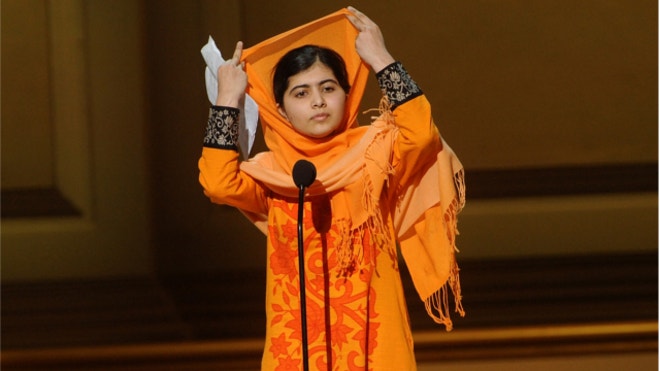
Malala Yousafzai is a 2013 Glamour Woman of the Year


Malala wows crowd at annual Glamour Women of the Year awards


Pakistan: Dominance in PM office: Punjab bureaucrats rule the roost
Bureaucrats from Punjab appear to have a stranglehold on the Prime Minister’s Secretariat, enjoying an overall representation of 72 per cent in the service of Prime Minister Nawaz Sharif. In stark contrast, bureaucrats from Sindh form only 3 per cent of those serving in the federal capital.
As many as 489 of 675 employees, working in both internal and external wings of PM office belong to Punjab, the Prime Minister Secretariat informed the Senate in a written reply. Senator Karim Ahmed Khwaja of Pakistan Peoples Party (PPP) sought details of employees currently working in the PM’s Secretariat. Over 330 employees, who hold a Punjab domicile, are working in internal wing whereas 159 civil servants are working in the external wing of PM office.
Only 21 employees are from both urban and rural areas of Sindh, where the majority of them are of the lower cadre. Senator Khwaja revealed that dozens of lower-grade employees that were laid off belonged to Sindh since PM Nawaz assumed charge of the office. “It’s unfair that appointments of officers holding Sindh domiciles are ignored in the PM office,” he observed.
The written reply submitted to the upper house of parliament last week revealed that more than 16 per cent of the total employees (114 officers) hold a Khyber-Pakhtunkhwa domicile. Some 19 employees who hold Balochistan’s domicile are currently working in the PM office in Islamabad. More than 46 employees are from Azad Jammu and Kashmir (AJK) whereas six employees belong to the Federally Administered Tribal Areas (Fata).
The breakdown showed that almost all top posts of BPS-20 or above were filled from Punjab. Only one BPS-20 officer holds a Sindh domicile and two officials of BPS-18 hold Balochistan domicile while a clerk is the highest ranking employee from Fata.
Press Secretary to the Prime Minister Mohiuddin Wani told The Express Tribune that currently 248 employees are working in the PM’s office. Strongly dispelling the impression that bureaucrats of Punjab domicile prevailed over the PM office, Wani said the PM’s staff has been slashed keeping in view the austerity measures Premier Nawaz asked for, adding that more than 468 employees were working in PM internal office in the previous regime. He justified the provincial breakdown of employees at the PM office with the fact that top bureaucrats have representation from all provinces.
PM Press Secretary and Additional Secretary Fawad Hassan Fawad holds the domicile of AJK, Additional Secretary Arshad Munir belongs to K-P, PM Principal Secretary Javed Aslam hails from Punjab while Saleh Farooqi holds the domicile of Sindh.
In July, Premier Nawaz also directed the authorities to reduce staff of the PM office soon after assuming the office so that administrative expenditures could be curtailed.
SHC moved to remove Pervez Musharraf’s name from ECL
http://www.thenews.com.pk/A petition was filed in the Sindh High Court (SHC) on Tuesday to remove former president General (retd) Pervez Musharraf’s name from the exit control list (ECL), Geo News reported. According to the sources, Musharraf’s counsel Advocate AQ Halepota filed the petition in the SHC on behalf of his client today. The petitioner stated that Musharraf wants to go abroad to visit his ailing mother. Moreover, his client had already been granted bails in Akbar Bugti, Benazir Bhutto and Ghazi Rasheed murder cases, therefore, Musharraf’s name should be excluded from the ECL. Following the petition, the court issued notices to federal government and interior ministry for November 18.
Lashing out: Politicos take JI chief to task


A dangerous discourse: JI leader’s remarks


Pakistan: Sympathy for the Devil
Over 1 in 5 in tribal areas back drone strikes: US survey

 While the Pakistani government routinely denounces US drone strikes, locals say that a sizeable number of people in the country's tribal areas support them -- but the threat of Taliban reprisals makes them too terrified to speak out.
Pakistan's lawless tribal areas along the Afghan border have borne the brunt of the US drone campaign since 2004, with hundreds of missile strikes targeting suspected Al-Qaeda and Taliban militants.
Islamabad condemns them as a violation of sovereignty and counterproductive to efforts to combat militancy, while rights campaigners -- and the Pakistani public -- rail against them for killing civilians.
Anyone who does speak out in favour of the drones in the tribal areas runs the risk of being kidnapped, tortured and murdered by militants – their agonising last moments captured on camera. "Anybody who supports drone strikes, they will try to kill him. They will say that person is pro-American, a friend of the Jews," Gul Wali Wazir – not his real name -- from South Waziristan tribal area told AFP.
"They will cut his throat or shoot him, they will film his false confession, kill him and leave the body on the road with a DVD and a note saying that anybody who supports America and drones will face the same fate.
"I have seen a dozen such dead bodies." "US spies" are targeted by a special militant unit, the Ittehad-e-Mujahideen Khorasan, and grisly DVDs of their last moments distributed. In one seen by AFP, a young man to admits planting a bugging chip in a car in return for $200.
After a decade of the CIA-run programme, no region in the world has been hit by more strikes than Pakistan's tribal areas -- a rugged, dirt-poor region roughly the size of Belgium.
Ten days ago, one of the remote-controlled missiles eliminated the feared Hakimullah Mehsud, leader of the Pakistani Taliban.
The area is off-limits to foreign journalists and aid groups, so the precise number and identity of those killed by drones is difficult to establish with certainty.
The London-based Bureau of Investigative Journalism estimates that between
2,528 and 3,644 people have been killed in 378 drone strikes in Pakistan, including 416-948 civilians.
A survey by the New America Foundation in 2010 found that a sizeable proportion of people -- more than one in five -- in the tribal areas backed drone strikes, and a number of experts interviewed by AFP spoke of an increasing trend to support them.
The Federally Administered Tribal Areas (FATA) became a stronghold for hundreds of Taliban and Al-Qaeda-linked extremists who fled Afghanistan to regroup and launch cross-border attacks after the US-led invasion in 2001.
Tribal chiefs initially welcomed them, but since 2009 they have grown weary of the "taxes" the militants impose and the insecurity they bring, and angry at them for killing elders who opposed their presence.
Safdar Hayat Khan Dawar, former head of the Tribal Union of Journalists, from North Waziristan, the area most affected by drone strikes, said the missiles were the preferred solution to the problem of militancy.
"There are two options in FATA: a military operation or the drone strikes," he said in an interview in Peshawar. "The military option, people hate it because the army don't kill militants but civilians. So if you ask people to choose, they will choose drone attacks."
In 2009 the army carried out a major ground operation to retake control of South Waziristan from the militants, with more than 30,000 troops pouring in for an offensive.
The UN said more than 200,000 people were forced from their homes by the fighting.
"Those people who became IDPs (internally displaced) due to the military operation, those people who are victimised by the Taliban and the militants, all the families whose family members are beheaded because they were accused of spying for America -- why would they oppose drone attacks?" said Nizam Dawar, director of the Tribal Development Network.
Dawar's own family in North Waziristan recently had a visit from militants after he spoke of his support for drones.
For drone supporters, tribal leaders sheltering militants only have themselves to blame if their families are killed by the American strikes. "We think this is due to their own negligence. The responsibility lies with the people who offer these terrorists a shelter," said Arbab Mujeed ur-Rehman of the Pakhtunkhwa Milli Awami Party. "A person who is not involved in terrorist activity does not feel threatened by the drones."
In the markets of the tribal areas, militants hand out leaflets urging people to denounce "traitors" in their families, heightening the climate of suspicion in a region already awash with conspiracy theories.
While the Pakistani government routinely denounces US drone strikes, locals say that a sizeable number of people in the country's tribal areas support them -- but the threat of Taliban reprisals makes them too terrified to speak out.
Pakistan's lawless tribal areas along the Afghan border have borne the brunt of the US drone campaign since 2004, with hundreds of missile strikes targeting suspected Al-Qaeda and Taliban militants.
Islamabad condemns them as a violation of sovereignty and counterproductive to efforts to combat militancy, while rights campaigners -- and the Pakistani public -- rail against them for killing civilians.
Anyone who does speak out in favour of the drones in the tribal areas runs the risk of being kidnapped, tortured and murdered by militants – their agonising last moments captured on camera. "Anybody who supports drone strikes, they will try to kill him. They will say that person is pro-American, a friend of the Jews," Gul Wali Wazir – not his real name -- from South Waziristan tribal area told AFP.
"They will cut his throat or shoot him, they will film his false confession, kill him and leave the body on the road with a DVD and a note saying that anybody who supports America and drones will face the same fate.
"I have seen a dozen such dead bodies." "US spies" are targeted by a special militant unit, the Ittehad-e-Mujahideen Khorasan, and grisly DVDs of their last moments distributed. In one seen by AFP, a young man to admits planting a bugging chip in a car in return for $200.
After a decade of the CIA-run programme, no region in the world has been hit by more strikes than Pakistan's tribal areas -- a rugged, dirt-poor region roughly the size of Belgium.
Ten days ago, one of the remote-controlled missiles eliminated the feared Hakimullah Mehsud, leader of the Pakistani Taliban.
The area is off-limits to foreign journalists and aid groups, so the precise number and identity of those killed by drones is difficult to establish with certainty.
The London-based Bureau of Investigative Journalism estimates that between
2,528 and 3,644 people have been killed in 378 drone strikes in Pakistan, including 416-948 civilians.
A survey by the New America Foundation in 2010 found that a sizeable proportion of people -- more than one in five -- in the tribal areas backed drone strikes, and a number of experts interviewed by AFP spoke of an increasing trend to support them.
The Federally Administered Tribal Areas (FATA) became a stronghold for hundreds of Taliban and Al-Qaeda-linked extremists who fled Afghanistan to regroup and launch cross-border attacks after the US-led invasion in 2001.
Tribal chiefs initially welcomed them, but since 2009 they have grown weary of the "taxes" the militants impose and the insecurity they bring, and angry at them for killing elders who opposed their presence.
Safdar Hayat Khan Dawar, former head of the Tribal Union of Journalists, from North Waziristan, the area most affected by drone strikes, said the missiles were the preferred solution to the problem of militancy.
"There are two options in FATA: a military operation or the drone strikes," he said in an interview in Peshawar. "The military option, people hate it because the army don't kill militants but civilians. So if you ask people to choose, they will choose drone attacks."
In 2009 the army carried out a major ground operation to retake control of South Waziristan from the militants, with more than 30,000 troops pouring in for an offensive.
The UN said more than 200,000 people were forced from their homes by the fighting.
"Those people who became IDPs (internally displaced) due to the military operation, those people who are victimised by the Taliban and the militants, all the families whose family members are beheaded because they were accused of spying for America -- why would they oppose drone attacks?" said Nizam Dawar, director of the Tribal Development Network.
Dawar's own family in North Waziristan recently had a visit from militants after he spoke of his support for drones.
For drone supporters, tribal leaders sheltering militants only have themselves to blame if their families are killed by the American strikes. "We think this is due to their own negligence. The responsibility lies with the people who offer these terrorists a shelter," said Arbab Mujeed ur-Rehman of the Pakhtunkhwa Milli Awami Party. "A person who is not involved in terrorist activity does not feel threatened by the drones."
In the markets of the tribal areas, militants hand out leaflets urging people to denounce "traitors" in their families, heightening the climate of suspicion in a region already awash with conspiracy theories.
Taliban called hypocrites for using sex to recruit suicide bombers
http://centralasiaonline.com/
 Bilal, 13, from the Bar Qambarkhel area of Bara, Khyber Agency, sits in a police van after authorities rescued him on the outskirts of Peshawar November 20 before he could complete a suicide mission. Police arrested his alleged handler too. [Zahir Shah]
EDITOR’S NOTE: That the militants would resort to unscrupulous methods to recruit teens for suicide methods is nothing new. But emerging stories about sexual abuse are raising eyebrows. Central Asia Online is taking a look at the concerns raised by such practices. Today’s story looks at how handlers use visions of heavenly maidens to inspire bombing recruits into carrying out attacks.When would-be suicide bomber Abdul Malik was travelling to his intended target, he noticed that his handler was driving erratically. The car zigged and zagged along the road. Malik cried out in fear of crashing. The handler laughed off Malik's worry and explained that he was driving that way to avoid killing the "heavenly maidens" who were running to be with Malik so they could reward him sexually for blowing himself up. "I am trying to save these heavenly maidens for you, and each one of them is waiting to welcome you and is even running into our vehicle," he told Malik, who didn't see any maidens. Malik's story came to light in a report in the Leader, an Urdu-language newspaper published in Toronto. Malik, a teenage would-be suicide bomber, told Pakistani investigators that the "heavenly maidens" incident was just one of the sex tools militants used to entice recruits into performing suicide attacks. Police arrested Malik and the suspected handler near the Khyber Pakhtunkhwa (KP)-Punjab border before they reached the intended target. Sexual exploitation erodes society's values In preparing Malik for his suicide mission, trainers provided him and other recruits with women and encouraged him to have sexual interactions with them, which his trainers promised he would enjoy more fully after completing his mission, Malik recalled. Such strategies are opening the militants up to criticism, with the Taliban opening themselves to accusations of hypocrisy for sexually exploiting women even though Islam calls for honouring them, Pakistani officials and activists say. While the Taliban carry out their nefarious designs, many have not forgotten that the militants have a long history of oppressing women. And those critics question how the militants – who purport to extol the virtues of Islam – can justify the contradictory behaviour. They cite militant attacks on women to illustrate the oppression. In August, for example, Afghan Senator Rogul Khairzad came under Taliban attack in Ghazni Province. She survived, but her driver and 8-year-old daughter were killed. "On the one hand, they are stopping women from engaging in politics, receiving an education and even living their lives freely, while on the other they are using women as objects of war to trick youngsters to commit the evil deeds they are too afraid to do themselves," Dr. Tabinda Saroosh, a Karachi-based women's rights activist, told Central Asia Online. Militant tactics under fire Activists criticise the Taliban's methods for deceiving teenagers into completing suicide bombings. "Objectifying women ... not only degrades human and cultural values, but the women are limited to being viewed as a sex object and an object of mere satisfaction and enjoyment, which contradicts our social and religious norms," Komal Khan, a Peshawar-based social activist, said. Besides trying to inflame the libido of teen bombing recruits with actual women and imaginary "heavenly maidens" alike, the militants have molested the boys, observers and former victims say. Such strategies are said to cause an array of psychological and other problems for the young recruits. "Polluting minors' minds by subjecting them to such emotional [exploitation] before adulthood not only is destructive for society but ... negates [women's] identity," Komal said. Musarrat Qadeem, a former KP information minister, agreed. And if the militants are resorting to such deplorable tactics, it is clear their ideology is failing, she said.
http://centralasiaonline.com/en_GB/articles/caii/features/pakistan/main/2013/10/25/feature-01
Subscribe to:
Posts (Atom)