Sunday, May 24, 2020
The military and the mullah: Priorities for the Imran Khan government
Is Pakistan simply incapable in securing terrorists or are they hand-in-glove with them?In less than two years since the Imran Khan government came to power in Pakistan, backed by military support, the PTI government has ceded a great amount of political space to the military. Since the start of this year in particular, the government has ensured that even though the country is over Rs 33 trillion in debt and battling an international pandemic, priority must always been given to the desires and wants of the military and the mullah.
Pakistan has struggled in dealing with the outbreak of COVID-19 ever since the first case was discovered in the country on 26 February. The government underplayed the seriousness of the virus, choosing to not evacuate its citizens from Wuhan to demonstrate to China that it supported and stood by its ally during its time of crisis. In fact, Pakistani President Arif Alvi travelled to China, at the request of Xi Jinping, during the peak of the crisis as a public display of the two countries’ friendship. In the meanwhile, pilgrims returning from the border with Iran were quarantined in the border town of Taftan in Balochistan. Thousands returning to the country from the holy city of Qom were confined in close quarters and unhygienic conditions, contributing to the further spread of the virus. The government specifically targeted Shia and Hazara neighbourhoods, prohibiting members of the community from attending work and restricting their movements. The sectarian discrimination was not confined only to the province, but at the federal level as well with two senior government ministers, who happen to be Shia, being accused of exacerbating the spread of the virus. The scapegoating of the persecuted communities during such a time is an example of the state of religious minorities in Khan’s Pakistan.
Pakistani President Arif Alvi travelled to China, at the request of Xi Jinping, during the peak of the crisis as a public display of the two countries’ friendship.
Pakistani President Arif Alvi travelled to China, at the request of Xi Jinping, during the peak of the crisis as a public display of the two countries’ friendship.
While many Muslim majority countries, such as Saudi Arabia and Turkey have ordered the closure of mosques and religious gatherings, the Pakistani president met with religious leaders and prominent ulema to form a plan for congregational prayers during Ramazan, announcing a ‘20 point’ plan. Under this plan, put forward by the government, all mosques would remain open and religious leaders who were arrested for violating restrictions during the lockdown would be released. Vernacular Urdu newspapers which remain the main source of information amongst Pakistanis argued that COVID-19 was God’s punishment on people for the sins they have committed, while others stated that it was a conspiracy against Muslims and Islam. Khan government’s “Islam friendly” decision to open mosques on the suggestion of the ulema while ignoring the potential healthcare nightmare would pose for the public shows where the PTI government’s priorities lie.
While the spread of the coronavirus has demonstrated the government’s logistical and organisational incompetence, they have shown great skill and expertise in crushing dissent, crippling free speech and empowering militancy. There has been a longstanding tradition to label those who question the military establishment in Pakistan as traitors, “Indian agents” or anti-state elements. This practice has continued if not intensified under the Khan government. On 1 May, the body of missing journalist Sajid Hussain was discovered in Sweden two months after he went missing. Hussain, the editor of Balochistan Times had fled Pakistan in 2012 after receiving death threats on his reportage of enforced disappearances and crime in Balochistan. On the same day, Arif Wazir, a Pashtun nationalist and member of the Pashtun Tahafuz Movement (PTM) was shot outside his home in South Waziristan. Supporters of the government immediately launched an ugly social media campaign smearing Wazir after he succumbed to his injuries, accusing Afghanistan’s intelligence agency (NDS) of killing Wazir. It seems the establishment forgot that all this while they have blamed the NDS for fostering the PTM.
There has been a longstanding tradition to label those who question the military establishment in Pakistan as traitors, “Indian agents” or anti-state elements.
There has been a longstanding tradition to label those who question the military establishment in Pakistan as traitors, “Indian agents” or anti-state elements.
Attacks on the PTM and media have been a hallmark of the PTI government. In the runup to the general election in 2018 media organisations such as Dawn and Jang faced censorship and heavy pressure from the establishment for their coverage of Nawaz Sharif. Now, this has evolved to coverage of PTM rallies and gatherings which are banned. Senior leaders of the movement, including members of the National Assembly are routinely arrested, harassed and threatened.
Earlier this year in February, Ehsanullah Ehsan, the terrorist responsible for the attack on the Army Public School in Peshawar and the shooting of Malala Yousafzai, announced that he had escaped from prison and had managed to flee the country. Given his high-profile nature, it is not only shocking that Ehsan managed to ‘escape’, but was able to leave the country and seek refuge in Turkey. It gives rise to the age-old question: is Pakistan simply incapable in securing terrorists or are they hand-in-glove with them?
While in the past, extending the tenure of the chief of the army has been common practice, this time around the court questioned the bureaucratic process for Bajwa’s extension, while not disapproving of it all together.
While in the past, extending the tenure of the chief of the army has been common practice, this time around the court questioned the bureaucratic process for Bajwa’s extension, while not disapproving of it all together.
The military has also further extended its reach into matters of civil governance, with the Pakistan army overseeing all the coordination between federal and provincial governments in tackling COVID-19. The National Command and Operation Centre (NCOC), the government’s lead agency in tackling the virus is being led by the Commander of the Army’s Air Defence Command as the military continues to directly intensify its role in matters of policy. Last year after increasing pressure from China over delays in the completion of key CPEC projects, the army took control of the CPEC Authority body with Lt. Gen Asim Bajwa being appointed the chairman of the body in November. The body was given vast powers to summon any information related to CPEC activities and impose penalties on those who fail to do so. Bajwa who earlier served as the Director-General for the Inter-Services Public Relations or the military media wing was also recently appointed as the Prime Minister’s special assistant on information and broadcasting. The timing of the appointment is interesting to note, as the government faces increasing criticism over its tackling of COVID-19; Bajwa’s appointment can be viewed as an effort for the Khan government to make amends with the military.
Towards the end of last year, the government found itself in an unprecedented face-off with the Supreme Court as the top court temporarily halted the extension of Chief of Army Staff General Qamar Bajwa’s term. While in the past, extending the tenure of the chief of the army has been common practice, this time around the court questioned the bureaucratic process for Bajwa’s extension, while not disapproving of it altogether. Through careful wording, the chief justice directed the PTI government to pass legislation formalizing the extension, which it hurried to do, granting General Bajwa another three-year extension. This goes to show that in Pakistan, civilian institutions continue to strengthen the military at their own expense, not learning their lesson, that the major causes of instability in its past have come from the overcentralized rule and strong men at the center. Today, Imran Khan remains beholden to the military and bound to the mullah stronger than ever before.
#COVID-19: Harbinger of cold warfare and significance of Free #Balochistan

By Shahdad Baloch
The world is changing around us. As we move into an era where the political, military and economic dominance of the West is coming under pressure, the sense of uncertainty is unsettling and the reason is West’s soft corner for China. Xi Jinping in 2013 strongly suggested that China is planning for the future. Despite the traumas and difficulties, the challenges and problems, seem to be birthing pains-signs of a new world emerging before West.
The reason is West pondering on where the next threat might come from, how to deal with religious extremism, how to negotiate with states like Iran and Pakistan and how to build relations with the anti-west and hypocrite states and their people, how to settle terms with those states who are disregarding international law. West has confused itself with such aforementioned issues whereas; China is stretching its muscles across Asia, Europe and the world. Beijing with its policy of economic grants to underdeveloped states and technology to the western world is covertly driving its derisive desires of being a global leader of the world.
Amid the setback of COVID-19 the age of the west, in particular, is at a crossroads, if not at an end. According to a report by the Ministry of Defence in London, the world is going through a period of turbulence and transformation. Among the challenges to be faced in the coming decades, it declared, are the reality of climate change, rapid population growth, resources scarcity, the resurgence in ideology and shift in power from west to east.
The West’s growing preoccupation with China before COVID-19 is not surprising, China has been at the forefront of Telecom revolution, much of this has been built by Huawei and ZTE, companies with a close link to the People’s Liberation Army of china the aim of which is long term regional stability and mineral wealth in Central Asia and Balochistan for which China is granting billions of dollars to Pakistan in the name of CPEC. Concern about these telecoms companies was enough to prompt US congressional hearings which concluded that Huawei and ZTE cannot be trusted on the basis that they are too close to Chinese state influence and thus pose a security threat to the United States.
To attain global leadership China is creeping with a fast pace by investing 43 billion Dollars to build railroads that will pass through Iran, Pakistan, Turkey, the Balkans and Siberia to Moscow, Berlin and Paris and new routes link Beijing with almost the world. There is even talk of a tunnel under Bering Strait that will allow trains to pass from China through Alaska and Canada and into the continental United States. The Chinese government is building networks carefully and deliberately to connect to minerals, energy sources and access to cities and harbours and oceans.
Once China succeeded in getting its economic imperialism done, no country would be spared from its military doctrine of controlling the affairs of the world. History is evident that every imperial power gets its start from economic control of the world and ended to military might. China is busting its spleen with enormous pace because of the reason that west has been indulged in mere issues of protecting human rights violation and building of inter-personal relations with those nations which hates west the most. The example of which is fanatic states like Pakistan and Iran.
Western Human Rights Organisations have never held accountable Pakistan, Iran and China for Human Rights violations in laters occupied territories of Balochistan and the former detained province of Xingjian-the Uyghur Muslims-which was once part of east Turkmenistan.
Concurrently, West’s perception against China is at the stake owing to COVID-19, which brought catastrophe to the United States and Western world just because of negligence did by china that could be a turning point for West perspective about China. It would have taken decades for the Western world to understand China global ambitions but COVID-19 has probably brought cold warfare between the West and China. What mistakes the British did in their heydays are now birthing pains for the Western world.
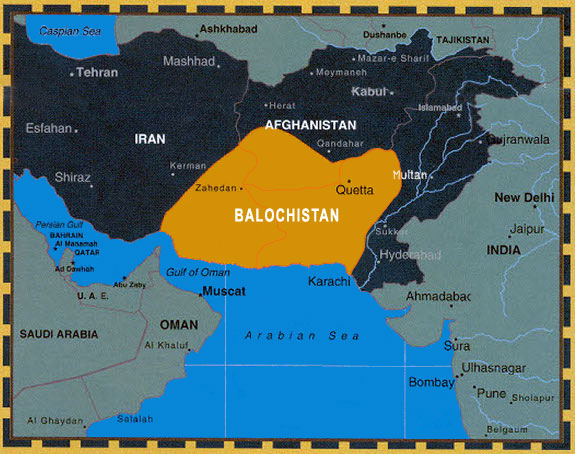
Firstly, the division of Balochistan in 1839 among Iran, Pakistan and Afghanistan rendered the West as friendless in the region. Secondly, the creation of Pakistan by the British is proving to be a major tool of a mass-producing factory for replicating anti-West rhetoric, which is a crucial ally of China against the United States and the Western world. The COVID-19 has already created a World War like situation countries with a fragile economy, rising death tools and reshuffling of allies are accelerating change in the paradigm of power politics globally.
China with its technology is replacing the domination of Western civilisation. This clash of civilisation may trigger the cold warfare amid COVID-19 because of the realisation that the West is getting in a short span of time. Any race of technology among the West, America and China desire for a crucial ally, strategic location and global market, China has sorted out its new allies and markets but America and West have yet to do.
The Baloch nation has always remained pro-West and America, with its territories occupied by Pakistan and Iran, but both fanatic states have suppressed Baloch nation beneath the nose of the West and United States. COVID-19 has rendered Pakistan as an optionless country that would soon succumb the mineral-rich Balochistan to China against the will of the Baloch nation. Not only Baloch nation suffer under Sino-Pak occupation but the Western world, India and the United States will be deprived of adjoining oceans seas, central Asian market and Asia almost.
Today COVID-19 is serving China’s interests because under the heat of this virus China is increasing its labours number at Gwadar to bring speedy construction for the Silk Road thereby retaining its hegemony in Makuran Balochistan coastal belt. All this is happening when Chinese birth COVID-19 has brought catastrophe to Western and American economy. Beijing is intended to replace global health institutions by building its own parallel governance institutions. According to Axios reports, Chinese think tanks are already floating the idea of “Beijing led global health organisations that would rival WHO” but the outbreak of COVID,-19 has underscored China’s place in an increasingly interconnected world. Now it depends on the Western world that what approach it takes to purge the menace created by china in global politics.
Besides, for durable peace and tranquillity, the Western powers coupled with the United States has to look to nations like Balochistan which is thriving for regaining its freedom since the first day of occupation. COVID-19 has left a lesson for the entire world that the globe cannot be left on the mercy of China and its allies like Pakistan and Iran but the region needs reshuffling where it’s incumbent for Balochistan to be a free state.
پاکستان پیپلزپارٹی کے چیئرمین بلاول بھٹو زرداری کی سادگی کے ساتھ نوڈیرو ہاؤس، لاڑکانہ میں عید، شہدائے جمہوریت کے مزارات پر بھی حاضری
: پاکستان پیپلزپارٹی کے چیئرمین بلاول بھٹو زرداری نے کہا ہے کہ عید کے موقع پر قوم کے لئے قربانی دینے والوں کی جدوجہد کو ضرور یاد رکھیں، آج ہم طیارہ حادثے کے المناک واقعے کی یادوں کے ساتھ عید منارہے ہیں، اس عید کو اپنے شہداء کے نام کریں، چیئرمین بلاول بھٹو زرداری نے مزید کہا کہ اس عید کو ان ڈاکٹرز، نرسوں اور پیرامیڈیکل اسٹاف کے نام کرنا چاہئیے جو کرونا وائرس کے خلاف جدوجہد کررہے ہیں، اس موقع پر پاکستان پیپلزپارٹی کے چیئرمین کا کہنا تھا کہ زندگی سے بڑھ کر کوئی قیمتی اثاثہ نہیں، سماجی فاصلہ رکھ کر زندگیوں کو محفوظ بنایا جاسکتا ہے، چیئرمین بلاول بھٹو زرداری نے ان خیالات کا نوڈیرو ہاؤس میں سادگی کے ساتھ عید مناتے ہوئے کیا، اس موقع پر چیئرمین بلاول بھٹو زرداری نے سماجی فاصلے کے اصول و ضوابط کو ملحوظ خاطر رکھتے ہوئے گڑھی خدا بخش میں شہدائے جمہوریت کے مزارات پر حاضری دی،
چیئرمین بلاول بھٹو زرداری نے عید کے موقع پر شہید ذوالفقار علی بھٹو، مادر جمہوریت بیگم نصرت بھٹو، شہید بے نظیر بھٹو، شہید میر شاہنواز بھٹو اور شہید میر مرتضی بھٹو کے مزارات پر حاضری دی اور پھول چڑھائے، اس موقع پر چیئرمین بلاول بھٹو زرداری نے شہدائے جمہوریت کے درجات کی بلندی کے ئے
فاتحہ خوانی بھی کی۔
Saturday, May 23, 2020
From China: National security law a 'death knell' for US intervention in HK: Global Times editorial
Will a national security law that is to be implemented in Hong Kong undermine the "one country, two systems" principle? Before answering this question, we'd like to ask: Which country does not have national security laws? Which country would allow its administrative regions to become a void of national security where some internal forces collude with foreign forces and jeopardize national security?
Article 23 of the Basic Law stipulates that the Hong Kong Special Administrative Region (SAR) shall enact national security laws on its own. But it has been almost 23 years since Hong Kong's return to China, and the Hong Kong SAR has failed to enact such laws.
Some extreme opposition forces in Hong Kong are inciting the public to resist Article 23 legislation, which has been supported by countries such as the US and the UK. In Hong Kong's opinion sphere, Article 23 legislation has almost become taboo and can barely be mentioned.
In 2003, mass protests took place in opposition to Article 23 legislation. The legislation of national security laws has become a long-term point of contest between the central government and Hong Kong's extreme opposition which rallies support from Western forces.
The absence of a national security law is one of the very reasons that Hong Kong has become chaotic and its value system has deviated from the normal track. The rule of law has been undermined by extremists who play a destructive role in national security and set a bad example to society.
This must end. National security legislation in Hong Kong is a necessary guarantee for the "one country, two systems" principle to function normally and for Hong Kong to enjoy a high degree of autonomy. As the Hong Kong SAR is in a difficult position to fulfill this task, the National People's Congress needs to shoulder the responsibility based on the right given by the Constitution and the Basic Law. It must help a lost Hong Kong find its position as a special administrative region of China.
The logic of the move is clear, and its urgency is known to all. Saying the national security law in Hong Kong undermines "one country, two systems" and puts Hong Kong's high degree of autonomy in jeopardy is simply a US-centric value and disregards the fact that Hong Kong has returned to China.
We believe most countries will understand China's moves and not follow US rhetoric. Washington has already rallied support from its Western allies to attack China. Some have taken a stance, but only the US has said that it will have a strong reaction.
All countries need to guarantee national security. Western countries can understand this political and legal need as long as they are not biased.
Obviously, Beijing is determined to prevent external forces from interfering in Hong Kong affairs and to reconstruct the national security system in Hong Kong regardless of the costs. We advise Washington and extreme forces within Hong Kong not to misjudge the situation and wrongly believe they can obstruct the legislation and implementation of the law.
US Secretary of State Mike Pompeo warned on Friday that Beijing's plan to bypass Hong Kong's legislative process and pass a national security law would be a "death knell" for the Hong Kong's high degree of autonomy. Yes, there would be a "death knell," but for the US' interference in Hong Kong affairs. Washington will be made to realize that Hong Kong's high degree of autonomy is ensured under Chinese jurisdiction, not US manipulation.
https://www.globaltimes.cn/content/1189224.shtml
Article 23 of the Basic Law stipulates that the Hong Kong Special Administrative Region (SAR) shall enact national security laws on its own. But it has been almost 23 years since Hong Kong's return to China, and the Hong Kong SAR has failed to enact such laws.
Some extreme opposition forces in Hong Kong are inciting the public to resist Article 23 legislation, which has been supported by countries such as the US and the UK. In Hong Kong's opinion sphere, Article 23 legislation has almost become taboo and can barely be mentioned.
In 2003, mass protests took place in opposition to Article 23 legislation. The legislation of national security laws has become a long-term point of contest between the central government and Hong Kong's extreme opposition which rallies support from Western forces.
The absence of a national security law is one of the very reasons that Hong Kong has become chaotic and its value system has deviated from the normal track. The rule of law has been undermined by extremists who play a destructive role in national security and set a bad example to society.
This must end. National security legislation in Hong Kong is a necessary guarantee for the "one country, two systems" principle to function normally and for Hong Kong to enjoy a high degree of autonomy. As the Hong Kong SAR is in a difficult position to fulfill this task, the National People's Congress needs to shoulder the responsibility based on the right given by the Constitution and the Basic Law. It must help a lost Hong Kong find its position as a special administrative region of China.
The logic of the move is clear, and its urgency is known to all. Saying the national security law in Hong Kong undermines "one country, two systems" and puts Hong Kong's high degree of autonomy in jeopardy is simply a US-centric value and disregards the fact that Hong Kong has returned to China.
We believe most countries will understand China's moves and not follow US rhetoric. Washington has already rallied support from its Western allies to attack China. Some have taken a stance, but only the US has said that it will have a strong reaction.
All countries need to guarantee national security. Western countries can understand this political and legal need as long as they are not biased.
Obviously, Beijing is determined to prevent external forces from interfering in Hong Kong affairs and to reconstruct the national security system in Hong Kong regardless of the costs. We advise Washington and extreme forces within Hong Kong not to misjudge the situation and wrongly believe they can obstruct the legislation and implementation of the law.
US Secretary of State Mike Pompeo warned on Friday that Beijing's plan to bypass Hong Kong's legislative process and pass a national security law would be a "death knell" for the Hong Kong's high degree of autonomy. Yes, there would be a "death knell," but for the US' interference in Hong Kong affairs. Washington will be made to realize that Hong Kong's high degree of autonomy is ensured under Chinese jurisdiction, not US manipulation.
https://www.globaltimes.cn/content/1189224.shtml
We must listen to women’s warnings about the Middle East
Saudi Women's Rights Activist Detained for Two Years While Awaiting Trial Must Be Released During Pandemic, Sister Says

BY CHANTAL DA SILVA
Today marks two years since Loujain al-Hathloul, a prominent human rights activist in Saudi Arabia, was arrested and detained for trying to "destabilize the kingdom" with her fight to push for more freedoms for women across the country.
Her family is now more worried for her safety than ever before, with Loujain's sister, Lina al-Hathloul, telling Newsweek the activist is "losing hope" after her trial date was pushed back indefinitely due to the coronavirus pandemic, while her family has also been barred from seeing her amid the outbreak.
"We can hear that she's losing hope," Lina, 25, told Newsweek on Friday. "It's really worrying that my parents can't visit her."
In May 2018, Loujain, then 28 years old, became one of several women's rights activists to be arrested for trying to push Saudi Arabia toward the kind of "modernization" that Crown Prince Mohammed bin Salman has claimed to champion.
Before her arrest, Loujain had used social media to amplify her voice, with the activist famously live-streaming herself defying Saudi Arabia's ban on women driving.
Despite being arrested and detained for 73 days in 2014 after attempting to drive into Saudi Arabia from the United Arab Emirates, Loujain continued to push for the ban to be lifted. She was also an advocate for the end to Saudi Arabia's male guardianship system and became one of the first women to run for office in the country in 2015.
For months after her arrest, Loujain said she had not even been formally told what she was being detained for.
It was on March 13, 2019, during her first trial session, that Loujain was formally charged with "promoting women's rights...calling for the end of the male guardianship system...contacting international organizations, foreign media, and other activists, including contact with Amnesty International," Amnesty International states in a profile on the activist.
Now, more than 700 days after she was detained in May 2018, Loujain, 30, continues to sit behind bars, awaiting trial.
According to her sister, Loujain's trial date had been set to take place in February.
"They canceled it without justification," Lina said. "Then, they said the judge was sick and now they have the excuse of coronavirus and stopped everything. They didn't give any new dates for the trials."
Knowing that her sister is being detained and cut off from seeing her family amid a pandemic that has claimed hundreds of thousands of lives, Lina said her family has become desperate to secure the 30-year-old's release.
"I'm really worried because there's so much bad news coming out of prisons right now," Lina said, referring to global concerns around the spread of coronavirus among incarcerated populations, with prisoners around the world often being held in overcrowded facilities with limited access to adequate sanitation.
"It's just so scary not being able to have physical contact with Loujain to be sure that she is fine," Lina said.
While Loujain can talk to family members over the phone, Lina said her sister is unable to speak freely. "She can't complain about anything on the phone," Lina said. If she does, Lina said, authorities will simply cut the call.
"But we can hear it in Loujain's voice," she said. "She's not healthy right now. She's just losing hope."
With today marking the second anniversary of Loujain's arrest, Lina and human rights advocacy groups around the world are calling for the 30-year-old activist to be released.
Speaking with Newsweek on Friday, Uma Mishra-Newbery, the executive director of Women's March Global, said her organization, which is part of the Free Saudi Activists coalition, is joining in those calls, demanding that Loujain and other human rights activists detained in Saudi Arabia be freed.
"We are working to advocate for the immediate and unconditional release of all Saudi women and human rights defenders," she said.
Part of that effort, Mishra-Newbery said, is calling on countries, including the U.S., and businesses to put pressure on Saudi Arabia to release detainees who advocates say have been unfairly detained.
"There is a complicity here by the international and business communities and their lack of holding Saudi Arabia accountable for its injustices," she said.
"There are opportunities coming up, like with the G20 Summit held in November, where they can speak out in a forceful and public way against Saudi Arabia," she said.

While some countries, such as Iceland and Germany, have taken strides in seeking to hold Saudi Arabia accountable, she said, countries like the U.S. continue to work with the country, including selling "an incredible amount of weapons" to Saudi Arabia.
In recent years, bin Salman, known around the world as MBS, has sought to change the image Saudi Arabia projects to the outside world, lifting the ban on women driving that activists like Loujain have been imprisoned for pushing against and allowing mixed-sex concerts.
"Saudi Arabia has been working for several years on a public relations campaign," Mishra-Newbery said, noting that the country has made headlines around the world for its proclaimed efforts towards "modernization."
However, Lina said, the way the relatively new freedoms introduced in Saudi Arabia have been policed has created an "atmosphere of fear" in the country, with women in particular not being sure "where the red lines are."
"Yes, women can go to concerts, but when they dance, if a policeman thinks she is not decent enough, he can arrest and imprison her," Lina said. "It's unclear and messy. They're not real freedoms that have been given because you don't know where the red lines are."
The high-profile killing 2018 death of Jamal Khashoggi, a U.S.-based journalist who was critical of Saudi Arabia's government that was killed after walking into the country's consulate in Istanbul, has further cast a significant shadow over those efforts, despite the Saudi government claiming that his murder was carried out in a "rogue operation."
Saud al-Qahtani, a former influential aide to MBS who had been suspected of playing a role in directing Khashoggi's killing, was cleared of wrongdoing by Saudi prosecutors.
However, Loujain's family and human rights advocates have said that al-Qahtani also played a role in directing torturous acts against the activist in the early months of her detention.
"I won't stop until he is sentenced for Loujain's torture," Lina said. "I'm furious."
Lina described how her sister had initially been "kidnapped" while driving along the highway between Dubai and Abu Dhabi in April 2018.
Loujain's car was surrounded by vehicles, Lina said, and she was forced to stop before being detained and eventually forced onto a plane and flown to Saudi Arabia.
Lina said that when her sister arrived in Riyadh, she was imprisoned for several days and interrogated before being released with a travel ban barring her from leaving Saudi Arabia.
In May 2018, however, Lina said her sister's home was raided and she was taken back to prison, where she has remained ever since.
In the first ten months of her detention, Loujain was held without charges or trial, according to Amnesty International, which is also campaigning for the 30-year-old's release.
During that time, the organization alleges Loujain has been "beaten, waterboarded, given electric shocks, sexually harassed, and threatened with rape and murder." The abuse, Loujain's family has claimed, was orchestrated by al-Qahtani.
Loujain had made the claim during one of Lina's early visits with her parents, Lina said. Noticing marks on their daughter's body and that she seemed to be sapped of energy, they demanded that Loujain tell them what was happening to her.
"She told them about the torture, that she had been electrocuted," Lina said. The 25-year-old said she did not believe that officials carried out the alleged abuses "to get information from her."
"They enjoyed it. It was a torture session where they could come laugh at her," she said.
In 2019, al-Hathloul was reported to have rejected a release deal that would have granted her freedom in exchange for denying that she had been tortured.
She had initially agreed to sign the agreement, her brother, Walid al-Hathloul, had written on Twitter. However, when Saudi officials demanded that she make the statement on camera, he said she refused.
"When the state security asked her to sign the document for the video release, she immediately ripped the document," Walid wrote. "She told them by asking me to sign this document you are involved in the cover-up and you're simply trying [to] defend Saud Al-Qahtani who was overseeing the torture."
According to Amnesty International, there are currently at least 13 women's rights activists on trial for their activism in Saudi Arabia.
"Of the 13, five remain in detention: Loujain al-Hathloul, Samar Badawi, Nassima al-Sada, Nouf Abdulaziz and Maya'a al-Zahrani," the organization said in a statement marking the anniversary of the May 2018 arrests.
"Eight other activists have been temporarily released, though they all face trial and many remain at risk of being jailed under anti-cybercrime legislation for their human rights work," Amnesty International said. "These eight are: Iman al-Nafjan, Aziza al-Yousef, Amal al-Harbi, Dr Ruqayyah al-Mharib, Shadan al-Anezi, Dr. Abir Namankni, Dr Hatoon al-Fassi, and an anonymous activist."
"At least ten activists have endured a range of human rights violations while in prison, including torture, sexual abuse and other forms of ill-treatment," the organization has claimed.
Mishra-Newbery said it was important to note that it is hard to know exactly how many activists were targeted in the May 2018 campaign, since not all families would be willing to risk speaking out about their arrests.
In a statement shared with Newsweek, a spokesperson for advocacy group Free Saudi Activists said: "Saudi women's rights defenders have suffered inconceivable human rights violations at the hands of the Saudi government and our first priority is to ensure that they are immediately and unconditionally released."
Until activists like Loujain are allowed to walk free, Lina and human rights advocacy groups around the world have been clear: "The international and business community must also hold the Saudi government accountable for these injustices."
Doing so is necessary, they have said, for the global community to "move forward with actionable solutions for the advancement of women's human rights."
Newsweek has contacted Saudi Arabia's embassies in the U.S. and Britain for comment.

Subscribe to:
Posts (Atom)