Wednesday, September 23, 2020

’وزیر اعظم نیشنل سکیورٹی کی میٹنگ نہیں کرسکتے تو استعفیٰ دیکر کسی اور کو موقع دیں‘ - بلاول بھٹو زرداری


پاکستان پیپلز پارٹی کے چیئرپرسن بلاول بھٹو زرداری کا کہنا ہے کہ آئندہ قومی سلامتی سے متعلق اجلاس ہو یا کوئی بھی معاملہ ہوا ایسے کسی اجلاس میں پیپلز پارٹی شریک نہیں ہوگی جس میں شیخ رشید موجود ہوں گے۔

کراچی بلاول ہاؤس میں پریس کانفرنس کرتے ہوئے بلاول بھٹو زرداری کا کہنا تھا کہ 'قومی سلامتی کے امور پر آئندہ کسی میٹنگ میں شیخ رشید ہوئے تو میں نہیں جاؤں گا۔'

بلاول بھٹو نے کہا کہ قومی سلامتی سے متعلق اجلاس یا کوئی بھی ان کیمرہ اجلاس ہو تو اس کی تفصیلات سامنے نہیں لائی جاتیں لیکن کچھ غیر ذمہ دار لوگ جن کا تعلق نہ قومی سلامتی سے، نہ گلگت بلتستان سے نہ آزاد کشمیر سے نہ ہی خارجہ پالیسی سے تھا، انھوں نے مجبور کیا ہے کہ میں اس حوالے سے بات کروں۔

بلاول بھٹو کا کہنا تھا کہ 'جنھوں نے عسکری قیادت سے ہونے والی ملاقات میں ایک لفظ نہیں کہا وہ آج کل ہر ٹی وی چینل پر آکر بات کر رہے ہیں۔'

چیئرمین پیپلز پارٹی نے کہا کہ قومی سلامتی کے معاملے پر جو اجلاس بلایا گیا اس کے حوالے سے میڈیا پر ایسی باتیں کرنے سے معاملہ متنازع ہوتا ہے۔

چیئرمین پیپلز پارٹی بلاول بھٹو زرداری نے اِن کیمرہ اجلاس کی باتیں باہر کرنے والے کو چپ کرانے کا مطالبہ کیا۔

'اِن کیمرہ اجلاس کی باتیں کرنے والا جس کا بھی ترجمان ہے انھیں چاہیے کہ اُسے چپ کرائیں، ہم ملکی سلامتی پر متحد ہیں، ان کیمرا اجلاس کی بات باہر نہیں کرتے۔'


'وزیر اعظم ہر معاملے پر ناکام رہے ہیں'

وزیراعظم عمران خان پر تنقید کرتے ہوئے انھوں نے کہا کہ 'وزیراعظم عمران خان ہر معاملے پر ناکام رہے ہیں، قومی مسائل پر اپوزیشن کو انگیج کرنا وزیراعظم کی ذمہ داری ہے، اہم ایشوز پر وزیر اعظم نیشنل سکیورٹی کی میٹنگ نہیں کرسکتے تو استعفیٰ دیکر کسی اور کو موقع دیں، اس بار بھی وزیراعظم شریک نہیں ہوئے، ان کے بغیرمیٹنگ نہیں ہونی چاہیے تھی، وزیراعظم کی موجودگی ضروری تھی یہ ہمارا حتمی موقف ہے۔'

ان کا کہنا تھا کہ 'آرمی چیف کی طرف سے کسی خاص ترمیم پر کوئی بات نہیں ہوئی، گلگت بلتستان کی میٹنگ میں زیادہ بات صاف شفاف الیکشن پر ہوئی، ماضی میں جو اعتراضات رہے ہیں، وہ دور کیے جائیں گے۔'

خیال رہے کہ گزشتہ دنوں عسکری قیادت اور پارلیمانی رہنماؤں کی ملاقات ہوئی تھی۔

'نواز شریف کی تقریر نے اے پی سی کو اچھی سمت دی'

پاکستان پیپلز پارٹی کے چیئرپرسن بلاول بھٹو زرداری نے اپوزیشن کی آل پارٹیز کانفرنس کو مثبت قرار دیتے ہوئے کہا کہ سابق وزیراعظم ' نواز شریف نے طویل اور تفصیلی تقریر کی جس نے ہماری سے اے پی سی کو اچھی ڈائریکشن دی، جس کے نتیجے میں ہم نے نو گھنٹے بحث کے بعد ایک مشترکہ اعلامیہ اور ایکشن پلان بھی جاری کیا۔'

ان کا کہنا تھا کہ اے پی سی پاکستان کی تاریخی اے پی سی ہے اور موجودہ حکومت کے آنے کے بعد پہلی مرتبہ آصف زرداری اور نواز شریف ایک ساتھ موجود تھے۔

بلاول کا کہنا تھا کہ 'اب ہماری جماعتیں مل کر بیٹھیں گی اور آگے کا لائحہ عمل بنائیں گے اور اعلامیے کے تحت اس کا اعلان کریں گے۔'

انھوں نے کہا کہ 'ہم نے اس دن بھی کہا تھا اور اب یہی کہتے ہیں ہم ملک میں جمہوریت، جمہوری آزادی، بولنے کی آزادی چاہتے ہیں اور میڈیا پر جو سنسر شپ ہے اس کا خاتمہ چاہتے ہیں۔'

ان کا کہنا تھا کہ ہم تمام جماعتوں اور تمام صوبوں کو کام کرنے کے برابر موقع دینے بات کررہے ہیں، انتخابات، چینلز، عدالتوں اور الیکشن کمیشن کو برابر موقع دیا جائے ورنہ اس ملک میں جمہوریت آگے نہیں بڑھ سکتی۔

بلاول بھٹو کا کہنا تھا کہ تمام سیاسی جماعتیں الیکشن ریفارمز پر کام کریں تو عام انتخابات بھی شفاف اور غیر جانبدار ہوسکتے ہیں۔

'آرمی چیف بھی گلگت بلتستان میں شفاف انتخابات پر متفق ہیں'

گلگت بلتستان سے پیپلزپارٹی کے امیدواروں کا اعلان کرتے ہوئے بلاول کا کہنا تھا کہ 'پیپلزپارٹی نے 2018 کے منشور میں گلگلت بلتستان میں اصلاحات کی بات کی تھی، میں انہی اصلاحات پرالیکشن لڑوں گا۔'

بلاول نے گلگت بلتستان میں شفاف الیکشن کرانے کا مطالبہ کرتے ہوئے کہا کہ ملاقات میں ہمارا موقف تھا کہ گلگت بلتستان کےعوام اپنے مستقبل کے فیصلے خود کرے گی، منتخب اسمبلی جو بھی فیصلہ کرے گی ہمیں قبول ہوگا، آرمی چیف بھی متفق ہیں کہ گلگت بلتستان میں شفاف انتخابات ہونے چاہیئں۔

چیئرمین پیپلزپارٹی نے کہا کہ آرمی چیف سے یہ تاثر ملا کہ ایسی اصلاحات ہوں جس سے الیکشن متنازعہ نہ ہوں۔

اپوزیشن نے ہمیشہ قومی سلامتی کے مسائل پر تعاون کیا، ملک کی سلامتی کے معاملے پر کل بھی ایک تھے اور آج بھی ایک ہیں۔

https://www.bbc.com/urdu/pakistan-54264455?at_campaign=64&at_custom3=BBC+Urdu&at_medium=custom7&at_custom4=D2FFFBF0-FDA6-11EA-98ED-6DD14744363C&at_custom1=%5Bpost+type%5D&at_custom2=twitter 

Tuesday, September 22, 2020

Video - #Colbert #RGB #Monologue Saying Goodbye To Justice Ruth Bader Ginsburg, An American Hero

Video Report - #UK #Coronavirus At 'perilous turning point', UK enforces new COVID-19 measures

Video - #DailyShow #TrevorNoah #DrFauci Dr. Anthony Fauci - Getting Politics Out of Public Health | The Daily Social Distancing Show

CITIZEN by CNN: #welovefauci - Dr. Fauci on US coronavirus death toll

Video Report - US surpasses 200,000 coronavirus deaths

#Pakistan - Why is women’s success hard to digest?

 By Aaliyah Shah

A successful woman is a thorn in a man’s eyes because it’s men’s nature that they cannot see a woman succeeding beyond them and leaving them behind in a professional field.

If in this society, women have gained a little importance, definitely, on the other hand, people start believing that they are called immoral and bad characters.

Sometimes they become stains in the name of rituals, sometimes they have nothing to do with it by being found guilty of violating the honour of the family. And sometimes women become victims of mud sliding and accused of as an agent of state institutions.

There is no doubt that anyone can be a state agent, collaborator, and spy but it also seems to have become a new trend to killed people for personal motives and grudges and label them as agents.

Is the success of women is only gauged when she is overwhelmed with household chores all her life or is a woman just a machine to only produce children in all life?

These are questions almost every woman has in their minds and only a few have now started to raise these questions openly. I am, of course, not trying to imply that all men are the same and all men are evil. Similarly, not all women are saints and pious.

Shaheena Shaheen achieved success at a young age because she loved her desires and dreams immensely. She was just like her name – Shaheen, a falcon who loved to fly in high altitude.

Today, a failed man who is MI’s right hand and who could not see the Shaheen flying above his head, brutally killed her. Yet, he’s roaming freely and the authorities are not doing anything to arrest him let alone punishing him.

Unfortunately, This is just because the Baloch nation and Baloch society have a dead conscience that they are trying to save a murderer instead of raising a voice for his arrest and demanding justice for the victim’s family.

The government its supporters and this backward society could not digest Shaheena Shaheen for flying high. Shaheena’s murder is not only the murder of Shaheena but of every Baloch daughter who wants to fly like Shaheena. It is the murder of every girl who wants to turn her dreams into reality in the world.

Everyone who wants to prove Shaheena’s murder is just a domestic issue is Shaheena Shaheen’s killer. What makes them think that Shaheena’s murder was a demotic issue?

Some people say that a woman should not have so much freedom and they are equally complicit in the killings of Shaheena Shaheen saying that women’s emancipation is a sin in our culture.

Only almighty knows after Shaheena Shaheen, which daughter of Balochistan will be killed in the name of which domestic issue. This is just the beginning. Who knows if the next target is me because I am daring to speak about the reality of this so-called society.

BUT everyone must know that even domestic violence is a crime and criminals involved in domestic violence are also punished severely everywhere else around the world except in Pakistan.

https://balochwarna.com/2020/09/18/why-is-womens-success-hard-to-digest/

Free Balochistan Movement (FBM) urges #FATF to Blacklist Pakistan for Promoting Religious Extremism and Drug trafficking


He said that on 13th Sept 2020 the religious foot soldiers of the Pakistan army, Sabah-e-Sahaba, armed with machine guns, attacked the peaceful protesting camp of Voice for Missing Persons of Sindhi & Baloch missing persons in Karachi in which several men and women were injured.

The Free Balochistan Movement (FBM) Spokesperson Mr Gamshaad Baloch said in a statement that Pakistan is still vigorously promoting religious extremism in occupied Balochistan, Sindh, and Khyber Pakhtunkhwa.

The videos and photos of this attack, now viral in social media, show that the fanatics members of Sipah-e-Sahaba, the armed wing of Jamaat-e-Islami were brazenly attacking the secular Baloch and Sindhi Human Rights activists whose loved ones were forcefully disappeared by the Pakistan army.

FBM spokesperson said that just eight days ago on September 12, 2020, Jamaat-e-Islami, the mother organization of all religious extremism forces across the world, held a rally in Karachi in which sectarian slogans were raised against another religious sect of Islam. It shows that Pakistan didn’t abandon its policy of promoting religious extremism in the region to advance its deep state agenda of Punjab’s monopoly over resources of Baloch, Sindhis, and Pashtun nations.

FBM spokesperson urged the Paris based Financial Action Task Force (FATF) that it must not overlook the current wave of religious violence Pakistan has unleashed against the peaceful secular people of Balochistan, Sindh and Khyber Pakhtunkhwa.

If the past is a guide, then the country study of Pakistan shows that it will never heed to guidelines and warnings, therefore the Financial Action Task Force, FATF must immediately put Pakistan into blacklist because it adopted religious extremism as a state policy to promote its vested in interests in South Asia.

Furthermore, Free Balochistan Movement (FBM) spokesperson urged FATF to look into the facts that why Pakistan has failed to deliver as a responsible member state of the United Nations in terms of promotion of peace and prosperity in South Asia?

It has internally subjugated Baloch Sindhi and Pashtun people to abject poverty and externally it has wreaked havoc in Afghanistan and India and above all, it has proliferated nuclear technology to rogue states like Iran, North Korea, and Libya, besides promoting its stockpile of dirty tactical weapons. Today these rogue states have become the deadliest countries for world peace.

Pakistani militia forces, locally known as Frontier Corps (FC) has turned the Balochistan coast & Southern Afghanistan border near Baramcha into opium trade corridors, and from these drugs corridors it is trafficking opium to Africa, Europe, and America, Mr Gamshaad Baloch said.

He further maintained, ‘Pakistan Army & ISI are earning billions of dollars through drug trafficking, unfortunately, the international community and the FATF are overlooking this source of black money because Pakistan has deceptively termed drugs smuggling money as remittances it receives from its overseas citizens from Europe America and the Gulf States.’

https://balochwarna.com/2020/09/20/fbm-urges-fatf-to-blacklist-pakistan-for-promoting-religious-extremism-and-drug-trafficking/

Explained: Pakistan's emotive blasphemy laws

By


In recent years, a record number of cases have been filed under blasphemy law introduced during British colonial rule.

Bishop John Joseph, 65, one of Pakistan’s most prominent human rights activists, had been campaigning for decades to reform the country's strict blasphemy laws.

On the morning of May 6, 1998, he led a procession to the steps of the court in the central Pakistani town of Sahiwal, where a young man, Ayub Masih, had been convicted and sentenced to death for blasphemy days earlier.

Masih, an illiterate man, had been accused of quoting from Salman Rushdie's controversial book The Satanic Verses in an argument with a Muslim man. In a controversial trial, a judge found him guilty of having insulted Islam's prophet and sentenced him to the mandatory death penalty.

Joseph led prayers for Masih and walked protesters to the doors of the court. He then pulled out a pistol and shot himself in the head.

The bishop's suicide was a striking protest against Pakistan's harsh blasphemy laws, initially a holdover from British colonial rule that were strengthened in independent Pakistan due to pressure from the religious right wing.

In recent years, record numbers of cases are being filed under the law, which can carry a death sentence, inside or outside the courtroom. Last month, several cases were filed against members of the country's Shia Muslim minority, who form roughly 20 percent of the country’s 207 million population.

Currently, there are about 80 convicts on death row or serving life imprisonment terms in Pakistan for committing "blasphemy", according to (PDF) the US Commission for International Religious Freedom.

In the last decade, the "offences" committed by those accused of blasphemy have been as absurd as throwing a business card into the rubbish (the man's name was Muhammad), a rural water dispute, spelling errors, the naming of a child, the design of a place of worship, burning a (non-religious) talisman or sharing a picture on Facebook.

Increasingly, cases are being settled with violence outside the courtroom, with mob and targeted attacks against those accused. In many cases, families and lawyers of the accused, and even judges who have acquitted defendants, have been targeted.

Since 1990, at least 77 people have been killed in connection with such accusations, the latest murder occurring in a courtroom last month.

What makes this issue so emotive in Pakistan?

'Religious identity tied to the authority of the state'

"There's no simple answer to this question," says Arsalan Khan, an anthropologist who studies Islamic revivalist movements.

"In a sense, all religious traditions have deep connections to specific sacred objects and would be hurt by perceived defilement of their religious traditions, but this has certainly taken heightened political significance in Pakistan."

Khan argues that the heightened significance of "blasphemy" in Pakistan, as opposed to other Muslim countries (including theocracies such as Saudi Arabia and Iran), is linked to the formation of the country in 1947 as a homeland for South Asia’s Muslims.

"Religious identity has been centred as one of the core bases for national belonging in Pakistan," he says. "When] the state has defined Islam as the ultimate source of sovereignty, such battles have taken on deeper political significance."

When religious identity and authenticity is tied to the authority of the state, "blasphemy" becomes a site for political contestation.

"What is important in Pakistan is the jostling for position as the true, authentic and passionate representatives of Islam, that has given blasphemy accusations its real force in political life," explains Khan.

Increasingly, this has seen far-right religious parties rise to prominence campaigning explicitly on the basis of protecting the "honour" and "sanctity" of Islam and its Prophet Muhammad.

That rise can be traced to the murder of Salman Taseer, then-governor of Pakistan's most populous Punjab province, in January 2011. Taseer had been campaigning for months to reform the country’s blasphemy laws as he sought justice for a young Christian woman, Aasia Bibi, who had been sentenced to death for the crime.

He was killed by his bodyguard, Mumtaz Qadri, for his campaign against the controversial law. Qadri was executed five years later for the shocking murder, but he was hailed as a hero, even a saint, by many in Pakistan for his act of killing a perceived blasphemer.

Two months after Taseer’s murder, a federal minister was shot dead by the Pakistan Taliban for the same reason.

The murders, and subsequent public mobilisation in support of violence in the name of the blasphemy law, gave religious parties that represented the country's majority Sunni Muslim Barelvi sect, long sidelined from political prominence, an opportunity to regain lost political ground, say analysts.

"After Taseer's assassination and the lionisation of Mumtaz Qadri, it is clear that Barelvis begin to position themselves as the group that are the true 'ashiq-e-Rasool' [lovers of the Prophet] and assume the position as true representatives of Islam in the public arena through blasphemy," says Khan.

Barelvis form roughly half of Pakistan's population, and their beliefs are a synthesis of conservative Islam and South Asian Sufi practices, including the veneration of saints and a particular devotion to the Prophet Muhammad.

The Sunni Tehreek (ST) political party, then the largest Barelvi political party, saw its ranks swell. With hardline Barelvi clerics across the country taking up the issue of blasphemy to whip up public outrage, a new political party, the Tehreek-e-Labbaik Pakistan (TLP), was formed in the run-up to the 2018 general election.

The TLP led large anti-government protests over perceived "blasphemy" in 2017. Though it could not win a seat in the national parliament in the 2018 polls, it did gain the fourth-highest share of the popular vote in that general election.

"Electoral success is ultimately a secondary goal for these religious movements," says Khan. "The aim of blasphemy politics is ultimately about defining yourself as the authentic representative of Islam in the public sphere […] which in turn forces the Pakistani state, which defines its own sovereignty in relationship to Islam, to yield to this power."

The laws, lawyers and analysts say, are treated by followers of the TLP and others who support them as "sacred", having been laid down by God.

But are they?

All religious traditions have deep connections to specific sacred objects and would be hurt by perceived defilement of their religious traditions, but this has certainly taken heightened political significance in Pakistan

 Pakistan inherited its blasphemy laws from its former British colonial rulers, who in 1860 introduced a set of laws related to religion in order to quell Hindu-Muslim violence in the Indian subcontinent.

The laws were strengthened in 1927 with the addition of a vague clause to criminalise "deliberate and malicious acts intended to outrage religious feelings of any class by insulting its religion or religious believers", in response to a high-profile case that ultimately ended in the murder of a Hindu man who published a pamphlet deemed "blasphemous" by some Muslims.

Between 1860 and 1947, when Pakistan gained independence from the British and broke away from India, there were just seven recorded cases of blasphemy, according to a report by the Centre for Research and Security Studies (CRSS).

Use of the law remained rare in the following decades, with just 10 judgments relating to offences against religion reported until 1977, according to a report by the International Commission of Jurists.

In 1974, however, then-Prime Minister Zulfiqar Ali Bhutto's government oversaw the introduction of a constitutional amendment that declared members of the Ahmadiyya sect "non-Muslim".

Between 1980 and 1986, the military government of General Zia-ul-Haq further strengthened the laws, adding five new clauses, all specific to Islam and criminalising offences such as defiling the Holy Quran, insulting Islam’s Prophet or using "derogatory" language against certain religious figures.

During Haq's rule, from 1977-1988, the number of cases skyrocketed, with more than 80 blasphemy cases filed in that period, according to the CRSS.

That trend continued through the 1990s, in particular after a controversial higher Islamic court decision in 1991 that made the imposition of the death penalty mandatory for the crime of insulting Islam's prophet.

Between 2011 and 2015, the latest period for which consolidated data is available, there were more than 1,296 blasphemy cases filed in Pakistan.

The laws are now treated as sacred, but experts say there is no clear definition of "blasphemy" in Islamic jurisprudence, nor is there agreement on the punishment for it.

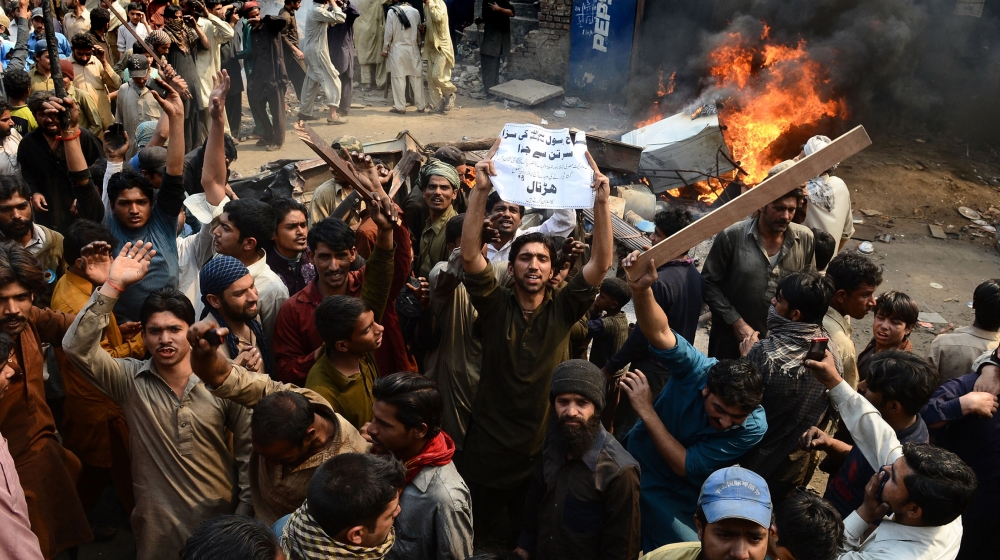
Angry Pakistani demonstrators shout slogans during a protest over alleged blasphemous remarks by a Christian in a Christian neighborhood in Badami Bagh area of Lahore on March 9, 2013. Thousands of an
Pakistan's blasphemy laws are some of the strictest in the world, harsher and more specific than comparable laws in Saudi Arabia, Iran, Malaysia, Indonesia, Afghanistan and other countries [File: Arif Ali/AFP]

"There are as many definitions and positions on blasphemy as there are Muslim countries and scholars," says Arafat Mazhar, a filmmaker and director of the Engage Pakistan research collective. "Many Muslim countries have laws that deal with religious or sacred figures, or religion as a whole, as opposed to the very specific laws enacted in Pakistan."

Pakistan's laws are some of the strictest in the world, harsher and more specific than comparable laws in Saudi Arabia, Iran, Malaysia, Indonesia, Afghanistan and other countries.

Mazhar says other countries' laws appear to be informed by the variance in Islamic scholars' views on the issue.

"Scholars consider a range of factors - such as whether the offender is Muslim or non-Muslim, the severity of the insult, whether or not the person is a habitual offender, the mental state of the offender, whether what they said is a part of their faith, intent to insult, whether or not they repent […] - to reach an incredibly wide range of conclusions," he told Al Jazeera.

Pakistan's strict interpretation of the issue, he says, "is based on manufactured interpretations".

"The legislative process for [a key clause] which made the death penalty mandatory, are full of misleading and edited references to books of Islamic jurisprudence," he says, citing several examples.

Since 2011, with the rise of a new wave of Barelvi politicians and clerics campaigning on "blasphemy", experts say there has also been a change in the motive for blasphemy accusations.

Previously, lawyers told Al Jazeera, most accusations could be traced to pre-existing disputes between the two parties. These were often personal disputes, arguments or ongoing battles over land ownership.

In recent times, however, that has changed.

"With the rise of TLP and, in particular, the weaponisation and politicisation of 'ishq-e-Rasool', there is a greater ideological interest in blasphemy cases regardless of personal altercations," says Mazhar.

The shift in vested interest, argues Mazhar, has now moved from being personal, between the plaintiff and the accused, to being in the interest of political and religious groups.

"The personal vested interest in blasphemy cases has shifted to another form of vested interest: one that is much more organised and has to do with political and social power."

In that situation, when such groups repeatedly bring thousands onto the streets over any perceived sign that the laws may be reformed, will it ever be possible for the laws to change?

"The assassination of Punjab Governor Salmaan Taseer in 2011 turned a debate on the blasphemy law into a death sentence," says Cyril Almeida, a senior journalist.

"Since then, even the semblance of momentum towards legislative debate has stalled and, more recently, been entirely reversed - far-right religious groups now campaign explicitly on protecting the blasphemy laws from any tampering."

Given a vast structure designed to create public pressure on the issue of blasphemy, lower-court conviction rates for blasphemy cases remain high, even in cases where the evidence is flimsy. For Ayub Masih, over whose case Bishop John Joseph took his own life, the pendulum swung towards justice.

He was acquitted by the country’s Supreme Court in 2002, after six years in prison.

Joseph, who never lived to see that day, wrote a letter to the media on the day of his suicide, the words of which may still echo for those who continue to fight against injustice in the name of blasphemy.

"Now we must act strongly and in unity, Christians and Muslims, in order, not only, to get [Masih's] death sentence suspended, but to get [the blasphemy laws] repealed without worrying about the sacrifice we will have to offer.

"Dedicated persons do not count the cost."

https://www.aljazeera.com/news/2020/09/qatar-emir-questions-world-inaction-israeli-occupation-200922194045999.html

#Pakistan used terror groups to change J&K’s status quo, US diplomat tells lawmakers


Alyssa Ayres, senior fellow for India, Pakistan and South Asia at the Council on Foreign Relations think-tank, said India revoked Article 370 to tackle terrorism but has not shown improvement one year on.

Pakistan has used terrorist groups to change the status quo in Jammu and Kashmir, which has undermined every peace effort and impacted human rights negatively, a Barrack Obama-era diplomat has told US lawmakers.

In a statement to the House Committee on Foreign Affairs, Subcommittee on Asia, the Pacific, and Nonproliferation, Alyssa Ayres, senior fellow for India, Pakistan, and South Asia at the Council on Foreign Relations think-tank, on Monday said the situation is complex and tragic in Kashmir.

The committee will schedule a hearing on “Stemming a Receding Tide: Human Rights and Democratic Values in Asia” on Tuesday.

There is documented history of Pakistan-based terrorists active in Indian-administered Kashmir, and Kashmiris and the Indian government continue to face a difficult challenge of border security and terrorism in this region, Aryes said.

“Terrorism has undermined every effort at peace in the last two decades and continues to create insecurity. I would also like to acknowledge the longstanding suffering of the Kashmiri Pandits, a Hindu community driven from their Kashmiri homeland in the early years of the insurgency at the beginning of the 1990s, she said.

Ayres said the Indian government revoked Article 370 last year to tackle terrorism in Jammu and Kashmir. The move was followed by deployment of additional troops, statewide communications and internet shutdown and several Kashmiri leaders were placed in detention.

More than a year on, it is hard to see improvements on that front, she said adding that the impact on democracy and human rights has been negative.

https://theprint.in/india/pakistan-used-terror-groups-to-change-jks-status-quo-us-diplomat-tells-lawmakers/507860/

#Pakistan #PPP - General Musharraf should be punished in Shaheed Mohtarma Benazir Bhutto murder case

Lahore High Court Rawalpindi Bench today (Tuesday) heard the murder case of Shaheed Mohtarma Benazir Bhutto.

Advocate Sardar Latif Khosa appeared before the court as lawyer in the case. Syed Nayyar Hussain Bukhari, Farhatullah Babar, Raja Pervaiz Ashraf, Amir Fida Paracha Aijaz Durrani, Advocate Sajjad Mangi ,Hafiz Naeem and Nazir Dhoki were also present in the court.
Speaking to the media after the hearing Sardarr Latif Khosa with other PPP leaders said that Jiyalas of PPP are still waiting for justice. It is before everyone that the main accused, General Pervaiz Musharraf flees the country and how did he escape the justice. Several non-bailable warrants were issued against General Musharraf but they could not be implemented. The CPO did not obey the orders of the court in this most important case and did not appear before the court today. It is ironic that all the people who were sentenced for 19 years in jail have been restored on service and have been promoted in their jobs. He demanded to bring back General Musharraf and sentence him.
Responding to questions asked by the journalists Syed Nayyar Hussain Bukhari said that the 26 points communiqué of APC will determine the direction of politics in Pakistan. He asked the ministers to refrain from becoming facilitator of India with their statements. Raja Pervaiz Ashraf said that politics is the job for politicians and no one else. He welcomed the statement by the army of dissociating from politics. He said opposition is united for safeguarding parliamentary system.

Monday, September 21, 2020

Music Video - Madonna - Papa Don't Preach

Video - #USElection2020 - Breaking down the electorate map 6 weeks ahead of the election

Video - The Cuties controversy: Today's school girls empowered or under pressure?

Video Report - #Coronavirus - Still confused by the coronavirus?

Video Report - #Coronavirus #UK Europe's COVID-19 crisis surges

Video - #HappyBirthdayBBZ - Dilan Teer Bija

Video - #NajamSethiOfficial Sethi Sey Sawal | Good or Bad Move By Nawaz Sharif? | 21 September 2020 | Najam Sethi Official

Video - #APC2020 #APCbyPPP #UnitedForDemocracyWhat - #MohsinDawar #PTM Mohsin Dawar Speech In All Parties Conference (APC)

Video - #APC2020 #APCbyPPP #UnitedForDemocracyWhat - Islamabad : Maulana Fazal ur Rehman Speech in APC 20-10-2020

Video - #APC2020 #APCbyPPP #UnitedForDemocracy - Joint press conference of opposition leaders at the PPP led APC in Islamabad

ربڑ سٹیمپ پارلیمنٹ نہیں ہو سکتی- محمود خان اچکزئی کا اعلامیے کے بعد انٹرویو - #APC2020 #APCbyPPP #UnitedForDemocracyWhat

Pakistan opposition, backed by ex-premier, to protest Khan

 MUNIR AHMED

Pakistan's ailing former Prime Minister Nawaz Sharif broke a nearly yearlong silence from exile in London to vow to oust Imran Khan from office, accusing him of only reaching power through a vote rigged by the country's powerful military.

The 70-year-old former premier offered an emotional, direct attack late Sunday on Khan and the military, with which he has a long, uneasy relationship. Khan's government on Monday dismissed his remarks, with Information Minister Shibli Faraz saying the Pakistani opposition is only united because they fear ongoing corruption cases targeting them.

Sharif thrice served as Pakistan's prime minister, first removed by a president in 1993, then by military ruler Pervez Musharraf in 1999. A court in 2017 ousted him from power over corruption allegations. Khan, a former cricketer, came to power in 2018.

“Our struggle is not just against Imran Khan,” Sharif told an opposition rally in Islamabad via videoconferencing. "Our struggle is against those who installed Imran Khan and who manipulated the vote to bring an incompetent man like him to power and thus destroyed the country."

Sharif spoke from London, where he has been since last November when he was released on bail to seek medical treatment abroad. At the time, a court permitted Sharif to leave the country for four weeks, but he did not return. A court last week issued arrest warrants for Sharif, previously sentenced to seven years in prison on corruption and money laundering charges stemming from disclosures in the Panama Papers.

On Sunday, Pakistan's opposition parties held a meeting in which they agreed to hold nationwide rallies in October to pressure Khan to resign. Sharif was targeted by similar mass protests during his rule, which also .

Pakistan's military has ruled the country of 220 million people — directly or indirectly — for most of its history. Successive attempts at protracted democracy have been interrupted by military coups, the last one in 1999.

Pakistanis went to the polls in 2008 and elected their first civilian government in 12 years.

Meanwhile, Pakistan on Monday launched its latest five-day vaccination drive against polio in an effort aimed at eliminating the crippling children’s disease. Some 40 million children will be vaccinated during the effort by a team of 275,000 polio workers, said Faisal Sultan, who advises Khan on health issues.

Pakistan and Afghanistan are the last two countries in the world where polio is still endemic.

https://news.yahoo.com/pakistan-opposition-backed-ex-premier-074447153.html

#APC2020 #APCbyPPP #UnitedForDemocracyWhat - The Opposition APC Has Already Achieved

Ailia Zehra 
@AiliaZehra 

 Whether or not opposition’s newly-formed Pakistan Democratic Movement (PDM) will be able to deal a blow to the PTI government and its backers is anyone’s guess at this stage. However, the openness with which politicians condemned the establishment’s overreaches at the All Parties Conference (APC) was a welcome respite from the prevailing atmosphere of censorship in Pakistan. Former prime minister Nawaz Sharif’s announcement that his party is not struggling against Prime Minister Imran Khan but against those who ‘installed’ him was the kind of clarity we are not used to, but one that is needed in Pakistan’s politics.
A day after the APC, media reports about military leadership demanding army be kept ‘away from political issues’ in a meeting held last week have mysteriously emerged. The military leadership’s meeting could not have discussed the APC as it was held days before the conference. But the way this statement from the military was leaked a day after the APC suggests that the military felt the need to put forth its position in the wake of the new opposition alliance. This in itself is an indication of the impact the APC was able to create.
Meanwhile, the government’s nervousness is apparent from Prime Minister Imran Khan’s statement today where he said that the APC was an attempt to appease the ‘Indian lobby’. Before the PM’s statement, four federal ministers addressed a press conference asking the opposition not to ‘drag national institutions’ into politics.
Earlier, Information Minister Shibli Faraz, in what came across as a desperate plea, had called on the state institutions to take notice of Nawaz Sharif’s speech at the APC. If government officials’ reaction is anything to go by, it is safe to say that the APC was a success.
The achievement
The resolution passed by the multiparty conference was comprehensive in that it addressed issues that media and civil society cannot freely discuss thanks to the wave of censorship where every word of dissent ends up putting one in trouble. Some observers argue that speeches mean nothing until they translate into action on the ground. While mobilisation and on-ground action remains the key to the success of these alliance, even token statements by politicians under this authoritarian regime hold significant value. Such clear positions from political leaders help break the silence and reassure the citizens at a time when civil liberties are being stifled by those who are supposed to protect them. Therefore, the strong line adopted by the APC will certainly not be in vain. Mainstream politicians’ clarity on the ‘sensitive’ issues will serve to break the shackles and the wave of fear under which Pakistan’s media is currently operating.
The news report about CPEC Authority Chairman Asim Bajwa, for instance, was censored on media until the former military spokesman issued a ‘rebuttal’ to it. Pakistani media did report his clarification on the matter, but stopped short of giving space to the said investigative story about his wealth. But now that the opposition has demanded probe into the charges against Asim Bajwa, it is hoped that this issue of national importance will no longer be censored. The PTI government must be pushed to apply its own ‘accountability’ principles on the case of Gen (r) Asim Bajwa’s assets. It must also be stated clearly that demanding answers from the CPEC Authority chairman does not in any way undermine the success or security of the project.
Another key point of the APC resolution is the formation of a ‘Truth Commission’ to document the ‘real history’ of Pakistan since the country’s inception in 1947. Pakistan’s opposition collectively acknowledging the way propaganda and twisted facts are peddled as ‘history’ in Pakistan textbooks and as state narrative is unprecedented. Never before have the politicians united in denouncing the flaws in state narrative and lies that are fed to our children to hinder their ability to question and think rationally. This particular step is praiseworthy and must be followed through. It will be a great service to the country if the political parties use their following to educate the masses about the real history and the historical facts that was systematically censored over the years.
Finally, the opposition must also engage in introspection and acknowledge its own mistakes of the past. For starters, PPP and PML-N must announce action against their MPs who were absent from the joint session of the parliament on FATF-related bills last week, resulting in the opposition’s defeat. PPP should apologise for acting as the B-team of establishment during Senate elections.
The opposition parties should make it clear if their objective is to achieve the ‘selected’ status that Imran Khan currently enjoys or to put an end to military’s interference in politics and work towards course correction.
https://nayadaur.tv/2020/09/what-the-opposition-apc-has-already-achieved/#comment-2189

Pakistan: Opposition parties protest against role of army in Pakistan's politics


The alliance of opposition parties plan a wave of rallies and protests starting next month. Former PM Nawaz Sharif said that the army has gone from a "state within a state" to a "state above the state."


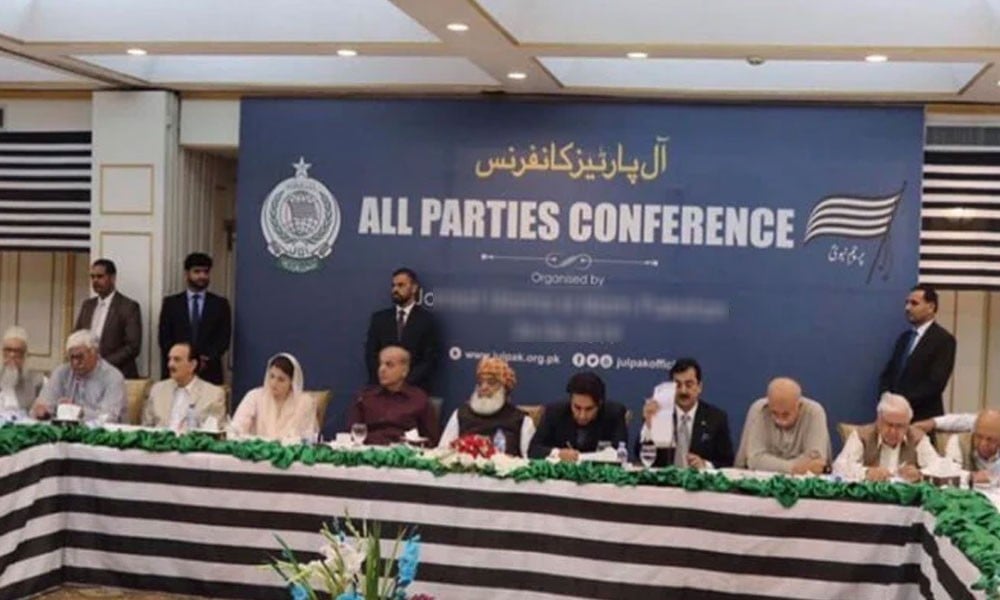
Opposition parties of Pakistan rallied against the ruling party and Prime Minister Imran Khan on Sunday, at a day-long multi-party meeting. The parties called for Khan's resignation and a nationwide protest movement to unseat the PM.

The alliance of the opposition parties, called the Pakistan Democratic Movement (PDM), plans a wave of rallies and protests, starting next month.

Nawaz Sharif's daughter, Maryam Nawaz and Bilawal Bhutto Zardari arrive to attend the PDM meeting (PPI/ZUMA Wire/picture-alliance)

Nawaz Sharif's daughter, Maryam Nawaz and Bilawal Bhutto Zardari arrive to attend the PDM meeting

The opposition parties are primarily protesting against the role of the army in Pakistan's politics and demanding for a new law of accountability.

Former PM calls out army generals

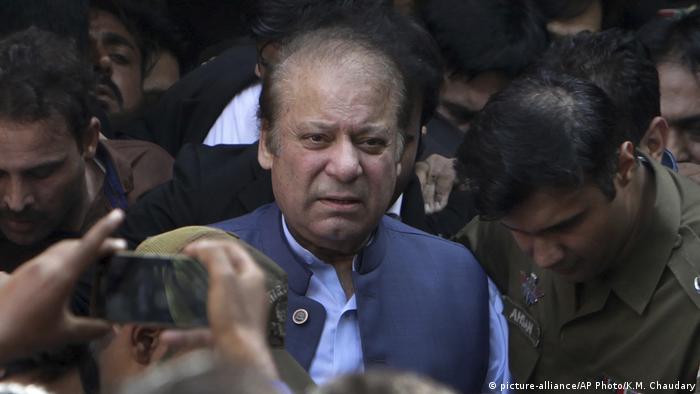
Nawaz Sharif, the former PM of Pakistan and current leader of the Pakistan Muslim League Nawaz (PML-N), addressed the meeting through video, stating that the army has gone from a "state within a state" to a "state above the state."

Former Pakistan PM Nawaz Sharif (picture-alliance/AP Photo/K.M. Chaudary)

Former Pakistan PM Nawaz Sharif

Sharif's audio was reportedly muted on some TV channels when he named army generals for their involvement in politics and embezzlement.

“We want elected leaders to run the affairs of the country, to manage the economy and to decide on the foreign policy,” he said.

The former PM claimed that the military had rigged elections to elect Imran Khan.

"Our struggle is against those who installed Imran Khan and who manipulated elections to bring an incapable man like him into power and thus, destroyed the country," said Sharif, who is in London since November for medical treatment. 

Bilawal Bhutto Zardari, the head of the centre-left Pakistan Peoples Party (PPP), said that the army should not have any role in politics. 

Pakistani Taliban regrouping

The PDM meeting comes at a time when Pakistan is dealing with the possible regrouping of the Pakistani Taliban in some regions.

On Sunday, the military said that two soldiers were killed in a shootout with militants in northwest Pakistan. In early September, the Pakistani Taliban said that they were responsible for killing three soldiers when a bomb exploded on the roadside in northwest Pakistan.

https://www.dw.com/en/pakistan-opposition-parties-protest-against-role-of-army-in-pakistans-politics/a-54997927

پیپلزپارٹی دنیا کی واحد پارٹی ہے جس کے دو چیئرمینوں نے جمہوریت،آئین،پارلیمان کی بالادستی اور غریبوں کی آواز اٹھاتے ہوئے جان کا نذرانہ پیش کیا ہے، سیکرٹری جنرل فرحت اللہ بابر

پاکستان پیپلزپارٹی پارلیمنٹیرین کے سیکرٹری جنرل فرحت اللہ بابر نے کہا ہے کہ پیپلزپارٹی دنیا کی واحد پارٹی ہے جس کے دو چیئرمینوں نے
جمہوریت،آئین،پارلیمان کی بالادستی اور غریبوں کی آواز اٹھاتے ہوئے جان کا نذرانہ پیش کیا ہے اور بلاول بھٹو زرداری اپنے نانا اور والدہ کے الم کو اٹھا کر جدوجہد کر رہے ہیں۔آل پارٹیز کانفرنس کے رد عمل میں حکومتی وزراء جس طرح کی باتیں کر رہے ہیں اس سے لگتا ہے کہ نشانہ ٹھیک جگہ پر لگا ہے۔ان خیالات کا اظہار انہوںنے پیپلزپارٹی اسلام آباد کی خواتین ونگ کی جانب سے چیئرمین بلاول بھٹو زرداری کی سالگرہ کی تقریب کے موقع پر میڈیا سے گفتگو میں کیا۔ان کے ہمراہ نرگس فیض ملک،نذیر ڈھوکی،سبط الحسن بخاری، نورالہی،صدف مرتضی،ساجد حسین ساجد،گلزاری بیگم ، ، شکیل عباسی، سہیل رومی ، خالد ڈار ، شادق نورا ، دانیال ودیگر شامل تھے۔انہوں نے کہا کہ چیئرمین بلاول بھٹو زرداری کی قیادت میں بڑے لمبے عرصے کے بعد آل پارٹیز کانفرنس کا انعقاد ہوا،جس میں تمام اپوزیشن پارٹیوں نے شرکت کی اور آل پارٹیز کانفرنس کے اعلامیے اور ایکشن پلان کے رد عمل میں جو حکومتی وزراءباتیں کرر ہے ہیں اس سے لگتا ہے کہ نشانہ ٹھیک جگہ پر لگا ہے،اگرنشانہ ٹھیک جگہ پر نہ لگتا تو حکومتی وزراءایسی گفتگو نہ کرتے۔انہوں نے کہا کہ پاکستان پیپلزپارٹی دنیا کی واحد پارٹی ہے،جس کے دو چیئرمین ذوالفقار علی بھٹو اور بے بنظیر بھٹو نے جمہوریت،آئین،پارلیمان کی بالادستی اور غریبوں کی آواز اٹھاتے ہوئے اپنی جان کا نذرانہ پیش کیا ہے،ایسی پارٹی پوری دنیا میں نہیں ملے گی،آج چیئرمین پیپلزپارٹی بلاول بھٹو زرداری اپنے نانا اور والدہ کا علم اٹھائے جدوجہد کر رہے ہیں۔انہوں نے کہا کہ چیئرمین بلاول بھٹو زرداری کی سالگرہ کے موقع پر آل پارٹیز کانفرنس نے ایک اعلامیہ جاری کیا اور پاکستان بار کونسل نے بھی اپنا اعلامیہ جاری کیا،جس کو آل پارٹیز کانفرنس میں بھی تسلیم کیا گیا۔

انہوں نے کہا کہ یہ چیئرمین بلاول بھٹو زرداری کی سالگرہ یاد رکھی جائے گی کہ ان کی قیادت میں تمام پارٹیوں نے کہا ہے کہ ہماری جنگ سلیکٹر اور سلیکٹڈ دونوں سے ہے اور پہلی بار ذمہ داری دونوں پر آئی ہے،بلوچستان میں سول حکمرانی نہیں ہے اور ایف سی کو لگام دی جائے اور وزیراعظم کے معاون خصوصی عاصم سلیم باجوہ پر جائیداد کے حوالے سے لگنے والے الزامات کی بھی تحقیقات ہونی چاہئیں۔انہوں نے کہا کہ احتساب سب کا ہونا چاہئے اور سب کو قانون کے تحت ہی احتساب کیا جانا چاہئے۔سبط الحسن بخاری نے کہا کہ ہم اپنے چیئرمین کو ان کی سالگرہ پر مبارکباد پیش کرتے ہیں،پیپلزپارٹی کے چیئرمین نوجوان لیڈر ہیں،جو جمہوریت کے لئے کام کر رہے ہیں۔نذیر ڈھوکی نے کہا کہ آل پارٹیز کانفرنس کامیاب رہی ہے اور برساتی مینڈک باہر نکلنا شروع ہوگئے ہیں،صدف مرتضی نے کہا کہ چیئرمین بلاول بھٹو زرداری پاکستان کا مستقبل ہیں اوروہ اپنے نانا اور والدہ کے نقش قدم پر چل رہے ہیں،ہم ان کو سالگرہ پر مبارکباد پیش کرتے ہیں۔میڈیا سے گفتگو کے بعد چیئرمین بلاول بھٹو زرداری کی سالگرہ کا کیک بھی کاٹا گیا،جس میں اسلام آباد سٹی کے عہدیدار و ورکرز شامل تھے


https://www.ppp.org.pk/pr/23804/ 

Sunday, September 20, 2020

Video - #JoeBiden #Joe2020 #BidenForPresident Joe Biden Speech on The Supreme Court & Justice Ruth Bader Ginsburg

Video Report - WHO warns of 'serious situation' in Europe as COVID cases spiral

Video Report - #Coronavirus #Covid19 #CovidUSA America first: US leads in coronavirus infections and deaths

Video Report - 31 states see an increase in coronavirus cases

Video - Bill Clinton: 'Superficially hypocritical' for Republicans to fill Supreme Court vacancy

Video - #HappyBirthdayBBZ - AYA AYA BILAWAL...

Video - #HappyBirthdayBBZ - Ab Waqt Ki Zaban Hai BILAWAL

Video - #APC2020 #APCbyPPP #UnitedForDemocracy - Nawaz Sharif's Speech at All Parties Conference|Is he back in politics?

Video - #APC2020 #APCbyPPP #UnitedForDemocracy - Nawaz Sharif Speech At All Parties Conference | APC 2020

Video - #APC2020 #APCbyPPP #UnitedForDemocracy - Bilawal Bhutto Speech At All Parties Conference | APC 2020

آل پارٹیز کانفرنس سے پہلے فرحت اللہ بابر نے بہت کچھ کہہ دیا - Video - #APC2020 #UnitedForDemocracy

Video - #APC2020 #UnitedForDemocracy - Opening remarks of President Asif Ali Zardari at the PPP Hosted APC in Islamabad.

Video - #APC2020 #UnitedForDemocracy Opening remarks of Chairman PPP Bilawal Bhutto Zardari at the PPP Hosted APC in Islamabad.

اس حکومت کو نکال کر جمہوریت بحال کریں گے: زرداری #UnitedForDemocracy

اپوزیشن کی اے پی سی سے ابتدائی خطاب کرتے ہوئے سابق صدر آصف علی


زرداری کا کہنا ہے کہ اس حکومت کو نکال کر جمہوریت بحال کر کے رہیں گے، بہروپیوں سے پاکستان بچانا ہے، ہم جیتیں گے، جیتیں گے۔

انہوں نے کہا کہ سیاسی بونے سلیکٹڈ پرائم منسٹر کی سوچ ہے کہ تہتر کا آئین بنانے والوں سے وہ زیادہ ہوشیار ہیں، اس اے پی سی میں ایسا لائحہ عمل دیں کہ جمہوریت مضبوط کر سکیں۔

آصف علی زرداری نے کہا کہ اے پی سی کے شرکاء کو خوش آمدید کہتا ہوں،میری نظر میں اے پی سی بہت پہلے ہونی چاہیے تھی، اے پی سی کے خلاف حکومت جو ہتھکنڈے استعمال کر رہی ہے یہی ہماری کامیابی ہے۔


انہوں نے کہا کہ حکومت جو ہتھکنڈے استعمال کر رہی ہے، یہ ان میں کامیاب نہیں ہو گی، لوگ ہمیں سن رہے ہیں، چاہے کتنی ہی پابندیاں لگائی جائیں۔

آصف زرداری نے کہا کہ خوشی ہے کہ ہماری بیٹی مریم نواز بھی یہاں ہیں، مریم قوم کی بیٹی ہیں، انہوں نے بہت تکلیفیں برداشت کی ہیں۔

انہوں نے کہا کہ 18 ویں ترمیم آئین کے گرد دیوار ہے جس سے کوئی آئین کو میلی آنکھ سے نہیں دیکھ سکتا، اے پی سی کی کامیابی کا سہرا آپ سب کے سر ہے، ہم نے دیکھا انہوں نے کیا تکلیف برداشت کی، ہم سمجھ سکتے ہیں۔

https://jang.com.pk/news/822571