Monday, September 13, 2021
Germany: Free Balochistan Movement held a protest rally in Hanover
The Free Balochistan Movement, Germany Branch, staged a protest rally on Saturday against the murder of previously disappeared Baloch in fake encounters at the hands of the so call “Counter-Terrorism Department” (CTD) of Pakistani forces in Balochistan.
The protest began at 2:00 pm German time in front of the Hannover Central Station in Germany after the protesters marched through various busy streets to George Platz.
The rally participants held banners and placards with slogans against torture, human rights abuses and illegal occupation of Balochistan by Pakistan and Iran.
Participants also carried pictures of enforced disappeared people who were killed in staged encounters by the CTD.
Participants chanted slogans during the demonstration and distributed hundreds of pamphlets to spread awareness among the people.
The protesters were addressed by Mahgonag Baloch, Mohammad Baloch, Najib Baloch, Abdul Jabbar Baloch, Abdul Wajid Baloch, Khuda Dad Baloch and Abu Bakar Baloch who exposed the atrocities of Pakistan and Iran in occupied Balochistan.
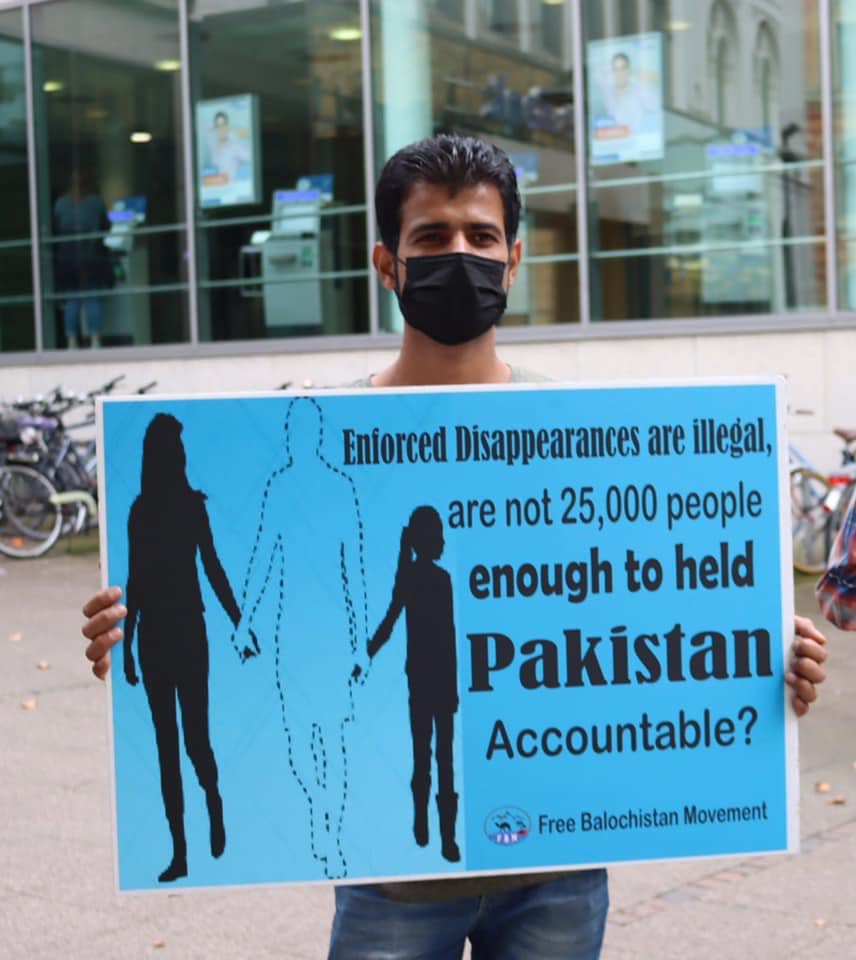 The speakers said that Pakistan was pursuing its earlier infamous “kill and dump” policy of forcibly disappearing Baloch, it continued the same process by killing the disappeared Baloch and burying them in mass graves.
The speakers explained that now the Pakistan state forces have adopted a new policy under which the victims of enforced disappearances are fake encounters. The murder of more than 20 Baloch youth in fake encounters in a single month is a question mark for organisations that claim to protect human rights.
The Free Balochistan Movement in its statement further said that Pakistan has changed the method of Baloch genocide to misled the world. Pakistan is trying to give the impression to the world that it is taking action against the terrorists by killing the Baloch in its custody in the name of encounters by its “terrorist force CTD”.
The statement emphatically clarified that the people killed in CTD’s encounters were previously abducted and disappeared by Pakistani forces and they were being killed in staged encounters to cover up Pakistan’s crimes against humanity in Balochistan.
The speakers further said that while Pakistan is trying to deceive the world and unsuccessfully trying to prove that the victims of enforced disappearances in its custody are terrorists, we, Baloch, should inform the world with the same intensity about the crimes that Pakistan is committing in occupied Balochistan.
https://balochwarna.com/2021/09/12/germany-free-balochistan-movement-held-a-protest-rally-in-hanover/
چیئرمین پاکستان پیپلز پارٹی بلاول بھٹو زرداری کی کنٹونمنٹ بورڈز کے انتخابات جیتنے والے پاکستان پیپلز پارٹی کے امیدواروں اور پاکستان پیپلز پارٹی کے حمایت یافتہ امیدواروں کو مبارکباد
چیئرمین پاکستان پیپلز پارٹی بلاول بھٹو زرداری نے کنٹونمنٹ بورڈز کے انتخابات جیتنے والے پی پی پی

امیدواروں کو مبارکباد دی ہے۔ چیئرمین پیپلزپارٹی نے پی پی پی کی حمایت یافتہ آزاد امیدواروں کو بھی کامیابی پر مبارکباد دی ہے۔ ایک بیان میں چیئرمین پیپلزپارٹی نے کہا کہ پشاور کے کنٹونمنٹ بورڈ نے ماضی کی ایک نشست کے مقابلے میں پاکستان پیپلزپارٹی کو دو نشستوں پر کامیابی ہوئی۔
پی ٹی آئی کا گڑھ کہلائے جانے والے پشاور کنٹونمنٹ میں جو نشستیں دوسری جماعتوں نے جیتیں وہاں بھی پیپلزپارٹی کے امیدوار میدان میں رہے۔ چیئرمین پیپلزپارٹی نے کہا کہ ایبٹ آباد کنٹونمنٹ سے جیالے امیدوار کی کامیابی ملک میں بھٹوازم کی مقبولیت کا منہ بولتا ثبوت ہے۔ چیئرمین پیپلزپارٹی نے لاہور، اوکاڑہ، کوہاٹ اور پنو عاقل کنٹونمنٹ کے انتخابات کی مخصوص نشستوں پر حریف امیدوار کو کم ووٹوں کی برتری پر جتوائے جانے پر تحفظات کا اظہار کیا ہے۔
چیئرمین پیپلزپارٹی نے کراچی سے پشاور اور ایبٹ آباد تک کنٹونمنٹ انتخابات میں کامیاب ہونے والے اور رنر اپ رہنے والے پی پی پی کے امیدواروں کو شاباش کا مستحق قرار دیا۔ بلاول بھٹو زرداری نے کہا کہ کنٹونمنٹ انتخابات میں ماضی کی تین نشستوں کے مقابلے میں پاکستان پیپلزپارٹی نے کراچی میں 11نشستیں حاصل کیں۔ پیپلزپارٹی وہ واحد سیاسی جماعت ہے جس نے کراچی کے تمام کنٹونمنٹ بورڈ سے نشستیں حاصل کی ہیں اور پیپلزپارٹی کو تمام سیاسی پارٹیوں کے مقابلے میں سب سے زیادہ ووٹ ملے ہیں۔
چیئرمین پیپلزپارٹی نے کہا کہ پی ٹی آئی کے ہوم گراﺅنڈ کہلانے والے کلفٹن کنٹونمنٹ سے پیپلزپارٹی کو سب سے زیادہ ووٹ ملے۔ صدر مملکت اور گورنر سندھ کے انتخابی حلقے کلفٹن کنٹونمنٹ میں پیپلزپارٹی کی جیت سے 2018ءکے انتخابات کے دھاندلی کے تمام خدشات درست ثابت ہوگئے ہیں۔
Sunday, September 12, 2021
پنجاب میں سلیکٹڈ کو فری ہینڈ دینے والے دوست ہم سے ناراض ہیں، بلاول بھٹو
پاکستان پیپلز پارٹی کے چیئر مین بلاول بھٹو نے کہا ہے کہ میدان چھوڑ کر
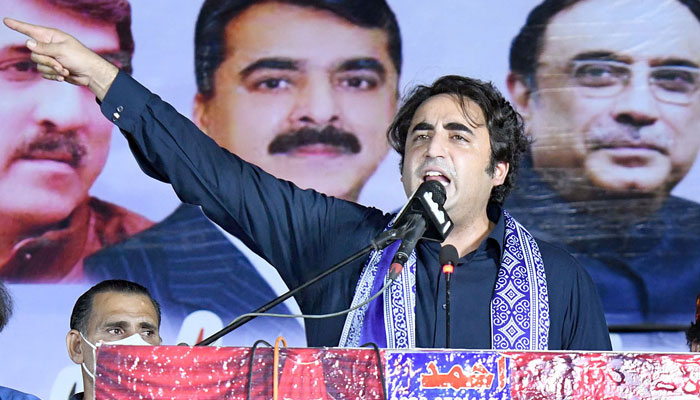
پنجاب میں سلیکٹڈ کو فری ہینڈ دینے والے دوست بھی ہماری سرگرمیوں سے خوش نہیں، ہماری اتحادی جماعتیں سیاسی میدان چھوڑ چکی ہیں۔
عوام اب سلیکٹڈ کا راج بھگت رہے ہیں، عوام کو لاوارث نہیں چھوڑ سکتے، عوام کو تاریخی بے روزگاری اور مہنگائی کا سامنا ہے، اگرمولانا فضل الرحمان،(ن)لیگ چاہے توہم کل ان کوگراسکتے ہیں، عوام پیپلز پارٹی کا ساتھ دیں، عمران خان کو گھر بھیج دیں گے۔
بلاول بھٹوکروڑ لعل عیسن لیہ میں ورکرز کنونشن سے خطاب کررہے تھے، اس دوران بہادر خان سیہڑ باضابطہ طور پر پاکستان پیپلزپارٹی کا حصہ بن گئے، بہادر خان سیہڑ دو مرتبہ رکن قومی اسمبلی منتخب ہوئے، وفاقی کابینہ میں وزیر بھی رہے۔
ورکرز کنونشن سے خطاب کرتے ہوئے پیپلز پارٹی کے چیئرمین بلاول بھٹو زرداری نے کہا کہ ہمارے سیاسی دوستوں نے پنجاب میں عمران خان کو فری ہینڈ دیا ہوا ہے بلاول بھٹو نے کہا کہ پیپلز پارٹی پنجاب کے عوام کو لاوارث نہیں چھوڑ سکتی، پنجاب کے عوام کے ساتھ تاریخی ظلم ہو رہا ہے، موجودہ حکومت چینی، چاول اور گندم درآمد کر رہی ہے۔
ہر روز مہنگائی کا بم پھٹتا ہے، حکومت نے ٹیکسز بڑھا کر عوام کا جینا محال کر دیا ہے، عوام عوامی حکومت کو ترس رہے ہیں۔چیئرمین پیپلز پارٹی نے کہا کہ عوام تاریخی بے روزگاری اور مہنگائی کا سامنا کر رہے ہیں، کبھی بجلی، کبھی گیس تو کبھی پیٹرول کی قیمت میں اضافہ ہو رہا ہے۔
انہوں نے کہا کہ پیپلزپارٹی نے کسانوں اور مزدوروں کو حقوق دلوائے، غریب مزدور اور کسان کے لیے بینظیر بھٹو کے منشور کا نفاذ کریں گے، بینظیر بھٹو ایک ماں کی طرح عوام کا خیال رکھتی تھی، بلاول بھٹو کا کہنا تھا کہ سینیٹ میں ہم نے یوسف رضا گیلانی کو منتخب کراکرثابت کردیا عمران کے پاس میجورٹی نہیں، ساتھیوں سے مطالبہ ہے اٹھو شیر بنو، نکلو، جدوجہد کرو، ہم نے ساتھیوں کو راستہ دکھادیا ہے۔
پی ڈی ایم کی طرف اشارہ کرتے ہوئے انہوں نے کہا کہ عثمان بزدارکے خلاف عدم اعتماد لیکر آ، ہم پنجاب کے عوام کو لاوارث نہیں چھوڑ سکتے، پہلے عثمان بزدار پھر عمران کے خلاف عدم اعتماد لا۔
ہم نے یوسف رضا گیلانی کوجتوا کرثابت کردیا عمران کو گراسکتے ہیں، اگر مولانا فضل الرحمان، (ن)لیگ چاہے توہم کل ان کوگراسکتے ہیں،ایک کروڑ نوکریاں دینے کا وعدہ کرنے والے کا بتائیں لیہ میں کتنی نوکریاں دی گئی ہیں،دس ہزار خاندان کو سٹیل ملز سے بے روزگار کر دیا یے۔
شہید بی بی نے 90کی دہا ئی میں جن بیس ہزار خاندانوں کو روزگار دیا تھا ان سب کو ایک بار پھر بے روزگار کردیا گیا۔ہم مذمت کرتے ہیں۔شہید بی بی کا دیا ہوا روزگار ہے ہم یہ ظلم نہیں کرنے دیں گے۔
#Pakistan #PPP - Historical oppression taking place with people of Punjab: Bilawal

https://dunyanews.tv/en/Pakistan/619307-Historical-oppression-taking-place-with-people-of-Punjab-Bilawal
#Pakistan - Takht-e-Raiwind has no room in politics: Bilawal

https://www.thenews.com.pk/print/891574-takht-e-raiwind-has-no-room-in-politics-bilawal
Saturday, September 11, 2021
The U.S. branded the Haqqanis terrorists and issued $5 million bounties. Now they’re in power in the Taliban government.

By Sudarsan Raghavan
Twenty years after al-Qaeda attacked the United States — a plot hatched in Afghanistan — its loyalists hold senior positions in the Taliban's new transitional government. There is one name that stands out: Haqqani. A U.N. report in June described the Haqqani network as the “primary liaison between the Taliban and Al-Qaida.” Its leader, Sirajuddin Haqqani — a brutal insurgent commander known for dispatching suicide bombers who’ve killed or maimed hundreds of civilians — was “assessed to be a member of the wider Al-Qaida leadership, but not of the Al-Qaida core leadership.” Today, he is Afghanistan’s acting interior minister, overseeing the nation’s police, intelligence services and other security forces. He is also in charge of combating terrorism. “It’s a major concern,” said Colin P. Clarke, director of policy and research at The Soufan Group, an intelligence and security consulting firm. “You are one step removed from having the group that attacked us on 9/11 running the country.”The appointment of Haqqani, as well as relatives and members of his network, underscores his immense influence inside the Taliban. It also raises concerns that the new government will pursue a hard line agenda, even as Taliban leaders publicly claim to be gentler and more moderate than their brutal image in an effort to curry favor with donors and foreign governments.
Haqqani's political rise puts the Biden administration and other Western governments in a precarious position, particularly in countering terrorist threats. They are forced to have relationships with people they have sanctioned, many with bounties on their heads, for committing or sponsoring terrorism — or targeting Americans. In the interim government, at least 14 of the 33 cabinet members are on U.N. sanctions lists.
A Taliban spokesman did not immediately respond to questions about the Haqqani’s alleged al-Qaeda ties and concerns it could complicate much-needed relationships with foreign governments, the United Nations and international donors.Sirajuddin Haqqani is on the FBI’s most wanted list with a $5 million reward for information leading to his arrest. The State Department, through its Rewards For Justice Program, is offering $10 million, describing him as “a specially designated global terrorist.”He is wanted for “questioning in connection with” a January 2008 attack on a Kabul hotel that killed six people, including a U.S. citizen. He is also believed to have orchestrated attacks against U.S. and coalition forces and in planning an assassination attempt of former Afghan president Hamid Karzai, the State Department says.Khalil Haqqani, the uncle of Sirajuddin, is the acting Taliban minister for refugees. The State Department is offering up to $5 million for his capture, in part because he “acted on behalf of al-Qaida and has been linked to al-Qaida terrorist operations.” In 2012, the United States designated the Haqqani network as a foreign terrorist organization. Secretary of State of Antony Blinken told reporters at Ramstein Airbase in Germany on Wednesday that the Taliban interim government “does not meet the test of inclusivity and it includes people who have very challenging track records.” “Our engagement with the Taliban and with the government — interim or longer — will be for purposes of advancing the national interest, our national interest and that of our partners,” said Blinken. “We have and we will find ways to engage the Taliban, the interim government, a future government, to do just that and to do it in ways that are fully consistent with our laws.”
On Thursday, the Taliban demanded that the United States and the United Nationsremove the Haqqanis and other cabinet members from their “blacklists,” declaring that they violated the agreements of a peace deal signed in Doha. The movement also criticized Pentagon officials for noting that the Haqqanis were still targets. “That America and other countries are making such provocative statements and trying to meddle the internal affairs of Afghanistan, the Islamic Emirate condemns it in the strongest terms,” the Taliban said in a statement. “Such remarks by U.S. officials are a repetition of past failed experiments and such positions are detrimental for America.” “It’s a pretty difficult spot for the Biden administration,” Clarke said. “If you deal with the Taliban in these confines, you are essentially dealing with a terrorist group or members of a terrorist organization. And if you don’t, you have no leverage and no influence to control events in Afghanistan.”The Haqqanis trace their roots to the Soviet Cold War occupation of the 1980s and the Afghan mujahideen struggle to liberate their nation. Sirajuddin’s father, Jalaluddin, was a famed commander and CIA asset who forged a close alliance with Osama bin Laden and other foreign Islamist militants who arrived to push the Soviet troops out of Afghanistan.In 1996, the elder Haqqani aligned with the Taliban, helping the movement seize the country for the first time. He served as a cabinet minister and a provincial governor. When the Taliban was toppled in 2001 following the September 11th attacks, the Haqqanis became an integral part of the insurgency against U.S.-led NATO forces. In 2018, the Taliban announced the death of Jalaluddin due to an undisclosed illness. By then, Sirajuddin was already in charge of the Haqqani network, which was based in eastern Afghanistan as well as in bases inside Pakistan’s Northwest Territories; three years earlier the Taliban had appointed him as a deputy leader. The Haqqanis became known as “the most lethal and sophisticated insurgent group targeting US, Coalition and Afghans forces,” often attacking with small-arms, rocket, suicide bombers and bomb-laden vehicles, according to the National Counterterrorism Center. The network orchestrated some of the highest-profile attacks in the past two decades of war. This included a June 2011 assault on Kabul’s Intercontinental hotel, two suicide bombings against the Indian embassy and a day-long assault on the U.S. Embassy and other high profile targets in Kabul a decade ago. “People must be both reassured and terrified by the fact that an entity seen as responsible for some of the worst crimes of the war is now in charge of securing the population,” said Ashley Jackson, an expert on the Taliban at the Overseas Development Institute. “But there is a certain logic from inside the Taliban … if anyone can bring security, one assumes it’s the Haqqani network.” But that could also pose a threat to Sirajuddin Haqqani’s influence inside the movement, where he has several rivals, including Mohammad Yaqoob, the acting defense minister and son of the Taliban’s late founder Mohammad Omar. One of Haqqani's primary challenges will be to prevent large-scale bombings by the Islamic State and other militant groups that are against the Taliban — like the attack on Kabul's airport last month that killed 13 U.S. service members and more than 170 Afghans. The flights to a new life were in sight: Portraits of Afghans lost in the airport bombing. “Since he’s number one now, it’s his responsibility to prevent these urban attacks,” said Vanda Felbab-Brown, director of the Initiative on Nonstate Armed Actors at the Brookings Institution. “If he doesn’t, there’s going to be people unhappy, including within the Taliban. They will say ‘you have this important portfolio, what the hell are you doing?’” Haqqani has also shown he can think strategically off the battlefield. Last year, he shared his visions in an op-ed in the New York Times with the headline: “What We, the Taliban, Want.” Many analysts viewed it as a shrewd tactical move to soothe the concerns of the United States and the international community following the withdrawal of U.S. troops. “Everyone is tired of war,” the op-ed from the brutal warlord read. “I am convinced that the killing and the maiming must stop.” “We are committed to working with other parties in a consultative manner of genuine respect to agree on a new, inclusive political system in which the voice of every Afghan is reflected and where no Afghan feels excluded,” the op-ed continued. Today, the acting Taliban government is anything but inclusive. And there are already signs that Haqqani’s interior ministry will not tolerate dissent. Protests by women seeking basic rights have been broken up by Taliban fighters firing weapons and assaulting local journalists. An interior ministry statement this week decreed that all protests must be approved by the government at the risk of arrests. “The Haqqani network is the kind of hammer that comes back down and doesn’t allow the Taliban to be perceived as moderate,” Clarke said. “That’s part of the reason why the Haqqanis are stacked in the government. It’s to make sure there is no deviation from what they have been working on for the past two decades.” A key concern for the United States is whether Haqqani’s rising profile will open the gateway for al-Qaeda to resurrect itself in Afghanistan. In the U.N. report, investigators found that the Taliban and al-Qaeda “remain closely aligned and show no signs of breaking ties.” Al-Qaeda members live in at least 15 provinces. At the moment, said both Jackson and Clarke, the Haqqanis appear more interested in growing their influence in the country, the region and within the Taliban movement rather than waging global jihad. “They waited 20 years to get back into power,” Clarke said. “Now, they are, and they want to hold on to that power.” Karen DeYoung in Washington and Haq Nawaz Khan in Peshawar, Pakistan, contributed to this report.
https://www.washingtonpost.com/world/asia_pacific/haqqanis-afghanistan-taliban/2021/09/10/71f82620-123b-11ec-baca-86b144fc8a2d_story.html
#September11 - 9/11 IN ISLAMABAD: THE FIRST 72 HOURS

Friday, September 10, 2021
OPINION: Spotlight Still on Saudi Arabia 20 Years After 9/11

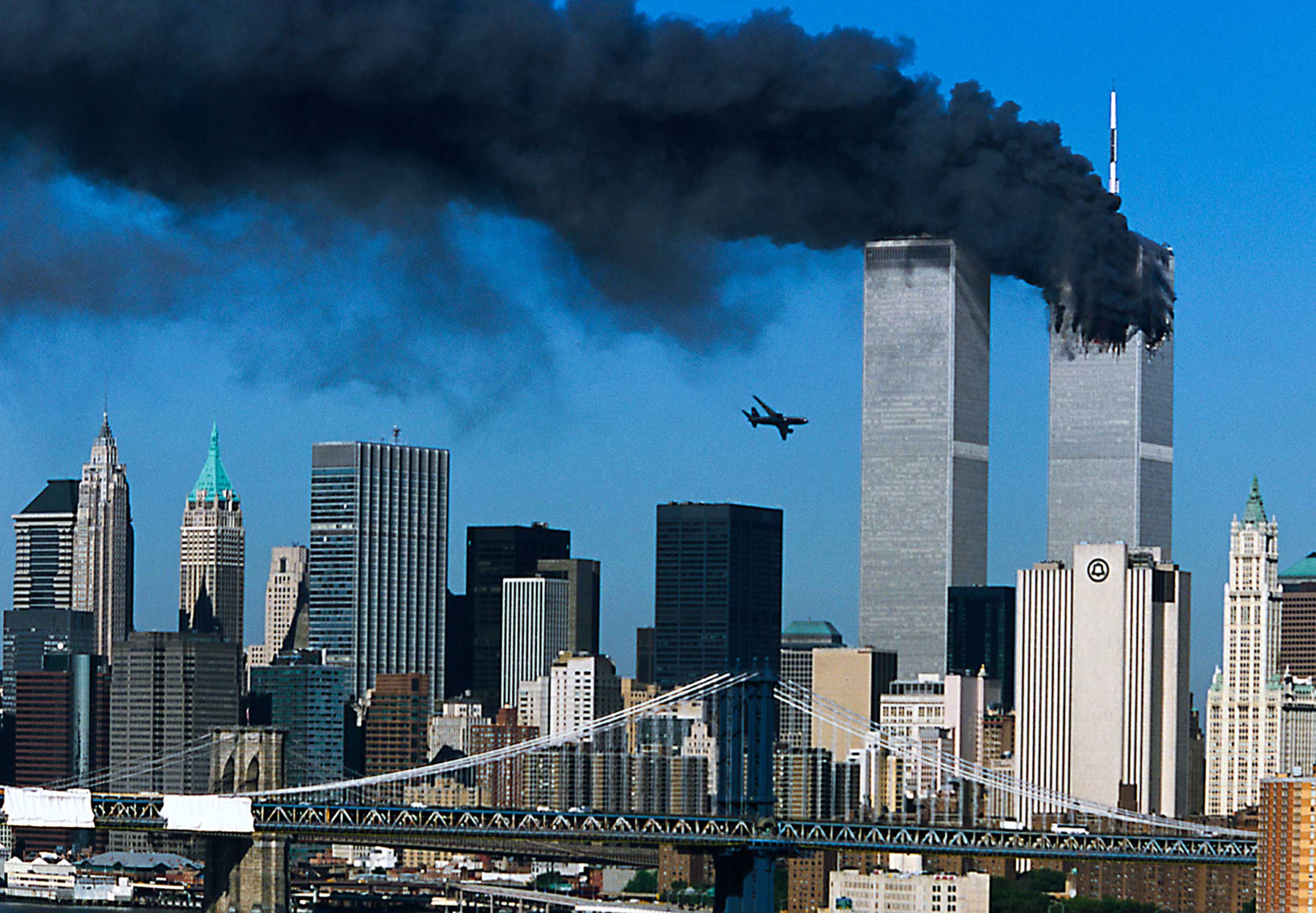
It was these attacks that prompted the Saudi government to take Al-Qaeda seriously. Under the stewardship of Prince Mohammed Bin Nayef (MBN), who was the deputy interior minister at the time, Saudi Arabia developed a highly effective internal counterterrorism capability that managed to wipe out Al-Qaeda fighters in the kingdom and dismantle numerous cells throughout the country. Former CIA Director George Tenet considered MBN to be a highly valuable counterterrorism partner for the United States (MBN, who would rise to become crown prince, is now living in pain under a form of house arrest courtesy of his younger cousin, current Crown Prince Mohammed Bin Salman). That high distinction was illustrated in 2010, when a Saudi intelligence tip helped foil an Al-Qaeda bombing of UPS and FedEx cargo aircraft that were set to land in Chicago.
The Saudis, however, are hardly fool-proof U.S. partners. While the kingdom has gotten better at interdicting money before it gets into the hands of charities, companies and individuals associated with terrorism, it took prodding from the Financial Action Task Force for Riyadh to adequately implement U.N. Security Council terrorism sanctions. In a 2009 State Department memo, then-Secretary of State Hillary Clinton wrote that "donors in Saudi Arabia constitute the most significant source of funding to Sunni terrorist groups worldwide." Saudis also made up a big proportion of foreign terrorist fighters in both the Islamic State and its predecessor organization, Al-Qaeda in Iraq. And in December 2019, a Saudi air force cadet training with the U.S. military in Pensacola, Fla. killed three people, purportedly at the encouragement of Al-Qaeda (a month later, the Trump administration expelled 21 Saudi cadets over possession of jihadist material).These examples, of course, don't mean that Saudis themselves are somehow predisposed to engaging in acts of terrorism. Many Saudis are terrific people who pride themselves on their history and warm hospitality. But let's face it: two decades after 9/11, Saudi Arabia's political leadership has a long way to go in cracking down on the sources of terrorism funding. At the same time Washington maintains a constructive, mutually beneficial security relationship with Saudi Arabia when necessary, it shouldn't shy away from reprimanding Riyadh when it doesn't live up to high standards. While the Saudi royal family may be fortunate enough to sit on about a quarter of the world's crude oil reserves, they aren't infallible. https://www.newsweek.com/spotlight-still-saudi-arabia-20-years-after-9-11-opinion-1627581
From Chine: Commentary: The hypocrisy of Western politicians' concern over Hong Kong
The recent preposterous accusations by a bunch of Western politicians against the Hong Kong police's law-based arrests of some members of a notorious anti-China group have once again revealed their hypocrisy on issues related to the Chinese city.
Hong Kong is a society under the rule of law. No organization or individual has any privilege above the law. The Hong Kong police's operations are in line with the national security law, and have defended the sanctity of the rule of law.
A year after the implementation of the national security law in Hong Kong, the city has returned from chaos to stability and tranquility. The law has deterred anti-China forces in Hong Kong and blocked the intervention of external forces.
However, as stability returns to Hong Kong, some Western politicians are getting increasingly agitated. The reason is that they want to continue intervening in Hong Kong affairs and stirring up chaos there so as to disrupt China's development.
Those Western politicians have been used to tap human rights, democracy or freedom of speech as excuses to justify unlawful groups and individuals in Hong Kong. Their remarks and actions have already exposed their sinister intention to sabotage the rule of law in Hong Kong, obstruct the Hong Kong Special Administrative Region's law-based governance, and undermine the city's long-term peace and stability.
The double standards held by those Western politicians have also been brought into the sunlight.
While those Western politicians attempt to justify the criminal actions that put Hong Kong's stability in jeopardy, Western governments have never been weak in cracking down on acts that challenge national security, unity and social stability in their own countries.
The United States itself has the world's strictest national security laws, which applies to every inch of its territory. Washington has been relentless in cracking down on national security crimes and even willfully abuses the pretext of national security to undermine the legitimate rights and interests of other countries.
With the implementation of the national security law in Hong Kong, the city has already built up a solid law-based fortress against anti-China and destabilizing forces. The people in Hong Kong can now continue to enjoy their basic rights and freedom in accordance with the law.
As for those ill-intentioned Western politicians, no matter how hard they will try in the future, their scheme of intervention will always be doomed to fail.
Russia 'Keeps Powder Dry' in Connection With Situation in Afghanistan, Lavrov Says

Pakistan Is an Arsonist That Wants You to Think It’s a Firefighter
Washington has an endless appetite for Islamabad’s con games.On Aug. 27, U.S. Sen. Lindsey Graham tweeted, “Any sustainable solution in Afghanistan must include Pakistan,” while also expressing his appreciation for the “efforts of the Pakistani government to assist with the evacuation of U.S. citizens, our allies, and other nations.” His comments reflect a familiar play: Pakistan has spent decades setting fires in South Asia—and then expected praise and renumeration for offering to put them out. It’s astonishing that U.S. officials continue to peddle Pakistan’s own fictions—alongside such media outlets as the BBC, as I discovered recently when I was cut off in the middle of an interview for speaking about it. But with the Afghanistan debacle on policymakers’ minds, it’s a good time to think critically about Washington’s perpetual vulnerability to Pakistan’s rent-seeking ruses. Both political parties have long been responsible for coddling Pakistan in hopes that there is some mystical U.S. policy that could reform its supposed wayward ally. Even though Pakistan’s involvement in Afghanistan goes back some seven decades, the Washington elite continues to fall for Pakistan’s efforts to sell itself as the solution to the very problems it created. Pakistani officials tell a heart-wrenching story. Pakistan was minding its business when, in 1979, the United States persuaded Pakistan to shoulder the burden of the struggle against communism in Soviet-controlled Afghanistan. Pakistani officials contend that they were a victim of American perfidy when the latter forgot Pakistan existed in the 1990s, leaving Islamabad to contend with the mess—while Washington had the effrontery to impose sanctions on a bamboozled ally because of its well-known efforts to secure a nuclear weapon. But Pakistan’s interests in Afghanistan have deep roots. As Husain Haqqani, Rizwan Hussain, and I have shown, Islamabad inherited the British conception of Afghanistan as a buffer state with Russia. From the point of view of the security managers of a newly minted Pakistan, Pakistan inherited the most turbulent threat frontier with a fraction of the British Raj’s resources. Afghanistan made early fateful decisions that would lock the country in an unwinnable security competition with Pakistan. Afghanistan initially attempted to block Pakistan’s bid to join the United Nations. Beginning in September 1950, Afghanistan began military incursions into Pakistan’s tribal agencies and Baluchistan province. Afghanistan’s efforts to antagonize its much stronger neighbor continued well into the 1970s. Pakistan, seeking to influence its obstinate western neighbor, began supporting the growth of the reformist Islamist organization Jamaat-e-Islami in Afghanistan, where it originally had little support. This development was propitious. The majority of the so-called mujahideen groups that would eventually be mobilized by Pakistan were rooted in Jamaat-e-Islami. After Mohammed Daoud Khan came to power in Afghanistan in 1973 and established a one-party republic that embarked on an aggressive top-down social reform program and purged Islamists and communists alike, Pakistan saw an opportunity. Zulfikar Ali Bhutto took the helm of a vivisected Pakistan, which lost half of its population when Bangladesh gained independence in a 1971 war. Bhutto resolved to lose nothing else. In August 1973, Bhutto set up the Afghan working group within Pakistan’s Inter-Services Intelligence (ISI) directorate. Despite a brief interregnum, Gen. Muhammad Zia-ul-Haq continued with this policy after he ousted Bhutto in a July 1977 coup. Fifty or so Afghan resistance groups were consolidated by the ISI into a smaller, more manageable number. The ISI was tasked with deepening the links between Pakistani and Afghan Islamist groups. These efforts resulted in seven major Sunni Afghan Islamist militant groups, as well as several Shiite groups. By the time the Soviets had crossed the Amu Darya river into Afghanistan, Zia-ul-Haq’s army and the ISI had already created the key Islamist groups that would become the cornerstone of the so-called anti-Soviet jihad. As I wrote recently in Foreign Policy, that involvement continues today. The ISI nurtured, created, and supported the Taliban in their first incarnation; it returned to doing the same after the Taliban regime’s fall in late 2001. Pakistan has deployed its spin doctors to claim otherwise—using the same old strategy. Pakistan opines that it is the real victim of terrorism, that it is being unjustly maligned, and that if the West wants to fight terrorism, it needs to give Pakistan more money—and ignore its wrongdoings, which include sponsoring numerous Islamist terrorist groups as well as vertical and horizontal nuclear proliferation. Ordinary Pakistanis are, indeed, the victims of terrorist monsters—monsters bred and trained by the military-intelligence establishment. As then-U.S. Secretary of State Hillary Clinton told a gathering of Pakistanis in 2011, “You can’t keep snakes in your backyard and expect them only to bite your neighbors.” Yet Islamabad continues to do so—and to offer its snake-catching expertise when they escape. Pakistan’s ability to convince Americans of its signal importance might seem baffling—but it represents a sophisticated and strategic diplomatic approach. First and foremost, Pakistan exploits information asymmetries. As Teresita and Howard Schaffer wrote in 2011, the United States is one of the most important portfolios for diplomatic, political, and military officials. They are required to know their briefs and recite them convincingly. Most often their American counterparts lack the most rudimentary knowledge of U.S.-Pakistan relations and tend to be persuaded by the narratives on offer. Even intelligence officials will have little operational familiarity with Pakistan, in part because substantive international contacts and travel pose problems for obtaining clearances. The easiest hires are young graduates with little international experience. Islamabad understands the value of congressional delegations in shaping policymakers’ opinions. Unlike protocol-bound India, Pakistan dispenses with all diplomatic protocol on these occasions. Delegates meet the army chief, the ISI chief, and the prime minister, and they are often treated to military tourism opportunities. In addition to having lavish budgets for legal lobbyists, Pakistan also has a history of cultivating shadowy figures who launder Islamabad’s dirty laundry and promote its pet projects to American policymakers and opinion-makers. It discourages criticism by denying visas, restricting access, or outright threatening violence to those who dare expose the dark side of Pakistan’s deep state. Conversely, Pakistan incentivizes apologists: It offers free trips where beneficiaries are treated to the famous Pakistani hospitality, which includes private meetings with important Pakistanis across the civilian and military spectrums, helicopter rides to places ordinarily forbidden to foreigners, and a cultivated practice of appearing open and affable. Such access is critical for people working in think tanks who eat from the grants they secure, which require such access to Pakistan’s corridors of power. The combination of these various measures results in a silenced coterie of critics and a sprawling ecosystem of those who happily promote Pakistan’s narratives in exchange for access. With the U.S. Embassy in Kabul shuttered, the United States is very likely to do what it usually does: go back to the arsonist and sustain the pretense that it is in fact the fire brigade. The United States will likely find itself more dependent on Pakistan as it seeks a foothold to retain intelligence cooperation and likely drone basing for targeting the terrorist refuges in Pakistan, even while Pakistan continues to cultivate the same refuges. As in the past, whether it was the use of Pakistan territory for U-2 flights or for drones, Pakistan and the United States will likely establish yet another pay-to-play scheme. Pakistan will continue to provide the minimal results to justify the expenditures to a U.S. Congress that is always wary of Pakistan but not enough to do anything meaningful to curtail its myriad outrages. In the meantime, Pakistan’s militant assets cultivated for action in India will benefit enormously from the terrorist safe havens protected by the Taliban-led house of horrors that is the Afghan government. https://foreignpolicy.com/2021/09/10/pakistan-us-relations-taliban-afghanistan-arsonist/
#Pakistan - Only #PPP can give Waseb Province- Chairman PPP Bilawal Bhutto Zardari

https://www.ppp.org.pk/pr/25477/
Thursday, September 9, 2021
OPINION: God Has No Place in Supreme Court Opinions

https://www.nytimes.com/2021/09/09/opinion/abortion-supreme-court-religion.html