https://www.nytimes.com/2021/05/28/opinion/jewish-history-israel.html
https://www.nytimes.com/2021/05/28/opinion/jewish-history-israel.html

CNN still got the best version of the Pakistani foreign minister, if his previous national television appearances are anything to go by.K
isses, blanket and ‘indecent’ activities aside, this is a tale of what we now know as a successful airplane ride. No, this isn’t the return flight of Pakistan foreign minister Shah Mahmood Qureshi from the United States. It could well have been, given the rousing hero’s welcome he received earlier this week. Why? For having upped the morale of the nation with his “deep pockets” remark, and that “they (Israelis) control media” assertion in a now-viral CNN interview. Then for being called out for anti-Semitic rhetoric in the same interview. Not to leave out his signature smirk and laugh, which is now a meme of our times.
An always agitated Qureshi in his 10-minute stay on CNN scored big when he corrected the news anchor that he was the foreign minister and not an ambassador. He was right, for who knows what she could have called him next — President of the United States? — anything looked possible in that moment. The foreign minister took it on himself to hold a mirror to the Western media. The irony is rather rich. Lecture the West while the media back home faces rampant censorship, assaults on journalists, and press freedom stoops every day.
When confronted with the question on the genocide of Uighur Muslims in China, Qureshi was clear that “we use our diplomatic channels. We do not discuss everything in public.” Which is actually surreal, because Prime Minister Imran Khan says he, frankly, doesn’t know much about that. Pakistan’s national security advisor is already 100 per cent satisfied that Uighurs are a “non-issue” and that the country has zero concerns. Does no one share notes with the foreign minister on these zero concerns?
On the CNN interview, Qureshi reiterated that he’s “never been anti-Semitic and…never will be”. But when you’re used to raking up emotions by making controversial statements — “Like Mahmud Ghaznavi, I have come out to destroy the Somnath temple” — and the crowd cheers you, you do tend to forget if it is CNN or a local jalsa.
CNN still got the best version of the foreign minister, if his previous national television appearances are anything to go by. ‘Deep pockets’ have been his concern without fail. Keeping an eye on those with ‘deep pockets’ should be seen as an occupational hazard for the career saint. Nothing anti-Semitic about that, right? Qureshi had once asked a news anchor if he was working on someone’s “agenda”, for he dared to question the minister on the tabling of a resolution on Kashmir in the United Nations Human Rights Council. On being pushed regarding his own statement and prime minister’s tweet that Pakistan has support of more than 50 UN members for a resolution, Qureshi had a meltdown and repeatedly asked the anchor to show him his tweet, “Abhi nikalo, abhi nikalo, I want my tweet”.
Being the top diplomat, if Qureshi tells you one day that Article 370 is India’s internal matter and of no interest to Pakistan, then believe him. Because two days later, he will tell you that it is not what he meant to say, when he said what he said. Believe that too. Same applies to his explanation on ‘are we talking to India, are we not?’ There is a back channel but that is not a formal channel because these people in the establishment are just updating each other on the situation. This actually sounds like India-Pakistan dating in Covid quarantine, each in their own home.
All the times you have been told that Pakistan is in no hurry to talk to India and that there are no secret talks with the help of the United Arab Emirates, believe all of it is true.
They “create storm in a teacup,” it is known to all by now that all controversies are India-made. Even the one in which the prime minister scolded Pakistani diplomats, noting that Indian embassies were more proactive or when the foreign minister was not holding his own umbrella on the visit of Russian counterpart. Chattri diplomacy is a new fad, it is not for everyone.
Haters will hate, but the recent yatra was a huge diplomatic win in a universe beyond anyone’s reach. That’s foreign minister Qureshi’s reach. Pakistan Tehreek-e-Insaf leaders and loyalists alike may have garlanded the minister, but the truth is he deserves nothing short of a Nobel Peace Prize. Why else do you think the Israeli Prime Minister agreed to a ceasefire? Winning Qureshi the title of “Mein Führer” with his supporters. It was the good public display of affection that we saw for the foreign minister — the red roses and the shabashi. After all, it is his theatrics that keep the show running and diplomatic wins coming.
https://theprint.in/opinion/letter-from-pakistan/give-shah-mahmood-qureshi-the-peace-nobel-for-palestine-ceasefire-forget-his-cnn-interview/666793/

https://www.ppp.org.pk/pr/24928/


Given the many, many ugly layers that make up this abhorrent crime, the ruling PTI must bring the full might of law upon its investigation. We cannot afford to waste any time in ensuring a proper, fool-proof prosecution. Already, the privacy of the victim has been egregiously compromised after her graphic picture spearheaded a campaign by netizens. While Twitter hashtags called on PM Khan to take immediate action against the perpetrators, police officials in Faisalabad and Sukkur have jumped to denials of any such crime taking place in their respective cities.
There can be no denying of the dismal reality that with every such case, humanity takes a deeper plunge into a dark, dreary, loathsome pit. Child abuse is a heinous reality that continues to plague Pakistan. Last November, a co-accused murdered a suspect just a day after he was arrested for raping a woman as well as her five-year-old daughter. A month before, an eight-year-old was found hanging from a tree in Killa Abdullah. He had been strangled to death after the rapists were done with him. Who can forget the horrific details of the rape and murder of Kasur’s Zainab? The bone-chilling list continues. We are decades behind in putting the onus where it matters–the rapists–instead of indulging in the senseless details of what (the victim was wearing?), where (was she standing outside the “chaar diwari?) and when (because monsters are set loose upon us after sundown). However, this obsession with pushing the onus onto the victim sounds even more foolish when talking about children. For minors lack the agency to stop the unwanted harassment. Most of the times, they are not taken seriously when they confide their agony in someone. It is this nonchalance that makes them the perfect targets for the sick monsters moving within us. And this vulnerability is what Islamabad needs to consider before pulling its socks.
Already, the religious affiliation of the victim has rendered extra sensitivity to the abuse case. Going by the previous examples, hawks sitting on the other side of the border would not bat an eyelid before needlessly interfering in Pakistan’s internal matter using the minority card. It would be unwise to forget the scathing attacks by former Indian minister Sushma Swaraj when two young Hindu girls were allegedly abducted in Sindh. Since Pakistan’s reputation as a haven for the white in its flag is already on the rocks, we need a proactive nexus of government and security agencies. It is a matter of life and death. Quite literally speaking!

THAT basic (10-odd years) education has been declared a fundamental right of children and the fact that it is also considered a basic right in many countries and jurisdictions is not enough to convince a number of people here that all children should be educated.
All children irrespective of their family income, gender, religion, geography, ability, etc have the right to education. Not only that, in most countries, education is considered mandatory. Even if a child or her family do not desire that the child be educated, she can be ‘forced’ to be educated. The public good element and positive externalities have made education in most jurisdictions obligatory. An educated child contributes more to society at large than an uneducated child. It is as simple as that.
In the case of Pakistan, here is how the ‘right’ to education is worded in our Constitution. “Article 25-A: Right to Education: The state shall provide free and compulsory education to all children of the age of five to sixteen years in such manner as may be determined by law.” Article 25-A was inserted in the Constitution as part of the 18th Constitutional Amendment in 2010. It is in the fundamental rights section of the Constitution. It is important to highlight how the Article is worded, ie “free and compulsory”. The ‘compulsory’ part articulates that it is obligatory.
And yet there are people in Pakistan who feel that we should not or cannot afford to educate all our children. They clearly do not understand what the notion of a ‘right’ is. Fundamental rights are supposed to be trump cards: their provision has to trump all other considerations. If you are calling for 10 years of education to be a fundamental right for all children, this provision has to trump all other considerations that do not invoke other fundamental rights. This should be enough reason to provide education to all children. But, it seems, rights mean little in our country. So, let us look at further considerations.
Unemployment, amongst the educated youth, is high. It tends to be high in countries where the economic growth rate and job creation rate are not high enough. In these countries, the rate at which jobs are created, compared to the rate of entry of young people into the labour force, is lower and this creates a situation of excess supply. But, how can this be a reason for denying the right to education? Growth rates change a lot even over the short to medium run while the provision of education takes place over decades, that is, you cannot start/stop education systems on the basis of short- to medium-term considerations.
Educated people drive both innovation and growth; they come up with new ideas and new ways of organising and delivering services. Education has large positive externalities on the sociopolitical front as well — in terms of reduction in fertility and population growth, health and education benefits for families of educated mothers, female empowerment and labour force participation, age of marriage, and the working of democracy in a country. Even if the rights argument is not considered strong enough, how can all of these benefits be sacrificed at the altar of growth rate and unemployment rate fluctuations?
View this problem from the other side as well. Imagine we do not educate our young. Pakistan is a young country that is still going through a demographic transition. Can we afford to have millions of uneducated youth to look after? Education opens up avenues for people for individual and family transformations. Can we afford to not offer this opportunity to all of our children? What will Pakistan’s future be if we have millions of uneducated youth who we need to cater for? Daron Acemoglu, professor of economics at MIT, in a recent lecture pointed out that the way the labour markets are changing, due to technology change, countries with large populations of uneducated youth are going to face very difficult economic, and consequently social and political, circumstances. Does that look more promising than trying to educate all children and the challenge of unemployment for the educated?
Another major argument for denying the right to education to all is based on the idea of limited financial resources. It is argued that Pakistan does not have the financial resources to educate every child. We only raise 10-odd per cent of our GDP as taxes and given the needs in other areas, we cannot afford to spend 5pc to 6pc of GDP on education alone. Even the current 2pc of GDP that we spend on education is with great difficulty and hardship.
It is true that financial resources are tight. Do bear in mind, though, that they are and have been tight for all countries across time. But others have made different choices. When the developed countries of today decided to invest in the education of their citizens, they were not as rich as they are today. Look at the history of mass education in the UK or Europe, the US and even Japan. All of them decided to go for mass education, for a variety of reasons, at a time when they were also struggling financially. But education, for all, was considered important to a) produce better labour, b) not fall behind other nations, c) craft a notion of citizenship, etc.
Even over the last few decades we have seen developing countries make choices for education that have been different from the choices made by Pakistan. India, China, Bangladesh and Sri Lanka provide interesting examples even from our region. Are these not resource-constrained countries?
It is hard to believe that even today we are still debating whether or not the right to education should be extended to all children in Pakistan and there are still people who think that we should not and that we cannot afford to. I guess this reflects quite vividly the country’s political economy issues. The rights of all are trumped by the needs of the elites — a pattern that is also reflected in many other decisions of the state.


Syed Ishrat Husain
Just before the beginning of the month of Ramzan this year, Pakistan’s prime minister Imran Khan advised country’s youth that they can learn Islamic ethics and values while watching Turkish tv serial Ertugrul. I want our children and youth to know what the difference is about our culture. The show was already a hit in many countries. Prime minister’s promotional speech made it more popular in Pakistan than in any other country.I believe in diversity because it reduces narrow mindedness. It is always good to know about the

https://dailytimes.com.pk/626209/bhuttos-obsession-with-islamic-bomb/
Watchdog Pakistan Freedom Network on Friday declared Islamabad as the most dangerous city for journalists and reported that there was a 40% increase in attack on journalists in Pakistan.
In its report, the network said that overall, there has been a 40% increase in the attack on journalists and Islamabad had reported 51 of those cases. The breakdown showed that Sindh was in second place with 38 cases, Punjab in third with 39 cases, Khyber Pakhtunkhwa in fourth with 13 cases, Azad Jammu and Kashmir in the fifth place with nine cases and Balochistan was in the last place with eight cases.
The network also reported that 148 different types of attacks on journalists were reported across Pakistan between May 3, 2020, till April 20, 2021.
The data showed that out of a total of 27 cases, 25 of them were related to detention or confinement, 15 were linked with violence and physical assaults, seven were of assentation attempts, six of murders, while five were related to abductions.
https://www.geo.tv/latest/348118-watchdog-reports-40-increase-in-attacks-on-journalists-pakistan
Sindh Provincial Minister for Irrigation Sohail Anwar Sial has said that there is constant injustice with Sindh. Sindh does not want anyone’s share of water. Sindh’s share should be given under the agreement. IRSA is supporting Punjab and the PTI government is abusing Sindh in collaboration with IRSA. When I am raising the issue of water, a notice has been sent by the NAB, he said. PPP chief media coordinator Nazir Dhoki was also present at the press conference in Islamabad.
He said that the issue was going on in Sindh due to water shortage for many days. The KP Chief Minister was present in the meeting with the Prime Minister today but Balochistan was not represented in the meeting. He said that the Taunsa-Panjnad (TP) link canal has been opened on the 24th and it was said that it has been opened at the behest of the chairman standing committee for agriculture, Nawab Yousuf Talpur while Talpur has denied it.
By Nina Golgowski
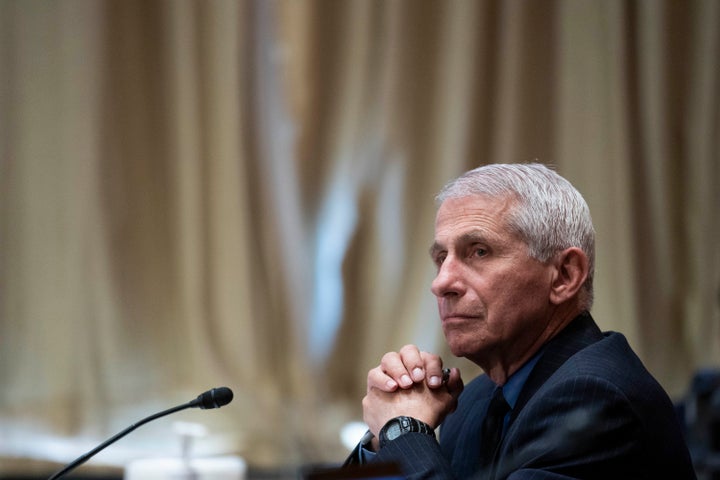
“I don’t anticipate that the durability of the vaccine protection is going to be infinite — it’s just not,” he said Wednesday.Americans vaccinated against the coronavirus will likely need a booster shot to ensure they remain protected. But exactly when still remains unclear, Dr. Anthony Fauci said Wednesday. “I don’t anticipate that the durability of the vaccine protection is going to be infinite — it’s just not,” the infectious disease expert testified before a Senate Appropriations subcommittee. “So I would imagine we will need, at some time, a booster. What we’re figuring out right now is what that interval is going to be.” Fauci said researchers are continuing to monitor those involved in the vaccines’ original clinical trials to determine their resiliency. Thus far, it’s been determined that the protection can last anywhere from six months to a year. The CEOs of vaccine makers Pfizer and Moderna also suggested last week that Americans could need a booster shot eight to 12 months after completing their inoculations. “People at highest risks (elderly, healthcare workers) were vaccinated in December/January. So I would do [a] September start for those at highest risk,” Moderna CEO Stéphane Bancel told Axios. Fauci has discouraged naming a timeline, however, until one is certain. “We may not need it for quite a while,” he said in an interview last week with The Washington Post. “We are preparing for the eventuality that we might need boosters, but I think we better be careful not to let the people know that inevitably X number of months from now, everyone is going to need a booster. That’s just not the case.” Offering increased protection against emerging variants may also be a reason for booster shots, as one infectious diseases expert recently told HuffPost. “We know increasingly reassuring information about durability, but the variant question remains open — and a little ominous, I think, as you see what’s happened across the subcontinent, and how we’re getting a rise here in the United States of the Brazilian variant,” said Cameron Wolfe, an associate professor of medicine specializing in infectious diseases with Duke University’s School of Medicine. Vaccine makers have said they are preparing to make alterations to their vaccines to better fight variants. Moderna recently announced that it has developed a variant-specific booster shot that has been shown to protect those fully vaccinated against COVID-19 against the variants from Brazil and South Africa. Both of those variants were detected in the U.S. in January of this year, according to the Centers for Disease Control and Prevention.

By Neal K. KatyalThe Biden Justice Department appears to be making a serious mistake by trying to keep secret a Trump-era document about former Attorney General William P. Barr’s decision to clear his boss, former President Donald Trump, of obstructing justice. The American people have a right to see the memo. Then they can decide whether Mr. Barr used his power as the nation’s chief law enforcement officer as a shield to protect the president. This month, Judge Amy Berman Jackson of the U.S. District Court in Washington ordered it released. Were this an ordinary criminal case, her order would represent a remarkable intrusion into prosecutorial secrecy, and I would have appealed when I was acting solicitor general. But the document is anything but ordinary. It concerns attempts at the highest levels of government to shield the attorney general’s boss from criminal liability. It is, in essence, the people’s memo, and with its appeal, the Justice Department is attempting to hide it from public scrutiny.Faced with a Freedom of Information Act request from Citizens for Responsibility and Ethics in Washington to release the document, Judge Jackson engaged in a thorough review of the material. Her conclusion was startling: Mr. Barr was “disingenuous.” And the affidavits the Justice Department used to justify withholding the materials “are so inconsistent with evidence in the record, they are not worthy of credence.”As an institutionalist, I believe the long-term interests of the Justice Department generally do not swing from one administration to the next. My tenure in the Obama administration running the Solicitor General’s office, which decides for the federal government whether it will appeal judicial orders, was devoted to that principle.So it’s understandable how the Justice Department reached its decision in this case. We generally don’t want prosecutors to have their internal analysis released to the public, for fear of undermining ongoing law enforcement investigations and for chilling frank advice and discussion. That is, I suspect, why the Justice Department authorized the appeal. It doesn’t want the Freedom of Information Act to be used as a weapon to undermine prosecutors. But in this case, absent additional information, that rationale seems wrong. The appearance, if not the reality, of what Mr. Barr did to the Justice Department cannot be ignored: He used his mighty prosecution powers to protect the Trump administration and its friends, including the president. That is what Judge Jackson’s opinion, in the end, was all about. After reading a full set of documents related to the memo, she said: “So why did the attorney general’s advisers, at his request, create a memorandum that evaluated the prosecutorial merits of the facts amassed by the special counsel? Lifting the curtain reveals the answer to that too: getting a jump on public relations.” These shenanigans came after Mr. Barr was revealed to have written a memo for Mr. Trump while a private citizen, a long document that concluded that, yes, you guessed it, the president was not guilty of obstruction of justice. The Justice Department is the one cabinet agency that has a value in its name — “justice.” Its iconography — a blindfolded Lady Justice — underscores the idea that everyone has to play by the same rules. Mr. Barr appears to have desecrated that cardinal principle. The public has a right to know what he and his Justice Department lawyers did and why they did it.We already had one by-the-book official, the special counsel, Robert Mueller, try to apply regular principles to a deeply abnormal presidency, and we witnessed the result: a distorted impeachment and the nullification of potential criminal charges.The problem for the new Justice Department is: What does it do now? Should it depart from ordinary rules because the last administration did so? If it doesn’t appeal Judge Jackson’s decision, isn’t the department allowing a precedent to be set that private litigants can ask for and get all sorts of prosecutorial materials?No. Good surgeons don’t always operate, and good appeals lawyers don’t always appeal. Here, Justice Department lawyers could have safeguarded the department’s interests by saying they disagreed with the decision, but because it was a trial court decision, it was not precedential for other cases and not appropriate to appeal.And the department then could have voluntarily released the memo without conceding that it was required by the Freedom of Information Act. When the Justice Department doesn’t appeal a decision, that doesn’t mean it agrees with it. Lawyers there decide not to appeal all the time for many reasons. In short, there were better solutions here that would have walked the tightrope between the public’s need to know and the Justice Department’s general need to protect prosecutorial interests. In the end, there must be a zone of confidential government decision-making and privacy. Good government depends on it. But that zone is a two-way street: It also depends on government officials who behave as if they deserve to be there. The Justice Department’s decision to appeal Judge Jackson’s order treated this case like any other garden-variety case. It wasn’t. https://www.nytimes.com/2021/05/26/opinion/trump-barr-obstruction-justice-doj.html
 |
https://www.ppp.org.pk/pr/24905/