Monday, July 20, 2020
Pakistan: Skeletons In The Cupboard Of History – OpEd
By Hidayat Ullah
The checkered history of Pakistan is marked by several erroneous decisions and culpabilities. Some of the substantial blunders that had changed the fate and nemesis of Pakistan needs to be march pasted. In order to be assiduous and put an end to all the blunders, we need to critically analyze those perpetrated in the past. After the inception of Pakistan the first ever blunder was the decision of civil- Military Elite’s to make a strategic alliance with USA. This was the primordial idiocy and absurdity. The leadership of that time decided not to be part of any bloc or remain non-aligned. They contemplated USA as our saviors, who would extricate us from chaos and in the wake of Military and Economic assistance the integrity of the country was sold.
We become reliable on foreign aid, imperialist powers and our colonial masters. From defense pacts to CENTO, and from SEATO , to Baghdad pact, this country if funded by US witnessed an Economic growth and development and if not our economy is in danger to be sunk in Arabian sea essentially as the fate of Two Nation theory was seized. As a consequence of this blunder, Military became a supreme force and they imposed coups and the implications of these Military coups were more catastrophic.
The dismantling of constituent Assembly in 1954 by the then Governor General Ghulam Muhammad was yet another Skelton in the cupboard of History. Moulvi tameez ud din who was the speaker of Sindh Assembly provoked this act of Ghulam Muhammad in Sindh High court. The court decided that a Governor General can not disband a constituent Assembly and ordered the restoration of constituent Assembly. In 1955, the federal court which we now call the supreme court issued a judgement by the name of “ Law of Necessity”, which concluded that the decision of Governor General to dismantle the constituent Assembly is equitable, unerring and valid. That Law of Necessity till this day has proved as a dangling sword for the democratic system of Pakistan, as it justified the coups of all Military dictators. Justice Munir concedes his fault in his book “ From Jinnah to Zia”.
As it is said that one thing leads to the other. The nefarious intentions of Military might and the unscrupulous politicians to grab the upper Echelon of power and to not transfer the powers to the majority party (Awami league of sheikh Mujib) marked a watershed event in the melancholic history of Pakistan. Our direct neighbor (India) kept a vigilant eye on the sitch and state of affairs. She swiftly moved to disintegrate the already disbanded and splintered parts of one homeland. India supported sheikh Mujib in every way possible. India adopted the policy of “ the enemy of my enemy is my friend” in the charged political atmosphere. What added fuel to the fire was the Military operation “search light” carried out by Pakistani Army in East Pakistan. The situation deteriorated and an embryonic state Bangladesh came into being.
The fragile, callous and incompetent policies of Musharraf regime to fathom out the 9/11 crisis was a colossal and gargantuan clanger that lead Afghanistan into an endless war, and we as the counter parts of USA remain a proxy in the so called “ War on Terror”.
Instead of resolving the problem of USA Musharraf regime preferred to stuck Bush administration in a Quagmire. Mula Omer the then Amir of Afghanistan had provided safe sanctuary to American declared terrorist Osama Bin Laden. America asked Pakistan’s assistance to held talks with Mula Omer in handling Osama Bin Laden to them. America was never against the regime of Mula Omer rather it was busy in negotiations to do trade via Afghanistan and bring the oil reserves from Central Asia. The American oil company UNOCAL negotiated for almost three years with afghan government on this issue.
The protégé’ Mula Omer whom Pakistan had given recognition from UAE and Saudi Arabia would have easily persuaded to hand over Osama Bin Laden but the then ISI chief stimulated a matter of rejection while negotiating with Mula Omer. The repercussions of the so called War on terror and strategic partnership are endured till this day. The country lost 80 thousand civilians, Para Military forces, a major set back to Economy and the infrastructure of country turned into ruins.
These and many other fiascos contributed to the Economic decline, a hindrance to the democratic culture, and impediment to the prosperity of country. Moreover these blunders proved to be calamitous and cataclysmic.
#Coronavirus: Is low testing behind Pakistan's falling daily new cases?

PM Imran Khan's government says the drop in the daily number of new coronavirus cases in July is due to its "smart lockdown" strategy. But observers say the trend could be a result of misreporting and inadequate testing.
On July 15, the World Health Organization in Pakistan held a technical working group virtual meeting and acknowledged that COVID-19 cases seemed to be slowly falling in the country. Pakistan had reported just 2,165 new cases in the past 24 hours.
The South Asian country has so far registered over 261,000 COVID-19 infections, with 5,505 deaths and 183,737 recoveries. The number of active cases currently stands at 70,787.
The WHO groups Pakistan among the 10 countries with the fastest-growing number of new COVID-19 cases. In a leaked letter in June, the global health body also criticized the government for hastily removing lockdown restrictions.
Pakistan's overall testing rate also remains low. Prime Minister Imran Khan's government argues that the drop in the increase of daily new cases is due to its policy of "smart lockdowns," but data shows a correlation between the drop in testing and declining new cases.
Asad Umar, a federal minister, dismissed talk of a correlation between the two in a tweet on July 15, instead crediting the government's actions for the positive development.
Decline in testing
According to Our World in Data, the latest estimate of Pakistan's daily tests per thousand people is 0.1 as of July 16, a rather sharp decline from 0.13 tests in June. Experts believe that current testing has dropped by at least a quarter.
As per the National Command Operation Center (NCOC), Pakistan has a total testing capacity of 71,780 tests per day, with 133 testing laboratories in total. Currently, it is utilizing only about 40% of the capacity, according to the Ministry of National Health Services Regulation and Coordination.
The NCOC data shows that the government conducted 24,262 tests on July 15 and reported 40 deaths. In contrast, a month ago, on June 13, the total tests done per day were 29,546 and the reported deaths were double the figure recorded on July 15.
Last month, the government said it would increase the rate of testing to 50,000 tests a day from July, a target which is yet to materialize. On June 19, Pakistan conducted 31,681 COVID-19 tests, the highest officially recorded number so far.
Speaking on the condition of anonymity, a government official in a semi-urban district in Punjab province noted that he had direct orders from his superior to omit numbers by almost half. This month he reported 34 new cases, instead of 63.
This is indicative of willful misreporting at the district level and raises concerns regarding the accuracy of the official figures. Misreporting, coupled with a decrease in testing, greatly skews the recorded prevalence of cases in the country, say experts.
Widespread social stigma
Given the rise in the total number of infections in the country, people are now more aware of COVID-19 symptoms and are not coming to hospitals unless they become severely ill, Hina Shah [name changed], a doctor at PAF Hospital in Islamabad, told DW.
"Whole affected families are not coming to hospitals, there is some stigma attached but also many people choose to quarantine themselves," she added, underlining that the decline in numbers is also due to people opting not to go to hospitals and get tested.
This view is shared by Maham [name changed], a doctor at Services Hospital in Lahore city. She explained that people are scared of going to hospitals or getting tested for fear of being ostracized in case of infection.
She also noted that at her hospital and others like Mayo Hospital, tests are free but can take almost a week for results to come, which renders the testing pointless. "There is also no real follow-up to check if family members are also infected like there was in June," she added.
According to the Organization for Economic Cooperation and Development (OECD), tracking new cases is imperative to avoid new outbreaks and surges of coronavirus cases, as well as to allow those recovered from the infection to return to work and help revitalize the economy.
Khan's government has opted for "smart lockdowns" as a way to curb the virus' spread while ensuring economic activity continues unperturbed. For this strategy to succeed, experts say, testing and tracing is key, but the recent decrease in testing rates could be counterproductive and hamper the efforts to overcome the immense health emergency.
#Baloch seek answers from #Pakistan as more disappear in conflict

Balochistan separatists say more than 5,000 people have gone missing in decades of conflict in southwestern Pakistan.
For more than 11 years, relatives of people who disappeared in the murk of a separatist movement in southwestern Pakistan have gathered outside the Press Club of Quetta wanting to know who took their fathers, husbands and sons.
The daily sit-in protest in the provincial capital of Balochistan began on June 28, 2009, after a doctor, Deen Muhammad, was abducted by "unknown men".
Relatives suspect Muhammad, like many other missing ethnic Baloch, was snatched by Pakistani security forces hunting separatists, who for decades have waged a campaign for greater autonomy or independence.
Sometimes less than a dozen join the daily protest, other days many more, but Muhammad's two daughters have been among the regulars since they were eight and 10 years old.
"Our little hands were holding pictures of our father back then; now we have grown up and we still have no clue if he is alive," Sammi Baloch, now 21, told Reuters news agency by telephone from Quetta.
When the weather is too extreme in Quetta to hold protest, a sit-in is observed by Baloch in front of the press club in Karachi, Pakistan's largest city and a melting pot for different ethnic groups.
'Stop disappearing people'
The separatist movement in Balochistan, a sparsely populated, mountainous, desert region bordering Afghanistan and Iran, has both waned and intensified over the years.
Last month, the Balochistan National Party (BNP) quit Prime Minister Imran Khan's parliamentary bloc, frustrated by unfulfilled promises to address Baloch grievances including the festering issue of the disappeared.
When he led the BNP into an alliance with Khan's coalition two years ago, Akhtar Mengal gave the government a list of 5,128 missing people.
Since then, more than 450 of the people on the list have been found or returned to their families, but during the same period, Mengal says another 1,800 were reported to have disappeared.
"If you cannot recover people, at least stop disappearing more people," said Mengal.
Another Baloch party - set up in the months prior to the 2018 elections with backing from the military establishment, according to political analysts - is in a coalition with Prime Minister Khan's party at federal and provincial levels.
Balochistan Awami Party Senator Anwar-ul-Haq Kakar told Reuters the numbers of the missing are "exaggerated".
But Mama Qadeer, who heads a group called Voice for Baloch Missing Persons, keeps his own count.
"In the last six months, the number of Baloch missing persons has risen," he told Reuters by telephone. His son disappeared 10 years ago.
In February last year, Qadeer's group handed a list of 500 missing people to provincial officials. Since then, nearly 300 have been returned to their homes but 87 others disappeared in the first half of this year, according to the group.
#Pakistan #PPP - #PML-N delegation, Bilawal Bhutto discuss APC agenda

Pakistan Muslim League-Nawaz (PML-N) and Pakistan Peoples Party (PPP) on Monday deliberated on agenda of the planned All Parties Conference (APC).
Three-member PML-N delegation comprising Ahsan Iqbal, Ayaz Sadiq and Khawaja Saad Rafique called on PPP Chairman Bilawal Bhutto Zardari at Bilawal House where PPP’s Qamar Zaman Kaira, Raja Pervaiz Ashraf, Chaudhry Manzoor and Syed Hassan Murtaza were also present.
Leaders from both parties discussed the APC agenda which included coronavirus, inflation and flour, sugar and medicine scandal along with economic and financial situation of the country.
Furthermore, debate was held over possible amendments in the National Accountability Bureau (NAB) laws and vindictive actions by the government.
PPP suggested to bring a no-confidence motion against National Assembly Speaker Asad Qaiser.
Final recommendations will be shared with heads of other parties, who have already expressed their support to Bilawal Bhutto, following today’s meeting between PML-N and PPP.
https://nation.com.pk/20-Jul-2020/pml-n-delegation-bilawal-bhutto-discuss-apc-agenda
Sunday, July 19, 2020
Opinion: John Lewis Risked His Life for Justice


Representative John Lewis, who died Friday at age 80, will be remembered as a principal hero of the blood-drenched era not so long ago when Black people in the South were being shot, blown up or driven from their homes for seeking basic human rights. The moral authority Mr. Lewis exercised in the House of Representatives — while representing Georgia’s Fifth Congressional District for more than 30 years — found its headwaters in the aggressive yet self-sacrificial style of protests that he and his compatriots in the Student Nonviolent Coordinating Committee deployed in the early 1960s as part of the campaign that overthrew Southern apartheid.
These young demonstrators chose to underscore the barbaric nature of racism by placing themselves at risk of being shot, gassed or clubbed to death during protests that challenged the Southern practice of shutting Black people out of the polls and “white only” restaurants, and confining them to “colored only” seating on public conveyances. When arrested, S.N.C.C. members sometimes refused bail, dramatizing injustice and withholding financial support from a racist criminal justice system.
This young cohort conspicuously ignored members of the civil rights establishment who urged them to patiently pursue remedies through the courts. Among the out-of-touch elder statesmen was the distinguished civil rights attorney Thurgood Marshall, who was on the verge of becoming the nation’s first Black Supreme Court justice when he argued that young activists were wrong to continue the dangerous Freedom Rides of early 1961, in which interracial groups rode buses into the Deep South to test a Supreme Court ruling that had outlawed segregation in interstate transport.
Mr. Marshall condemned the Freedom Rides as a wasted effort that would only get people killed. But in the mind of Mr. Lewis, the depredations that Black Americans were experiencing at the time were too pressing a matter to be left to a slow judicial process and a handful of attorneys in a closed courtroom. By attacking Jim Crow publicly in the heart of the Deep South, the young activists in particular were animating a broad mass movement in a bid to awaken Americans generally to the inhumanity of Southern apartheid. Mr. Lewis came away from the encounter with Mr. Marshall understanding that the mass revolt brewing in the South was as much a battle against the complacency of the civil rights establishment as against racism itself. By his early 20s, Mr. Lewis had embraced a form of nonviolent protest grounded in the principle of “redemptive suffering”— a term he learned from the Rev. James Lawson, who had studied the style of nonviolent resistance that the Indian leader Mahatma Gandhi had put into play during British colonial rule. The principle reminded Mr. Lewis of his religious upbringing and of a prayer his mother had often recited.
In his memoir “Walking With the Wind,” written with Michael D’Orso, Mr. Lewis explains that there was “something in the very essence of anguish that is liberating, cleansing, redemptive,” adding that suffering “touches and changes those around us as well. It opens us and those around us to a force beyond ourselves, a force that is right and moral, the force of righteous truth that is at the basis of human conscience.”
The essence of the nonviolent life, he wrote, is the capacity to forgive — “even as a person is cursing you to your face, even as he is spitting on you, or pushing a lit cigarette into your neck” — and to understand that your attacker is as much a victim as you are. At bottom, this philosophy rested upon the belief that people of good will — “the Beloved Community,” as Mr. Lewis called them — would rouse themselves to combat evil and injustice.
Mr. Lewis carried these beliefs into the Freedom Rides. The travelers described their departing meal at a Chinese restaurant in Washington as “The Last Supper.” Several of the participants had actually written out wills, consistent with the realization that they might never make it home. No one wanted to die, but it was understood that a willingness to do so was essential to the quest for justice. The Ku Klux Klan did its best to secure such a sacrificial outcome. It firebombed a bus at Anniston, Ala., and tried unsuccessfully to burn the Freedom Riders alive by holding the exit doors shut. “Walking With the Wind” describes the especially harrowing episode that unfolded on the Freedom Ride bus on which he arrived in Montgomery, Ala.
The terminal seemed nearly deserted, he writes, but “then, out of nowhere, from every direction, came people. White people. Men, women and children. Dozens of them. Hundreds of them. Out of alleys, out of side streets, around the corners of office buildings, they emerged from everywhere, from all directions, all at once, as if they’d been let out of a gate . … They carried every makeshift weapon imaginable. Baseball bats, wooden boards, bricks, chains, tire irons, pipes, even garden tools — hoes and rakes. One group had women in front, their faces twisted in anger, screaming, ‘Git them niggers, GIT them niggers!’ … And now they turned to us, this sea of people, more than three hundred of them, shouting and screaming, men swinging fists and weapons, women swinging heavy purses, little children clawing with their fingernails at the faces of anyone they could reach.”
Mr. Lewis’s fellow Freedom Riders tried in vain to escape the mob by scaling trees and terminal walls. “It was madness. It was unbelievable,” Mr. Lewis recalled “… I could see Jim Zwerg now, being horribly beaten. Someone picked up his suitcase, which he had dropped, and swung it full force against his head. Another man then lifted Jim’s head and held it between his knees while others, including women and children, hit and scratched at Jim’s face. His eyes were shut. He was unconscious …. At that instant I felt a thud against my head. I could feel my knees collapse and then nothing. Everything turned white for an instant, then black.”
“Burn Jim Crow to the Ground”
Mr. Lewis clashed again with the elder statesmen of the movement when they prevailed on him to tone down a speech he was about to give at the March on Washington in 1963. Thrown out were the harshest criticisms of the John F. Kennedy administration’s civil rights bill as well as a fiery passage threatening that the movement would “march through the South, through the heart of Dixie, the way Sherman did. We shall pursue our own scorched earth policy and burn Jim Crow to the ground — nonviolently.”
Yet even the softened speech was radical for the context. At a time when civil rights leaders were commonly referring to African-Americans as Negroes, the Lewis speech used the term Black: “In the Delta of Mississippi, in Southwest Georgia, in the Black Belt of Alabama, in Harlem, in Chicago, Detroit, Philadelphia and all over this nation the Black masses are on a march for jobs and freedom.”
To the dismay of many, the 23-year-old Mr. Lewis described the movement as “a revolution,” appealing to all who listened “to get into this great revolution that is sweeping this nation. Get in and stay in the streets of every city, every village and hamlet of this nation until true freedom comes, until a revolution is complete. We must get in this revolution and complete the revolution.”Mr. Lewis carried his faith in the power of nonviolence into the fateful Selma, Ala., voting rights demonstration — in March of 1965 — that was soon named Bloody Sunday to commemorate the vicious attack that state troopers waged on peaceful marchers. Mr. Lewis suffered a fractured skull and was one of 58 people treated for injuries at a hospital.The worldwide demonstrations that followed the brutal police killing of George Floyd underscored the extent to which many people need visual evidence to grow outraged over injustice that is perpetrated all the time outside the camera’s eye.
A television broadcast of the violence meted out by the police on Bloody Sunday worked in the same way. It generated national outrage and provided a graphic example of the need for the Voting Rights Act, which was signed into law that summer.
The linchpin part of the law required certain states and parts of states to seek federal permission before changing voting rules. This seemed almost a godsend to the civil rights cohort and at least a partial repayment for the lives of the many men and women who had died in pursuit of voting rights.
Soon after the Supreme Court crippled the act in 2013, states began unveiling measures limiting ballot access. At the time of the decision, Mr. Lewis wrote that the court had “stuck a dagger into the heart” of a hard-won and still necessary law. With his customary eloquence, he urged Congress to restore the Voting Rights Act, describing the right to vote as “almost sacred” and “the most powerful nonviolent tool we have in a democracy.”
The passing of John Lewis deprives the United States of its foremost warrior in a battle for racial justice that stretches back into the 19th century and the passage of the 14th and 15th Amendments. Americans — and particularly his colleagues in Congress — can best honor his memory by picking up where he left off.
https://www.nytimes.com/2020/07/17/opinion/john-lewis.html
Opinion: The Doctor Versus the Denier - Anthony Fauci’s at the pool, but Donald Trump’s in deep.


You want to see a real can’t-look-away train wreck of a relationship? Look to the nation’s capital, where a messy falling out is chronicled everywhere from the tabloids to a glossy fashion magazine, replete with a photo shoot by a swimming pool.
The saga has enough betrayal, backstabbing, recrimination, indignation and ostracization to impress Edith Wharton.
The press breathlessly covers how much time has passed since the pair last spoke, whether they’re headed for splitsville, and if they can ever agree on what’s best for the children.
It was always bound to be tempestuous because they are the ultimate odd couple, the doctor and the president.
One is a champion of truth and facts. The other is a master of deceit and denial. One is highly disciplined, working 18-hour days. The other can’t be bothered to do his homework and golfs instead. One is driven by science and the public good. The other is a public menace, driven by greed and ego. One is a Washington institution. The other was sent here to destroy Washington institutions. One is incorruptible. The other corrupts. One is apolitical. The other politicizes everything he touches — toilets, windows, beans and, most fatally, masks.
After a fractious week, when the former reality-show star in the White House retweeted a former game-show host saying that we shouldn’t trust doctors about Covid-19, Donald Trump and Anthony Fauci are gritting their teeth.
What’s so scary is that the bumpy course of their relationship has life-or-death consequences for Americans.
Who could even dream up a scenario where a president and a White House drop oppo research on the esteemed scientist charged with keeping us safe in a worsening pandemic?The administration acted like Peter Navarro, Trump’s wacko-bird trade adviser, had gone rogue when he assailed Dr. Fauci for being Dr. Wrong, in a USA Today op-ed. But does anyone believe that? And if he did, would he still have his job?
No doubt it was a case of Trump murmuring: Will no one rid me of this meddlesome infectious disease specialist? Republicans on Capitol Hill privately confessed they were baffled by the whole thing, saying they couldn’t understand why Trump would undermine Fauci, especially now with the virus resurgent. They think it’s not only hurting Trump’s re-election chances, but theirs, too. As though it couldn’t get more absurd, Kellyanne Conway told Fox News on Friday that she thinks it would help Trump’s poll numbers for him to start giving public briefings on the virus again — even though that exercise went off the rails when the president began suggesting people inject themselves with bleach. “How did we get to a situation in our country where the public health official most known for honesty and hard work is most vilified for it?” marvels Michael Specter, a science writer for The New Yorker who began covering Fauci during the AIDs crisis. “And as Team Trump trashes him, the numbers keep horrifyingly proving him right.”
When Dr. Fauci began treating AIDs patients, nearly every one of them died. “It was the darkest time of my life,” he told Specter. In an open letter, Larry Kramer called Fauci a “murderer.”
Then, as Specter writes, he started listening to activists and made a rare admission: His approach wasn’t working. He threw his caution to the winds and became a public-health activist. Through rigorous research and commitment to clinical studies, the death rate from AIDs has plummeted over the years.
Now Fauci struggles to drive the data bus as the White House throws nails under his tires. It seems emblematic of a deeper, existential problem: America has lost its can-do spirit. We were always Bugs Bunny, faster, smarter, more wily than everybody else. Now we’re Slugs Bunny.
Can our country be any more pathetic than this: The Georgia governor suing the Atlanta mayor and City Council to block their mandate for city residents to wear masks?
Trump promised the A team, but he has surrounded himself with losers and kiss-ups and second-raters. Just your basic Ayn Rand nightmare.
Certainly, Dr. Fauci has had to adjust some of his early positions as he learned about this confounding virus. (“When the facts change, I change my mind. What do you do, sir?” John Maynard Keynes wisely observed.)
“Medicine is not an exact art,” Jerome Groopman, the best-selling author and professor at Harvard Medical School, put it. “There’s lots of uncertainty, always evolving information, much room for doubt. The most dangerous people are the ones who speak with total authority and no room for error.”
Sound like someone you know?
“Medical schools,” Dr. Groopman continued, “have curricula now to teach students the imperative of admitting when something went wrong, taking responsibility, and committing to righting it.”
Some are saying the 79-year-old Dr. Fauci should say to hell with it and quit. But we need his voice of reason in this nuthouse of a White House.
Despite Dr. Fauci’s best efforts to stay apolitical, he has been sucked into the demented political kaleidoscope through which we view everything now. Consider the shoot by his pool, photographed by Frankie Alduino, for a digital cover story by Norah O’Donnell for InStyle magazine.
From the left, the picture represented an unflappable hero, exhausted and desperately in need of some R & R, chilling poolside, not letting the White House’s slime campaign get him down or silence him. And on the right, some saw a liberal media darling, high on his own supply in the midst of a deadly pandemic. “While America burns, Fauci does fashion mag photo shoots,” tweeted Sean Davis, co-founder of the right-wing website The Federalist.
It’s no coincidence that the QAnon-adjacent cultists on the right began circulating a new conspiracy theory in the fever swamps of Facebook that Dr. Fauci’s wife of three and a half decades, a bioethicist, is Ghislane Maxwell’s sister. (Do I need to tell you she isn’t?)
Worryingly, new polls show that the smear from Trumpworld may be starting to stick; fewer Republicans trust the doctor now than in the spring.
Forget Mueller, Sessions, Comey, Canada, his niece, Mika Brzezinski. Of the many quarrels, scrapes and scraps Trump has instigated in his time in office, surely this will be remembered not only as the most needless and perverse, but as the most dangerous.
As Dr. Fauci told The Atlantic, it’s “a bit bizarre.”
More than a bit, actually.
https://www.nytimes.com/2020/07/18/opinion/sunday/fauci-trump-coronavirus.html
#Pakistan - Imran Khan's first year in office: U-turns and oppression

26 Jul 2019
In the first year of Khan's tenure, Pakistan regressed in many ways, especially in terms of the economy and human rights.
It has been a year since Imran Khan became Pakistan's prime minister following what many consider the dirtiest general election in the country's 73-year history, with opposition parties and international observers alleging that it was the all-powerful Pakistan military that made the former cricketer's victory possible.
Khan's campaign slogan was "Naya (new) Pakistan", but a year into his premiership he is nowhere close to building a new Pakistan. What is worse, the country has regressed in many ways during his tenure, especially in terms of the economy, political stability and the state of human rights in the country.
Khan also walked back on many of his campaign promises in his first year in office. These reversals gained him the embarrassing nickname "U-turn Khan" and forced him to publicly defend his record, saying: "A leader who does not take 'U-turns' [in the best interests of the nation] is not a 'real leader'."
However, none of Khan's many U-turns have helped Pakistan in any way.
Sinking the economy
Khan's biggest blunder so far was on the economic front - the country's currency is in a devaluation spiral and has lost 35 percent of its value in just one year. The situation got so bad that Khan had to reshuffle his ministerial cabinet and remove the finance minister he had marketed for years as the solution to Pakistan's financial woes.
As a candidate, Khan had promised to fix Pakistan's sinking economy without taking any foreign loans. However, his government broke all previous records by borrowing $16bn in just one year - the highest ever external borrowing in any fiscal year since Pakistan's creation in 1947.
Over the last year, the country's economic growth rate has also halved - down to 3.3 percent, the lowest in nine years. Meanwhile, the government's trade and fiscal deficit continue to widen.
Khan knows the problem lies with revenue generation, as many well-off citizens do not pay taxes in the country. But the rich continue to evade taxes and are not interested in paying up, leaving the poor to pay more through indirect taxation, creating more poverty and further discontent among the masses.
While the country goes through this financial meltdown, Khan is also adding to the country's political volatility, further damaging the economy.
Silencing the opposition
Before he came to power, Khan repeatedly said the country was not progressing because of corrupt politicians who had stashed their wealth abroad and promised to bring back this stolen money. Once in power, he did go after some of these politicians, but the authorities have been unable to find anything substantive to return.
Moreover, many corrupt members of Khan's party have not faced any probes. Also, it has recently been claimed that, in some cases, the "accountability" judges were blackmailed into convicting Khan's political opponents without substantial evidence of wrongdoing. All this led many in Pakistan to brand Imran Khan's accountability drive a political witch-hunt aimed at silencing the opposition.
In the last year, the military and the government also used other charges to implicate and silence opposition figures. Rana Sanaullah, who is a prominent parliamentarian and vocal critic of Khan's government, for example, was recently arrested for allegedly trafficking drugs by the military-run anti-narcotics force. Sanaullah had predicted his detention a few days before, stating that he was going to be arrested soon and the government was contemplating under what charges to detain him.
This wave of political crackdowns ignited a people's movement in Punjab, the largest province in the country. Thousands of people, led by Maryam Nawaz Sharif, the daughter of the imprisoned former Prime Minister Nawaz Sharif, took to the streets across Pakistan on July 25 to protest the new government's assault on opposing voices.
Ms Sharif had recently taken to social media to ask those who wish "to live in a free, democratic and just Pakistan" to join her movement. "I shall be leading protest rallies across Pakistan that will not only ask for justice for Nawaz Sharif but demand rule of law, freedom of expression, end to manipulation of the entire system to punish public representatives, stealing people's mandate, imposition of selected," she said on Twitter.
However, while some of the opposition protests were covered live by Pakistan's domestic news television channels, the Nawaz-led main demonstration in the city of Quetta was not covered by Pakistani media. The blackout was due to a federal cabinet order earlier this month banning coverage of opposition political leaders who are under investigation for corruption.
Given the ongoing deterioration of media freedoms in Pakistan, not many journalists are willing to go against the government's wishes. Earlier this month, three news channels that ignored the cabinet order and covered a news conference by Ms Sharif were taken off the air, demonstrating the current government's disturbing dictatorial tendencies.
However, its not only the Pakistani journalists who suffer at the hands of a government hellbent on silencing all opposing voices.
Attacking human rights activists
Pakistani human rights activists who speak up about the rule of law and people's rights are also being targetted by the authorities. Gulalai Ismail, an award-winning women rights activist, is currently in hiding for supporting the plight of the Pashtun community, Pakistan's second-largest ethnic group, through the Pashtun Tahaffuz (protection) Movement, the PTM.
PTM has been protesting for over a year, demanding accountability for the military's actions in the tribal belt near the Afghanistan-Pakistan border where the Pakistan Army has been conducting operations since 9/11 with no civilian oversight.
But, instead of listening to their demands, both the military and the government went on an assault against the movement, ordering the media to not to cover any of their protests and arresting their leaders. Two of the movement's parliamentarians, Mohsin Dawar and Ali Wazir, were recently imprisoned for allegedly attacking a military check-post, even though video evidence of the incident clearly shows that the soldiers opened fire on them first as they were passing through with a group of unarmed demonstrators.
Before coming into power, Khan had appeared at a PTM rally, promising to take up the movement's cause. In fact, he campaigned against the Pakistan military's operations himself for years and blamed the leadership's decision to partner with the US in imposing the so-called war on terror, which resulted in Pashtun suffering.
However, after becoming prime minister, he swiftly forgot his promises and abandoned the Pashtun cause. He now seems to be following the same path as previous governments, unequivocally supporting the Pakistan military's actions on the tribal belt. He also recently went to the US for the first time as prime minister and agreed to work with Washington "to bring peace and economic stability in South Asia", seemingly forgetting how he used to accuse the US of destroying peace in Pakistan.
So why has Khan made so many U-turns and become almost a different person after only a year in power?
How did his ruling party, Pakistan Tehreek-e-Insaaf (PTI), go from being the party of change to being the party of "the establishment", meaning the country's all-powerful military?
It appears that the country's powerful generals, known to influence politics from behind the scenes, have installed Khan as prime minister to be able to control the country while keeping up the pretence of democracy. Khan is forced into making so many U-turns because it is not him taking the decisions and determining policies, the establishment is.
But there seems to be one thing that Pakistan's generals are failing to understand: A country as diverse as Pakistan can not flourish while its civilian rulers are being manipulated by the military behind the scenes.
Pakistani democracy cannot prosper until the media is free, human rights protections are robust and elected officials are allowed to make decisions without any external pressure. The Pakistani people will not tolerate being ruled by puppet governments forever. While Khan seems to have survived politically his first year in office, if he does not change course and meet the demands of the Pakistani people he promised to serve, he may not be so lucky in the near future.
#Pakistan - What Imran Khan is doing to Pakistani school textbooks even Zia-ul-Haq didn’t

By PERVEZ HOODBHOY
The huge volume of religious material the proposed Single National Curriculum contains beats all previous version’s in Pakistan’s history.
Be prepared, Pakistan! Imran Khan’s government is poised to inflict damage upon this country’s education system in a manner never seen before. Its so-called Single National Curriculum (SNC) hides systemic changes going far deeper than the ones conceived and executed by the extremist regime of Gen Zia-ul-Haq. Implementation is scheduled for 2021.
At first glance a uniform national curriculum is hugely attractive. Some see it striking a lethal blow at the abominable education apartheid that has wracked Pakistan from day one. By the year, a widening gap has separated beneficiaries of elite private education from those crippled by bad public schooling. So what could be better than the rich child and the poor child studying the same subjects from the same books and being judged by the same standards?
But this morally attractive idea has been hijacked, corrupted, mutilated and beaten out of shape by those near-sighted persons now holding Pakistan’s future in their hands, and who, like their boss, kowtow to the madressah establishment. Prime Minister Khan was widely criticised in 2016-17 for making huge grants to madressahs of the late Maulana Samiul Haq, self-professed father of the Taliban who was murdered by an associate in mysterious circumstances.
As yet only SNC plans for Class I-V are public. But the huge volume of religious material they contain beats all curriculums in Pakistan’s history. A column-by-column comparison with two major madressah systems — Tanzeemul Madaris and Rabtaul Madaris — reveals a shocking fact. Ordinary schools will henceforth impose more rote learning than even these madressahs. Normal schoolteachers being under-equipped religiously, SNC calls for summoning an army of madressah-educated holy men — hafiz’s and qaris — as paid teachers inside schools. How this will affect the general ambiance and the safety of students is an open question.
The push for a uniform national curriculum idea derives from three flawed assumptions:
First: It is false that quality differences between Pakistan’s various education streams stem from pursuing different curricula. When teaching any secular subject such as geography, social studies or science, all streams have to cover the same topics. While details and emphases obviously differ, each must deal with exactly seven continents and water being H2O.
Instead, learning differentials arise because students experience very different teaching methods and are evaluated using entirely different criteria. So, for example, a local examination board will typically ask a mathematics student to name the inventor of logarithms whereas an ‘O’-level student must actually use logarithms to solve some problem. The modern world expects students to reason their way through a question, not parrot facts.
Second: It is false that a hefty dose of piety will somehow equalise students of Aitchison College and your run-of-the-mill neighbourhood school. The legendary Mahmood and Ayyaz prayed in the same suff (prayer line) and established a commonality without ending their master-slave relationship. Similarly, rich and poor schools will remain worlds apart unless equalised through school infrastructure, well-trained teachers, high quality textbooks and internet access. How the needed resources will be generated is anybody’s guess. Under the PTI, defence is the only sector seeing increases instead of cuts.
Third: It is false that school systems belonging to the modern world can be brought onto the same page as madressahs. Modern education rests squarely upon critical thinking, and success/failure is determined in relation to problem solving and worldly knowledge. Madressah education goals are important but different. They seek a more religiously observant student and a better life after death. Understandably, critical thinking is unwelcome.
While some madressahs now teach secular subjects like English, science and computers, this comes after much arm-twisting. Soon after 9/11, madressahs were spotlighted as terrorist breeding grounds. Musharraf’s government, beholden as it was to America, ordered them to teach secular subjects. Most rejected this outright but others were successfully pressurised. However, madressahs teach secular and religious subjects identically; reasoning is sparse and authoritarianism dominates.
While the new Class I-V SNC document also discusses secular subjects, much of this is pointless tinkering with the minutiae of teaching English, general knowledge, general science, mathematics and social studies. They are not accompanied by plausible plans for how the necessary intellectual or physical resources will be garnered and the plans implemented.
Still bigger changes are around the corner. The Punjab government has made teaching of the Holy Quran compulsory at the college and university level. Without passing the required examination no student will be able to get a BA, BSc, BE, ME, MA, MSc, MPhil, PhD or medical degree. Even the Zia regime did not have such blanket requirements. To get a university teaching job in the 1980s, you had to name all the wives of the Holy Prophet (PBUH) and recite some difficult religious passages such as Dua-i-Qunoot. Still, students could get degrees without that. That option is now closed.
Starkly inferior to their counterparts in Iran, India and Bangladesh, Pakistani students perform poorly in all international science and mathematics competitions. Better achievers are invariably from the elite ‘O’-/‘A’-level stream. More worrying is that most students are unable to express themselves coherently and grammatically in any language, whether Urdu or English. They have stopped reading books.
Significantly, as yet the PTI’s new education regime is mum on how it will advance its goal of closing a huge skill deficit. So poor is the present quality of technical and vocational institutes that private employers must totally retrain the graduates. That’s why private-sector industrial growth is small and entire state enterprises, such as PIA and Pakistan Steel Mills, have collapsed. Pakistan’s space programme flopped but Iran has just put a military satellite into orbit and India is well on the way to Mars.
Empowered by the 18th Amendment, Pakistan’s provinces should vigorously resist the regressive plan being thrust upon the nation by ideologues that have usurped power in Islamabad. Else Pakistan will end up as the laughing stock of South Asia, left behind even by Arab countries. Pakistan’s greatest need — and its single greatest failure — is its tragic failure to impart essential life skills to its citizens. To move ahead, the priority should be to educate rather than score political points. https://theprint.in/opinion/what-imran-khan-is-doing-to-pakistani-school-textbooks-even-zia-ul-haq-didnt/464016/
#Pakistan - On abuse and silence in schools

By Dr Ayesha Razzaque
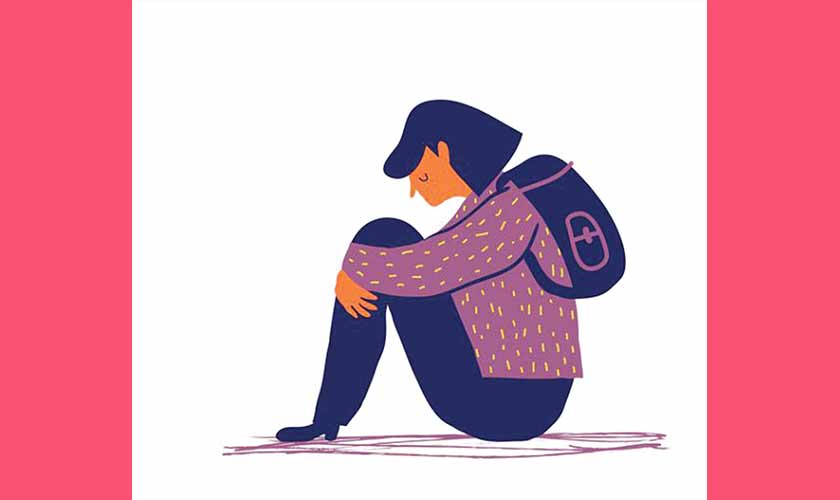
Making schools liable for the conduct of their staff, teaching children about their rights and tackling societal attitudes — the sexual harassment issue at schools requires a multi-pronged approach.Last month, we learned about the harassment of students at the hand of a group of employees at a
prestigious girls-only school in Lahore. We also learnt that before the matter became public, the students had complained to the school management but were blown off. Now that the news is in the public domain, the management is scrambling to be seen taking ‘swift’ action and firing the teachers involved. Unfortunately, harassment in places of work and learning is widespread. A #MeToo movement is badly needed in Pakistan to highlight the extent and spread of the problem.
During the day or two the harassment report managed to stay in the media headlines, before it was swept away by the usual grist of TV talk shows, we saw the usual arguments for moving forward.One side put forward the knee-jerk reactionary proposals - ban men from serving in girls’ schools, end co-education, make burqas mandatory, etc. The school of thought had banned YouTube a few years ago over an objectionable post, and has more recently banned the game, Playerunknown’s Battleground (PUBG), after it was blamed for a teen suicide. It routinely blocks websites for being objectionable for one reason or another.
Such proposals elicit on-camera eyerolls from a crowd that stands on sound principles, but often does little more than offer solutions copied from developed economies that may be impractical in our context. A recent proposal entailed deploying student counsellors at all schools (and universities). Certainly, student counsellors in schools can serve as a first-point-of-contact for children reporting harassment incidents.
Let’s consider some numbers to assess its practicality. We currently have approximately 235,000 schools (public and private) across the country, covering every grade from K-12. Add another 1400+ degree colleges and universities. Given that almost no school currently employs student counsellors, we are talking about hiring roughly 236,000 counsellors. As voters who were promised a million new jobs last year, you might think 236,000 jobs is no big deal, but let us put this number in perspective to understand just how pie-in-the-sky this proposal is.
According to the Annual Statistical Bulletin of Federal Government Employees for 2018-19 of the Pakistan Public Administration Research Centeer of the Establishment Division, the sum total of all employees of the Government of Pakistan (Grades 1 to 22) stands at 580,000. Out of these, the number of Grade 17 to 22 employees is under 27,000. Hiring those 236,000 counsellors would add a highly-educated workforce equal to nearly 40 percent of the entire federal workforce across the entire country. In a country where in recent years the federal government could not find enough people capable of passing CSS exams to fill its open positions, how can we possibly hope to find and pay for such a large qualified, professional workforce? Putting in place a counselling/ grievance redressal system with untrained and insensitive counsellors will not take the burden off of the victim. No child should be put in a place where they have to convince adults that they are being abused, harassed or just made to feel insecure or awkward.
I have personally witnessed gender specialists in the Pakistani development sector, who are expected to be aware of workplace gender discrimination and harassment, carelessly passing sexist remarks. It makes me wonder, if that is the level of talent the well-paying development sector attracts, what level of talent can we possibly hope to hire for schools?
It pains me to say, on the proverbial ladder of civilisation, too often our society proves itself to be on a rung somewhere between illiterate and savage. It is not that harassment and assault do not happen in more ‘civilised’ societies, but that those instances are usually dealt with without the kind of victim-blaming seen here. If we are unable to afford the resources needed to protect our children this way, what options does that leave us?
Long-term, we need changes to societal norms which is harder to accomplish and takes decades. Most important among these should be an end to stigmatising and blaming victims when they find the courage to speak up.
One thing the recent episode has shown is that while the school was quick to act and fire the four accused after the story broke, they did nothing other than attempt to sweep it under the rug before. By doing so, the management enabled the abusers. Schools are more concerned about their public reputation and less about the safety and well-being of their students. Businesses, even businesses like schools, do not care much about moral complicity unless it can cost them their bottom-line. To fix these lopsided priorities, it is necessary to make schools legally liable for the conduct of their staff. Once schools know they are liable, better supervision and hiring practices (use of employer references, criminal background checks etc) will follow naturally.
Long-term, we need changes to societal norms which is harder to accomplish and takes decades. Most important among these should be an end to stigmatising and blaming victims when they find the courage to speak up. Recently, a middle-aged woman was attending an official training course on Zoom. She is an accomplished senior government official in her own right, belongs to an educated family and has a husband who occupies an official position high enough to command respect nationwide. However, none of this dissuaded her colleague of 15 years from harassing and sending her lewd messages throughout the official online training. You would expect a woman at her station in life to feel confident enough to report this incident, but she did not. Such is the societal pressure on women to swallow their pride and keep quiet. Imagine how much more difficult it must be for a school girl to stand up to an abuser with an asymmetric power relationship.
While we can begin by making schools liable for the safety of their students, we cannot just sit back and wait for society to change for the better on its own. The conservative proposal of all-female staff in girls’ schools has a historical precedent and can be considered without being seen as throwing in the towel. In the US, historical black and women’s colleges provided disadvantaged groups with a protective enclave, shielded from a world where the odds were (are) stacked against them. Historically segregated colleges, based either on gender or race, were founded to grant access to people excluded from higher education.
Today, opponents of the idea question whether such institutions are needed any longer. Proponents counter that unless institutional racism and sexism are fixed, segregated colleges must continue to allow minorities to flourish in an environment where they have a fair chance to grow. This, they argue, will allow them to better counter discrimination when they step out into the world. In our case, this idea makes even more sense, given that even home environments can be stifling for girls. In many cases parents will stop sending girls to school if they believe schools are unsafe.
Segregation is a valid but partial solution because while in most cases, we hear about, perpetrators are men and victims are girls/women, there is no fixed template for harassment and extending gender segregation in schools to the staff level will not safeguard boys.
A longer-term solution requires that both girls and boys be taught about harassment. As part of the social studies syllabus, they should learn about their rights, laws and systems available for their protection, and who to approach to report incidents to. While student counsellors may not arrive in all schools, and society may not change for another 30 years, there is one thing every parent can do right away and will not cost anyone a penny: be more open in their communication with their children, tell them that harassment happens, and if they experience it, they are not to blame, should not feel shame, and should feel safe to report it to their parents/responsible adults. We may not be able to change society overnight, but we can change our culture at home.
وزیراعظم نے کلبھوشن معاملے کو پارلیمنٹ سے پوشیدہ رکھ کر خاموشی سے خفیہ انداز سے آرڈیننس جاری کروایا، نفیسہ شاہ
پاکستان پیپلزپارٹی پارلیمنٹیرنز کی سیکریٹری اطلاعات ڈاکٹر نفیسہ شاہ نے کہا ہے کہ وزیراعظم نے کلبھوشن معاملے کو پارلیمنٹ سے پوشیدہ رکھ کر خاموشی سے خفیہ انداز سے آرڈیننس جاری کروایا جو سوالیہ نشان ہے۔ عمران خان بادشاہ سلامت نہیں کہ پارلیمنٹ سے بالا بالا فیصلے کرکے پارلیمنٹ پر مسلط کریں۔ انہوںنے کہا کہ جس انداز سے کلبھوشن کے لئے صدارتی آرڈیننس جاری ہوا ایسا فیصلہ پیپلزپارٹی سے تعلق رکھنے والے صدر یا وزیراعظم کرتے تو انہیں ملک دشمن قرار دے کر سزا بھی دے دی جاتی۔
انہوں نے کہا کہ عمران خان جس انداز سے من مانی کر رہے ہیں اس عمل سے ان کے لاڈلے ہونے کا تاثر مضبوط ہورہا ہے۔ ڈاکٹر نفیسہ شاہ اس خدشے کا اظہار کیا کہ ایک دن احسان اللہ احسان کی طرح کلبھوشن کو بھی فرار کرایا جائے گا۔ پیپلزپارٹی پارلیمنٹیرینز کی سیکریٹری اطلاعات نے ادویات کی قیمتوں کے اضافے کو مسترد کرتے ہوئے عوام پر ادویات کی قیمتوں کا بم گرانے کی شدید مذمت کی ہے۔ انہوں نے کہا کہ پوری دنیا میں کورونا وباءکے دوران صحت کی سہولیات مہیا کی جا رہی ہیں مگر پاکستان میں وباءکے دوران ادویات کی قیمتوں
میں اضافہ کرکے عوام کو دونوں ہاتھوں سے لوٹا جا رہا ہے۔
Saturday, July 18, 2020
John Lewis, US civil rights hero and Democratic congressman, dies at 80
By Daniel Strauss in Washington and Naaman Zhou
Lewis helped Martin Luther King organise the March on Washington in 1963 and once suffered a fractured skull at the hands of state troopers.John Lewis, the civil rights leader, and Democratic congressman has died. He was 80.
On Friday night, the House speaker, Nancy Pelosi, confirmed Lewis’s death. He had been suffering from pancreatic cancer.
Barack Obama, the first African American president, said Lewis “loved this country so much that he risked his life and his blood so that it might live up to its promise”.
Lewis campaigned for civil rights to the very end of his life. Obama said it was “fitting that the last time John and I shared a public forum was at a virtual town hall with a gathering of young activists who were helping to lead this summer’s demonstrations in the wake of George Floyd’s death”.
Born to sharecroppers in Troy, Alabama, in February 1940, Lewis became a prominent leader of the civil rights movement in the 1960s. He joined the Freedom Rides that began in 1961, traveling to the south by bus to fight segregation on interstate buses.
A founding member of the Student Nonviolent Coordinating Committee, he became its chair in 1963 and helped organise the March on Washington, when Martin Luther King Jr delivered his “I have a dream” speech.

In Selma, Alabama, in 1965, as activists tried to cross the Edmund Pettus bridge, Lewis was walking at the head of the march with his hands tucked in the pockets of his overcoat when he was knocked to the ground and beaten by police. His skull was fractured. Nationally televised images of the brutality forced attention on racial oppression in the south. That incident, along with other beatings during peaceful protests, left Lewis with scars for the rest of his life.
Within days, King led more marches in Alabama. President Lyndon B Johnson soon was pressing Congress to pass the Voting Rights Act, which became law later that year.
Lewis was elected in Georgia’s fifth district in 1987 and held the office until his death. He announced his stage four pancreatic cancer in December last year.
“I have been in some kind of fight – for freedom, equality, basic human rights – for nearly my entire life,” he said. “I have never faced a fight quite like the one I have now.”
The youngest and last survivor of the “Big Six” civil rights activists, a group led by King, when Lewis attended Obama’s inauguration in January 2009 he was the last surviving speaker from the March on Washington. Obama presented him with a commemorative photograph signed, “Because of you, John. Barack Obama.” In 2011 he awarded Lewis the presidential medal of freedom.
On Friday, Obama said: “I first met John when I was in law school, and I told him then that he was one of my heroes. Years later, when I was elected a US senator, I told him that I stood on his shoulders. When I was elected president of the United States, I hugged him on the inauguration stand before I was sworn in and told him I was only there because of the sacrifices he made.
“And through all those years, he never stopped providing wisdom and encouragement to me and Michelle and our family. We will miss him dearly.
“It’s fitting that the last time John and I shared a public forum was at a virtual town hall with a gathering of young activists who were helping to lead this summer’s demonstrations in the wake of George Floyd’s death.
“Afterwards, I spoke to him privately, and he could not have been prouder of their efforts … I told him that all those young people – of every race, from every background and gender and sexual orientation – they were his children. They had learned from his example, even if they didn’t know it.”

Former president Bill Clinton said Lewis “gave all he had to redeem America’s unmet promise of equality and justice for all” and “became the conscience of the nation”.
Former president Jimmy Carter saluted Lewis for making “an indelible mark on history through his quest to make our nation more just”.
Bernice King, the daughter of Martin Luther King Jr, said Lewis fought “the good fight”.
Pelosi, who ordered US flags at the Capitol to be flown at half-staff, said: “Every day of John Lewis’s life was dedicated to bringing freedom and justice to all. As he declared 57 years ago during the March on Washington, standing in the shadow of the Lincoln Memorial: ‘Our minds, souls and hearts cannot rest until freedom and justice exist for all the people.’
“How fitting it is that even in the last weeks of his battle with cancer, John summoned the strength to visit the peaceful protests where the newest generation of Americans had poured into the streets to take up the unfinished work of racial justice.”
Joe Biden, the presumptive Democratic nominee for president, said: “John’s life reminds us that the most powerful symbol of what it means to be an American is what we do with the time we have to make real the promise of our nation – that we are all created equal and deserve to be treated equally.”
In 2001, Lewis boycotted the inauguration of George W Bush because he did not believe he had fairly been awarded victory over Al Gore. Bush released a statement on Saturday morning, saying Lewis “worked to make our country a more perfect union”.
“America can best honor John’s memory by continuing his journey toward liberty and justice for all,” Bush wrote.
Lewis also skipped the inauguration of Donald Trump, the current Republican president, of whom he became a fierce critic. Trump was at his golf course in Virginia on Saturday. In a proclamation, he ordered flags at the White House and all federal buildings, embassies and military installations to be flown at half-staff, “as a mark of respect for [Lewis’s] memory and longstanding public service”.
On Twitter, Trump said he was “saddened to hear the news of civil rights hero John Lewis passing. Melania and I send our prayers to he and his family.”
The most senior Republican in Congress, Senate majority leader Mitch McConnell, said Lewis was a “pioneering civil rights leader who put his life on the line to fight racism”.
“Congressman Lewis’ place among the giants of American history was secure before his career in Congress had even begun,” McConnell said. “You did not need to agree with John on many policy details to be awed by his life.”
Late last year, a spokesperson for Lewis said the congressman had been arrested 40 times in the civil rights era and several times since, including in 2013 at a rally for immigration reform.
Even while ill, Lewis continued to speak out, expressing hope that Black Lives Matter protests would lead to real change. In early June, he said that while he had “been down this road before”, this time gave him hope.
“As a nation, and as a people, we’re going to get there. We’re going to make it,” he told NBC.
Clearly ailing, he appeared to be signaling to a new generation of leaders.
“We’re going to survive and there will be no turning back,” he said.
Subscribe to:
Posts (Atom)