Wednesday, January 30, 2019

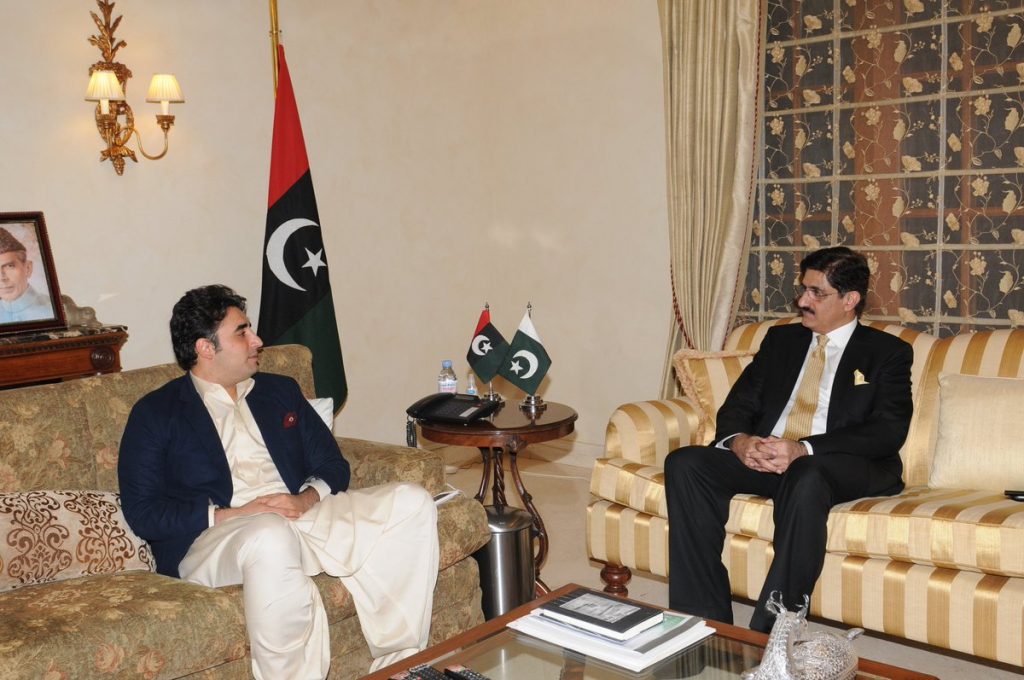
Bilawal Bhutto and Murad Ali Shah with UNDP Pakistan to lead coordinated efforts to achieve Agenda 2030 and 17 SDGs in Sindh

Government of Sindh has initiated its strategic efforts towards meeting UN’s global goals for sustainable development. A high-level meeting took place today between Bilawal Bhutto Zardari, Chairman PPP, Murad Ali Shah, Chief Minister Sindh, and Quratulain Marri, Senator, and Ignacio Artaza, Resident Representative, and Shakeel Ahmed, Assistant Resident Representative, UNDP Pakistan, to discuss the role of political leadership inmoving forward to achieve 17 SDGs and Agenda 2030 in Sindh.
In 2016, Government of Sindh, as part of the national initiative on SDGs, adopted the global Agenda 2030 and its 17 Sustainable Development Goals, that inculcate a vision and direction for a better tomorrow, targeting human prosperity, reduction in poverty, healthy eco-systems, a stable climate, and a clean environment. 06 SDGs have been set as priorities up to 2025 by the Chief Minister Sindh: Good Health and Well-being, Quality Education, Clean Water and Sanitation, Affordable and Clean Energy, Zero Hunger, and Decent Work and Economic Growth, while No Poverty, Gender Equality, and Climate Action remain integral cross cutting issues. With UNDP Pakistan’s technical support, a devoted SDGs Support Unit has been set up and is operational in Planning & Development Board to create and facilitate an enabling environment for government of Sindh and pertinent stakeholders, across multiple sectors to achieve Agenda 2030, through policy advocacy, research, knowledge management, devising of innovative approaches, with the aim to mainstream and localize SDGs in the province.
Under Bilawal Bhutto Zardari and CM’s leadership, Sindh has been progressing significantly in its efforts to localize SDGs but there is a lot that needs to be further done. The novel public-private partnership in the form of Sindh Engro Coal Mining Company, that is working towards bringing grassroot level change in the local community of Tharparker, is helping to address multiple SDGs, and is a best practice that can be replicated to other regions that are poverty-stricken such as Umarkot, Sajawal, Thatta and Tando Mohammad Khan.
Sindh’s Multi-Dimensional Poverty Index (MPI), which is 43.1%, higher than the national average, and Human Development Index (HDI) of 0.640, warrant attention of the government towards a greater need to innovate, devise multi-sectoral development plans, and all the while adopt a more holistic approach.
UNDP Pakistan and its SDGs Support Unit in Sindh are actively providing policy advice, and is engaged in developing a SDGs Framework for Sindh that can guide the political leadership of the Government of Sindh in developing the much-needed integrated plans that can help address soaring and complex development challenges that the province is facing, such as health epidemic, unemployment and poverty, out-of-school children, power shortages, etc.
“We plan to have many development initiatives in Sindh and would benefit from the technical expertise of UNDP and SDGs Support Unit to integrate Agenda 2030 and attain 17 SDGs whilst bringing grassroot level change in Sindh and empower our local communities”, said Bilawal Bhutto, Chairman, PPP
“We are committed to Agenda 2030 in Sindh and interested in leading coordinated efforts to attain 17 SDGs with the support of UNDP Pakistan and Sindh SDGs Support Unit. We are enabling the private sector to form successful public-private partnerships to collaborate on our development initiatives, Thar being an example” – Murad Ali Shah, Chief Minister, Sindh
“In leading coordinated efforts for accelerated progress towards localization and attainment of Agenda 2030 and 17 SDGs in Sindh, political commitment is of paramount significance. Political leadership and ownership of Agenda 2030 can be further enhanced, and integrated multi-sectoral development plans and policies can be devised with the technical support from UNDP’s Sindh SDGs Support Unit”, said Ignacio Artaza, Resident Representative, UNDP Pakistan.
https://mediacellppp.wordpress.com/

Pakistan’s Pashtun Women Are Breaking Silence On Army’s Abuse


TAHA SIDDIQUI 

video of a Pakistani woman from North Waziristan surfaced a few days ago, that has now gone viral on Twitter. In the video, the woman claims that Pakistani soldiers have taken away her husband, and are coming to her home with rape-threats.
The video emerged after her young son made an earlier video statement recorded by a local, that the women in his family were being harassed by the Pakistan Army, after his father and another relative were allegedly picked up by the military and had gone “missing”.
The local who made the video was severely beaten up, allegedly by military men. Reports now suggest that the military has let go off the husband of the woman in a bid to do damage control, and to force the woman to remain silent about the abuses she faced at the hands of the Pakistani soldiers.

Pashtun ‘Honour Codes’ & A Culture of Silence

In order to investigate this issue, a delegation of well-known women’s rights political activists also visited the Waziristani woman this weekend, to assess the situation on-ground.They have unearthed similar claims, but not just from the woman. Activists who visited the area and know about the conflict that has engulfed this region since 9/11, say that many other women came forward, and there are many more such cases of sexual abuse by the Pakistan Army, but the women have been reluctant to speak out, partially due to fear, but also for another reason: the concept of honour in a conservative and patriarchal society.
‘Honour codes’ of Pashtun society dictate that women stay silent about the abuse they face, because if they go public with it, it will bring disrepute to their family and they may be killed to “protect the honour”. Thus, the Pashtun women stay quiet about such harassment, abuse, and in some cases, even rape.
One of the activists who visited North Waziristan is Gulalai Ismail, who runs an award-winning NGO called Aware Girls. Ms Ismail has been quite active in advocating for the rights of Pashtuns, the ethnic community she herself belongs to.

The Pashtun Tahaffuz Movement

According to Ismail, the sexual abuse and harassment of women by the Pakistani military in her region has been rampant for many years, but it is the first time that the women are coming forward themselves, and it is mainly because of the Pashtun Tahaffuz Movement which has given the women the courage to speak up.
The PTM, which is a grassroots movement in Pakistan, has emerged in the wake of the extra judicial killings of men from the tribal belt, and other serious grievances against the Pakistani state. The movement has garnered global attention in recent months.
However, despite the PTM taking up the cause of women and children, the subsequent video of the woman going viral, and the visit of the women’s delegation to the tribal belt, the Pakistani media has remained silent about these serious allegations of soldiers committing sexual abuse in the name of raids. Apparently, journalists have been told by the ISPR, the media-wing of the Pakistan military, to not cover the PTM or anything related to it.

Reports of Alleged Rape by Pak Army Not Only From Khyber Pakhtunkhwa

In another recent video by a political activist from the Swat Valley (to which Nobel Laureate Malala Yousafzai belongs), a local claimed that over a thousand of women were abducted by the military while conducting operations in his region. Local women’s rights activists agree with this assessment, but once again, the cases are almost never documented, because the families of such victims do not come forward due to fear of the powerful Pakistan Army, and the ‘honour code’.
But the tribal belt and Khyber Pakhtunkhwa regions are not the first regions where accusations of sexual abuse against men from the Pakistan Army have surfaced.
Earlier, in Balochistan, similar reports had emerged, including the well-known case of Dr Shazia Khalid, who was allegedly raped by a Pakistan Army officer in 2005, in Balochistan. Justice was never served in her case, and instead Dr Khalid had to subsequently leave Pakistan with her family, amidst threats to her life.

Army Must Be Held Accountable; More Women Needed in Security Forces

Does the Pakistan Army use rape as a weapon in conflict zones like Balochistan, Khyber Pakhtunkhwa and the tribal belt? It may not be a policy, but it is no secret that dozens of women in East Pakistan were kept in rape camps managed by the Pakistan Army during the civil conflict that led to the division of the country, and the creation of Bangladesh in 1971. At that time too, due to ‘honour codes’, many of these women were ostracised by society in the newly-formed nation of Bangladesh, prompting the leadership of the country to recognise them as ‘Birongonas’, a Bengali term which means ‘war heroine’, in order to stop discrimination against such women.
Once again, similar allegations are surfacing from conflict zones in Pakistani territory. The Pakistani civilian leadership must investigate this and also look into accusations by other communities like the Baloch, and hold soldiers committing such atrocities accountable.
Many of these communities don’t have many male members left in their homes, as the men have gone ‘missing’, mostly due to the conflict. And therefore, it is imperative that the soldiers be held accountable for such abuse, and that a mechanism is built to involve women in the security forces when it comes to dealing with such vulnerable sections of society.

https://www.thequint.com/voices/opinion/pakistani-army-rape-allegations-pashtun-tribes

’آسیہ بی بی آزاد شہری، جہاں چاہے جاسکتی ہیں‘


ترجمان دفتر خارجہ ڈاکٹر فیصل نے کہا ہے کہ عدالتی فیصلے کے بعد آسیہ بی بی آزاد شہری ہیں،جہاں جانا چاہے جاسکتی ہیں۔
ترجمان دفتر خارجہ ایک بیان میں کہا کہ عدالتی فیصلے بعد آسیہ بی بی آزاد شہری ہے، وہ اپنی نقل و حرکت میں مکمل آزاد ہے، پاکستان کے اندر یا بیرون ملک جہاں جانا چاہے جا سکتی ہے۔
گزشتہ روز سپریم کورٹ نے آسیہ مسیح کی بریت کے فیصلے خلاف دائر اپیل کو مسترد کردیا تھا۔
آسیہ بی بی کی سزا کالعدم قرار دینے اور رہائی کے خلاف قاری محمد سلام نے عدالتِ عظمیٰ میں نظر ثانی اپیل دائر کی تھی، جسے 29 جنوری کو ہونے والی سماعت میں سپریم کورٹ نے یہ کہہ کر مسترد کردیا کہ مدعی فیصلے میں ایک بھی غلطی نہیں بتاسکے، انہیں فیصلے میں عام باتوں پر اعتراض ہے، فیصلے پر نہیں۔
ضلع شیخوپورہ میں جون 2009ء میں فالسے کے کھیتوں میں کام کے دوران 2 مسلمان خواتین کا آسیہ مسیح سے جھگڑا ہوا جس کے بعد ان پر الزام لگایا گیاتھاکہ انہوں نے پیغمبر اسلام کے خلاف توہین آمیز کلمات کہے۔
آسیہ بی بی کے خلاف ان کے گاؤں کے امام مسجد قاری سلام نے پولیس میں مقدمہ درج کرایا، 5 روز بعد درج کی گئی واقعے کہ ایف آئی آر کے مطابق آسیہ بی بی نے توہین رسالت کا اقرار بھی کیا۔
امام مسجد کے بیان کے مطابق آسیہ بی بی کے مبینہ توہین آمیز کلمات کے بارے میں پنچایت ہوئی ،جس میں ہزاروں افراد کے شرکت کرنے کا دعوی کیا گیا تھا لیکن جس مکان کا ذکر کیا گیا، وہ بمشکل پانچ مرلے کا تھا۔
مقدمے کے اندراج کے بعد آسیہ بی بی کو گرفتار کرلیا گیا اور بعدازاں ٹرائل کورٹ نے 2010 میں توہین رسالت کے جرم میں 295 سی کے تحت انھیں سزائے موت سنا دی، جسے انہوں نے لاہور ہائیکورٹ میں چیلنج کردیا تھا۔
تاہم لاہور ہائیکورٹ نے اکتوبر 2014 میں ٹرائل کورٹ کا فیصلہ برقرار رکھا تھا۔
جس پر 2014 میں ہی آسیہ بی بی کی جانب سے لاہور ہائیکورٹ کے فیصلے کے خلاف سپریم کورٹ میں اپیلیں دائر کی گئیں۔
ان اپیلوں پر سماعت کے بعد سپریم کورٹ نے گذشتہ برس 8 اکتوبر کو فیصلہ محفوظ کرلیا تھا، جو 31 اکتوبر کو سنایا گیا اور عدالت نے آسیہ بی بی کو بری کرنے کا حکم دے دیا۔

Pakistan will have no place on the global stage unless it learns from the Asia Bibi blasphemy case


Parveen Akhtar
After eight years on death row, Asia Bibi, a Pakistani Christian woman is today free to leave Pakistan. The country’s Supreme Court has upheld a decision to overturn Bibi’s conviction under Pakistan’s blasphemy laws and has made clear the pivotal decision now facing the country.
In 2009, Bibi had been accused of insulting the Prophet Muhammad by a group of women as they worked, harvesting crops in a field. She has always maintained her innocence.
The case has highlighted the situation of religious minorities in Pakistan, a country which was created in 1947 as a homeland for the Muslims of the subcontinent at the tail-end of British rule in India. Champions of an independent Pakistan, including the head of the Muslim league and Pakistan’s first head of state, Muhammad Ali Jinnah, feared the persecution of Muslims in majority Hindu India, after British withdrawal.
Not a theocrat, Jinnah supported the rights of individuals to practice their faith: "You are free to go to your temples; you are free to go to your mosques or to any other place of worship in this State of Pakistan. You may belong to any religion or caste or creed - that has nothing to do with the business of the State." The white stripe in Pakistan’s national flag is meant to represent the space for minorities in the country.
However, the reality for religious and other minorities in Pakistan has taken a strikingly different path. In a country where poverty is high, literacy is low and corruption the norm, religion has been a unifying rallying point for political mobilisation.
Political leaders have played the religious card to ensure the support of the religious hardliners who can be counted on to shore up a mass public turnout. Even secular socialist heads of state have succumbed to the pressure from the religious lobby. In 1974, Zulfikar Ali Bhutto declared the Ahmadiya community non-Muslim.
The 1980’s was the decade of Pakistan’s “Islamification” – during this time, legislation which had first been introduced by the British in the mid 19th century to protect minorities from religious persecution was developed into the distinct blasphemy laws of today. In 1986, blasphemy against the Prophet Muhammad was made into an offence for which one could be sentenced to death., Asia Bibi was the first woman to be given the death sentence for such a crime.
Like so many other nation-states in the age of globalisation, Pakistan is a country battling out the question of national identity.
On one side, there are religious hardliners who want the country to be run under Sharia law, and who are deeply opposed to Bibi’s release. On the other side, the liberals who want to separate religion and politics, and repeal the blasphemy laws. This is a severe internal partition which has caused much bloodshed in the past.
Civil conflict aside, Pakistan has to think carefully about its position on the global stage. It will have to decide whether to go back to Jinnah’s initial concept of a nation-state welcoming of, and including, all minorities. The alternative is to take the ignoble path of successive political opportunists who, in the pursuit of power, have been too ready to stoke communalism and religious division. The country’s future and the region’s security depend on it.

https://www.independent.co.uk/voices/asia-bibi-blasphemy-pakistan-christianity-death-row-supreme-court-a8752166.html

#AsiaBibi - Asia Bibi is finally free, but blasphemy laws still must go


Tarek Fatah

Weeks after opening its arms to the Saudi teenager Rahaf Mohammed who faced death in her country because she renounced Islam, we Canadians are now hosting another woman escaping the Islamic World.
This time it’s a Christian mother from Pakistan who spent nearly ten years on death row for the crime of daring to drink from a cup of water reserved for Muslims. Her name is Aasiya Noreen also known as Asia Bibi.
Asia Bibi’s daughters reportedly arrived in Canada before her and Bibi herself was believed to have arrived in Toronto on a Tuesday afternoon flight, the family reunited for the first time in a decade.
Asia’s travails began on June 14, 2009 on a hot June summer day in Pakistan’s Punjab in the village of Katanwala, near the holy town of Nankana Sahib, birthplace of the founder of the Sikh religion Guru Nanak.
Among the farm workers that day was Asia Bibi, a lone Christian among a group of Muslim women. Thirsty after working under the scorching sun, Asia took a break to quench her thirst from a community water dispenser. As Asia was drinking from the cup, other women — all Muslim — got enraged because supposedly she had contaminated the cup as Christians are considered “unclean.”
In Pakistan’s Punjab, indigenous Christians are considered as low caste converts from Hinduism and treated as “untouchables.” The racist slur by which we Punjabi Muslims refer to fellow Punjabi Christians is “choora,” the collector of human waste.
Asia Bibi too was that day the designated “choora.” The argument escalated and soon Asia was dragged away and made to “confess” to an Islamic cleric that she had blasphemed against Prophet Muhammad.
Later that day a Muslim mob attacked Asia Bibi’s house and the woman was taken into police custody from where she will emerge as a free woman today.
In between, in 2010, a lower court convicted Bibi of blasphemy and sentence to death by hanging. The death sentence was upheld by higher courts until the Supreme Court declared her innocent late last year.
Asia Bibi will be able to spend the rest of her life in Canada, but what about the Christians left behind in Pakistan?
As my colleague Farzana Hassan wrote in this paper as far back as 2014, “Bibi is just the most prominent example of non-Muslims living on the edge of Pakistani society in a system that marginalizes and persecutes them.”
The words of two Pakistani Canadian Christians who spoke at the United Nations Human Rights Council (UNHRC) in March 2017 still resonate in my ears.
Rev. James Luke of the Lutheran church, a retired group captain of the Pakistan Air Force, tore into Islamabad’s horrific human rights record concerning the indigenous Christians of Pakistan. He said they have been marginalized from mainstream Muslim society in apartheid-like social segregation.He highlighted the Feb. 6, 1997 attack by 30,000 Muslims in the Christian village of Shanti Nagar (Peace Town). Waving placards that read “Kill Christians,” the jihadis destroyed 750 homes and four churches.
Another Pakistani-Canadian Christian who spoke at the UNHRC event was Jawaid Bakhsh, a retired major of the Pakistan army. He spoke at length about the social ostracization of Pakistan’s indigenous Christian community by the majority of Pakistani Muslims. “Today across the Islamic world, Christians are marked for annihilation and Christian blood is shed by the sword with impunity,” he stated.
Canada and the world’s democracies should insist that Islamabad quash its blasphemy law that allows for such injustices in the name of race and religion.

Tuesday, January 29, 2019

Video Report - No Thanks, Billionaire Presidential Candidates

Video Report - CNN Harris Town Hall [10PM] 1/28/2019 | Town Hall With Sen. Kamala Harris

Video Report - How Kamala Harris plans to debate Trump

Video Report - US intel chief contradicts Trump on ISIS defeat

Video Report - Record-breaking cold impacting parts of US

Pashto Music - Za Kho Saaz | Ghani Khan | Sardar Ali Takkar | اول سترګې ستا د ليدو خو را | غني خان | سردارعلي ټکر

Suman Kumari becomes first Hindu woman judge to be appointed in Pakistan


Pakistan appointed Suman Kumari as a civil judge serving in the Qambar-Shahdadkot district.
 Suman Kumari has become the first Hindu woman in Pakistan to be appointed as a civil judge, according to a media report.
Suman, who hails from Qambar-Shahdadkot, will serve in her native district.
She passed her LLB. examination from Hyderabad and did her masters in law from Karachi’s Szabist University, Dawn reported.
According to Pawan Kumar Bodan, her father, Suman wants to provide free legal assistance to the poor in Qambar-Shahdadkot.
“Suman has opted for a challenging profession, but I am sure she will go places through hard work and honesty,” the father said.
Her father is an eye specialist while Suman’s elder sister is a software engineer and another sister is a chartered accountant.
Suman is a fan of singers Lata Mangeshkar and Atif Aslam.
This is not the first time that a person from the Hindu community has been appointed as a judge. The first judge from the Hindu community was Justice Rana Bhagwandas, who served as the acting chief justice for brief periods between 2005 and 2007.
Hindus make up nearly 2 per cent of Pakistan’s total population and Hinduism remains the second largest religion in Pakistan after Islam. – PTI

Exclusive: Canada Offers Asylum To Pakistani Christian Woman Formerly On Death Row


By Amardeep Bassey
Asia Bibi spent eight years on death row in Pakistan on blasphemy charges, after she was accused of insulting the Prophet Mohammed.
Asia Bibi, a Christian woman who spent eight years on death row in Pakistan for blasphemy, is moving to Canada after accepting an offer of asylum by Prime Minister Justin Trudeau, HuffPost UK can reveal.
The news comes as Pakistan’s top court today rejected a challenge to the acquittal of the mother-of-five on blasphemy charges, after she was accused of insulting the Prophet Mohammed.
The Supreme Court upheld its decision to overturn Asia Bibi’s conviction and death sentence sparking fears of civil unrest which plagued her release last year.
Bibi is expected to land in Canada this week to join two of her daughters, who were secretly flown out earlier this month.
Wilson Chowdry, of the British Pakistani Association, told HuffPost UK: “I can confirm that Asia Bibi will be flown out to Canada very, very soon and be joined in Canada by the rest of her family in due time.“Canadian diplomats have confirmed they are making the necessary arrangements as we speak and she is looking forward to her new life in a new country.”Chowdry, a close friend of the Bibi family who travelled the world trying to secure her asylum, said Bibi was moving to a secret and “relatively remote” part of Canada.He said: “Justin Trudeau himself has been personally involved in making sure Canada accepts Asia and her family.“Security concerns are still paramount. Even in Canada, Asia’s life is in potential danger.” Bibi, a farm labourer, was released from prison two months ago after Pakistan’s highest court acquitted her in a landmark decision.
Last month a delegation from the British Pakistani Christian Association visited Canada and garnered support from MPs there, who said they would welcome Asia and her family to the country.
The Trudeau government has the support of Canada’s opposition Conservative Party, who have urged him to “use every mechanism at his disposal to offer the Bibi family asylum”. In November Trudeau told reporters while in Paris: “There is a delicate domestic context that we respect which is why I don’t want to say any more about that, but I will remind people Canada is a welcoming country,” he added.Bibi spent years in solitary confinement after an argument with a group of Muslim women in June 2009, who accused her of insulting the Prophet Muhammad. But in October Pakistan’s supreme court overturned her conviction, saying the case against her was based on flimsy evidence.Her acquittal sparked violent protests across the country, led by Islamic religious hardliners from the extremist group Tehreek-e-Labaik, whose leaders were later arrested and detained on terrorism and sedition charges.
Days after her release, Bibi’s husband Ashiq Masih made an impassioned video plea to Theresa May asking for asylum in the UK.
But her appeal for sanctuary was controversially denied by the UK’s home office because of fears that British embassies and their staff would be targeted by Islamic extremists as a result, HuffPost UK revealed at the time. Several countries had reportedly offered Bibi asylum, including France, Spain, Holland, Germany, Italy and Australia.Wilson revealed Bibi and her family had spent Christmas together in a “safe and secret location” adding that a core of “international diplomats” were guarding her.A spokesman for Global Affairs in Canada said: “Canada welcomes the acquittal of Asia Bibi and looks forward to seeing a positive resolution to the case. We are focused on ensuring the safety of Asia Bibi and her family.The Supreme Court upheld its decision to overturn Asia Bibi’s conviction and death sentence sparking fears of civil unrest which plagued her release last year.
Bibi is expected to land in Canada this week to join two of her daughters, who were secretly flown out earlier this month.
Wilson Chowdry, of the British Pakistani Association, told HuffPost UK: “I can confirm that Asia Bibi will be flown out to Canada very, very soon and be joined in Canada by the rest of her family in due time.“Canadian diplomats have confirmed they are making the necessary arrangements as we speak and she is looking forward to her new life in a new country.”Chowdry, a close friend of the Bibi family who travelled the world trying to secure her asylum, said Bibi was moving to a secret and “relatively remote” part of Canada.
He said: “Justin Trudeau himself has been personally involved in making sure Canada accepts Asia and her family.
“Security concerns are still paramount. Even in Canada, Asia’s life is in potential danger.”
Bibi, a farm labourer, was released from prison two months ago after Pakistan’s highest court acquitted her in a landmark decision.
Last month a delegation from the British Pakistani Christian Association visited Canada and garnered support from MPs there, who said they would welcome Asia and her family to the country.The Trudeau government has the support of Canada’s opposition Conservative Party, who have urged him to “use every mechanism at his disposal to offer the Bibi family asylum”. In November Trudeau told reporters while in Paris: “There is a delicate domestic context that we respect which is why I don’t want to say any more about that, but I will remind people Canada is a welcoming country,” he added.Bibi spent years in solitary confinement after an argument with a group of Muslim women in June 2009, who accused her of insulting the Prophet Muhammad. But in October Pakistan’s supreme court overturned her conviction, saying the case against her was based on flimsy evidence. Her acquittal sparked violent protests across the country, led by Islamic religious hardliners from the extremist group Tehreek-e-Labaik, whose leaders were later arrested and detained on terrorism and sedition charges.
Days after her release, Bibi’s husband Ashiq Masih made an impassioned video plea to Theresa May asking for asylum in the UK.
But her appeal for sanctuary was controversially denied by the UK’s home office because of fears that British embassies and their staff would be targeted by Islamic extremists as a result, HuffPost UK revealed at the time. Several countries had reportedly offered Bibi asylum, including France, Spain, Holland, Germany, Italy and Australia.Wilson revealed Bibi and her family had spent Christmas together in a “safe and secret location” adding that a core of “international diplomats” were guarding her.A spokesman for Global Affairs in Canada said: “Canada welcomes the acquittal of Asia Bibi and looks forward to seeing a positive resolution to the case. We are focused on ensuring the safety of Asia Bibi and her family.
“We cannot comment further at this time.”

9 Killed in Suicide Attack on #Pakistan Police Complex

Authorities in Pakistan say a suicide militant raid against a police facility Tuesday in southwestern Balochistan province killed at least nine people and injured 21 others.
A military statement said three bombers carrying guns assaulted the Deputy Inspector General Police office compound in Loralai at a time when about 800 candidates were present inside for enrollment in the provincial police.
One of the assailants blew himself up at the main gate, enabling the other two attackers to storm the crowded complex and take positions in one of the rooms before Pakistani security forces engaged them in a firefight.
“During the clearance operation remaining two suicide bombers have been shot dead and [the] area has been cleared,” the army said. It added that the rest of the candidates were safely evacuated during the operation. The victims were airlifted to Quetta, the provincial capital, about 200 kilometers north of the site of the attack.
The outlawed extremist Pakistani Taliban claimed responsibility for staging the deadly raid. This was the second attack this month against a security installation in Balochistan claimed by the militant outfit.
On January 1, three gunmen, including a suicide bomber, raided a military installation in another district and killed four security forces.
The violence-hit largest Pakistani province, which shares a border with Afghanistan and Iran, has seen a rise in militant attacks in recent months.
Balochistan is home to several under-construction China-funded infrastructure projects, and it is a natural resource-rich region. But a low-level Baluch insurgency and the presence of militant groups, including loyalists of Islamic State, pose security challenges for Pakistani authorities.
https://www.voanews.com/a/suicide-attack-pakistan-balochistan-police-complex/4764006.html

Exclusive interview with Asif Ali Zardari - 28 January 2019

Video - Bilawal Bhutto Speech | 29 January 2019 59 views

READY FOR LONG MARCH TO SAFEGUARD 18TH AMENDMENT, IF NEEDED: BILAWAL BHUTTO


Pakistan People’s Party (PPP) Chairman Bilawal Bhutto said on Tuesday that his party is ready to safeguard the 18th Amendment of the Constitution and if needed, a long march will be held to let it remain intact.
The PPP chairman was addressing media, after the inauguration of a medical college in Gambat.
Bilawal said that the party will appeal against the decision on the 18th amendment. “Will not let them snatch away the hospitals in Sindh”.
During his address, Bilawal Bhutto said that in New Pakistan, he challenges Prime Minister Imran Khan to build a medical college similar to the one inaugurated today.
“In the last budget, people such as PM Imran’s sister received relief but none was given to the poor,” said the PPP chairman.
Bilawal said that the way PM Imran is running the parliament is counter-productive for the country.
Bilawal said that Zulfikar Ali Bhutto had dismissed Imran’s father on the basis of corruption. “Bhutto was the first elected prime minister and he was the one who introduced the concept of one individual, one vote,” said the PPP chairman.
He said that the country and the province of Sindh is facing multiple challenges but now it will be possible for the poor to get their treatment in Sindh.

https://www.suchtv.pk/pakistan/general/item/81078-ready-for-long-march-to-safeguard-18th-amendment-if-needed-bilawal-bhutto.html

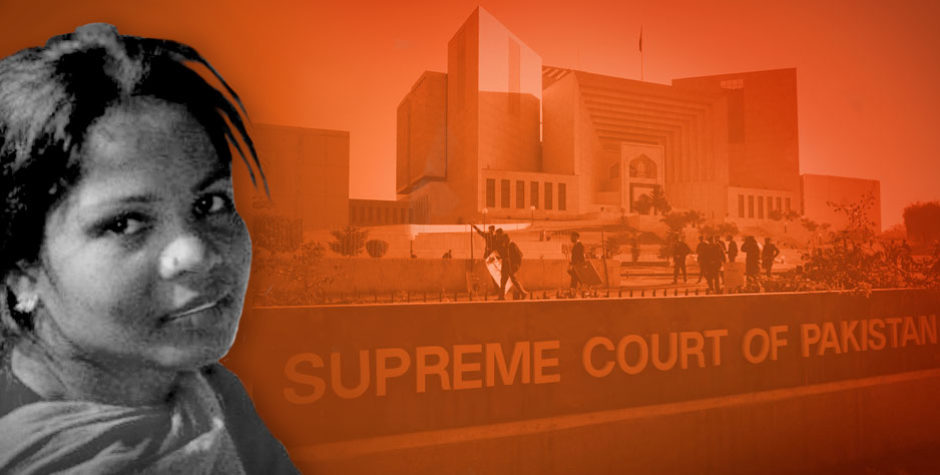
Pakistan blasphemy case: Aasia Bibi's acquittal upheld, she's free to leave


Pakistan's top court on Tuesday upheld its acquittal of a Christian woman sentenced to death for blasphemy, clearing the last legal hurdle and freeing Aasia Bibi to leave the country to join her daughters, who have fled to Canada and been given asylum.
The three-judge panel of the country's Supreme Court said the arguments of the lawyer acting on behalf of the petitioners did not satisfy the judges.
Radical Islamists had demanded the court reverse its Oct. 31 acquittal and execute Bibi, who spent eight years on death row and has remained under guard at a secret place since her acquittal.
Following that decision last year, radical religious parties took to the streets to protest, calling for the killing of judges who acquitted her and for the overthrow of Prime Minister Imran Khan's government. They also filed a last-minute appeal for a review of the Supreme Court acquittal. The protests were spearheaded by the radical Tehreek-e-Labbaik party, whose single point agenda is protection of Islam and the Prophet Muhammad.
Bibi, who always insisted that she was innocent, had said she would leave the country as soon as her legal battles were over. Her lawyer, who fled the country after receiving death threats, returned to Pakistan for the final review.
The blasphemy law and its backers
Bibi's case goes to the core of one of Pakistan's most controversial issues -- the blasphemy law, often used to settle scores or intimidate followers of minority religions, including minority Shiite Muslims. A charge of insulting Islam can bring the death penalty.
But the accusation on its own is sometimes enough to whip up vengeful mobs, even if the courts acquit defendants. A provincial governor who defended Bibi was shot and killed, as was a government minority minister who dared question the blasphemy law.
Bibi's ordeal began on a hot day in 2009 when she brought water to fellow farmhands who refused to drink from the same container as a Christian woman. Two of her fellow farmworkers argued with Bibi and later accused her of insulting Islam's prophet Mohammad. Bibi has steadfastly denied the charge.
Since her acquittal Bibi has spent her days in seclusion for fear of being targeted by angry mobs clamoring for her death. In her hideout, protected by Pakistani security, she has longed for her children, speaking almost daily to her daughters in Canada, according to a friend who was interviewed by The Associated Press. He asked not to be identified fearing reprisal from radical religious groups.
Following protests that accompanied her acquittal, the authorities arrested radical clerics Khadim Hussain Rizvi and Mohammad Afzal Qadri, both leaders of the Tehreekk-e-Labbaik Party, and several of their followers for destroying public property during rallies against Bibi and for inciting their followers to violence. The clerics and the others remain in custody.
The cleric petitioning the court for Bibi's return to death row, Qari Salam, is linked with Rizvi's Tehreek-e-Labbaik party.
Rizvi's party said Monday it will not accept any decision in favor of Bibi's release and asked its followers to prepare for more mass protests. Pakistani police have stepped up security around the Supreme Court in Islamabad ahead of its decision Tuesday.

آسیہ بی بی کی بریت کے خلاف نظر ثانی اپیل مسترد - #ChiefJustice #AsifSaeedKhosa #Dismisses #Plea #AsiaBibi

سپریم کورٹ آف پاکستان نےمسیحی خاتون آسیہ بی بی کی بریت کے خلاف نظر ثانی اپیل مسترد کردی ۔ 

سپریم کورٹ نے گزشتہ سال 31 اکتوبر کو توہین رسالت کیس میں سزائے موت پانے والی آسیہ بی بی کی سزا کالعدم قرار دے کر ان کی رہائی کا حکم دیا تھا۔
آسیہ بی بی کی سزا کالعدم قرار دینے اور رہائی کے خلاف قاری محمد سلام نے عدالتِ عظمیٰ میں نظر ثانی اپیل دائر کی تھی۔
چیف جسٹس آف پاکستان جسٹس آصف سعید کھوسہ کی سربراہی میں جسٹس قاضی فائز عیسی اور جسٹس مظہر عالم میاں خیل پر مشتمل سپریم کورٹ کے تین رکنی بنچ نے نظرثانی اپیل پر فیصلہ سنایا۔
https://jang.com.pk/news/603356-sc-rejects-review-petition-against-asia-bibi-acquittal

#ChiefJustice #AsifSaeedKhosa #Dismisses #Plea #AsiaBibi #Acquittal #SupremeCourt - Asia Bibi: #Pakistan’s top court upholds blasphemy acquittal


Christian woman who spent eight years on death row free to leave country.
Asia Bibi, the Christian farm labourer who spent eight years on death row in Pakistan for blasphemy, is expected to leave the country after the supreme court upheld her acquittal.
The court on Tuesday rejected a challenge to October’s ruling brought by an extreme Islamist party, which led violent protests across the country in the autumn and called for Bibi to be killed.
Bibi, who has been held at a secret location since her death sentence was overturned, may be flown out of the country within hours. Two of her children are reportedly already in Canada, which has offered Bibi asylum.
The supreme court’s decision will be welcomed by Christian and human rights campaigners, who have lobbied western countries to offer sanctuary to Bibi, her husband and five children.
Chief Justice Asif Saeed Khosa, one of a three-judge panel that considered the petition, said: “Based on merit, this review petition is dismissed.”
In a statement, Amnesty International said Bibi should be free “to reunite with her family and seek safety in a country of her choice”.
But Hafiz Ehtisham Ahmed, an Islamist activist linked to the extremist Red Mosque in Islamabad, said Bibi may not be safe wherever she goes. “She deserves to be murdered according to Shariah. If she goes abroad, don’t Muslims live there? If she goes out of Pakistan … anybody can kill her there,” she told AFP.
The Tehreek-e-Labbaik Pakistan (TLP) party, which was formed to defend Pakistan’s blasphemy laws and which led violent protests demanding Bibi’s execution after her acquittal, called on Tuesday for its members to be ready for action.However, most of its leaders are in detention after a government crackdown, and there were few protesters at the court in Islamabad.Bibi was sentenced to death in 2010 in what swiftly became Pakistan’s most infamous blasphemy case. She had been accused by Muslim villagers of insulting the prophet Muhammad in a row over a cup of water.
Blasphemy is a highly inflammatory issue in Pakistan, where even unproven accusations of insulting Islam can spark lynchings. Human rights activists say blasphemy charges are frequently used to settle personal scores.
After the supreme court overturned her conviction, cities across Pakistan were paralysed for several days by violent demonstrations with enraged extremists calling for her beheading.
In a deal to end the violence, the government, led by the prime minister, Imran Khan, struck a deal allowing the petition seeking an appeal against the supreme court’s judgment. Khan was accused of capitulating to the extremists’ demands.

Monday, January 28, 2019

Video Report - #Irish Europe minister on ruling out time limit for a Irish 'backstop'

#JamalK#Khashoggi #UNInvestigatesKhashoggi What can investigation into Khashoggi's murder achieve?

Video Report - 🇻🇪 Dueling presidents: What's next for #Venezuela? | The Stream

Video Report - Why is #Venezuela in crisis? | DW News

Video Report - Saint Petersburg commemorates 75th anniversary of Siege of Leningrad

EDITORIAL - #Pakistan - #RIP - Roohi Bano


TV actor par excellence Roohi Bano, who ruled the hearts of drama fans for years for her incredible performances in the early years of the state television channel, is no more. She was 68 when she died following renal failure at a hospital in Istanbul, with her sister and a nephew by her side. She is survived by her sister, extended family members, and countless fans who will continue to remember her timeless performances. Her roles in ‘Qila Kahani’, ‘Hairatkada’, ‘Zard Gulab’, ‘Darwaza’, and ‘Kiran Kahani’, refuse to lose their appeal among performing arts lovers. That is the beauty of art, which makes people’s lives and memories refreshing and gives them a purpose to reflect on their lives and society.
Away from the TV screen, Roohi’s life was a bumpy ride, including an attempt on her life. However, a tragedy that changed her life for the worse was the cold-blooded murder of only son Ali, in 2005. She couldn’t fully recover from the shock of losing her son. The incident took a heavy toll on her health, especially her mental wellbeing.
However, her mental health issues had not grown overnight. Her colleagues of the 70s and 80s have recalled that she would often suffer prolonged fits of rage and laughter at work, and in personal life but the limelight of her glamour, fame, and persona did not allow her or her family members to take the symptoms seriously. Herself a psychology graduate from the Government College University, Lahore, Roohi remained unable to read her symptoms to move to treatment in a timely manner.
While Roohi’s death is a loss for the TV drama industry, the suffering during her life must also serve as a reminder to the authorities of the need for a well-functioning mental health infrastructure in the society.
Coincidentally, this January has been marked as the month to raise awareness about mental health issues across the country by the Pakistan Association for Mental Health. However, the events held for the purpose have remained far from media glare and government’s interest. According to the association, 20 percent of the Pakistani population is suffering from mental health issues. The need of the hour is to accept this reality and come up with measures for a stress-free environment and more treatment facilities.
Some mental health issues are the byproduct of stress factors, while many are linked to genetic and physical causes. With just 75 in-patient facilities, the enormity of the figures demands more such clinics across the country.
Roohi Bano was buried in Turkey. Though, her sister wants to bring her body back to Lahore to bury her next to the grave of her son. She has appealed to the government to help the family pay for the air transport. That’s a cost the state must readily incur to honour the memory of the legendary actor.

#Pakistan - Give Imran Khan's government 'another six months'


PPP co-chairman Asif Ali Zardari has said he would give Prime Minister Imran Khan's government another six months, following which he suggested that the Pakistan Tehreek-i-Insaf-led (PTI) administration would collapse.
Speaking during an interview on 92 News TV show 'Ho Kya Raha Hai' on Monday, the former president confidently said the combined opposition could dislodge the PTI government at both the federal and Punjab provincial levels if it so desires.
"Give at least six more months to him," Zardari replied when he was asked by host Arif Nizami if he was making "chess moves" to bring down Prime Minister Khan.
When reminded that the premier has already completed nearly six months in office, the PPP leader emphasised he meant "another six months".
Thus the talk of the PTI government completing its five-year tenure is a far cry from the anticipated future, Zardari said, adding that he believed Khan lacked "deliverance" capacity.Asked if the removal of Khan's government would be better for the country, Zardari said the country had to evolve through crises by "pushing [and] pulling all sorts of ways".He said whenever they wanted to send the prime minister home it would be a "positive, not a negative", and when prompted, stressed that such a move would "obviously" be undertaken through democratic means.Zardari said Prime Minister Khan had made promises to many of his friends which he would not be able to fulfil. One such promise cited by him was allegedly made by the premier to Balochistan National Party (BNP-M) president Sardar Akhtar Mengal regarding the issue of missing persons.
The former president was asked about the possibility of a forward bloc being formed in Punjab, to which he replied that while it could be done, there was "no rush".
Responding to another question, Zardari said it was a fact that the PPP and PML-N had jointly appointed retired Justice Javed Iqbal as the National Accountability Bureau (NAB) chairman, but that they had done so for him to "provide justice".
"[As opposed to] not for victimisation?" the host asked the PPP co-chairman, who smiled in the affirmative.
Alleging that NAB was getting politicised, Zardari said there was "room to work" and bring improvements in the accountability watchdog's functioning.

Saudi investment in Pakistan stokes tensions with China


ADNAN AAMIR

Riyadh's billion dollar refinery projects in Gwadar seen irking Beijing.
Saudi Arabia's multibillion-dollar investment in Gwadar at the southernmost tip of Pakistan is complicating Islamabad's delicate relations with Beijing.
China is wary of the increasing Saudi presence in their strategically important neighbor as Riyadh prepares to sign an agreement to build Pakistan's largest oil refinery when Crown Prince Mohammed bin Salman visits Islamabad next month.
Saudi Energy Minister Khalid Al-Falih visited the proposed site for the oil refinery in Gwadar on Jan. 15. Pakistan's Board of Investment Chairman Haroon Sharif told media that Saudi Arabia is expected to invest around $15 billion in the country in the next three years.
Gwadar is a coastal town on the Arabian Sea and where China has invested heavily to develop a strategically important port for its China-Pakistan Economic Corridor projects. The CPEC includes a network of highways, railways and energy infrastructure that span the entire Pakistan and is a signature project of President Xi Jinping's Belt and Road Initiative.
Pakistan's decision to involve Saudi Arabia in the development of Gwadar is controversial because Beijing has already poured huge amounts of money and resources there. The multibillion-dollar new investment is expected leave space for Riyadh to break Beijing's economic stronghold, experts said.
Heavy-duty cranes towering above the first, 602-meter long quay of the port of Gwadar in Balochistan, in the southernmost tip of Pakistan.   © AP
China doesn't like Saudi Arabia's encroachment in Pakistan, said Mohan Malik, a professor at Daniel K. Inouye Asia-Pacific Center for Security Studies in Hawaii. But he also added that "Beijing cannot be averse to sharing the burden of propping up Pakistan with Saudi Arabia at a time of dwindling economic assistance from the United States."
There is also concern over Chinese companies being blocked out by Saudi in Gwadar. "[Saudi oil refinery] might elbow out Chinese energy companies from similar endeavors, undermining China's own economic gains from BRI," said Luke Patey, senior research fellow of the Oxford Institute for Energy Studies at the University of Oxford.
Islamabad's decision to invite Saudi Arabia, however, is also seen as its plan to diversify financial and economic sources. "Pakistan does not want to put all of its eggs in one basket, " said Malik Siraj Akbar, a Balochistan analyst based in Washington. "Pakistan's strategy to diversify its sources of financial support will reduce its dependence on one single country."
Pakistani Prime Minister Imran Khan has been knocking on the doors of many countries, trying to get the assistance needed for development as well as financial help to overcome a balance of payment crisis. In addition to the International Monetary Fund and China, Pakistan has been seeking assistance from Saudi Arabia and Qatar. The prime minister is set to visit Qatar for the first time at the end of this month.
The expanding presence of Saudi Arabia in Gwadar is also irritating Pakistan's western neighbor Iran.
The site of the proposed oil refinery in Gwadar is just 70 km from the border of the Iranian province of Sistan-Baluchistan. This Iranian province, populated by ethnic Sunni-Baloch, faces terrorist attacks. Tehran blames Saudi Arabia for supporting Sunni-Baloch militant groups against Iran which is majority Shia Muslim.
"[Growing presence in Gwadar] would heighten concerns about Saudi designing to foment trouble in neighboring Sistan-Baluchistan province in order to further contain Iran," Malik said.
If Saudi presence is not confined to economic activities and used as political leverage, Islamabad risks jeopardizing Chinese investments in CPEC and elsewhere in the country, said Malik Siraj Akbar. "This approach will make the region a hub of renewed tensions and violent clashes between local Iranian and Saudi proxies."
Apart from irking China and Iran, the proposed Saudi investments in Gwadar are also creating domestic political problems.
During a parliamentary session on Jan. 14, legislators from Balochistan -- home province of Gwadar -- threatened to protest during the visit of the Saudi Crown Prince. "We will tell the Saudi [crown] prince that Balochistan is not for sale and that elected representatives of the [Gwadar] port city have not been taken on board regarding the [oil refinery] development activities," said Aslam Bhootani, a National Assembly member from Gwadar.
https://asia.nikkei.com/Politics/International-Relations/Saudi-investment-in-Pakistan-stokes-tensions-with-China