M WAQAR..... "A man's ethical behavior should be based effectually on sympathy, education, and social ties; no religious basis is necessary.Man would indeed be in a poor way if he had to be restrained by fear of punishment and hope of reward after death." --Albert Einstein !!! NEWS,ARTICLES,EDITORIALS,MUSIC... Ze chi pe mayeen yum da agha pukhtunistan de.....(Liberal,Progressive,Secular World.)''Secularism is not against religion; it is the message of humanity.'' تل ده وی پثتونستآن
Sunday, October 12, 2014
US President Obama Orders Rapid Investigation of Ebola Infection Case in Texas
Obama hangs tough on migrant detention despite slowing influx
The surge in child migration from Central America is receding but the United States is aggressively pushing ahead with plans to expand detentions, a little-publicized part of a broader campaign to deter illegal migrants. Under pressure from opposition Republicans to stem the unprecedented flow of children earlier this year, the Obama administration beginning in June pledged to speedily return them to their home countries and help better secure borders in Mexico and Central America.BY RICHARD COWAN AND JULIA EDWARDS
Afghanistan: Bar Rights Abusers From Top Posts
The new Afghan government should carefully vet appointments to national security positions to ensure they are not linked to human rights abuses, Human Rights Watch said today in a letter to President Ashraf Ghani and Chief Executive Abdullah Abdullah. The co-leadership should select individuals with strong human rights records for the ministers of interior and justice, director of the National Directorate of Security, and attorney general, Human Rights Watch said.
Human Rights Watch also called on the government to bring officials in Afghan security forces who are responsible for torture, enforced disappearances, and extrajudicial executions to justice. Human Rights Watch urged the government to establish an independent oversight mechanism empowered to probe alleged torture and other mistreatment in custody, and a national civilian complaints mechanism covering all security forces, including government-backed militias.
“The new government should signal its commitment to ending Afghanistan’s culture of impunity by appointing people to key posts who will advance human rights rather than abuse them,” said Patricia Gossman, senior researcher at Human Rights Watch. “By rejecting rights violators from consideration for key positions, the new government will send a strong message it is serious about reforming the justice system, professionalizing the security forces, and ending impunity for abuses.”
The new government is expected to announce key ministerial appointments in the coming weeks. During his election campaign, President Ghani pledged to ensure that members of the Afghan security forces who have been responsible for torture and other human rights violations would be prosecuted. Chief Executive Abdullah had similarly pledged to strengthen accountability in the security forces.
Human Rights Watch, the United Nations Assistance Mission to Afghanistan and the Afghanistan Independent Human Rights Commission have documented serious and widespread human rights violations by members of the security forces, including systematic torture of detainees, forced disappearance, and extrajudicial executions. Despite a February 2013 decree calling for specific anti-torture measures including prosecutions, no member of the security forces has ever been prosecuted.
Afghan security forces, particularly the national police, have suffered heavy losses and are under great pressure due to a rise in insurgent attacks. However, those conditions do not allow security forces to violate Afghan and international law protecting human rights on security grounds, Human Rights Watch said.
“Afghanistan’s new leadership has correctly identified the need for accountability to bring human rights abusers to heel,” Gossman said. “That accountability needs to start at the top with the government appointing ministers who will work to end impunity – not those who have benefitted from it.”
Afghanistan - First Lady Rula Ghani aims to elevate Afghanistan's women
By ALI M. LATIFIAs the wife of the newly elected president, Rula Ghani stands to be the first publicly visible wife of an Afghan leader in nearly a century. But unlike her most direct antecedent — Queen Soraya, who along with her husband, King Amanullah, ruled Afghanistan from 1919 to 1929 — she has no intention of drastically upending Afghan social norms. Instead, Rula Ghani, a Lebanese Maronite Christian in a predominantly Muslim nation, wants to provide support for every "woman who wants to better herself and improve her standard of living within the [societal] context she is living now." Though Afghan women have regained many rights since the fall of the religiously extremist Taliban — 28% of the parliament is made up of female representatives — women, particularly in rural areas, must still contend with cultural objections to working outside the home and getting an education. Last year, the United Nations documented 650 cases of violence and abuse against women, the majority of which went unpunished. "My aim is not to revolutionize the situation but to improve the situation for women within the existing structures.... I'm here to help women establish their own importance within the family," the wife of President Ashraf Ghani said in an interview at the presidential palace. Rula Ghani — who first lived as part of an Afghan family in the Kabul home of her in-laws for three years in the mid-1970s — says she wants to use her role as bano aval, or first lady, to strengthen the position of Afghan women within the "close networks" of Afghan families. Throughout her husband's presidential campaign, high-profile critics, including Mohammad Mohaqeq — deputy to rival candidate Abdullah Abdullah — sought to paint Rula as a foreigner out of touch with a Muslim society. Atta Mohammad Noor, governor of the northern province of Balkh, said Ashraf Ghani didn't "know about religion" and said his "children and wife are not Afghans." She counters that she has never felt out of place in Afghanistan. From the outset, she has said that her upbringing in a Lebanese family fluent in Arabic, French and English helped her to adjust quickly to Afghan ways. "I was immediately accepted by the family. When people realized I spoke Arabic they thought I spoke the language of the Koran," the first lady said. This helped her to quickly learn Dari, one of the nation's two most prominent languages. In the late '70s, the couple went to New York for Ashraf's doctoral studies at Columbia University. Like many Afghans, the Ghanis found their lives upended by the 1978 coup that led to the Soviet occupation. With two of Ashraf's uncles imprisoned and tortured by the communist government of Hafizullah Amin, the two were warned not to return. "The family told us there was nothing left for us in Afghanistan, so we had to settle in the United States," she said. While in America, Rula Ghani, a journalist by training, focused mainly on raising her children, Tarek and Mariam. When she returned to Kabul after the fall of the Taliban, she was shocked by the living conditions of many children, and went to work for Aschiana, a local organization that helps feed and educate street children. It was this work, along with raising their children and running the household, that Ashraf Ghani referred to when he mentioned his wife at the inauguration. She said the mention took her by surprise. "I think it was wonderful that my husband took advantage of the public space to recognize what I have been doing in my life through now and to acknowledge that I have been an important contributor to his own life," the first lady said. "This is precisely what I would like other husbands and men in Afghanistan to do, recognize the importance of the women — wives, mothers and daughters — around them and what they contribute to their lives." The brief reference was also a way for the president to dispel news reports that his wife described as being like "reading fiction." Aside from a brief speech at a March 9 event to honor women, she had purposely kept out of both of her husband's presidential campaigns. "I decided the best way to not having deeds or words attributed to me was to not give any interview." Though she laughed at unattributed allegations that she would convert the nation's women to Christianity, it was the accusations that her husband had helped orchestrate widespread, government-assisted fraud to secure the presidency that hurt her. "I know my husband; I thought people did too. If they know him they know he would never commit fraud," she said. Now that the campaign is over, Rula Ghani said, she is willing to take some steps into the limelight. "All I want is to let women know that I will be there to support and encourage them when they set out to do something." This, she said, will require "participation and teamwork of people to stand up for their place within the family." But stepping into the spotlight could prove to be a precarious move. Already, news reports have cast her as a "Lebanese Christian with U.S. citizenship," an outsider who is being forced onto the Afghan public. "Why is he trying to pass her off as Afghan to us as if we wouldn't notice," one Kabul resident said during a debate about the president's mention of his wife during the inauguration. For her part, the first lady has little fear that her presence will be used to help bring down her husband. "I have noticed that with some people I speak to progress is [seen as] 'becoming liberated from the family,' and that's not progress, that's actually creating a lot of dislocation of the social fabric." When women take jobs, she said, "they're not doing that to 'liberate' themselves, they're doing that because they need to, to contribute to their family." Her religious background, she added, also is irrelevant. "My husband stands on his own two feet; my religion is not a factor." "God created and decided for me to be born in a Christian family. It's not every day that a Lebanese marries an Afghan. I think God's hand is also in there."
Political differences likely to grow in Afghanistan
Times of Oman
BY SUJEET SARKARAfghanistan may be rejoicing with the formation of a unity government after a month of political deadlock and uncertainty, the same may not augur well for the country in the long run. That the unity government in Afghanistan will implement the decisions of the government, and fire on all cylinders, is highly improbable. With their political ambition set to ride the 2019 presidential election it is but obvious that both the camps would like to pitch their thinking differently on every issue, to preserve their political identity, hereon. In fact in order to safeguard their political interests they would refrain from submitting themselves completely to the decision of the unity government. They have to look different because of their political compulsion. And this political difference is likely to increase with each passing year. It is no brainer that the growth and economy of the nation would be the final casualty. At the outset there is likely to be a major scuffle over the appointment of key strategic positions such as peace chair, key political advisors, etc. Critical issues (such as an ailing economy, relationship with Pakistan, engagement with Taliban, poppy eradication, advancing peace process, etc.), which cry for assertive and definitive direction from the new government, will hit a deadlock every now and then because of the simmering political and ideological differences, within the new Government. Whether, both the camps would be able to resolve these differences by showing political maturity, contrary to Afghan politics, will remain an area of acid test for this newly formed government. Whether, they would stitch up a meaningful working formula, or allow the political tension to throttle the functioning of the new government, has to be seen. Further, for the government to prosper, the role of a strong Opposition cannot be ruled out in any democratic dispensation. The role of a constructive and objective Opposition becomes all the more important in fragile settings, where the institutions of the state are nascent and are often not neutral. A strong opposition's demand for excellence and effectiveness of the government can hold them accountable. It also helps to balance out power and avoid the excesses, which lead to the abuse of power in such settings. By co-opting the opposition into the fabric of the unity government, the space of opposition has been completely wiped out in Afghanistan. This would severely influence the functioning of the government and undermine democracy, as a whole. Even though the international analysts are busy fathoming the reason behind the acceptance of the unity government formulae in Afghanistan, it has a mark of US influence. It also needs to be analysed why the Abdullah Abdullah camp resorted to accepting defeat last time, after almost leveling the same set of charges against the outgoing president, Karzai. It is true that the US was not overtly intrusive in the recent election in Afghanistan. But that is only part of their larger strategy to facilitate the transition from a democratic government to a unity government in this embattled country. Of late think tanks in Pentagon have been working overnight to test the hypothesis if a unity government is better suited to conflict-prone countries than a democratic government. This sad realisation has kicked in after the rise of Isis and failure of the democratically elected Maliki government in Iraq. The Pentagon strategist believes that a unity government has better chances of survival in a war-torn nation. Hence instead of rallying for a democratic government as the only solution they are indirectly influencing a unity government in such settings. By remaining silent in the entire Afghan election episode they have clearly expressed their choice to the two warring presidential candidates. Zeroing on best solution for the country and its citizens amid diverse political ideologies and opinions remains an arduous task. Giving concessions to competing candidates in the backdrop of power sharing arrangement further requires higher degree of political understanding and ability. It would be interesting to see how the balance of power pans out and the various institutions of the unity government interact among themselves. This arrangement couldn't have come at worse time. The US forces are packing up for an exit and the herculean task of providing security to Afghan citizens rests on the rudimentary Afghan army, in the backdrop of a resurgent Taliban. The economy of the country is reeling under serious problems and the misery of the common man is increasing with the sky rocketing inflation. But as people in rural Afghanistan say, hope is the only way forward for this country embattled with terrorism and civil strife, for more than three decades. Let us hope that the new government sets aside its inherent differences and ego tussles in the larger interest of Afghanistan and delivers for its struggling citizens.
Pakistan - Who caused Multan tragedy? Dunya News brings facts to surface
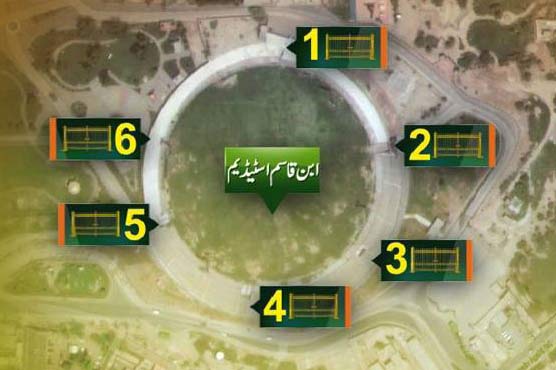
Dunya News-Multan tragedy leaves behind... by dunyanewsDunya News on Saturday brought the facts about who caused Multan tragedy on surface through its investigative report. The report revealed that Pakistan Tehreek-e-Insaf (PTI) had turned the central gate into stage and closed it down. The second gate was reserved for the VIPs only and the third gate was reserved for families only. It further revealed that the administration did not break open the two reserve gates in time and thousands of people had to exit from only one gate which caused the stampede and the tragedy that left seven dead and several injured. The report also revealed that the stadium had the capacity of 25,000 people but it was over crowded multiple times of the original capacity.
Pakistan Christian Congress Condemns Government For Ignoring Christian Asylum Seekers Abroad
Pakistan Christian Congress PCC has issued a press note, condemning scheme of ruling party Pakistan Muslim League Nawaz Group PML (N) targeting Pakistani Christian asylum seekers in Sri Lanka, Malaysia and Thailand who fled from Pakistan for safety of their lives after persecution fearing for their lives. The gathering of Pakistani Christian asylum seekers in Sri Lanka and their applications to UNHCR was never appreciated by government of Pakistan, PCC stated. - See more at: http://www.christiansinpakistan.com/pakistan-christian-congress-condemns-government-for-ignoring-christian-asylum-seekers-abroad/#sthash.sh8qnMrI.dpuf
Pakistan - Bilawal Bhutto stresses on resolution of Kashmir issue
Pakistan People’s Party (PPP) patron-in-chief Bilawal Bhutto Zardari has once again stressed on the resolution of Kashmir dispute and said there is no peace in the region due to this issue, Geo News reported.
We are the 9/11 Generation-Bilawal-12 Oct 2014 by GeoNews Addressing students’ ceremony in the Sindh Assembly, Bilawal Bhutto said: “Non resolution of Kashmir issue is clear evidence of failure of United Nations.” He urged the world body to get its resolutions on Kashmir implemented. He said Pakistan respects human rights and international law. “We ourselves are responsible for prevailing crisis and can blame anyone else,” Bilawal said and added, “there is need to assess where we stand and it is time to be mature now.” PPP Chairman said he did not want to be recognized by concerts and laptops.
Pakistan - Zarb-e-Azb: 10 terrorists killed in fresh air strikes in NW
Military operation Zarb-e-Azb is continuing successfully in North Waziristan. Ten terrorists were killed and three militant hideouts were destroyed in aerial attacks by fighter jets on Sunday in Tirah valley of North Waziristan.
According to ISPR, fighter jets pounded the militant hideouts in Koki Khel area in North Waziristan early morning. Ten terrorists were killed as fighter planes attacked three militant hideouts in parts of Tirah valley.
Currently, the army is carrying out aerial strikes in neighboring areas of Tirah valley as sources have revealed about the presence of terrorists in those areas.
Peshawar - Three more polio cases reported in Peshawar, Sheikhupura
Three new polio cases were diagnosed in Peshawar and Sheikhupura on Saturday.
Two more people were tested positive for polio virus in Peshawar taking the toll in the provincial metropolis to 14 this year.
As many as 42 polio cases have been reported in the Khyber Pakhtunkhwa province in last over nine months.
Official sources in health department, confirming two new cases in Peshawar’s suburban areas, said those affected by the polio virus were -Fizza, a 22-month old girl and a seven-month old boy Yaqoob living at Urmar Miana Afghan camp.
According to provincial health department, the number of polio cases has reached 42 in KPK. As many as 208 polio cases have been reported in the country this year, the highest since 2000 when 199 cases were reported.
Pakistan, Afghanistan and Nigeria are the only three countries in the world where polio remains endemic. In KPK, the polio cases were reported in different districts which include Peshawar 14, Bannu 12, Tank 5, Mardan 4, Buner 3, Lakki Marwat 2 and Torghar and district Nowshera with one case each.
Meanwhile, polio virus has been detected in a nine-month-old baby boy here in village Butter near Farooqabad on Saturday.
According to details, the personnel of anti-polio immunisation team during routine visit to the village found the baby boy, identified Husnain, as having suffering from the crippling disease. The boy was brought to Children Hospital Sheikhupura where doctors also confirmed the presence of polio virus. Meanwhile, a child specialist, who requested not to be named, informed that though the child carried polio virus, it was at the early stage. He claimed that the virus could be tackled through proper treatment and good care.
It has been learnt that the baby has been shifted to a Lahore hospital.
Meanwhile, DCO Rashid Kamal has constituted a three members committee comprising District Officer Coordination Ch Ghafoor, District Officer (DO) Health Dr Nadeem Sohail and Assistant Commissioner (AC) Dr Sidra to ferret out facts.
However ‘reportedly’ the DO health was transferred and despite attempt he could not be reached. On the other hand, the DOC despite repeated attempts did not respond the call on his cellphone.
Pakistan : Imran should first build paradise in Khyber Pakhtunkhwa
Former president Asif Zardari on Saturday said that Pakistan Tehreek-e-Insaf (PTI) Chairman Imran Khan was fooling the children, adding that Kaptaan should first build paradise in Khyber Pakhtunkhwa (KP) before aiming at the whole Pakistan.
Zardari announced to build Bilawal House in Peshawar.
Talking in a meeting with party leaders at Bilawal House Lahore, Zardari said that he realised that he has committed some negligence during his government.
He said he could not meet the party workers, adding that the negligence would be duly compensated.
The PPP co-chairman said that he knew Khyber Pakhtunkhwa faced threats.
He said PPP has always been wounded on the chest. Zardari said that PPP’s slain chairwoman Benazir Bhutto knew she would be murdered; even then she came out for the people.
He said that PPP founder Zulfikar Ali Bhutto made the country the nuclear power and yet he was ‘judicially murdered’.
Zardari said that Benazir Bhutto knew her life was on the stake when she brought the missile technology to the country.
He said the paradise Imran Khan wants to build in the country should first be built in Khyber Pakhtunkhwa province.
He alleged that Imran Khan is fooling the 18-year-old ‘children’.
Zardari said the current government should be allowed to complete its tenure as it was in the best interest of the country and people.
The PPP co-chairman said that he was aware of the challenges people of Pakistan were facing.
Zardari paid glowing tributes to party worker Yaqoob Pervez who sacrificed his life to arouse international conscience against General Ziaul Haq’s dictatorship.
In a message on his death anniversary observed in Yohana Abad, the former president paid rich tributes to Pervez for fighting against oppression.
He said, “Today we enjoy democratic rule in the country due to sacrifices made by workers like him.”
He said Pervez belonged to Christian community and his struggle and sacrifice was indicative of the fact that PPP has always fought for the rights of minorities in Pakistan.
All minorities considered PPP as protector of their rights, hopes and aspirations, Zardari added.
Pakistan: PTI responsible for stampede deaths, say police
As another victim of Friday’s stampede in Multan breathed his last Saturday, the local police, provincial administration, senior politicians and political observers have held the Pakistan Tehreek-e-Insaf (PTI) responsible for the deaths of eight people at Qasim Bagh Stadium, terming the event an unashamed display of a grossly mismanaged affair.
In an initial investigation report, jointly sent by the CCPO and Multan district coordination officer to the Prime Minister House Saturday, Multan Police has claimed that PTI paid no attention to the situation even after a police officer present on stage informed PTI Vice Chairman Shah Mehmood Qureshi about it.
The report also claimed that the people responsible for the event’s administration were told several times to make announcements for emergency help. The appeals, however, fell on deaf ears.
“Soon after the public meeting, people started moving out of the venue and due to congestion, two people died on the spot,” the report says, adding that there were only five exit gates which were not enough for such a large gathering. A number of people also slipped and suffered injuries due to water on the ground, it adds.
The police say that 200 policemen were posted at the venue and the arrangements were finalised by PTI just a night before the event.
Following the police report, the Punjab government Saturday formed a three-member committee to investigate the stampede incident which claimed eight lives and left 43 others injured.
The committee, headed by Environment Secretary Iqbal Muhammad and comprising DIG Ali Amir Malik and Home Department Special Secretary Dr Shoaib Akhtar, will investigate the incident and submit a report to Punjab Chief Minister Shahbaz Sharif.
PTI HELD RESPONSIBLE:
In the meanwhile, Punjab Minister for Prisons Chaudhry Abdul Waheed Arrain claimed that lights were not switched off by the district administration as PTI was responsible for the arrangements inside the stadium.
Holding PTI responsible for the mismanagement, the minister said that Qasim Bagh Stadium was selected on district administration’s directions after PTI’s local leaders had moved an application to the Multan DCO for permission of a public gathering. He added that PTI leader Tariq Naeemullah put an application to MEPCO for electricity at the stadium but did not pay the demand notice.
Arrain said that five gates out of six were opened for public entry and exit while the remaining gate was closed with a container by PTI organisers. He added that 2,200 policemen, 400 personnel of traffic police and officials of other departments were deputed for the gathering.
Moreover, during a media briefing, Punjab government spokesman Zaeem Qadri claimed there had been an agreement between the Multan DCO and PTI that if any untoward incident took place, the latter would be responsible.
Expressing surprise that the PTI chief considered it appropriate to go to Islamabad instead of staying in Multan after the tragic incident, Qadri termed PTI administration incapable of making requisite arrangements for rallies.
PTI BLAMES GOVERNMENT:
On the other hand, PTI has blamed the police and local administration for the loss of lives, alleging that most of the gates were kept locked and lights switched off early.
Rejecting Multan Police’s report and the three-member investigation committee formed by the Punjab government, PTI Vice-Chairman Shah Mehmood Qureshi told a press conference Saturday, “This is all just drama from the government. On Friday they said this incident was an accident, but today they have formed a committee.”
Responding to former PTI president Javed Hashmi’s statement about the party wanting an opportunity to politicise deaths, Qureshi said, “His accusations are a part of his election campaign which he is busy in. Anyways, why would we want our supporters, who love us, to die?”
Moreover, addressing the participants of the PTI sit-in at D-Chowk Islamabad, the PTI chief also expressed his mistrust in the government-formed committee. He also criticised the local administration for opening only two gates of the venue after the event concluded.
Khan also vowed that he will meet the families of the victims of Multan stampede today (Sunday) and promised that he will get justice served to them at any cost.
GROSSLY MISMANAGED AFFAIR:
Sources in PTI admitted that the event had been grossly mismanaged as there was no check on participants, as some of them even managed to get on top of the container where Imran Khan was present.
They said that the event organisers had even forgotten to place a ladder besides the container, forcing the leadership, including Imran Khan to get on the container by climbing an electricity pylon.
A government source, on the condition of anonymity, said that the organisers had ill-planned the event.
“There was no exit plan for such a large number of people. The PTI leadership knows that its rallies always attract a large number of people therefore they should have planned the event keeping in mind all scenarios. Moreover, it was the senior leadership’s responsibility to oversee the arrangements but in this particular case they shifted the burden on to the event managers who failed to fathom the situation,” he said.
The PTI source acknowledged the lapse by the leadership, saying all future events would now be supervised by the senior leadership.
“We regret the loss of lives in Friday’s stampede but I hope such incidents will not recur in future,” he concluded.
Pakistan: Christian delegation calls on Wattoo
Pakistan: Tragedy in Multan rally
Bilawal Bhutto invites Malala to work for Sindh education
Former President Asif Zardari pays glowing tributes to Malala
http://mediacellppp.wordpress.com/
Pakistan : A letter from Dr Abdus Salam to Malala
By Faraz Talat
Disclaimer: the blog post below is an imagining of what Dr Abdus Salam would convey to Malala today.
Dear Malala,Despite all that occurred, I’d always lugged around with me a sliver of optimism. They referred to me as Pakistan’s ‘only’ Nobel laureate; I insisted on being called the “first”. I was born in a small town called Santokh Das; arguably not as beautiful as your Swat valley, but it did have much to offer. I grew up in Jhang, a city now tainted by its name’s association with dangerous groups. My father was an education officer working for the Punjab government. I have a feeling your father would've liked him. Like you, I took a keen interest in my studies. I enjoyed English and Urdu literature, but excelled at mathematics. At a very young age, I scored the highest marks ever recorded then, in my matriculation exam. My education, however, was never as politically challenging as yours. I did not have to contend with the Taliban destroying my school, or forbidding boys from receiving education. But whatever barriers they constructed in your way, you bravely broke through them. In fact, you continue to defy them with every breath you take. Winning the Nobel prize has enraged your attackers, as it has annoyed many of your countrymen. It takes courage to walk through it all, and knowing you, courage is not in short supply. Not a lot has changed in this country. You were mocked and alienated by your countrymen, when you did nothing wrong. I know something of that. As a nation, we do not want to be celebrated. What we wish for, is to be pitied. They were pleased with you as long as you were another local victim. But then, you cast off your victimhood and emerged as a hero, a beacon of hope for young girls around the world. That’s where you lost them. We don’t like heroes, Malala. We like battered souls that we can showcase to the world. We want to humiliate the ‘colonialists’ and the ‘imperialists’ for their crimes, real or imagined, against the Muslims of the subcontinent. We want them to acknowledge the Iqbalian paradise we lost to the plots and schemes of the ‘outsiders’. Any mention of the incalculable harm caused by perpetrators within us, does not assist that narrative. We do not want to acknowledge the bigotry within, of which I know something too. This is not something I had fully realised the day I received my Nobel prize. Standing in ceremonial Punjabi garb among a group of men in tuxedos, I was proud to represent my country, though my country was far less thrilled being represented by me. I was demonized and successfully disenfranchised for my religious beliefs; I was not allowed to offer lectures in certain universities due to threats of violence; my work was belittled by my own people. I decided that working abroad was better than being treated as foreigner in my own homeland. That only gave further wind to the hurtful theories about me being a ‘traitor’ to my country. Now, the mantle passes to you, dearest child. And with it, I regret to pass onto you the heart-wrenching burden it brings. You are the new 'traitor'. You are presented with the dire challenge of bringing peace and pride to a country, that doesn't want your gift. Like a mother of a particularly rebellious child, you must find a way to love them nonetheless. Eventually, I pray, they will understand. I had the privilege of being the first to offer this country a Nobel Prize. But now there are two of us. And, I’m still counting. Yours truly, Abdus Salam
Saturday, October 11, 2014
Iraqi Yazidi girl tells of captivity in IS group
BY DALTON BENNETT
15-year-old says she shot her first ‘husband,’ a Palestinian man, before escapingThe young Yazidi girl rocked apprehensively as she described the ordeal that took her from her family, snatched from her home by militants in Iraq, then sold as a slave in Syria before finally escaping to Turkey. The 15-year-old is now with what is left of her family — two of her brothers and some more distant relatives — living in a makeshift roadside shelter in this tiny village in northern Iraq, along with other families shattered by the onslaught from the Islamic State militant group. Her two sisters remain in the militants’ hands, and her father, other brothers and other male relatives have vanished, their fates unknown. The girl was among hundreds of women and girls from the Yazidi religious minority captured by Islamic State fighters in early August when the militants overran her hometown of Sinjar in northwestern Iraq. Hundreds were killed in the attack, and tens of thousands fled for their lives, most to the Kurdish-held parts of northern Iraq. Iraq’s Human Rights Ministry said at the time that hundreds of women were abducted by the militants, who consider the Yazidis a heretical sect. The Associated Press spoke to the girl and several other young women who escaped captivity by the Islamic State group. While specifics of their stories could not be independently confirmed, they reflected circumstances reported by the United Nations last month. They each independently painted a similar picture of how the militants scattered them around the broad swath of territory controlled by the Islamic State group in Syria and Iraq and sold the girls to the group’s foreign fighters or other supporters for “marriage.” For weeks after being snatched from Sinjar, the 15-year-old girl and two of her sisters were shifted from one place to another, she said. The AP does not identify victims of abuse, and the girl also did not want to be named for fear of reprisals against her relatives still being held by the militants. As she told her story, the girl rubbed her hands and avoided eye contact. But she spoke decisively and clearly, never hesitating when asked questions. She asked her relatives to leave the room, saying she was more comfortable speaking alone. First, she said, she and other girls were taken to the nearby town of Tal Afar, where she was kept in the Badosh Prison. When US airstrikes began around the town, the militants took her and many other girls with them to the Islamic State group’s biggest stronghold, Mosul, in northern Iraq. From the city of Mosul, she and her sisters were taken to the militants’ de facto capital, the Syrian city of Raqqa. There they were held in a house with other abducted girls. “They took girls to Syria to sell them,” she said, her body shyly hunched over as she spoke. “I was sold in Syria. I stayed about five days with my two sisters, then one of my sisters was sold and taken (back) to Mosul, and I remained in Syria.” In Raqqa, she said, she was first married off to a Palestinian man. She claims she shot him, saying the Palestinian’s Iraqi housekeeper who was in a dispute with the man helped her by giving her a gun. She fled, but she had nowhere to run. So she went to the only place she knew, she said — the house where she was first held with the other girls in Raqqa. There, the militants did not recognize her and sold her off again — for $1,000 to a Saudi fighter, she said. The Saudi militant took her to a house where he lived with other fighters. “He told me, ‘I’m going to change your name to Abeer, so your mother doesn’t recognize you,'” she said. “You’ll become Muslim, then I will marry you. But I refused to become a Muslim and that’s why I fled.” She said she saw the fighters at time taking a powdered drug. So she poured it into tea she served to the Saudi and the other men, causing them to fall asleep. Then she fled the house. She found a man who would drive her to Turkey to meet her brother. Her brother then borrowed $2,000 from friends to pay a smuggler to get them both back to Iraq. They ended up in Maqluba, a tiny roadside hamlet just outside the Kurdish city of Dahuk, where several other Yazidi families are staying. The other women who spoke to The AP described difficult conditions, where the militant fighters would deprive them of enough food, water or even a place to sit. They all reported having seen dozens of other Yazidi women and children as young as 5-years old in captivity, and they all said that they have relatives who are still missing. Amsha Ali, a 19-year-old, said she was taken from Sinjar to Mosul. Ali was around six months pregnant at the time. The last she saw of her husband and other men in her family as she was being dragged off, was the scene of the militants forcing them to lie on the ground, apparently to shoot them. Ali agreed to be identified, saying she wanted the ordeals of the women to be known. In Mosul, she said, she and other women were taken to a house full of Islamic State fighters to be married off. “Each of them took one of us for themselves,” she said. She too was given to a fighter. She said she was never raped by the man — likely because of her pregnancy, she said — but she witnessed other girls being raped. After several weeks, she was able to slip out of a bathroom window at night and escape. A Mosul resident who found her in the streets helped her get out of the city to nearby Kurdish territory on Aug. 28, she said. She said she tried to convince other women to flee with her, but they were too afraid. “Because they were so terrified, they are left there and now I know nothing about them,” she said. Now Ali is with her father and a surviving sister living in an unfinished building in the town of Sharia, where some 5,000 Yazidi refugees live, also near Dahuk. “The killing was not the hardest thing for me,” she said of seeing fellow Yazidis slain in the assault on Sinjar. “Even though they forced my husband, brother-in-law and father-in-law on the ground to be murdered — it was painful — but marrying (the militant) was the worst. It was hardest thing for me.” Read more: Iraqi Yazidi girl tells of captivity in IS group | The Times of Israel http://www.timesofisrael.com/iraqi-yazidi-girl-tells-of-captivity-in-is-group/#ixzz3FtcwpNEG Follow us: @timesofisrael on Twitter | timesofisrael on Facebook
Almost 300,000 people displaced by Libya violence, UN
100,000 displaced near Tripoli in last three weeks alone as service provision crumbles under pressure.A spike in clashes between rival militias in Libya has pushed the number of people driven from their homes to an estimated 287,000, the United Nations' refugee agency said Friday. UNHCR spokesman Adrian Edwards told reporters that some 100,000 people had fled over the past three weeks from Warshefana, on the outskirts of the capital Tripoli. Another 15,000 people were estimated to have been displaced around Libya's eastern city of Benghazi, he said. The oil-rich North African nation of some six million peopla has been in turmoil since an uprising toppled longtime leader Moamer Gaddafi three years ago, with interim authorities facing powerful militias that fought to oust him. A total of some 287,000 people are estimated to have fled conflict and are scattered in 29 towns and cities countrywide, many of them in dire straits, he said. "The need for healthcare, food, and other basic commodities - plus for shelter ahead of winter - has become critical," said Edwards. He said aid agencies were working flat out to help those in need but faced "major constraints in funding for the internally displaced, while the security situation over recent months has posed challenges in reaching those in need." Most displaced people are living with locals who in some cases have opened their homes to several families at a time to meet the growing need for shelter, Edwards said. Those unable to stay with relatives or host families were sleeping in schools, parks and non-residential buildings converted into emergency shelters. Host communities were finding themselves swamped, Edwards said, giving the example of the small town of Ajaylat, some 80 kilometres west of Tripoli. The community of around 100,000 people had taken in 16,000 more who fled fighting, placing a massive strain on health facilities. - See more at: http://www.middleeasteye.net/news/almost-300000-people-displaced-libya-violence-un-1324904783#sthash.OFRpU23y.dpuf
Turkey slides into deeper isolation over Syria
Turkey’s Syria policy is increasingly at odds with those of its Western allies, who are frustrated with Ankara’s attempt to shift the focus of the mission of the US-led military coalition from the Islamic State (IS) to the regime of President Bashar al-Assad. Unable to get its allies to target Assad directly, Ankara is not only fighting a losing battle in this regard, but also fueling the anger of its neighbors that continue to support the Syrian regime. Russia and Iran are now openly chastising Turkey for pushing regime change in Damascus and indicating that they will not accept the buffer zone Ankara is seeking on the Syrian side of the border. Prime Minister Ahmet Davutoglu says the zone is necessary for the protection of Syrian refugees. Domestic criticism of President Recep Tayyip Erdogan and Davutoglu’s regional policies is also increasing, with critics charging that their failures have deepened Ankara’s international isolation while producing threats to social stability and security in Turkey. This point is currently being hammered home by rioting by Turkish Kurds, who accuse Ankara of inaction as their kin face defeat and destruction at the hands of IS in Kobani, the northern Syrian town literally a stone’s throw from the Turkish border. Davutoglu blames agitation by the pro-Kurdish opposition for these riots, in which nearly 35 people have died. He is also adamant that the UN Security Council is to blame for the chaos in Syria, and is determined to keep the focus on the Assad regime, rather than IS. “Those who were silent as 300,000 people were killed during the past 3½ years, who ignored the use of chemical weapons, SCUD missiles and barrel bombs, are now trying to create the impression that Turkey must instantly solve the problem in Kobani. The blame for all these developments is on the Security Council and its five permanent members,” Davutoglu said during a press conference after an Oct. 8 security summit in Ankara. Meanwhile, government sources continue to stress that Turkey will consider putting boots on the ground in Kobani only if others take the lead. While the government has parliamentary authorization now to intervene militarily in Iraq and Syria, there is little evidence to suggest that Turkey will participate in coalition airstrikes against IS. Ankara continues instead to push for a buffer zone in Syria and was momentarily heartened this week when France provided support for the idea while US Secretary of State John Kerry and his British counterpart Philip Hammond paid lip service to it in a press conference in Washington. The White House, however, clarified later that such a plan is not presently under consideration. Turkey is facing further difficulties after Russia criticized Davutoglu for stressing the need to topple the Syrian regime, and Iran warned Ankara not to stir up trouble in the region. “It is impermissible to use the slogans of anti-terrorist struggle for attempts to replace existing regimes,” said Russian Foreign Minister Sergey Lavrov in Moscow during a press conference with his Venezuelan counterpart Rafael Ramirez on Oct. 8. Russian Foreign Ministry spokesman Alexander Lukashevich also put a damper on Turkey’s efforts to set up a buffer zone when he declared Oct. 9 that this could only be done with UN Security Council approval. Iran, for its part, criticized the parliamentary authorization Ankara recently received that permits it to intervene militarily in Syria. “The countries in the region should act responsibly with regard to the current situation and not contribute to the exacerbation of the situation,” Iran’s Foreign Minister Mohammad Javad Zarif reportedly told his Turkish counterpart Mevlut Cavusoglu over the phone on Oct. 2. Meanwhile, Iran's official Islamic Republic News Agency cited Deputy Foreign Minister Hossein-Amir Abdollahian as saying Oct. 9 that Tehran has warned Turkey against any kind of military intervention in Syria. Turkey is clearly caught between a rock and a hard place. Russia and Iran are warning Turkey not to intervene in Syria, while the United States and other NATO allies are doing the opposite. Retired US Gen. John Allen, appointed by President Barack Obama to oversee the coalition against IS, and his deputy Brett McGurk were in Ankara on Oct. 9 trying to work out the modalities of the Turkish contribution to the coalition. All the evidence suggests, however, that Turkey remains reluctant to get directly involved unless the toppling of the Syrian regime becomes the main aim. In the meantime, Davutoglu is countering charges that Turkey is simply watching as Kobani's Kurds face a potential massacre by underlining the fact that Turkey has taken in tens of thousands of Kurdish refugees from that part of Syria, along with the 1.5 million refugees it has taken in since civil war erupted in that country. Western diplomats in Ankara, however, are not convinced that this exonerates Turkey from contributing to the military efforts against IS. One diplomat who wished to remain anonymous due to his sensitive position told Al-Monitor, “Having declared an open-door policy for predominantly Sunni refugees from Syria, and used this to tout its humanitarian approach to the Syrian crisis, it would have been odd if Turkey left the Syrian Kurds stranded at a time when they faced destruction. International commendation would have been widespread.” Erdogan and Davutoglu are also eliciting strong domestic criticism over their Syria policy. According to Hurriyet’s widely read columnist Ertugrul Ozkok, they are dragging Turkey toward disaster in the Middle East. “The policy of trying to topple Assad has collapsed. Turkey must immediately stop its policy of sticking its nose into the internal affairs of regional countries. If this policy continues it could open a period of great enmity toward Turkey in the region,” Ozkok wrote Oct. 9. Retired Ambassador Ozdem Sanberk, who heads the Ankara-based International Strategic Research Organization, also believes that the government’s Syria policy needs overhauling. “This policy is not sustainable,” Sanberk told Al-Monitor, adding that conditions in that country are not now what they were initially. “There is a whirlpool there now. It is difficult to maintain former policies as if conditions had not changed,” he said. “Assad said at the time that his departure would not be like that of [late Libyan leader Moammar] Gadhafi. He said, ‘If I go, the whole region will become unstable.’ These words appear prophetic today.” Sanberk added. He also pointed out that Turkey is isolated today, not just in the region, but in the world, because of its policies toward crises in the Middle East. “The risks of this are evident. There is a price to be paid for international isolation. Every country wants to promote its national interest, but doing so in isolation is difficult,” he said. Sanberk went on to add that Turkey’s relations with Washington are also very tense at the moment and said it is hard in today’s world for a country to promote its interests while its ties with the United States are strained in this way. Read more: http://www.al-monitor.com/pulse/originals/2014/10/turkey-syria-russia-iran-isolation-regional-policy.html#ixzz3FtWeOHQVSemih Idiz
Shia opposition to boycott Bahrain polls
Parties announce decision to boycott next month's parliamentary vote, saying it would cement absolute authoritarianism.Bahrain's Shia-led opposition has said it will boycott parliamentary elections planned for next month, saying the vote would cement "absolute authoritarianism" in the Sunni-ruled kingdom. Four opposition groups, including the main Shia movement Al-Wefaq, said on Saturday that they would pursue "peaceful protests" instead, until their demand for a constitutional monarchy was achieved. The Gulf kingdom had scheduled elections for a new 40-seat lower house of parliament on November 22, the first since protests rocked the country in 2011. The opposition groups denounced the planned elections as "a new autocratic step" by the government and urged Bahrainis to join the boycott. "The fact that the authority has taken this decision... [is] a new autocratic step added to its continuous persistence to maintain its totalitarian rule," it said. In a statement published on twitter, Al-Wefaq accused Bahraini authorities of not representing "the will of the people," calling it "absolute authoritarianism." A proposal by authorities in September to relaunch a national dialogue was given a frosty reception by Al-Wefaq. Bahrain's opposition is demanding an independent election commission and the dissolution of the Consultative Council, parliament's upper chamber whose members are appointed by the king. They are also demanding the prime minister be appointed by parliamentary majority, instead of the king.
Rights group condemns Saudi Arabia persecution of activists
http://jurist.org/Saudi Arabia is persecuting rights activists and silencing government critics, according to a report [text, PDF; press release] issued Friday by Amnesty International (AI) [advocacy website]. According to AI, members of the Saudi Civil and Political Rights Association (ACPRA) have been persecuted since the Arab Spring in 2011. The Saudi Arabian government has reportedly targeted 11 of the founding members of the ACPRA individually since 2011, eight of whom are currently detained, and the remaining three of whom are awaiting outcomes of their trials. The Director of AI's Middle East and North Africa Programme, Said Boumedouha claimed that "Saudi Arabian authorities have sought to wipe out all trace of ACPRA, just as they have sought to stamp out all critical voices demanding peaceful reform." AI urged the Saudi Arabian government to cease its campaign against these political protesters: By defending rights and speaking out, the ACPRA members and a small group of other courageous human rights advocates, appear to have been seen by Saudi Arabia's rulers as challenging their authority and policies, and to have been targeted in consequence. ... Amnesty International considers all eight detained members to be prisoners of conscience and is calling on the Saudi Arabian authorities to release them immediately and unconditionally. The organization is also calling on the authorities to drop the charges against those facing trial and ensure that the sentences and convictions of all ACPRA members are quashed. AI also urged members of the international community to pressure the Saudi Arabian government to improve human rights standards. Saudi Arabia's justice system has drawn international criticism in recent years, especially with regard to its high number of executions. Last month two experts from the UN Office of the High Commissioner for Human Rights urged Saudi Arabia on Tuesday to implement an immediate moratorium on the death penalty [JURIST report] following an increase in executions, with a significant number of the executions completed by beheading. In July then-UN High Commissioner for Human Rights, Navy Pillay, expressed deep concern [JURIST report] over the harsh sentences and detention of peaceful human rights advocates in Saudi Arabia in recent months. In February JURIST Guest Columnist Adam Coogle of Human Rights Watch argued [JURIST op-ed] that a new Saudi Arabian terrorism law was a vague, catch-all document that can—and probably will—be used to prosecute or jail anyone who criticizes the Saudi government and to violate their due process rights along the way. Also in February AI criticized [JURIST report] the Saudi Arabian counterterrorism law on the basis that the law will deepen existing patterns of human rights violations and will be used to crack down on peaceful dissent.
Turkey, Saudi Arabia Must Stop Supporting Jihadi Militants in Syria
http://en.ria.ru/world/20141011/193963471/Turkey-Saudi-Arabia-Must-Stop-Supporting--Jihadi-Militants-in.html
China - Why is the US so keen on ‘Color Revolutions’?
China denounces U.S. support for HK protest
Pakistan: Second drone attack in 24 hours kills four in NWA
At least four suspected militants including a local Taliban commander were killed in yet another US drone strike in Shawal tehsil of North Waziristan Agency on Saturday night raising the toll from a series of attacks this week to 29. Intelligence sources said that a US drone fired two missiles at a vehicle in Maraga area of Shawal tehsil of the troubled North Waziristan Agency bordering Afghanistan. Four suspected militants including a commander have died in the strike, they added. Sources also said that the Taliban commander has been identified as Mustafa, who they claimed belonged to Hafiz Gul Bahadur group. The incident, however, could not be independently verified as access of journalists is restricted in the area.Earlier in the day, a US drone strike had killed four suspected militants and left several others injured on the Pak-Afghan border area near Khyber Agency’s Tirah valley. Official sources said that the drone targeted militant hideouts in the Cancharo Kandoa area on the Afghan side. The village is right on the zero-line but the area which was targeted falls under the Afghan jurisdiction. The identity of the dead militants is yet to be ascertained. Khyber and North Waziristan are among Pakistan’s seven semi-autonomous regions governed by tribal laws and lies near the Afghan border. The Taliban and other al Qaeda-linked groups, who stage attacks in both Pakistan and Afghanistan, are known to have strongholds in the zone. The Pakistani military launched a major anti-militant offensive, Zarb-i-Azb in North Waziristan in June and say they have killed more than 1,000 so far, with 86 soldiers losing their lives in the operation. Drone attacks are widely unpopular across Pakistan and according to survey conducted in June this year, 66 per cent of the country's citizens oppose these strikes. Earlier in the day, a US drone strike had killed four suspected militants and left several others injured on the Pak-Afghan border area near Khyber Agency’s Tirah valley. Official sources said that the drone targeted militant hideouts in the Cancharo Kandoa area on the Afghan side. The village is right on the zero-line but the area which was targeted falls under the Afghan jurisdiction. The identity of the dead militants is yet to be ascertained. Khyber and North Waziristan are among Pakistan’s seven semi-autonomous regions governed by tribal laws and lies near the Afghan border. The Taliban and other al Qaeda-linked groups, who stage attacks in both Pakistan and Afghanistan, are known to have strongholds in the zone. The Pakistani military launched a major anti-militant offensive, Zarb-i-Azb in North Waziristan in June and say they have killed more than 1,000 so far, with 86 soldiers losing their lives in the operation. Drone attacks are widely unpopular across Pakistan and according to survey conducted in June this year, 66 per cent of the country's citizens oppose these strikes.
China Opposes Western Sanctions Against Russia: Vice Premier
Nobel Peace Prize Winner Urges Ukrainian Government to Protect Children
#NoTTIP: Mass protests slam US-EU trade deal as 'corporate power grab'
Subscribe to:
Posts (Atom)