Sunday, November 6, 2022

THE EDITORIAL: NYT - America Can Have Democracy or Political Violence. Not Both.


Over the past five years, incidents of political violence in the United States by right-wing extremists have soared. Few experts who track this type of violence believe things will get better anytime soon without concerted action. Domestic extremism is actually likely to worsen. The attack on Paul Pelosi, the husband of the speaker of the House of Representatives, was only the latest episode, and federal officials warn that the threat of violence could continue to escalate after the midterm elections.
The embrace of conspiratorial and violent ideology and rhetoric by many Republican politicians during and after the Trump presidency, anti-government anger related to the pandemic, disinformation, cultural polarization, the ubiquity of guns and radicalized internet culture have all led to the current moment, and none of those trends are in retreat. Donald Trump was the first American president to rouse an armed mob that stormed the Capitol and threatened lawmakers. Taken together, these factors form a social scaffolding that allows for the kind of endemic political violence that can undo a democracy. Ours would not be the first.

Yet the nation is not powerless to stop a slide toward deadly chaos. If institutions and individuals do more to make it unacceptable in American public life, organized violence in the service of political objectives can still be pushed to the fringes. When a faction of one of the country’s two main political parties embraces extremism, that makes thwarting it both more difficult and more necessary. A well-functioning democracy demands it. The legal tools to do so are already available and in many cases are written into state constitutions, in laws prohibiting private paramilitary activity. “I fear that the country is entering a phase of history with more organized domestic civil violence than we’ve seen in 100 years,” said Philip Zelikow, the former executive director of the 9/11 Commission, who pioneered legal strategies to go after violent extremists earlier in his career. “We have done it in the past and can do so again.”
As the range of violence in recent years shows, the scourge of extremism in the United States is evident across the political spectrum. But the threat to the current order comes disproportionately from the right. Of the more than 440 extremism-related murders committed in the past decade, more than 75 percent were committed by right-wing extremists, white supremacists or anti-government extremists. The remaining quarter stemmed from a range of other motivations, according to a study by the Anti-Defamation League. There were 29 extremist-related homicides last year: 26 committed by right-wing extremists, two by Black nationalists and one by an Islamic extremist. The Department of Homeland Security has warned again and again that domestic extremism motivated by white supremacist and other right-wing ideologies is the country’s top terrorism threat.
Some of the most spectacular recent episodes of political terrorism are etched into the nation’s collective memory: mass shootings in El Paso and Buffalo, bomb and arson attacks against mosques and synagogues, a plot by a paramilitary group to kidnap Michigan’s governor, the storming of the Capitol on Jan. 6.
There have been attacks on conservatives, too: In June, a man was arrested outside Brett Kavanaugh’s home after he said he wanted to kill the justice, and in 2017, Representative Steve Scalise was shot at a baseball field. But the number and nature of the episodes aren’t comparable, and no leading figures in the Democratic Party condone, mock or encourage their supporters to violence in ways that are common from politicians on the right and their supporters in the conservative media. In addition to these high-profile events, the threat of violence has begun to have a corrosive effect on many aspects of public life: the hounding of election workers until they are forced into hiding, harassment of school board officials, threats to judges, armed demonstrations at multiple statehouses, attacks on abortion clinics and anti-abortion pregnancy centers, bomb threats against hospitals that offer care to transgender children, assaults on flight attendants who try to enforce Covid rules and the armed intimidation of librarians over the books and ideas they choose to share.
Meanwhile, threats against members of Congress are more than ‌10 times as numerous as they were just five years ago. “I wouldn’t be surprised if a senator or House member were killed,” Senator Susan Collins told The Times this fall.
Many — far too many — Americans now consider political violence not only acceptable but perhaps necessary. In an online survey of more than 7,200 adults, nearly a third of people answered that political violence is usually or always justified. The study, conducted by researchers at the University of California, Davis, and released in October, came to the alarming conclusion that “MAGA Republicans” (as opposed to those who identified themselves as traditional Republicans) “are more likely to hold extreme and racist beliefs, to endorse political violence, to see such violence as likely to occur and to predict that they will be armed under circumstances in which they consider political violence to be justified.”
Any violence suppresses participation in democratic decision making, and it can negate the decisions that are made. “The damage that this violence itself and the conspiracies driving it are causing to our democracy are already substantial and are likely to produce significant democratic decline if not arrested soon,” Rachel Kleinfeld of the Carnegie Endowment for International Peace told the Jan. 6 committee.
There are four interrelated trends that the country needs to address: the impunity of organized paramilitary groups, the presence of extremists in law enforcement and the military, the global spread of extremist ideas and the growing number of G.O.P. politicians who are using the threat of political violence not just to intimidate their opponents on the left but also to wrest control of the party from those Republicans who are committed to democratic norms.
Over the coming weeks, relying on extensive reporting and deep analysis, this series plans to explore solutions, such as identifying members of violent paramilitary groups who may work in law enforcement or the military, stemming the money and technology that fuel these movements and describing how the Republican Party can fight its worst, violent fringes. Preserving the health of our democracy is as much a matter of preventive care as it is the application of a tourniquet. A promising place to start combating political violence is with extremist paramilitary groups.
While the majority of such violence in the United States comes at the hands of people not strictly affiliated with these groups — the man who is accused of attacking Mr. Pelosi, for example, echoed their hatred of Nancy Pelosi, but it’s not clear whether the man had links to any of them — they are nonetheless often the vanguard of violent episodes, such as the Jan. 6 attack on the Capitol, and they are active in spreading their brands of ideological extremism online. They go by many names: the Oath Keepers, the Proud Boys, the Boogaloo Bois, the Three Percenters, the Wolverine Watchmen. Some fancy themselves militias, but they aren’t, according to the law. These groups have been around in their modern incarnations since the end of the Vietnam War, and their popularity has waxed and waned. In fact, ‌political violence is as old as the nation itself; right-wing frustrations with democratic outcomes have birthed militia movements throughout American history. Most notably, the Ku Klux Klan has spent over a century and a half, from Reconstruction to the present day, terrorizing Black Americans and others in service of political ends. Today, levels of political violence are high and climbing. In 2020 the Center for Strategic and International Studies found that violence from all political ideologies reached its highest level since the group began collecting data in 1994. And extremist paramilitary groups have again become a common presence in American life, on college campuses, at public protests and at political rallies‌. But it is unacceptable in a democracy for organized groups of men armed with military-style firearms and dressed in body armor to appear regularly at political rallies or to act as security for public officials and office seekers. Indeed, in nearly every state the subordination of the military to civil authorities is written explicitly into their constitutions.
“When private armies organize into military-style units that are neither responsible to, nor under the command of, the civil power of the state authorities, they may violate this constitutional command to the detriment of civil order,” concluded a report from the Institute for Constitutional Advocacy and Protection at Georgetown Law, which compiled a state-by-state compendium of laws banning so-called militias. There is no federal anti-paramilitary law, though Congress should consider one. States, however, do have legal instruments to deal with these extremist groups, even if they rarely show the will to use them. When they do, these laws are effective.
In 1979 in Seadrift, Texas, the tension between white fishermen and newly arrived refugees from Vietnam who had begun to work the same waters turned deadly. A Vietnamese American fisherman shot and killed a white fisherman on the town dock in a dispute over fishing that, by 1981, had grown into a campaign of boat burnings, cross burnings and death threats from a group called the Knights of the Ku Klux Klan. One Klan flier posted in Seadrift at the time echoed the language of so-called great replacement theory: “After years and years of whites fishing along the Texas coast, the government has brought in Vietnamese replacements for them. White people are being replaced by nonwhites all over the United States.”White fishermen, wearing hoods and holding AR-15 rifles, would cruise the waterfront to intimidate Vietnamese American fishermen. Kirk Wallace Johnson, in his new book, “The Fishermen and the Dragon,” describes an incident in which the white fishermen dangled an effigy from an outrigger. In 1981, the Vietnamese Fishermen’s Association turned to lawyers, including Morris Dees of the Southern Poverty Law Center and Mr. Zelikow. They brought a case against the Klan using an anti-paramilitary statute that was on the books in Texas.It was the first time in more than a century that the law had been used, Mr. Zelikow said, and it was the premise for the request to a judge to shut down the Klan campaign and its paramilitary training facilities. The lawyers developed a standard to define the illegal activity — one that distinguished hunters from paramilitary extremists. Illegal paramilitaries had, as an expert who testified put it, “command structure, training and discipline so as to function as a combat or combat support unit.”The judge found in their favor and shut down the Klan. The strategy was used again in the mid-1980s by the Southern Poverty Law Center to shutter another Klan organization in North Carolina, which also explicitly outlaws paramilitary groups.
“We prohibit the existence of private military groups because they are a danger to society and to democracy. Unless we want to accept their presence and proliferation, we need to be willing to use the legal tools that we have to disrupt their activities,” Mr. Zelikow said in an interview.
In 2017, Mr. Zelikow, who lives in Charlottesville, Va., wrote about this legal strategy after the Unite the Right rally. He assisted another team of lawyers, led by a former federal prosecutor, Mary McCord, who soon after used a similar approach to bar nearly two dozen extremist paramilitary groups and their leaders from returning to Charlottesville on the first anniversary of the rally. And last month, Ms. McCord led a successful effort to get a court injunction against a paramilitary organization in New Mexico. Maintaining a monopoly on force is, after all, a basic function of any government, and the Supreme Court upheld the legality of anti-paramilitary laws in 1886. Still, some legal scholars worry that the current court may decide that anti-paramilitary statutes run afoul of the Constitution’s guarantee of the right of free association and free speech. The current ultraconservative Supreme Court’s expansive view of the Second Amendment may also one day lead it to overturn anti-paramilitary laws, though the court did say in its 2008 decision on the individual right to bear arms that the amendment didn’t prevent states from outlawing paramilitary groups.
These laws are some of the best available tools the nation has to stop political violence without infringing on First Amendment freedoms, they have been effectively used in both liberal and conservative states, and they have overcome political opposition. In Idaho, for example, critics of the state’s ban on private paramilitary activity called it an infringement on rights and freedoms. The state’s House of Representatives overwhelmingly passed a bill in February to repeal it. Then, in June, police arrested dozens of masked members of the Patriot Front white supremacist paramilitary group who, officials said, were in the back of a moving truck en route to disrupt an L.G.B.T.Q. Pride event.
Confronted with the immediate possibility of violence, Gov. Brad Little, a Republican who initially backed the effort to repeal the anti-militia law, spoke out forcefully against the threat of violence. “Intimidation, scare tactics and violence has no place in our great state,” he said. “All Americans should be able to peacefully express their constitutionally guaranteed right to free speech without the threat of violence. It is what has always set America apart from other nations.” While the repeal bill passed the Idaho House, it died in the Senate and doesn’t appear likely to become law. The power of the law to disrupt even the most prominent purveyors of extremism is on display in the trial of Stewart Rhodes and four other members of the Oath Keepers. In relation to their participation in the Jan. 6 attack, they are facing federal charges of seditious conspiracy, which carries a maximum sentence of 20 years in prison.
Mr. Rhodes’s defense is that the group is an educational group or a veterans’ assistance group, and he offers a variety of other excuses designed to show that they do not meet the legal standard of an unsanctioned paramilitary group. This standard and the laws against paramilitaries draw a clear line between repugnant ideology, which our democracy has always allowed, and politically motivated violence, which no democracy can survive. The American public is gradually and alarmingly becoming inured to the presence of this violence, but it is the duty of our lawmakers to take this threat seriously and to use the tools they have to stop it.
https://www.nytimes.com/2022/11/03/opinion/political-violence-extremism.html

Pashto Music Video - Jahanuna - Alizeh Khan |

ویډیويي راپور - د کمپیوټر سانیس پوهنځي ته د یوې کامیابې شوې محصلې سره مرکه

پېښور کې د هارمونيم او رباب د زدکړو يو پروګرام پيلېږي

منظور پشتین: د خیبر خلک د ناامنۍ له وجې بیا کډوالۍ ته تیار نه دي


پښتون ژغورنې غورځنګ (پي ټي اېم) د خیبر ضلعې په باړه کې د امن پاڅون په نوم په جلسه کې ټینګار کړی دی چې د امنیت

ټینګښت د دولت (ریاست) ذمه واري ده چې باید یې پوره کړي.

د غورځنګ مشر منظور پشتین د نومبر پر شپږمه جلسې ته په وینا کې وویل چې د تېرو کلونو برعکس به دا ځل د خیبر خلک د زیاتېدونکې ناامنۍ له وجې کډې نه کوي او قبایلي ولس به هم دا ځل "امن لښکرونه" نه جوړوي ځکه چې د امنیت ټینګښت د دولت او حکومت دنده ده.

پشتین په خپلو خبرو کې د خیبر ضلعې یوشمېر نورې مسلې هم یادې کړې او تور یې پورې کړ چې په تورخم کې د پوځ د سامانونو ټرانسپورټ ادارې (نیشنل لاجېسټېک سېل یا اېن اېل سي) د ځايي خلکو روزګار اغېزمن کړی دی او پر "مزدورانو" یې محدودیتونه لګولي دي.

اېن اېل سي د نوموړي د څرګندونو په ځواب کې څه نه دي ویلي خو تر دې مخکې تېر کال په مارچ کې هم په تورخم کې سوداګرو له مشال راډیو سره په خبرو کې شکایت کړی وو چې د اېن اېل سي کارکوونکي یې "بې ځایه او غیر ضروري تالاشي" اخلي.

هغه مهال په تورخم کې چارواکو او امنیتي ځواکونو د سوداګرو تورونه ناسم بللي ول او ویلي یې ول چې ټولې کاروباري چارې له قانون سره سمې پر مخ ځي.

په باړه کې د پښتون ژغورنې غورځنګ د جلسې ګډونوالو د ترهګرۍ ضد او د سولې او امنیت لپاره نعرې ووهلې او یوشمېر سیاستوالانو او فعالانو په خپلو ویناګانو کې له حکومته یې د امنیت ټینګښت غوښتنه وکړه.

دا په داسې حال کې ده چې د خیبر اوسېدونکو په وروستیو کې د مظاهرو او غونډو له لارې له حکومته غوښتي چې هلته دې امنیت ټینګ کړي. دوی وايي، په سیمه کې له یوې مودې راهیسې بریدونه کېږي چې پکې د ځايي مشرانو او دیني عالمانو په ګډون پولیس او امنیتي سرتېري هم په نښه شوي دي.

خو په خیبر ضلع کې انتظامي چارواکو او امنیتي ځواکونو د اکتوبر پر ۲۹مه د یوشمېر مشرانو تر جرګې وروسته ویلي ول چې په تیرا کې یې د وسلوالو پرضد عملیات پيل کړې دي.

دوی ویلي ول چې د ناامنۍ ختمولو ته چمتو دي او هېڅکله وسلوالو ته د امنیت خرابولو موقع په لاس نه ورکوي.

په باړه کې جلسه پر داسې مهال شوې ده چې پښتون ژغورنې غورځنګ د نومبر پر څلورمه د جنوبي وزیرستان په اعظم ورسک کې هم د امن لپاره ولسي غونډه وکړه او له حکومته یې د امنیت ټینګښت لپاره د کوټلیو اقداماتو غوښتنه وکړه.

په تېرو شاوخوا پینځو میاشتو کې خلکو په شمالي وزیرستان، جنوبي وزیرستان، باجوړ، کورمه، اورکزیو، خیبر، مومندو، کوز دیر، سوات، بونېر،بنو، لکي مروت، ټانک او پېښور کې د امنیت ټینګښت لپاره احتجاجونه، لاریونونه، جرګې او جلسې کړې دي.

صوبايي او وفاقي حکومتونه وايي چې د صوبې امنیت ته ژمن دي او دا چې د دې لپاره یې امنیتي او استخباراتي عملیاتو ته دوام ورکړی دی.

https://www.mashaalradio.com/ 

#Pakistan #PPP - Bilawal, Iraqi FM exchange views on bilateral, regional issues


Foreign Minister Bilawal Bhutto Zardari and Minister of State for Foreign Affairs Hina Rabbani Khar met the Foreign Minister of Iraq Dr. Fouad Hussein on Saturday and exchanged views on bilateral relations, as well as regional and global issues of common interest.

The meeting took place on the sidelines of the 13th annual meeting of Sir Bani Yas Forum in Abu Dhabi.

They reaffirmed the long-standing ties of amity and cooperation between the two countries, rooted deep in shared faith, common values and cultural affinities; and reiterated the desire to further strengthen bilateral relations in all fields.

FM Bilawal reaffirmed Pakistan’s support for Iraq’s territorial integrity and sovereignty. He acknowledged Iraq’s success in the fight against terrorism and appreciated the resilience of Iraqi people in their efforts to overcome challenges and rebuild the country.

Matters pertaining to Pakistani Zaireen visiting Iraq and people-to-people contact between the two countries also came under discussion. While appreciating the measures taken by the Iraqi government for the well-being of the Zaireen, the Foreign Minister requested his counterpart for further facilitation in visas and travel, particularly during Ashura Muharram and Arbaeen.

The ministers also exchanged views on ways to expand commercial cooperation and improve connectivity between the two countries.
Both sides reaffirmed their resolve to continue collaborating closely to further strengthen bilateral ties and coordination at the multilateral foram.

https://www.app.com.pk/national/bilawal-iraqi-fm-exchange-views-on-bilateral-regional-issues/

Saturday, November 5, 2022

Music Video - #MichaelJackson #BeatIt #Thriller Michael Jackson - Beat It

Video - #Colbert #Comedy #Monologue Musk's Problematic Twitter Takeover | Barack Obama Is "Still Fine" | Lula Wins In Brazil

Video Report - President Biden and Barack Obama Rally Voters in Philadelphia

Video Report - Putin endorses evacuation of Ukraine’s Kherson region

#Pakistan #PPP - Sheikh Abdullah meets Pakistan FM Bilawal Bhutto

The foreign ministers of the UAE and Pakistan met in Abu Dhabi on Saturday, on the sidelines of the annual Sir Bani Yas Forum.
Sheikh Abdullah bin Zayed Al Nahyan, the UAE's Minister for Foreign Affairs and International Cooperation, held talks with Pakistan Foreign Minister Bilawal Bhutto Zardari.
The Pakistani official expressed his gratitude to the UAE leadership for its generous support for the flood-hit communities in the South Asian country.
Sheikh Abdullah welcomed the visit of Zardari, affirming the historical relations between the two countries and the growth and development they are witnessing at various levels.Zardari also highlighted the depth of UAE-Pakistani relations and the keenness of the two countries to strengthen these ties.
"This was a manifestation of the deep and time-tested brotherly ties between the two nations that have always stood by each other in an hour of need. The UAE was one of the largest donors of humanitarian assistance during difficult times," Pakistan's Ministry of Foreign Affairs said in a statement.
During the meeting, both ministers agreed to further deepen their cooperation in all fields, including economy, trade, energy, and investment.Zardari emphasised the need for increased trade volume and investments between the two countries.
The two leaders also exchanged views on regional and international issues.
https://www.khaleejtimes.com/government/video-sheikh-abdullah-meets-pakistan-fm-bilawal-bhutto

Saturday, October 29, 2022

Music Video - Taylor Swift - Bejeweled

Video Report - Former President Obama stops in Detroit to campaign for Michigan Democrats

Video Report - Former President Obama stops in Detroit to campaign for Michigan Democrats

Video Report - #ElonMusk - What will Elon Musk do with Twitter?

OPINION: The Pelosis and a Haunted America

By MAUREEN DOWD
Halloween has always been my favorite holiday. I loved putting up twinkling bats and watching midnight monster-chiller-horror movies.
Not this year.
The world is too scary. Politics is too creepy. Horror is too real.
When I was a child, on Oct. 31, my older brother would put on a vinyl LP of Mussorgsky’s “Night on Bald Mountain” that he had carefully cleaned. The eerie music was used by Walt Disney in the segment of his animated masterpiece “Fantasia” about the surreal celebration of evil during the night of the witches’ Sabbath.
Chernabog, the lord of evil and death, wrapped in a dark cape, stands atop a jagged peak, summoning ghosts, witches and vampires to swirl out of the mountain and pay homage. I was so relieved when, at dawn, church bells rang and drove them off.
But now the bad spirits are lurking all around us. They will not be driven off.
America seems haunted by random violence and casual cruelty every day. In New York, subway riders getting pushed onto the tracks and innocent bystanders being shot. Officials across the country facing kidnapping plots, armed visits to their homes, assaults and death threats. No place seems safe, from parks to schools to the supposedly impregnable, guarded Capitol and homes of the wealthy and well known.
In some states, women — and girls — seeking abortions are treated as criminals. In Uvalde, Texas, terrified children frantically calling the police are slaughtered by a teenage psychopath with an AR-15-style rifle as 376 police officers lingered in and around the elementary school waiting for … what?
On Friday, The New York Post broke the news that someone I know, the former Obama official and former New York City Transit president Sarah Feinberg, was sucker-punched in the face in Chelsea by someone walking by in the bike lane.Now comes news of a maniac breaking into a house in the middle of the night, bludgeoning an 82-year-old man in the head with a hammer while demanding to know where his famous wife was. Perfect Halloween movie fare. Except it actually happened.One of the most macabre stories to come out of the Jan. 6 attack on the Capitol and democracy, ginned up by Donald Trump, was when the mob roamed the halls, pounding the speaker’s door with bloodcurdling taunts of “Where’s Nancy?”
Speaker Pelosi was not there, thank God. She was huddling with other top officials in a secure bunker, placing call after call for help that was slow to arrive.
Luckily, she was safe, in D.C. with her security detail, when a man broke into her Pacific Heights home in San Francisco early Friday morning. He smashed the patio glass door and attacked her husband, who struggled with the attacker for control of a hammer. In a tingly echo of Jan. 6, the man shouted at Paul Pelosi, “Where is Nancy? Where is Nancy?” When police arrived, the man said he was “waiting for Nancy.”Mr. Pelosi, a genial investor who likes to star in amateur musicals and who has been married to Nancy for 59 years, called 911, The Times reported, bringing police to his home and potentially saving his life. He was hit several times on his hands and head with the hammer and was taken to the hospital for surgery for a skull fracture and is expected to recover.
The police said the intruder was David DePape, a 42-year-old from Berkeley, Calif. CNN reported that DePape’s relatives confirmed that a Facebook account spewing Trumpian conspiracies on topics ranging from climate change to Covid was his. In his posts, he cast doubt on the validity of the 2020 election — sharing pillow pusher and Trump lickspittle Mike Lindell’s absurd videos. And he defended the Trump rioters who stormed the Capitol.
With his usual level of class, Donald Trump put out a message of sympathy to the family of Jerry Lee Lewis, “the Killer” of rock ’n’ roll, who died Friday at age 87, but said nothing all day about the Pelosi family.
On Twitter, Adam Kinzinger urged G.O.P. candidates and elected officials to speak out against the “horrific” attack. He probably didn’t have in mind the sort of speaking out that Gov. Glenn Youngkin of Virginia did. Youngkin made a joke of the assassination attempt: “There’s no room for violence anywhere, but we’re going to send her back to be with him in California.”
Democrats had a nice run, on climate change and gun legislation, and enjoyed some backlash to the Dark Prince of the Supreme Court, Samuel Alito. Now Republicans seem set to win back the House, and maybe the Senate, with a range of incompetent and hypocritical candidates.
“I cannot believe anybody would vote for these people,” Pelosi told The Times’s Carl Hulse on a fund-raising swing.But a feral mood has taken hold. If you think Washington is monstrous now, just wait.
https://www.nytimes.com/2022/10/28/opinion/pelosi-nancy-paul-attack.html

Video Report - #covid19 #coronavirus #ebola The pandemic's evolution and lessons for the future | COVID-19 Special

Video Report - #qatar #worldcup2022 The plight of migrant workers in Qatar

Video Report - French govt allocates €350 M to improve security in drone jamming system

Video Report - Prosecutor in Pelosi attack case speaks to CNN about suspect

Video Report - Biden responds to attack on Nancy Pelosi's husband

Wednesday, October 26, 2022

Pakistan No Country for Minorities? Kidnapping, Rape, Forced Conversions of Hindus, Sikhs on Rise - 'COUNTRY OF ‘PARTICULAR CONCERN’

From kidnapping to rape and forced conversions, the atrocities against minorities in Pakistan are on the rise, said sources. More than 10 Hindu girls were abducted and raped in 2022.

  • Amid the floods in Sindh, a Hindu girl was raped by two locals on the pretext of providing food.
  • In another incident, two Hindu women foiled a rape bid by an unknown person on road side tents in Sindh.
  • In June, a Hindu teenager, Kareena Kumari, told a court in Karachi that she was forcibly converted to Islam and married to a Muslim man.
  • In March, three Hindu girls – Satran Oad, Kaveeta Bheel, Anita Bheel – were abducted, converted to Islam and married to Muslim men within eight days.
  • On March 21, Pooja Kumari was brutally shot dead outside her home in Rohri, Sukkur. Apparently, a man wanted to marry her but she refused, so they killed her.
Recent cases in point: A minor Hindu girl, Chanda Mehraj, has been kidnapped from Hyderabad, Pakistan. According to her parents, she was kidnapped from Fateh Chowk area while returning home. A police complaint has been lodged, but she is yet to be found. The family claimed she was being harassed by Shaman Magsi.
A 13-year-old Sikh boy was gang-raped in Jacobabad, Pakistan. The Sindh Police arrested accused Mohsin Jamali and Takri Lashari, but they managed to escape from the civil line police station Jacobabad.In September, a married Hindu woman and two teenaged girls were allegedly abducted, forcibly converted, and married to Muslims in Sindh province.
Demanding action, the communities have questioned the “silence of human rights activists”.
The forcible conversion of young Hindu girls has become a major problem in the interior of Sindh province, which has a large Hindu population in Thar, Umerkot, Mirpurkhas, Ghotki and Khairpur areas. Most of the Hindu community members are labourers.
On July 16, 2019, the issue of abducting and forcibly converting Hindu girls in various districts of Sindh province was taken up in the Sindh Assembly, where a resolution was debated and unanimously passed after it was modified over objections of certain lawmakers that it should not be restricted to Hindu girls only. But the bill which criminalised forcible religious conversions was later rejected in the assembly. A similar bill was again proposed but rejected last year.
In 2021, the United States placed Pakistan on a list of “countries of particular concern” for religious freedom violations. Human rights organizations and the US media report estimates that every year, nearly 1,000 minority girls are being kidnapped or forcibly converted to Islam. Catholic news site Aleteia reported that in 2020, the number of forced conversion cases rose to more than 2,000.
https://www.news18.com/news/world/pakistan-no-country-for-minorities-kidnapping-rape-forced-conversions-of-hindus-sikhs-on-rise-exclusive-6143617.html

#Pakistan - ATC acquits Ali Wazir, others in terrorism case

 An Anti-Terrorism Court (ATC) in Karachi has acquitted MNA Ali Wazir and 12 others in a case registered against them.


As per Wazir’s lawyer he was arrested in the case from Peshawar and has spent more than two years in jail. He added that the case was registered in the Sohrab Goth area of Karachi.

Wazir and 12 others were accused of making speeches against the country and national security.

Four cases have been registered against Wazir in different police stations in Karachi and he has been granted bail in all four cases, the lawyer informed the court.

Wazir has been behind bars since December 31, 2020, for allegedly delivering provocative speeches inciting hate against the state institutions and treason. 

He and some other party leaders were booked in four identical cases registered at Sohrab Goth, Shah Latif Town and Boat Basin police stations under sections of the Anti-Terrorism Act (ATA) pertaining to the said charges.

https://www.nation.com.pk/25-Oct-2022/atc-acquits-ali-wazir-others-in-terrorism-case

#Pakistan’s leadership has historically neglected the basic principles of national security

By  

THE edifice of national security stands on the four pillars of political stability, economic and technological strength, military power and proactive diplomacy. The weakness of any of these pillars adversely affects the overall strength and durability of the structure of national security. It is imperative, therefore, that our leaders pay due attention to the strengthening of all pillars of national security while maintaining the right balance among them as overemphasis on one pillar at the expense of the others can lead to disastrous results.

Unfortunately, Pakistan’s leadership has historically neglected these basic principles, causing damage to our national security with predictably unfortunate consequences. To begin with, our military leaders, who ruled over the country directly for almost half of its life and tried to control national policies indirectly the rest of the time, have demonstrated a scant understanding of the critical importance of political stability and what it takes to strengthen this pillar of national security. 

Repeated military takeovers and meddling in political affairs undermined the sanctity of the Constitution and the rule of law, weakened the democratic institutions — thereby suppressing the people’s voice and preventing due accountability of our rulers through fair elections — and encouraged arbitrariness and corruption in the government’s decision-making processes.
The net result of such manoeuvres has left us with a politically destabilised country with all the attendant adverse consequences mentioned above. In addition, there is a widespread feeling of gloom among the people who think that their destiny is not in their hands or in the hands of their elected representatives, but is, instead, controlled by unelected institutions of the state who, it would appear, are accountable to none.

Such a feeling of helplessness inevitably creates despondency among the people and in extreme cases can cause them to take the law in their own hands by resorting to violence for the redress of their grievances. Foreign enemy powers often find in such public discontent a fertile ground for fomenting armed insurgencies aimed at the political disintegration of the country. The arrest of Kulbhushan Jadhav in Balochistan in March 2016 on the charge of fomenting terrorism in the country was a clear indication of India’s nefarious designs to destabilise and weaken Pakistan politically by taking advantage of such public discontent.

Political meddling has weakened democratic institutions.

The dominant role of the security establishment in our polity, besides weakening the political system in the country, also sucked in vast resources which arguably could have been put to much better use for accelerating economic development in the country. This was the case not only because of narrow institutional considerations but also because of an inadequate appreciation of the importance of economic and technological importance in the national security architecture.

It is worth underscoring that in any long-term contest of nations in the modern world, the ultimate outcome is determined by the balance of economic and technological power as pointed out by Paul Kennedy in his seminal work The Rise and Fall of the Great Powers. While in the face of an adversary, the need to maintain a credible security deterrent at any time cannot be denied, the neglect of the imperative of economic and technological strength can lead a nation to a security disaster in the long run. It is, therefore, a matter of deep concern that India, which poses an enduring threat to our national security, is growing economically at a much faster pace than Pakistan. If this trend continues for a sufficiently long time, it will pose a serious threat to Pakistan’s national security.

While Pakistan is reasonably well placed in terms of maintaining a credible security deterrent, the country’s foreign policy establishment suffers from two main drawbacks: its overemphasis on the tactical at the expense of strategic considerations, and its focus on the short-term to the neglect of long-term foreign policy goals and concerns. Our earlier Kashmir and Afghanistan policies, whose adverse effects continue to haunt us, are prime examples of these drawbacks.

Pakistan is in dire need of a grand strategy which should bring into a coherent whole the country’s political, economic, military and diplomatic policies based on a sound analysis of the evolving global and regional ground realities. Our failure to do so will pose an existential threat to the country’s security and economic well-being.

https://www.dawn.com/news/1716940/national-security

Pakistan: Return Of The TTP In Swat – Analysis

By Sanchita Bhattacharya
On October 10, 2022, the son of a local peace committee member was shot dead by unidentified terrorists in the Waliabad area of Swat District, Khyber Pakhtunkhwa (KP).
In a separate incident, on the same day, unidentified terrorists attacked a school van in the Charbagh area of Swat District, killing the driver and injuring two students. On October 9, 2022, the Counter-Terrorism Department (CTD) foiled a terrorist attack and killed two Tehreek-e-Taliban Pakistan (TTP) terrorists during an encounter in the Rahimabad area of Swat District. Four Security Force (SF) personnel were also injured during the encounter. The CTD team recovered hand grenades, weapons, and ammunition from the encounter scene. It is useful to mention, here, that exactly 10 years ago, on October 9, 2012, Nobel laureate and Child rights activist Malala Yousufzai was attacked in Swat, while she was returning home from school. Yousufzai was grievously injured, but survived the attack.
On September 23, 2022, CTD killed Adil Zaib, a wanted TTP militant in the Charbagh area of Swat District.

On September 13, 2022, a peace committee member and two of his Police guards were among five people killed, while several others sustained injuries, in a remote-controlled blast at the Kot Katai village of the Brai Bandi area of the Kabal tehsil (revenue unit) in Swat District. The peace committee member, identified as Idrees Khan, was the target of blast. A TTP statement later claimed,

We killed the leader of the peace committee Idress Khan in the area of Brai Bandi in the district of Swat with a bomb. Khan was involved in killing Taliban and torturing mujahedeen and their families in safe houses. The mujahedeen were pursuing him for almost 13 years.

According to partial data collated by the South Asia Terrorism Portal, there was a total of six incidents of killing, in which 12 persons, including seven civilians and five terrorists, were killed in Swat District in the current year (data till October 16, 2022).. In the corresponding period of 2021, three persons, including two civilians and a terrorist, were killed in a single incident. No further killing was reported in the remaining period of 2021. Four persons (one civilian and three terrorists) were killed in 2020 and one person (civilian) was killed in 2019. 12 persons (including 11 troopers and a terrorist) were killed in 2018, the last time fatalities reached double digit in a year. 

In Swat, which is roughly 240 kilometers (150 miles) from the capital, Islamabad, Fazal Hayat alias, Maulana Fazlullah alias Mullah Radio, started a radio broadcast in 2004 that carried him into people’s homes and, eventually, won him a wide and violent following. He was the leader of the Tehreek-e-Nafaz-e-Shariat-e-Mohammadi. He later joined the TTP and also became its chief. By late October 2007, Fazlullah had established a “parallel government” in 59 villages in Swat Valley, establishing ‘Islamic courts’ to enforce Sharia law. In early 2009 the group temporarily gained control of about 70 per cent of Swat. Thus, Swat was a major TTP stronghold between 2007 and 2009. In these three years, according to the SATP database, a total of 4,167 persons, including 775 civilians, 422 SF personnel, 2,826 terrorists, and 144 in the ‘not specified’ category, were killed. A high of 402 civilian fatalities was recorded in 2008. SF and terrorist fatalities were highest in 2009, at 177 and 1,742, respectively. 

Prior to 2007, between March 6, 2000, when SATP started compiling data on conflict in Pakistan, and 2006, seven persons, including five civilians and two terrorists had been killed in the district. 

In 2009, the Pakistani military drove the armed group’s fighters out, and the terrorists took shelter along the border in Afghanistan. At least two million people were displaced from the area in 2009, when the Pakistan Army initiated Operation Rah-e-Rast (path to truth) in a bid to clear the area of terrorists. 

After the Operation, violence declined. Between 2010 and 2022 (till October 14), a total of 475 persons, including 142 civilians, 37 SF personnel, 294 terrorists, and two in the not specified category, were killed. Since 2010, civilian fatalities have gone into double figures thrice – in 2010, 2013 and 2014. 

The number of civilians killed in Swat in 2022 is highest in a year since 2015, when nine civilians were killed. 

An October 12, 2022, report suggested that the TTP has re-emerged in the restive areas of Swat, as militants detained Police personnel and an Army officer after the law enforcement officials launched an operation to capture TTP militants. 

Earlier, an August 12, 2022, report noted that TTP militants had established a check-post at Balasoor Top, besides roaming about freely in other areas of the Matta tehsil (revenue unit) of Swat 

The local residents said the TTP militants were not only at Balasoor Top, but were also present in large numbers in the mountainous areas of Matta tehsil, including Bar Shor, Koz Shor, Namal, Gat Peuchar and other areas. Importantly, the Geo News correspondent in Swat, Mehboob Ali, claimed that at least 200-250 TTP militants were in the area. 

Interestingly, on August 14, Pakistan military’s media wing, Inter-Services Public Relations (ISPR), issued a statement, admitting that the presence of a “small number of armed men on a few mountain-tops between Swat and Dir has been observed”, located far away from populated areas. The ISPR also stated, “Apparently, these individuals sneaked in from Afghanistan to resettle in their native areas”, adding that a “close watch was being maintained on their limited presence and movement in mountains.” However, the military had earlier dismissed what it termed a “misperception about alleged presence of a large number of proscribed organisation TTP’s armed members in Swat Valley”. 

Predictably, the Afghan Taliban’s takeover of Kabul in August 2021 has significantly bolstered the TTP terrorists who had taken shelter in Afghanistan, to restore operations in Pakistan. The TTP leadership, along with its foot soldiers, find safe haven in Afghanistan without any constraints. 

According to the Thirtieth report of the Analytical Support and Sanctions Monitoring Team submitted pursuant to resolution 2610 (2021) concerning ISIL (Da’esh), Al-Qaida and associated individuals and entities, released in July 2022, 

Tehrik-e Taliban Pakistan (TTP) constitutes the largest component of foreign terrorist fighters in Afghanistan (between 3,000 and 4,000). One Member State reported that current TTP leader Mufti Noor Wali Mehsud has united the group, which is now more cohesive, presenting a greater threat in the region.

These terrorists are now making comeback in Swat and other areas of Pakistan. Despite ongoing talks with the Government, mediated by the Afghan Taliban, they are engaged in violence, and the talks have failed to yield any positive result so far. 

Meanwhile, people are furious over the government’s inaction, believing that their leaders were either supporting TTP, or are afraid of them, which perhaps explains why the government has not taken any effective action. 

On October 11, 2022, thousands of people took to the streets at Nishat Chowk in Mingora, Swat, for a second day, to protest a surge in suspected militant attacks in Swat Valley, fearing that violence could disrupt years of peace, development, and tourist activities. Mingora echoed with slogans of “No more terrorism” and “We demand peace from the state”. Ahmed Shah, spokesperson for the Swat Qaumi Jirga, a representative body of residents, said more than 15,000 people had attended the protest, the sixth in the past two months. Moreover, as reported on October 11, 2022, the Human Rights Commission of Pakistan (HRCP) declared that Swat’s residents were right to hold the security forces responsible for failing to enforce the writ of the state: 

It was callous and short-sighted to have downplayed the threat from militants, given residents’ growing protests and calls for security. While the perpetrators must be brought to book promptly, the state must also stop ceding space to extremists – a lesson it has consistently failed to learn at the expense of its people.

Also, a sizeable campaign against re-Talibanization in ongoing on social media, with trending of #swatrejectsmilitancy, #PashtunLivesMatter and #swatforpeace, where many are accusing the government for not highlighting the popular anti-militancy movement. People from various walks of life are coming out openly on various platforms, to reject terrorism and militancy in Swat. 

Meanwhile, KP government spokesperson Barrister Muhammad Ali Saif, claimed that militant groups opposed to the talks were active against the government in the province. Further, as he stated on October 11, 2022, that TTP was not behind every incident of terrorism and must not be linked to all of them. He claimed during the peace talks, it had been agreed that TTP would claim responsibility for any act of violence executed by the group. 

The situation in Swat and in other parts of KP has demonstrated the inability or lack of political will of the Pakistani government to protect its own citizens from the terrorists, with whom it is engaged in negotiations. Moreover, it also highlights the weakness if the negotiation process, which appears to be moving inexorably to failure, with the TTP leadership displaying complete intransigence on its core objectives.

https://www.eurasiareview.com/25102022-pakistan-return-of-the-ttp-in-swat-analysis-2/

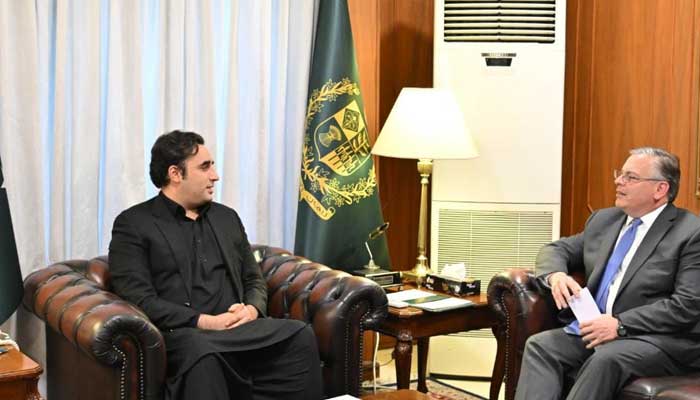
#Pakistan #PPP - FM Bilawal, US Ambassador Blome agree to bolster trade ties


In a meeting held at the Foreign Office, Foreign Minister Bilawal Bhutto-Zardari and the United States Ambassador to Pakistan Donald Blome agreed on bolstering trade relations between Pakistan and the US.

FM Bilawal and Ambassador Blome discussed the issues regarding the rehabilitation of the population affected by the catastrophic floods across Pakistan.

Triggered by torrential and climate-induced rainfall, the flooding in Pakistan engulfed large swathes of the country that killed over 1,700 people. The floods also massively devastated the country's infrastructure with damages estimated at nearly $30 billion.

The foreign minister, in the meeting, thanked the US Ambassador for ensuring the provision of aid and assistance to the affectees.

The two dignitaries also spoke about advancing mutual relations during their discussion in the foreign office.

https://www.geo.tv/latest/448467-fm-bilawal-us-ambassador-blome-agree-to-bolster-trade-ties