M WAQAR.....
"A man's ethical behavior should be based effectually on sympathy, education, and social ties; no religious basis is necessary.Man would indeed be in a poor way if he had to be restrained by fear of punishment and hope of reward after death."
--Albert Einstein !!!
NEWS,ARTICLES,EDITORIALS,MUSIC... Ze chi pe mayeen yum da agha pukhtunistan de.....(Liberal,Progressive,Secular World.)''Secularism is not against religion; it is the message of humanity.''
تل ده وی پثتونستآن
By Susannah George and Haq Nawaz Khan Thousands of Taliban fighters and supporters have poured into Afghanistan from Pakistan over the past four months, answering the calls of influential clerics and commanders eager to consolidate control of the country, according to interviews with half a dozen current and former Taliban members in Pakistan and Afghanistan.
Senior Taliban leadership urged fighters, Afghan refugees and madrassa students in Pakistan to come to Afghanistan to help the group maintain security as it made a string of sudden territorial advances this summer that created an urgent need for reinforcements, the current and former Taliban members said.
“Many of our mujahideen were offered permanent residences in Afghanistan if they wish to move here,” said one Pakistani Taliban fighter who aided in the recruitment effort from a madrassa in northwest Pakistan. He, like others in this report, spoke on the condition of anonymity because he was not authorized to speak to the press.The surge in Taliban fighters and supporters from Pakistan is bolstering ranks as the movement grapples with security threats, economic collapse and a deepening humanitarian crisis. But the source of the additional forces is also stirring long-held tensions with Pakistan at a critical time for Taliban leadership as it focuses on maintaining unity in the face of multiple crises that have the potential to undermine the group.
Taliban sends hundreds of fighters to eastern Afghanistan to wage war against Islamic State
The movement of Taliban fighters and supporters between Afghanistan and Pakistan for education, medical treatment, training and fighting is nothing new. But this year it intensified.
The Taliban is estimated to have about 75,000 fighters in its ranks. The size of the recent influx from Pakistan is believed to range between 5,000 and 10,000, according to Taliban commanders, as much as 10 times higher than an average fighting season.
The reports compound Pakistan and Afghanistan’s already complicated relationship.
Pakistani Prime Minister Imran Khan praised the Taliban’s military takeover of Afghanistan, saying it broke “the chains of slavery.” Pakistan’s intelligence chief traveled to Kabul in October, and Khan is one of the most vocal world leaders calling for international recognition of the Taliban.
But many Pakistanis blame instability in Afghanistan for militant attacks on their own soil, something they fear will increase with the Taliban in power. One powerful group is the Pakistani Taliban, known as Tehrik-e-Taliban Pakistan, or TTP, which is distinct from the Afghan Taliban but has thrown its support behind the neighboring rulers.
After jubilation, Pakistan faces dilemma as Taliban’s takeover of Afghanistan inspires religious militants
A senior Pakistani Foreign Ministry official said reports of thousands of Taliban fighters and supporters crossing into Afghanistan are “totally unfounded.”
“The Pakistani border has been almost completely fenced. It was a long and porous border earlier, but that’s no more the case,” he said, speaking on the condition of anonymity to discuss the matter candidly. “Yes, we have still millions of Afghan refugees and people come and go to Afghanistan. But to say that thousands of fighters cross the border, that is baseless.”
Calls by the Taliban for more fighters from Pakistan began over the summer as Afghan government-held provincial capitals fell in quick succession. But after the militants took Kabul, Taliban leaders also began calling on educated Taliban members and supporters in Pakistan to join the group’s nascent government.
“The recruiters came to mosques, training camps and the madrassas. Many of the students even left for Afghanistan before they completed their studies and had their turban ceremony,” said Quduratullah, an Afghan Taliban fighter, referring to a prestigious graduation ceremony. He spoke on the condition that only his first name be used because he was not authorized to speak to the press.
Under normal circumstances, students studying at madrassas in Pakistan — schools that teach the Koran and are often criticized as incubators of radicalism in that country — would wait to complete their studies or for scheduled breaks to fight in Afghanistan with the Taliban.
This year, clerics handed out waivers allowing students to pause their classes to serve in Afghanistan without having to begin the curriculum again from the beginning, Quduratullah said.
The 29-year-old Taliban fighter has lived between Pakistan and Afghanistan most of his life, regularly joining the Taliban’s ranks for the group’s spring fighting season. This year the atmosphere was unlike any he had experienced. “It was full of excitement and joy,” he said.
There was also a change in kinds of Taliban fighters and supporters who were making the trip to Afghanistan. He said he saw more people from madrassas and people with university educations, especially after the group took control of Kabul.
“Of course this will change the movement,” he said, referring to the influx of thousands, especially those with higher education.
“These people are planning” Afghanistan’s future, he said, “but like all revolutions in all countries this will take time.” The lack of experience among the recruits means change could take years, not months, he said.
On the heels of the rush of fighters and supporters, Islamic schools and military training centers that served as key steps along the recruitment pipeline have also begun moving into Afghanistan. The Pakistani Taliban member involved in sending fighters to Afghanistan said more and more Taliban training centers are being set up inside Afghanistan, where conditions are preferable to quickly train recruits.
“It’s easier now to get training in Afghanistan because all kinds of weapons are available there,” said the Pakistani Taliban member. He said many of the Taliban’s top trainers have also relocated to Afghanistan from Pakistan, where it’s now safer for them to operate.
After sweeping to power, the Taliban found its forces stretched thin. While the group controlled more than half of Afghanistan’s territory, its gains over the summer suddenly put its fighters in charge of securing urban centers where most of country’s population lives.Attacks claimed by the Islamic State’s Afghanistan branch are on the rise, and after an initial plunge in crime, reports suggest the worsening economy is causing that to rise as well.“Definitely, security is the top priority for the Emirate [Taliban leadership] right now. There are a number of security challenges including the Daesh and also keeping the crime rates under control,” said a pro-Taliban Pakistani cleric who has supported the group logistically from Pakistan for years. Daesh is the Arabic acronym for the Islamic State.
After the fall of Kabul, the cleric said Pakistani doctors traveled to Afghanistan to support the health-care system there and advise the Taliban’s Ministry of Health.
Afghanistan is in dire need of educated, experienced bureaucrats to provide people with basic services. The massive U.S. airlift, ongoing evacuation efforts and fears among many former government employees of Taliban reprisals have gutted the country’s professional workforce.
The cleric said he is unaware of any Pakistani engineers or university-level professors traveling to Afghanistan but knows of some who are advising the Taliban remotely by phone and with messaging services.
“It’s not only about war and fighting,” said Afrasiab Khattak, a former Pakistani senator and Pashtun nationalist leader. The recruitment will also funnel people into government positions so employees of the former Afghan government can be demoted or fired, he said. “The Taliban don’t trust the old government people.”
But for many Afghans — supporters of the Taliban and not — people with ties to Pakistan are viewed with suspicion. And the Taliban’s ties to Pakistan are often cited by critics who accuse the movement of not being purely Afghan.
A former senior Taliban member called the Taliban’s massive recruitment effort from Pakistan “a mistake.”
“Priority should be given to the Taliban who are already here in Afghanistan,” he said and predicted that if the practice continued, it will only fuel opposition to the Taliban’s rule.
Quduratullah, the Afghan Taliban fighter, said there is deep suspicion of fighters like himself who have spent much of their lives in Pakistan. Millions of Afghan refugees who fled war have lived in Pakistan for decades. Many lack the rights that would allow them to work and live freely in Pakistan, putting them at an economic disadvantage and making the population ripe for radicalization or recruitment.
Most of the Taliban fighters and supporters flowing from Pakistan into Afghanistan are Afghan, according to the Taliban member in Pakistan involved in recruitment efforts.
“Ordinary people, even my family, yes of course they criticize us [for living in Pakistan],” Quduratullah said. “But it is because they are ignorant. Personally, I am extremely opposed to Pakistan because it is not a true Islamic government.”
He said he lives part of the year there because the rest of his unit does the same. He listed dozens of instances of harassment at the hands of Pakistani police because of his Taliban ties including multiple detentions, one resulting in jail time.
The influx from Pakistan could initially deepen distrust between many Afghans and the Taliban movement, he conceded. “It will make it more difficult to convince the ordinary people [who do not already support the Taliban] that we do not just follow Pakistan’s orders, but in time they will see,” he said.
“We defeated the United States,” he said. “That is the only evidence you need to know we are a nationalist movement for Afghanistan.”
https://www.washingtonpost.com/world/2021/12/18/taliban-recruits-pakistan-afghanistan/
Discourteous remarks about Afghanistan made by Pakistani Prime Minister Imran Khan at the recent Organization for Islamic Cooperation (OIC) meeting were an insult to the Afghan nation reeling from the Taliban takeover. In his remarks, Khan described the non-monolithic Taliban group as a predominately ethnic Pashtun movement, implicitly casting millions of Pashtuns as the Taliban’s adherents. The prime minister, meanwhile, said girls’ education is antithetical to Afghan values and went on to discuss “Islamophobia” in the West — an epiphenomenon supposedly linked to the recent refugee influx, which Khan wants to champion as a savior.
For Pakistani leaders, such calculated tirades are no accident. These recurring talking points are indicative of Pakistan’s long-running designs to create a new, false narrative about post-American Afghanistan. With the Taliban’s victory, Pakistan no longer makes secret what it wants in Afghanistan, a country which Islamabad now treats as an extension of Pakistan.
But perceptions matter. For decades, Pakistan has maintained a particular fascination for engagement with violent Islamist movements. The three Ms – mullahs, military and militants – have effectively hijacked the progressive vision of Pakistan’s founder, Mohammad Ali Jinnah, turning Pakistan into a de facto Islamic state with religion and military poisoning the state apparatus.
In the 1980s, General Zia-ul-Haq, then-military dictator-turned-president, enabled the Islamization of Pakistan’s military, which continues to this day. In fact, jihad, which forms a foundational element of the Pakistan army’s credo (Iman, Taqwa, Jihad fi Sabil Allah or Faith, Piety, Jihad in the path of God) has been a crucial part of state ideology.
Under Khan today, there is a new school of military thinking in which Pakistani leaders are openly reclaiming the state’s Islamic credentials and are unapologetically buttressing Pakistan’s Islamization agenda. Yet, with extremism resurging in the country, there is a visible gap between the deep state’s ambitions and the willingness of millions of local Pakistanis to accept such an imposed identity.
Similarly, inside Afghanistan, Pakistan’s deep state is on an organized march to transform the Taliban into "Talibanism” — a toxic blend of hybrid Deobandi ideology and a customized set of beliefs glued superficially together by Islamic Sharia. As such, Pakistan has constantly validated the Taliban as a vanguard for Afghanistan’s leadership and has weaponized its false Afghan nationalism, patriotism and suicidal jihadism. This ideology has rendered the Taliban a powerful and unmatched brand in which it offers a sense of belonging to unemployable rural Afghans with the ability and license for direct action.
Make no mistake, Afghanistan’s own distasteful historical past, rooted in the continuing competition between cultural religiosity and modernism, provides Pakistan the space and ammunition to exploit. This dangerous contest has often put the country at a clash with itself.
At present, a broad streak of political Islamism permeates Afghan society. Madrassa education is routine in the formative years across rural Afghanistan. Thousands of madrassas remain unregulated, and most operate under accidental mullahs and reactionary Islamic clerics. Worse, there is an unnatural fascination with martyrdom, which requires an enemy. That’s why the Taliban rulers want Islam as the basis of national politics, Afghan identity and legal framework.
As such, they are re-engineering the principles of Afghan nationalism to align with the Taliban’s ideological characteristics, which involves purifying their ranks and developing a national force that can fight and win.
To be sure, it is difficult to determine whether the Taliban will ever be able to run a non-ideological Afghan state. But by casting it as a Pashtun movement, Pakistan risks sparking Pashtun nationalism in more than 40 million Pashtuns who transcend well beyond Afghan borders into Pakistan.
Without a doubt, the Taliban – admired by Pakistani religious leaders, extremist political parties and militant groups – would increasingly exploit such nationalistic tendencies. As such, Pakistani leaders, who maintain their own India-centric nationalism, would selectively encourage the group to geographically limit such exploitation of nationalism to Afghanistan. In this managed chaos, Pakistan will provide political compensation to Taliban rulers for their concessions.
Nonetheless, the continuing phenomenon of whether there can ever be a constitutionally viable non-ideological Afghan state raises serious questions. The Taliban clerics are “originalists” in nature who seem to function under their own constitution, known as dastur, which describes the emirate as a desired state endorsed by the clerical council and the supreme court. To these clerics, the ultimate recognition comes from their own followers and fighters, not outsiders.
For Pakistan, and the Taliban’s pragmatists, this would ultimately create a challenge, who for now appears less concerned about cross-border terrorism and more about an unmanageable Taliban in bed with anti-Pakistani groups.
What’s more, there are internal concerns about radicalization within Pakistan’s own military ranks. For example, in Pakistan’s Punjab province, which provides the top-most recruits to Pakistan's army followed by Pashtuns, there are growing overlaps in recruitment drives between the army and militant groups in the province, such as Lashkar-e-Taiba and Lashkar-e-Jhangvi. Even if the new military recruits are not extremist leaning, they hail from conservative families or areas where extremist groups pervade.
Meanwhile, the income discrepancy between the couple hundred Pakistani general officers and thousands of mid-rank officers is another source of internal tensions. As an established practice, Pakistan’s army provides subsidized housing and other benefits to those at or above the brigadier general level. Not only has it left scores of mid-rank officers, including colonels and majors, dissatisfied, but it has also reportedly raised alarms inside Pakistan’s military about the dangers of the so-called “colonels’ coup.”
With its politically-borne Islamic tendencies, Pakistan appears to be headed in the wrong direction. As the Taliban’s whisperers, Pakistani leaders may have calculated that the Taliban is an expensive enemy, but a cheaper partner. But by invoking Pashtun nationalism, which is rooted in the Taliban’s ideology, Pakistan is opening a dangerous Pandora’s box that would be hard to manage.
TENZIN ZOMPA
A Pakistani Twitter user said ‘girls were getting education in Afghanistan even before Pakistan was born.’
Pakistan Prime Minister Imran Khan Sunday drew flak from his own citizens after he said “not educating girls is part of Afghan culture”.
During his address at the Organisation of Islamic Cooperation (OIC) summit, where the member States decided to establish a humanitarian ‘Trust Fund’ to direct assistance to Afghanistan, Khan, talking about how “Every society’s idea of human rights and women rights are different”, said: “If we are not sensitive to cultural norms of these people, even with stipends people in Afghanistan won’t send their girls to school. If we are sensitive to their cultural norm, without stipends they will send their girls to school. When we are talking about human rights and women rights, we have to be sensitive about this. But my big worry is useless action is taken immediately, Afghanistan is heading for chaos”.
While some Pakistanis praised the PM for hosting OIC and for putting “Pakistan first” and “Islam first”, many attacked him for shamming Afghanistan and assuming that “not allowing girls to study” is part of Afghan culture.
A Twitter user called the Pakistan PM “uneducated”, sharing an old image of their mother when the latter was a teacher in Afghanistan’s Kandahar district in 1959. Another user said it was “ridiculously ignorant statement” to make on part of the PM. “Weeks ago, he called Haqqani network a Pashtoon tribe. Can someone please educate him a bit”, read another comment on the micro-blogging site.
Afrasiab Khattak, former Pakistan Senator of the Kohat Division, Khyber-Pakhtunkhwa Province, and a senior leader of the National Democratic Movement (NDM), also slammed Khan, saying his remarks “exposes anti Afghan/Pashtun colonial nature of Talibanization”.
The Pashtun rights activist wrote, “Imran Khan’s OIC speech further exposes the anti-Afghan/Pashtun colonial nature of Talibanization imposed on both sides of the DL-murdering educated/enlightened people and prohibiting girl’s education. The worst type of colonialism, unacceptable to the daughters/sons of the soil”.
“Pakistani Prime Minister Imran Khan’s comments at OIC that not letting girls’ education is part of Afghan culture is the utmost disrespect to Afghanistan and his own forefathers who were Afghans”, wrote another user. There were also those who defended Khan: “Pls do not spread lies and have some shame. Here is what he said…” and shared a clip showing the statement from his speech.
Calling the Pakistan PM’s statement ridiculous, a post questioned “…who the hell are you to be talking on behalf of Afghanistan @ImranKhanPTI? Second, girls were getting education in Afghanistan even before Pakistan was born. Educate yourself! #OIC”.
“If he doesn’t have the courage to do the right thing ... let him vote no in front of the whole world,” said Sen. Bernie Sanders (I-Vt.).
Sen. Joe Manchin(D-W.Va.) was branded a coward and supporter of monied interests byDemocratson Sunday afterdeclaring that he will not support PresidentJoe Biden’s Build Back Better plan, a decision that likely dooms the bill’s passage in the Senate, which is split on party lines.
“He has continued to move the goalposts, he has never negotiated in good faith,” Rep. Ayanna Pressley (D-Mass.) said of Manchin in an interview on CNN’s “State of the Union.”
White House press secretary Jen Psaki also appeared to question Manchin’s integrity, saying his decision, which he announced on “Fox News Sunday,” is “at odds with his discussions this week with the President, with White House staff, and with his own public utterances.”
“Senator Manchin promised to continue conversations in the days ahead, and to work with us to reach that common ground. If his comments on FOX and written statement indicate an end to that effort, they represent a sudden and inexplicable reversal in his position, and a breach of his commitments,” she said.
Rep. Pramila Jayapal (D-Wash.), the chair of the Congressional Progressive Caucus, similarly accused Manchin of betraying his promise to work with Biden on the environmental, medical and social issues addressed in the bill.
“He routinely touts that he is a man of his word, but he can no longer say that. West Virginians, and the country, see clearly who he is,” she said in a statement.
Manchin declared Sunday that he has “tried everything humanly possible” and cannot support the plan, citing its $1.75 trillion price tag and concerns about the nation transitioning too quickly to clean energy.
Manchin, whose family has a lucrative coal business in his home state, said he doesn’t believe the plan — which would fight climate change, expand Medicare benefits, and lower the cost of prescription drugs and childcare — would be good for West Virginia and said he “can’t vote for it.”
“Manchin’s excuse is bullshit,” a Rep. Ilhan Omar (D-Minn.) tweeted bluntly. “The people of West Virginia would directly benefit from childcare, pre-Medicare expansion, and long term care, just like Minnesotans.”
Sen. Bernie Sanders (I-Vt.), head of the Senate Budget Committee, similarly fired back at Manchin’s apparent resolve, arguing that the plan would in fact do a world of good for West Virginia, considering the economic hardships its residents are facing.
“West Virginia is one of the poorest states in this country. You’ve got elderly people, you’ve got disabled people, who would like to stay home but are forced into nursing homes. He’s going to have to tell the people of West Virginia why he doesn’t want to expand medicare to cover dental, hearing and eyeglasses,” said Sanders, who expressed disappointment in Democrats’ apparent failure to unite in support of working families and against corporate interests.
“I would have hoped that we could have had at least 50 Democrats on board who had the guts to stand up for working families and take on the lobbyists and the powerful special interests,” he said. “Corporate profits are an all-time high. And what some of us are saying, maybe, maybe we will stand up for working families for a change. But, apparently, we don’t have the 50 votes that we need.”
Sanders said he still plans to bring the bill up for a floor vote, which he said would put Manchin in the spotlight while voting against it.
“If he doesn’t have the courage to do the right thing for the working families of West Virginia and America, let him vote no in front of the whole world,” Sanders said.
The women of Parachinar have found empowerment through women-owned businesses.
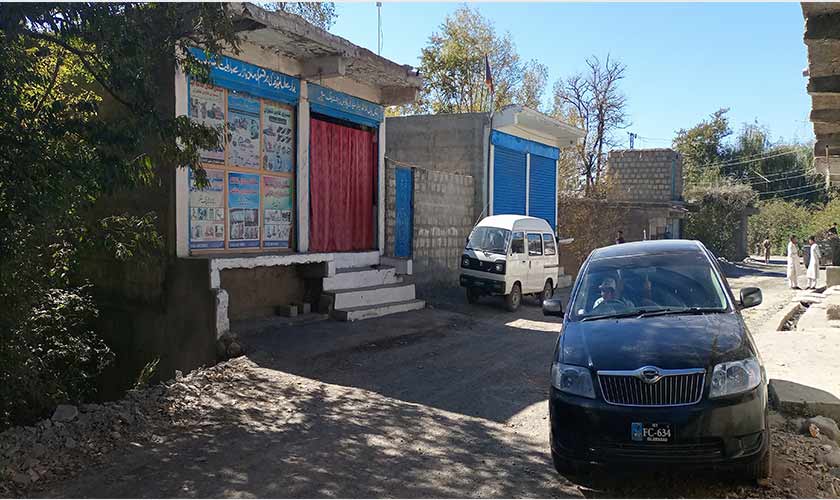
Standing on a roadside, I was waiting for the male interviewee who had established a shop for his sister. Two women opened the door of a black Toyota Fielder and entered a shop, where a red curtain was drawn. The women had come at a shop owned and run by a woman.
Shalozan, one of the most populated villages in Upper Kurram, at a distance of 10 kilometres from Parachinar city, is where the men have empowered women. They have helped women establish shops attached to their homes.
In the last 20 years, the number of shops run by women has been increasing. The village has at least 13 female-run shops now. The men are of the view that with growing population, awareness and girls’ education, the number of female shops, commonly known as “women shopping centres” will further increase in the Kurram tribal district.
Ashiq Hussain, 55, a father of seven daughters in Shalozan, has established a shop for one of his daughters. The shop is attached to their home and has two doors; one opens towards the street, the other into the home. The shop is clean, full of women’s and children’s clothing, bags, shoes, make-up and other items. “We invested three hundred thousand rupees, but in a year-and-a-half the shop has raised well over a million“, he says.
Ashiq Hussain never attended school. In the patriarchal setup of Tribal Areas, fathers take pride in having a male heir, but Ashiq is a proud father of daughters. Many people now know him because of his eldest daughter.
Shattering stereotypes
He has also transformed his stable into a shop. One of his daughters, a college student, who has completed a beauty parlour course in Peshawar, is running the shop, teaching the tricks of the trade to local girls. The father helps the daughter coordinate with vendors in Peshawar, “my wife and I look after the shop while our daughter goes to college in the morning. When she returns, she takes charge,” he says.
Some thirty years ago, women did not have much agency, Ashiq remembers. They would need a male member from the family to accompany them even to the local market. “Now, the women of our village have many options. They can now get everything in the village at their doorstep,” he adds.
Compared to the other six tribal districts in Khyber Pakhtunkhwa, men in Parachinar are cooperative and encourage women start-ups. These shops have empowered the tribal women who once had few opportunities to grow and find financial stability.
“When I was young, we lived in poverty. Men were responsible for feeding entire families. Now, women are supporting men in every field, and the quality of life has improved,” he adds.
Rehmat Hussain, established a women’s shopping centre for his wife and sister in Shalozan twenty years ago. Compared to Peshawar and other cities, Parachinar is expensive. “When my family shopped in Peshawar and compared the rates with the local market, we found that Parachinar shopkeepers were selling items at a higher price. My sister came up with the idea of setting up shops run by women in the village. The idea worked. Now they purchase materials for women from Peshawar to sell in the village,” says Rehmat.
Rehmat had invested fifty thousand rupees at the start. After 20 years, the women shopping centre is worth five million. “My sister purchases women’s clothing, make-up and other items from Peshawar-based vendors. I support them as help with the logistics,” he says.
Running a women’s shop in a tribal district comes with many challenges. “When we buy items in Lahore, where most of the vendors sell locally produced items, we do not face logistical issues. But in Peshawar, a majority of vendors deal in items made in China and Korea, mostly non-custom paid. Due to official restrictions we are then unable to take these to Parachinar,” he adds.
The Khyber Karobar Support Programme and Insaf Rozgaar Scheme are two flagship programmes launched by the Khyber Pakhtunkhwa government. The government is encouraging women entrepreneurs in seven tribal districts to apply for loans. In Kurram, under the Insaf Rozgaar Scheme, a total of 31 women have benefitted so far. A majority of women in the area have set up start-ups and small shops at home. A few have opened salons.
The Bank of Khyber (BOK) has established a dedicated micro finance department in KP, which is facilitating socio-economic development through increased access to financial services. According to BOK open-source data, it has disbursed Rs 1.3 billion in loans to more than 27,000 borrowers. A majority of the loans are below Rs 50,000 per client. Akhuwat has also established a centre in Parachinar and provides small interest-free loans to local women.
Nasir Hussain, a father of three, says, “my wife and other women in the family shop in the village. These women shops facilitate them. Now they can buy anything, and they no longer need to visit city markets for latest trends.”
Haji Gulfam Hussain, a former president of the Parachinar Trade Union, says that in Upper Kurram, out of a total of 8,000 shops, 600 are owned and run by women. “We are proud of our women who now work shoulder to shoulder with men. Education has broadened the minds of our men, who now encourage women to work,” he adds.
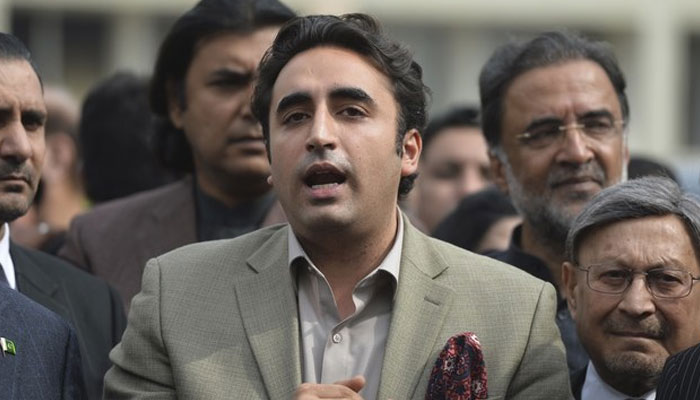
خیبر پختونخوا کے بلدیاتی الیکشن میں مبینہ دھاندلی سے متعلق پاکستان پیپلز
پارٹی (پی پی پی) نے الیکشن کمیشن کو تحریری شکایت بھیج دی۔
پیپلز پارٹی نے اپنی شکایت میں لکھا ہے کہ پشاور کے تقریباً 22 پولنگ اسٹیشنز کے فارم 45 سے پی ٹی آئی امیدوار کے نتائج غائب ہیں اور اس فارم کا صرف پہلا صفحہ جاری کیا گیا ہے۔
پیپلز پارٹی کی جانب سے الزام عائد کیا گیا ہے کہ حکمت عملی کے ساتھ پی ٹی آئی کے امیدوار کو مجموعی ووٹوں کی گنتی میں فائدہ پہنچانے کے لیے فارم 45 کے دوسرے صفحے پر لکھا جائے گا۔
پی پی نے الیکشن کمیشن سے درخواست کی کہ کے پی بلدیاتی الیکشن میں متعلقہ عملے کو پی ٹی آئی امیدوار کے نام کے ساتھ فارم 45 جاری کرنے کی ہدایت کی جائے۔
Hamid Karzai lashed out at Pakistan Prime Minister Imaran Khan for his speech at Organisation of Islamic Countries (OIC) Summit indicating Afghanistan has suffered due to Pakistan's policy of harbouring terrorist elements including Islamic State
Former Afghanistan president Hamid Karzai on Sunday lashed out at Pakistan and called out what he said was "obvious propaganda against Afghanistan". Pakistan Prime Minister Imran Khan in his speech at the summit of Organisation of Islamic Countries (OIC), said that Pakistan faced threat from Islamic State in Afghanistan.
Karzai said that IS has threatened Afghanistan from Pakistan.
In response to Imran Khan's address at the summit Karzai said Pakistan "should not intervene in Afghanistan’s internal affairs and should avoid speaking on behalf of Afghanistan at international forums."
Pakistan's support to terrorists and terror organisation has been a well-established thing worldwide.
Afghanistan is currently facing economic crisis as its global assets abroad, mainly in US, have been frozen after Taliban rose to power. Even after 100 days of being in power, Taliban government has not gained worldwide recognition. International Monetary Fund (IMF) has suspended its ties with Afghanistan
https://www.wionews.com/south-asia/former-afghan-president-hamid-karzai-slams-pakistani-propaganda-on-afghanistan-438204
Coronavirus (COVID-19) and its deadly variants have caused havoc across the world. Some health experts have claimed that the virus has been less lethal among Asians. A global data has shown that Pakistan's mortality rate is far higher than in many regions, a local media report stated.The COVID-19 mortality rate of Pakistan was 2.24 per cent against 1.97 per cent globally, DAWN reported citing a document of the country's National Command and Operation Centre (NCOC).
The report further included that 28,870 deaths were reported across the country so far, out of which 61 per cent were males and 39 per cent females. The report quoted a member of the Scientific Task Force on COVID-19 Dr Javed Akram, who noted that more Pakistanis died because they visited hospitals only after complications emerged rather than the infection itself.
Dr Akram also highlighted the state of infrastructure as he blamed poor health and diagnostic facilities for the high number of casualties.
While speaking to DAWN, he accepted that far more patients lost their lives in Pakistan compared to the global percentage of deaths.
"Unfortunately in Pakistan people do not visit hospitals with COVID-19; rather they visit hospitals once they develop complications. We lack state-of-the-art health and diagnostic facilities," he said, as quoted by DAWN.
He also said that that country's intensive care units (ICUs) remained under pressure or were overburdened which was one of the reasons why the COVID-19 mortality ratio increased. Although, the Pakistani government had claimed that many ventilators were never occupied in the country.
As per the report, the minimum age of a Pakistani national who succumbed to the infection was two months and the maximum age was over 100 years, with the median age calculated at 62 years.
Omicron variant in Pakistan
On December 13, Pakistani health authorities confirmed the first case of the Omicron variant of the coronavirus in the country.
"The National Institute of Health, Islamabad has been able to confirm that a recently suspected sample from Karachi is indeed the 'Omicron variant' of SARS-CoV2," said the statement.
"This is the first confirmed case but continued surveillance of identified samples is in place to identify trends," it added.
“You can fool some of the people all of the time, and all of the people some of the time, but you can not fool all of the people all of the time.” Abraham Lincoln
The city-state of Medina – the first welfare state on mother earth was a miracle of the last Prophet Muhammad (PBUH). After the demise of the Holy Prophet, his companion further cemented his legacy. After the martyrdom of Hazrat Ali, the Umayyad Caliph Umar bin Abdul Aziz was, to some extent able to resemble his caliphate on the footprints and rules of the city-state of Medina – since then, no country can acclaim to be as per the rules and regulations of the city-state of Medina.
The state was a complete example of socioeconomic justice, protection of human rights, patience, responsibility, piety, austerity, an admirable governing system, meritocracy, was a blow to nepotism, and a place for respect. There was neither a doctrine of necessity nor anyone who was above the law.
The incumbent prime minister of Pakistan Mr Imran Khan after assuming power as premier announced that he will run the government in the footprints of the city-state of Medina. It has been three and a half years that the new Pakistan of Imran khan has been in a quagmire and out of track which he wished and promised for.
There is no single evidence in the affairs of the city sate of Medina when nepotism had penetrated, where merit had been compromised, or when corrupt people had been given provided a safe passage. Unlike the city-state of Medina, the proponents of new Pakistan are involved in nepotism, by compromising meritocracy and leaving the corrupt unanswered.
In the city-state of Medina, no one even could ever think of corruption, but here in New Pakistan, the country has plunged into Corruption. Even though, irregularities of Rs 40 billion have been found in the Corona relief fund. We have witnessed many scandals such as the Medicine scandal, Wheat and Sugar scandal, and the Ring road scandal__ where the right and left of Mr Khan have either fled abroad or have been left unquestioned.
On the economic front, Riba was banned in the city-state of Medina. Whereas in the affairs of the new Pakistan, it has prime importance__in both national and international level. Piteously, a loan has been taken from Saudi Arabia at a 4 per cent interest rate for one year.
The so-called exaggeration of Imran Khan by naming politicians as corrupt, dacoits, and murderers and saying that he will never make an alliance with them has defaced his hypocritical political aims for the fulfilment of his vested interests. His collation with the PML Q, the MQM, and favouring turncoats for his party are short of the norms of the city-state of Medina.
Austerity was another important feature of the city-state of Medina. At current, the salary of the prime minister is around 2 lac whereas the ministers have been living luxurious life at the expense of the people. A separate aeroplane for the prime minister and his journey from prime minister house to Bani Gala does not reflect the austerity as like of the City of Medina.
Administratively, the paraphrasing of Hazrat Umar “If a Dog dies on the banks of the River Euphrates, Umar will be responsible for dereliction of duty.” speaks volumes of his calibre as an administrator, and as a representative of the ruled. Dissimilarly, in Naya Pakistan, people are starved. Millions have been trapped in poverty and millions have lost jobs. People are compelled to commit suicide. The government has failed to control price hikes, hoarding, and inflation.
There was a separation of personal business and state affairs in the city stare of Medina. The Caliphs used to stop their business activities after assuming the charge. But in Naha Pakistan, the scenario is reversed. The President of the state uses its office for personal business regardless of conflict of interests. The proponent of Naya Pakistan Mr Imran Khan has zipped his lips on a private agreement (between President family private business centre Alvi Dental with Bringing Smile USA worth 25 million dollars) which was signed in Governor house Sindh in the presence of President Dr Arif Alvi
The above shortcomings had already penetrated Pakistan before Mr Imran Khan took the oath as prime minister. He should have the foresight that he could not be able to revamp these challenges as per the city-state of Medina. It has been three and a half years in his power, along his ministers are still exaggerating that Pakistan resembles the city-state of Medina. This political gimmick might not work for them any more__as ground realities gesticulate that the policies of the incumbent government are far from the basic rules and regulations of the city-state of Medina.
It has been seven years since the deadliest ever attack against young students in the country by Tehreek-e-Taliban Pakistan. On a bright, sunny, winter morning, 147 children were brutally massacred in the Army Public School in Peshawar. At that time, hardly anyone could anticipate that a few years down, the line Osama bin Laden–the founder of Al Qaeda–would be called a martyr by the Prime Minister on the floor of the house, Ehsanullah Ehsan “the mastermind of the APS attack” would mysteriously escape the invincible security, and the TTP would be considered for amnesty while the guardians of the APS victims would keep awaiting justice.
The APS attack on December 16th, 2014, was an attack on civilians, penetrating the security of a state institution, with an intent to massacre as many children as possible. The TTP claimed responsibility for the attack and called it revenge against the operation Zarb-e-Azb started by the military in North Waziristan the same year. Some in Pakistan later accepted the unfortunate incident as collateral damage.
The whole nation mourned the insurmountable loss, emotionally united against the terrorists, and even pledged to educate the children of the enemies. Yet, where it ended up is miserable. Pakistan could certainly do better provided that a comprehensive national action plan was implemented in the letter as well as the spirit.
For TTP, the idea of the state of Pakistan is contrary to Islam.
Since the creation of the TTP in 2007 after the Red Mosque miscalculation by the dictator Pervaiz Musharraf, the organization has launched numerous attacks threatening the national security of Pakistan. They have attacked civilians, politicians, army personnel, police, and even polio workers. For them, the idea of the state of Pakistan is contrary to Islam and hence they wage a terrorist campaign against the state to uproot the government structures. A vile ideology of TTP has fortunately not been able to win support from the masses but Musharraf’s offensive against the Red Mosque provided different extremist sections with glue to unite in the form of Tehreek-e-Taliban Pakistan. The cleric who was then found running away from the Red Mosque wearing a burqa was over-joyous at the Afghan Taliban’s conquest of Kabul. Waving the Afghan Taliban flags at the seminaries, he challenged the Pakistani state and dared the policemen to wait and see what the Pakistan Taliban would do to the state when the police went there to remove the flags of an unrecognized element in the capital city. Are individuals more powerful than the state? If the state gives space to extremists and lets them become stronger and gather support from the masses until they become a potential threat to the security only to be crushed by brute force, the chances of the approach becoming successful are minimal. Frankenstein monsters are hard to chain. Creating them for political goals is easy but disposing of them off is a messy thing to do. It is catastrophic. The mistakes must not be repeated.
Tehreek-e-Labbaik Pakistan’s ideology has massive support among the citizenry. Unlike TTP, the TLP is an organic movement with mass support. The party sees itself as the kingmaker in the upcoming elections. As they gather in huge numbers every now and then disrupting the peace in the public spheres, some voices start coming out that force should be used against them as if suppressive measures can choke wide-spread ideas no matter how questionable their legitimacy is. Succumbing to TLP’s demands again and again, calling it out a proscribed organization one day and then embracing it the other day, sending its hereditary leader to prison and then welcoming him by flowers on the release, and showing crocodile tears on the damages done by TLP and then advocation of the same ideology by the office-holders only confuse the citizens and drain the public’s trust on the governance structures.
The radicalization wave that came up with TLP was arguably hitherto unseen by the country. The incidents like a Sri Lankan citizen lynched and burnt by a mob in Sialkot are an expected unfortunate outcome of such ideologies mainstreamed for political purposes.
During the cold war era, Pakistan was an accomplice along with the United States and the Saudi Kingdom in producing the jihadi ideology. That ideology backfired and Pakistan became a living hell suffering from religious extremism. It took years and immense efforts to control that crisis. The terrorist organizations are, however, still operating although Pakistan has seen relative peace in the last few years. But the threat is not all gone. As the Taliban conquered Afghanistan, other religiously motivated groups in the region also gained confidence. There are speculations that Pakistan was hoping that the Taliban in Afghanistan would use their influence in brokering agreements between the state of Pakistan and TTP, but lately, it seems the hopes were mere delusions. TTP has ended the ceasefire and the future talks are uncertain.
Giving amnesty to an organized terrorist network, which has the blood of tens of thousands of Pakistan and who do not believe in the constitution at all, merely on the idealism that they will become inclusive citizens at once, will not be helpful. The country needs serious revision on its policies at handling radicalization. The least it can do is to refrain from creating monsters like the mujahideen in the first place for they cannot be disposed of when the urge arises. They are costly liabilities, not assets. Also, make sure the public does not get hyper radicalized. Radicalization occurs fast while deradicalization takes time and huge efforts. The joint risk of a radicalized population in the form of TLP exerting its muscular Barelvism and a militant blood-thirsty TTP will be a big challenge for the state. For the most part, the state itself is allegedly responsible. Will it handle the forthcoming crisis responsibly to avoid the blame? One can only hope so.
By Arul Louis
American realpolitik has taken a 180-degree turn between 1971 and now, but Washington continues to pay a heavy price for the decision that drove it to virtually condoning the genocide in Bangladesh by Pakistani troops. The US under President Richard Nixon and his then-National Security Adviser Henry Kissinger tried in 1971 to develop close ties with China with barely veiled hostility to India, but Washington is now trying to build a strategic partnership with India, which it sees as an ally against China.
As Kissinger has said, the driving force behind the US failure to condemn the Pakistani atrocities in what was then East Pakistan was Washington trying to build a bridge to Beijing via Islamabad.Kissinger admitted in an Atlantic magazine interview that Pakistan used “extreme violence and gross human rights violations” to put down the Bangladeshi independence movement, but “to condemn these violations publicly would have destroyed the Pakistani channel” to China.
For their pipeline to Beijing, Kissinger, Nixon and the Secretary of State William Rogers disregarded the warnings by Dhaka-based US diplomats in what came to be known as “The Blood Telegram” about the “genocide” in East Pakistan and their denunciation of the US “moral bankruptcy” in failing to condemn the atrocities and the suppression of democracy.
The US went on to intimidate India that was inundated by millions of Bangladeshis fleeing the killing fields of East Pakistan by trying to use its diplomatic muscle and by moving the Seventh Fleet close to India when New Delhi backed Bangladesh’s Mukhti Bahini freedom fighters.
And there were the vulgar insults – revealed decades later – by Nixon aimed at India’s then-Prime Minister Indira Gandhi.
US policy turnaround
For someone hailed as the master of realpolitik, Kissinger has in retrospect worked against the national interests of the US, paving the way for a massive challenge to his country by China, outmanoeuvred by Mao Zedong, Zhou Enlai and their successors.
As a result of the Nixon-Kissinger folly that made it an accomplice of the Pakistani crimes in Bangladesh, Washington is now facing a formidable rival in China, that built itself economically at the expense of the US and is trying to emerge as the dominant world power and a challenger to the world order, especially in the Indo-Pacific,
To counter China’s power the US – under President Joe Biden and before him Donald Trump – is turning to India, a nation reviled by their predecessor, Nixon, as “repulsive” and ridiculed with racist and sexual vulgarities.
Decades later as the effects of Kissinger’s China diplomacy haunt the US, Trump had India declared a major defence partner of the US and the bookend with it of democracies in the Indo-Pacific.
Biden has moved the strategic cooperation further making cooperation with India a priority for his administration as it confronts China’s aggressive behaviour from the Himalayas to the South China Sea and beyond.
After their meeting in Washington in September, they said that because of the “growing strategic convergence, President Biden and Prime Minister Modi resolved to advance the U.S.-India Comprehensive Global Strategic Partnership.”
A changed world
The world has also changed in other ways.
When the Cold War raged in 1971 with the Soviet Union and the US as the main protagonists, Moscow and Beijing were at loggerheads ideologically and were coming off prolonged border clashes in 1969.
The US was trying to pull China into its orbit to counter the Soviet Union.
The Soviet Union’s rift with China was a factor in propelling Moscow towards close ties with India.
India and the Soviet Union had signed the Treaty of Friendship, Peace and Cooperation in 1971, which stopped just short of an overt military pact.
It said that if either of them was attacked they “shall immediately enter into mutual consultations in order to remove such threat and to take appropriate effective measures to ensure peace and the security of their countries.”
Moscow was the main provider of arms to New Delhi mostly on concessional terms based on rupee trade for then-foreign exchange starved India.
Now China is closer to the Soviet Union’s successor, Russia, drawn by their mutual antipathy towards the US.
India, on the other hand, is drawing away from Russia and moving closer to the US and the West, the residual military purchases and joint manufacturing notwithstanding.
Economically, too, India and the US see the benefits from cooperation, while India’s move away from its vaunted pseudo-socialism has paid dividends.
While India pushes its Make In India agenda, the US sees value in diversifying its supply chain on mutually beneficial terms having seen the results of its over-reliance on China during the COVID-19 crisis.
Paying a price
The US has unequivocally backed India during the clashes with China.
The US and India have made several agreements on defence and strategic matters including the Logistics Exchange Memorandum of Agreement (LEMOA), Communications, Compatibility and Security Agreement (COMCASA), and the Industrial Security Agreement (ISA) and are working towards interoperability of their militaries.
But in the 1970s India’s brand of nonalignment with a pro-Soviet tilt would have made any cooperation with the US unlikely, nor would the US attraction to dictators like Pakistan’s generals. India, too, has paid its own price for the Soviet-branded nonalignment in economic terms, which in turn has impacted its strategic and diplomatic standing.
In “The Blood Telegram,” which got its name from the US Consul General Archer Blood who endorsed their stand, the diplomats witnessing the genocide said they “fervently hope that our true and lasting interests here can be defined and our policies redirected in order to salvage our nationʼs position as a moral leader of the free world.”
Fifty years later, Biden may be trying to do just that even as the US pays its price for Kissinger’s realpolitik folly.
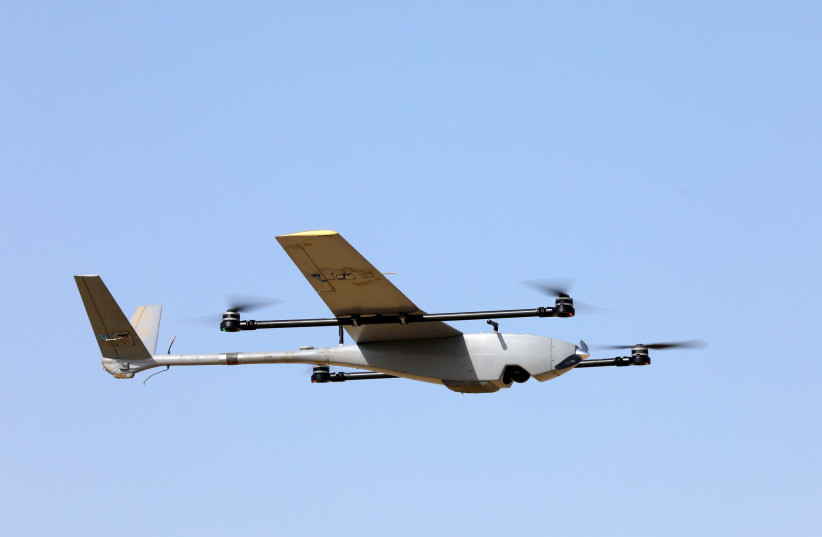
The missile was targeting a senior member of the Pakistani Taliban.
A drone strike hit a house just inside Afghanistan's border with Pakistan, apparently targeting a senior member of the Pakistani Taliban, but the missile failed to explode, Pakistani Taliban sources said on Thursday.One of the Taliban officials said the drone fired a missile at a hujra, or guesthouse on the compound of Maulvi Faqir Mohammad, a senior leader of the Tehrik-e Taliban Pakistan movement (TTP)."It was around 3:30 when a drone suddenly appeared in the sky. We got worried and advised Maulvi Faqir to go to a safe place but he refused and argued it was not possible to hide in the daytime," said the official, who spoke on condition of anonymity.
Around half an hour later, when Faqir Mohammad left his own house to visit the guesthouse, the missile struck.
"He was about 3 meters away from the hujra room when the drone fired a missile and hit the same room. Luckily the missile didn’t explode and he and other people around him remained safe," he said.
Faqir Mohammad is a former deputy leader of the TTP who spent eight years in Afghanistan's Bagram prison before being released by the Afghan Taliban following their shock overthrow of the Western-backed government in Kabul on Aug. 15.
The apparent attempt to kill him in a drone strike came after talks to agree a permanent ceasefire between the TTP and the Pakistani government broke down last week after the militant movement refused to extend a 30-day truce.
The TTP, which has fought for years to overthrow the government in Islamabad, is a separate movement from the Afghan Taliban but TTP fighters and senior leaders have long been known to shelter in the lawless eastern border regions of Afghanistan.
https://www.jpost.com/middle-east/drone-strike-on-pakistani-taliban-leader-fails-to-explode-taliban-sources-say-689007
The State Department report stated that Indian security agencies are effective in disrupting terror threats and respond “in a timely manner” to the requests made by the United States.
Pakistan failed to take adequate steps to counter terrorism and prosecute terrorists including masterminds of the 2008 Mumbai attacks such as Jaish-e-Mohammed (JEM) founder Masood Azhar and Lashkar-e-Taiba's (LeT) Sajid Mir, according to a new US report. It also said that Pakistan made “limited progress” in its pledge to dismantle all terrorist organizations without delay or discrimination.
"Pakistan made limited progress on the most difficult aspects of its 2015 National Action Plan to counter-terrorism, specifically in its pledge to dismantle all terrorist organizations without delay or discrimination," the US State Department report said in its 2020 ‘Country Reports on Terrorism’.
At the same time, the US report stated that Indian security agencies are effective in disrupting terror threats and respond “in a timely manner” to the requests made by the United States for information related to terrorism investigations.
On Pakistan, the US report said that in February and again in November, a Lahore anti-terrorism court convicted LeT founder Hafiz Saeed on multiple counts of terrorism financing and sentenced him to five years and six months in prison but failed to take action against other terrorist leaders.
It then listed the terror attacks that took place in Pakistan last year, including the one in Quetta in which 15 people were killed and 18 others injured. Islamic Stae had claimed responsibility for the attack.The report said that on June 29, four Balochistan Liberation Army militants carrying guns and grenades charged the security barrier of the Pakistan Stock Exchange in Karachi. In the ensuing gun battle, eight people were killed. On October 27, a five-kilogram IED exploded in a madrassa in Peshawar during a religious lecture in which eight people were killed and 136 others injured.
The State Department report also said that some madrassas in Pakistan continue to teach violent extremist doctrine, though it mentioned the states taken by the government there to regulate these institutions.
چیئرمین پاکستان پیپلزپارٹی بلاول بھٹو زرداری نے 16ہزار ملازمین کی بحالی کے فیصلے کو خوش آئند قرار دیتے ہوئے بحال ہونے والے 16ہزار ملازمین اور ان سے وابستہ ان کے
خاندان کو مبارکباد دی ہے۔
چیئرمین پیپلزپارٹی نے کہا کہ پارٹی کے وکلاءسید نیر حسین بخاری، لطیف کھوسہ ، رضا ربانی، اعتزازا حسن اور دیگر وکلاءنے بہترین انداز میں برطرف ملازمین کا مقدمہ پیش کیا۔ پاکستان پیپلزپارٹی کی کاوشوں کے بدولت پہلے بھی ان 16ہزار ملازمین کو پارلیمان سے بحال کروایا تھا۔
پاکستان پیپلزپارٹی ہمیشہ ورکرز کلاس کے ساتھ کھڑی ہے اور آئندہ بھی رہے گی۔