Trading its influence over the militants for relief from painful reforms will cost the country’s economy.Pakistan’s founder, Mohammad Ali Jinnah, was convinced his fledgling nation’s most valuable asset was its location. In an interview a month after independence in 1947, Margaret Bourke-White of Life magazine painted a vivid picture of Jinnah’s expectations: “‘Pakistan is the pivot of the world, as we are placed’ — he revolved his long forefinger in bony circles — ‘at the frontier on which the future position of the world revolves.’” In 1947, the world was just entering a cold war. Bourke-White explained that Pakistanis expected the United States to pay handsomely for a strategically located ally’s development — and to fund its military as well. Decades later, tragically little has changed. As the U.S. follows through on President Joe Biden’s ill-considered abandonment of Afghanistan, Pakistani leaders are convinced they can use their leverage over the Taliban to win concessions from the U.S. Seven decades of geopolitical stratagems of this sort have not helped Pakistan, its citizens or its economy. Islamabad shouldn’t expect them to work any better this time. U.S. combat troops will have left Afghanistan by September. That’s also when the International Monetary Fund conducts a much-delayed review of its $6 billion bailout of Pakistan. The IMF wants Pakistan to step up the pace of macroeconomic reforms, particularly in its troubled energy sector. Prime Minister Imran Khan, on the other hand, is very conscious that elections are only two years away. So, the budget his government presented last month didn’t quite meet the IMF’s demands. While the budget did include a few tiny steps towards balancing Pakistan’s books, even those set off a political storm. One — a tax on mobile data usage — was immediately withdrawn. Khan doesn’t want to abandon the Islamist welfare state he promised voters in 2018. He has also pledged that his “new Pakistan” will stand up to the West more. Finance Minister Shaukat Tarin, defending the budget that was supposed to placate the IMF, thus insisted that Khan had “stood his ground” against the lender and, in fact, was expanding the welfare state. The IMF won’t be happy. And if it isn’t, Pakistan’s other big multilateral lenders, particularly the Asian Development Bank, won’t step in to help either. That’s where the U.S. comes in. In that 1947 interview, Jinnah claimed that “the United States needs Pakistan more than Pakistan needs the United States.” Similarly, the Financial Times recently reported that the government hopes that the U.S. need for help in stabilizing Afghanistan after the withdrawal should give Pakistan “some space,” particularly when it comes to the IMF. (Tarin denied the report.) Speaking to the New York Times, Khan claimed he was ready to cooperate with the U.S. and “do everything except use military action against the Taliban.” Yet, as one former Pakistani diplomat has pointed out, it’s hardly helping now. The Taliban’s leaders continue to live safely in Pakistan, even as they slow-walk negotiations with the Afghan government and continue to seize territory. Playing such games has not served Pakistan well. The last time Afghanistan fell to the Taliban, Pakistan had to deal with a flood of refugees and the permanent destabilization of its Pashtun-majority border areas. Worse, the Taliban have incubated and inspired other extremist movements, including in Pakistan itself. Between 2008 and 2016, the Pakistani version of the Taliban struck at will across the country — most horrifically, killing 132 schoolchildren in an army school in Peshawar in December 2014. Geopolitical conditions are also less favorable now. Pakistan’s early leaders prospered from picking the American side in the cold war. But a world increasingly shaped by disputes between the U.S. and China doesn’t look to be as profitable. Khan told the New York Times that what he really wanted was for the U.S. and China to “get on and trade with each other” — perhaps so his government could receive handouts from both. But Beijing isn’t exactly rushing to fill the gaps in Islamabad’s budget. Meanwhile, the U.S. doesn’t trust a Pakistan that it fears will use bailout money to pay bondholders linked to the Chinese state. More importantly, handouts would only perpetuate the boom-bust-and-bailout cycle that’s hampered the Pakistani economy for years now. If Khan really wants his country to prosper, he should focus on the tough structural reforms the IMF is demanding and put the economy on a more sustainable path. He may worry about the political cost. The price of continuing to coddle extremists would be much higher. https://www.bloomberg.com/opinion/articles/2021-07-06/pakistan-shouldn-t-look-to-profit-off-u-s-withdrawal-from-afghanistan
Thursday, July 8, 2021
Pakistan Should Stop Looking to Leverage the Taliban
By Mihir Sharma
کچھ لوگوں کی روزی روٹی کا سبب اور ذریعہ صرف آصف علی زرداری کی کردار کشی کی مہم چلانا ہے، سابق ڈپٹی چیئرمین سینیٹ سینیٹر سلیم مانڈوی والا
سابق ڈپٹی چیئرمین سینیٹ سینیٹر سلیم مانڈوی والا نے کہا ہے کہ کچھ لوگوں کی روزی روٹی کا سبب اور ذریعہ صرف آصف علی زرداری کی کردار کشی کی مہم چلانا ہے۔ جعلی اکاﺅنٹس کی طوطا کہانی گھڑنے والے سند یافتہ جعلساز ہیں۔ یہ وہی جعلساز ہیں جنہوں نے صدرآصف علی زرداری کی گورنر ہاﺅس لاہور سے گرفتاری کے وقت گورنر ہاﺅس سے 70کروڑ روپے اور سونا برآمد کرنے کا جھوٹا دعویٰ کیا تھا۔ اس طرح آصف علی زرداری کے حوالے سے 33ارب روپے ملنے کا دعویٰ سراسر جھوٹ اور میڈیا ٹرائل کا حربہ ہے۔
سینیٹر سلیم مانڈوی والا نے کہا کہ صدر آصف علی زرداری گذشتہ 33سال سے پیپلزپارٹی کے نشانے پر ہیں۔ کبھی کسی بخاری کی ٹانگ میں بم باندھنے کی طوطا کہانی گھڑی جاتی تھی تو کبھی ان پر منشیات کا جھوٹا مقدمہ داخل کرکے ان کا میڈیا ٹرائل کیا جاتا تھا مگر صدر آصف علی زرداری نے عدالتوں میں ان جھوٹے الزامات کا سامنا کیا اور باعزت بری ہوکر عوام کے سامنے سرخرو ہوتے رہے ہیں۔ سینیٹر مانڈوی والا نے کہا کہ حقیقت یہ ہے کہ صدر آصف علی زرداری 1988ءسے بھٹو دشمنوں کے نشانے پر ہیں۔ سینیٹر مانڈوی والا نے کہا کہ آصف علی زرداری پر جھوٹے الزامات لگانے والے ماضی میں شرمسار ہوتے رہے ہیں اور مستقبل میں بھی شرمندگی ان عناصر کا مقدر ہے۔
https://www.ppp.org.pk/pr/25245/
ہم سب کا ایک نعرہ ہے کہ کشمیر کا سودا نامنظور, چیئرمین پاکستان پیپلزپارٹی بلاو ل بھٹو زرداری
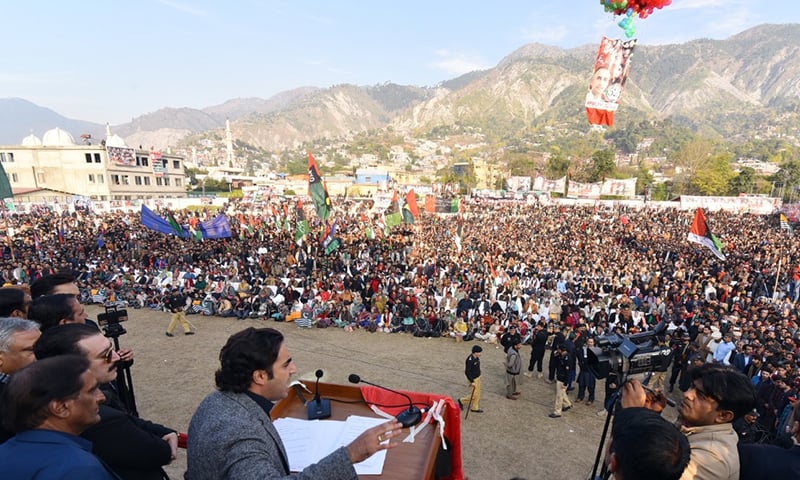
چیئرمین پاکستان پیپلزپارٹی کے بلاو ل بھٹو زرداری نے آزاد کشمیر کے انتخابات کی پارٹی مہم کے سلسلے میں جمعرات کے روز حویلی کے مقام پر ایک عظیم الشان جلسے سے خطاب کیا۔ انہوں نے کہا کہ انہیں اس بات کی نہایت خوشی ہے کہ اسی مقام پر شہید ذوالفقار علی بھٹو نے 1974ءمیں ایک بہت بڑے عوام اجتماع سے خطاب کیا تھا ۔ اس وقت پیپلزپارٹی کے سپاہی اور شہید محترمہ بینظیر بھٹو کے وفادار ساتھی ممتاز راٹھو بھی ان کے ساتھ تھے اور آج ان کے صاحبزادے فیصل راٹھور اپنے والد کے نامکمل مشن کو پورا کرنے کے لئے یہاں موجود ہیں۔
چیئرمین بلاول بھٹو زرداری نے کہا کہ جب تک کشمیری عوام ان کے ساتھ ہیں کوئی بھی پیپلزپارٹی کو ختم نہیں کر سکتا۔ قائد عوام نے ہر محاذ پر کشمیر کاز کے لئے جنگ لڑی۔ ہمارا تین نسلوں کا رشتہ ہے۔ قائد عوام نے عوام کے حقوق کے لئے آواز بلند کی۔ قائد عوام ذوالفقار ہی وہ لیڈر تھے جنہوں نے کشمیر کے لئے ہزار سال لڑنے کا ارادہ ظاہر کیا تھا۔ وہ او آئی سی کے چیئرمین تھے۔ انہوں نے پاکستان کو ایٹمی صلاحیت دی۔ جب وہ سٹرائیک کی کال دیتے تھے تو مقبوضہ اور آزاد کشمیر دونوں میں ہر چیز بند ہو جاتی تھی اور کاروبار زندگی رک جاتا تھا۔ ان کی صاحبزادی محترمہ بینظیر بھٹو نے کہا تھا کہ جہاں کشمیری بھائی بہنوں کا پسینہ گرے گا وہاں اپنا خون گرائیں گے۔
کشمیریوں نے ہمیشہ ان کی حمایت کی اور انہوں نے کشمیری بھائیوں اور بہنوں کو ملازمتیں فراہم کیں۔ یہ بدقسمتی کی بات ہے کہ اس وقت پاکستان میں ایک کٹھ پتلی سلیکٹڈ اور نااہل وزیراعظم ہے۔ جو کشمیر کے تاریخی حملے پر کہتا ہے کہ میں کیا کروں؟ اگر قائد عوام آج ہوتے تو وہ کشمیر کا کیس لے کر اقوام متحدہ جاتے۔ اس کٹھ پتلی کا جواب تو یہ تھا کہ کشمیر ہائی وے کا نام بدل کر سری نگر ہائی وے رکھ دیا ہے اور کشمیر کے نقشے میں اپنے پین سے تبدیلی کر دی ہے۔
عمران خان کشمیروں کی امنگو پر پورا نہیں اترتا۔ ہم سب کا ایک نعرہ ہے کہ کشمیر کا سودا نامنظور۔ ہم دہلی یا اسلام آباد سے ڈکٹیشن نہیں لیں گے بلکہ جو آپ کہیں گے وہ کریں گے۔ قائدعوام کا نعرہ تھا کہ ہمارا نعرہ سب پہ بھاری، رائے شماری، رائے شماری۔ ہمیں ایک ایسا وزیراعظم نہیں چاہیے جو انتخابات کے لئے مودی فتح کی دعا مانگتا ہو اور نہ ہی ایسا وزیراعظم چاہیے جو اپنی شادی کی تقریب کو اپنے گھر کی شادی میں مودی کو مدعو کرے۔ وزیراعظم عمران خان کو جنرل مشرف اور مودی کا پولنگ ایجنٹ تھا۔
پاکستان پیپلزپارٹی ہی وہ واحد پارٹی ہے جو کشمیر کا کوئی سودا نہیں کر سکتی کیونکہ اس کی بنیاد ہی کشمیر کے مسئلے سے پڑی تھی۔ ہم اقوام متحدہ کی قراردادوں پر یقین رکھتے ہیں۔ چیئرمین بلاول بھٹو نے کہا کہ عمران کی تبدیلی کا اصل چہرہ غربت، مہنگائی اور بیروزگاری ہے۔ پیپلزپارٹی نے اپنے دور حکومت میں سرکاری ملازمین کی تنخواہوں میں 120فیصد اضافہ کیا، پنشن میں 100 فیصد اضافہ کیا اور دہشتگردی کے لئے لڑنے والے فوجیوں کی تنخواہوں میں 175فیصد اضافہ کیا۔ اب 25جولائی کو ایک جیالا وزیراعظم منتخب ہوگا اور اس حکومت کا پہلا اقدام تنخواہوں اور پنشنوں میں اضافہ ہوگا۔ پیپلزپارٹی ہمیشہ غریبوں کے لئے کام کرتی ہے اور جس وقت دنیا شدید کساد بازاری کا شکار تھی اس وقت ہماری حکومت نے بی آئی ایس پی شروع کیا۔ یہ حکومت احساس احساس کی رٹ لگائے رکھتی ہے لیکن احساس سوائے بی آئی ایس پی کا نام بدلنے کے اور کچھ نہیں۔
یہ حکومت ہماری پالیسیاں چوری کرتی ہے اور نہ صرف بی آئی ایس پی کو چوری کیا بلکہ ہماری خارجہ پالیسی کو بھی چوری کر دیا۔ عمران خان جھوٹ بولتے ہیں کہ یہ ان کا فیصلہ ہے کہ وہ امریکہ کو فوجی اڈے نہیں دیں گے جبکہ یہ فیصلہ ہماری حکومت کا تھا جسے ہم نے پارلیمان سے منظور کرایا تھا۔ چیئرمین بلاول نے کہا کہ قائد عوام کا نعرہ تھا کہ روٹی، کپڑا اور مکان مانگ رہا ہے ہر انسان لیکن اس کٹھ پتلی حکومت نے غریب عوام سے یہ تینوں چیزیں چھین لی ہیں۔ انہوں نے کہا کہ جب تک کسانوں اور مزدوروں کو خوشحال نہیں بنایا جاتا اور نوجوانوں کو روزگار مہیا نہیں کیا جاتا اس وقت تک ملک ترقی نہیں کر سکتا۔ انہوںنے کہا کہ اس مجمعے کو دیکھتے ہوئے وہ کہہ سکتے ہیں کہ جیالوں نے کٹھ پتلی اور دیگر پارٹیوں کو ہر ا دیا ہے اور فیصل راٹھور اس حلقے سے جیت چکے ہیں۔ انہوں نے کہا کہ فیصل راٹھور اسلام آباد سے کشمیر ایکسپریس وے کو حکومت میں آکر مکمل کرائیں گے اور یہ پیپلزپارٹی کی جانب سے کشمیری عوام کے لئے تحفہ ہوگا۔
چیئرمین بلاول بھٹو زرداری نے کہا کہ وہ شہید ذوالفقار علی بھٹو اور شہید بینظیر بھٹو کے مشن کو مکمل کرنے کے لئے میدان عمل میں موجود ہیں۔ جیالے نہ صرف اس کٹھ پتلی کو بلکہ دیگر پارٹیوں کو کشمیر سے بھگائیں گے۔ میں اس پارٹی کو کہتا ہوں کہ وہ بلی نہ بنے اور بھاگے نہیں بلکہ شیر کی طرح کھڑے ہو کر اس کٹھ پتلی کا مقابلہ کرے۔ انہوں نے کہا کہ پیپلزپارٹی نے ہمیشہ عوام کا ساتھ دیا ہے اور 25تاریخ کو عوام پیپلزپارٹی کو ووٹ دیں گے اور تیر پر ٹھپہ لگائیں گے۔
https://www.ppp.org.pk/pr/25241/
Wednesday, July 7, 2021
Dilip Kumar, Film Star Who Brought Realism to Bollywood, Dies at 98


Mr. Kumar was born Yousuf Khan in Peshawar (then part of British India, now in Pakistan) on Dec. 11, 1922, the fourth of Ayesha and Mohammad Sarwar Khan’s 12 children. His father, a fruit merchant, moved the family to Bombay, now known as Mumbai, and then to Deolali, in west India, where Dilip attended the Barnes School before enrolling in Khalsa College in Bombay.He wanted to play soccer or cricket professionally, but the family’s economic situation forced him to look for work elsewhere. For a time he was an assistant at an army canteen in Poona (now Pune). A chance encounter with a former teacher changed his life. When he said he was looking for a job, the teacher introduced him to the pioneering Indian actress Devika Rani, who, along with Himanshu Rai, had established the Bombay Talkies studio. The idea was to get a job, any job, but Ms. Rani asked if he would consider becoming an actor.Mr. Kumar, who had seen only one film in his life — a war documentary — was flummoxed, but the money persuaded him. Ms. Rani said that taking on a Hindu screen name to obscure his Muslim background would help his career. He became Dilip Kumar.His first film, “Jwar Bhata” (“Ebb and Flow”), released in 1944, was a flop; Baburao Patel, the acerbic critic of Film India, called him “anemic.” But three years later his performance in “Jugnu” (“Firefly”), alongside Noor Jehan, received more favorable attention. By the time “Shaheed” (“Martyr”) was released in 1948, Mr. Patel was singing his praises: “Dilip Kumar steals the picture with his deeply felt and yet natural delineation of the main role.” The hits kept coming, including “Nadiya Ke Paar” (“Across the River”), “Shabnam” (“Dewdrops”) and Mehboob Khan’s “Andaz” (“Style”), in which Mr. Kumar was cast with Mr. Kapoor and the actress Nargis. In 1954, Mr. Kumar won the newly instituted Filmfare Award for best actor for his performance as an alcoholic in the tragic love story “Daag” (“The Stain”). He won seven more Filmfare statuettes for best actor in addition to a lifetime achievement award. Guinness World Records honored him on his 97th birthday for his “matchless contribution” to Indian cinema.

Many of his early films had him chasing unattainable women. The 1950 melodrama “Jogan” (“Nun”) ends with him weeping at his lover’s grave. That same year, he played a Heathcliff-like character in “Arzoo” (“Desire”), one of three variations on “Wuthering Heights” in which he acted. He earned the nickname Tragedy King after appearing in a series of dramas that a psychiatrist later said took a toll on his health. In the 1951 movie “Deedar” (“Sight”), he played a blind man whose eyesight is restored through surgery but who blinds himself again when he realizes that he and the surgeon are in love with the same woman. (To prepare for the role, Mr. Kumar observed a blind beggar at the Bombay Central railway station.) One of Mr. Kumar’s best-known tragedies is Bimal Roy’s “Devdas” (1955), about a man who becomes an alcoholic when his childhood sweetheart deserts him. Mr. Kumar’s love life made news; he had relationships with the actresses Kamini Kaushal, Madhubala (they co-starred in the 1960 blockbuster “Mughal-e-Azam,” about thwarted lovers, long after they broke up) and Saira Banu, whom he married in 1966 when he was 44 and she was 22. In the 1980s, while still married to Ms. Banu, Mr. Kumar married the socialite Asma Rehman in secret. The news quickly came out, and the marriage became a scandal, but Ms. Banu stuck with Mr. Kumar, who ended the second marriage. He is survived by Ms. Banu. Professionally, Mr. Kumar’s record was spotless, with films that have not only been successful but have left a lasting impact. Films like “Naya Daur” (“New Era”) in 1957, “Yahudi” (“The Jews”) in 1958, “Madhumati,” also in 1958, and “Ram Aur Shyam” (“Ram and Shyam”) in 1967 are still remembered. Mr. Kumar found fewer roles in the 1970s, with younger, more agile actors being cast as heroes, and he took a break. He returned in 1981 with a blockbuster, “Kranti” (“Revolution”), which reshaped his screen persona as an older moral center. He had similar roles in star-heavy mega-productions like “Vidhaata” (“The Creator”) in 1982, “Karma” in 1986, Saudagar (“The Merchant”) in 1991 and especially “Shakti,” in which he was cast for the first time opposite the reigning Bollywood superstar Amitabh Bachchan. Mr. Kumar’s last film was “Qila” (“Fort”), released in 1998. By then, a reviewer wrote in India Today, his style felt “more than just outdated, it’s prehistoric,” adding, “Dilip Kumar’s long-drawn-out dialogue delivery is out of sync with the times.” Mr. Kumar received the Padma Bhushan, one of India’s highest civilian awards, in 1991; the Dadasaheb Phalke, India’s highest award for cinematic excellence, in 1994; and the Padma Vibhushan in 2015. From 2000 to 2006, he served as a member of the Rajya Sabha, the upper house of Parliament. But these honors from the Indian government consumed far less newsprint than the decision by the Pakistani government, in 1998, to confer on him its highest civilian honor, the Nishan-e-Imtiaz. Amid heightened religious tensions, Mr. Kumar was branded an anti-national by Hindu politicians who asked him to return the award to Pakistan. He did not. He said in his autobiography that returning it “could have only soured relations further and produced bad vibes between India and Pakistan.” Those words proved that Mr. Kumar was a tactful diplomat off screen. On the screen, his characters would launch into more rebellious rhetoric. In the 1974 period drama “Sagina,” when labeled a traitor, his character responded, “If you’ve drunk your mother’s milk” — meaning, if you’re man enough — “then come get me.” Even in this larger-than-life context, there was a dash of the realism that defined him.
https://www.nytimes.com/2021/07/06/world/asia/dilip-kumar-dead.html
#Pakistan - Imran Khan Has Normalized Prejudice in Pakistan

By Farahnaz Ispahani

After Qureshi’s interview with Bianna Golodryga, an Islamist member of Parliament called for the use of Pakistan’s nuclear arsenal against Israel and another minister cited an anti-Semitic forgery to propose that Muslims should plan for world domination like the Jews.Pakistan is already reputed to have deeply polarized politics and little tolerance for its religious minorities. Khan and the PTI have aggravated the problem with their tendency to normalize prejudice and to use abusive language.In the first two years of Khan’s administration, 31 members of religious minorities were killed, 58 were injured, and 25 targeted by blasphemy cases. Pakistan’s reality under Khan defies claims, made at the time of his election of office, that he represents an opportunity to reshape Pakistan’s image. Any reshaping of Pakistan under Khan has been in the direction of indulging and endorsing various extremist prejudices. Even when the current ruling party was in opposition, one of its politicians created a political storm by using an anti-Christian slur in a provincial legislature. Sixteen months into the government’s term, a senator from Khan’s party declared on a TV show that he and Khan considered the Ahmadiyya Muslim community as worthy of their curse. The senator also used a pejorative appellation for the Ahmadiyya. Neither the PTI nor the prime minister bothered to disassociate themselves from his statement. Khan’s supporters are often quick, especially on social media, to try and erase the effect of prejudiced statements. For example, Qureshi insisted after being called out on his comments in his CNN interview that he was only talking about the state of Israel. Pakistan, it is argued with some justification, has a right to support Palestinians and criticize the conduct of a state and government it does not recognize. But Qureshi’s remarks were clearly a reference to Jews and not the government of Israel.No one says that the tiny state of Israel, with a GDP of $370 billion, has deeper pockets than Turkey (GDP $778 billion), Iran (GDP $454 billion), or various Arab countries. Pakistan’s foreign minister would never say that Saudi Arabia, with its GDP of $793 billion, had “deep pockets.”For almost two centuries, anti-Semites have claimed that Jews have deep pockets and control the media and Qureshi repeated that anti-Semitic trope. His colleague Ali Muhammad Khan, Pakistan’s minister of state for parliamentary affairs, directly quoted from the source of the epithet: “The Protocols of the Elders of Zion,” an anti-Semitic hoax about a grand Jewish plan for global domination. Outside Parliament, a leader of the fundamentalist Tehreek-e-Labbaik Pakistan (TLP), which recently rioted to demand the expulsion of the French ambassador over blasphemy against Islam by his countrymen, declared that “Pakistani Muslims will sacrifice their youth and lives, but they will not accept the filthy feet of Jews in Jerusalem.” This is a far cry from when Pakistan, after its birth in August 1947 as a homeland for South Asia’s Muslims, was home to a religiously diverse community. Its then-capital, Karachi, boasted mosques of various Muslim denominations, several Catholic and Protestant churches, a Jewish synagogue, Parsi (Zoroastrian) fire temples, as well as Jain and Hindu temples devoted to various deities. Although Khan claims the mantle of Pakistan’s secular founder, Muhammad Ali Jinnah, his government has allowed Pakistan’s ranking in global indices of human rights, women’s rights, and religious freedom to continue to slide. The Pakistani prime minister has often expressed admiration for Turkey’s leader, Recep Tayyip Erdogan, who is known for his sexist, anti-democratic, and anti-Semitic remarks. Khan has been trying to substitute U.S. and moderate Arab influence in Pakistan with closer ties to Erdogan’s Turkey. Khan’s statements, and those of his party colleagues, must not be ignored. They reflect a worldview that, when translated into policy, will only make Pakistan less tolerant for its citizens and more difficult for its international partners. https://thediplomat.com/2021/06/imran-khan-has-normalized-prejudice-in-pakistan/
Will head towards Bani Gala on July 25: Bilawal Bhutto
Chairman of Pakistan Peoples Party (PPP) Bilawal Bhutto Zardari on Wednesday said that they will head towards Bani Gala and will throw out the puppets.
Addressing a political rally in Azad Kashmir, PPP Chairman said his party is challenging the puppet government from last three years and stressed on unity for ousting the incumbent government.
Criticizing leadership of Pakistan Democratic Movement (PDM), Bilawal said that PPP brought former president Asif Ali Zardari from hospital and Khurshid Shah from jail to National Assembly to give tough time to government during budget session but unfortunately leaders of other opposition parties were not present. Fazlur Rehman should issue show cause notice those members who were absent from budget session, he demanded.
Bilawal Bhutto further said that people who were talking of kill or cure are now involved in politics of ‘holding feet’ but PPP which has laid down lives and will never do such politics. We will oust selected prime minister as well as Usman Buzdar, he vowed.
PPP Chairman further said that Imran Khan cannot make a decision about giving airbases to United States as PPP government had already closed US bases in Pakistan.
https://dunyanews.tv/en/Pakistan/609556-Will-head-towards-Bani-Gala-on-July-25-Bilawal
صرف پیپلزپارٹی ہی ہے جو اس کٹھ پتلی کی حکومت کو ہٹا سکتی ہے، چیئرمین پاکستان پیپلز پارٹی بلاول بھٹو زرداری
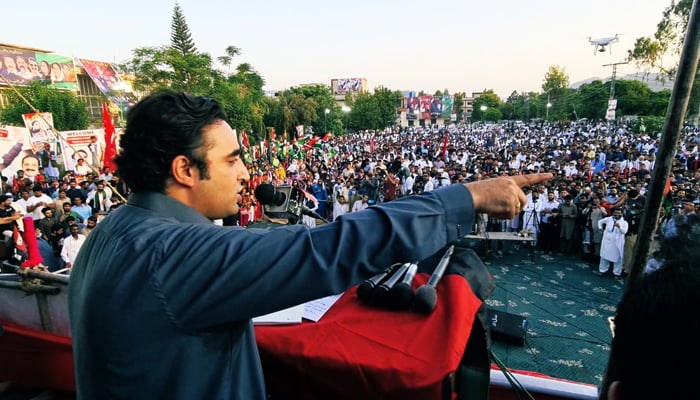
چیئرمین پاکستان پیپلزپارٹی بلاول بھٹو زرداری نے آزاد کشمیر کے مقام عباس پور میں ایک عظیم الشان جلسے سے خطاب کر تے ہوئے کہا کہ صرف پیپلزپارٹی ہی ہے جو اس کٹھ پتلی کی حکومت کو ہٹا سکتی ہے اور جیالے آزاد کشمیر کا انتخاب جیتنے کے بعد بنی گالہ جا کرکٹھ پتلی کو نکال باہر کریں گے۔ انہوں نے کہا کہ ٹی وی پر بیٹھے ہوئے کچھ طوطے بار بار یہ گردان کرتے ہیں کہ پیپلزپارٹی ختم ہو چکی ہے انہیں عباس پور آکر اس عظیم الشان مجمے کو دیکھنا چاہیے جو جیے بھٹو کے نعرے لگا رہے ہیں۔ انہوں نے کہا کہ پیپلزپارٹی کل بھی یہاں تھی، آج بھی میدان میں ہے اور مستقبل میں بھی رہے گی۔
شہید ذوالفقار علی بھٹو اور شہید محترمہ بینظیر بھٹو نے کشمیری عوام کے شان بشانہ جدوجہد کی ہے۔ انہوں نے کہا کہ یہ انتخابات انتہائی اہم ہیں اور جیالے سرحد کے اس پار اور اس پار یہ پیغام بھیجیں گے کہ کشمیر کا سودا نامنظور۔ انہوں نے کہا کہ مقبوضہ کشمیر میں جو ظلم ہو رہا ہے اسے آزاد کشمیر کے عوام برداشت نہیں کرتے۔ ہم ان میں سے نہیں ہیں جو مودی کے انتخابات میں فتح کی دعائیں کرتے ہیں اور مودی کو اپنی شادیوں پر بلاتے ہیں۔ اس وقت مقبوضہ کشمیر کے عوام کے خلاف تاریخی ظلم ہو رہا ہے اور یہ کٹھ پتلی بزدل وزیراعظم کہتا ہے کہ میں کیا کروں۔ ہم وہ جیالے جن کے لیڈروں نے کہا تھا کہ ہم کشمیر کے لئے ہزار سال تک جنگ لڑیں گے اور جہاں کشمیری بھائی بہنوں کا پسینہ گرے گا ہم وہاں اپنا خون گرائیں گے۔ ہم عمران خان کے جواب پر خاموش نہیں رہ سکتے کیونکہ اس کا جواب یہ تھا کہ کشمیر ہائی وے کا نام بدل کر سری نگر ہائی وے رکھ دیا جائے اور اپنے ہی نقشے میں تبدیلی کر لی جائے۔
ہمیں کشمیری عوام کے لئے ایک واضح موقف اپنانا ہوگا وہ یہ کہ کشمیری عوام اپنے فیصلے خود کریں گے۔ اگر کشمیری امن چاہتے ہیں تو امن ہوگا اور اگر کشمیری جنگ چاہتے ہیں تو جنگ ہوگی۔ اسلام آباد اور دہلی کو کشمیریوں کا فیصلہ تسلیم کرنا پڑے گا۔ شہید ذوالفقار علی بھٹو کا نعرہ تھا ہمارا نعرہ سب پہ بھاری رائے شماری شماری، بلاول بھٹو زرداری نے کہا کہ اس کٹھ پتلی عمران خان نے ملک کو معاشی بحران میں دھکیل دیا ہے۔ عمران خان کی تبدیلی کا اصل چہرہ تاریخی مہنگائی، غربت اور بیروزگاری ہے۔ ہمارے ہاں غربت، مہنگائی اور بیروزگاری بھارت اور بنگلہ دیش کے علاوہ جنگ زدہ افغانستان سے بھی زیادہ ہے۔ اس سلیکٹڈ نے عوام سے وعدہ کیا تھا کہ وہ ایک کروڑ نوکریاں اور 50لاکھ گھر دے گا لیکن اس نے لوگوں کو بیروزگار اور بے گھر کر دیا۔
انہوں نے کہا کہ پیپلزپارٹی ہمیشہ معاشی خوشحالی لائی ہے۔ شہید ذوالفقار علی بھٹو نے بے زمین کسانوں کو زمینیں دیں اور شہید محترمہ بینظیر بھٹو نے ملازمتیں دیں۔ انہوں نے لیڈی ہیلتھ ورکرز پروگرام متعارف کروایا، صدر زرداری نے بینظیر انکم اسپورٹ پروگرام متعارف کروایا۔ صدر زرداری نے تنخواہوں میں 120فیصد اضافہ پنشنوں میں 100فیصد اضافہ اور دہشتگردی میں لڑنے والے فوجیوں کی تنخواہوں میں 175فیصد اضافہ کیا۔ انہوں نے کہا کہ 25جولائی کو آزاد کشمیر کاجیالا منتخب ہو گاتو وہ سب سے پہلے تنخواہوں اورپنشنوں میں اضافہ کرے گا۔ انہوں نے کہا کہ پاکستان پیپلزپارٹی گذشتہ تین سالوں میں ہر محاذ پر عمران خان کا مقابلہ کیا ہے۔ پہلے ہی روز ہم نے ان کو بے نقاب کرکے ہم نے اس کے اصلی نام سلیکٹڈ سے پکارا جس پر وزیراعظم نے خود ڈیسک بجائے۔ اس کے بعد یہ کٹھ پتلی کبھی بھی پارلیمنٹ میں ان کی تقریر سننے نہیں آیا کیونکہ انہیں ڈر تھا کہ وہ پھر کہیں ڈیسک نہ بجا دے۔
چیئرمین بلاول نے کہا کہ ہم نے اپنے سیاسی مخالفین کو اپنا ماضی بھلا کر عمران خان کے خلاف اتحاد بنایا ہم ان لوگوں سے ملنے جیل بھی گئے تاکہ عمران خان کو ہٹا سکیں لیکن جیالے انہیں پہچانتے تھے اور ہمیں جیالوں کی بات ماننی چاہیے تھی کیونکہ یہ لوگ نہ تو عمران خان کو ہٹانا چاہتے تھے اور نہ عمران خان کو۔ یہ لوگ آر پار کا کہتے تھے لیکن اب وہ حکومت میں آنے کے لئے قدم بوسی کے لئے تیار ہو گئے ہیں۔ پاکستان پیپلزپارٹی جیالوں کے ساتھ مل کر عمران اور بزدار کو بھگائے گی حالانکہ غیرجمہوری قوتیں عمران اور بزدار کا ساتھ دے رہی ہیں۔ یہ لوگ عمران کے خلاف میدان کھلا چھوڑنا چاہتے تھے لیکن ہم نے انہیں اس بات پر راضی کیا کہ ضمنی انتخابات میں حصہ لیں اور خیبرپختونخواہ سے لے کر کراچی تک ہم نے انہیں ضمنی انتخابات میں شکست دی۔ کراچی میں ہم نے عمران خان کی پارٹی کو پہلے نمبر سے چھٹے نمبر پر پہنچا دیا لیکن یہ حزب مخالف کے لوگ ہم سے ہی لڑنے لگے۔ انہوں نے کہا کہ ہم عمران خان کو ایک انچ کی جگہ بھی نہیں دیں گے۔ ہم نے عمران خان کو ان کے حلقہ انتخاب یعنی قومی اسمبلی میں شکست دی اور ہم چاہتے تھے کہ بجٹ سیشن میں بھی ہم عمران خان کو ٹف ٹائم دیں لیکن ہمارے حزب مخالف کے دوست غیرحاضر ہوگئے۔
انہوں نے امید ظاہر کی کہ شہباز شریف اور مولانا فضل الرحمن اپنے اراکین کو غیرحاضر ہونے پر شوکاز نوٹس دیں گے۔ چیئرمین بلاول نے کہا کہ وہ آزاد کشمیر کی خواتین ونگ، پی ایس ایف اور کشمیر کی پارٹی تنظیم پر اعتماد رکھتے ہیں کہ وہ اگر محنت کریں تو مستقبل ان کا ہوگا۔ عوام ان کی حمایت کریں گے جنہوں نے عمران خان کا مقابلہ کیا اور ان لوگوں کی حمایت نہیں کریں گے جنہوں نے عوام کو عمران خان کی معاشی ناقص پالیسی کے رحم و کرم پر چھوڑ دیا۔ حزب مخالف کی دیگر پارٹیوں کو ہمارے موقف پر آنا چاہیے کیونکہ صرف پیپلزپارٹی ہی عمران خان کو بھگا سکتی ہے اور کشمیر کے سودے کو روک سکتی ہے۔ انہوں نے کہا کہ عمران خان جھوٹ بول رہا ہے کہ اس نے امریکہ ہوائی اڈے دینے سے انکار کر دیا ہے کیونکہ اڈے نہ دینے کا فیصلہ پارلیمان نے پیپلزپارٹی کی حکومت کے دور میں کیا تھا۔ انہوں نے کہا کہ عمران خان کو کوئی پوچھتا تک نہیں اور نہ کوئی انہیں ٹیلیفون کرتا ہے۔ انشااللہ 25جولائی کو پیپلزپارٹی آزاد کشمیر کے انتخابات میں فتح مند ہوگی۔
https://www.ppp.org.pk/pr/25235/
Tuesday, July 6, 2021
#Pakistan - Diplomatic blundering - That discretion is the art of diplomacy must be learned by the Pakistan's Foreign Minister

A SERIES of gaffes by our foreign minister has caused utter embarrassment. His penchant for media attention has landed the country in a diplomatic predicament often enough. His mixing of sensitive foreign policy issues with constituency politics has been damaging. There is a reason why foreign ministers are supposed to speak less, but that wisdom has fallen on deaf ears where our foreign minister is concerned.
It’s not just about Shah Mahmood Qureshi’s almost daily appearances on local TV channels. Lately, his interviews with the foreign media have lacked the nuance and diplomatic skills needed to tackle complex foreign policy issues. With the country facing multiple foreign policy challenges in the fast-changing geopolitics of the region, one expects the country’s top diplomat to show prudence.
His latest interview with an Afghan TV channel in which he seemingly struggled to answer a question — whether he considered Osama bin Laden a martyr — exposes a more serious problem. In the past, Prime Minister Imran Khan had declared the Al Qaeda leader a martyr. It was certainly not a slip of the tongue and reflected his convoluted views on militancy.
That discretion is the art of diplomacy must be learned by the FM.
Qureshi’s floundering too was apparently not accidental. His pause before bypassing the question showed deliberate ambiguity on an issue that demands a clear answer: how can a terrorist be a martyr? Yet he would not say that perhaps out of fear of a backlash from PTI ranks and his conservative constituency. His non-committal stance on a person responsible for thousands of deaths is damaging.It is not just the blunder over the bin Laden issue but also his handling of some other sensitive foreign policy issues that have raised questions about his command of the subject he speaks on. Populism should be kept out of the realm of diplomacy. The foreign minister’s public statements on foreign policy seem to be largely for domestic political consumption, but such comments often carry serious implications for our relations with other countries. Maintaining a delicate balance in matters of international relations requires nuanced responses that are often missing from his populist rhetoric. His recent response to Afghan officials was also uncalled for, however provocative their statements may have been. There was no need for it after the foreign ministry’s appropriate reaction to the Afghan side’s invective.Such trading of barbs only serves the purpose of those elements that seek to vitiate the atmosphere between the two countries. One has to be more careful in the face of the fast-changing situation in Afghanistan that should soon see the complete withdrawal of foreign forces from its territory. There may be some vested interests trying to spoil moves to get a political settlement in Afghanistan but any misstep could pull us deeper into the quagmire. Undoubtedly, Pakistan has played a significant role in getting the Afghan Taliban to the negotiating table that led to the Doha peace agreement, clearing the way for the withdrawal of American forces. But the situation is extremely volatile with the intensification of the fighting in Afghanistan and no signs of the cessation of hostilities. The looming civil war in Afghanistan will have direct and serious security implications for Pakistan. Surely, we can still play a role in any peace process in Afghanistan, but it is not in our interest to be seen to be aligned with any one side in the conflict. Despite frequent clarifications, there is still some doubt over our claims of neutrality. This is largely so because some of the statements emanating from Islamabad are exaggerating our role. Such statements are giving the impression that we can get the Taliban to negotiate. They are causing resentment. The foreign minister’s warning that Pakistan would not take responsibility if blamed for the deteriorating Afghan peace was unnecessary. It’s not for someone in that position to react to every statement that comes out of Kabul. Whatever role we can play should be discreet. That discretion is the art of diplomacy must be learned. It is even more important given our geopolitical and geostrategic situation. Peace in Afghanistan is vital for Pakistan as well as the region. Surely it’s a very complex situation for Islamabad with its increasingly tense relations with the Afghan government. Another tendency is to depict Pakistan at the centre of international politics, giving one an exaggerated sense of our influence. Intriguingly, at one point in time, the foreign minister even took credit for the ceasefire between Israel and Hamas. Supporting Palestinian rights is one thing but otherwise we don’t have a role to play in the Middle East conflict. We have offered to mediate between Saudi Arabia and Iran. In fact, for a country that confronts enormous domestic and external challenges the best policy is to maintain a low profile in international conflicts that do not directly affect us. With the economy in a perpetual state of crisis and serious internal security problems we need to look inward rather than seeking to stretch our footprint outside. A major problem plaguing our external policy is the absence of clear direction. There is no coherence among the various stakeholders on key policies. The disarray was evident in the so-called backchannel contact with India. While the establishment appeared euphoric over the progress, the civilian government didn’t seem to have any clue about the development. Although there is now silence on the issue, there is still no clarity on the India and Kashmir policy beyond rhetoric. Similar confusion was witnessed over counterterrorism cooperation with the US as foreign forces started withdrawing. True there is now a bit of clarity after the prime minister’s unequivocal statement that there was no question of providing any base to the American forces for any counterterrorism operation in Afghanistan. But some confusion still persists on how to redefine our relations with the US. What we need is to focus more seriously on policy and the art of diplomacy rather than populist rhetoric for local consumption. Foreign policy is too serious a matter to be left to an individual’s political ambitions. https://www.dawn.com/news/1630981/diplomatic-blundering
#Pakistan - Words matter in foreign policy

FOREIGN policy is serious business and rightly described as a country’s first line of defence. Policy formulation and policy articulation both require careful thought and judgement. How policy is publicly articulated can make it more or less effective and impact on relations with other countries. In diplomacy it is essential to know when not to publicly say something and when to speak. Words have consequences, intended or unintended. Words on foreign policy can affect — for good or ill — Pakistan’s diplomatic relations, how the world sees us and international opinion. As no line separates what is spoken for domestic consumption and what is heard abroad it is important to carefully weigh words and be judicious in making foreign policy assertions.
These considerations seem to have been ignored in foreign policy statements and interviews by the government’s top leaders, causing unnecessary confusion and slip-ups, which are unhelpful for the country. For a start, too many PTI ministers, whose portfolios are unrelated to foreign affairs, voice public views on international issues often at variance with what their colleagues are saying. Consider the recent FATF meeting. At least three ministers in addition to the foreign minister commented on its outcome. One minister even said Pakistan’s retention on the ‘grey list’ was due to its nuclear status! This isn’t the only issue on which differing voices have been heard. At a perilous moment in Afghanistan whose fate involves serious implications for Pakistan some ministers have been airing views that don’t necessarily accord with official policy.
Consistency in official pronouncements is essential so that clarity in policy is conveyed which leaves no room for doubt about Pakistan’s interests and goals and position on specific issues. But this aim is compromised when those holding other portfolios mount the airwaves with little knowledge and only to seek publicity.
Even those responsible for articulating foreign policy should consider if speaking too often — a presser or TV appearance every day — is prudent or productive. Making daily statements minimises their significance. It also heightens the risk of making mistakes and gaffes that result in avoidable embarrassment. This is evident from the frequency with which remarks by some ministers have had to be clarified or disavowed. Wise political leaders strike a balance between raising their profile and engaging in overexposure. This also applies to those with foreign policy responsibilities. Some explanations are best left to spokespersons.
Whining is not a strategy and enunciation of foreign policy should not be subservient to populist politics.
Another aspect to enunciation of foreign policy by the government has to do with its populist politics and the seemingly irresistible compulsion to play to the public gallery. This phenomenon is also evidenced in other countries where populism holds sway. Of course, it is important to explain policy to the public and build national consensus on foreign policy goals and initiatives. But that is quite different from making bombastic or provocative pronouncements aimed only at the local audience, which have direct implications for Pakistan’s ties with other countries.
Again, playing to the gallery is neither new nor exclusive to Pakistani leaders. But like elsewhere, it creates avoidable problems and complications. A populist approach to foreign policy that involves excessive recourse to statements designed to appeal to people’s emotions at home can end up with the country being. perceived abroad as unpredictable and non-serious in its international dealings. Casting aspersions or attributing malign motives to erstwhile friendly countries hardly helps to advance the country’s goals. What is said to a local audience resonates abroad and is consequential.
Another tendency of some ministers is to publicly criticise, even castigate, an otherwise friendly country or multilateral body when they are not supportive of Pakistan’s position. At times an assessment reached in in-house discussions — that should stay in-house — is publicly voiced. An example is public criticism of the OIC not long ago. The question is whether a public attack, rather than privately conveying misgivings and mounting pressure, will urge an organisation or country to change course? Or will a public rebuke further reinforce their position?
This also happened with a state with whom Pakistan has a crucial relationship and resulted in a setback that took a year to rectify. The most recent case in point concerns a multilateral body, FATF. For senior ministers to publicly denounce it for being politically motivated — a view that may be well-founded — is not the way to elicit a positive future outcome from that body. Predictably it prompted a European official (speaking anonymously) to caution Islamabad against making such statements which “were not only counterproductive but also harmful for Pakistan’s interests”. This is not to say that disagreement with statements or reports should not be voiced but it must be done in a purposeful and measured way.
The tone of foreign policy statements sends important signals abroad. Whining is not a strategy. Whining about a decision or lack of international response on an issue of importance to Pakistan will not change the minds of others. But it will expose the country’s frustrations and vulnerabilities to its adversaries. Moreover, a constantly complaining tone is self-denigrating and tiresome for others. Whining only advertises weakness and does nothing to enhance Pakistan’s reputation. Even worse are statements that give an impression of playing victim — a helpless target of ‘international conspiracies’ or unfair policies of others. Again, such sentiments even if justified, are best raised in private because playing victim shows a lack of self-confidence.
A penchant to keep invoking the past and lament how the country was (mis)treated in a relationship has also been evidenced. This is fine for internal assessments about the historical context of a bilateral relationship but it seems pointless to go on and on about it in public speeches. It signals an inability to get past the past and equally the lack of meaningful thinking about the future. Narratives predicated on public lamentations are neither helpful in rebuilding a relationship nor do they mobilise public support for any reset.
Public enunciation of foreign policy in a coherent, confident and dignified way is an essential part of statecraft. It should not be made subservient to populist politics or scoring political points at home at the cost of jeopardising Pakistan’s important relationships with other countries or indeed with multilateral organisations.
https://www.dawn.com/news/1633270/words-matter-in-foreign-policy
Cash-strapped Pakistan inks agreement with Saudi Arabia-based bank to borrow USD 4.5 billion
A debt-ridden Pakistan has signed an agreement with Saudi Arabia-based Islamic Development Bank (IDB) to borrow USD 4.5 billion to alleviate oil and gas shortages that are crippling the economy and people's livelihoods through power cuts and fuel disruptions.
The loan, issued by IDB, will be used to pay for crude oil, refined petroleum products, liquefied natural gas (LNG), and industrial chemical urea over the next three years, Asia Times reported.
The agreement was reached with the International Islamic Trade Finance Corporation (ITFC), the trading arm of the Jeddah-based IDB.
The opposition parties blame the crisis on lethargy and mismanagement by the Prime Minister Imran Khan-led PTI government. They have pointed to delays in buying furnace oil and say a vessel crucial to the distribution of LNG is inexplicably out of action in drydock when it is most needed.
The energy shortfall has hit power generation hard in the country amid reduced water flows into the Mangla and Tarbela hydroelectric dams on the Jhelum and Indus rivers.
Citing the reports, Asia Times reported that dam water levels are now so low they can hardly turn the turbines at full capacity. The situation worsened on Friday when the hydropower shortfall exceeded 4,000 megawatts. Pakistan generates about 7,320 megawatts from its reservoirs.
As the power situation deteriorated, the government last week cut water distribution to provinces by 10 per cent, with more cuts planned if the situation does not improve. Low water supplies have reportedly hit the production of rice, sugarcane, cotton crops as well as orchards in Sindh and Punjab provinces.
The government has also suspended gas supplies to non-export industrial units and compressed natural gas (CNG) stations to meet domestic demand for gas.
Farrukh Saleem, an Islamabad-based Pakistani political scientist, economist and financial analyst, told Asia Times that mismanagement, lack of planning and non-adherence to supply chain mechanisms are behind the crisis.
Pakistan Muslim League-Nawaz (PML-N) leader and former finance minister Miftah Ismail said the Imran Khan government was directly responsible for the energy crisis. He added that the government continued to delay the purchase of furnace oil and then went for it in haste at an exorbitant price when the crisis became apparent.
Pakistan's energy woes have been compounded by a deal with Saudi Arabia that has turned sour. The Saudis agreed in 2018 to help Pakistan stave off a current account crisis with $3 billion in currency support for a year, reported Asia Times.
It further reported that this was supplemented in 2019 with a deal that said the Saudis would supply oil for three years for which Pakistan would make deferred payments. However, the Saudis ended the arrangement after one year for reasons which were not made public.
https://in.news.yahoo.com/cash-strapped-pakistan-inks-agreement-205941329.html
چیئرمین پاکستان پیپلزپارٹی بلاول بھٹو زرداری کا چین کی کمیونسٹ پارٹی کی 100ویں سالگرہ کے موقع پر دنیا بھر کی سیاسی پارٹیوںکے سربراہان کے اجلاس سے خطاب
چیئرمین پاکستان پیپلزپارٹی بلاول بھٹو زرداری نے چین کی کمیونسٹ پارٹی کی 100ویں سالگرہ کے موقع پر دنیا بھر کی سیاسی پارٹیوںکے سربراہان کے اجلاس سے خطاب کیا۔ سینیٹر شیری رحمن اور پی پی پی کے سیکریٹری اطلاعات فیصل کریم کنڈی بھی ان کے ہمراہ تھے۔ چیئرمین بلاول بھٹو نے کہا کہ پاکستان پیپلزپارٹی کے بانی چیئرمین شہید ذوالفقار علی بھٹو اور چیئرمین موﺅزے تنگ نے پاک چین دوستی کی بنیاد رکھی تھی

اور سی پیک کی ابتدا صدر آصف علی زرداری کی قیادت میں پاکستان پیپلزپارٹی نے رکھی تھی۔
چیئرمین بلاول بھٹو زرداری نے چینی قوم کو اس موقع پر مبارکباد پیش کی۔ انہوں نے کمیونسٹ پارٹ آف چائنہ کی جانب سے اس ورچوئیل تقریب کا انعقاد کرنے پر سی پی سی کو سراہا۔ چیئرمین بلاول بھٹو نے کہا کہ آج سی پی سی دنیا کی سب سے بڑی پارٹی بن چکی ہے اور دنیا کے سب سے زیادہ آبادی والے ملک کی قیادت کر رہی ہے۔ آپ کی قیادت اور پالیسیوں کے تسلسل نے چین نے غربت ختم کرنے کے لئے کامیابی حاصل کی ہے اور اس وقت دنیا میں بڑی معیشتوں میں سے ایک ہے۔ کورونا کی وباءسے دنیا بھر کی معاشی ترقی سست ہوگئی تھی اور صحت کا نظام درہم برہم ہوگیا تھا لیکن اس کے باوجود چین نے بے مثال معاشی ترقی کی اور ساری دنیا کو ایک سبق دیا۔ انہیں یہ جان کر نہایت خوشی ہوئی ہے کہ 2012ءکے بعد سے لے کر اب تک چین نے 10کروڑ آباد ی کو غربت سے نجات دلائی۔ چین کی کمیونسٹ پارٹی کی عوام دوست پالیسیوں کی وجہ سے یہ ممکن ہو سکا۔ چین کی ترقی سے یہ ثابت ہوگیا ہے کہ اصل معاشی ترقی اس وقت ہوتی ہے جب ملک کے غریب ترین عوام کو فائدہ پہنچے۔
آج چین کے ون بیلٹ ون روڈ منصوبے کی وجہ سے میں یہ کہتا ہوں کہ پاکستان پیپلزپارٹی اس عظیم خواب کو پورا کرنے کے لئے مخلص ہے۔ سی پیک کی بنیاد پاکستان پیپلزپارٹی کی حکومت اور چین کی کمیونسٹ پارٹی نے ڈالی۔ صدر زرداری کی اور چین کی قیادت کے تحت سی پیک کا قیام ہوا اور گوادر پورٹ کی بنیاد رکھی گئی۔ اس سے دونوں ممالک کے درمیان پہلے سے زیادہ گہرا رشتہ قائم ہوا۔ پاکستان اور چین کی دوستی کی بنیاد قائد عوام شہید ذوالفقار علی بھٹو اور چیئرمین ماﺅ نے رکھی اور اس کے بعد شہید محترمہ بینظیر بھٹو نے پاکستان اور چین کو دوستی کو مزید مضبوط کیا جس سے دونوں ممالک کے عوام نزدیک تر ہوگئے۔
چین نے صدر زی کی قیادت میں بیرونی سرمایہ کاری، وباءکے دوران انسانی تعاون ، موسمیاتی تبدیلی میں ذمہ داری اور عالمی ترقی میں بھرپور کردار ادا کیا۔ انہوں نے کہا کہ سی پیک ہم سب کے لئے پارٹی کی سطح سے اوپر اٹھ کر اہم منصوبہ ہے۔ سی پیک معاشی استحکام کا ایک ذریعہ ہے جو پاکستان کو 21ویں صدی میں کامیاب کر سکتا ہے۔ سی پیک، کورونا کی وباءکے لئے ویکسین کی فراہمی کے لئے میں اپنے ہم وطنوں کی طرف سے کمیونسٹ پارٹی آف چائنہ کا شکریہ ادا کرتا ہوں کہ اس نے اس مشکل وقت میں پاکستان کا ساتھ دیا جب ہم کورونا کی وباءکی سخت ترین لہر کا مقابلہ کر رہے تھے۔ یہ اس بات کی عکاسی کرتا ہے کہ چین نے ہر مشکل وقت میں پاکستان کا ساتھ دیا ہے۔ انہوں نے اس سارے تعاون کے لئے کمیونسٹ پارٹی چائنہ کی مرکزی قیادت اور چین کی حکومت کا شکریہ اداکرتے ہوئے کہ پاکستان کے عوام اور پاکستان پیپلزپارٹی چین کے اس تعاون پر شکرگزار ہے۔ انہوں نے کہا کہ مستقبل امن اور تعاون پر منحصر ہے۔ آج چین بجائے عالمی تضادات کے عالمی تعاون کی قیادت کر رہا ہے اور یہی وہ مستقبل ہے جس سے یہ نئی نسل مستقل امن حاصل کر سکتی ہے اور تضادات سے باہر نکل سکتی ہے۔
https://www.ppp.org.pk/pr/25230/
Monday, July 5, 2021
Forty years later, Zulfiqar Ali Bhutto’s words still haunt Pakistan
Mehr Tarar
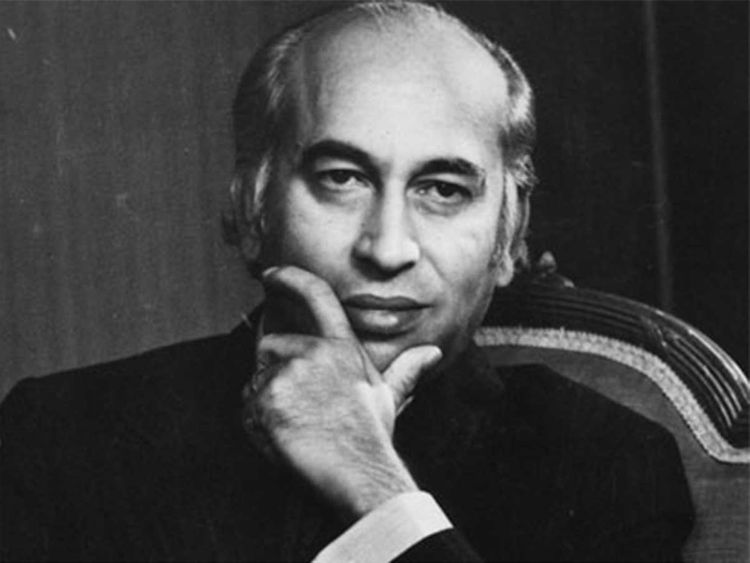
‘More than my life is at stake. The future of Pakistan is at stake'
HIGHLIGHTS
- Forty years is too brief for a country to be fully in control of its fundamentals and its present and its future.
- Forty years is enough to form a picture of the actions taken, mistakes made, lessons learned, paths chosen, price that was paid, power paradigms that jostled, shifted and solidified, and rules of ruling Pakistan that were written and re-written so many times the exception became the norm.
Bhutto’s first arrest on July 5,1977 after the opposition’s unwillingness to accept the results of 1977 elections, in which his Pakistan People’s Party (PPP) gained majority, and he became the prime minister, opened the door to a Pakistan that rewrote its laws, its ethos, its principles. General Zia-ul-Haq’s midnight coup on July 5, 1977 is the gigantic shadow on Pakistan’s political dynamics. The coup happened under a justification that was as flimsy as Zia’s promise of holding free and fair elections in Pakistan after he self-placed on his head the thorny crown of chief martial administrator.
The two warring parties, Bhutto’s PPP and opposition’s Pakistan National Alliance, had “found a way out of the crisis, which could have served as a pretext for disruption of constitutional life.” Zia thought otherwise. He “insisted that he had intervened to save the country from bloodshed and chaos.” Unbeknownst to the stakeholders, the uneven fight between democracy and dictatorship became a permanent feature of the complex and controversial power paradigm of Pakistan. In September 1978, Bhutto wrote from his jail cell: “More than my life is at stake. Make no mistake about it. The future of Pakistan is at stake. If I am assassinated through the gallows...there will be turmoil and turbulence, conflict and conflagration.” A loved leader Chillingly prophetic or politically farsighted, Bhutto’s words are the encapsulation of Pakistan’s political history from 1979 to 2019. Forty years is too brief for a country to be fully in control of its fundamentals and its present and its future. Forty years is enough to form a picture of the actions taken, mistakes made, lessons learned, paths chosen, price that was paid, power paradigms that jostled, shifted and solidified, and rules of ruling Pakistan that were written and re-written so many times the exception became the norm. Zia having hanged, arguably, the most loved political leader in the history of Pakistan, remains to date the longest-serving ruler of Pakistan. His single-man reign lasted from 1977 to 1988. It could have gone on for much longer, who is to say. Zia died in a plane explosion on August 18, 1988. The very unfortunate death of Zia remains a mystery to date: who was behind his assassination?On December 2, 1988, Zulfiqar Ali Bhutto’s daughter, Benazir Bhutto, 35, became the first female prime minister of Pakistan. She was also the first female Muslim prime minister in history. Democracy had won its first battle.The long-time ally of Zia, the new president of Pakistan, Ghulam Ishaq Khan, empowered with 58-2(B), dismissed the government of Benazir on August 6, 1990 on accusations of “corruption, nepotism, and despotism.” Nawaz Sharif of Pakistan Muslim League, Zia’s political protégé, and Punjab chief minister after Zia’s party-less 1985 elections, having beaten Benazir’s party, became the prime minister on November 6, 1990. Apparently, President Ishaq Khan did not think too highly of the blue-eyed boy of his deceased leader. On April 18, 1993, using the omnipotent 58-2(B), he dismissed Sharif’s government. The allegations against Sharif were an echo of accusations against Benazir: “corruption and mismanagement of the economy”.
Sharif stated in a televised address that his removal was a conspiracy of Benazir and ‘drawing room’ plotters: “I wanted to clear the debris of the past...but the enemies of progress did not like this...They tried to stop my hand by conspiracies...My heart is full of secrets. If I reveal all, a multitude of people will take to the streets in expression of anger.”No ‘secrets’ were revealed, and no one took to any street in support of Sharif. Benazir became the prime minister again on October 19, 1993. Sardar Farooq Ahmed Khan Leghari was the new president, one of the most respected PPP leaders, a minister in Bhutto’s 1975 government, and fiercely loyal to Bhutto. A different Pakistan, perhaps? Not so fast. President Leghari of PPP dismissed Benazir’s government on November 5, 1996. The accusations against her were “Karachi killings, disregard for federal institutions, ridiculing the judiciary, and corruption. Along came Khan. In April 1996, former cricketer and philanthropist, Imran Khan formed Pakistan Tehreek-e-Insaf (PTI). Khan announced a movement against poverty and corruption. Not much attention was paid to Khan or his party. Fate winked.
And before you could enunciate civilian supremacy, Sharif won the new elections, and became the prime minister for the second time on February 17, 1997. Benazir went into her second self-exile. She returned in 2007. She was assassinated two months later. The first time was after her father’s judicial assassination. She returned in 1986 to a historic response. Then happened General Pervez Musharraf to Pakistan. Two decades after Bhutto’s hanging on the unproven accusation of conspiracy to murder of his political opponent, Mohammad Ahmad Khan Kasuri, then Chief of Army Staff General Musharraf overthrew Sharif’s government on the accusation of conspiracy to hijack his plane after removing him from his COAS post. It happened on October 12, 1999.Sharif was awarded life imprisonment. Musharraf’s ‘government’ approached the Sindh High Court to change that to death sentence. What happened next was the signing of a deal. The shadow of the hanging of Bhutto became the deciding factor or there were other imperatives in play, who is to say. The Sharifs accepted the deal, left Pakistan and went into self-exile in Saudi Arabia. They returned in 2007. Eleven years of tenuous democracy, Pakistan was back to single-man authoritarian rule. Musharraf did his ‘best’ to rewrite rules of dictatorship, unofficially headed Pakistan Muslim League-Quaid, and went on ruling, upending Pakistan’s Constitution as and when it suited his power dynamics, until Benazir’s devastating assassination on December 27, 2007. Pakistan went into a state of collective shock and grief. Benazir’s PPP, now headed by her widower, Asif Ali Zardari, came to power in February 2008 elections. Musharraf resigned from his presidency on August 18, 2008. Zardari became the next president.
Musharraf’s self-exile lasted from 2008 to 2013. He returned to contest in the elections to save Pakistan from its ‘corrupt’ rulers. “My heart cries tears of blood when I see the state of the country today. I want to restore the Pakistan I left.” Outside Facebook, there were not many takers for his leadership.Musharraf charged In March 2014, in a twist fit to be in a Machiavellian plot, Musharraf was charged by court for treason. He was the first army chief to face that kind of a trial. Musharraf was “accused of unlawfully suspending the constitution and instituting emergency rule in 2007.” His plea is ‘not guilty’. His stance is consistent: the accusations against him are politically motivated. Reportedly, he could face the death penalty if convicted. He is still in self-exile. Yousaf Raza Gillani was the new prime minister. In June 2012, Gillani was removed by court “for his government's refusal to write to authorities in Switzerland asking them to re-open corruption cases against the president [Zardari].” His government survived. Swamped in accusations of bad governance and massive corruption, the 2008 PPP government became the first one in the history of Pakistan to complete its term.Nawaz Sharif became the prime minister again after the May 2013 elections. Third time lucky? Time would tell. And time did.On July 28, 2017, the Supreme Court of Pakistan disqualified Sharif in the Panama Papers case. His government survived. The allegation of corruption has been a constant motif in removal of prime ministers. The point to be noted: not a single prime minister of Pakistan has finished his or her full term. In July 2018, a few weeks before the general elections, Sharif arrived from London with his daughter Maryam Nawaz, and was jailed. On July 25, 2018, Imran Khan, triumphant after twenty-two years of political failure, secured a narrow victory against parties of Sharif and Bhutto-Zardari. Khan became the new prime minister. He formed government in Islamabad, Punjab, and in Khyber Pakhtunkhwa, for the second time. Once sworn in, Khan reiterated his years-long stance: no corrupt leader would be spared or given an NRO. Sharif remained in jail. NAB cases against opposition leaders made varied headlines. Some calls the process delayed but necessary justice. The opposition and their supporters call it political victimisation. The war of justice and victimisation wages, as Pakistan wrestles with economic instability and its unfortunate consequences, inflation being the main one for millions of Pakistanis. Musharraf on his departure from Pakistan in 2016 said: “I am a commando and I love my homeland. I will come back in a few weeks or months.” His arrival is still awaited. He is said to be suffering from serious health issues. Zardari is facing a NAB investigation, is under custody, and is reportedly suffering from serious health issues. He has not been charged, granted bail or released so far. Sharif allowed to travel Sharif was moved to a government hospital in October 2019 after his health deteriorated. Due to a dangerously low platelets count, he was given bail and allowed to go abroad for treatment. Khan government asked for a seven billion-rupee surety bond to allow Sharif to travel abroad. On November 16, the Lahore High Court dismissed the government’s demand. Sharif was given permission to go without posting any surety bond. A special court announced earlier this week that the verdict against Musharraf would be read on November 28 in the treason case. Pakistani rulers and courts continue to do their macabre tango. On November 19, 2019, Sharif in a chartered jet, described as an ICU-fitted air ambulance by Sharif’s chief physician and his party spokespersons, flew to London. The image of the opulent interior of the jet created a pandemonium on social media. Barely slept, having spent hours googling dates for various victories, dismissals, coups, jail and exiles, as I think of getting up to have some breakfast, I feel exhausted. A new prime minister, a new government, a new Pakistan, a new hope, a new today, dare I dream? My humanity wishes Nawaz Sharif all the best for his health. The Pakistani in me asks many questions. When would the system be ‘normal’? When would be the vote the only way for change? Who would be the first prime minister to finish his/her term? When would the process of accountability be fair and transparent, applicable to all? When would the rulers not have to leave Pakistan to save their lives? When would the rulers not flee Pakistan to save their political prospects and their assets? When would the rulers be accountable for their misdeeds without it being labelled political vengeance? When would the law be the same for all Pakistanis? In a Pakistan where countless wait for their appeals to be heard by courts, and many die without getting justice, why is the political elite treated differently? Prime Minister Imran Khan, on November 18, 2019, reiterated his vow: “Those who looted the country will be held accountable. No one can buy me, and I will not give NRO to anyone.” Forty years later, Pakistan is still broken.
https://gulfnews.com/world/asia/pakistan/forty-years-later-zulfiqar-ali-bhuttos-words-still-haunt-pakistan-1.1574327654250
Remembering July 5th, 1977 & ouster of charismatic Zulfiqar Ali Bhutto Shaheed
Munawar Anjum

A highly educated individual, a diplomatic and far-sighted politician to a well-read, and intuitive statesman, the man was extraordinary. Being a spellbinding orator, he proved his mettle with his intellect and eloquence, and the world came to know him as a master politician. He remains to date the most loved political leader in Pakistan’s history with a huge countrywide following. Just as Pakistan came into being with the power of the vote, Mr. Zulfiqar Ali Bhutto Shaheed holds this unique privilege that he was the first elected Prime Minister in the history of Pakistan who rose to power with an electoral majority. July 5th, 1977, is marked as a “Black Day” in Pakistan’s political and constitutional history when a dictator ousted the country’s elected prime minister out of his lust for power. The first elected government was toppled by force, and the 3rd martial law was imposed in the country. That day turned back the wheel of progress, and Pakistan lost its diplomatic relations and international rapport. Democratic forces in Pakistan haven’t still forgotten that fascist act of General Ziaul Haq. It’s been 44 years since the 1st elected government of Pakistan was unseated. July 5th was the darkest day in the history of Pakistan when the founder of PPP and 1st elected Prime Minister of Pakistan was dismissed. General Zia-ul-Haq, then chief of army staff (COAS), overthrew the 1st elected government of Pakistan by falsely accusing it of rigging the general elections, imposed martial law, and pushed the country into a morass of darkness. The first democratically elected prime minister was incarcerated. Nearly two years after this dictatorial move of general Zia-ul-Haq, the spectacular leader of the Muslim world, Mr. Zulfiqar Ali Bhutto, was executed on April 4, 1979. However, history testifies that national and international political analysts acclaim and honor his political vision to date. Bhutto’s image still lives on without fail in national politics. This kind of fervor and adoration is not reserved for ordinary mortals. The vision and ideology on which Zulfiqar Ali Bhutto Shaheed laid the foundation of PPP are still alive, and the workers of PPP carry his legacy forward under the leadership of Chairman Bilawal Bhutto. Mr. Bhutto Shaheed played a crucial role in making Pakistan the 1st Muslim nuclear power globally and establishing a peaceful and progressive image of Pakistan. Zulfiqar Ali Bhutto was the 1st leader who gave the country a constitution equally acceptable to all political parties. General Zia-ul-Haq ‘s martial law derailed the democratic process and hollowed the country’s moral roots. History will neither forgive nor forget Bhutto’s assassination, and it will always be marked as the darkest era in the democratic history of Pakistan.
On July 5th, 1977, democratic thinking was curbed, seeds of sectarianism, nationalism were planted, and terrorism raised its ugly head.Then the chief of army staff, General Zia-ul-Haq, in an authoritarian move, struck the axe of martial law against an elected government and promised to organize free and fair elections within 90 days. However, the promise remained unfulfilled till the tyrant went to his grave. July 5th marks an unfortunate black day in the history of Pakistan when Quaid-e-Awam Shaheed Zulfiqar Ali Bhutto’s democratically elected government was overthrown in the dark of night. Today any mention of General Ziaul Haq will be blown away by a waft of disdain and negativity. The country still has not been able to extricate itself from the ill effects of the fascist Zia regime. The nation will have to wait for decades to mitigate the damage done to the political, administrative, and constitutional framework at the hands of the dictator. Dictatorship in any form is always an instrument of maneuvering of imperial powers. It considers national and state interests only an afterthought and of secondary importance.Ziaul Haq held the country hostage of colonial powers, used its resources to benefit them, and handed over the Siachen Glacier in a plate to the enemy.He didn’t even care for his country and region and victimized it for the personal gains of the outsiders.Shaheed Zulfiqar Ali Bhutto’s services for Pakistan are undeniable. His feat of making Pakistan an atomic power and setting it free from India’s terror will always be written in golden words. Gen Ziaul Haq tried to eliminate Bhuttoism by assassinating Zulfiqar Ali Bhutto.However, in a karmic justice of history, Bhutto shaheed still rules people’s hearts while the dictator was made a disgrace for the rest of the world. Although it’s been 44 years since July 5th, 1977, careful observation of the state of affairs reveals that we are still standing there where we were 44 years ago. The only difference is that faces have changed. Four decades ago, the political figures, journalists, and representatives of civil societies were targeted, imprisoned, and flogged. Freedom of speech was curbed, and openly criticizing the dictatorial. Gen Majid Malik (late) writes in his book “Hum Bhi Wahan Maujood Thai” that “In a bid to gain the favor of Bhutto, Ziaul Haq set such belittling examples of flattery that were unprecedented and against the traditions of the army. Zia-ul-Haq was appointed as lieutenant general and was handed over the command of Multan Corps. One day Bhutto had to visit Multan. Zia-ul-Haq ordered that all the officers of our corps welcome Bhutto by standing in a queue on the road. When Bhutto arrived, Zia-ul-Haq and all other officers welcomed Bhutto by standing on the roadside. This was totally against the ethics of the army.” To woo Bhutto, Ziaul Haq used such tactics that a shrewd politician like Bhutto was also beguiled by it. Bhutto started seeing him as a kind-hearted, considerate, and harmless individual. He was also a migrant and didn’t belong to any particular region. Had no intense lobbying in the army; therefore, Bhutto thought he was the most suitable army chief for his government. It was Zulfiqar Ali Bhutto, who, in a way, choreographed the emergence of the Islamic Block by hosting an Islamic Summit at Lahore, gathered all the Muslim countries on one platform, and made invaluable decisions for the unity of Muslim Ummah. Due to the achievements of the first truly elected prime minister of Pakistan, the world’s developed countries felt threatened by Zulfiqar Ali Bhutto. The way Mr. Bhutto highlighted the Kashmir conflict in the United Nations is unparalleled. To designate May 5th as the “Kashmir Day ” and the Simla Accord are the most outstanding achievements of Bhutto Shaheed. Apart from this, history is full of such distinguished feats of Bhutto shaheed. A ruthless and tyrant immolated a historical figure such as Zulfiqar Ali Bhutto for his lust for power.
https://pakobserver.net/remembering-july-5th-1977-ouster-of-charismatic-zab/
July 5 is black day in history of #Pakistan: Bilawal Bhutto

https://nation.com.pk/05-Jul-2021/july-5-is-black-day-in-history-of-pakistan-bilawal-bhutto
Subscribe to:
Posts (Atom)