Tuesday, July 6, 2021

چیئرمین پاکستان پیپلزپارٹی بلاول بھٹو زرداری کا چین کی کمیونسٹ پارٹی کی 100ویں سالگرہ کے موقع پر دنیا بھر کی سیاسی پارٹیوںکے سربراہان کے اجلاس سے خطاب

  چیئرمین پاکستان پیپلزپارٹی بلاول بھٹو زرداری نے چین کی کمیونسٹ پارٹی کی 100ویں سالگرہ کے موقع پر دنیا بھر کی سیاسی پارٹیوںکے سربراہان کے اجلاس سے خطاب کیا۔ سینیٹر شیری رحمن اور پی پی پی کے سیکریٹری اطلاعات فیصل کریم کنڈی بھی ان کے ہمراہ تھے۔ چیئرمین بلاول بھٹو نے کہا کہ پاکستان پیپلزپارٹی کے بانی چیئرمین شہید ذوالفقار علی بھٹو اور چیئرمین موﺅزے تنگ نے پاک چین دوستی کی بنیاد رکھی تھی


اور سی پیک کی ابتدا صدر آصف علی زرداری کی قیادت میں پاکستان پیپلزپارٹی نے رکھی تھی۔

 چیئرمین بلاول بھٹو زرداری نے چینی قوم کو اس موقع پر مبارکباد پیش کی۔ انہوں نے کمیونسٹ پارٹ آف چائنہ کی جانب سے اس ورچوئیل تقریب کا انعقاد کرنے پر سی پی سی کو سراہا۔ چیئرمین بلاول بھٹو نے کہا کہ آج سی پی سی دنیا کی سب سے بڑی پارٹی بن چکی ہے اور دنیا کے سب سے زیادہ آبادی والے ملک کی قیادت کر رہی ہے۔ آپ کی قیادت اور پالیسیوں کے تسلسل نے چین نے غربت ختم کرنے کے لئے کامیابی حاصل کی ہے اور اس وقت دنیا میں بڑی معیشتوں میں سے ایک ہے۔ کورونا کی وباءسے دنیا بھر کی معاشی ترقی سست ہوگئی تھی اور صحت کا نظام درہم برہم ہوگیا تھا لیکن اس کے باوجود چین نے بے مثال معاشی ترقی کی اور ساری دنیا کو ایک سبق دیا۔ انہیں یہ جان کر نہایت خوشی ہوئی ہے کہ 2012ءکے بعد سے لے کر اب تک چین نے 10کروڑ آباد ی کو غربت سے نجات دلائی۔ چین کی کمیونسٹ پارٹی کی عوام دوست پالیسیوں کی وجہ سے یہ ممکن ہو سکا۔ چین کی ترقی سے یہ ثابت ہوگیا ہے کہ اصل معاشی ترقی اس وقت ہوتی ہے جب ملک کے غریب ترین عوام کو فائدہ پہنچے۔ 

آج چین کے ون بیلٹ ون روڈ منصوبے کی وجہ سے میں یہ کہتا ہوں کہ پاکستان پیپلزپارٹی اس عظیم خواب کو پورا کرنے کے لئے مخلص ہے۔ سی پیک کی بنیاد پاکستان پیپلزپارٹی کی حکومت اور چین کی کمیونسٹ پارٹی نے ڈالی۔ صدر زرداری کی اور چین کی قیادت کے تحت سی پیک کا قیام ہوا اور گوادر پورٹ کی بنیاد رکھی گئی۔ اس سے دونوں ممالک کے درمیان پہلے سے زیادہ گہرا رشتہ قائم ہوا۔ پاکستان اور چین کی دوستی کی بنیاد قائد عوام شہید ذوالفقار علی بھٹو اور چیئرمین ماﺅ نے رکھی اور اس کے بعد شہید محترمہ بینظیر بھٹو نے پاکستان اور چین کو دوستی کو مزید مضبوط کیا جس سے دونوں ممالک کے عوام نزدیک تر ہوگئے۔

 چین نے صدر زی کی قیادت میں بیرونی سرمایہ کاری، وباءکے دوران انسانی تعاون ، موسمیاتی تبدیلی میں ذمہ داری اور عالمی ترقی میں بھرپور کردار ادا کیا۔ انہوں نے کہا کہ سی پیک ہم سب کے لئے پارٹی کی سطح سے اوپر اٹھ کر اہم منصوبہ ہے۔ سی پیک معاشی استحکام کا ایک ذریعہ ہے جو پاکستان کو 21ویں صدی میں کامیاب کر سکتا ہے۔ سی پیک، کورونا کی وباءکے لئے ویکسین کی فراہمی کے لئے میں اپنے ہم وطنوں کی طرف سے کمیونسٹ پارٹی آف چائنہ کا شکریہ ادا کرتا ہوں کہ اس نے اس مشکل وقت میں پاکستان کا ساتھ دیا جب ہم کورونا کی وباءکی سخت ترین لہر کا مقابلہ کر رہے تھے۔ یہ اس بات کی عکاسی کرتا ہے کہ چین نے ہر مشکل وقت میں پاکستان کا ساتھ دیا ہے۔ انہوں نے اس سارے تعاون کے لئے کمیونسٹ پارٹی چائنہ کی مرکزی قیادت اور چین کی حکومت کا شکریہ اداکرتے ہوئے کہ پاکستان کے عوام اور پاکستان پیپلزپارٹی چین کے اس تعاون پر شکرگزار ہے۔ انہوں نے کہا کہ مستقبل امن اور تعاون پر منحصر ہے۔ آج چین بجائے عالمی تضادات کے عالمی تعاون کی قیادت کر رہا ہے اور یہی وہ مستقبل ہے جس سے یہ نئی نسل مستقل امن حاصل کر سکتی ہے اور تضادات سے باہر نکل سکتی ہے۔

https://www.ppp.org.pk/pr/25230/

Monday, July 5, 2021

- کل بھی بھٹو زندہ تھا،آج بھی بھٹو زندہ ھے #PPP Music Video -

Video - #NakyalMainTeerChaleyga Chairman PPP Bilawal Bhutto Zardari addresses the massive public gathering of PPP in Nakyal.

Forty years later, Zulfiqar Ali Bhutto’s words still haunt Pakistan

Mehr Tarar
‘More than my life is at stake. The future of Pakistan is at stake'


HIGHLIGHTS
  • Forty years is too brief for a country to be fully in control of its fundamentals and its present and its future.
  • Forty years is enough to form a picture of the actions taken, mistakes made, lessons learned, paths chosen, price that was paid, power paradigms that jostled, shifted and solidified, and rules of ruling Pakistan that were written and re-written so many times the exception became the norm.

 Bhutto’s first arrest on July 5,1977 after the opposition’s unwillingness to accept the results of 1977 elections, in which his Pakistan People’s Party (PPP) gained majority, and he became the prime minister, opened the door to a Pakistan that rewrote its laws, its ethos, its principles. General Zia-ul-Haq’s midnight coup on July 5, 1977 is the gigantic shadow on Pakistan’s political dynamics. The coup happened under a justification that was as flimsy as Zia’s promise of holding free and fair elections in Pakistan after he self-placed on his head the thorny crown of chief martial administrator.

The two warring parties, Bhutto’s PPP and opposition’s Pakistan National Alliance, had “found a way out of the crisis, which could have served as a pretext for disruption of constitutional life.” Zia thought otherwise. He “insisted that he had intervened to save the country from bloodshed and chaos.”
Unbeknownst to the stakeholders, the uneven fight between democracy and dictatorship became a permanent feature of the complex and controversial power paradigm of Pakistan. In September 1978, Bhutto wrote from his jail cell: “More than my life is at stake. Make no mistake about it. The future of Pakistan is at stake. If I am assassinated through the gallows...there will be turmoil and turbulence, conflict and conflagration.”
A loved leader
Chillingly prophetic or politically farsighted, Bhutto’s words are the encapsulation of Pakistan’s political history from 1979 to 2019. Forty years is too brief for a country to be fully in control of its fundamentals and its present and its future. Forty years is enough to form a picture of the actions taken, mistakes made, lessons learned, paths chosen, price that was paid, power paradigms that jostled, shifted and solidified, and rules of ruling Pakistan that were written and re-written so many times the exception became the norm.
Zia having hanged, arguably, the most loved political leader in the history of Pakistan, remains to date the longest-serving ruler of Pakistan. His single-man reign lasted from 1977 to 1988. It could have gone on for much longer, who is to say. Zia died in a plane explosion on August 18, 1988. The very unfortunate death of Zia remains a mystery to date: who was behind his assassination?
On December 2, 1988, Zulfiqar Ali Bhutto’s daughter, Benazir Bhutto, 35, became the first female prime minister of Pakistan. She was also the first female Muslim prime minister in history. Democracy had won its first battle.
The long-time ally of Zia, the new president of Pakistan, Ghulam Ishaq Khan, empowered with 58-2(B), dismissed the government of Benazir on August 6, 1990 on accusations of “corruption, nepotism, and despotism.”
Nawaz Sharif of Pakistan Muslim League, Zia’s political protégé, and Punjab chief minister after Zia’s party-less 1985 elections, having beaten Benazir’s party, became the prime minister on November 6, 1990.
Apparently, President Ishaq Khan did not think too highly of the blue-eyed boy of his deceased leader. On April 18, 1993, using the omnipotent 58-2(B), he dismissed Sharif’s government. The allegations against Sharif were an echo of accusations against Benazir: “corruption and mismanagement of the economy”.
Sharif stated in a televised address that his removal was a conspiracy of Benazir and ‘drawing room’ plotters: “I wanted to clear the debris of the past...but the enemies of progress did not like this...They tried to stop my hand by conspiracies...My heart is full of secrets. If I reveal all, a multitude of people will take to the streets in expression of anger.”
No ‘secrets’ were revealed, and no one took to any street in support of Sharif.
Benazir became the prime minister again on October 19, 1993. Sardar Farooq Ahmed Khan Leghari was the new president, one of the most respected PPP leaders, a minister in Bhutto’s 1975 government, and fiercely loyal to Bhutto. A different Pakistan, perhaps? Not so fast.
President Leghari of PPP dismissed Benazir’s government on November 5, 1996.
The accusations against her were “Karachi killings, disregard for federal institutions, ridiculing the judiciary, and corruption.
Along came Khan.
In April 1996, former cricketer and philanthropist, Imran Khan formed Pakistan Tehreek-e-Insaf (PTI). Khan announced a movement against poverty and corruption. Not much attention was paid to Khan or his party. Fate winked.
And before you could enunciate civilian supremacy, Sharif won the new elections, and became the prime minister for the second time on February 17, 1997. Benazir went into her second self-exile. She returned in 2007. She was assassinated two months later. The first time was after her father’s judicial assassination. She returned in 1986 to a historic response.
Then happened General Pervez Musharraf to Pakistan. Two decades after Bhutto’s hanging on the unproven accusation of conspiracy to murder of his political opponent, Mohammad Ahmad Khan Kasuri, then Chief of Army Staff General Musharraf overthrew Sharif’s government on the accusation of conspiracy to hijack his plane after removing him from his COAS post. It happened on October 12, 1999.
Sharif was awarded life imprisonment. Musharraf’s ‘government’ approached the Sindh High Court to change that to death sentence. What happened next was the signing of a deal. The shadow of the hanging of Bhutto became the deciding factor or there were other imperatives in play, who is to say. The Sharifs accepted the deal, left Pakistan and went into self-exile in Saudi Arabia. They returned in 2007.
Eleven years of tenuous democracy, Pakistan was back to single-man authoritarian rule. Musharraf did his ‘best’ to rewrite rules of dictatorship, unofficially headed Pakistan Muslim League-Quaid, and went on ruling, upending Pakistan’s Constitution as and when it suited his power dynamics, until Benazir’s devastating assassination on December 27, 2007. Pakistan went into a state of collective shock and grief.
Benazir’s PPP, now headed by her widower, Asif Ali Zardari, came to power in February 2008 elections. Musharraf resigned from his presidency on August 18, 2008. Zardari became the next president.
Musharraf’s self-exile lasted from 2008 to 2013. He returned to contest in the elections to save Pakistan from its ‘corrupt’ rulers. “My heart cries tears of blood when I see the state of the country today. I want to restore the Pakistan I left.” Outside Facebook, there were not many takers for his leadership.
Musharraf charged
In March 2014, in a twist fit to be in a Machiavellian plot, Musharraf was charged by court for treason. He was the first army chief to face that kind of a trial. Musharraf was “accused of unlawfully suspending the constitution and instituting emergency rule in 2007.” His plea is ‘not guilty’. His stance is consistent: the accusations against him are politically motivated. Reportedly, he could face the death penalty if convicted. He is still in self-exile.
Yousaf Raza Gillani was the new prime minister. In June 2012, Gillani was removed by court “for his government's refusal to write to authorities in Switzerland asking them to re-open corruption cases against the president [Zardari].” His government survived.
Swamped in accusations of bad governance and massive corruption, the 2008 PPP government became the first one in the history of Pakistan to complete its term.Nawaz Sharif became the prime minister again after the May 2013 elections. Third time lucky? Time would tell. And time did.On July 28, 2017, the Supreme Court of Pakistan disqualified Sharif in the Panama Papers case. His government survived. The allegation of corruption has been a constant motif in removal of prime ministers. The point to be noted: not a single prime minister of Pakistan has finished his or her full term.
In July 2018, a few weeks before the general elections, Sharif arrived from London with his daughter Maryam Nawaz, and was jailed.
On July 25, 2018, Imran Khan, triumphant after twenty-two years of political failure, secured a narrow victory against parties of Sharif and Bhutto-Zardari. Khan became the new prime minister. He formed government in Islamabad, Punjab, and in Khyber Pakhtunkhwa, for the second time.
Once sworn in, Khan reiterated his years-long stance: no corrupt leader would be spared or given an NRO.
Sharif remained in jail. NAB cases against opposition leaders made varied headlines. Some calls the process delayed but necessary justice. The opposition and their supporters call it political victimisation. The war of justice and victimisation wages, as Pakistan wrestles with economic instability and its unfortunate consequences, inflation being the main one for millions of Pakistanis. Musharraf on his departure from Pakistan in 2016 said: “I am a commando and I love my homeland. I will come back in a few weeks or months.” His arrival is still awaited. He is said to be suffering from serious health issues. Zardari is facing a NAB investigation, is under custody, and is reportedly suffering from serious health issues. He has not been charged, granted bail or released so far.
Sharif allowed to travel
Sharif was moved to a government hospital in October 2019 after his health deteriorated. Due to a dangerously low platelets count, he was given bail and allowed to go abroad for treatment. Khan government asked for a seven billion-rupee surety bond to allow Sharif to travel abroad. On November 16, the Lahore High Court dismissed the government’s demand. Sharif was given permission to go without posting any surety bond. A special court announced earlier this week that the verdict against Musharraf would be read on November 28 in the treason case. Pakistani rulers and courts continue to do their macabre tango.
On November 19, 2019, Sharif in a chartered jet, described as an ICU-fitted air ambulance by Sharif’s chief physician and his party spokespersons, flew to London. The image of the opulent interior of the jet created a pandemonium on social media.
Barely slept, having spent hours googling dates for various victories, dismissals, coups, jail and exiles, as I think of getting up to have some breakfast, I feel exhausted. A new prime minister, a new government, a new Pakistan, a new hope, a new today, dare I dream? My humanity wishes Nawaz Sharif all the best for his health. The Pakistani in me asks many questions.
When would the system be ‘normal’? When would be the vote the only way for change? Who would be the first prime minister to finish his/her term? When would the process of accountability be fair and transparent, applicable to all? When would the rulers not have to leave Pakistan to save their lives? When would the rulers not flee Pakistan to save their political prospects and their assets? When would the rulers be accountable for their misdeeds without it being labelled political vengeance? When would the law be the same for all Pakistanis? In a Pakistan where countless wait for their appeals to be heard by courts, and many die without getting justice, why is the political elite treated differently?
Prime Minister Imran Khan, on November 18, 2019, reiterated his vow: “Those who looted the country will be held accountable. No one can buy me, and I will not give NRO to anyone.”
Forty years later, Pakistan is still broken.
https://gulfnews.com/world/asia/pakistan/forty-years-later-zulfiqar-ali-bhuttos-words-still-haunt-pakistan-1.1574327654250

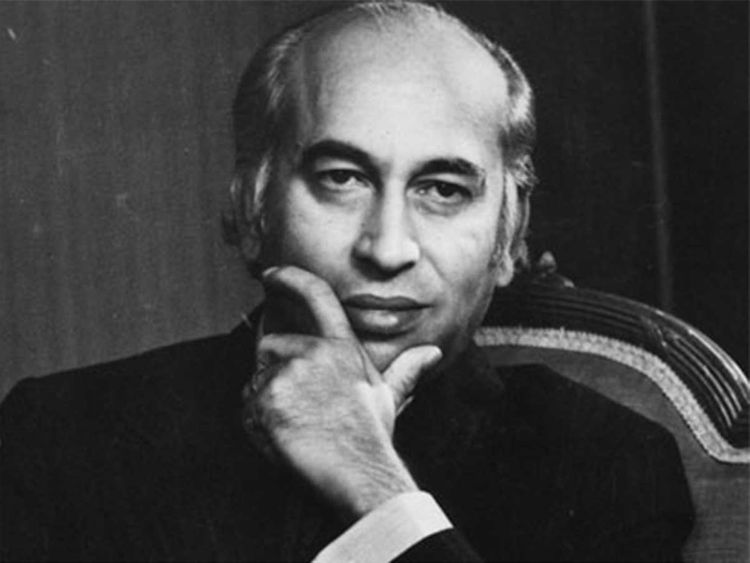
Remembering July 5th, 1977 & ouster of charismatic Zulfiqar Ali Bhutto Shaheed

 Munawar Anjum

Zulfiqar Ali Bhutto Shaheed is an exceptional and hauntingly striking character in the history of Pakistan. His charismatic personality will keep on mesmerizing human minds for ages.

A highly educated individual, a diplomatic and far-sighted politician to a well-read, and intuitive statesman, the man was extraordinary.
Being a spellbinding orator, he proved his mettle with his intellect and eloquence, and the world came to know him as a master politician. He remains to date the most loved political leader in Pakistan’s history with a huge countrywide following. Just as Pakistan came into being with the power of the vote, Mr. Zulfiqar Ali Bhutto Shaheed holds this unique privilege that he was the first elected Prime Minister in the history of Pakistan who rose to power with an electoral majority.
July 5th, 1977, is marked as a “Black Day” in Pakistan’s political and constitutional history when a dictator ousted the country’s elected prime minister out of his lust for power.
The first elected government was toppled by force, and the 3rd martial law was imposed in the country.
That day turned back the wheel of progress, and Pakistan lost its diplomatic relations and international rapport. Democratic forces in Pakistan haven’t still forgotten that fascist act of General Ziaul Haq.
It’s been 44 years since the 1st elected government of Pakistan was unseated. July 5th was the darkest day in the history of Pakistan when the founder of PPP and 1st elected Prime Minister of Pakistan was dismissed.
General Zia-ul-Haq, then chief of army staff (COAS), overthrew the 1st elected government of Pakistan by falsely accusing it of rigging the general elections, imposed martial law, and pushed the country into a morass of darkness. The first democratically elected prime minister was incarcerated. Nearly two years after this dictatorial move of general Zia-ul-Haq, the spectacular leader of the Muslim world, Mr. Zulfiqar Ali Bhutto, was executed on April 4, 1979. However, history testifies that national and international political analysts acclaim and honor his political vision to date.
Bhutto’s image still lives on without fail in national politics. This kind of fervor and adoration is not reserved for ordinary mortals.
The vision and ideology on which Zulfiqar Ali Bhutto Shaheed laid the foundation of PPP are still alive, and the workers of PPP carry his legacy forward under the leadership of Chairman Bilawal Bhutto. Mr. Bhutto Shaheed played a crucial role in making Pakistan the 1st Muslim nuclear power globally and establishing a peaceful and progressive image of Pakistan.
Zulfiqar Ali Bhutto was the 1st leader who gave the country a constitution equally acceptable to all political parties.
General Zia-ul-Haq ‘s martial law derailed the democratic process and hollowed the country’s moral roots. History will neither forgive nor forget Bhutto’s assassination, and it will always be marked as the darkest era in the democratic history of Pakistan.
On July 5th, 1977, democratic thinking was curbed, seeds of sectarianism, nationalism were planted, and terrorism raised its ugly head.
Then the chief of army staff, General Zia-ul-Haq, in an authoritarian move, struck the axe of martial law against an elected government and promised to organize free and fair elections within 90 days. However, the promise remained unfulfilled till the tyrant went to his grave.
July 5th marks an unfortunate black day in the history of Pakistan when Quaid-e-Awam Shaheed Zulfiqar Ali Bhutto’s democratically elected government was overthrown in the dark of night.
Today any mention of General Ziaul Haq will be blown away by a waft of disdain and negativity.
The country still has not been able to extricate itself from the ill effects of the fascist Zia regime.
The nation will have to wait for decades to mitigate the damage done to the political, administrative, and constitutional framework at the hands of the dictator.
Dictatorship in any form is always an instrument of maneuvering of imperial powers. It considers national and state interests only an afterthought and of secondary importance.Ziaul Haq held the country hostage of colonial powers, used its resources to benefit them, and handed over the Siachen Glacier in a plate to the enemy.He didn’t even care for his country and region and victimized it for the personal gains of the outsiders.Shaheed Zulfiqar Ali Bhutto’s services for Pakistan are undeniable. His feat of making Pakistan an atomic power and setting it free from India’s terror will always be written in golden words. Gen Ziaul Haq tried to eliminate Bhuttoism by assassinating Zulfiqar Ali Bhutto.However, in a karmic justice of history, Bhutto shaheed still rules people’s hearts while the dictator was made a disgrace for the rest of the world.
Although it’s been 44 years since July 5th, 1977, careful observation of the state of affairs reveals that we are still standing there where we were 44 years ago. The only difference is that faces have changed.
Four decades ago, the political figures, journalists, and representatives of civil societies were targeted, imprisoned, and flogged. Freedom of speech was curbed, and openly criticizing the dictatorial.
Gen Majid Malik (late) writes in his book “Hum Bhi Wahan Maujood Thai” that “In a bid to gain the favor of Bhutto, Ziaul Haq set such belittling examples of flattery that were unprecedented and against the traditions of the army.
Zia-ul-Haq was appointed as lieutenant general and was handed over the command of Multan Corps. One day Bhutto had to visit Multan.
Zia-ul-Haq ordered that all the officers of our corps welcome Bhutto by standing in a queue on the road.
When Bhutto arrived, Zia-ul-Haq and all other officers welcomed Bhutto by standing on the roadside. This was totally against the ethics of the army.”
To woo Bhutto, Ziaul Haq used such tactics that a shrewd politician like Bhutto was also beguiled by it.
Bhutto started seeing him as a kind-hearted, considerate, and harmless individual. He was also a migrant and didn’t belong to any particular region.
Had no intense lobbying in the army; therefore, Bhutto thought he was the most suitable army chief for his government.
It was Zulfiqar Ali Bhutto, who, in a way, choreographed the emergence of the Islamic Block by hosting an Islamic Summit at Lahore, gathered all the Muslim countries on one platform, and made invaluable decisions for the unity of Muslim Ummah. Due to the achievements of the first truly elected prime minister of Pakistan, the world’s developed countries felt threatened by Zulfiqar Ali Bhutto.
The way Mr. Bhutto highlighted the Kashmir conflict in the United Nations is unparalleled.
To designate May 5th as the “Kashmir Day ” and the Simla Accord are the most outstanding achievements of Bhutto Shaheed. Apart from this, history is full of such distinguished feats of Bhutto shaheed.
A ruthless and tyrant immolated a historical figure such as Zulfiqar Ali Bhutto for his lust for power.
https://pakobserver.net/remembering-july-5th-1977-ouster-of-charismatic-zab/

July 5 is black day in history of #Pakistan: Bilawal Bhutto

Chairman Pakistan Peoples Party (PPP) Bilawal Bhutto Zardari has said that the coup of 5th July 1977 sowed and watered the seeds of intolerance, extremism and terrorism and the day will always be remembered as the Black Day in Pakistan’s history.
Bilawal Bhutto, in a statement, said that the military coup that toppled the first democratically-elected people’s government, led by Prime Minister Shaheed Zulfikar Ali Bhutto marked the vicious assault on the democratic aspirations of the people of Pakistan. PPP Chairman said that Shaheed Zulfikar Ali Bhutto had united the nation by picking up the pieces following the fall of Dhaka, and bringing together the nation in a vibrant democratic system with strong economic ambitions. He said that that as the first democratically elected Prime Minister, Shaheed Zulfikar Ali Bhutto, oversaw the passage of the Constitution with unanimous support, laid the grounds for Pakistan’s macroeconomic foundations, gave the right of citizenship and passports to every Pakistani, and set the country on the road to becoming a nuclear power.
Zulfikar Ali Bhutto, also empowered the people by democratizing the state, taking power from the select few, and passing it to the people, he added.
https://nation.com.pk/05-Jul-2021/july-5-is-black-day-in-history-of-pakistan-bilawal-bhutto

Sunday, July 4, 2021

Music Video - Guns N' Roses - Paradise City

Music Video - Madonna - American Life

Video - President Obama on the Fourth of July - 2009

Music Video - Frank Sinatra - New York, New York.

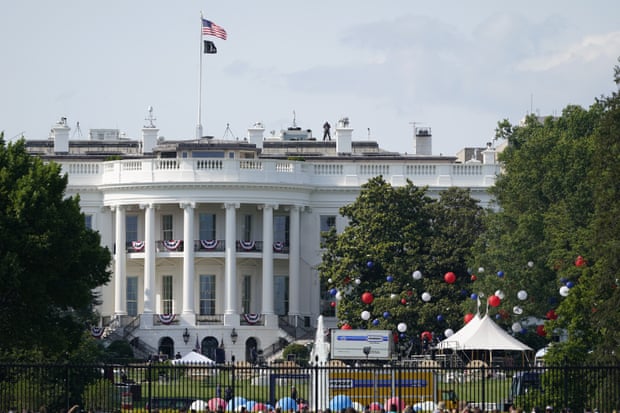
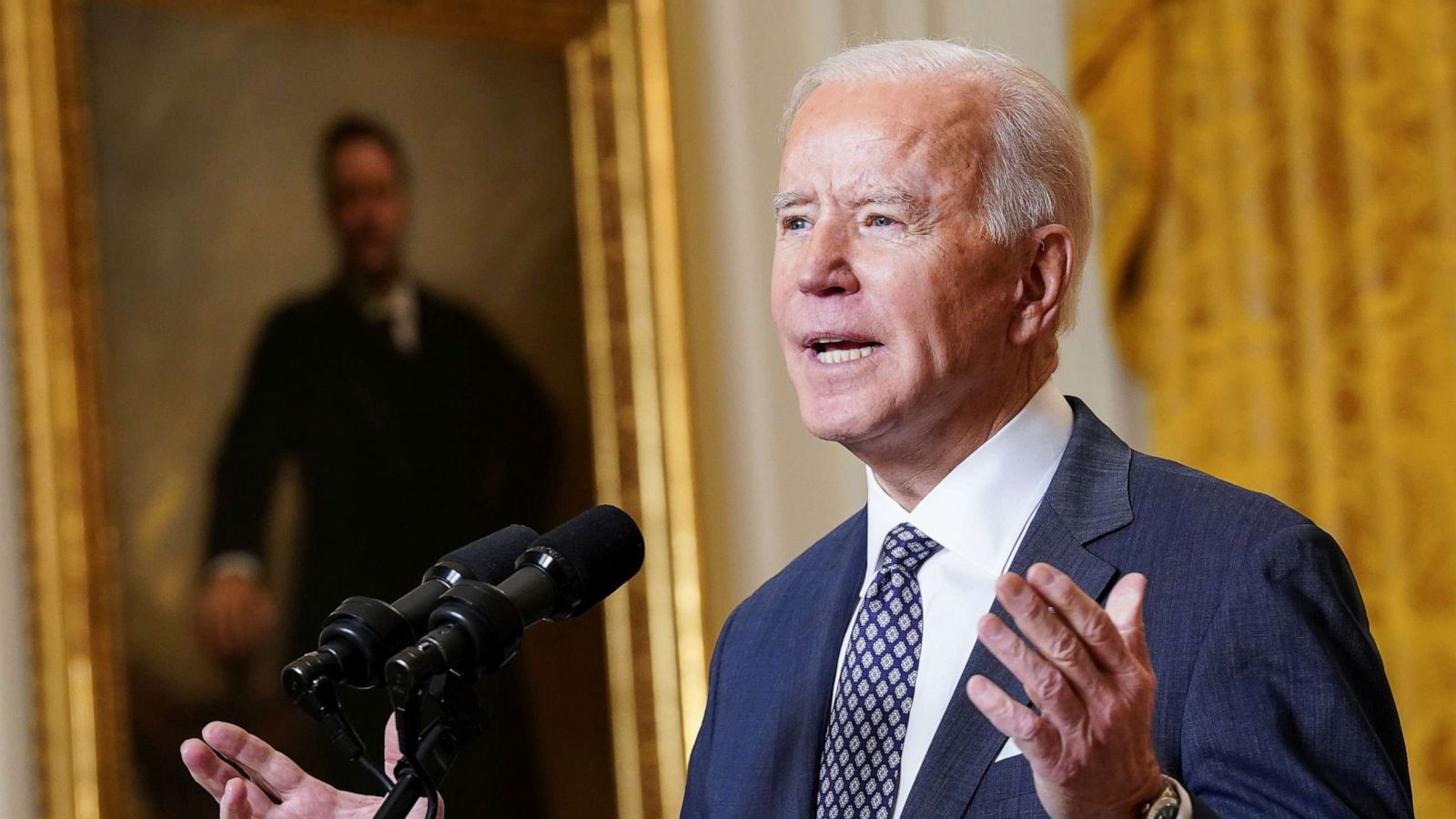
Video - Biden speaks at July 4 celebration at White House

Video - #Covid - Meet The Press Broadcast - July 4th , 2021 - Dr. Anthony Fauci breaks down the state of the spread of Covid-19.

Fourth of July: US celebrates but White House does not mandate masks or vaccines


Martin Pengelly
@MartinPengelly

Americans marked their nation’s 245th birthday on Sunday with fireworks, hotdogs, marching bands and a sense of great relief, after the coronavirus pandemic forced the cancellation of nearly all celebrations last year.
As they did so, a senior administration official sought to explain why vaccinations and masks were not made mandatory for a major White House party, when he and other advisers to Joe Biden were stressing the need for Americans to lessen the chances of a surge in cases of the infectious Delta variant.
Speaking to CNN’s State of the Union, coronavirus coordinator Jeff Zients said: “You’re protected if you’re vaccinated. You’re not protected if you’re not. We are not mandating vaccines.
“At the White House tonight, there’s very rigorous testing and screening protocols. Those who are vaccinated do not need to wear a mask. Those who are unvaccinated do need to wear a mask.”
A day after the 78-year-old president mingled with mostly maskless crowds at a cherry-picking festival in Michigan, around 1,000 people were invited to his Fourth of July celebration on the White House lawn. “We’re there to celebrate frontline workers and our military,” Zients said. “And these are people who understand the importance of safety and doing the right thing. I think most of these folks are vaccinated, and we encourage all Americans to get vaccinated as soon as possible.” Asked why vaccination was not mandated, Zients said: “At the end of the day, it’s an individual choice. We hope all individuals make the right choice here and get vaccinated as soon as possible.”
Speaking to ABC’s This Week, Zients insisted: “The event at the White House is being done in the right way. It’s an outdoor event with testing and screening. Vaccinated people not wearing masks. Unvaccinated people masked. It’s being done in the right way, consistent with [Centers for Disease Control and Prevention] guidelines.
“That said, we are doubling down on our efforts across the summer months, we will vaccinate millions more people because you need to get vaccinated to be protected against the Delta variant and against this disease overall.”
The Biden administration missed its aim of having 70% of adult Americans with at least one shot by the holiday weekend. Elsewhere on Sunday, chief medical adviser Anthony Fauci warned of likely spikes of cases of the Delta variant in areas with low vaccination rates, often due to resistance among Republicans loyal to former president Donald Trump.
In the first year of the pandemic, Trump staged a number of White House events with imperfect public health measures, followed by increases in Covid cases. Trump himself was hospitalised, reportedly with a more serious case than admitted.
Biden was scheduled to address his own White House event, on the theme of “Independence Day and independence from Covid-19”.
After dark in Washington, the National Mall was due to host a major fireworks show, a 17-minute cannonade from the Lincoln Memorial. On Capitol Hill, marching bands staged a traditional parade.
New York was also set to host a major fireworks event, for which 50 pyrotechnicians spent days loading more than 65,000 shells on to five barges in the East River.
In Ocean City, Maryland, fireworks were unintentionally detonated as they were being set up, leaving employees of the fireworks company with minor injuries, authorities said. Numerous videos posted to social media showed fireworks popping and crackling near a crowded beach.
No beach or boardwalk patrons were injured, the fire department said. The city said fireworks shows in multiple locations were canceled.
Some classic events with a national profile, such as Nathan’s Famous Hot Dog Eating Contest in Coney Island in Brooklyn, remained scaled back to allow for social distancing in recognition of a pandemic which has killed more than 605,000 in the US.
In Florida, several cities canceled fireworks out of respect for the victims of the building collapse in Surfside, near Miami, last month. Trump went ahead with a rally near Sarasota on Saturday, despite reported suggestions from aides to Governor Ron DeSantis that he should not do so.
It was expected to be the busiest Fourth of July for car travel on record, with an estimated 43.6 million Americans hitting the roads, 5% up on 2019, the American Automobile Association said. But for some, Fourth of July was still a somber occasion. In addition to the pall of the pandemic and the Florida building collapse, the western US faces a heightened risk of wildfires after a heatwave and amid extremely dry conditions.
The Department of Homeland Security, meanwhile, warned state and local police this week of a heightened threat of violence by domestic extremist groups.
https://www.theguardian.com/us-news/2021/jul/04/fourth-of-july-us-celebrates-white-house-event

Post-ABC poll: Biden earns high marks for handling the pandemic, but many Republicans resist vaccination


By Dan Balz & Emily Guskin
President Biden has earned high marks for his handling of the coronavirus pandemic, but the government’s effort to vaccinate as many Americans as possible continues to face hurdles, including resistance among people who identify as Republicans, according to a Washington Post-ABC News poll.
Biden made addressing the pandemic his first priority as president. He and his team pushed to accelerate the distribution of vaccine doses, developed during the Trump administration, and pressed Congress to enact a $1.9 trillion stimulus package to help the economy rebound from covid-related shocks and disruptions.

Today, more than 6 in 10 Americans say they approve of the job the president has done in dealing with the pandemic, almost identical to findings in April as he neared the end of his first 100 days in office. His overall approval stands at 50 percent positive and 42 percent negative, figures that are also virtually the same as in April.

In both cases, there are huge differences in ratings offered by Republicans and Democrats, a fresh signal of the nation’s defining partisan breach. On his overall job rating, 94 percent of Democrats approve compared with 8 percent of Republicans. On the pandemic, Democrats are at 95 percent approving, Republicans at 33 percent.

One low mark for the president comes on the issue of immigration at the U.S.-Mexico border, where 33 percent of Americans say they approve of how he is handling the issue, amid a surge of migrants attempting to cross into the country. A slight majority (51 percent) say they disapprove, including 90 percent of Republicans. Sixteen percent overall say they have no opinion.

Among fellow Democrats, a tepid 63 percent majority approve of Biden’s handling of immigration at the southern border, while 15 percent disapprove and the rest offer no opinion.
Political independents split on Biden’s overall performance, with 45 percent approving and 43 percent disapproving. While 56 percent of independents approve of Biden’s handling of the pandemic, half as many approve of his handling of immigration at the southern border.Two months ago, Biden set a goal of having 70 percent of adults receive at least one shot by July 4, but the administration has missed that target, despite multiple strategies to encourage people to get vaccinated and targeted efforts to reach younger Americans and people of color who have been hardest hit by covid-19.Calculations compiled by The Post show that about 67 percent of adults had received at least one shot as of late last week, on a path to hit Biden’s 70 percent target by late July. Daily vaccinations have dropped dramatically since their peak of more than 3 million per day earlier this spring, now averaging about 1 million per day.
The poll shows that while there is room for growth in vaccinations, going well beyond the 70 percent target could prove difficult. Nine percent of those surveyed say they either definitely or probably will get vaccinated at some point in the future. But nearly 3 in 10 (29 percent) say they are not likely to get vaccinated, including 20 percent saying they will definitely not do so. The 29 percent who say they are not likely to take a vaccine compares with 24 percent who said that in April.
The differences between Republicans and Democrats on the issue of vaccinations are stark, just as they were about reopening the economy during the worst of the pandemic. The survey finds that 86 percent of Democrats have received at least one shot of a vaccine, compared with 45 percent of Republicans. Another 7 percent of Democrats say they are likely to do so, compared with 4 percent of Republicans. But while 6 percent of Democrats say they aren’t likely to get vaccinated, 47 percent of Republicans fall into that camp, with 38 percent of Republicans overall saying they will definitely not get shots against the virus.
Most independents (54 percent) say they have received at least one shot and another 11 percent say they are likely to do so. Among independents, 22 percent say they will definitely not get vaccinated.
Regionally, there are significant variations in the rate of vaccinations, with lower rates in states dominated by Republicans. Seventy-five percent of adults in the mostly Democratic Northeast say they have received at least one shot. That compares with 62 percent in the West, 56 percent in the South and 53 percent in the Midwest. The Midwest shows the highest level of regional resistance to vaccination, with 27 percent saying they will definitely not get a vaccine.
In keeping with those divisions, Biden’s job performance is viewed in starkly different terms among those who have been vaccinated and those who have not. About 2 in 3 of adults who have gotten at least one shot approve of how he is doing his job, compared with fewer than 1 in 3 of the unvaccinated. Eight in 10 vaccinated Americans rate him positively for his handling of the pandemic, compared with fewer than 4 in 10 of those not vaccinated.
More than 600,000 people have died in the United States from covid-19, with nearly 34 million cases reported. In the Post-ABC poll, 3 in 4 Americans say they have not contracted covid-19. Another 11 percent report that they have tested positive, while 12 percent say they think they had covid-19 but never tested positive. A majority of Americans (69 percent) say they are at either low or no risk of contracting the disease, while 29 percent consider themselves at either moderate or high level of risk. Notably, unvaccinated people are less likely to say they are at risk of getting sick from the coronavirus than those who have received a vaccine, 22 percent vs. 32 percent.
Those perceptions of risk come at a time when the delta variant, a new strain that is considered highly transmissible, has been spreading in this country and at an even faster pace in other countries. U.S. officials have warned about the dangers of the delta strain, which has raised questions in some parts of the country about whether even vaccinated people should wear masks indoors.

Asked about the accuracy of these warnings about the delta variant, 45 percent say they believe U.S. officials are accurately describing the risk while 35 percent say the warnings are exaggerated. Nearly 1 in 5 express no opinion. Among unvaccinated Americans, 60 percent believe U.S. officials are exaggerating the delta variant’s risk, compared with 18 percent who say they are describing it accurately; 64 percent of vaccinated Americans say officials are accurately describing the strain.

Again, there is a sharp partisan divide, with 57 percent of Republicans saying officials are exaggerating the delta variant’s risk, compared with 39 percent of independents and 12 percent of Democrats. There is also an educational divide, with 59 percent of those with college degrees calling the warnings accurate, compared with 38 percent of those who do not have degrees.

Along with limited feelings of risk, there is a greater sense among Americans that their communities have moved significantly in the direction of recovering from the pandemic. Six in 10 Americans say their community has recovered, with 16 percent saying their communities are fully recovered and 44 percent saying they are mostly so. Of the 36 percent who paint a gloomier picture, 22 percent say their community has partly recovered while 14 percent say theirs have a long way to go.

Black adults are less likely to say their community has recovered (46 percent) than White adults (63 percent); 58 percent of Hispanic adults say their community has recovered.

The federal government’s initial handling of the pandemic drew widespread criticism, much of it leveled at President Donald Trump, who often disagreed with the health and science experts in his administration and sought to play down the severity of the crisis. Trump’s approval rating on the pandemic, after being initially positive, remained strongly negative throughout the remainder of his presidency.

Today, a majority of Americans (56 percent) say they are either very or somewhat confident that the nation has learned lessons from this pandemic that will make the response to another pandemic in the future more effective. Democrats are significantly more positive in their assessment than are Republicans or independents.

The Post-ABC poll was conducted June 27-30 among a random national sample of 907 adults, with a margin of sampling error for overall results of plus or minus 3.5 percentage points. Error margins are larger among subgroups.

https://www.washingtonpost.com/politics/post-abc-poll-biden/2021/07/03/54e95b6e-db43-11eb-8fb8-aea56b785b00_story.html

Music Video - Independence Day July 4, 2021

video - This Fourth of July, America is Back

Saturday, July 3, 2021

Video Report - ‘Yeltsin ... never handed [power] over to me’ – Putin on becoming Russian president

#China - Xi's article on learning Party history published

An article by Xi Jinping, general secretary of the Communist Party of China (CPC) Central Committee, on learning the CPC history has been published.

The article by Xi, also Chinese president and chairman of the Central Military Commission, was published Thursday in this year's 13th issue of the Qiushi Journal, a flagship magazine of the CPC Central Committee.

In his article, Xi said learning the history of the Party, including its remarkable achievements, arduous journey, historical experience and fine traditions, would help better understand the capability of the Party and the strengths of socialism with Chinese characteristics, as well as the reason why Marxism works.

The article called on Party members to gain a profound understanding of the historical inevitability of upholding the Party's leadership, strengthen their confidence in the Party's leadership, and unswervingly follow the path of socialism with Chinese characteristics.

The article stressed strengthening faith in Marxism and Communism, belief in socialism with Chinese characteristics, and confidence in realizing the rejuvenation of the Chinese nation.

The article also called on Party members to develop strong moral character, stay loyal to the Party, and unite and lead the people in better implementing the new development philosophy and fostering a new pattern of development, so as to pool strengths for the national rejuvenation.

http://en.people.cn/n3/2021/0703/c90000-9867919.html

'A personality type that feels absolutely no guardrails': How Saudi Arabia's leader charmed Washington while cracking down on opponents

Michael Isikoff
Joseph Westphal was wowed from the start. As President Barack Obama’s ambassador to Saudi Arabia in 2015, Westphal started paying regular visits to the rising new power in the royal court: the country’s new defense minister, Mohammed bin Salman, favored son of King Salman.
“First of all, we shared a really nice sense of humor,” said Westphal. “I mean we, we laughed, we joked around. ... It was just laughing about life, and talking about things that maybe happened to me or happened to him.”
More important, Prince Mohammed, who is known as MBS, was pledging to start to rein in the country’s religious police and grant greater rights to Saudi women — steps that U.S. officials had long been calling for. “Yes, absolutely,” Westphal replied when asked if he viewed MBS at the time as an agent of change. “From the very beginning. Absolutely.”
Westphal’s relationship with the young Saudi prince is one glimpse into a much broader and, from today’s perspective, unsettling phenomenon: the strange and successful courtship by MBS of America’s foreign policy and corporate elite, presenting himself as a cultured reformer who was positioned to revolutionize his rigidly conservative country.
The story of that courtship — and its embarrassing aftermath, as MBS’s ruthless crackdowns on dissent and his bloody military adventure in Yemen became ever more apparent — is the subject of “The Rise of the Bullet Guy,” Episode 5 in Yahoo News’ "Conspiracyland" podcast: “The Secret Lives and Brutal Death of Jamal Khashoggi.”
It is a courtship that came to a final, crashing and ignominious end when, in October 2018, a so-called Tiger Team of Saudi assassins brutally murdered the Saudi journalist Jamal Khashoggi — drugging him with illicit narcotics brought from Cairo, suffocating him and then carving up his body with a bone saw and depositing his body parts in plastic bags.
It was a crime that the CIA soon concluded had been authorized by the crown prince himself, noting — among other factors — that MBS’s right-hand man had met with the team before they left to kill Khashoggi in Istanbul, and that seven members of the hit squad were part of MBS’s personal security detail, answerable only to him.And yet the shocking nature of Khashoggi’s murder has tended to obscure the preceding years, when at first top Obama administration officials, and then President Donald Trump and his influential son-in-law, Jared Kushner, embraced MBS with few reservations and extolled his supposed virtues.“He’s the only person I’ve met in 30 years of my involvement or more with Saudi Arabia who has put that kind of a vision on the table for the transformation of the country,” said John Kerry, Obama’s secretary of state, in an interview for “Conspiracyland” about his assessment of MBS at the time.
Kerry’s Georgetown home was the setting for perhaps the most iconic moment in MBS’s courtship of the U.S. government. It was in June 2016, and the new Saudi defense minister, during a trip to the United States, was invited to a Ramadan dinner at Kerry’s house. As he entered, MBS spotted the grand piano in the living room, promptly sat down and started to play Beethoven's “Moonlight Sonata.”
“I mean, we were all surprised,” recalled Kerry. “Somebody had trained him well.”
But even as he impressed the guests in Kerry’s living room, others saw the dark impulses of a would-be tyrant. Ben Rhodes, then Obama’s deputy national security adviser, recalls a summit in Riyadh the previous April, when Obama raised U.S. concerns about Saudi Arabia’s worsening human rights record, including a mass execution of 47 prisoners and the case of a Saudi blogger who had just been sentenced to 10 years in prison — and 1,000 lashes with a whip.
“Obama’s like, ‘What are you guys doing? I’m not gonna defend this,’” said Rhodes in an interview for “Conspiracyland.” But suddenly, “MBS stands up in the middle of the room, and, and begins to lecture Obama: ‘You don’t understand the Saudi justice system. And if we didn’t do this, our people would demand vengeance.’ And then he offers to get Obama a briefing on the Saudi justice system. I mean, dripping condescension. You know? And I just remember sitting there and thinking, like, ‘What is going on here?’”
“It spoke to a personality type that feels absolutely no guardrails, you know?” Rhodes added. “I mean, if you’re comfortable standing up in a room full of people and lecturing the president of the United States … because he’s raising concerns about mass executions in your country, you are not the guy people [are] reading about … in the New York Times and the Washington Post, who’s [described as] a reformer. I mean, it just laid bare the utter bullshit of the narrative around MBS to me. And I’m, I’m sitting there thinking, you know, ‘How are people calling this guy a modernizer?’"
But there was an issue of far more concern to U.S. officials than the young prince’s condescending lecture to Obama. With virtually no warning to Washington, MBS had launched a merciless war in Yemen, targeting the Houthis — a religious minority group loosely aligned with the Iranians who had seized control of the country’s capital. Saudi warplanes, using American weapons, had unleashed a relentless wave of bombings that were slaughtering civilians by the thousands, sparking outrage from human rights groups.
There was “countless documentation of U.S.-manufactured bombs being used on markets, on schools, on people’s homes, on hospitals, on clinics throughout the country,” said Sarah Leah Whitson, then the director of Human Rights Watch’s Mideast Division and now the executive director of Democracy for the Arab World Now.Officials in the Obama administration were well aware of the compromising position this put them in. The State Department’s legal office even launched an inquiry into whether the United States was complicit in war crimes. (The lawyers never reached a firm conclusion.) But the White House was torn about what to do.
At the White House, officials were “repelled by what we were seeing,” said Rob Malley, who was then on the National Security Council and charged with coordinating U.S. policy in the region. “But the first instinct was, ‘Well, let’s see if we could give them advice on how to make sure that they don’t kill civilians again.’ But it turns out time and again, whether it’s a mosque, whether it’s a market, whether it’s whatever it is, that they would not only hit it once, they hit it twice, sometimes more.”
Still, said Malley, Obama was reluctant to provoke a confrontation with the Saudis. At the time, relations were tense over the Iranian nuclear deal, which Riyadh opposed, and he wanted the Saudis' help in the war against the Islamic State group.
“There was a meeting [about the war in Yemen] of the Principals Committee, chaired by President Obama,” said Malley. “There were voices expressing a lot of concern.” But Obama “felt he could not, given everything else that was happening in the region, afford a crisis with one of the few countries with which we still retained ... strong relations and cooperation on a whole host of issues, counterterrorism first and foremost.
“I was extremely — how could I put it? — troubled by the whole decision, because we should not have been complicit in this war,” added Malley, who has rejoined the National Security Council under President Biden. “And, you know, the U.S. makes enormous — mistakes is probably too, too kind a word, to describe many, many of its actions.”There was no doubt in the minds of Malley and other U.S. officials that it was MBS who was driving the train. “He seemed to be already oblivious to the consequences of the actions that he took,” said Malley. “And this was his war … because he was the one who appeared to order it.”
It was a harbinger of even more disturbing moves to come.
https://news.yahoo.com/a-personality-type-that-feels-absolutely-no-guard-rails-how-saudi-arabias-leader-charmed-washington-while-cracking-down-on-opponents-090017268.html

Video Report - 'French integrity is at risk' | Macron warns against influence of US culture

Video - Vice President Harris Delivers Remarks on the Bipartisan Infrastructure Framework

Opinion: Why Biden and Democrats can take credit for an improving economy

Opinion: by Paul Waldman
Two months ago, when the monthly Bureau of Labor Statistics report for April showed that a mere 266,000 jobs had been created, falling short of expectations, Republicans were positively gleeful, insisting that it showed that President Biden’s entire economic program was an abysmal failure and only a return to Donald Trump’s policies could save America.
On Friday, we got the BLS report for June, and it showed that 850,000 new jobs were created. This will not lead anyone to abandon their prior beliefs, I can assure you. Some Republicans are so desperate to explain it away that they’re saying that current strong job growth is a product of their 2017 tax cut.But there’s no question it’s extremely good news, especially given all the rhetoric we’ve been hearing about how Americans are too lazy to go back to work, and restaurants and hotels can’t find the staff to accommodate the upsurge in customers they have as covid-19 restrictions are lifted.The leisure and hospitality sector — restaurants, bars, hotels — added an extraordinary 343,000 new jobs in June. It’s almost as if all those business owners complaining that they couldn’t find workers at the wages they wanted to pay found a solution to their dilemma — by paying higher wages. Imagine that.
And we should note that the decision by so many Republican governors to cut off enhanced unemployment benefits did not have an impact on this report. By the time the data was collected, only Iowa, Alaska, Missouri and Mississippi had begun ending those benefits.
Whether the economic picture is good or bad, we’re always going to debate whether the administration had anything to do with it. But as we emerge from the pandemic, Biden may have a better case than most presidents to take credit.
The first reason is that unlike that of his predecessor, Biden’s administration has executed a vaccine rollout with competence and efficiency, even if it’s running up against a stubborn refusal to be vaccinated from certain Americans. Without most of the country vaccinated, a recovery would be impossible.
Second, the Democratic economic strategy to handle this pandemic — which dates back to before Biden was president — seems to be working.
When he spoke to reporters Friday about the June jobs numbers, Biden argued that the $1.9 trillion stimulus he signed in March made the difference. “At the time, people questioned whether or not we should do that even though we didn’t have bipartisan support,” he said. “Well, it worked.”
It would be better, though, to think about the government’s effort not as just about that bill, but the entire strategy of aggressive spending — essentially, pouring as much money as possible into the economy, no matter how much it increased the deficit. And this dates back to the beginning of the relief effort in March 2020, with smaller bills and then the $2.2 trillion Cares Act.
Does that mean Trump helped this recovery happen? Not really. Remember that at every stage, as Congress passed multiple relief bills through 2020, Democrats demanded more money be spent while Republicans wanted less, or sometimes nothing at all. Trump himself was typically erratic, calling for new spending one day and issuing veto threats the next; he would ultimately sign whatever bill was put in front of him, though he barely knew what they contained.
Democrats pushed for that increased spending out of both practical and ideological motives: They thought it would work, and they believe government should act aggressively to respond to crises. Republicans tried to minimize the size of the bills for the opposite reasons, though they did see the political danger, especially for Trump’s reelection campaign, if they didn’t do enough.
In other words, while Republicans were reluctantly involved in fashioning stimulus bills passed in 2020, the go-for-broke strategy was entirely devised by Democrats. That then continued with Biden’s stimulus after he took office.
And though things could certainly change, at the moment it seems to have been the right strategy, even if we could argue about how well particular components worked. The catastrophic inflationary spiral some predicted doesn’t look like it’s coming to pass. We’re on pace for a rapid recovery. Wages are rising, and consumer confidence is on a steep upward trend.

And there’s something else at work, something that has become a theme of the Biden presidency. Here’s what he said Friday:

Instead of workers competing with each other for jobs that are scarce, employers are competing with each other to attract workers. That kind of competition in the market doesn’t just give workers more ability to earn higher wages, it also gives them the ability to demand to be treated with dignity and respect in the workplace.

That doesn’t necessarily make everyone happy; a disturbing poll from the progressive firm Data for Progress found 60 percent of Republicans saying higher starting wages for workers are a bad thing because they show that unemployment benefits are too generous.

And to be sure, the American economy has an awfully long way to go before it treats everyone with dignity and respect. But we may at least have made a start.

https://www.washingtonpost.com/opinions/2021/07/02/why-biden-democrats-can-take-credit-an-improving-economy/

Music Video - Billy Joel - We Didn't Start the Fire

Video - See how each of these 4 US presidents shaped wars in Afghanistan

Video - #UnitedStates #Afghanistan Conflict looms as US troops withdraw from Afghanistan

Video - #Afghanistan #Taliban #NatoTroops Citizens rush to leave Afghanistan as Taliban retake territory | DW News

Video - Imran Loves Chinese Model | Pakistan Refused Bases To US? Drones From Pakistan To UK

Draconian rules - #Pakistan’s Removal of Unlawful Online Content Rules, 2021


THE Asia Internet Coalition has once again struck back against Pakistan’s Removal of Unlawful Online Content Rules, 2021, describing the latest version (published last month by the Ministry of Information Technology and Telecommunication) as containing all the same “problematic provisions” as previous drafts, with only “minor changes”. Echoing concerns of local rights advocates and digital experts, the association of major technology firms also noted with alarm that these rules go far beyond the scope of its parent act, the draconian Prevention of Electronic Crimes Act, 2016. The rules are also currently being challenged in the Islamabad High Court on the grounds of being unconstitutional, a development which had at least led to the attorney general conceding the need for more stakeholder consultation.
That was in April. Some months later, given the absence of any substantive feedback being incorporated into the rules, it is apparent that despite sustained attempts to engage with lawmakers in good faith, human rights defenders’ concerns continue to fall on deaf ears, validating their worst fears regarding the state’s intentions for digital governance.
The centrepiece of an explicit and relentless drive to monitor and control virtually all aspects of our lives, the rules are impractical, oppressive and guaranteed to cause immense social and economic harm. There is no imaginable outcome in which they will lead to progress and growth — rather, they are designed to afford the state even more excessive and arbitrary powers, with little to no oversight and accountability. The cost of this campaign to forcefully promote a statist monoculture will be paid for by citizens for decades to come, as every avenue for creativity and innovation is stifled. Since the rules were first floated, the government has led stakeholders down a meandering path of insincere dialogue. But unless it wishes to plunge the country into a digital dark age, there is only one course of action it must undertake: denotify the rules and commit to a comprehensive overhaul of Peca.

https://www.dawn.com/news/1632894/draconian-rules

#Pakistan - Briefing on National Security And a shot across the bow by US

The precarious security situation in Afghanistan and its dangerous ramifications for Pakistan led the security establishment to hold a high-level briefing for over 40 important parliamentarians under the aegis of the Parliamentary Committee on National Security. Parliamentarians are usually taken into confidence only when polices formulated by the establishment lead to a cul de sac. Pakistan is in a pretty pickle these days. While the Afghan government never trusted Pakistan, now the Taliban too are unwilling to heed its advice. The USA is reportedly behind the FATF decision to prolong Pakistan’s stay in the gray list. The sword of the IMF meanwhile continues to hang over Pakistan’s head. Whether Pakistan will be able to retain its GSP-Plus status is anybody’s guess. As a warning shot, the USA has included Pakistan in the child soldier recruiter list, a designation that could lead to strict sanctions on military assistance.
The parliamentarians tried to seek all the “sensitive” information they needed from the security establishment. Politicians frequently claim that the establishment encroaches upon the elected governments’ turf and makes policies that harm the country. It is now for the political leaders to step up to the plate. A PML(N) leader who attended the briefing has asked the government to call a joint session of Parliament to prepare a national response to the situation.
There are several challenges the country is facing. Proxies, the meeting was told, were being triggered by external forces as was evident from the increase in terrorism in Balochistan and last week’s explosion in Lahore.
With a civil war raging in Afghanistan, there would be an inevitable influx of refugees into Pakistan. This has caused complicated problems in the past. This time there is a likelihood of individuals belonging to terrorist groups sneaking into Pakistan pretending to be refugees.
It was maintained during the briefing that Pakistan’s territory was not being used in the ongoing conflict in Afghanistan. Hopes were expressed that Afghanistan too would not let its soil to be used against Pakistan. Neither the Afghan Taliban, nor the Afghan government, showed interest in taking out or reining in these networks in the past. There is little likelihood of their obliging Pakistan now. The complicated problems can only be dealt with through collective brainstorming in Parliament.
https://www.pakistantoday.com.pk/2021/07/02/briefing-on-national-security/

US adds Pakistan, along with 14 other countries in list of Child Soldiers Prevention Act


The list identifies foreign governments with government-supported armed groups that recruit or use child soldiers and subject them to certain restrictions.
The US has added Pakistan along with 14 other countries in a list of Child Soldiers Prevention Act which identifies foreign governments having government-supported armed groups that recruit or use child soldiers, a designation that could result in restrictions on certain security assistance and commercial licensing of military equipment.
The US Child Soldiers Prevention Act (CSPA) requires publication in the annual Trafficking in Persons (TIP) report a list of foreign governments that have recruited or used child soldiers during the previous year (April 1, 2020, to March 31, 2021).
The countries which have been added to the annual TIP list of the US State Department are Pakistan, Turkey, Afghanistan, Myanmar, Democratic Republic of the Congo, Iran, Iraq, Libya, Mali, Nigeria, Somalia, South Sudan, Syria, Venezuela and Yemen.
According to the State Department, the governments identified on the list are subject to restrictions, in the following fiscal year, on certain security assistance and commercial licensing of military equipment.
The term child soldier means any person under 18 years of age who takes a direct part in hostilities or who has been compulsorily recruited into governmental armed forces, police, or other security forces.
It also means any person under 15 years of age who has been voluntarily recruited into governmental armed forces, police, or other security forces or any person under 18 years of age who has been recruited or used in hostilities by armed forces distinct from the armed forces of a state.
It also includes any such person who is serving in any capacity, including in a support role, such as a cook, porter, messenger, medic, guard or sex slave.The CSPA prohibits assistance to governments that are identified in the list under the following authorities: International Military Education and Training, Foreign Military Financing, Excess Defence Articles, and Peacekeeping Operations, with exceptions for some programmes undertaken pursuant to the Peacekeeping Operations authority.It also prohibits the issuance of licenses for direct commercial sales of military equipment to such governments.
Beginning October 1, 2021, and effective throughout fiscal year 2022, these restrictions will apply to the listed countries, absent a presidential waiver, applicable exception, or reinstatement of assistance pursuant to the terms of the CSPA.
The determination to include a government in the CSPA list is informed by a range of sources, including first-hand observation by the US government personnel and research and credible reporting from various UN entities, international organisations, local and international NGOs, and international and domestic media outlets.
https://theprint.in/world/us-adds-pakistan-along-with-14-other-countries-in-list-of-child-soldiers-prevention-act/689033/

Pakistan’s prime minister embraces China’s policy toward Uyghurs in remarks on Communist Party centenary

 By Sammy Westfall

Pakistani Prime Minister Imran Khan offered on Thursday remarks rare for the leader of a large, Muslim majority country, reaffirming his support for Beijing’s policies toward Uyghurs in China’s Xinjiang region.
Much of the international community had condemned the mass detention and efforts at forced assimilation of Uyghurs, which the U.S. State Department has described as “genocide.” More than 1 million Uyghurs, a mostly Muslim ethnic minority group, have been sent to what Beijing calls “vocational education and training centers,” but which human rights groups say are detention camps, where extensive abuses have been reported.
“Because we have a very strong relationship with China, and because we have a relationship based on trust, so we actually accept the Chinese version,” Khan said in remarks marking the Chinese Communist Party’s centennial celebration. “What they say about the programs in Xinjiang, we accept it.”
Since China launched a sweeping crackdown in Xinjiang in 2017, many human rights advocates and world leaders have sounded alarm bells. The issue has gained particular traction in many Muslim-majority countries. But not with Khan. Speaking to Chinese reporters visiting Islamabad for the centenary, Khan said he finds it hypocritical that other human rights issues — such as the conflict in Kashmir between India and China — are not afforded the same attention.
Khan’s stance on the Uyghurs stands out amid his advocacy against Islamophobia in the region. An outspoken advocate of discrimination against Muslims, Khan wrote last year a letter addressed to leaders of Muslim countries, urging that they work to “end cycles of violence bred of ignorance and hate.” Pakistan is the world’s second largest Muslim-majority country, after Indonesia.
Analysts said the remarks make sense in the context of Pakistan’s relationship with China, on which it depends for political and economic support.
“Pakistan just can’t afford to go against China on such a sensitive issue,” said Filippo Boni, a scholar of China-Pakistan relations, “especially at a time when the West is very much focused on the Uyghur issue.”
Announced in 2015, one of the most conspicuous elements of the relationship is the China-Pakistan Economic Corridor — a $60 billion set of Chinese infrastructure investment in Pakistan, including a $6.8 billion railway upgrade and new highways, as part of the Belt and Road initiative. Projects are still underway.
During the coronavirus pandemic, Pakistan was early to express solidarity with China, and China has sent vaccine doses to Pakistan.
In addition to his comments about Uyghurs, Khan praised China’s political system, Al Jazeera reported.
“Up until now, we were told that the best way for societies to improve themselves is the Western system of democracy,” he said. But the CPC has brought an “alternative” and “unique model.”
Khan has voiced similar views in the past. When pressed by Axios’s Jonathan Swain about his silence on the Uyghurs, Khan said any issues Pakistan has with China are discussed “behind closed doors.”
https://www.washingtonpost.com/world/2021/07/02/pakistan-prime-minister-backs-china-on-uyghurs/

Friday, July 2, 2021

Music Video - #OfficialMusicVideo #Madonna #LaIslaBonita Madonna - La Isla Bonita

Video - #drybar #comedy #onlinedating Online Dating Can Be Brutal - Dry Bar Comedy

Video Report - Last US & NATO troops leave Bagram air base in Afghanistan

Video Report - #US #troops #Afghanistan Biden says US troops drawdown in Afghanistan is on track

US forces pull out of main base in Afghanistan | Newsfeed

Video - Ghazal - Sharab Cheez He Aisi Hai - Pankaj Udhas -Jashn-

Decades of Mental Conditioning Responsible for Anti-Minority Hostility in Pakistan: Speakers


 Speakers at a workshop said policies in the past decades were responsible for the progressive radicalization of society. Decades of mental conditioning through education, ideological indoctrination, and other means have led to faith-based polarization and anti-minority hostility in Pakistan. In the contemporary environment, members of minority religious groups find it hard to live in peace with equal rights and dignity. Even constitutional safeguards and other legal protections have done little to ensure equality of citizenship for all, the speakers added.
Social researcher and author of ‘Radicalization in Pakistan’, Safdar Hussain Sial, said the discrimination against religious minorities is widespread and systematic and includes economic exclusion. The minorities often lack equal access to employment opportunities which is a key factor behind the immense economic disparity across different religious groups in Pakistan. 

In certain cases, members of minority communities are denied the critical identity or citizenship documents which, among other things, cut them off from the job market, Sial said.
The anti-minority sentiments are further aggravated by the weaponization of certain laws such as those criminalizing blasphemy or targeting a particular religious group. The blasphemy law has been misused against the non-Muslim and Muslim communities alike, leading to many incidents of mob violence, Safdar Sial said, adding that in such a scenario the role of youth in creating a more tolerant and peaceful society is crucial.
During the workshop, the minority issue was also put into regional perspective by security analyst and director Pak Institute for Peace Studies (PIPS), Muhammad Amir Rana, who revealed that around 65,000 Rohingya Muslims have been living in desperate conditions in Karachi for decades. Stressing the significance of citizenship, Amir Rana said depriving an individual of citizenship is depriving them of fundamental rights and basic social services such as health and education. The Rohingya community continues to languish as stateless people in Pakistan, he added.
Organized by the Islamabad-based think tank, Pak Institute for Peace Studies, the two-day educational and training workshop was part of the nationwide workshops for the promotion of interfaith harmony among the Pakistani youth. University students from across Balochistan participated in the workshop and exchanged thoughts around the theme of interfaith harmony. The participants were also given quick training ineffective use of social media tools by senior journalist and social media activist, Sabookh Syed. The Pakistani youth can use the power of social media to support peace and harmony, and oppose discrimination against minorities, Syed said.

https://www.balochistanvoices.com/2021/06/decades-of-mental-conditioning-responsible-for-anti-minority-hostility-in-pakistan-speakers/