Wednesday, December 30, 2020

#CoronavirusStrain - Discovery of Virus Variant in Colorado and California Alarms Scientists

 By Apoorva Mandavilli


A more contagious version of the coronavirus may alter the course of the pandemic in the United States, researchers said.

A contagious variant of the coronavirus spreading through Britain has left that nation grappling with new lockdowns, curtailed air travel and a surge in infections. Now the same variant has appeared in Colorado and California, threatening to complicate what had seemed a hopeful, if halting, path to recovery from the pandemic in the United States.
Scientists do not know how widely the new mutant may have spread in the United States. But the answer to that question will color virtually every aspect of the nation’s pandemic response: hospital treatment, community lockdowns, school closures and more.
“The overall picture is pretty grim,” said Bill Hanage, an epidemiologist at the Harvard T.H. Chan School of Public Health.
The arrival of the variant also makes it all the more imperative that Americans receive vaccinations in great numbers, and more quickly, scientists said. A pathogen that spreads easily is more difficult to contain, and a greater percentage of the population must be inoculated to turn back the pandemic.
Yet even as the variant surfaced in the United States, officials with the Trump administration acknowledged on Wednesday that the vaccine rollout was going too slowly. Just 2.1 million people had received their first dose as of Monday morning, far short of the 20 million goal.
“We agree that that number is lower than what we hoped for,” said Moncef Slaoui, scientific adviser to Operation Warp Speed, the federal effort to accelerate vaccine development and distribution.The federal government has enrolled 40,000 pharmacy locations in that program designed to accelerate vaccine distribution, Mr. Slaoui and other officials said.The new variant, called B.1.1.7, is not thought to be more deadly than previous variants, nor does it seem to cause more severe illness. Masks, physical distancing and hand hygiene are still the best ways to contain its spread. Current vaccines are likely to be effective against the variant and any others that may emerge in the short term. But given the mutant’s apparent contagiousness, scientists fear that its toehold in the United States augurs another difficult chapter in the pandemic. Gov. Gavin Newsom of California announced on Wednesday that a case of the new variant had been discovered in the state.
Officials in San Diego County later identified the patient as a 30-year-man who had not traveled outside the United States, suggesting the virus was transmitted by someone else in the community — a sign that the variant is already spreading. A household contact of the man has developed symptoms, the officials said, and is being tested for the variant.
Officials in Colorado confirmed one patient and identified a second suspected case, both men in the National Guard assigned to a nursing home in Simla, Colo., about 80 miles southeast of Denver. The confirmed patient also had not traveled.“There’s no reason to think that that community is particularly special in any way,” Dr. Hanage said. “It’s completely reasonable to think it’s in a lot of other places, but we just haven’t looked for it yet.”Officials at the Centers for Disease Control and Prevention said on Wednesday that they were working with state laboratories in California, Delaware and Maryland to analyze patient samples for infection with the new variant. Agency scientists also plan to analyze up to 3,500 viral genomes each week to detect the new mutant and other variants as they emerge.
The virus’s debut in the United States underscores the need for urgent steps to tamp down transmission, experts said. If the variant is spreading in this country, it will bring not just an increase in the number of cases, but also of hospitalizations and deaths.
That’s because a variant that infects more people will reach more who are vulnerable or frail, leading to more illness and fatalities even if the virus itself is not more deadly. The number of people hospitalized for Covid-19 daily has been rising relentlessly since October, totaling nearly 125,000 on Wednesday. Those numbers are expected to swell as a result of family gatherings over the holidays.
“In places like the U.S. and the U.K., where the health care system is already at its breaking point, a huge surge of new cases on top of the exponential spread we’re already seeing is going to be really, really bad,” said Angela Rasmussen, a virologist affiliated with Georgetown University in Washington.
“Not only is that going to potentially increase the number of Covid deaths, but it’s also probably going to increase the number of deaths from other causes as well.”
People infected with the new variant may need different care than earlier coronavirus patients, further burdening the health care system, experts said.“We’re still learning how these variants might respond to drugs and other Covid-19 treatments, including monoclonal antibodies and convalescent plasma,” Dr. Henry Walke, the C.D.C.’s incident manager for Covid response, said at the news briefing. The arrival of the variant also ramps up the urgency to get Americans vaccinated because it raises the threshold for so-called herd immunity — the percentage of people who must be inoculated to contain the threat. That threshold may be 90 percent now, versus the 70 percent experts previously estimated.At least two million Americans must be vaccinated each week to prevent the health care system from buckling even under the current surge, experts estimate, let alone an increase brought on by the new variant.
The mutant virus seems to spread in the same ways that the coronavirus always has, suggesting that well-known precautions — shutting down nonessential businesses and instituting mask mandates and physical distancing — will hold the virus at bay.
“It’s not like this variant suddenly has new capabilities, or that it can suddenly cross over large distances outdoors,” Dr. Rasmussen said.
But the ease with which the new variant spreads implies that even more stringent restrictions may be needed, scientists said. “This variant was not stopped by the stronger interventions that were put in place in the U.K. in November,” Dr. Hanage said. “And that means that we need more.”
That is likely to prove difficult at a time when many Americans are already defying restrictions.
On Wednesday, about a quarter of the shoppers going into the Simla Food Store in Colorado left their faces uncovered, only half a block from the nursing home where the mutant virus is believed to have surfaced.
“They chew us out because they don’t think all this is real,” said Cené Kurtchi, 71, who runs a cafe in town and requires patrons to wear masks. “I think part of it is politics, part of it is denial. People don’t want to admit even a little place like Simla is at risk.”
British authorities first detected the mutant virus in September. They reported earlier this month that the variant quickly became the predominant type, accounting for more than 60 percent of new cases in London and surrounding areas.
“I would expect a similar trajectory” in the United States, said Trevor Bedford, an evolutionary biologist at the Fred Hutchinson Cancer Research Center in Seattle. The variant probably accounts for fewer than 1 percent of cases now, he estimated, but might constitute the majority of cases by March.
The variant has 23 mutations, compared with the original virus discovered in Wuhan, China. Seventeen mutations appeared since the virus diverged from its most recent ancestor, said Muge Cevik, an infectious disease expert at the University of St. Andrews in Scotland and a scientific adviser to the British government.
The speed with which the virus acquired so many alterations worries scientists, who had expected the coronavirus to evolve far more slowly.
Current vaccine candidates should continue to protect people from illness, several experts said. But the appearance of the new variant, which contains at least one mutation that weakens the body’s immune protection, makes it likely that vaccines may need regular adjustment, much as they do to remain effective against the influenza virus.
Scientists are still unsure how much more easily the mutant spreads. Initial estimates were around 70 percent greater transmissibility, but the figure has since been revised to 56 percent and may dip even lower, Dr. Cevik said.But with every new person it infects, the coronavirus also has more chances to mutate, and therefore more chances to happen upon mutations that give it an advantage — by making it more transmissible, for example, or less susceptible to the immune system.“If you have enough of that going on, huge amounts of virus replication throughout the world, then you are going to get many different variants,” said Dr. Dan Barouch, a virologist at Beth Israel Deaconess Medical Center in Boston.
“If a virus essentially is better adapted to the human host, then it will quite rapidly overtake the global population.”
Dr. Cevik offered one nugget of optimism. Early reports from Britain hinted that the new variant spreads more readily among young children. But those suggestions were based on trends in older teenagers, who respond to the virus much as adults do, and can be explained by clusters in high schools, Dr. Cevik said.
“It was really early speculation and caused a lot of distress,” she said. “There is no evidence to suggest this new variant was more common in certain age groups.”
https://www.nytimes.com/2020/12/30/health/coronavirus-mutant-colorado.html?action=click&module=Top%20Stories&pgtype=Homepage

Video Report - #NayaDaur #PDM #Pakistan Will Listen To Bilawal Before I Share My Opinion On Resignations: Maryam, Fazl Hold Press Conference

Video Report - #NayaDaur #News #Pakistan Maryam Nawaz On PDM | LNG Corruption | Karak Temple | Babar Sattar | Pakistan News Headlines

Each year, 1,000 Pakistani girls forcibly converted to Islam

By KATHY GANNON
Rights groups say each year in Pakistan, as many as 1,000 girls are forcibly converted to Islam, often after being abducted or tricked.
Neha loved the hymns that filled her church with music. But she lost the chance to sing them last year when, at the age of 14, she was forcibly converted from Christianity to Islam and married to a 45-year-old man with children twice her age.She tells her story in a voice so low it occasionally fades away. She all but disappears as she wraps a blue scarf tightly around her face and head. Neha’s husband is in jail now facing charges of rape for the underage marriage, but she is in hiding, afraid after security guards confiscated a pistol from his brother in court.
“He brought the gun to shoot me,” said Neha, whose last name The Associated Press is not using for her safety.
Neha is one of nearly 1,000 girls from religious minorities who are forced to convert to Islam in Pakistan each year, largely to pave the way for marriages that are under the legal age and non-consensual. Human rights activists say the practice has accelerated during lockdowns against the coronavirus, when girls are out of school and more visible, bride traffickers are more active on the Internet and families are more in debt.
The U.S. State Department this month declared Pakistan “a country of particular concern” for violations of religious freedoms — a designation the Pakistani government rejects. The declaration was based in part on an appraisal by the U.S. Commission on International Religious Freedom that underage girls in the minority Hindu, Christian, and Sikh communities were “kidnapped for forced conversion to Islam… forcibly married and subjected to rape.”
While most of the converted girls are impoverished Hindus from southern Sindh province, two new cases involving Christians, including Neha’s, have roiled the country in recent months.
The girls generally are kidnapped by complicit acquaintances and relatives or men looking for brides. Sometimes they are taken by powerful landlords as payment for outstanding debts by their farmhand parents, and police often look the other way. Once converted, the girls are quickly married off, often to older men or to their abductors, according to the independent Human Rights Commission of Pakistan.
Forced conversions thrive unchecked on a money-making web that involves Islamic clerics who solemnize the marriages, magistrates who legalize the unions and corrupt local police who aid the culprits by refusing to investigate or sabotaging investigations, say child protection activists.
One activist, Jibran Nasir, called the network a “mafia” that preys on non-Muslim girls because they are the most vulnerable and the easiest targets “for older men with pedophilia urges.”
The goal is to secure virginal brides rather than to seek new converts to Islam. Minorities make up just 3.6 percent of Pakistan’s 220 million people and often are the target of discrimination. Those who report forced conversions, for example, can be targeted with charges of blasphemy.
In the feudal Kashmore region of southern Sindh province, 13-year-old Sonia Kumari was kidnapped, and a day later police told her parents she had converted from Hinduism to Islam. Her mother pleaded for her return in a video widely viewed on the internet: “For the sake of God, the Quran, whatever you believe, please return my daughter, she was forcibly taken from our home.”
But a Hindu activist, who didn’t want to be identified for fear of repercussions from powerful landlords, said she received a letter that the family was forced to write. The letter claimed the 13-year-old had willingly converted and wed a 36-year-old who was already married with two children.
The parents have given up.
Arzoo Raja was 13 when she disappeared from her home in central Karachi. The Christian girl’s parents reported her missing and pleaded with police to find her. Two days later, officers reported back that she had been converted to Islam and was married to their 40-year-old Muslim neighbor.
In Sindh province, the age of consent for marriage is 18 years old. Arzoo’s marriage certificate said she was 19.
The cleric who performed Arzoo’s marriage, Qasi Ahmed Mufti Jaan Raheemi, was later implicated in at least three other underage marriages. Despite facing an outstanding arrest warrant for solemnizing Arzoo’s marriage, he continued his practice in his ramshackle office above a wholesale rice market in downtown Karachi.
When an Associated Press reporter arrived at his office, Raheemi fled down a side stair, according to a fellow cleric, Mullah Kaifat Ullah, one of a half-dozen clerics who also performs marriages in the complex. He said another cleric is already in jail for marrying children.
While Ullah said he only marries girls 18 and above, he argued that “under Islamic law a girl’s wedding at the age of 14 or 15 is fine.”
Arzoo’s mother, Rita Raja, said police ignored the family’s appeals until one day she was videotaped outside the court sobbing and pleading for her daughter to be returned. The video went viral, creating a social media storm in Pakistan and prompting the authorities to step in.
“For 10 days, the parents were languishing between the police station and government authorities and different political parties,” Nasir, the activist, said. “They were not being given any time… until it went viral. That is the real unfortunate thing over here.”
Authorities have stepped in and arrested Arzoo’s husband, but her mother said her daughter still refuses to come home. Raja said she is afraid of her husband’s family.
The girl who loved hymns, Neha, said she was tricked into the marriage by a favorite aunt, who told Neha to accompany her to the hospital to see her sick son. Her aunt, Sandas Baloch, had converted to Islam years before and lived with her husband in the same apartment building as Neha’s family.
“All Mama asked when we left was ’when will you be back?’” remembered Neha.
Instead of going to the hospital, she was taken to the home of her aunt’s in-laws and told she would marry her aunt’s 45-year-old brother-in-law.
“I told her I can’t, I am too young and I don’t want to. He is old,” Neha said. “She slapped me and locked me up in a room.”
Neha told of being taken before two men, one who was to be her husband and the other who recorded her marriage. They said she was 19. She said she was too frightened to speak because her aunt threatened to harm her two-year-old brother if she refused to marry.
She learned of her conversion only when she was told to sign the marriage certificate with her new name — Fatima.
For a week she was locked in one room. Her new husband came to her on the first night. Tears stained her blue scarf as she remembered it:
“I screamed and cried all night. I have images in my mind I can’t scratch out,” said Neha. “I hate him.”
His elder daughter brought her food each day, and Neha begged for help to escape. Although the woman was frightened of her father, she relented a week after the marriage, bringing the underage bride a burqa — the all-covering garment worn by some Muslim women — and 500 rupees (about $3). Neha fled.
But when she arrived home, Neha found her family had turned against her.
“I went home and I cried to my Mama about my aunt, what she said and the threats. But she didn’t want me anymore,” said Neha.
Her parents feared what her new husband might do to them, Neha said. Further, the prospects of marriage for a girl in conservative Pakistan who has been raped or married before are slim, and human rights activists say they often are seen as a burden.
Neha’s family, including her aunt, all refused to talk to the AP. Her husband’s lawyer, Mohammad Saleem, insisted that she married and converted voluntarily.
Neha found protection at a Christian church in Karachi, living on the compound with the pastor’s family, who say the girl still wakes screaming in the night. She hopes to go back to school one day but is still distraught.
“At the beginning my nightmares were every night, but now it is just sometimes when I remember and inside I am shaking,” she said. “Before I wanted to be a lawyer, but now I don’t know what I will do. Even my mama doesn’t want me now.”
https://abcnews.go.com/International/wireStory/year-1000-pakistani-girls-forcibly-converted-islam-74930532

Hindu temple destroyed, set on fire by mob in Pakistan's Khyber Pakhtunkhwa province

A mob of over hundred people led by local Muslim clerics reportedly destroyed and set on fire a Hindu temple in Karak district of Khyber Pakhtunkhwa province.
A video clip is going viral on social media, in which a violent mob is seen destroying the walls and roof of the temple. The act against Hindu minority community is widely condemned by human rights activists based in Pakistan and other parts of the world.
Mubashir Zaidi (@Xadeejournalist), a journalist based in Karachi tweeted, "#BREAKING...A mob led by local clerics destroyed Hindu temple in Karak district of KP. Hindus obtained permission from the administration to extend the temple but local clerics arranged a mob to destroy the temple. Police & administration remained silent spectators @ImranKhanPTI"
Shama Junejo (@ShamaJunejo), a London-based human rights activist tweeted, "This is new Pakistan! A Hindu Temple was destroyed today in Karak, a city in Khyber Pakhtunkhwa province, governed by PTI Govt. Police or forces didn't stop the mob because they were chanting Allah-o-Akbar. A shameful day, Beyond condemnation indeed!"
Rabia Mehmood (@Rabail26), a researcher and journalist also condemned the attack on religious sites. She tweeted, "2020 in Pakistan: Hindu temple in Karak, KP brutally vandalized and demolished by a violent mob. While the Pakistan government is fixated on the rise of hindutva in India, the fascists at home continue attacking non Muslim Pakistanis with impunity".
Ihtesham Afghan (@IhteshamAfghan), a human rights activist tweeted, "A hindu temple was demolished by religious extremists in karak today. It is a very shameful moment for us because it reflects the way we treat minorities in our country. You can't run a federation unless and until the rights of minorities are protected. Strongly condemnable".
According to Daily Times, a rally was organised by Jamiat Ulema-e Islam-Fazl (JUI-F), a Sunni Deobandi political party in Pakistan nearby where speakers delivered fiery speeches after which the charged crowd stormed the temple, set it ablaze and razed it to the ground.
It quoted JUI-F KP Amir Maulana Ataur Rahman who said his party has nothing to do with the burning down of the temple as it happened after their party's rally.
https://in.news.yahoo.com/hindu-temple-destroyed-set-fire-131525708.html

Why Are Pakistani Leaders Revealing Their Secret Visits to Israel Now?

By Umair Jamal
Pakistanis love to hate Israel, but their state has had relations with the country for decades.
Over the last few weeks, the debate over recognizing Israel has picked up in Pakistan. The debate is not necessarily news, but this is perhaps the first time we’ve gotten a deeper look at the degree of contact between the two countries.
The first question that comes to mind is why has the debate picked up now? Prime Minister Imran Khan and other senior government officials have denied on several occasions that Pakistan is planning on establishing ties with Israel. In one recent interview, Khan explicitly said that the United States and other countries have ramped up pressure on Pakistan following Israel’s deals with the United Arab Emirates and Bahrain.
When questioned if Muslim countries were among those applying pressure on Pakistan, Khan said: “There are things we cannot say. We have good relations with them.”
“I have no second thought about recognizing Israel unless there is a just settlement, which satisfies Palestine,” he added.
It is possible that Pakistan may have come under pressure from countries like Saudi Arabia, its allies in the Gulf region, and the United States to establish diplomatic ties with Israel.
“Riyadh has been arm-twisting Islamabad for months, because Crown Prince Mohammed bin Salman wants to ‘normalize normalization,’ before Saudi Arabia makes a formal move towards Israel,” an article published in Haartz claimed, citing Pakistani government sources.While Pakistan has been quick to reject any such claims publicly, new evidence suggests that it may have been Islamabad that is eager to normalize ties rather than the other way around. Put bluntly, Israel never had a problem with establishing a working relationship with Pakistan. It is Pakistan that has never been able to decide whether it wants to be friends with Israel or oppose it under an illusory policy of protecting the Muslim ummah’s global interests. The question of Israel presents Pakistan’s foreign policy with a dilemma: Islamabad is not clear if it wants Islam in its foreign policy or a foreign policy that is formulated more realistically to achieve national objectives in the international environment.
What is unfortunate is that Pakistan has stabbed itself in the foot by assuming, for decades, that the Saudis and their Arab affiliates would love to hate Israel forever. Pakistan’s leaders should have understood after the partition that foreign governments, including majority Muslim countries, were not interested in its so-called efforts to unite the Muslim ummah or project itself as the leader of it. Pakistan’s so-called championship of the cause of the Muslim world annoyed many Muslim countries with much stronger historical and civilizational roots. The situation is best explained by a joke made by Egypt’s King Farooq: “Don’t you know that the Islam was born on 14 August 1947,” he said, pointing to Pakistan’s founding and its leaders’ efforts to centralize their role as defenders of the Muslim world’s interests.
The Pakistani leadership, for decades, normalized hatred against the Jewish state through its Islamization efforts domestically. Meanwhile, the country’s leaders have covertly dealt with Israel and also sent and perhaps received delegations to explore options to normalize ties.
Recently, a leader of Jamiat Ulema-e-Islam, Ajmal Qadri, claimed that former Prime Minister Nawaz Sharif had sent a delegation of Muslim scholars, including him, to Israel.
“I found him [Nawaz] very passionate to develop a relationship with the Jewish state but domestic politics prevented him from moving ahead on the issue,” said Qadri in an interview. He further added that after concluding the Israel tour, his advice to Nawaz Sharif was that “Pakistan’s parliament should be consulted or national dialogue be held to take a decision in this regard” with a view that he himself didn’t oppose recognizing Israel.
A few days ago, another prominent religious leader and member of the JUI-F Muhammad Khan Sherani said that he supports the normalization of ties with Israel. “This is an international issue, I support recognition of Israel,” Sherani said. “Educated Muslims need to understand that the Quran and history prove to us that the Land of Israel belongs only to the Jews. King David built the house of God in Jerusalem for the Israelis and not for the Palestinians.”
At this point, it is unclear whether Pakistan’s current civil-military leadership has realized the bizarre nature of the country’s foreign policy choices and is making efforts to shape public opinion to prepare for the normalization of ties with Israel in the long run. What is clear is that part of these revelations on covert ties with and acceptance of Israel has come from people who are part of the opposition’s alliance against the government. On Friday, the head of the JUI-F, Fazlur Rehman, who also leads the Pakistan Democratic Movement (PDM), expelled Sherani from the party for expressing support for Israel’s recognition. The revelation of Ajmal Qadri, who was also a leader of Rehman’s party, placed the responsibility of the visit to Israel on Nawaz Sharif, who has been storming the civil-military leadership with his speeches for more months now.
It appears that Pakistan’s current leadership is looking to score two kills with the recent revelations on covert ties with Israel. First, revelations on secret visits to Israel during the Sharif administration harms Sharif and Rehman’s legitimacy in assailing the government for exploring options to normalize ties with Israel. Second, for the civil-military leadership, it achieves the very purpose of testing public opinion for such an eventuality in the long run.
More exciting times are ahead for Pakistan and Israel’s secret bilateral relationship.
https://thediplomat.com/2020/12/why-are-pakistani-leaders-revealing-their-secret-visits-to-israel-now/

Tuesday, December 29, 2020

Video Report - #Croatia Strong earthquake hits Croatia, girl killed

Video - Bernie Sanders Slams Mitch McConnell On Stimulus Checks

Video - U.S. Senate Blocks $2,000 Aid Checks

Biden Slams Trump For Slow COVID-19 Vaccine Rollout

By Lydia O’Connor
The president-elect also revealed his plan to speed up the distribution process, as coronavirus cases rise.
President-elect Joe Biden on Tuesday called out Donald Trump’s administration for bungling the COVID-19 vaccine rollout and laid out his own plans for quickly immunizing as many Americans as possible.
“The Trump administration’s plan to distribute the vaccine is falling behind ― far behind,” Biden said from Wilmington, Delaware.
“As I long feared and warned, the effort to distribute and administer the vaccine is not progressing as it should,” he said, adding that if the current pace continues, “it’s going to take years, not months, to vaccinate the American people.”
The pace of vaccinations has been much slower than promised, despite the Trump administration naming its vaccine effort “Operation Warp Speed.” Only about 1 million of the 9 million doses distributed so far have reportedly been administered, officials leading the rollout said Tuesday.Biden said he’s searching for ways to increase the speed of immunization and wants to that ensure 100 million shots will have been administered by the end of the first 100 days.It was also reported earlier this month that Trump’s administration repeatedly declined offers from Pfizer, the producer of one of the two Food and Drug Administration-approved coronavirus vaccines, for millions of additional doses. Now, the U.S. could be waiting until June or July for those vaccines while Pfizer fulfills its contracts with other countries.
“I’m going to move heaven and earth to get us going in the right direction,” the president-elect said, noting he will be invoking the Defense Production Act to speed up vaccine production.
Trump has been largely silent on the pandemic since losing his reelection bid to Biden last month, instead expending all his energy on propping up his baseless claims of voter fraud, even as his Republican allies drop their support of his crusade to overturn the election.
Meanwhile, the U.S. is suffering through the worst stage of the pandemic yet. Case counts, hospitalizations and deaths all remain high, though slightly lower than they were two weeks ago. There’s a good chance those numbers will skyrocket again following Christmas and New Year’s celebrations held despite warnings from officials, according to Dr. Anthony Fauci.
“I share the concern of President-elect Biden that as we get into the next few weeks it might actually get worse,” Fauci, the country’s leading infectious disease specialist, said Sunday.
Biden pleaded with Americans to heed warnings about the need for safety measures and called on Trump to change course and encourage them, too.
“Look, my ability to change the direction this pandemic starts in three weeks, with thousands dying every day between now and then,” he said. “If we just step up together, wear masks, socially distance, wash our hands, avoid large indoor gatherings ― I know all these are not easy to ask. But I’m asking you to make a sacrifice. You’re already making tremendous sacrifices every single day.”
https://www.huffpost.com/entry/biden-trump-slow-coronavirus-vaccine-rollout_n_5feb672fc5b6acb5345b6bbf

Opinion: Will Pence Do the Right Thing?

By Neal K. Katyal and John Monsky
On Jan. 6, the vice president will preside as Congress counts the Electoral College’s votes. Let’s hope that he doesn’t do the unthinkable — and unconstitutional.
President Trump recently tweeted that “the ‘Justice’ Department and FBI have done nothing about the 2020 Presidential Election Voter Fraud,” followed by these more ominous lines: “Never give up. See everyone in D.C. on January 6th.”
The unmistakable reference is to the day Congress will count the Electoral College’s votes, with Vice President Mike Pence presiding. Mr. Trump is leaning on the vice president and congressional allies to invalidate the November election by throwing out duly certified votes for Joe Biden.
Mr. Pence thus far has not said he would do anything like that, but his language is worrisome. Last week, he said: “We’re going to keep fighting until every legal vote is counted. We’re going to win Georgia, we’re going to save America,” as a crowd screamed, “Stop the steal.”And some Republicans won’t let up. On Monday, Representative Louie Gohmert of Texas and other politicians filed a frivolous lawsuit, which has multiple fatal flaws in both form and substance, in an attempt to force the vice president to appoint pro-Trump electors.
Mr. Trump himself has criticized virtually everyone’s view of the election, from that of the Supreme Court to the F.B.I. to Senator Mitch McConnell, but he has never attacked Mr. Pence, suggesting he has hopes for the vice president.
But as a matter of constitutional text and history, any effort on Jan. 6 is doomed to fail. It would also be profoundly anti-democratic and unconstitutional.
Both Article II of the Constitution and the 12th Amendment say that the votes of the Electoral College are to be opened by the “president of the Senate,” meaning the vice president. The Electoral Count Act, passed in 1887 to avoid chaotic counts like the one that followed the 1876 election, adds important details. It provides a detailed timeline to tabulate electoral votes, culminating with the final count to take place on Jan. 6, and it delineates the powers of the vice president.He is to be the “presiding officer” (meaning he is to preserve order and decorum), open the ballot envelopes, provide those results to a group of tellers, call for any objection by members of Congress, announce the results of any votes on objections, and ultimately announce the result of the vote.Nothing in either the text of the Constitution or the Electoral Count Act gives the vice president any substantive powers. His powers are ministerial, and that circumscribed role makes general sense: The whole point of an election is to let the people decide who will rule them. If an incumbent could simply maneuver to keep himself in office — after all, a maneuver to protect Mr. Trump also protects Mr. Pence — the most foundational precept of our government would be gravely undermined. In America, “we the people,” not “we, the vice president,” control our destiny.
The drafters of the Electoral Count Act consciously insisted on this weakened role for the vice president. They guarded against any pretense he might have to throw out a particular state’s votes, saying that the vice president must open “all certificates and papers purporting to be” electoral votes. They further said, in the event of a dispute, both chambers of Congress would have to disagree with a particular state’s slate of electoral votes to reject them. And they made it difficult for Congress to disagree, adding measures such as a “safe harbor” provision and deference to certification by state officials.
In this election, certification is clear. There are no ongoing legal challenges in the states of any merit whatsoever. All challenges have lost, spectacularly and often, in the courts. The states and the electors have spoken their will. Neither Vice President Pence nor the loyal followers of President Trump have a valid basis to contest anything.
To be sure, this structure creates awkwardness, as it forces the vice president to announce the result even when personally unfavorable.
After the close election of 1960, Richard Nixon, as vice president, counted the votes for his opponent, John Kennedy. Al Gore, in perhaps one of the more dramatic moments of our Republic’s short history, counted the votes and reported them in favor of George W. Bush. Watching Mr. Gore count the votes, shut off all challenges and deliver the presidency to Mr. Bush was a powerful moment in our democracy. By the time he counted the votes, America and the world knew where he stood. And we were all lifted up when Mr. Gore, at the end, asked God to bless the new president and vice president and joined the chamber in applause.
Republican leaders — including Senators McConnell, Roy Blunt and John Thune — have recognized the outcome of the election, despite the president’s wrath. Mr. McConnell put it in clear terms: “The Electoral College has spoken. So today, I want to congratulate President-elect Joe Biden.”
Notably, Mr. Pence has been silent. He has not even acknowledged the historic win by Kamala Harris, the nation’s first female, first African-American and first Asian-American vice president.He now stands on the edge of history as he begins his most consequential act of leadership. The question for Vice President Pence, as well as other members of Congress, is which side of history he wants to come down on. Can he show the integrity demonstrated by every previous presidential administration? The American people accept a graceful loser, but a sore loser never goes down well in the history books.
We urge Mr. Pence to study our first president. After the Revolutionary War, the artist Benjamin West reported that King George had asked him what General Washington would do now that America was independent. West said that Washington would give up power and go back to farming. King George responded with words to the effect that “if he does that, he will be the greatest man in the world.”
Indeed, Washington did so, surrendering command of the army to Congress and returning to Mount Vernon for years until he was elected president. And he again relinquished power eight years later, even though many would have been happy to keep him president for life. Washington in this way fully realized the American Republic, because there is no Republic without the peaceful transfer of power.
And it’s now up to Mr. Pence to recognize exactly that. Like all those that have come before him, he should count the votes as they have been certified and do everything he can to oppose those who would do otherwise. This is no time for anyone to be a bystander — our Republic is on the line.
https://www.nytimes.com/2020/12/29/opinion/mike-pence-electoral-college-votes-congress.html?action=click&module=Opinion&pgtype=Homepage

Video - Bilawal Bhutto's Media Briefing following the PPP CEC Meeting at MCBH Karachi

میڈیا پر چلنے والی خبروں کے متعلق کچھ نہیں کہہ سکتا: بلاول بھٹو

'استعفے تو ہمارا ایٹم بم ہیں اور اجلاس میں ایسا کوئی فیصلہ نہیں ہوا ہے کہ پیپلز پارٹی استعفی نہیں دے گی، سی ای سی کے اجلاس میں پارٹی کے رہنماؤں نے جو بھی اپنی رائے دی ہے، وہ میڈیا کو بتانا ان رہنماؤں کے ساتھ ناانصافی ہوگی'۔ 


پاکستان پیپلز پارٹی کے چیئرمین بلاول بھٹو زرداری نے کہا ہے کہ پارٹی کی سینٹرل ایگزیکٹو کمیٹی (سی ای سی) میں استعفوں کی مخالفت کے حوالے سے مقامی میڈیا پر چلنے والی خبروں کے حوالے سے وہ کچھ تبصرہ نہیں کریں گے۔

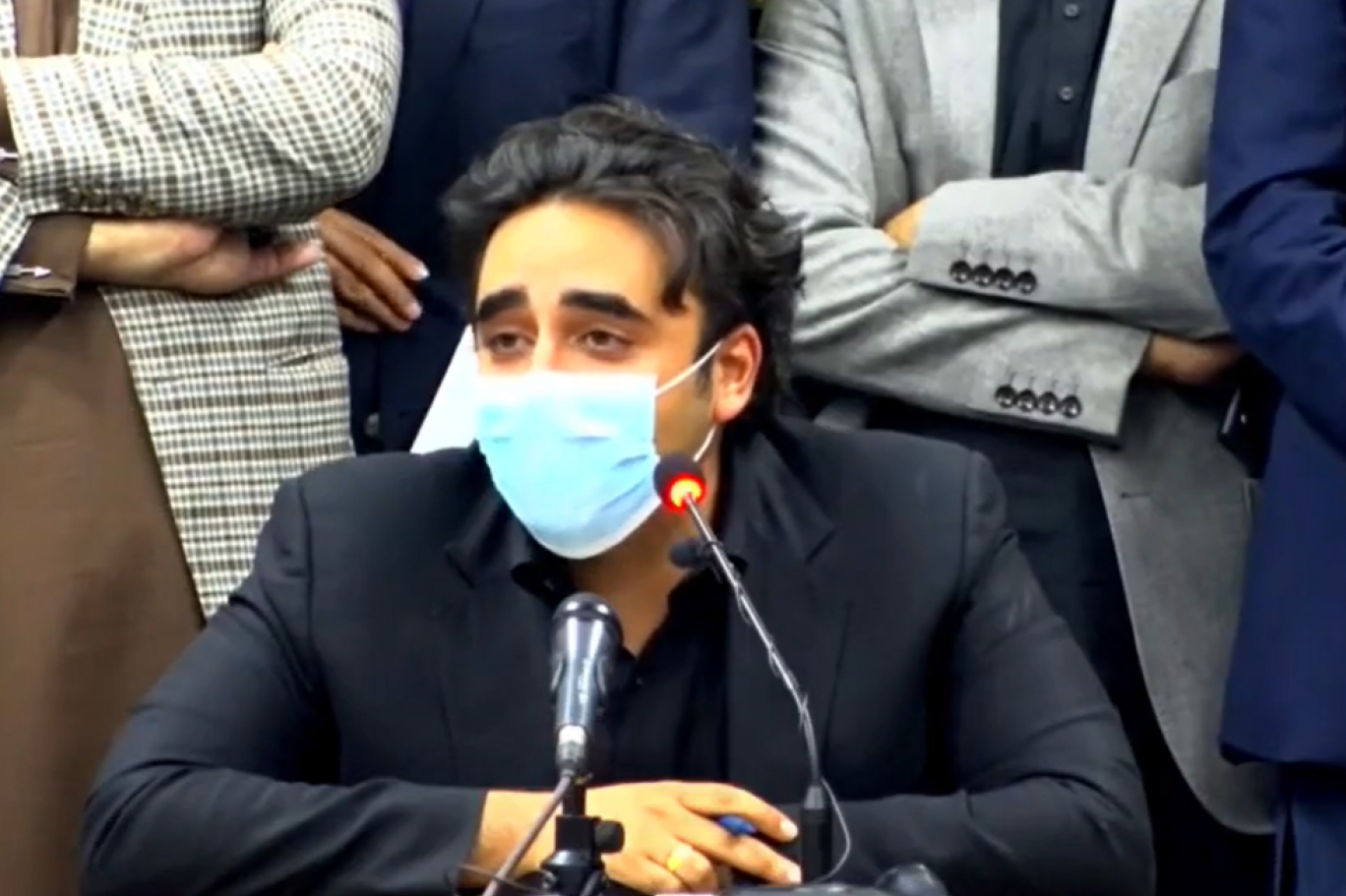
بلاول ہاؤس کراچی میں پی پی پی کی سینٹرل ایگزیکٹو کمیٹی (سی ای سی) کے کئی گھنٹوں تک جاری رہنے والے اجلاس کے بعد پریس کانفرنس سے خطاب کرتے ہوئے چیئرمین بلاول بھٹو زرداری نے کہا: 'استعفے تو ہمارا ایٹم بم ہیں اور اجلاس میں ایسا کوئی فیصلہ نہیں ہوا ہے کہ پیپلز پارٹی استعفی نہیں دے گی، سی ای سی کے اجلاس میں پارٹی کے رہنماؤں نے جو بھی اپنی رائے دی ہے، وہ میڈیا کو بتانا ان رہنماؤں کے ساتھ ناانصافی ہوگی'۔ 

پاکستان پیپلز پارٹی (پی پی پی) کی سینٹرل ایگزیکٹو کمیٹی (سی ای سی) کے اجلاس کے دوران مقامی میڈیا میں ذرائع کے حوالے مختلف خبریں چلتی رہیں کہ 'اجلاس میں شریک پاکستان پیپلز پارٹی کے مرکزی رہنماؤں کی اکثریت نے اسمبلیوں سے استعفوں کی مخالفت کردی ہے اور اجلاس کے شرکا نے یہ شرط عائد کی ہے کہ اگر سابق وزیر اعظم نواز شریف وطن واپس آکر لانگ مارچ کی قیادت کریں تو ہی استعفوں پر غور کیا جاسکتا ہے'۔ 

ایسی افواہوں کے متعلق پوچھے گئے سوالات کے جواب میں بلاول بھٹو نے کہا: 'اجلاس میں شریک پاکستان پیپلز پارٹی کے مختلف رہنماؤں نے مختلف رائے دی ہے، جس کو یہاں بتانا مناسب نہیں ہوگا۔ رائے دینا ہر کسی کا حق ہے۔ مگر میڈیا جو بھی خبریں چل رہی ہیں اس کے متعلق کچھ نہیں کہہ سکتا'۔ 

سی ای سی کے اجلاس میں شریک چیئرمین آصف علی زرداری سمیت پارٹی اہم رہنماؤں نے شرکت کی۔  

بلاول بھٹو نے کہا31 دسمبر تک پاکستان پیپلز پارٹی کے تمام پارلیمینٹرین استعفے پارٹی قیادت کو جمع کرائیں گے اور پارٹی کی سینٹرل ایگزیکٹو کمیٹی نے ایسی منظوری دی ہے۔ اور سی ای سی اجلاس کے فیصلوں کے متعلق پی ڈی ایم کے سامنے رکھیں جائیں گے۔ 

ایک سوال پر کہ کیا عمران خان حکومت سے بات چیت کی جاسکتی ہے کے جواب میں بلوال بھٹو نے کہا: 'ہم بات چیت ضرور کرسکتے ہیں، مگر پہلے عمران خان استیفی دیں، دوبارہ الیکشن کرائیں، پھر جتنا مرضی بات کرلیں'۔

https://www.independenturdu.com/node/56096 

سینیٹ انتخاب میں موجودہ حکومت کا ڈٹ کر مقابلہ کریں گے، بلاول بھٹو

پاکستان پیپلز پارٹی کے چیئرمین بلاول بھٹو زرداری نے اعلان کیا ہے کہ ان کی جماعت سینیٹ الیکشن میں حصہ لے گی۔ اسمبلیوں میں رہ کر حکومت کا مقابلہ کریں گے۔


کراچی میں پارٹی کے دیگر رہنماؤں کے ہمراہ پریس کانفرنس کرتے ہوئے ان کا کہنا تھا کہ اکتیس دسمبر تک تمام جیالے ارکان استعفے قیادت کو جمع کرائیں گے۔ اس بات کی سنٹرل ایگزیکٹو کمیٹی نے منظوری دے دی ہے۔ تاہم سی ای سی فیصلوں کو اپوزیشن اتحاد پی ڈی ایم کے سامنے پیش کریں گے۔

بلاول بھٹو زرداری نے کہا کہ پارٹی کی مجلس عاملہ نے وزیراعظم عمران خان کو 31 جنوری تک استعفی دینے کی ڈیڈ لائن کی توثیق کی ہے اور اب وقت آگیا ہے کہ عمران خان کو جانا ہوگا۔

بلاول بھٹو نے کہا کہ پیپلز پارٹی پہلے دن سے مردم شماری کیخلاف آواز اٹھا رہی ہے۔ مردم شماری میں درست اعدادوشمار نہیں دکھائے گئے۔ ہر فورم پر حکومت کو چیلنج کریں گے۔ نااہل حکومت کو عدلیہ اور پارلیمان میں بھی چیلنج کرنا چاہیے

چیئرمین پیپلزپارٹی کا کہنا تھا کہ سینیٹ الیکشن میں حکومت کا ڈٹ کر مقابلہ کرنا چاہیے۔ اسمبلیوں میں رہ کر حکومت کا مقابلہ کریں گے۔ پی ڈی ایم سینیٹ الیکشن میں مل کر مقابلہ کرے تو کامیاب ہو سکتی ہے۔

بلاول بھٹو نے ایک بار پھر اپنا مطالبہ دہراتے ہوئے کہا کہ وزیراعظم عمران خان 31 جنوری تک مستعفی ہوں، وزیراعظم خود چلے جائیں، ورنہ ہم بھیجیں گے۔ پریس کانفرنس کے دوران چیئرمین پیپلز پارٹی نے خواجہ آصف کو گرفتار کرنے کی بھی مذمت کی۔

https://samachar.pk/

خواجہ آصف کی گرفتاری سیاسی ہے، بلاول بھٹو


پاکستان پیپلز پارٹی کے چیئرمین بلاول بھٹو زرداری نےخواجہ آصف کی گرفتاری پر مذمت کی اور کہا کہ ان کی گرفتاری سیاسی ہے۔

ایک بیان میں بلاول بھٹو زرداری کا کہنا تھا کہ انتقام کی سیاست پاکستان کی جمہوریت اور سالمیت کے خلاف ہے۔

دوسری جانب اے این پی کے سربراہ اسفند یار ولی خان نے بھی خواجہ آصف کی گرفتاری کی مذمت کی ہے، ان کا کہنا ہے کہ نیب حکومتی ایما پر اپوزیشن کو سیاسی انتقام کا نشانہ بنارہا ہے۔

واضح رہے کہ گزشتہ روز اپوزیشن کی سب سے بڑی جماعت مسلم لیگ (ن) کے سینئر رہنما خواجہ محمد آصف کو اسلام آباد سے گرفتار کیا گیا تھا۔


#Pakistan #PPP - Imran regime cannot survive a single day without illegitimate support from establishment, Chairman PPP Bilawal Bhutto Zardari

Chairman Pakistan Peoples Party Bilawal Bhutto Zardari has said that his Party’s Central Executive Committee (CEC) has endorsed all decisions and action plan of Pakistan Democratic Movement (PDM) including submission of resignations of Assembly members to the Party leadership and stressed that the present incompetent, incapable, illegitimate and corrupt government should be challenged at every forum and every political weapon should be used against it.
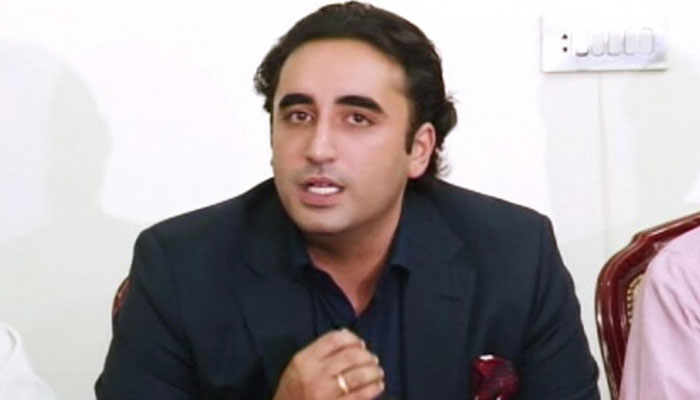
The PPP Chairman expressed these views while addressing a press conference following the meeting of his party’s Central Executive Committee at Bilawal House and added that the CEC had also ratified the decision of the PDM to collect resignations by December 31. Bilawal Bhutto Zardarui that the PTI regime has dragged the country to worst-ever economic quagmire in the region with negative growth rate and unprecedented inflation trailing far behind even from Afghanistan and Bangladesh. Root-cause the sufferings of people of Pakistan is the illegitimate support of the establishment to the PTI regime and its interference in politics, he said adding that PDM struggle was heading to genuine democracy, he added.
He said that the selected regime should be politically attacked from all sides including roads, assemblies, Senate and courts. The resignations are an atom bomb, it has not been decided when they will be used, it has just been decided that the members of the assembly will submit their resignations to their respective leadership by December 31. If we contest the Senate elections together, we can win, but the final decision will be by consensus of the PDM, he added.
Bilawal Bhutto Zardari said that now is the time for Imran Khan to resign and go home. If the selected PM does not go himself, we will send him home. Establishment interference in domestic politics must be stopped as we believe that PTI government cannot sustain even for a single day if it is deprived of the illegitimate support of the establishment, he stated.
The PPP Chairman said that the CEC has decided that the Party would make direct contact with labourers, farmers, students, doctors, lady health workers and lawyers’ organizations, including Pakistan Steel Mills and PIA workers. Because unless we fight together, we will not succeed. He said that the issue of census is in fact a matter of concern in the whole country where injustices have been committed against the provinces. PPP position on this issue has been clear from day one. All parties that are openly talking against the census results will be contacted to work together and the same issue will also be raised in the PDM forum.
Bilawal Bhutto Zardari said that the CEC meeting has also condemned the occupation of the islands by PTI government, and will liaise with the parties which are already protesting on this issue, and we will resist together with them. He further said that the meeting strongly condemned the rigging in the recent elections in Gilgit-Baltistan and demanded that immediate steps be taken to ensure fair and transparent elections in the future including in the upcoming general elections of Azad Jammu & Kashmir (AJK).
The PPP Chairman said that his Party’s CEC had also strongly condemned the atrocities against the people in occupied Kashmir at the hands of Indian occupying forces and called upon the international community to play its due role.
Bilawal Bhutto Zardari also strongly condemned the arrest of PML-N leader Khawaja Asif and said that this act of revenge was against the security and stability of Pakistan adding that we want across the board accountability of all instead of an accountability aimed at political engineering and victimisation.
Earlier, the PPP Central Executive Committee met at Bilawal House, co-chaired by PPP Chairman Bilawal Bhutto Zardari and PPP Parliamentarian President Asif Ali Zardari. During the meeting, organizational matters, including the overall political situation in the country were discussed and future course of action was worked out.
https://www.ppp.org.pk/pr/24226/

Monday, December 28, 2020

#ManicWorldTour #halsey #manic Halsey - You should be sad

Music Video - #HaileeSteinfeld #WrongDirection Hailee Steinfeld - Wrong Direction

Music Video - #BLACKPINK #블랙핑크 #HowYouLikeThat BLACKPINK - 'How You Like That'

Music Video - #DuaLipa #BreakMyHeart #FutureNostalgia Dua Lipa - Break My Heart

Music Video - #JasonDerulo Savage Love

Music Video - #Coronavirus #Vaccine #Pandemic Coronavirus vaccinations roll out across Europe

Video Report - #LoujainAlHathloul - #Saudi women's rights activist sentenced to prison

Video Report - Here's what the new stimulus package means for Americans

Video Report - 'Irresponsibility': Biden hits Trump admin. over transition

Opinion: Which Developing Economies Will Rise After the Pandemic?

By Ruchir Sharma
After 2000, globalization and surging commodity prices astronomically boosted economic growth among nations with emerging economies. Over the next decade their share of the global economy nearly doubled, growing to 35 percent. By 2007, 107 of the 110 developing economies featured in the Penn World Table were catching up to the United States in average income, helping millions to escape poverty. The celebratory mood was captured in a popular phrase: “The rise of the rest.”
Then came the crisis of 2008. Trade and capital flows plunged and commodity prices tanked, while slowing global population growth started to shrink work forces. Instead of rising again, developing economies saw their share of the global economy stagnate in the 2010s. Half the countries in the Penn World Table fell behind the United States in average income. Recently hyped stars like Brazil and Russia are growing slower than the U.S. economy is. With the exception of China, “the rest” have fallen off the radar of the global media and financial markets.
This would be more disheartening if it weren’t normal. In most decades after World War II, developed and emerging economies grew at a similar pace. Since nations with emerging economies tended to have populations that were growing faster, their per capita income was in fact often falling behind. These nations might leap forward for a decade or two, and possibly rise up an income class, only to stumble into crisis and find themselves back where they started.
Of 195 economies tracked by the International Monetary Fund, only 39 are “advanced,” and most of those were already advanced by 1945. The few that rose out of poverty and into the developed class are celebrated as “miracles,” such as Japan, South Korea and Taiwan. Their secret: export manufacturing, which by bringing in revenue from all over the world can sustain growth rates that would be impossible in a domestic market alone.
Today, however, manufacturing and exports are shrinking as forces in the global economy, so it can be hard to imagine what would power the next growth miracles. This explains the silence that engulfs emerging economies.
But in economies, as in nature, nothing is created, nothing is destroyed — everything is transformed. And the transformations of the pandemic are already providing energizing possibilities for at least a few emerging economies. Those transformations include an accelerating digital revolution, economic reform and a revival of commodity prices.
The pandemic is accelerating the adoption of digital technology, which has a particularly strong effect on immature economies. Digital technology is unlikely to generate double-digit growth because its impact is largely limited to domestic economies, with no added boost from exports. But it can simultaneously and sustainably transform domestic emerging economies.
Countries with developing economies are less attached to a “legacy infrastructure” of brick stores and land lines, so they are adopting wireless tech faster than countries with developed economies. Despite trouble in its old state-run industries, China is still growing significantly faster than the United States, catching up in average income, thanks to the rapid emergence of its cashless “new economy.”
New internet companies are rising quickly outside China as well, from Russia and Poland to Argentina and Kenya. With deep knowledge of local tastes and languages, they are expanding access to a wide variety of services such as banking and back-office operations, making it easy for start-ups to get going. On average, digital revenue is rising, and the cost of starting a business is falling, faster in countries with emerging economies than in countries with developed ones.
From the steam engine to cars, the economic effect of tech revolutions has tended to gain momentum over time and peak decades after the original invention. The digital revolution is young; its biggest influence on the growth of emerging economies is most likely still to come.
Another major development is economic reform. One of the biggest drags on the long-term prospects of these nations is that they tend to get stuck in a cycle of success and failure, reforming only when forced to in a crisis, frittering away the gains during the ensuing boom, then falling back into crisis. A crisis as big as the pandemic could be relied on to force major reforms — and it has.
The United States and other nations with developed economies are ramping up spending to ease the financial pain of the pandemic, but there will be negative consequences for growth in the future. Lacking the means to spend, poorer countries are pushing reform that, while often unpopular, should boost productivity and promote growth. India is relaxing labor laws and rules that have protected farmers from market forces for decades. Indonesia is cutting taxes and red tape to generate investment and jobs. Brazil is pushing ahead with plans to downsize its unaffordably generous pension system. Saudi Arabia is overhauling its immigration rules to open labor market competition. Similar campaigns are underway in Egypt, the United Arab Emirates and other nations.
Unfortunately, many emerging economies depend on exports of oil, metals, farm products and other commodities, so their prospects shift with the prices of those commodities. Long booms and busts have left commodity prices essentially flat in inflation-adjusted terms since records began in 1850. That explains why so many economies are stuck in the developing stage. The per capita income of Brazil, a major commodity exporter, is no higher today, relative to the United States, than it was in 1850. Most leading oil exporters are no richer today, relative to Western nations, than in the year they discovered oil.
Still, in decades when commodity prices rise, the number of developing economies catching up to their developed counterparts spikes. Now, after a down decade, which forced producers to cut back on excess supply, market forces point to a revival for commodity prices in the 2020s. That in turn should lift the fortunes of emerging markets like Brazil, Russia and Saudi Arabia, at least until the commodity cycle turns again.
It’s also worth noting that although the path to prosperity through manufacturing is narrowing, it hasn’t closed. In the past, manufacturing accounted for more than 15 percent of G.D.P. in export powerhouses. Today the economies in this class include Vietnam, Bangladesh, Poland and the Czech Republic. They are among the big winners as companies seeking lower wages and shorter supply lines move factories out of China.
The transformative effect of manufacturing is visible in a country like Poland, where multinational corporations are now making cars, light fixtures and other goods. Before the pandemic, a quarter century of unbroken growth had increased Polish incomes nearly tenfold to almost $16,000 — on the cusp of the advanced economic class. A similar transformation is underway in Vietnam, which is investing not only in new factories, roads and ports, but also in programs to eliminate poverty.
If only a few nations stand to gain from export manufacturing, many more have a chance to thrive on the back of economic reform, a possible revival in commodity prices or the accelerating digital revolution. These growth engines won’t bring back the “rise of the rest,” which lifted virtually every developing economy in the 2000s. But they will be enough to power a few growth stars. In the 2020s, some of the rest will likely rise again.
https://www.nytimes.com/2020/12/28/opinion/developing-economies-covid.html?action=click&module=Opinion&pgtype=Homepage

Video - Maryam And Bilawal Speeches In Larkana, And Hopes Of A Grand Dialogue

Peshawar’s women polio workers accuse seniors of harassment, threaten to boycott vaccine drive


Female polio workers hold protest, urge heath minister of Khyber Pakhtunkhwa district to take note of situation that has allegedly led to some of them losing their jobs.

A group of women polio workers from the Hayatabad Union Council in Peshawar, staged a protest against harassment by senior officers Saturday. The polio workers alleged that officials called them for meetings at any time and threatened them with removal if they did not oblige.

The protestors also submitted a written application against the officers responsible.

The workers highlighted how several women had lost their jobs because they refused to entertain the demands of seniors and many suffered from mental stress due to the rude behaviour of the officers.

The workers urged the health minister of the Khyber Pakhtunkhwa district, Taimur Khan Jhagra, to take note of the situation or threatened to boycott the entire polio campaign.

According to the Global Polio Eradication Initiative, Pakistan is the only country with consistent barriers preventing vaccination and the eradication of polio, which are linked to religious extremism and harassment of polio workers.

Polio workers are often harassed, and even killed in some cases, due to the narrative that vaccination is a western agenda forced upon Pakistan.  

OP-ED: #BenazirBhuttoShaheed - Would anyone fill the political vacuum left by Benazir Bhutto?

By M Alam Brohi

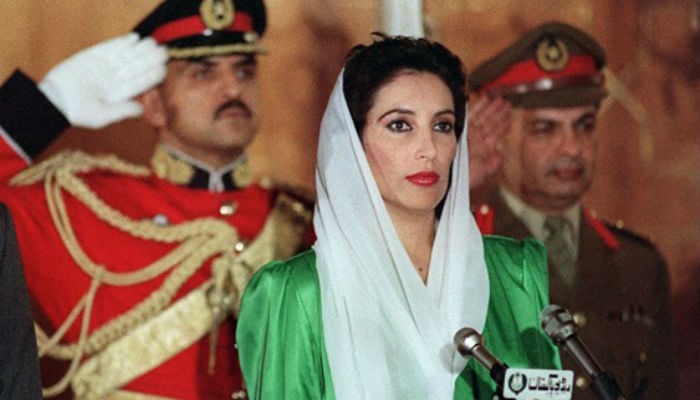
On the 2 nd December 1988, the stage was set in the grand and sprawling presidency in Islamabad for the swearing-in of a young, intelligent and a beautiful lady as the Prime Minister of Pakistan after the oppressive Martial Law of 11 years. The history of this nation was being rewritten. The designated Prime Minister was hardly 35 years and was taking over as the first elected leader of a conservative Muslim country. The ceremony illustratively represented a triumph over suppression, a victory over sufferings and a vindication of constitutionalism over dictatorship. The presidency reverberated from time to time with thunderous slogans of political activists who had toiled in sweat and blood for this day.
This iconic young lady was Benazir Bhutto, the brave daughter and political heiress of Zulfikar Ali Bhutto who had started grooming her in the art of politics and diplomacy when she was a teenage girl. She along with her mother inherited the leadership of the biggest political party of the time, Pakistan People’s Party, after the execution of her illustrious father by the Martial Law authorities on 4 April 1979. The following years were a grueling journey of grief, solitary confinement, oppression and fear, and a triumphal return from exile. In all these years, the groundswell in the mass support for Bhuttos helped the two women display courage, strength, forbearance and resilience in the face of the oppressive military dictatorship rekindling hope for the dawn of democracy, freedom and rule of law.
Bhutto had struggled hard to reawaken the masses against the dark forces of status quo. Even after his overthrow by his treacherous military chief, he emerged as the sole champion of democracy and liberty challenging the military junta and their political and judicial partners banding shamelessly against him. Unfortunately, this tragic tale of our history signified the callous elimination of a genius by an unholy alliance of obscurant forces and the suppression of light by darkness, of freedom by tyranny, of enlightenment by dogmatism, of advancement by regression. Bhutto was liberal, secular, progressive and involuntarily revolutionary. His foes, steeply enmeshed in religiosity, dogmatism, regression, were voluntarily counter revolutionary and determined to extinguish the light that Bhutto had diffused over this land.
Unconscious of the ill will of evil stars in the dark and merciless skies and the vicious smile of the destiny; she scheduled her last public meeting in Rawalpindi on 27 December 2007.
They feared the spark of revolution this man was involuntarily radiating.
The PPP of Bhuttos stood for the people’s rights, and was committed to the cause of the poor masses. Thus, the harsh political conditions unleashed by the military regime galvanized it to stand solidly behind the leadership of Begum Bhutto and Muhtarma Benazir Bhutto. The party had that class of workers who, when diminished in numbers, showed more courage. They were flogged and confined to dungeons. With every lash striking their naked back, they shouted Jiye Bhutto (long live Bhutto). Nothing is more touching than the agony overflowing in devoted acclamation. Their valour in the face of the tyranny and barbarian punishments was indescribable.
The masses voted Benazir Bhutto into power in 1988 and 1993 despite formidable odds. Certainly, she was destined to have her third term as Prime Minister in February 2008. But the deep conspiracy for her assassination woven by her not-so-invisible enemies succeeded in martyring this iconicleader.
Unconscious of the ill will of evil stars in the dark and merciless skies and the vicious smile of the destiny; she scheduled her last public meeting in Rawalpindi on 27 December 2007 before moving to KPK and Balochistan in the run up to February 2008 elections. The venue was the infamous Liaqat Bagh (Garden). She had pulled a mammoth crowd. The sprawling space of the garden was filled to the brim. She was in a combative mood throwing thunderous challenges to the militants and the dogmatic, intolerant and anti-democratic forces. She kept the people spellbound with her firebrand and brilliant speech for over an hour. As she was leaving the venue, there were charged groups of workers around her vehicle chanting slogans, and obstructing the move of her small caravan. She stood up to wave to the workers.
Her enemies were waiting in wings for this opportune moment to strike.
There were few revolver shots followed by a powerful explosion. She slumped down in the hands of her companions sitting in the car with blood oozing from her neck. The second security car had speeded to Islamabad with Rehman Malik, the chief of her security squad, riding in it. Benazir was shifted in another vehicle and driven to the hospital. But it was too late. The angel of death was quicker. The doctors tried in vain to resuscitate her but the last icon of Bhuttos; the last hope of a democratic and progressive Pakistan; the chain of the Federation of Pakistan; the indisputable leader of the underprivileged had already succumbed to her neck wound and massive loss of blood. A dark cloud of gloom and anger engulfed the horizon of her land she had so eagerly sought to retrieve from the iron clutches of dark forces of dictatorship and religious bigotry.
She had come of age and learned her lessons in the trying years of political wilderness and exile. She had returned to Pakistan with a new resolve. She wanted to make amends for her past political errors. She wanted reconciliation, democracy and economic prosperity in the country. She wanted to work hand in glove with other political leaders to attain these lofty objectives. She wanted to leave behind a country free from bigotry, sectarianism, intolerance and ethnic and tribal fragmentation. Her slogan was ‘national reconciliation and tolerant politics’ Her person, her resolve, her objectives were a threat to some vicious forces which conspired together to remove from the scene this towering national leader of Pakistan; this thundering voice of the masses; this pride of Sindh, leaving millions of Pakistanis to mourn her tragic death.
https://dailytimes.com.pk/703754/would-anyone-fill-the-political-vacuum-left-by-benazir-bhutto/

بینظیر بھٹو کی تیرہویں برسی


ماہ دسمبر پاکستان کیلئے نہایت دکھ اور رنج و الم کا مہینہ ہے جس میں سقوط ڈھاکہ، سانحہ آرمی پبلک اسکول اور بینظیر بھٹو کی شہادت جیسے دلخراش واقعات پیش آئے۔ زندہ قومیں ملک کی قسمت بدلنے والے لیڈروں کو ہمیشہ یاد رکھتی ہیں۔ اللہ تعالیٰ نے پاکستان کو بھی قائداعظم محمد علی جناحؒ کے بعد شہید ذوالفقار علی بھٹو اور بینظیر بھٹو جیسے عظیم لیڈرز عطا کئے جنہوں نے بے شمارقربانیاں دے کر پاکستان کو ناقابل تسخیر بنادیا۔ میرا اور میری فیملی کا شہید بینظیر بھٹو سے انتہائی قریبی تعلق تھا اور یہ میری خوش نصیبی ہے کہ مجھے ان کے قریب رہ کر کام کرنے کا موقع ملا۔ آج میں شہید بینظیر بھٹو کی تیرہویں برسی پر ان کے ساتھ گزارے گئے کچھ تاریخی لمحات قارئین سے شیئر کرنا چاہوں گا۔

شہید بینظیر بھٹوسے میری پہلی ملاقات 1994میں سائٹ ایسوسی ایشن ایوارڈ کی تقریب میں ہوئی جس میں انہوں نے مجھے صنعتوں کی بحالی کا ایوارڈ دیا تھا۔ بعد میں محترمہ کی درخواست پر میں انہیں مختلف اوقات پر بیمار صنعتوں کی بحالی، ملکی معیشت اور توانائی کے بحران کے حل کے حوالے سے مختلف تجاویز دیتا رہا جس کی بناء پر مجھے ان کی قربت حاصل ہوئی۔ وہ مجھے اپنے ساتھ کئی ممالک کے سرکاری دوروں پر وفاقی وزراء کے ہمراہ لے کرگئیں۔ بی بی عموماً اپنے خصوصی طیارے کی روانی کے بعد وفد کے ارکان کو فرداً فرداً بلاکر ان کی تجاویز اپنے دورے کے ایجنڈے میں شامل کرتی تھیں۔ 2002کے الیکشن میں شہید بینظیر بھٹو نے مجھے کراچی کے قومی اسمبلی کے حلقہ NA-250سے پیپلزپارٹی کے ٹکٹ پر الیکشن لڑنے کیلئے کہا جس کیلئے میں بالکل تیار نہ تھا لیکن بی بی، مخدوم امین فہیم اور سینیٹر رضاربانی کے اصرار پر میں محترمہ کو انکار نہ کرسکا۔ یہ الیکشن میری سیاسی زندگی کا آغاز تھا۔

بینظیر بھٹو کا شایانِ شان استقبال اور سانحہ کارساز تاریخ کا حصہ ہیں۔ محترمہ اپنے قریبی ساتھیوں کومختلف ذمہ داریاں دے کر آزماتی تھیں۔ کراچی میںمحترمہ نے اپنے کاغذات نامزدگی جمع کراتے وقت الیکشن آفس میں ہنگامے کے بعد واپسی پر بلاول ہائوس میں ایک اہم میٹنگ کی جس میں فہمیدہ مرزا، ذوالفقار مرزا، شیری رحمٰن، رضا ربانی، رحمٰن ملک، شاہ محمود قریشی، قائم علی شاہ اور دیگر اہم پارٹی رہنما بھی شریک تھے۔ اجلاس میں طے پایا کہ سیکورٹی کے پیش نظر محترمہ بینظیر بھٹو اپنے کاغذات نامزدگی کی تصدیق کیلئے دوبارہ الیکشن کمیشن آفس نہیں جائیں گی۔ اس موقع پر میں نے محترمہ کو مشورہ دیا کہ ہمیں الیکشن کمیشن سے آپ کی حاضری کا استثنیٰ حاصل کرنا چاہئے۔ میں نے فوراً الیکشن کمیشن کے اس وقت کے سیکریٹری کنور دلشاد سے رابطہ کرکے بینظیر بھٹوکا الیکشن کمیشن میں حاضری سے استثنیٰ حاصل کیا۔ میں یہ بات محترمہ کو بتانا ہی چاہتا تھا کہ رحمن ملک نے مجھے الیکشن کمیشن سے تحریری اجازت نامہ لینے کا مشورہ دیا۔ اتوار ہونے کے باوجود کنور دلشاد نے تحریری اجازت نامہ بلاول ہائوس فیکس کیا جسے میں نے فخریہ انداز میں محترمہ کو پیش کیا۔ تحریری استثنیٰ دیکھ کر محترمہ نے مجھے Welldon کہا۔محترمہ نے مجھے لندن کے پارٹی اجلاس میں 2008کے انتخابات کیلئے کراچی سے قومی اسمبلی کے حلقہ NA-250کا پارٹی ٹکٹ دیا۔ 2008کے الیکشن میں بی بی اور نواز شریف کی خواہش پر پاکستان بھر میں مجھے پاکستان پیپلزپارٹی اور مسلم لیگ (ن) کا مشترکہ امیدوار نامزد کیا گیا تھا جبکہ اے این پی، جے یو آئی اور سنی تحریک کی حمایت بھیحاصل تھی۔ شام کو میرے قریبی دوست فرخ مظہر نے اپنی ڈیفنس رہائش گاہ پر میری انتخابی کارنر میٹنگ رکھی تھی۔ میں نے جیسے ہی اپنی تقریر شروع کی، آغا خان اسپتال کے ڈاکٹر مختار بھٹو تیزی سے بھاگتے ہوئے میرے پاس آئے اور روتے ہوئے بتایا کہ سب کچھ ختم ہو گیا۔ میں اپنے دوست فرخ مظہر کے ساتھ ان کے ڈرائنگ روم کی طرف بھاگا جہاں ٹی وی پر ہمیں یہ اندوہناک خبر سننے کو ملی کہ بینظیر بھٹو کو شہید کردیا گیاہے۔ یہ دلخراش خبر سنتے ہی میں سیدھا بلاول ہائوس بھاگا جہاں پیپلزپارٹی کے سینیٹرز اور قومی و صوبائی اسمبلیوں کے امیدوار بڑی تعداد میں جمع تھے اور اپنے عظیم لیڈر سے بچھڑ جانے پر ایک دوسرے سے گلے لگ کر زار و قطار رو رہے تھے۔ رات گئے جب میں ٹوٹا ہوا بلاول ہائوس سے اپنے گھر کی جانب روانہ ہوا تو لوگ سڑکوں پر جگہ جگہ آگ لگا کر اپنے غم و غصے کا اظہار کررہے تھے۔ پارٹی کی درخواست پر میں نے نوڈیرو جانے کیلئے دبئی اور مختلف جگہوں سے چارٹر فلائٹ کیلئے رابطے کئے۔ طیارے میں میرے ساتھ مخدوم امین فہیم، رضا ربانی، شیری رحمٰن، فاروق ایچ نائیک اور پارٹی کے دیگر رہنما موجود تھے جنہیں یہ یقین نہیں آرہا تھا کہ بینظیر بھٹو انہیں ہمیشہ کیلئے چھوڑ گئی ہیں۔ میں شہید بینظیر بھٹو کا جسد خاکی نوڈیرو سے گڑھی خدا بخش لے جانے اور مجھ سمیت لاکھوں افراد کی آہوں و سسکیوں میں ان کی تدفین کا منظر کبھی نہیں بھول سکتا۔ بینظیر بھٹو کی شہادت کے کئی روز بعد اُن کی بلیک بیری سے شریک چیئرمین آصف زرداری کا ایک میسج آیا کہ ’’شہید بی بی کے آخری پیغامات میں آپ کو کیا گیا یہ ایس ایم ایس بھی شامل ہے‘‘۔

"Are you happy, now you must win this seat, good luck"

دراصل یہ میسج میں نے اپنے حلقہ NA-250 میں مسلم لیگ (ن) کے ساتھ سیٹ ایڈجسٹمنٹ پر شکریہ کیلئے کیا تھا جس کے جواب میں بی بی نے مجھے میسج کیا تھا۔ میں تصور بھی نہیں کرسکتا تھا کہ بی بی سے یہ میری آخری گفتگو ہوگی۔

https://jang.com.pk/news/864119 

مریم نواز، بھٹو کی چوکھٹ پر

تحریر: ملک سراج احمد

مریم نواز کی گڑھی خدا بخش حاضری اور شہید رانی کی قبر پر بطور عقیدت پھولوں کا نچھاور کرنا اور عوام کے جم غفیر سے خطاب اس بات کی عکاسی کرتا ہے کہ مریم نواز شریف جمہوریت کی بحالی کی خاطر سنجیدہ ہیں۔پنجاب کی طرز سیاست سندھ سے یکسر مختلف ہے مگر ایک نقطہ مشترک ہے اور وہ جمہوریت ہے۔پاکستان کی سیاست میں جمہوریت کے علمبرداروں کی گڑھی خدا بخش کے قبرستان کی حاضری ضروری ہے۔بھٹو کے مزار کی چوکھٹ پار کرنا ضروری ہے۔اس مزار کے آنگن میں ننگے پاوں سرجھکا کر حاضری کے بنا جمہوری سفر مشکل ہی ناممکن ہے۔

گڑھی خدا بخش پر حاضری کا مطلب بنیادی طورپر اس جمہوری فلسفے پر یقین کرنا ہے جو شہید بھٹو نے دیا جس پر ساری زندگی شہید رانی نے عمل کیا اور جدوجہد کی۔جمہوریت کی بحالی کی حالیہ جدوجہد میں بس یہی ایک کمی تھی اور وہ مریم نواز شریف کی حاضری کے بعد پوری ہوگئی۔رہی بات منزل کی تو سفر شرط ہے آج نہیں تو کل منزل تو مل ہی جائے گی۔حقیقی جمہوریت کی خاطر اور عوام کے حق حاکمیت کی خاطر جدوجہد بنیادی فرض ہے نتائج سے بے پرواہ ہو کر سفر جاری رہے گا تو منزل ملے گی۔ اور جمہوریت کی منزل کی طرف ہر رواں دواں ہرکارواں کا پڑاو گڑھی خدا بخش میں ضرور ہوتا ہے ۔یہاں پر شہدا کی قبریں دیکھ کرسفر کی بے یقینی کی کیفیت ختم ہوجاتی ہے۔عزم و ارادہ مصمم ہوجاتا ہے۔ حوصلے بلند ہوجاتے ہیں۔زاد راہ کے طورپر بھٹو کا فلسفہ مل جاتا ہے۔

گڑھی خدا بخش کے شہدا کو دیکھ کر یقین ہوجاتا ہے کہ جمہوریت ہی طرز سیاست ہونی چاہیے ۔وہاں پر آئے ہوئے جیالوں کو دیکھ کر یقین ہوجاتا ہے کہ طاقت کا سرچشمہ عوام ہی ہے ۔تیسری دنیا کے انسانوں کا المیہ ہی یہی ہے کہ ان کو دہائیاں لگ گئیں انسانی حقوق کے حصول کی خاطر اور وہ تاحال اس میں کامیاب نہیں ہوسکے ۔پرآسائش زندگی کی خاطر نہیں بلکہ بنیادی انسانی حقوق کی خاطر اپنی بنیادی ضروریات کی خاطر اور چند لمحے آسودگی کے حصول کی خاطر یہ تیسری دنیا کے انسان جئیے جاتے ہیں اپنی زندگی گذارے جارہے ہیں۔پاکستان کی اشرافیہ اور بالادست طبقات نے گویا کچھ نا دینے کی قسم اٹھا رکھی ہے۔ اور اس طرح کا رویہ اپنایا ہوا ہے جیسے اپنی جیب سے کسی کو کچھ دینا ہو۔حالانکہ جو کچھ یہ بدنصیب عوام مانگ رہے ہیں یہ ان کا بنیادی حق ہے ۔ان کی ملکیت ہے ۔یہ اس سرزمین پر موجود اور اس کی تہہ میں موجود ہر نعمت کے مالک و حق دار ہیں۔مگر اپنے حق سے محروم ہیں

اسی حق سے متعلق بھٹو نے بتایا کہ عوام کو یہ حق لینا چاہیے ۔عوام کو شعور دیا کہ اپنے حق کی خاطر جدوجہد کرو آواز بلند کرو۔جو نا دے اس سے حق چھین لو۔یہ جرات بھٹو نے دی کہ ایک ہاری زمیندار کے برابر بیٹھنا شروع ہوا۔ایک صنعت کار اپنے ورکر کے ساتھ مصافحہ کرنے لگا۔ معاشرے کے پسے ہوے اور محروم طبقات کو زندگی کی امید دینا بہتر مستقبل کی آس دینا ، مایوس آنکھوں کو خواب دینا ، سہمے ہوے لوگوں کو زبان دینا کوئی معمولی بات نہیں۔ بالادست طبقات کے نزدیک یہ اسٹیٹس کو کے خلاف بغاوت کے مترادف ہے اور بھٹو اس بغاوت کا مرتکب ہوا۔بھٹو کو خبر تھی کہ بغاوت ناقابل معافی ہے اوراس کی سزا ضرور ملے گی مگر وہ انجام سے بے پروا تھا۔ بھٹو تاریخ کے اس سفر میں اپنا متعین کردہ کردار ادا کرچکا تھا۔بھٹو وہ سوچ پیدا کرنے میں کامیاب ہوگیا تھا جس سوچ کے تحت محروم طبقات نے سوال کرنا تھے۔

اور آج کے ارباب اختیار اسی دھوکے میں ہیں۔ان کو لگتا ہے کہ شاید معاملات سنبھل جائیں گے مگر ان کو اندازہ نہیں ہورہا کہ وقت گذرنے کے ساتھ ساتھ پاکستان کی سیاست میچور ہوتی جارہی ہے۔سیاست دان اپنی انا کے بت گرا کر اور اپنی زات سے بالاتر ہوکر ملک وقوم سے متعلق سوچ رہے ہیں ۔میثاق جمہوریت وہ دستاویز ہے جس نے سیاسی جماعتوں کے لیے سیاسی قبلے کی شکل اختیار کرلی ہے ۔اگر سیاست کرنی ہے تو میثاق جمہوریت کو ہر سیاسی جماعت کو من وعن تسلیم کرنا ہوگا اس کی روح کو ماننا ہوگا اس پر عمل کرنا ہوگا۔

مریم نواز شریف نے اگر کوئی آسان راستہ نا چنا اور کسی کے کہنے پر شارٹ کٹ نا لیا تو بلاشبہ ان کا سیاسی سفر بہت دیر تک جاری رہے گا۔ان کی گڑھی خدا بخش حاضری سے ان کے سیاسی نظریات کو مزید تقویت ملی ہوگی۔ان کے سیاسی شعور کا دائرہ مزید بڑا ہوا ہوگا۔شہید رانی کے مزار پر پھول نچھاور کرتے ہوے مریم نواز شریف کو ضرور فخر ہوا ہوگا کہ وہ ایک عورت کے مزارپر حاضر ہوئی ہیں۔ایک ایسی عورت جس نے ہر ستم سہا مگر اپنے مقصد سے پیچھے نہیں ہٹی اپنی راہ کو نہیں چھوڑا اوراپنی عوام سے اپنا رومانس کبھی کم نہیں ہونے دیا۔حرف آخریہ کہ اگر مریم نوازشریف نے اس فلسفے پر یقین کرلیا کہ جمہوریت بہترین انتقام ہے تو ن لیگ کی سیاست میں واضح تبدیلی دیکھنے کو ملے گی اور یہ تبدیلی خوشگوار ہوگی۔ اور اس کے اثرات ملکی سیاست پر ضرور پڑیں گے۔رہی بات بھٹوز کی تو یہ اس خاندان کا سیاسی قبلہ ہی گڑھی خدا بخش ہے ۔اور گڑھی خدا بخش کے ماننے والوں کے لیے جمہوریت کے لیے قربانی دینا نئی بات نہیں اس بات کی گواہی گڑھی خدابخش میں شہدا کے مزارات دے رہے ہیں 

https://samachar.pk/

Sunday, December 27, 2020

Video - #BenazirBhutto #BenazirBhuttoShaheed - Remembering Benazir Bhutto|Jugnu Mohsin| Aamir Ghauri

Video - Qamar Zaman Kaira Speech In Larkana | 27 December 2020

Video - #BenazirBhutto #BenazirBhuttoShaheed - BENAZIR BHUTTO's Last Speech

Pashto Music Video - A Tribute To Benazir Bhutto

کل بھی بھٹو زندہ تھا،آج بھی بھٹو زندہ ھے -

Video - #BenazirBhuttoShaheed - Dilan Teer Bija - PPP Anthem

Video - Mahmood Khan Achakzai Speech In Larkana | Charsadda Journalist | 27 December 2020

Video - BNP Akhtar Mengal Speech In Larkana | Charsadda Journalist | 27 December 2020

Video - Ameer Haider Khan Hoti Complete Speech In Larkana | 27 December 2020

Video - #YaadeBenazir President Zardari’s address at the 13th Martyrdom Anniversary of Shaheed Mohtarma Benazir Bhutto

Video - #YaadeBenazir Chairman PPP addresses the Jalsa of 13th Martyrdom Anniversary of Shaheed Mohtarma Benazir Bhutto

Video - #YaadeBenazir - Maryam Nawaz Sharif Complete Speech In larkana | Charsadda Journalist | 27 December 2020

بلاول بھٹو نے شہید بینظیر بھٹو کو کن الفاظ میں یاد کیا؟

پاکستان پیپلز پارٹی (پی پی پی) کے چیئرمین بلاول بھٹو زرداری نے کہا ہے کہ شہید بینظیر بھٹو کی کمی ہمیں آج بہت محسوس ہو رہی ہے۔

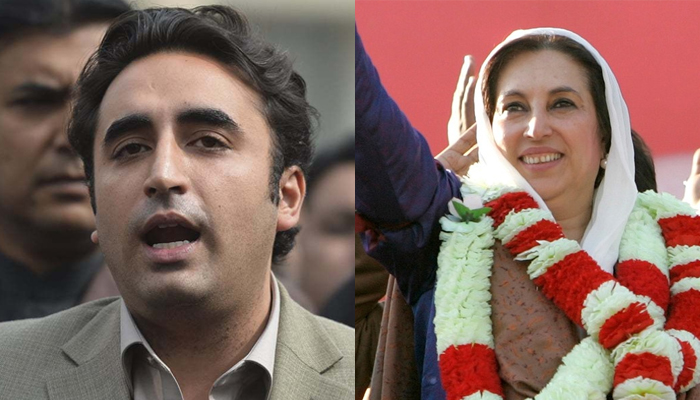
بینظیر بھٹو کی 13ویں برسی پر تقریب سے خطاب میں بلاول بھٹو نے کئی بار اپنی والدہ شہید بینظیر بھٹو کو خراجِ تحسین پیش کیا اور سیاسی جرات اور بہادری کا تذکرہ کیا۔

انہوں نے کہا کہ شہید بینظیر بھٹو آج ہوتیں تو ان کٹھ پتلیوں کی کیا اوقات تھی کہ وہ ہمارا مقابلہ بھی کرسکتے، انہوں نے ضیا الحق جیسے آمر کے خلاف تحریک چلائی تو ایوانوں کے در و دیوار کانپ اٹھے۔

پی پی چیئرمین نے مزید کہا کہ وہ دہشت گردوں کے لیے دہشت کی علامت تھیں، وہ جانتی تھی کہ قاتل گھاٹ لگائے بیٹھا ہے، پھر بھی جرات اور بہادری دکھائی۔

ان کا کہنا تھا کہ ضیا الحق کی قبر ویران ہے اور پرویز مشرف موت سے بدتر بزدلی کی زندگی گزار رہا ہے جبکہ شہید بینظیر بھٹو ہمارے دلوں میں زندہ ہیں، ان کا احترام ہمارے دلوں میں ہے اور رہے گا۔

بلاول بھٹو زرداری نے یہ بھی کہا کہ شہید محترمہ بینظیر بھٹو کا سبق ہمیں یاد ہے، جبر کے مقابلے میں صبر کا سبق، ہمیں ان کا عوام سے محبت کا درس وراثت میں ملا تھا، ہم آج اُن سے تجدید عہد کرنے آئے ہیں، اُن سے طاقت لینے آئے ہیں۔

انہوں نے کہا کہ ہمارے دلوں میں آج غم ہے، آنکھیں پرنم ہے مگر حوصلے بلند ہیں، ہم شہیدوں کے وارث ہیں، ہم آئین کے خالق اور عوام کی آواز ہیں۔

پی پی چیئرمین نے کہا کہ تاریخ کا فیصلہ حسین کے حق میں ہے اور رہے گا، تاریخ کا فیصلہ شہید محترمہ بینظیر بھٹو کے حق میں ہے اور رہے گا، خون شہدا کو خراج اہل حق ملتا رہے گا اور ہر دور کے یزید رسوا رہیں گے۔

ان کا کہنا تھا کہ بینظیر بھٹو نے آخری ملاقات میں کہا تھا کہ عوام کا ساتھ کبھی نہیں چھوڑنا، ہمیں شہید بھٹو کا وعدہ نبھانا ہے، پاکستان بچانا ہے، میری والدہ نے جس صبح کے لیے شہادت دی وہ صبح ضرور آئے گی۔

بلاول بھٹو زرداری نے کہا کہ والدہ چاہتی تھیں کہ ملک میں اسلامی جمہوری آئین کی حکمرانی ہو، خواتین کو برابری کے حق ملیں، مذہب کے نام پر ظلم نہ ہو، پاکستان کا دفاع ناقابلِ تسخیر ہو اور پاکستان کو دنیا میں وقار ملے، وہ چاہتی تھیں کہ ملک میں عدل و انصاف ہو، برداشت ہو، بات کرنے کی آزادی ہو۔

انہوں نے کہا کہ شہید بینظیر بھٹو کے خلاف سازشیں ہوئیں، انہوں نے اس کی پرواہ نہیں کی، جمہوری طاقتوں کی قیادت کے لیے وہ نہیں ہیں لیکن ان کے اصول ہمارے لیے رہنما ہیں۔

https://jang.com.pk/news/863996