
Friday, December 4, 2020
Biden officially secures enough electors to become president
Opinion: Responding to Terrorism in France

President Emmanuel Macron and others there have been angered by outside criticism.In the wake of two horrific incidents of Islamist terrorism in France, President Emmanuel Macron and many of his countrymen have reacted angrily to criticism from abroad suggesting that French policies, and especially the French version of state-enforced secularism, somehow contributed to the lethal radicalization of a sliver of the country’s large Muslim population. The French reaction is understandable. The beheading of a schoolteacher and the murder of three churchgoers in Nice by Islamist terrorists cannot be justified by any grievance, real or perceived. Any attempt to lay the blame for these horrific crimes on their victims, or on national policies, is perverse. France, a country with a deep commitment to human rights and a robust tradition of self-criticism, offers many legal avenues of protest — witness the Yellow Vest movement that has periodically convulsed France for two years now. In the face of scathing criticism from Mr. Macron — expressed in a letter in The Financial Times, an interview with Ben Smith, the media columnist of The New York Times, and elsewhere — The F.T. and Politico Europe both removed articles questioning the role of French policies in Islamist violence. The core of the president’s complaint was that English-speaking countries that share France’s values were in effect “legitimizing this violence, and saying that the heart of the problem is that France is racist and Islamophobic.” It is not always fully appreciated outside France’s borders that the country is home to the largest number of Muslims in the Western world, more than 8 percent of the country’s total population. It also has a history of horrific terrorist attacks, including, in 2015, the raid on the offices of the satirical magazine Charlie Hebdo and the assaults on Paris cafes and entertainment halls that left 130 dead. Furthermore, France’s approach to ethnic minorities differs from the American model in fundamental ways not often understood. The American way is basically to promote the coexistence of different ethnic groups and religions; the French model, born of the French Revolution, is a universalist one in which people of all races, religions and backgrounds are treated without differentiation as citizens with equal rights. France maintains no register of people’s ethnicity or religion. A critical element of that model is the French concept of secularism, laïcité, a legacy of the French struggle against the power of the Roman Catholic Church. Whereas freedom of religion in the United States began as a defense of religion against the state, France’s began with a defense of the state against religion. So French policies such as banning Muslim head scarves in school, perceived by many of the French as combating religious coercion, is often criticized in what the French call the “Anglo-Saxon” world as an attempt to forcibly impose French identity on immigrants. To its critics, the French model does too little to improve the lot of Arab and African Muslims living in suburban public housing, the “banlieues” where youth unemployment runs sky-high and many of the Islamist radicals are incubated. Conditions there have only worsened with the coronavirus pandemic. In a major speech in early October, Mr. Macron assailed the rise of “Islamist separatism” and promised a new law to defend France’s secular and democratic values. He also recognized the problem of the “ghettoization” of French cities where “we built our own separatism ourselves,” but the speech drew sharp criticism from French Muslims, including charges that it stigmatized Muslims, especially women and working-class Muslims. These are issues that should be open to debate, both within France and among mature democracies. But the debate cannot cross into any notion that any victim of Islamist terror “had it coming.” Mr. Macron is right to reject any such suggestion. But he goes too far in seeing malicious insult throughout the “Anglo-American media.” Serious news organizations in the United States, including The New York Times, have sought to offer full and nuanced reports on the terror attacks in France and on the French government’s policies. It was unfair of Mr. Macron’s international communications adviser, Anne-Sophie Bradelle, to suggest that The Times and The Washington Post said France was “at war with Islam.” Neither suggested this, or argued that France’s core problem was that it is “racist and Islamophobic.” But racism and Islamophobia are major problems in France, as they are in the United States, Britain and elsewhere in the Western world. So is Islamist terror, and the many issues of cultural integration, tolerance and competition posed by mass migration. These are the common challenges of the Western world, and no country has demonstrated a fully adequate response. Under President Trump, the United States government has woefully abandoned its tradition of openness to immigrants and refugees, and the president has deliberately fanned racism and intolerance for political ends. French news outlets have not spared Mr. Trump and his followers in their coverage of his administration, nor should they. The French media has also demonstrated a robust readiness to assail Mr. Macron’s policies, as it has done in recent weeks against the introduction of a “general security” bill that, among other things, included what looked like an attempt to protect the police from public scrutiny. After two incidents of police brutality caught on video, the bill was pulled back for a rewrite. That’s what the news media does, at home and abroad. It is its function and duty to ask questions about the roots of racism, ethnic anger and the spread of Islamism among Western Muslims, and to critique the effectiveness and impact of government policies. When terrorists strike, however, there is only one response. On that front, Mr. Macron, France is not alone. https://www.nytimes.com/2020/12/04/opinion/macron-terrorism-france.html

Pakistani State sympathises all sorts of religious groups. Khadim Rizvi was just one of them

MUHAMMAD RANA
Since the establishment of Pakistan, each decade has seen different religious groups that have amplified religious-ideological sensitivities around various issues.Speculationspersist regarding the future of the Tehreek-i-Labbaik Pakistan after the demise of its chief Khadim Husain Rizvi. For many, this is the beginning of the end for the TLP as it has lost not only its leader but also the charisma he possessed. However, it would be unwise to underestimate the power of the TLP narrative.
The TLP under Rizvi has been an amalgamation of charisma and religious narrative; the organisation has eagerly wanted power either through entry into the corridors of authority or recognition of the influence of its religious zeal and street power on politico-ideological and policy matters. However, it is not the first organisation with hard-line, religiously inspired motives and ambitions to have emerged. There are at least 247 religious groups and parties operating in the country that have more or less similar motives and agendas. The inception phases of many of these groups have also been similar; they largely grew from either the Khatm-i-Nabuwwat movements of the 1960s and 1970s or sectarian groups’ campaigns of the early 1980s, which deepened the sectarian divide in society. These groups also had firebrand leaders who nurtured religious narratives, and the TLP has banked upon the same ideological arguments.
Since the establishment of Pakistan, each decade has seen different religious groups that have hedged or amplified religious-ideological sensitivities around various issues. But the finality and honour of Prophet Muhammad (PBUH) have remained the most important themes for sensitising the people. The TLP, however, organised aggressive street protests and choked federal and provincial capitals. In recent history, the Jamaat-i-Islami (JI) led violent protests in 1989 over the issue of Salman Rushdie’s blasphemous novel. From 2005 to 2012, it was the banned Jamaatud Dawa which mobilised and brought together religious organisations under the banner of the Tehreek-i-Tahaffuz-i-Hurmat-i-Rasool over the issue of the blasphemous images of the Prophet published in different European countries. The Barelvi parties remained very instrumental in all these campaigns mainly in Karachi and Lahore. In Karachi, it was the Sunni Tehreek that led such protests and in Lahore several small Barelvi parties remained part of the JuD-led alliance.
Apart from the debate about the future of the TLP, another issue remains crucial and this is about the state’s inability to deal with such groups. State institutions have sympathy for all sorts of religious groups, except when they start challenging their turf. The TLP had been testing the nerves of state institutions for a long time and the state adopted its conventional approach of appeasement and pressure whenever TLP supporters came out onto the streets. The disadvantage of the approach is that religious groups seek legitimacy and political power whenever the state makes an agreement with them. Khadim Rizvi had made a deal with the government just a week before his death, which was a big gain for his party, though the government had denied that it is bound to follow the agreement. Such commitment gives the impression that the state institutions are not capable of chalking out a long-term strategy to deal with such groups for whom they may have some other political utility.Meanwhile, Pakistan is looking to use its soft image as a diplomatic instrument for regional economic and political advantage, but the presence of radical groups on its soil makes this task complicated. The TLP launched its latest protest at a time when Pakistan had initiated an international diplomatic campaign against Indian state-sponsored terrorism. It should be noted that when Pakistan wanted the support of the world, especially the influential Western countries, a religious group was signing a deal with the government for curtailing ties with a key member of the European Union. There are other civilised ways of protest and Prime Minister Imran Khan had condemned the statement by the French president. But allowing an ambitious religious group to halt normalcy in the federal capital has hurt the national image most.
Extremism is the biggest enemy of the nation, which is not only weakening the already deteriorating governance system in the country but also undermining national dignity and Pakistan’s global image.https://theprint.in/opinion/pakistani-state-sympathises-all-sorts-of-religious-groups-khadim-rizvi-was-just-one-of-them/556768/
China’s Defense Minister Visits Pakistan

By Abhijnan Rej
Wei Fenghe’s visit has predictably led Indian analysts to claim that he had India in mind.
The Chinese defense minister, Wei Fenghe, visited Pakistan on December 1 and met with the country’s President Arif Alvi and Prime Minister Imran Khan, along with meeting Chairman of the Joint Chiefs of Staff Committee Nadeem Raza and Chief of Army Staff General Qamar Javed Bajwa. Earlier this week Wei had also visited Nepal.
Writing on Wei’s Islamabad trip, China Global Television Network (CGTN) noted him as saying that “the China-Pakistan all-weather strategic cooperative partnership is unique in the world,” language consistent with how China publicly describes Pakistan. During Wei’s visit, both countries signed a memorandum of agreement around greater defense cooperation.
According to CGTN, during Wei’s visit, Alvi promised Pakistan’s support to China across issues including the South China Sea, Taiwan, and Tibet, and also to push ahead with the China-Pakistan Economic Corridor. Interestingly, according to CGTN, Wei also said China is “keen to jointly cope with risks and challenges with Pakistan, firmly safeguard the sovereignty and security interests of both countries and maintain regional peace and stability,” language that would inevitably be interpreted in India as directed toward that country.
And this has indeed happened. The Hindustan Times (HT) quoted Indian experts as saying that Wei’s Nepal and Pakistan visits were with one eye on India, as New Delhi continues to wrangle with both Kathmandu and Islamabad. The newspaper noted a former Indian ambassador Vishnu Prakash, who had served in both Pakistan and China, as saying “China was letting Pakistan and Nepal know it is still with them and this was also a message to India.” “In Islamabad, the Chinese clearly wanted to add some steel to Pakistan’s spine,” HT also quoted Prakash as saying.
Back in May, the Indian army chief, General Manoj Mukund Naravane, created a small storm in Kathmandu with his remark at a think tank event that Nepal’s objections to an Indian road that connects the state of Uttarakhand to the China-India-Nepal trijunction in Lipulekh was at the behest of China. Naravane visited Nepal last month as New Delhi and Kathmandu inch toward mending fences.
Over the year, as the Ladakh crisis continued unabated, Indian strategic experts pointed to the possibility of a two-front war where China and Pakistan on one side, and India on the other, find themselves in a shooting conflict. What has added salience to this fear is that India-Pakistan ceasefire violations show no sign of slowing down, with heavy artillery guns being used by both sides with alarming frequency over the past few years. On November 13, 11 Indians – including five members of Indian security forces – were killed in ceasefire violations along the Line of Control in India-administered Jammu and Kashmir’s Gurez and Uri sectors.
Indian media reports have also noted China’s continued military support to Pakistan, including in Pakistan-administered Kashmir and Gilgit-Baltistan. In October, one of them noted that according to the Indian security establishment, China was helping Pakistan install a new surface-to-air missile system in the part of Kashmir it administers. China and Pakistan have a long history of military cooperation, which has included covert Chinese support for Pakistan’s nuclear-weapons program.
However, not all Pakistani analysts are convinced that China and Pakistan would be able, or willing, to jointly fight a war against India, fears of New Delhi’s defense establishment notwithstanding. Speaking at a virtual event organized by a New Delhi think tank on December 1, Ayesha Siddiqa noted that there is limited interoperability between the militaries of the two countries, and that both would not prefer a large conventional war with India. Instead, Siddiqa suggested, for Pakistan, China’s role is strategic as it manages to do what Pakistan hasn’t been able to: keep India in check.
https://thediplomat.com/2020/12/chinas-defense-minister-visits-pakistan/
بلاول نے کورونا وائرس کو شکست دے دی

بلاول بھٹو زرداری نے کورونا وائرس کی علامت ظاہر ہونے پر 26 نومبر کو ٹیسٹ کروایا تھا جو مثبت آیا تھا۔
کورونا وائرس میں مبتلا ہونے کی وجہ سے بلاول بھٹو زرداری نے 27 نومبر کو بختاور بھٹو کی منگنی کی تقریب میں بھی شرکت نہیں کی تھی۔
کورونا وائرس ٹیسٹ منفی آنے کے حوالے سے صوبائی وزیر ناصر شاہ نے بھی سوشل میڈیا پر تصدیق کی۔
واضح رہے کہ کورونا وائرس کے باعث چیئرمین پی پی پی، بلاول ہاؤس کراچی میں قرنطینہ میں تھے جبکہ انہوں نے آج دوبارہ ٹیسٹ کروایا جو منفی آیا۔
امکان ہے کہ بلاول بھٹو زرداری بارہ دسمبر کو لاہور میں ہونے والے پی ڈی ایم کے جلسے میں شرکت کریں گے۔
https://jang.com.pk/news/853703
Thursday, December 3, 2020
What Biden will and won’t do for Pakistan
By
US President-elect won’t pry Pakistan from China’s tight grip but could improve relations on the margins.
The transition from US President Donald Trump to Joe Biden inspires equal measures of hope and fear in Pakistan given the president-elect’s expressed views on rights, equality and democracy.
Analysts say Pakistan’s ability to balance ties with the US and China amid growing friction between the two superpowers will also set the tone for the US policy toward Pakistan under Biden.
Some analysts like to say that Pakistan runs with the hare and hunts with the hounds in regard to its policies towards the US and China. In late August, Pakistani Prime Minister Imran Khan clearly took China’s side in an interview newscast with local TV channels.
Khan linked the future of Pakistan with China saying, “There should be no doubt in our mind that Pakistan’s economic well-being has now been intertwined with China, which stood by us through thick and thin as no other did.”
In contrast, Special Assistant on National Security to the Prime Minister Moeed Yousaf said that Pakistan is not picking superpower sides because of the symbiotic relationship it enjoys with the US, which he characterized as a “critical strategic partner.”
In an online debate arranged by the Washington-based Atlantic Council think tank in October, Yousaf took the middle path in saying “We ultimately want to see ourselves as an economic melting pot for the region.”
As Pakistan’s relationship has deteriorated with the US on an array of issues ranging from terrorism to nuclear proliferation over the past two decades, its economic and defense relations with China have grown by leaps and bounds.
Over the period China has become Pakistan’s closest strategic ally, supplying it with top-of-the-line defense equipment to make it into a regional military powerhouse. In exchange, Pakistan openly supports China’s stance on Xinjiang, Tibet and Taiwan, while China backs Pakistan on its Kashmir issue with India.
Over the past five years, this cooperation has been further cemented by China’s Belt and Road Initiative (BRI) and its local flagship China-Pakistan Economic Corridor (CPEC), entailing over $60 billion worth of Chinese investments in infrastructure consisting mostly of loans.
Trump’s administration, In line with its wider rivalry with China in recent years, galvanized a spirited resistance against Chinese BRI connectivity plans in Central and South Asia, and especially in Pakistan.
In November 2019, US Assistant Secretary for South and Central Asian Affairs Alice Wells delivered a forceful assessment of CPEC at the Woodrow Wilson Center in Washington, wherein she spelled out the Trump administration’s general concerns about the BRI and CPEC, including in regard to “debt traps.”
Wells questioned the high cost and long-term impacts the debts incurred in the program would have on Pakistan’s faltering economy. She also criticized the opaque bidding process of CPEC projects and questioned whether the schemes were creating jobs for local Pakistanis or imported Chinese workers.
How much that narrative line will change under Biden is unclear. Local analysts and observers believe Biden has a wider awareness and better understanding of the Kashmir issue, a lingering territorial dispute that has sparked two of three major Indo-Pakistani wars.
Their hope for a more nuanced US understanding and perhaps more vocal approach to Kashmir stems from a policy paper on Biden’s agenda for the “Muslim American community” uploaded to his campaign website in June.
Biden has taken India to task over its controversial Citizenship (Amendment) Act and has urged New Delhi to take steps to restore the rights of Kashmiris after a clampdown on the territory. Such measures, the president-elect asserted, are “inconsistent with the country’s long tradition of secularism and multi-ethnic and multi-religious democracy.”
Pakistan’s #MeToo Case Highlights Controversial Cybercrime Law
NUR IBRAHIM
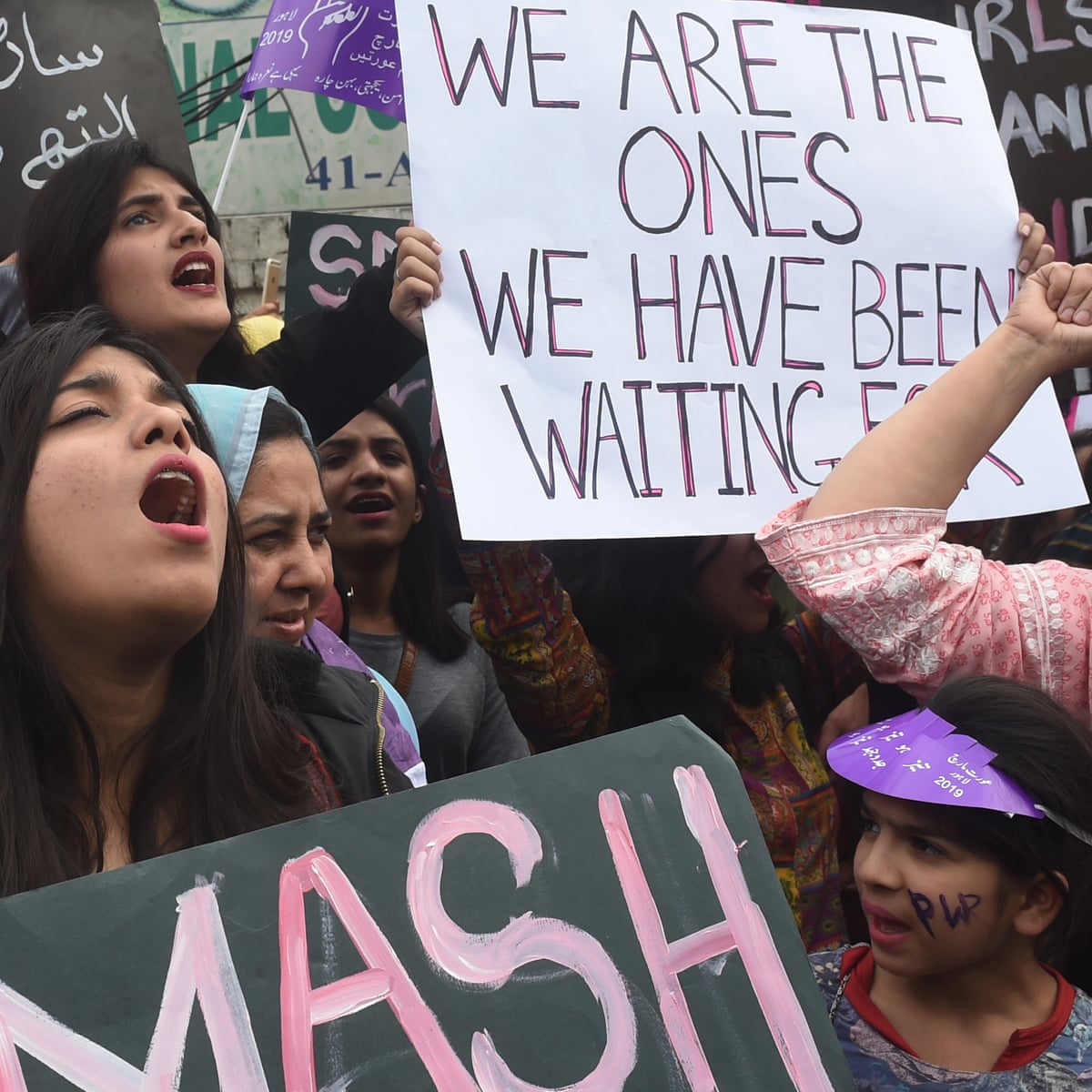 Pakistan’s biggest sexual harassment case between singers Meesha Shafi and Ali Zafar exposed how the country’s cyber laws can be used against accusers.
When the #MeToo movement went viral globally in 2017, it was largely lauded for breaking the culture of silence around sexual harassment and abuse in the workplace. But alongside this exposure came a deluge of online hate, and in Pakistan in particular, the backlash could be weaponized by the law.In April 2018, Meesha Shafi, a prominent singer and actor, posted on Twitter, accusing Ali Zafar, one of Pakistan’s most famous pop stars and actors, of sexual harassment. Subsequently, other accusers came forward on the platform, describing more instances of his alleged harassment, all of which he denied, while others tweeted in support of Shafi.
The accusations set off years of litigation, a media frenzy of misinformation, and highlighted the ways defamation cases can impact accusations of sexual harassment, particularly in a country where women and vulnerable groups have long mistrusted authorities in addressing gender-based crimes. In 2020 alone, cases of rape and violence against women in Pakistan made international headlines. An estimated 1,000 “honor” killings take place every year, which largely impact women. And in most instances, justice is hard to come by for the victims.
Online misinformation appeared to be a key feature in this particular story, leading readers who were following the accusations to ask Snopes to break down the facts. Many online assumed — and Zafar himself would argue — that he was innocent in the eyes of the law. Zafar claimed that the accusations were a coordinated social media campaign against him. Zafar also suggested that Shafi was trying to use the attention to raise her profile, move to Canada, and be “another Malala.”
Given the case’s prominence in the region, and the implications it could have for the #MeToo movement, we noticed that not many people actually knew what was going on with the case in the courts. We reached out to the legal teams on both sides. Below, we unpack what we know from court records and interviews.
Pakistan’s biggest sexual harassment case between singers Meesha Shafi and Ali Zafar exposed how the country’s cyber laws can be used against accusers.
When the #MeToo movement went viral globally in 2017, it was largely lauded for breaking the culture of silence around sexual harassment and abuse in the workplace. But alongside this exposure came a deluge of online hate, and in Pakistan in particular, the backlash could be weaponized by the law.In April 2018, Meesha Shafi, a prominent singer and actor, posted on Twitter, accusing Ali Zafar, one of Pakistan’s most famous pop stars and actors, of sexual harassment. Subsequently, other accusers came forward on the platform, describing more instances of his alleged harassment, all of which he denied, while others tweeted in support of Shafi.
The accusations set off years of litigation, a media frenzy of misinformation, and highlighted the ways defamation cases can impact accusations of sexual harassment, particularly in a country where women and vulnerable groups have long mistrusted authorities in addressing gender-based crimes. In 2020 alone, cases of rape and violence against women in Pakistan made international headlines. An estimated 1,000 “honor” killings take place every year, which largely impact women. And in most instances, justice is hard to come by for the victims.
Online misinformation appeared to be a key feature in this particular story, leading readers who were following the accusations to ask Snopes to break down the facts. Many online assumed — and Zafar himself would argue — that he was innocent in the eyes of the law. Zafar claimed that the accusations were a coordinated social media campaign against him. Zafar also suggested that Shafi was trying to use the attention to raise her profile, move to Canada, and be “another Malala.”
Given the case’s prominence in the region, and the implications it could have for the #MeToo movement, we noticed that not many people actually knew what was going on with the case in the courts. We reached out to the legal teams on both sides. Below, we unpack what we know from court records and interviews.
He Said / She Said / They Said
It began with a tweet. In April 2018, Shafi tweeted that she had been harassed by Zafar on multiple occasions, including at a musicians’ jam session. Zafar categorically denied the allegations and said he would be taking the matter to court. A member of Shafi’s legal team, Saqib Jillani, told Snopes that Shafi had no choice but to make the allegations public, because she was being “forced” to work with Zafar on a television music competition, “Pepsi Battle of the Bands.”
After the tweet, a number of women came forward with accusations against Zafar on Twitter, which were shared and retweeted. Actress Iffat Omar also tweeted in favor of Shafi, and a number of men, including hip-hop artist Ali Gul Pir, also spoke out in support.
Several cases were filed against various parties. Below is a summary of the key cases, investigations, and relevant events:
Sexual Harassment Case: In mid-2018, soon after tweeting, Shafi filed a sexual harassment complaint with the Office of the Ombudsperson of Punjab, which enforces the Protection Against Harassment of Women at the Workplace Act 2010. The ombudsperson dismissed her case on a technicality in May 2018, and she took it to the governor of Punjab, and then filed a petition before the Lahore High Court challenging the governor’s decision against her on the technicality. At the time of this writing, the case has been pending in the Supreme Court of Pakistan for the last 12 months and had only one hearing.
Why was the sexual harassment complaint dismissed? Under section 2(f) of the law, Protection Against Harassment of Women at the Workplace Act 2010, “‘Employee’ means a regular or contractual employee whether employed on daily, weekly, monthly or hourly basis, and includes an intern or an apprentice.” Shafi, in her complaint, had attached an agreement between her and the events company, JS Events, that organized a concert where she and Zafar performed. She claimed that she was sexually harassed by Zafar when they were both working for the company.
The ombudsperson rejected Shafi’s complaint on the basis that her relationship with Zafar was not between two employees, as she did not have an “employment relationship” with JS Events. The official stated: “The complainant has no locus standi to submit a complaint under the Protection Against Harassment of Women at the Workplace Act, 2010, she not being an employee, as per the definition contained in section 2(f).” This dismissal highlighted the many limitations defining employer-employee relations under the law, leading to questions from activists about how sexual harassment laws would work with freelancers, domestic staff, and others working in an informal economy.
Civil Defamation Case: In June 2018, Zafar filed a defamation lawsuit against Shafi under the Civil Defamation Ordinance 2002, asking for her to pay 1 billion rupees (more than $6 million U.S. dollars) in compensation for damaging his reputation with her “libelous” and “defamatory tweet,” which he said caused financial losses to him along with mental anguish. This lawsuit stated:
… The Defendant has misused the #Metoo movement which is a legitimate and an extremely credible movement to her aid. The Defendant did not ever suffer from sexual harassment at the hands of the Plaintiff or from the words of the Plaintiff thus to seek shelter under the #Metoo umbrella is attributable as malafide. Apparently, this is a well thought out conspiracy that the Defendant opted for social media and not a Court of law to accuse the Plaintiff as she would be bound to prove her accusations in a Court of law whereas on social media the result is the stark opposite.
In January 2019, a court issued a gag order, requested by Zafar as a part of his lawsuit, preventing Shafi from making negative remarks against Zafar on all media platforms, including social media. Zafar subsequently made a number of media appearances in 2019 suggesting that the media look into whether Shafi was trying to become “another Malala”— a reference to Malala Yousufzai, a Pakistani activist for girls’ education and the youngest Nobel Prize laureate — arguing that he had been considered innocent by the law due to the dismissal of the sexual harassment complaint.
It should be noted that Shafi also filed a defamation suit against Zafar. Her case has not been heard yet.
Both Zafar and Shafi have recorded their statements before the court, but Shafi has yet to be cross-examined by Zafar’s lawyers, a process Jillani said was delayed by December 2019 clashes between lawyers and doctors in Lahore, followed by the COVID-19 outbreak. Hearings for the case resumed in September 2020, when at the same time the Federal Investigation Agency (FIA) began criminal proceedings against some of Shafi’s witnesses, a development we will address in the next section.
Criminal Defamation Investigation: In November 2018, Zafar filed a complaint with the FIA — a national law enforcement agency in Pakistan responsible for investigating, among other crimes, cybercrimes — alleging many individuals on social media were posting “threats and defamatory materials” against him. These individuals’ posts had expressed support for Shafi, and also included the women who shared stories of Zafar’s alleged harassment of them or others. He also claimed that fake accounts had been created by Shafi to defame him.
In September 2020, the FIA filed a First Information Report (FIR), a document prepared by police agencies when they receive information about potential criminal offenses, and started proceedings against nine people who had either tweeted in support of Shafi or alleged Zafar had harassed them or others, in relation to offenses under section 20 (1) of Prevention of Electronic Crimes Act 2016 (PECA). The FIR stated that the suspects were summoned multiple times by the FIA cyber crime wing to present their defense, and after they failed to do so, criminal proceedings were initiated against them. These individuals included witnesses for Shafi in the defamation case.
Shafi’s lawyers asked the court to halt the recording of evidence from her side in Zafar’s defamation lawsuit, as they claimed witnesses for her defense were being intimidated by the criminal investigation. But the petition was dismissed on Nov. 2, 2020, and Shafi’s lawyers began to present their witnesses. The next hearing is scheduled for Dec. 12, 2020, in which Shafi’s witnesses will record their statements in her defense. We will update this story in the event of major developments.
Snopes spoke to individuals mentioned in the FIR, including one who wished to remain anonymous because she did not want to risk another defamation charge, the anonymous person’s lawyer, and Shafi’s legal team in order to understand the impact of the recent summoning by the FIA in the ongoing defamation case filed by Zafar. What emerged are claims of intimidation of witnesses and what many activists say is the use of a troubling law to silence anyone who comes forward claiming harassment. We dive into these below.
Weaponizing the Country’s Cyber Laws
Why were some of the people who tweeted against Zafar pulled into this saga? It boils down to Pakistan’s cybercrime laws, specifically PECA. A controversial law, it aimed to counter “terrorist content” and rampant online harassment, but in practice drew criticism for sections that criminalized speech and gave authorities potentially unchecked powers of prosecution. Section 20, “Offences against dignity of a natural person,” allows for a three-year jail term and a fine of up to 1 million rupees:
“Whoever intentionally and publicly exhibits or displays or transmits any information through any information system, which he knows to be false, and intimidates or harms the reputation or privacy of a natural person, shall be punished with imprisonment for a term which may extend to three years or with fine […]”
One individual, who was included in the First Information Report by the FIA in September 2020 for failing to show up when summoned, described to us how over the summer of 2019, she began receiving a number of notices from the agency telling her to arrive at different designated dates and times. Often the FIA’s notices arrived after the appointment date had passed, or gave them only a few hours before to prepare, according to the witness. The individual’s father said he began receiving threatening calls from the agency saying, “What is your daughter doing? Why haven’t you taught her better? You should teach better, bring her to us, we will teach her.”
Furthermore, the individual’s lawyer told Snopes that the FIA’s claims were false and misleading. The lawyer sent a reply on behalf of his client to the agency’s summons that was never acknowledged. “Like a typical policing organization, the culture of FIA is authoritarian” he told us. “They are trained to think that investigation is a coercive means of resolving ‘crimes’ by use of power or symbols of power.”
Tired of the threats, the individual wrote a letter to the Pakistan Senate’s Committee on Human Rights in September 2019, telling them about the intimidation. The notices stopped soon after, she said. In the same month, digital rights advocate Farieha Aziz presented statements from the nine accused by Zafar to the Senate committee, describing how they were being harassed. The testimonies detailed how the FIA’s summons offered no details of the allegations or charges against the accused, how they were being sent to addresses the accused did not reside at, were undated, and more.
These events would impact the ongoing civil defamation case because a number of the accused being investigated by the FIA were also witnesses for Shafi’s defense. In October 2020, soon after they received notices of the criminal investigation against them, and more than a year after their reported harassment and intimidation began, one witness for Shafi who described a past uncomfortable situation with Zafar posted an apology to him on Twitter, retracting her account of his alleged harassment.
Jillani, Shafi’s lawyer, described the FIA’s criminal case against the nine people as prejudicial to the civil defamation case against Shafi: “[Witnesses] are not being given time to seek remedies in the criminal case […] the sole purpose of the FIR was to coerce them into retraction or silence.” And in at least one witness’ case, the retraction did take place.
Zafar’s legal team did not respond to our requests for comment, but in an interview with Time magazine, one of his lawyers denied that the cyber crime complaint was an attempt to intimidate witnesses. The accusers had their opportunity to give statements to investigators and substantiate their claims, she said. We will update this story with more information in the event that we hear from Zafar’s team.
Others, however, have been more vocal. Leena Ghani, one of the accused in the FIA’s criminal investigation and a witness for Shafi, posted a Twitter thread (Note: this thread contains graphic language of sexual violence) detailing her online harassment since she went public against Zafar. She filed a complaint with the FIA in April 2020 about the harassment and threats against her. She told Snopes that the FIA still has not followed up on her complaint, and she continues to receive online threats.
Who Lost and Who Won?
Even as social media is abuzz with claims that Zafar is completely innocent, no one has won any of these cases at the moment. The sexual harassment complaint was dismissed on the technicality that workplace harassment laws did not cover the two musicians. “The [sexual harassment] case hasn’t been addressed on its merits,” Nighat Dad, another one of Shafi’s lawyers, told us. “The defamation and harassment cases are linked,” Dad said. “If they don’t listen to our sexual harassment case, then it [could be] designated as defamation.”
Other rumors bolstered by Zafar, including that Shafi was trying to use this case to gain international recognition to help her get Canadian nationality, were denied by Shafi’s legal team. “Meesha has been a resident of Canada since 2016,” Jillani told us. “Which was two years before she made the allegations.”
The anonymous individual facing a criminal defamation investigation also denied Zafar’s claim that his accusers and detractors were closely connected. “I do not even know who the other accused are,” she told us. “I have no connections with them, I have never seen them.”
Furthermore, activists say the FIA is perceived as not taking most complaints seriously, particularly those of women. A discussion with the deputy director of the agency in 2017 revealed that since PECA was enacted, the agency had received 12,399 complaints, of which only 1,626 became full-fledged inquiries. Digital rights activists, including Dad, who also runs the not-for-profit Digital Rights Foundation, argued that PECA was being applied selectively. “FIA procedures are arbitrary,” she told us. “People hardly know what is written in the books […] The law is very new to Pakistani jurisprudence, and the media doesn’t have all the information around [cybercrime laws].” We reached out to the FIA but did not receive a response. We will update this story if we receive more information.
Zafar is still widely popular. In August 2020, he received the Pride of Performance, a civilian award from the government, prompting an outcry from feminist activists around the country.
His accusers now describe being “terrified” since coming forward.
“The state is against me, the men are against me, the media is against me. There is no support. I would be a fool to speak out again,” one of them told Time magazine, speaking anonymously.
Meanwhile, for the anonymous individual who added to the testimonies against Zafar on Twitter, speaking out has had its consequences: “The worst part of it all is that we have NO public opinion on our side. Everyone is like […] they are lying, this is good that it’s happening to them. They need to be taught a lesson.
“What is our crime? That we spoke out and retweeted Meesha? Sharing our experience is a crime?”
https://www.snopes.com/news/2020/12/03/metoo-pakistan-cybercrime/
Subscribe to:
Posts (Atom)