Sunday, September 6, 2020

Meet Kanwal Ahmed, Pakistani woman who has given a ‘safe space’ to women to talk about taboos


On the Facebook page 'Soul Sisters Pakistan', started by 31-year-old Kanwal Ahmed, several South Asian women discuss topics such as sex, abuse, marriage, and abortion.

Sex, divorce, abortion, domestic violence — these are some of the ‘taboo’ topics that are discussed on ‘Soul Sisters Pakistan’, a women-only online space created by a 31-year-old Pakistani woman, Kanwal Ahmed.
The community page on Facebook has over 2,64,000 members, and women from across South Asia share their experiences, grievances, fears and ambitions in this “safe space”, according to Kanwal, a former makeup artist. She noted that most members of the group are from India and Pakistan.
“It is known how oppressed women of South Asian countries are. No matter what the background is, women are just not able to break the shackles of patriarchy. I created this community so that women can talk about things which they otherwise aren’t supposed to speak about or discuss — sex, divorce, physical and mental abuse, abortion and miscarriage,” Ahmed told ThePrint.
“Pakistani and Indian women are extremely strong, we just don’t have the right spaces, avenues to voice ourselves. It’s unsafe for women to confide in strangers or to take a break from the cumbersome daily lives. I wanted the group to be a place where women really opened up without the fear of being attacked or harassed or judged,” she added.
‘Safe space’ for women to discuss personal problems
Born in Pakistan’s Karachi, Ahmed, who now lives in Canada, got married at the age of 22 and is a mother of a 4-year-old child. She said the need to create a free and safe space for women struck her while she was working as a makeup artist.“I came across women who really needed someone to confide in. As I was growing up, I could see the agony and plight of women, there were live examples around me of those being ill-treated, subjected to different forms of domestic violence. This urged me to create this free space for women so that they can finally speak their heart out,” Ahmed said.
Soul Sisters Pakistan is a closed group on Facebook, with admittance regulated by Ahmed and the members, to ensure that it continues to be a female-only, safe space. It was established in 2013 and over the years has gained a lot of popularity.
In 2018, Ahmed was chosen as one of Facebook’s 115 ‘community leaders’, and received a grant from the social media giant to cultivate her project.
According to Ahmed, her page’s sole purpose is to provide a “safe space” for women to discuss “personal problems” which otherwise go unheard or are deemed “inappropriate and shameful”.“I don’t counsel anyone, I and other women in the group only listen. Listening to someone’s agony soothes them and offers them mental strength,” Kanwal said.Women in the group, who call themselves ‘Soulies’, offer each other emotional and mental support and advice on various issues.
One thread on the page discusses — ‘How many of you changed yourself after marriage? Do you miss what you were before?’. It has over 6,000 comments from members sharing their experiences on marriage and marital relationships.
In another thread, a community member posted about her troubled married life, talking about how she and her husband started having issues within two months of their marriage. The comments section was filled with words of encouragement and support. There are also threads where women post pictures of their hobbies, their artwork and also photography.
Domestic abuse most discussed topic
One of the most discussed topics on the page is domestic abuse — both emotional and physical. Narrating an instance, Ahmed told ThePrint how one of the community members informed the group about her helper’s sister who was being regularly beaten up by her husband.
“The husband had a gun and would shoot in the air if the villagers tried to stop him. The woman was constantly abused. When the topic came up on our platform, another member who had good contacts with the police of another village called them up and reported the incident. The woman was rescued and brought to Karachi,” Ahmed said.
She highlighted how the journey of Soul Sisters Pakistan has also been full of inspiring moments.
“Once a member had told us how she had left her partner and was on her way to become a single parent. She was anxious, worried and paranoid as she didn’t have a job. I remember how the network was filled with messages full of love, so many single mothers came down to share their experiences. Two women even offered her a job.”
Offline events and a talk show
Besides the community page, Ahmed has also hosted offline events where women come and meet each other, make friends and talk about their issues.
“We arrange a sitting for about 500 women in one event. Here, they can confide in one another without having the fear of being judged or being laughed at. Nobody is belittled,” she said. These events were held in Karachi, where she previously lived.
Ahmed also hosts a talk show ‘Conversations with Kanwal’ on YouTube, where she interacts with women and men on various issues ranging from single parenthood, childbirth, pregnancy, emotional abuse, family pressures, female foeticide among many others.
Ahmed says 46 per cent of her audience was Indian and that her series got a “lot of love from India”.
“God bless you aunty… Be happy always. Lots of love from India,” one viewer, Koyela Chakrabarti from India, commented on her YouTube channel, which has over 78,000 subscribers.

“Waiting for a new video. It’s so inspiring, I got goosebumps watching the videos. Love from India,” another user, Shristi Chettri, commented.
https://theprint.in/features/meet-kanwal-ahmed-pakistani-woman-who-has-given-a-safe-space-to-women-to-talk-about-taboos/496857/
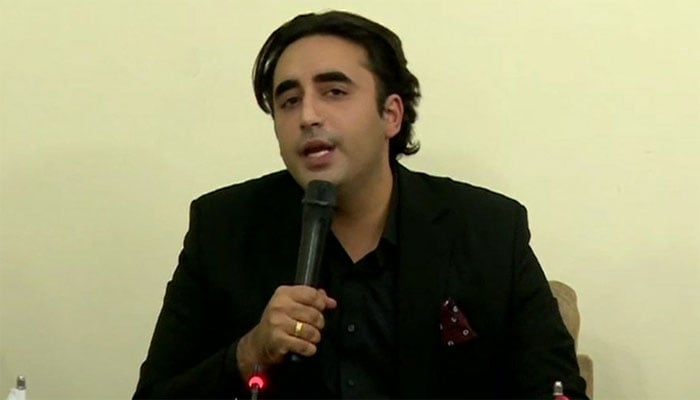

گلگت بلتستان الیکشن: بلاول نے امیدواروں کے ورچوئل انٹرویوز لیے

گلگت بلتستان الیکشن کےلیے پیپلز پارٹی کے امیدواروں کے ورچوئل انٹرویوز لیے گئے۔
اعلامیے کے مطابق چیئرمین بلاول بھٹو کی سربراہی میں پیپلز پارٹی کے الیکشن بورڈ نے امیدواروں کے انٹرویوز لیے۔
پیپلز پارٹی کے اعلامیے کے مطابق دوسرے مرحلے میں دیا مر ڈویژن کے ضلع استور کی 2 سیٹوں کےلیے انٹرویوز لیے جائیں گے۔
اعلامیے کے مطابق انٹرویوز کےد وران بلاول بھٹو زرداری نے امیدواروں سے جیت کی صورت میں ترجیحات دریافت کیں۔
بلاول بھٹو نے امیدوارو سے گفتگو میں کہاکہ گلگت بلتستان الیکشن جیت کر پیپلز پارٹی سندھ کی طرز کےاسپتال بنائےگی۔
انہوں نے مزید کہاکہ گلگت بلتستان پیپلز پارٹی کا مضبوط قلعہ ہے، جیالے بھرپور الیکشن مہم چلائیں ۔
https://jang.com.pk/news/817310

Saturday, September 5, 2020

Video Report - #NajamSethi #AsimSaleemBajwa #NajamSethiOfficial Sethi Sey Sawal | Bajwa ki Kahani Sethi ki Zubani

Video Report - #NayaDaur #AsmaShirazi Asma Shirazi on Imran Khan's Claim: Pakistan's Media Enjoys More Freedom Than The British

Pizza corruption scandal risks dragging China into Pakistan’s domestic affairs

Pakistan's Foreign Minister Shah Mehmood Qureshi, centre, unveils the country’s updated official map which for the first time includes large parts of Indian-administered Kashmir. Photo: EPAPakistan's Foreign Minister Shah Mehmood Qureshi, centre, unveils the country’s updated official map which for the first time includes large parts of Indian-administered Kashmir.
Pakistan’s move to unveil a new political map reasserting its claim to all of Indian-administered Kashmir – minus the parts claimed by China – is fuelling New Delhi’s fears of a two-front conflict with its neighbours, despite a lack of evidence that such a move is in the works. But the release of the map is the latest in a series of conflicts born from cartography which have broken out in the Himalayas since May – from a deadly scuffle between Indian and Chinese soldiers in mid-June to a war of words that began earlier in the summer when New Delhi opened a road through territory claimed by Nepal.
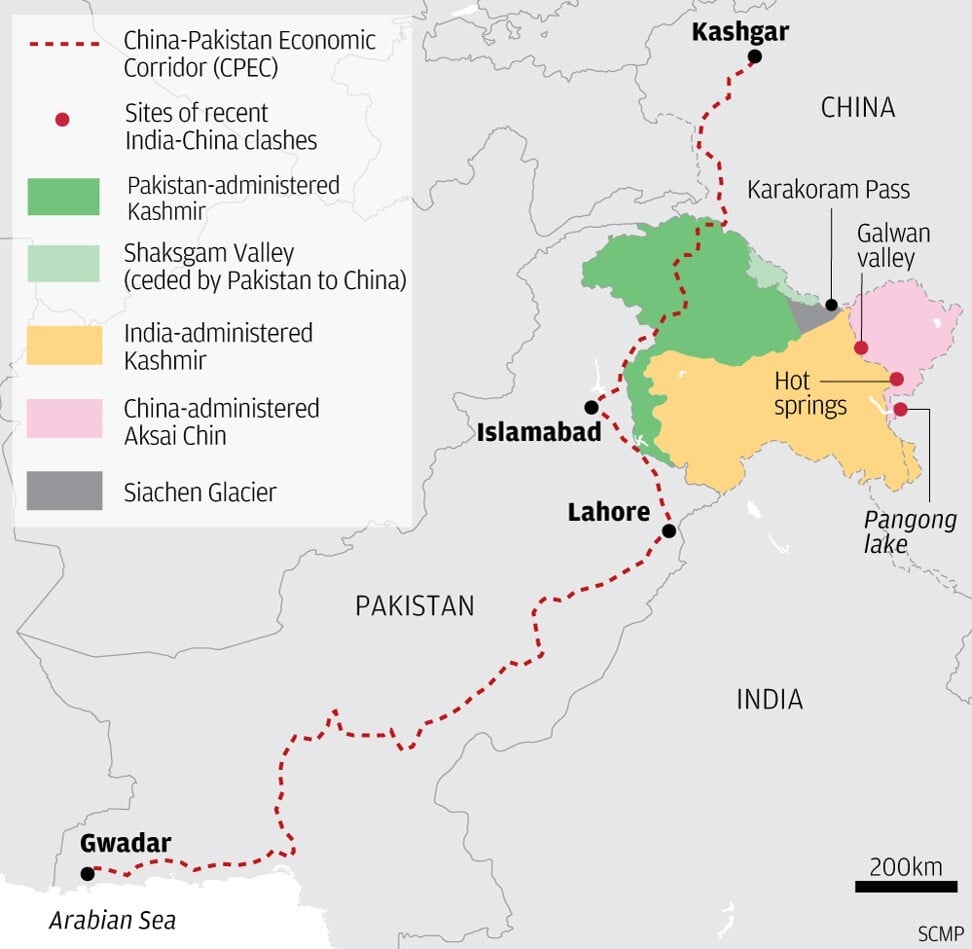
Pakistan’s new map – unveiled almost exactly a year to the day since India’s unilateral decision to strip the part of Kashmir it controls of its semi-autonomy – extends Islamabad’s territorial claim north-eastward up to the Chinese-held Karakoram Pass. On paper, the map links Pakistan with Chinese-administered territory via the Shaksgam Valley, a part of the Gilgit-Baltistan region ceded to China by Pakistan under their 1963 border settlement. To the east is the Aksai Chin region – the limit of China’s claims in Kashmir which it has controlled since a 1962 war with India.
Between the two lies the Siachen Glacier, an undefined area at the northern extreme of the de facto border between Pakistani- and Indian-administered Kashmir known as the Line of Control – not to be confused with the Line of Actual Control, which separates Indian- and Chinese-controlled territory in the region.India, like Pakistan, claims Kashmir in its entirety and has no interest in pursuing a United Nations-supervised plebiscite, supported by Islamabad, for the region’s residents to decide which country they should join. The recent incursions by China across the disputed Line of Actual Control into Indian-administered Kashmir have given Beijing the ability to impede India’s military traffic along roads approaching the Siachen Glacier from the east.
To this extent, Pakistan’s new map does hint at the possibility of coordinated operations with China if Islamabad ever attempts to forcibly take the glacier, which would create a land bridge between Gilgit-Baltistan and Chinese-administered Aksai Chin.
Since Chinese and Indian forces clashed in the Ladakh region this summer, Indian media have speculated about China’s strategic intentions in the area, including the possibility of it seeking to seize territory – fuelling fears of a future war with both China and Pakistan.
“This certainly reinforces the Indian perception of a two-front theatre that its military planners are increasingly taking into account,” said Harsh V. Pant, a professor of international relations at King’s College London.
But as Ejaz Haider – a Lahore-based South Asian strategic affairs analyst – points out, a highway connecting Tibet to Xinjiang already exists “so the Chinese don’t need a route through the Karakoram Pass to reach Xinjiang”. That being said, if Pakistan’s new map were to become reality, it would represent a “net strategic gain” for both Islamabad and Beijing, the former Ford Scholar with the University of Illinois’ programme on arms control, disarmament and international security said.
In a rare four-way dialogue with his counterparts from Pakistan, Afghanistan and Nepal last month, China’s Foreign Minister Wang Yi again pushed plans for a trans-Himalayan economic corridor connecting Nepal to Pakistan via Tibet and Xinjiang, from where it would join the estimated US$60 billion China-Pakistan Economic Corridor (CPEC) culminating at the Chinese operated port of Gwadar on the Arabian Sea. Wang also called for the extension of the CPEC into Afghanistan.

 
This [map] is presumably meant to be a defence of the Belt and Road Initiative, which India opposes because it runs through disputed territory that it claims Michael Kugelman, Wilson Centre

Michael Kugelman, senior South Asia associate at the Washington-based Wilson Centre think tank, said the strategic value of Pakistan’s new map, for Beijing, may lie in the additional political cover it provides to belt and road projects being built in Pakistan-administered Kashmir and Gilgit-Baltistan.
The new map is significant because “it recognises large areas of Indian territory as Pakistan’s”, he said. “This is presumably meant to be a defence of the Belt and Road Initiative, which India opposes because it runs through disputed territory that it claims.” In June, Pakistan awarded contracts for the construction of three major hydropower projects along the Neelum River to Chinese state-owned enterprises under the CPEC programme.
The Neelum River marks the divide between Indian- and Pakistani-administered territory in western Kashmir, before it merges with the Jhelum River, a major tributary of the Indus. This in turn supplies water from Himalayan glaciers to an estimated 270 million people in Pakistan and northwest India.Asma Khan Lone, author of an upcoming book on the history and the geopolitics of the region called The Great Gilgit Game, drew a parallel between Pakistan’s new cartographic claim to the Indian-held Siachen Glacier – a huge source of fresh water – and China’s efforts to “weaponise water” in Ladakh by building dykes for what she described as “tactical flooding”.
Previously vacant because of its extreme altitude, the Siachen Glacier was occupied by Indian forces in 1984, prompting years of intermittent fighting between India and Pakistan at an average elevation of more than 5,400 metres above sea level until a ceasefire was agreed in 2003. The glacier is notorious for killing far more soldiers with its extreme environment than enemy artillery shells ever did: in April 2012, 129 soldiers and 11 civilian contractors were killed after an avalanche buried a Pakistani military base in the nearby Gayari sector. The huge cost of waging war on the glacier, both in terms of finances and human lives, has so far prevented skirmishes breaking out there in the same way they have done elsewhere along the Line of Control since 2016.
But tensions are on the rise. In February last year, Indian warplanes crossed into Pakistani air space near the glacier. Delhi has also recently started reasserting its claims to Pakistan-administered Gilgit-Baltistan and Kashmir by including both in the country’s official weather forecasts since May, while Indian military chiefs have declared their forces ready to seize the territory if so ordered. Kugelman of the Wilson Centre said Pakistan’s new political map is “presumably meant to push back” against such threats – but like India’s bombast, he said it is driven more by domestic politics than long term strategic plans.
“I don’t think we should read too much into this map,” he said. “It is just the latest subcontinental case of using cartography to appeal to nationalism at home, while taking a shot at the enemy next door.”
Zhou Rong, a senior fellow at Renmin University’s Chongyang Institute for Financial Studies who has researched Pakistan and Afghanistan, said the risk of a fourth war between Delhi and Islamabad over Kashmir was very real. “India also realises that ties between Pakistan and the US has become less important over the years, and that Washington has stood on its side during its conflicts with Pakistan,” he said. “This has enabled India to become even more confident.”
He added that “many countries are unwilling to offend India” as they are “increasingly reliant” on it economically. “Many traditionally Islamic countries have also forged better relationships with [New] Delhi, seeing it as an important market for their energy exports,” he said. https://www.scmp.com/week-asia/politics/article/3096308/pakistans-new-kashmir-map-links-it-china-fuelling-indias-fears

Ahead of #FATF Plenary, New Document Reveals Hizb Chief Syed Salahuddin's Direct Links to Pakistan's ISI

As Pakistan’s performance in implementation of the Financial Action Task Force Action Plan comes up for review next month, there is mounting evidence of Islamabad’s support to terrorism in general and active connivance in financing terrorism in particular.
 As Pakistan’s performance in implementation of the Financial Action Task Force (FATF) Action Plan comes up for review in October, there is mounting evidence of Islamabad’s continuing support to terrorism in general and active connivance in financing terrorism in particular. A new document accessed by security agencies confirms links of one of its proxies with Pakistan’s Inter-Services Intelligence (ISI), which is likely to further muddy the waters as its Grey Listing is taken up at the FATF plenary.
One of the important terrorist groups that have been used by Pakistan to foment terrorism in India is Hizbul Mujahideen (HM), headed by Mohammad Yusuf Shah, also known as Syed Salahuddin. He is also the head of the United Jihad Council (UJC), an umbrella organisation of terror outfits such as Lashkar-e-Taiba (LeT) and Jaish-e-Mohammed (JeM).
Acting on the instructions of his Pakistan masters, Salahuddin has been instrumental in carrying out anti-India propaganda and terror activities in Jammu and Kashmir. He has time and again accepted Pakistan’s role in funding terrorist and secessionist activities in Kashmir. In an interview in June 2012, Salahuddin had admitted that he was fighting Pakistan’s war in Kashmir, even threatening to take the war to Islamabad if it withdrew support to him.
Salahuddin had also announced that "the Mujahideen struggle serves as a defence line for Pakistan". The arrest of his sons Syed Shakeel Yousuf and Syed Shahid Yousuf and the recent killing of two of his close associates Riyaz Naikoo and Adil Ahmed by Indian security forces (on May 6) seemed to have rattled Salahuddin, making him increasingly desperate.
Salahuddin supports terrorist activities on Indian soil through a number of proxy NGOs and charities supported by the ISI and other Pakistan-based entities. Among the most prominent of these is the Jammu and Kashmir Affectees Relief Trust (JKART).
The JKART is used by Salahuddin to find recruits by offering them financial incentives and promising to take care of their family members once they are "martyred". JKART’s head office is in Rawalpindi with branches in Islamabad, Muzaffarabad (PoJK), among others.
Indian security agencies recently obtained specific evidence of direct links between ISI and Salahuddin. A letter issued in the name of Mohammad Yusuf Shah alias Syed Salahuddin certified that he is a bonafide official of the Directorate of Intelligence and is working for the ISI. The letter even suggested that he has been “security cleared” and should not be “unnecessarily stopped”. The certificate is valid up to December 31, 2020. The letter issued Shah is important for the FATF to see before taking a decision.
It may be mentioned that it is not Salahuddin alone who enjoys VIP treatment from the Pakistani establishment. It is estimated that Pakistan shelters around 130 terrorists sanctioned by the United Nations Security Council (UNSC). It has also been disclosed that Pakistan has provided access to these terror outfits to its banking system for carrying out nefarious terror activities in India and elsewhere. Recent chargesheets filed by the Enforcement Directorate (ED) and the National Investigation Agency (NIA) bring out the linkages between terrorists and the Deep State in Pakistan. This is likely to be viewed seriously by the FATF as it reviews Pakistan’s Action Plan next month.
https://www.news18.com/news/world/ahead-of-fatf-plenary-new-document-reveals-hizb-chief-syed-salahuddins-direct-links-to-pakistans-isi-2852545.html

#Pakistan #PPP - Chairman PPP Bilawal Bhutto Zardari demands postponement of NA session

Chairman Pakistan Peoples Party, Bilawal Bhutto Zardari has demanded the postponement of the session of the National Assembly due to the situation caused by torrential rain all over the country as the members are busy in relief activities for the people of their constituencies.
Chairman PPP said that the members need to be with their people at this time of need. Former Prime Minister Raja Pervaiz Ashraf has already requested the Speaker National Assembly for this postponement. Bilawal Bhutto Zardari said that the situation is very serious in several part of the country due to heavy rainfall.
Bilawal Bhutto Zardari said that in the current situation, all the government and opposition political parties should aim for relief work for the victims of torrential rain.
https://www.ppp.org.pk/pr/23701/

Friday, September 4, 2020

Music Video - Naheed Akhtar - Teri Ulfat Mein Sanam

Imran Khan's #Tinder and #Grindr ban in #Pakistan criticised as 'hypocrisy'

Hannah Ellis-Petersen and Shah Meer Baloch
Dating app ban is move to appease conservative factions and sign of weakness, say, critics. For Hamza Baloch, Grindr was a life-changer. As a gay man in Pakistan, an Islamic republic where homosexuality carries a sentence of up to 10 years in prison, his means of meeting others in the LGBT community had always been shrouded in secrecy and risk and kept within known safe spaces.
But the arrival of dating apps such as Grindr and Tinder in Pakistan about four years ago brought with it a small revolution among young people across the spectrum of sexuality. Here they could connect and meet people on their own terms, with an honesty about their sexuality that was previously taboo and dangerous. The apps proved popular: Tinder has been downloaded 440,000 times in Pakistan in the last 13 months.
“I used Grindr a lot for dating, sometimes just so I could meet up with someone over a cup or tea or dinner, or sometimes for more casual hookups,” said Baloch, who is an LGBT activist in Karachi. He emphasised that Grindr was not just the preserve of upper- and middle-class people in cities, and said he had seen the app used by gay and trans people even in remote rural communities in Sindh province, for example.
But this week the Pakistan government announced it was imposed a sweeping ban on dating apps, accusing them of hosting “immoral and indecent content”. It is part of what has been seen as a move by the prime minister, Imran Khan, to appease the conservative religious factions who wield enormous amounts of power and influence in Pakistan.
In response, Grindr, which describes itself as the world’s largest social networking app for gay, bisexual, transgender and queer people, said it was “exploring ways that we can be of service to the LGBTQ community in the region”.
Homosexuality is still widely perceived to bring shame to families in Pakistan, and has led to so-called “honour” killings. But the apps have also been met with disapproval over heterosexual meetups, particularly for women from more conservative households who are discouraged from dating on their own terms and instead are expected to enter into an arranged marriage with someone selected by their family.
“What sane government in 2020 stops its citizens from dating?” said Baloch. “Even those who call themselves religious and practising people of faith used these apps for their private life to fulfil their desires and human needs, which they didn’t want to do publicly or visibly.”
He added: “No matter which strata of society they belong to, be it a university grad or a shopkeeper at some village, these apps provided a great and a safe platform to the queer community to connect and interact with each other, without putting themselves at risk.”
The apps were not without their dangers. After an incident in 2016 in which a 20-year-old man killed three gay men he had lured from LGBT Facebook pages, claiming to be stopping the spread of evil, the LGBT community was warned to avoid anonymous meetings with people through apps and social media. In order to protect their identities, LGBT people often did not post identifying photos on their Tinder and Grindr profiles.
The decision by Khan’s government to bring in the ban on dating apps has led to accusations of hypocrisy against the prime minister, who before entering politics was a Test cricketer with something of a lothario reputation. Many criticised the move as further evidence of the weakness of Khan’s government in the face of the powerful religious right, while others wryly commented that Khan would be the “playboy that brought in sharia [Islamic law according to the Qur’an]”.
Neesha*, 20, an LGBT student at Habib University in Karachi, said apps like Tinder had taken the fear out of dating, whichwould now return after the ban. While small groups and communities of LGBT people had existed long before the apps arrived in Pakistan, Tinder and Grindr had opened up the opportunity to meet people who might be less comfortable attending LGBT meetups or who were still exploring their sexuality.
Neesha spoke of two university friends who had not known the other was gay, both too fearful to speak openly about it, until they saw each other on Tinder. They subsequently began a relationship. “People say these apps aren’t for countries like ours but I think it’s to the contrary, we need them more because we can’t be public about who we are,” she said, describing the ban as “pure hypocrisy”.
The impact of banning the apps was not only felt in the LGBT community. “Going on dates is considered wrong in our society and so honestly Tinder has made it easier for people in Pakistan to communicate with each other and meet each other,” said a 25-year-old student studying at Shaheed Zulfikar Ali Bhutto Institute of Science and Technology, Islamabad. “Banning these apps is absurd.”
Minahil, a student and activist at Iqra University, Karachi, said the apps had “definitely made it easier for gay people in Pakistan to find love” and she feared that the ban was part of a wider crackdown on the gay community that would once again ensure “people in Pakistan stay in the closet forever”.
“By blocking these apps, Imran Khan is trying to win the hearts of conservatives and hide his own past,” she said. “But we can all see the hypocrisy.”
https://www.theguardian.com/world/2020/sep/04/imran-khans-tinder-and-grindr-ban-in-pakistan-is-hypocrisy

How can #Balochistan prosper if its poor children are out-of-school and uneducated?


By: Munaj Gul Muhammad
Tariq Baloch, 13, gets up early in the morning and moves to the nearby garage in Turbat city every day so as to earn a little sum of money for the family. He uses the work tools at a very young age rather than picking up books to be at school. And schooling has not been a daydream for him since his childhood besides having the constitutional rights.
”School is not for us.” Says Tariq Baloch in tears before I put a question. “Who could buy clothes and shoes for my younger sister if I were in school? How can we survive without the basic facilities like, food-stuffs, lodging and other indispensable necessities? No one can measure the problems we are going through.” Thought-provoking, indeed.
  The expensive fee structure of the education and negligence of the government constrained the boy to work in this garage instead of securing education to lodge a comfy living. He is as poor as sometimes his family members sleep without taking a loaf of bread.
 Balochistan, a resource-rich province, is confronted with a staid challenge to ensure all children to be at school and thwarting out-of-school children is another quandary in the province.
60 to 70 percent children in the province are out-of-school according to a report by UNICEF. Among which, 78% girls and 67% boys of school going age are out-of-school, the sole reason why Balochistan always has a handful number of out of school children is because Balochistan governments-in-rule have always snubbed the decades-long education emergency.
  1.8 million Children in Balochistan do not attend school, over half of whom are girls, a report by the Academy for Educational Planning and Management (AEPAM) says.
In Balochistan mainly girls are out-of-school owing to the gender-based discrimination and regressive societal norms. The dismal state of education, expensive fee structure, and apathy of the government are the other reasons for the great drop-out of the students in the province.
“If my daughters were able to be enrolled in any school in the area someday, it could be the happiest day of my life.” Says Mahtab Baloch. “A fraction of unfortunate and indigent daughters of the soil end their lives up without stepping into schools.”
Correspondingly, the non-functional schools and absence of ultimate amenities in the schools are the main drives behind the rife unenrollment of the school-going children; therefore, the province has been home to the highest proportion of illiteracy among girls. Getting the out-of-school children into school is the constitutional duty of the government which remains unaddressed.
 1, 1627 primary schools are registered in Balochistan, of which 1,271 are middle schools and 947 are high schools as per as a study by Alif Ailaan. The study highlights that each year 165,869 girls are enrolled in the primary section, of which the number drops to 44,076 in the middle section and 20,015 in the higher section.
The absence of rudimentary education always impedes progress of the society so as the province grieves from the plagues.
” Whenever I see children going towards schools having bags and wearing uniforms, I wish to get my children enrolled in a school, but forlornly, we cannot go to a lot of expenses to educate our children well since we are paupers,” complains Bibi Gangi.
Her children are out of school and have no other options besides opting work tools at a very young age. They are abused and beaten.
According to the annual report citizen-led household ASER Survey 2018,“In Baluchistan, the proportion of out-of-school children has improved as compared to 2016 but 28% children are still not going to school and the province has recorded overall 7% increase in enrollment.”
Visiting a friend in Mand, district Kech, a few months ago, I was dazed to see the government primary schools in scruffy state. The education minister of Balochistan has on no occasion taken decent steps to bring out-of-school children into school and address the longstanding education crisis in the province.
The education crisis in Balochistan would not come to an end until and unless a basic education is accessible for all. The government had better show its commitment to tackle the problem of ghost teachers and absenteeism of teachers by applying biometric system and ensure that all children are provided with free textbooks and uniforms besides basic amenities in schools.

MNA Mohsin Dawar says stopped at Quetta airport, barred from entering city

Lawmaker Mohsin Dawar said he was barred from leaving Quetta airport on Friday by authorities upon arrival in Balochistan's capital.
"I have just landed in Quetta and I have been stopped from leaving the airport by security agencies," said Dawar via a tweet. "I have been told that my entry to Balochistan has been barred again for 90 days. The state thinks it can break our resolve with such petty tactics. They can’t."
He also posted a notice on his Twitter account, which said that the entry of Dawar and fellow lawmaker Ali Wazir in Balochistan was banned for 90 days under the Balochistan Maintenance of Public Order Ordinance, 1960.
Speaking to DawnNewsTV, Dawar said he was speaking to government officials and added that he was being accompanied by workers and supporters of the group.
“The officials informed Mohsin that the deputy commissioner was in Islamabad. The additional deputy commissioner has reached the airport to talk with Mohsin,” Khalil Ahmed, a PTM worker present at the airport said. Khalil further said that the MNA had come to Balochistan to offer condolences to families whose members had been killed in a firing incident at Chaman border.
Dawar and his supporters had flown in from Islamabad. According to an official at the airport, the last flight from Quetta to Islamabad took off earlier in the day and no other flights are scheduled to other cities today.
Members of the group's Quetta chapter gathered outside the airport as news of the development reached them and threatened to stage a protest against the government over the move.
In November 2018, Dawar and Wazir were offloaded from a flight bound from Peshawar to Dubai by officials of security agencies and were told that they could not travel abroad because their names were on the Exit Control List.
In December of the same year, the federal cabinet directed the interior ministry to scrap the PTM leaders' names off the list.
Earlier this year in March, Dawar and Wazir were stopped from boarding a Kabul-bound flight, as officials said that their names were on no fly list. They were going to Afghanistan to attend President Ashraf Ghani's oath-taking ceremony.
At the time, Firdous Ashiq Awan, the then special assistant to the prime minister on information and broadcasting, had said that the names of both MNAs were on the ECL and they "did not ask for permission to go to Afghanistan".
https://www.dawn.com/news/1577902/mna-mohsin-dawar-says-stopped-at-quetta-airport-barred-from-entering-city

#Baluchistan : At least 4 injured in blast outside mosque in #Quetta

At least four people were injured in a blast outside a mosque on Quetta's Sariab Road on Friday, police said.
The wounded were shifted to the Civil Hospital for treatment. The incident took place after Friday prayers.
A video showed worshippers coming out of the mosque as an explosion was heard and plumes of smoke rose from a motorcycle on fire.
Quetta Deputy Inspector General Abdul Razzaq Cheema said the nature of the explosion could not be immediately ascertained and police were investigating if explosives were planted on a bike or if the vehicle caught fire.
But another police official told DawnNewsTV that 1-1.5 kilogrammes of explosive material was left in a bag next to a motorcycle parked outside the mosque. He said the blast was caused after the detonator blew up but the explosives themselves didn't catch fire.
More destruction would have been caused if the explosive material had gone off, the official added.
Police cordoned off the area as the probe into the blast went underway.
According to a state-run APP news agency, shops were shut down as panic gripped the area following the blast. Rescue services were also dispatched to the site. https://www.dawn.com/news/1577897/at-least-4-injured-in-suspected-blast-in-quetta

Thursday, September 3, 2020

Music Video - #BillyJoel #WeDidntStartTheFire #Rock Billy Joel - We Didn't Start the Fire

Video Report - Biden meets family of Black man shot by police before heading to Kenosha

Video Report - #Covid19 #Coronavirus #Obesity Experts identify obesity as major factor in COVID complications

Video Report - Dr. Fauci weighs in about a possible vaccine in October

Pakistan-India-Bangladesh - Opinion: The Terrible Cost of Presidential Racism - President Nixon’s racism and misogyny

By Gary J. Bass

Recently declassified White House tapes reveal how President Nixon’s racism and misogyny led him to ignore the genocidal violence of the Pakistani military in what is today Bangladesh.

As Americans grapple with problems of racism and power, a newly declassified trove of White House tapes provides startling evidence of the bigotry voiced by President Richard M. Nixon and Henry Kissinger, his national security adviser.
The full content of these tapes reveal how U.S. policy toward South Asia under Mr. Nixon was influenced by his hatred of, and sexual repulsion toward, Indians.
These new tapes are about one of the grimmest episodes of the Cold War, which brought ruin to Bangladesh in 1971. At that time, India tilted heavily toward the Soviet Union while a military dictatorship in Pakistan backed the United States. Pakistan flanked India on two sides: West Pakistan and the more populous, and mostly Bengali, East Pakistan.
In March 1971, after Bengali nationalists won a democratic election in Pakistan, the junta began a devastating crackdown on its own Bengali citizens.
Mr. Nixon and Mr. Kissinger staunchly supported the military regime in Pakistan as it killed hundreds of thousands of Bengalis, with 10 million refugees fleeing into neighboring India. New Delhi secretly trained and armed Bengali guerrillas. The crisis culminated in December 1971 when India defeated Pakistan in a short war that resulted in the creation of an independent Bangladesh.
I documented the violent birth of Bangladesh and the disgraceful White House diplomacy around it in my book “The Blood Telegram,” published in 2013. Much of my evidence came from scores of White House tapes, which reveal Mr. Nixon and Mr. Kissinger as they really operated behind closed doors. Yet many tapes still had long bleeps.In December 2012, I filed a legal request for a mandatory declassification review with the Richard Nixon Presidential Library and Museum. After considerable wrangling, the Nixon archivists at last released a few unbleeped tapes in May 2018 and July 2019, then 28 more in batches from October 2019 to this past May. (There are bleeps still remaining on a couple of the reviewed tapes, some of which I am appealing.)
It was stunning to hear a conversation between Mr. Nixon, Mr. Kissinger and H.R. Haldeman, the White House chief of staff, in the Oval Office in June 1971. “Undoubtedly the most unattractive women in the world are the Indian women,” said Mr. Nixon. “Undoubtedly,” he repeated, with a venomous tone.
He continued, “The most sexless, nothing, these people. I mean, people say, what about the Black Africans? Well, you can see something, the vitality there, I mean they have a little animallike charm, but God, those Indians, ack, pathetic. Uch.”
On Nov. 4, 1971, during a private break from a contentious White House summit with Prime Minister Indira Gandhi of India — a rare woman leader at the time — the president harangued Mr. Kissinger about his sexual disgust at Indians.
Mr. Nixon said: “To me, they turn me off. How the hell do they turn other people on, Henry? Tell me.” Mr. Kissinger’s response is inaudible, but it did not discourage the president from his theme.The president, in between bitter sparring matches with Mrs. Gandhi about the danger of war with Pakistan, suggested to Mr. Kissinger that his own sexual neuroses were having an impact on foreign policy: “They turn me off. They are repulsive and it’s just easy to be tough with them.”A few days later, on Nov. 12, 1971, in the middle of a discussion about India-Pakistan tensions with Mr. Kissinger and Secretary of State William P. Rogers, after Mr. Rogers mentioned reprimanding Mrs. Gandhi, the president blurted, “I don’t know how they reproduce!”
Mr. Kissinger has portrayed himself as above the racism of the Nixon White House, but the tapes show him joining in the bigotry, though the tapes cannot determine whether he truly shared the president’s prejudices or was just pandering to him. On June 3, 1971, Mr. Kissinger was indignant at the Indians, while the country was sheltering millions of traumatized Bengali refugees who had fled the Pakistan army. He blamed the Indians for causing the refugee flow, apparently by their covert sponsorship of the Bengali insurgency. He then condemned Indians as a whole, his voice oozing with contempt, “They are a scavenging people.”
On June 17, 1971 — in the same conversation as Mr. Nixon’s outburst at “sexless” Indian women — the president was furious at Kenneth B. Keating, his ambassador to India, who two days earlier had confronted Mr. Nixon and Mr. Kissinger in the Oval Office, calling Pakistan’s crackdown “almost entirely a matter of genocide.”
Mr. Nixon now asked what “do the Indians have that takes even a Keating, for Christ, a 70-year-old” — here there is cross-talk, but the word seems to be “bachelor” or “bastard.” In reply, Mr. Kissinger sweepingly explained: “They are superb flatterers, Mr. President. They are masters at flattery. They are masters at subtle flattery. That’s how they survived 600 years. They suck up — their great skill is to suck up to people in key positions.”
Mr. Kissinger voiced prejudices about Pakistanis, too. On Aug. 10, 1971, while discussing with Mr. Nixon whether the Pakistani junta would execute the imprisoned leader of the Bengali nationalists, Mr. Kissinger told the president, “I tell you, the Pakistanis are fine people, but they are primitive in their mental structure.” He added, “They just don’t have the subtlety of the Indians.”
These emotional displays of prejudice help to explain a foreign policy debacle. Mr. Nixon and Mr. Kissinger’s policies toward South Asia in 1971 were not just a moral disaster but a strategic fiasco on their own Cold War terms.
While Mr. Nixon and Mr. Kissinger had some reasons to favor Pakistan, an American ally which was secretly helping to bring about their historic opening to China, their biases and emotions contributed to their excessive support for Pakistan’s murderous dictatorship throughout its atrocities.
As Mr. Kissinger’s own staff members had warned him, this one-sided approach handed India the opportunity to rip Pakistan in half, first by sponsoring the Bengali guerrillas and then with the war in December 1971 — resulting in a Cold War victory for the Soviet camp.
For decades, Mr. Nixon and Mr. Kissinger have portrayed themselves as brilliant practitioners of realpolitik, running a foreign policy that dispassionately served the interests of the United States. But these declassified White House tapes confirm a starkly different picture: racism and misogyny at the highest levels, covered up for decades under ludicrous claims of national security. A fair historical assessment of Mr. Nixon and Mr. Kissinger must include the full truth, unbleeped.
https://www.nytimes.com/2020/09/03/opinion/nixon-racism-india.html?action=click&module=Opinion&pgtype=Homepage

Music Video - Sanu Nehar Walay Pul Tay Bula Kay.... Noor jahan

Video Report - #NayaDaur #Blasphemy #Pakistan 42 Blasphemy Cases, Mostly Against Shias, Registered In Pakistan In Just One Month

Video Report - #NayaDaur #ShahMahmoodQureshi #HinaRabbaniKhar Pakistan's Foreign Policy Under Imran Khan | With Hina Rabbani Khar

#Pakistan - A story of failure - #PTI government and polio


  • A story of failure
The PTI had come to power without any preparation for the arduous job of running a country with a population of over 213 million and scores of serious problems. It was claimed that once an honest Prime Minister was holding the levers of power, every serious problem would soon get resolved. Within two years the self-serving claim has turned out to be false in several spheres, including polio eradication. WPV cases that were gradually going down from 54 in 2015 to 20 in 2016, 8 in 2017 and 12 in 2018, sharply rose under PTI rule to 147 in 2019. During the last few months the number has already reached 67. Pakistan and Afghanistan remain the only two countries in the world reporting polio cases and being considered a potential source of dissemination of the virus to other countries.
The two years of the PTI rule are marked by an upsurge in polio cases. There are two major reasons behind the phenomenon. First, appointment of incompetent focal persons handpicked by the PM, like Mr Babar bin Ata and Dr Zafar Mirza. In both cases the government discovered, though much after the harm had been done, that the choice was inappropriate. The second reason was the sheer political opportunism which stood in the way of enforcing the writ of the state. The PTI government was simply reluctant to alienate the clerics, especially in KP, who opposed vaccination. The PTI feared that if the religious leaders turned hostile, this could result in loss of votes.
The task of controlling polio has now been handed over to the newly appointed Special Assistant to PM (SAPM) on health Dr Faisal Sultan. On Wednesday Dr Sultan paid his first visit to the National Emergency Operation Centre (NEOC) where he expressed the government’s determination to eradicate the virus. The task ahead will test the new focal person’s competence. But as long as political exigencies are allowed to stand in the way of the enforcement of the state’s writ, polio cannot be eradicated. Two years after paying monthly salaries to prayer leaders, who deliver Friday sermons in KP, and allocating millions of rupees to seminaries, the time has come when he who pays the piper must call the tune.

#Pakistan - Coronavirus in South Asia: Is low testing hiding scale of the outbreak?

Shruti Menon
India has the third-largest number of coronavirus cases in the world after the US and Brazil with over 3.8 million infections reported so far.
That's not surprising given its huge population, but what is the scale of the epidemic in neighbouring countries?
Is the outbreak growing in South Asia? India's numbers have been rising fast after it relaxed a strict lockdown, imposed in the last week of March.
It's seen record numbers of daily cases, as it continues to expand its testing, doing one million tests in a single day on 21 August.
Can India test a million people a day?
But other countries in South Asia seem to be witnessing a downward trend in cases after steep increases in May and June, although Nepal is currently witnessing a surge.


In Pakistan, cases have fallen from a peak in mid-June of almost 6,000 new infections each day, to about a few hundred a day in September.
Afghanistan's numbers have been falling after a spike in mid-June, although there are questions about the reliability of its official figures.
A recent survey conducted by their health ministry showed that more than a third of the country's population could have been infected.
In Nepal, the government imposed a lockdown which went on for 100 days, during which time most cases were in areas bordering India. It's imposed new local restrictions in several provinces, as infections have been going up in some densely-populated urban areas.
The health ministry announced on Tuesday that the virus has entered the community in 12 of Nepal's districts including the capital, Kathmandu.
Sri Lanka has much lower levels of infection. It has had spikes in cases since April, but has had relatively low numbers. It implemented a tight lockdown, traced contacts of positive cases and imposed strict quarantine rules.

"A thorough contact-tracing system was in place using public health officers, local police, intelligence officials and local administrative officials," says BBC Sinhala's Saroj Pathirana.

How much testing is done in South Asia?

"Total number of cases per million in India and the rest of South Asia are low, but so is the number of tests per million," says virologist Dr Shahid Jameel.
He says that while total numbers of tests in these countries seem high, they are not when you factor in population sizes.
Bar chart comparing different countries on testing- Updated
India has has so far conducted 43 million tests. Pakistan has carried out more than 2.6 million.
But per capita tests in these countries are far lower than in other countries.
And in Pakistan and Bangladesh, testing levels have fallen, which will have had an impact on the number of positive cases recorded.
Pakistan conducted over 31,000 tests per day in June. And on 27 July, a record 41,666 tests were conducted - the highest number ever done in Pakistan.
But the numbers of tests fell sharply over the following days, declining to a low of 10,759 on 3 August, before rising again.
A government survey conducted in July around the Pakistani capital, Islamabad, suggested that nearly 300,000 people may have been infected by the virus there alone, a majority of them asymptomatic.
Bangladesh's testing numbers have also gone down after the government introduced a high testing fee in July. There's also been a scandal around the sale of fake negative test certificates.
In Nepal, a total of 705,560 tests had been conducted as of 1 September, with just over 10,000 tests a day.
Testing data for Afghanistan is not available and the Red Crescent has expressed concern that the actual number of cases could be much higher than officially announced.
Bar chart showing countries rate of testing per confirmed case - Updated
The World Health Organization (WHO) has set a benchmark range for adequate testing of between 10 and 30 per confirmed case in a country or region.
South Asian countries fare poorly on this measure.
Russia and Japan, which have populations similar to Bangladesh, are testing far more widely, finding a positive case for every 37 and 27 tests respectively. But Bangladesh is identifying one positive case for every five tests carried out - well below the WHO benchmark.
Nepal was finding a positive case for every 20 tests until August 19, down from 25 tests as of June 14.

What about the death rate in South Asia?

The overall death toll in India is now the third largest largest in the world, although the proportion of people who become ill and then die remains low compared to the global average.
Deaths recorded in other countries in the region are lower than in other countries where the virus took hold, whether we look at absolute numbers or per capita.
Click here to see the BBC interactive
This appears to be an encouraging sign, but there are questions about the reliability of data in a region with relatively low levels of public health spending.
"Many deaths are not reported within the vital registration system and the causes of deaths are incorrectly classified," said Professor Kamran Siddiqi, a public health expert at the University of York.
But Dr Shahid Jameel says even if deaths are under-reported, the difference from other areas of the world is "quite stark".
"The most plausible explanation is that the populations in South Asia are made up of far younger people than say in Europe and the US," Prof Siddiqi says.
https://news.yahoo.com/coronavirus-south-asia-lack-testing-233844660.html

Wednesday, September 2, 2020

Video Report - PTA Blocks 5 Dating, Live Streaming Apps: Tinder, Tagged, Skout, Grinder, SayHi Banned

Polio could get worse in Pakistan, despite victory in Africa, as cases rise again in last two haunts

Ben Farmer
Polio in Pakistan could get significantly worse this year even as the world is celebrating the eradication of the virus from Africa, according to independent experts monitoring the worldwide vaccination campaign.
Modeling suggests the country could suffer hundreds of cases in 2020, and the crippling virus is now claiming victims in areas once considered clear of the scourge.
The coronavirus pandemic struck the nation of more than 220m just as health officials were trying to overhaul the national effort after a grim 2019 which had already seen cases soar.
The monitoring board set up to check progress by the Global Polio Eradication Initiative (GPEI) last year declared efforts in both Pakistan and Afghanistan were in crisis in the face of security threats, public suspicion and mismanagement, and political infighting.
The latest report from the board, led by Sir Liam Donaldson, a former Chief Medical Officer of England, said Pakistan appeared willing to turn the program around but was running out of time.
“If that does not happen in the next six months, if those changes do not get rolling, the wheels will come off the Pakistan bus,” their report warns.
“The situation for polio programme leadership at all levels could not be one of higher pressure.”
The war on polio | Is an end to the childhood disease in sight?
The war on polio | Is an end to the childhood disease insight?
A three-decade-long worldwide campaign to stamp out poliovirus has come tantalisingly close to ending a disease which caused 350,000 cases per year in the late 1980s.
Yet despite the recent victory in Africa, cases are again rising in its last two haunts – Pakistan and Afghanistan. Pakistan saw 12 cases in 2018, and 145 last year. Moreover there have been other outbreaks linked to mutated strains from vaccine.
Meanwhile in Afghanistan swathes of are beyond the reach of polio teams because of Taliban edicts banning door-to-door visits.
The monitoring board said the vision of a polio-free world currently seemed “a distant pinpoint of light”. The polio programme is in “dire straits,” the board's five members warned.
Too many people had believed that the job was almost done last year, leading to complacency amid a “jaw-dropping” slump in performance.
“The phrase now being used to encourage everyone is: 'The last mile is always the most difficult'. The polio programme is too forgiving of itself,” the board said.

https://news.yahoo.com/polio-could-worse-pakistan-despite-125939907.html

Spurned by allies, Saudi rethinks checkbook diplomacy

Anuj Chopra
Spurned by allies, Saudi rethinks checkbook diplomacy.
As plummeting demand has sapped its oil revenues, the kingdom is rethinking old alliances From Pakistan to Lebanon, Saudi Arabia is scaling back its famed chequebook diplomacy, a longstanding policy of splashing petro-dollars in exchange for influence, which observers say has yielded few tangible gains.
For decades, the wealthy kingdom funnelled billions in aid to its allies -- and to its enemies' enemies -- in a bid to bolster its position as an Arab powerhouse and leader of the Muslim world.
But as plummeting demand has sapped its oil revenues, the kingdom is rethinking old alliances that Saudi observers say have swallowed their cash while offering little in return, at a time when its quest for regional supremacy is increasingly challenged by rivals Iran, Turkey and Qatar.
A swathe of regional countries, from Jordan and Lebanon to Egypt, Palestine and Pakistan, have been the top recipients of Saudi aid over the past decade, said Middle East expert Yasmine Farouk.
"The dual economic impact of the coronavirus and low oil prices, however, may lead Saudi Arabia to restructure and rationalise its aid," said Farouk, from the Carnegie Endowment for International Peace.
"The country is already seeking to end the perception of being 'an ATM'."
The kingdom has contributed billions to Lebanon's post-civil war reconstruction, but it has voiced frustration over its failure to rein in Hezbollah, a powerful group backed by its arch-enemy Iran.
"Saudi Arabia will not continue to pay Hezbollah's bills, and the Lebanese have to shoulder their responsibilities towards their country," Saudi columnist Khalid al-Sulaiman wrote recently for the pro-government Okaz newspaper.
"It is no longer possible for Saudi Arabia to continue paying billions to Lebanon in the morning and receive insults at night.
"This situation is no longer compatible with the new Saudi foreign policy, as Saudi money does not fall from the sky or grow in the desert."
- 'Party is over' -
Saudi Arabia also appears frustrated with Pakistan after the longstanding ally pushed Riyadh to take a firm stand on the disputed region of Kashmir and threatened to take the issue to other Muslim forums.
Such a threat is particularly disconcerting for Saudi Arabia, which is home to Islam's holiest sites and views itself as the leader of the Muslim world.
The kingdom recently recalled $1 billion of a $3 billion loan from cash-strapped Pakistan, and an expired multi-billion dollar oil credit facility to Islamabad has not been renewed, a diplomatic source told AFP.
"Pakistani elites have a bad habit of taking Saudi support for granted, given what Saudi has done for Pakistan over the decades," tweeted Ali Shihabi, a Saudi author and analyst.
"Well the party is over, and Pakistan needs to deliver value to this relationship. It's no longer a free lunch or a one-way street."
Riyadh's ties with Pakistan have historically been "very warm" but the relationship has been lopsided, said Saudi prince Talal bin Mohammad al-Faisal. "It (has) only benefited one side in 'real world' terms," he tweeted.
"That side is Pakistan."
- 'Take their money' -
Pakistan and Egypt, another ally which has received billions in aid, rebuffed calls for ground troops to support the Saudi-led military campaign in Yemen against Iran-linked Huthi rebels.Further stirring consternation in Riyadh, a leaked 2015 audio recording showed Egypt's President Abdel Fattah al-Sisi allegedly mocking Gulf powers including Saudi Arabia, saying they were rolling in money "like rice".That sentiment was echoed in 2018 by US President Donald Trump when he hosted Crown Prince Mohammed bin Salman in the Oval Office and held up a chart listing military hardware sales worth billions to Riyadh."Take their money," Trump told NBC News the following year, justifying backing the kingdom's rulers after journalist Jamal Khashoggi's murder sparked global uproar.
With so many of its relationships rendered transactional, Riyadh is struggling to win respect and its once-leading role in the Muslim world is increasingly challenged by its rivals, observers say.
The Saudis are increasingly resentful of "ungrateful" allies, said Farouk.
States that have traditionally benefited from Saudi largesse, including Jordan, Lebanon and Palestine, have "already seen instances in which aid was frozen, decreased or cut off", she added.
https://news.yahoo.com/spurned-allies-saudi-rethinks-chequebook-025302937.html

Five countries block Pakistan's move to list Indians as terrorists at UN

Pakistan has failed to list two Indians as United Nations listed international terrorists under the 1267 committee of the UNSC.
Five countries on Wednesday blocked the move of Pakistan to list Indians as terrorists at the United Nations (UN). Pakistan has failed to list two Indians as United Nations listed international terrorist under the 1267 committee of the UNSC.
The listing was blocked by five UNSC countries--UK, USA, France, Germany and Belgium after no evidence was found to substantiate Pakistan's claim. Pakistan was keen to list Indian nationals Gobinda Patnaik, and Angara Appaji as UN terrorists.
UNSC members gave Pakistan time to provide evidence but Islamabad could not provide it. A hold was put for Pakistan to come up with evidence but the country failed.
India's envoy to UN TS Tirumurti tweeted, "Pakistan’s blatant attempt to politicize 1267 special procedure on terrorism by giving it a religious colour, has been thwarted by UN Security Council. We thank all those Council members who have blocked Pakistan’s designs."
Earlier, it had attempted to list two other Indians-- Venumadhav Dongara and Ajoy Mistry as terrorists but the bid failed. Pakistani Foreign Ministry in a statement in June had expressed its "disappointment" for not able to list Dongar. It alleged that they were backing groups like Jamaat-ul-Ahrar etc.
The move was considered a quid pro quo move by Pakistan for India able to get Masood Azhar listed as a UN terrorist in 2019. Azhar is the chief of Pakistan-based UN listed terrorist organization Jaish-e-Mohammad (JeM) responsible for Pulwama terror attack, among other attacks in India. Pakistani nationals are listed in the largest number at the UN terror list.
https://zeenews.india.com/world/five-countries-block-pakistans-move-to-list-indians-as-terrorists-at-un-2307162.html

#PPP, #PML-N leadership pledges to adhere to Charter of Democracy (CoD) and invoking Constitutional options to get rid of incompetent PTI government

Pakistan People’s Party (PPP) and Pakistan Muslim League-Nawaz (PML-N) have renewed their commitment to adhere to democratic principles in the light of the Charter of Democracy (CoD), signed between Shaheed Mohtarma Benazir Bhutto and Mian Muhammad Nawaz Sharif fourteen years ago. Both the parties stressed that the 1973 Constitution should be implemented in letter and spirit, as the constitution is the only way forward to a brighter future for Pakistan.
Leader of Opposition in National Assembly and PML-N President Mian Shahbaz Sharif arrived Bilawal House and met former President Asif Ali Zardari and Chairman PPP, Bilawal Bhutto Zardari.
Chaudhry Ahsan Iqbal, Muhammad Zubair, Maryam Aurangzeb and other leaders also accompanied Shahbaz Sharif, while Sindh Chief Minister Syed Murad Ali Shah, Farhatullah Babar, Syed Naveed Qamar, Nisar Ahmad Khuhro, Syed Waqar Mehdi, Aajiz Dhamrah from PPP were also present at the meeting.Leadership of the two parties discussed the overall political situation in the country and the aftermath of the worst monsoon rains and flooding and the difficulties faced by the people besides the political situation in the country.Chairman Bilawal Bhutto Zardari said that it was important for political parties take realistic measures of climate stress and the extreme weather it has unleashed all over Pakistan, including Karachi. He stated that political parties have to put their differences aside and not treat calamities as platform for political point-scoring.He said that people are looking for relief, from the collapse of governance, serial load-shedding, crippling inflation and an alarming lack of clarity about stated goals on foreign policy, rising debt, misuse of Parliament and the abuse of fundamental rights.
At the meeting, the leadership of both the parties agreed that they would work together for the supremacy of the Constitution and the Parliament, for free judiciary and free media; the protection of the democratic process and the protection of the constitutional and democratic rights of the people.
Top opposition leaders of the country were in consensus that all the constitutional options would be used to get rid of the incumbent ineligible government, as the failures and incompetence of this government have become a torment for the country and the people. Both the parties strongly condemned the current government’s actions under the garb of accountability as political revenge.A joint post-meeting press conference was addressed by Farhatullah Babar, Syed Naveed Qamar, Ahsan Iqbal, Marium Orangzaib and Aajiz Dhamrah. Naveed Qamar said that he was grateful to the Leader of the Opposition, who had come to show solidarity during the testing times.PPP and PML-N leaders said that this is not a moment to criticise but for mutual cooperation, instead. A meeting of the Rehbar Committee of the Opposition Parties would be held tomorrow, followed by an All Parties Conference (APC), added Naveed Qamar.
Ahsan Iqbal said that the Federal government should have announced a serious aid package to support the rain-hit economy in Sindh in consultation with the Provincial government. This PTI government has disrupted politics, failed the governance and destroyed the economy of the country. Farhatullah Khan Babar pointed out the media reports against the Special Assistant to the Prime Minister adding that the allegations made in it are very serious and should be investigated at the highest level. It was surprising that the government, National Accountability Bureau (NAB) and the Special Assistant to the Prime Minister himself were silent after the news came to light, he added.
Former Senator said that the issue of missing persons was becoming highly serious, whereas it started from the time of Musharraf adding that Opposition rejected a legislation piece, which was aimed at legalizing the enforced disappearances.
https://www.ppp.org.pk/pr/23679/