Friday, June 19, 2020

The Balochistan paradox and Pakistani politics


When leading Baloch nationalist leader Sardar Akhtar Mengal announced his political divorce with House of Khan earlier this week-- the Prime Minister-led ruling coalition-- he also conveyed his anguish to the country’s powerful military establishment.
It’s a double political strike, creating a political headache for Khan and strategic pain for the establishment.
Khan’s government is already walking a tightrope, struggling to deal with the dangerous spread of coronavirus while locusts wipe out crops amid an ailing economy.
The political crisis might further deepen following a landmark decision by the country’s Supreme Court on Friday, which has dismissed a presidential reference against SC judge Qazi Faez Isa and declared it null and void.
Khan’s close aide, President Arif Alvi had filed the reference accusing judge Isa of money laundering and non-declaration of offshore properties owned by his wife and children, and the court’s decision will add political pressure on Khan as opposition parties propagate it as his ‘defeat.’
Of course, the party is facing the heat of opposition parties, including Sharifs’ N League and Bhuttos’ Pakistan Peoples Party (PPP) who are twisting the knife into Khan’s political performance.
And so, Balochistan National Party (BNP) President Mengal chose this very time to announce his dissociation from the ruling coalition in an effort to create the perfect political storm.
Khan’s own power hangs on to a thin majority accorded to him by coalition partners, so any withdrawal of support is a setback. Islamabad is already abuzz with the usual conspiracy theories about the impending fall of government- a popular game in political circles. But it’s a far fetched scenario.
The main opposition parties are buried under piles of corruption cases and have to deal with their own issues. PML-N and PPP can hedge their bets but orchestrating a successful move of vote of no confidence against Khan is highly unlikely. 
Coalition partners MQM and PML-Q continue to stand by him, given the unprecedented understanding between the establishment and the current government, the elusive ‘same page’ of Pakistan’s politics. 
The MQM, after going through recent splits, witnessed erosion in its vote bank and desperately needs the umbrella of power of both the government and establishment for its survival. PML-Q of the Chaudharys is perceived as a party which aligns with ascendant or ruling power since the rule of former military dictator General Musharraf. 
Khan’s own power hangs on to a thin majority accorded to him by coalition partners, so any withdrawal of support is a setback. Islamabad is already abuzz with the usual conspiracy theories about the impending fall of government- a popular game in political circles. But it’s a far fetched scenario.
Owais Tohid
Such political adventurism will incur too heavy a toll, but Mengal’s withdrawal of support will increase the bargaining position of existing coalition partners. Yet, any relief demanded by them will compromise the moral high ground Khan’s party has maintained on an even-handed intolerance of corruption.
The internal crises coupled with tension along the Line of Control (LoC) with India, and the threat of Pakistan’s rival forces on the western border of Afghanistan and Iran, doesn’t provide a favorable environment for any foreseeable political change.
Yet, Khan’s real political test has just begun.
Mengal, a powerful Baloch nationalist leader, has galvanized Khan’s political trial. His six-point accord with the government, he said, was violated and the demands for the political and economic rights of the people of Balochistan were not fulfilled.
“We have simply demanded that the missing persons be recovered and the National Action Plan against terrorism be implemented in letter and spirit,” Mengal said before the parliament in his speech while citing reasons to part ways with the government. 
“The government is more worried about Kashmir than Balochistan. [The government] is constituting committees on Kashmir which is not with it, but is not worried about losing what it already has,” he said.
Mengal knows the issue of missing persons concerns security agencies and can be resolved by the establishment and not by the government. 
He has attempted to consolidate his political position by raising demands which represent prevailing sentiments among nationalists, and for many, Mengal has now emerged as the prominent Baloch nationalist leader. 
The nationalists maintain that Balochistan has been ignored, that its people have been deprived of their economic and political rights and carry a long list of demands. Those with opposing views hold that there is a thin line between raising genuine political and economic demands and fanning sentiments which could be exploited by insurgents.
Mengal might try to move for a political change in the Balochistan government with the help of Maulana Fazlur Rehman’s influential religious political party, JUI, but will depend on the support of reluctant Pashtun nationalists of ANP. Even if he doesn’t see prospects for such a change, he might try it for political traction.
Balochistan, which borders Afghanistan and Iran and banks Pakistan’s economic alliance with China via CPEC, carries immense geo-strategic importance. Its security is vital for the defense establishment.
In the wake of recent militant attacks in Balochistan province, Pakistan’s security forces are fencing its 959 km long border with Iran. And there is an increasing threat of Indian intelligence agency, RAW’s, involvement in Balochistan from across the border of Afghanistan especially when there are efforts underway for the implementation of the Afghan peace process.
Intelligence sources say Baloch insurgents have been provided shelter in bordering towns in Iran, adding that secret passages are used by insurgents, commonly known in the native language as Duz Rah, along the border, including the coastal belt.
For the establishment, any political instability in Balochistan will be worrisome. Mengal probably knows this but is testing the nerves of the establishment and of Khan. He wants to gain politically but it remains to be seen whether he has placed his bet at the right numbers of the explosive roulette of politics. 
Mr. Mengal has also played a political gamble.

#Pakistan - Leadership matters


@hidhussain

SO we are back to a ‘smart lockdown’ after a month of mayhem that has seen a relentless rise in the number of confirmed coronavirus cases in the country. There may be some signs of panic in the corridors of power with the latest projection crossing one million cases in the next few weeks, and yet there is no coherent strategy to deal with the crisis.
While the pandemic stares us in the face, the leadership continues to sow confusion with its flip-flops. There is still no sense of seriousness though the daily death toll is now over 100. Pakistan is now among the top 10 countries reporting the highest number of new daily cases of Covid-19. At this rate, the death toll could be in the thousands by the time the disease reaches its peak in mid-August.
With large numbers of medical staff down with the virus, the country’s health system has already collapsed with hospitals turning away an ever-increasing number of patients. The federal government’s reckless decision to reopen during the month of Ramazan, ignoring the warning by local and international health experts, has created a catastrophic situation.

While no section of society is safe from the rampaging virus, it is the poor and working classes that have been most affected by the infection. In a rare move, the World Health Organisation has urged Pakistan to return to lockdown. But the federal government has dismissed the warning saying the country could not afford a total shutdown. The prime minister continues to harp on his old anti-lockdown mantra.
Mixed messaging and downplaying the problem have confused the public.
Intriguingly, two days after he had rejected any move to reimpose the lockdown the National Coordination and Operation Centre (NCOC) ordered what it describes as a ‘smart lockdown’, sealing areas in 20 major cities and towns across the country. One wonders who made the decision.
It seems to be a repeat of the unilateral decisions taken by the provincial governments to shut down all business, ignoring the prime minister’s advice against it in March. He has repeatedly denounced the move and even tried to undermine the efforts of the Sindh government to restrict movement and congregations. He was finally able to prevail and ordered the removal of all restrictions and reopened the economy prematurely. That wiped out success in mitigating the spread of the disease during the brief lockdown.
We are now in a much worse situation than we were a month ago as provincial administrations now move to impose restrictions in major hotspots. It may not be as effective as a complete lockdown for some period of time that health experts and the WHO has been asking for. But it’s still better than the free-for-all approach witnessed for the past one month.
Given Imran Khan’s scepticism regarding the issue of lockdown, one is not sure how effective even the few restrictions will be. The problem is that he and his followers genuinely believe that his government’s handling of the pandemic was an example for the world to emulate. Sadly, the government’s chaotic policy could neither save lives nor the economy.
Such a Trumpian style of self-glorification gives little hope for rectifying mistakes. The prime minister has his own ingenious idea of fighting the disease with his ‘Tiger Force’. The elusive million-strong volunteer force is yet to be seen in action though there has been a claim of its being very effective in parts of the country. Such gimmickry cannot be a substitute for a comprehensive policy to deal with a serious public health and economic crisis.
Dealing with the global pandemic has produced stories of international success as well failures. Leaders who have taken timely and tough decisions have been able to mitigate the damage and have pulled out their countries from the crisis much faster. It is nothing to do with the size, population, and wealth of a nation; it is leadership and one’s capability to think clearly in times of crisis that matter.
Surely decisions are not easy to make but that is what leadership is all about. Women have proved to be tougher and more decisive leaders. Most of the success stories are of countries ruled by leaders who have been able to unite the country and mobilise the masses.
Unfortunately, our leadership has failed on all counts. Mixed messaging and downplaying the problem have confused the public. As a result, people have never taken the infection seriously. The government was completely absent when it came to the enforcement of restrictions. It is unfair now to put all the blame for the spread of the infection on the people for not observing SOPs, which have never been properly defined. No state can leave the enforcement of the law to the discretion of the general public.
Instead of uniting the country in such challenging times, the PTI government has done everything to divide and polarise it. The selective application of anti-corruption laws has exposed the government to the allegation of a political witch-hunt. The government’s so-called drive against graft is, in fact, a cover for its incompetence.
The pandemic is also being used by the PTI to cover up its failure to improve governance. The economy is in a shambles, and for the first time in 68 years, it has shown negative growth. It’s convenient for the government to entirely blame the pandemic and the less than two-month-long partial lockdown for the contraction, but it is not based on facts.
There is still time for the government to salvage the situation and take the battle against the pandemic more seriously. The prime minister has to change his flawed approach and show some leadership and clarity in policy. The government has to impose a strict lockdown for at least several weeks in order to reduce the number of infected people to a small fraction of the current numbers.
Saving lives is more important; that would also help a faster revival of the economy. The prime minister must not make it a matter of ego. He needs to follow the examples of leaders with success stories to tell rather than live in a state of self-deception.

#Pakistan - #COVID-19 versus Budget 2020

By Senator Rehman Malik

The poor masses and government employees had great hopes to benefit from the budget, but it brought disappointments instead of providing any relief.
I would like to point out that the current budget is nothing but playing with the statistical figures just to complete the usual budget formalities.
The government has no vision to steer the country out of the COVID crisis, which is going to increase manifold.
The minds of leadership in the government are frozen as they are working without a vision and have not been able to decide the best course to control the pandemic. This fact is reflected in the budget as we see no extra provisions for the health sector allocated to control COVID-19, which is the real issue today.
COVID will continue to hunt its prey unhindered as there is no effective policy backed by budgetary provisions. We are dealing with this monster in a very casual way and the public is suffering.
The government has confessed that there will be 1.2 million COVID patients by the end of July, whereas I indicated a month ago that there will be over two million cases by mid-July.The budget has also failed to identify which segment of the society it is directed for. The public at large thinks that it is neither serving the business class nor the daily wager.The government has clearly failed to demonstrate a sense of leadership when our country is facing problems on every front, whether it’s the COVID crisis, the locust invasion or high inflation. Massive unemployment, falling revenues and negative economic growth are among the top failures of the government to contain COVID.
Income tax rates have been raised from 25 to 35 percent. The zero-rating facility for 5 export-oriented sectors was withdrawn last year with the promise of timely refunds, but those industries have been suffering to get timely refunds and it further adds more closures.
No one in the government seems to take the blame or responsibility of inflation, mishaps, air crash, locusts attack, sugar and wheat price debacle.
The new fiscal budget 2020-2021 has been designed in line with a staff-level agreement with the International Monetary Fund (IMF) for a bailout package as the government puts a ferocious array of taxes on almost all sectors of the economy.
All the income tax payers will bear a significant brunt of the new revenue maximization effort in the new fiscal year on July 1.
The government has increased income tax rates from 25 percent to 35 percent at present as the government is aiming to raise Rs258 billion of additional revenue from income tax alone.
The government has eliminated the zero-rating facility from five export-oriented businesses and has imposed 17 percent GST as it is expecting to raise 250bn incremental revenue from sales taxes.
The rulers are trying to join the bandwagon with other countries saying that the COVID-19 pandemic reversed the growth rate, without realising the fact that the government’s performance was unsatisfactory anyway, even before the corona breakout. They are trying to stand behind the excuse of the pandemic to justify the series of their failures.
It is also to be noted that the other countries of the world have remained under strict lockdown condition, which is affecting their economy whereas in Pakistan, all business and activities have been on the go like normal as no serious lockdown has been imposed as of yet.The government has not given relief to the salaried-class, instead, it is freezing the pension and salaries of civil servants.
The agriculture sector holds a major share of contribution to the growth rate of our country, but the government has still not announced any relief for the farmers. While we are in the middle of a pandemic, our health sector receives only 25 billion at the federal level and overall, only 1.3 percent of the share.
The government has also missed out on the following issues that needed to be paid attention to in the budget.
There was no adequate allocation for water management, no required allocation for farmers, no IT zones budgeted and no allocation for education development or to improve the aviation sector including PIA. There was no plan or proper allocation for environmental programmes, none for self-employment to curtail unemployment or even for rehabilitation plans post-COVID.
The government has no intention to invoke the force majeure law because of this natural disaster to get loans written off. We are once again in the clutches of IMF because of the unwise policies of the government.
Note: Opinions expressed are solely my own and not necessarily to reflect the views or opinions of my party.

#Pakistan - Ignorant people and enlightened #PTI


PTI (Pakistan Tehreek e Insaf) has held Pakistan’s people responsible for the spread of the coronavirus, absolving the government of all responsibility. Yet the way Punjab Health Minister Dr Yasmin Rashid said the people of Lahore were unique, because they were so ignorant, really crossed all lines of responsibility. True, people have not behaved responsibly at all during this crisis and openly flouted all rules pertaining to social distancing and avoiding unnecessary travel. But that is why governments must shoulder that much more responsibility, especially in times of crisis. And it’s not as if Lahore’s people became so “ignorant” just as the coronavirus came. Dr Yasmin is herself a Lahori, and understood the nature of the people all too well when she contested the election, so why is she so surprised at the way people are behaving now?
The truth is that PTI has always blamed others for its own failures. The bad economy is PML-N’s fault, the steel mills’ collapse is PPP’s fault, and the spread of the coronavirus is the people’s own fault. Perhaps party leaders should have been more mindful of facts when they were framing their policy for the pandemic. The virus actually spread because the PTI government simply refused to accept the necessity of a lockdown when the time was right. And if people did not follow safety protocols on their own, was it not the government’s responsibility to force them; as many countries in the world have done in the larger national interest? And who really is to blame if the government of the day does not really understand the attitude of the people? After all, it’s not as if PTI bigwigs were contesting the election of some advanced, enlightened country. Surely they should not need to be reminded that Pakistan is among the poorest countries in the world, with a very high population and very low literacy rate.
Wrong as blaming the people for the government’s faults is, it also means that the ruling party does not have much of a plan about the way forward? It has decided to implement targeted lockdowns, the results will come out in the next fortnight, but these measures have caused more confusion and commotion than certainty.
And even if some markets are locked down in some areas, what is to stop infected people from those areas to visit markets in other places and spread the virus that much further? And who will the party hold responsible if this plan also doesn’t quite work out?.

Media, journalism and Pakistan

Wali Ejaz Nekokara
A famous enlightenment writer Voltaire once said that “I may not agree with what you have to say but I will defend to the death your right to say it”. The words of Voltaire depict the importance of freedom of expression.
Freedom of expression provides us with the vista of opportunities to be educated and to shape opinion. People without opinion are people without mind. For shaping opinions, a conducive environment with the right to express is a prerequisite. Freedom of expression is an important indicator to gauge the standard of democracy in a country. There are various sources through which we express ourselves. Media is the most convenient medium of expression whether that is print media, social media, or electronic media. The remarkable achievements in the field of science and technology have bestowed smart gadgets that are connected with media like cell phones.
Owing to its significant importance media is deemed as the fourth pillar of a state. From igniting upheavals to foiling the attempts of rebellion, the role of media is inconceivable. In 2016, a bloody coup attempt was made by a section of army-men in Turkey. Soldiers and tanks took to streets and fighter jets dropped bombs on parliament. Amid this military-led coup attempt, the news through social media disseminated like wild-fire and common citizens along with loyal forces rescued the country from coup attempt. In Turkey’s case, expression with the help of social media saved the country from fourth coup attempt in 95years of country’s history.
Repression of media is the suppression of expression and oppression of expression tarnishes democracy. In Pakistan, Media is facing strict censorship and some people relate it to the eras of dictatorship. According to World press freedom index 2018, Pakistan was standing at 139 out of 180 countries in world ranking. Similarly, in 2019 position declined to 142 and then in 2020, it further declined to 145. Under the stewardship of Imran Khan, Pakistani media is going through brutal censorship. Many journalists claim that their articles are not published due to censorship as Saleem Saafi tweeted a few days ago. Interruption in the distribution of newspapers, banning news channels and forcing anchors to talk on the given script has become rife.
Journalists are not merely being deprived of their profession; they don’t have any security and justice. According to Committee to Protect Journalists a non-profit organization based in Newyork city “61 journalists killed in Pakistan from 1992 to 2020”. Another report titled “From 2013-2019: 100pc impunity for killers, 0pc justice for Pakistan’s 33 murdered journalists, crime and punishment in Pakistan’s journalism world” published by Freedom Network a Pakistan based independent media rights watchdog. This report unveiled startling reality that from 2013 to 2019, 33 journalists lost their lives and not even a single can get justice. This report further mentions a scorecard which presents horrible state of affairs, “During 2013-2019 32 FIRs were registered for the murder of 33 journalists of which police could file challan (Charge sheet) in only 20 cases or just 60pc cases. Out of 33 cases, the courts declared only 20 cases fit for trial of which the prosecution and trial was completed of only six cases or 18pc cases. In these six cases, the killer was convicted in just one case but escaped punishment after successfully overturning the conviction at the appeal stage after which the family of murdered journalists abandoned the pursuit for justice due to lack of resources” this report shows the poor justice system and vulnerability of journalists. The sordid tactics of gagging the voices of people and media are usually applied by state to escape from accountability and to conceal reality for maintaining status-quo.
The journalists are lacking sufficient support by state and common people alike. The Council of Pakistan Newspaper Editors published a “Media Freedom Report 2019” in which various issues of journalism were discussed. One important thing mentioned in report was that despite of having specific laws on defamation; journalists are being charged under Anti-Terrorism Act and other criminal acts. Approximately, 60 journalists were booked under Anti-Terrorism Act 1997. Undoubtedly, there is a permanent threat looming over Journalists and media practitioners of being deprived of their professions and life. Under the leadership of Imran Khan, media is becoming paralyzed and society is becoming more and more authoritative. Freedom of expression is a pillar of Democracy and without it society could not be democratic but anything else.
https://balochistanvoices.com/2020/06/media-journalism-and-pakistan/

Pandemic Panic In Pakistan: 'People Are Just Literally Fighting For Beds"

By DIAA HADID & ABDUL SATTAR


Last week, Zain Tafneesh's family drove from hospital to hospital trying to find a bed for her 86-year-old grandfather. He had COVID-19 and was struggling to breathe. "We were helpless, we were begging," Tafneesh says. "Imagine that old man was in the car crying for oxygen, and the hospitals were showing no mercy."
Finally, Tafneesh's uncle called a powerful friend in the army, who got her grandfather into a public hospital near the Pakistani capital Islamabad. Tafneesh said that hospital had initially turned him away, claiming they had no space. The bed provided had likely been reserved for health workers who contract the virus.
"People are just literally fighting for beds," says Dr. Samar Fakhar, a resident surgeon at the government-run Khyber Teaching Hospital, in the northern Pakistani province of Khyber Pakhtunkhwa.
The current surge of COVID-19 cases – which came after the government lifted its weeks-long lockdown at the end of May — is roiling the country. Pakistan now has one of the highest numbers of daily new cases in the world: 5,358 on Thursday, June 18. The total case count is 160,118 – and expected to reach more than a million by the end of July.
Criticizing The Government
And after weeks of assurances by officials that the situation was mainly under control, a leaked letter from the World Health Organization suggested that the health system in the country's most populous province, the Punjab, risked collapse if the government did not take urgent action. But authorities say the health system is not under pressure and that the issue is patients are flocking to particular hospitals, overwhelming those institutions.
Nonetheless, the WHO letter echoes what a dozen doctors in public hospitals across Pakistan told NPR: that even with the present case count their COVID-19 wards are full or nearly full. They're scrambling to procure equipment and medicine even as they themselves are falling ill and dying in disproportionate numbers. They say they're also being attacked by angry relatives as frustration mounts over the lack of facilities."It's very desperate situation." Fakhar says. "The government hospitals are swamped, and the capacity they have, it's not enough." She says her hospital has 63 COVID-19 beds but serves an area containing millions of people.
The COVID-19 response in Pakistan, the world's fifth most populous country, was always going to be difficult: a continued lockdown risked economic ruin, mass impoverishment and even unrest.
But critics say Pakistan's pandemic woes reflect a government acting rashly in some cases. "There are aspects of the response that beggar belief," says Mosharraf Zaidi, director of Tabadlab, a government policy thinktank and a columnist. "One of the primary objectives of public policy needed to be to prevent the collapse of the public health system" – and that had not happened – because, he says, of "the gut feeling of the prime minister."
The prime minister, Imran Khan, has argued against lockdowns, saying they harshly impact Pakistan's millions of poor, whose incomes dried up when the country largely shuttered from mid-March to the end of May. That's when the overwhelmingly Muslim country opened up as citizens prepared to celebrate Eid al-Fitr, a four-day public holiday.
"After Eid, we saw a lot of cases, because people went to the barbers. They went to the tailors. They went to the markets," says Dr. Fakhar of the Khyber Teaching Hospital.
A Leaked Letter From WHO The concerns expressed by Fakhar and others were echoed in the World Health Organization letter dated June 7, which was leaked to the media. It asked Dr. Yasmin Rashid, the health minister of the Punjab, Pakistan's most populous province with over 100 million residents, to implement temporary, localized lockdowns to "maintain essential health service delivery, mitigating the risk of system collapse."
The WHO letter noted that 24 percent of Pakistanis who had been tested for COVID-19 were positive. It said the positive rate should be no higher than 5 percent, which would suggest disease transmission was under control. It said Pakistan's ability to identify, test, isolate and care for COVID-19 patients was "weak." (Neither the federal government nor WHO officials responded to multiple interview requests.)
Nine days after the leaked letter caused newspaper headlines, the government said it was imposing lockdowns in parts of 20 cities where the disease is rapidly spreading.
Still, the health minister, Rashid, who belongs to Khan's political party, blamed citizens for spreading the disease. "This is a nation [of people] who do not listen," Rashid said in an interview on Monday. "I think nobody is as illiterate as we are." Rashid apologized for the comments after she was widely criticized. As for now, one doctor at a government-run hospital says they're running short of medicine and oxygen for their patients. Dr. Ammara Khaled, of the Mayo Hospital in Pakistan's second-largest city, Lahore, says "ventilators are out of the question."
At the Mayo Hospital, "they're only given to people who have some link to some senior official or some political person," Khaled said. Regular patients get access only if there are spare ventilators.
But last week, there were none. So Khaled told patients in the COVID-19 ward that if they needed a ventilator, "you can be referred to a private hospital if you can afford it." Most Pakistanis cannot. She says it left her as a doctor with one terrible option: "you know, just observe the patient, and – see them dying."
Government officials have played down the shortages, like Rashid, the Punjab health minister. "I keep telling people that beds and ventilators are available everywhere," she said in a press conference on June 10,, blaming families for rushing to the same hospitals.
That was echoed by the head of the Corona Experts Advisory Group, which advises the government. Dr. Mahmood Shaukat told NPR that according to figures provided to him by the government, "neither there is a shortage of beds, not in shortage of ventilators, and there's no problem with the supply of oxygen. The issue is that people want to go to a specific facility" where beds may not be available. Still, he cautioned, if the cases of COVID-19 continued to "progress at the rate that we are progressing now, it will become a serious issue by the end of June or the first or second week of July."
The Threat To Health-Care Workers
Doctors say that sort of talk puts them in danger. "When the public comes into a government hospital in their head, the idea is that everything's going to be available," says Fakhar of the Khyber Teaching Hospital. So you can imagine all that frustration. They take it out on doctors, sadly. And I think the root cause is because they're given false hopes."
There have been at least 20 attacks on medical workers in Fakhar's province of Khyber Pakhtunkhwa, according to the local branch of the Young Doctor's Association, which monitors the violence. They include three shooting incidents — one because hospital administration refused to hand the body of a deceased patient to his extended family because they were waiting for the result of a COVID-19 test to come back first.
In Fakhar's hospital, men rioted after one of their group was refused a COVID-19 test. Health workers say they're also being attacked because of conspiracy theories widely being spread on social media and Whatsapp, including one by a prominent cleric, Kawkab Noorani Okarvi, who accuses doctors of killing patients and falsely claiming they died of COVID-19.
If the situation worsens, doctors fear the attacks will increase. More broadly, they fear the health system will collapse if the case numbers continue to surge.
"People will die on the roads. People will die in their homes. We will die," says Dr. Sorath Sindhu, who works in the COVID-19 ward in the government-run Civil Hospital in the southern city of Hyderabad. "Nobody will be spared by this thing," she says.
https://www.npr.org/sections/goatsandsoda/2020/06/19/878896370/pandemic-panic-in-pakistan-people-are-just-literally-fighting-for-beds

Pakistan Is Understating Virus Infections and Deaths, Official Says

گریجویشن مکمل کرنے پر ملالہ کا جشن

نوبیل انعام یافتہ اور سوات سے تعلق رکھنے والی ملالہ یوسفزئی نے آکسفورڈ یونیورسٹی سے فلسفہ، سیاست اور اکنامکس میں ڈگری حاصل کرنے پر جشن منایا۔


ملالہ یوسفزئی نے اپنی اس کامیابی پر خوشی کا اظہار کرتے ہوئے سوشل میڈیا پر ایک تصویر شیئر کی جس سے ظاہر ہوتا ہے کہ انہوں نے کیک اور پھولوں کی برسات میں گھر والوں سے مبارکباد وصول کی۔
اس موقع پر ملالہ کا کہنا تھا کہ وہ اپنی خوشی بیان کرنے سے قاصر ہیں۔
 مستقبل کے حوالے سے  اپنے پیغام میں انہوں نے لکھا کہ آگے کا کچھ معلوم نہیں، فی الحال فلمیں دیکھوں گی، سوؤں گی اور کتابیں پڑھوں گی۔
ملالہ کی اس پوسٹ  کو ایک گھنٹے میں لاکھوں لوگوں نے پسند کیا اور ہزاروں لوگوں نے اس پر کمنٹ بھی کیا۔
https://jang.com.pk/news/785450

Thursday, June 18, 2020

Video Report - Mohsin Dawar Speech in National Assembly | 18 June 2020

وزیراعلیٰ کےاختیارات کو ڈکٹیٹر کے برابر کہنا افسوس ناک ہے، بلاول

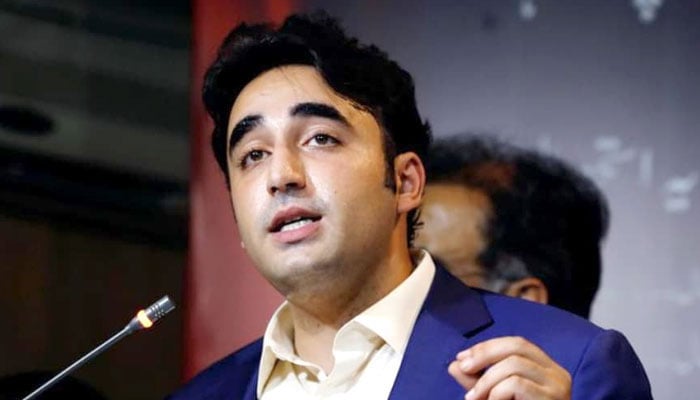
چیئرمین پیپلزپارٹی بلاول بھٹو زرداری نے کہا ہے کہ عمران خان نے عالمی ادارہ صحت کی وارننگ کو بھی چٹکیوں میں اڑادیا۔ ایک وزیراعلیٰ کے آئینی اختیارات کو ڈکٹیٹر کے اختیارات کے برابر قرار دینا افسوس ناک ہے۔
چیئرمین پیپلزپارٹی بلاول بھٹو زرداری نے پارٹی کے سینئر رہنماؤں نیربخاری، فرحت اللّٰہ بابر، شیری رحمان، راجہ پرویزاشرف، رضاربانی، نویدقمر، مولابخش چانڈیو اور نفیسہ کو فون کیا۔
بلاول بھٹو نے پارٹی رہنماؤں سے کہا کہ حکومتی نااہلیوں، عوام دشمن بجٹ اور سیاسی صورتحال پر جلد اے پی سی بلائی جائیگی، عمران خان کے غلط فیصلوں کے باعث آج ملک میں کورونا وباء بےقابو ہوچکی، حیرت ہے اتنی اموات کے باوجود عمران خان لاک ڈاؤن نہ کرنےکی ضد پر اڑے ہیں۔
انھوں نے کہا کہ عالمی ادارہ صحت کی وارننگ کو بھی عمران خان نے چٹکیوں میں اڑادیا۔ بلاول بھٹوزرداری نے مزید کہا کہ اپوزیشن بری لگتی ہے تو عمران خان لاک ڈاؤن پر ڈبلیو ایچ او یا ڈاکٹروں کی رائےسن لیں، بجٹ میں صحت، زراعت کے شعبے نظر انداز کرکے ملک کو خطرناک حالات کے حوالے کر دیا گیا۔
بلاول بھٹو نے کہا کہ وزیراعظم کے بعض بیانات سے اندازہ ہوا انہیں علم ہی نہیں این ایف سی ایوارڈ کیا ہے، انتظامی سربراہ صوبوں میں وسائل کی تقسیم کی اہمیت سے لاعلم ہے تو ملک کیسے چلے گا؟ ایک وزیراعلیٰ کے آئینی اختیارات کو ڈکٹیٹر کے اختیارات کے برابر قرار دینا افسوس ناک ہے۔
بلاول بھٹو نے کہا کہ اٹھارہویں آئینی ترمیم کے خلاف عمران خان کے بیانات تشویش ناک ہیں، عمران خان کے 18ویں آئینی ترمیم کیخلاف بیانات دستور پاکستان پر حملہ ہیں۔
انہوں نے کہا کہ ٹِڈیوں کے باعث قحط پڑا تو تباہی کے ذمہ دار عمران خان ہوں گے، عمران خان کو شاید اندازہ ہی نہیں ٹِڈیوں کے حملے انتہائی سنگین بحران ہیں، بلاول بھٹو نے پارٹی کے سینئیر رہنمائوں کو ہدایت کی کہ وہ حکومتی نااہلیاں سامنے لانے کیلیے مؤثر کردار اداکریں، اور وہ پارلیمان اورعوام کے درمیان جاکر حکومتی نااہلی سےآگاہی دیں۔

Bilawal Bhutto Zardari says that his Party intends to call an APC for adopting a cohesive national narrative for taking the country out of a slew of multiple crises.

Chairman Pakistan Peoples Party Bilawal Bhutto Zardari has said that his Party intends to call an All Parties Conference for adopting a cohesive national narrative for taking the country out of a slew of multiple crises.

Speaking during a consultative meeting via a telephone-conference with the Party’s senior leadership, the Chairman observed that an ignorant, disconnected, callous and arrogant Prime Minister who has little knowledge about the Constitution and its importance has declared the Constitutional powers of the elected Chief Ministers’ as dictatorial. He obviously has no idea of how a federation works let alone the significance of distribution of resources among the federating units.

Those who joined the conference call and shared their views include, Raja Parvez Ashraf, Senator Sherry Rehman, Syed Naveed Qamar, Maula Bux Chandio, Farhatullah Babur, and Dr Nafisa Shah.
Bilawal Bhutto Zardari said that the disastrous policies and confused messaging of Imran Khan have allowed the pandemic to spin out of control and everyone is surprised that he appears adamant against a lockdown despite a huge surge in deaths due to the virus. “Prime Minister has openly ignored the warnings from WHO, health professionals and the Opposition,” he added.

He said that PTI government has pushed the country into a very dangerous situation by neglecting health and agriculture in the budget and warned that Imran Khan would be held responsible if locust attacks dragged Pakistan into a famine.

PPP Chairman pointed out that certain statements of Prime Minister Imran Khan show that he is not aware about the importance of NFC Award, questioning as to how a country will run when its Chief Executive is unaware of the importance of distribution of resources among the federating units.
Bilawal Bhutto Zardari expressed concern about Imran Khan’s statements against 18th Amendment and termed the same as an attack on 1973 Constitution of Islamic Republic of Pakistan.

He exhorted the Party leaders to play an effective role in exposing the incompetence of Imran Khan in front of the people and Parliament before he destroys everything this nation has built through the hard work and sacrifices of its people since independence.

https://www.ppp.org.pk/2020/06/18/chairman-ppp-bilawal-bhutto-zardari-says-that-his-party-intends-to-call-an-apc-for-adopting-a-cohesive-national-narrative-for-taking-the-country-out-of-a-slew-of-multiple-crises/

Chairman PPP Bilawal Bhutto Zardari appreciates People’s government of Sindh for presenting a balanced budget

Chairman Pakistan Peoples Party Bilawal Bhutto Zardari has appreciated the People’s government of Sindh for presenting a balanced budget, which caters to the urgent needs of the people and province in the wake of coronavirus, locust attacks and poverty.

During a video-link call with Chief Minister Sindh Murad Ali Shah after he presented Sindh budget and attended NCOC meeting, the PPP Chairman said by increasing the salaries upto 10% of the provincial government employees and earmarking massive funds for health, education and agriculture sectors, the Sindh government has displayed its commitment to its citizens despite fiscal constraints and Federal government’s non-cooperative attitude.

Bilawal Bhutto Zardari pointed out that PTI governments in centre and other provinces chose to throw their employees at the mercy of unbearable inflation and price-hike but Sindh government raised salaries, injected more funds into healthcare system to save lives threatened by coronavirus and other diseases.
PPP Chairman said that PTI governments have neither the will nor any capacity to think of the people to conceive planning for public welfare as they are lagging behind while Sindh has allocated huge funds for poverty-reduction programme through Social Welfare Department on Union Council level.

Chief Minister Murad Ali Shah informed that Sindh has presented pro-people, pro-poor, pro-farmers budget during the worst financial crisis as Federal government gulped Rs229 billion from its share during the current fiscal year.

https://www.ppp.org.pk/2020/06/18/chairman-ppp-bilawal-bhutto-zardari-appreciates-peoples-government-of-sindh-for-presenting-a-balanced-budget/

Guess who the Imran Khan govt is blaming for Covid spike? The ‘jahil’ people of Pakistan


By NAILA INAYAT

PM Imran Khan and his PTI ministers rather blame their own citizens than admit they botched Pakistan’s Covid-19 response.
The Imran Khan-led government of Pakistan has found a new scapegoat to blame for the rise in coronavirus infections and fatalities — the people of Pakistan.
We are the ones responsible for our own demise, for we are so non-serious and “jahil” or illiterate, according to Punjab health minister Yasmin Rashid, that we don’t realise the severity of the situation.
How many governments in the world have thrown their own people under the bus when it comes to taking responsibility for the late action in the fight against the Covid-19 crisis? I can think of just one right now.
Coronavirus just a ‘flu’
How did we reach here? It is clear that after blaming the opposition parties for too long, there had to be a new villain in the house. Enter the poor jahil people, who have so long heard their prime minister and his team trivialise the coronavirus.
We were told by PM Imran Khan that the coronavirus, at best, was just a flu, which would go away in no time. It was something that would die in our dry and scorching hot weather. Follow their lead and just ghabrana nahin.Deaths, what deaths? Traffic accidents took many more lives, according to federal planning minister Asad Umar. Did anyone talk about banning cars? Deadly? Nope, it was just dangerous. Who said that? Ironically, Pakistan’s information minister Firdous Ashiq Awan.Pakistan Peoples’ Party (PPP) government in Sindh was only “exaggerating” Covid-19 figures: if you would visit the hospitals, you would find nothing at all. Oh this virus is just “type C” in Pakistan. We are winning it, we are killing it, even the New York governor is going to copy Imran Khan, according to communications minister Murad Saeed. It’s a different matter that governor Andrew Cuomo never mentioned Pakistan or Imran Khan. Look at us, we were the only Muslim country that didn’t even close the mosques.
Lockdown is just a fashion statement. Lockdown is for the elite, Imran Khan reminded us. No good will ever come from these lockdowns. People will die of hunger, the same people who will now be responsible for their own deaths. Why should Pakistan follow other countries where lockdowns were the only way to curb the virus that has no cure? Doctors pleading for lockdown were only politicians in doctors’ coats, Pakistan Tehreek-e-Insaf (PTI) knows that. New York went “bankrupt” due to the lockdown. Though the fake news of New York going bankrupt still hasn’t reached the US.
A new low
But still, the people are “jahil”. Let’s blame the Pakistani citizens for the confused and haywire messaging of Imran Khan’s government from day one.
But it wasn’t just poor messaging. First, there was no lockdown, then the government lifted whatever it thought was a lockdown: all markets, bazaars, shopping malls, parks and other businesses were reopened. Public transport, domestic air travel and even international flights are set to resume from 20 June. With no stringent measures put in place for social distancing, wearing a mask, or any other SOP, everything was opened. The problem is that the PTI government never imposed a strict lockdown in Pakistan, and now, at the peak of the virus spread, finds itself with tail between its legs.
While one government representative says the country is understating virus infections and deaths, there is another minister who feels Pakistan is doing better than India. Time and again, Imran Khan and his team have asked people to not compare Pakistan with New Zealand, or even Vietnam for that matter. Yet, they compare themselves with India. So let’s compare. That Pakistan has highest number of coronavirus cases and deaths per million in the region, higher than India, is an indication of the lack of any decisive Covid-19 policy. The rhetorical road, with PM Khan offering to share his cash transfer programme with India and being responded with “our stimulus package is as large as the GDP of Pakistan,” shows the frivolity of this government.
And so, this mass confusion, which the government thinks is its Covid-19 response, has to be now dumped onto the people of Pakistan and they have to be accountable for their own life and death. It doesn’t augur well for a country that claims to become a welfare state like Medina.To call the citizens of your own country “jahil” (illiterate) and “ajeeb makhlooq” (weird creatures), particularly the Lahoris, just because as a government you can’t take responsibility for your failures, is a low for any political leader. After all, these are the same people who you plead for votes in the name of promises. But then, it is not a new low — PM Imran Khan had called all those people welcoming Nawaz Sharif “donkeys”.
The people of Pakistan know who really is “jahil” more than ever now.
https://theprint.in/opinion/letter-from-pakistan/imran-khan-govt-blaming-people-of-pakistan-for-covid-spike/443865/

Wednesday, June 17, 2020

Music Video - Alicia Keys & Jack White - Another Way To Die

Video - Alicia Keys - Using Her Voice to Fight Racism & Police Brutality | The Daily Social Distancing Show

Video Report - America's Pandemic Workers | Fault Lines

Video Report - #Bolton claims Trump asked China to help him win re-election

Video Report - #Biden - Joe Biden blasts Trump's Covid response

Video Report - #NayaDaur #Hoodbhoy Pervez Hoodbhoy Terminated From FC College

Video Report - - Has The Public Been Educated About COVID-19 | KhabarSayAagay | Raza Rumi | Murtaza Solangi

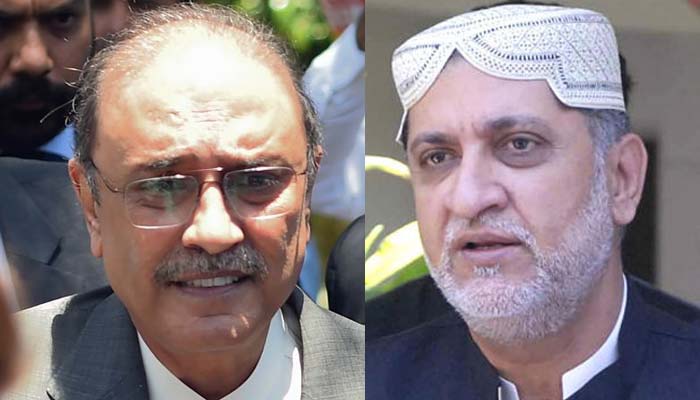
آصف زرداری اور اختر مینگل کے درمیان ٹیلیفونک رابطہ

سابق صدر آصف علی زرداری اور بلوچستان نیشنل پارٹی کے سربراہ سردار اختر مینگل کے درمیان ٹیلی فونک رابطہ ہوا۔ 
اس موقع پر سابق صدر آصف زرداری اور سردار اختر مینگل کے درمیان کورونا وائرس کا مقابلہ کرنے میں حکومت کی مجرمانہ غفلت پر تبادلہ خیال کیا گیا اور دونوں رہنمائوں نے ٹِڈی دَل کے حملوں کو روکنے میں حکومتی ناکامی اور بڑھتی ہوئی غربت پر بھی بات چیت کی۔ 
سابق صدر سے بی این پی کے سربراہ نے ان کی صحت بھی دریافت کی اور کہا کہ ملک کو صدر زرداری جیسے سیاست دان کی ان حالات میں زیادہ ضرورت ہے کہ جب حکمرانوں کی غفلت کے سبب صورت حال دن بدن خراب ہورہی ہے۔
 سابق صدر پاکستان نے کہا کہ پیپلز پارٹی نے ہمیشہ مشکل وقت میں معیشت کو سہارا دیا ہے، پاکستان پیپلزپارٹی نے ہمیشہ ملک، جمہوریت اور غریبوں کو مضبوط کیا۔ 
آصف زرداری نے کہا کہ سلیکٹڈ اور امپورٹڈ کٹھ پتلیوں نے ملک کو مسائل کی آماجگاہ بنادیا، انہوں نے مزید کہا کہ پاکستان پیپلزپارٹی ملک کو مسائل سے نکالنے کیلئے اپنا قائدانہ کردار ادا کرتی رہے گی۔

وزیراعظم کا کورونا کے چھ ماہ بعد دورہ سندھ عوام کے زخموں پر نمک پاشی ہے، بلاول بھٹو

پاکستان پیپلزپارٹی کےچیئرمین بلاول بھٹو زرداری نے کہا ہے کہ کراچی میں کورونا وائرس کاپہلا کیس آنے کے 6 ماہ بعد سیلیکٹڈ وزیراعظم نے سندھ کا دورہ کیا۔ سلیکٹڈ وزیراعظم کا دورہ سندھ صرف عوام کے زخموں پر نمک چھڑکنےکے لئےتھا۔

چیئرمین پیپلز پارٹی بلاول بھٹو زرداری نے اپنے ایک بیان میں کہا کہ سلیکٹڈ وزیراعظم نے فاقہ کشی اور وباء سے بچاؤ کے لیےکچھ بھی کرنےکو مسترد کر دیا ہے۔
انہوں نے کہا کہ وفاقی بجٹ میں وباء کے دوران سندھ کے 229 ارب روپوں پر ڈاکا ڈالا گیا۔ وفاقی بجٹ ناقابل یقین دباؤ کا شکار ہمارے شعبہ صحت کےحق میں نہیں۔ سلیکٹڈ وزیراعظم نے ہمارے کسانوں کو ٹِڈی دل اور معاشی تباہی کے رحم و کرم پر چھوڑدیا ہے۔
بلاول بھٹو نے کہا کہ وفاقی بجٹ میں بےنظیر انکم سپورٹ پروگرام کے تحت غریبوں کی امداد کم کی گئی۔ سلیکٹڈ وزیراعظم نے اسٹیل ملز کے10ہزار ملازمین کو نکالنےکا فیصلہ کیا، لیکن ڈیم کی تعمیر کیلئے80 ارب روپے ڈھونڈ نکالے۔
چیئرمین پی پی کا مزید کہنا تھا کہ عمران خان نے سندھ میں کورونا کیخلاف اگلی صفوں پر جدوجہد کرنے والوں سے ملاقات سے انکار کیا۔ اپنا سب داؤ پر لگا کر ہماری زندگیاں بچانے والے ڈاکٹرز اور سندھ میں ٹیم کو لیڈ کرنے والے وزیراعلیٰ سے عمران خان نے ملاقات سے انکار کیا۔

#Pakistan - 'The end of an era': Tariq Aziz's departure leaves a void in the entertainment industry

Hailed as an institution in himself, renowned celebrity Tariq Aziz passed away in Lahore at the age of 84 on Wednesday.
Aziz was known for a multitude of talents — he was a politician, actor, poet and above all, the pioneer of game shows in Pakistan. He was a man who never compromised on national and cultural values over the entertainment factor.
The veteran star was born in Jalandhar on April 28, 1936, and began his professional career from Radio Pakistan in the 1960s, soon becoming one of the most recognisable voices on the radio.
The popular TV show 'Neelam Ghar', which was later renamed as 'The Tariq Aziz Show' due to his massive popularity in the country, had started in 1974 on the national broadcaster Pakistan Television Network (PTV) and continued for decades.
Aziz started his career in the film industry in 1967 with movies like Insaniyat and others including Salgirah, Qasam Us Waqt Ki, Katari and Har Gaya Insan.
He was also elected to the National Assembly in 1997.
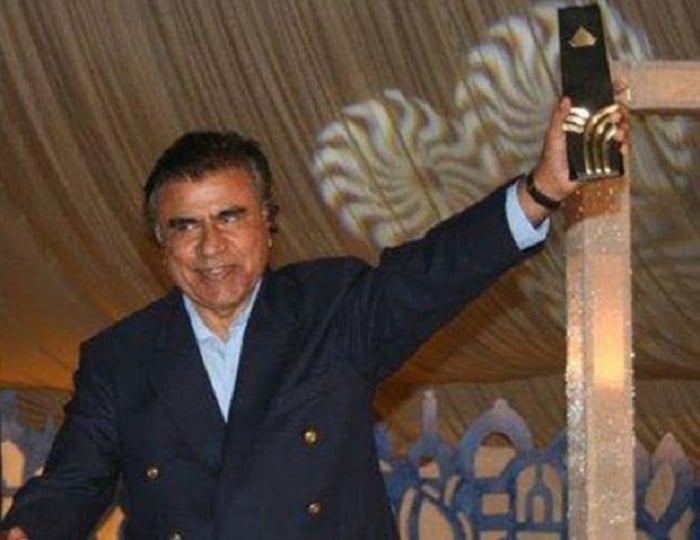
In recognition of his services in the entertainment industry, Aziz was awarded the prestigious Pride of Performance Award by the government in 1992.
A brief overview at some of the most memorable moments of his life is given below.

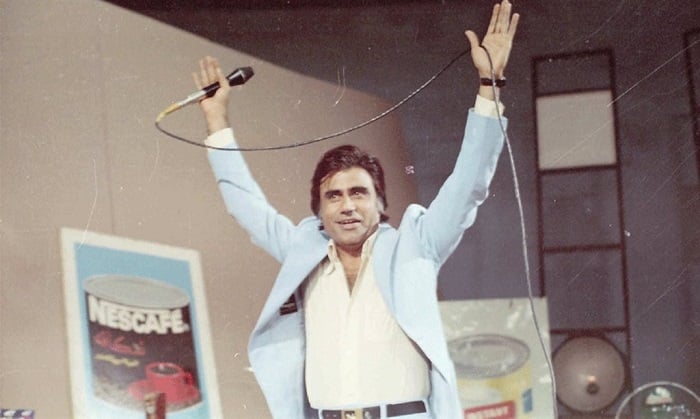
The early days of Aziz as a TV host on national broadcaster PTV.. — Photo courtesy: Twitter


The famous game show 'Neelam Ghar' that was later named 'The Tariq Aziz Show'. — Photo courtesy: Twitter


One of Tariq Aziz's iconic moments captured on the sets of 'Neelam Ghar'. — Photo courtesy: Twitter


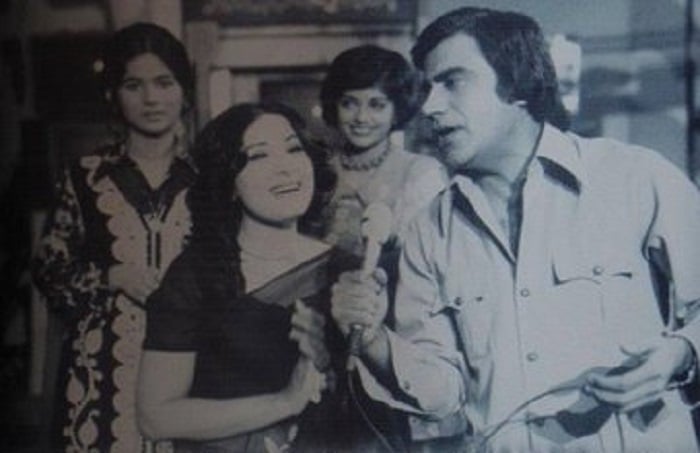
Tariq Aziz singing with other colleagues from the industry. — Photo courtesy: Twitter


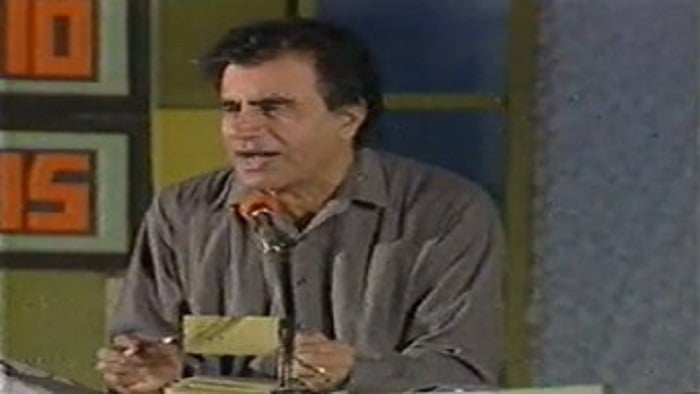
The veteran star hosting a TV show in the late 90's. — Photo courtesy: Twitter


Tariq Aziz while receiving an award in recognition of his contributions to the industry. — Photo courtesy: Twitter