Saturday, June 13, 2020
Pakistan hospitals struggle as corona virus cases explode

Asad Hashim
Atiqullah did not know what else to do. He spent three days scouring the northwestern Pakistani city of Peshawar for a ventilator for his 60-year-old father, who had tested positive for the coronavirus and was in a critical condition.
![a group of people walking down a street: The real number of infections is likely far higher, with Pakistan currently testing about 25,000 people a day [Muhammed Semih Ugurlu/Anadolu]]({"default":{"load":"default","w":"80","h":"45","src":"//img-s-msn-com.akamaized.net/tenant/amp/entityid/BB15ogUz.img?h=449&w=799&m=6&q=60&o=f&l=f"},"size3column":{"load":"default","w":"62","h":"35","src":"//img-s-msn-com.akamaized.net/tenant/amp/entityid/BB15ogUz.img?h=351&w=624&m=6&q=60&o=f&l=f"},"size2column":{"load":"default","w":"62","h":"35","src":"//img-s-msn-com.akamaized.net/tenant/amp/entityid/BB15ogUz.img?h=351&w=624&m=6&q=60&o=f&l=f"}}) © [Muhammed Semih Ugurlu/Anadolu] The real number of infections is likely far higher, with Pakistan currently testing about 25,000 people a day [Muhammed Semih Ugurlu/Anadolu]
© [Muhammed Semih Ugurlu/Anadolu] The real number of infections is likely far higher, with Pakistan currently testing about 25,000 people a day [Muhammed Semih Ugurlu/Anadolu]
"The doctors were trying their best but we couldn't find a bed in the Intensive Care Unit [ICU]," he told Al Jazeera. "For three days we were trying to get him shifted into an ICU because he was in such a serious condition."
Ultimately, he found a bed in an isolation ward at the Lady Reading Hospital - the city's largest government hospital - but there was still no ventilator available.
"There was no space in any ICU, anywhere in the city, not just at Lady Reading," he said.
Finally, unable to afford to pay for his father to receive treatment at a private healthcare facility, Atiqullah, a 30-year-old hospital orderly, had no choice but to sit at his bedside and watch him die.
Pakistan has seen its coronavirus epidemic explode in the last two weeks, seeing multiple consecutive days of record deaths and case rises across the country, pushing hospitals in major cities to the brink of their allocated capacity.
On Thursday, the country saw 6,397 new cases take its tally to 125,933, with a single-day record 107 deaths taking the death toll to 2,520 since Pakistan's outbreak began in late February.
The real number of infections is likely far higher, with Pakistan currently testing about 25,000 people a day, which is half the number of daily tests recommended by the World Health Organization (WHO).
In a country that is home to 220 million people and a ramshackle health infrastructure that offers just six hospital beds per 10,000 people, doctors say they fear that the healthcare system could be on the brink of collapse.
A nurse wears a face mask at the Lady Reading Hospital in Peshawar [Fayaz Aziz/Reuters]Doctors ask for 'breathing space'
"There has not been a single day in the last week where we had a single bed available," said Dr Naveed Ahmed Khan, a surgeon at Peshawar's Hayatabad Medical Complex, one of the city's largest hospitals and a designated coronavirus care facility.
"Only if someone died or was discharged could we replace them with a new patient."
Peshawar, the capital of Khyber Pakhtunkhwa province, sees a large number of patients coming in from all over the province due to the relatively poor health infrastructure elsewhere, doctors say.
"Our hospital's condition is already overburdened and the health system is very weak," said Muhammad Kashif, a doctor at Lady Reading Hospital. "Right now, you won't find a single ICU bed in all of Peshawar. Our health system, if, God forbid, things remain as they are, it will definitely collapse."
Ahmed Zeb Khan, a doctor at a government facility in the northwestern town of Charsadda, says doctors have been pleading with authorities to reimpose a lockdown to gain some "breathing space" to increase hospital capacity.
"We have told the government over and over again to increase the capacity of the ICU and isolation wards, because you did not impose a [proper] lockdown and now we have no breathing space," he said. "Until that happens, the system is overburdened, and we are going towards a collapse."
In the southwestern city of Quetta, there has been a rapid increase in cases, according to official data.
Healthcare workers in Pakistan are putting their lives on the line as they battle the country's increased number of cases.
At least 3,635 healthcare workers have tested positive for the coronavirus since the outbreak began, according to government data. Thirty-five of those doctors, nurses and health staff did not survive.
"Our healthcare workers are exhausted, they have been working for three months straight without a break," said Peshawar's Dr Kashif. "The number of doctors that are dealing with coronavirus, there are too little. They need to induct more doctors."
Waseem Baig, a spokesman for the provincial health department in Quetta, said the two hospitals in the city designated for coronavirus patients were both full.
Shortage of hospital beds
Doctors in major cities across the country echoed Baig's concerns, saying their hospitals - both public and private sector - were at or nearing their capacity for coronavirus patients.
Official government figures paint a different picture of Pakistan's hospital capacity, showing that only 1,681 critical care beds are currently occupied countrywide, compared with a total capacity of 6,664.
The figures, however, can be misleading if seen at the country-level, given that while there are critical care beds available, there appear to be acute capacity shortages in larger cities where the caseloads are higher.
"People generally go towards bigger cities for treatment," explains Ahmed Zeb, who is also a doctors' union spokesman. "The burden falls on cities like Peshawar, where the burden is extremely high."
In Karachi, the country's largest city, patients travel for hundreds of kilometres seeking treatment, said Dr Seemin Jamali, head of the Jinnah Postgraduate Medical Centre (JPMC), the city's largest government hospital.
Currently, the JPMC has room for "two or three" more patients on critical care beds, as they work to add capacity to the system.
Misinformation about the coronavirus has also been a concern for doctors, with at least three incidents of violence reported across the country by angry relatives of patients who died from the virus.
"This is a pandemic and people don't believe us," said Jamali, whose hospital was attacked twice in the last month.
"They think that we are getting paid by the WHO to declare deaths as being due to the coronavirus."
A doctor and nurse wear protective masks as they stand in a passenger train's car after the government turned it into a hospital and quarantine centre, in Karachi [Akhtar Soomro/Reuters]Debate over lockdown
The countrywide increase in cases coincides with an almost complete lifting of lockdown restrictions by the government on May 22.
"Since the lockdown was ended, right after [the Muslim festival of] Eid we saw the cases rising rapidly," said Baig. "We saw our first 1,000 cases [in the province] in 50 days, and now we have seen 1,000 cases in just the last three days.
"We need a lockdown, nothing else. People are coming into the hospitals, we don't know who is infected and who isn't," he said.
On June 7, in a letter to provincial authorities in Pakistan, the WHO warned that if a new intermittent lockdown was not imposed, the country could see cases rise to more than 800,000 in July before beginning to level off.
"As of today, Pakistan does not meet any of the prerequisite conditions for opening the lockdown," said the letter, which detailed six criteria under which such decisions should be taken, including controlling disease transmission, effective contact tracing and community awareness.
On Thursday, however, Pakistani Prime Minister Imran Khan repeated his position that the country could not afford a strict lockdown due to its economic implications.
"Some people say 'lockdown, lockdown, lockdown!' as if that is a solution," he said in a televised address to the nation.
"Our situation is different from the US, China [and others], because 25 percent of our people are in poverty. So if we do a lockdown, the curse of it falls on the poor."
PM Khan called on citizens to observe social distancing guidelines to control the spread of the virus but also issued a warning.
"In the coming days, sadly I must say, that the number of deaths will increase in Pakistan."
'No space'
Epidemiologists say Pakistan will have to find a solution that incorporates its limited capacity for imposing lockdowns and inadequate healthcare infrastructure.
Dr Adnan Khan, a public health researcher and infectious disease specialist, says Pakistan needs to implement higher rates of testing, and more effective testing of contacts of coronavirus positive patients. The WHO has assessed Pakistan's isolation, tracking and testing regime as being "weak".
Moreover, he said the authorities could maximise the current capacity in the system by only admitting patients to hospital who are in need of critical care, freeing up space to increase the capacity for such beds.
"You need to do triage," Khan told Al Jazeera. "Do basic intake, check their fever and oxygen stats, and then you turn away anyone who is dealing reasonably well, and check in with them again the next morning.
"There is a capacity that even now can be expanded by three to four-fold if it is done rationally."
It is that lack of space in the system that appears to be contributing to higher rates of deaths, particularly in major cities like Peshawar.
"[If things continue like this] they will not be able to handle it," said Atiqullah, hours after burying his father.
"The resources were there to prevent the spread of the virus, but the problem was the ICU," he said. "The problem that there is no space."
https://www.msn.com/en-us/news/world/pakistan-hospitals-struggle-as-coronavirus-cases-explode/ar-BB15ohDr?ocid=msedgdhpConspiracy theories help coronavirus take root in Pakistan
By ADNAN AAMIR

Religious fervor and distrust of government combine with deadly results.The novel coronavirus is spreading faster in Pakistan than almost anywhere else in the world, yet most people do not take the pandemic seriously due to misinformation and conspiracy theories surrounding the virus.
As of Friday, COVID-19 cases in Pakistan had reached 125,933. Infections have risen by more than 500% over the last week. But despite the alarming numbers, the government has relaxed lockdowns across the country and has even decided to reopen the tourism industry.
Human Rights Watch said the move endangers people's health. The World Health Organization has recommended that Pakistan impose strict, intermittent lockdowns lasting two weeks to control the spread of the virus.
But the authorities have declined to act on the WHO recommendations. Zafar Mirza, special assistant to the prime minister for health, said the recommendations are not mandatory and that the government must take economic as well as health considerations into account.
Experts believe the government inaction is driven by the large slice of the population that does not take the coronavirus seriously due to conspiracy theories rampant on social media.
In April, for example, Tariq Jameel, Pakistan's most famous televised Islamic cleric, claimed the coronavirus is a sign of God's wrath over such sins as women dancing and dressing immodestly. Another fanciful notion is that the coronavirus is part of China's master plan for world dominance. Because Pakistan is China's ally, the thinking goes, it will not be affected. Bill Gates, Microsoft's founder and a philanthropist who has devoted a large chunk of his wealth to health issues, is accused of spreading the virus so he can make a fortune selling vaccines.
According to a poll conducted by Ipsos, a global market research and public opinion specialist, only 3% of Pakistanis have no misconceptions about the coronavirus -- how it spreads and methods for its prevention and treatment. The same poll revealed that a third of respondents believe in conspiracy theories related to the pandemic.
Although a number of these theories are believed around the world, experts say Pakistan's unique circumstances and culture make it a more receptive market than most for such ideas.
Malik Siraj Akbar, a South Asia analyst based in Washington, says conspiracy theories have always been widespread in Pakistan. "Some people are agitated over [these theories] now only because of the seriousness of the coronavirus pandemic," Akbar told the Nikkei Asian Review, adding, "A country like Pakistan, with inadequate resources and the enormous challenge of COVID-19, cannot afford to ignore science."
Akbar said Prime Minister Imran Khan appears to put more stock in fiction and religion than in science. In a televised address in March, Khan said: "Ninety percent of coronavirus cases are normal flu, and clear up without any treatment."
Khan's approach to the disease is very subjective, and based on his own fears and assumptions. He does not pay much attention to experts regarding the many lives a lockdown would save, Akbar says.
Another unique aspect of Pakistani society is that even well-educated people, including some doctors, spread COVID-19 conspiracy theories. As a result, laypeople are easily taken in because they have been shared by "experts."
Multiple doctors, for example, have suggested that senna leaves, a local herb, can treat the virus. As result, people have started using them in huge numbers, but there is no scientific evidence to support its effectiveness.
Shahzada Zulfiqar, president of Pakistan Federal Union of Journalists, believes a combination of illiteracy and religious conservatism fuels conspiracy theories. "Most of the experts and medical doctors who peddle conspiracy theories are inspired by religious dogmas," he told the Nikkei Asian Review.
Pakistan's closed society and proximity to Afghanistan adds a religious dimension to the conspiracy theories. "Based on the experiences of the recent past with respect to conspiracy theories on polio, we know that this kind of misinformation can have devastating consequences on the public health sector," said Akbar. The decadeslong polio vaccination campaign in Pakistan was previously derailed by attacks on the health workers fueled by the belief that the drops cause sterility in children.
Experts also blame the government for not debunking ill-founded claims. The general lack of trust in the government makes people more open to conspiracy theories.
Krzysztof Iwanek, head of the Asia Research Centre at the War Studies University in Warsaw, said the spread of conspiracy theories is fostered by the government's lack of effort in combating them. "The gaps in these [efforts] probably lead to Pakistan being affected [by the coronavirus] more than some other countries," Iwanek told Nikkei.
Experts also blame some in the Pakistani media for telling tall tales about the coronavirus. "The Urdu press has contributed to sending mixed and confusing messages, since it is dominated by the religious right," Akbar said. As a consequence, the coronavirus has been presented as a "science versus Islam" or "East versus West' issue in Pakistan. The media has given people with religious motivations a reason to believe in conspiracy theories, Akbar added.
The critical ingredient that remains missing from Pakistan's Covid response strategy

Dr Faheem Younus
The focus in Pakistan must shift from policy to mass education, from analysis to practice.We drive cars but don’t venture to fly a plane. Why? Because we are not trained pilots.
That’s how it is. Managing our personal Covid realities is like driving a car; carrying a nation through a mercurial pandemic requires trained pilots. But when non-professionals try to fly planes, nations end up with confusion and chaos.
That’s what may have happened with Covid-19 in Pakistan where June 5, 2020 marked the 100th day of the outbreak. And during those 100-days, who educated the country about the disease? Politicians, anchors, doctors, bureaucrats, and others. And what was the focus of those communications? Policy debates, boilerplate analysis, and a potpourri of treatment plans. Our national discourse largely revolved around a single word: lockdowns.
This needs to change. The focus must shift from policy to mass education, from analysis to practice. This requires a panel of experts endorsed by the government and the local medical bodies. They should study the evolving science of this novel coronavirus, then communicate its symptoms, diagnosis, treatment, and preventive strategies to laypeople, daily. The goal is to train a nation on how to tackle this pandemic.
Imagine if, during those first 100 days, a panel of experts answered questions from the general public every night on TV? Instead of fueling conspiracy theories or allowing folklore to muddle the conversation, imagine if these experts were regularly dispelling myths? How far along would Pakistan be?
That’s public health 101. Outbreak breed rumors. Having managed many outbreaks, I know why calm, honest, communication is vital. Sadly, on February 15, as the World Health Organisation (WHO) was warning the world about the risks of an "infodemic", Pakistan was veering into one.
Today, Covid-19 is going viral, literally. The total number of cases has crossed 120,000. And since our testing is almost 20 times less than many developed countries, it's plausible that the real number of cases might be manifold.
So, where do we go from here?
I believe a unified messaging about Covid-19 itself should be a top priority. Some may argue that it’s too late; the virus is already widespread. I disagree. According to the WHO, coronavirus might never go away — i.e., we don’t know how many 100-day cycles Pakistan will face. Others believe so many educational campaigns already exist, through apps, websites, TV ads, social media. I agree. But it's one-way communication. People don’t have a forum to ask their questions and see the experts. When armies attack countries, people find solace in hearing from their generals. Why shouldn’t Pakistanis hear from an expert medical panel during a pandemic?
Here is a suggested structure: based on competence, this three-person expert medical panel should constitute of specialists in epidemiology, infectious disease, and outbreak management. They should be coached in principals of mass communications and then provided with an hour on prime-time TV, across all channels, daily. TV channels should solicit questions from viewers ahead of time and allow the experts to give rapid-fire, data-driven answers. Be bold to reject urban legends. Be kind while listening to a difficult situation that may not have a solution. A good session should answer around 50 questions/hour. Let this panel become the face of Covid-19 defence in Pakistan. The idea is not to compete against the existing health structure but to complement it.
This system works. We implemented it in our hospitals after experiencing the first Covid-19 patient. Every day, we answered 30-40 questions from our team members on a 30-minute conference call. Despite being in an affluent country, we struggled with tests and supplies, but we never struggled with messaging. Witnessing our 3500+ strong team quickly adapted to a new reality was like watching a teenager quickly learn to drive.
And drive we must because nations cannot remain under lockdowns. Just like we learn the rules and risks of the road before getting our license, we should learn the rules and risks of driving through this pandemic. Accidents will happen, but they won’t paralyse us. With time we will become safe drivers. The panel should also be cognisant of four things: politics, trust, credibility, and expectations. Remain apolitical. Don’t lionise the government and/or criticise the opposition (or vice-e-versa). Earn people’s trust that the effort is sincere and not self-serving. Anchor your recommendations with WHO wherever possible. This will infuse discipline and credibility in the process. Yes, WHO has made some controversial decisions, but its core strategy has allowed many countries to contain the virus. Set the expectation that this panel will make errors, that they will backtrack some of their statements. That’s the nature of evolving science.
Gradually, this may shape a culture where mass communication practices deference to expertise. It costs very little. The government should opine on policy, economists should explain financial risks, and medical experts should talk about the virus itself.
People say, "how can a large resource-limited country like Pakistan win against Covid-19?" I ask, how did Vietnam — a third world country of nearly 100 million people — stop the pandemic in its tracks by limiting the number of infections to 332? How come they had zero Covid-19 deaths? Because they trusted the science, effectively communicated, and mounted a unified defence against a unified virus.
Maintaining the status quo will breed more confusion in the coming days. Misinformation loves a vacuum. Fill it with expertise or accept chaos. Each case, each death will fuel further panic.
If this plan is executed correctly, the next 100-days may look like this: Millions become engaged and educated through a daily question-answer session on TV. Within 1-2 months, they learn the rules of this disease and start following policies, instead of debating them. Pakistan’s economy opens, and Pakistanis carefully drive through this pandemic until we reach the destination of mass vaccination.
Boredom or Apathy: The most uneventful Budget of the last two decades
It looks like the work of an accountant, who was tasked to ‘balancing’ the books without giving much thought to underlying economic rationale.
It looks like the work of an accountant, who was tasked to ‘balancing’ the books without giving much thought to underlying economic rationale. The budget does not give any clear economic direction. The policy makers are either fatigued, or just too bored to even think, or bother with managing the economy anymore. This isn’t a pandemic coupled with a locust attack budget – this is a ‘lets wrap this up and go to Nathiagali for the weekend’ kind of budget.
In a time when all guns need to be loaded, all tools whether conventional or unconventional need to be leveraged – but here we are with copy-paste of a template driven prescriptive approach of one of our major lenders. Pakistan got its first economic contraction in the last 68 years, but it is being presented like a new normal. This is the time for unconventional policies to stimulate Aggregate Demand, to spur economic activity, to put cash in the pockets – the budget fails to do any of that.
Going into specifics, little to no effort has been put into expanding revenue base – a large chunk of economic activity happens outside the tax net, and despite efforts in the last few years, the incumbent government has most likely given up on expanding the tax net. A 73 percent increase in Petroleum Levy seems like probably the only thing the policy makers have control over. A silver lining is absence of any tax increases for the salaried segment, although real wages will be going down significantly, dampening Aggregate Demand in the process.
It is even futile to talk about military expenditure because that is the bare Minimum required to maintain a formidable military in a hostile environment. We have a revenue problem, and successive governments have failed to crack this problem
Expenditure has been squeezed, pointing towards austerity, at a time when austerity is the last thing that is required for stimulating the economy. Even welfare payments through BISP have been cut down. Austerity will further dampen Aggregate Demand, which means lower economic activity, and consequently lower tax collection. Do we really want to be stuck in a low-growth loop – because this is what everything is pointing towards.
Some may call this a business-friendly budget, some compromised by partisan politics may even call it a great budget, but it got a very status quo feel to it – its not a crisis budget. The country is going through a crises, a rare combination of health and economic crises – but policy makers seem to be as calm as a cucumber. Setting a target of real growth rate close to, or less than population growth rate is not an ambitious feat, it just reeks of apathy, and a lack of ambition resulting in a festival of mediocrity.
https://www.brecorder.com/news/1004128/boredom-or-apathy-the-most-uneventful-budget-of-the-last-two-decades
چیئرمین پاکستان پیپلز پارٹی بلاول بھٹو زرداری کا سابق وزیر اعظم شاھد خاقان عباسی کو ٹیلی فون

چیئرمین پاکستان پیپلزپارٹی بلاول بھٹو زرداری نے ہفتہ کے روز سابق وزیراعظم شاہد خاقان عباسی کو ٹیلی فون کرکے ان کی خیریت دریافت کی۔ بلاول بھٹو زرداری نے سابق وزیراعظم کا کورونا وائرس مثبت آنے پر تشویش کا اظہار کرتے ہوئے کہا کہ کورونا وائرس وباءکا شدت سے پھیلنا انتہائی تشویشناک ہے۔ وفاقی حکومت نے کورونا کے حوالے سے ڈاکٹروں اور طبی ماہرین کے مشوروں پر عمل ہی نہیں کیا۔ انہوں نے کہا کہ مجھے عوام کے ساتھ ڈاکٹروں اور طبی عملے کی زندگیوں کی بھی فکر ہے جو کورونا وائرس کے مریضوں کا علاج کرتے ہوئے اپنی جان کی بازی ہار رہے ہیں۔
بلاول بھٹو زرداری نے شاہد خاقان عباسی کی جلد صحتیابی کے لئے دعا بھی کی۔ چیئرمین پیپلزپارٹی بلاول بھٹو زرداری نے خیبرپختونخواہ اسمبلی کے سابق اسپیکر کرامت اللہ چگرمتی کو ٹیلی فون کرکے ان کے بھائی کے انتقال پر افسوس اور تعزیت کا اظہار کیا۔ بلاول بھٹو زرداری نے کرامت اللہ چگرمتی سے گفتگو کرتے ہوئے کہا کہ زندگی اور موت کے فیصلے کا اختیار صرف اللہ تعالیٰ کے پاس ہے، اس سلسلے میں انسان بے بس ہے۔ بلاول بھٹو زرداری نے مرحوم کے مغفرت اور بلند درجات کے لئے دعا بھی کی۔
تھرپارکر میں مزدوروں کی ہلاکت پر بلاول کا اظہار افسوس
چیئرمین پاکستان پیپلز پارٹی بلاول بھٹو زرداری نے تھرپارکر کے گاؤں راڑ کوؤ میں کنویں کی کھدائی کے دوران چار مزدوروں کی ہلاکت پر افسوس کا اظہار کیا ہے۔
بلاول بھٹو زرداری کا کہنا ہے کہ غریب مزدوروں کی جانوں کے ضیاع کی خبر سن کر دلی رنج ہوا۔
انہوں نے کہا کہ اس طرح کے حادثات کی روک تھام کے لیے اقدامات اٹھانے کی ضرورت ہے۔
بلاول بھٹو نے ہدایت کی کہ پارٹی کے مقامی عہدیداران اور کارکنان فوت ہونے والے مزدوروں کے لواحقین کا غم بانٹیں اور ان کے ساتھ ہر ممکن تعاون کریں۔
پی پی پی چیئرمین نے متاثرہ خاندانوں سے دلی تعزیت و ہمدردی کا اظہار بھی کیا ہے۔
Friday, June 12, 2020
Rebellion against the tyranny of America’s white supremacy
By Seddiq Hussainy
America has become a crucible of civil unrest over the past few weeks. Demonstrations against police brutality have erupted across the United States following the death of George Floyd, a black man who died in Minneapolis after he was placed in a chokehold by police. The US is in turmoil over Floyd's killing, exposing the reality of America's abject racism and its predominant culture of white supremacy.
The epidemic of systemic racism and discrimination against people of color has long poisoned the US political atmosphere under the patronage of white supremacists and with their tacit connivance. They have perpetuated discriminatory laws and legitimized racial segregation by giving immunity to convicted police officers. An African American is far more likely to be arrested or killed by police than a white man in the United States. This rings terrifying alarm bells of a deep-seated hate. America has been in chaos for decades. From Martin Luther King to Eric Garner and George Floyd, racist killings are an echo of the past. The pattern of racial discrimination is chiseled into its political creed and laws. Police in the US intentionally use lethal force such as chokeholds when arresting black people - much of it is based on the incorrect assumptions that come from the same racist patterns. As police brutality is rarely subjected to scrutiny, racial violence continues to abound.
Racial discrimination and subjugation are the antithesis of all that humanity stands for, and now, millions of the oppressed are countering that racist rhetoric in America . The fight for racial and social equality is interwoven in recent American history. George Floyd is the latest of a string of victims of racial violence. In 2018, another black man, Stephon Clark, was shot 20 times by police in Sacramento, igniting a wave of protests all over the country. Incidents of murder perpetrated by police and the ensuing unrest before and after such incidents create a tragic vicious cycle.
The US administration’s response to civil unrest has been terrifyingly chaotic and utterly totalitarian. Donald Trump has responded to demonstrations against police brutality with more brutality. There have also been assaults against journalists, with dozens arrested and some even having projectiles and tear gas shot at them by police in the ongoing protests. These are clear violations of human rights.
This wave of anti-government feeling seems insurmountable. The chaos on US streets is the outcome of a crippling anxiety over the senseless tragedies and violations of civil rights that continue to happen, and which need to be rectified, not abetted and exacerbated. Tens of millions of people who live under the curse of injustice are now frustrated and upset at the tyranny of the police and the country’s leadership.
But xenophobic alienation and racial discrimination in the US goes beyond police brutality. Segregation has its roots in history. American leaders have continuously turned a blind eye to racism and partly fuelled it by allowing rampant segregation in the legal, economic and social systems to thrive. The entire system subjugates Americans of African descent. The legal system is plagued by racial injustice. The healthcare system is rigged against African-Americans. The state-regimented economic system marginalizes minorities, and deliberately hinders upward social mobility. Once again, the sanctimonious guardians of human rights have destroyed the tenets of civil liberty and freedom.
Americans want justice, just like any 21st century human being who is living under the tentacles of the United States' intrusion, deadly expansionism, proxy wars and cold wars that have unleashed destruction upon millions.
US governments have seldom been reticent in giving condescending advice to other governments on how to deal with dissidents. The Trump administration, and the entire American political apparatus, have been the agitators of terrible conflicts in the Middle East, Latin America, South Asia and many other tumultuous regions for decades. Their destructive interference all over the world has bred misery and death to an unfathomable degree. All the countries that have been at the receiving end of the US’s atrociously pompous homilies about democracy and freedom are suffering under their imperialist and expansionist whims - which have caused wars and conflicts. The turmoil in the Hong Kong Special Administrative Region of China was a result of the direct interference of the United States. Unrest in Afghanistan, Syria, Iraq, Libya and other countries is happening only because of US interference and its pursuit of global hegemony.
American leaders seldom remember the principles of human rights in dealing with lawful demonstrations on their own soil. They are committing similar atrocities by trying to deprive millions of their right to seek social equality. Indignant protests and civil unrest are creating a revolution that has embedded itself in America’s narrative. This all signals an urgent need for structural administrative and police reforms. US policymakers should quickly end the pattern of police violence and unconstitutional acts by reforming laws and bringing an end to police impunity. Legal justice is needed as desperately as economic justice. Long overdue economic and health reforms are also needed to raise up minorities. Racial inequalities should be rectified. Violent police behavior should be outlawed. This must be an era of change and action for civil rights, and of an end to America’s interventions overseas.
US Intel complains foreign adversaries are criticising ‘hypocritical’ America over George Floyd. Duh! So are its foreign friends!
Simon Rite
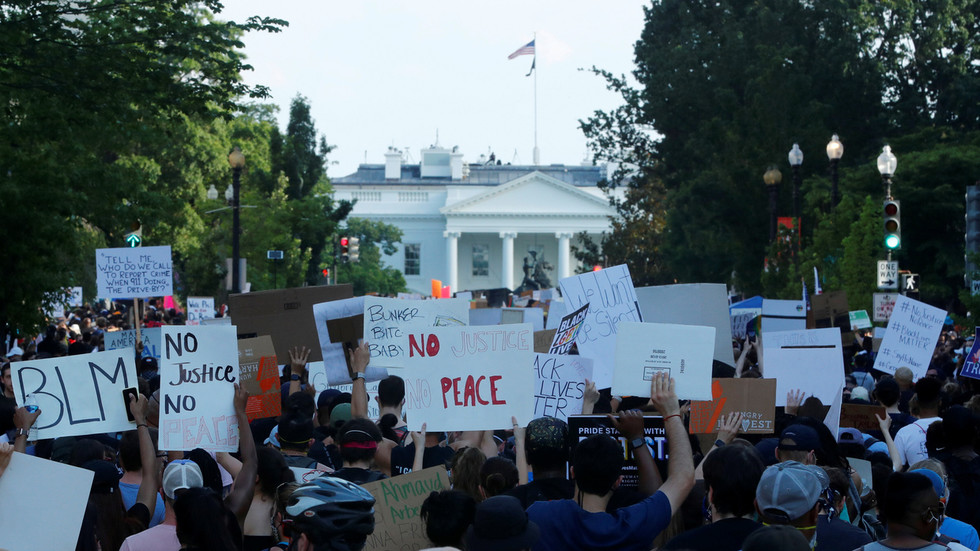
This time around, the sucker comes in the form of ABC News, which not only read the report, but then implausibly deemed it worthy of writing about.
Among the string of hard-hitting scoops is the line “China, Russia, and Iran have criticized the United States as hypocritical.” That little gem was deemed good enough to be the main subheading, so you know you’re in for a treat from the journalistic school of stating the bloody obvious.
After that little scene setter, let’s look at some of the text itself: “America's foreign adversaries have flooded social media with content meant to sow division and discord in the wake of George Floyd's death, according to a U.S. government intelligence bulletin obtained by ABC News.”
Well firstly, soz America, but your foreign friends are doing it as well, because it’s hard to ignore the shit show that is going on over there. Oh, and so are many of your own citizens.
To decode some of ABC’s language here, “flooded” just means “posted,” and to “sow division and discord” is another way of saying that other countries are reporting things Washington would rather they didn’t.
I’m not saying tweets won’t bring down a nation (Trump seems to be experimenting with that one), but I think police officers crushing people to death under their knees is more likely to blame.
The ABC report goes on: “These ‘malign actors’ also appear intent on drawing attention to alleged hypocrisy in the Trump administration's handling of protesters.”
Well, that’s called journalism – you guys should try it some time.
All this tweeting by those “malign actors,” ABC reports, is “part of an ongoing effort to weaken Washington's image on the international stage.” Er, not sure any outside help is needed on that front.
The report goes on: “These actors criticize the United States as hypocritical, corrupt, undemocratic, racist, guilty of human rights abuses and on the verge of collapsing.”
Maybe that’s because the US has shown definite signs of actually being hypocritical, corrupt, undemocratic, racist and guilty of human rights abuses. On the verge of collapse? I think that’s going too far, personally. Too many people have too much money at stake to let that happen.
The Homeland Security bods have been keeping up the click counts on RT (thanks guys) and included in their report that “Russian state-run media outlets Ruptly, RT France and Going Underground on RT ... [are] applauding Americans for being ‘justified in rioting against the 'corrupt American capitalist system.’” It’s just an opinion, but I reckon some of them do feel pretty justified.
And also: "Russian state-media-affiliated social media accounts shared imagery of police responses to the protests, the use of tear gas by the National Guard and called the protests a ‘revolt’ that 'has reached the front door of the US empire.’” They were reporting the story!! If a country the US likes does this, it’s called journalism, but when anyone else does it, then it’s trying to bring down the White House.
So to sum up, the intelligence service checks Twitter, leaks it to ABC News, who report it, and people apparently get scared by something other than their trigger happy police force. It’s not these so-called “malign actors” I would be worried about if I was in America.
Bilawal Zardari disappointed with PTI Govt's second budget
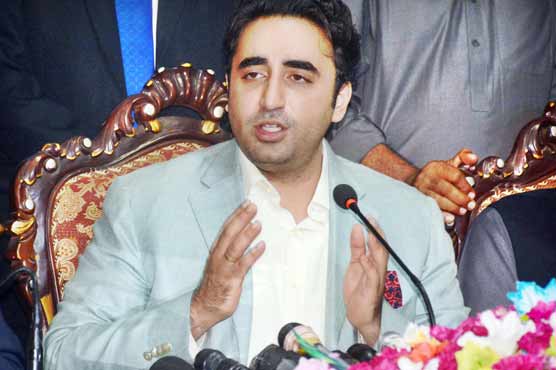 Bilawal Bhutto Zardari, while reacting to today’s announcement of budget 2020-21, has said that Pakistan People’s Party rejects it completely. He said that the Pakistan Tehreek e Insaaf (PTI)’s government has presented a very disappointing budget.
The statement issued by Bilawal Zardari said that these days, Pakistan is facing challenges of historic proportions. Every Pakistani’s life is in danger due to the coronavirus pandemic and on top of that, the biggest locust attack on the country in 25 years is a major threat to our agriculture, food security and economy.
The PPP chairman said that the PTI’s budget, calling it an anti-people ‘PTIMF’ budget, did not give any importance to the challenges facing the country and instead presented a traditional budget.
He said that no relief has been given to the common man, all of it has gone to the rich class. He also criticized the absence of any salary and pension increase in the budget for government employees.
He said that in these dangerous times of the coronavirus outbreak, we do not want our senior citizens leaving their homes and exposing themselves, the government should have given relief to them by increasing their pensions.
Bilawal Bhutto said that special announcements should have been made in the federal budget for the medical personnel fighting at the front lines but unfortunately, there was no such relief in the budget. We had also hoped that a special health package would be announced for each province to combat the corona virus, he added.
He said that every Pakistani should reject this budget and announced that PPP along with other opposition parties of the country, will soon hold an APC in this regard.
#BudgetPakistan - #PPP and JI reject the PTI anti-labour budget

Bilawal Bhutto Zardari talking to Siraj ul Haq said that we were expecting that the government will prepare the budget keeping in mind the crisis of Covid-19. He said that this anti-people budget will be exposed at every forum. He also said that the absence of any clear policy to protect our crops from locust attacks is also a matter of concern. He said that last year speaking on budget, President Zardari had warned about the issue of locusts but the government remained unmoved. Chairman Bilawal said that due to the government’s irresponsible attitude towards the locust issue, it could become a greater crisis than Covid-19.
The Ameer of JI, Siraj ul Haq said that it is very disappointing that the budget is silent over employment for youth. He said that JI rejects the PTI government’s budget.
Chairman PPP Bilawal Bhutto Zardari said that the budget instead of giving relief to the common people has given subsidy to pharmaceutical companies. At the same time, the construction sector has been given a package but no relief is given to the laborers. The people of Pakistan reject this anti-labor budget and PPP will also not accept any budget which does not give relief to the common people.
The Ameer of Jamat-e-Islami enquired about President Zardari’s health and also prayed for his recovery.
https://www.ppp.org.pk/2020/06/12/ppp-and-ji-reject-the-pti-anti-labour-budget/
Chairman PPP Bilawal Bhutto Zardari suggests APC on Covid-19 and locust issues
Chairman Pakistan Peoples Party Bilawal Bhutto Zardari telephoned former speaker national assembly Sardar Ayaz Sadiq and enquired about his health.

Ayaz Sadiq was tested positive of Covid-19. Talking to Ayaz Sadiq on the telephone, Chairman Bilawal said that he hopes and prays for his early recovery. Chairman PPP suggested Sardar Ayaz Sadiq that the opposition leader Shahbaz Sharif should call an all parties’ conference regarding the Budget, Covid-19 and locusts because the virus has threatened human lives and locusts are a threat to the country’s agriculture.
Ayaz Sadiq assured Chairman PPP that he will convey the suggestion to Shahbaz Sharif.
https://www.ppp.org.pk/2020/06/12/chairman-ppp-bilawal-bhutto-zardari-suggests-apc-on-covid-19-and-locust-issues/
Ayaz Sadiq was tested positive of Covid-19. Talking to Ayaz Sadiq on the telephone, Chairman Bilawal said that he hopes and prays for his early recovery. Chairman PPP suggested Sardar Ayaz Sadiq that the opposition leader Shahbaz Sharif should call an all parties’ conference regarding the Budget, Covid-19 and locusts because the virus has threatened human lives and locusts are a threat to the country’s agriculture.
Ayaz Sadiq assured Chairman PPP that he will convey the suggestion to Shahbaz Sharif.
https://www.ppp.org.pk/2020/06/12/chairman-ppp-bilawal-bhutto-zardari-suggests-apc-on-covid-19-and-locust-issues/
Imran Khan tweets a swipe at India, hits mute on Pak economy. Here is why
Prime Minister Imran Khan is facing challenges on multiple fronts including from the army, which has driven much of Pakistan’s response to Covid-19Just a little over two hours after Prime Minister Imran Khan tweeted an acerbic offer to India, his government put out a status check of Pakistan’s economy. PM Khan’s adviser on finance and revenue Dr Abdul Hafeez Shaikh released the economic survey that estimates Pakistan’s debt will rise to 88% of the GDP and the economy will shrink for the first time in 68 years by 0.4%. And that is an optimistic picture. The IMF and World Bank have projected that Pakistan, which closes its financial year this month-end, will contract by up to 2.6%.
Dr Shaikh apportioned much of the blame for the state of the economy between Nawaz Sharif’s Pakistani Muslim League-N governments that had been in power from 2013 to 2018 before Imran Khan came to power with his promise of a ‘Naya Pakistan’, and the coronavirus pandemic.
Imran Khan, who has been active on social media hurling barbs at India, hasn’t tweeted on his government’s report card on the economy.
“PM Imran Khan is finding himself boxed in… by his political detractors, the army that is closing in, the economy and the Kashmir agenda,” a Pakistan watcher in New Delhi said.
In just two years, PM Khan’s influence within and without the government has dropped sharply. That includes the army too, Pakistan’s most powerful institution whose backing was credited to have helped PM Khan mobilise support from smaller coalition partners.
A Bloomberg report published this week underscored that the army has tightened its grip on PM Khan’s government, placing more than a dozen former and serving military officials in prominent roles.
Like former retired Lt General Asim Saleem Bajwa, who was already chairman of the China-Pakistan Economic Corridor Authority, was given a second job. From April this year, Lt Gen Bajwa who headed ISPR - the military’s propaganda department between 2012 and 2016 - was appointed PM Khan’s communication adviser.
There have been indications that the Pakistan army, which had embedded itself in the civilian structure, hasn’t been on the same page as PM Khan.
That Imran Khan had been sidelined was clearly visible in March when the army declared that the army would oversee a shutdown to halt the spread of infection, less than 24 hours after Prime Minister Khan told the country in a televised address that he didn’t support a lockdown since it would put millions out of work and hurt the poor. The army went ahead to deploy troops and enforce the lockdown.
Indian intelligence agencies believe that the army is increasingly looking at foreign minister Shah Mahmood Qureshi for a bigger role in the government.
There is some disappointment over Imran Khan’s not-so-successful attempts to put the focus on Kashmir, in Pakistan and globally, one Indian official said. “Kashmir has long been used by Pakistan to distract people from the domestic upheavals, political, economic or otherwise. But this hasn’t happened over the last year or so despite several attempts,” the official said.Because of pressure from multilateral bodies such as the terror funding watchdog FATF where it faces the risk of being placed in the blacklist, the Imran Khan government has been unable to go all out to openly support Kashmir.
Besides, the 2016 Uri surgical strike and the 2019 Balakote air strikes have sent a message that New Delhi’s response to a terror strike would be unpredictable and could lead to a counter strike.
The bleak outlook for the economy makes PM Khan’s troubles so much bigger. Thursday’s economic survey, news agency Reuters reported, reveals that PM Khan’s government had missed almost all economic targets by a wide margin even before the global new coronavirus pandemic. At least 10 million people are expected to slip below the poverty line due to the coronavirus pandemic, pushing the total number of people struggling to survive to 60 million.
Apart from the human cost, the troubled economy could seal any chances of the army getting a substantive hike to give soldiers and officers a 20 percent raise that they had asked for. For now, Dr Shaikh, according to Pakistan newspaper Dawn, said there would be a free on current expenditure and the defence budget. He credited PM Khan as well as Army Chief Gen Qamar Bajwa for this decision.
https://www.hindustantimes.com/india-news/imran-khan-tweets-a-swipe-at-india-hits-mute-on-pak-economy-here-is-why/story-3H1Ts0tLLkYQ4wGm0xEHHP.html
Thursday, June 11, 2020
Subscribe to:
Posts (Atom)