Thursday, January 24, 2019

#Pakistan - #PPP - @BakhtawarBZ 🎊🎂🎊🎈#HappyBirthDayBakhtawarBZ Bakhtawar Bhutto celebrates her 28th Birthday


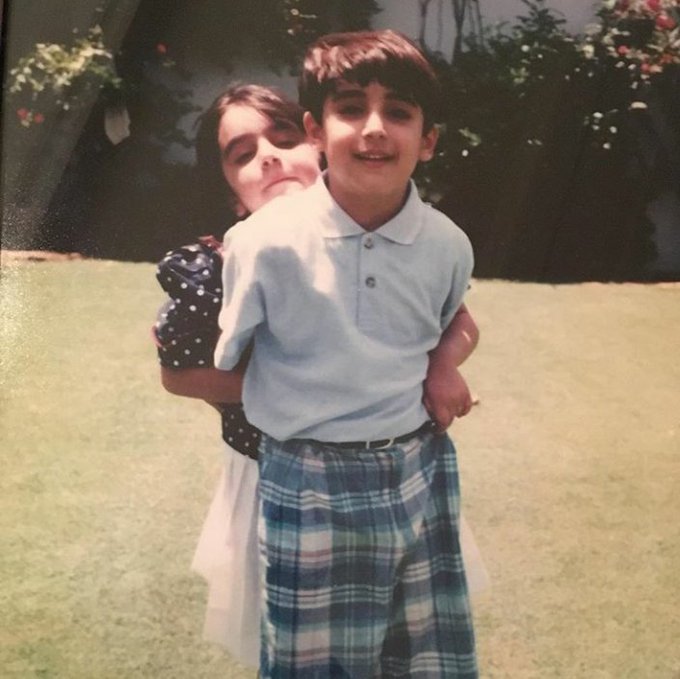
Bakhtawar Bhutto Zardari, daughter of the former Prime Minister Shaheed Benazir Bhutto on Thursday celebrated her 28th Birthday.
Several celebrities, including family members, took to the Twitter to wish Bakhtawar her Birthday.
Bakhtawar expressed her joy over the Birthday messages that poured in on Twitter for her.
“Twitter feed flooding with the sweetest birthday messages, pictures & video compilations. So overwhelmed by the love. Thank you all so much,” Bakhtawar tweeted.
Bakhtawar is second of the three children of former president Zardari. She was born on 25th January 1990.
Her brother, Chairman of Pakistan Peoples Party (PPP), Bilawal Bhutto Zardari also wished his sister on Twitter:
Bakhtawar’s sister, Aseefa Bhutto Zardari tweeted: Happy Birthday to my incredible sister @BakhtawarBZ, I am so lucky to have you as my sister.”
https://twitter.com/AseefaBZ/status/956448280946278400
Other friends and fans also sent wishes and prayers through tweets
View image on TwitterView image on TwitterView image on TwitterView image on Twitter
Happy Birthday BB @BakhtawarBZ May all your dreams and wishes come true. Hope your special day brings you all that your heart desires! Wishing you a day that is as special in every way as you are! ❤🎂🎂 @BBhuttoZardari @AseefaBZ
82 people are talking about this
https://twitter.com/ZahidLashari15/status/956241592154718209

Wednesday, January 23, 2019

Video Report - French films 'Sink or Swim' and 'Custody' lead César nominations

Video Report - #protests #Venezuela #Maduro Turmoil in Venezuela

Video Report - #Venezuelan president breaks diplomatic ties with US

Video Report - Angela Merkel keynote speech at 2019 Davos World Economic Forum | DW Nachrichten

Video Report - Is #Davos Listening? Populist wind blows over the World Economic Forum

#Pakistan - Father arrested in Rawalpindi after daughter accuses him of raping, impregnating her


A man from Rawalpindi was arrested on Wednesday after his daughter accused him of having raped and impregnated her, said police.
The 16-year-old girl alleged that her father had been sexually abusing her over the past year and she had finally decided to approach the police after learning that she has become pregnant. Police have registered a case against the man on the complaint of his daughter under Section 376 of the Pakistan Penal Code.
According to the first information report (FIR), a copy of which is available with DawnNewsTV, the teenage victim is the second eldest child among three sisters and three brothers. The family lives on Rawalpindi's Girja road and her father works at a nearby brick kiln.
The girl's mother fled away to Peshawar after having grown tired of her husband's alleged cruelty and torture. After the mother left home, the father allegedly beat up the girl's elder brother, who too ran away to Peshawar, leaving the girl to take care of her siblings, all of whom are younger than her, the report quotes the complainant girl as telling the police.
Her father then allegedly turned his ire towards her, the victim said in her statement to police.
"He would beat me up and rape me throughout the past year. When I would beg him to stop, and tell him I would complain to the police, he would threaten to treat me like he had treated my mother and said he would kill me," the FIR quotes the girl as saying.
While speaking to DawnNewsTV, the girl said that the family had moved to Rawalpindi from Peshawar.
"I was left alone to take care of my siblings. My father crossed all limits of cruelty. I have come to police seeking deliverance from the oppression I have to face every day," she said.
DSP Farhan Aslam of Sadar Bairooni police station told DawnNewsTV that a medical examination of the girl had been conducted and doctors have confirmed that she is indeed pregnant. The initial medical report has further revealed that she was constantly raped, resulting in her pregnancy.
"True facts will emerge only after results from the DNA examination are released and it is ascertained whether it was the girl's father who impregnated her or someone else," said the police officer.
The DSP further said that the arrested accused will be presented before the court tomorrow, adding that the girl has been handed over to the care of the women's police.
The court will determine whether she should be shifted to Darul Aman or the child protection bureau, he said.

پاکستان یا شہرناپرساں؟ - #Sahiwalkillings


سانحہ ساہیوال، پہلا سانحہ ہے اور نہ آخری ہو گا۔ چند روز تک سیاستدان بیانات دیتے رہیں گے۔
چند روز تک وزرا بڑھکیں مارتے رہیں گے۔ چند روز تک ٹی وی ٹاک شوز میں ریٹنگ بڑھانے کے لئے سانحہ ساہیوال پر توتو میں میں ہوتی رہے گی۔ پھر ہم ایک نئے ڈرامے میں لگ جائیں گے یا پھر ایک نئے سانحے کا انتظار کریں گے۔ سانحہ ساہیوال میں جاں بحق افراد کے لواحقین در در کی ٹھوکریں کھاتے رہیں گے۔ اس واقعہ کے ذمہ داران دندناتے پھر رہے ہوں گے۔
وزیرداخلہ شہریار آفریدی اسی طرح اسمبلی میں اور پریس کانفرنس میں بڑھکیں مارتے رہیں گے لیکن نہ انہیں سانحہ ساہیوال یاد ہوگا اور نہ کوئی میڈیا پرسن یا اسمبلی ممبر ان سے اس واقعہ سے متعلق سوال پوچھنے کی زحمت گوارا کرے گا۔ ماضی بعید میں نہیں جاتے، ماضی قریب کے دو واقعات کی مثال لیتے ہیں۔ نقیب اللہ محسود اور ان کے ساتھ دو اور معصوموں کو جب اسی طرح بے دردی کے ساتھ قتل کیا گیا تو اس وقت بوجوہ موجودہ سے بھی بڑا طوفان کھڑا ہو گیا۔
تب سیاستدانوں نے اس واقعے پر اس سے زیادہ سیاست چمکائی تھی اور تب میڈیا نے اس حادثے پر اس سے بھی زیادہ دکانداری کی تھی۔ نقیب اللہ محسود کے قاتلوں کے خلاف کارروائی کے لئے اسلام آباد میں کئی روز تک جو دھرنا دیا گیا، اس سے عمران خان سے لے کر اسفندیار ولی خان تک اور محمود خان اچکزئی سے لے کر مولانا فضل الرحمان تک، کم وبیش سب سیاسی رہنماؤں نے اپنے خطابات کے جوہر دکھائے۔ اور تو اور جنرل حمید گل مرحوم کے صاحبزادے سے لے کر ٹی وی اینکرز تک نے وہاں غمزدہ پختونوں کے جذبات کو گرمایا۔
ریاست مدینہ کے نام لیوا عمران خان صاحب تو پختونوں کا ووٹ ہتھیانے کے لئے کراچی کے دھرنے میں بھی تشریف لے گئے اور وہاں اپنے خطاب میں راؤ انوار جیسے ظالموں کو کیفرکردار تک پہنچانے کا عزم ظاہر کیا۔ ساہیوال کے سانحہ کا تو ابھی کسی عدالت نے نوٹس بھی نہیں لیا لیکن نقیب اللہ محسود کے معاملے کا اس وقت کے چیف جسٹس میاں ثاقب نثار نے سوموٹو نوٹس بھی لیا۔ نقیب اللہ محسود کے مظلوم والد کو یقین دہانیاں بھی کرائیں۔
حتیٰ کہ آرمی چیف جنرل قمر جاوید باجوہ بھی وزیرستان میں واقع ان کے گھر پر تشریف لے گئے اور نقیب اللہ محسود کے یتیم بچوں کے سروں پر ہاتھ پھیرتے ہوئے انصاف دلانے کا عزم ظاہر کیا۔ تاہم ایک سال کا عرصہ گزر گیا۔ عمران خان کے سر پر وزیراعظم کا تاج بھی سج گیا۔ نقیب اللہ محسود کے نام پر جذباتی تقاریر کے ڈرامے رچانے والے شہریار آفریدی وزیرداخلہ بن گئے۔ قرآنی آیات کے حوالے دے کر، نقیب اللہ محسود اور سانحہ ماڈل ٹاؤن کے نام پر آنسو بہانے والے علی محمد خان بھی وزارت سے سرفراز ہوئے۔ لیکن نقیب اللہ محسود اور ان جیسے سینکڑوں معصوموں کے قاتل راؤ انوار آج بھی دندناتے پھر رہے ہیں۔
آج دو بندوں (ایک جبران ناصر اور دوسرے کا نام بوجوہ نہیں لکھا جا سکتا) کے سوا باقی سب نے نقیب اللہ محسود کو بھلا دیا ہے۔ ان کے بچے بے آسر ا پڑے ہیں اور راؤ انوار یواے ای کے محلات میں رہنے والے اپنے بچوں کے پاس جانے کے لئے راستے تلاش کر رہے ہیں۔ سردست تو عدالت نے انہیں جانے کی اجازت نہیں دی لیکن جلد یا بدیر ہمیں خبر مل جائے گی کہ راؤ انوار وہاں پہنچ گئے۔ dوسری طرف نقیب اللہ محسود کے بوڑھے والد انصاف کے لئے کبھی کراچی کی عدالتوں کے چکر لگارہے ہیں تو کبھی اسلام آباد کے۔ وسعت اللہ خان، مبشر زیدی اور ضرار کھوڑو کے سوا کسی اینکر کی ہمت نہیں ہو رہی کہ نقیب اللہ محسود کے والد اور بچوں کی فریاد سے دنیا کو آگاہ کرے۔ جبران ناصر کے سوا کسی وکیل، کسی سیاستدان اور کسی مذہبی رہنما کو فرصت نہیں کہ نقیب اللہ محسود کے والد کی فریاد سنے یا پھر راؤ انوار کے معاملے کا فالواپ کرے۔
 مذکورہ واقعہ کو تو ایک سال گزر گیا۔ ایک اور تازہ ترین واقعہ ملاحظہ کیجئے جوریاست مدینہ کے نام لیوا عمران خان کے اقتدار میں وقوع پذیر ہوا۔ پشاور کے شہریو ں کی زندگیوں کے محافظ اور ایس پی پشاور محمد طاہر داوڑ وفاقی دارالحکومت اسلام آباد سے اغوا ہوئے۔ جس طرح سانحہ ساہیوال کے بارے میں وزراء بھانت بھانت کی بولی بول رہے ہیں، اسی طرح ان سے متعلق بھی وزیرداخلہ کچھ کہتے رہے تو وزیراعظم کے معاون خصوصی افتخار درانی کچھ کہتے رہے۔
 طاہر داوڑ غائب تھے لیکن وزیراعظم کے ترجمان افتخار درانی وائس آف امریکہ پر آکر میڈیا والوں کا مذاق اڑاتے رہے کہ انہوں نے اپنے گھر میں بیٹھے ہوئے طاہر داوڑ کو مغوی مشہور کر رکھا ہے۔ جس طرح سانحہ ساہیوال کے مقتولین سے متعلق وزرا کے دہشت گردی کے الزامات سے ان کے لواحقین کے زخموں پر نمک پاشی ہو رہی ہے، اسی طرح طاہر داوڑ کے بھائی اور بچے بھی افتخار درانی کے بیان سے تڑپ اٹھے تھے۔ پھر ایک دن خبر آئی کہ پشاور کے شہریوں کی زندگیوں کے اس محافظ کی لاش افغانستان میں مل گئی۔
 چنانچہ سانحہ ساہیوال کی طرح اس پر بھی ملک بھر میں قیامت برپا ہوئی۔ سیاستدانوں کے بیانات آنے لگے۔ ٹی وی ٹاک شوز کا بھی کئی دن تک بازار سج گیا۔ وزیراعظم نے یقین دہانیاں کرائیں۔ اسمبلی فلور پر وزیرداخلہ نے سانحہ ساہیوال پر دیے بیان سے بھی بڑھ کرجذباتی تقریر کی۔ تب بھی انہوں نے یہی الفاظ بار بار استعمال کیے تھے کہ مجھے اللہ کو جان دینی ہے۔ اسی طرح تحقیقات کو منطقی انجام تک پہنچانے کا عزم ظاہر کر کے عمران خان کی حکومت نے ایک جے آئی ٹی بنائی تھی لیکن آج کئی ماہ گزرنے کے باوجود کچھ پتہ نہیں۔
 اس جے آئی ٹی کا پتہ چلا اور نہ اس کی تحقیقات کا۔ اسی لئے مجھے کوئی امید نہیں کہ سانحہ ساہیوال کے مجرموں کو قرار واقعی سزا مل جائے گی اور نہ اس خوش فہمی کا شکار ہوں کہ یہ سانحہ آخری سانحہ بن جائے گا۔ وجہ اس کی یہ ہے کہ ہم سب جھوٹ بول بول کر اپنے آپ کو دھوکہ دے رہے ہیں۔ جس طرح جمہوریت نہیں لیکن ہم جمہوریت جمہوریت کا ڈرامہ رچائے ہوئے ہیں اسی طرح اس ملک میں نظام انصاف نہیں لیکن ہم پولیس، وکیل اور عدالت کا ناٹک کرکے یہ تاثر دے رہے ہیں کہ جیسے اس ملک میں واقعی کوئی قانون موجودہے۔
 حقیقت یہ ہے کہ اس ملک میں ایک طبقے کے لئے قانون ہے لیکن دوسرا طبقہ اس سے بالاتر ہے۔ ایک طبقہ کو پولیس اور عدالت وغیرہ کا خوف لاحق رہتا ہے لیکن کچھ طبقات ایسے ہیں جو ان دونوں کو اپنے ہاتھ کی چھڑی اور جیب کی گھڑی سمجھتے ہیں۔ جن معاملات میں ان طبقات کا کردار آجاتا ہے، وہ کبھی منطقی انجام تک نہیں پہنچتے۔ لہٰذا جب تک اس ملک میں رہنے والے تمام طبقات اور تمام ٰشہریوں کو ایک لاٹھی سے ہانکنے والا نظام نہیں بنایا جاتا، یہ سانحات کم ہونے کی بجائے بڑھتے رہیں گے۔ تاہم جو لوگ اس دوئی کو برقرار رکھ رہے ہیں، انہیں مکافات عمل کا قانون بھی ذہن میں رکھنا چاہیے۔ آج دوسروں کے بچے خوفزدہ ہیں تو کل ان کے بچے بھی غیرمحفوظ ہوسکتے ہیں۔ اللہ کا واسطہ اس ملک کو شہرناپرساں نہ بنائیے، پاکستان رہنے دیں۔

‘Abbey kaale’: Racist slurs against SA player could land Pakistan cricket captain in dock


In 2nd ODI against South Africa at Durban, Sarfraz Ahmed used racist language to taunt all-rounder Andile Phehlukwayo, who starred in the home side’s win.
New Delhi: Pakistan cricket captain Sarfraz Ahmed racially abused South Africa all-rounder Andile Phehlukwayo during the second ODI between the two countries in Durban Tuesday.
In the 37th over of the South African innings, Ahmed could be heard shouting on the stump microphone: “Abbey kaale, teri ammi kahan baithi hui hain aaj? Kya parhwa ke aaya hai aaj?” This loosely translates to: “Hey black man, where’s your mother sitting? What prayers is she offering for you?”
Phehlukwayo had starred with ball and bat, taking four wickets and scoring a half-century as the home side defeated Pakistan to level the series.
As soon as Ahmed was heard making these comments, South African commentator Mike Haysman caught on and asked his co-commentator, former Pakistani batsman Ramiz Raja, for translation. Presumably embarrassed, Raja laughed nervously and said it was “difficult really to translate” as it was a “very long sentence”.
Ahmed was also recorded saying “Sahi hai, sahi hai, yeh hi kar, yeh hi kar is ko, nashebaazi karta hai yeh” about Faf du Plessis, the South African captain. This loosely translates to “This is good, this is good. Keep doing this to him, he takes drugs.”
Widespread social media condemnation
Former Pakistan fast bowler Shoaib Akhtar led the condemnation of Ahmed’s comments on social media. Akhtar, who was controversy’s child during his own playing career, said: “He shouldn’t have said what he said and I feel he has done a very shameful act. I think he should apologise for it, he should publicly apologise for what he said to this guy.”
However, Akhtar later deleted his Twitter post.
Senior cricket journalist Osman Samiuddin called it “pathetic and racist”, while many social media users from Pakistan hit out at Ahmed for his remarks.
Osman Samiuddin ✔ @OsmanSamiuddin This isn’t funny. Its pathetic and racist. Hassan @iamhassan9 Sarfraz to Pehuhlukwayo: "abbay kaale teri Ammi kahan bethi hoyi hain aaj, kya parhwa kay aaya hai aaj." 🤣🤣🤣🤣🤣🤣🤣🤣🤣🤣🤣🤣

Ahmed hasn’t issued an apology or a statement retracting his remarks.

What action can be taken?

The International Cricket Council (ICC) hasn’t yet taken note of the matter, but it could come down hard on Ahmed. The ICC Anti-Racism Policy for International Cricket, which has been in effect since 1 October 2012, states that no “inappropriate racist conduct” will be tolerated.
The offence can be reported by anyone from the match officials to players to even the ICC chief executive.
An offence under the Anti-Racism Code for Participants is defined as “engaging in any conduct (whether through the use of language, gestures or otherwise) which is likely to offend, insult, humiliate, intimidate, threaten, disparage or vilify any reasonable person in the position of a Player, Player Support Personnel, Umpire, Match Referee, Umpire Support Personnel or any other person (including a spectator) on the basis of their race, religion, culture, colour, descent, national or ethnic origin”.
The maximum punishment under the code for a first offence is eight suspension points. This means the player can be banned for a number of matches — each Test match is worth two suspension points, while each ODI and T20I are worth one each.

In Pakistan’s sweatshops, workers are fired for asking for toilet breaks

Women and men working in Pakistan’s garment factories are subject to serious labor rights abuses. The situation is so bad that even asking for something as basic as the right to go to the toilet can mean you get fired, says the Human Rights Watch in its report released on Wednesday, January 23.
The report, ‘No Room to Bargain: Unfair and Abusive Labor Practices in Pakistan’, details the poor working conditions at garment factories, which employ 4.2 million people, one of the largest by any sector. It identifies a range of labor rights violations affecting the lives of factory workers whose plight remains off the political agenda of the country’s ruling elite.
Workers, many of them women, said that they experienced verbal abuse, were pressured not to take toilet breaks, and were even denied clean drinking water, the report said, referring to a field survey of 140 people from 24 factories in Karachi, Lahore and Hafizabad. “I was fired last Sunday for not working overtime. On Monday, when I went to work, my name was listed with the security guard at the gate and he told me that I had been ‘gate stopped’,” the report said, quoting a worker at the manufacturing facility of a domestic brand in Karachi.
In two factories, the global human rights organization documented beatings of workers by managers. The survey findings point to the abusive treatment of workers by the factory owners who do not pay official minimum wages and pensions. These sweatshops force overtime on workers, don’t give them enough breaks, and ignore regulations requiring paid maternity and medical leaves. They are also clamping down on independent labor unions that demand workers’ rights, the report says.
In recent years, Pakistani garment workers have expressed serious grievances through strikes and protests.
In December 2018, the report says garment workers protested at a training institute in Lahore run by a major Pakistani brand, which they said abused a government incentive program. Workers alleged that the training institute actually operated as a factory, extracting free labor from “trainees.” In 2017, workers protested against Khaadi, a leading Pakistani apparel brand, which fired 32 workers for demanding their rights under Pakistani law, the report said.“In September 2012, a fire at the Ali Enterprises garment factory in Karachi killed 255 workers and injured more than 100. Investigations found a series of irregularities and an almost complete absence of fire and safety systems. Survivors reported that the management made no immediate efforts to rescue the workers and instead attempted to save their merchandise first,” it said.
Even that tragedy did not result in meaningful reforms and a sustained national conversation on labor rights. “The government is failing to enforce laws that could protect millions of garment workers from serious labor rights abuses,” Human Rights Watch said, identifying problems in the government’s labor inspection system.
It said Pakistan’s authorities should revamp labor inspections and systematically hold factories accountable for abuses.
“Pakistan’s government has long neglected its obligations to protect the rights of the country’s garment workers,” said Brad Adams, Asia director at Human Rights Watch. “Prime Minister Imran Khan’s government should urgently enforce the labor laws and adopt new policies to protect workers from abuse.”

https://www.samaa.tv/news/2019/01/in-pakistans-sweatshops-workers-are-fired-for-asking-for-toilet-breaks/

#Pakistan - SC dismisses petition seeking CM Murad's disqualification

The Supreme Court of Pakistan on Wednesday dismissed a petition seeking disqualification of Sindh Chief Minister Murad Ali Shah.
The petition sought the disqualification of CM Murad on the basis of dual nationality and work permit.
The hearing was conducted by a three-member judicial bench headed by Justice Umar Ata Bandial. Murad’s disqualification petition was dismissed by the returning officer, the court said and added that the petitioner did not challenge the returning officer’s decision on a legal forum.
The petitioner was a political rival of CM Sindh, the judges said in the judgment.
They said being a political rival does not confirm one’s intentions, adding that the high court rightfully rejected the petition previously.
“Despite there being a legal forum in place, why was the petition lodged in the high court,” questioned Justice Muneeb Akhtar adding that the petitioner can’t request to remove someone from the post all of a sudden.
“Everybody brings the petition to disqualify someone from their post to the Supreme Court and the high court,” Justice Akhtar lamented.
“There are legal forums available for such petitions.”
He said that the petitioner’s intention should be proven in order to remove someone from the post. Justice Bandial remarked that political rivalry could not be made the only basis to hear a disqualification petition. PTI submits motion against CM Murad, reiterates resignation demand.
Under the new legal regulations, a petition can be lodged in legal forums, Justice Bandial stated and added that under the new laws, anyone can use legal forums to lodge a petition.
Parliament has widened the scope to criticise a member’s candidacy, Justice Akhtar remarked during the proceeding.
Political opponents have rights as well, Justice Akhtar and Justice Bandial observed stating that the Murad’s position was only challenged on political basis.
Disqualification does not apply in this case, Justice Bandial informed the petitioner.
“Petitioner needs to give reasons to prove the case against Murad,” Justice Bandial commented.
Murad forfeited his dual nationality July 2013, Justice Bandial said hence after vacating nationality there isn’t a basis to disqualify him for dual nationality.

Tuesday, January 22, 2019

Music Video - Ariana Grande - 7 rings

Video Report - 'Just say sorry': Papers slam 'arrogance' of British royal family

Video Report - Franco-German treaty subject to several conspiracy theories

Video Report - France and Germany pledge to defend each other in new treaty

The Late Show - Pence's Trump-MLK Comparison Doesn't Add Up

#Pakistan - #SahiwalMassacre #SahiwalEncounter #SahiwalKillings - Hang the system


By Hussain Nadim

How do you explain to those innocent children that survived the tragedy in Sahiwal why their parents were shot dead right in front of them by the very people that are under an official oath to protect them? Is it a one-off human error — an accident or a symptom of an elite-induced governance failure? The way this case will be handled will not only serve as a litmus test of Prime Minister Imran Khan’s ability and resolve to change the system that he promised in his 22 years of struggle for justice, it would also set the precedent for future governance and democracy in the country. This makes the Sahiwal incident a potential watershed moment with high stakes.
For a start, the Sahiwal tragedy is not a one-off accident, and must not be treated as such. It is a symptom of dysfunctional governance system that routinely comes to surface in the face of different tragedies. For instance, while the toxic air quality, terrorism and incidents like Sahiwal may not appear to have any commonality at the first glance, a deeper look reveals that they all share a common denominator; governance failure. This governance failure is no accident, and is a result of a deliberate resistance to reforms by the political elite that yields its power through corrupt and dysfunctional state institutions. The art of politics for the elite is, therefore, to strike a balance between keeping state institutions weak enough to allow elite power grab, while not entirely tipping them over that would force the public to come out on the streets. Incidents like Sahiwal, therefore, represent a challenge to the elite grab because of the nationwide protests and a potential boil-over that would force institutional reforms curbing the powers of the elite.
Therefore, all attempts are made to deflect any need for serious reforms. For instance, the way PM Khan’s team in Punjab has responded to the event reflects the traditional approach, used to be adopted by the PML-N and the PPP, to place the issue under the rug through contradictory statements and casting deliberate confusion over the incident to dilute its significance. This is not unexpected given the political team of the PTI that makes up the rank and file of the Punjab government is rooted in traditional colonial-style politics conditioned to respond to such matters from an elite vantage that has little empathy for the people beyond cosmetic redressal of grievance and promises of ‘swift action’. This elite apathy is not limited to the sitting government but more obvious in the petty politics of the opposition political parties over the dead bodies of Sahiwal tragedy. For the political elite, the life and death of common people have been reduced to political point scoring in their quest for power.
Therefore, the prescription offered to handle these tragic incidents are tailored-fit to shift the burden of blame away from the political elite to those lowest in the food chain that have no power or agency. For instance, the political elite calling for a swift action and accountability of CTD officials and ‘public hangings’ is nothing but a deflection from the original and deeper problem of lack of reforms. What exactly will be achieved by throwing a dozen of CTD officials that belong to lower middle-class backgrounds, and work 16 hours a day for barely Rs25,000? They simply take orders and what happened in Sahiwal reflects their poor training and deep politicisation at the hands of the same elite that is now calling for their head. Surely, they need to be held accountable so that the institution of police conducts its own internal reforms. However, it is not the CTD officials that need to be hanged, it is the current system of governance hijacked by the elite establishment that must be hanged and then revived from the scratch.
The current policing system in Pakistan is a relic of the colonial-era police that the British developed after the 1857 mutiny. The purpose of this police was not to safeguard and protect the public welfare, but to protect the British colonial interests against any agitation or public unrest. The fact that after Pakistan’s independence the praetorian oligarchy continued the same system and policing mindset explains the nature of the elite grab that has continued to infest this country over 70 years to a point where it is now boiling over.
Therefore, Imran Khan’s fight is not just against the PML-N and the PPP, it is in reality against the colonial era political-bureaucratic system of which 99% of his own party is also part of. Thus, the key test of Imran Khan lies, first, in his recognition of this challenge, and second, in his resolve to defeat this system from the inside. So far he has succeeded in beating the rigged political system of the elites to reach to the PM office using all levers of power. Hopefully, through his unorthodox approach, he is able to push through reforms that would disrupt and decolonise the political and bureaucratic culture where the power shifts from a selected elite into the hands of common citizens. Anything less, will be a cosmetic sense of ‘swift justice’ that didn’t work for the PML-N and the PPP, and will certainly not work for the PTI in the long run.

Safe But Betrayed: #Pakistani #Hindu Refugees in #India

#Pakistan - Pashtun Tahaffuz Movement barred from holding scheduled events at #Peshawar Press Club


Pashtun Tahaffuz Movement (PTM) leaders looking forward to holding events at the Peshawar Press Club were informed by the club's administration on Tuesday that their bookings have been cancelled and that they are no longer allowed to hold any gathering at the venue, the group's members said.
Advocate Rahim Shah, an active member of PTM and organiser of one of the events, told DawnNewsTV that a booking and payment of Rs15,000 had been made two days ago for seminars to be held on Wednesday and Thursday.
He said the aim of Wednesday's seminar was to highlight the issues faced by locals and traders at Torkham — a major border crossing between Pakistan and Afghanistan.
And Thursday's event was arranged to look back at the founding of the movement and would have marked the launch of the PTM anthem on the occasion of its foundation day, according to PTM core committee member Abdullah Nangiyal.
"I received a call from the press club informing me about the cancellation of [our] booking," said Shah, adding that the club's president, when contacted, confirmed the same.
"President Bukhar Shah Bacha told me that they have directions from higher-ups and they are compelled," the PTM member claimed while narrating his exchange with the club's president.
Shah announced that the group would go ahead and hold their event outside the press club in protest.
Meanwhile, as senior members of the press club also expressed concern over the sudden notice given by the club to PTM members, the newly elected general secretary of the club, Zafar Iqbal, attempted to provide a clarification for the move.
He said the cancellation of both events was simply due to the fact that the only hall at the venue was undergoing renovation work.
"There is no pressure from any side to ban any event," Iqbal said, dismissing any notion to the contrary.

Pashtun rights activist Alamzeb Mehsud arrested in Pakistan


By
A prominent Pashtun rights activist has been presented in a Pakistani court after being arrested on charges of rioting and inciting hatred at a protest demonstration, rights activists say.
Alamzeb Mehsud, 26, was arrested in Karachi, Pakistan's largest city, on Monday evening, video footage taken by activists from the Pashtun Tahaffuz Movement (PTM) showed.
Mehsud's vehicle was intercepted by police on a busy thoroughfare, with armed police officers forcing him to disembark and be taken into custody, the footage showed. An unidentified man, wearing plain clothes, was seen waving a pistol at Mehsud in the footage.
"He was presented in court today [Tuesday] and the court has ordered he be kept in police custody for four days," said Mohsin Dawar, a PTM leader and member of parliament.
Since early 2018, the PTM has organised dozens of mass protests against rights abuses allegedly committed by the Pakistani military in its war against the Tehreek-e-Taliban Pakistan and its allies.
The country has been battling the Pakistan Taliban, an umbrella organisation of armed groups targeting the state and aiming to enforce a strict interpretation of Islamic law, since 2007.A series of military operations since 2014 has seen the group displaced from its erstwhile headquarters in the country's northwest and pushed into neighbouring Afghanistan.Violence has dropped drastically, although sporadic large casualty attacks targeting civilians and security forces still occur.
The PTM and other rights groups allege the military has carried out a campaign of thousands of enforced disappearances and extrajudicial killings as part of its war against the TTP. Mehsud, a founding member of the group, has been instrumental in gathering data on missing persons and victims of landmines in the northwest tribal districts, where the military's fight was focused on Tuesday, images from his court appearance showed Mehsud in handcuffs, his face hooded. He has been charged under anti-terrorism laws with inciting a riot, defamation and "promoting enmity between different groups", according to the police report filed on his arrest.
On the weekend, Mehsud had addressed a PTM-organised rally of hundreds of protesters in Karachi, repeating the group's calls for justice to be done for victims of enforced disappearances and extrajudicial killings.

The police report named him and 15 others, including Ali Wazir, a PTM leader who is also a member of parliament, in the case.
Amnesty International, a UK-based rights organisation, said it was "concerned" after news of the arrest broke.
We are concerned about reports of the disappearance of PTM activist Alamzeb Mehsud. His whereabouts must be disclosed immediately. Either produce him in court or release him without delay.
609 people are talking about this

"Freedom of peaceful assembly must be protected. Activists must never be attacked," the group said in a tweet.
The PTM has been subject to widespread repression since it launched its movement last year, with leaders regularly named in treason and rioting cases, and coverage of its rallies all but blacked out on local news media. 
Dawar, the member of parliament, said the group was undeterred by the government's actions against them.
"If they think that [police cases] and arrests will stop the PTM, they are mistaken," he told Al Jazeera. "They can put as much pressure as they want, we will stick to our demands."

The angry #Pakistani


By Arifa Noor

IT takes an outsider to point out the anger within us. Last week, a former US ambassador to Pakistan, Cameron Munter, spoke at an event, arguing that our anger prevents us from telling the good story about Pakistan to the world.
It reminded me of an interaction that took place nearly 20 years ago. Back in 2000, a soft-spoken Indian professor from Delhi had asked why the Pakistani people were always so pessimistic about their country — present and future — despite the fact that till the 1990s, Pakistan had always enjoyed better social and economic indicators (including a higher growth rate) than India. It was a question I had no answer to. The hostile questions about Kargil and military rule were easier to answer during that trip to India than this gentle insight and a sense of bewilderment about our state of being.
But since that morning in New Delhi, there have been so many moments when the professor’s question has come back to mind. Countless memories that came spilling out echoed what former ambassador Munter said. Some as clear as the question asked by the Indian professor; some a little less sharp. But each one testifies to our despair, anger or lack of confidence in what is known as Pakistan.
We have been living in an age of anger, decades before Pankaj Mishra wrote about it.

It’s an anger that is accompanied by a sense of helplessness at the direction in which the country is headed.
Fast forward from 2000 to the last months of 2007 or the beginning of 2008: a faded memory, I am unsure of the exact month, but it was during the days of that heady yet difficult transition from dictatorship to democracy. Musharraf was fighting for his survivalBenazir Bhutto and the Sharifs were clawing their way back to relevance (followed by the devastating assassination of the former). A lawyers’ movement had caught Pakistan’s imagination. And there were terrorist attacks galore.
In the midst of these trying yet hopeful times, an op-ed had discussed Pakistan as a possible failed state. I was told that the writer had gotten a call from an amused friend in Afghanistan who said that despite all that had happened in and to Afghanistan, no Afghan would ever call his country a ‘failed state’.
We, of course, have used this term so often for the country that many of us believe it is a failed state — despite the term’s problematic origins as one used by Washington to describe countries it ‘disapproved’ of rather than an empirically established concept.
Then there are jumbled up memories of various track II dialogues. Each such seminar or conference is coupled with at least one discussion (on the sidelines) of how the Indians (and more recently the Afghans) present a united stand unlike Pakistanis. There is always a sense of frustration at how we end up helping ‘their’ cause rather than supporting our interest.
Why do we do this, as the professor asked?
Perhaps it stems from our long bouts of dictatorships. Denied their due and rightful say in policymaking has made entire swathes of the populace angry, hostile and critical of the state. They are angry at being left out: it’s an anger that is accompanied by a sense of helplessness at the direction that the country and society have taken. And in recent times, too, there is a sense of outrage because course correction (if there is any in their opinion) has not included their input. Hence, many refuse to believe that there has been any course correction, or criticise it for moving too slowly.
This is why perhaps the anger is most palpable when it comes to foreign policy, especially relations with India, and the radicalism that has engulfed state and society.

Being denied a voice, there is little left to do but express rage at the state, what it has come to stand for and to also conclude that there can be little hope for the future. (Pakistan has not just been at the crossroads ever since I can remember, it has also forever been in danger of being torn apart).
The rage has gotten worse post-2008, for the hope that accompanied the transition then has turned bitter. We thought that the worst was over, that ‘true’ democracy had returned to Pakistan and politicians would now rule — fixing all that had gone wrong. The 10 years of exile and powerlessness had also given the politicos a sheen of competence and maturity. But it was yet another shab gazida sahar (night-bitten dawn).
Ten years later, the anger has grown for it seems that decision making was never transferred. But because the hope this time was greater, so has the rage been too. And perhaps because the urban middle class fought for this transition in greater numbers than before, the disappointment is greater. They are angry for they cannot see the change they had fought for or protested against. The judiciary turned out to have feet of clay. The military didn’t really share as much as they had promised. And the politicians didn’t deliver the reform or show any inclination for democratic norms once in power. And we continue to rail, against all of them or the one we had placed most hope in, or the one we hated most.
In addition, the rage has turned into hatred of the institution that has disappointed us the most. Indeed, the anger is expressed with malicious glee at times: the Sahiwal incident is a case in point, as was the controversial statement by a former high court judge, Shaukat Aziz Siddiqui, or any terrorist attack which reveals chinks in the armour of the security forces. And, of course, the various JITs revealing the shenanigans of our political ruling class.
It is as if we have no option but to express our rage, so all energy is poured into it.
But expressing outrage, however cathartic it may be, is not a strategy, which is what Cameron Munter was trying to say.