M WAQAR.....
"A man's ethical behavior should be based effectually on sympathy, education, and social ties; no religious basis is necessary.Man would indeed be in a poor way if he had to be restrained by fear of punishment and hope of reward after death."
--Albert Einstein !!!
NEWS,ARTICLES,EDITORIALS,MUSIC... Ze chi pe mayeen yum da agha pukhtunistan de.....(Liberal,Progressive,Secular World.)''Secularism is not against religion; it is the message of humanity.''
تل ده وی پثتونستآن
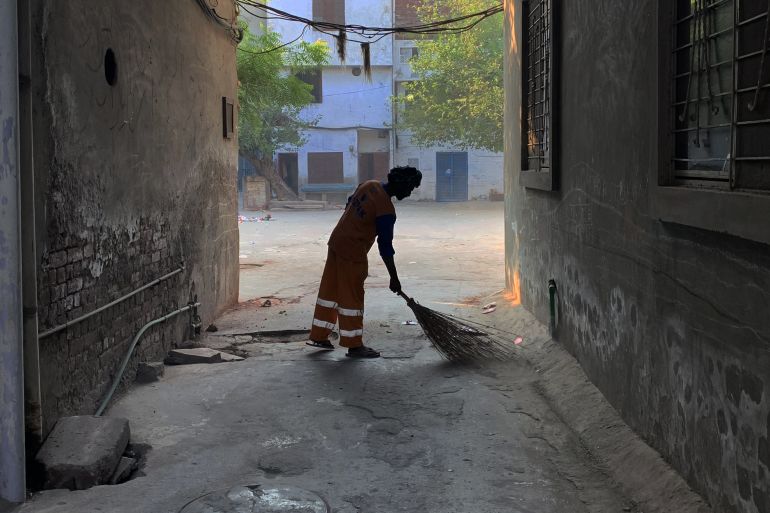
Pakistan’s Christians have long been marginalised and pushed into sewer cleaning work. Now, some are fighting back.
Sargodha, Pakistan – It is just before 4am on a chilly November morning and Maryam Bibi, 34, is waiting in a small, musty room for her 16-year-old son Suleman to get ready so they can leave for work.They will start work before sunrise, as they do seven days a week, collecting the trash from people’s homes and sweeping the streets.A single bulb attached to exposed wires hangs over the door of the room where Maryam’s five other children, four of them younger than Suleman, all sleep.
Maryam unplugs the bulb from the socket and their bare, two-room home plunges into darkness. She needs to charge her phone on the only power socket before heading out for the day.
After a rushed breakfast of tea and stale bread, Maryam and Suleman hop on a rickety motorbike and make their way through the winding streets of a sleeping Sargodha, Pakistan’s 12th largest city, sandwiched between the Jhelum and Chenab rivers in the central-eastern province of Punjab.
It is still dark out, and the mother-son duo is headed to a small residential neighbourhood where they will spend their morning picking garbage for a combined monthly salary of 16,000 rupees ($55.43) that must sustain their family of eight.
“Ammi [mother] tells me to go back to school, that she will do the work herself, but I just can’t. Not anymore,” says Suleman as he pulls on a worn-out pair of suede gloves bought at a flea market.He uses these gloves to protect his hands while rummaging through garbage cans.“It’s my responsibility to look after my siblings now that Abbo [father] is gone.”
Suleman, a soft-spoken teenager, had dreamt of one day joining the police force. He knows how unlikely that is now that he has had to step up and help his widowed mother run the household.
Suleman’s father Nadeem died over a year ago when he drowned in a blocked sewer.
As she begins her busy day, Maryam admits that she and her children “don’t even have the luxury of sitting at home and grieving their loss”. With bare hands, and dressed in a tattered shalwar kameez and chador, she knocks on one door after another, swiftly collecting trash into a rusty wheelbarrow as Suleman follows, intently observing his mother, learning the job he inherited from his late father.
A death trap
Thirty-eight-year-old Nadeem Masih (a common surname among Pakistani Christians that means Messiah in Arabic and Urdu) had worked with the local sanitation corporation for nearly half his life. For 17 years, he was paid a daily wage, as he waited for a permanent contract that would legally grant him the status of a permanent government employee and secure him a legal minimum wage, paid leave, and other social benefits.At around 10pm on Sunday, October 3, 2021, Nadeem and several other workers received a phone call from their supervisor, urgently summoning them to clean a blocked sewage line in the city centre.“He didn’t want to go because it was his day off, but the supervisor threatened him [by saying he’d fire him if he didn’t go], so I also encouraged him to comply because we couldn’t risk losing the job,” says Maryam as tears well up in her eyes. “We are helpless and poor, without any rights whatsoever. We don’t have a choice when supervisors threaten, curse and disrespect us. Our only option is to give in.”
Nadeem reluctantly left the house that night.
Shortly after midnight, Maryam received a frantic call from her nephew, asking her to rush to the open sewer that had become a death trap for her husband and another man, Faisal Masih, 28, the sole breadwinner for his family, and father to a newborn baby.Maryam and Suleman rushed to the site of the accident just 10 minutes from their home. “At first I didn’t understand what was going on. There were a lot of people there and they were all shouting. My nephew told me Nadeem had drowned, but I didn’t believe him until I saw him down there myself,” recalls Maryam.
Both men lay covered in sewage sludge for six hours before their bodies were finally extracted by a colleague. According to Maryam the supervisor had fled the scene.
Kept on edge
That night, Nadeem and Faisal’s colleague Michael Masih had been the first of the three men to descend into the manhole. “Once you remove the cover, you must always wait for 30-40 minutes to let the poisonous gases evaporate, but our supervisor was impatient and he forced me to go down right away,” he recalls mournfully, sitting on the roof of the home that he shares with his three brothers and their families.
As Michael climbed down the ladder, it collapsed and he fell into the sludge. His fall released more noxious gas. “I fell unconscious instantly,” he recalls. When he woke up, he was told that both Nadeem and Faisal had died trying to save him. The toxic sewer gases had rendered them unconscious and both men drowned.Their deaths, says the 30-year-old father of two, wiping the tears off his cheeks with his sleeve, could easily have been prevented if they hadn’t been forced to rush and had proper safety gear.
“You cannot imagine what my heart goes through every day thinking about what happened that night,” he says.
Nadeem and Faisal’s employer denies any wrongdoing in relation to their deaths.
Suleman dreamed of joining the police force before his father’s death [Saad Zuberi/Al Jazeera]
This was not an isolated incident. In the absence of workplace health and safety regulations and ethical superintendence, Pakistan’s sanitation workers, about 80 percent of whom are Christian, are routinely exposed to a host of unsafe and deadly work practices.
Generation after generation of Pakistani Christians like Nadeem, Faisal and Michael face preventable workplace deaths and accidents as they are forced into the hazardous work of cleaning the country’s streets and gutters.
Over a period of years, desperate daily workers without other prospects are kept on edge – forced to do just one more job, or go down just one more clogged sewer without protective gear – with the promise of a life-changing contract that would give them and their families the protection of health insurance and a pension.
But now, some are fighting back.
Pre-partition discrimination
In Pakistan, more than 90 percent of people identify as practising Muslims. The country’s 2017 census estimated there to be 2.6 million Christians, about 1.27 percent of the total population, making them Pakistan’s second-largest religious minority after Hindus.
Although Pakistan was founded in 1947 with the intention of creating a tolerant and egalitarian country, Pakistani Christians have continued to endure substandard living conditions, and in recent years, the community has been the target of escalating attacks due to growing intolerance. Christians have faced persecution, targeted killings – including gunmen killing a Catholic man and a priest in two separate incidents last year – forced conversions, mob violence, and destruction of their places of worship and graves by perpetrators emboldened by the absence of meaningful action from the authorities and widespread impunity.
The severe discrimination and attacks against religious minorities have led the United States Commission on International Religious Freedom to designate Pakistan as a country of “particular concern”.
The Christian minority has also been heavily persecuted under Pakistan’s blasphemy laws, which carry a possible death sentence for anyone found guilty of insulting Islam. According to the Lahore-based NGO Centre for Social Justice, seven Christian individuals were charged and imprisoned over blasphemy charges in 2021. At least two others were arrested and tried for the same crime in separate incidents in 2022. The threat of being accused of blasphemy has also been used to intimidate the community.
Pakistani Christians have been forced into sanitation work – a hazardous occupation – as a result of centuries-old discriminatory practices that limit their prospects, according to Asif Aqeel, deputy director of the Center for Law and Justice (CLJ), a minority-led policy research and minority rights organisation. This “cycle of abuse” has its roots in the caste system of the Indian subcontinent, explains Aqeel, as he sits in his office in Lahore, the capital of Punjab province.
Inside his humble office, ceiling-high shelves are packed with files comprising evidence and years of research he and his colleagues have done on Pakistani religious minorities, particularly Christians.“Missionaries began arriving in pre-partition India [before 1947] in the 19th century,” he explains. The missionaries began converting many so-called “low-caste”, “untouchable” Hindus to Christianity. “They had always been assigned the ignominious task of cleaning after the ‘upper castes’,” Aqeel continues. “After the partition, they didn’t have a choice but to continue the work their ancestors did.”
Muskan, Maryam’s 18-year-old daughter, says that when she was 11 years old a school refused to admit her, saying she should be working as a sweeper.Today, most Christian sanitation workers are treated as social outcasts. People generally avoid shaking hands, making friends, and even eating or drinking with them.The term “churha”, which officially translates to “sweeper”, is now seen by many as derogatory but is still casually used as a slur for Christians, regardless of their profession, explains Aqeel.“I myself have been called a ‘churha’ many times simply because I belong to the same community,” he says. “This kind of emotional and psychological abuse begins early on, sometimes in classrooms, and has severe ramifications on a child’s wellbeing and confidence.”Bullying and active discouragement from pursuing further education and professions other than gutter cleaning reinforce a sense of shame and diminished self-esteem, according to Aqeel.
‘Too old for school’
“When I was 11, my mother tried to put me in school, but they refused to give me admission,” recalls Muskan, Maryam’s 18-year-old daughter, as she quietly prepares lunch for the family. “The teacher told my mother that I was too old for school and that I should be working as a sweeper instead.”
Ever since, she has been cooking and cleaning at home. As her siblings play with their late father’s pigeons on the rooftop, she recalls how she felt ashamed when she found out her father was a sanitation worker who cleaned sewers and excreta for a living. “[I] often requested him to find some other work,” admits Muskan, who misses her father terribly.Maryam dreads the day her daughter will have to leave the house to pursue a cleaning job. With so few options, she believes it is inevitable. “Nadeem didn’t want any of his children to work. He wanted them to study and build a better life for themselves so they don’t have to clean people’s filth like we do,” she explains. But now, on her own, she says she can’t afford to put them all through school and just hopes she can find a good husband for Muskan.
Aslam and Asiya sit in their home in Lahore. Both are sanitation workers who put in long hours so that their children can stay in school and not have to work from a young age [Saad Zuberi/Al Jazeera]
Trying to break the cycle
In Lahore, 45-year-old Aslam Masih and his 40-year-old wife Asiya Masih, both sanitation workers – whose parents worked as sweepers, as did their parents before them – are trying to break the cycle so that their children can lead easier lives.
“Nobody should have to go through this kind of degradation on a daily basis, but our parents did it to sustain us and we do it for our children,” says Aslam, who has been working for the municipality for more than 20 years.
“We have to do whatever we’re told. I was ashamed to tell my children that I go down sewers and clean filth with my hands for a few hundred rupees,” says Aslam, who believes that the only way his children can have a better life is through education.
But decent education is a luxury not many families can afford. While the government of Punjab and several nongovernmental organisations offer free primary and secondary education to all citizens, the burden of the ever-increasing cost of living compels most low-income families – especially from marginalised minority communities – to send their children to work.
When they find that all the other doors are closed, they will invariably turn to sanitation work where, according to Aslam, “our kind is always in demand… They know we don’t have any other opportunities and that’s how they exploit us.”
Literacy rates reflect the impact of this structural discrimination. While no new comparative data is available, a 2001 report by Pakistan’s National Commission for Justice and Peace estimated the average literacy rate among Christians to be 34 percent as compared to the then-national average of 46.56 percent.
Today, rising inflation – 35.4 percent in March, the highest rate since 1973 – makes it harder than ever for families to put food on the table, let alone send their children to school.Aslam and Asiya, however, are steadfast, both working extra shifts that sometimes last up to 18 hours to keep their four children between the ages of seven and 17 in school for as long as possible.
Toxic gases
Just a few kilometres north of the couple’s modest home in Youhanabad, Lahore’s largest Christian majority area, another Christian daily wage worker, 35-year-old Michael, who goes by just one name, arrives at a quick cleaning job on a busy thoroughfare in a posh residential neighbourhood in central Lahore.
“I started working as a sweeper when I was 14 or 15 years old and was first asked to go down a clogged sewer when I was 17. I was offered 250 rupees ($0.87 in today’s currency) by the contractor to go down a 20-foot gutter to manually clean the pipelines of excreta with only a rope tied around my waist for safety,” Michael recounts, as he takes off his shirt and hands it to his colleague. “Two hundred and fifty rupees is a lot of money when you don’t have food at home, so I couldn’t refuse.”
Hundreds of people pass by as he stands next to the sewer. None of them seems to notice the half-naked man.
Michael yanks the heavy concrete lid off with both hands, and a dozen cockroaches run for cover. He is unfazed as he swiftly begins his climb down the dark, malodorous hole in just his trousers. He has no protective gear.Sewer gas is a combination of toxic and nontoxic gases found in different concentrations depending on the levels of waste and decay. Exposure in large concentrations to highly toxic components like hydrogen sulphide and ammonia can cause convulsions, inability to breathe, rapid unconsciousness, and death. In Pakistan, workers are routinely expected to work around raw sewage, sludge and septic tank waste without proper protective equipment.
Dry suits, masks, oxygen tanks, and even gloves are a luxury that front-line workers like Michael, Aslam and Nadeem have never used.
On a normal day, exposure to bacteria, viruses and parasites that can cause diseases and infect lacerations is the least of their worries when poisoning or sudden death by noxious gases is a very real and imminent threat.
At least six sanitation workers, all Christian, have died within the last year after inhaling poisonous sewer gases in otherwise preventable workplace accidents across Pakistan. All were men who had families.
Aqeel says it is likely that none of the men were provided with sufficient protection. “The primary reason for deaths of sanitation workers is lack of PPE (personal protective equipment),” he says.
Sweepers Are Superheroes
In early 2022, Aqeel and his CLJ colleagues released a harrowing repository of nearly 300 discriminatory job advertisements that were published in Pakistani newspapers between 2010 and 2021. “I had been collecting these ads for a decade, and it was time to make them public,” he says. “These discriminatory job ads specifically invited Christians and other non-Muslims to apply for janitorial openings in public sector organisations.” Many of these ads were for positions at government agencies.
They shared this data with Pakistan’s Supreme Court in October 2021 – along with a petition to identify and strike down discriminatory policies, laws, regulations and any service rules that, according to Aqeel, “sanction abuse of a particular group of people that are already marginalised”.
Mary James Gill, CLJ executive director and a former member of the Punjab Assembly, has played a pivotal role in putting a spotlight on the brutal working conditions and attitudes towards sanitation workers in Pakistan through an online advocacy campaign started in 2019 and called Sweepers Are Superheroes.
The campaign, she explains, aims to improve the dignity of these “heroic workers” by stirring grassroots and policy discussions about the need for social and legal protection for this community.
“We want people to understand that they are not ‘outcasts’, but people just like the rest of us,” she says.
In December 2021, the government of Punjab banned the use of “churha” when referring to janitorial staff and sanitary workers, imposing legal action against those who violate the ban.
“This was a big win for us. We have also joined hands with the NCHR [The National Commission for Human Rights] to campaign for better working conditions and put an end to religious discrimination when hiring for janitorial jobs,” Gill says.
In January 2022, the Islamabad High Court issued notices to various ministries seeking a ban on advertisements for people from religious minorities to fill the post of sweepers. Activists like Gill believe it is a step in the right direction, but that policy changes and legislation are needed to protect the lives of workers and ensure better opportunities for minorities.
Meanwhile, members of religious minority communities say there is an inconsistent application of domestic laws safeguarding human rights and against societal discrimination and neglect at the federal and provincial levels.
Patras, who lives in Karachi, tried to take a day off, but he claims that his employer threatened him with unemployment [Saad Zuberi/Al Jazeera]
‘Are our lives not worth anything?’
In Karachi, the capital of Sindh province and the country’s principal seaport and financial centre on the coast of the Arabian Sea, things are just as bad for sanitation workers.
The third-largest megacity in the world is home to Patras Masih, 30, a Christian sweeper who had been working day and night, without any days off through last year’s torrential monsoon rain spell between July and August.
“It feels like I haven’t been home in a month,” he says as he sits with his family on a small terrace in their home in a low-income Christian neighbourhood.
The terrace doubles as a living room while a tarp-covered section with a portable gas stove and a handful of hanging pots and pans serves as the kitchen.
“I asked for a day off,” he says, but his employer “said I can leave if I don’t want to come back to work again. We get no sick days and were forced to work double and triple shifts through the rains. The funny thing is, I still don’t have a contract.”
It’s a Sunday morning and the family, having just finished breakfast, will soon go to mass without him. “I don’t remember the last time I had the time to go to church on Sunday,” he says.
Patras is in a rush because he has to get ready for yet another 14-hour shift. His pregnant wife, who is in her early 20s, sits in a corner sombrely listening while his recently widowed mother Shama Arif wipes her teary eyes with a worn-out chador that covers her fragile frame. “They don’t even give us time to grieve properly,” she says.
In June, her husband Arif and his colleague Meraj, both in their 50s, met the same fate as Nadeem and Faisal. The men were called in for an urgent job to descend a manhole to clear out choked pipelines in a wealthy residential neighbourhood.“It was horrible. When I got a call, I rushed over and found my father’s lifeless body floating in raw sewage. That’s all I think about now. Why are our lives not worth anything?” Patras’s younger brother Danish, 25, solemnly asks.Two months had passed and Shama claims that not one of Arif’s supervisors had visited to pay their respects or compensate the family for their loss.
A historic lawsuit
Back in Sargodha, shortly after her husband’s death, Maryam, with the help of a lawyer, set a precedent by filing a lawsuit against the supervisors who she claims forced him to work without protective equipment.
For the first time in Pakistan’s history, the widow of a “daily-wager” sanitation worker killed on the job registered a criminal case for involuntary manslaughter.
Although Faisal was a permanent employee, his family followed in Maryam’s footsteps and also joined the case. Under Islamic law, which governs all cases irrespective of the plaintiff’s religion, if found guilty, the defendants – the three supervisors working for the Sargodha Metropolitan Corporation – would have to pay diyat, or financial compensation, to the heirs of the deceased.
This amount was estimated to be roughly 16.6 million rupees ($57,507) per family, a significant amount for anyone earning less than $100 a month after years of service.
“I have no money left. I have taken loans from friends and relatives that I can’t pay back. I want justice for my husband’s death, but I also have to feed my children and make sure they live a decent life,” says Maryam, who spoke with anger as the case went on. Despite her resolve to receive the compensation, she was also painfully aware of her limitations, which became clearer when Faisal’s family dropped the charges after receiving a cheque for 1.9 million rupees ($6,582) from the defendants – the amount due to the family of permanent employees in case of occupational fatality.
Gill and her team had been monitoring the case closely since Nadeem’s death, trying to rally support for the family as it pursued not just the case but also Nadeem’s outstanding dues, which Maryam says have still not been paid by the corporation.
Throughout, Maryam says she risked losing her own job with the corporation. She claims that she was pressured to drop the charges by being threatened with losing her job and not receiving payment or her husband’s dues.
“We were never sure if the families would be able to bear the pressure and see the case through to its logical end. And as expected, the corporation used all its pressurising tactics and forced Maryam to settle out of court. Much to our disappointment, the case was closed with a settlement of just 500,000 rupees ($1,732),” says Gill.
“[Maryam] reluctantly gave in,” she explains. “It’s a broken system. But, this was still a big deal.”
An initial attempt in 2021 to seek an interview with an official from the Sargodha Metropolitan Corporation to clarify their position on the case was unsuccessful. At an initial hearing, the defendants denied the allegations, claiming the deaths were an accident.
Several other attempts have been made since the beginning of this year to seek a response from the corporation or its senior management – via landline phone calls, WhatsApp messages and emails – about the case, Maryam’s job status and Nadeem’s outstanding dues. No response has been received.
Maryam’s fight is not over. She is still waiting for regularisation of her job status and Nadeem’s dues, more than a year after his death. And she has been considering reopening the case in Lahore High Court with CLJ’s help. “This would be excellent as it will give so much hope to others like her,” Gill says, adding that CLJ will continue to stand beside her and provide free legal support. A case like this could pave the way for legislative reform to alleviate the suffering of Pakistani sanitation workers.
“I am grateful to Mary Gill and everyone who has stood beside me, but I have to think about reopening the case. I am an uneducated woman. If I do, I could never fight this battle without their help,” Maryam explains.
She is tired and faltering, but as she starts her days at 4am, and considers the next step in her battle for justice, she thinks of what it all means for her children. “I want a better life for them,” she says.
SOURCE: AL JAZEERA
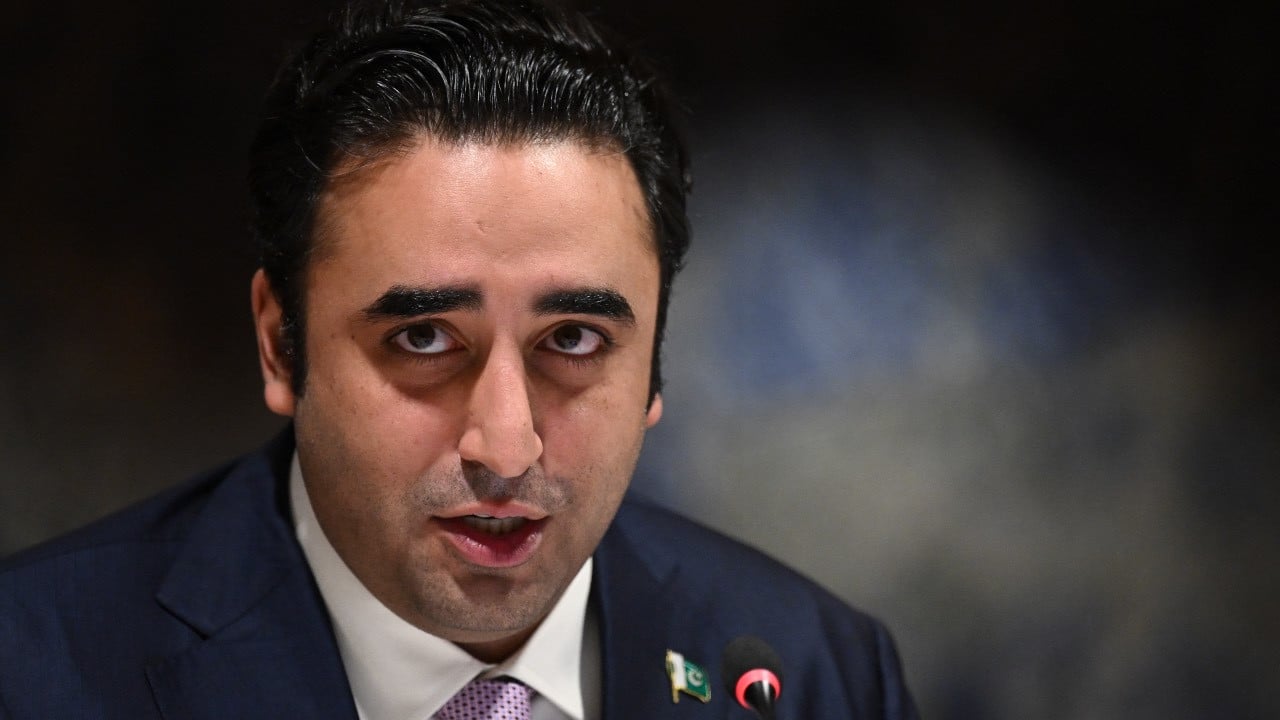
Foreign MinisterBilawal Bhutto-Zardarireaffirmed Pakistan's commitment towards Kabul's stability, peace and prosperity in a call with Acting Afghan Minister for Foreign Affairs Amir Khan Muttaqi on Saturday.
The telephonic conversation with his Afghan counterpart, FM Bilawal discussed a range of issues of mutual interest, the Ministry of Foreign Affairs said in a statement.
"They discussed a range of issues of mutual interest. The foreign minister reaffirmed Pakistan’s commitment to a stable, peaceful and prosperous Afghanistan," the statement read.
The call comes after Pakistan witnessed a rise in terrorism and the local authorities blame the Afghan Taliban for not ensuring that their soil isn't used by outlawed Tehreek-e-Taliban Pakistan (TTP) for launching attacks on Islamabad.
In an interview with a US broadcaster, Voice of America, Defence Minister Khawaja Asif said that the proscribed TTP is still using Afghan soil for launching attacks on Pakistan — especially in Khyber Pakhtunkhwa (KP).
“Islamabad has good relations with the ruling Taliban government in Kabul. However, the Afghan authorities have not succeeded in stopping the use of their territory in attacks on Pakistan,” he said.
The top minister also warned the neighbouring nation's rulers that if they were unable to stop anti-Pakistan terrorists from using their soil, Islamabad would be forced to retaliate.
The matter, the federal minister said, had been brought up and discussed in February when a meeting between a high-ranking delegation — including Asif and the ISI DG Lt Gen Nadeem Anjum — and Afghan officials.
"We have communicated to Kabul during our last visit that please, as our neighbours and brothers, whatever is emanating from Afghan soil is your responsibility," he said.
"If that is not done, at some point we’ll have to […] resort to some measures, which will definitely — wherever [terrorists] are, their sanctuaries on Afghan soil — we’ll have to hit them,” he said.
“We’ll have to hit them because we cannot tolerate this situation for long."
Zulfikar Ali Bhutto was executed on April 4, 1979, a darkest day in the history of Pakistan. Bhutto
wrote a book from his death cell, Titled "If I am assassinated," its last pages contained a quote from Russian author Nikolai Dostoevsky: "Man's dearest possession is his life, and since it is given to him to live but once, he must so live as not to be scared with the shame of a cowardly and trivial past, so as not to be tortured for years without purpose, that dying he can say, 'All my life and my strength were given to the first cause in the world - the liberation of mankind.' " As death stared the Z.A Bhutto in the face, he stared back. His past has no shame of cowardice. His daughter, too, gave her life in courage. "If India builds the bomb we will eat grass or leaves, we will go hungry. But we will get one of our own." This statement by Zulfiar Ali Bhutto should open up our eyes and bring back the passion of patriotism, unity and love for each others for the sake of Pakistan. I would like to express that this man is and was hero of Pakistan.
Historians, Retired Judges of the Superior Courts and eminent lawyers have now unanimously admitted that Mr. Z.A Bhutto was hanged by a military dictator General Zia-Ul Haq by orchestrating a judicial trial to get rid of a popular leader. He gave Pakistan its first constitution, nuclear programme, held peace talks with India and brought 90,000 POW who were in Indian prison and were going to face war crimes. He liberated the small farmers and peasants from the repression and cruelty of big landlords and banished the jagirdari and sardari system declaring that all citizens are born equal and must live with equal rights.
Z.A Bhutto was a Legend, who lived and died like a hero with courage, determination and devotion to his principles, when cruel dictator Zia was going to kill him, Z.A Bhutto could sign few papers and could live in exile but he was a real man, he was not a coward. He too could have made a deal and lived to fight another day; but only great men with principles sacrifice their life for their cause.
Zulfikar Ali Bhutto earned everlasting fame in the pantheon of leaders from the Third World in the struggle against colonialism and imperialism. He had the privilege of interacting with many of those leaders who played a great role in the epic struggle for national independence in the 20th Century including Mao Tse Tung, Soekarno, Chou-en Lai, and Gamal Abdel Nasser. He belonged to a category of anti-imperialist leaders who included Jamal Nasir of Egypt and Jawahir Lal Nehru of India. He was a brilliant Diplomat who negotiated some of Pakistan's most enduring diplomatic policies as well as bargaining from a position of weakness against Indira Gandhi in Simla. He was a great diplomat; there is a story that the American President John F. Kennedy was much impressed with then Foreign Minister Zulfikar Ali Bhutto. When they met, Kennedy walked with him in the Rose Garden and said, "Bhutto, if you were an American, you would be in my Cabinet". To which Zulfikar Ali Bhutto smilingly replied, "No, Mr. President. If I were an American, you would be in my cabinet". A Pan Islamic socialist who weakened the Feudal and tribal system.. He also pushed through Pakistan's nuclear programme despite enormous International pressure. He was also a brilliant politician whose popularity and powerful speeches impressed even his worst opponents. It took a great man to get Pakistan out of the 71 trauma. A dynamic leader, who stood up against imperialism and looked to China and other progressive countries for an alliance. When he was Prime Minister, the country prospered and was set on a course of industrial and agricultural development. He gained popularity in villages and poor industrial areas.
Bhutto was the only true leader in our history who gave us constitution, identity in international relations. You will be surprised to know when Bhutto became as Foreign Minister, at that time; we did not have ambassador level relations with so many big countries of the world like Indonesia etc. He empowers the poor of his country.
Such people like Z.A BHUTTO are born rarely, who will forget his capabilities as an extempore speaker, as an writer, as an diplomat, as an leader and above all as lover of poor. On the day of his martyrdom his opponents called him as a culprit but same are now calling him as an innocent. The simple reason for this is that Zia tried his best to create divisions among people in order to finish the popularity of Bhutto. The irony is all those who hatched conspiracy against him are no more in this mortal world, all of them died a horrible death. Bhutto was the greatest leader we can think in the modern history. In his book "If I Am Assassinated", Bhutto clearly mentions his fear of 120 million Pakistanis under a defenseless sky in comparison to a nuclear India. What a vision! India could have swallowed Pakistan long ago if thanks to Bhutto we were not an atomic power. On the economic front Bhutto vision for nationalization was that Pakistanis will work hard like Chinese, but here Pakistanis failed him. The labor and the management of nationalized industry had no interest to take advantage of this opportunity. Using this as a golden opportunity, the industrialists, bureaucrats, and above all corrupt army declared him as an unsuccessful leader. Bhutto loved poor and poor loved Bhutto. This relationship is ever lasting. The first leader who legislated labor laws and enforced in Pakistan and nobody could do it till now. This is the reason of his popularity among labors. He tried to unite the Islamic world. The Pakistan is still under developing country because Bhutto is not alive.
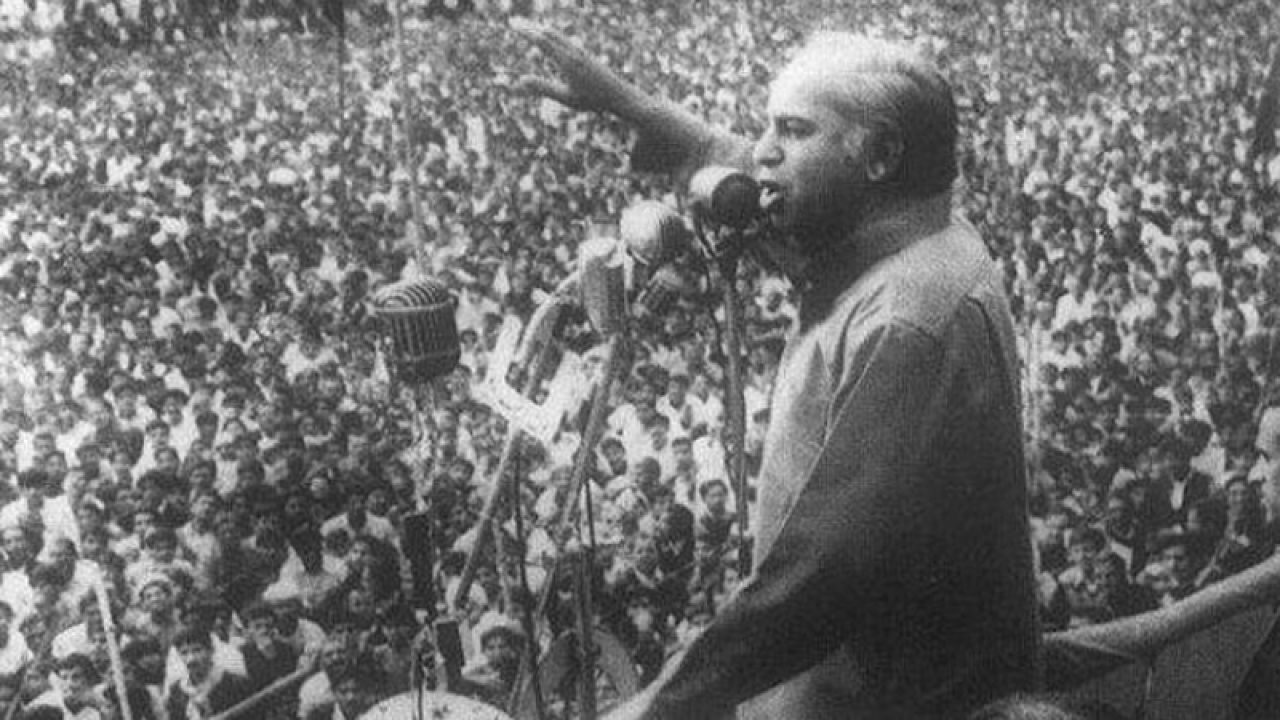
Z.A Bhutto is the first person in Pakistan who has given the voice to the common people. Z.A Bhutto was great charismatic leader, man of masses, top class negotiator, excellent communicator, a visionary, known for mercurial brilliance, wit and a highly well read person. He attracted mammoth crowds where ever he addressed public meetings even in remote regions of the country. He was a man of masses because of his personal charm and charisma and the one who spoke in the language of workers, laborers, peasants and the people in the streets. He would make the people feel that he was one of them, understood them, had solutions to their problems and give them roti, kapra aur makan. He might have given all these things to them if his government had not become target of the establishment's conspiracies.
ZA Bhutto's Powerful Political Legacy Cannot be eliminated. In no time Bhutto had made a tremendous impact all around. As Minister for Fuel and Power, he had diverse explorers tapping into Pakistan's underground hidden energy resources. For the first time Russians were involved in oil and gas exploration. His time as Minister for Science and Technology was well spent. He could measure the advancements made by India in the atomic field. I can't help grieving the tragic death of a Hero who paid with his life to set an ultimate example of principled politics. I hope we honor Shaheed Bhutto by giving to the weak and less fortunate people of Pakistan the gift of unconditional empowerment through democracy and moral governance and not trade his dream for our illusions. Bourgeois battled Bhutto's populist economic and political enforcement, the bourgeois and the petty-bourgeois became ready instruments in carrying out their social propaganda against Bhutto. He was the man behind introducing democracy in the country by kicking out the dictatorial rule and finally gave a consensus constitution of 1973 with guarantees to basic human rights under the supremacy of parliament. Cruel dictators like Zia and Musharraf are responsible for bringing fundamentalists into the corridor of power, Mush, who is now trumping against them just an eye wash. Political Leaders must posses' qualities of power, vision, ethics, courage, knowledge, decision making, integrity, enthusiasms and devotion and should have principles, Z.A BHUTTO had all those qualities.
Mr. Bhutto lived consciously to make history and to leave a legacy in the form of the development of his nation. He is right credited with saving Pakistan at the darkest moment of its history, as French President Giscardd' Estaing said he was the man,'' who incarnated Pakistan at a dramatic hour of its history''.
Z A BHUTTO was indeed a great leader, a leader we must salute today; who gave voice to the voiceless and helped them shape their own destiny. It was under his leadership that every Pakistani given the right to passport. Education was nationalized and made available to every child. Scores of Universities were built to turn the children of the discriminated and downtrodden into lawyers, doctors and engineers liberating them from a destiny of backwardness. Bhutto pushed politics out of the posh drawing rooms into real Pakistan-into the muddy lanes and villages of the poor. The ever-lasting contribution of Bhutto was to raise the consciousness of the people for democracy. He awakened the masses, making them realize they were the legitimate fountainhead of political power. He enlightened the peasants, the industrial workers, the students, the women and the rest of the common people of their importance and of their right of franchise, which is the definite means of bringing changes and improvement in the lives of the common people. He deeply cherished democracy and democratic values and in the end gave his life for the cause of freedom. In the case of Pakistan, he viewed military rule as a negation of the very genesis of the country that came into being as a result of a democratic process and a vote. Today as the Nation pays tribute to one of its greatest sons; it is destined to move forward in the spirit of Federalism, Democracy, Autonomy and Egalitarianism which he lit through his example of courage in the defense of principles and ideals. Z.A BHUTTO was a people leader, a legend and a poet and he remained so till the last breath in his body. He was a true revolutionary; his revolution was against imperialism, against bourgeois. He was a charismatic leader and his charisma still rules the nation.
Z.A Bhutto ruled the hearts of people when he was alive and till date he rules their hearts.
Z.A Bhutto was a principled friend to the poor, downtrodden and oppressed. He was fearless in his beliefs and refused to bow before any man or power other than the Almighty. His contributions to an impregnable Pakistan are seen in the Kamra Aeronautical factory, Heavy Mechanical Complex at Taxila, modernization of Karachi Shipyard, creation of precision engineering works, Pakistan Steel Mills, Port Qasim, Pakistan Automobile Corporation to name a few. By signing the Simla Accord of 1972 he negotiated longest peace between India and Pakistan. His social reforms laid the foundation of an egalitarian society, his non-aligned foreign policy earned Pakistan respect in the comity of nations. He lifted the nation drowning in a sea of despair to Himalayan heights. The death cell in which his killers kept him failed to break his will or his determination to challenge military rule and stand up as the leader of the people. Bhutto was a modernizer and saw nationalism as the key to unity. He rejected fanaticism. He gave pride to the poor.
As leader of the Third World he spoke boldly against racism, colonialism and imperialism. He fearlessly defended the right of nations to independence. When the 1973 Ramadan War broke out, he sent Pakistan's military to defend the borders of the Muslim countries including the Golan Heights of Syria. Bhutto's short life of fifty years was spent in the service of many international, regional and national causes. Today Pakistan is at the crossroads. Its policies relating to Nuclear, Taliban, India, Militancy, Religious Parties, Democracy and Economy are in shambles. Shaheed Bhutto believed that the army could protect its institutional competence by keeping out of politics. He said, "Those soldiers who leave the barracks to move into Government mansions lose wars and become prisoners of war as happened in 1971; his words reverberate as a warning and a guide to the country to save its honor, respect, pride and position by reverting to the golden principles that gave it birth.
Z.A Bhutto was born in 1928. He was martyred in 1979. Yet he lives in the hearts and minds of the people still shining like a star that brightens the sky motivating those caught in the prisons of oppression. No doubt, the age of Bhutto was an age of revolution. At the time of his over throw; Bhutto was emerging as a spokesman of the world of Islam and the leader of the third world. Although his life and political career were cruelly terminated, Zulfikar Ali Bhutto will always be remembered as one of the great leaders who took part in the liberation of the third world from the yoke of Imperialism and Neo Colonialism during the twentieth century.
"It is better to live like a lion for one day than to live like a jackal for a thousand." Z.A.BHUTTO''.
Long Live Bhuttoism!
Foreign Minister Bilawal Bhutto Zardari on Friday briefed the Contact Group of Organization of Islamic Cooperation (OIC) on the humanitarian and human rights situation in the Indian Illegally Occupied Jammu and Kashmir (IIOJK).
The minister was participating in the meeting of the OIC Contact Group on Jammu and Kashmir on the sidelines of the 49th OIC Council of Foreign Ministers meeting in Nouakchott, Mauritania.
Chaired by OIC Secretary General Hissein Brahim Taha, the meeting was attended by Saudi Arabia, Turkiye, Niger, Azerbaijan and true representative of Kashmiris and OIC’s Independent Permanent Human Rights Commission (IPHRC).
He explained that the situation in IIOJK had deteriorated with India’s illegal and unilateral actions of August 5, 2019 and the subsequent attempts at demographic changes in the occupied territory.
“By issuing millions of fake domiciles to non-Kashmiris and enacting laws that allow non-residents to buy and own land in IIOJK, India is trying to convert Kashmiris into a disempowered minority in their own land.”
These steps, he said, were in flagrant violation of the international law, especially the Fourth Geneva Convention, which interdicted an occupying power from taking such measures.
The Contact Group expressed alarm at the situation in IIOJK and adopted a Joint Communique reaffirming OIC’s position on the Jammu and Kashmir dispute and reiterating its firm rejection of India’s unilateral and illegal actions of August 5, 2019.
It requested the OIC secretary general and member states to raise their voices for the just cause of Kashmir at the international fora and hold India accountable for its oppression of the Kashmiri people.
The Contact Group also called upon India for immediate cessation of the human rights violations in IIOJK and taking steps for the resolution of the Jammu and Kashmir dispute in accordance with the relevant UNSC resolutions and the wishes of the Kashmiri people.
Narowal- Federal Minister/Chairperson Benazir Income Support Program Ms Shazia Marri along with Federal Minister for Planning, Development and Special Initiatives Ms Ahsan Iqbal inaugurated the Benazir Nashonuma Center at District Headquarters Hospital Narowal. Ms. Marri also interacted with the women present there. On this occasion, Dr. Amara khan, representative of World Food Programme, also gave a briefing to both the ministers. Federal Minister Shazia Marri termed the program as very important and said lack of food in a children has profound effects on its mental and physical development. Talking about the Benazir Nashonuma Program, the Federal Minister said that under this program, special food and quarterly financial stipends are also given to the pregnant and lactating women who benefit from the Benazir Kafaalat programme. The stpend is 2000 for the mother of a baby boy and 2500 for the mother of the girl child. Ms. Shazia Marri further said that more than 400 unique Nashonuma centers have been established across the country for this purpose.
In This occasion Parliamentary Secretary MNA Mr Khursheed Junejo, MNA Syed Ibrar Shah, MNA Syed Tariq Shah, PPP Punjab Leaders Faisal Mir and Rashid Khan Advocate were also present.
Saudi Arabia and the IMF are both demanding economic reforms from Pakistan, with the kingdom no longer prepared to bailout Islamabad.
Saudi Arabia's decision to refuse to provide any further bailouts or interest-free loans to Pakistan has left the government in Islamabad in shock and has prompted the finance minister to complain that even friendly countries aren’t keen on helping Pakistan out of its economic emergency.
Pakistan is in dire need of sustained US dollar inflows to avoid defaulting on nearly $80bn of international loan repayments over the next three and a half years. The country is currently sitting on just $3bn in foreign exchange reserves.
'Saudi Arabia is on a different course now. They've reset their relationship with other countries...'
- Kamal Alam, Atlantic Council
Pakistan is also locked in difficult negotiations with the International Monetary Fund (IMF) over its 13th bailout package since the 1980s.
If an agreement isn’t struck soon, Pakistan will find it increasingly difficult to secure international loans, as its credit rating has been downgraded to junk.
Analysts privy to recent developments have told Middle East Eye that Saudi Arabia has conditioned fresh interest-bearing loans and investment on Pakistan implementing strict monetary and fiscal reforms along with a drastic reduction in its current account deficit - conditions similar to those set by the IMF.
Umar Karim, associate fellow at the King Faisal Center for Research and Islamic Studies, said Pakistani authorities are in a state of shock.
“While previously Saudi Arabia and other Gulf countries would bail Pakistan out off the back of a phone call from the foreign minister or the prime minister, this time around they are really being put through the mill,” Karim told MEE.
It is believed that on a recent trip, even the Pakistani military chief couldn't convince Saudi Crown Prince Mohammed bin Salman to release emergency funding for the country.
Karim believes this sets a new precedent. “The Pakistani military chiefs have previously been a source of assurance to friendly countries, but the Saudis have now had enough of Pakistan's civilian authorities squandering away these handouts,” he said.
New world order
At the World Economic Forum in Davos in January, the Saudi finance minister made the kingdom's new policy very clear.
Mohammed al-Jadaan said: “We used to give direct grants and deposits without strings attached and we are changing that. We are working with multilateral institutions to actually say we need to see reforms.”
“We are taxing our people, we are expecting also others to do the same, to do their efforts. We want to help but we want you also to do your part.”
'There is also a major trust deficit between the Pakistani government and the IMF'
- Khaqan Najeeb, former government adviser
Kamal Alam, senior fellow at the Atlantic Council, said that Pakistani authorities should have read the pattern.
“Saudi Arabia is on a different course now. They've reset their relationship with other countries and refused to give financial handouts to namely: Jordan, Morocco and even Egypt. However, Pakistan, which is far more dysfunctional than all of the others, should have seen it coming,” Alam told MEE.
“Pakistan's been lulled by a false sense of security”, the analyst said, “that with a population of over 220 million and a comprehensive nuclear weapons programme, it’s too big for the world to let it fail. This has bred complacency across successive governments and the country's military leadership of easy loans or bailouts.”
Khaqan Najeeb, former adviser to Pakistan’s finance ministry, said the Saudis want Pakistan to sign a deal with the IMF and only then will they see any loans or investment.
“The Pakistani government's delay in implementing essential monetary and fiscal policies, as demanded by the IMF, has hurt the economic situation,” Najeeb said.
“There is also a major trust deficit between the government and the IMF and that's why the Fund is making sure Pakistan implements these policies before it receives any further funding or the important stamp of approval."
Meanwhile, the rate of inflation in Pakistan is set to hit 33 percent in the coming months and the country's currency has devalued nearly 65 percent in the last 12 months.
Nearly six months ago, in a bid to stem the outflow of foreign exchange, the Pakistani government stopped almost all imports, leading to a raw materials shortage across manufacturing sectors and a temporary shutdown of several automobile manufacturing plants and textile factories.
Najeeb argues that with high inflation, slow growth and high interest rates around the world, there is less money available for emerging markets like Pakistan, and that without the IMF's “stamp of approval” even friendly Gulf kingdoms will remain shy of investing in the country.
“Friendly countries too want to see reforms in Pakistan, however this time they are going for an investment model as opposed to previously when they would simply deposit a few billion dollars in Pakistan's state bank. This might turn out to be better for the country,” Najeeb told MEE.
What to reform and what follows that?
Kamal Alam told MEE that it was “very obvious” that “the delay in implementing IMF reforms is because the political elite wants to avoid them - deep-set corruption in government is at the heart of it.”
Alam said that a culture of “zero accountability has completely wrecked trust in Pakistani leadership, at home and abroad”.
Pakistan is ranked 140 on Transparency International's Corruption Perceptions Index for 2022, not a favourable ranking, Alam said, if the country wants to attract foreign investment. Najeeb, who worked in government, said that just attracting foreign investment will not solve Pakistan's problems in the long-term and that the country needs to expand its tax base and improve tax collection.
“Pakistan's agriculture sector contributes 23 percent of total GDP, while tax collection across the sector is very poor,” he said. “Similarly Pakistan's retail and real estate sectors also contribute heavily to the GDP but almost completely avoid taxation.”
The Saudis are also unhappy with the way Islamabad is behaving these days, said Umar Karim.
“The current prime minister has a 77-member ministerial cabinet, the largest in the world; they all receive full perks and privileges. Why would the Saudis help you if you continue to afford yourself such luxuries while they are putting themselves through a cost-cutting drive?” he told MEE.
Karim believes the Saudis are interested in investing in Pakistan's energy sector - both fossil fuels and renewables – and that they are also interested in investing in the country's booming IT sector. But this investment, he said, would only happen after Pakistan implemented economic reforms.
While Pakistan is besotten with a crippling power crisis, Saudi investment in the renewable energy sector could be crucial. A 2020 report from the World Bank suggests Pakistan has immense potential for generating power through solar energy.
“Utilising just 0.071 percent of the country's area for solar power generation would meet Pakistan's current electricity demand,” the report said.
In 2019, however, the Saudi government expressed interest in setting up an oil refinery and in making other investments totalling $10bn in Pakistan. But, Najeeb said, Pakistan would need to “revamp its board of investment” and bring in “specialist human resources and incentives” in order to take advantage of this opening.
The former finance ministry adviser said that a reset in relations with Saudi Arabia would be good for Pakistan and could prove to be a wake-up call.
Balochistan is a notorious place. It is a place where people are killed and disappeared on daily basis. More recently, women are found dead, targeted, tortured, detained, and killed owing to many known and unknown reasons. It has further led to many conspiracy theories and blame games to deflect responsibility.
In this context, where are we heading as a society? What is our stance at a point where women are disappearing, killed, and tortured and where civil society feels to not raise their voices? However, there are few voices from society and women’s organizations who are raising voices in favor of Baloch women but there is a lot more skepticism, nonsense, and unethical arguments.
In every society, the bond of relationships is ethics. Institutions may not feel to regard ethics of the society but society has to. These ethics and moral philosophies revolve around care. During times of conflict, civil society may not uphold the values of humanity but it can show some care. Care bonds people regardless of their nationality, ethnicity, and religion. It is also one of the pertinent features of many feminist discourses and moral theories like that of Ethics of care. The same goes for Baloch women, in particular, and the context of civil society, in general.
What’s the point of all this education if all we get blame games or conspiracy theories to define any mishap in society? Aren’t we educated enough to show some concern when women are faced with violence and death threats? Certainly, care is not about our personal lives only. It is more like a practice and value embedded in the values and traditions of any society. According to many feminist discourses, it goes beyond private lives and encompasses far more realms such as the social, political, and legal framework of any society. It may also cover the arena of war and international relations.
Owing to the ethics of care, civil society should show some emotions toward the ongoing critical situation of Baloch women. This argument may seem irrational but empathy, sensitivity, and responsiveness are the need of the hour. These features are the foundational basis of any society and may also help to cultivate any reasoned stance at a time of crisis. Moreover, it is the only to diffuse the ongoing moral crisis in the province.
On the other hand, Baloch, as a nation, may show anger at this critical juncture where Baloch women are not only harassed but kidnapped and targeted as well. This is also a case of moral indignation because they are feeling humiliated and disrespected in so many ways. Besides, they have repeatedly argued how institutions and authorities have treated them inhumanely and unjustly. More importantly, this is how human beings react and feel when they are treated inhumanely and unjustly.
It is pertinent to note that anger of Baloch is not just a raw emotion. These sentiments have been cultivated for a very long period. It can’t go in a day. Accordingly, these emotions need appropriate reflection and if necessary some education as well. Therefore, many feminist thinkers argue that the rationalist perspective to define any emotional response is not sufficient to make sense of the overall situation.
In contrast, there are arguments for how emotional responses become irrational when it carries elements of vengeance and aggressiveness. In the context of Balochistan, these emotions carry a kind of plausible view because of the already beleaguered situation of Baloch women. Perhaps, it is not the proper time to decide rationality in the anger of people protesting for the respect and dignity of their women.
In addition to that, these women are already facing patriarchal structure and tribal ethos. Tribalism is a kind of conservative setup where women have less than fewer opportunities to excel in every walk of life. Moreover, men have dominated almost every good and bad aspect of tribal society. According to the predominant tribal narrative, women’s respect lies at home where she is expected to do homely jobs. It is also suggested that these homely jobs require less hard work and are better suited for women.
Owing to these hard circumstances, women are still striving hard in every field of life. They are good wives along with being a good doctor, engineer, teacher, civil servant, etc. Whatever the profession is, women can excel in it and the world doesn’t doubt this fact. The same goes for the women of Balochistan. Baloch women have put every effort to uplift their conditions in the context of the political, economic, and social environment. All their efforts are commendable and must be appreciated at every level. And, there is no space for any kind of insensitive remark or statement.
Following that, there are some extreme values in our society. In particular, the moral standards of any society must not be stuck between extremes. In the case of Baloch women, these extremes may account for the egoistic standards of individuals, such as tribal leaders or state institutions, powerful security forces, and universal moral standards of humanity. Accordingly, society may seem to understand what are the standards of selfish individuals and what is humanity. Somehow both extremes are hard to handle and managed especially in cases of conflict zones or war-torn areas. Thereupon, the solution lies in other moral perceptions such as care for the fellow being. Civil society just needs to show some empathy, response, and sensitivity.
At this point, this debate also does not mean to forge or promote relationships but to have a collective sense of care for ourselves and Baloch women. There is a need to regard and respect Baloch women to value their honor and dignity. It is not a time to fuel more ethnic sensitivities or historical discord or ask unnecessary questions. It is also not the right the inquire about rationality in their emotional response. It’s time to show care for fellow human beings and regards their pain. That’s it.