Sunday, January 1, 2023
Will Child Education Get Due Consideration Of Pakistani Ruling Elites In 2023? – OpEd

By Sher Khan Bazai
Ready or not, 2023 is here, and it’s time for everyone to celebrate particularly our children.A great time to reflect on all that 2022 brought to our children in the field of education and all the new beginnings 2023 will usher. In fact, it is a dismal scenario on several counts particularly child education, as we enter the new year.
The challenges, Pakistan is confronted with are multiple but the most dangerous threat is the specter of facing the economic collapse. Pakistan is now among the most vulnerable states. Political turmoil and social unrest are touching the bottom rocks. There has been a dramatic escalation in terrorist attacks over the past few months, with targeted killings, suicide bombings and attacks on security installations becoming a daily affair in Khyber Pakhtunkhwa and Balochistan that has been hit by the latest wave of terrorism. What is most worrisome is the apparent alliance between the TTP and some Baloch separatist groups. We are once again at the crossroads as we enter the new year. The prospects do not seem to be too promising but my focus will be on child education in the preceding year and in the beginning of the new year 2023.
In this regard, the most relevant and best quote, I have ever read in literature is:
“A child is meant to learn, not earn.”
God — ever optimistic — creates children to learn but Man puts useful education beyond their reach.
Further relevant to today’s topic is the saying of a prominent scientist, Albert Einstein, had said, “every child is born genius but most of them do not function at their genius level is because they are not aware of how creative and smart, they really are. Their creative capabilities are the same They actually grow in a strength as they are used”.
Now the question is how the Pakistani state uses the genius of or behaves with their children. Under article 25-A of the 1973 constitution, the state is bond to provide free and compulsory primary education to all children but contrary to that Unfortunately, 75 years after independence, about 40% of our children in the land of pure are out of school system, which means we are the killers of the genius of those out of school children, we the killer of their aspirations, of their future and above all we are the killers of dreams of their parents.
In 21st century and on the eve of new year 2023, almost four in 10 Pakistanis children remain illiterate, consigned to a life of hardship and poverty. Worse still, literacy rate isn’t even improving in-spite of spending billions. In 2022, our net enrolment rate in primary schools was only 64 per cent — down from 67pc in 2015. Punjab and Balochistan maintained their ratios at 70pc and 56pc respectively. Yet Sindh’s net enrolment actually went down from 61pc to 55pc and KP’s ratio (even excluding the former tribal agencies) went down from 71pc to 66pc. Half of all school-aged children are not in school.
Most kids in Class 5 read and do sums at the level of pupils in Class 1. Which is to say that these kids, after five years in school, are functionally innumerate and illiterate. Hence, if truth be told, we get nothing from the money we spend on education. It’s fair to say that provincial education ministries — especially in Sindh and Balochistan — are not set up to educate kids. Their primary purpose seems to be to serve their self interests, provide jobs to their near and dear irrespective of merit against the vacant positions of teachers. Education is a mere by-product for them because education ministers needs to be educated first specially in Balochistan.
Although we don’t spend enough on education, no amount of money will improve our education outcomes under the existing system. To improve education outcomes in Pakistan, we must shut down this corrupt system of elitism, patronage, and build a new one based on merit, free from political interference and corruption and providing equal opportunities to all children.
The biggest blow to happen to school education in 2022 was the continuation of the rollout of the PTI’s Single National Curriculum (The SNC project is, of course, the PTI’s poorly thought-through populist attempt promising the erasure of social class differences and levelling access to opportunities for all.
The SNC became an exercise in reinforcing the most regressive elements in public school textbooks which garnered near universal criticism from qualified education experts. Several politicians from political parties making up the PDM stood against the SNC when they were not in power but now Education is not their agenda or priority. Time available to them is limited, they are busy in solving their personal interests, therefore, they slightly tweaked the name of the SNC and continued as a ‘reformed’ initiative. Which shows that course correction is not the priority of the present political dispensation too.
Look at the priorities of Punjabi elite class about a year ago, the Punjab government announced the training and hiring of 70,000 Arabic teachers. Earlier this month the Punjab chief minister announced the hiring of another 100,000 “religious scholars” in public schools. All this while Punjab public schools are suffering from a chronic shortage of mathematics and science teachers because their children are getting education in elite schools and they are making the children of the lesser Gods more religious, so that, they should not challenge their exploitation and plunder.
Look at the performance of ever green PPP government In Sindh, the Intermediate Board Karachi announced results of higher secondary school exams in the current year and, according to a news report, in 38 colleges (25 public and 13 private) not a single student in pre-engineering, pre-medical or general science groups could pass. The quality of education in Sindh may have reached its nadir. Irrespective of whether it is learning poverty in the wake of extended Covid school closures left unaddressed or any other reason that is to blame, no one is interested in permanent solutions. Next year, be prepared to see the fallout from the destruction of schools and disruption to education caused by the 2022 floods up and down the country. Sindh during the 1970s was far better than 50 years later, now, is the residue of rapaciousness, a landfill of political neglect. And Karachi — once our capital city — competes with Mumbai as a vast slum with small spots of luxurious living in for the elite class.
Likewise, the state of education in Khyber Pakhtunkhwa is also deteriorating particularly in rural areas. A total 40,606 children (62% male, 38% female) were surveyed in villages in K-P. Out of those, 9% girls and 7% boys between the ages of six and 16 were “out of school”. Aser defines out-of-school children as those who never enrolled and those who dropped out. Only 8.8% children in class two could read a class-two level story in the local language. Of those surveyed in grade 10, 91% could read the story, reflecting that all 16-year-olds were unable to read the grade 2 text.
According to Education Sector Reform Unit, the problem with enrolment lies in access. “The underpinning issue is access because there are more primary schools and the results are traditional drop-outs, it’s a lack of access to secondary schools.”
In Balochistan the situation is worse than other federating units. State of education is home to the worst indicators with a whopping 81 percent of girls having failed to complete primary school; the figure for boys is 52 percent. In addition, 75 percent of girls had never set foot inside a classroom as compared to 40 percent of boys.
One of the most significant issues facing education is the deterioration of school facilities across the province. The non-provision of essential facilities has badly affected the school education sector. Out of the total of 15000 government-run schools with an enrolment of about 1003661 students, more than 1940 schools are running without proper buildings, about 8000 schools have no boundary walls, and some 11850 schools lack drinking water. Further, 12300 schools have no electricity, and 950 schools are run without libraries, science labs, or IT labs. The provincial government has turned back to meet the demand for missing facilities due to a lack of commitment and financial resources.
More than 3200 schools are non-functional due to a shortage of about 2500 teachers, and the teachers already engaged in teaching have received no professional training in content knowledge and pedagogical skills because of a lack of budgetary allocation
The federal and provincial governments together spend about Rs1,000 billion on education annually. That’s almost twice the cost of running the civilian federal government and by far the biggest item after defenceand debt-servicing. And that’s just public-sector spending.
Private spending is more than this number. And what do we get from all this money? Nothing.
Dr. Faisal Bari lamented that out of 100 million Pakistani students, only 6pc reach the university stage. The remaining 94pc drop out. The problem is graver at the postgraduate level. For a population of 220m, Pakistan has only 220 universities offering variable standards of learning and facilities for research. (India has 5,288, Indonesia 2,595, China 2,565, Iran only 46).
The country’s education system, like always, is headed towards a downfall. Hollow promises and empty hopes of betterment in education sector, economic progress and prosperity have long plagued us and have been plaguing us since 1947.
Who to blame and who to hold accountable? The federal government blames the provincial governments, the provincial governments blame the federal and this ping pong game continues since beginning. The sufferers are the children of lesser Gods.
All our elites comprise of landlords, bureaucrats, military top brass, industrialists, retired judicial officers, ousted prime ministers and politicians, tend to educate children In highly costly schools within the country or settle their children abroad for education and themselves once they’re done ‘serving’ us. They are least concerned about children of the general public.
In 2023, we need new people, younger rejuvenated spirits to lead us through these turbulent times. The present ones don’t even know what snapchat is! How do we expect them to lead a country where 63% of its population is between 16 and 33 years of age? Countries around the world are increasingly digitizing and going paperless. Robots and Artificial intelligence are taking over. They have turned to key boards but our children are still struck to the black boards and rote learning in the schools.
Let us redefine our priorities, outdated and counterproductive policies and strategies, values, thought process and ourselves as humans. Let us voice our resentment for the outdated education system imposed upon our children. As a nation, Let’s begin 2023 with questioning our long-held views and inculcate rebellion first within us then against the corrupt elites system, for positive change based on inclusiveness and providing unbiased and equal opportunities to all in every institution particularly our children in education sector. Let the heavens tremble, let the hearts of men stand open, let grace and glory be harvested. Onto 2023, where we broaden our horizons, become more informed, learn more, read more and above all provide equal opportunities to all children for proper education. Let’s exalt our thrones, let’s rise. A happy new year to the old, “long life and treasure; and to the young, all health, good education, safety, pleasure with bright future.
https://www.eurasiareview.com/01012023-will-child-education-get-due-consideration-of-pakistani-ruling-elites-in-2023-oped/
Pakistan and the US Join Hands Against the Pakistani Taliban
By Umair JamalPakistan will be wary of becoming a staging post for U.S. counterterrorism operations in Afghanistan as this would worsen its already testy ties with the Taliban regime. The United States has offered to help Pakistan in dealing with the terror threat posed by the banned Tehreek-e-Taliban Pakistan (TTP). Recent developments indicate that a conversation between Pakistan and the U.S. in this regard may have begun, allowing space for coordinated action against TTP and other militant groups.Addressing a news briefing last week, U.S. State Department Spokesperson Ned Price said that Pakistan remains an important security partner. Highlighting concerns regarding militant threats in the region, he said terrorist groups are “present in Afghanistan, in the Afghan-Pakistan border region that present a clear threat as we’re seeing not only to Pakistan but potentially to countries and people beyond.” “We’re in regular dialogue with our Pakistani partners. We are prepared to help them take on the threats they face,” he added. Ahead of the State Department’s comments that indicate an eventual partnership between the two countries, U.S. Central Command chief, General Michael Erik Kurilla, visited the Torkham-Afghanistan border crossing and hailed Pakistan’s gains in the fight against terrorism. During his meeting with Pakistan’s top military leadership, Kurilla also discussed prospects to strengthen the military-to-military relationship and opportunities for addressing the TTP threat. A government source told The Diplomat that Gen. Kurilla’s visit was aimed at conveying to Pakistan that the U.S. understands, perhaps even sympathetic to Pakistan’s security concerns emanating from Afghanistan and remains ready to assist. The source further said that both countries broadly agree that Afghanistan under the Afghan Taliban should “remain peaceful” and that international militant groups, including the TTP, should not establish sanctuaries there. It seems that the TTP fears that the U.S. may be working with Pakistan to take action on its leadership inside Afghanistan. “America should stop teasing us by interfering in our affairs unnecessarily at the instigation of Pakistan — this cruel decision shows the failure of American politics,” TTP chief Noor Wali Mehsud told CNN in an interview. The recent suicide bombing carried out by the TTP in Islamabad and the U.S. embassy’s alert for citizens in Pakistan underscores that the militant outfit sees the forthcoming cooperation between Islamabad and Washington as a development of concern and may want to hamper it. Foreign Minister Bilawal Bhutto-Zardari who returned from a week-long visit to the U.S. earlier this week, revealed that Washington is willing to offer Pakistan financial assistance to improve border security for preventing cross-border attacks from Afghanistan. However, the details of the funding for border security have not been made public yet. In a surprise development recently, the U.S. Senate approved $200 million for programs on gender equality in Pakistan and also highlighted the need to combat terrorism in the country. It is unclear how these funds will be used but the omnibus bill passed by the Senate for 2023 mentions that funds appropriated for the country under the heading “Foreign Military Financing Programme” can be “made available only to support counterterrorism and counter insurgency capabilities in Pakistan.” Besides, reports suggest that Pakistan may also be interested in obtaining more military hardware from the U.S. to enhance its border patrol capabilities to better detect the movement of the TTP and other militant groups along the Afghan border. Additionally, both countries may push to readjust their intelligence cooperation to deal with terror threats emanating from Afghanistan. It is unclear if the cooperation against the TTP and other extremist groups will also include taking the fight inside Afghanistan.The U.S. has reiterated many times that it will take action if terrorists regroup in Afghanistan. The killing of al-Qaida leader, Ayman al-Zawahiri, in a U.S. drone strike in Kabul was one instance of such action.However, if history is any lesson, Pakistan should know that entering into a broad-based counterterrorism partnership with the U.S. carries its own risks. It is unclear how far Pakistan’s leadership will be willing to go with regard to such cooperation with the U.S. to tackle the TTP and other groups.In the past, Washington has pushed for a partnership with Islamabad that goes beyond targeting TTP and perhaps involved action against groups like al-Qaida, Islamic State-Khorasan (IS-K) and other terrorist groups that the U.S. considers a threat. Pakistan, on the other hand, may only be interested in enlisting U.S. support to weaken the TTP in Pakistan and Afghanistan. Arguably, Pakistan wouldn’t be interested in becoming a staging post for U.S. counterterrorism operations in Afghanistan and beyond, as such a scenario could push Pakistan’s already troubled relationship with the Afghan Taliban to a point of no return. The situation has the potential to create more security complications for Pakistan as Islamabad could end up having more enemies than just the TTP on the Pak-Afghan border region. This increases the potential of a backlash on a greater scale. On the whole, Pakistan and the U.S. share interests in tackling militant threats on the Pak-Afghan border. But the real issue rests with the scope of the cooperation as Pakistan’s military policy will need to walk a fine line between tackling TTP and avoiding broader backlash. https://thediplomat.com/2022/12/pakistan-and-the-us-join-hands-against-the-pakistani-taliban/
Saturday, December 31, 2022
Friday, December 30, 2022
#Pakistan - The unrelenting hepatitis challenge

Pakistan continues to struggle to meet its targets for eliminating hepatitis.
P |
akistan may have to revise its targets for the elimination of hepatitis B and C by 2030. The country is falling behind its global promise of ensuring a fitting response to eradicating viral infections under the Sustainable Development Goals (SDGs).
The major goals of WHO’s Global Health Sector Strategy (GHSS) on viral hepatitis are to reduce hepatitis incidence by 90 percent and mortality by 65 percent by 2030.
To achieve this target, Pakistan needs to treat 850,000 patients per annum. However, this year its capacity to treat viral hepatitis stands at 75,000. This makes it unlikely to meet the target within the stipulated timeframe.
“The number of patients receiving treatment has declined in recent years after all healthcare resources were diverted to combat the Covid-19 pandemic. Pakistan, however, is gradually catching up with its plan to treat 150,000 patients next year,” says Dr Shahid Magsi, project director of the Punjab Hepatitis Control Programme.
The Coalition for Global Hepatitis Elimination (CGHE) recently launched Pakistan’s National Hepatitis Elimination Profile (N-HEP). The country, as per previous estimates, has the second highest burden of HCV with 9.8 million people living with chronic HCV globally. “With recent advances in Egypt, Pakistan may now be the highest-burden country,” it noted.
Pakistan and Egypt are among 21 member states of the Eastern Mediterranean Regional Office (EMRO), where more than 15 million people are chronically infected with hepatitis C and 21 million with hepatitis B. Pakistan and Egypt together account for 80 percent of this disease burden in the region.
“Egypt, however, has adopted a very robust model of screening/ testing people, provision of medicines to patients and then following-up to ensure compliance that has put the country on course to eliminating hepatitis C by 2030,” says Prof Dr Kashif Malik, consultant gastroenterologist and head of Department of Gastroenterology at Shaikh Zayed Hospital, Lahore.
Pakistan’s commitment to eliminating viral hepatitis by 2030 has to be revised as the country’s response has been limited to targeted population in pockets alone unlike Egypt’s screening and treatment on a mass scale.
Prof Kashif Malik, who is also the president of the Pakistan Society of Hepatology, says that Pakistan does not have the latest consolidated data and demography of hepatitis prevalence to plan a response to the challenge. The last national survey, conducted in 2005-06, registered a prevalence of 5 to 6 percent of hepatitis C and 2 to 4 percent of hepatitis B in the country. The prevalence of hepatitis in Pakistan on an average has reached 10 percent. Saying the current prevalence is likely to double, he emphasises the need to establish a national registry for taking a census of hepatitis in Pakistan.
As many as 12 million people are suffering from hepatitis in the Punjab having a population of around 120 million. However, as per the Punjab Hepatitis Control Programme data, less than 20 percent of the estimated 12 million infected people have been registered at hepatitis clinics established at DHQ, THQ hospitals and teaching hospitals across the Punjab. Out of 2.242 million registered patients, roughly 20 percent (416,392 HCV patients and 46,427 HBV patients) are getting treatment at these facilities. This suggests that a majority of the registered patients are not accessing treatment while others remain unaware.
A large number of people in Pakistan suffering from chronic hepatitis remain unaware of their condition.
A large number of people in Pakistan suffering from chronic hepatitis remain unaware of their condition. Chronic hepatitis is known as a silent killer because symptoms may develop decades after exposure, when significant damage to the liver has already occurred. This irreversible stage of advanced liver disease, known as cirrhosis, can lead to liver cancer and/ or liver failure and death.
“According to an estimate, only 10 percent of people with hepatitis B are aware of their diagnosis and only 21 percent of people with hepatitis C, the world over, are aware of their infection,” says Dr Aasim Yusuf, consultant gastroenterologist at the Shaukat Khanum Memorial Cancer Hospital and Research Centre, Lahore. He says that the treatment of liver cancer is both clinically challenging and resource intensive, emphasising the importance of prevention, early diagnosis and treatment of hepatitis B and C.
Unlike water and food-borne hepatitis A and E, hepatitis B, C and D are transmitted by infected blood and body fluids. Hepatitis D occurs only among patients suffering from hepatitis B. The major causes of these infections are unsafe injection practices, transfusion of un-screened blood, quackery or unsafe surgical/ dental practices, mother to child, ear/ nose piercing, barber/ beautician’s contaminated instruments and unsafe sex, etc. Lack of awareness, absence of screening programmes, non-affordability and paucity of treatment facilities make matters worse.
Acute hepatitis – hepatitis B in general and A & E in particular – has a duration of one to six months as hepatitis A & E are self-limiting. Chronic hepatitis, usually hepatitis C, goes beyond six months with no symptoms. It is only detected after screening at an early stage or development of complications at a later stage.
Hepatitis E among pregnant women is life-threatening with up to 30 percent chances of death. Therefore, it is extremely important for women to eat and drink healthy during pregnancy and get the available vaccines for hepatitis E and B.
Dr Israr ul Haque Toor, a consultant gastroenterologist at the Lahore General Hospital and president of the Punjab chapter of the Pakistan Society of Gastroenterology, says that Pakistan has one of the highest numbers of injections per patient ratio in the world, as on an average, eight injections are administered per person per year in the country. The number is linked to the risk of hepatitis B and C infection.
He says that the vaccine against hepatitis B is available and that the government has included it in the Expanded Programme of Immunisation (EPI). Although, the EPI has considerably reduced the incidence of hepatitis B in urban areas, it is still an epidemic in South Punjab, Balochistan, interior Sindh and rural parts of Khyber Pakhtunkhwa. Therefore, he says, coordinated and sustained efforts are needed to identify missing millions, who are suffering from hepatitis without being aware of it through screening and start their treatment in order to defeat the disease.
According to the Coalition for Global Hepatitis Elimination (CGHE), Pakistan’s Covid-19 response has led to a large increase in the capacity for PCR testing, electronic health reporting and improved coordination across provinces and the federal capital as far as the pandemic is concerned. Otherwise, generally, there is a lack of coordination across federal, provincial and local governments with regards to hepatitis response. In the absence of a centralised oversight, there is also a lack of effective monitoring and evaluation of the provincial hepatitis control programmes.
CGHE claims that approximately half of all blood donors are not screened for HCV, HBV, and HIV in Pakistan; a scale-up of point-of-care testing is needed for early detection in order to disrupt the cycle of infection and transmission.
As the world commemorates the International Day of Epidemic Preparedness on December 27, given the lack of political commitment and resources, the prospects of Pakistan’s target of eliminating viral hepatitis by 2030 being met do not appear bright.
https://www.thenews.com.pk/tns/detail/1023040-the-unrelenting-hepatitis-challenge
#Pakitsan - Population Explosion

#Pakistan #PPP - Establishment's change of role made 'selected' a political orphan: Bilawal

PPP chairman asks Imran to return to parliament; links PTI chief to rising terrorism.
Pakistan Tehreek-e-Insaf (PTI) Chairman Imran Khan and the likes of him have become "politically orphaned" after the establishment decided to remain apolitical, Foreign Minister Bilawal Bhutto-Zardari said Tuesday.In his address at a gathering in Garhi Khuda Bakhsh held to mark the 15th death anniversary of former prime minister Benazir Bhutto, Bilawal said: “This is the reason why there is a hue and cry in Bani Gala, this is the reason why they have resorted to the politics of violence, and this is the reason why he [Imran] hides and addresses workers via video link.”
The establishment had decided last year that it would remain apolitical and not interfere in politics, but since then, Imran has been on maligning spree against former army chief General (retd) Qamar Javed Bajwa, accusing him of toppling his PTI government.
“Imran, in his rallies, has been using words that are tantamount to Article 6 [treason] and inciting the establishment to help him,” the foreign minister said, asking the PTI chief to return to parliament as neither he nor his party “could bear” what’s coming to them.
The foreign minister went on to say that he did not want his political opponents to endure what his party workers had to go through. “But we also have to run the system, this cannot go on.”
Terrorism and Imran
In his address, the foreign minister also linked the uptick in terrorism to Imran's election as the prime minister and slammed the PTI chief for trying to reason with terrorists during his tenure.
"Benazir Bhutto lost her life fighting terrorism. We also initiated operations against terrorists, but who gave this cricketer [Imran] permission to negotiate with terrorists?" he asked.
Bilawal asked upon whose authorisation the ex-PM "bowed down to the terrorists and indulge in negotiations with them". "Who freed terrorists from jails? Who allowed terrorists to live here and neither accept the Constitution nor lay down their weapons?"
The PPP leader added: "Today, terrorism is rising once again […] as a cricketer was turned into a prime minister."
The coalition government, he said, would use all-out measures to break the back of terrorists.
'Act like a human being'
Bilawal also said that during the PTI’s tenure, Pakistan suffered the worst economic crisis and to save his seat, “Imran committed a suicide attack on the economy”.
He added that “for the first time”, Pakistan is facing a threat of default, but the coalition government steered clear of it.
The PPP chief also said that floods were “a doom’s day before the doom’s day”. The country suffered losses worth $30 billion during the climate catastrophe and one-third of the land was inundated, he added.
“Land extending to 5 million acres was destroyed. 50% of educational institutions in Sindh were affected,” Bilawal said, adding that had such deadly floods hit any other country, political activities would have taken a back seat, but in Pakistan, it did not happen.
He once again slammed Imran for continuing to bicker against the government and holding rallies despite the people suffering at the hands of the climate catastrophe.
The FM said countries cannot run in such a manner and asked his political opponent “to act like a human being”.
Thursday, December 29, 2022
Tuesday, December 27, 2022
Monday, December 26, 2022
#PAKISTAN #PPP - Zardari pledges not to deviate from BB’s mission
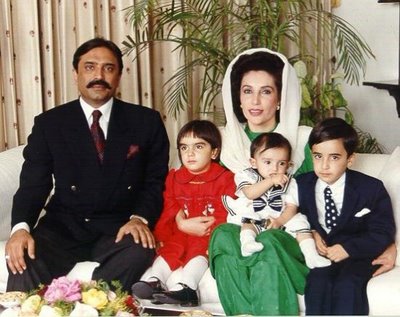
Asif Ali Zardari said that Shaheed Mohtarma Benazir Bhutto bravely resisted the barbaric and brutal dictators. “We are strong and steadfast on her ideology because of her teachings,” President Zardari said adding that the continuation of democracy was the beautiful dream of Shaheed Mohtarma Benazir Bhutto. By the grace of the Almighty Allah, that dream was fulfilled. Asif Ali Zardari said that the announcement of the institutions to be apolitical is also a realization of the dream of Shaheed Mohtarma Benazir Bhutto and it will give stability to democracy and establish the country’s credibility. Asif Ali Zardari said that BB’s followers are striving to make the country a society free from all kinds of extremism, where there is the light of knowledge, jobs for the people, equal opportunities for the youth to move forward, women free from the shackles of fear, and minorities with a respectable place in the society. This is the vision of Pakistan that Shaheed Mohtarma Benazir Bhutto had. https://dailytimes.com.pk/1043749/zardari-pledges-not-to-deviate-from-bbs-mission/
#Pakistan #PPP - 15 years on, Benazir murder still an unsolved mystery

Masterminds of former premier's assassination yet to face justice as case lies pending in LHC.
On December 27, 2007, Benazir Bhutto was assassinated soon after she had addressed an election rally in the historic Liaquat Bagh in Rawalpindi. She was reportedly killed by a 15-year-old suicide bomber.One of the most important high-profile cases of the country's chequered history still lies pending in the Lahore High Court's (LHC) Rawalpindi bench.
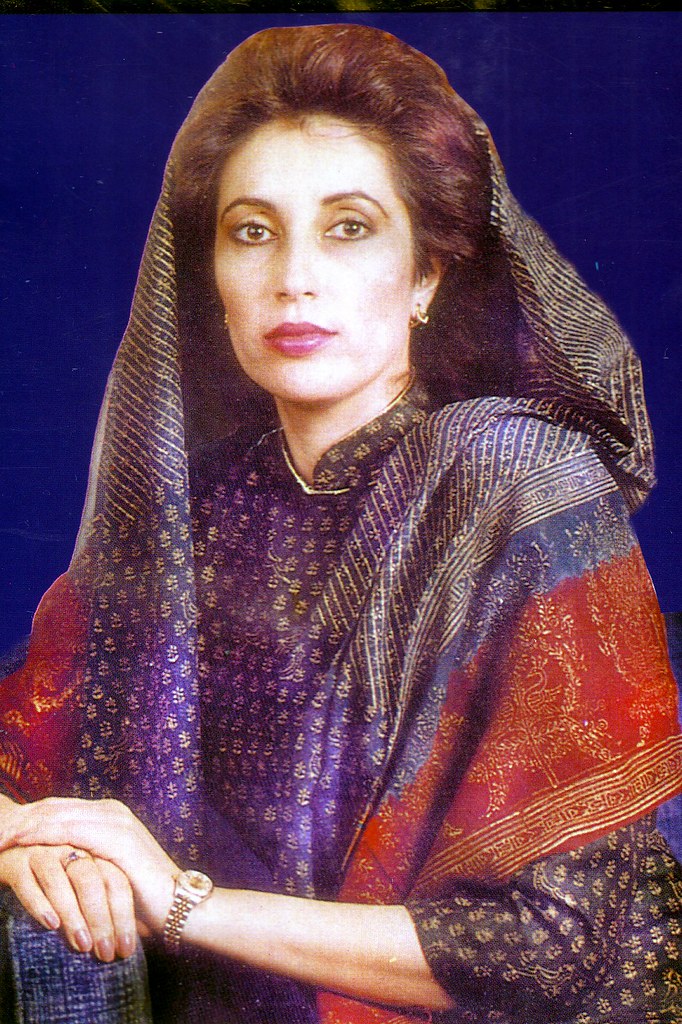
Over 20 party workers were killed and 71 others were seriously injured in the attack on the former premier.
In the aftermath of the incident, four inquiries were conducted into the high-profile case with the police joint investigation team (JIT), the Federal Investigation Agency (FIA), the United Nations (UN) and Scotland Yard striving to solve the matter. However, these inquiries and investigations yielded no results as the Bhutto family did not pursue the case in the special anti-terrorism court (ATC).
A total of 12 challans were filed in this case, 355 appearances were recorded, 10 judges were changed and 141 witnesses, including 68 prosecution witnesses, testified.
Moreover, 16 people were accused in the case, but only eight of them were arrested. The main accused, Taliban commander Baitullah Mehsud, was killed in a drone strike.
Five other accused – Nadir Khan alias Qari, Nasrullah, Abdullah alias Saddam, Ikramullah, Faiz Muhammad Kaskat – were also killed in encounters with intelligence agencies at different places.
The suicide bomber who attacked the former prime minister was identified as Saeed Blakel, who died in the blast. The police arrested five accused Aitzaz Shah, Sher Zaman, Rashid Ahmed, Rafaqat and Hasnain Gul, and dumped the debris on them.
The FIA also arrested the then-president General (r) Pervez Musharraf, former city police officer (CPO) Saud Aziz and superintendent of police (SP) Rawal Khurram Shehzad as accused in the case. However, they were later granted bail by the high court.
On August 31, 2017, Judge Muhammad Asghar Khan of the special ATC pronounced the verdict in the Adiala Jail after nine years, acquitting five accused, and declaring Musharraf as a fugitive on absenteeism, and issued permanent arrest warrants, besides confiscating his movable and immovable property.
Meanwhile, police officers – deputy inspector general (DIG) Saud Aziz and SP Khurram Shehzad – were sentenced to a total of 17 years imprisonment and a fine of Rs1 million each for destroying evidence and breach of security.
However, three months later, the high court suspended the sentences and released the two officers from jail. The CPO is now retired while the SP has now been promoted to the rank of DIG.
Appeals of the accused and plaintiffs have been pending in LHC’s Rawalpindi bench for over four years, and are expected to be heard in the last week of February 2022.
Former president Asif Ali Zardari has filed an appeal in the high court against the acquittal of the five accused in the case, and has sought to increase the sentences of both the police officers and to initiate trial against Musharraf in his absence.
The FIA has also filed appeals against the acquittal of the five accused while the convicted police officers have filed appeals against the sentences.
The three acquitted accused Aitzaz Shah, Sherzaman and Rafaqat have been released from jail. Meanwhile, two accused Rasheed Ahmed and Hasnain Gul are still locked up in Adiala Jail on various charges.
Federal government’s senior prosecutor Chaudhry Zulfiqar Ali was killed in a terrorist attack while pursuing the case.
After Benazir’s assassination, the PPP formed its government in the centre, but in its five-year tenure, the party failed to pursue this important case. Later, the case was partially disposed of during the tenure of former prime minister Nawaz Sharif.
The case is likely to land in the Supreme Court (SC) and it is not known when the case and appeals will be wrapped up.
https://tribune.com.pk/story/2392951/15-years-on-benazir-murder-still-an-unsolved-mystery
#Pakistan #PPP - BENAZIR BHUTTO!!! ....THE LEGEND


Sunday, December 25, 2022
Friday, December 23, 2022
Tuesday, December 20, 2022
Pakistan, US reshaping bilateral ties, says FM Bilawal
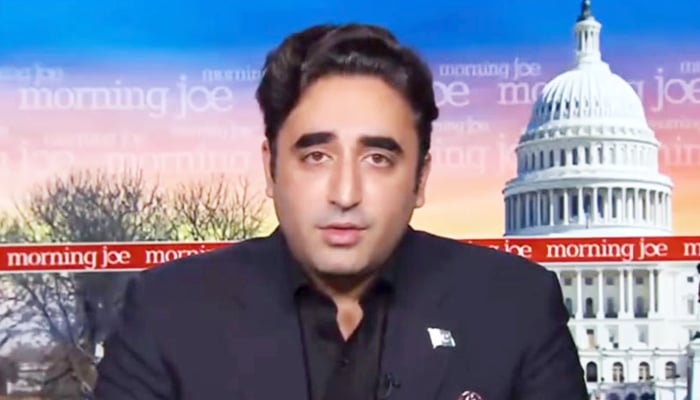
In an interview with MSNBC, he said with consistent engagement at high levels and bilateral exchanges, the relations between Islamabad and Washington are moving ahead positively.
The foreign minister said the nations could build a sustainable long-term partnership, which is in the interest of the people of both countries.
FM Bilawal said in the past, 90% of the conversation between the two countries used to be on terrorism. However, currently, "90% of the discussion takes place on economic cooperation and other areas, including terrorism".
“This is a positive sign for Pakistan-US relations. We can’t change what happened in the past. We can learn from the past and engage with each other with realistic expectations,” the foreign minister remarked.
Regarding climate change and recent floods in Pakistan, he said the country has started to prepare National Adaptation Plan for building resilience to climate change.
The foreign minister said to become a climate-resilient country, Pakistan needs to invest in energy transition, which requires international support.
Counting on the losses caused by recent floods that have washed away 10% of Pakistan’s GDP, he stressed that adaptation is needed in a manner that if we face such catastrophe in future, we should be in a better position to cope with it.
US extends support
Later in the day, US Secretary of State Antony J Blinken spoke to FM Bilawal and expressed his continued support for the people of Pakistan as they recover from the recent devastating floods, the department's spokesperson said in a statement.
The statement mentioned that Secretary Blinken and FM Bilawal Zardari shared their mutual hope for a productive International Conference on Climate Resilient Pakistan in January and discussed the need for close coordination.
The secretary also offered condolences for lives lost in recent terrorist attacks and underscored the United States' resolute support for Pakistan as it combats terrorism, the spokesperson added.
During a press briefing earlier, State Department Spokesperson Ned Price said the US would help the country in dealing with the threats posed by the militant outfits.
“We have partnered with our Pakistani friends to take on — to help them take on this challenge. We stand ready to assist, whether with this unfolding situation or more broadly," he said when asked to comment on the situation at a counterterrorism centre in Khyber Pakhtunkhwa's Bannu city.
https://www.geo.tv/latest/459881-pakistan-us-reshaping-bilateral-ties-says-fm-bilawal
امریکا سے دو طرفہ تعلقات کو وسعت دینا چاہتے ہیں، بلاول بھٹو
وزیر خارجہ بلاول بھٹو زرداری کا کہنا ہے کہ امریکا سے دو طرفہ تعلقات کو وسعت دینا چاہتے ہیں، خطے میں امن و استحکام کے لیے امریکا کی کوششیں

قابل تحسین ہیں۔
واشنگٹن میں اٹلاٹنک کونسل کے جنوب ایشیا مرکز کی میزبانی میں منعقد مباحثے سے بلاول بھٹو کا خطاب میں کہنا تھا کہ مستقبل کے ماحولیاتی سانحات سے نمٹنا، متاثرین کی مدد کرنا چیلنج ہے۔
بلاول بھٹو نے کہا کہ ہماری تمام تر توجہ سیلاب سے پیدا سانحہ سےنمٹنے پر ہے، مجھے یقین ہے کہ ہم سیلاب سے پیدا چیلنج سے نمٹ لیں گے۔
انہوں نے کہا کہ سیلاب نے تعلیم، زراعت اور صحت کے شعبوں کو متاثر کیا ہے۔
بلاول نے ایک سوال کا جواب دیتے ہوئے کہا کہ پاکستان میں 2007 کے مقابلے میں سیکیورٹی صورتحال بہتر ہے۔