Monday, October 3, 2022
Sunday, October 2, 2022
#Pakistan - TLP cleric calls supporter to carry attack on Ahmadi women
The International Human Rights Committee (IHRC) has taken notice of an incident where a Pakistani cleric belonging to TLP called on supporters to carry out an attack on Ahmadi women.
During his speech to supporters, TLP cleric Muhammad Naeem Chattha Qadri called his supporters to carry out attacks on pregnant Ahmadi women to ensure no Ahmadis are born. The IHRC called out the international community, human rights groups, and the government of Pakistan to take strict notice.
During the public gathering, he also warned police and agencies to not provide protection to the Ahmadi families. He said, DPO, DC, and SHO must understand now that we can’t be stopped.
Muhammad Naeem Chattha in a video circulating on social media from September 13 can be seen threatening and inciting violence against Ahmadis.
#Punjab, the epicentre of hate speech in #Pakistan

The majority of hate speech against Christians, whose minority population is mainly concentrated in Punjab province, also originates from Punjab. The data indicates that most hate speech is recorded against Shi’a, who comprise the second largest group within Islam after the Sunni majority population. Ahmadis, who identify as Muslims but have been declared non-Muslim by the Constitution of Pakistan, are the second most targeted group in terms of hate speech, most of it originating from Punjab province, especially from the cities of Lahore and Rawalpindi. It is not surprising that both Karachi and Lahore are the cities producing the most hate speech, because they are also the two largest cities, and provincial capitals. Yet Rawalpindi is striking in these geospatial analyses in that it generates a considerable amount of hate speech, far higher in relation to its population than comparably sized cities in Pakistan. The findings of this study point towards the need for further research to understand the reasons behind Rawalpindi’s high level of hate speech targeting religious minorities.
https://minorityrights.org/publications/hatefull-places/
Pakistan’s Economy After The Floods – OpEd
When Pakistan received tranche of US$1.2 billion from International Monetary Fund (IMF), it was anticipated that PKR would find solid ground against the US$. However, against expectations, the currency continued depreciation. While the country’s borrowing needs for the year are fully met, the outlook beyond FY23 remains uncertain.As per the latest IMF document, Pakistan’s gross borrowing needs over the next 5 years are expected to top US$180 billion, meeting them or even rolling them over will be an uphill task. In the short term, the country’s borrowing needs may increase further as floods have washed away standing crops in Sindh and lower Punjab. The country will need to import various food items to fulfill local demand and the import bill will be driven by food items. With exports likely to remain lackluster, the onus falls upon inward remittances and FDI to balance the gap between inflows and outflows. However, the remittance inflow, which has picked up of late, has remained largely disappointing. The same can be said for RDA inflows which have also started to dry up over the past few months. The need of the hour is to increase monthly remittances and RDA inflows while stamping out currency smuggling from the country. Pakistan’s monthly current account deficit (CAD) for August 2022 nearly halved to US$0.7 billion, lowest since April 2022, despite hefty oil and food imports amid recent flood damages. Import curtailment gained support from administrative measures, reducing trade deficit to US$2.9 billion (a decline 4%MoM). Remittances also increased during the month to US$2.7 billion, cushioning trade deficit adequately. The month also saw a Balance of Payment surplus owing to US$1.2 billion received from IMF. Going forward, bilateral and multilateral loans and international aid for floods rehabilitation will likely provide external support. Trade deficit has declined by a mere 4%MoM to US$2.9 billion, largely owing to administrative measures on restricting non-essential items and policy rate impact. However, food imports have increased to all-time high of US$1.0 billion up 34%MoM. Petroleum imports have been recovered at US$1.9 billion, up 30%MoM) in August 2022. The month also saw trend reversal in PBS-SBP import difference, which has mostly remained short-lived historically. Resumption of energy supplies amid normalized working days and lack of Eid holidays, led to the rebound in textile exports, up 18%MoM. This has led to overall exports growth of 23%MoM; helping trade deficit to remain under US$3.0 billion level. Remittances recovered during August 2022, increasing to US$2.7 billion, up 8% MoM and cushioning the trade gap. Higher inflows from United States and Saudi Arabia have elevated overall base. Looking ahead, analysts expect decent growth numbers in FY23 backed by increase in Pakistani worker registration in GCC countries. As per Board of Emigration and Overseas Employment (BEOE), around 531,000 Pakistanis have expatriated during 8MFY22 as against 288,000 and 225,000 during FY21 and FY20, respectively. Most of the expatriations have occurred towards Middle East countries which continue to enjoy better macros in a high oil price environment. The overall Balance of Payment (BoP) turned to positive and stood at US$440 million. This is largely owing to US$1.2 billion tranche received from IMF under EFF facility. But to support overall BoP and foreign exchange reserves, Pakistan needs further support from international organizations and friendly countries, the deliberations with these lenders have already started. Analysts believe, the stronger US$ has continued to impact PKR, besides the low foreign exchange liquidity in the country; pushed PKR to near to its all-time low of PKR240/USD. Pakistan has been severely impacted by the recent floods as it has led to massive damage to country’s physical infrastructure including damage to homes, roads, bridges etc. As per National Disaster Management Authority (NDMA) a cumulative loss of 1.76 million houses (partially and fully damaged), 390 bridges and roads (distance of 12,718km) has already taken place till September 14, 2022. Therefore, there is a need to explore cement sector outlook, especially after floods. A brokerage house made an attempt to estimate the impact. The manufacturers cumulatively represent 76% of the total industry size in terms of plant capacity. The survey results show that 75% of the participants expect domestic cement dispatches to fall in the range from 0% to 10%YoY in FY23 as against 2MFY22 fall of 35%. Around 17% of the participants anticipate growth of 10% or above and 8% expect it to increase from 0% to 10%. This likely fall in local sales is better than initial expectation of a larger fall due to floods and economic slowdown. Cement manufacturers anticipate cement demand to pickup next year as 83% of the participants expect demand to remain in the range of 0% to more than 10% in FY24 whereas 17% of the manufacturers believe it will increase from 10% to 20% as construction activity will pick up once relief measures complete and the water starts receding. The survey results also show that rebuilding or reconstruction activity could at least take 3 to 6 months. 42% of the participants expect it to start after 1 to 3 months whereas 42% of the participants believe it will start after 3 to 6 months. On other hand, 17% of the participants anticipate that it will start after 6-9 months. https://www.eurasiareview.com/02102022-pakistans-economy-after-the-floods-oped/
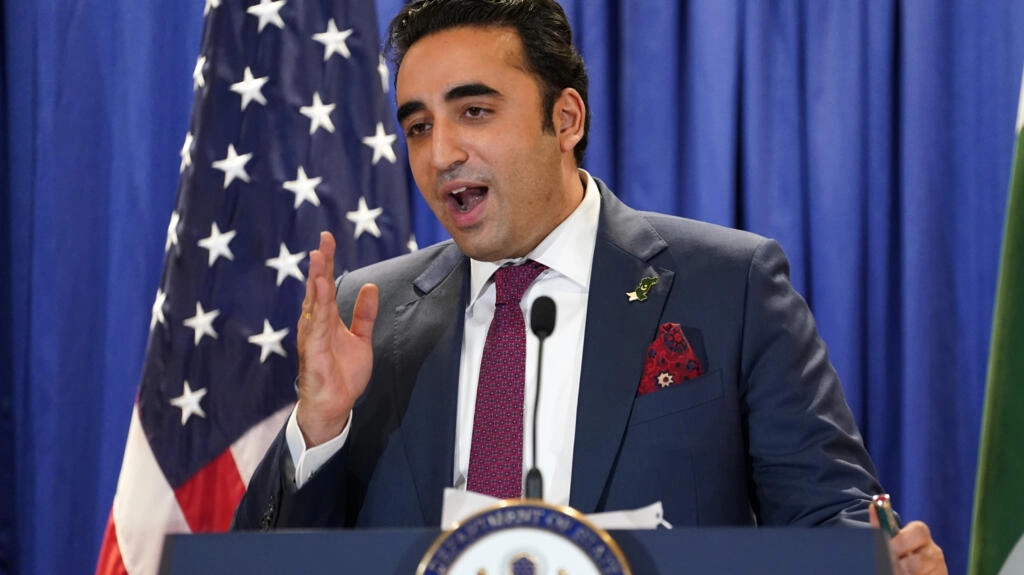
Pakistan would rather 'mediate' between China, US than be 'geopolitical football': Foreign Minister Bilawal Bhutto Zardari

Minister says talk of US, China relations 'absolutely ridiculous' when Pakistan was going through climate catastrophe.Foreign Minister Bilawal Bhutto Zardari on Thursday has said that in times of geopolitical division Pakistan wants to be a ‘bridge by uniting’ the United States and China. The PPP scion’s remarks came during an interview with Foreign Policy, where he maintained that Pakistan’s “unique position as a friend of both the United States and China” could help encourage cooperation between the two countries.Dubbing the claim of China not coming to Pakistan’s aid in its recent time of need as “absolutely incorrect”. He maintained that Islamabad’s relationship with Beijing was not new and had long bipartisan roots.“And I like to say that we wanted to be friends with China when nobody wanted to be friends with China. Now, everybody wants to be friends with China," Bilawal added. Responding to the interviewer's assertation that the US did not want to be friends with China, Bilawal said that “not everything is about the geopolitical conflict of the United States and China”. He stated that it was “preposterous” and “absolutely ridiculous” that a conversation about US and China relations was occurring while talking about Pakistan’s survival and ability to deal with “cataclysmic flooding”. The minister emphasised that climate change could not be confronted if the two superpowers did not work together. Commenting on Beijing’s lack of aid to Colombo during their economic crisis, Bilawal maintained that Pakistan’s context was “completely different” and that while the country was going “through a climate catastrophe”. The interviewer argued that Pakistan was going through both an economic and a climate crisis. “In the sense that that was solely an economic crisis of its own dynamics. But as far as what China does—whether it’s with Sri Lanka or Pakistan—that’s totally China’s decision. Just like it’s 100 per cent America’s decision in either of these circumstances,” the minister replied. He retained that Pakistan would rather continue to play its past role of bridging the gap between the two countries than exacerbate the gap. “Right now, particularly when we’re drowning in floods, I don’t want to play any part in exacerbating any tensions or being a geopolitical football,” he said. Regarding the Russia-Ukraine war, the foreign minister was of the belief that the “broad consensus” within Pakistan had declared that the country did not want to be “dragged into this conflict”.“Particularly because we’re just coming out of a decades-long conflict in Afghanistan, and frankly, we’re exhausted by what war does and the consequences for any one country”.Talking about Pakistan’s level of cooperation for the US operation to kill al Qaeda leader Ayman al-Zawahiri, Bilawal stated that Islamabad was unaware of the location of the individual and the operation to take him out. He further said that Pakistan did not offer its airspace to the US because it was unaware of the operation.“We were not aware of this. I don’t think anybody was,” he said. Climate change FM Bilawal stated that he had proposed a Green Marshall Plan for climate-stressed countries, all of which “contribute negligibly to the global carbon funds”.He furthered that he had talked about climate justice and hoped to see it as a continuation of the “stated position of the president of the United States, and the leaders of many countries in Europe, that we need to invest, get the money together, not only for climate adaptation domestically but also internationally”. He maintained that the “great polluters” who caused the crisis would “fund” the plan. “We have to come up with out-of-the-box solutions, one of which is the proposal of a debt swap for climate, where countries that owe a debt to the great polluters would swap this debt,” he added.Bilawal urged the private sector to invest in climate adaptation and believed that the “public-private partnership model could be adopted not only for green energy but also for green infrastructure”. In response to questions about India, the foreign minister stated that Pakistan had not received nor expected any help from India. The minister had no comments for his Indian counterpart as their help was “their choice, their position”. “I didn’t ask for help from the United States—they volunteered it. Didn’t ask for help from China—they volunteered. Didn’t ask for help from the Middle East—they volunteered. In times of human catastrophe, I think it tests everyone’s humanity,” Bilawal remarked. Military role Discussing the army’s role in Pakistan and its government, Bilawal stated that the army has been “a powerful force” with a “turbulent history with the civilian government”.“But we have long advocated for all institutions within Pakistan conducting themselves within their legal mandate and transitioning away from the more controversial roles that we’ve had in the past,” he contended, adding that a significant development was the removal of former premier Imran Khan through constitutional and democratic means.“All prime ministers who were previously removed were either by being hanged, exiled, or through some sort of judicial verdict. So that’s a significant point in Pakistan’s political history, institutional development, and democracy,” Bilawal said. “If that indicates that our armed forces or our institutions are transitioning from what was a controversial role to a constitutional role, that should be encouraged across the board.”
https://tribune.com.pk/story/2379237/pakistan-would-rather-be-bridge-between-china-us-fm-bilawal
Saturday, October 1, 2022
The Supreme Court’s authority within the American political system - Crisis of Trust


A common response to this question is to say the justices shouldn’t care. They aren’t there to satisfy the majority or to be swayed by the shifting winds of public opinion. That is partly true: The court’s most important obligations include safeguarding the constitutional rights of vulnerable minorities who can’t always count on protection from the political process and acting independently of political interests. But in the bigger picture, the court nearly always hews close to where the majority of the American people are. If it does diverge, it should take care to do so in a way that doesn’t appear partisan. That is the basis of the trust given to the court by the public. That trust, in turn, is crucial to the court’s ability to exercise the vast power Americans have granted it. The nine justices have no control over money, as Congress does, or force, as the executive branch does. All they have is their black robes and the public trust. A court that does not keep that trust cannot perform its critical role in American government. And yet as the justices prepare to open a new term on Monday, fewer Americans have confidence in the court than ever before recorded. In a Gallup poll taken in June, before the court overturned Roe v. Wade with Dobbs v. Jackson Women’s Health Organization, only 25 percent of respondents said they had a high degree of confidence in the institution. That number is down from 50 percent in 2001 — just months after the court’s hugely controversial 5-to-4 ruling in Bush v. Gore, in which a majority consisting only of Republican appointees effectively decided the result of the 2000 election in favor of the Republicans. This widespread lack of confidence and trust in the nation’s highest court is a crisis, and rebuilding it is more important than the outcome of any single ruling. Chief Justice John Roberts recently suggested that the court’s low public opinion is nothing more than sour grapes by those on the short end of recent rulings. “Simply because people disagree with an opinion is not a basis for criticizing the legitimacy of the court,” he said in remarks at a judicial conference earlier in September. This is disingenuous. The court’s biggest decisions have always angered one group of people or another. Conservatives were upset, for instance, by the rulings in Brown v. Board of Education, which barred racial segregation in schools, and Obergefell v. Hodges, which established a constitutional right to same-sex marriage. Meanwhile, liberals were infuriated by Bush v. Gore and Citizens United v. Federal Election Commission, which opened the floodgates to dark money in politics. But overall public confidence in the court remained high until recently. The actual cause of its historic unpopularity is no secret. Over the past several years, the court has been transformed into a judicial arm of the Republican Party. This project was taking shape more quietly for decades, but it shifted into high gear in 2016, when Justice Antonin Scalia died and Senate Republicans refused to let Barack Obama choose his successor, obliterating the practice of deferring to presidents to fill vacancies on the court. Within four years, the court had a 6-to-3 right-wing supermajority, supercharging the Republican appointees’ efforts to discard the traditions and processes that have allowed the court to appear fair and nonpartisan. As a result, the court’s legitimacy has been squandered in the service of partisan victories. The Dobbs decision in June, which overturned Roe v. Wade, eliminated American women’s constitutional right to control their own bodies and was a priority of the Republican Party for decades, is only the most glaring example. In cases involving money in politics, partisan gerrymandering and multiple suits challenging the Voting Rights Act, the court has ruled in ways that make it easier for Republicans and harder for Democrats to win elections. In 2018, the court ruled that public sector labor unions violated the First Amendment rights of nonmembers by requiring them to pay fees to support the unions’ work bargaining on their behalf, after decades of rulings in which the court had found the opposite to be true. That ruling further weakened organized labor, another Republican goal. For most of the court’s history, it was difficult to predict how a case would turn out based on the party of the president who nominated the justices. Even into the 21st century, as the country grew more polarized, the court’s rulings remained largely in line with the views of the average American voter. That is no longer the case. The court’s rulings are now in line with the views of the average Republican voter. In the process, the court has unmoored itself from both the Constitution it is sworn to protect and the American people it is privileged to serve. This could not be happening at a worse moment. Election deniers in the Republican Party are undermining the integrity of the American electoral system. Right-wing political violence is a present and growing threat. It is precisely during times like these that the American people need the Supreme Court to play the role Chief Justice Roberts memorably articulated at his own confirmation hearing — that of an umpire calling balls and strikes, ensuring a fair playing field for all. Instead, the court’s right-wingers are calling balls for one team and strikes for the other. As Justice Elena Kagan said in a talk this month at Northwestern University School of Law, “When courts become extensions of the political process, when people see them as extensions of the political process, when people see them as trying just to impose personal preferences on a society irrespective of the law, that’s when there’s a problem — and that’s when there ought to be a problem.” The way the court went about eliminating the federal right to abortion is a prime example of this misuse of its power. First, the right-wing justices used the court’s “shadow docket,” which refers to orders issued in response to emergency applications without open hearings or any public explanation, to allow an obviously unconstitutional anti-abortion law in Texas to stand. They also agreed to hear a separate challenge out of Mississippi, Dobbs v. Jackson Women’s Health Organization, that didn’t formally ask them to overturn Roe v. Wade. When they chose to do so anyway, the majority opinion, by Justice Samuel Alito, cherry-picked its historical examples and dismissed Roe as “egregiously wrong,” disdaining the work of earlier justices who had weighed the same constitutional questions carefully for decades. As the dissent in Dobbs noted: “The majority has overruled Roe and Casey for one and only one reason: because it has always despised them, and now it has the votes to discard them. The majority thereby substitutes a rule by judges for the rule of law.” In the coming months, the court will decide cases on affirmative action, the Voting Rights Act (yet again) and the power of state legislatures to ignore their own constitutions and even their voters. The rulings in these cases could dramatically reshape the country’s politics, and Americans should be able to trust that those rulings will be made by an impartial tribunal. There is no clear solution to this crisis. Legal scholars have put forward many proposals for structural reform — expanding the number of justices, imposing term limits or stripping the court of jurisdiction over certain types of cases — but none are a perfect remedy to the court’s politicization. In the meantime, it is worth remembering that the court heads only one branch of the federal government. Congress has far more power to counteract bad rulings than it generally uses — by doing its job and passing laws. Codifying the right to an abortion would be the most obvious move, but the court has usurped the role of the legislature on a range of issues, including forced arbitration clauses, campaign finance rules and gun laws. What would such a response look like? Here’s an example: On the final day of the last term, the right-wing justices hobbled the Environmental Protection Agency’s ability to fight climate change by requiring reductions in carbon dioxide emissions from power plants. Congress responded in August, adding a provision to the Inflation Reduction Act that reinforced the E.P.A.’s authority in this area. With a few exceptions, the Supreme Court rarely has been at the forefront of making America a more equal place. But we are not consigned to living under the thumb of a reactionary juristocracy. To the contrary, the meaning of the Constitution is far more than what the court decrees; it is the result of an ongoing conversation between the court and the American people. Those who protested the loss of their rights after the Dobbs decision, and those who showed their determination to protect those rights, as voters did in Kansas in August, are speaking directly to the court. When the justices stop listening, as they have at other moments in history, the people’s voices will eventually become too loud for them to ignore.

https://www.nytimes.com/2022/10/01/opinion/supreme-court-legitimacy.html
Video - #Pakistan’s FM Bilawal Bhutto: We ‘can’t be held hostage’ to superpowers’ games
Friday, September 30, 2022
#Pakistan - Return of the ‘Dar’ Ages

Education in Balochistan under threat
Education in Balochistan under threat. Balochistan is one of the under privileged provinces of Pakistan that has been struggling to seek its basic needs and rights to be equally facilitated with other provinces of Pakistan. Despite being the largest province of Pakistan in geography and smallest in number, the population inside is suffering their basic rights such as: education, health facilities, employment and sanitation etc. What I focus here is that where countries of the world are investing in education and where the investment in education sector has guided those countries to prosperity and up to the demands of modern world, the dearth of such investments and focus makes the situation, in Pakistan in general and Balochistan in particular, more appalling. Quetta, the capital of Balochistan is at least facilitated with education facilities containing very weak standard education system. The rest 32 districts suffer with no school space even. If there exists any, students travel for long distances to reach the nearby schools. In addition, a number of teachers were either target killed or have fled the province for search of security. And lastly, lack of awareness among the natives led to another number of students out of schools even if it is available. There is always equal to no investment on education by government authorities and electable, both on provincial and national level. Each year budgets are allocated for education purposes but invisible when seen its fruit on ground. If it is documented that 17% of its budget is allocated for education, it has never been accounted for investigation nor has the public ever known to the facts and figures behind such investment. Local NGOs, international NGOs and UN organizations worked with different perspectives/approaches to improve the neglected education; but, in a more generalized way, failed to do so. There is no transparency in the budgets spent on education sector nor it has any continuity with long term plans to carry initiatives and maintain it through a policy until it gets better. Girl’s education in Balochistan Although illiteracy in Pakistan as a whole stands at 80% and growing, the literacy rate among rural women in Balochistan is bleaker. It is estimated that less than 2% of rural female in Balochistan are literate. Literate and illiterate traditions assign the women certain responsibilities such as cooking food, cleaning the house, child-bearing and rearing, and all other domestic support needed by her husband and other family members. The benefits of education for girls in rural Balochistan have only recently being recognized. Ratio of girl’s education over all in Baluchistan, as per Alif-Ailan, is only 15% compare to the 37% male education. Distance to school is an issue not only for girls but for boys as well. However, the nature and extent of issue is dominantly different considering the local value system, cultural norms, traditional beliefs and concerns for security related to adolescent girls which often lead to exclusion of girls from school in some cases. Education in Pakistan According to a research, the largest education service delivery system is managed by the government of Pakistan. Among this, 38% is managed by private schooling system and the very least number is covered by NGOs. In a research according to International Rescue Committee IRC, there are 63 million school going aged children in Pakistan. In which 42% attend government schools which is almost 27 million. 32% or over 20 million children are out of school & 317,323 schools in the country equal to 38% are private schools. When it comes to Balochistan, the numbers are more horrifying. According to the statistics of Alif-Ailaan, out of total population of the province, 27 million children need to be in school. Among this, only 9 million children are attending school and the rest are deprived of opportunity of going to school. Out of 12347 schools, only 6% are higher schools. According to Alif-Ailan, 216 schools are not functional. Rest of the schools consist of single room where 14% of teachers receive their monthly stipends without giving their services. Challenges/ Barriers One of the biggest challenges to education in Balochistan is poverty. In a geography where people lacks basic facilities of life and where people are deprived from standards of life, education is always secondary to them. Secondly, the government has always kept education sector at pace when it comes to allocating a sum total amount for its development. And when the allocated budget is on board, it is again filtered among the various stakeholders and corruption finds its way. Thirdly, and as discussed earlier, the existence of no proper awareness among the people in both urban and rural areas of the province makes the situation more worsening and leads to gender inequality in assessing education as the fourth challenge. Education for both, and female equally is never considered in rural areas of the province. Lastly, and above all, there is no policy on behalf of the government that might tend to provide equal access to education beyond gender. The lack of infrastructure plus updated curriculum along with trained teachers is another challenge to the long list of challenges. What could be done? An appropriate portion of funding for education is primary to any society. But, what is more significant in case of Baluchistan is that the sort of statistics needs to be properly used, audited, accounted and documented. I assume that the sort of allocated budget if used sincerely and purposely, it would indeed lessen the kind of deprivation among the masses and a reasonable number of population will benefit from it. Additionally, transparency on both provincial as well as local level might add to the benefit. Moreover, linking schools with higher education is another need of the hour. It would help in finding admission opportunities for students for their higher studies. Besides, modern text books along with well qualified teachers might prove more organic for the creation of a class of educated youth of the province. Transport allowance both for teachers and students managed by district education offices would lessen the distance problem. Not to remain un-emphasized “transparency and consistency” would led to at least play the part for betterment. https://dailytimes.com.pk/987861/education-in-balochistan-under-threat/Maria Nadir
#Pakistan - Bilawal Bhutto said that Pakistan opposes any reforms that expand the United Nations Security Council to bring India into the fold

https://www.thenews.com.pk/print/995806-pakistan-opposes-unsc-membership-to-india-bilawal
Thursday, September 29, 2022
Wednesday, September 28, 2022
#Pakistan - Bilawal warns of consequences to Taliban isolation


https://www.dawn.com/news/1712404
Pakistan Army, Taliban involved in narco trade: NATO investigation

https://theprint.in/world/pak-army-taliban-involved-in-narco-trade-nato-investigation/1145952/
Tuesday, September 27, 2022
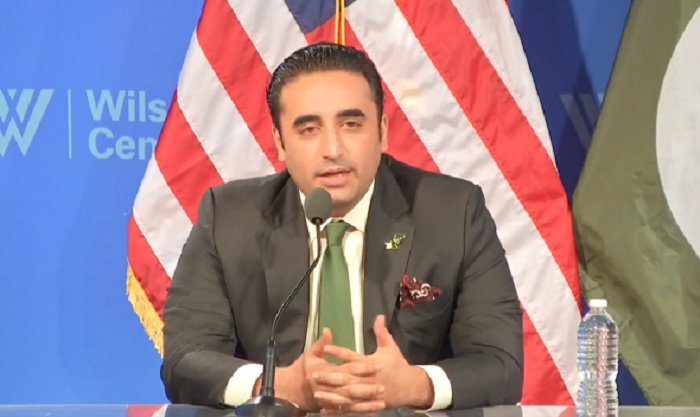
#Pakistan - Foreign Minister Bilawal Bhutto Zardari calls upon US and China to work together on climate change to save planet

https://tribune.com.pk/story/2378866/new-us-approach-towards-pakistan-excites-bilawal
آرمی چیف کی تقرری کا اختیار وزیر اعظم کے پاس ہے، بلاول بھٹو
وزیر خارجہ بلاول بھٹو زرداری نے کہا ہے کہ آرمی چیف کی تقرری کا اختیار وزیراعظم کا ہے، پاکستان کے تمام ادارے خودمختار ہیں، جمہوری حکومت میڈیا کی آزادی پر یقین رکھتی ہے۔
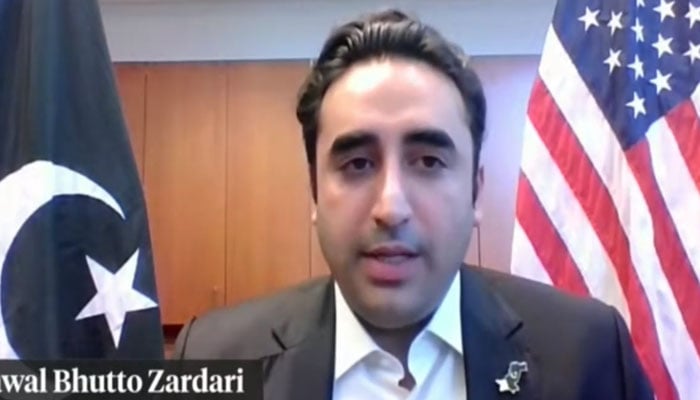
واشنگٹن میں امریکی ادارے ’فارن پالیسی‘ کے ایڈیٹر ان چیف سے گفتگو کرتے ہوئے بلاول بھٹو زرداری نے کہا کہ بھارت نے ہمیں امداد کی آفر نہیں کی اور نہ ہم بھارت سے امداد چاہتے ہیں۔
انہوں نے کہا کہ سیلاب سے پاکستان میں بڑی تباہی ہوئی، متاثرین کی بحالی کے لیے اقدامات کر رہے ہیں، عالمی برادری مصیبت کی گھڑی میں ہمارا ساتھ دے۔
ان کا کہنا تھا کہ ہم نے معیشت کی بحالی کے لیے سخت فیصلے کیے ہیں، امریکا کے ساتھ بہتر تعلقات چاہتے ہیں، مستقبل میں امریکا کے ساتھ تعلقات کو نئی سمت میں لے جانا چاہیں گے۔
وزیر خارجہ نے مزید کہا کہ چین نے ہمیشہ مشکل وقت میں پاکستان کی مدد کی ہے، پاکستان پڑوسی ملکوں کے ساتھ اچھے تعلقات چاہتا ہے۔
بلاول بھٹو زرداری نے کہا کہ افغانستان میں جنگ سے ہمسایہ ملکوں کا نقصان ہوا، ہم پر امن افغانستان چاہتے ہیں۔
انہوں نے مزید کہا کہ جمہوریت کیسی بھی ہو آمریت سے بہتر ہے، ہم جمہوری روایات پر یقین رکھتے ہیں، غیر جمہوری اقدامات کی حمایت نہیں کریں گے۔
https://jang.com.pk/news/1140922
Monday, September 26, 2022
Sunday, September 25, 2022
Saturday, September 24, 2022
Friday, September 23, 2022
In UNGA address, PM Shehbaz highlights Pakistan’s plight and urges global leaders to ‘act now’ on climate change


At the outset of his speech, the prime minister said the purpose of his speech was to explain the scale and magnitude of the climate catastrophe that has put one third of Pakistan in a situation that “no one had seen in living memory”.“For 40 days and 40 nights, biblical flood poured on us. Even today, huge swathes of the country are still underwater. 33 million people including women, and children are at high risk of health hazards. More than 1,500 of my people have gone from the world including 400 children. Far more are in peril.” He noted that Pakistan had never seen such a devastating example of global warming. “Life in Pakistan has changed forever.”
The premier said people in the country were asking for reasons for the destruction caused. “The undeniable truth is that the calamity has not been triggered by anything we have done,” he said.
“It is time to ask why… time to ask what must be done. Our forests are burning. More heatwaves are coming. We had a monster monsoon. It was the monsoon on steroids as was described by the UN secretary-general. Pakistan emits less than 1 per cent of greenhouse gases.”
The prime minister said the impact on the health and wealth of Pakistan was beyond calculation at this point.
“So my real worry, is about the next stage of this challenge. When the cameras leave, and the story just shifts away to conflicts like the Ukraine, my question is, will we be left alone, to cope with a crisis we did not create?” he asked.
He stated that the future was “dimmed by new fragility, lost homes, decimated livelihoods, deluged croplands, permanent food insecurity and exposure to uncertain futures”.
“Some 11 million people will be pushed further below the poverty line, while others will drift to cramped urban shelters, leaving little room for climate-smart rebuilding.”
The prime minister detailed the measures taken by his government, saying: “We have mobilized all available resources towards the national relief effort, and repurposed all budget priorities including development funds, to the rescue and first-order needs of millions.”
The premier said the country’s manpower and resources were totally overwhelmed. “The question to raise here though is quite a simple one. Why are my people paying the price of such high global warming through no fault of their own?”
“Nature has unleashed her fury on Pakistan without looking at our carbon footprint, which is next to nothing. Our actions did not contribute to this,” he reiterated.
The PM said the dual costs of global inaction and climate injustice were having a crippling effect on both our treasury and our people.“
“It is high time we took a pause from the preoccupations of the 20th century to return to the challenges of the 21st. The entire definition of national security has changed today, and unless the leaders of the world come together to act now behind minimum agreed agenda, there will be no earth to fight wars over. Nature will be fighting back, and for that humanity is no match.”
He said Pakistan’s urgent priority right now was to ensure rapid economic growth and lift millions out of destitution and hunger. To enable any such policy momentum, he said, Pakistan needed a stable external environment.
‘Peace in South Asia contingent upon lasting solution of IOK’
Talking about the regional situation, PM Shehbaz said Pakistan was seeking peace with all its neighbours, including India. “Sustainable peace and stability in South Asia, however, remains contingent upon a just and lasting solution of the Jammu and Kashmir dispute.”
He said India’s illegal and unilateral actions of 5th August 2019, to change the internationally recognised “disputed” status of Jammu and Kashmir undermined the prospects of peace and inflamed regional tensions.
India’s relentless campaign of repression against Kashmiris has continued to grow in scale and intensity, he said, adding New Delhi had ramped up its military deployments in occupied Jammu and Kashmir to 900,000 troops, thus making it the most militarised zone in the world.
“The serial brutalisation of Kashmiris takes many forms: extrajudicial killings, incarceration, custodial torture and death, indiscriminate use of force, deliberate targeting of Kashmiri youth with pellet guns, and ‘collective punishments’ imposed on entire communities.”
‘India turning IOK into a Hindu-majority territory’
The premier said India was trying to turn the Muslim-majority Jammu and Kashmir into a Hindu-majority territory, through illegal demographic changes.
“Millions of fake “domicile certificates” have been issued to non-Kashmiris; Kashmiri land and properties are being seized; electoral districts have been gerrymandered; and over 2.5m non-Kashmiri illegal voters fraudulently registered. All this is in blatant violation of Security Council resolutions and international law,” he rued.
For our part, he said, the Pakistani people had always stood by its “Kashmiri brothers and sisters” in complete solidarity, and will continue to do so until their right to self-determination was fully realized in accordance with the relevant UN Security Council resolutions.
While apprising the session of Pakistan’s “consistent commitment to peace in South Asia”, he said India must take credible steps to create enabling environment for constructive engagement.
“It should demonstrate its sincerity and willingness, to walk the path of peace and dialogue by reversing its illegal steps of 15 August 2019, and ending forth-with, the process of demographic change.”
World must release Afghan reserves: PM Shehbaz
Discussing the Afghanistan’s situation, the premier said the neighbouring country was facing a unique challenge. “Around 30 million Afghans are left without a functional economy and banking system that allows ordinary Afghans to make a living to be able to build a better future.”
He said Pakistan was working to encourage respect for the rights of Afghan girls and women to education and work.
Yet, at this point, isolating the Afghan Interim Government could aggravate the suffering of the Afghan people, who are already destitute, he stressed.
He maintained that Pakistan had a vital stake in peace and stability in Afghanistan. “We must avoid another civil war, rising terrorism, drug trafficking or new refugees — which none of Afghanistan’s neighbours are in a position to accommodate.”
He urged the international community to respond in a positive way to the UN secretary-general’s appeal for $4.2 billion in humanitarian and economic assistance to Afghanistan and release the country’s financial reserves, essential to revive its banking system.
‘Pakistan continues to be targeted by regional adversary’
The prime minister said that Pakistan shared the key concern of the international community regarding “the threat posed by the major terrorist groups operating from Afghanistan, especially ISIL-K and TTP as well as Al-Qaida, ETIM and IMU”.
“They all need to be dealt with comprehensively, with the support and cooperation of the Interim Afghan authorities,” he said, while urging the international community that, in turn, it should address Afghanistan’s “dire humanitarian needs”.
He highlighted that Pakistan was the principal victim of terrorism. “Over the last two decades, we have suffered more than 80,000 casualties and over $150 billion in economic losses due to terrorist attacks.”
He, however, added that the country’s armed forces had broken the back of terrorism within Pakistan. Yet, we continue to suffer terrorist attacks from across our borders, sponsored and financed by our regional adversary, he added.
PM urges UN to take ‘concrete measures’ against Islamophobia
The premier also discussed Islamophobia, saying it was a “global phenomenon”. “Since 9/11, suspicion and fear of Muslims and discrimination against them have escalated to epidemic proportions,” he said.
The officially sponsored campaign of oppression against India’s over 200 million Muslims is the worst manifestation of Islamophobia, he said, as he detailed that they were subjected to discriminatory laws and policies, hijab bans, attacks on mosques, and lynchings by Hindu mobs.
“I am particularly concerned by the calls for ‘genocide’ against India’s Muslims by some extremist groups.”
He recalled that the UNGA had earlier this year adopted a landmark resolution, introduced by Pakistan on behalf of the OIC, designating 15 March as the International Day to Combat Islamophobia.
It is my sincere hope that this should lead to concrete measures by the UN and Member States to combat Islamophobia and promote interfaith harmony, he said.
He called upon the nations of the world to take a step back from the precipice. “We must restore peace in Europe, avoid a war in Asia and resolve festering conflicts across the world. We must revive the vision which created the United Nations, a vision which is often blurred by national interests and hegemonic designs,” the premier noted.
Industrialised countries need to help developing nations against climate change: Bilawal