Tuesday, September 27, 2022
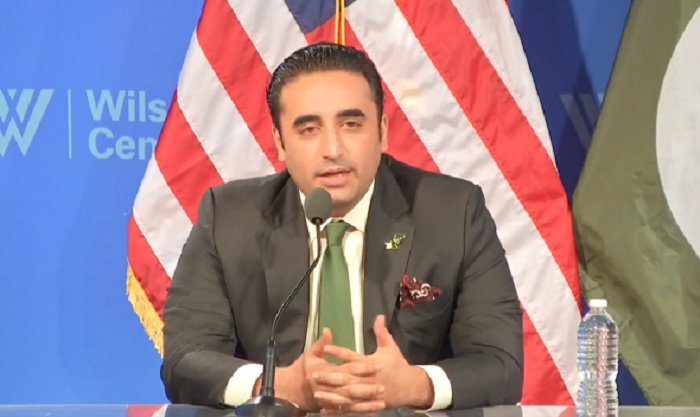
#Pakistan - Foreign Minister Bilawal Bhutto Zardari calls upon US and China to work together on climate change to save planet

https://tribune.com.pk/story/2378866/new-us-approach-towards-pakistan-excites-bilawal
آرمی چیف کی تقرری کا اختیار وزیر اعظم کے پاس ہے، بلاول بھٹو
وزیر خارجہ بلاول بھٹو زرداری نے کہا ہے کہ آرمی چیف کی تقرری کا اختیار وزیراعظم کا ہے، پاکستان کے تمام ادارے خودمختار ہیں، جمہوری حکومت میڈیا کی آزادی پر یقین رکھتی ہے۔
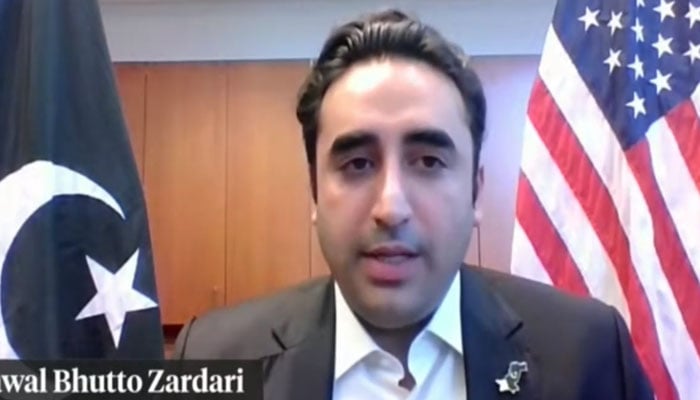
واشنگٹن میں امریکی ادارے ’فارن پالیسی‘ کے ایڈیٹر ان چیف سے گفتگو کرتے ہوئے بلاول بھٹو زرداری نے کہا کہ بھارت نے ہمیں امداد کی آفر نہیں کی اور نہ ہم بھارت سے امداد چاہتے ہیں۔
انہوں نے کہا کہ سیلاب سے پاکستان میں بڑی تباہی ہوئی، متاثرین کی بحالی کے لیے اقدامات کر رہے ہیں، عالمی برادری مصیبت کی گھڑی میں ہمارا ساتھ دے۔
ان کا کہنا تھا کہ ہم نے معیشت کی بحالی کے لیے سخت فیصلے کیے ہیں، امریکا کے ساتھ بہتر تعلقات چاہتے ہیں، مستقبل میں امریکا کے ساتھ تعلقات کو نئی سمت میں لے جانا چاہیں گے۔
وزیر خارجہ نے مزید کہا کہ چین نے ہمیشہ مشکل وقت میں پاکستان کی مدد کی ہے، پاکستان پڑوسی ملکوں کے ساتھ اچھے تعلقات چاہتا ہے۔
بلاول بھٹو زرداری نے کہا کہ افغانستان میں جنگ سے ہمسایہ ملکوں کا نقصان ہوا، ہم پر امن افغانستان چاہتے ہیں۔
انہوں نے مزید کہا کہ جمہوریت کیسی بھی ہو آمریت سے بہتر ہے، ہم جمہوری روایات پر یقین رکھتے ہیں، غیر جمہوری اقدامات کی حمایت نہیں کریں گے۔
https://jang.com.pk/news/1140922
Monday, September 26, 2022
Sunday, September 25, 2022
Saturday, September 24, 2022
Friday, September 23, 2022
In UNGA address, PM Shehbaz highlights Pakistan’s plight and urges global leaders to ‘act now’ on climate change


At the outset of his speech, the prime minister said the purpose of his speech was to explain the scale and magnitude of the climate catastrophe that has put one third of Pakistan in a situation that “no one had seen in living memory”.“For 40 days and 40 nights, biblical flood poured on us. Even today, huge swathes of the country are still underwater. 33 million people including women, and children are at high risk of health hazards. More than 1,500 of my people have gone from the world including 400 children. Far more are in peril.” He noted that Pakistan had never seen such a devastating example of global warming. “Life in Pakistan has changed forever.”
The premier said people in the country were asking for reasons for the destruction caused. “The undeniable truth is that the calamity has not been triggered by anything we have done,” he said.
“It is time to ask why… time to ask what must be done. Our forests are burning. More heatwaves are coming. We had a monster monsoon. It was the monsoon on steroids as was described by the UN secretary-general. Pakistan emits less than 1 per cent of greenhouse gases.”
The prime minister said the impact on the health and wealth of Pakistan was beyond calculation at this point.
“So my real worry, is about the next stage of this challenge. When the cameras leave, and the story just shifts away to conflicts like the Ukraine, my question is, will we be left alone, to cope with a crisis we did not create?” he asked.
He stated that the future was “dimmed by new fragility, lost homes, decimated livelihoods, deluged croplands, permanent food insecurity and exposure to uncertain futures”.
“Some 11 million people will be pushed further below the poverty line, while others will drift to cramped urban shelters, leaving little room for climate-smart rebuilding.”
The prime minister detailed the measures taken by his government, saying: “We have mobilized all available resources towards the national relief effort, and repurposed all budget priorities including development funds, to the rescue and first-order needs of millions.”
The premier said the country’s manpower and resources were totally overwhelmed. “The question to raise here though is quite a simple one. Why are my people paying the price of such high global warming through no fault of their own?”
“Nature has unleashed her fury on Pakistan without looking at our carbon footprint, which is next to nothing. Our actions did not contribute to this,” he reiterated.
The PM said the dual costs of global inaction and climate injustice were having a crippling effect on both our treasury and our people.“
“It is high time we took a pause from the preoccupations of the 20th century to return to the challenges of the 21st. The entire definition of national security has changed today, and unless the leaders of the world come together to act now behind minimum agreed agenda, there will be no earth to fight wars over. Nature will be fighting back, and for that humanity is no match.”
He said Pakistan’s urgent priority right now was to ensure rapid economic growth and lift millions out of destitution and hunger. To enable any such policy momentum, he said, Pakistan needed a stable external environment.
‘Peace in South Asia contingent upon lasting solution of IOK’
Talking about the regional situation, PM Shehbaz said Pakistan was seeking peace with all its neighbours, including India. “Sustainable peace and stability in South Asia, however, remains contingent upon a just and lasting solution of the Jammu and Kashmir dispute.”
He said India’s illegal and unilateral actions of 5th August 2019, to change the internationally recognised “disputed” status of Jammu and Kashmir undermined the prospects of peace and inflamed regional tensions.
India’s relentless campaign of repression against Kashmiris has continued to grow in scale and intensity, he said, adding New Delhi had ramped up its military deployments in occupied Jammu and Kashmir to 900,000 troops, thus making it the most militarised zone in the world.
“The serial brutalisation of Kashmiris takes many forms: extrajudicial killings, incarceration, custodial torture and death, indiscriminate use of force, deliberate targeting of Kashmiri youth with pellet guns, and ‘collective punishments’ imposed on entire communities.”
‘India turning IOK into a Hindu-majority territory’
The premier said India was trying to turn the Muslim-majority Jammu and Kashmir into a Hindu-majority territory, through illegal demographic changes.
“Millions of fake “domicile certificates” have been issued to non-Kashmiris; Kashmiri land and properties are being seized; electoral districts have been gerrymandered; and over 2.5m non-Kashmiri illegal voters fraudulently registered. All this is in blatant violation of Security Council resolutions and international law,” he rued.
For our part, he said, the Pakistani people had always stood by its “Kashmiri brothers and sisters” in complete solidarity, and will continue to do so until their right to self-determination was fully realized in accordance with the relevant UN Security Council resolutions.
While apprising the session of Pakistan’s “consistent commitment to peace in South Asia”, he said India must take credible steps to create enabling environment for constructive engagement.
“It should demonstrate its sincerity and willingness, to walk the path of peace and dialogue by reversing its illegal steps of 15 August 2019, and ending forth-with, the process of demographic change.”
World must release Afghan reserves: PM Shehbaz
Discussing the Afghanistan’s situation, the premier said the neighbouring country was facing a unique challenge. “Around 30 million Afghans are left without a functional economy and banking system that allows ordinary Afghans to make a living to be able to build a better future.”
He said Pakistan was working to encourage respect for the rights of Afghan girls and women to education and work.
Yet, at this point, isolating the Afghan Interim Government could aggravate the suffering of the Afghan people, who are already destitute, he stressed.
He maintained that Pakistan had a vital stake in peace and stability in Afghanistan. “We must avoid another civil war, rising terrorism, drug trafficking or new refugees — which none of Afghanistan’s neighbours are in a position to accommodate.”
He urged the international community to respond in a positive way to the UN secretary-general’s appeal for $4.2 billion in humanitarian and economic assistance to Afghanistan and release the country’s financial reserves, essential to revive its banking system.
‘Pakistan continues to be targeted by regional adversary’
The prime minister said that Pakistan shared the key concern of the international community regarding “the threat posed by the major terrorist groups operating from Afghanistan, especially ISIL-K and TTP as well as Al-Qaida, ETIM and IMU”.
“They all need to be dealt with comprehensively, with the support and cooperation of the Interim Afghan authorities,” he said, while urging the international community that, in turn, it should address Afghanistan’s “dire humanitarian needs”.
He highlighted that Pakistan was the principal victim of terrorism. “Over the last two decades, we have suffered more than 80,000 casualties and over $150 billion in economic losses due to terrorist attacks.”
He, however, added that the country’s armed forces had broken the back of terrorism within Pakistan. Yet, we continue to suffer terrorist attacks from across our borders, sponsored and financed by our regional adversary, he added.
PM urges UN to take ‘concrete measures’ against Islamophobia
The premier also discussed Islamophobia, saying it was a “global phenomenon”. “Since 9/11, suspicion and fear of Muslims and discrimination against them have escalated to epidemic proportions,” he said.
The officially sponsored campaign of oppression against India’s over 200 million Muslims is the worst manifestation of Islamophobia, he said, as he detailed that they were subjected to discriminatory laws and policies, hijab bans, attacks on mosques, and lynchings by Hindu mobs.
“I am particularly concerned by the calls for ‘genocide’ against India’s Muslims by some extremist groups.”
He recalled that the UNGA had earlier this year adopted a landmark resolution, introduced by Pakistan on behalf of the OIC, designating 15 March as the International Day to Combat Islamophobia.
It is my sincere hope that this should lead to concrete measures by the UN and Member States to combat Islamophobia and promote interfaith harmony, he said.
He called upon the nations of the world to take a step back from the precipice. “We must restore peace in Europe, avoid a war in Asia and resolve festering conflicts across the world. We must revive the vision which created the United Nations, a vision which is often blurred by national interests and hegemonic designs,” the premier noted.
Industrialised countries need to help developing nations against climate change: Bilawal
پاکستان کو تاریخ کی بدترین تباہی کا سامنا ہے، بلاول بھٹو
وزیرخارجہ بلاول بھٹو زرداری نے کہا ہے کہ پاکستان کو سیلاب کی شکل میں
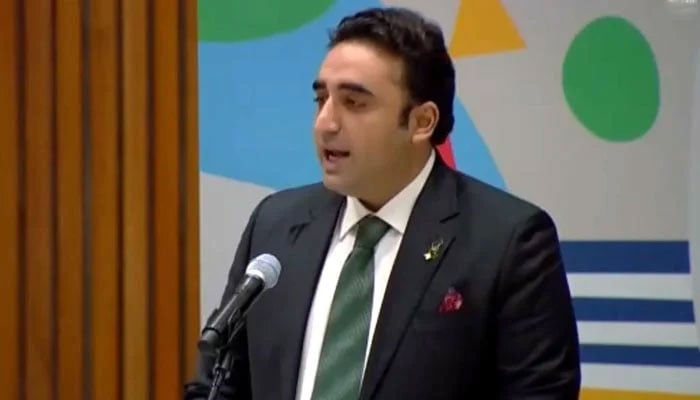
تاریخ کی بدترین تباہی کا سامنا ہے۔ سیلابی صورتحال کے باعث عالمی برادری سے فلیش اپیل کی گئی ہے۔
نیویارک میں نیوز کانفرنس سے خطاب کرتے ہوئے بلاول بھٹو زرداری نے کہا کہ پاکستان میں سیلاب سے متاثرہ علاقوں میں ریسکیو ریلیف آپریشن جاری ہے۔
انہوں نے کہا کہ عالمی برادری کی جانب سے سیلاب متاثرین کے لیے امداد پر شکر گزار ہیں۔ عالمی امداد سیلاب متاثرین تک شفاف طریقے سے پہنچائی جا رہی ہے۔ سیلاب متاثرہ علاقوں میں امدادی سرگرمیاں بہترانداز میں جاری ہیں۔
بلاول بھٹو نے کہا کہ ماحولیاتی مسائل کی وجہ سے پاکستان متاثر ہو رہا ہے۔ نہ تو پاکستان ماحولیاتی تبدیلیوں کا قصور وار ہے اور نہ ہی جن مسائل کا سامنا ہے اس کا سبب پاکستان ہے۔
ایک سوال پر انہوں نے کہا کہ اسلام نے خواتین کو ان کے حقوق دیے۔ صرف افغانستان ہی نہیں پوری دنیا میں خواتین کو حقوق ملنے چاہئیں۔ فلسطین کے مسئلے پر پاکستان کو موقف واضح ہے۔
Thursday, September 22, 2022
India’s economy has outpaced Pakistan’s handily since Partition in 1947 – politics explains why
India and Pakistan inherited the same economic legacy of underinvestment and neglect from Britain when they became independent states following the Partition on Aug. 15, 1947. Their colonial economies were among the poorest in the world.
For both nations, independence almost immediately led to strong growth and fueled significant gains in education, health care and other areas of development. But it was Pakistan that saw faster growth rates during the first four decades or so, while India lagged behind.
Something began to change around the 1990s as their roles reversed and India vaulted ahead of Pakistan, eventually becoming the world’s third-biggest economy by purchasing power and the “I” in BRICS – an acronym referring to a bloc of five key emerging market countries.
What accounts for India’s growth spurt?
As a scholar of international political economy, I believe India’s stronger embrace of democracy – at the same time that Pakistan experienced frequent military dictatorships and changes in government – has a lot to do with it.
A colonial inheritance
From 1857 to 1947, Britain ruled directly over most of the territory that became the independent states of India and Pakistan.
Economic growth under British rule was minimal, averaging just 0.9% a year from 1900 to 1947. This happened largely because the colonial Indian economy was mostly agricultural, and yet the British made little investment in improving farm productivity.
Additionally, Great Britain made limited investments in the well-being of the people of India, notably by underfunding their education and health care. As a result, colonial India had one of the lowest literacy rates in the world at about 17%, and life expectancy was in the mid-30s. Britain’s neglect of the plight of Indians is perhaps best illustrated by the 1943 famine in Bengal in eastern India, in which over 1.5 million people died as result of policy failure.
Post-independence growth, led by Pakistan
Britain decided to give up its “jewel in the crown” and partition the region into Hindu-dominated India and Muslim Pakistan after facing mounting pressure from the local population and a growing nationalist movement.
This led to one of the largest forced migrations of the 20th century: Nearly 9 million Hindus and Sikhs moved into India and about 5 million Muslims to a geographically separated East and West Pakistan over the next two decades. An estimated 1 million people died amid mass violence.
Economic growth, however, took off, with both new countries growing at 3% to 4% in the first decade or so of independence as the respective governments invested more into their economies. But soon, differences emerged.
While both economies were largely state controlled, India’s government curtailed exports and adopted a protectionist trading policy in the 1960s that limited growth.
Pakistan, on the other hand, benefited from significant trade from its East Pakistan region. The newly created Pakistan was geographically separated by India – on one side of it was West and the other side East Pakistan. Each was carved out by the British due to its Muslim majority. Pakistan lost its growth engine in 1971, when East Pakistan became Bangladesh following a war of independence.
Pakistan also received billions of dollars in military aid from the U.S. Fellow oil-rich Muslim countries in the Middle East have also given aid to Pakistan. As a result, Pakistan’s growth accelerated to about 6% a year from 1961 to 1980, compared with 4% for India.
India vaults ahead
The growth script flipped in the 1990s, with India growing at a 6% rate over the next 30 years, outpacing Pakistan’s 4%.
What explains the role reversal? Economics and politics both played a part.
Pakistan has long relied on external sources of funding more than India has, receiving $73 billion in foreign aid from 1960 to 2002. And even today, it frequently relies on institutions such as the International Monetary Fund for crisis lending and on foreign governments like China for aid and infrastructure development.
The aid has allowed Pakistan to postpone much-needed but painful reforms, such as expanding the tax base and addressing energy and infrastructure problems, while the loans have saddled the country with a large debt. Such reforms, in my view, would have put Pakistan on a more sustainable growth path and encouraged more foreign investment.
While India also got a fair amount of support from international aid groups and a few countries such as the U.S. earlier in its existence, it never depended upon it – and has relied less on it in recent decades. In addition, in 1991, India liberalized trade, lowered tariffs, made it easier for domestic companies to operate and grow, and opened the door to more foreign investment.
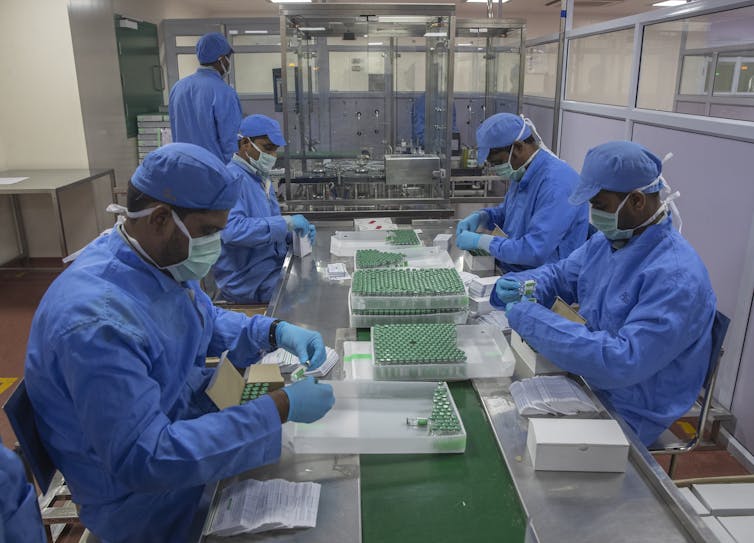
These reforms paid off: By integrating India’s economy to the rest of the world, the reforms created market opportunities for Indian companies, made them more competitive, and that, in turn, led to higher growth rates for the overall economy.
Another way to measure the different paths is in gross domestic product per person. In 1990, India and Pakistan had almost identical per-capita GDPs, a little under $370 per person. But by 2021, India’s had surged to $2,277, about 50% higher than Pakistan’s.
The reasons for their different choices have a lot to do with politics.
Pakistan has suffered from near-constant political instability. From 1988 to 1998 alone, it had seven different governments as it alternated between civilian and military governments following coups. This discouraged foreign investment and made it much harder to make reforms and follow through on them. Through all these changes, Pakistan’s military spending as a share of its GDP remained higher than India’s during the entire post-independence period.
India, on the other hand, has managed to maintain a steady democracy. Though it’s far from perfect, it has kept leaders more accountable to the people and led to more inclusive growth and less reliance on foreign institutions or governments. In one decade alone, India lifted over 270 million people out of poverty.
At a time when democracy is under threat in so many parts of the world, this history, in my view, reminds us of the value of democratic institutions.
https://theconversation.com/indias-economy-has-outpaced-pakistans-handily-since-partition-in-1947-politics-explains-why-187053